I
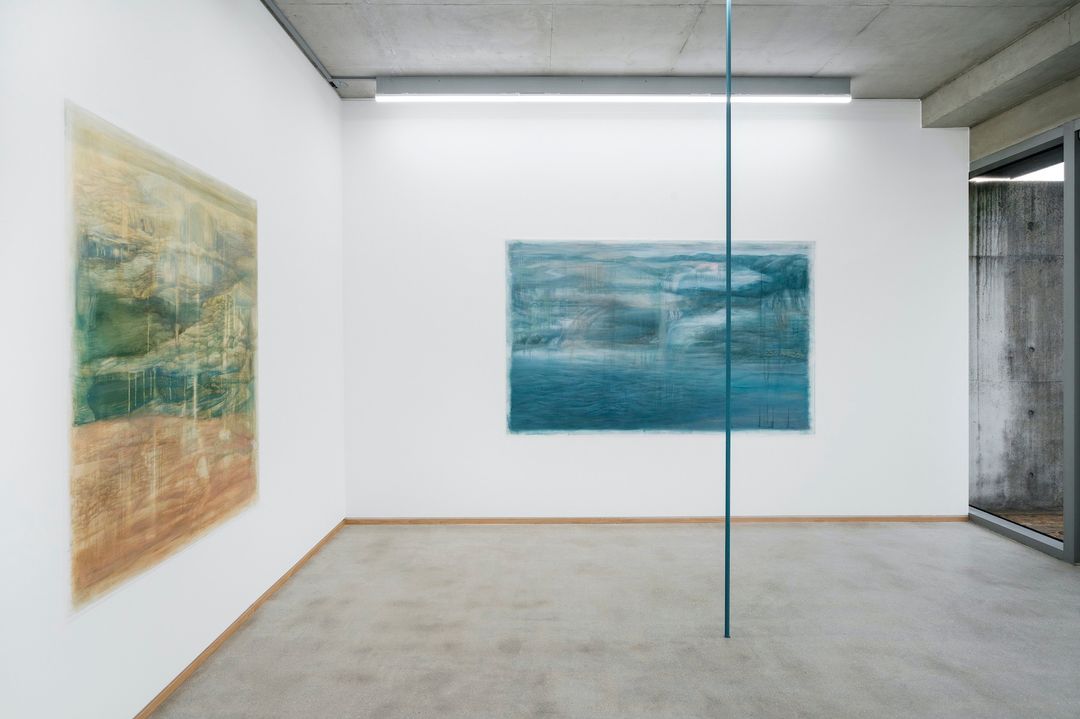
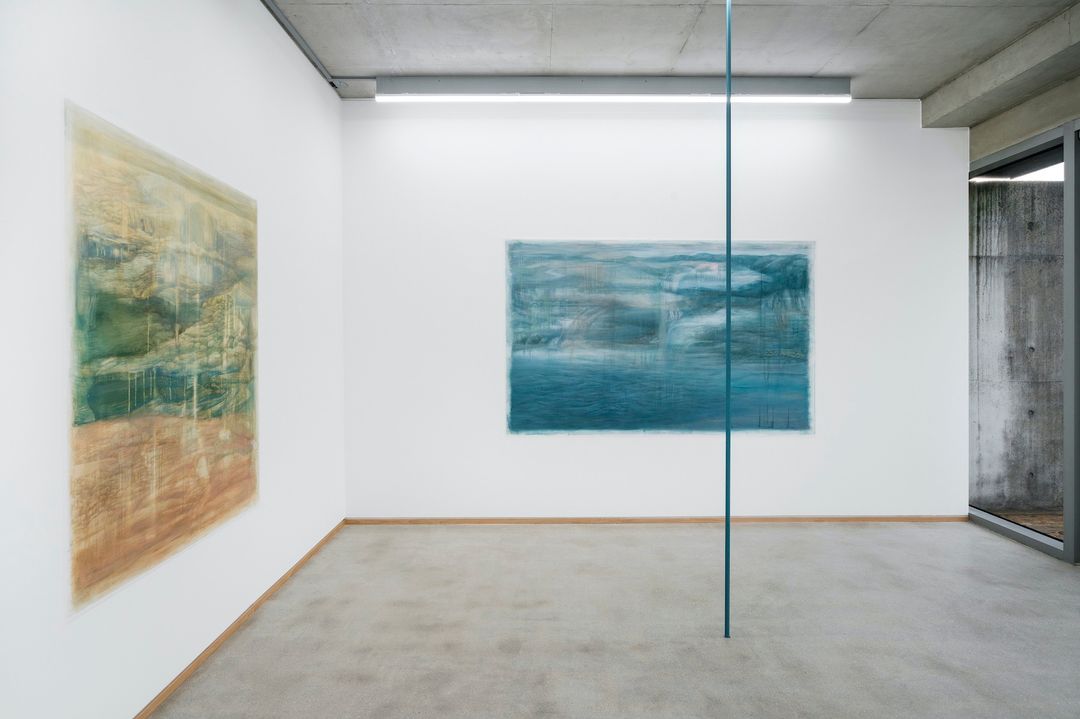
remember Sunny Kim always looking somewhere far away. Her paintings were
creating a thick border neither here nor there. This place was the land and the
sea; something alive and dead; and possibly you and me. Or perhaps none of
these.
In
the early 1980s, the entire landscape of Korea was transformed by rapid
economic growth, accompanied by major social and political shifts. In the midst
of these grand changes, many Korean individuals and families were
compelled to relocate. Sunny Kim was one of them. Although she dreamt of being
a high school girl in a uniform, her future was interrupted when she had to
leave her homeland. However, after she returned to Korea as an adult, her dream
was vicariously realized through the act of painting. When I first encountered
Sunny Kim’s series in 2001, I thought that the girls in her paintings were more
than mere representation of lost dreams of a Korean American. My question at
the time was not “what does she paint?” but rather, “why does she
paint?”
At
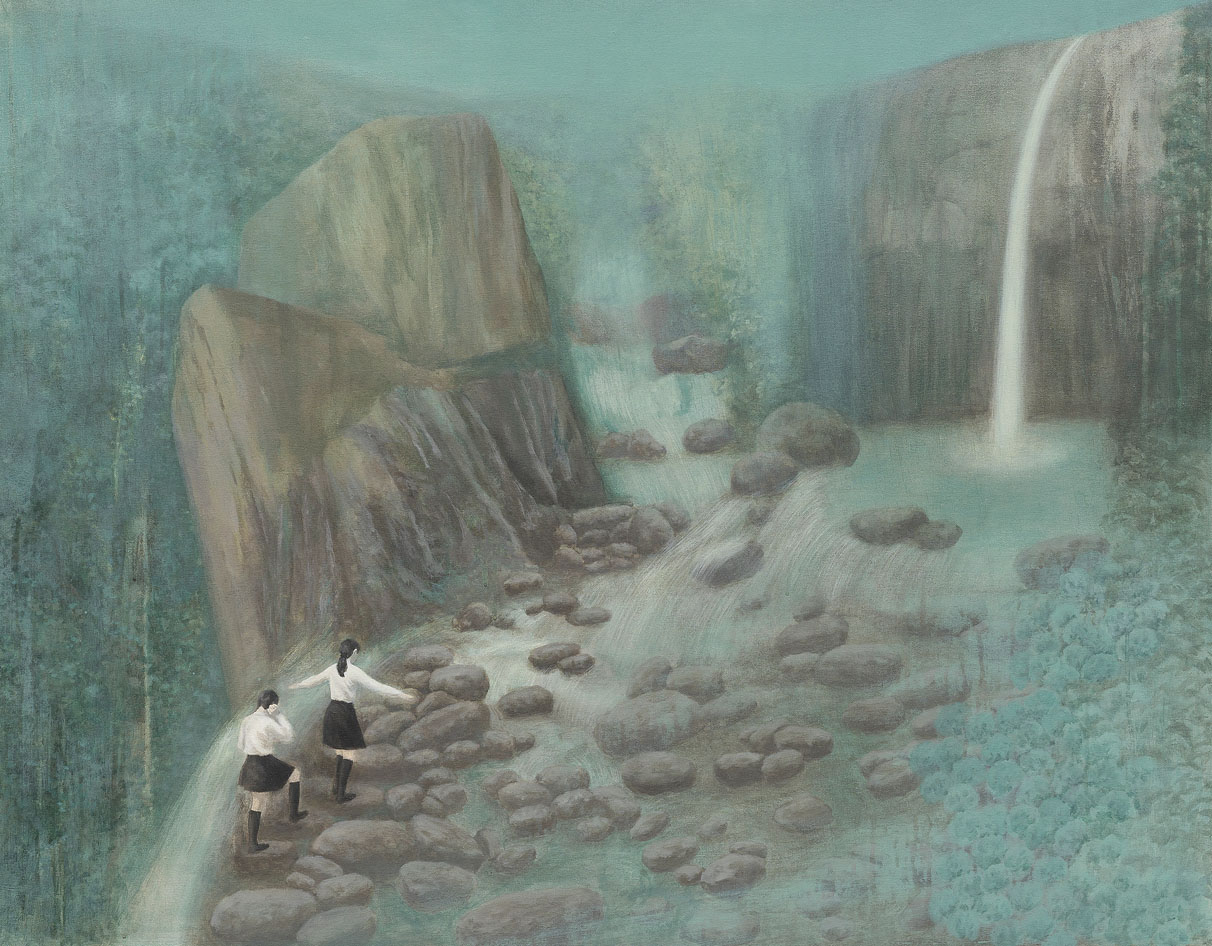
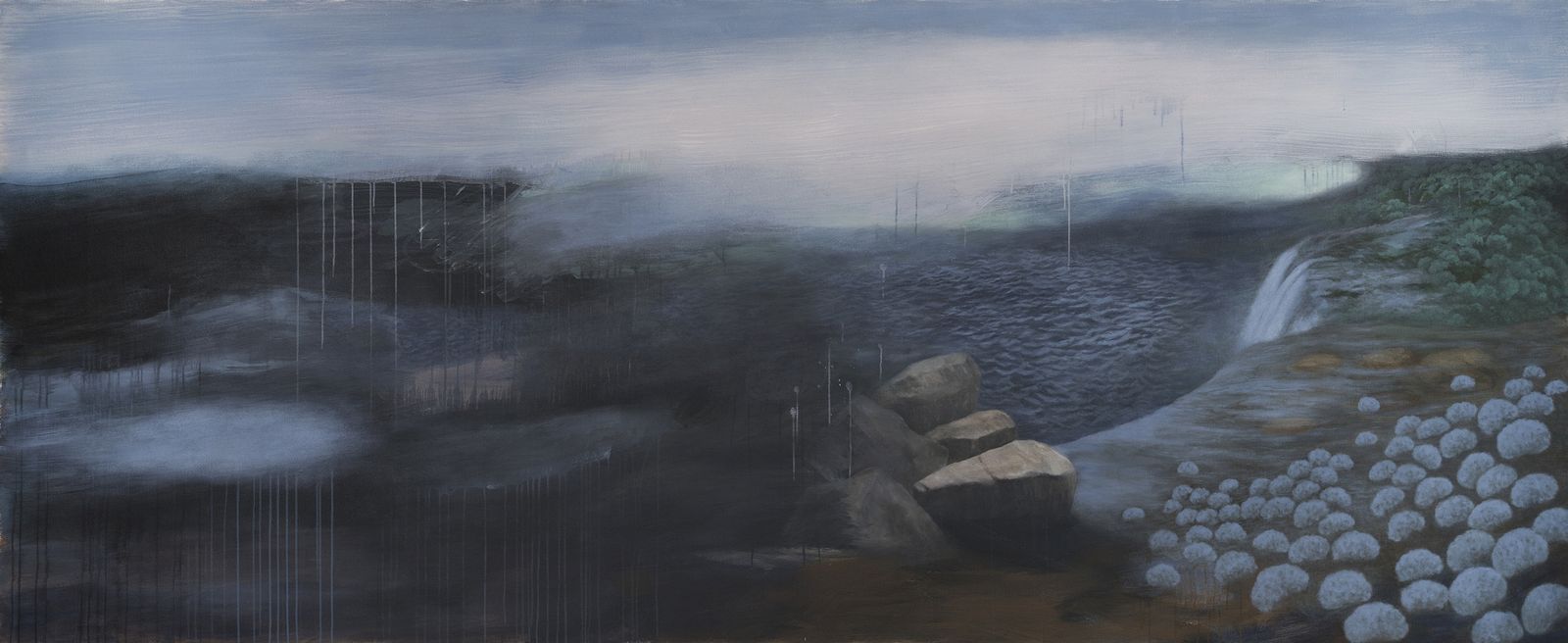
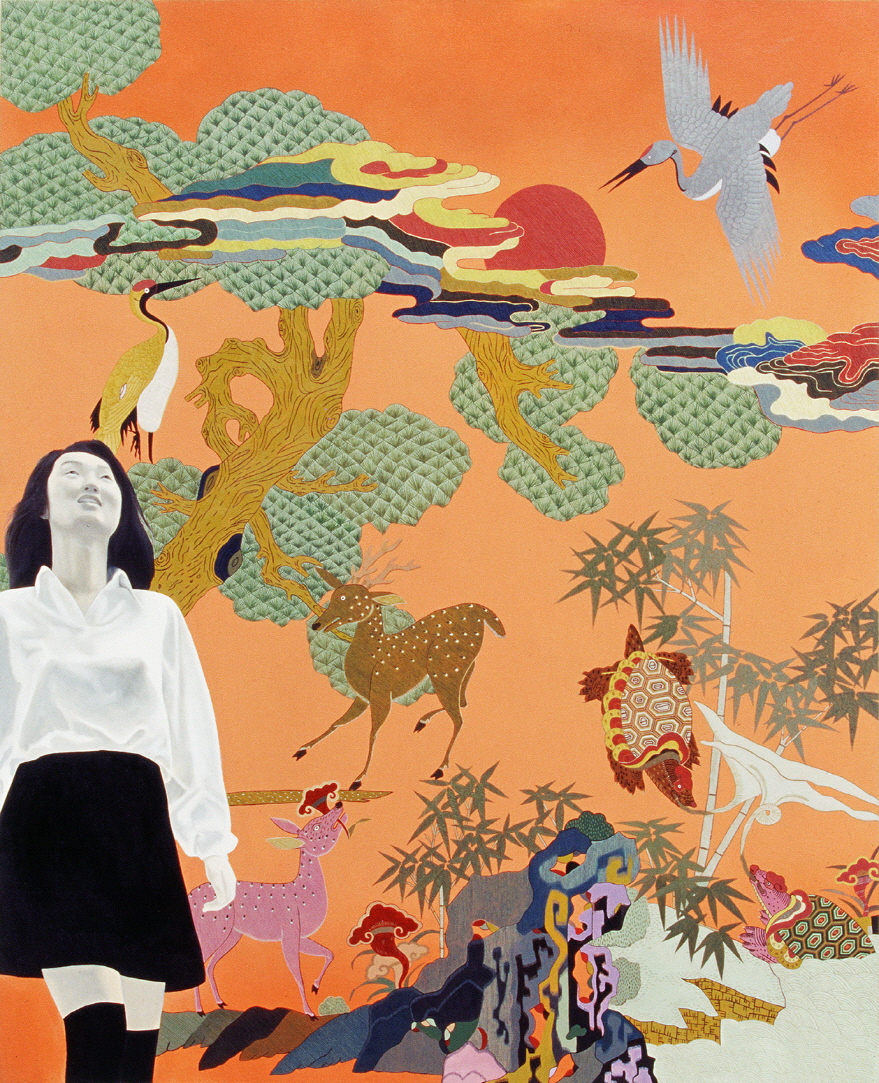
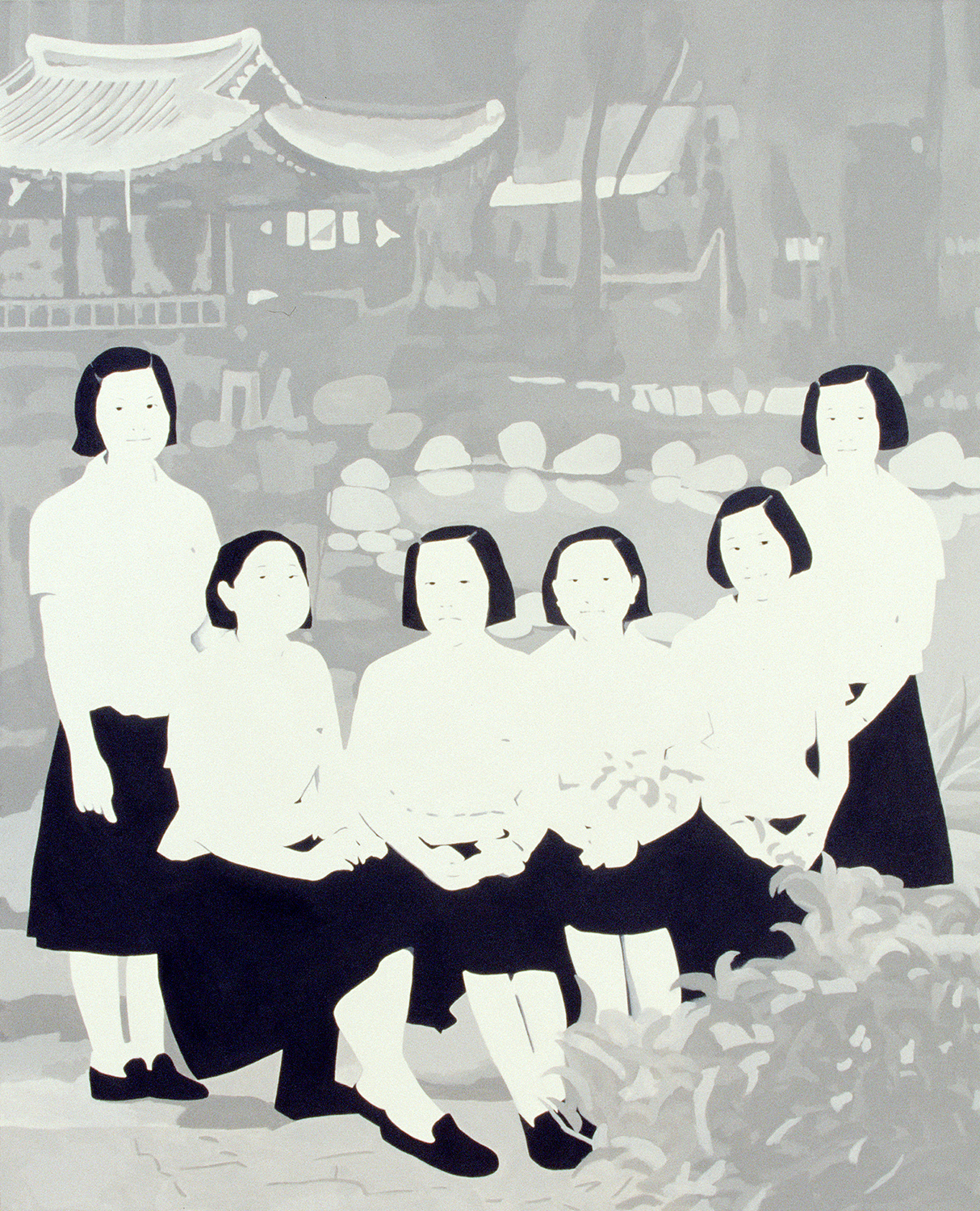
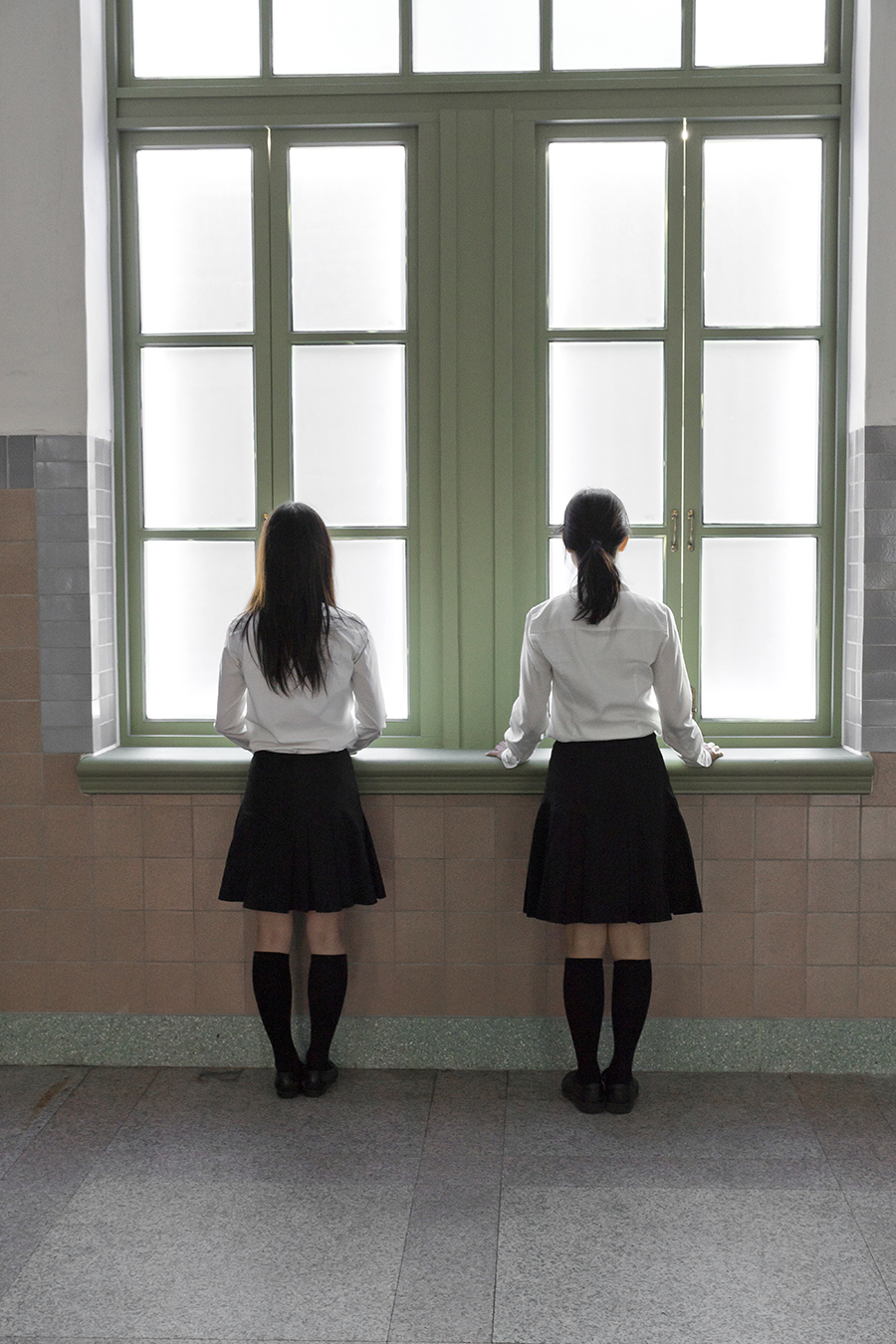
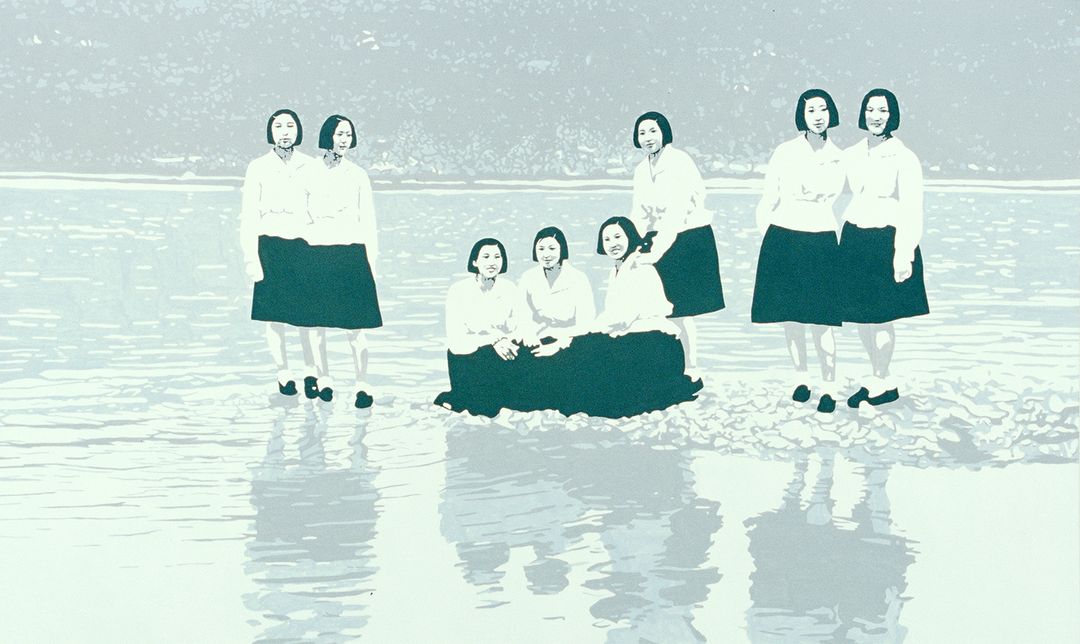
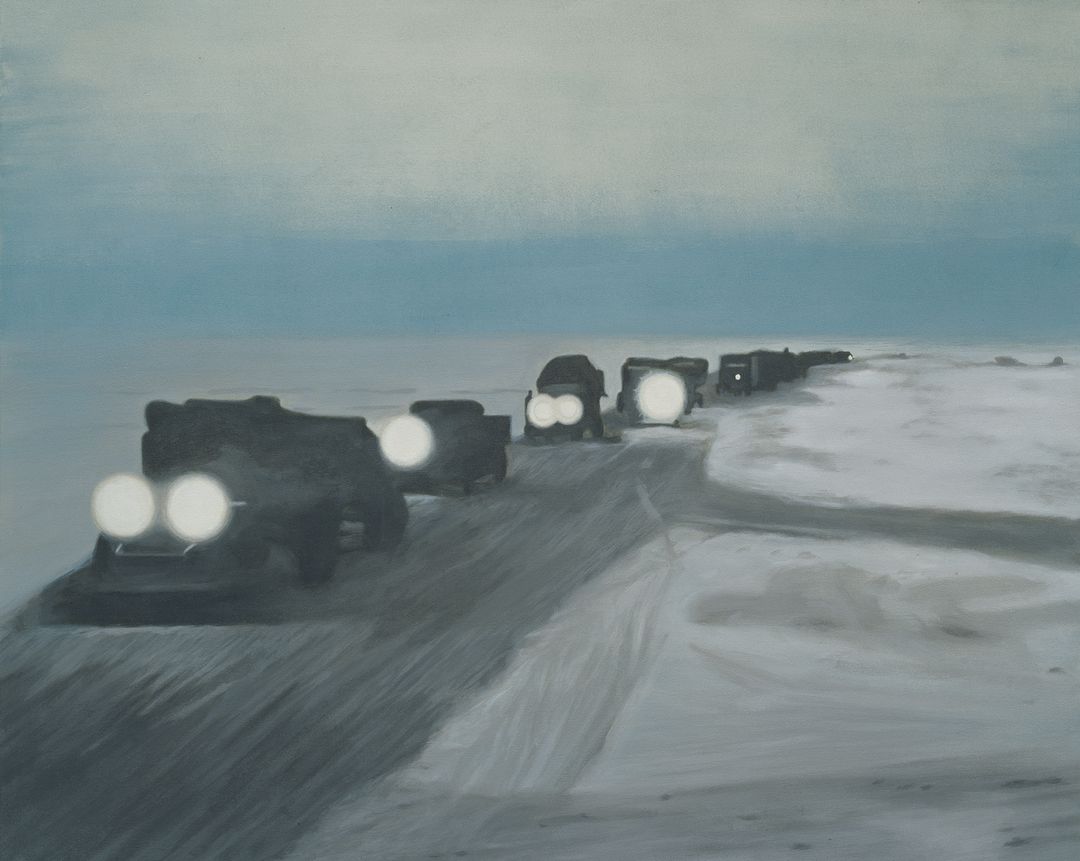
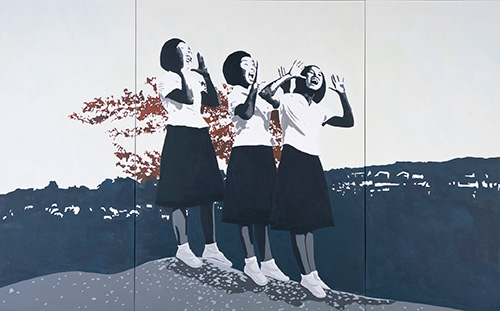
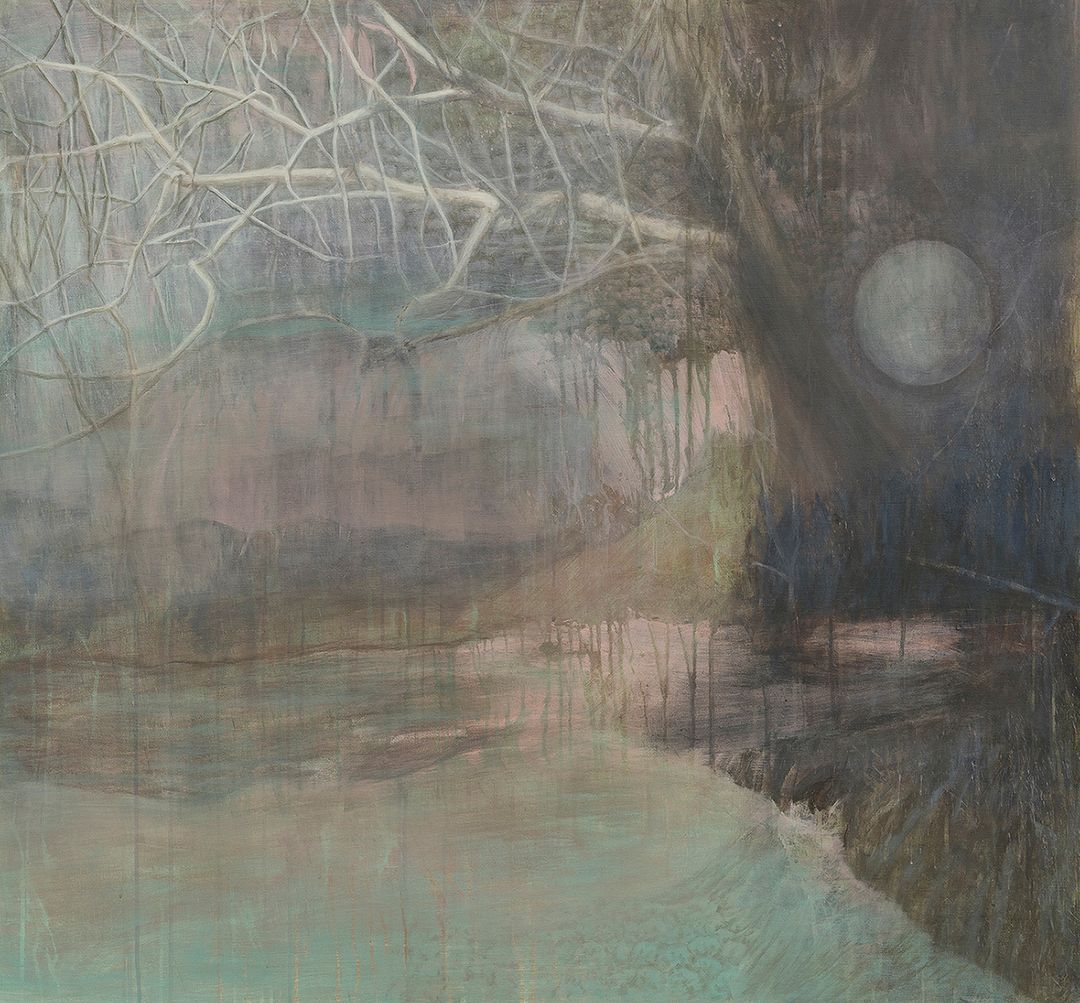
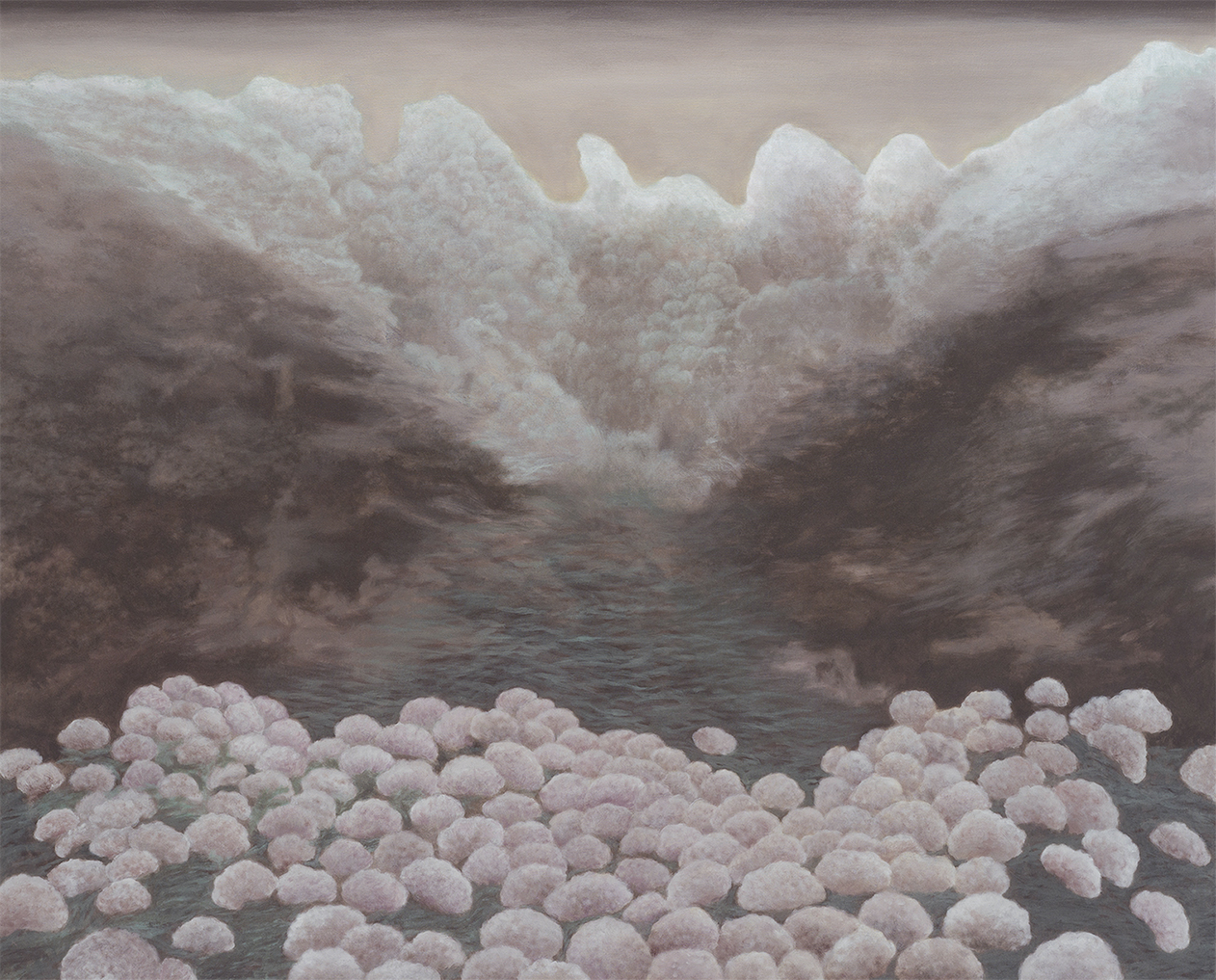
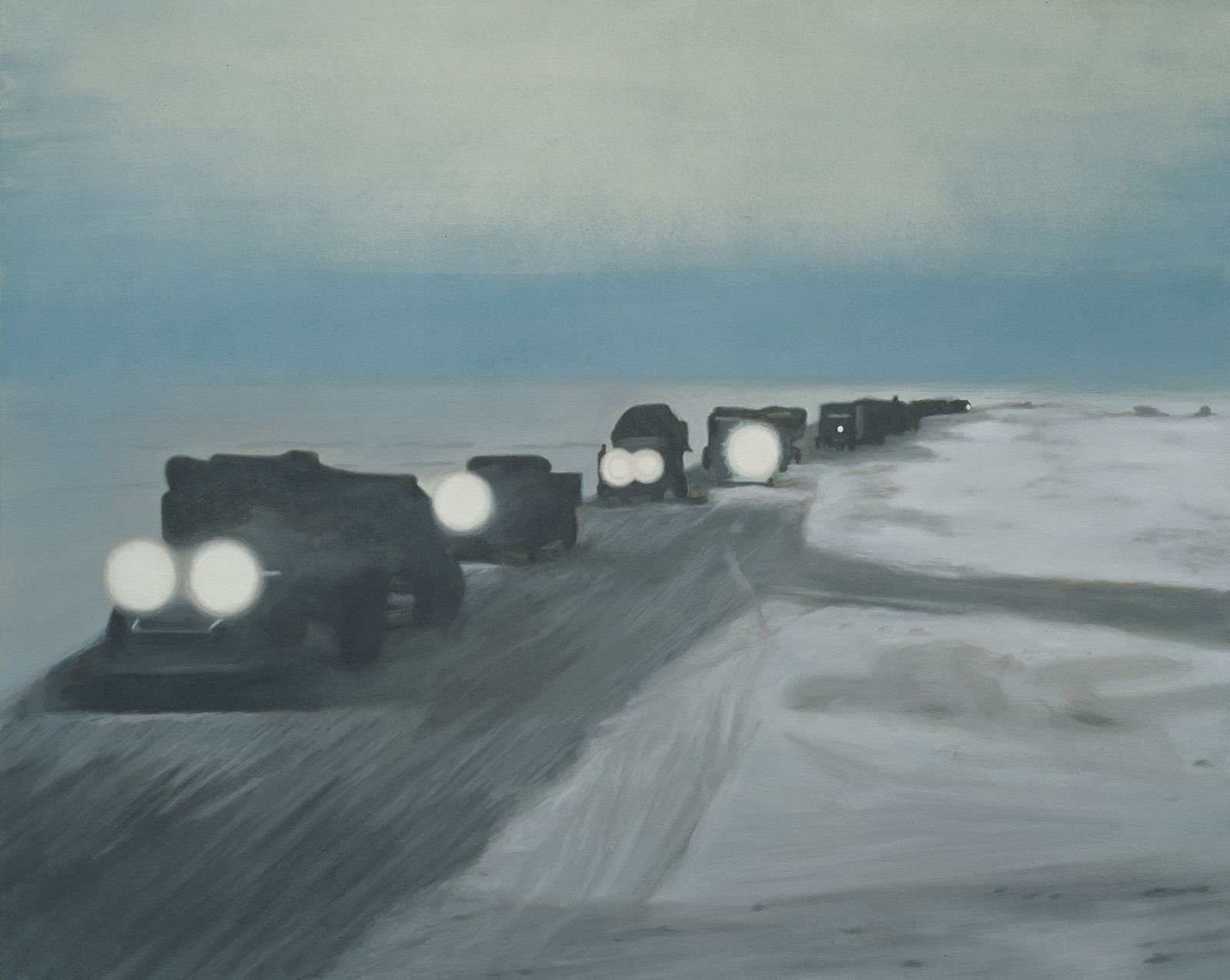
a glance, the images in Kim’s early paintings (e.g., girls in uniforms,
schools, field trips, the “ten longevity symbols,” landscapes, etc.) seem to
invoke the system of symbols embedded in history, encompassing our conventions,
values, norms, institutions, and traditions. But Kim’s images are actually
removed from that system. They look opaque and dislocated, but they emit a
certain virtue. They often seem to escape the gaze of the viewer, always moving
off into the distance. Through her production process, two different timelines
intersect: the axis of the reproduced images, borrowed from photographs, films,
newspaper scraps, or magazines, and the axis wherein those reproduced images
are incorporated into binary allegories of memory and oblivion, fact and
fallacy, past and present, growth and death.
Through this visual and sensory
collage process, the images gradually acquire a psychological
three-dimensionality, taking on an air of suspicion. Kim’s meticulously
manufactured images enable viewers to simultaneously experience seeing and the
sensation of being unable to see, thus revealing the inherent gaps in our
sight. Looking at her works, I feel that I am looking at a body without a face
or a soul only left with its body. Her girls are not the girl that she could
have been; similarly, her school uniforms are not the school uniform, and her
landscapes are not the landscape. Perhaps her paintings are not meant to
represent any images at all, but rather to serve as a catalyst for awakening
the imperfect cognitive system that lies beneath logic. They might exist to
enact this very instability.
It
was only after about ten years that I could truly begin to ask the question
of why Sunny Kim paints. Between 2012 and 2014, Sunny Kim and I
produced two performances that were reenactments. In Still Life,
Kim projected her own identity onto the girls in her paintings, allowing her to
see the girls with her own eyes in an actual space. Similarly, she
created Landscape in order to walk into the
landscape that the girls saw and walked through. These two performances also
reenacted time, as Kim’s painting process was realized not on a canvas, but in
three-dimensional space.
By transferring the images of her paintings into
actual space, Kim attempted to summon the identity of an individual and the
temporality of the past, which have been lost to history. But inevitably, the
nature of these things can only exist by disappearing. Here, two contradictory
states of mind coexist: the eagerness that she might be able to elicit memories
of the past within repeatable movements and living bodies in the present, and
the concurrent despair that she will not be able to achieve this. Her images
seem to aspire to resuscitate that which is dead, to move that which is still,
and to restore the time that has been lost. Her images remain adrift, refusing
to be read in the language of the real world, as if they themselves want to
evaporate, and reminding us of our inherent imperfections.
In
some ways, painting is a primal act. After all, we are all capable of painting,
almost from the day we are born. But painting still represents another type of
language that cannot be translated into words, no matter how hard we try. Sunny
Kim’s paintings look ominous, but they are also sad and beautiful. These
feelings likely stem from our overwhelming sense of being unable to describe
what we are seeing in words, even though it is right before our eyes, and even
penetrating our entire body. This is possible not because of what her paintings
are, but since they relate to a certain primordial and inherent state.Why does
Sunny Kim paint? This leads me to ask another question: what are we all seeing?
What continues to arise inside me? Eventually, we cannot help but think of the
human condition inherent in these questions. Through her works, Sunny Kim
shares such contemplations with us. I will continue to await the journey,
moving towards a destination that we will reach together. Thus, I recommend her
for the Korea Artist Prize, which entered into the gap of time in this process.