For
some time now, the world seems to be following the paths of variability rather
than fixedness, flexibility than solidity, and migration than settlement. The
world is inundated with all kinds of temporary and momentary objects, and this
aspect is quite clearly witnessed within the art community. The matter of “Move
or Die,” the catchphrase of logistics companies in the time of widespread
global distribution, is visibly detected in the production mechanism of art.1 In
our time when art is subject to death unless it moves like commodities, what
are the aesthetic conditions of art? And what is the direction in which art
practice should be oriented? Should an artist choose to continue to produce
with agile mobility in order for the work to be circulated? Should s/he produce
works that correspond to economic values? Or, should s/he continue to work
hoping for global circulation that is to be thought of as an ideal art-making
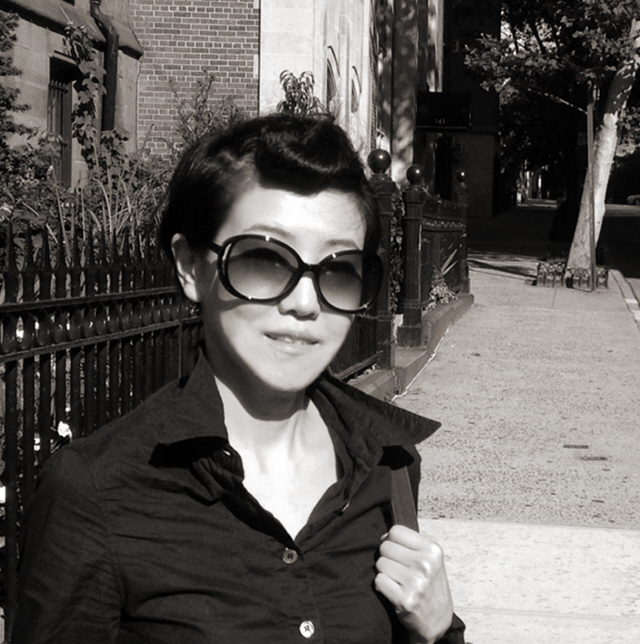
environment, namely the global supply chain? Jewyo Rhii, whose practice has
been on a nomadic course, is one of the few Korean artists who has been on the
chain mentioned above, the orbit of global circulation.
In
the second half of the 1990s when Korean art directed its eyes to spectacular
materiality and sociopolitical conditions for the sake of its leap into the
international art scene, Rhii has already concentrated more on the marginal
than the central, everyday life than art, weakness than rigidity, and
situations and private relationships than forms, while keeping her distance
from those tendencies. The artist has accommodated the discrepancies between
institutions and individuals and embraced the psychology of those individuals
who are inevitably alienated from the environment to confront the unstable
present and the postponed future. As the work of Rhii is summoned here once
again at this moment in time when uncertain spirits dominate the world, there
is more to it than one individual’s narrative. Her world is linked to the
examination of the entire ecology of art in which are included the institution
of art and the conditions of art production. For her work so far has exposed
those situations inconvenient and uncomfortable to her in the forms of objects
and structures while seriously responding and reacting to the given familiar
norms of art and society.
Her
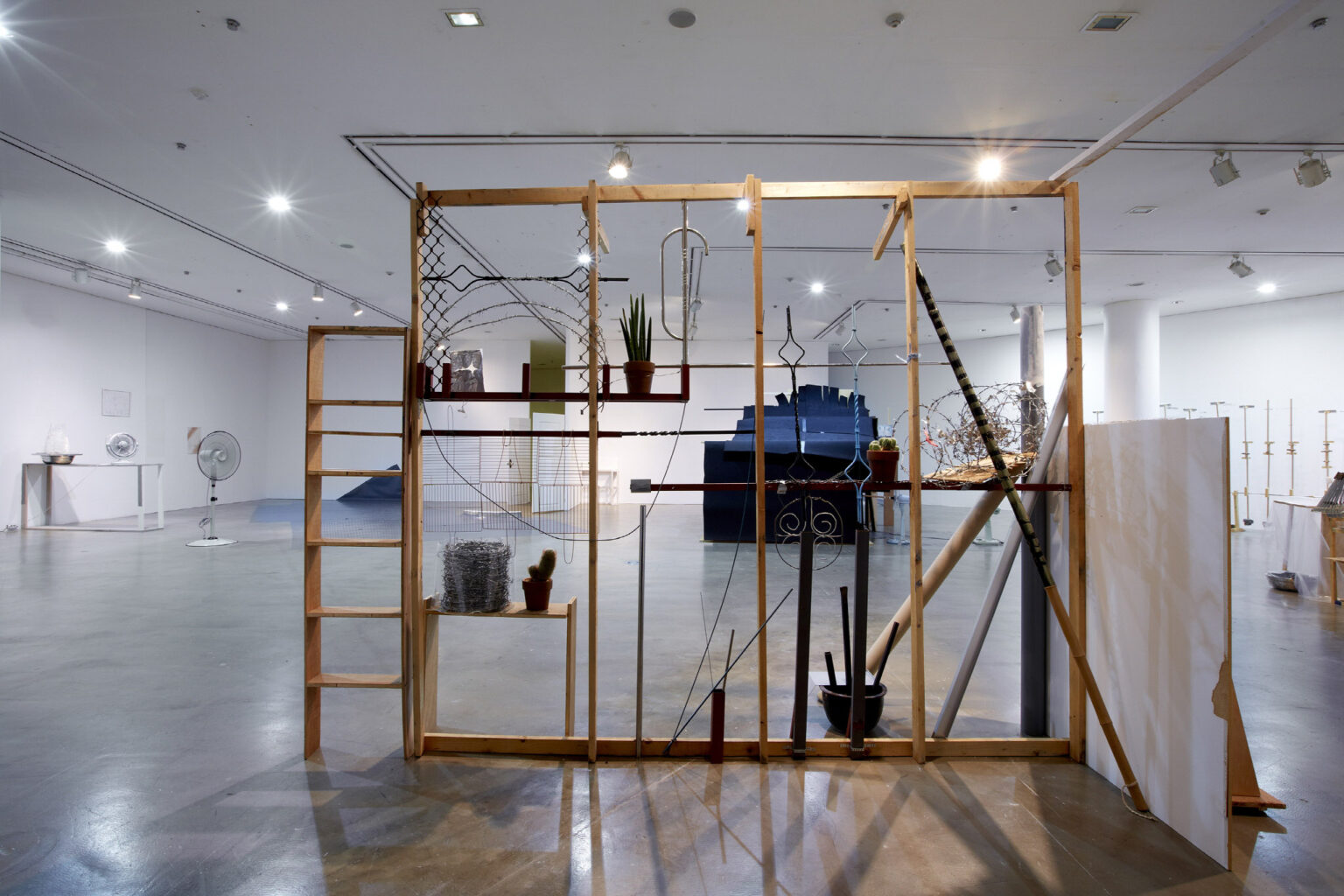
works, which are based chiefly on her daily life and surroundings, often
disappear after the exhibition. This does mean that they are destroyed,
extinguished, or vanished immediately after the show. Her works of temporary
structures have traveled to various cities around the world together with the
artist or have been left in the care of various people to linger about
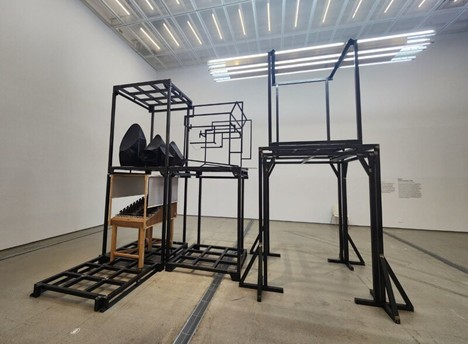
unfamiliar places and in other people’s lives. Her works are not very
elaborately made to the extent that it could be disassembled right away in
crisis, and this has imbued them with mutability due to which they have led
persistent lives. As though adapting to the constantly changing environments
from one place to another, her objects have modified their bodies and changed
their arrangements, learning their own survival tactics. Here, the temporary
structure can be seen as a kind of microsystem that confronts this stubborn
world and its fossilized institutions. In this way, the artist’s work has been
postponing its destiny into the future via interminable mobility and
temporariness.
For
the past two decades or so, her artistic practice has taken place in the course
of her transnational voyages to different countries including Korea, the U. S.,
England, Germany, and the Netherlands. The exhibitions in which she
participated contain and present the trajectory between the exhibitions in
various cities that she attended one after another and her journey between one
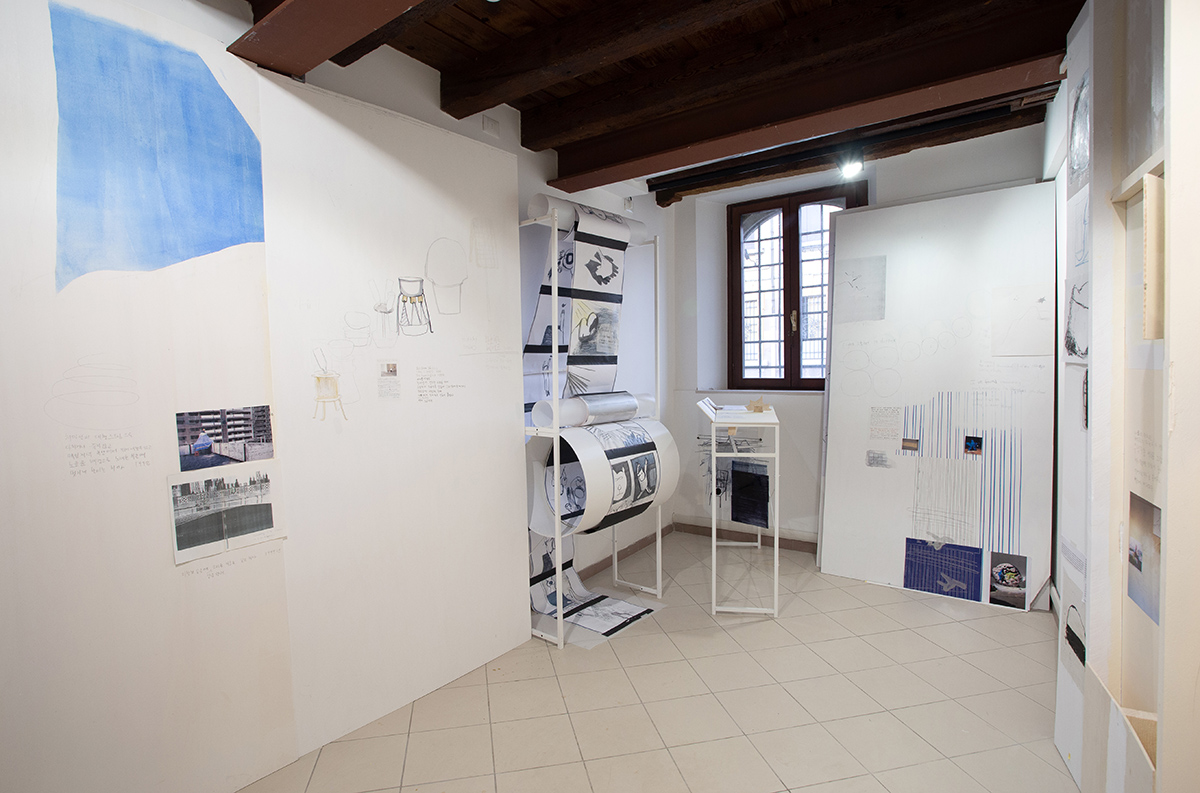
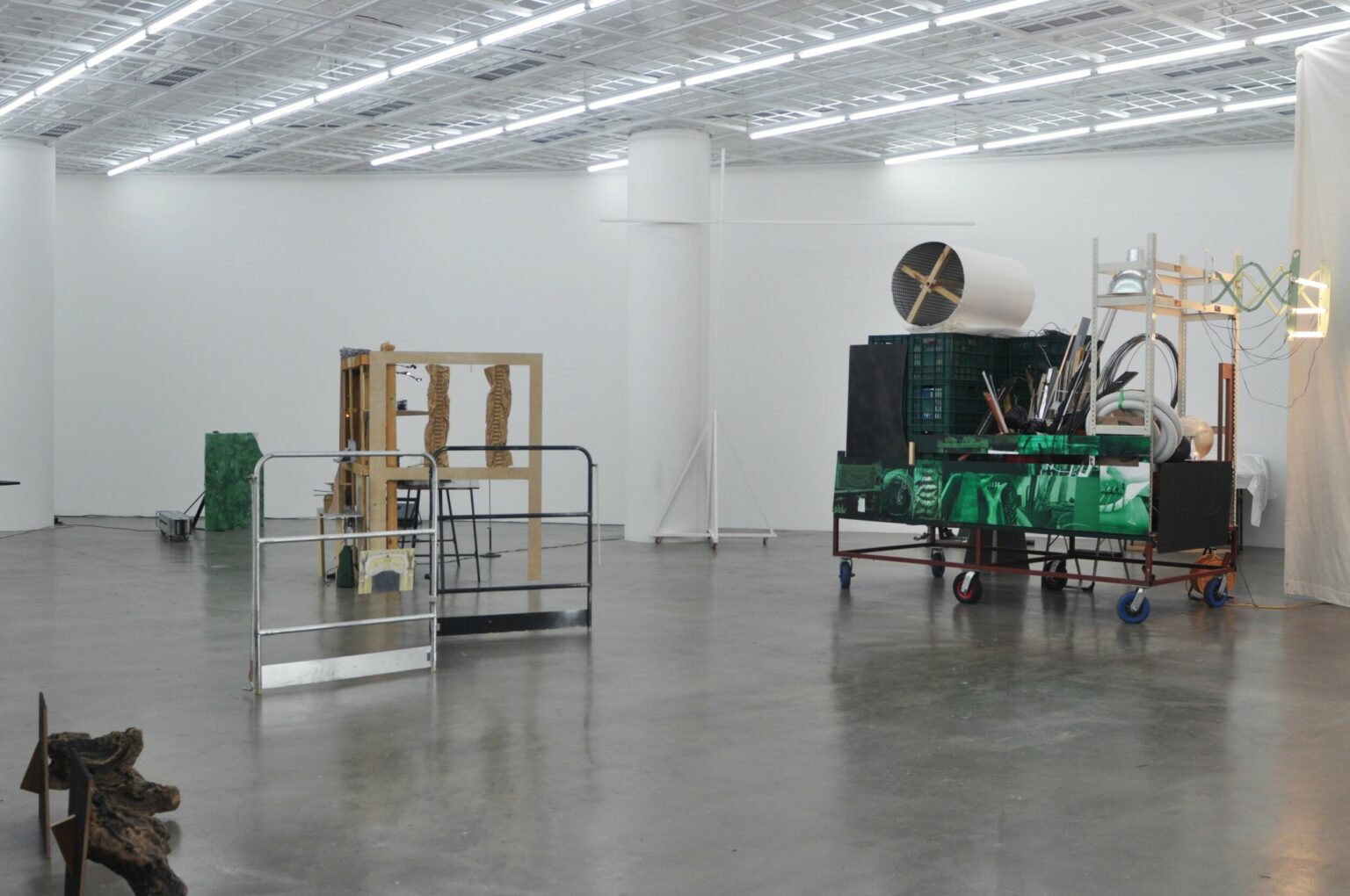
place to another. Her solo show, 《Jewyo Rhii》(2006) held at SAMUSO in Seoul
showed the whole process in which the works made during her two-year stay in
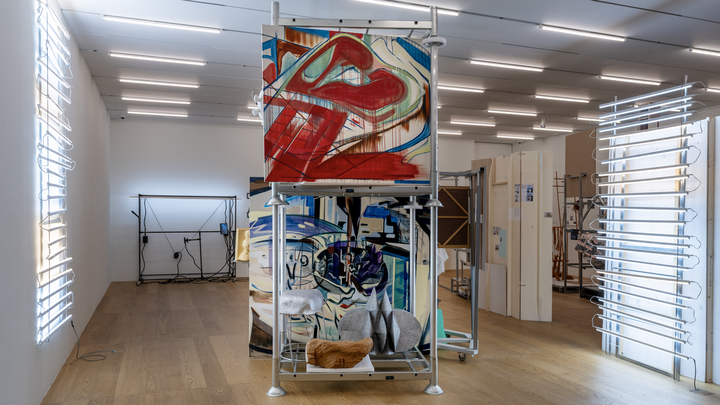
Amsterdam were transported in carts. Years later in 2013, her solo exhibition
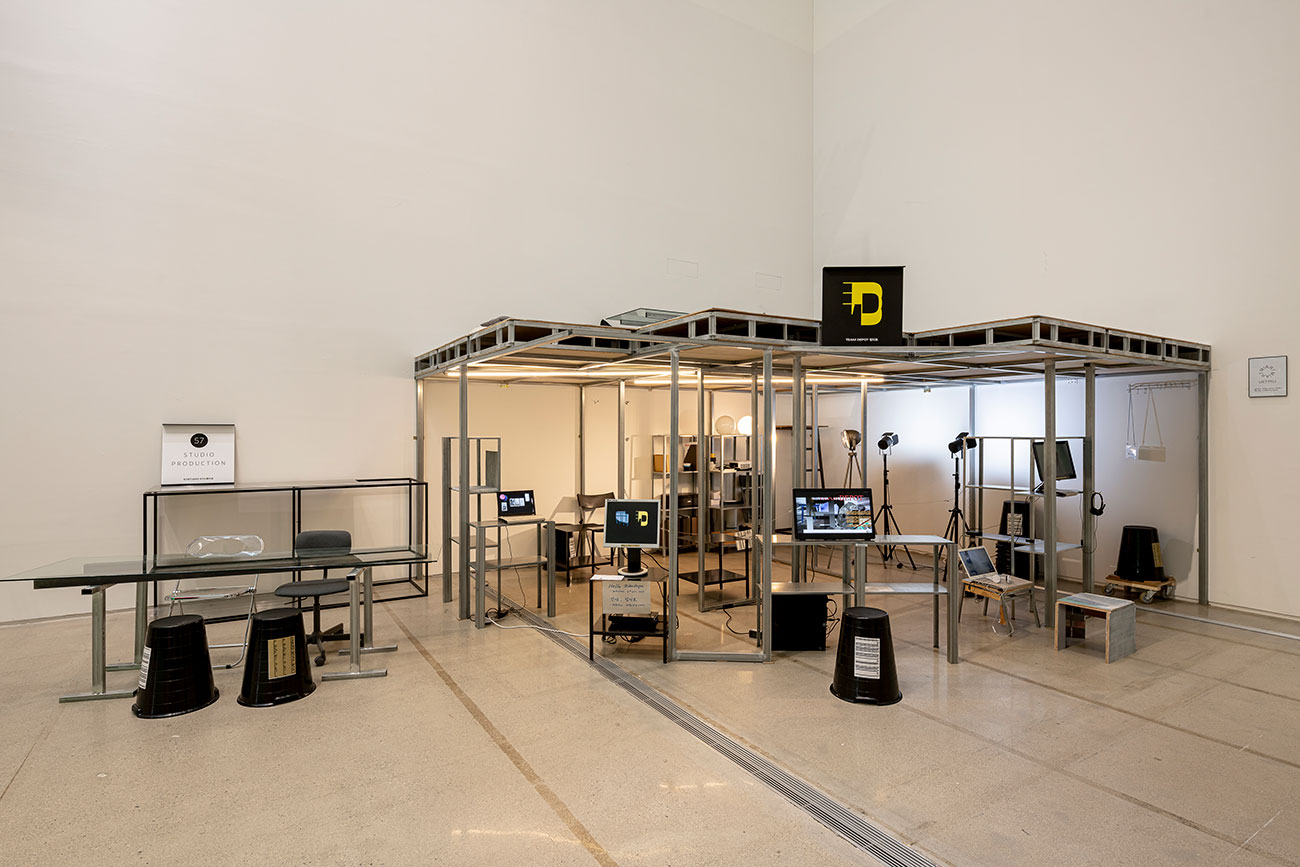
held at the Art Sonje Center, 《Night Studio》, unfolded its journey from a studio in Itaewon in 2010 to its tours
to the Netherlands and Germany and its return to Korea in 2013, showcasing the
traces of its travel routes and changes. As Charles Esche, Director of Van
Abbemuseum, which was one of the venues, points out, Rhii’s objects have
retained the changes, transformations, and spatial and temporal passages that
they have gone through in quiet voices while improvising to adapt to the
inconvenient situation of moving from one place to another and from one city to
another.2 The power of the indeterminate structure found in
Rhii’s work does not merely lie in its adaptation and sustentation in reality.
The word, “weak” does not mean “easy to break.” With every move, she has
brought with her the vestiges of life that could not be sustained in the
previous place, bringing with her its postponed destiny to the next place,
keeping its time alive.
Thereafter,
the activities of Rhii have been focused on forging close relationships with
her colleagues and territorial expansion. Just as living one’s life requires
more than just one’s own volition, the artist has been working in solidarity
with others to augment minoritized voices, as well as gradually working towards
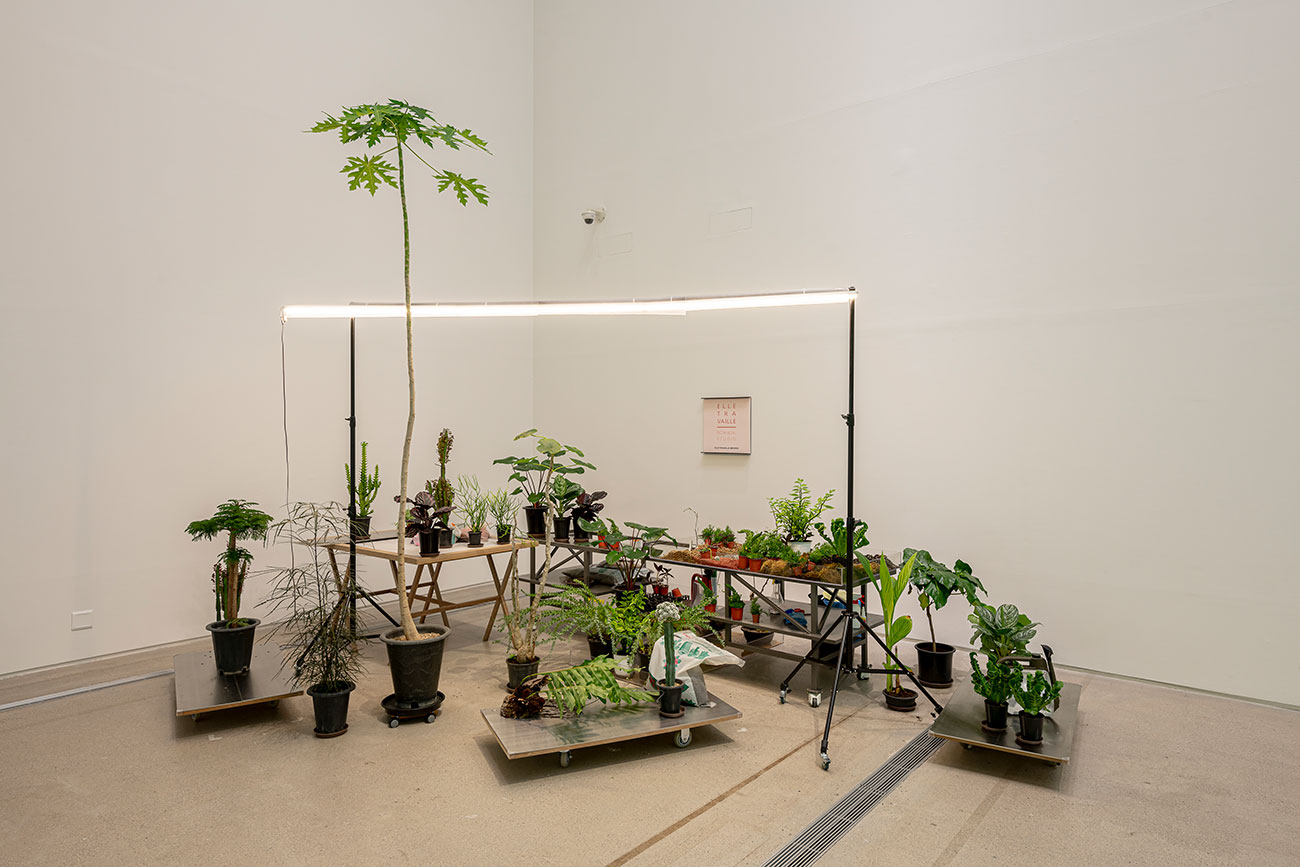
establishing a shared stage for their coexistence. In 《Dawn Breaks》 (2015–2018), for which she
collaborated with Jihyun Jung and which toured New York, Gwangju, Seoul, and
London, the artists opened their works up as a stage for younger artists. 《For Ten Years, Please》, a performance at the
Namsan Arts Center in 2017, Rhii summoned up the stories of objects that had
been left with so-called trustees after her solo show held ten years before. As
living territories and stages for those things (beings) that cannot settle down
in reality, her works have kept sustaining themselves through their
interactions with the time of others. As Rhii sent her hello to those objects
that she had said goodbye to ten years ago, I cry out to Rhii who may well be
somewhere on the trajectory of her continual migration, “Come back!” This
ardent cry for her is my mimicking of Rhii’s Lie on the Han River
(2003–2006). A cry for an old lover knowing there is no chance to meet him
again. But then what is the use of calling Rhii again to this place, which is
flooded with all kinds of temporary, momentary, and volatile things? Am I
trying to officially designate Rhii as a visionary who foreknew the coming of
the global circulation system already in the 1990s or as an artist who
translated an aspect of the world of uncertainty early on? Or is it my desire
to weave the sparkling story that is left behind in between her leaving and
returning or the residues of her global narratives into a trajectory of
contemporary Korean art?
This
vague wish of mine was nothing but a naive dream that I had without
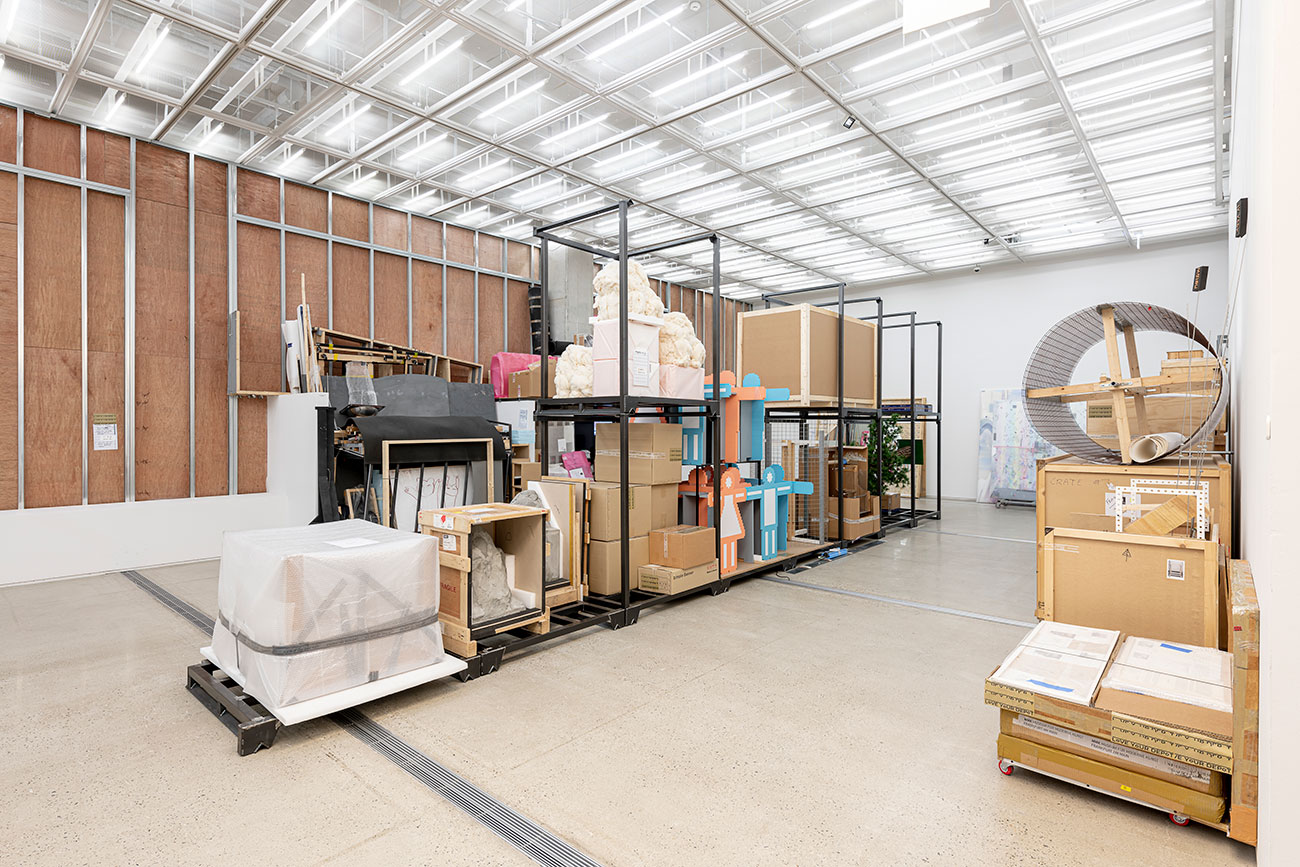
understanding the reality for the artist. In 2019, Rhii has returned. But she
was not alone. She has come with the objects whose lifespans have been
stretched with every one of her departures. As if parading the time that they
have endured and the traces of their move, the objects are put in crates for
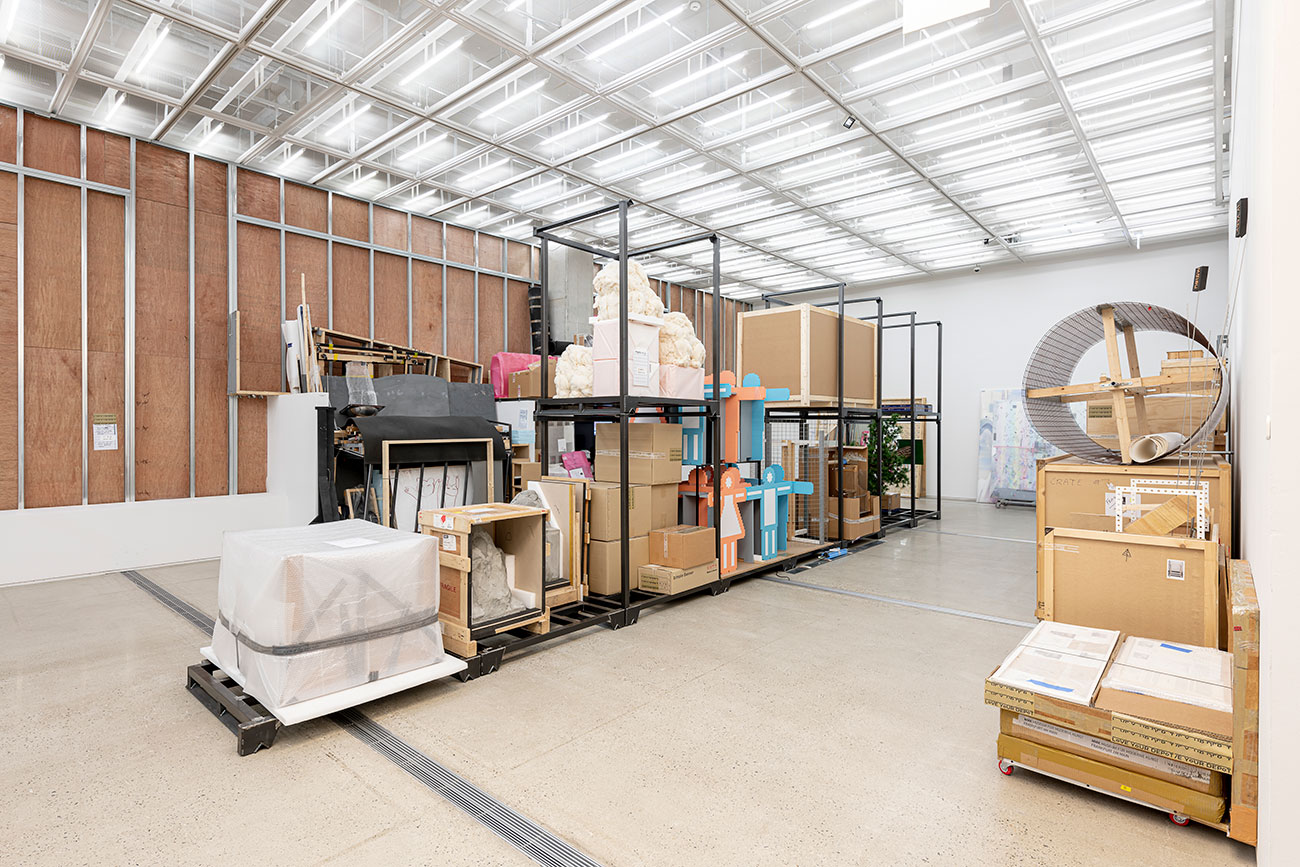
international shipping, emanating a kind of grimness. The four creates departed
somewhere in Düsseldorf, London, New York, and Seoul and have been transported
precisely, almost to the point of cruelty, to its destination, a gallery in the
National Museum of Modern and Contemporary Art, Korea, via different logistics
companies. These loads of objects are works of art that contain the entire life
of an artist and simultaneously what became superfluous due to its inability to
be distributed within a commodity-based economic system. Stuck in the darkness
of boxes and storage, they are also things that are subject to the desperate
destiny of waiting for their postponed lives to be discovered someday. In the
dark of these creates are hidden the true reality of works of art veiled by the
splendors of exhibitions. Before her huge loads of works resulted from Rhii’s
continuous production, the question of where a work of art’s present life
stands cannot but be asked. An artwork that has been trapped in the dark for
years waiting for the box to be opened. It is the most real, isn’t it? In our
times, to be able to subsist in storage is fortunate enough when the work is
not supplied anymore. Countless works by artists, for which even this condition
is unavailable, have been innumerably destroyed.
To
summon Rhii at this present moment is to track down the ambivalent
relationships among the survival model for contemporary artists, the
institution of art, and the global system. The core agent by which today’s
contemporary art community is formed and operates is its supply-chain network.
In the circulation system of commodity and capital, the model of supply and
demand functions through the pursuit and accumulation of profit. In the art
world where there are gaps between supply and demand, however, the supply-chain
network tends to be more busily active to meet the demand. The recent expansion
and diversification of the institution of art’s role are brought about by the
need to maintain this supply-chain network. Accordingly, contemporary artists
(in other words, makers, creators, or agents) fall into the situation in which
they cannot cease to make new products in order to survive the supply-centered
circulation system. The reality is that the element of solid materiality is
disregarded for more rapid production and agile circulation. An artist can
continue doing his/her work, pretending to be unaware of this condition. Yet
Rhii puts aside her own work and lets herself become a level-headed platform
designer to battle against the conditions and limits of art production, in
order to secure not only her survival but also that of her artist colleagues,
and the young sculptors who are forced to destroy their works.
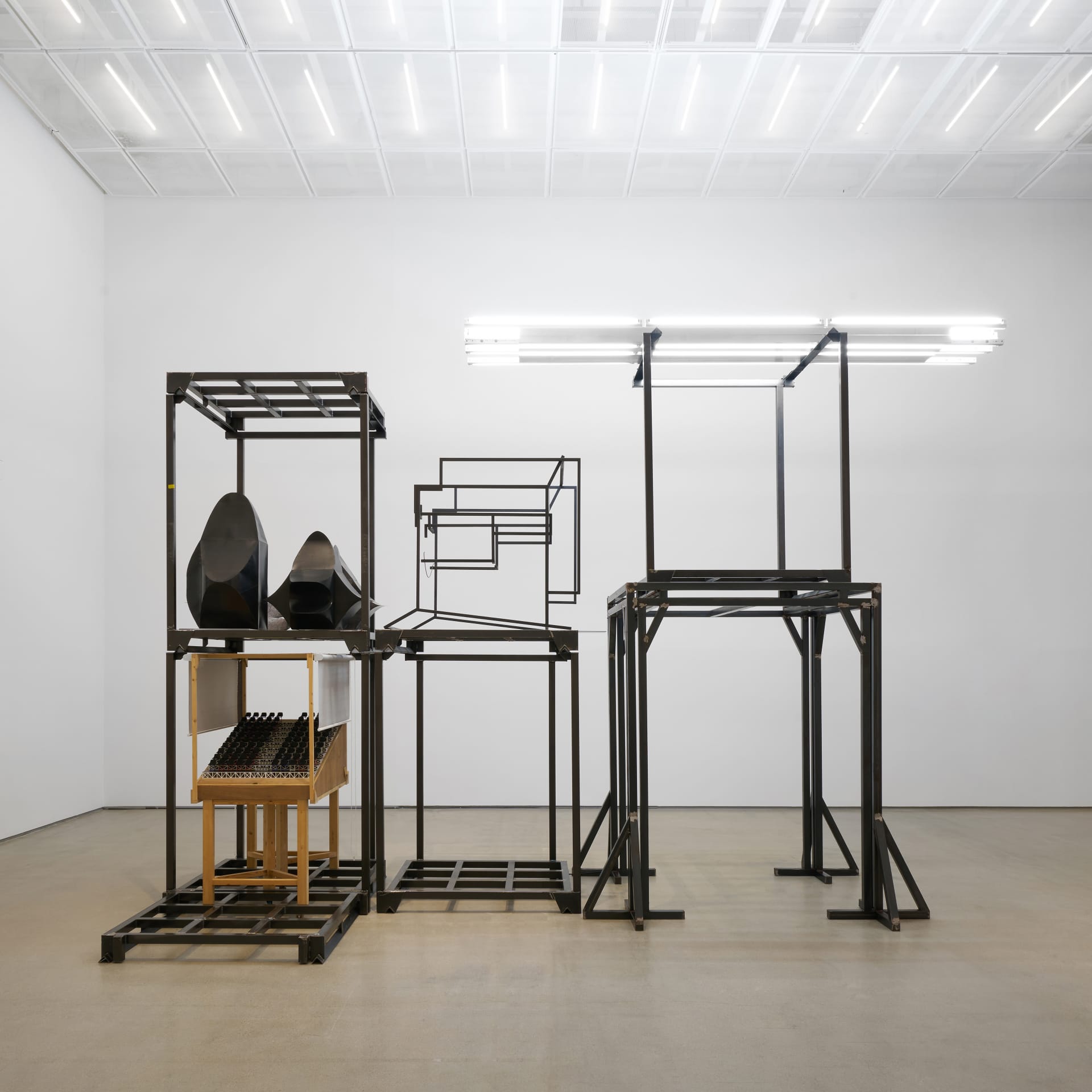
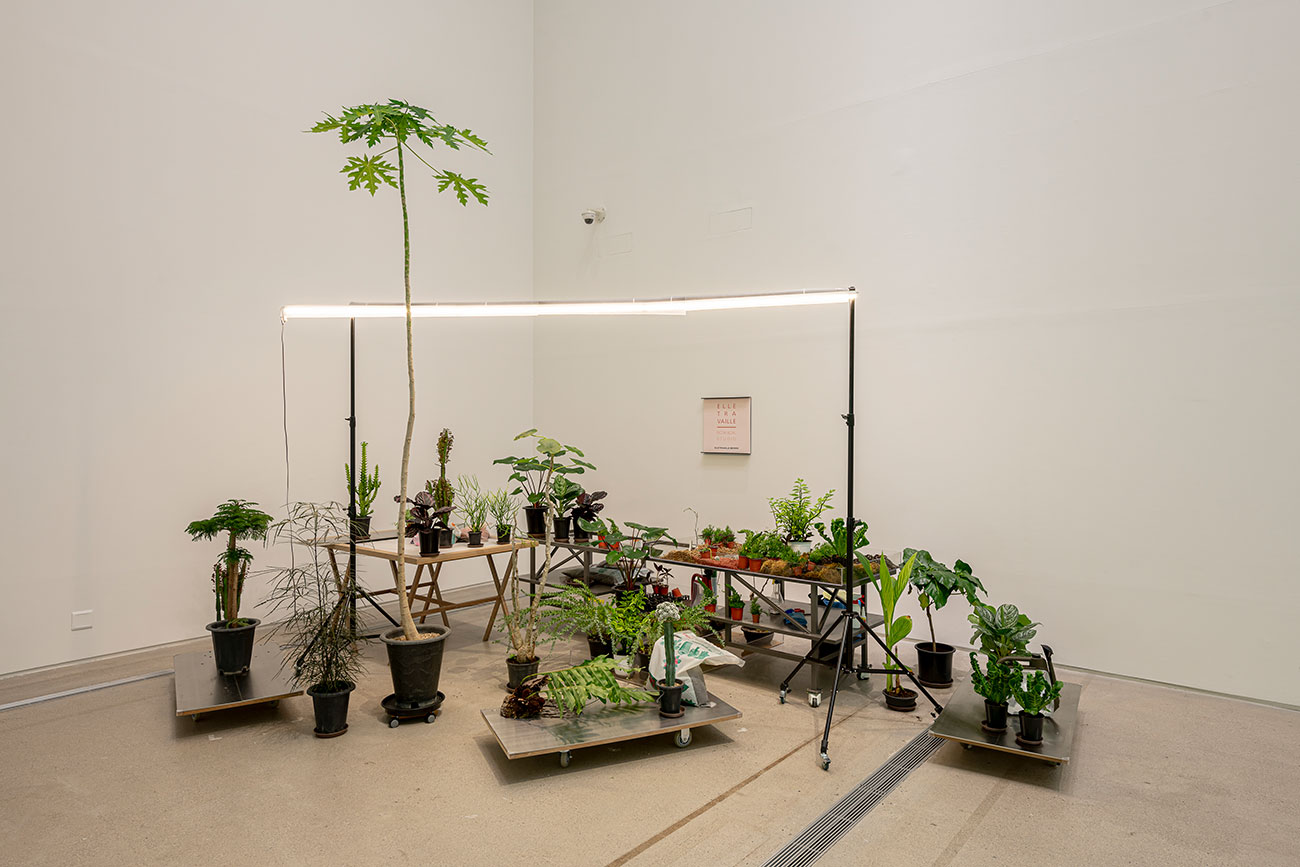
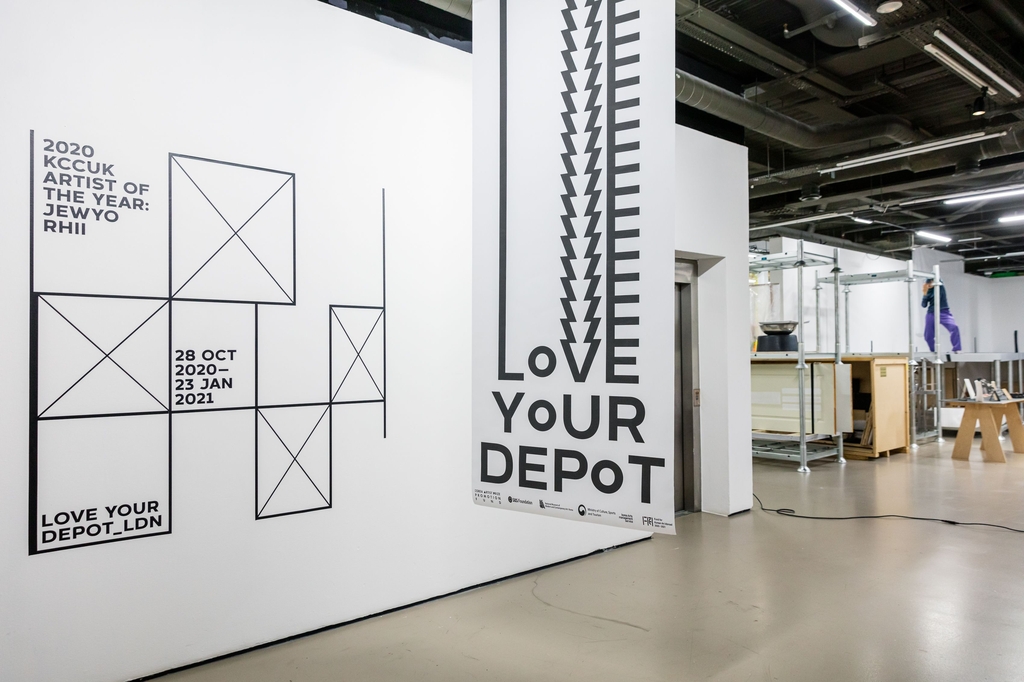
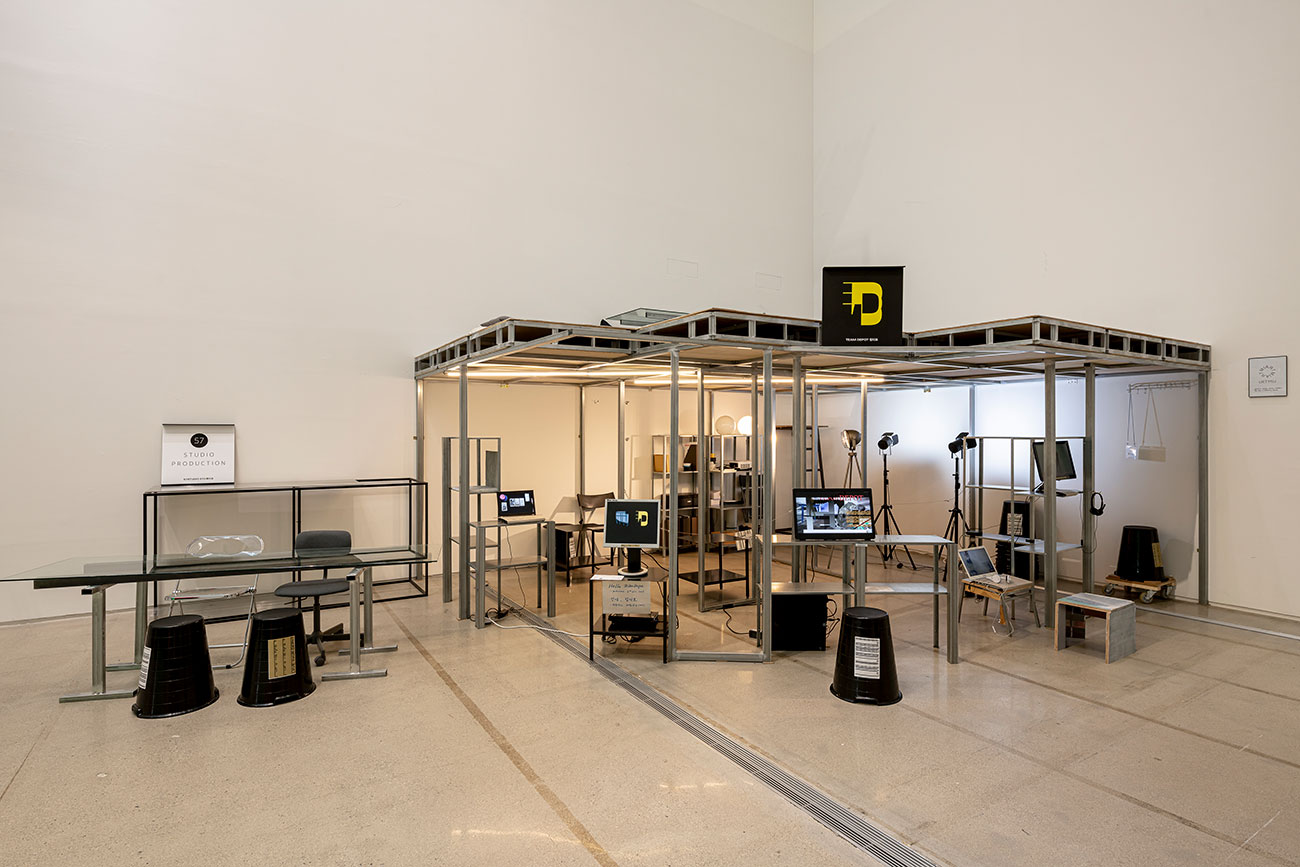
《Love Your Depot》 by Rhii, where artistic
imagination, which has been regarded as relevant solely to creative endeavors,
is applied to an alternative economic system is a platform for the
conceptualization and experimentation of contents as well as a sustainable
system and infrastructure for works of art. For four months, the museum is
freed from the given function of art viewing and is transformed into an
“alternative platform” and a “living storage” for the artworks that are
discarded and neglected by reality. This storage is not an unattended dark
space that can do nothing but wait for supply and demand. Having broken through
the darkness and revealing itself as it is to meet people, it is a storage that
is alive as it communicates through its secondary activities related to its
primary function and other contents. The artist’s plan to continue to work on
this project not just in this show but for the next three years is the most
practical and courageous response to the cry of “Come back!” attesting to her
intent not to react to it temporarily or in a roundabout way. Despite the
contradictions and limits of the institution and ecology of art, Rhii
reexamines the ethics and conditions of creativity that an artist should uphold
and mounts a challenge together for the invention of an alternative platform
through which the destiny of temporary postponement can be defied. It is
espoused that this “living storage” be a new territory where the anxiety that
seizes us is overcome so that our uncertain present is stabilized and the time
of our future is ensured.
1.
Debora Cowen, The Deadly Life of Logistics, trans. Kwon Beomcheol, (Seoul:
Galmuri, 2017).
2.
Charles Esche, “What remains… ambivalent relationships (with people and
things),” Jewyo Rhii: Night Studio, Sunjung Kim et al. (Seoul: SAMUSO, Workroom
Press, 2013), 101–103.