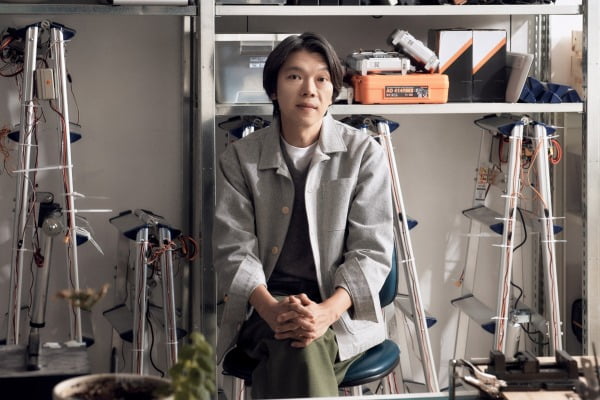
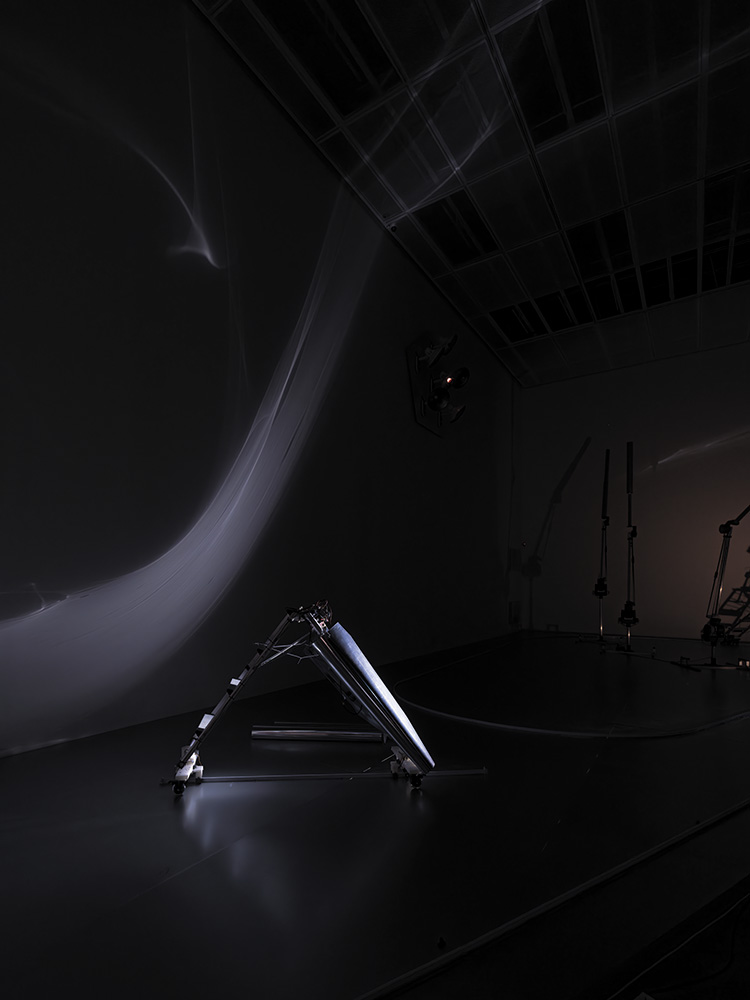
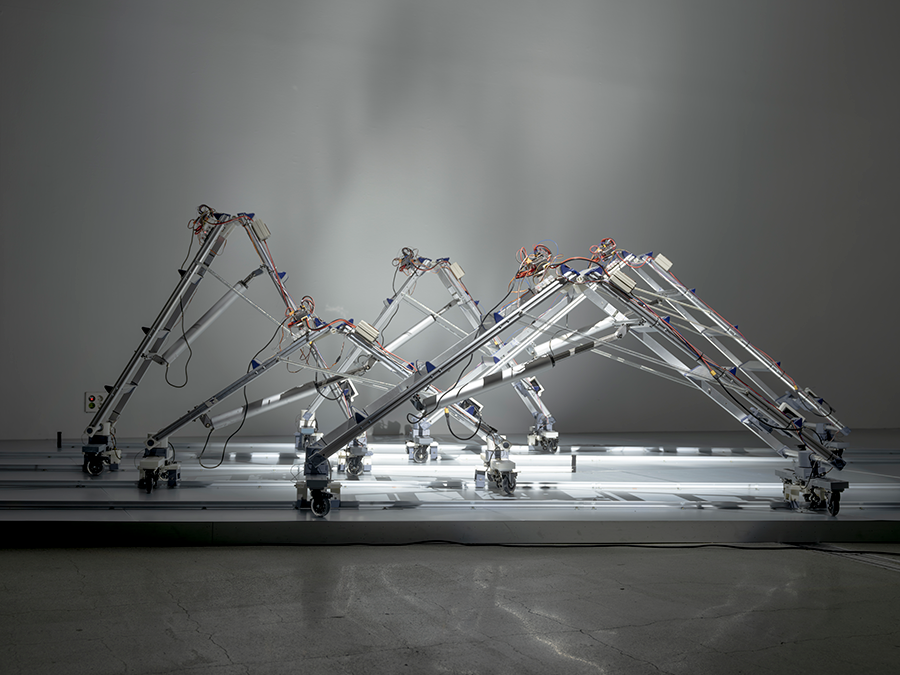
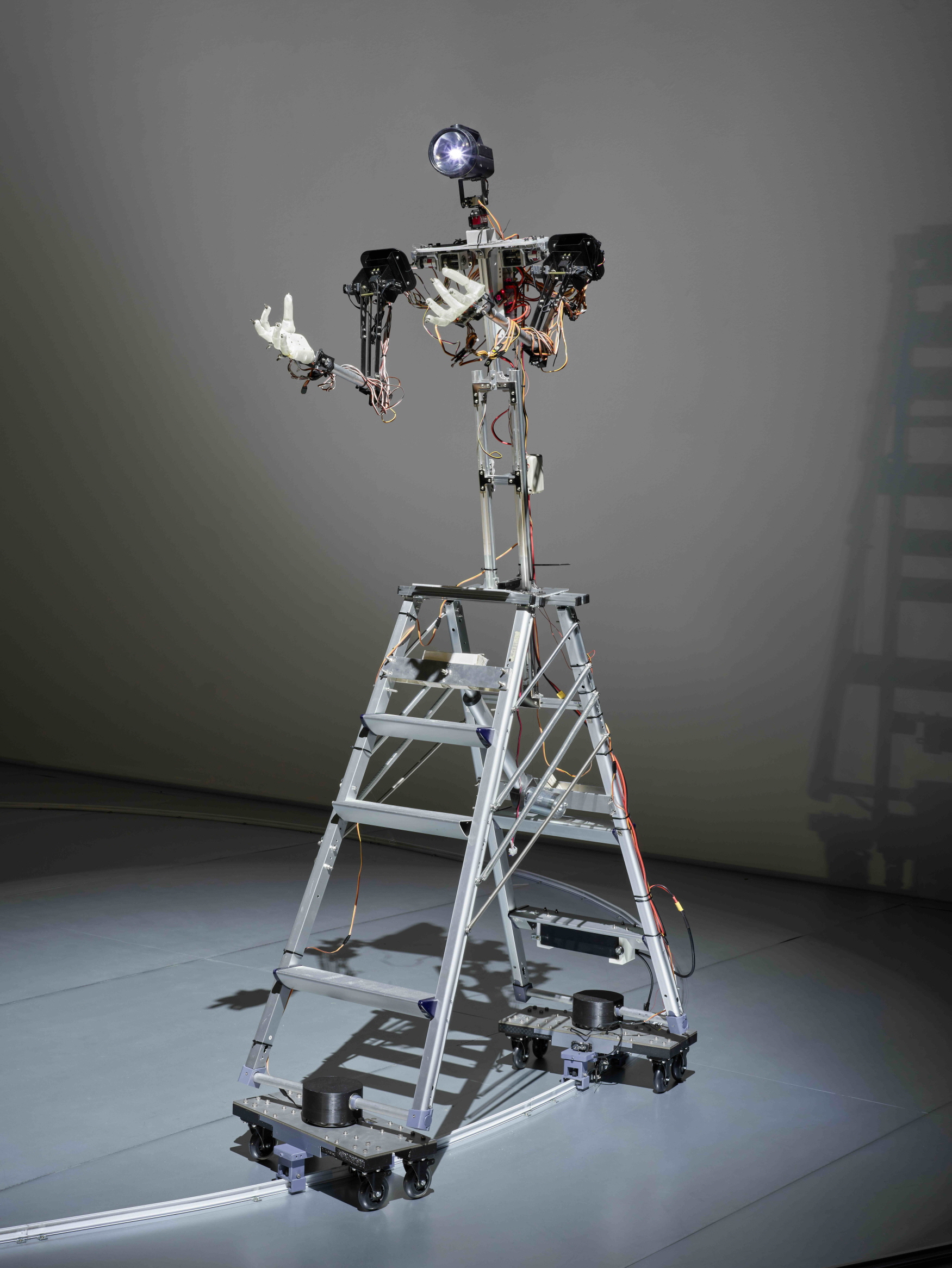
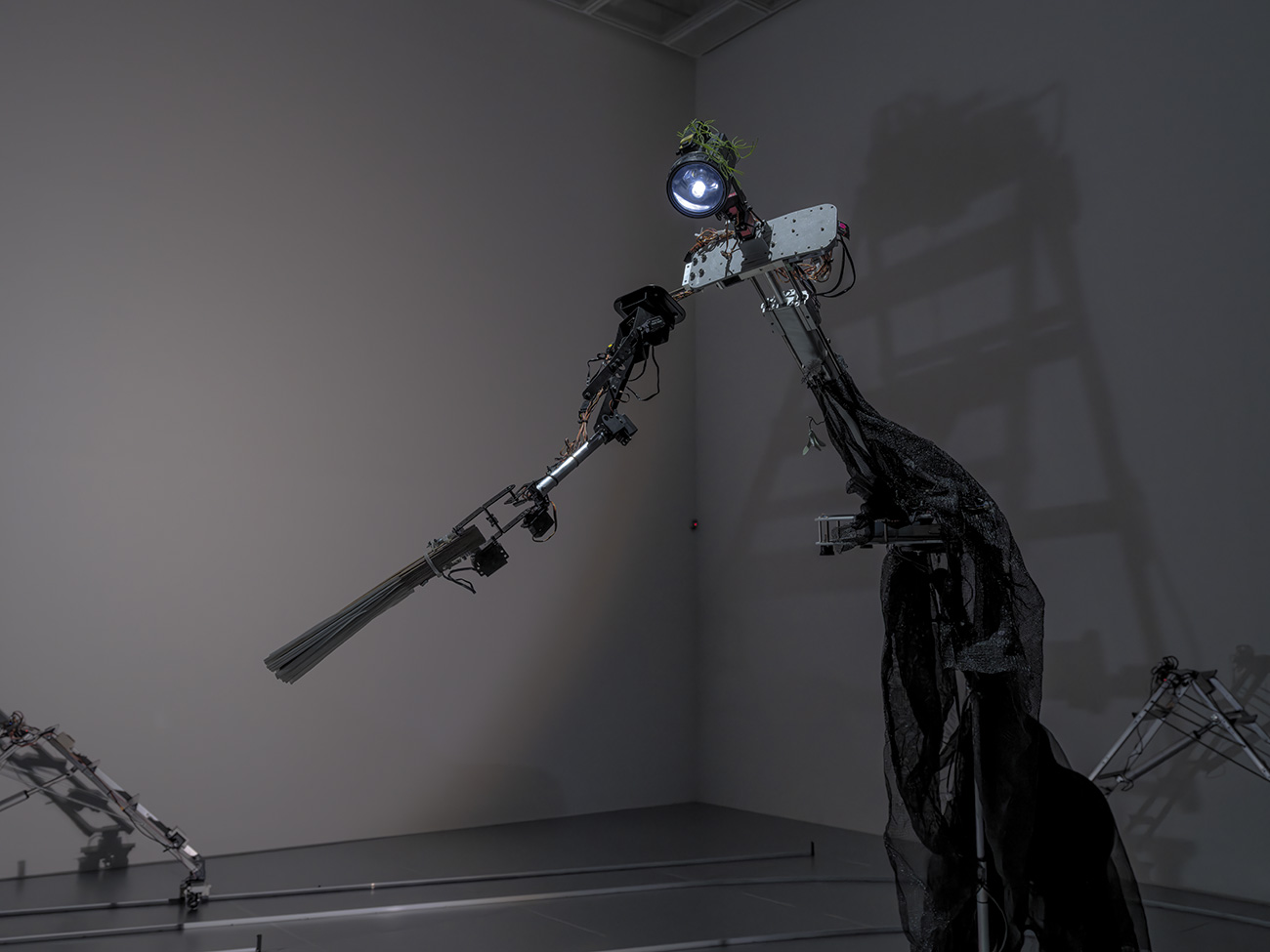
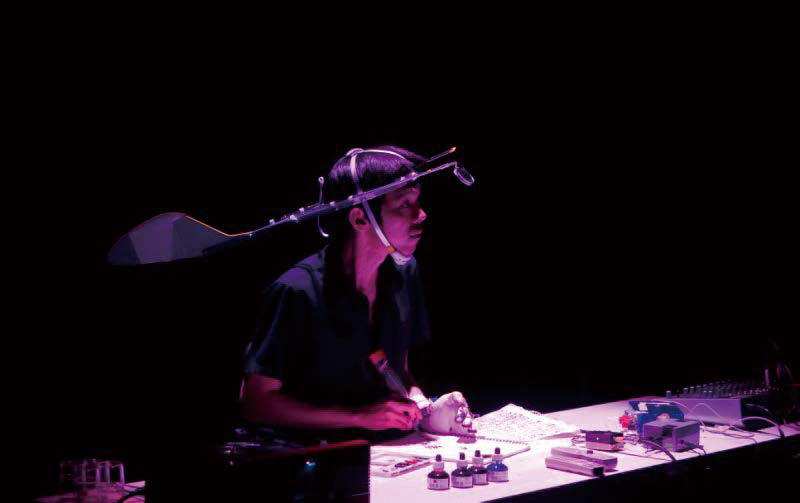
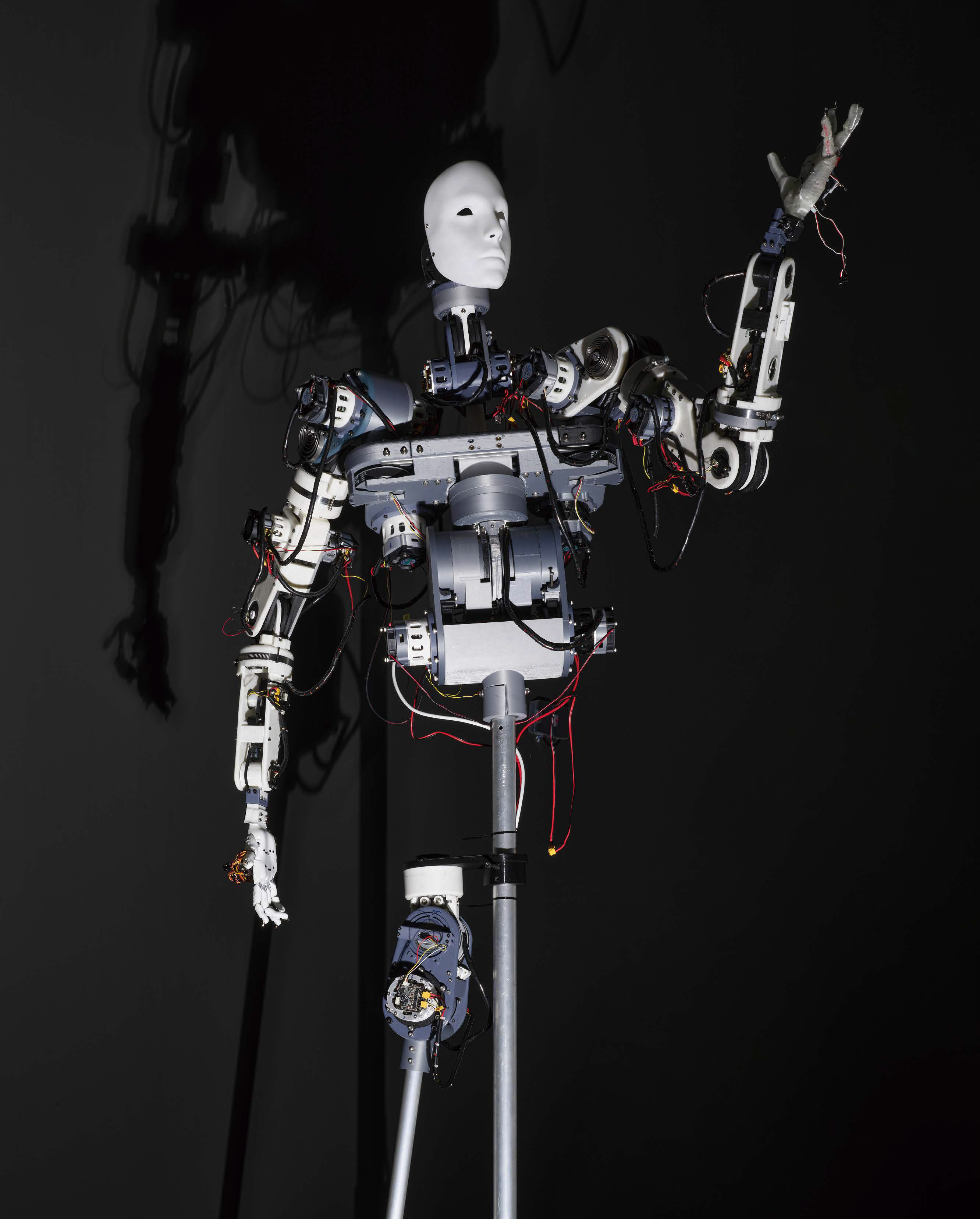
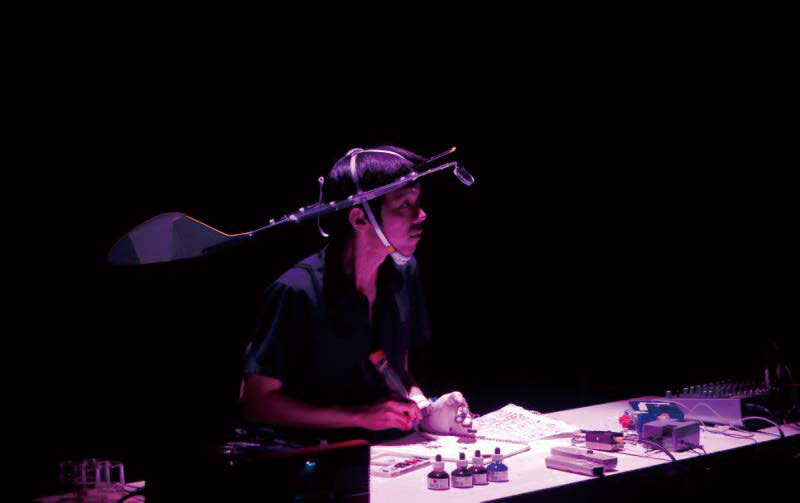
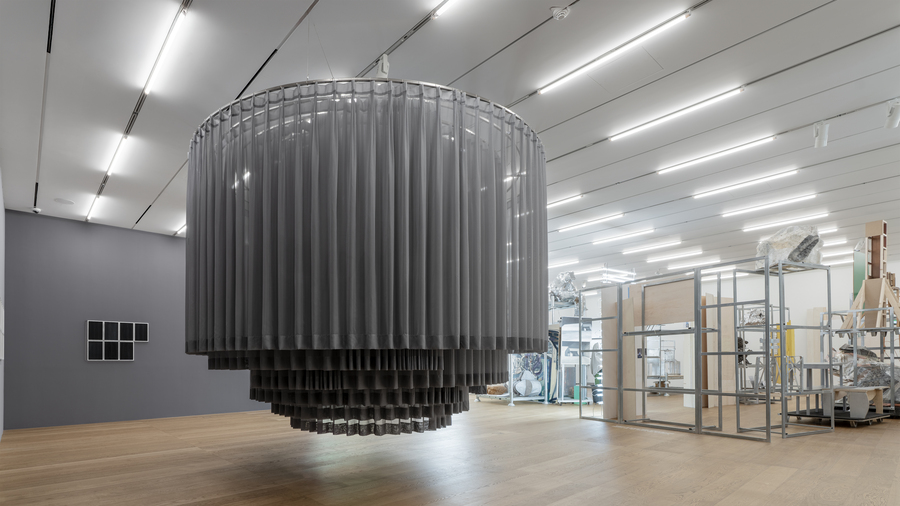
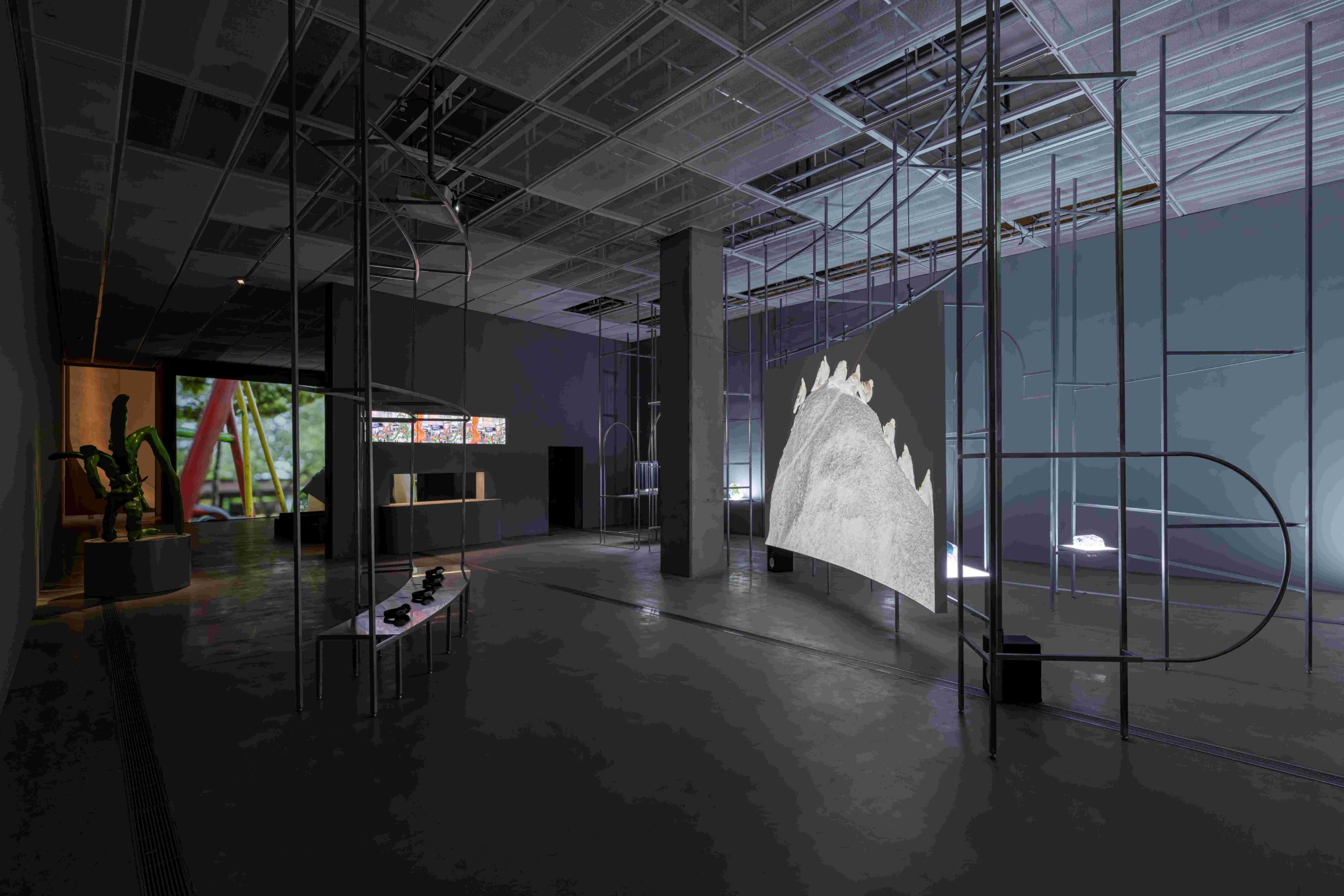
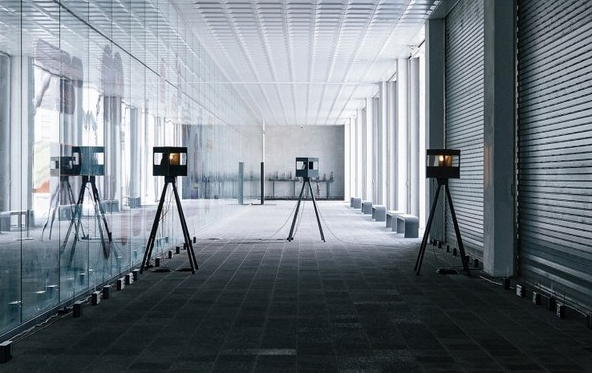
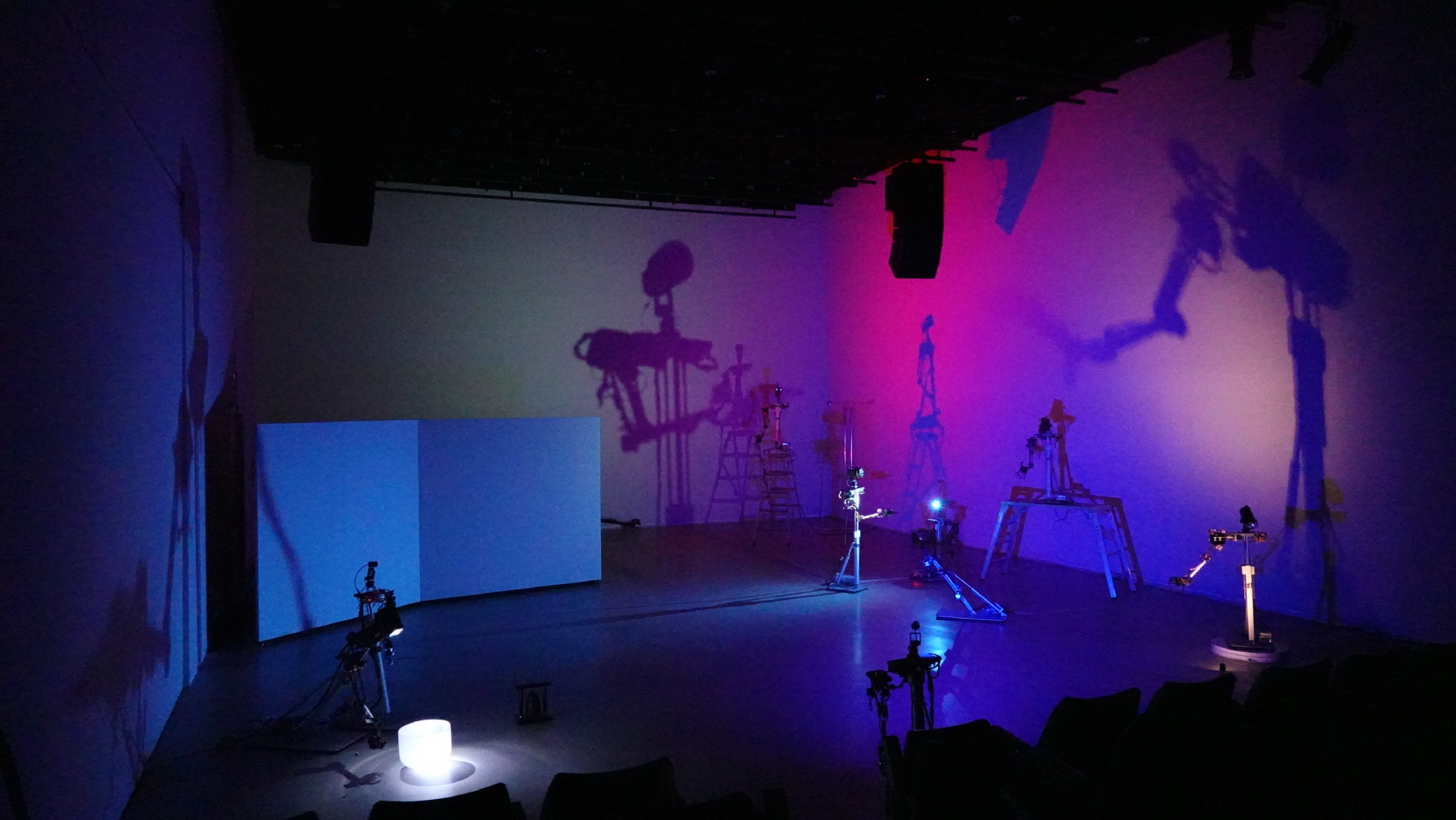
Byungjun Kwon, Robot Crossing a Single Line Bridge, 2023 © Byungjun Kwon

After a Break or a Turn: Artist Byungjun Kwon

The term “artist” circulates without much question in places like art magazines or museums, yet once you step outside the art-world’s institutions it becomes a hazy designation. “Is that person the kind who writes, or the kind who paints?”—a moment’s hesitation I felt while chatting with someone from outside the art milieu. Some, conscious of this, instead use “visual artist,” but for someone who is neither painter nor sculptor, or who doesn’t fixate on a single medium, that feels like a stopgap label—unsatisfying, and not exactly easy on the tongue.

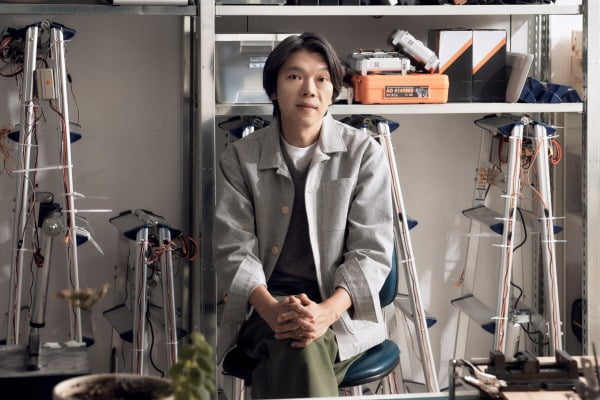
Writing about Kwon’s work, especially at this moment as the first half of 2024 draws to a close, the obvious case for analysis would be the work he presented in 《Korea Artist Prize 2023》 at MMCA Seoul last year. There is no issue calling Kwon an artist within the context of art institutions, given the prestige of that award. Yet if we look more closely at his practice to grasp its depth, we arrive at regions that can’t be contextualized by art history and theory alone. For many viewers he is received as this year’s artist-of-the-year, while his notable past—being a singer-songwriter spotlighted in Korea’s 1990s popular culture scene—works as an effective halo that validates his reception as an art-world artist. This essay, however, keeps its distance from that halo for two reasons. First, to avoid the capitalistic naiveté—or cultural cynicism—within the contemporary art scene that reduces an artist’s achievement and aesthetic significance to fame capital.

The second reason is more modest and simple. In an essay grounded in the critical context of contemporary art and museum practice, I lack the vantage point to analyze the achievements of genre music and to triangulate them with his current work. Still, if I were to propose a hypothesis based on a superficial impression, it’s that Kwon has consistently strayed from the mainstream—whether through band music or museum works—maintaining an attitude of departing from the conventions of institutionalized art. The objects and methods of his experiment have changed. Beyond composing and enjoying genre music, he expands the object of perception from “music” to “sound,” imagining and fabricating new instruments. This is a crucial break and a turn.

The American experimental musician Alvin Lucier (1931–2021) noted that “conventional audio engineering practices have ignored the spatial characteristics of sound in order to deliver the same results to everyone in the same room.” Sound has specific spatial properties. Short wavelengths (high frequencies) are directional; long wavelengths (low frequencies) diffuse. Sound waves spread outward from their source roughly in three-dimensional concentric circles, and under certain circumstances there exist nodes and antinodes that can be perceived as clearly as the vibrating string of a violin in an interior space. Each space, moreover, has inherent characteristics that absorb, reflect, and attenuate sound—modifying, placing, and moving sound through structurally related phenomena. According to Lucier, “If we accept these phenomena as natural and use them, new areas of musical composition open up.”1

Within the ideas and historical context of experimental music accumulated over more than half a century, we can begin to address the significance of Kwon’s practice. Yet this essay’s interest is not in mapping particular media or tendencies or in plotting coordinates. Rather, from a critical perspective on our contemporary artistic reality and the museum’s aesthetic practices, I aim to reconstruct critical questions by attending to the specific senses that Kwon’s work recalls. Although I initially raised 《Korea Artist Prize 2023》 as the primary object of attention, the aesthetic distilled and summarized in a single exhibition is inevitably overwhelmed, even distorted, by visual spectacle.

In Kwon’s work, “the reproduction of sound” and “the theater of robots” can appear to pull in opposite directions: works that play recordings/field captures through specially made headphones, and the theater of robot-machines—handmade with a conspicuously rough finish. Because of their replicability and distributability, the “robot” images, dramatically conspicuous, come to stand in for the artist’s practice. Given Kwon’s fluency with stage performance, focusing on theatricality would not be an egregious distortion. I don’t intend to endorse just one side of his conscious/unconscious duality. But I do find a problem in how, under habitual museum viewing, the other side of visibility—especially the weight of the invisible senses and the aesthetic implications of processes that cannot be seen—is too easily overlooked.

Byungjun Kwon, A little one to have all, Performance (LIG Art Hall, 2010) © Byungjun Kwon

A Place-ness Over There That Cannot Be Seen
 
So let us take not a work nor an exhibition, but a lecture as a key object of discussion. In November 2020 Kwon delivered a lecture titled “Noise” at the request of Digital Silence.2 By dictionary definition, noise is “irregularly mixed, unpleasant, loud sound,” a term with negative connotation. It’s easy to conjure sounds we commonly perceive as unpleasant: the roar of construction equipment shattering a quiet morning’s stillness, or the incessant chatter of the people at the next café table derailing one’s writing. R. Murray Schafer—who popularized the concept of the soundscape—said, “Noise is the sound we have learned to ignore.”3 A broad definition that includes not only sounds we immediately want to escape but also those we do not consciously perceive.

Citing Schafer, Kwon declares a sustained interest in the soundscape movement/genre and defines noise as “sound that is present but unrecognized; sound that cannot be heard until it is listened to.” He shares an episode: while running an educational program for children, he played the soundscape of a village in Jirisan for a ten-year-old, who, when asked what sounds he heard, replied, “I don’t hear anything.” “The birdsong, the barking of dogs—the placid everyday of a village—was not, for the child, within the realm of sound.” Without questioning the child’s sensory capacity, Kwon, through this example, claims that “in the realm of sound, the definition of noise expresses one’s value system or worldview” and is “deeply subjective.”4

〈오묘한 진리의 숲4〉, 2019, 《2019 파라다이스 아트랩 쇼케이스》 파라다이스 아트홀, 2019 © 권병준

Sound, noise, and music are not separate concepts; one’s recognition of each shifts with subjective thought and sense. The world is filled with innumerable sounds, and noise is always present around us yet remains unnamed as a “being.” Following Schafer’s question: “What sounds do we want to preserve, encourage, and multiply?” As a person in the world, Kwon would likely answer: “It differs for each of us.” Schafer then asks, “How, through art—and especially music—does humanity create an ideal soundscape for another life: a life of imagination and spiritual reflection?”5

The answer belongs to viewers and readers. Still, in Kwon’s work—as an artist who harmonizes personal sensibility with social consciousness—we can find one clue, one case. Consider the popular soundscape of contemporary urban life. Uncontroversially, traffic noise predominates. In a greened park, in an alley dense with large housing complexes, even in a small theater in a busy district, the sounds of speed from cars, airplanes, and trains resound near and far. In the convenient urban life afforded by diverse infrastructures, soundscapes are nearly standardized, and urbanites suffer a degree of collective hard-of-hearing amid ceaseless machine hum. How then can soundscapes, in such an environment, become a way to imagine another life?

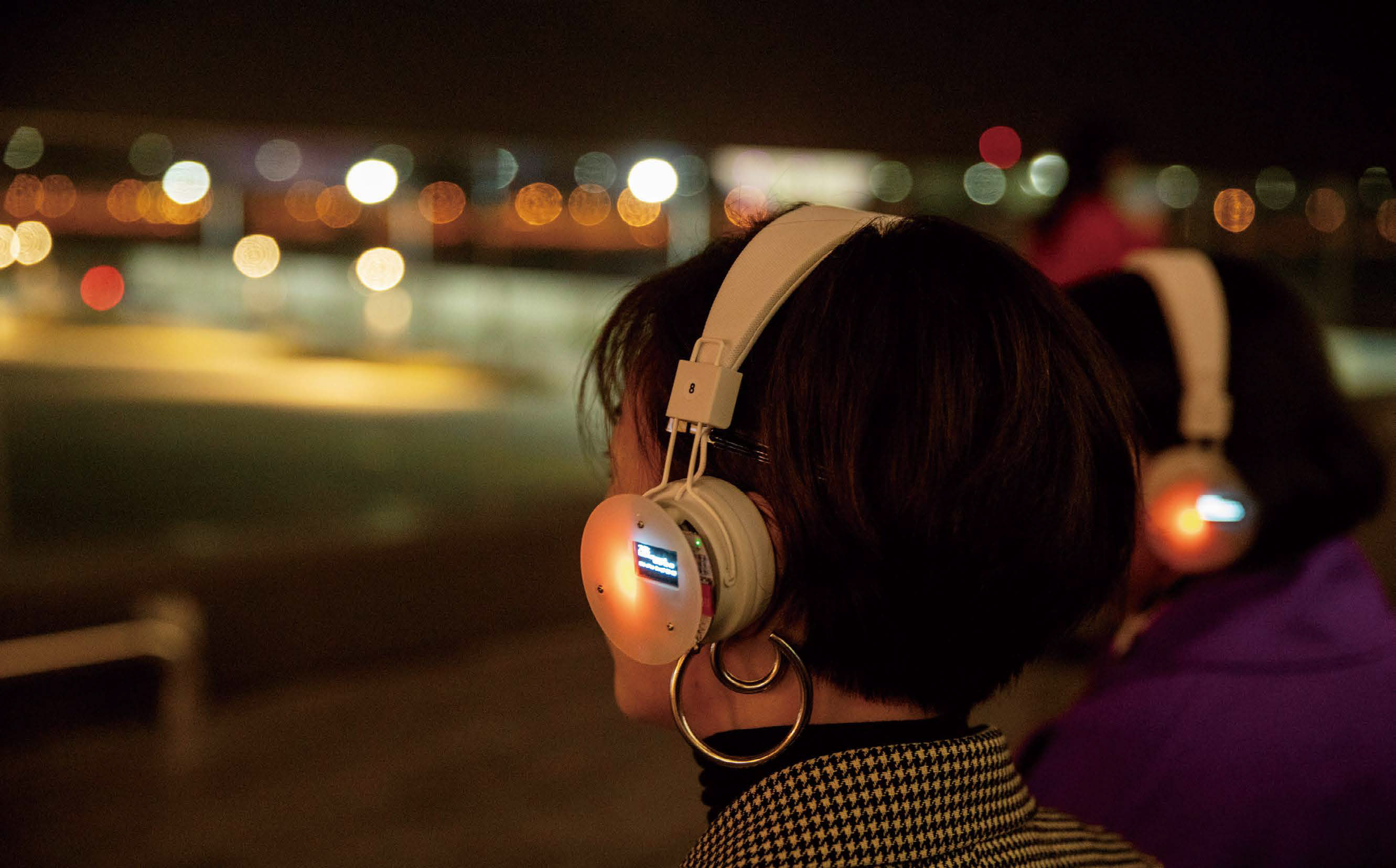
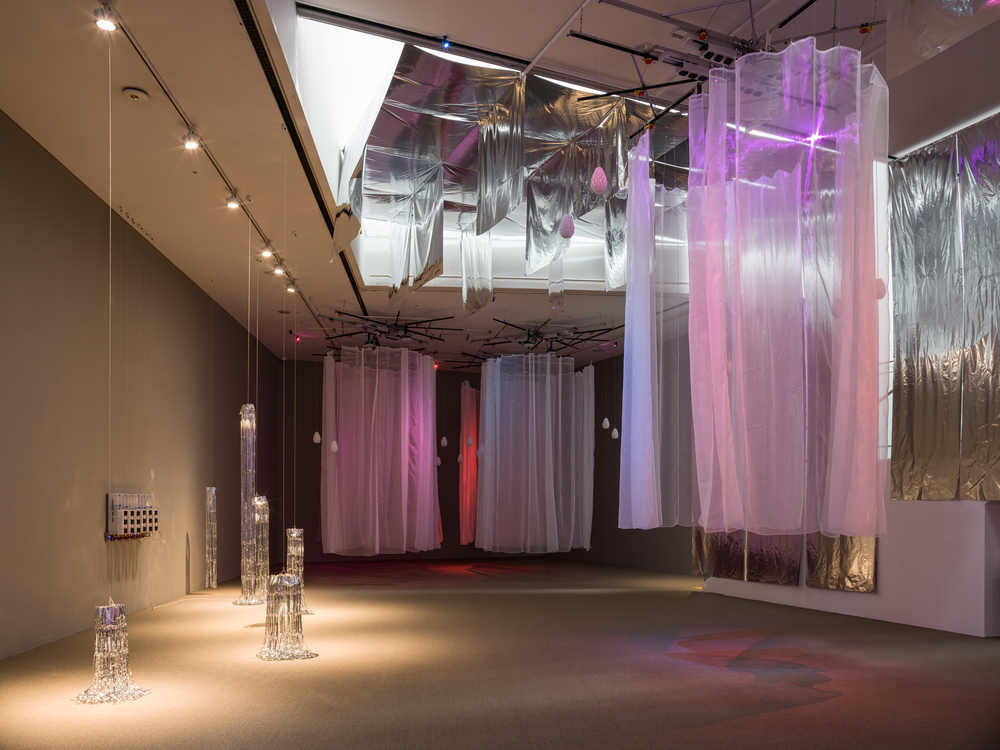
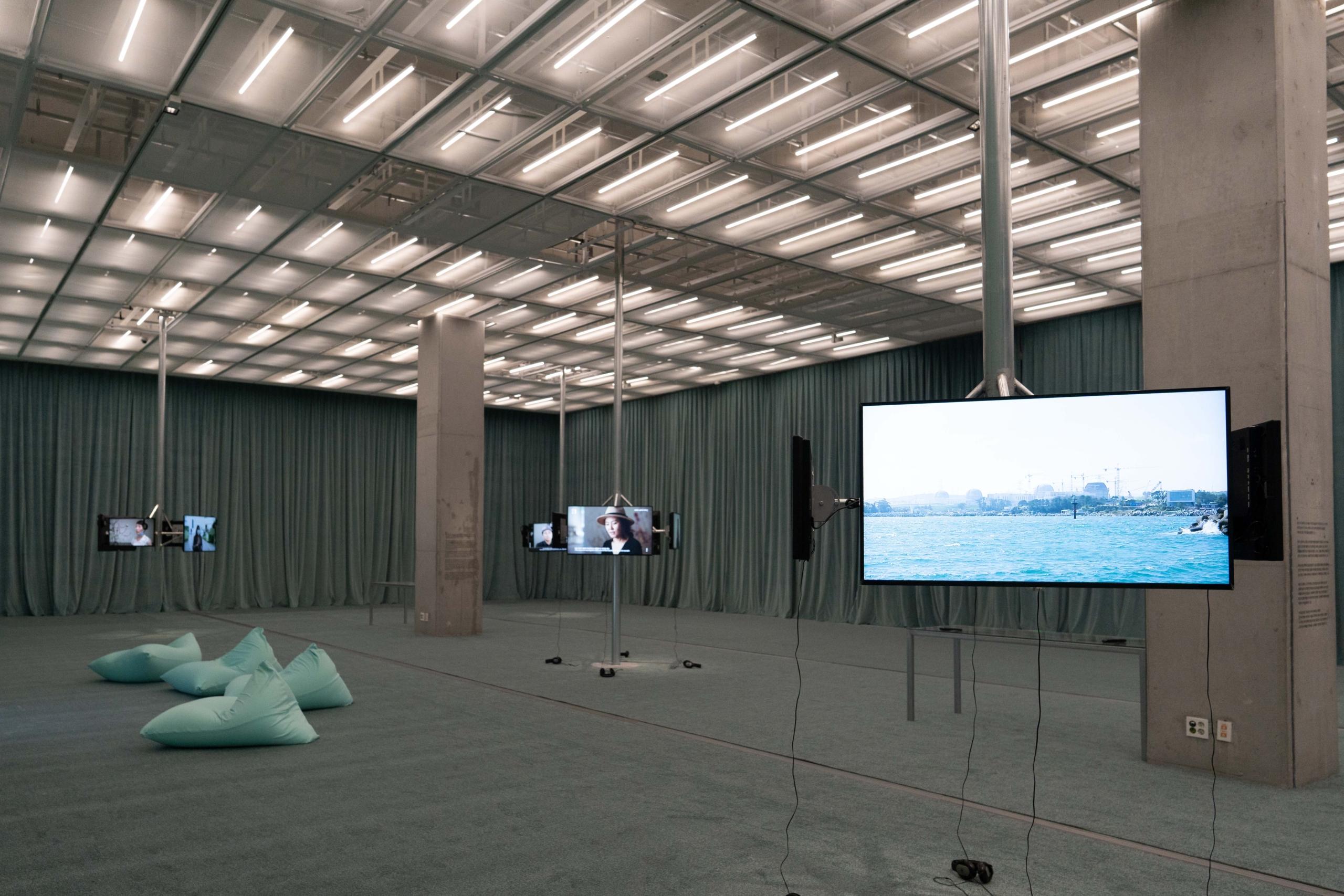
Over the last decade Kwon has developed projects that play recorded or collected sounds—using, for example, headsets equipped with positioning systems and ambisonic technologies—in varied forms. This is not an aural re-education project that, within an indiscriminate and chaotic sound circumstance, asks you to separate micro sonic elements and savor them as “pleasant.” The semantic stratum of sound differs from piece to piece, so we cannot generalize; but drawing on my memories of a few works I have directly experienced and related documents, a common principle is a “disjunction” between sight and hearing.

Wearing headphones in the usual way, one is separated from the visual reality before one’s eyes and immersed in an individuated auditory world; unlike the experience of hearing a sound that corresponds to the visual scene—say, a car passing on the road ahead—one hears sounds decoupled from the visible landscape. Kwon then rebinds the headphone-borne sound to the physical space inside and outside the eyes in a novel way. This parallels how sight and sound work in cinema: images do not contain sounds; in film, sound, like vision, is edited and montaged. Kwon does not use video or photographic imagery, and instead confronts us with real-time, natural space; yet through sound-editing alone, the image of visible reality is transformed.

From Cheongju to Kyiv (2022) mapped the soundscape of an imaginary city in a museum’s outdoor plaza, so that visitors could wander with headphones and listen. There is no particular relation between Kyiv, the capital of Ukraine, and Cheongju, a provincial Korean city. Yet Kwon, attentive to the charged geopolitical climate and the affect of anxiety gripping individuals after the Russia–Ukraine war broke out, responds to an encompassing museum brief on cities and sonic perception with a daring theme. Here, too, the audience encounters the “sounds of tension and anxiety” through headphones as usual, but he designed a moment in which all listeners simultaneously hear the same sounds—sirens and airplane noise. 

Forest of Subtle Truth (2017–2019) likewise carries clear social consciousness and subject matter: songs of Yemeni refugees who arrived in Jeju without authorization; the soundscape of Gyodong Island near North Korea; lullabies from multicultural families in Hongseong, South Chungcheong. Kwon goes to meet the people he worries over and confronts events. The sounds he gathers across the country connect—via headphones in museums and theaters, studios and classrooms—to anonymous viewers. The site of reception is largely abstract, but the places he leads us to are not a “bleached here,” but a “variegated there.” The audience listens to a speechless tale, a song without representation, a theater that unfolds invisibly. Poet Ham Seongho notes the “headset sound that erases place” in Kwon’s work,6 but here I wish to underscore a place-ness over there that appears only through sound, unseen.
 

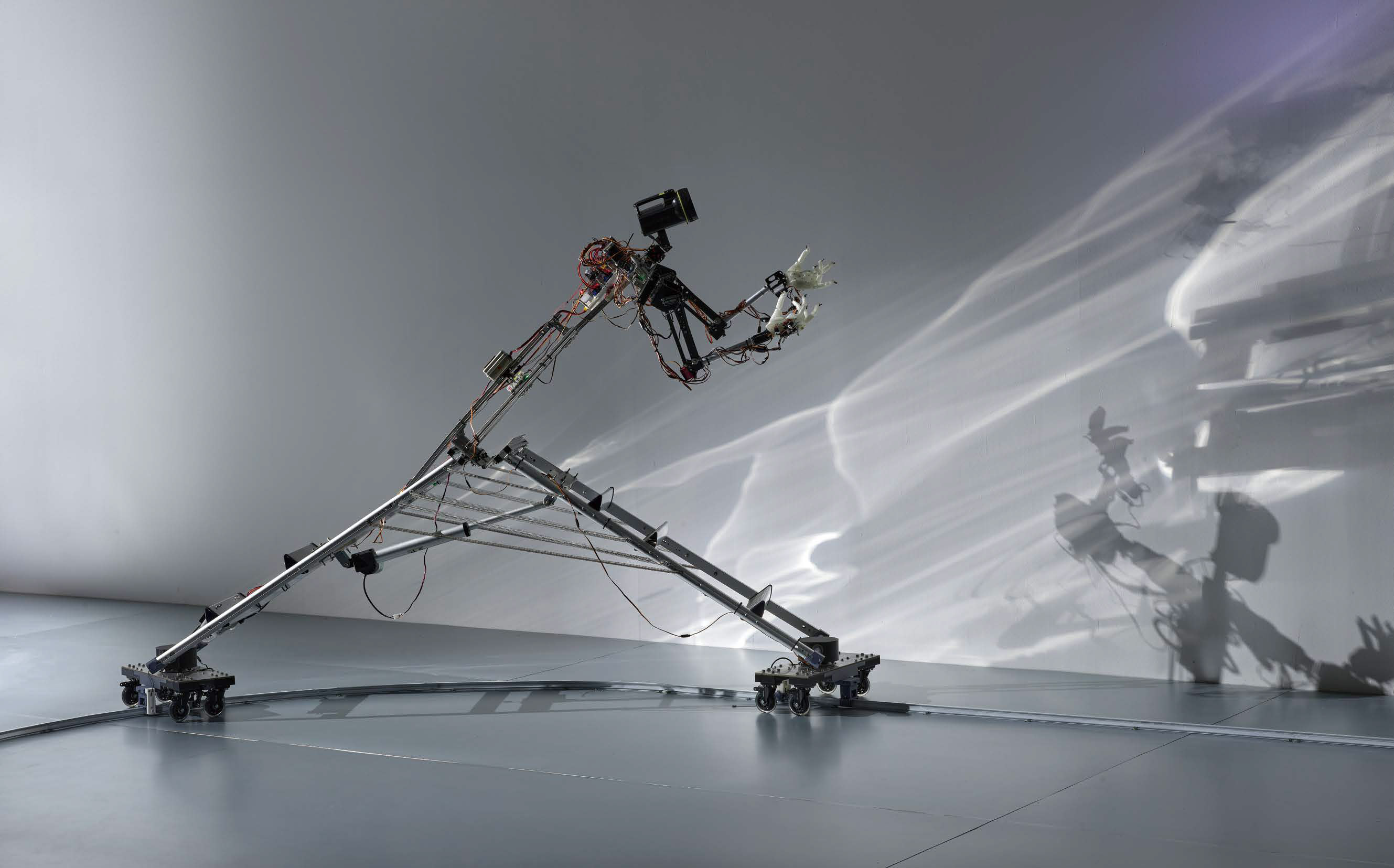
When Boston Dynamics’ impeccably bipedal
robot executes a tumbling routine with smooth ease,
Kwon’s robots limp along from atop a tripod
or creak on ladder-legs.


Byungjun Kwon, Ochetuji Ladderbot, 2022 © Byungjun Kwon

Is a Robot (a Kind of) Instrument?

Since modernity, in the museum’s conventions of art-making and exhibition production, sound art has been the ideal form/genre for practicing the desire to break boundaries, take down walls, and move beyond the gallery’s confines—because of sound’s leakiness and diffusiveness. Many canonical works in the history of sound art bear this outward impulse. Consider the audio/video “walks” of Janet Cardiff and George Bures Miller, wildly popular in the Western art world in the 2000s.7 Media scholar Steven Connor similarly notes that “most characteristic works of sound art have the capacity to go outside or to bring the outside inside.”8 Sound’s permeability enabled sound art that traversed and exited the gallery; at the same time, to block the external noise that interferes with sound as an artwork, sound art returned indoors, leading to partition walls to minimize cross-mixing between works.

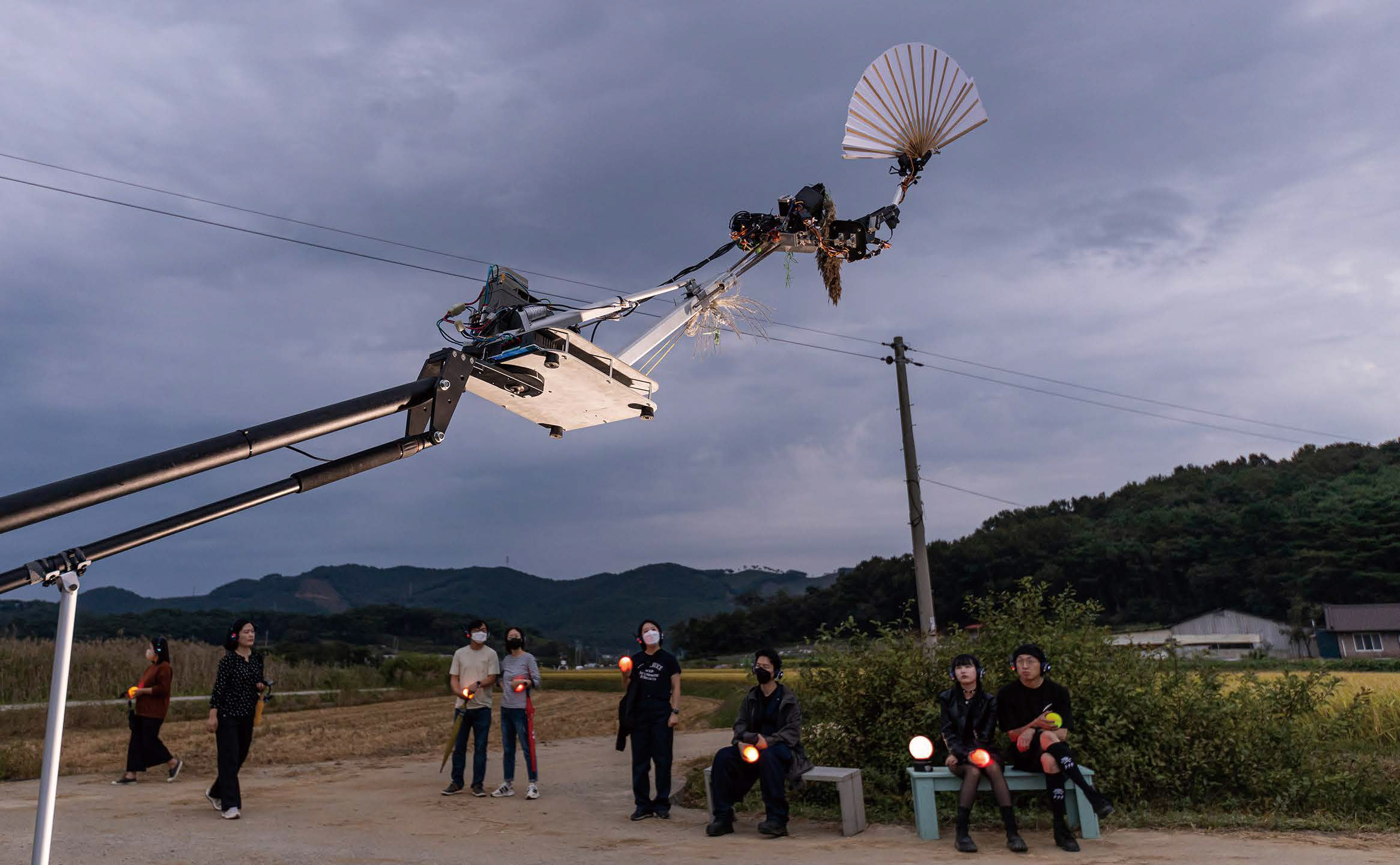
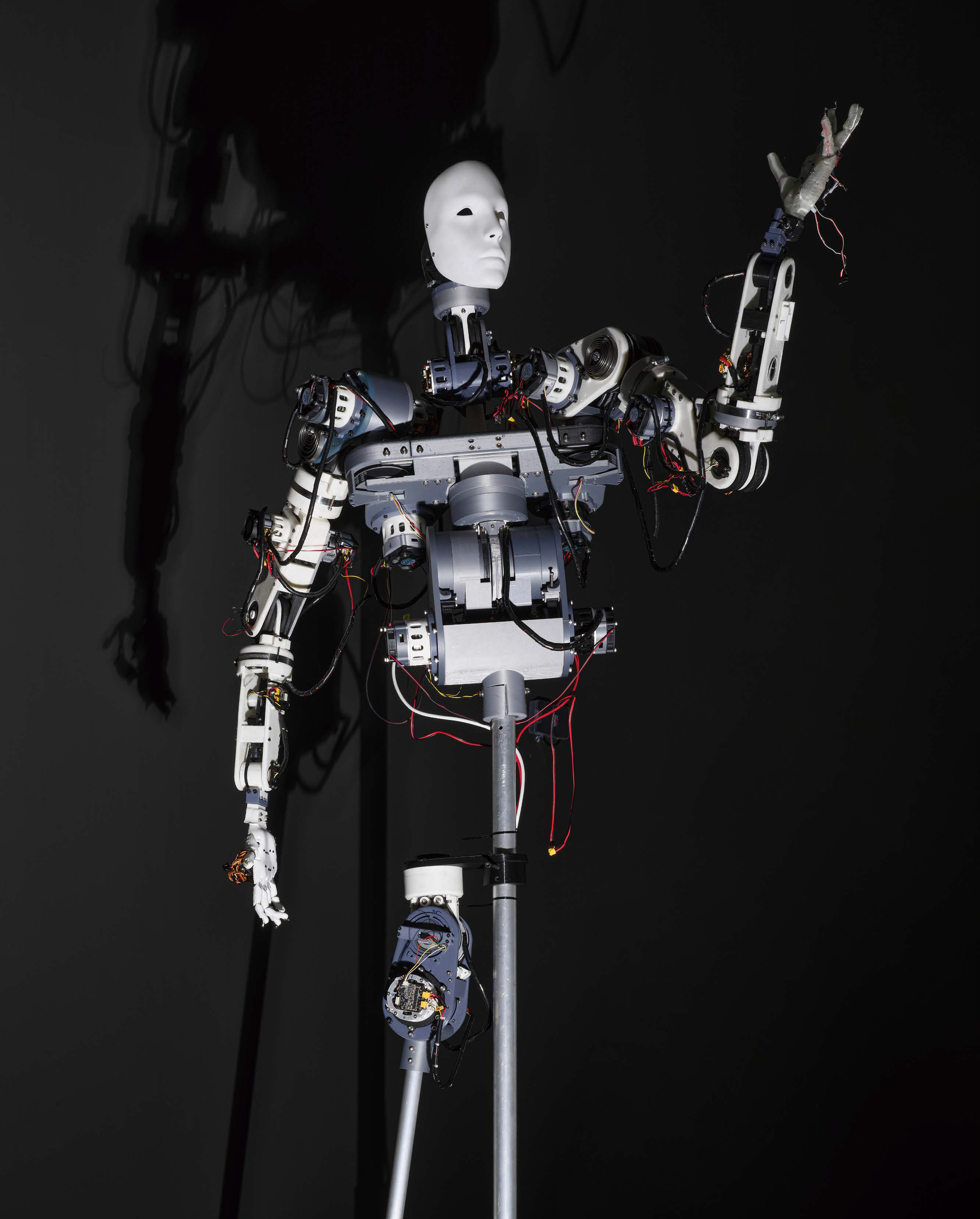
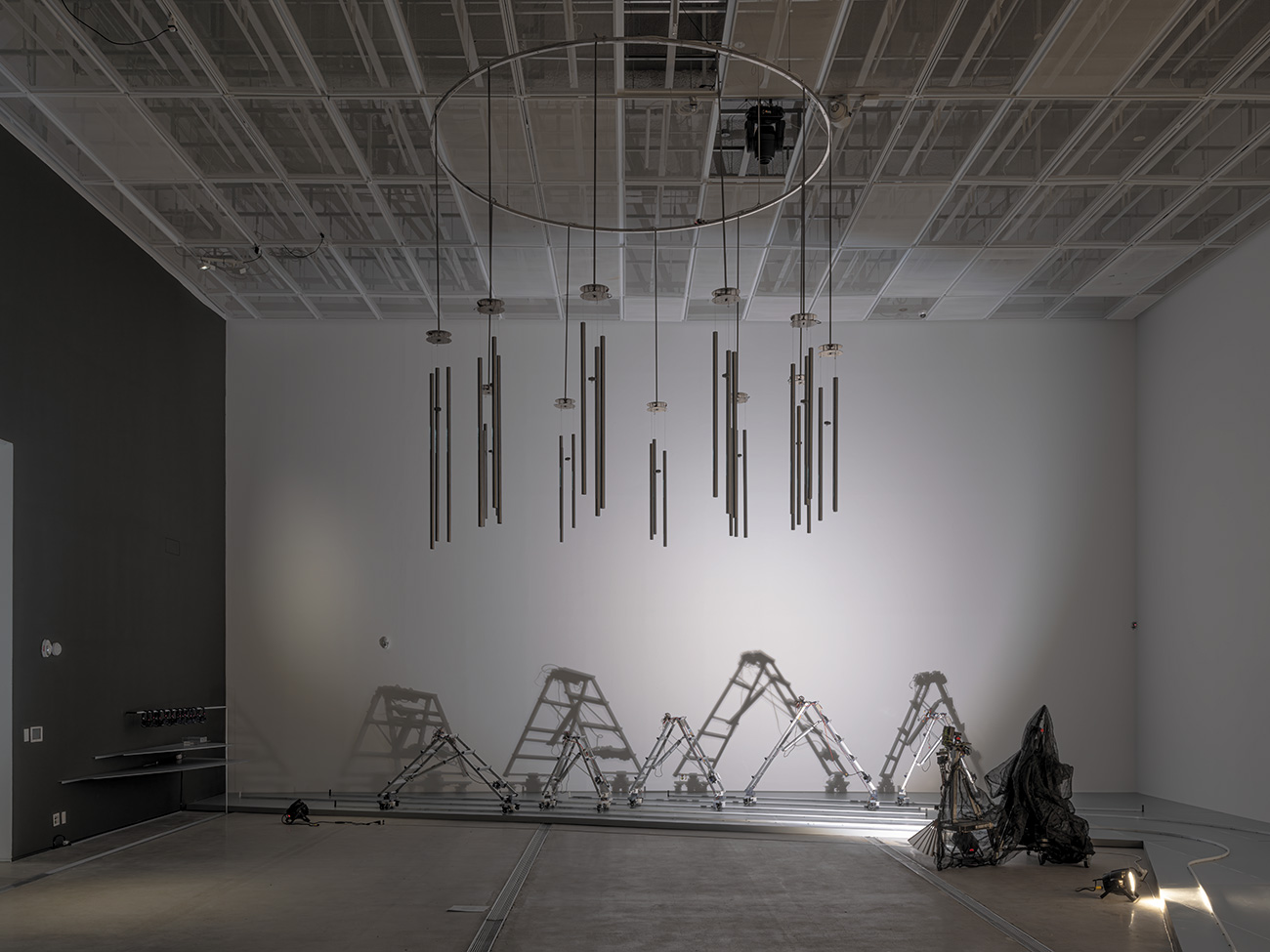
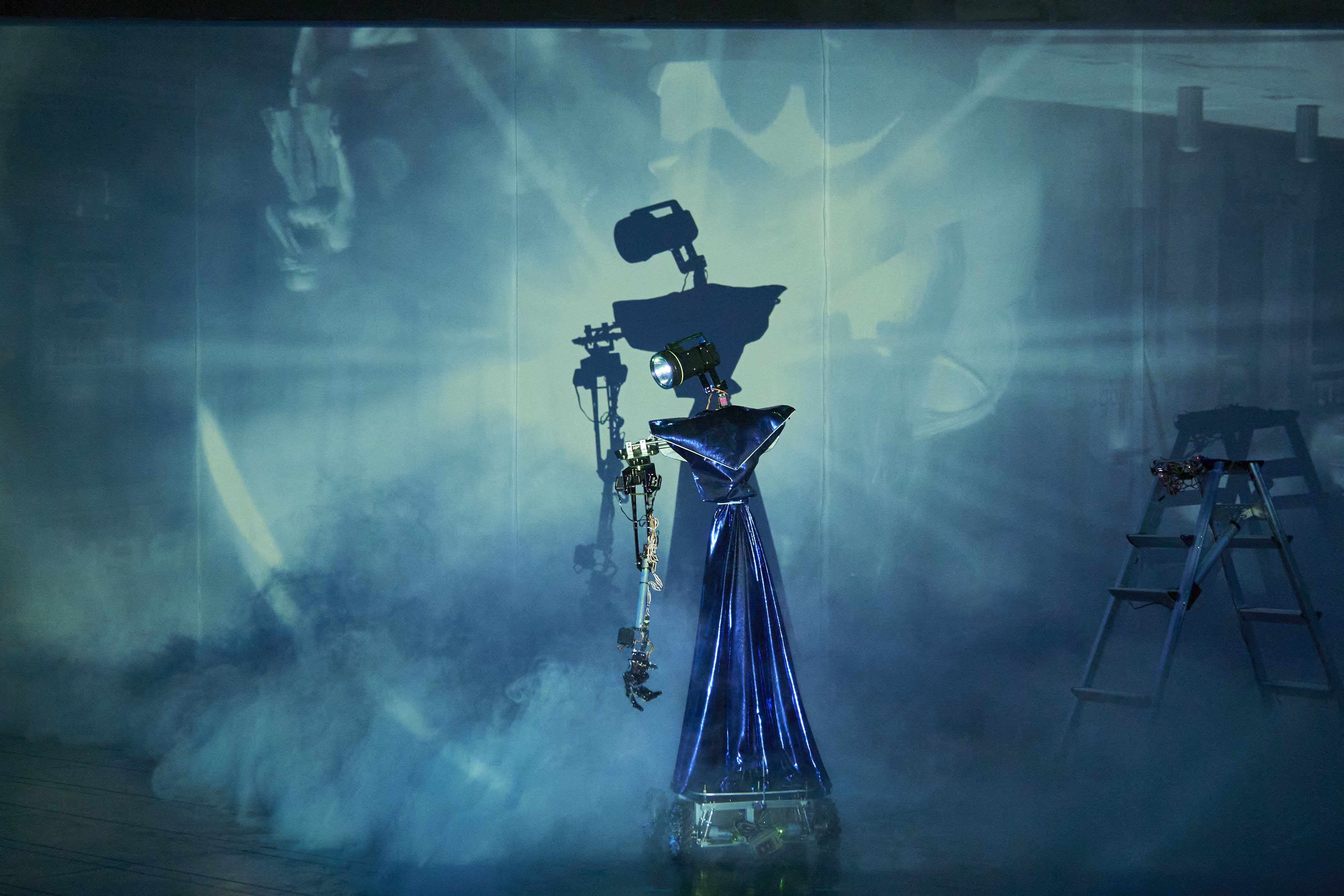
Here we cannot omit Kwon’s robots. Their outward form, hand-built by the artist, is rough. A long rod-like body perched on a tool like a ladder or tripod; a flashlight “face” that evokes a human; and, unlike industrial robots focused on joints and extension, a conspicuously emphasized set of fingers. Robots are no longer confined to sci-fi novels and cartoons; driven by technological and industrial advances, they have become everyday entities familiar to the public. New common sense about expensive android industries is projected onto the lyrics of “cheap androids” and the figures of robotic performers. When Boston Dynamics’ impeccably bipedal robot executes a tumbling routine with smooth ease, Kwon’s robots limp along from atop a tripod or creak on ladder-legs. When Tesla touts a robot whose uncannily intimate technology lets it carry a raw egg with human-like delicate fingers without breaking it, Kwon’s robots—arms and fingers rendered unusually close to the human—neither play instruments nor grasp microphones; they simply swish through air, reflecting the flashlight beams they face.

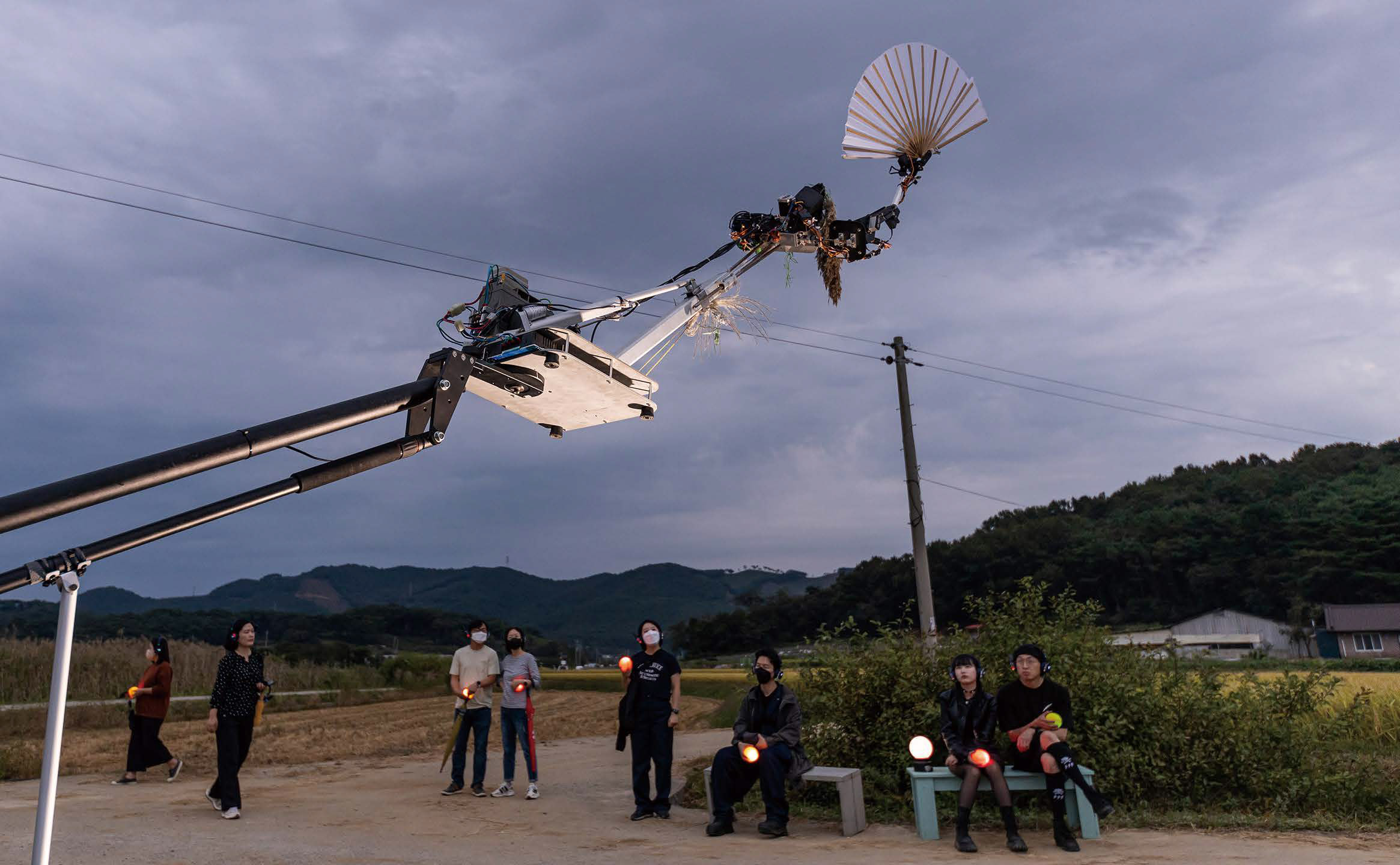
Byungjun Kwon, "We Will Have a Serious Night" by Ghost Theatre (HongDong Reservoir, 2022) © Byungjun Kwon

The robot theater unfolds in theaters and museums. In Cheap Android’s Lyric 2 (Robot Nocturne) (2020), first presented in a stage format, the pathos wrought by the wobbling robot reaches a height. With human performers aiding the robots’ motions like puppeteers, the classically theatrical direction—inviting immersion in heightened sentiment—makes us see the robot as a being of the past, not the future. The melancholic tone remains in 《Korea Artist Prize 2023》.
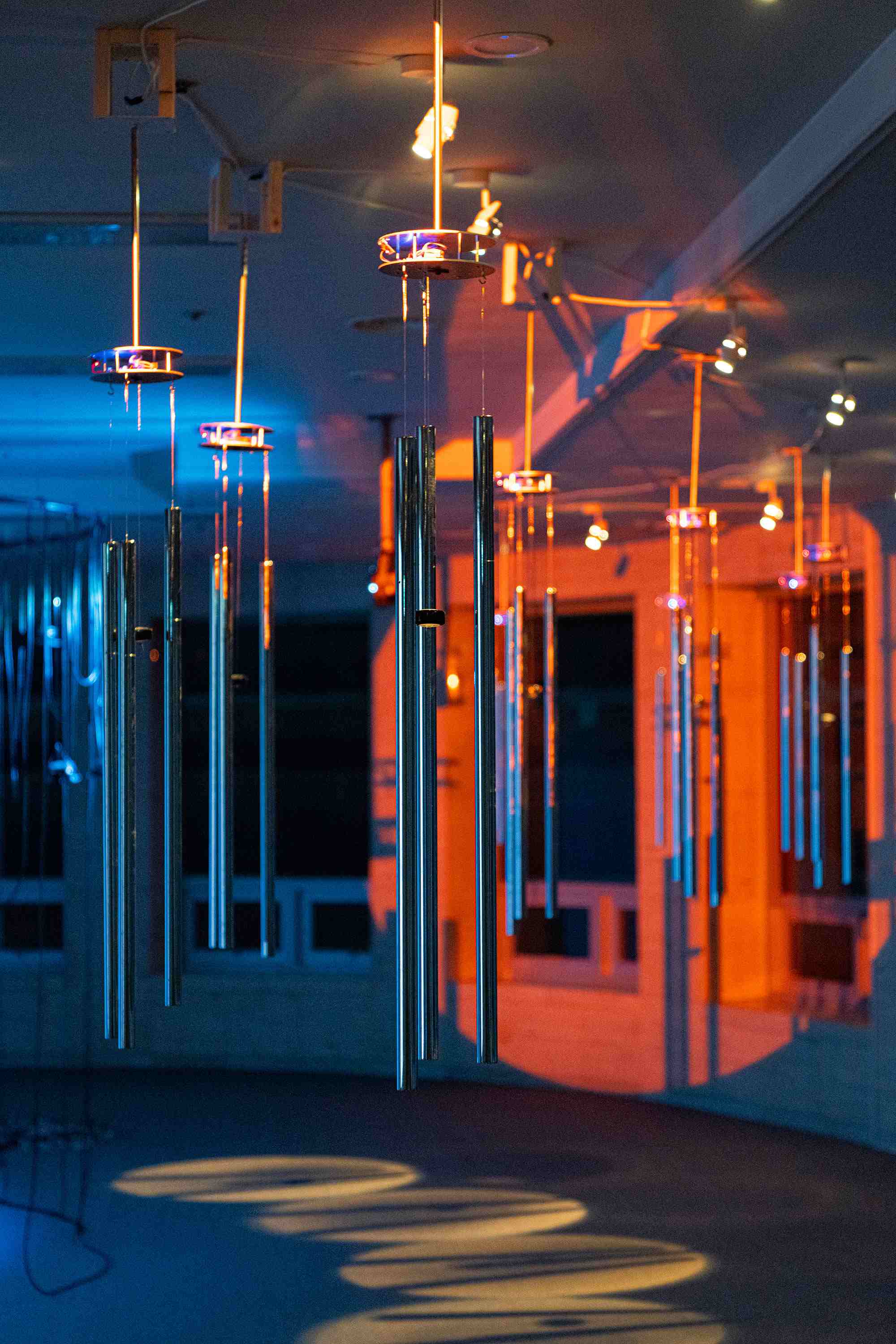
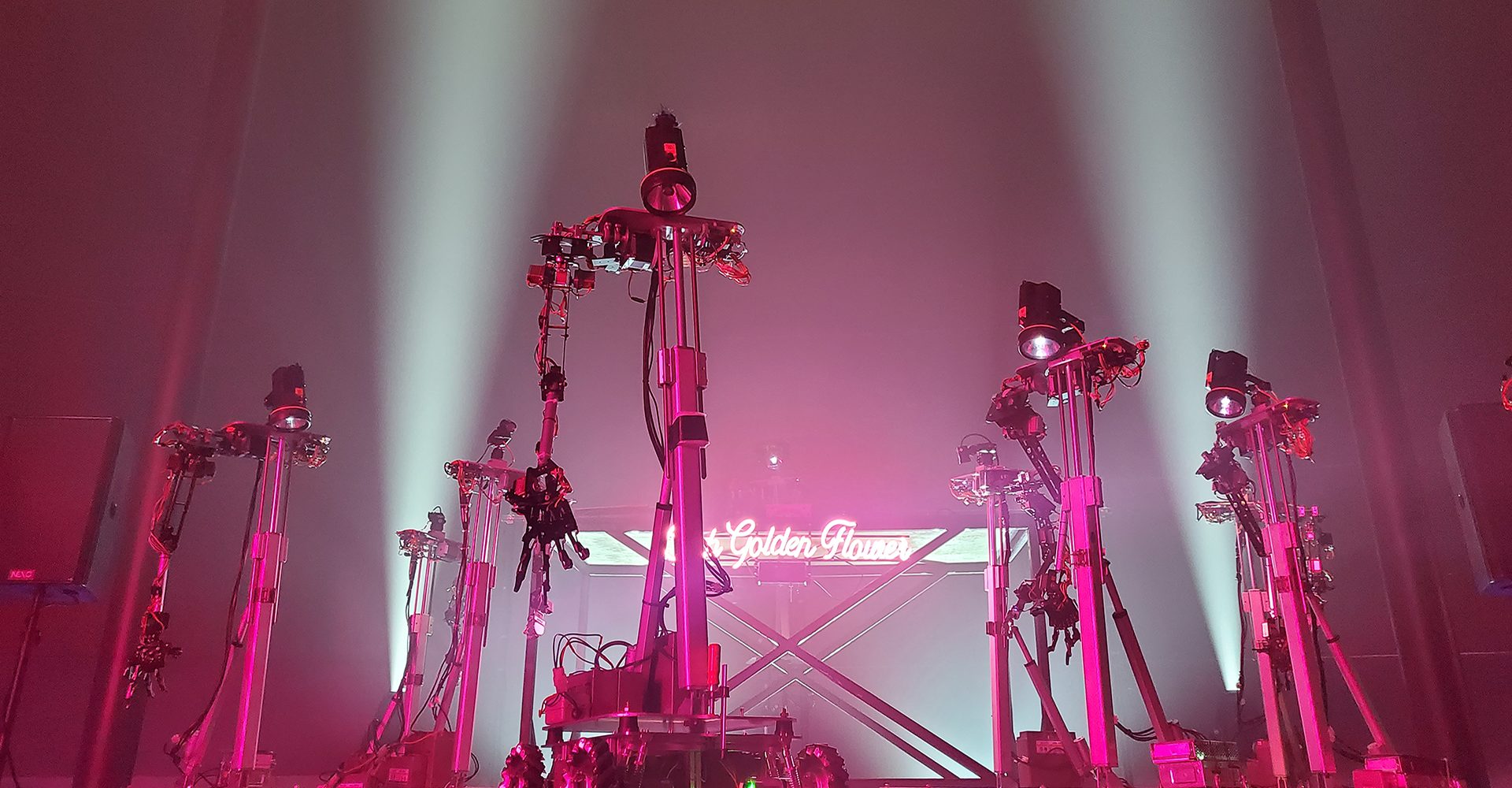
Harnessing engineering skill, Kwon constructs a theater environment within the exhibition hall. Unlike theaters whose lighting and sound systems were structurally complete by the 1980s, galleries require systems rebuilt with attention to viewing conventions and architectural specifics. What comes in, after such laborious technical production, from outside to inside? Is it sound? Is a robot (a kind of) instrument? Perhaps these questions willfully distort the phenomenon. Maybe, to rein in and condense sound’s tendency to spread and leak, he has returned to the ordered interior to deliver music evenly. But if the robot body is an instrument, it is one no one has ever seen: we don’t know what posture to “play” it in, nor what sounds it might produce. In We Will Have a Serious Night (2021), a robot standing in a field like a scarecrow stirs our curiosity toward a sound not yet heard.


*This manuscript is a special contribution realized through the Korea Arts Management Service’s “2024 Korea Art Criticism Support” program.
 

1 Alvin Lucier, “Careful listening is more important than making sounds happen: The propagation of sound in space” (c.1979), in Alvin Lucier, Reflections: Interviews, Scores, Writings (Cologne: MusikTexte, 1995), pp. 430–431.
2 “Digital Silence” is a long-term art–science–technology collaboration team formed in 2020 by Yonsei University’s Radio Research Center and FUSE Art Project, comprising engineering-based new media artists, engineers working with cutting-edge science/technology, and visual art theorists.
3 R. Murray Schafer, The Soundscape: Our Sonic Environment and the Tuning of the World (New York: Alfred A. Knopf, 1977), p. 3.
4 Byungjun Kwon, “Noise,” 2020; provided by the artist.
5 R. Murray Schafer, The Soundscape: Our Sonic Environment and the Tuning of the World (New York: Alfred A. Knopf, 1977), p. 3.
6 Ham Seongho, “Beyond Existence—Unknown Places and Nameless Times,” 2022, p. 9. The text is available on the artist’s website: http://www.byungjun.pe.kr/xe/page_xubO78
7 Janet Cardiff and George Bures Miller’s walk pieces, first developed in 1991, are works that, via audio and video output devices, bind sound and image to place and guide one through outdoor space. They have become a prototype and a genre spanning contemporary practices in museums and theaters, including Kwon’s. For more, see: Kim Jeonghyun, “New Sites of Performance,” Art in Culture, Nov. 2020, pp. 170–175.
8 Steven Connor, “Ears Have Walls: On Hearing Art,” FO(A)RM no. 4 (2005), pp. 48–49.

References