1
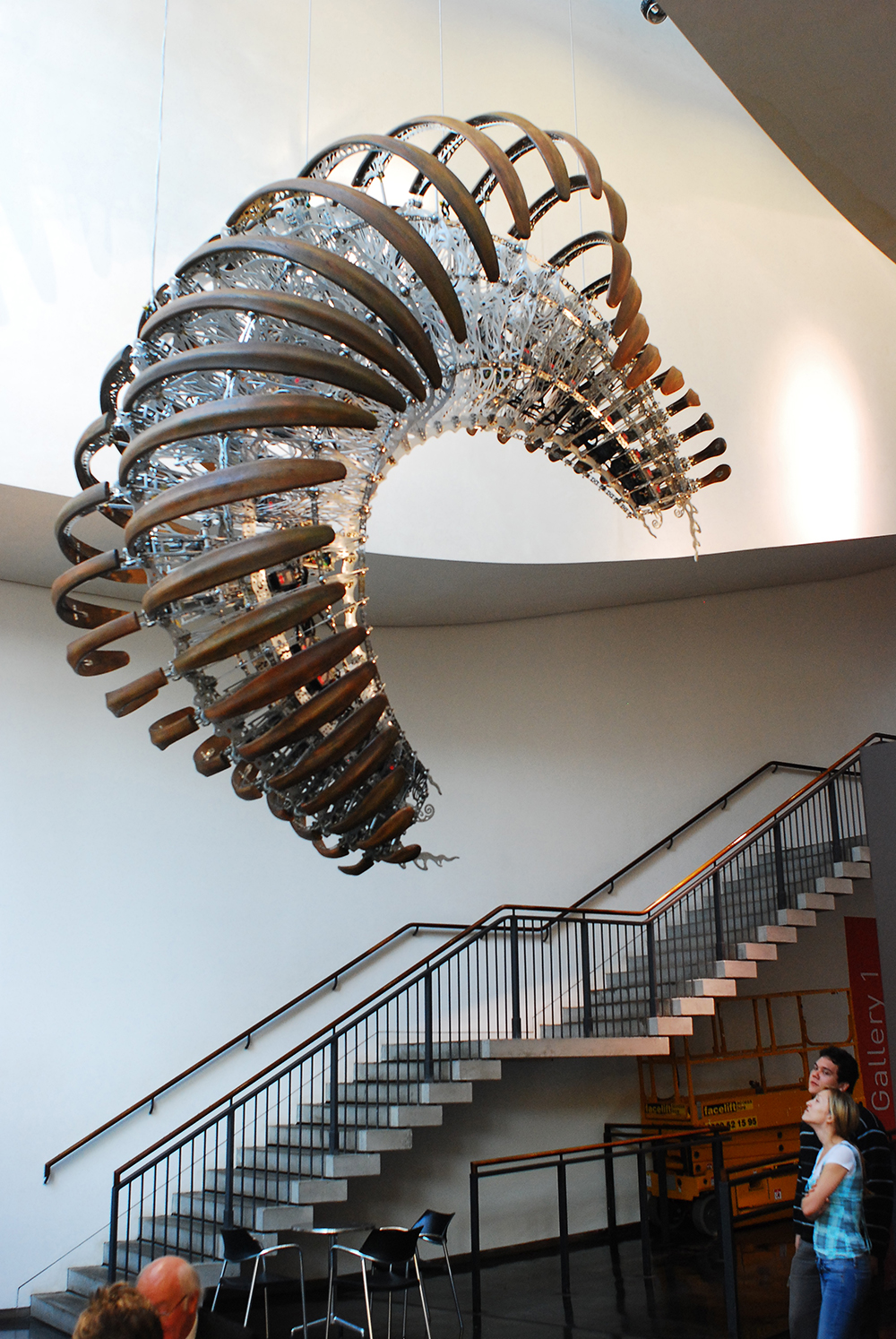
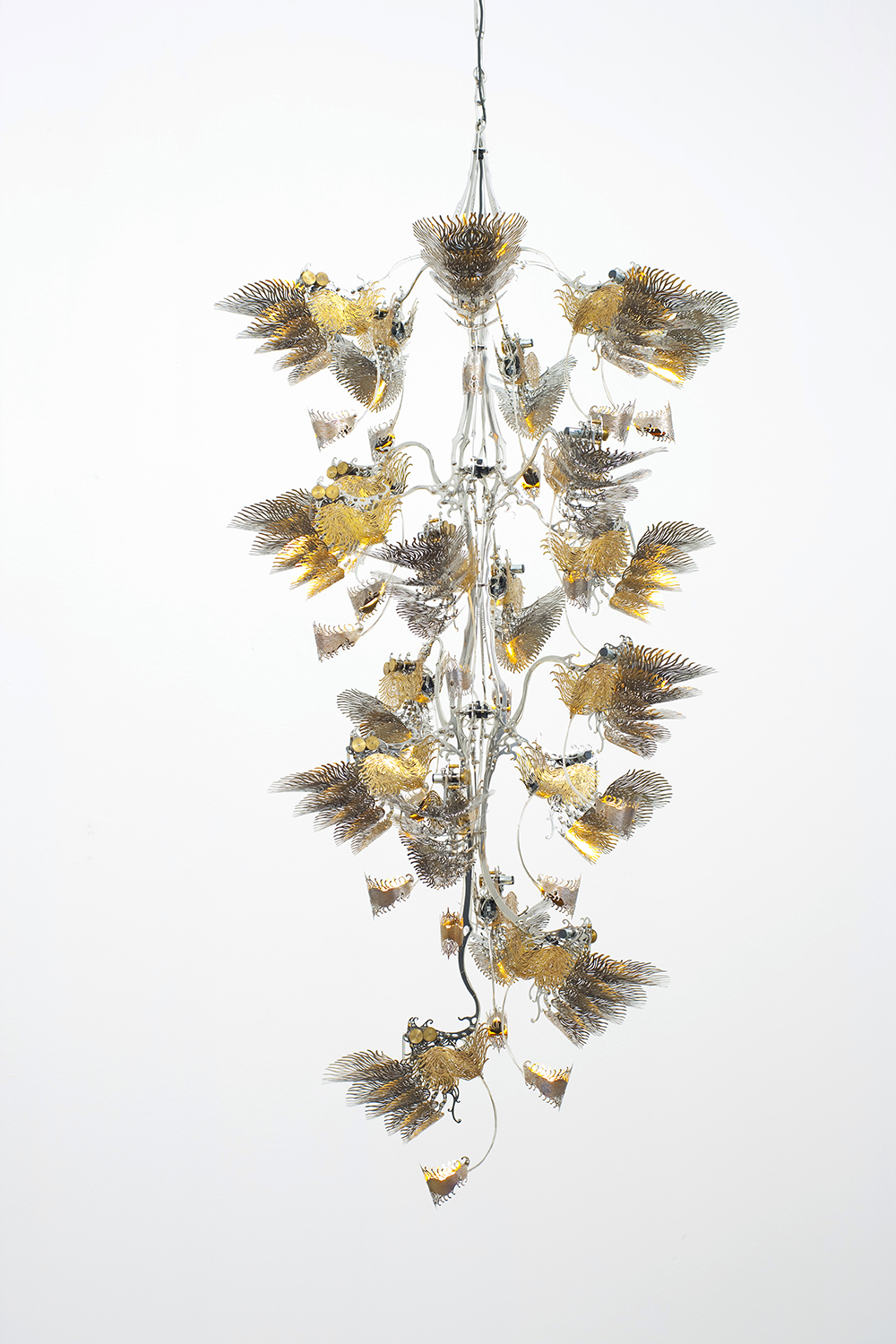
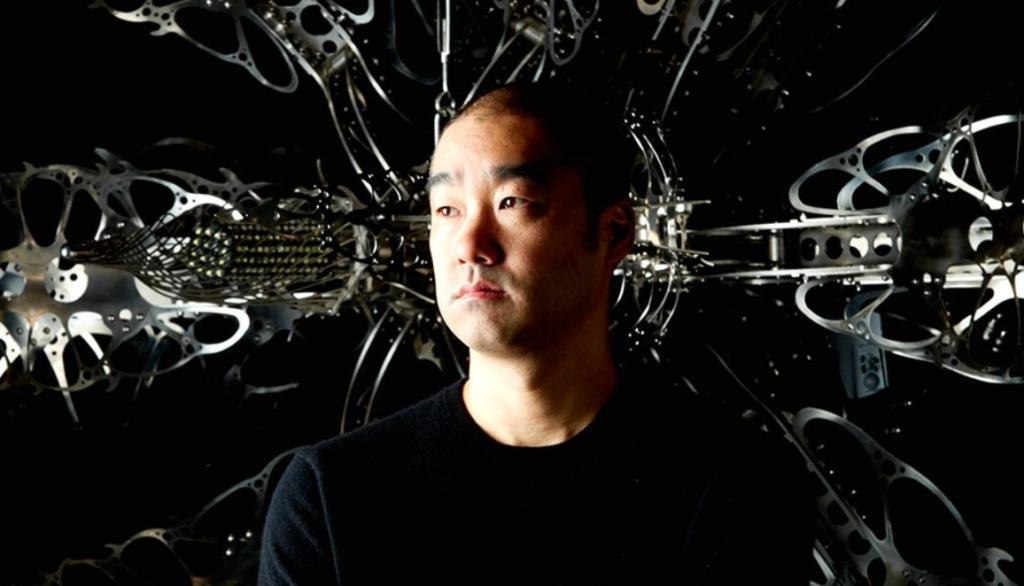
Choe U-Ram is widely known as an artist who creates “anima machines,” or
mechanical life-forms. With kinetic works that showcase imaginative artistry
and an exceptional sense of form, he has drawn attention not only in Korea but
also at leading museums, galleries, and biennials abroad. Since his first solo
exhibition in 1998, his sustained interest in movement has driven a practice
that demonstrates not only formal and technological advances over the past
fifteen years, but also expansion and evolution in content. His 2012 solo
exhibition clearly revealed the broadened spectrum of his work.
While
preparing for his first solo exhibition in Korea in a decade, the artist seems
to have taken time to look back on his practice. Spanning works from drawings
he made at age seven to recent pieces, the show offered a cyclical loop that
returned to the starting point of his art and asked, “What is art to me?” Like
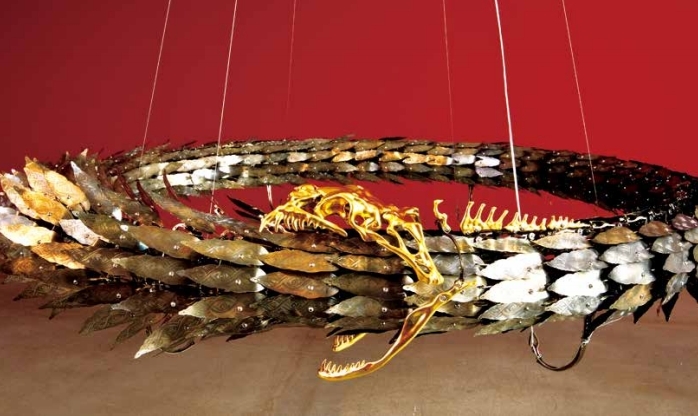
the serpent biting its own tail in the work Ouroboros,
a linear concept of time is dismantled and the past, present, and future
interlock ceaselessly. Found in nearly all civilizations and noted by the
psychologist Carl Gustav Jung, the ouroboros is an ancient religious symbol
that signifies the union of opposites. Choe’s art exists precisely within a
process that seeks harmony and balance—between machine and nature, myth and
science, emotion and reason—just as the circular motion of Ouroboros dissolves
binaries and reveals a state in which opposites are integrated. “Cycle” and
“expansion”: with these two words, we can approach Choe U-Ram’s “here and now.”
2
From childhood, Choe loved science-fiction cartoons and anything that moved. He
often lost track of time drawing, and he was particularly struck by a jewelry
design that reproduced a heartbeat at the exhibition Salvador
Dalí Sculpture he once visited with his mother. But there was
something unusual about his early drawings: even when he drew robots, he did
not focus on embellishing their exterior. Instead, he outlined the forms and
then filled the interior by imagining what lay within. At seven, he drew
mechanical components inside a whale rather than organs. One might say the
meeting of machine and life had already begun.
The
artist’s long-standing imagination of mechanical life-forms is closely tied to
a deep interest in nature. As with countless artists in history, nature is also
Choe’s model for art. Drawn for years to moving things, he seeks to recreate
the awe he feels in nature by animating machines. A frequent viewer of nature
documentaries, Choe says, “Through machines, I wanted to show the beauty of
nature.” He speaks of the reverence he feels when witnessing the vastness of
nature and the tenacious vitality of diverse flora and fauna. Indeed, his works
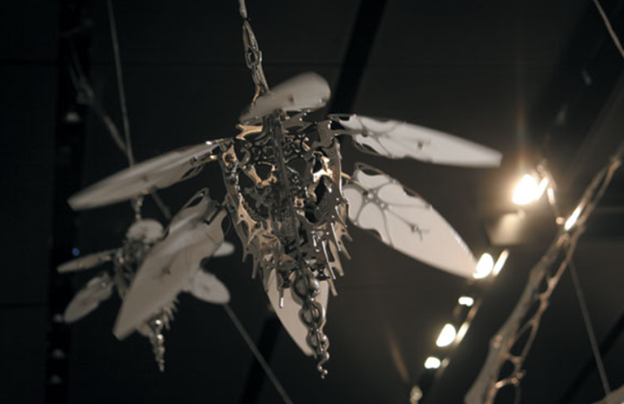
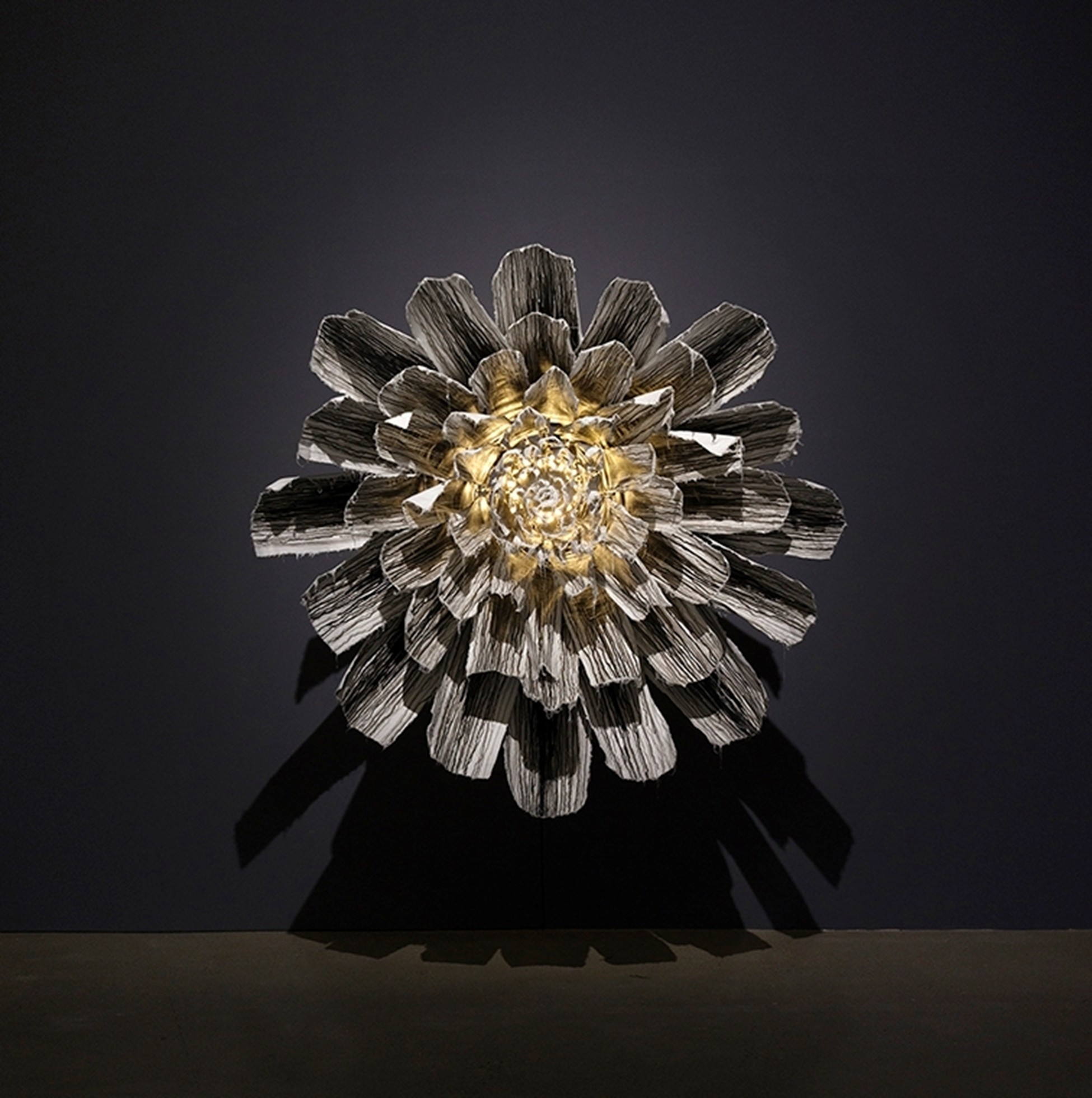
to date present images in which nature and machine intersect. Through his
imagination, forms of insects, fish, and plants are intricately fused with
engineered mechanical structures, furnished with plausible Latin scientific
names, and accompanied by texts about these life-forms.