
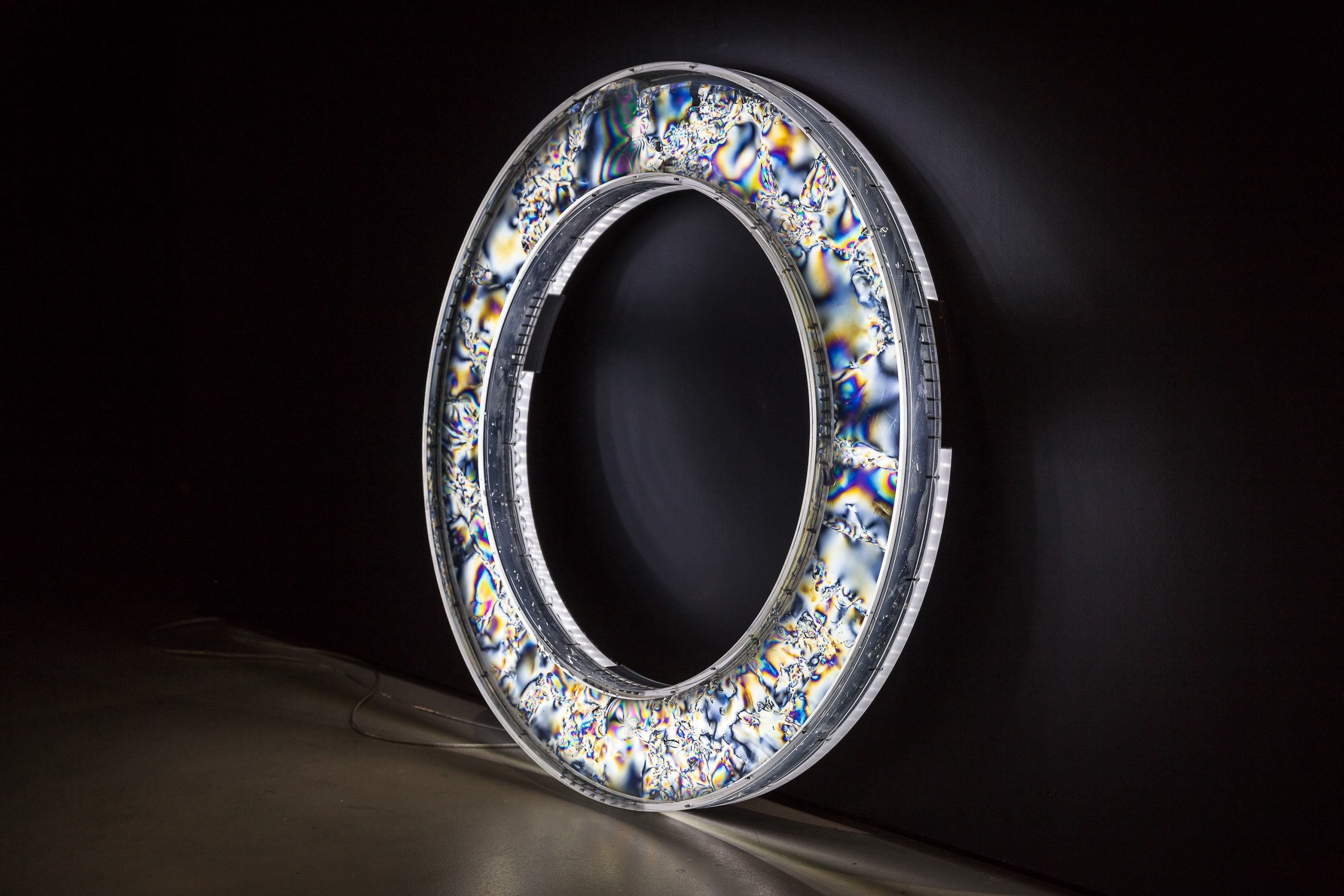
Artist Photo © Yunchul Kim

“Science and art are not different from one another. Leonardo da Vinci was half a scientist and half an artist.”

Artist Yunchul Kim (46), who was selected as the winner of the COLLIDE International Award by the European Organization for Nuclear Research (CERN) — the world’s largest particle physics laboratory — shared these thoughts during an interview with Yonhap News at his studio in Jongno-gu, Seoul, on June 26. “I wish to explore the universe while engaging in dialogue with people who see the world in ways different from my own,” he said.

The COLLIDE International Award is presented annually to one artist whose work embodies the fusion of art and science. The recipient is invited to stay for three months at CERN and related research institutions in Geneva, Switzerland, where they can exchange ideas with scientists, in addition to receiving a cash prize.

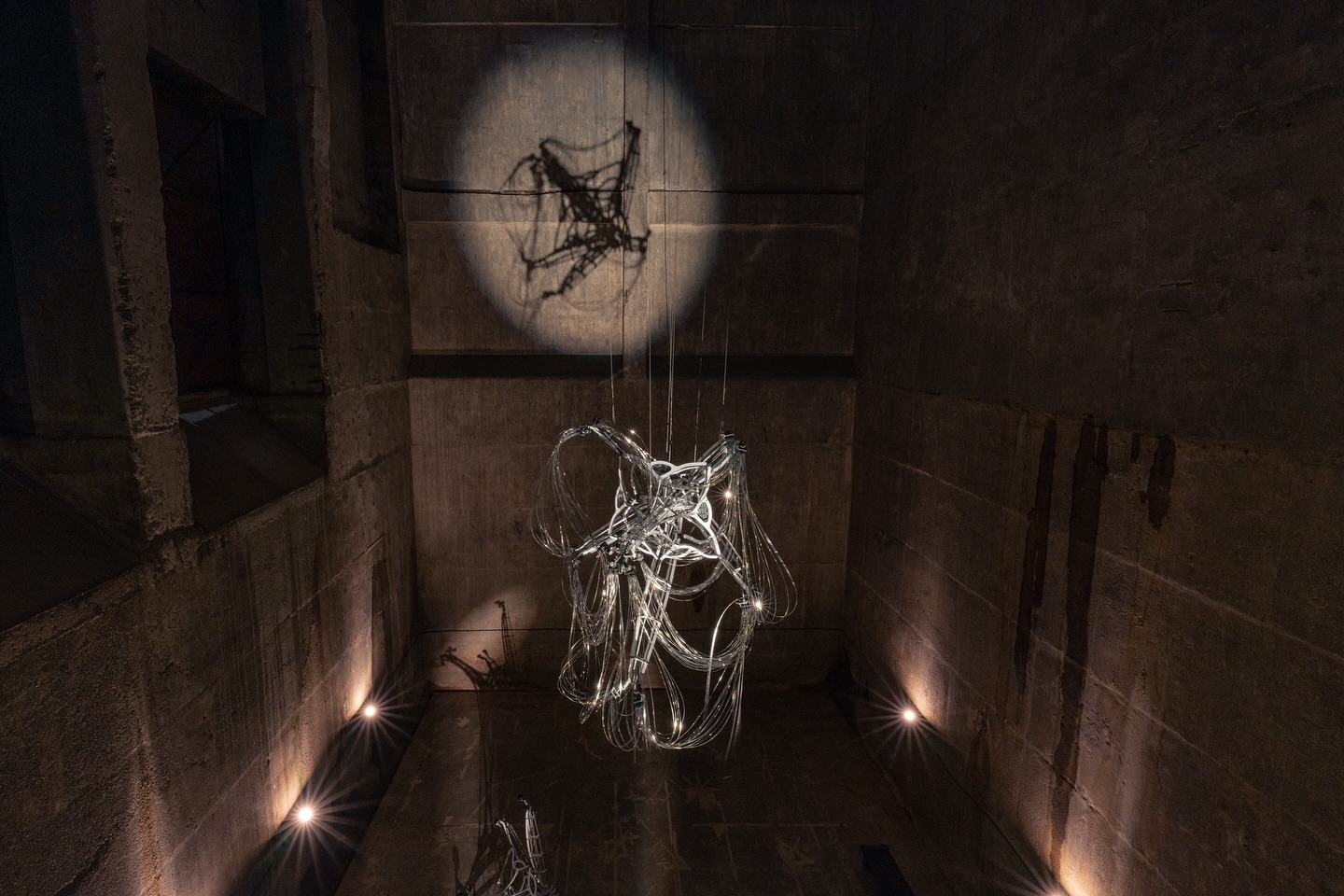
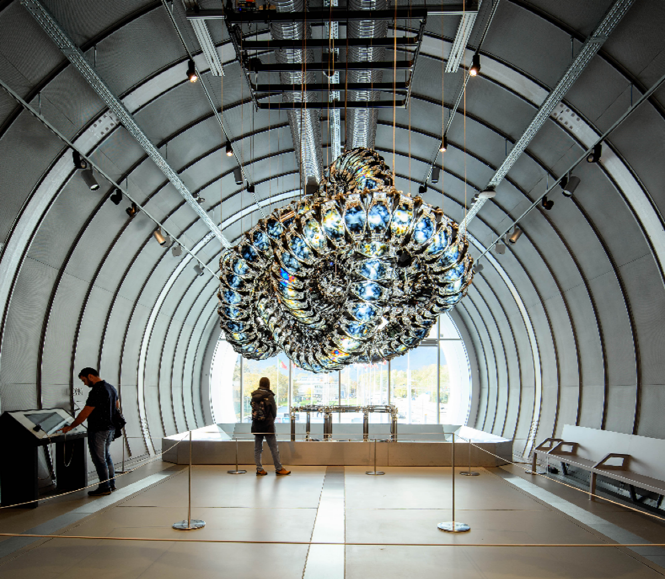
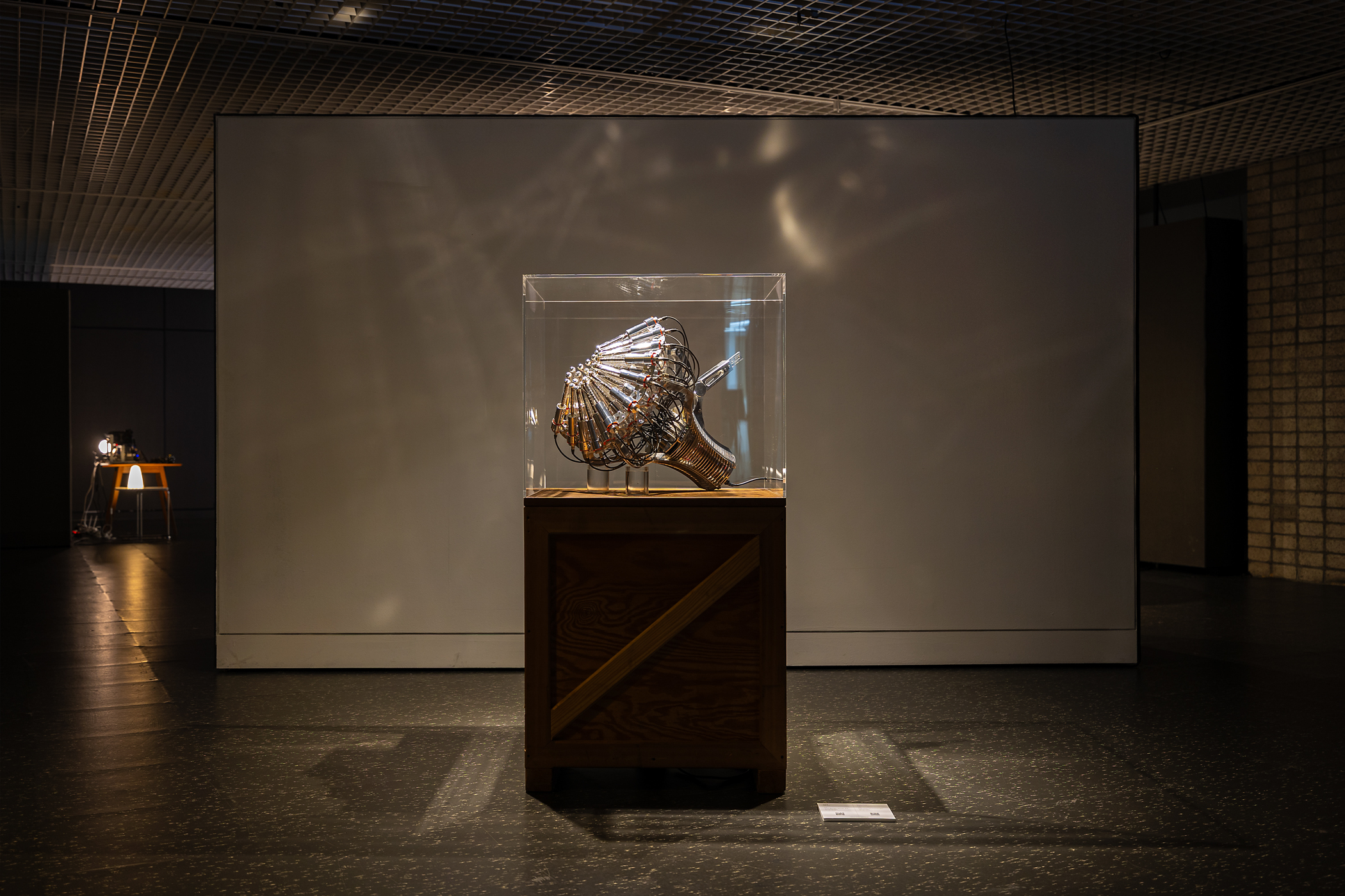
Kim’s anticipation is well-founded, as evidenced by his previous artistic practice, which closely resembles experimental processes such as inventing specific materials or developing new devices. His works reveal a strong interest in the properties of new materials and in fluid dynamics. Kim himself has remarked that his work “can be seen as existing somewhere between art and science.”

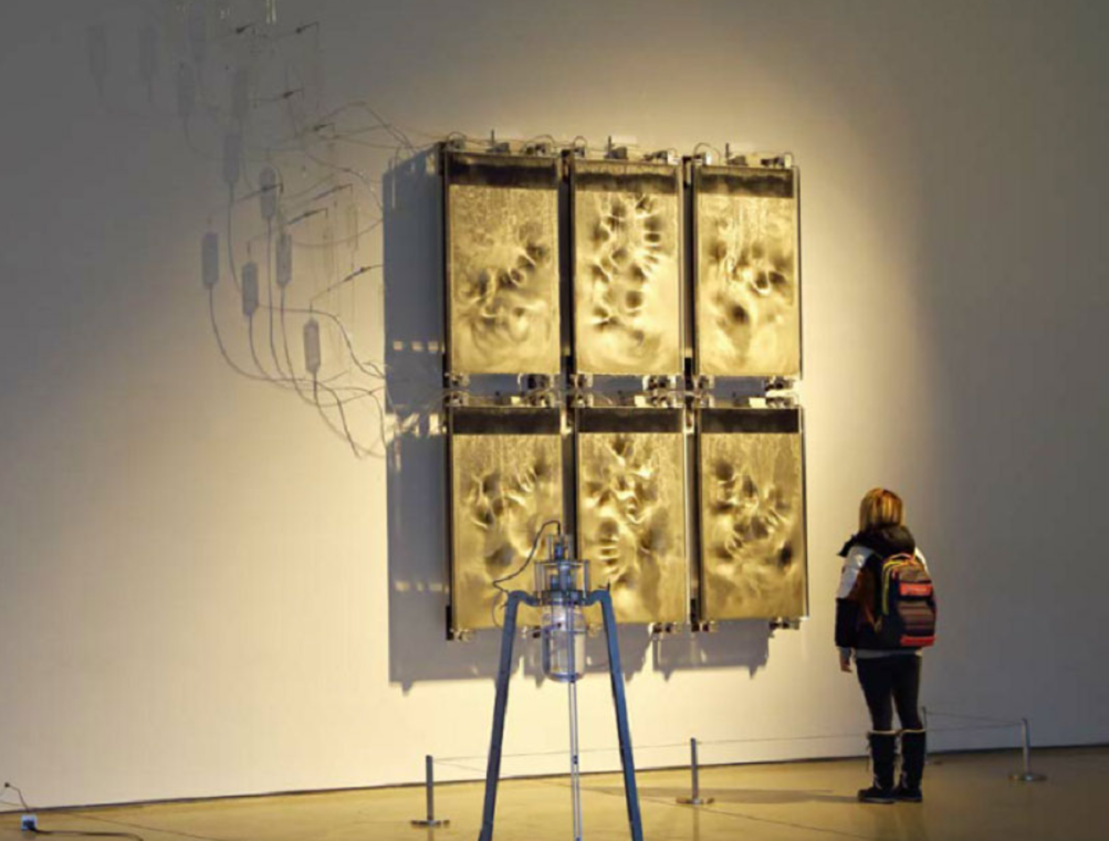
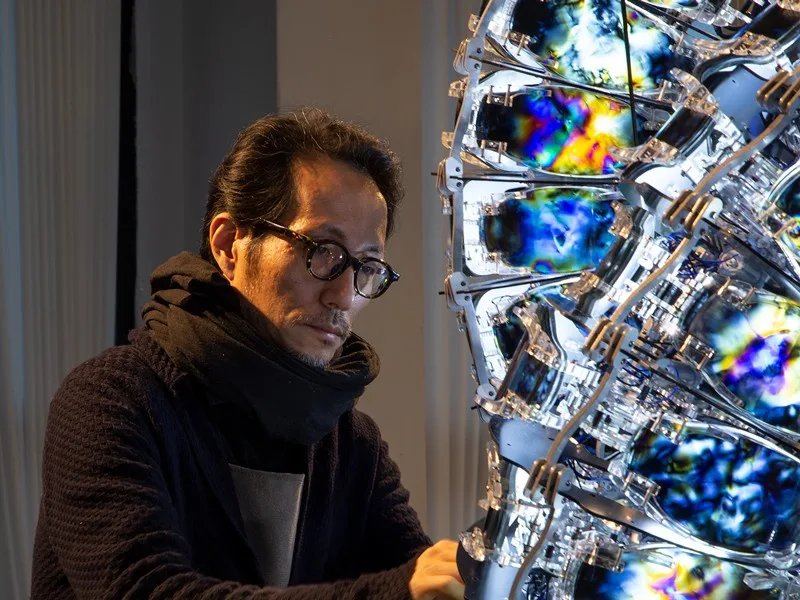
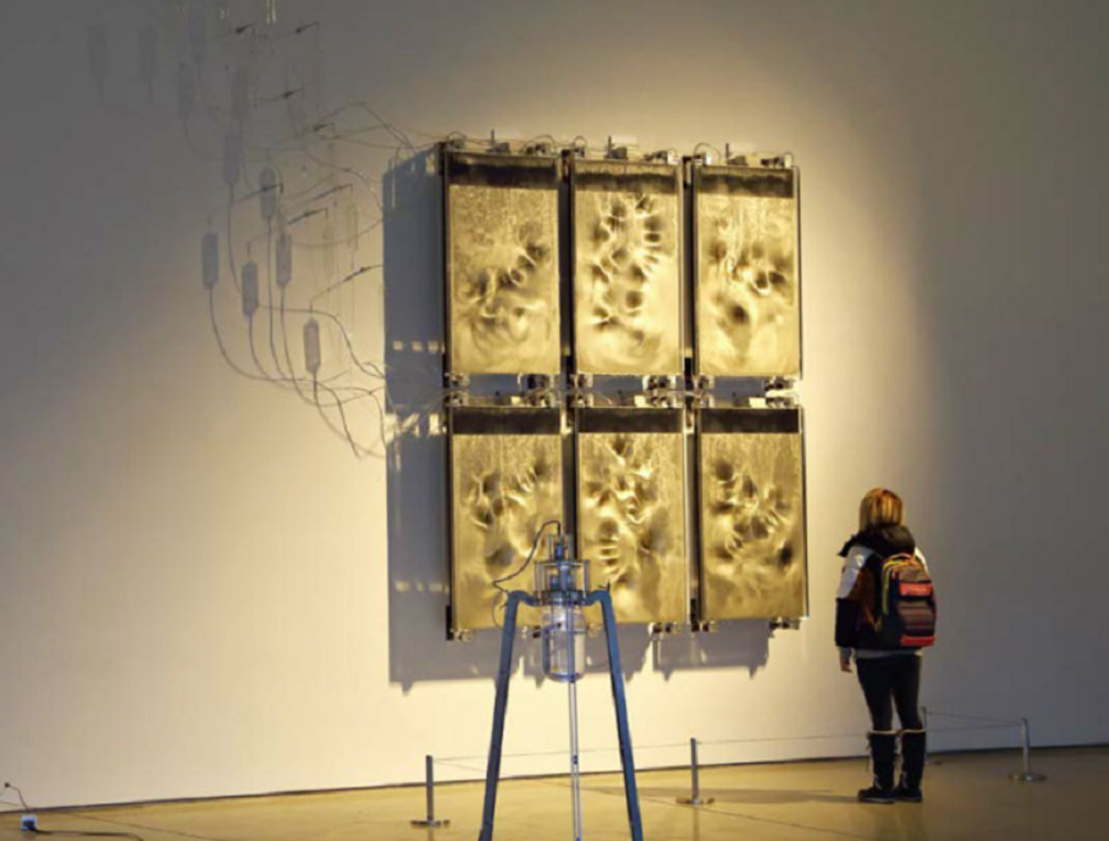
Yunchul Kim, Effluge, 2012-2014 © Yunchul Kim

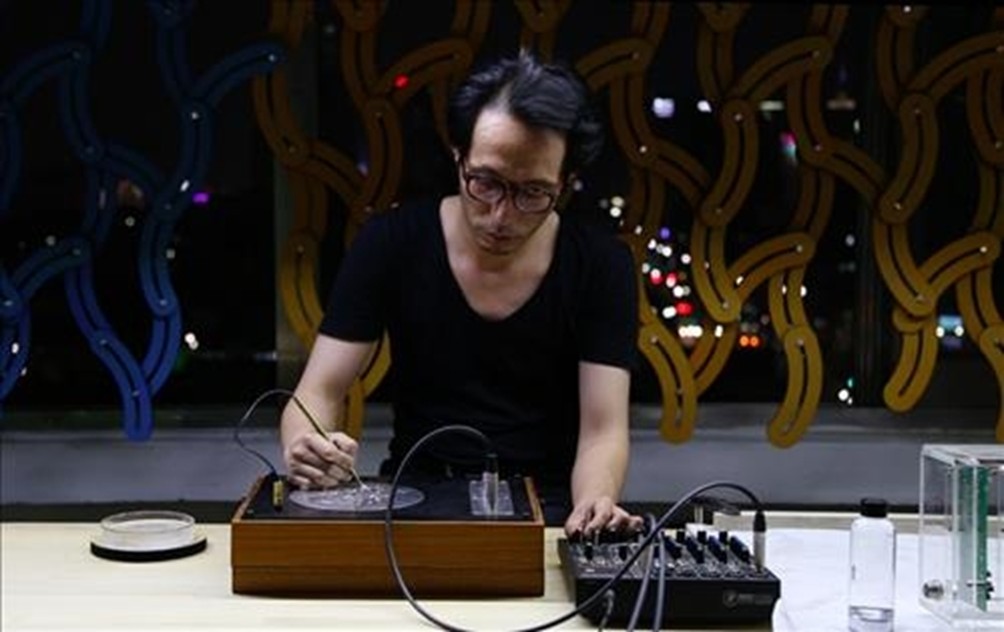
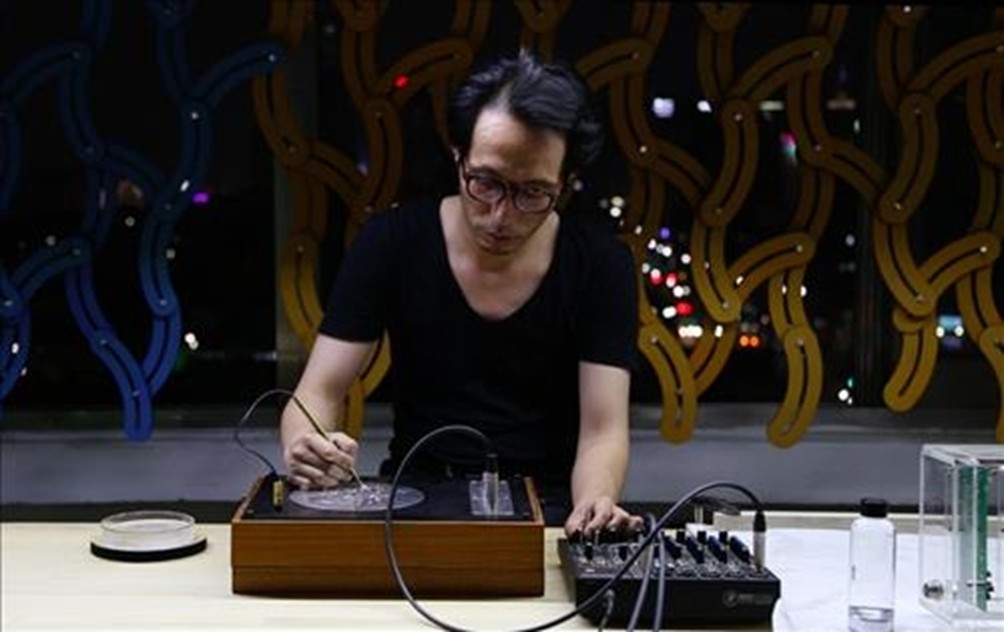
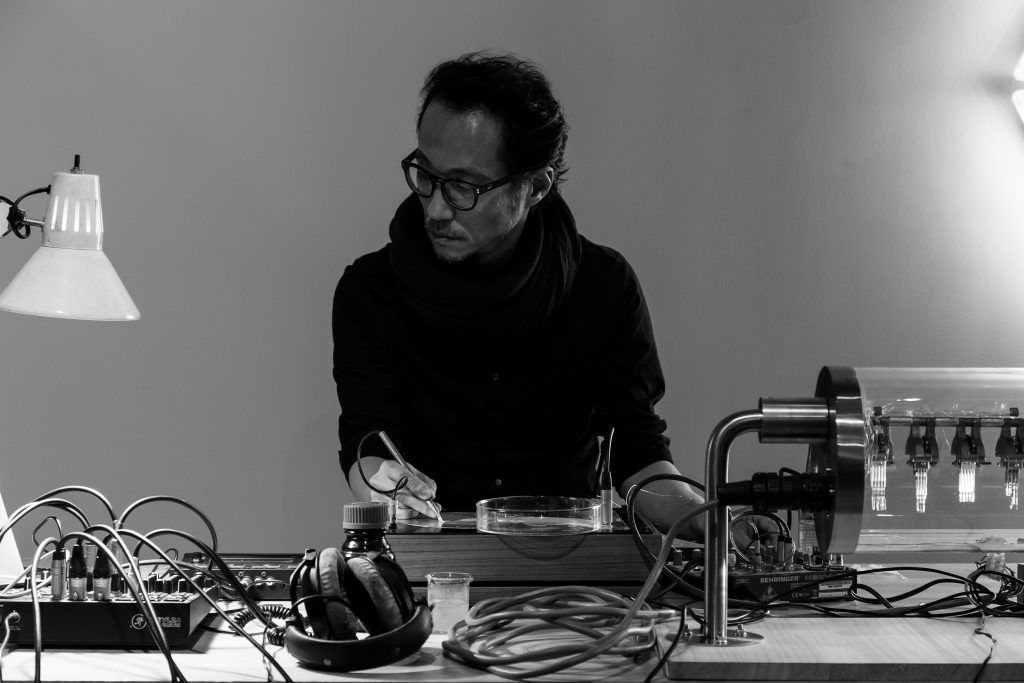
His studio in Daerim Arcade, near Cheonggyecheon, looks more like a chemistry lab than an artist’s workspace. Various experimental tools line the workbench, and mechanical design drawings are pinned to the walls.

“I’m more interested in the essence of materials themselves, rather than in the visible world accessible to everyone,” Kim explained, adding that this might relate to his background in music composition. “As you can see in Bach’s Well-Tempered Clavier, composition inherently involves mathematical and scientific elements.”

After graduating from university, Kim went to Germany to pursue further studies in composition. By chance, he enrolled in an interdisciplinary program that allowed him to take courses across multiple fields, which eventually led him to shift his focus from music to visual art.

Rather than painting on canvas or carving stone and wood in a traditional manner, he chose to reveal the materiality of substances themselves. “I wanted to express phenomena that flow, surge, and move—actual events unfolding in real time, not a static world,” he said.

His incorporation of science—something seemingly opposite to art—into his practice was, in fact, a way to more vividly capture such phenomena. “When I look closely at a material, I feel that there is an immense world hidden within it,” he said. “Through the materials used in my works, I want to reveal how that internal world changes over time.”

In the process of developing his own materials, scientific inquiry became essential. Although he had distanced himself from science during his school years, his desire to create a distinctive artistic universe led him to study scientific journals and research papers. Fortunately, he noted, composition itself involves many scientific principles, so the exploration did not feel entirely unfamiliar.

“About ten years ago, I began thinking that I could create materials myself,” Kim said. “Since then, I’ve been conducting new experiments. To do this kind of work, a scientific process is necessary. Over time, I developed my own know-how for producing unique colors and textures.”

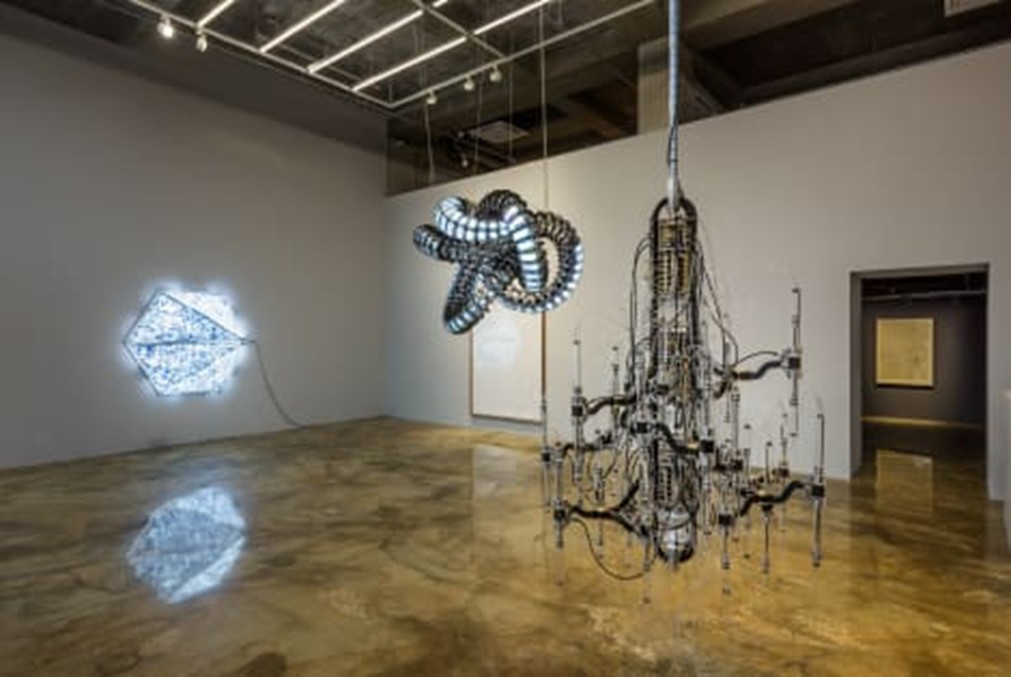
Kim’s works often involve magnetically manipulated metallic powder or alien-like substances that flow, accumulate, and coagulate within devices of his own design. The resulting works are so unique they often evoke the aesthetics of science fiction films.

While some viewers may initially find the connection between art and science puzzling, Kim says that seeing his works often changes their perception: they begin to understand that the two are not separate realms. “Throughout history, art has always shared feedback with other disciplines — think of Romantic poets studying mathematics,” he added.

He continued, “Every artist engages in imagination. Even a painter creating traditional ink landscapes contemplates cosmic ideas. The difference is merely whether or not such thoughts are made explicit on the surface.”

For Kim, such artistic imagination manifests through materials and substances. With his COLLIDE Award residency, he hopes to delve even deeper into this intersection of art and science.

In announcing Kim’s selection, the COLLIDE Award jury stated, “Kim demonstrates an extraordinary ability to explore the gap between the empirical and the conceptual. His creative proposals are expected to open new pathways for scientific research as well.”

References