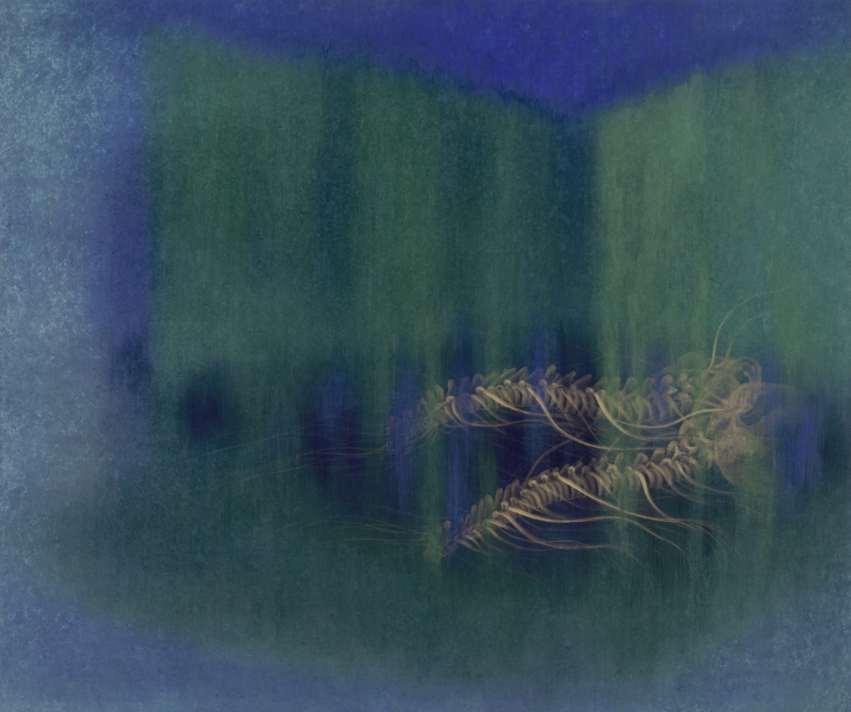
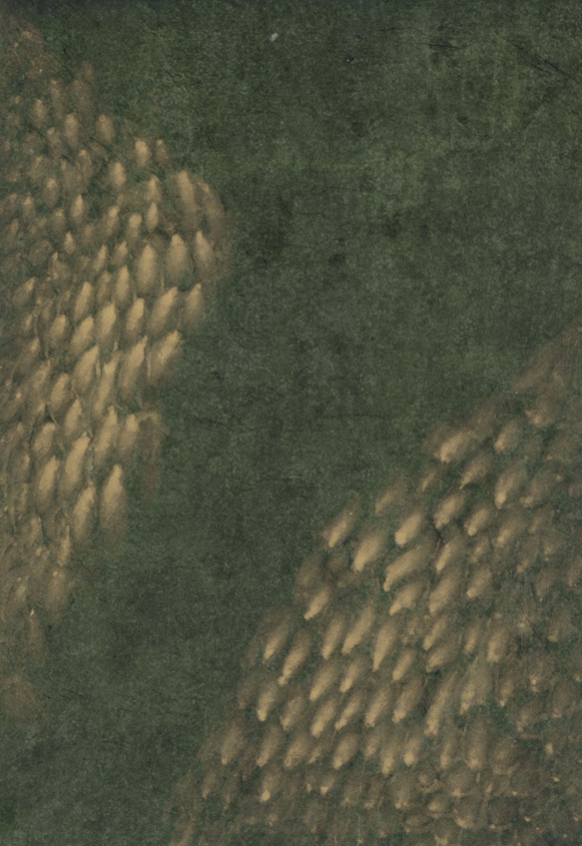
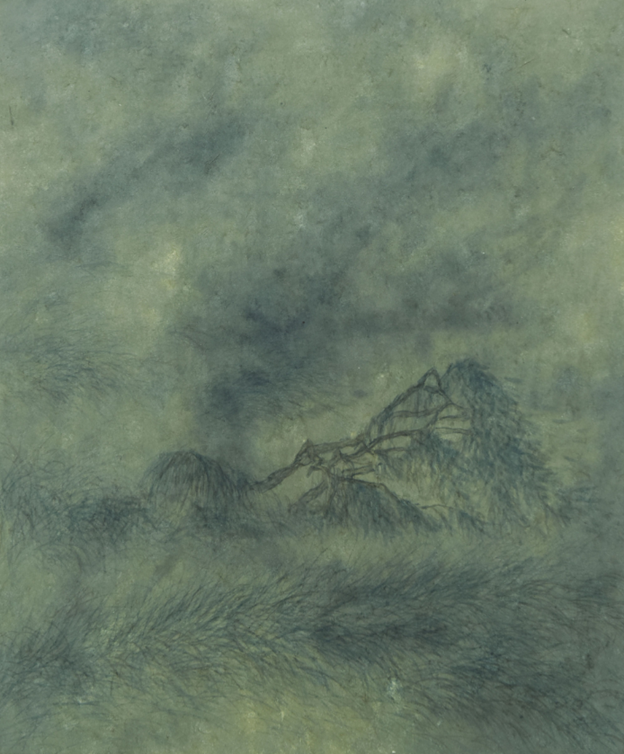
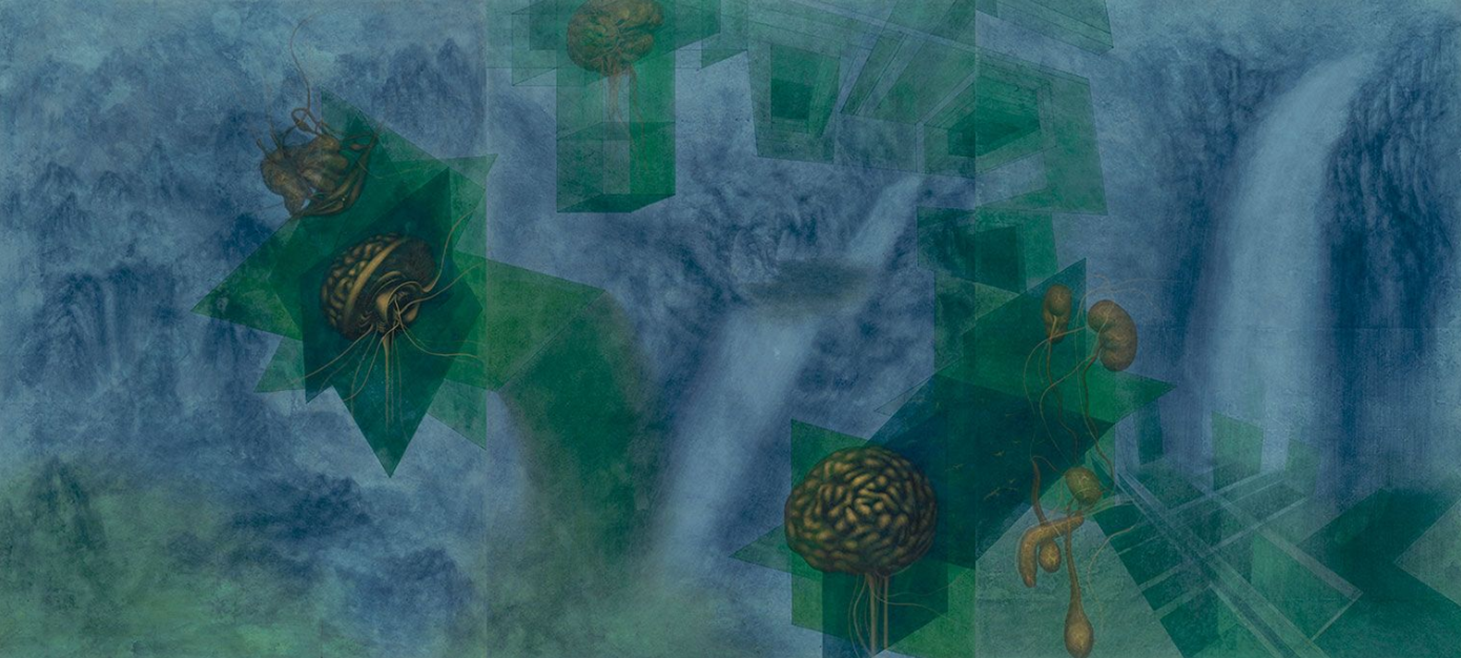
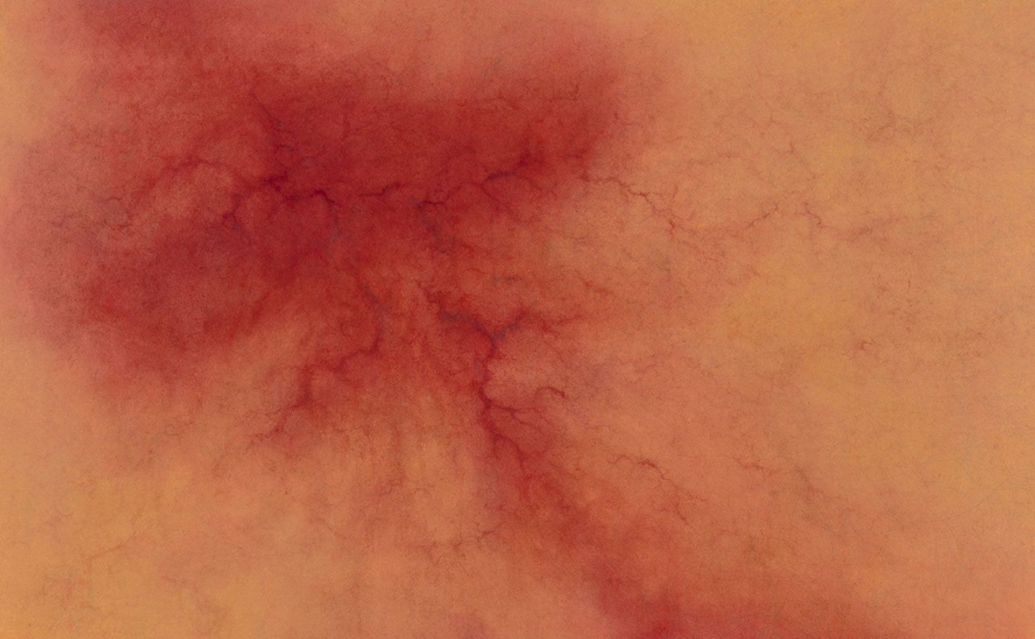
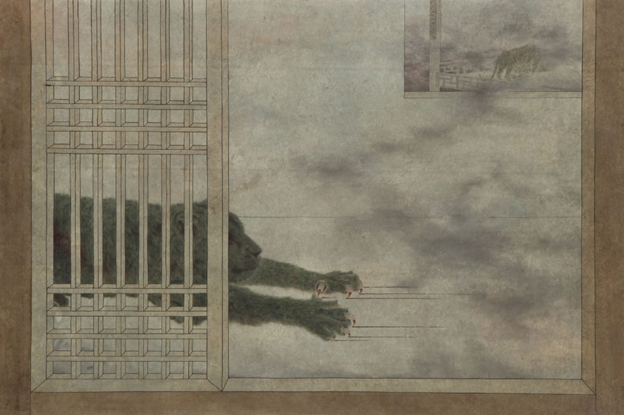
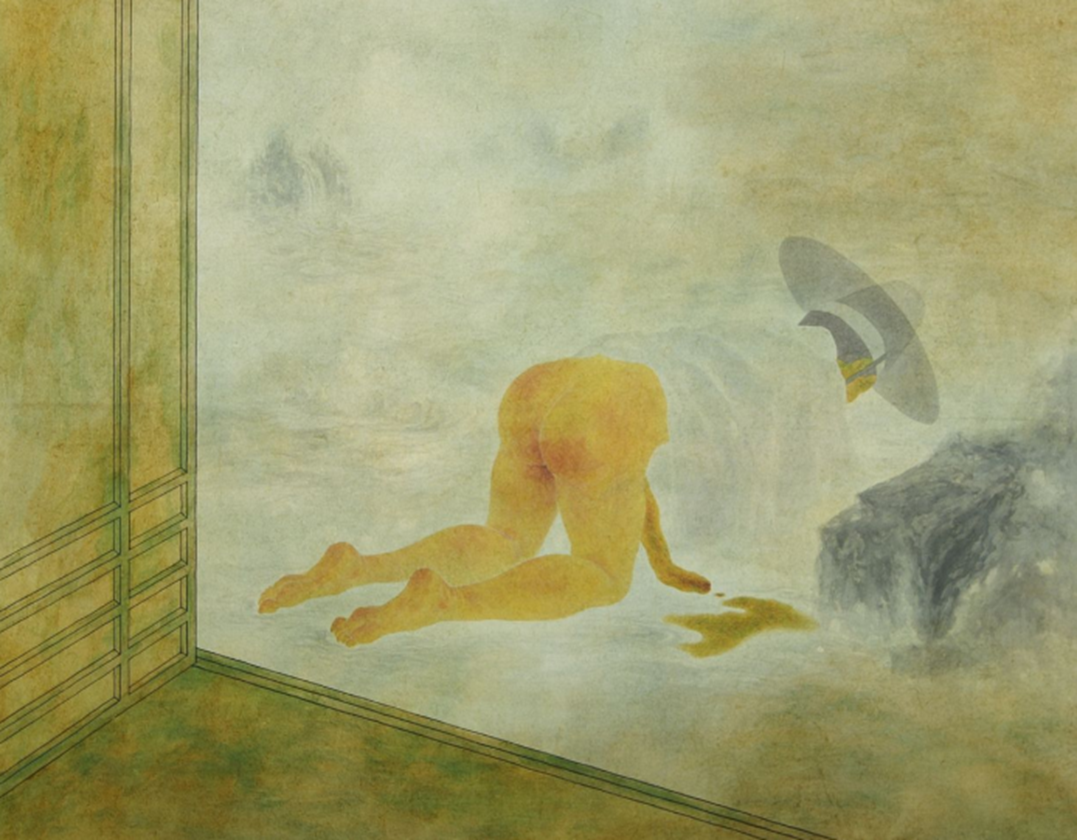
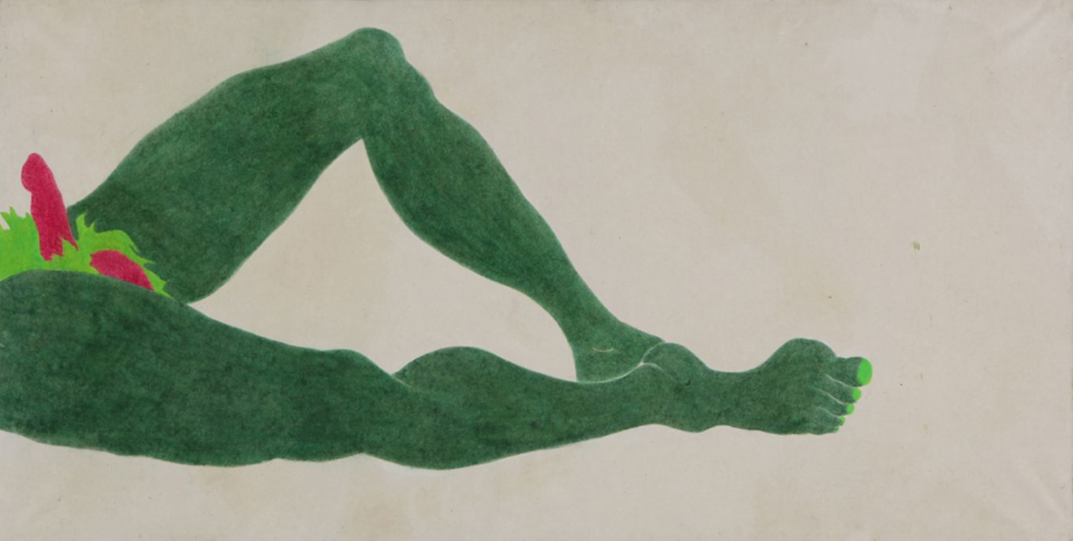
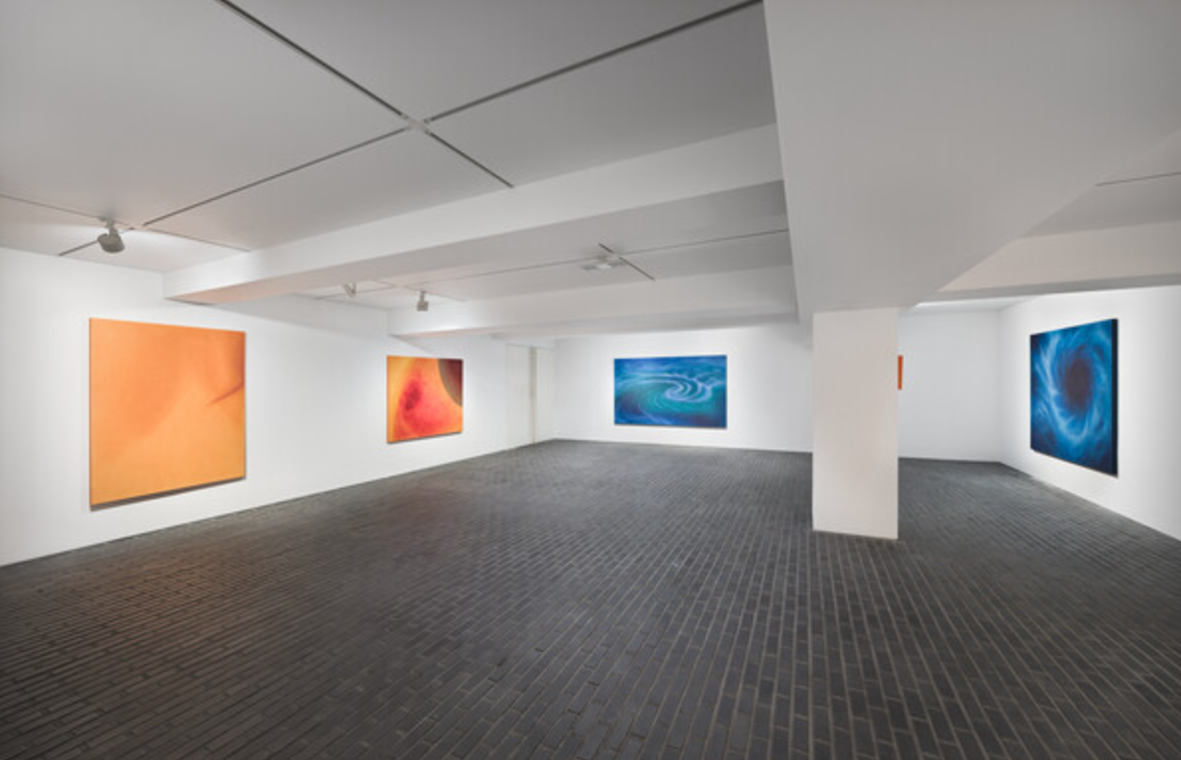
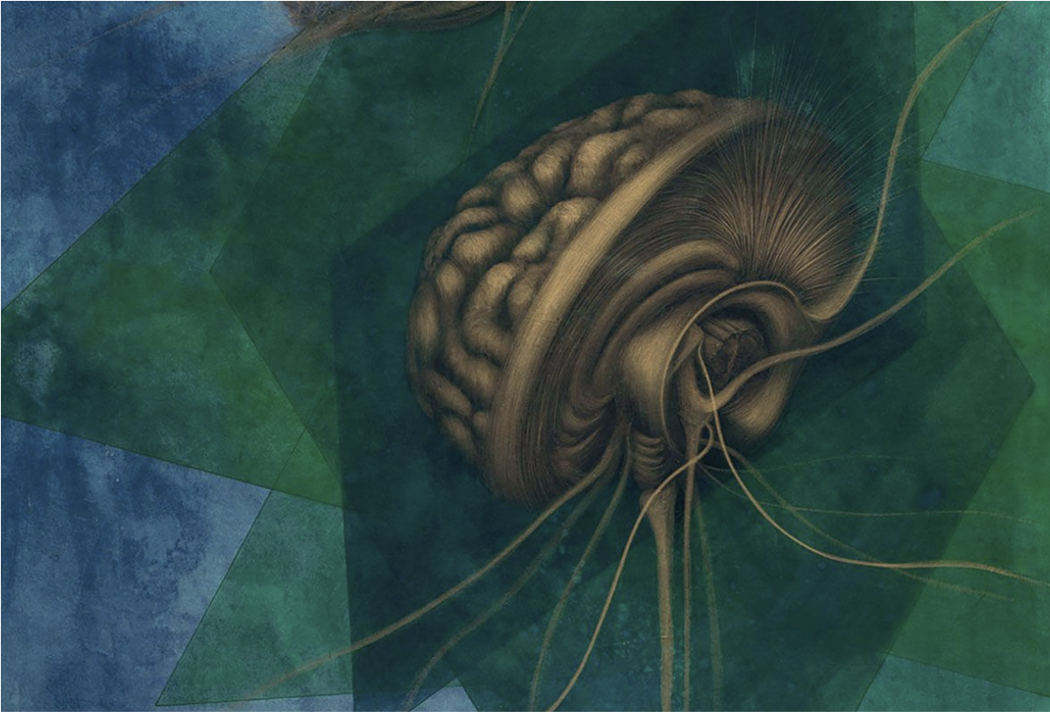
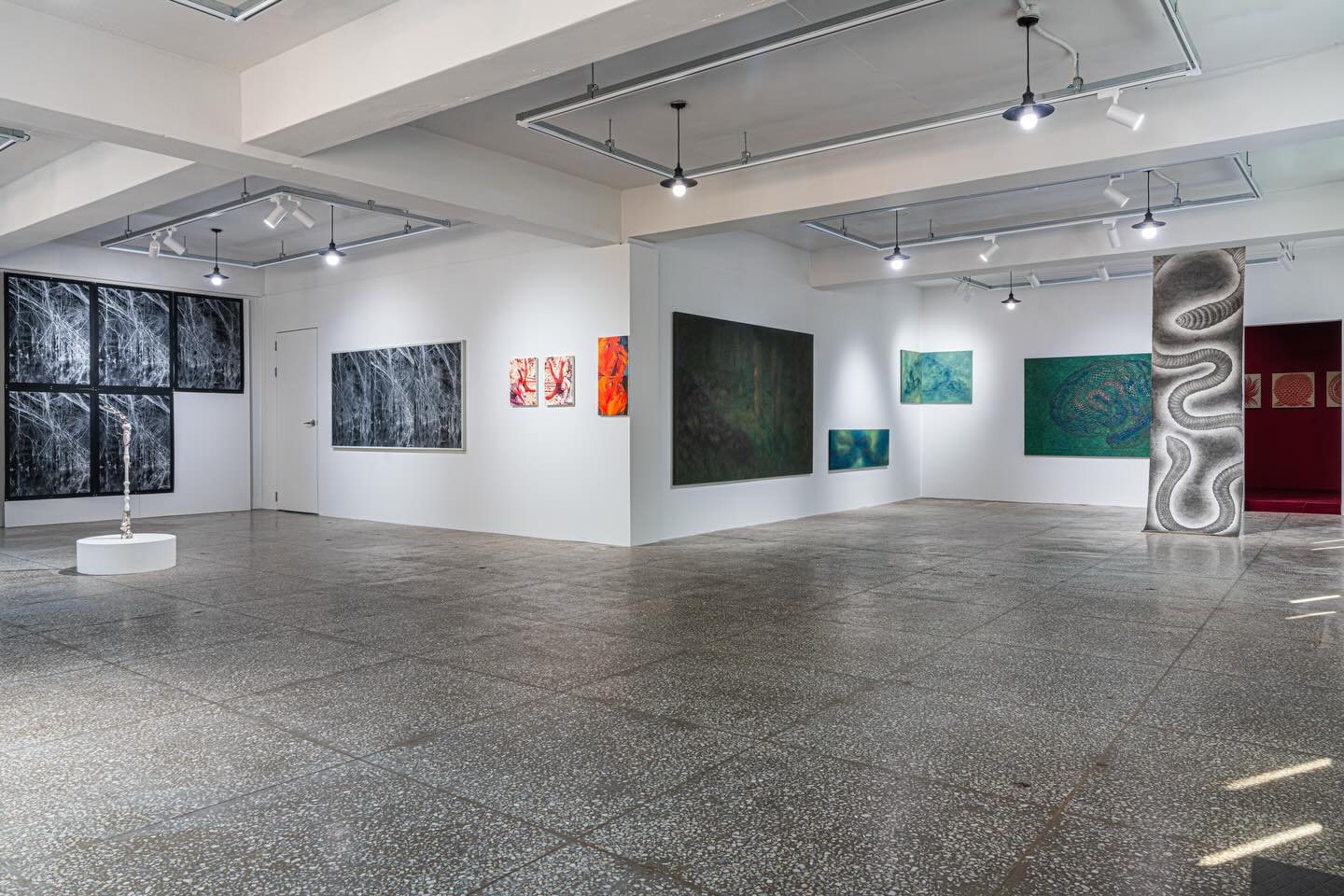
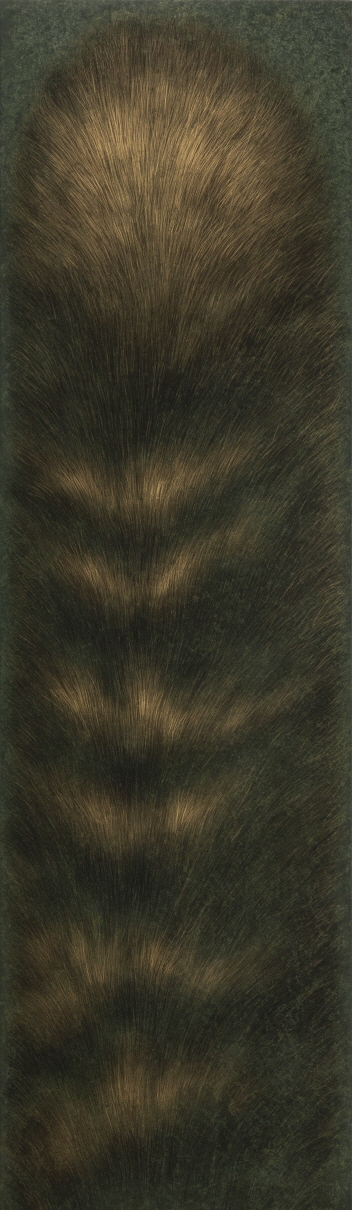
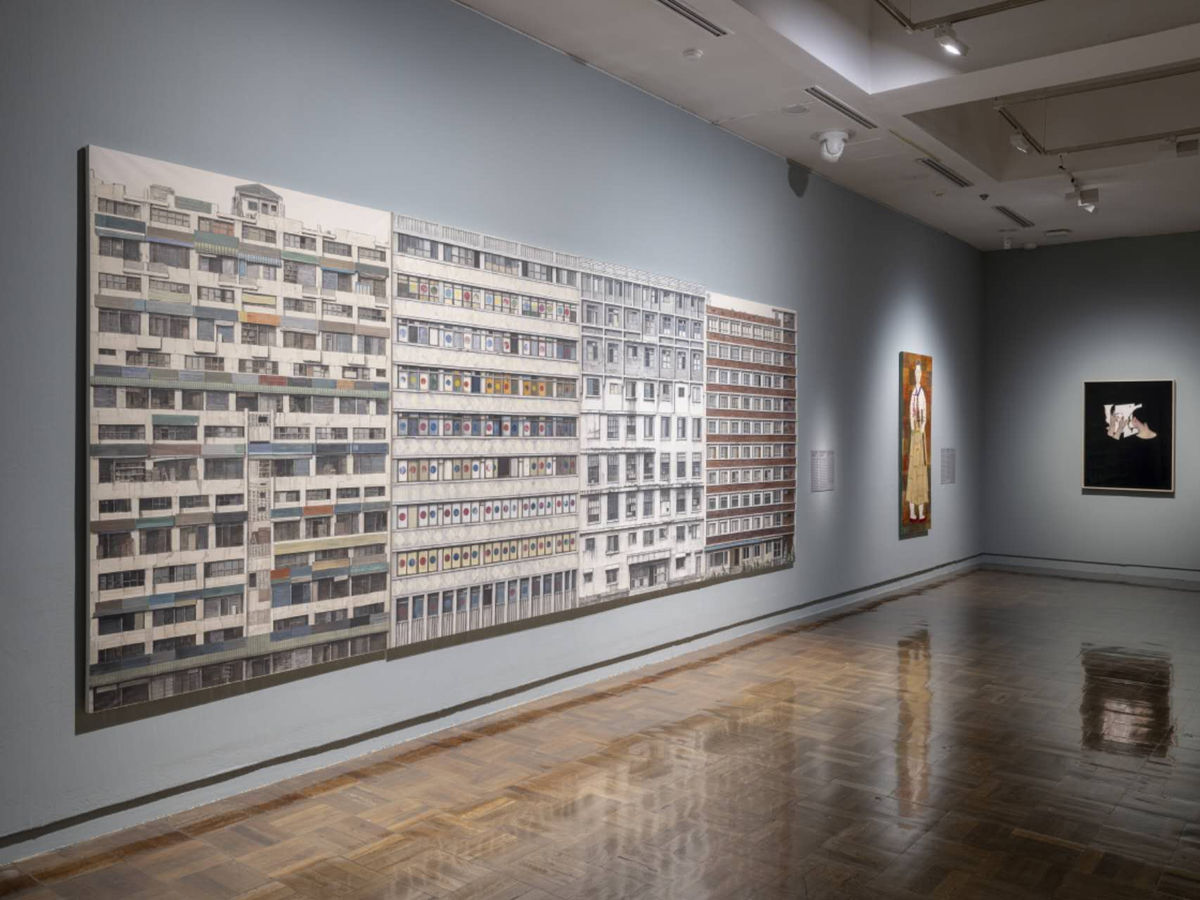
The exhibition revisits the experiences of pregnancy and childbirth that LEE has carried with her throughout her life, tracing a trajectory from past to present. Yet the word “revisiting” alone falls short of conveying the urgency of what the artist seeks to articulate. Rather than relying on such language, the newly adopted colors and forms that emerge in the recent paintings confront that period of her life more directly. Images such as an eye whose sclera is entirely ruptured by blood vessels under the pressure of labor; scars scattered across the lower abdomen like a sudden downpour; the pelvis and fallopian tubes depicted in a realistic manner; fetuses and placentas; and volcanic eruptions mid-explosion all speak forcefully of a body in labor as a battlefield.
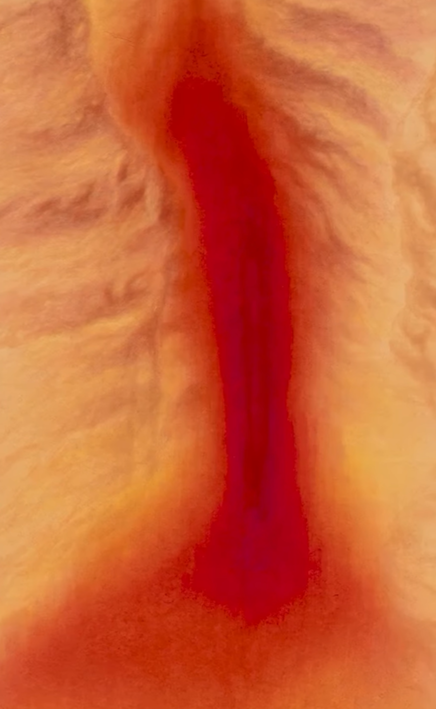
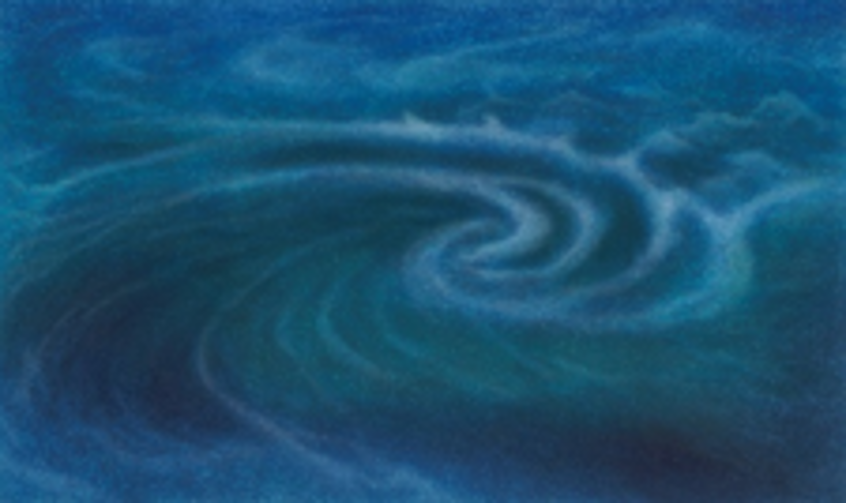
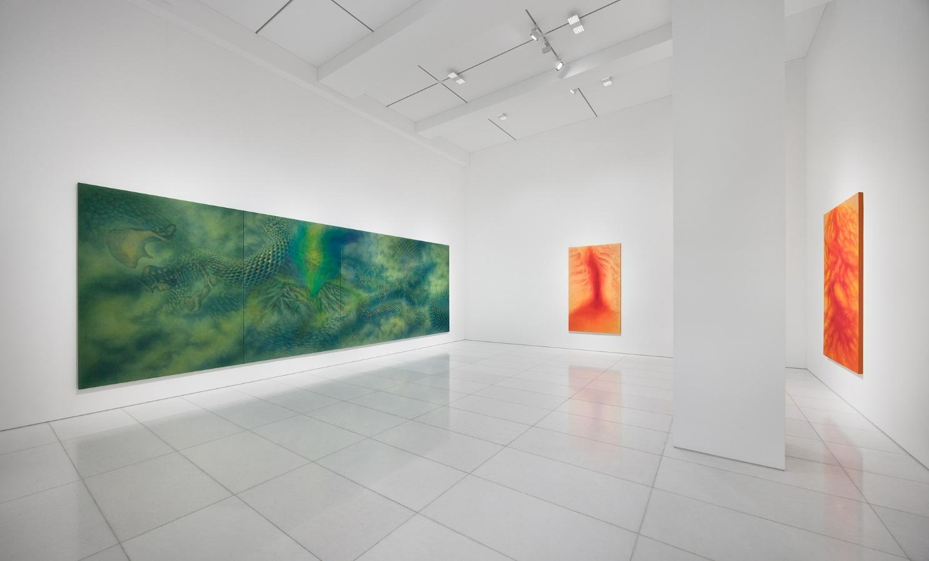
Scenes in which red lava spreads like veins, or deep blue whirlpools and towering waves surge and collide, visualize the condensed energy released through these experiences. This energy is not so much an expression of outward-directed anger as it is an artistic rendering of recollection itself—of pain that resurfaces all at once when remembered, of bodily undulations, and of blood-soaked scenes that return in overlapping waves of memory.
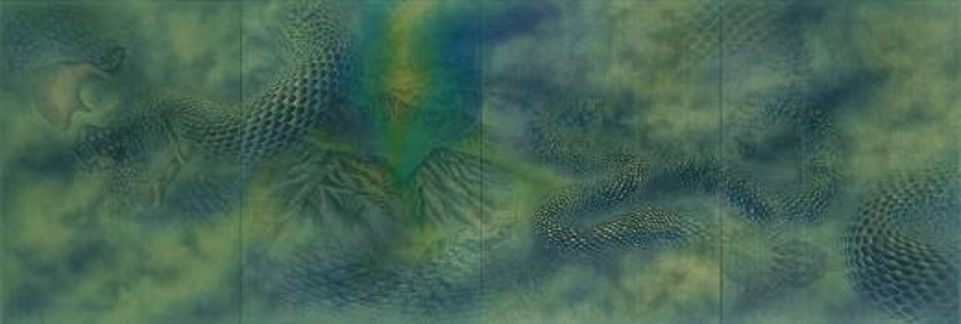
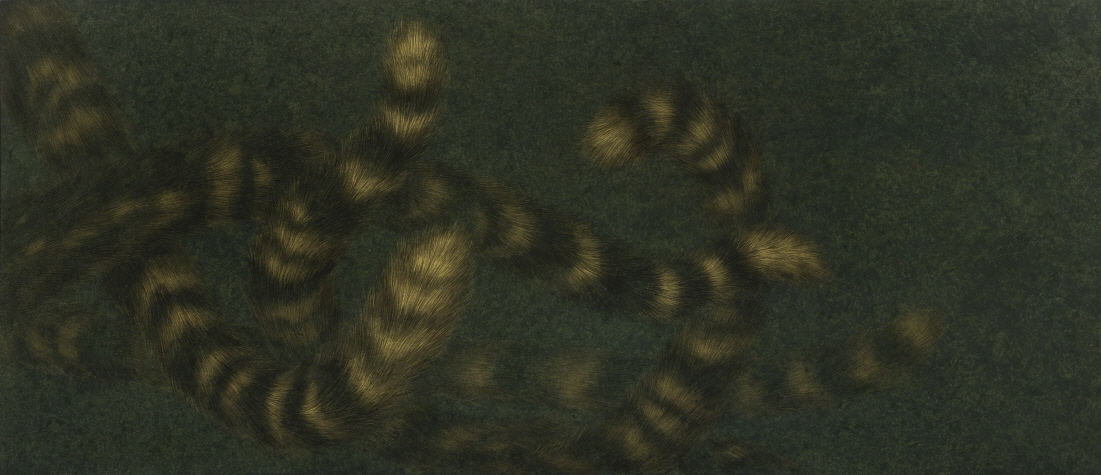
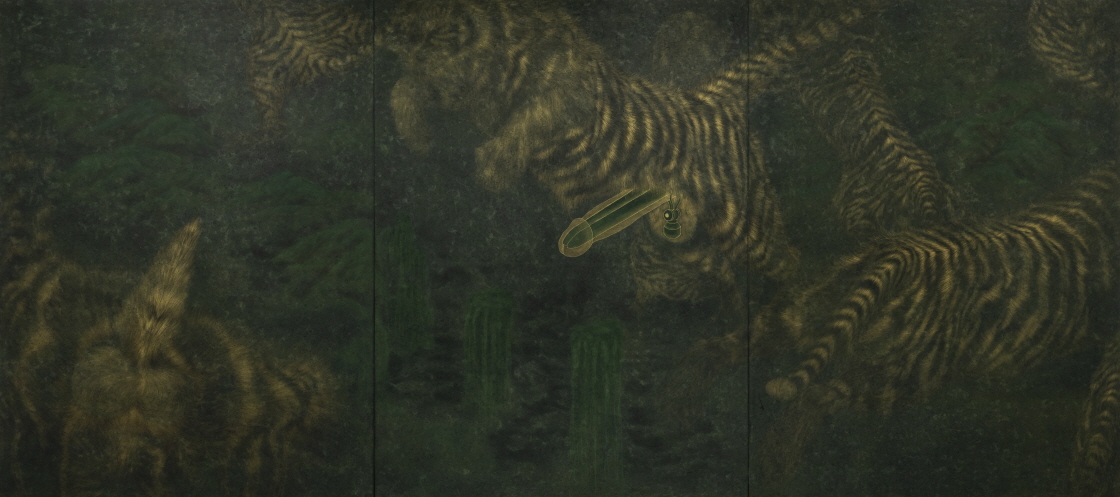
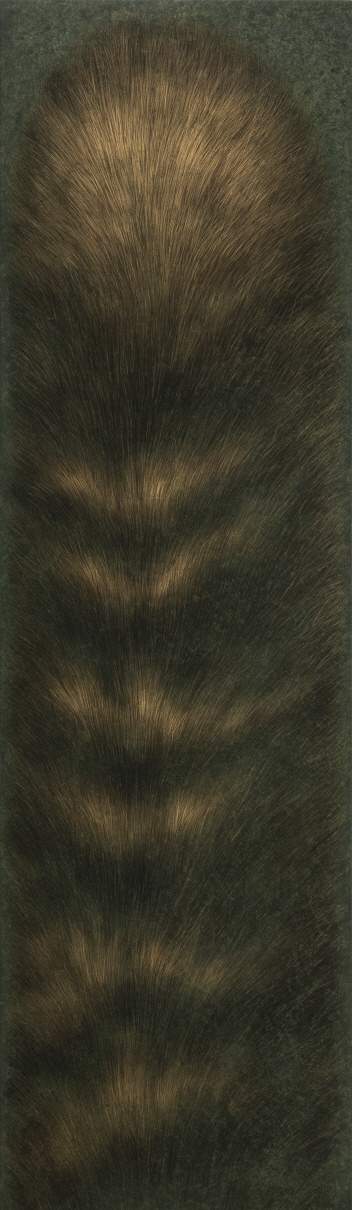
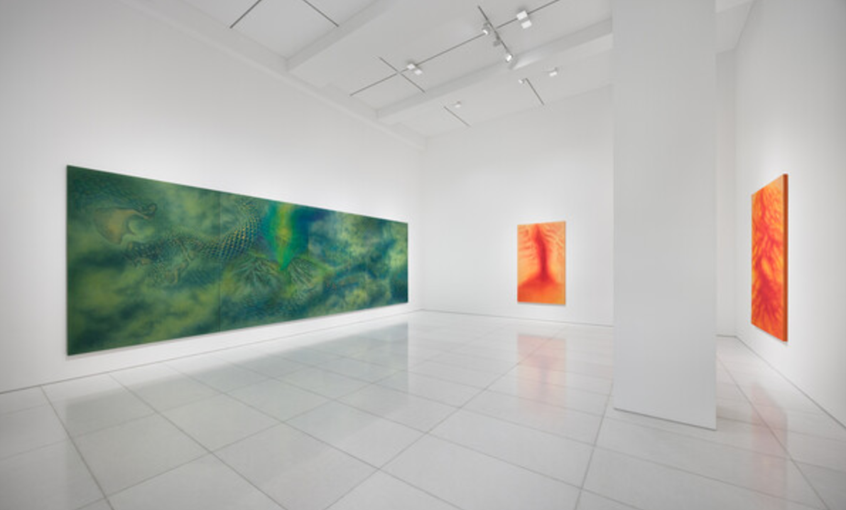
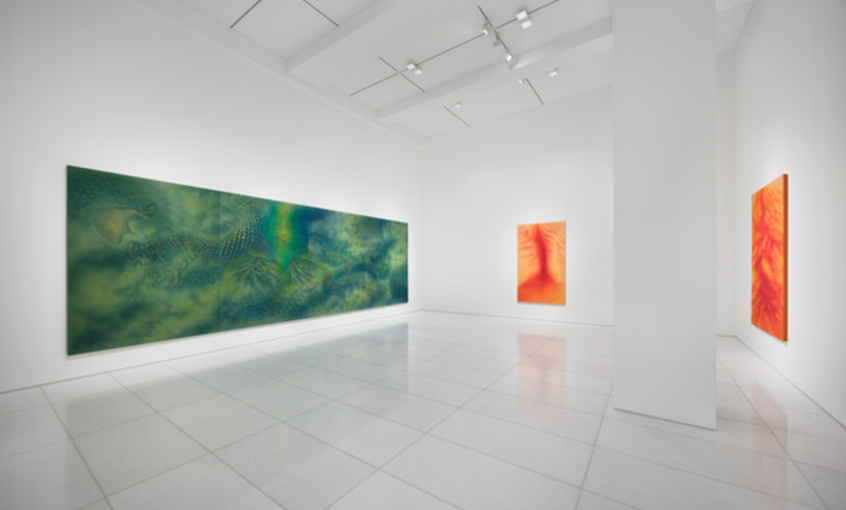
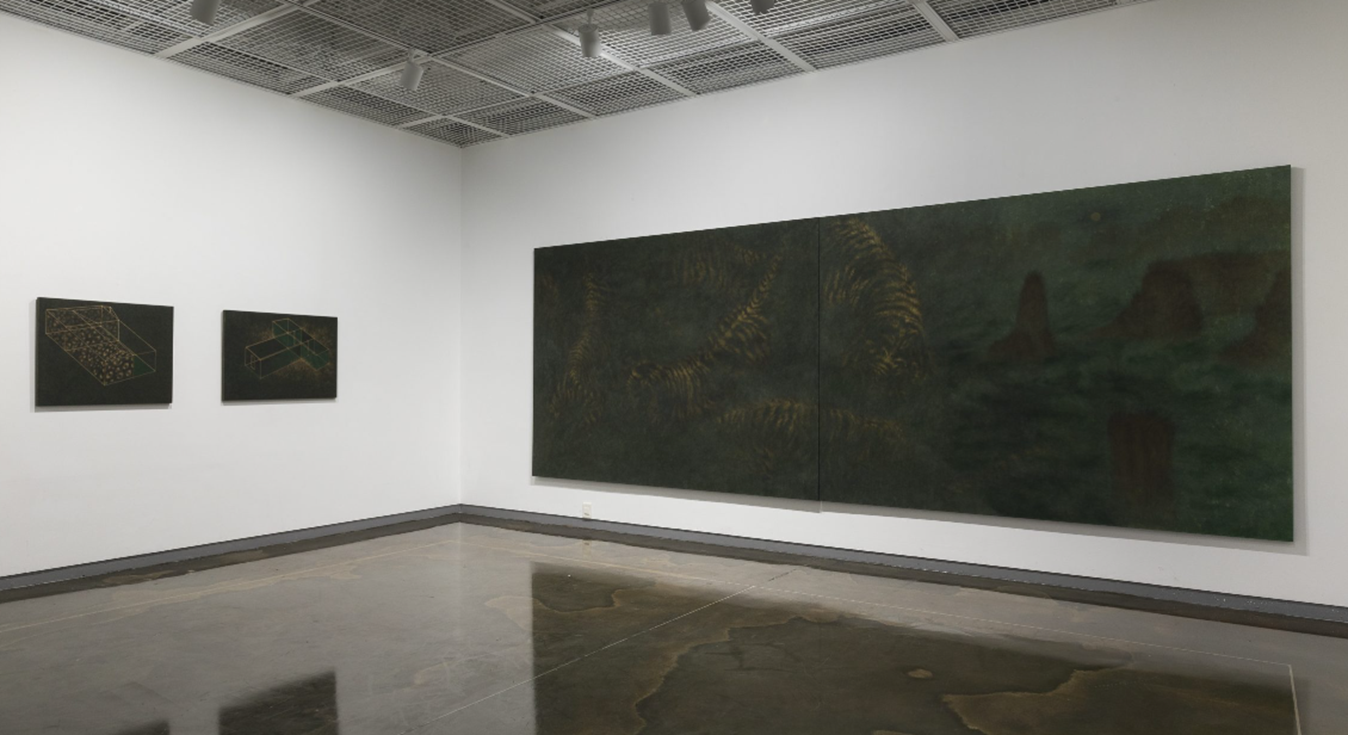
Epidural Moment (2025), a large-scale painting addressing the sensory experience of the moment when an epidural anesthetic—administered to alleviate labor pain—is injected, draws viewers into a dreamlike, surreal world where labor pain and the hallucinations induced by narcotic analgesics intertwine. Spanning 7.2 meters in width, the work is meticulously built through layered applications of ink and color. Images of serpents or dragons coiling across the entire surface, directly legible bodily fragments, syringes and IV tubes, and cloud-like plumes erupting from a mountaintop crater immediately arrest the viewer’s attention.
Yet what can be felt more deeply through the painting as a whole is the conversation the artist initiates through her insistent imagery and overwhelming composition. The hallucinatory state induced at the peak of labor pain appears to function as a confession: it mirrors, not unlike, the emotional anesthesia LEE once experienced fourteen years ago, when she set her wounds aside in order to begin a life as a good parent.
Coincidentally, the Rest Cure that Gilman so forcefully rejected in The Yellow Wallpaper is also known to have been administered, in most cases, in conjunction with narcotic sedatives—much like epidural anesthesia. It was prescribed predominantly to women rather than men, and at times employed even in the absence of clear symptoms, under the pretext of rendering socially active women more domestic. Would it be an overextended comparison to detect a shared logic between a nineteenth-century medical practice that suppressed women’s activity and contemporary anesthetics that ease the process of giving birth through hallucinatory effects?
Gilman’s novel went on to become a foundational text of feminist literature. Should LEE’s paintings in Surging Waves, which mark a significant departure from her earlier work both formally and thematically, likewise be viewed within a feminist framework? If pressed to answer this question directly, one could hardly say no. Yet, just as many women artists have chosen not to label themselves as feminists, I would suggest approaching such classifications with a degree of indirection—allowing the works to be encountered without prematurely fixing them within a single interpretive category.
From a more macroscopic perspective, attention may be drawn to the way LEE pulls threatening natural phenomena into her paintings. The sensations she experienced—waves of pain surging and receding, blood and flesh flowing and tearing away—are translated into images of crashing waves and molten lava pouring downward in heat, into whirlpools resembling the eye of a typhoon, or into dense fog and distorted clouds erupting from a volcanic crater. These visceral memories are most often rendered through the forms of overwhelming nature.
Like a sudden towering wave, or one among many tempests that rise each time to a different height, her experience is in fact singular and specific. Yet as this private experience extends into concrete and universally recognizable images of bodily organs, and further into representations of vast natural phenomena, it becomes clear that the direction the artist points toward does not remain confined within the self. The subject expands beyond the woman who gives birth, toward life itself—life understood as a being that uses the body to its very limits.
In this way, the paintings in Surging Waves render the intense sensations and memories embedded in the private yet universal moment of giving birth through the careful selection and combination of images, meticulous execution, depth of surface, and nuanced gradations of color and tone. Through this process, the message LEE seeks to convey is, in fact, concise. Like the stillness of the sky and mountain ranges settled deep within the pictorial space, her paintings attempt to look outward—by first confronting and regarding the artist’s own pain, they seek to regard that of others as well.
These works are not intended to intimidate viewers or to flaunt experience, nor do they lament or boast that the trauma she endured was exceptionally profound. In doing so, the focus shifts away from the mere question of whether one has experienced childbirth, toward the broader terrain of the possibility—and impossibility—of empathy for human suffering itself. It is through this approach, forged over a long passage of time, that these resolute paintings have finally crawled out, drawn forth by the artist’s will and sincerity: “not intended to drive people crazy, but to save people from being driven crazy.”[1] And now, the paintings will do their work.
[1] Gilman (1913).