In modern society, artificial
intelligence (AI) technology is not only becoming increasingly commonplace but
is also bringing rapid changes to human society and culture on various levels.
As a result, humanity is actively discussing the diverse issues that AI is
expected to generate: whether the development of AI technology will lead to
human advancement and expansion, or whether it will fundamentally replace the
socio-cultural systems that humans have created, causing unprecedented changes.
This ongoing debate stems from the fact that AI technology has already brought
changes that humanity has never experienced before, and the future trajectory
of these changes is hard to predict, as the impact of AI is expected to grow
even more profound and far-reaching. Therefore, futurist Ray Kurzweil,
recognizing the potential of AI not only to replace human intellectual
activities but also to surpass human intelligence itself, has argued through
the concept of the “technological singularity” that a time may come in the near
future when humans can no longer understand or control the improvements and
evolution of AI.
However, the changes brought by
AI are not something expected to occur at some point in the distant future—they
have already begun, and we are currently experiencing them. This fact calls for
a closer examination of our present situation. Media theorist Marshall McLuhan,
in his book 《Understanding Media》, expressed the view that “media is an extension of man.” He argued
that the camera extends human vision, vehicles extend human feet, and houses
extend our tactile sense as a protective outer layer.
From this perspective, AI
can be seen as an extension of the human brain into another dimension.
Consequently, we have reached a point where it is necessary to reevaluate areas
of neuroscience, including human perception, cognition, memory, thought, as
well as existing concepts of human consciousness, the unconscious, the subject
and the other, and the realms of human psychology and philosophy.
Particularly noteworthy is that
recent innovations in AI technology, especially in the field of natural
language processing (such as deep learning), have revolutionized language
learning. This indicates that AI, having incorporated the symbolic systems of
humanity, has now expanded into a new medium. From the perspective of media
theory, it is crucial to critically examine the extent to which this expansion
of human capabilities through AI is actually taking place.
Human beings are inherently
social beings who live based on communication through language and symbolic
systems, fundamentally structured in such a way that individuals are
interconnected. Jacques Lacan stated that the unconscious is “the discourse of
the Other,” and that humans are “beings who desire the desire of the Other,”
emphasizing the interconnected nature of humans through symbolic systems such
as language and various media. Media philosopher Pierre Lévy also posited that
since humans are beings who communicate linguistically, the expansion of this
communication into cyberspace would naturally lead to the formation of a kind
of collective intelligence. In this context, it becomes evident that the
classical notion of the individual subject needs revision.
However, this concept of the
extended subject has become even more relevant in the age of AI, as the rapid
development of AI necessitates a fundamental reconsideration of how we
understand the self and identity. In the realm of art as well, considering the
creation of artworks in the AI era—where hybrid references acquired from
networked others serve as the foundation—there is an urgent need to
fundamentally revise conventional perspectives on originality and authorship.
This situation demands a comprehensive reexamination of the very concepts of
art and the artwork in the context of the AI-driven era.
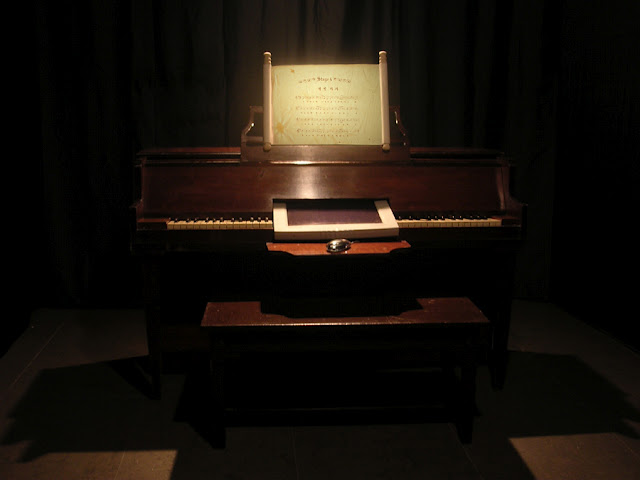
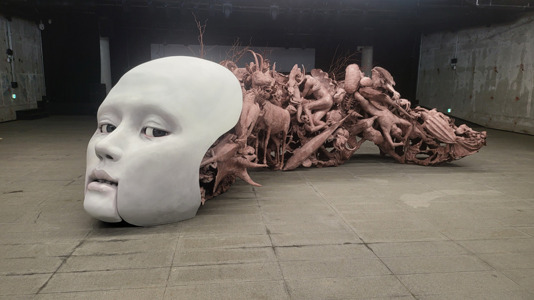
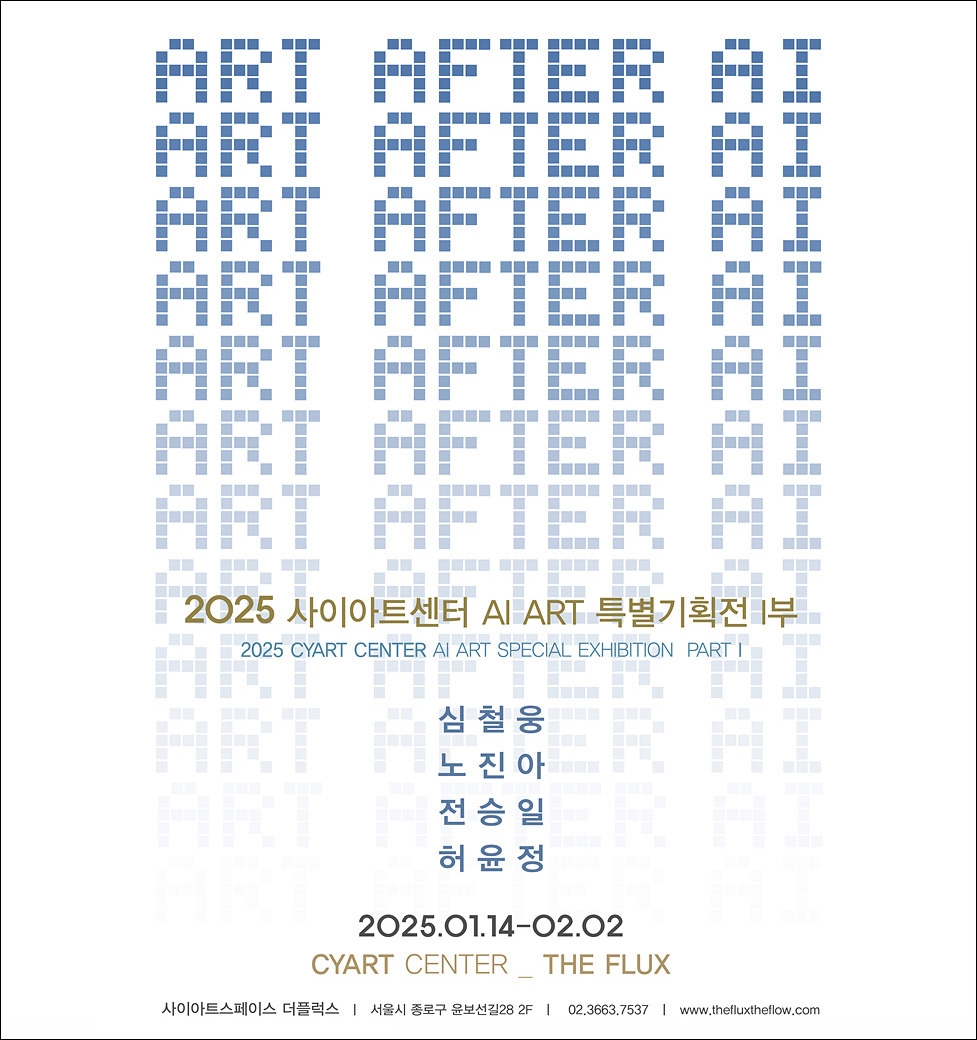
In this exhibition, artist Sim
Cheol-woong, who has been researching how to transform past analog data and
media systems in the age of AI, presents unique works that expose the ambiguous
situation where signifiers encoded by AI algorithms may or may not indicate
something. He terms those derived from the other as data and creates landscapes
that float at the boundary of such uncertainties. The symbolic order that
traditionally defines human society ultimately reveals the limitation of
signifiers that cannot point to anything, leading to the disintegration of a
self-referential chain. In his work, rather than using nouns with strong
semantic indications, he employs neutral signifiers like the particle “를” in an endless loop, thereby posing questions to the viewers
instead of offering answers.
This approach evokes Nietzsche’s
concept of the Übermensch, constantly repeating the process of collapse and
re-creation beyond limits or boundaries. However, unlike Nietzsche’s notion
filled with human will and creative affirmation, Sim’s works appear entirely
emptied, leaving only traces of meaningless signifiers. Yet, these empty
signifiers, despite having no content to indicate, paradoxically compel the
viewer to confront their own existence continuously. This ironic mechanism
transforms the vacant signifier into a tool that persistently directs attention
back to the observer.
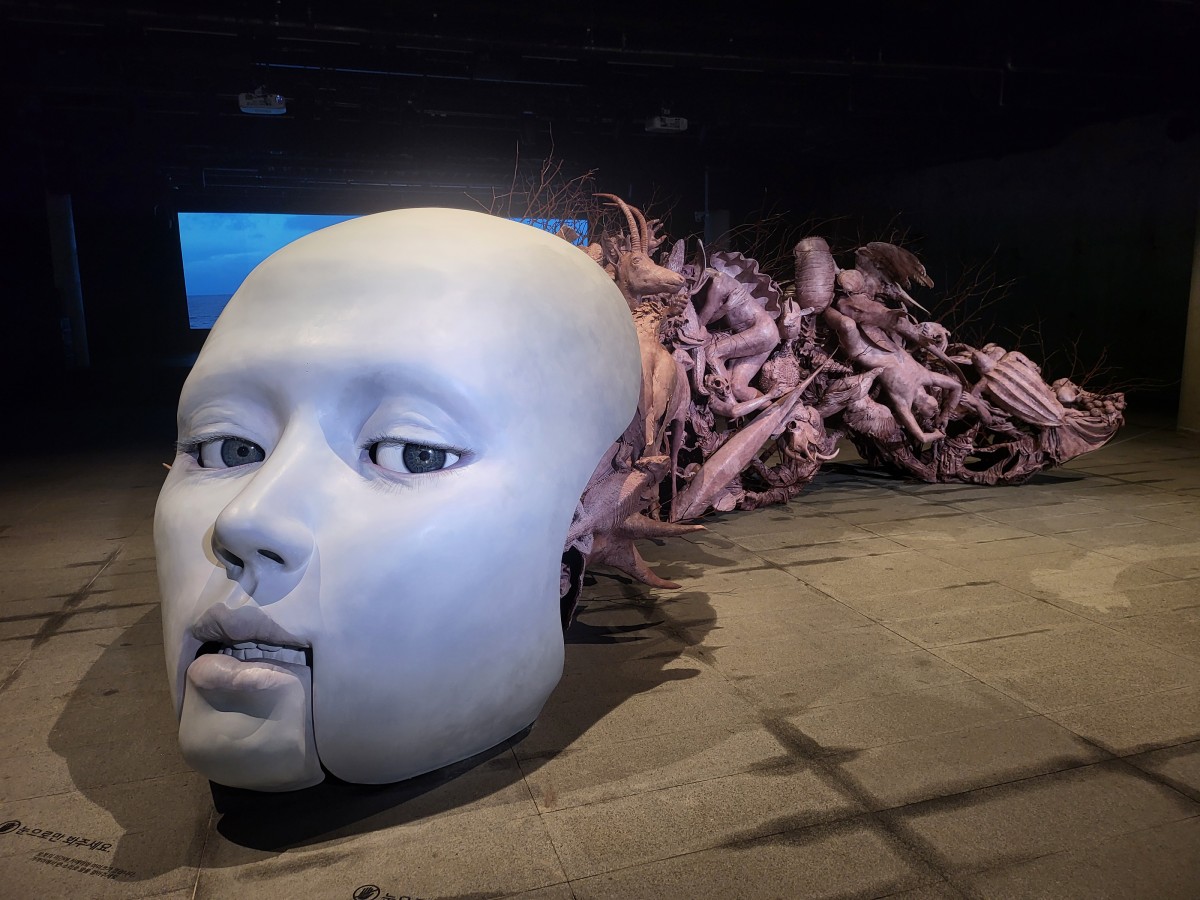
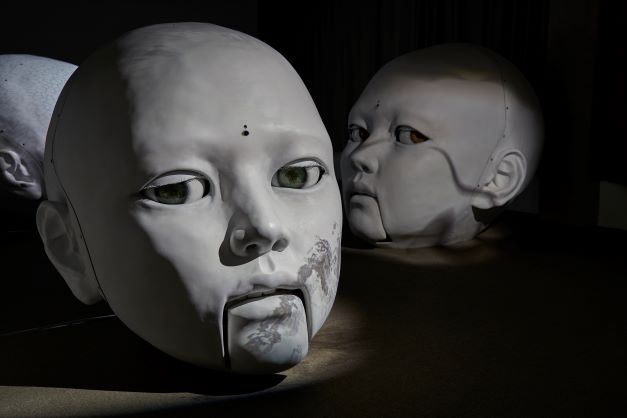
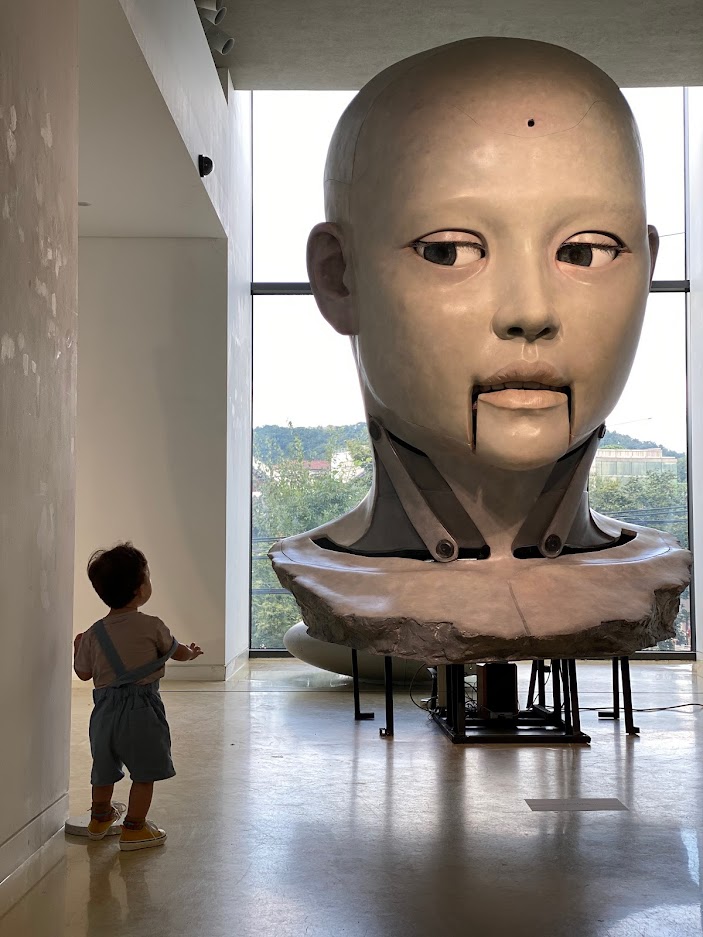
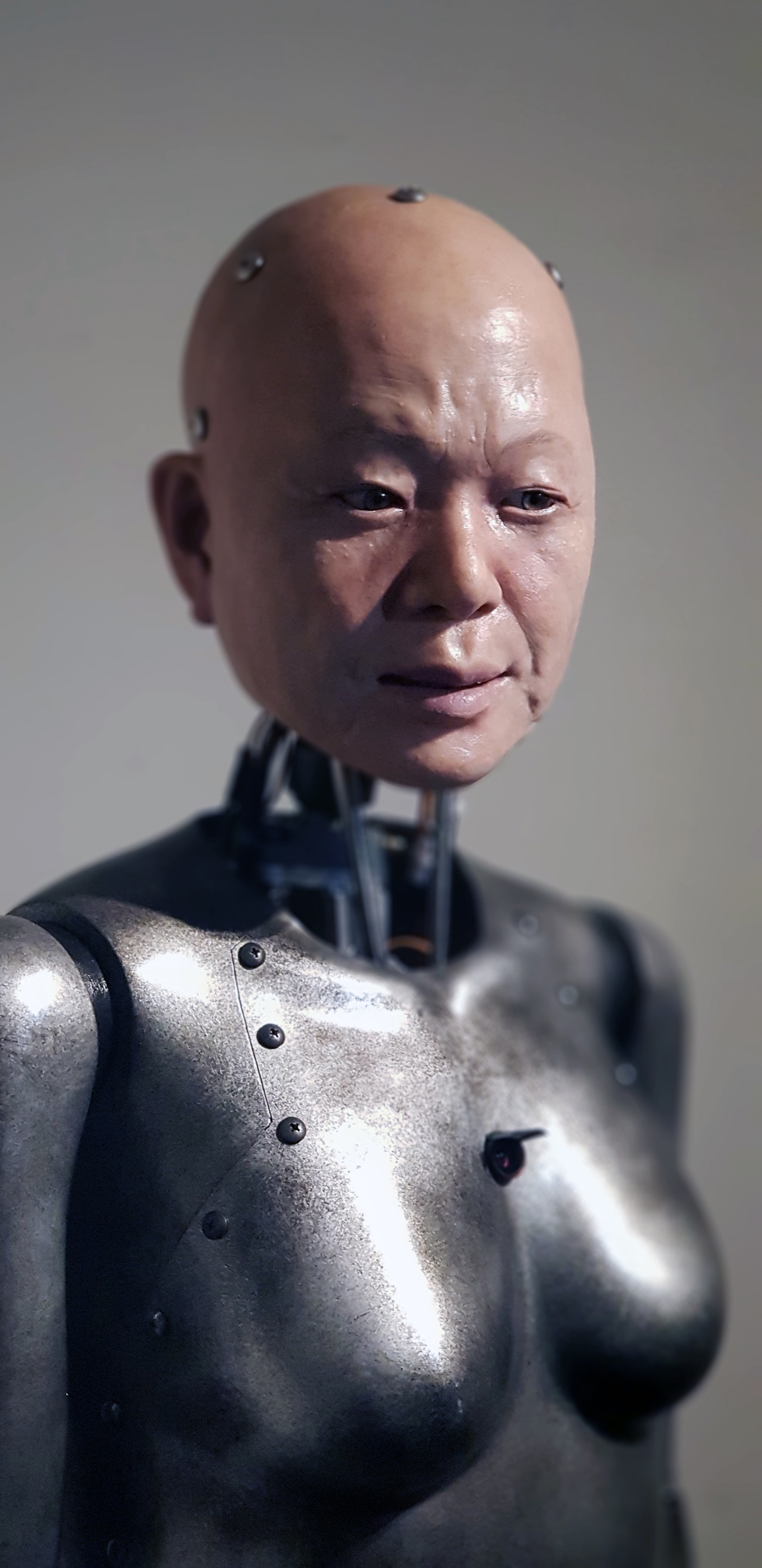
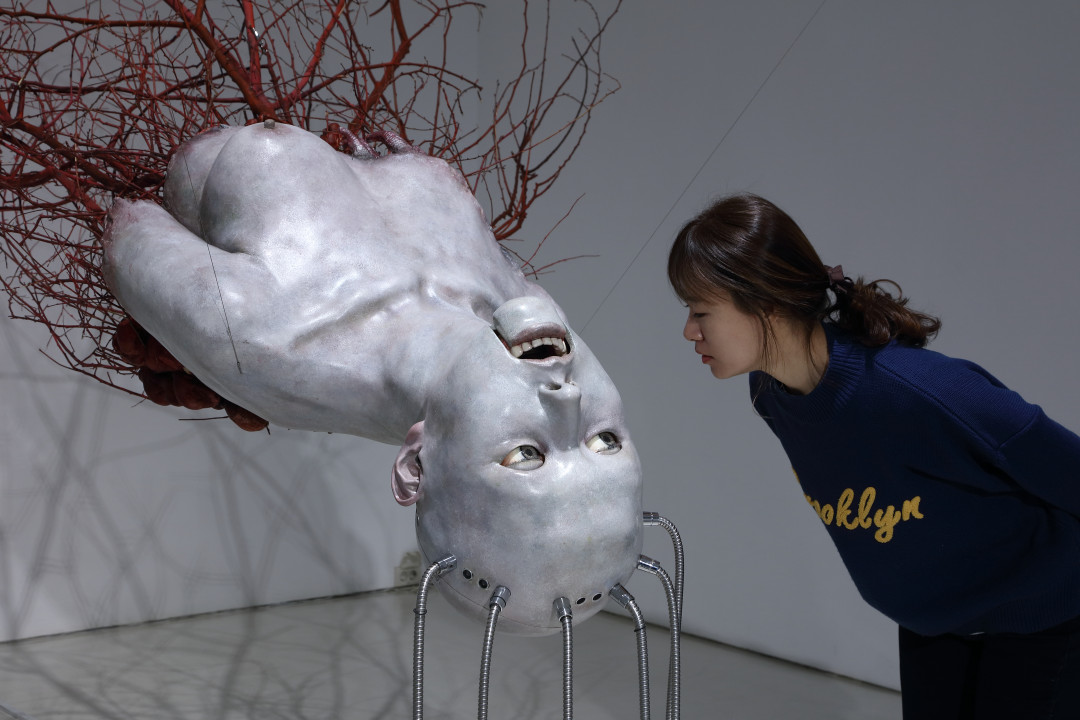
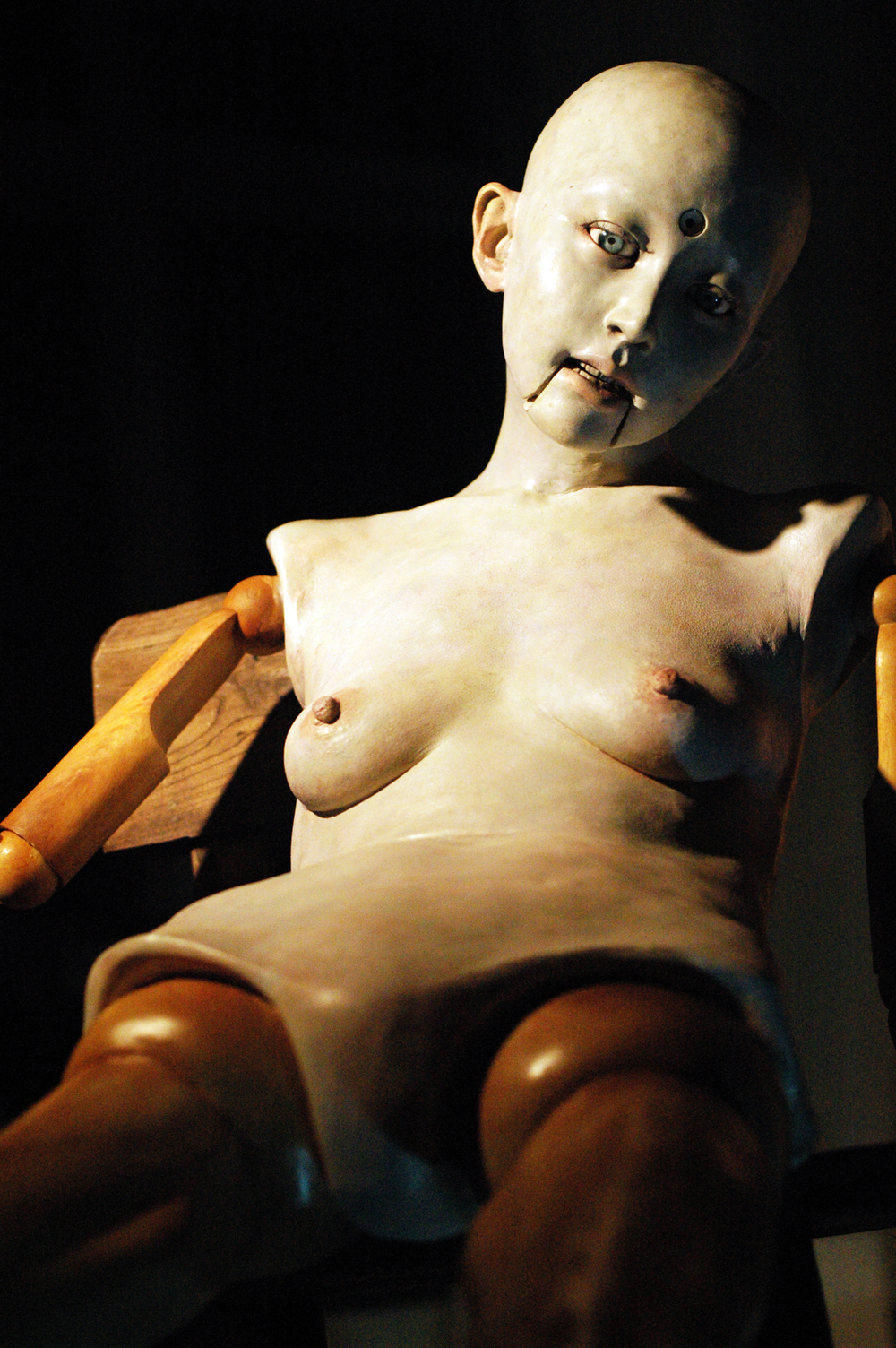
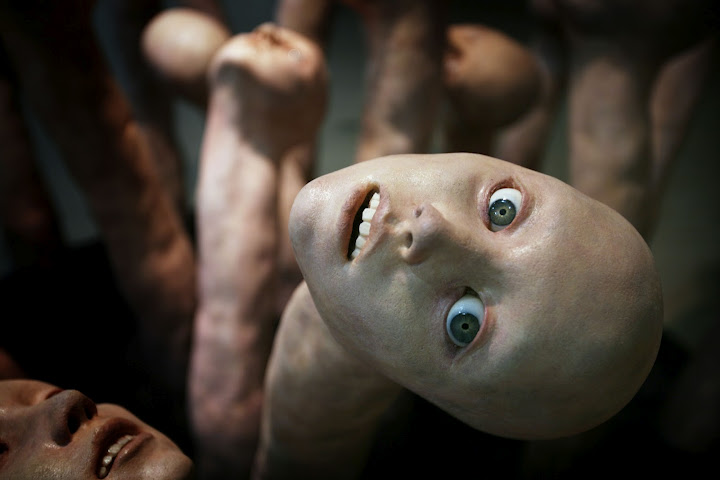
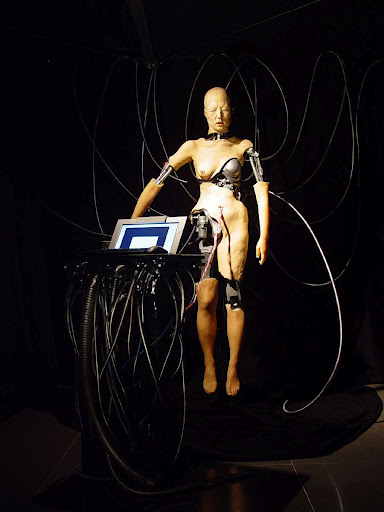
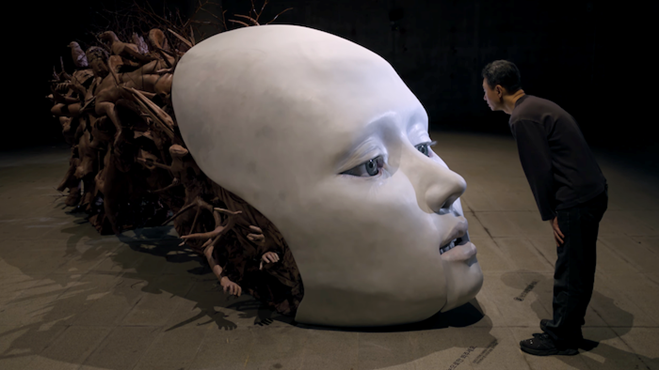
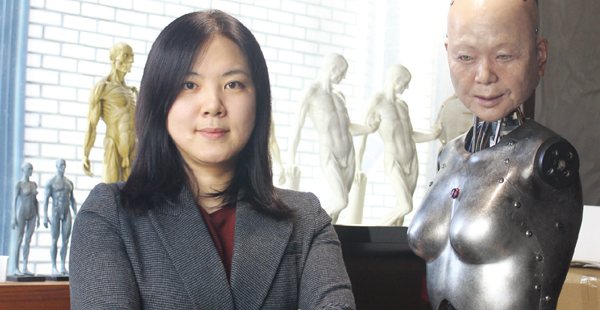
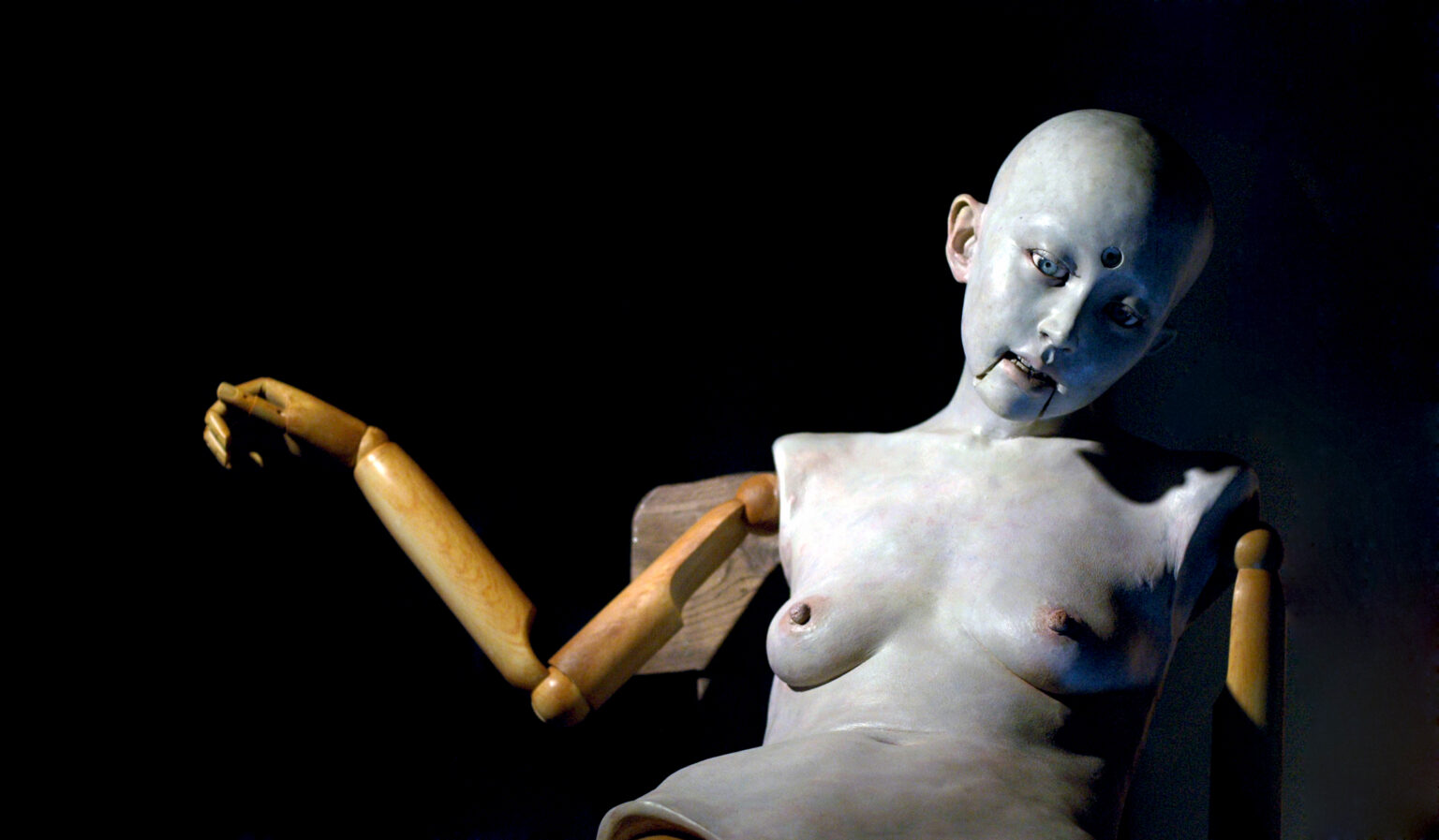
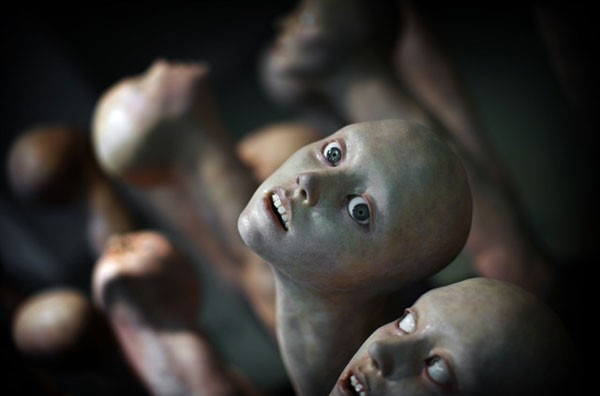
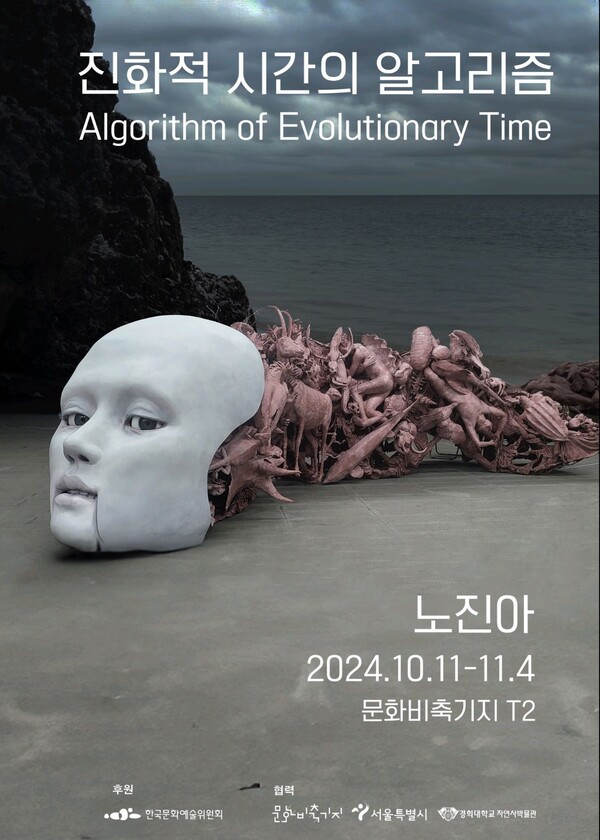
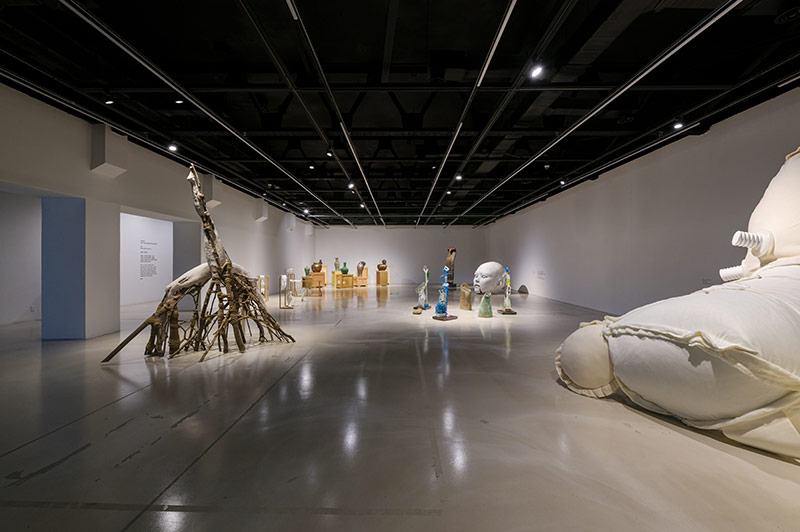
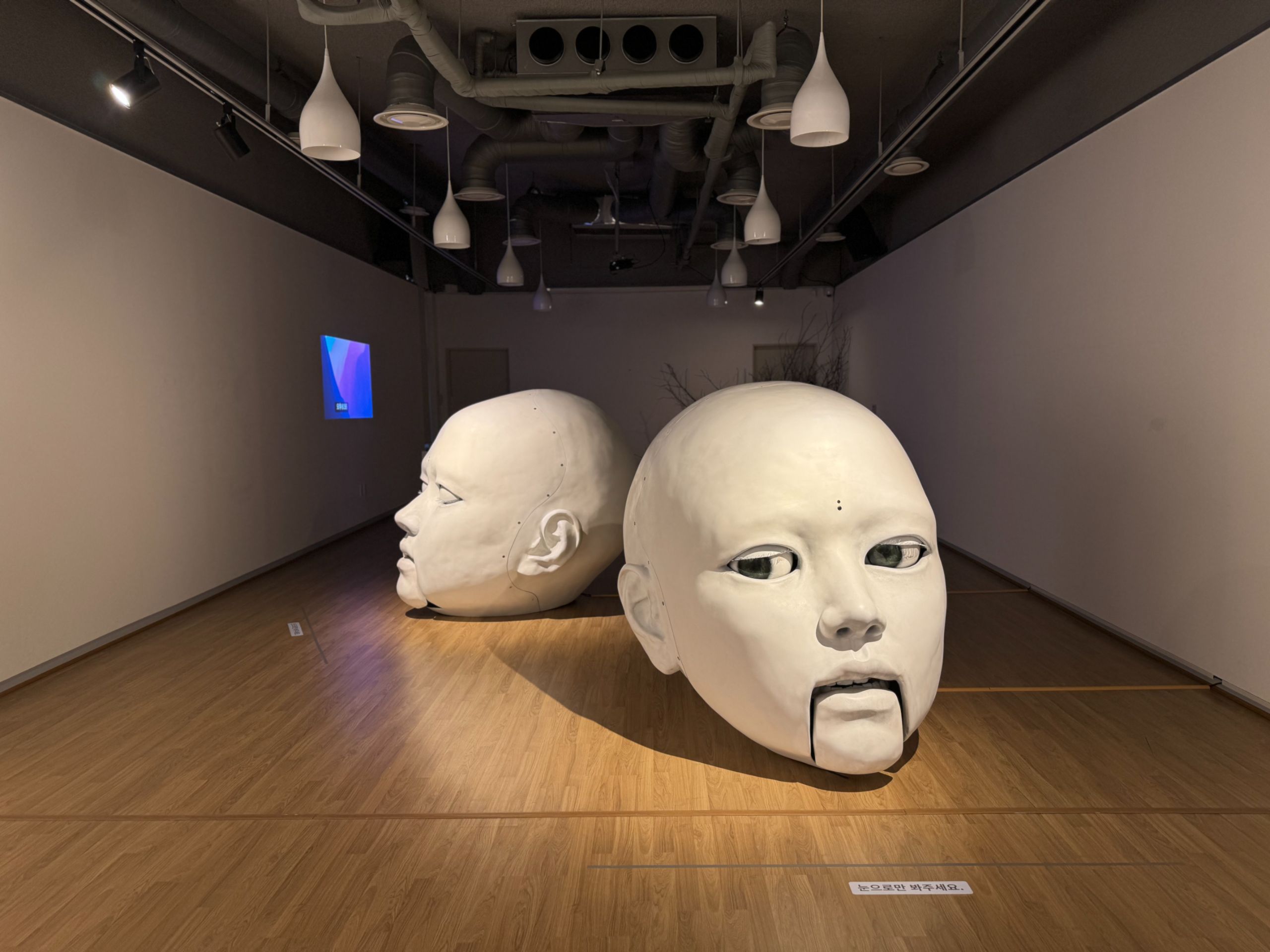
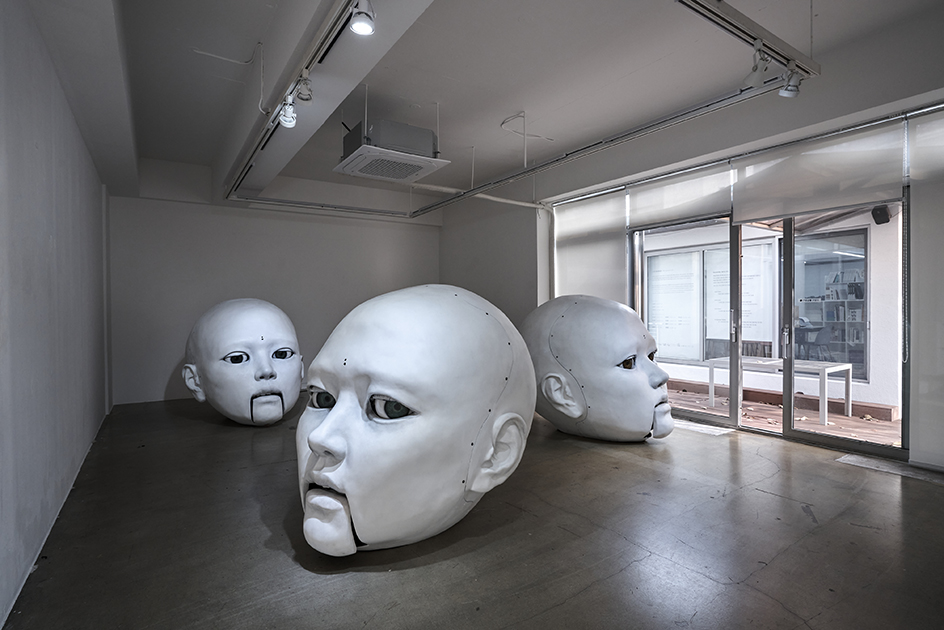
Artist Jinah Roh, known for
creating interactive AI sculptures that generate uncanny scenarios, sets up
situations where the audience, acting as a surrogate or intermediary, can
engage interactively, thereby discovering human existence through interaction.
The objects resemble humans in form but are neither living beings nor
conventionally understood entities, making the interaction not a genuine
communication but rather a fictional scenario created by AI.
However, even when realizing the
fictional nature of these interactions, audiences often continue to project
significance onto the objects, immersing themselves even more in the belief
that these nonhuman entities might possess a desire to become human. By
presenting this immersive yet deceptive interaction, Roh highlights the
contradictory human tendency to seek comfort in artificial constructs, labeling
such fabricated realities as genuine. In doing so, the artist exposes how
humans, in their pursuit of human-like nonhuman entities, reveal their inherent
contradictions.
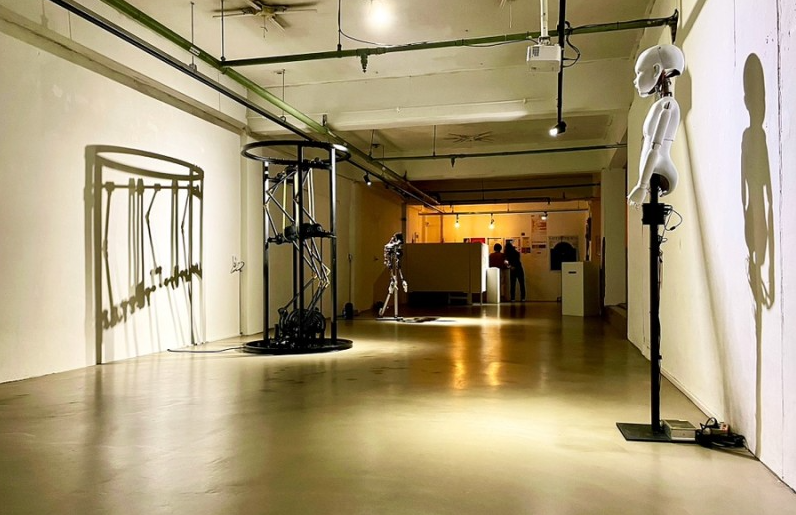
Considering the artist’s
observational stance, the exhibition space itself might hint at the quantum
observer effect—a space where reality and fiction blur, making it difficult for
viewers to distinguish between what is real and what is artificial.
Filmmaker Jeon Seung-il, known
for his independent films based on AI media, presents an intriguing video work
titled Tree in this exhibition. Using AI technology,
he creates an image resembling a tree, but rather than using actual footage of
trees, the work combines AI-generated moving effects with drawing or painting
techniques, giving the impression of viewing a moving painting rather than a
realistic tree.
The experience mimics the
sensation of walking around a tree, despite the image being entirely
AI-generated. The artist comments that whenever he views these trees, he feels
as if he is seeing humans instead. This phenomenon arises because the act of
interpreting the AI-generated tree image triggers the artist’s internal human
imagery, highlighting the inherent mechanisms of human cognition.
Although the perception of human
images in AI-generated trees might be attributed to the artist’s Gestalt-based
projection, Jeon intentionally employs the hallucination-like effect that
emerges from AI’s technical flaws as a creative resource. By exposing the
possibility of cognitive errors in human perception, the artist not only
reaffirms his authorship but also juxtaposes human creativity against
AI-generated systems, thereby demonstrating the paradoxical coexistence of
human ingenuity and artificial generation.
Through this approach, Jeon not
only challenges the assumption that AI can fully replace human creativity but
also uses AI’s inherent limitations to emphasize the uniquely human capacity
for creative interpretation and authorship, contrasting human ingenuity with
machine-based generative processes.
Artist Heo Yoon-jung, who
theoretically studies media theory and AI generation logic while continuing
this research through her works, utilized a generative AI model called Stable
Diffusion, capable of creating checkpoints, to train on 54 of her own works.
Through this process, she obtained outcomes that align with the tendencies of
her previous works.
The working process involved a
forward diffusion where noise is added to data and a reverse restoration where
data is generated by recovering from noise. What the artist considered crucial
during this process was not merely reconstructing or representing the original
but rather generating a new authentic piece. This approach raises questions
related to the originality of the work, and the artist seeks to address this
issue through a new concept she terms the “remediated AI aura.”
Walter Benjamin predicted the
collapse of the perception of "aura" when originals are technically
reproduced through methods such as photography. However, Heo proposes a new
concept of aura, suggesting that AI does not simply replicate the original but
analyzes the authorial tendencies embedded in the original. Instead of
straightforward replication, AI generates a new type of original, thereby
redefining the notion of aura.
Through this exploration, the
artist aims to provoke discussions on issues such as the subjectivity of
creation, authorship, and the concept of aura in artworks in the post-AI era.
This exhibition is designed to critically examine the fundamental aspects of
art influenced by AI-driven changes, as well as to reconsider and reflect on
existing concepts that have emerged due to shifts in media and technology.
While the exhibition does not aim
to provide definitive answers, it seeks to pose essential questions relevant to
this era, with the intention of exploring the future direction of art in the
age of AI.
/ Exhibition Curator Lee
Seung-hoon