Song
Sanghee’s works are characterized by the coexistence of contrasting images and
elements. On the one hand, Song identifies and comforts oppressed or weakened
people, especially women and children, who have been victimized by history,
patriarchal power, war, colonialism, or capital. At the same time, she
criticizes our entrenched ideologies, contemporary myths, and dominant power.
Thus, her works combine the delicacy required to sooth vulnerable people and
the grotesqueness required to depict the ruthless and prodigious power.
Around
2009, Song began using photos and other media to satirize the forced lives of
women. In Evening Primrose, for example, she collected
poems written by female sex workers in Amsterdam, and then projected the poems
onto the city’s Red Light District. With each subsequent narrative, she
carefully determined the proper media and communication methods for the situation,
such that her compositions have become denser and more complex. Metamorphoses
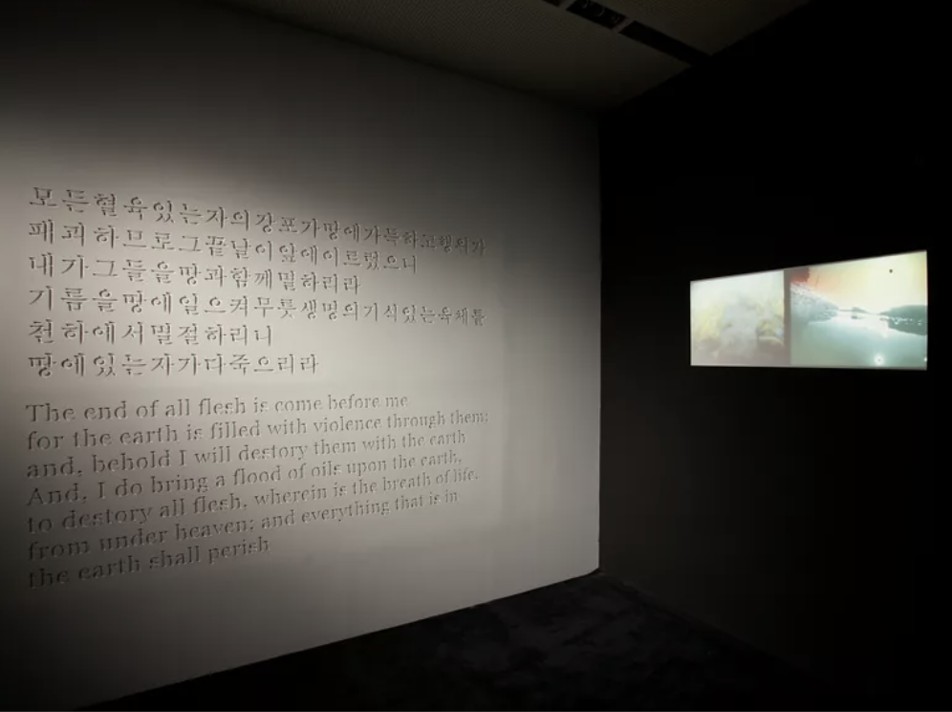
Vol. 16 is an animation work that expands upon the Greek myths
of Ovid, telling a love story between imaginary individuals that incorporates
references to ecological destruction, oil money, and state power.
For another
work, she presented her personal collection of items acquired at flea markets
(e.g., postcards, uranium glass bowls, dry flowers), using these miscellaneous
goods to distill the manmade tragedies of environmental destruction, biological
extinction, and problems of nuclear energy. She has also composed radio
programs of songs that press down on the listener with the heavy weight of
ideology and created drawings and videos that represent tragic scenes from
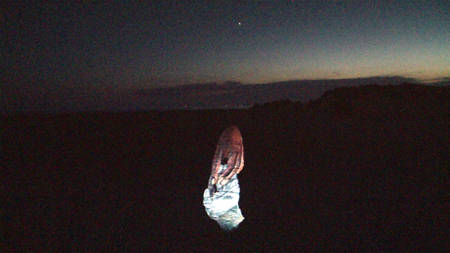
history. One of the most powerful examples is Shoes, in which she shot
endless video footage of shoes floating in the ocean, representing the
aftermath of the disaster of Korean Air Lines 007, which was shot down in 1983.
Song
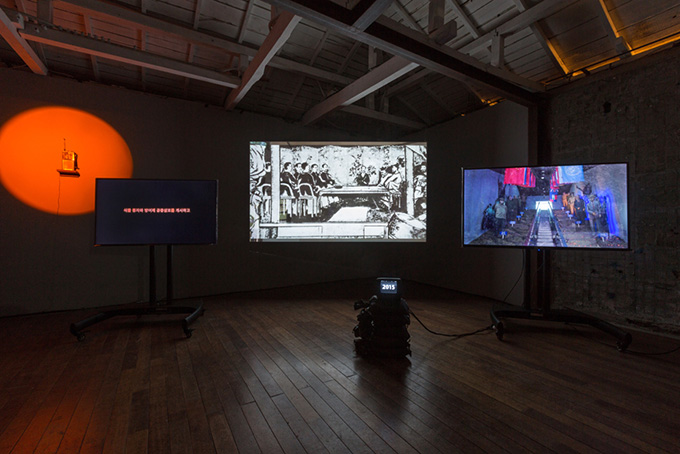
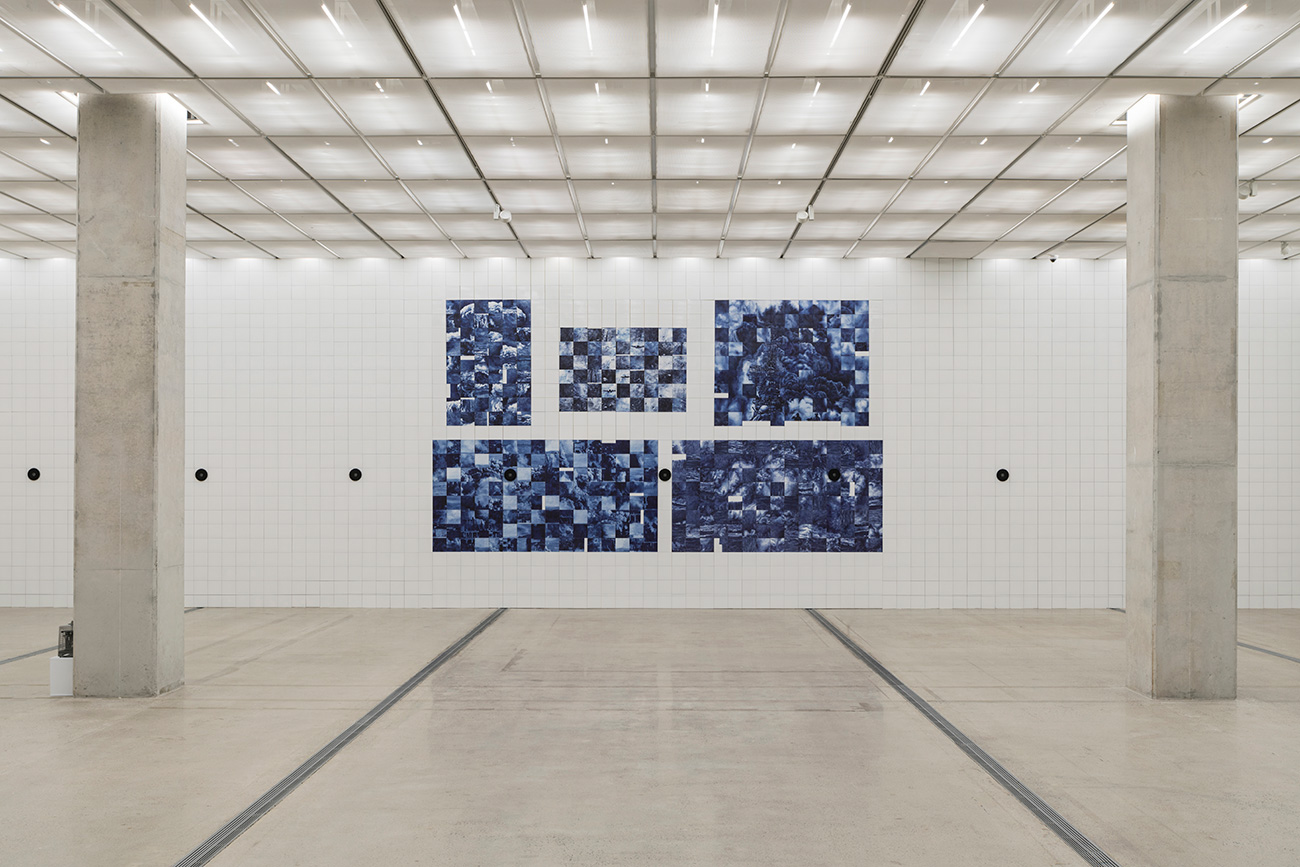
Sanghee’s methods of collection and invocation have been strengthened and
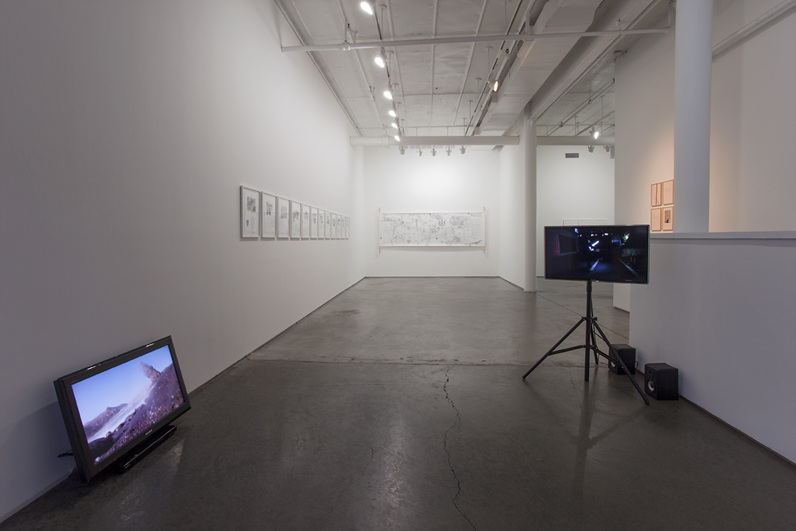
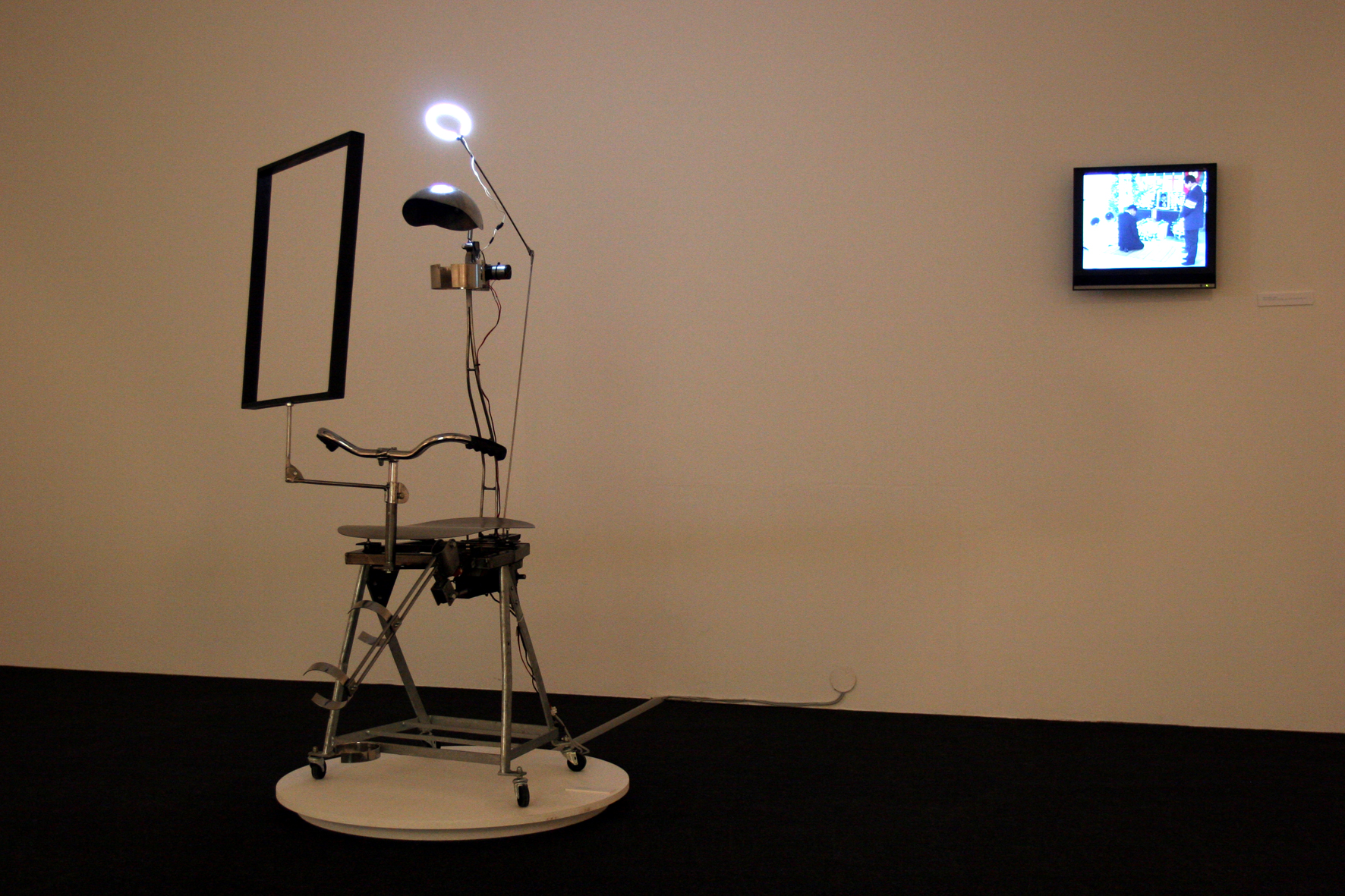
enriched in increasingly complex installations that combine text, music,
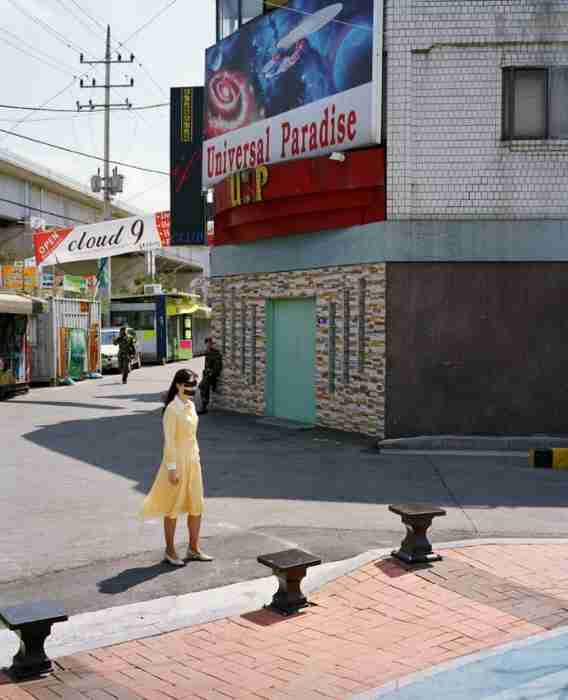
videos, and drawings. In That Dawn, Anyang: People Dreaming of
Utopia, she combined scenes from a real Korean city whose name
(Anyang) means “paradise” with texts, drawings, and music depicting dystopia or
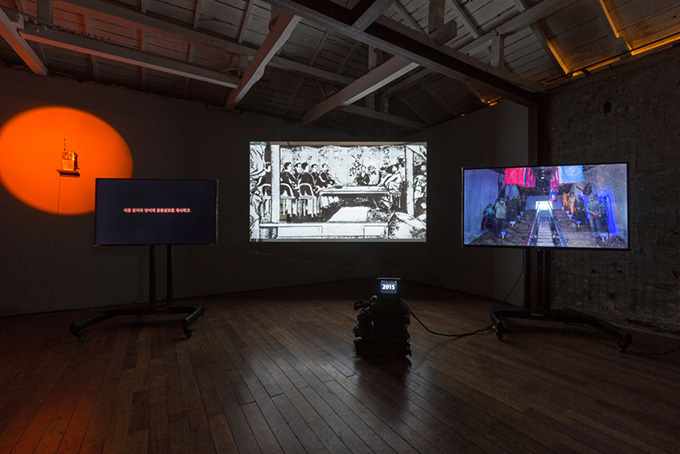
the collapsed utopian dream. For her 2016 solo exhibition, as well as the 2016
Aichi Triennale, she added more layers to this technique to create Song
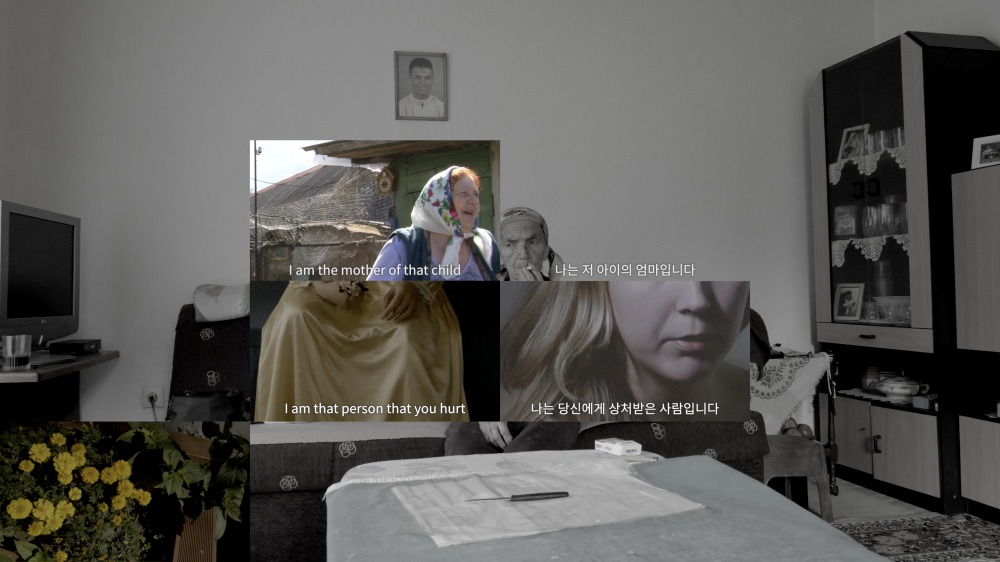
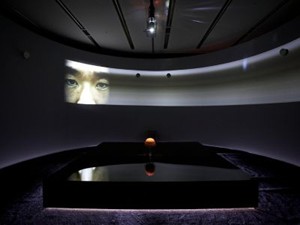
of Byeon Gangsoe: Looking for People, which might be called a
“video-opera.” At various sites of historical tragedies, Song projected
drawings of the victims of those tragedies, such as war prisoners and comfort
women. She filmed the entire process, adding dialogue from the victims, who have
often been perceived as coarse or common. This unfamiliar rite of invocation is
again led to more recent and ongoing tragedies, such as the sinking of the
Sewol ferry and the refugee crisis in the Mediterranean.
Some
might claim that such multi-layered and complex works are difficult to bear,
making them an inefficient way to address these tragic episodes. But in their
purest state, these works embody Song’s continuous efforts to reveal the
never-ending series of “ordinary” tragedies that accumulate every day, taking
the lives of untold numbers of victims without investigations or condolences.
In this day and age, as we are becoming increasingly desensitized to the pain
of others, Song Sanghee refuses to overlook any possible way of awakening our
sense of pain. The result may be uncomfortable, and yet we cannot take our eyes
off this uncomfortable beauty.