Gerhard Richter once said, “I
find many amateur photos better than the best Cézanne.”1) By “better,” Richter
is not simply comparing the representational capability of photography to that
of painting. This is because photography’s power to demonstrate and extrapolate
reality cannot match that of painting. However, Richter used the photographs as
mnemonics instead of representations of facts: a source of memory images. Many
figurative paintings today use photographs as esquisses. The power of
photography has understandably replaced the visual frames through which we view
the world, and the world itself has taken on a ‘photographic face,’ as
Siegfried Krakauer has put it. The camera has become our eyes, and “our own
sensorium, memory, and unconscious have become, at least in part,
‘photogenic.’”2) In the imagery of contemporary art, photography has become a
new paradigm, emerging as a photogenic world in and of itself, which is more
than just a sketch for a fixed composition to be transferred to a two-dimensional
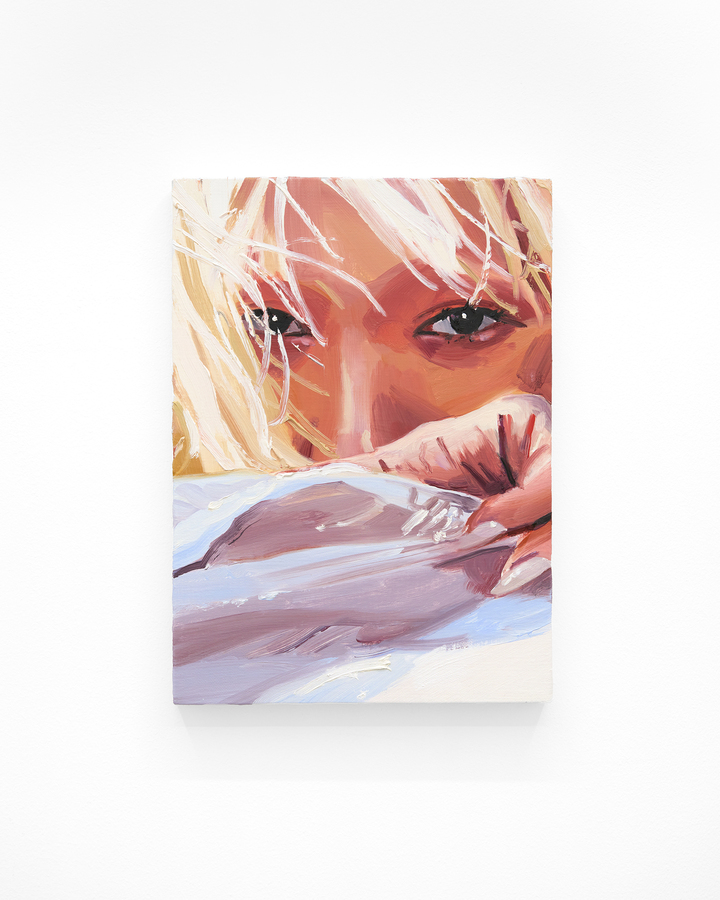
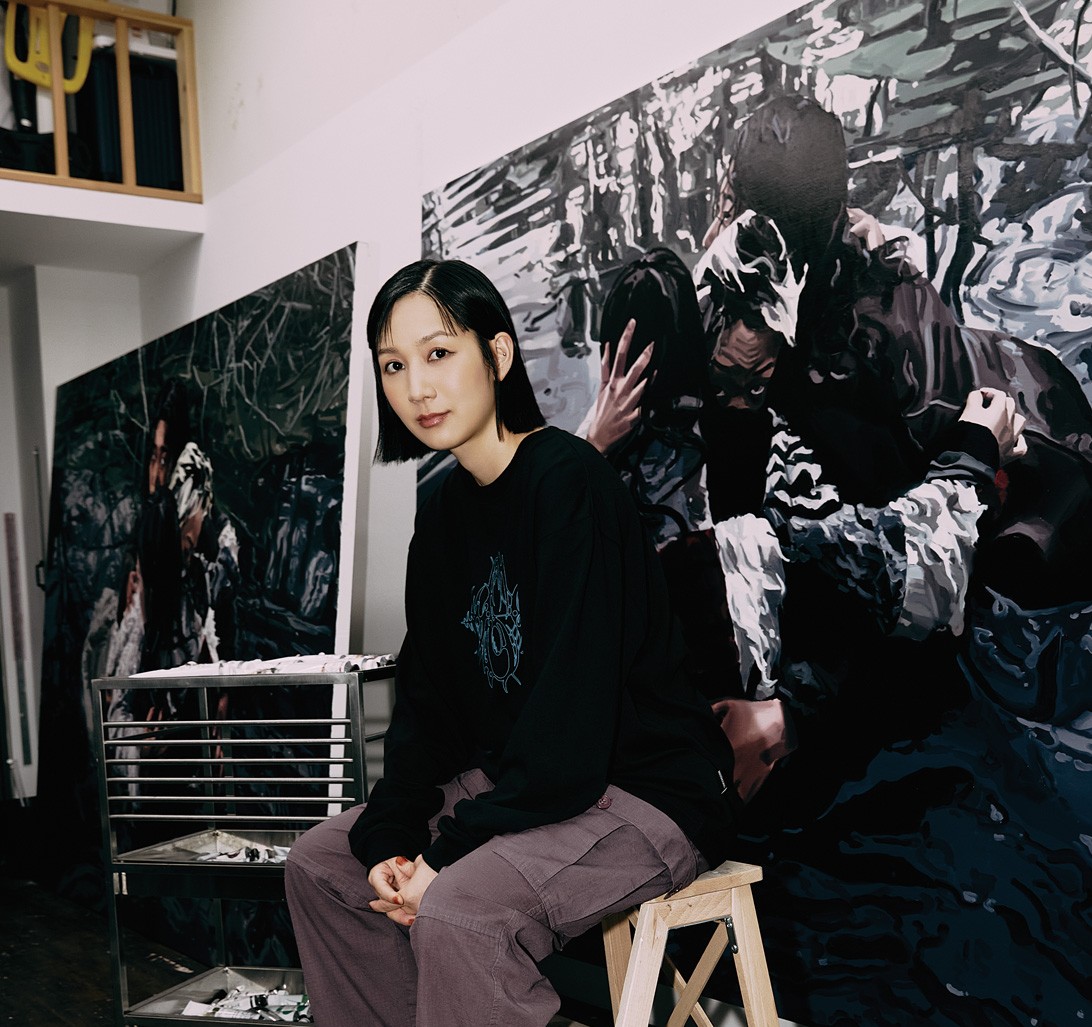
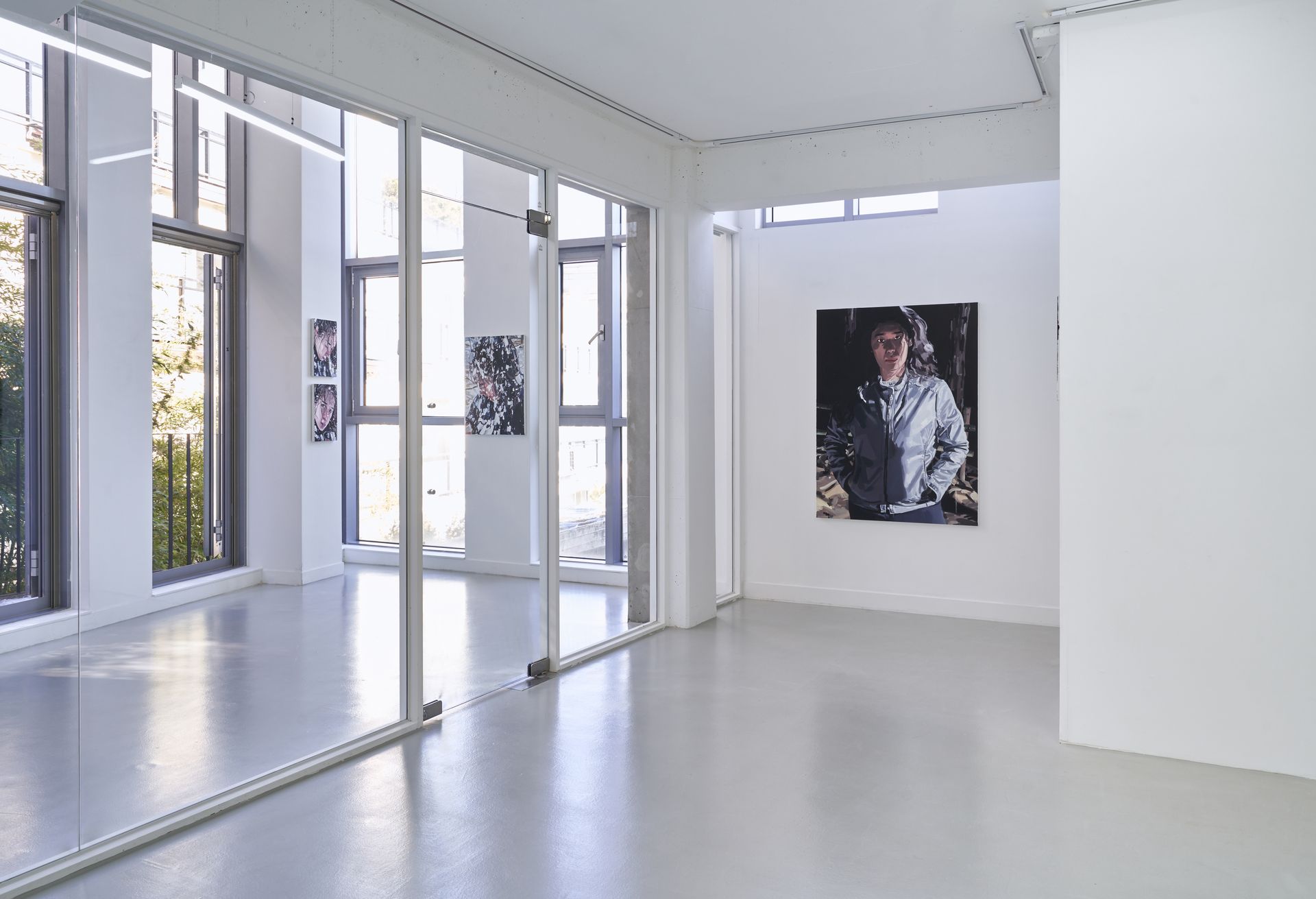
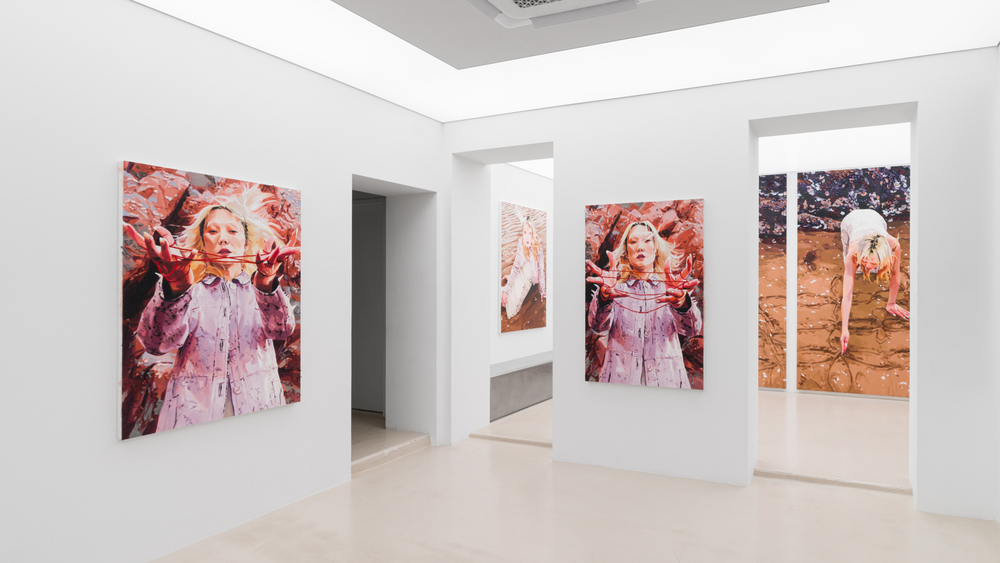
plane. Miryu Yoon’s paintings of figures are also based on photographs of her
acquaintances taken by the artist herself. Yet, where does the photogenic
pleasure and vibrancy of Yoon’s figure paintings come from? Do they emerge from
the bold deviations that transformed the photographic image into a refined
“composition of color planes” and “lively brushstrokes with a pace”?3)
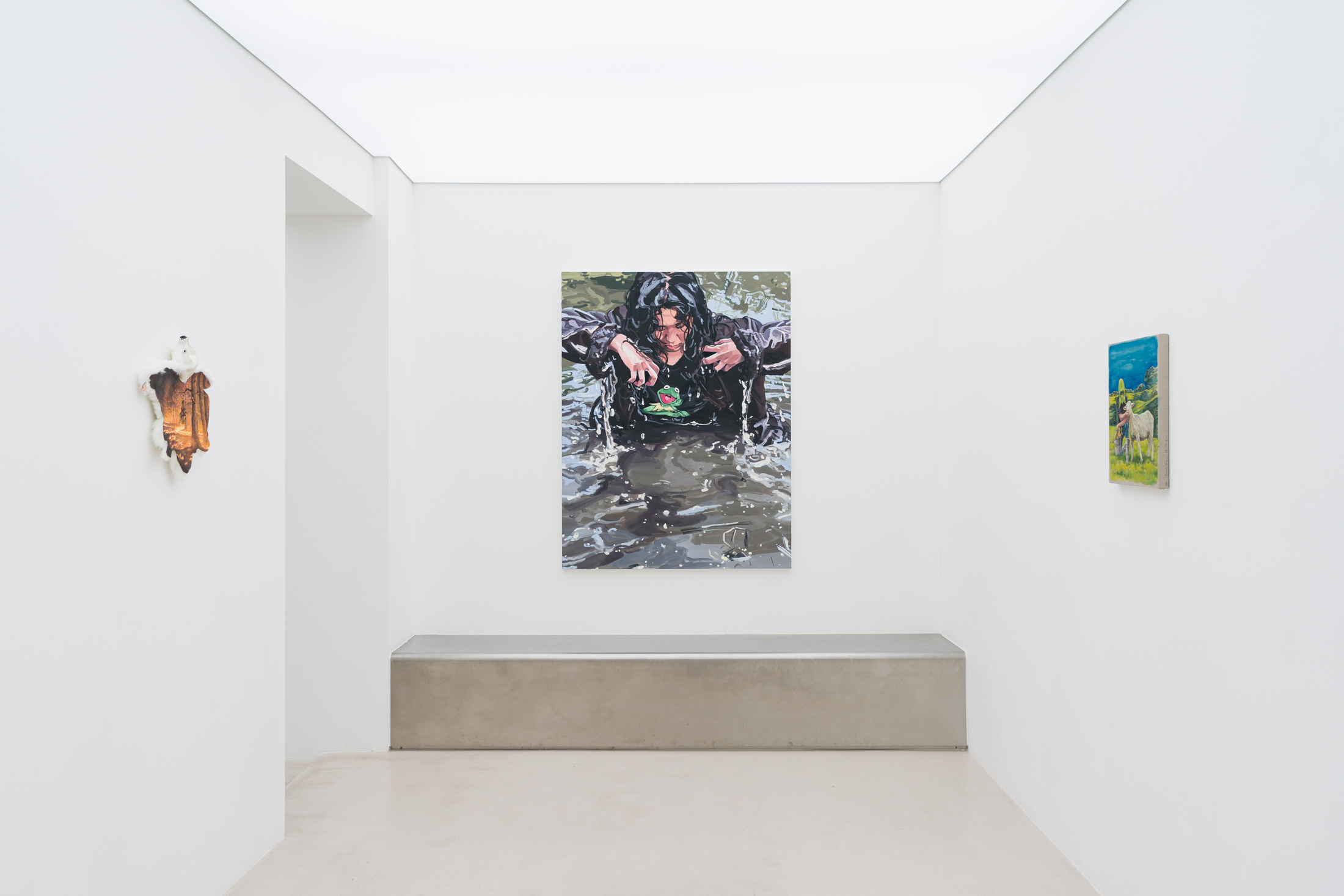
Since her ‘Dripping Wet’ series
in 2021, Yoon has been inviting acquaintances to perform the configurations and
characters she has created, capturing the scenes in photographs and
transferring them to canvas. She has stated that the figures in her paintings
are “intermediaries to visually embody the sensations and images” in her mind
as well as “alibis for painterly experiments and events.”4) Since the
identities of these individuals, who are often the artist's family, friends,
and acquaintances, are unknown to the viewers, the viewers do not derive any
pleasure, empathy, or faint memories from the portrayed figures themselves. As
such, each portrait of someone constitutes a personal phenomenology. This is
why Barthes argued that sometimes a photograph might “[say] nothing else” and
it is this banality of photography that is its very ‘incapacity’.5)
With these figures that do not
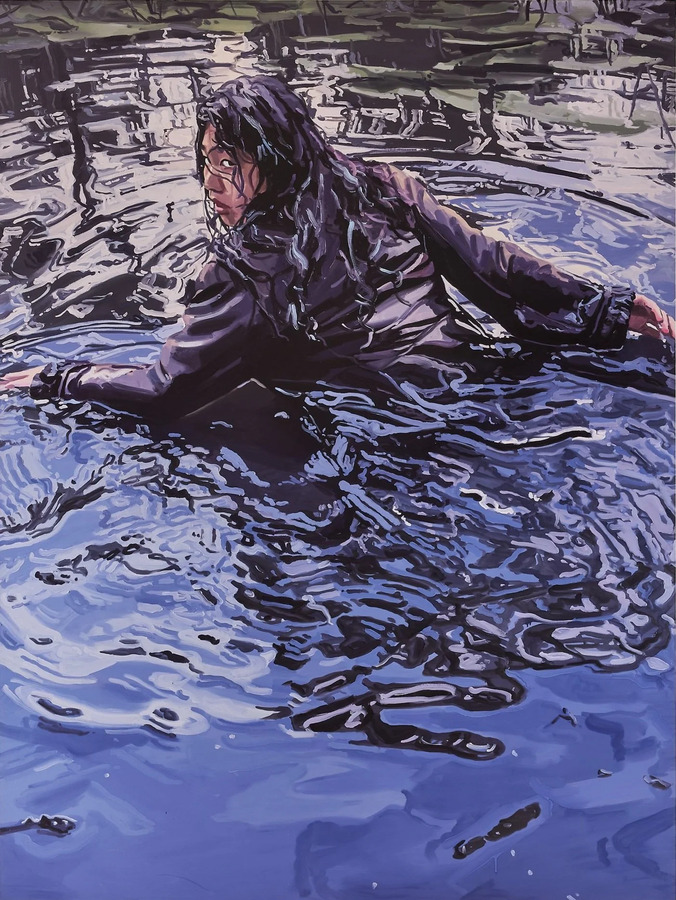
tell the viewer anything as an alibi, the artist creates a phenomenology of
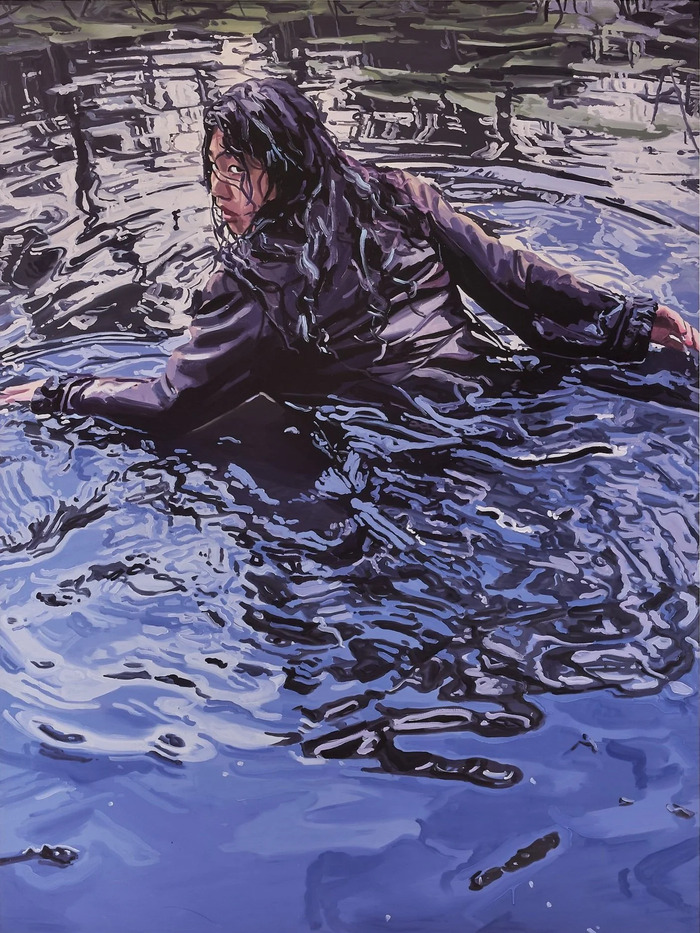
light on canvas. The work of translating the light, shadows, and reflections of
water in natural light into paint and brushstrokes is obviously related to
optical visuality. In a sense, it has to do with the objects, the fleeting
light, and the world of shimmering and reflections that the
impressionist/neo-impressionist painters were drawn to, coupled with the
development of the optical medium of photography. However, the play of light in
Yoon’s paintings cannot merely be regarded as an optical curiosity or painterly
experimentation itself. This is because, within the reflections and ripples of
light and water that the artist captures on canvas, it is the mood of the
subject that emerges photogenically. What is this mood then? We often look at a
photo of someone and say, “This looks like you,” or “This doesn’t seem like
you,” according to their facial expressions, body language, and color tone.
What we seek to capture in the precise representational capacity of photography
is not so much the empirical facts but the mood of the ‘you’ that I know and
the resemblance to the you that I ‘know.’ It is this resemblance that is most
apparent in Yoon’s paintings, and the subjects in her photographs are mere
models acting out that resemblance. In this way, Yoon’s figure paintings are an
intriguing display of the sensorial displacement of the ‘portrait,’ traversing
painting and photography.
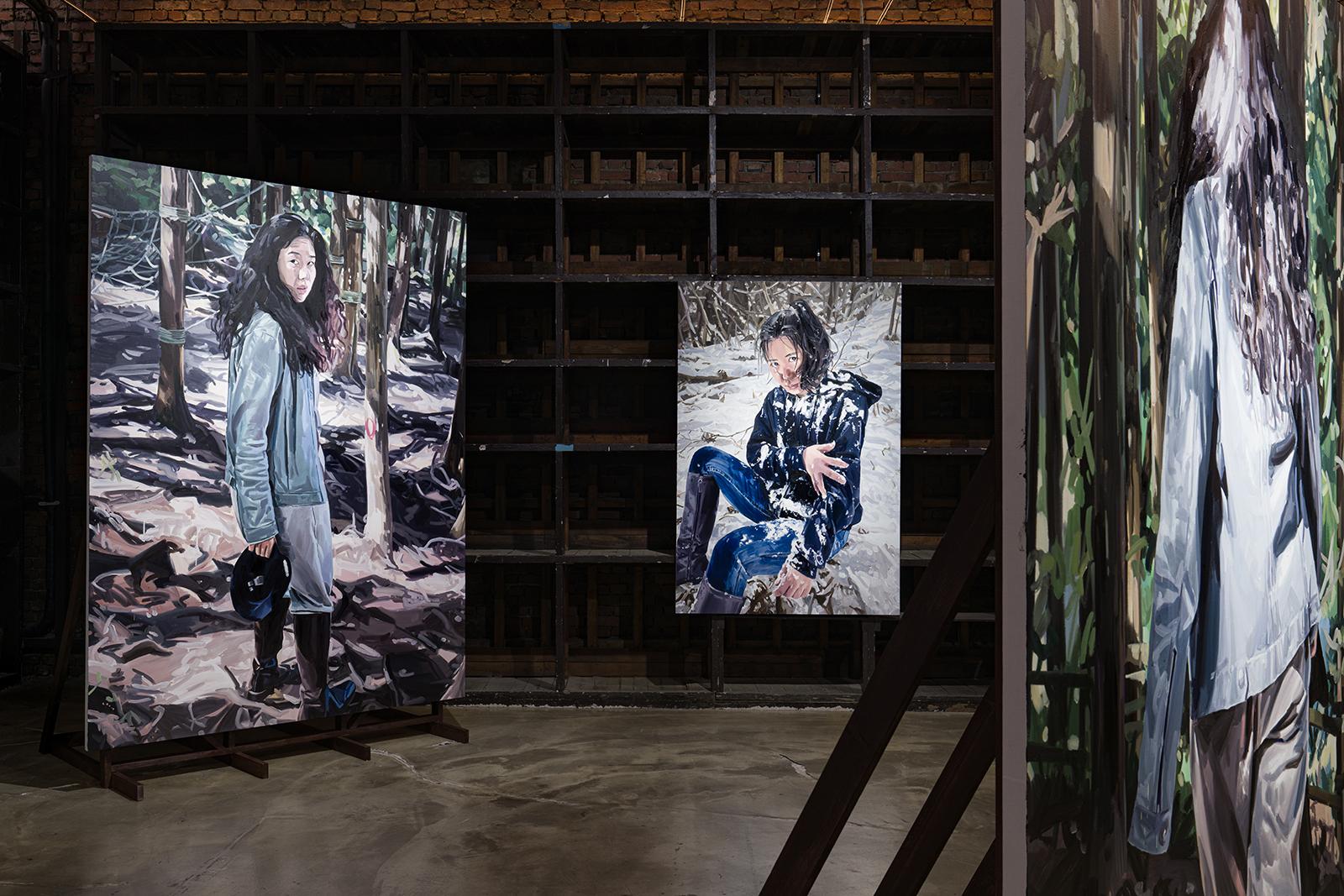
Miryu Yoon says that she pays
attention to how the model reacts and performs during the shooting and how
different images are created as they perform their roles. A close look reveals
that the figures transferred to canvas often deviate from the perfect ‘pose.’
It is not the pose of the figure that attracts the eye, but rather the
unexpectedness of the reflective environment, such as light, water, and
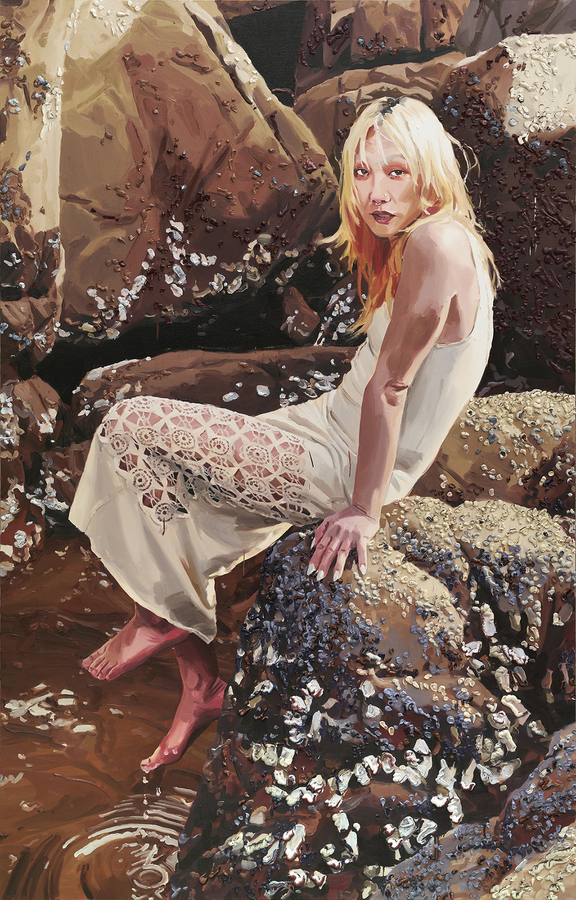
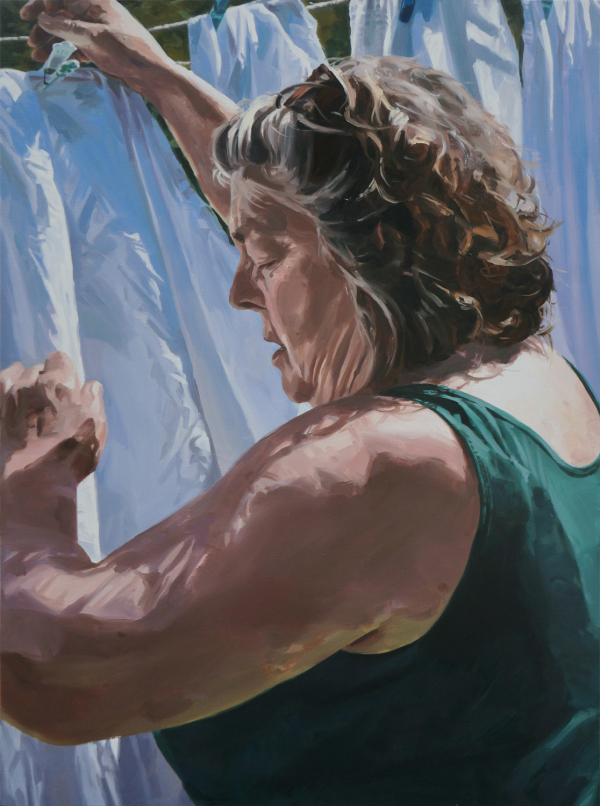
mirrors. In particular, the lush, intense contrasts created where light and
water meet hair, body contours, and the wrinkles of clothing covertly
demonstrate the artist’s obsession with the play of the unexpected. “Textiles
are especially attractive!”6) Yoon foregrounds the texture of skin or fabrics
as they take on different hues depending on the light, stretch out with water,
or turn silky and glossy. It is as if the artist is telling us that these
details and surfaces define the elements of her paintings; these are the places
where the meaning of the figures emerges, and they are the new boundaries. The
sparkling and splattering shimmers of water and light serve as a surface in
this sense, transforming the shapes of figures and creating a kind of mood,
which creates a distinctive photogenic effect. This might be the very source of
the vibrancy in Yoon's paintings. It is akin to compressing the ‘Live Photo’
mode7) of a photograph, which exists outside of staged settings, onto the
canvas.
Above all, the photogenic in
Yoon’s paintings connects with the syntax of the iPhone camera, and this syntax
of photography is embedded in the very DNA of contemporary digital imagery. It
determines which moments in our daily lives are worth capturing, which images
make the moment dramatic, and which are worth carrying with us for years to
come. Its syntax is not a matter of personal preference, but a sensory backbone
that synchronizes with the aesthetics of a generation. The same can be true for
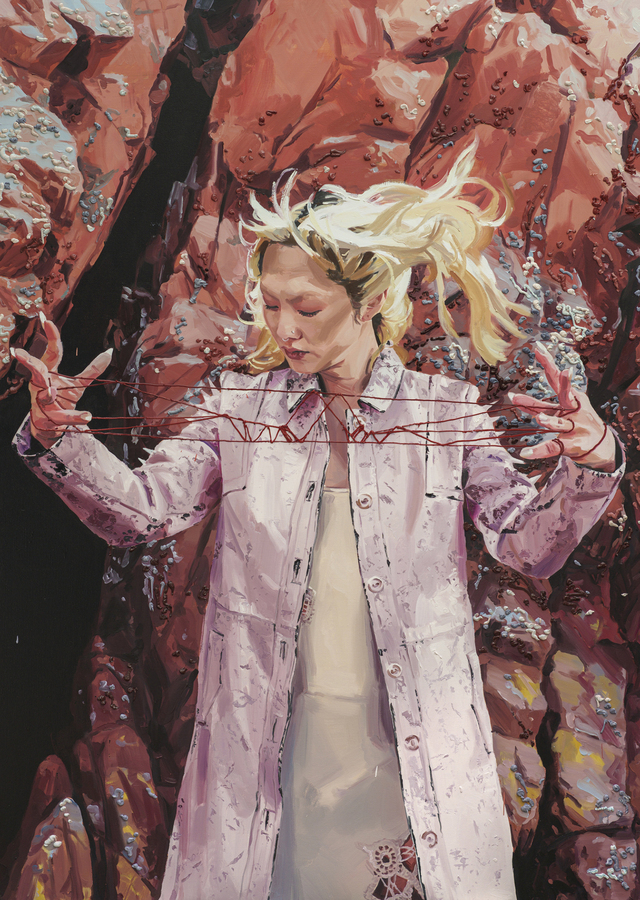
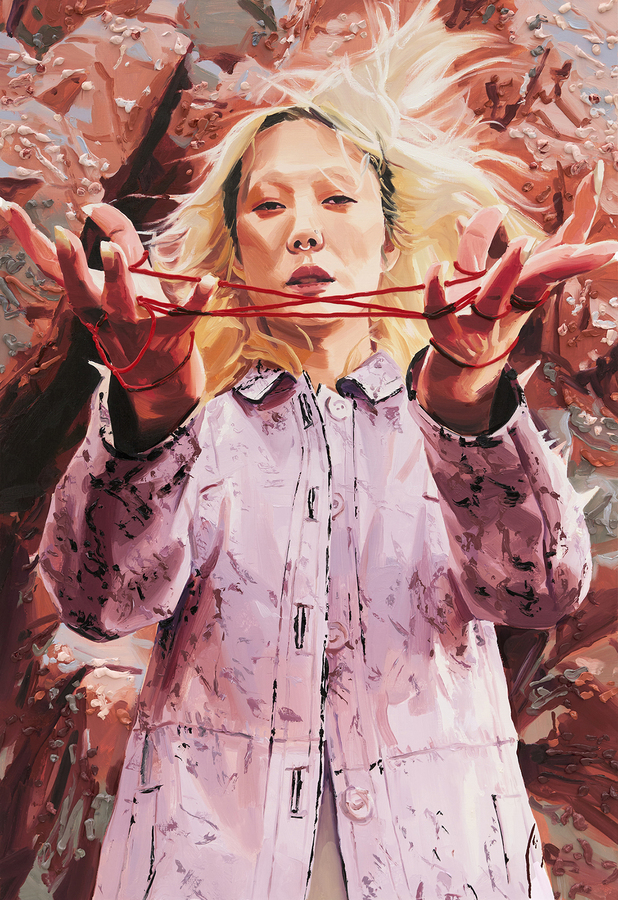
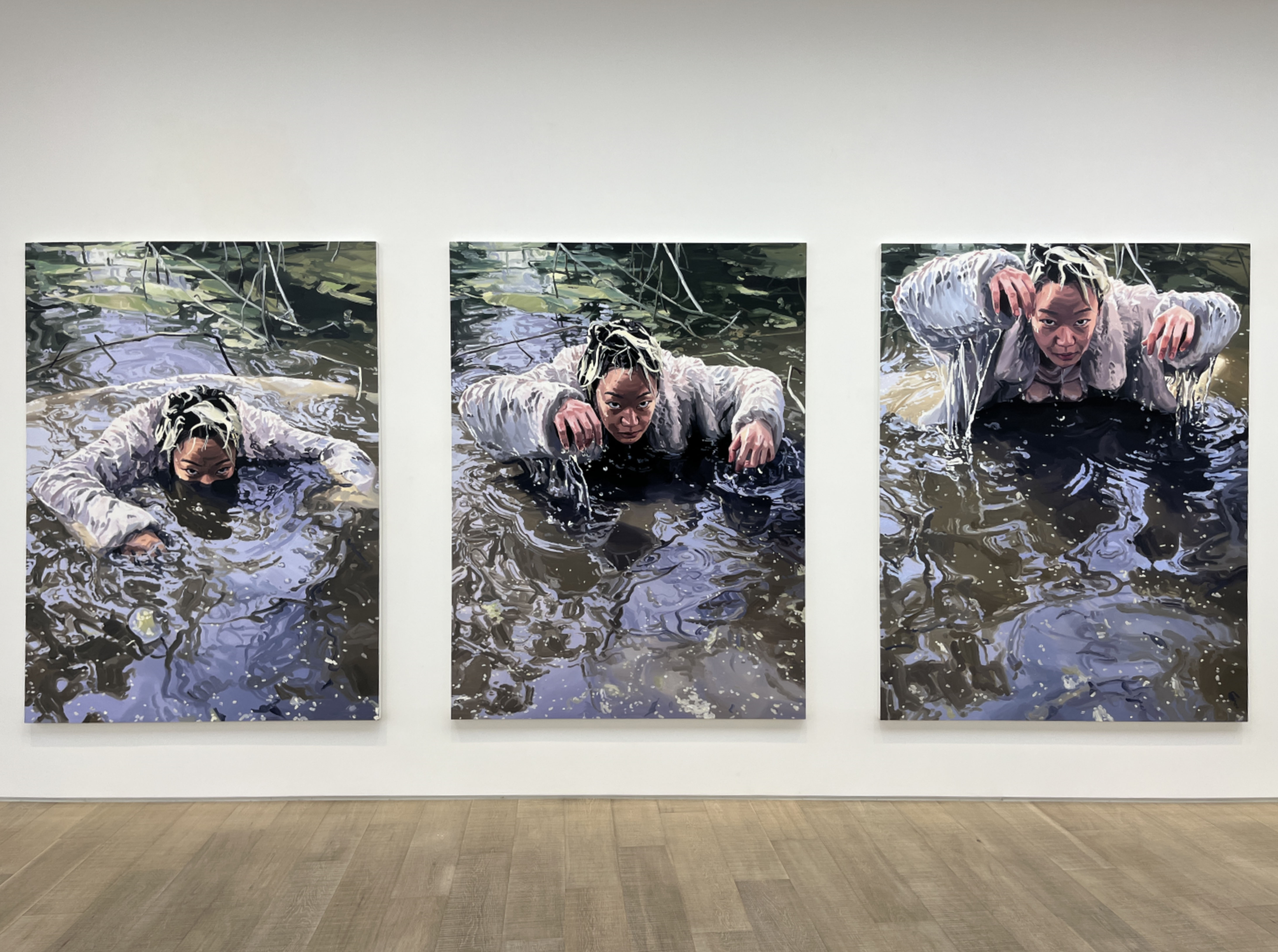
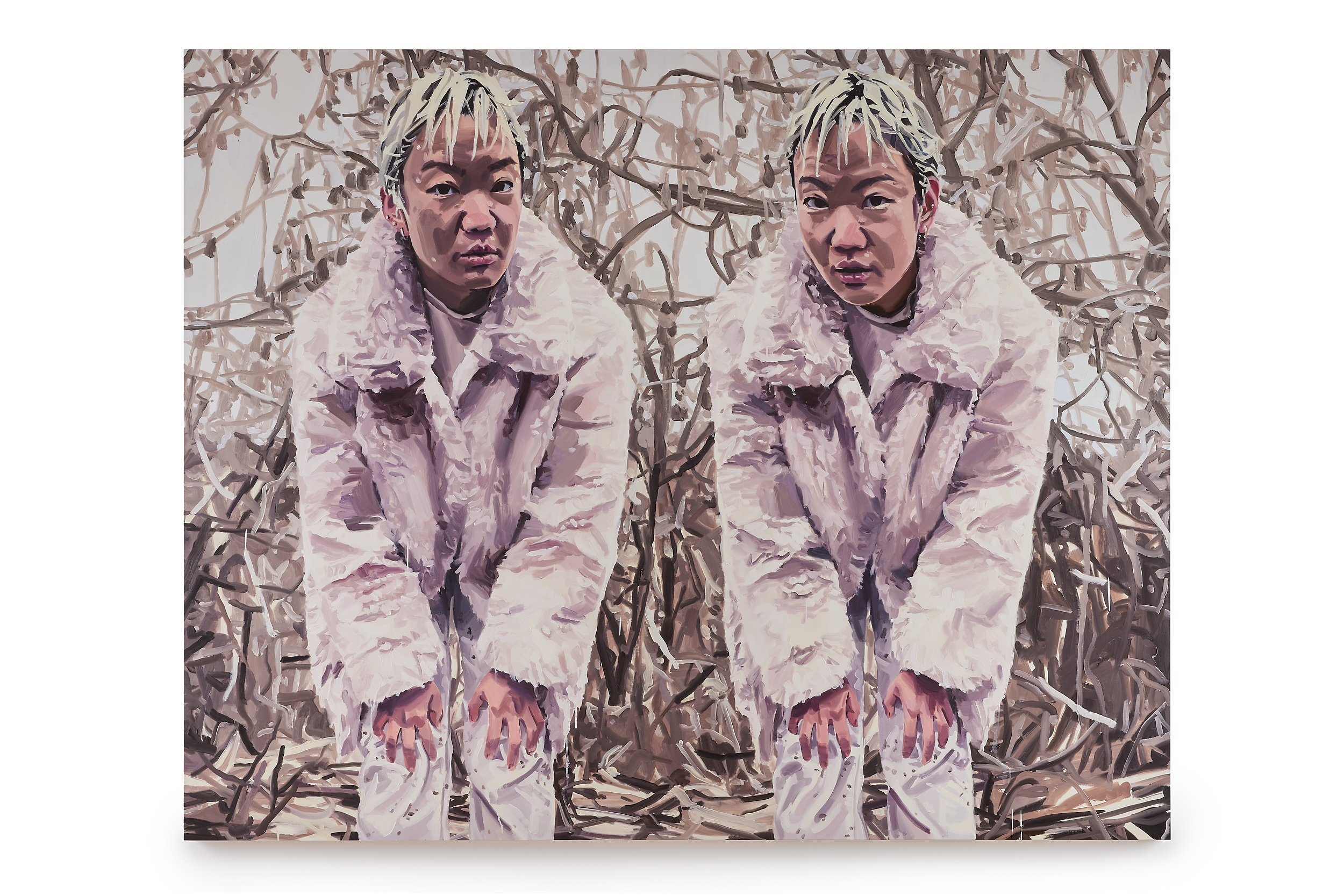
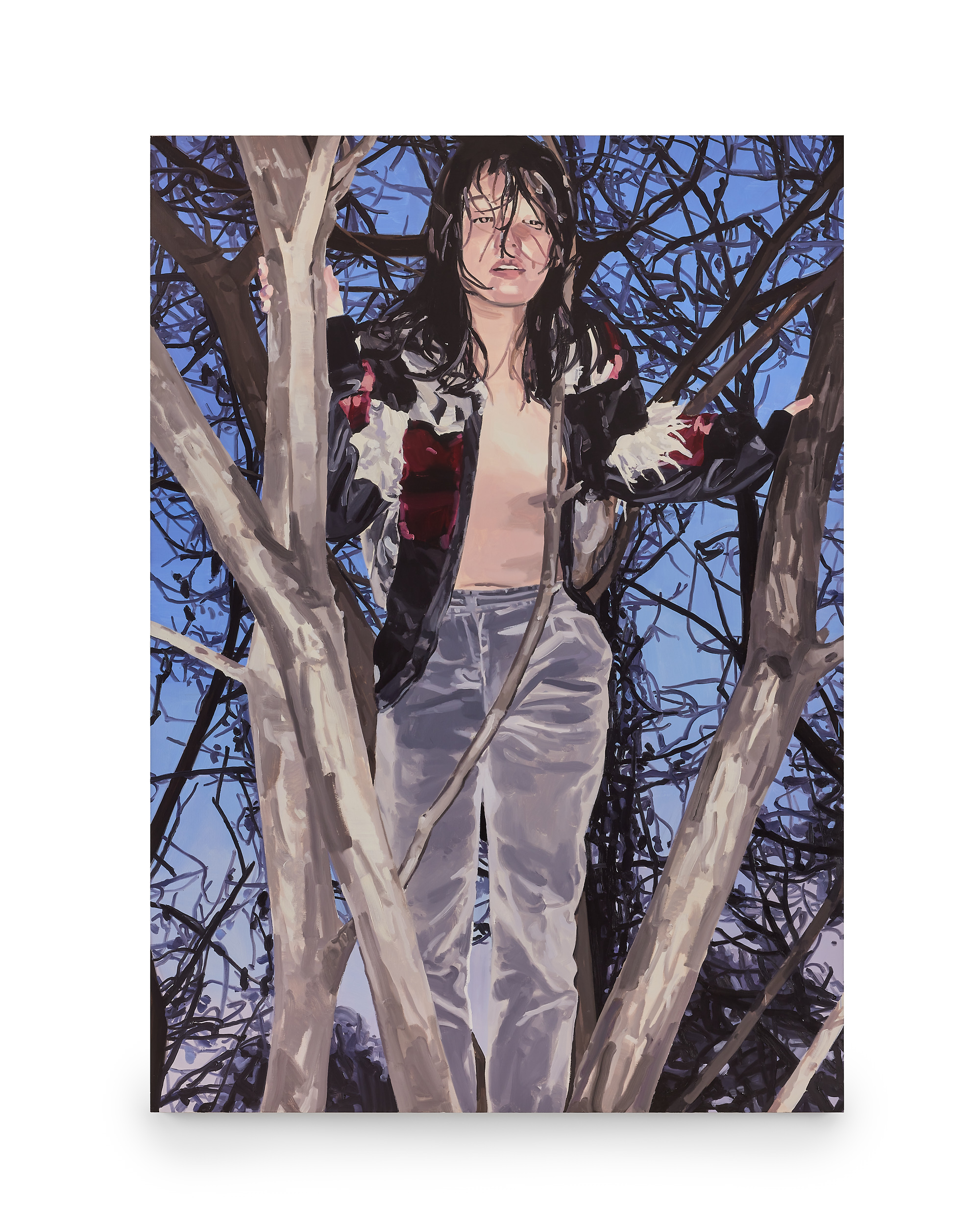
the ‘Burst Mode’. Her series such as ‘Wondering How Things Change’ (2022), ‘Naked
Flames’ 1-5 (2023), and ‘Want to Touch the Other Side’ (2024), presented in the
current exhibition, are based on images taken in ‘Burst Mode’. These paintings
epitomize the sensation of flipping through photos taken in ‘Burst Mode’. Above
all, ‘Burst Mode’ offsets a sense of awkwardness that comes from fixed poses,
underscoring the raw emotion and mood of the subject and capturing it with more
precision than our own senses. ‘Burst Mode’ also makes it impossible for us to
choose a single favorite scene, alleviating the desire and dilemma of arriving
at this impossibility of making any decision. When the picture is enlarged onto
canvas, it sometimes functions like a screen, highlighting the ability of the
‘Burst Mode’ to easily convert to GIFs (animated images). The sense of
difference that emerges in this chain of images is, as critic Hyejin Moon
points out, reminiscent of Barthe’s notion of ‘the third meaning.’8) It is not
a property of the single photographic image on its own; it is a kind of
‘punctum’ generated by a paused image in a chain of moving scenes. Barthes said
that in that moment of pause emerges a vague, blunt meaning that is neither
about the plot of a story nor the symbolic meaning of an image.9) In Yoon’s
paintings, such meaning erupts from the expressions and gazes of the female
figures, especially those captured in ‘Burst Mode’, and from the distinctive
hues and shimmers that seem to set their faces and eyes on fire.
However, the emotion or the mood
of these paused images seems to emerge, paradoxically, from the intensity of
their sequence, responding to the strength of the narrative impulse that builds
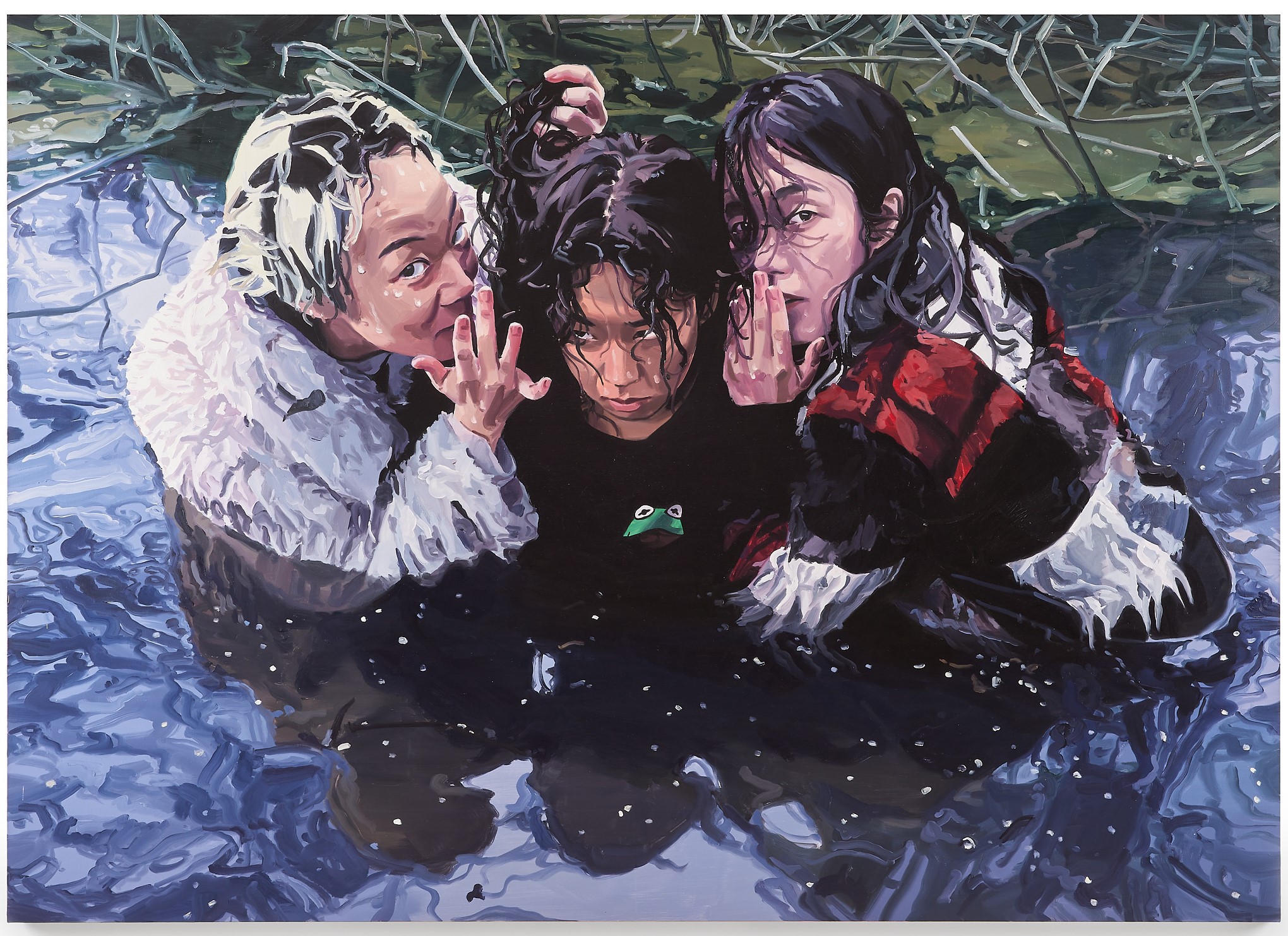
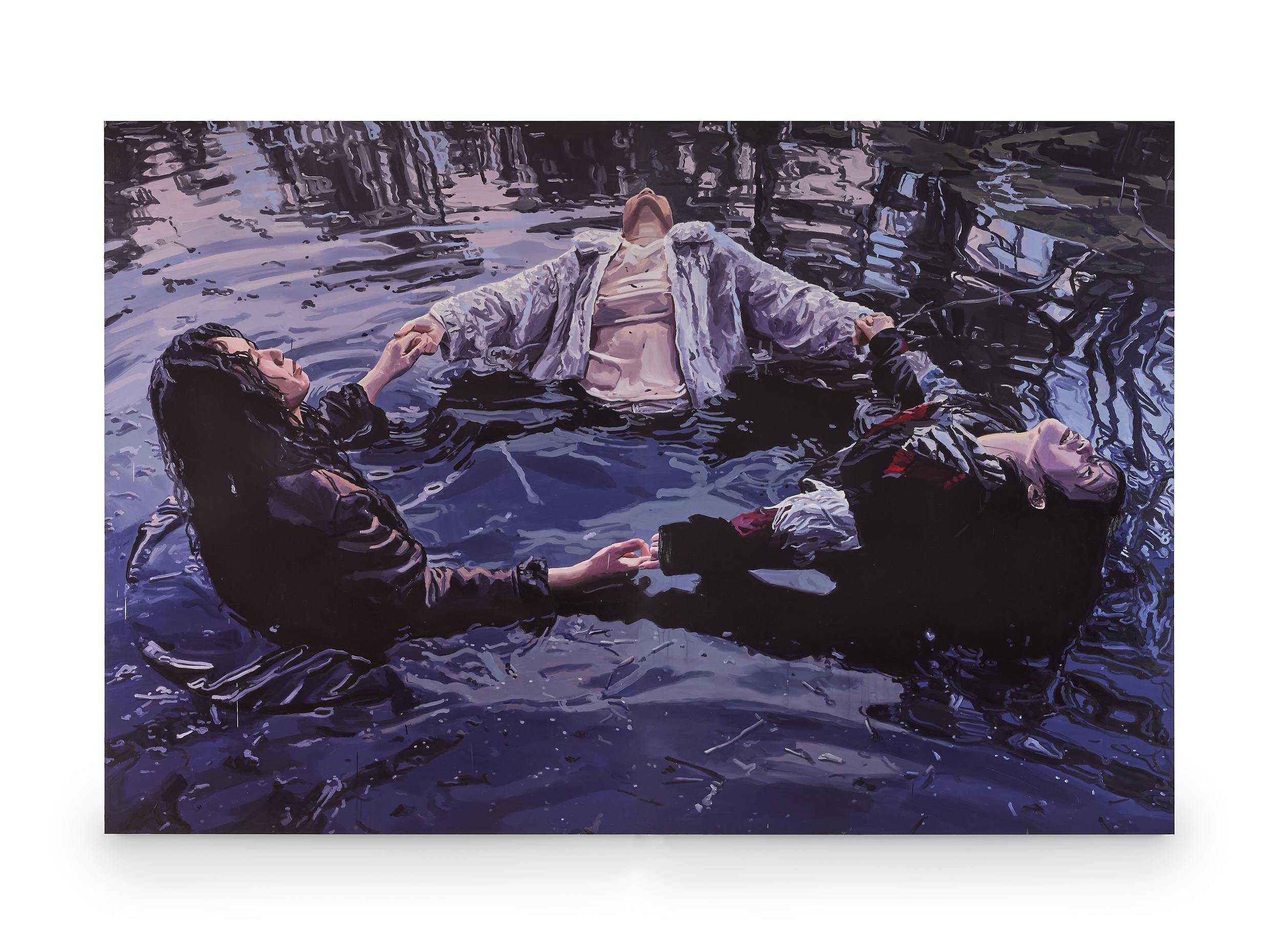
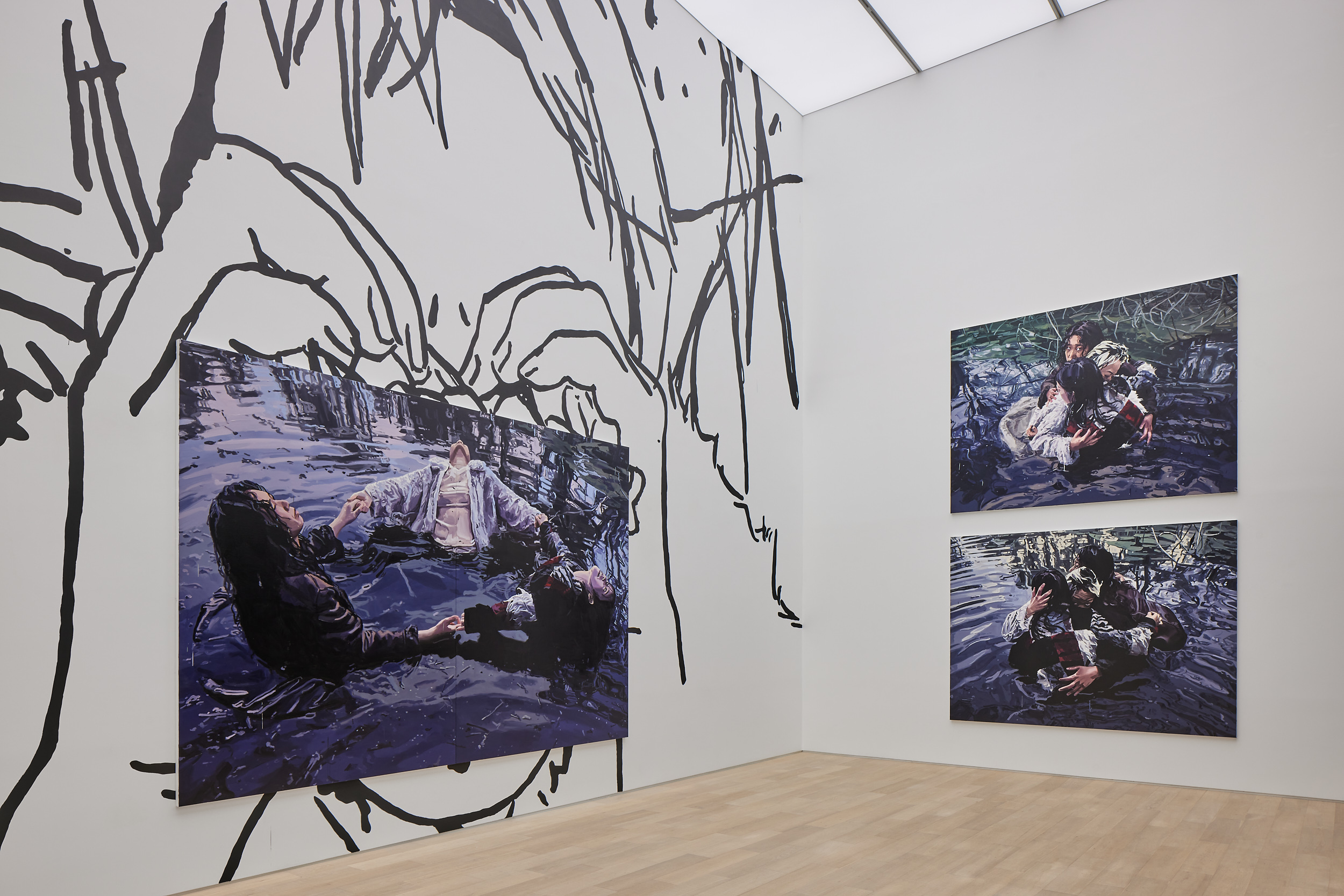
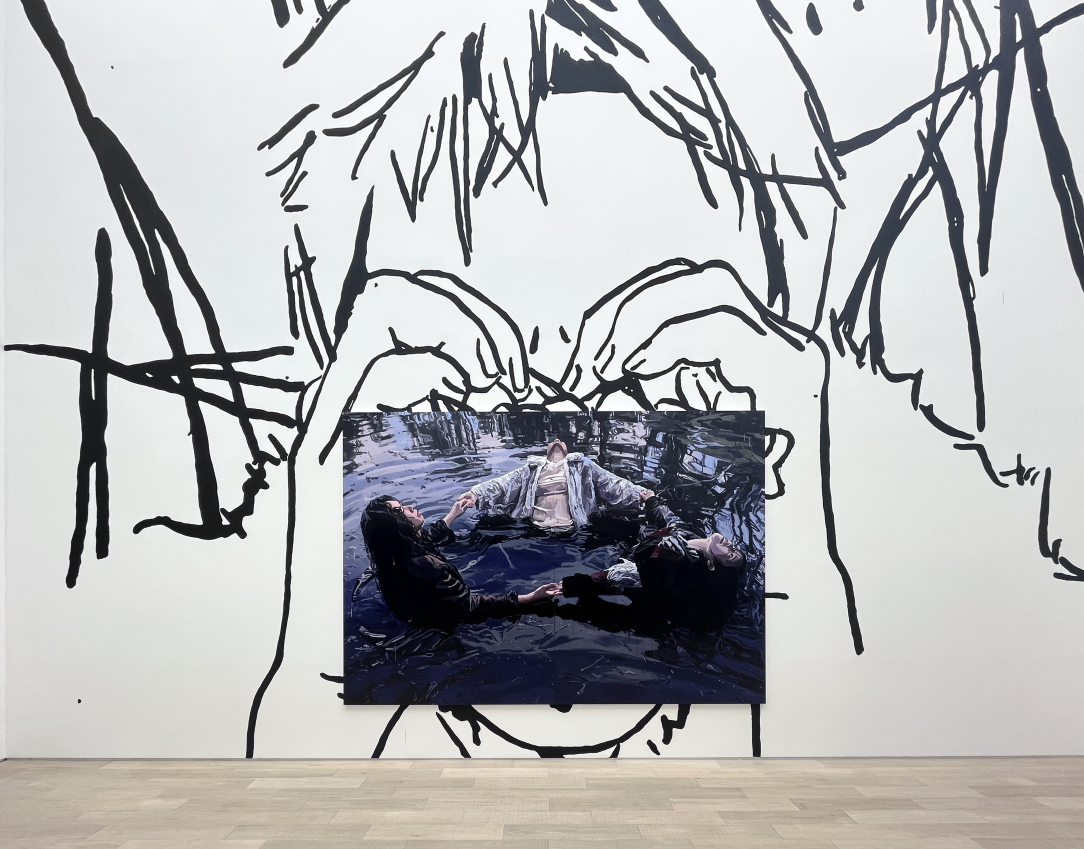
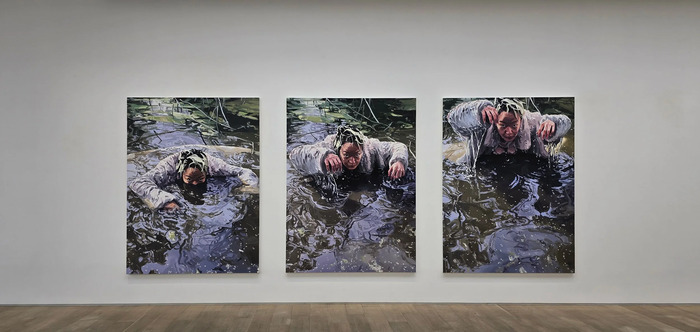
a more vigorous tension. In her solo exhibition, 《Do Wetlands Scare You?》, Yoon uses the
wetlands as a symbolic space to present a series of pseudo-mythological scenes
featuring three women. By further expanding on the scenario-driven nature of
her previous exhibition 《Pyromaniac》 (2023), where she metaphorically described ‘igniting fiction’, the
artist has created a series of impressive sequences. The artist took the
photographs in the wetlands around the SeMA Nanji Residency, where she is
currently working. The area is adjacent to Han River Park, yet largely
uninhabited. Against the backdrop of this wetland, the artist created cinematic
scenes inspired by Northern European myths of witches of the wetlands. The
figures in the paintings are drawn from eerie mythological tales, such as the
Russian water nymph Rusalka or the Nordic mermaids. However, with no concrete
source or description, the three figures only evoke the personality and actions
of certain characters, described as “a curious, overbearing prankster,” “a girl
unconcerned with destruction and redemption,” or “a shaman with a cynical
aura.” Whereas Yoon’s figure paintings in the past have focused on the
directivity of granular words as emotional states—determination, jitter,
chilly, nonchalant, withstanding, among others—that can be translated from
certain images, these paintings take the form of more narrative, densely woven
phrases. Furthermore, while past paintings described the vibrant and lively
magical surface achieved through the gleam and vivacity of pigments, the light
of paint and texture in new works evoke a sinister, murky quality, suggesting a
viscous fluidity akin to a dark magical atmosphere.
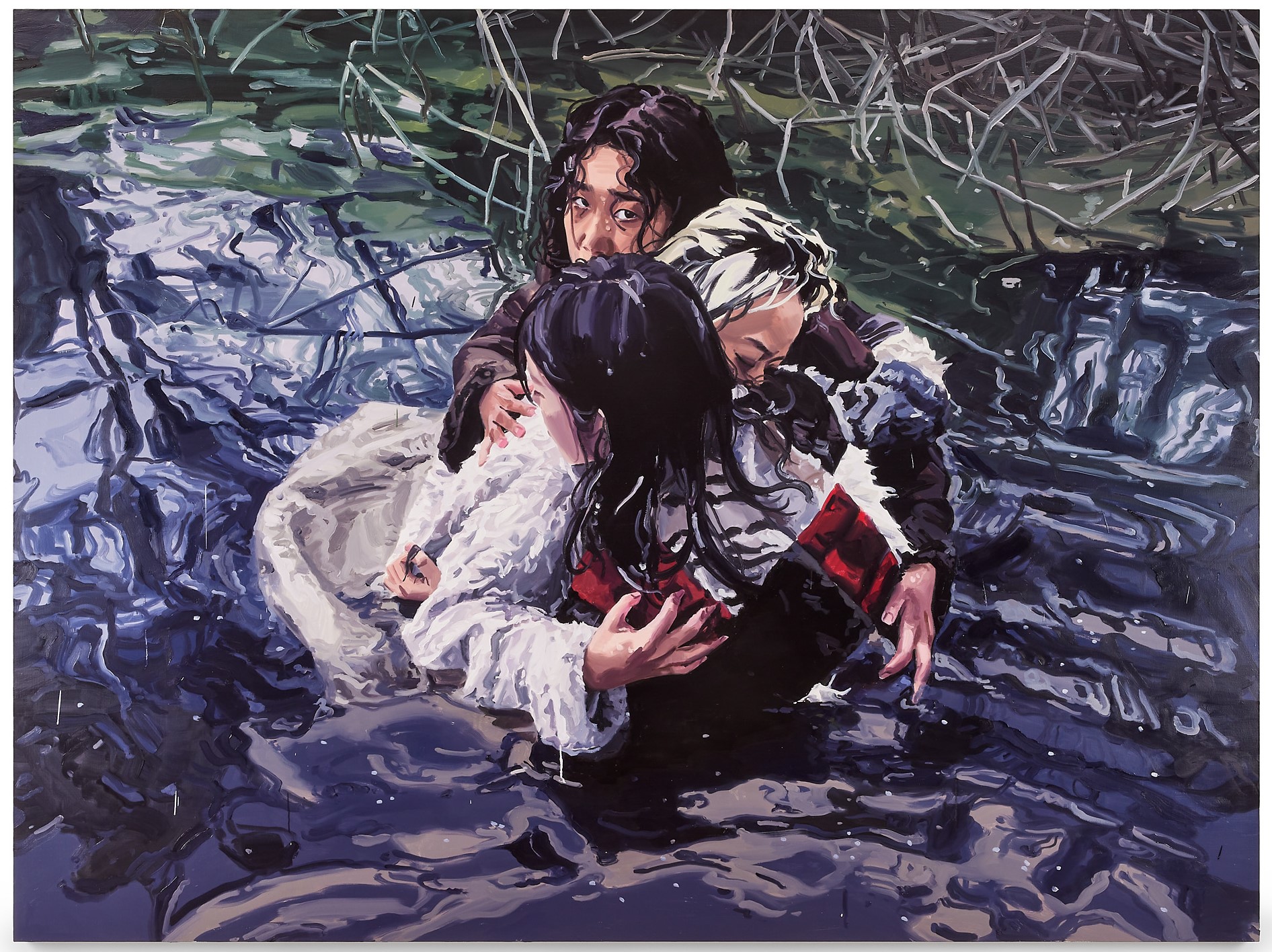
The figures of three witches,
reminding us of the Three Graces in the wetlands, culminate in the ritualistic
scene of Circle for the New Moon (2024) or the depiction of
complicity in The Difference Was Clear to Us but You (2024).
These scenes evoke the unnerving belligerence and manic glee of witches often
depicted in folklore, grim fairy tales, and fantasy novels. However, each
painting is punctuated by dark yet cold light, along with opaque and disparate
emotions. There are gazes that hold us in place like water ghosts, light
reflections reminiscent of white nights or dusky evenings. They move through
the canvas like undercurrents beneath the surface of figures and situations.
Yoon’s latest works are imbued with this eerie, uncanny feminine jouissance.
Mark Fisher argued that the eerie as the uncanny is found “more readily in
landscapes partially emptied of the human.”10) Therefore, such uncanniness
leads us to ask what happened, what is no longer there, and what it has to do
with existence. They are paintings in which absent episodes, ghostly beings,
and narratives that exist only as scenes appear as the ‘photogenic’ that
illuminates like moonlight. This photographic quality invites us to be
detectives, not consumers of images.