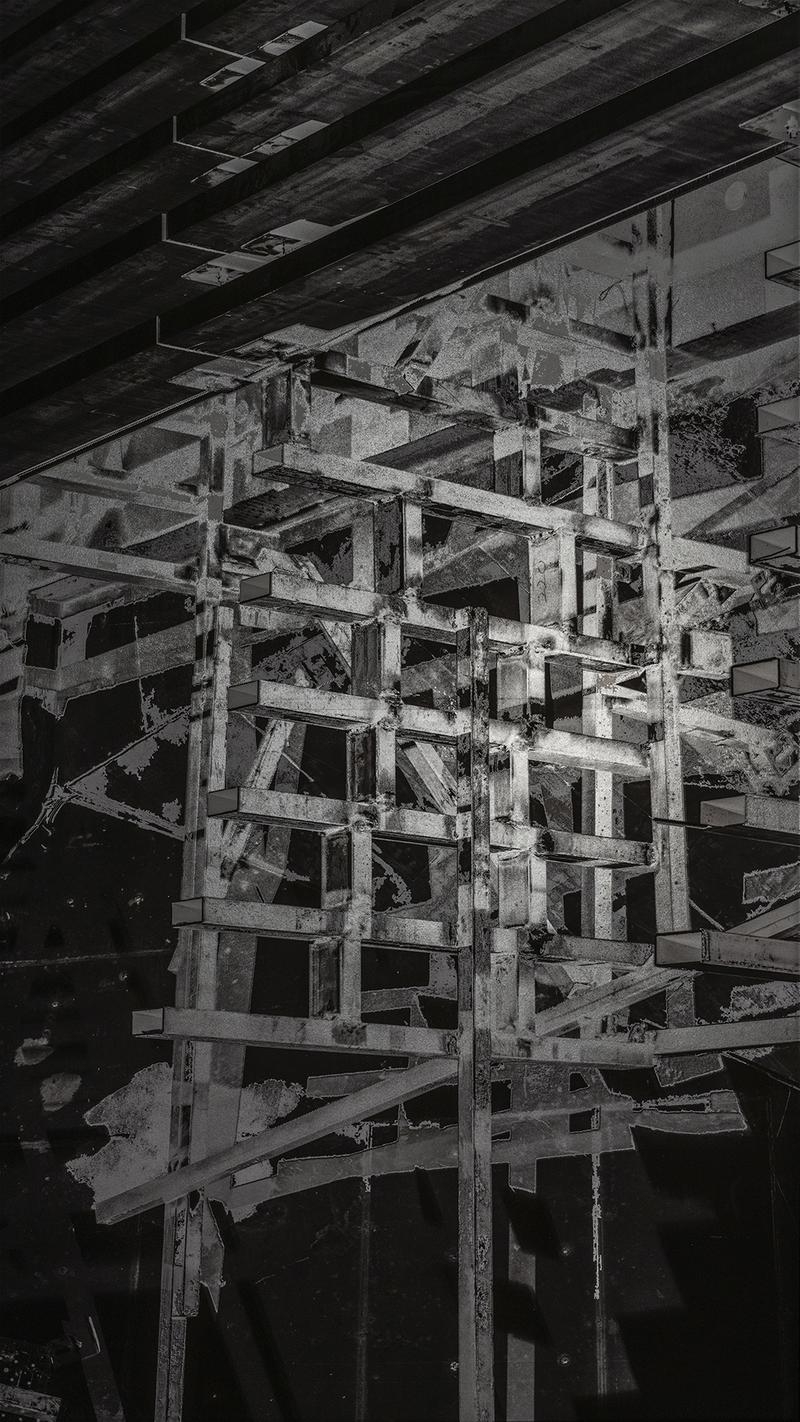
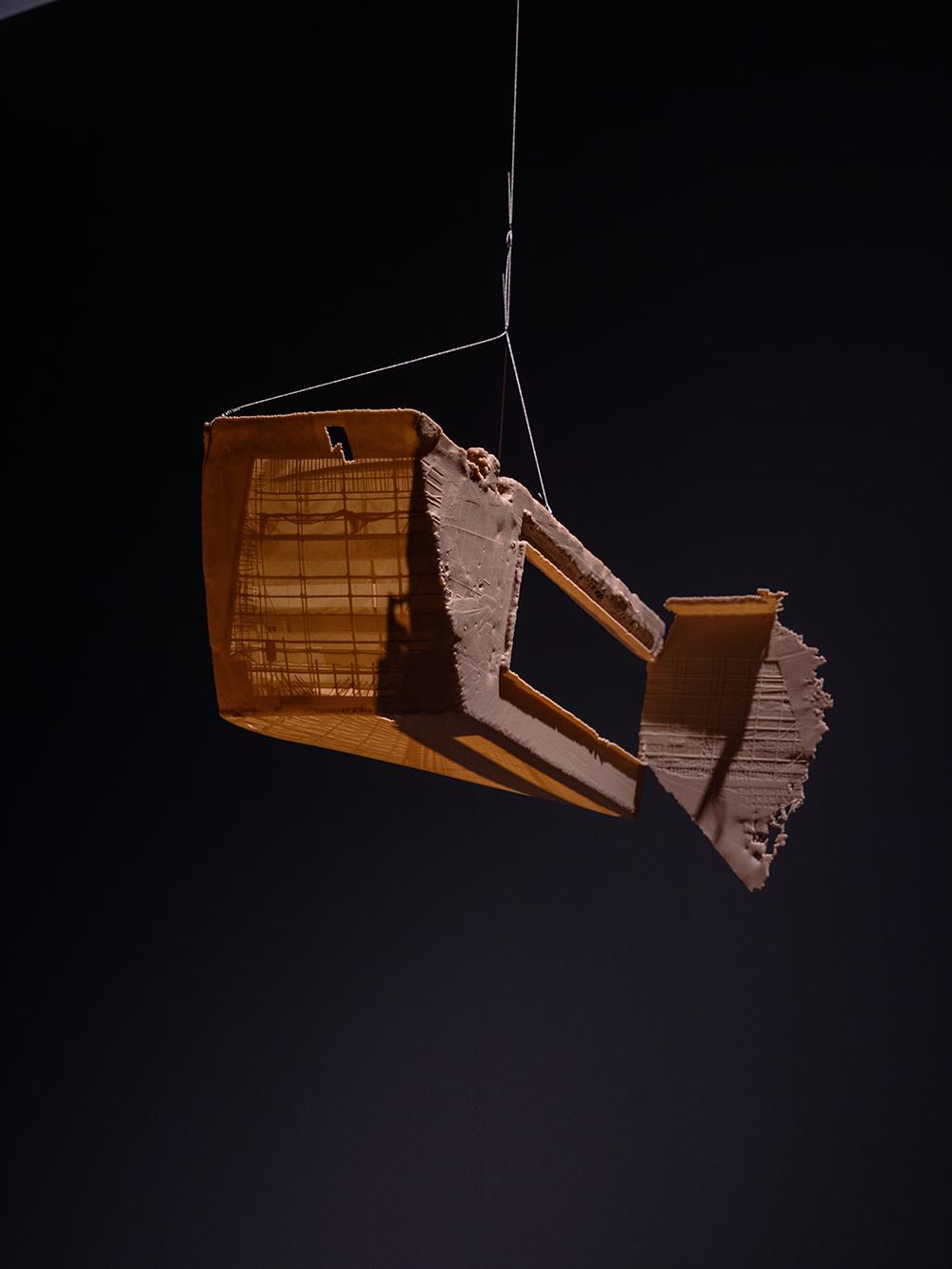
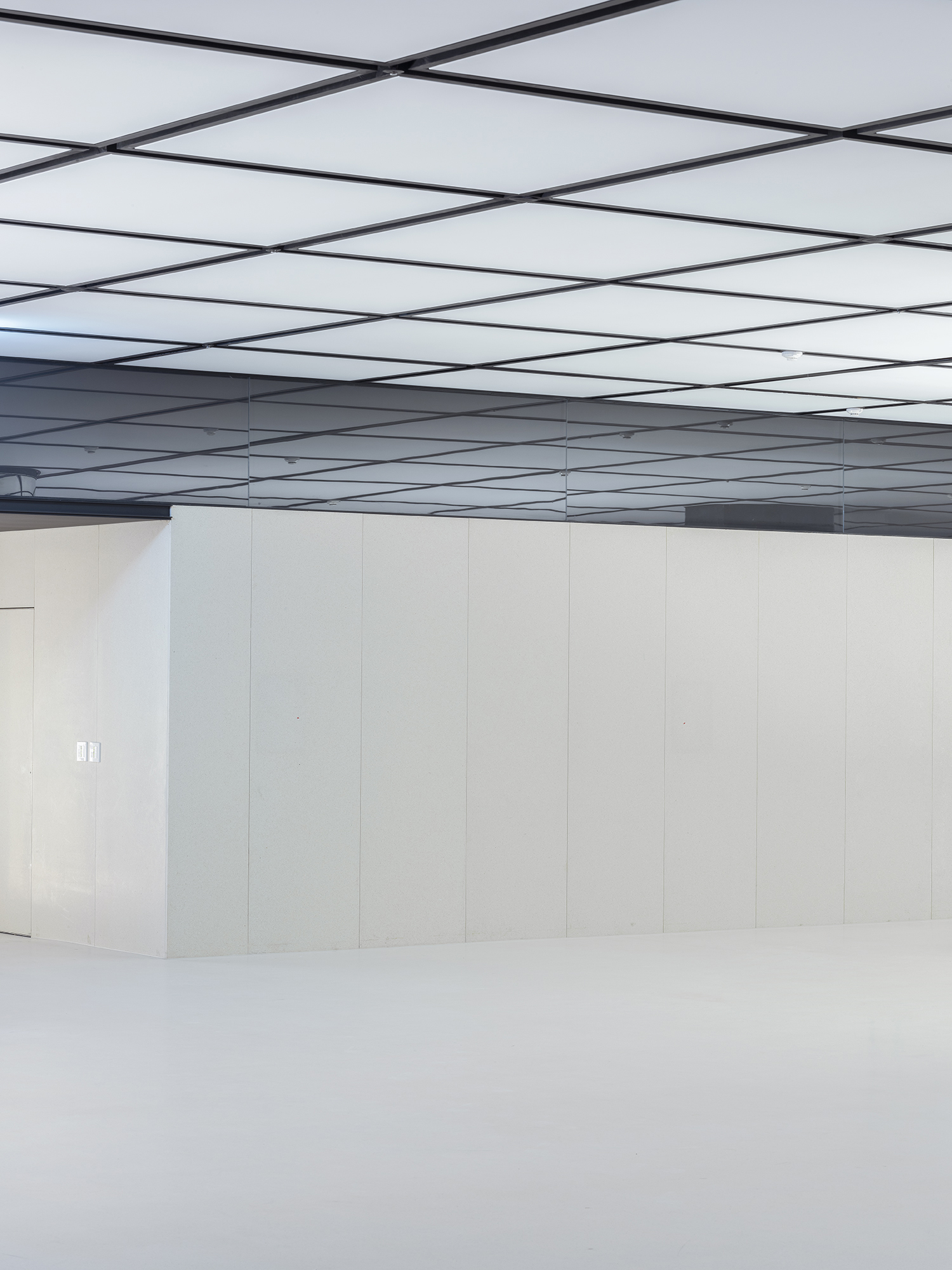
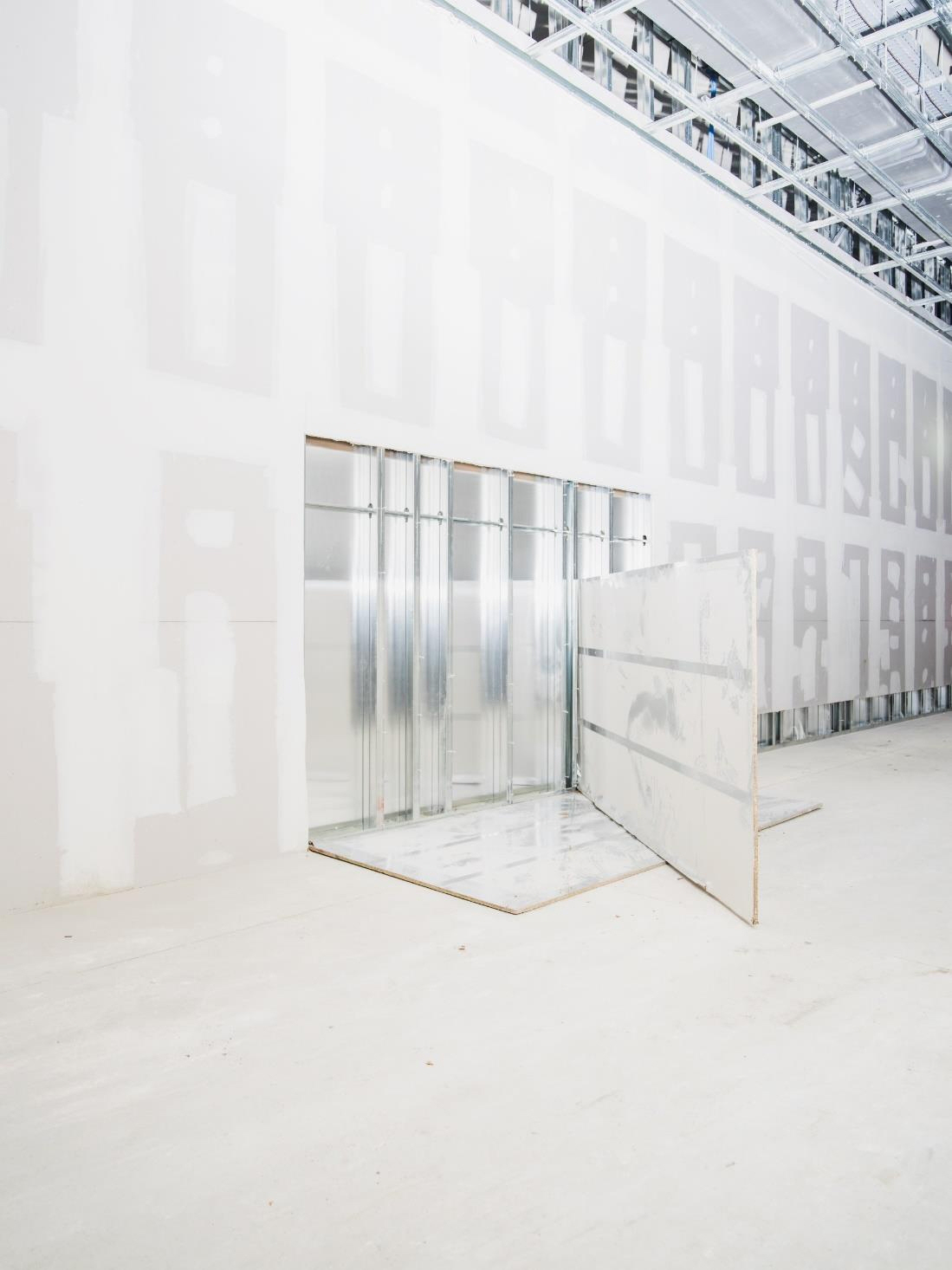
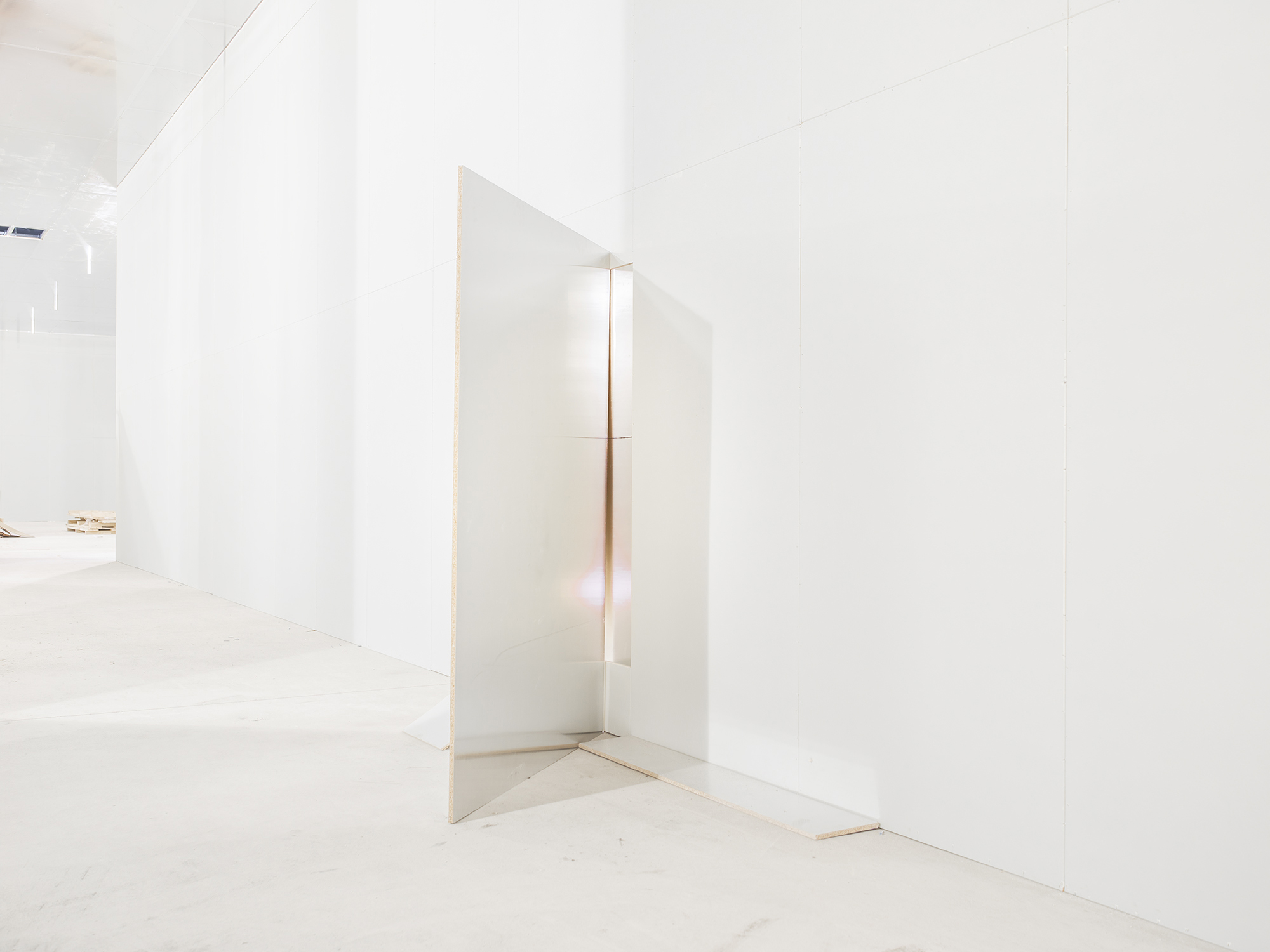
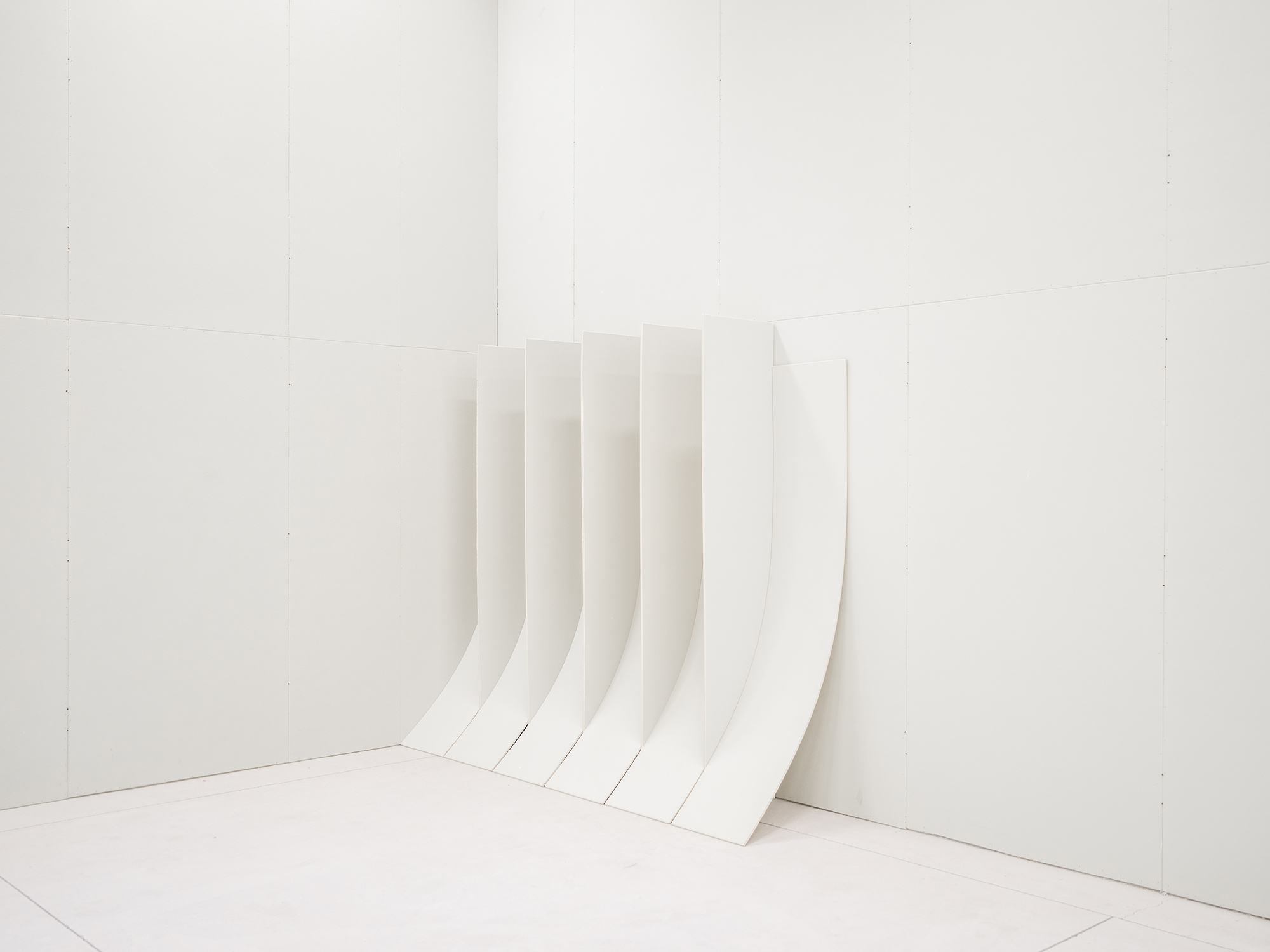
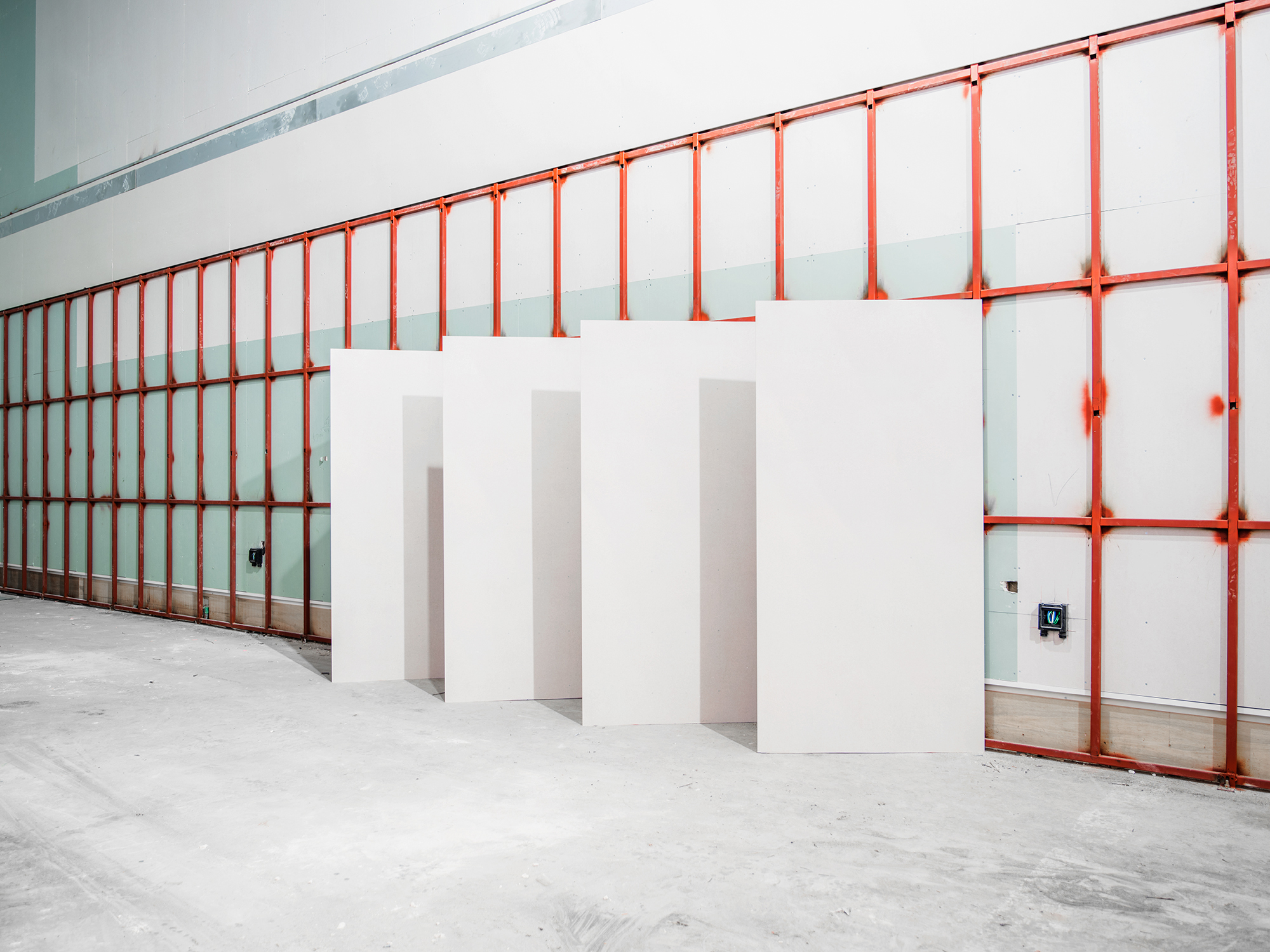
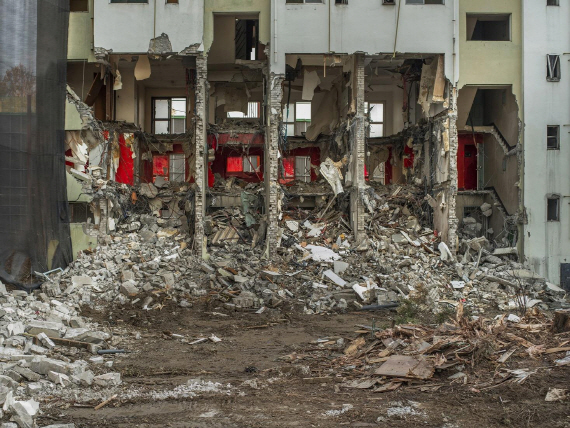
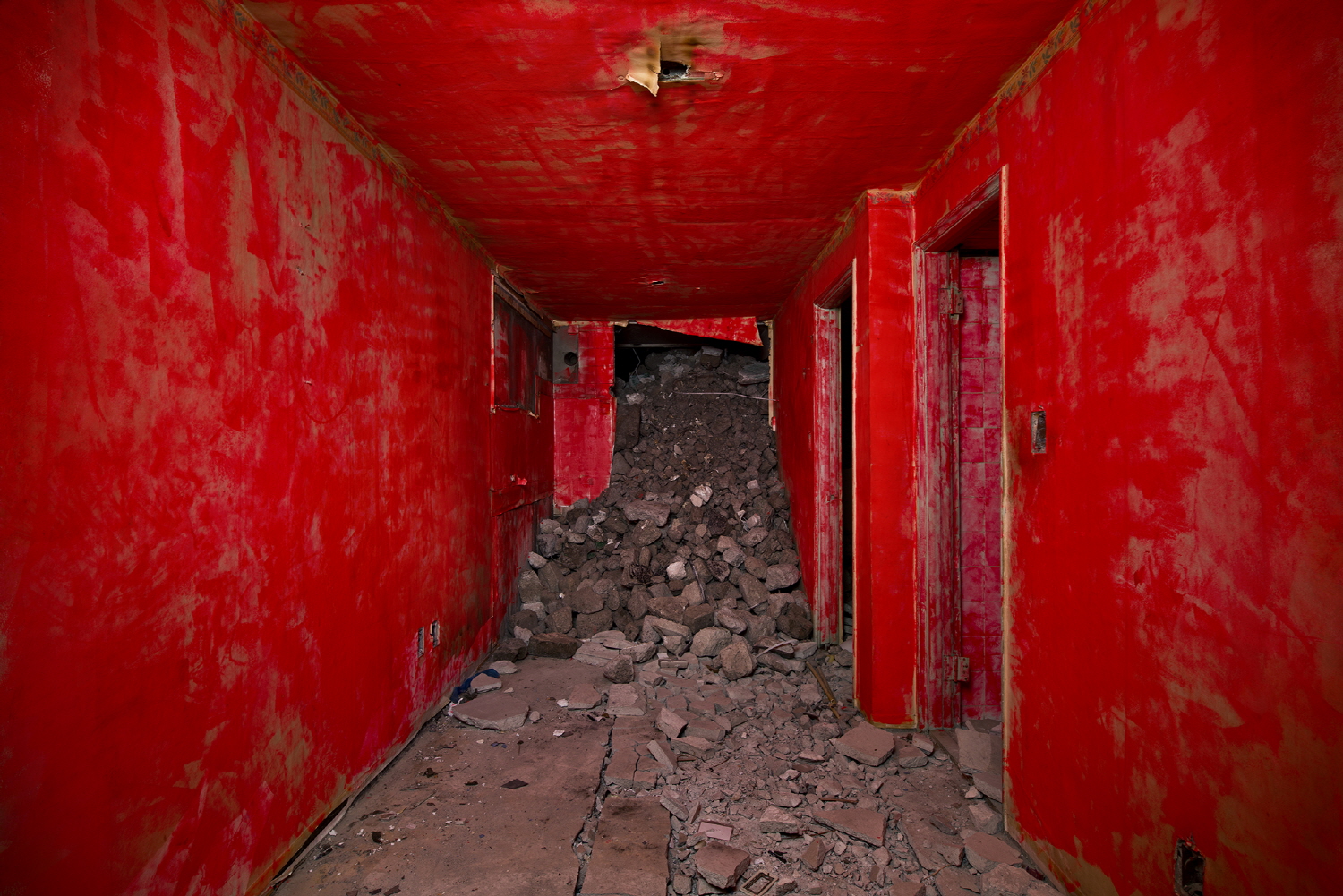
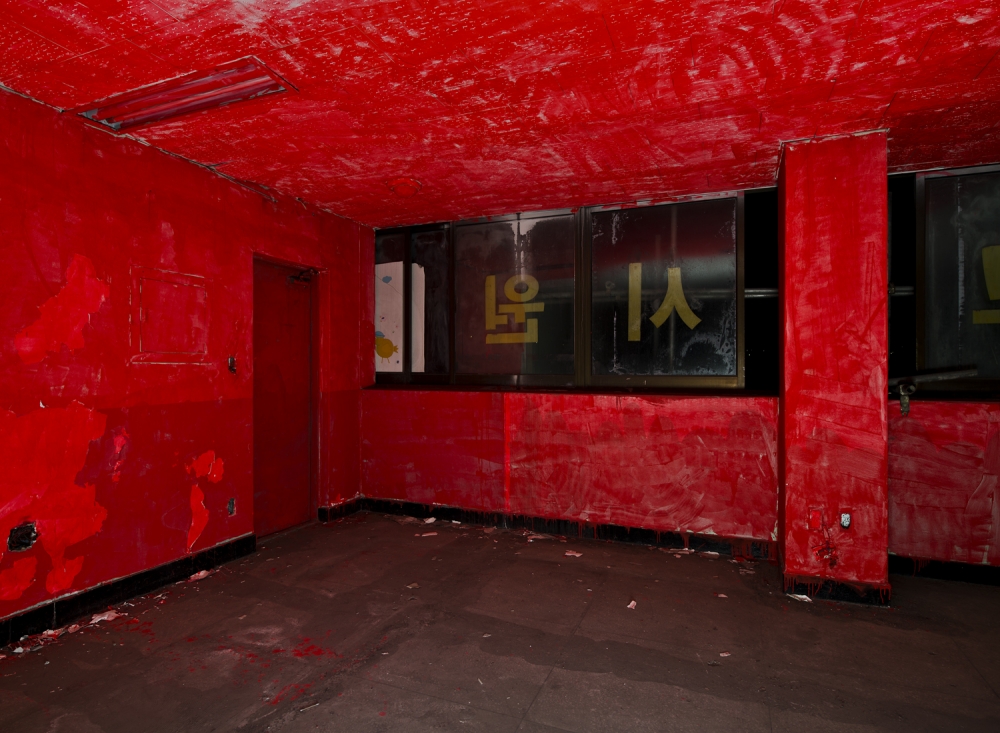
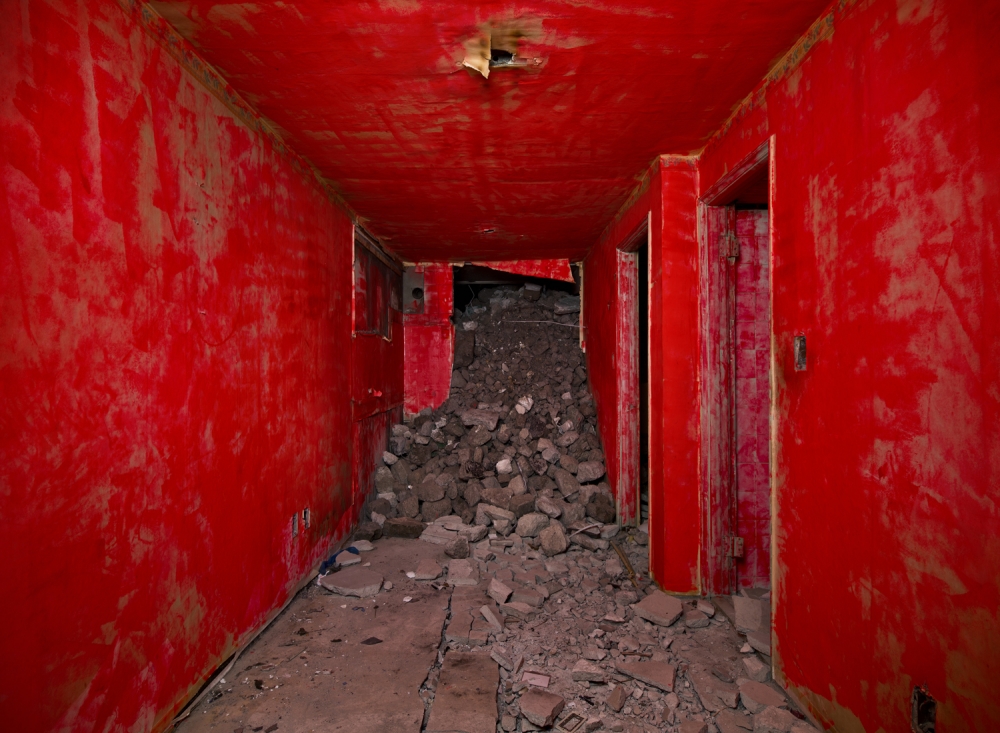
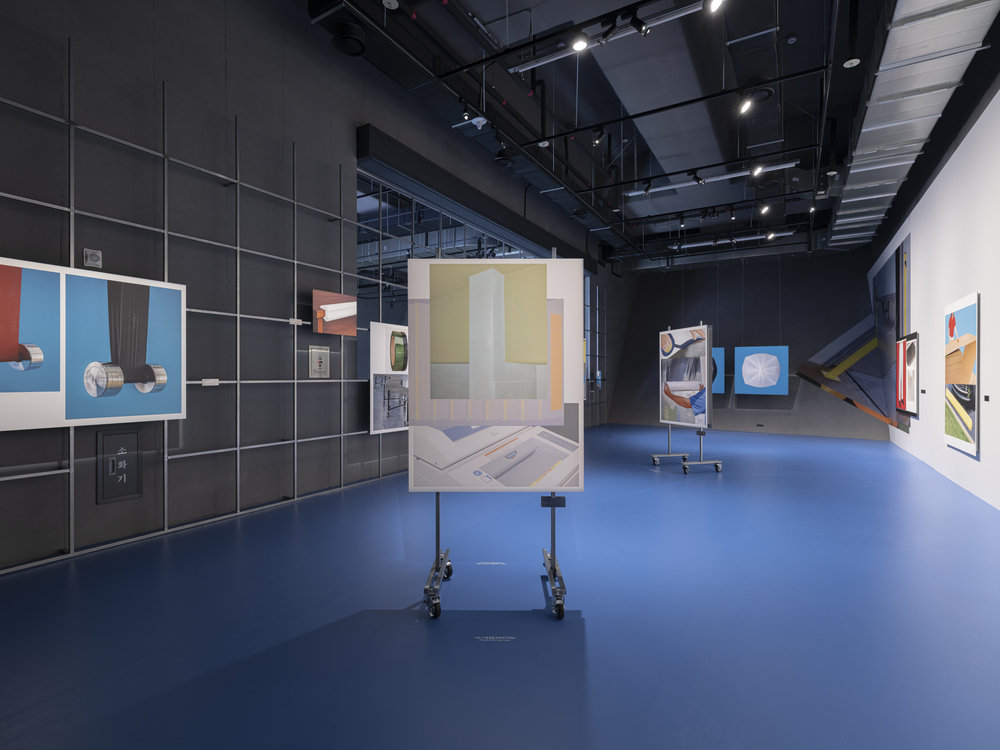
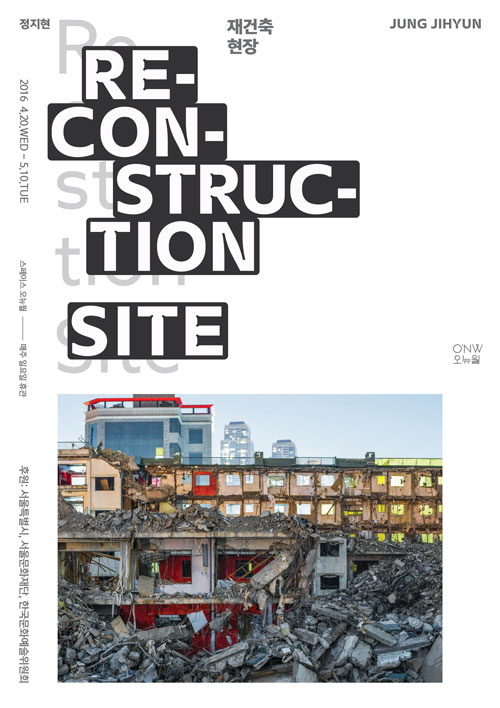
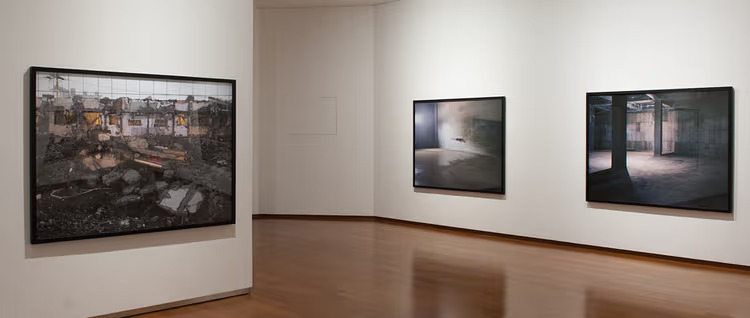
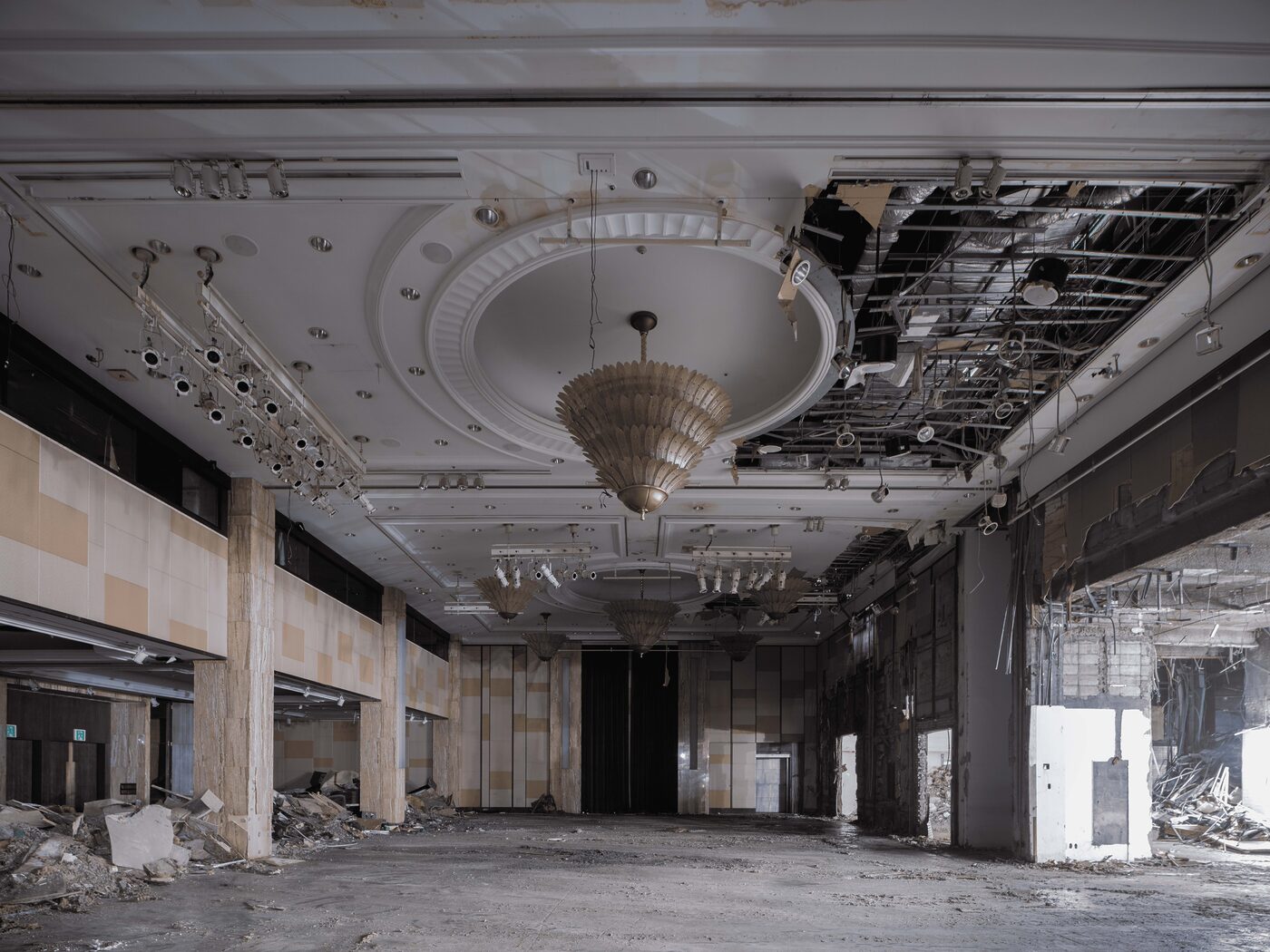
Jung Jihyun, Demolition Site 01 Inside, 2013, Pigment print, 115 x 155 cm © Jung Jihyun

In fairy tales, there is a fair amount of content that can be interpreted cynically. The children’s story “Three Little Pigs,” which teaches not to scheme but always be diligent, is no exception. The two older brothers of the story built simple houses of hay and wood, dismissing their mother’s warning to work hard. They are eaten by a fox and only the youngest brother, who constructed his house using brick, survives. The tale, which describes the brick house as representing hard work, and the hay and wooden houses as representing laziness and imperfection, is surprisingly environmentally unfriendly.

However, it’s rare that a children’s tale so seamlessly fits with modern society’s housing policies. The superficial moral of the tale, the fantasy of the strong brick house, is in tune with the propagandistic “Away with hay houses, widen the village roads...” motto of the Saemaul Movement. Hay roofs were updated to slate tiles in rural regions, and urban shantytowns were torn down to make room for Western-style housing. Because of a blind belief in the myth of hard work and economic development, concrete apartments even stronger than brick houses began to spread like dandelion seeds.

What the children’s tale doesn’t impart is that in real life, even the strongest of structures can fall in an instant. Though concrete buildings may withstand a fox’s huffing and puffing, they cannot endure the winds of redevelopment. Hard work equals power in a society where houses are important to show one’s economic ability, and also conversely, those who have not made money through real estate are deemed lazy almost by default. In the end, houses that have withstood the years are demolished without second thought under the pretext of development and investment.

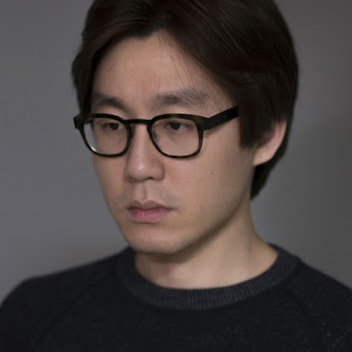
From modernizing rural areas during the Saemaul Movement to purifying the city for the 1988 Olympics, and up to the building of the so-called “New Towns” in the noughties, the history of housing redevelopment has been surprisingly relentless, piercing through modern history. Redevelopment is not just something that happens to others, but is something that happens to us. As a typical kid raised in the Gangnam apartments, artist Jung Jihyun watched as his family home—a five-story apartment building—was torn down to make way for a 30-floor apartment complex.

The artist was only 20 years old when it happened, and the five-story building was not yet 30. His former home became a part of the very first New Town, and included a clinic and school. The incident came as quite a shock to her. Ninety percent of the place that had once held precious memories was gone. It meant that the playground where he and his friends explored, their hideout somewhere between school and home, ceased to exist. Now her home, from a redevelopment perspective, was nothing but a byproduct, a component of the Jamsil apartment complexes.

To the artist, home represents the womb of life. Historian Pierre Nora explains that all things, objects and sites attached with our experiences and recollections are called “sites of memory.” Jung Jihyun lost his entire site of memory, his home of memories, of birth and childhood.

However, the artist does not raise deep concerns over the illusion of redevelopment in our generation and its wake of destruction. He simply encourages our senses to seek the difference between a house and a home; in other words the difference between an object that’s become a product and a site of memories. As such, it is only natural that his eyes fall to the abandoned complexes scheduled for redevelopment. The artist is drawn to the nostalgia that radiates from these long-neglected, silent sites. Perhaps because these memories and traces of the past will soon cease to exist.



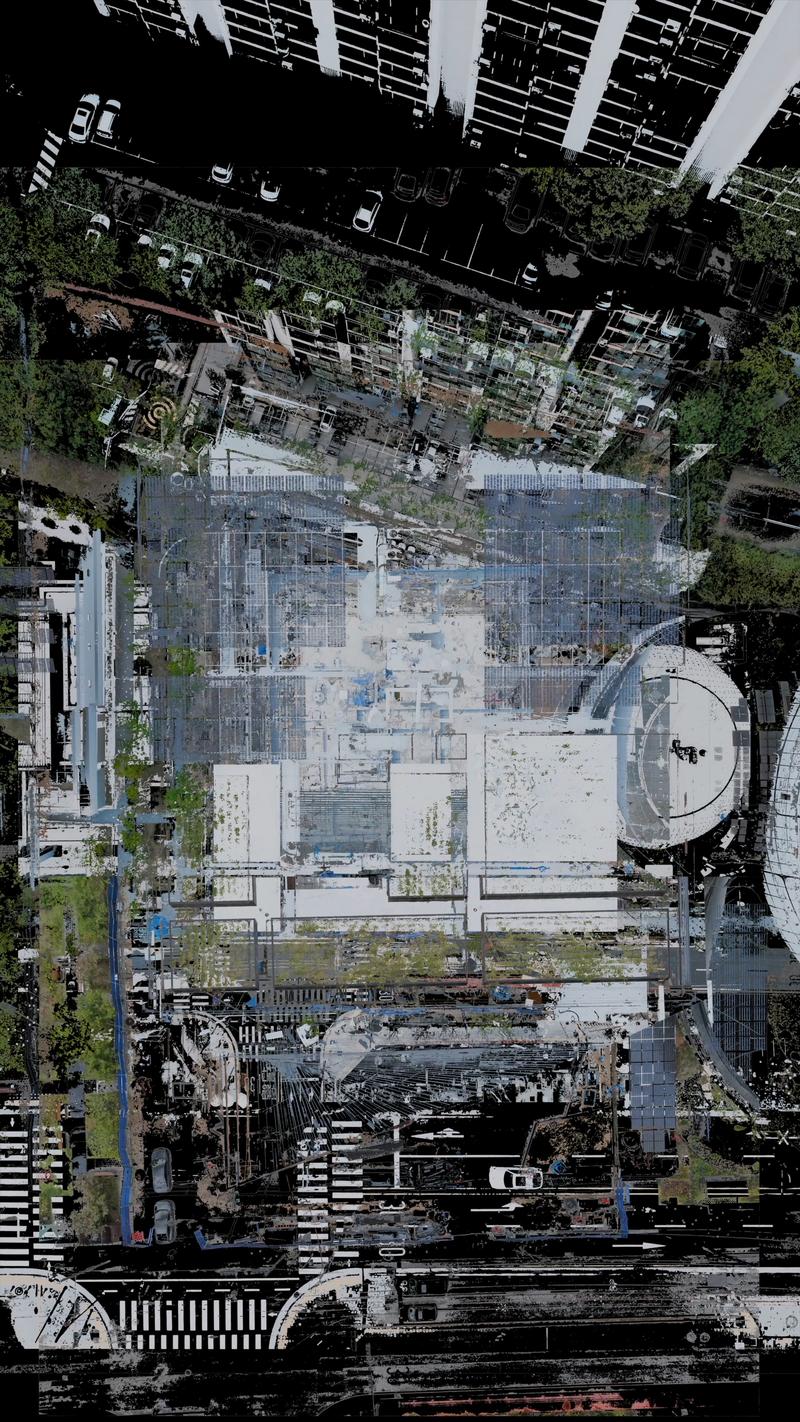
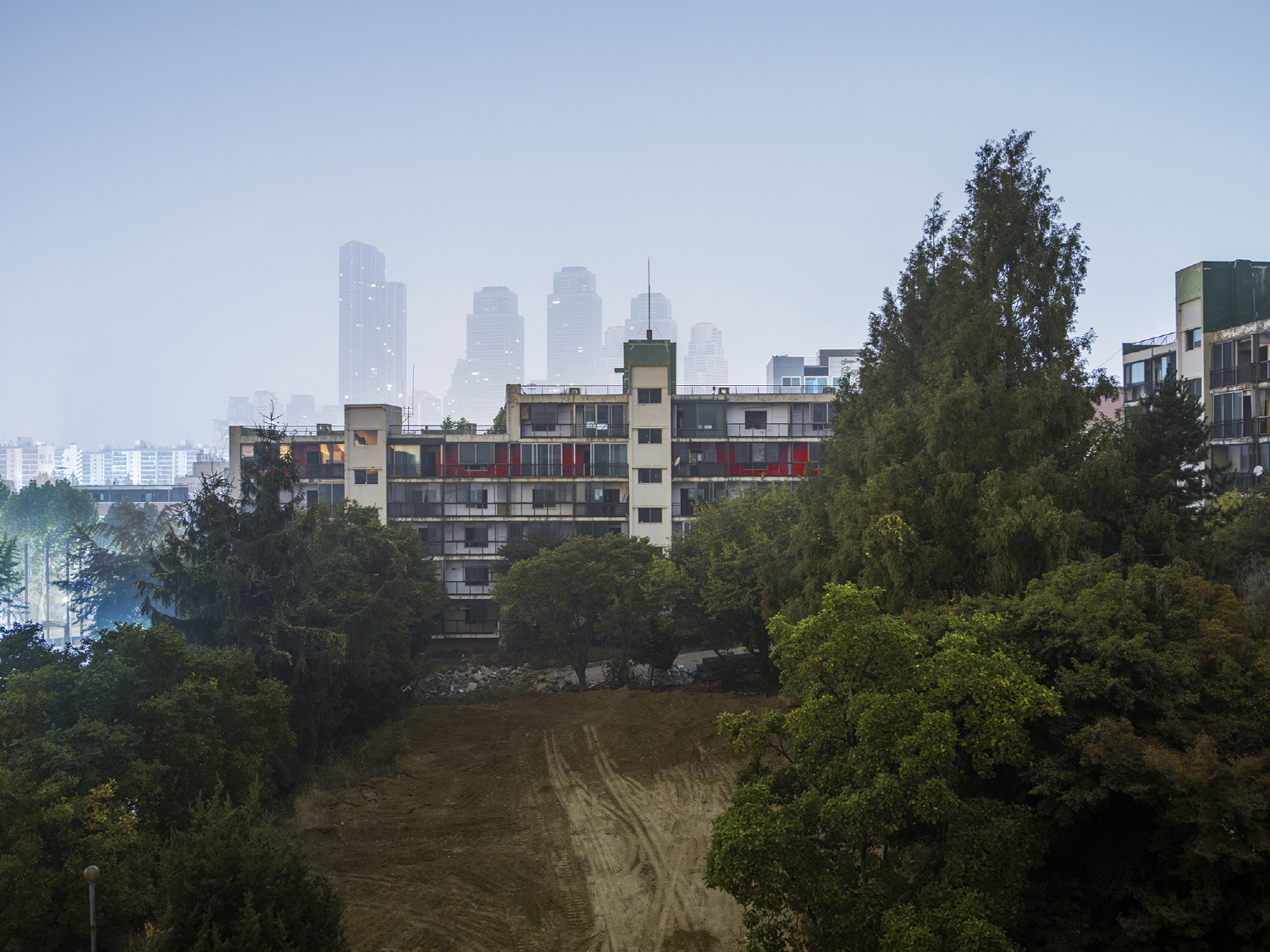
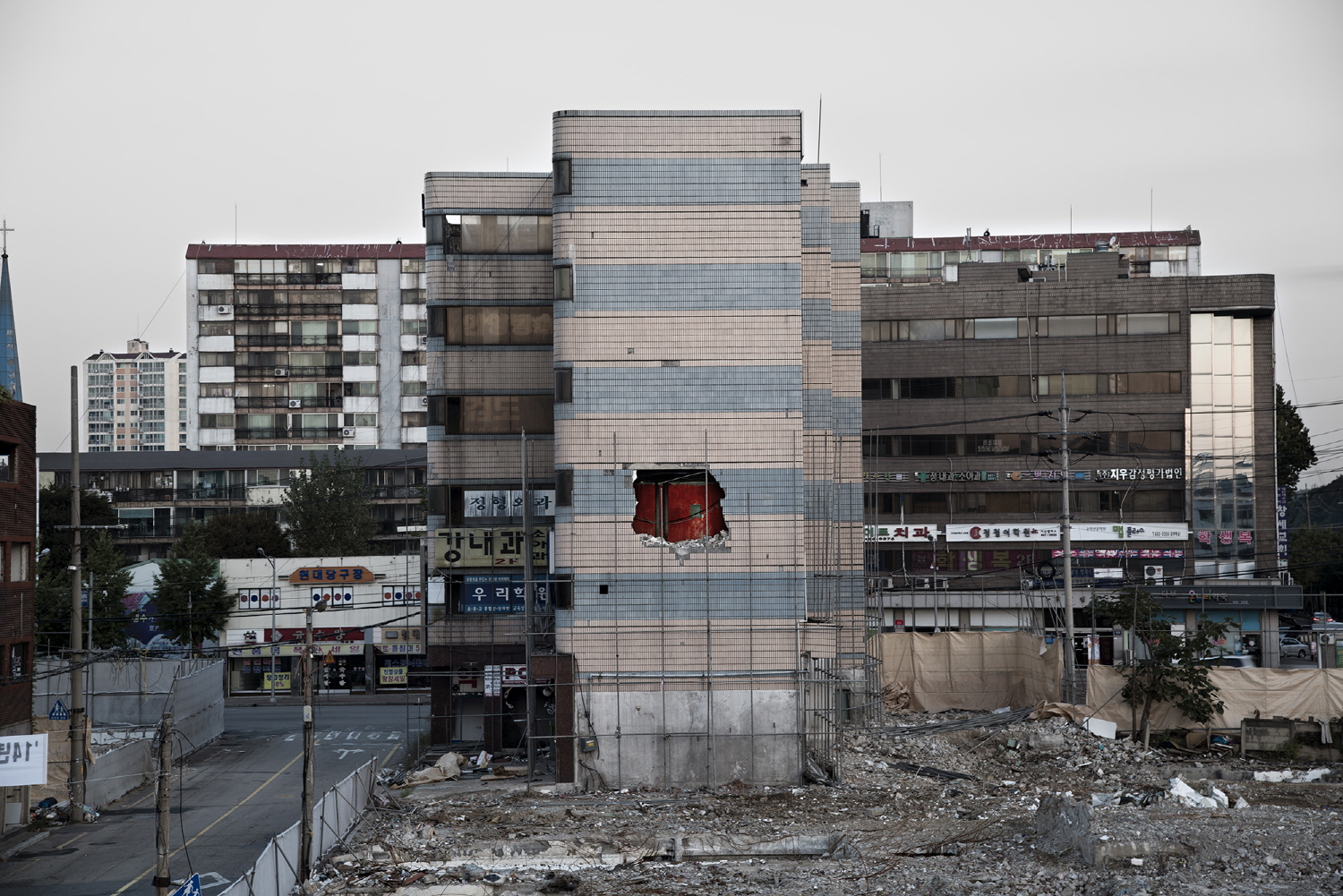
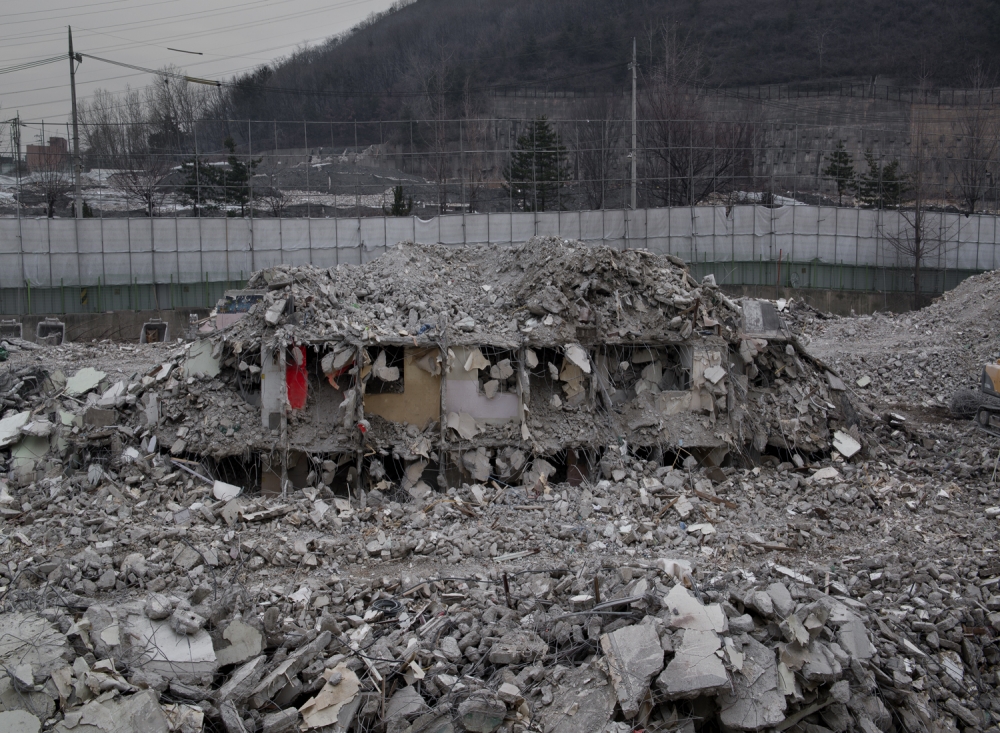
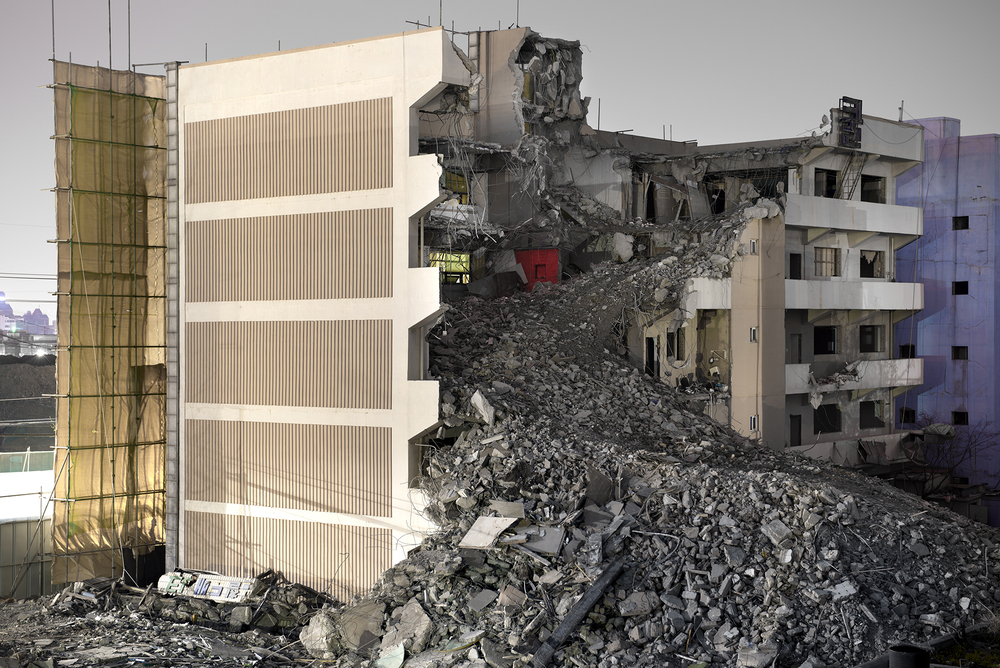
Jung Jihyun, Demolition Site 01 Outside, 2013, Pigment print, 115 x 155 cm © Jung Jihyun

The memories contained in these empty places are in a quite tattered state. The only traces of the past are indiscernible scribbles on old wallpaper, black smudged handprints found on doorknobs, a ratty toothbrush left abandoned on the floor. The discarded picture frames and toys thrown out with the trash attest to life’s irregularities. Fungus grows on the floral wallpaper that once dreamt of brighter futures. The torn wallpaper on walls and ceilings no longer hide the concrete peeking through, gleaming coldly. The people who lived here and traces of the space that embraced them are all gone.

Throughout his visits, the artist encounters these scraps of life. But listless, faint remnants can disappear without a trace in a matter of days, or day, in a demolished building. No matter how old the building is and no matter what kind of life once resided there, dynamite destroys in a manner that is both fierce and violent. The speed, scale and sound, is in essence spectacular.

It’s interesting that the artist favors such a direct and active approach in opposing that violence. As redevelopment began to spread recklessly over the past decades, depictions of these redevelopment sites also became popular. In some, photographs capture traces of a warm emotional existence, while others drastically expose cold, neutral ruins. However, Jung Jihyun gave up on trying to contrast the aura of a soon to be demolished building with hints of a lost, humbler life. Perhaps because it would have been difficult to successfully show these visually.


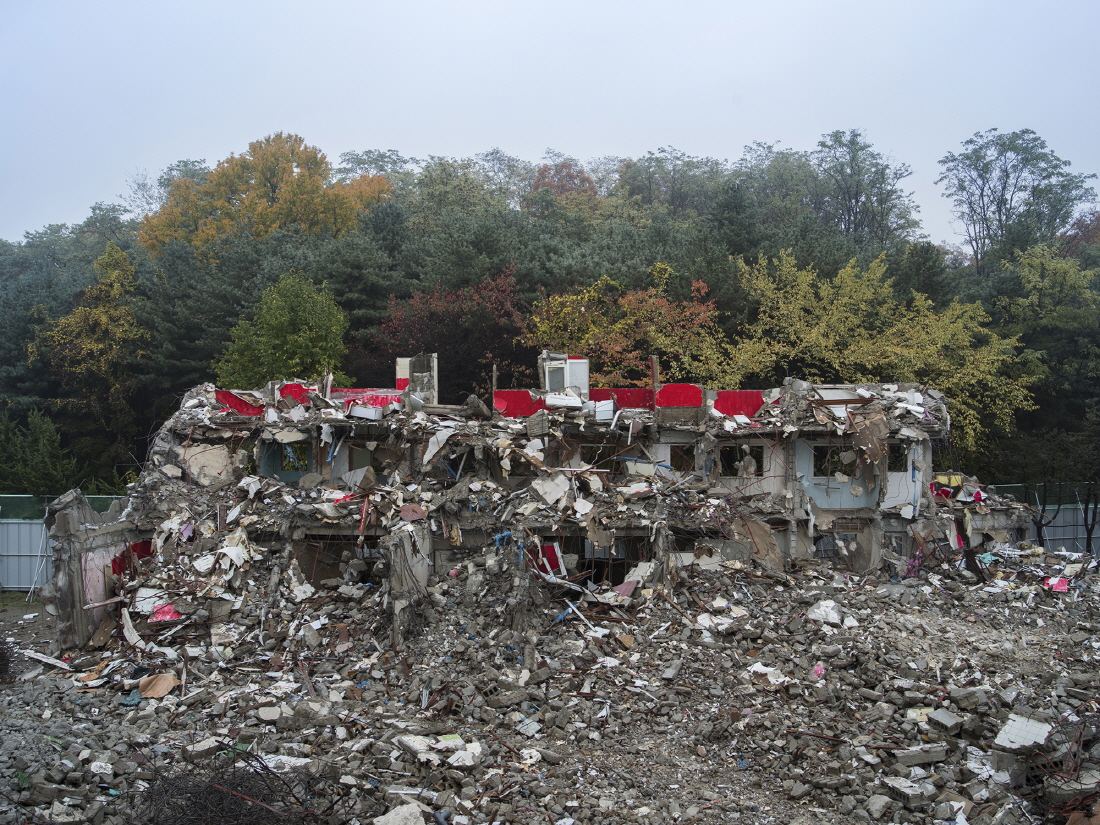
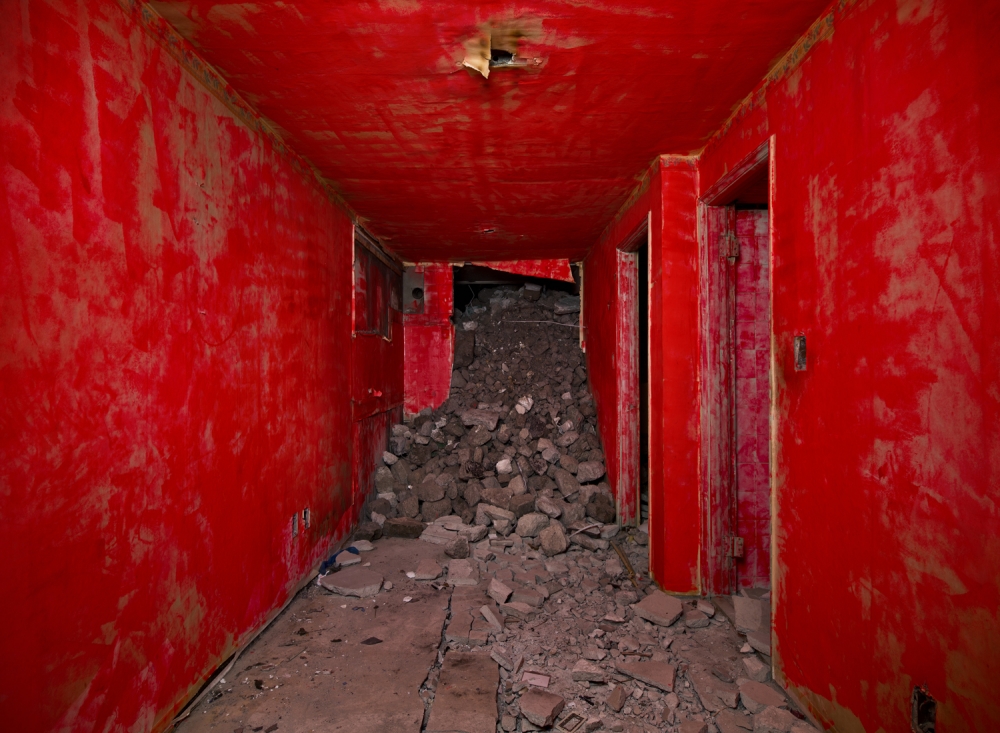
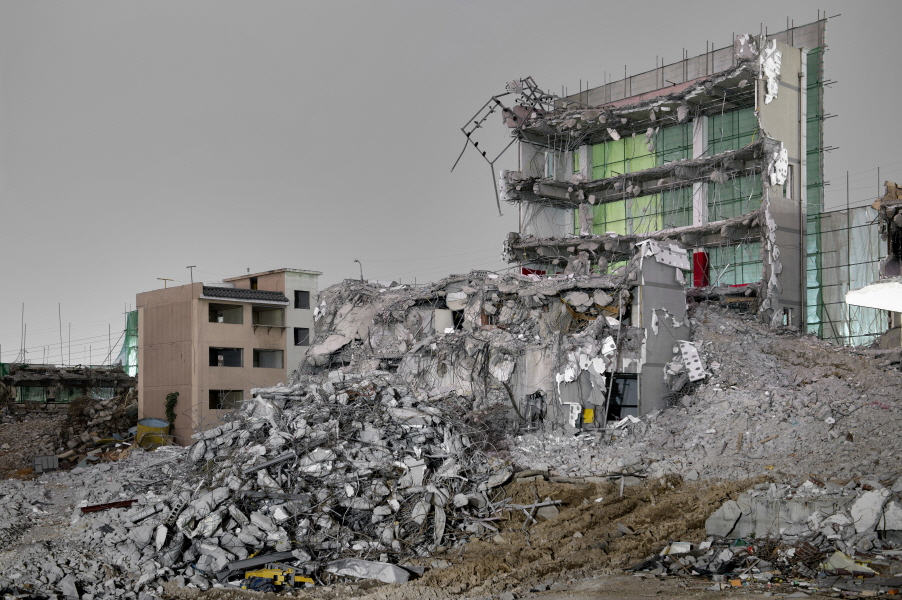
Jung Jihyun, Demolition Site 06 Inside, 2013, Pigment print, 115 x 155 cm © Jung Jihyun

Instead he trespasses on a condemned building, randomly chosen, and paints it red. The red becomes a vivid memory difficult to erase, like a signal flare for those in danger of being forgotten, a sign against the violence of a demolition site. Jung Jihyun doesn’t cling to the idea of capturing fading memories nor does he try to visualize the spectacular aspects of a redevelopment site.

Instead, he leaves a strong, provocative and direct mark on the concrete mass that’s become nothing more than an object. It’s the artist’s unique brand of performance in a city where redevelopment is condoned and abused. His application of red paint reflects an indelicate world, his brush strokes coarse and crude, rushed as if by one being chased.

It actually requires great effort for the artist to seek out demolition sites late at night, as such work can only occur after all the construction workers have left. Night is when all motion ceases, when lights are turned off. There is no electricity, water or any working amenities on the sites. The spaces are frozen as if acknowledging their isolation from life, objects on the verge of extinction. Therefore, the fact that the artist visits demolition sites at night is a form of asceticism, and in his own way he is attempting to crack open a society that doesn’t embrace memory or vestige.

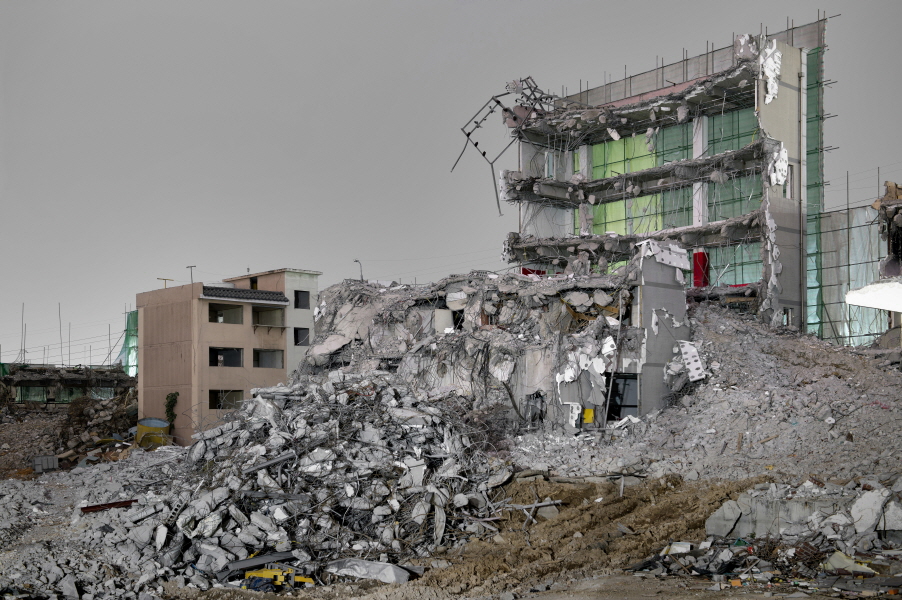
His work on site is also not an easy task. First, the artist needs to photograph the interior painted in red and must then continuously observe and record how the interior disappears from outside the building. Because it is impossible to regulate a demolition site’s schedule, the wellbeing of his workspace can only be checked on through continuous visits. If the artist is lucky, the space will disappear slowly over several days. However, often a space will be blown apart the day after it is painted. In such cases, much like a rescue effort in search of survivors, the artist has to dig for fragments of the red room among the rubble.

Jung Jihyun captures these lost remains using long exposure with the light of the moon, street lamps and other electric sources nearby. In the images, unlike the stillness of the red room, the stars of the night sky flow and the trees beyond the demolition site tremble in the wind. Even the lights of a still prominent residential area shine brightly from afar. In the real world, the color red might not have any importance but we also can’t deny that it means something—like a stain. A blemish that is about to disappear, but which comes to us instead as a stain of existence.

References