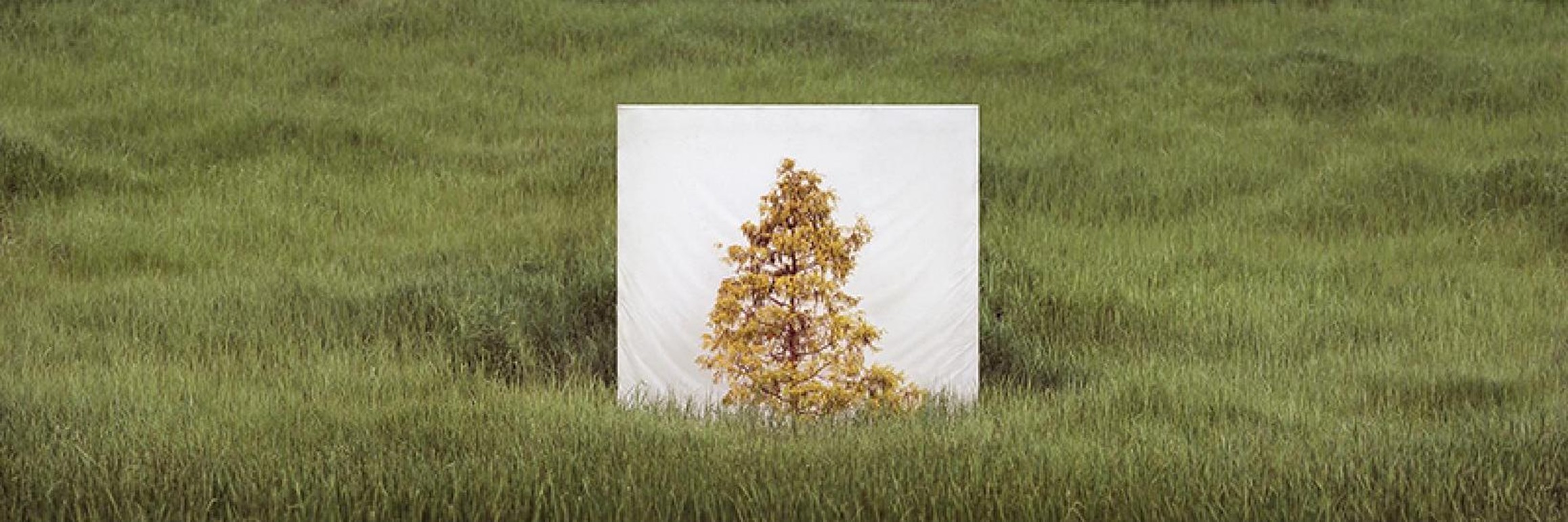
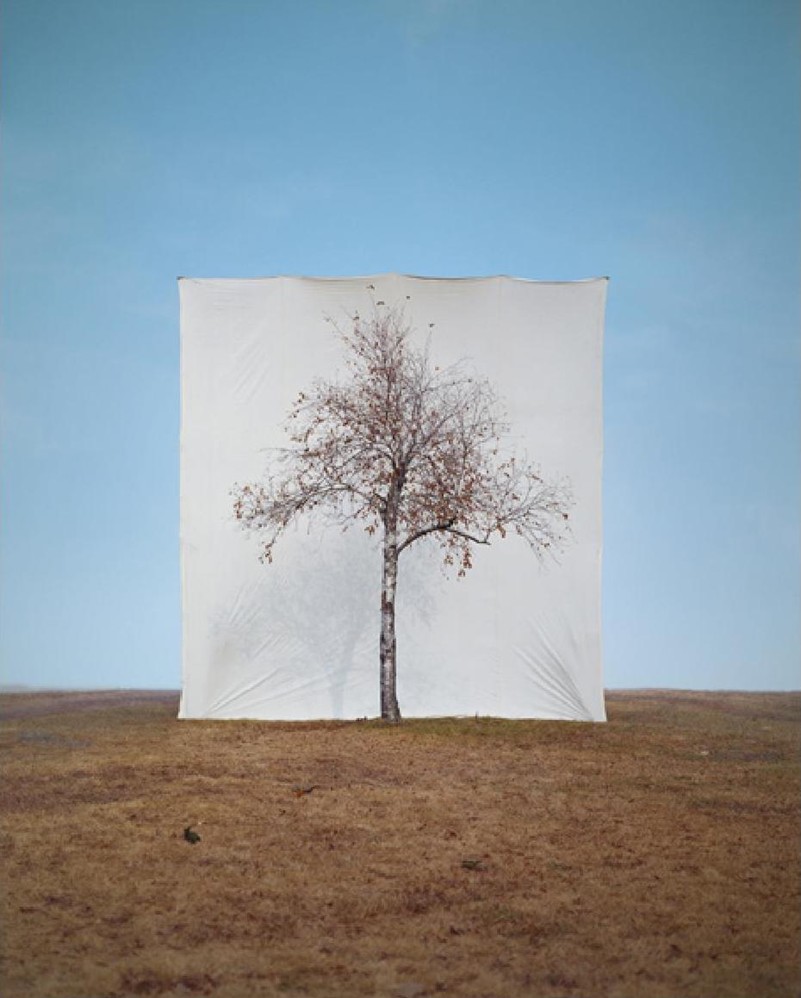
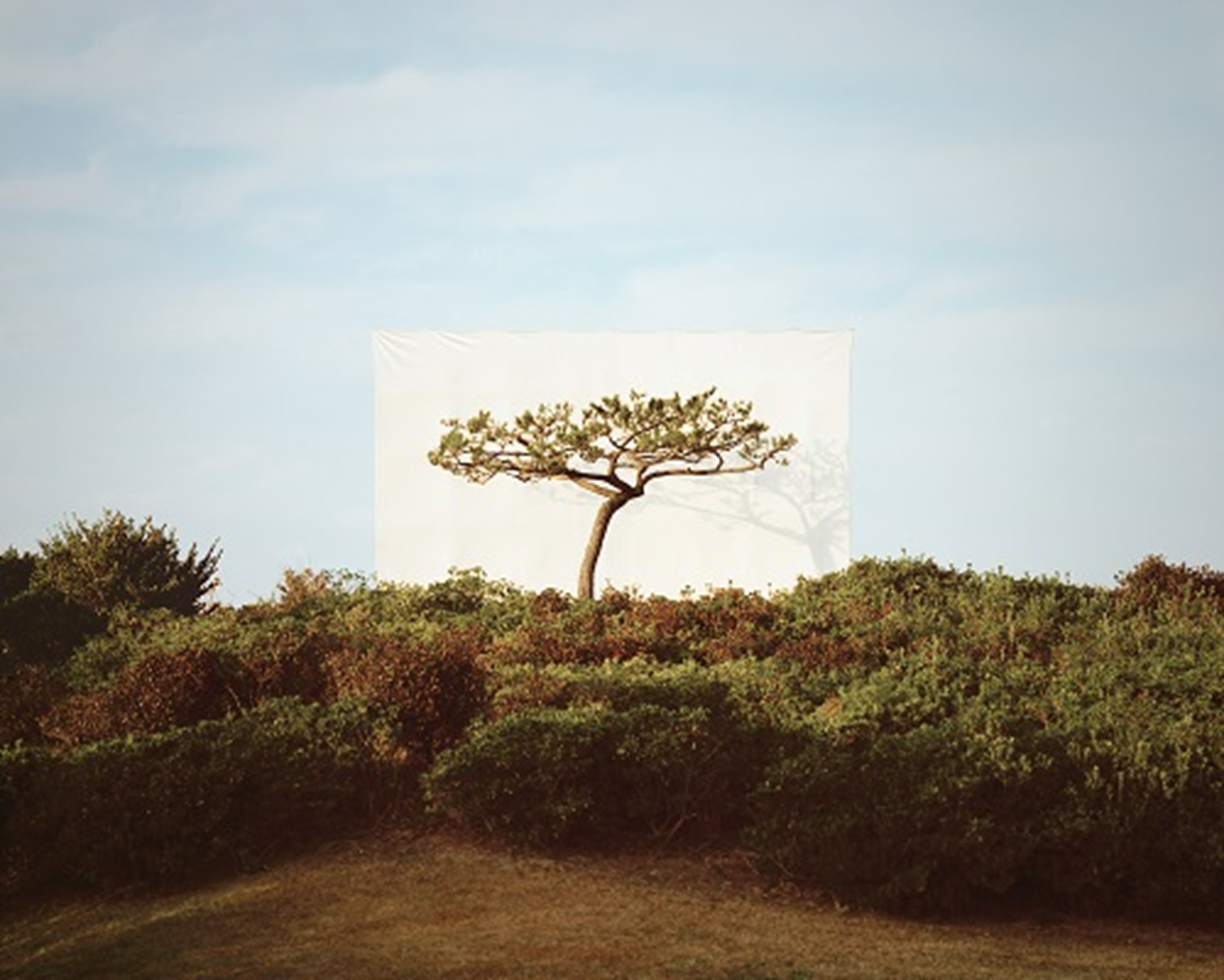
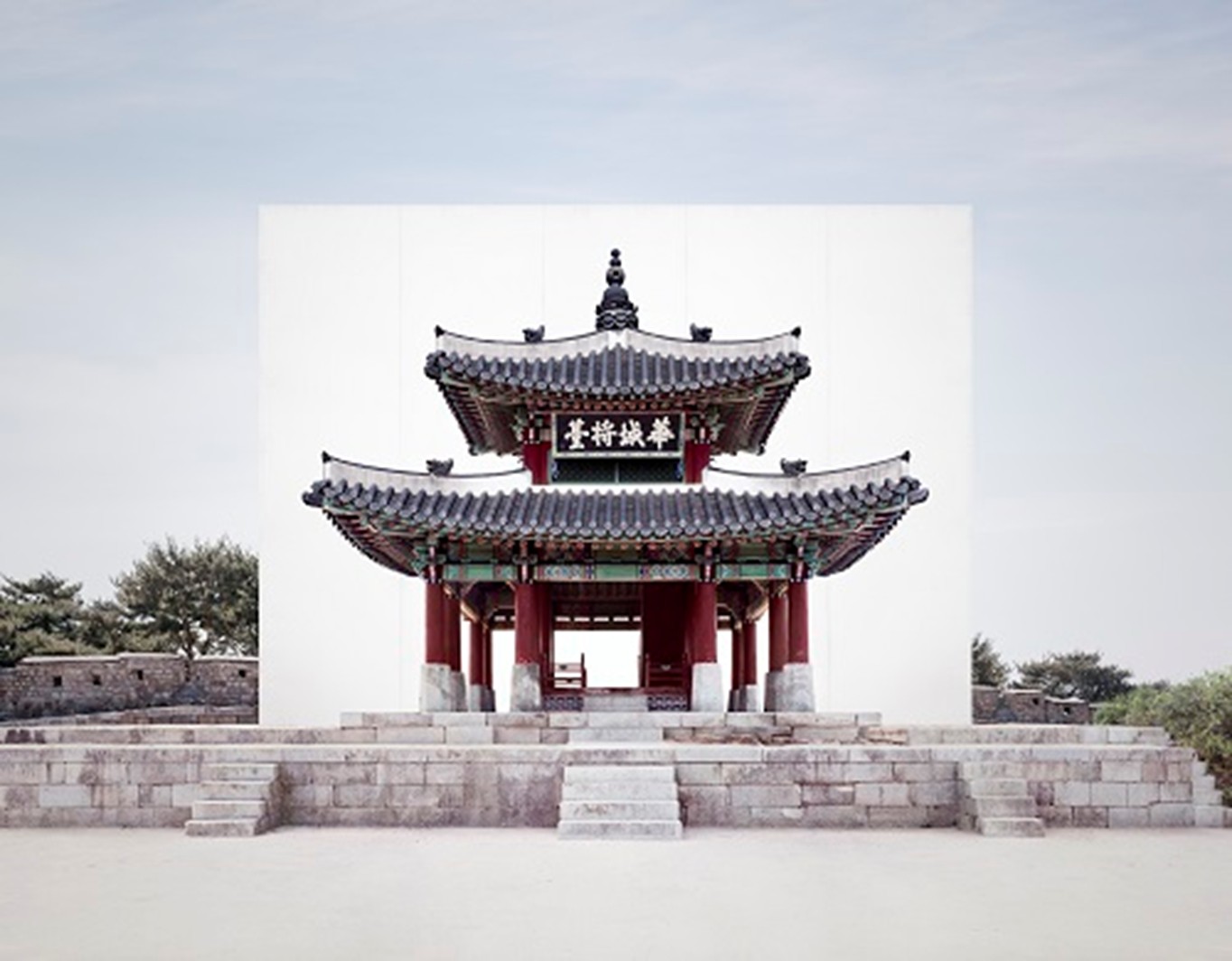
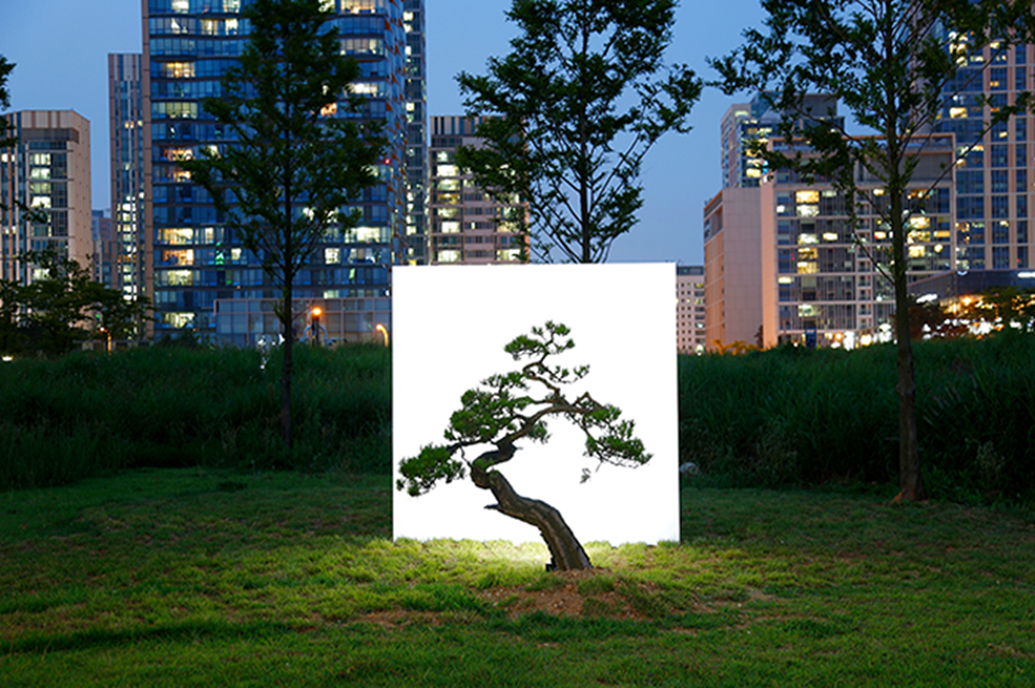
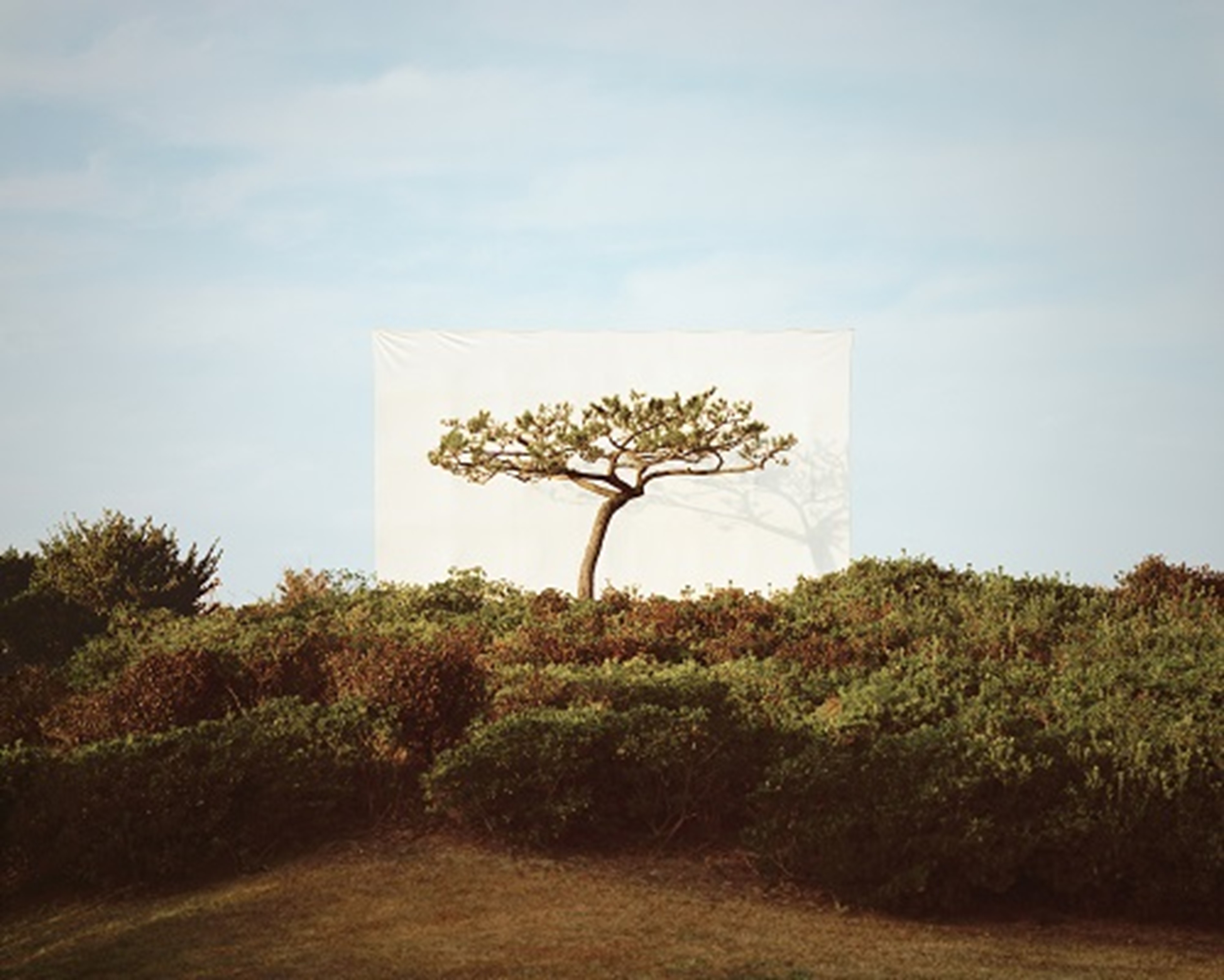
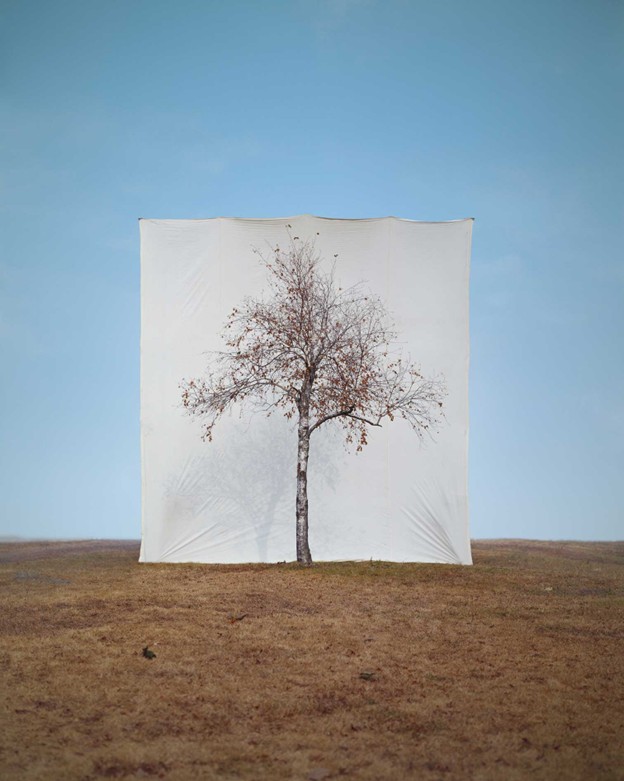
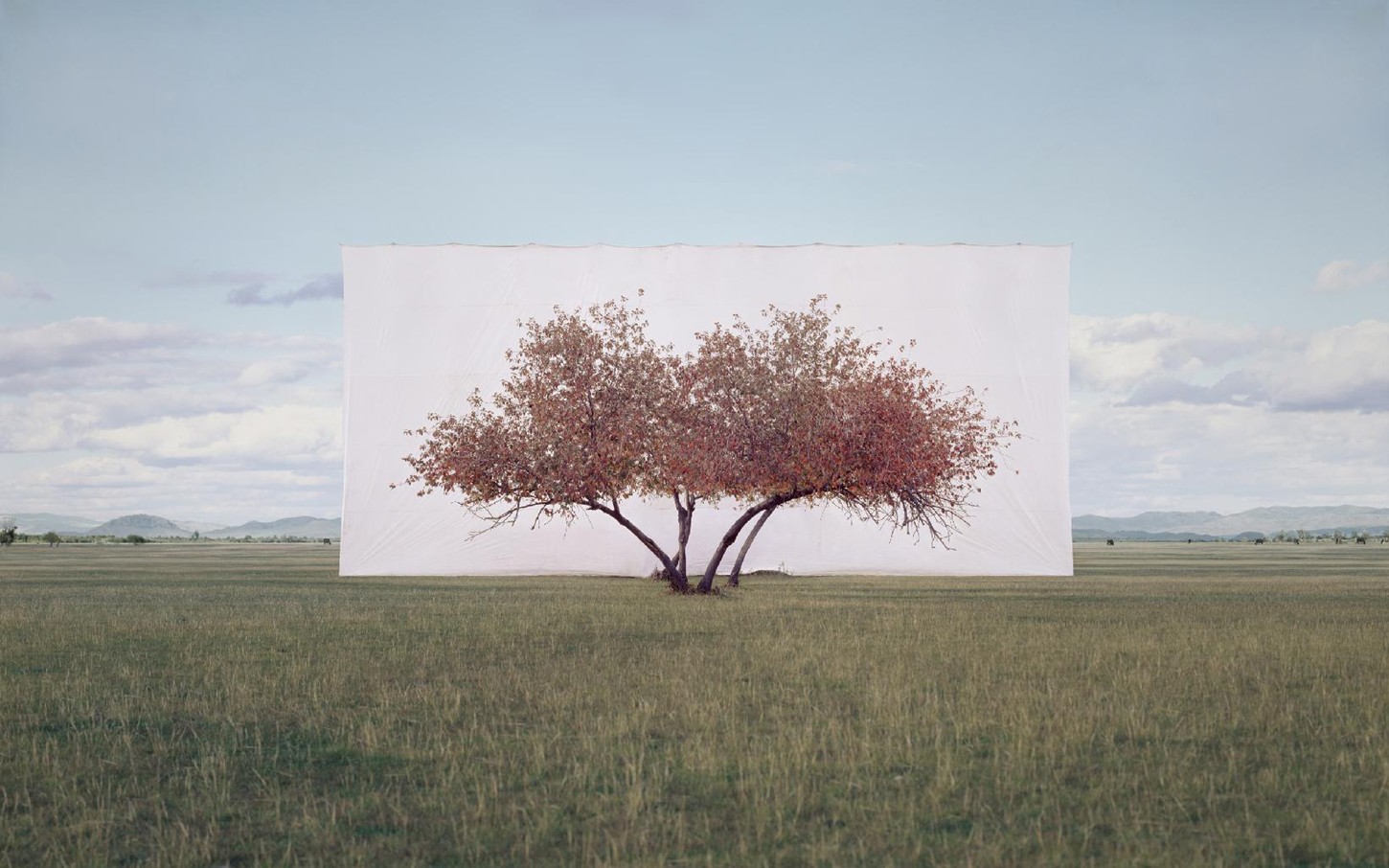
Myoung Ho Lee, Tree #18_2_1, 2020 © Myoung Ho Lee

Prologue

“Myoung Ho Lee!” Someone calls out to the photographer. He turns around but sees nothing. Slowly, he looks around — and only then something begins to appear. He is drawn in. Then he reflects. At last, he names what “had been invisible but is now visible,” and softly calls it: Tree / Mirage / Nothing But.

Photographer Myoung Ho Lee’s 《Photography-Act Project》 begins, metaphorically speaking, with someone’s invocation, unfolds through Lee’s naming, and culminates through his own calling.

Ah — “the invocation of Myoung Ho”? What might that mean? And if his work begins with someone’s invocation, who exactly is that “someone”? Moreover, the title of this essay, Invocation and Mediation, refers to “invocation through the slash (/), and mediation through the hyphen (━).” What does that entail? Let us examine Myoung Ho Lee’s 《Photography-Act Project》 with these questions in mind.

 
I. Re-presentation – ‘Tree’(2024) Series

According to the artist, his long-term project can largely be categorized into three parts:

➀ Re-presentation – Reality (現實)
➁ Re-production – Unreality (非現實)
➂ Between (間) / Beyond (超) – Inter-reality (間現實) / Trans-reality (超現實)

There is also an experimental, open-ended fourth category — “And (&)” — which exists as a field for potential transformation. Works under this tentative label have been provisionally titled ‘Un-Title’, ‘No-Title’, ‘Non-Title’, or ‘None-Title’, and sometimes ‘Use As This / Use As That’, ‘Use This / Use That’.

This trilingual categorization (Korean, Chinese, English) represents Lee’s systematic effort to organize his practice. Within the ‘Re-presentation’ category, he has introduced series such as ‘Heritage’, ‘Heritage_[drənæda]’, ‘Petty Thing’, ‘Tree’, ‘Tree...’, and ‘Tree......’.

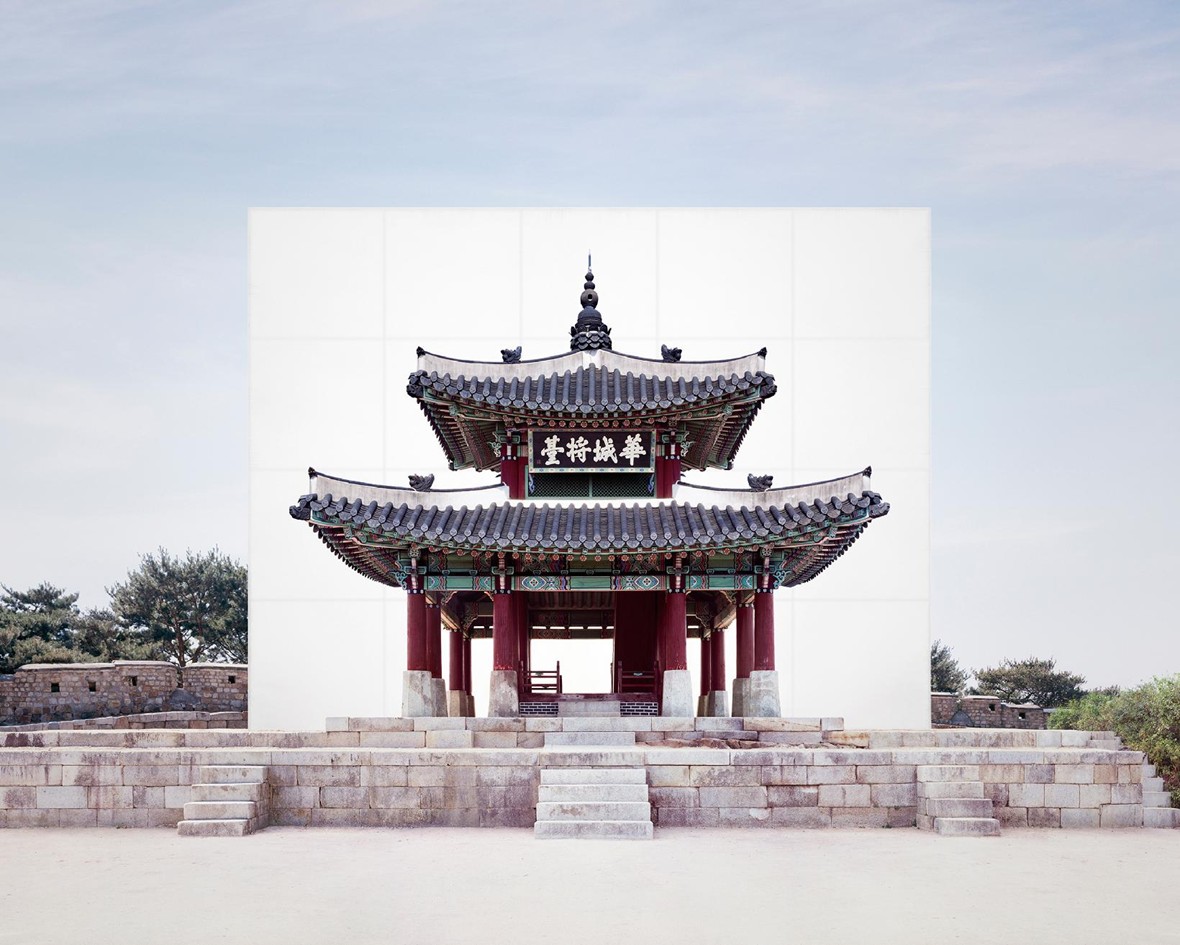
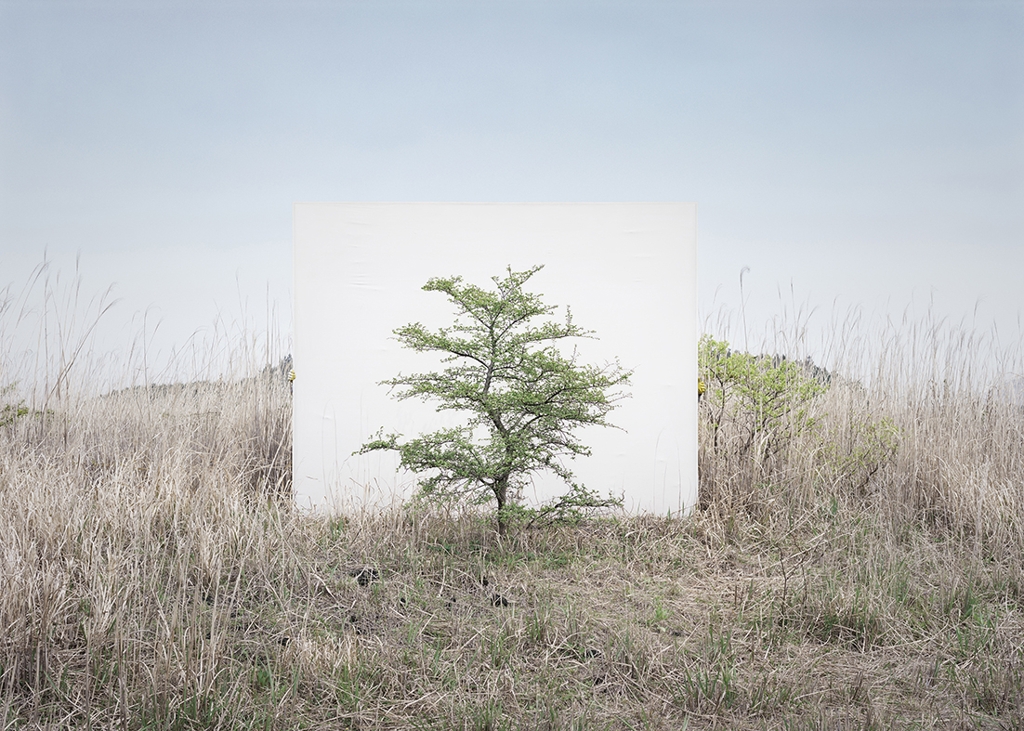
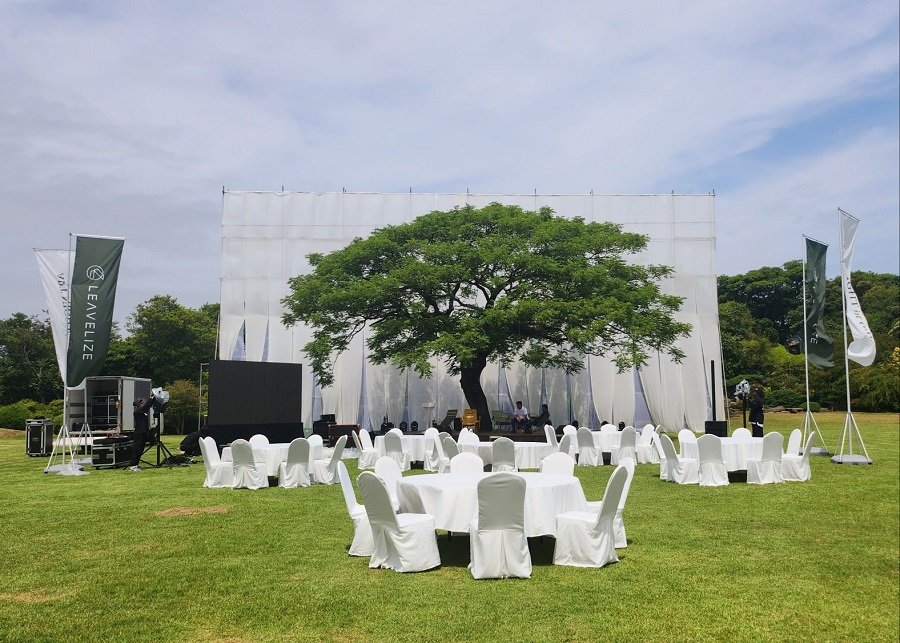
It is worth considering why Lee deliberately writes “Re-presentation” with a hyphen. In works such as the ‘Tree’ Series, where he installs a large canvas behind a wild tree, a small weed, or a cultural monument, Lee redefines representation. Rather than simply depicting reality, he interrogates the boundary between the real and the unreal.

In art, representation generally refers to depicting what exists — a landscape, a figure, an object — as it appears. In painting or photography, it is the creation of illusion (simulacre) on a two-dimensional surface through perspective or trompe-l’œil. In sculpture, it is the re-presentation of the real through a three-dimensional substitute form. In this sense, representation fundamentally produces the unreal.

However, in Lee’s case, the term reality appears beside re-presentation. His version of representation seeks not to fabricate unreality but to generate reality itself. As seen in the ‘Heritage’, ‘Petty Thing’, and ‘Tree’ Series, he activates both fiction and the real. The photograph constructs illusion, while the performative act — installing the canvas within the landscape — reanimates presence, making the real reappear.

Thus, Lee names and mediates through the hyphen, as in Re-presentation or Re/presentation. The hyphen connects and mediates — erasing the two-dimensional unreality of photography, awakening its three-dimensional performativity, and linking canvas–act–photograph, artist–work–viewer, and re–presence. His work therefore transforms representation into a performative act that reinstates the real within the fictive.


Myoung Ho Lee, Mirage #4_Silk Road, 2011 © Myoung Ho Lee

II. Re-production – ‘Mirage’ Series

In the category of Re-production, Lee has introduced the ‘Mirage’ Series and the ‘Mirage_[drənæda]’ Series.

If ‘Re-presentation’ positioned the canvas behind the subject to make it a protagonist, ‘Re-production’ brings the canvas itself to the forefront — allowing it to become the protagonist.

In the ‘Mirage’ Series, this protagonist appears as a kind of phantom. In the Gobi Desert, dozens of assistants hold massive canvas sheets, arranging them so that they appear like an ocean — a simulacrum of the sea. This immense, theatrical act of staging pushes Lee’s project into the realm of pre-photographic theater — a form of creation enacted before the camera.

The hyphen in Re-production links “re” (again) and “production” (creation), emphasizing the performative nature of re-enactment. While “reproduction” in art is usually associated with copying or duplication, Lee redefines it as re-creation or re-birth — an active regeneration of reality through illusion. Though his acts are physically real and site-specific, they result in images that appear fictional, emphasizing the paradoxical nature of his re-productive mediation.

In the ‘Mirage_[drənæda]’ Series, created in the Arabian Desert, Lee and his team construct a false oasis using vast canvas fabric. The phonetic notation “[drənæda]” (from the Korean “드러내다,” meaning to reveal) indicates his exploration of exposure as both revelation and fabrication. By inserting a canvas interface into the desert, he demonstrates that “revealing” is not merely about uncovering reality but also about producing new illusion through creation.

Thus, the ‘Mirage_[drənæda]’ Series enacts the possibility of manifesting “latent realities” — not conjuring something from nothing, but revealing what might have been potentially real. Its homophonic connection to “들어내다” (to remove) also anticipates later works oscillating between exposure and erasure.

Lee therefore calls and mediates between visible/invisible through the slash, naming works as Re-production or Re/production, connecting “again–production,” “real–fiction,” and “photography–act.”


Myoung Ho Lee, Heritage #3_Seojangdae, 2015 © Myoung Ho Lee

III. Between or Beyond – ‘Nothing But’(2018) Series

While ‘Re-presentation’ emphasized reality and ‘Re-production’ illusion, Lee’s third category — Between or Beyond — explores the threshold between the two, engaging with inter-reality and trans-reality.

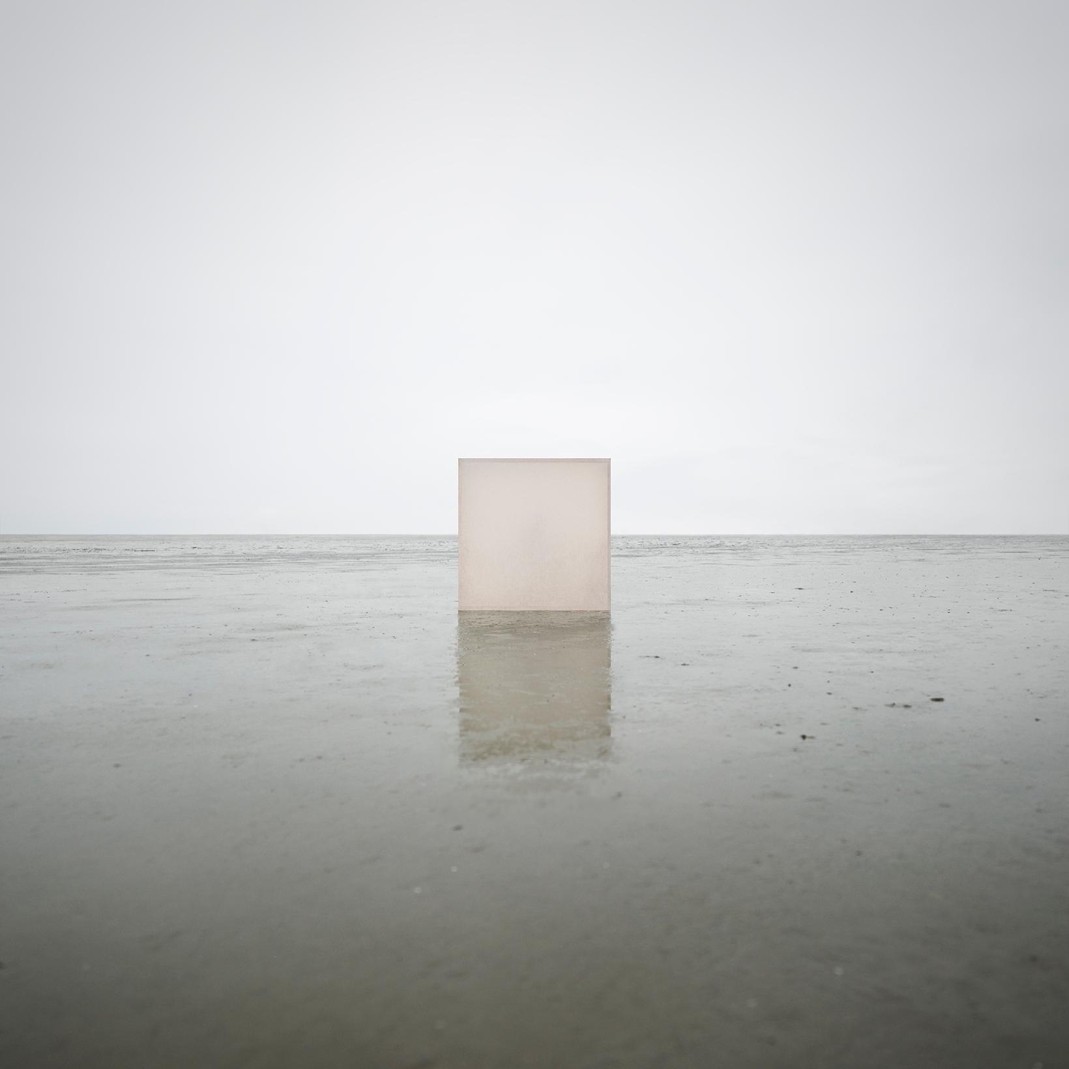
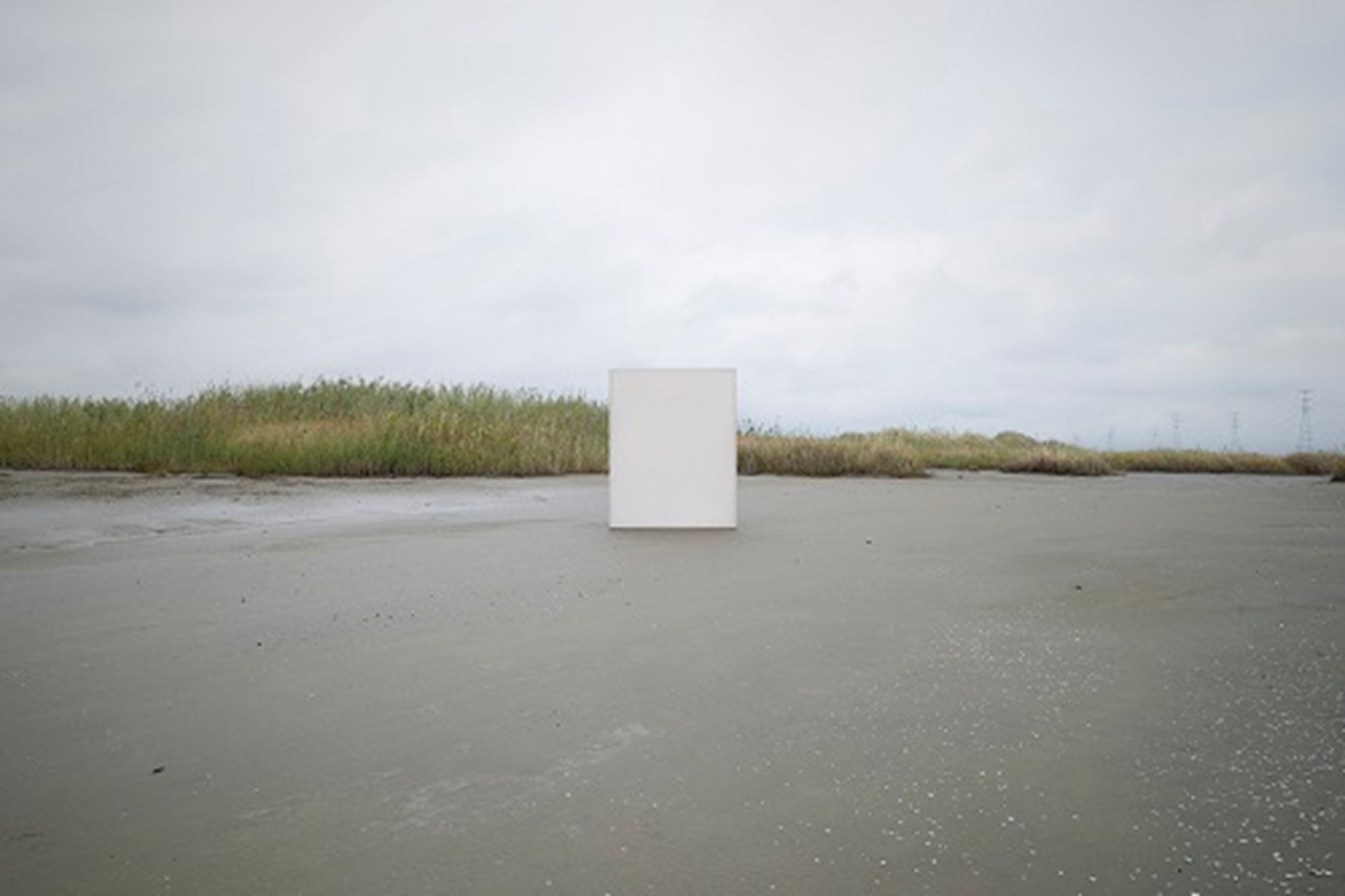
This inquiry is best exemplified by the ‘Nothing But’(2018) Series. Unlike the ‘Heritage’ or ‘Tree’ Series, where a canvas stands behind the subject, the ‘Nothing But’ Series removes the subject altogether. The canvas enters the landscape — sinking into mudflats or resting within the sea — relinquishing its protagonism. It becomes a pure medium, a point of contact between landscape and photograph, photograph and viewer.

Here, the canvas “is nothing, yet something.” It embodies presence without representation.

The ‘Nothing But’(2018) Series conceptually extends from the ‘Petty Thing’ Series. In the earlier series, Lee placed small canvases behind weeds and wildflowers, elevating “trivial things” into central figures. Now, he has abandoned even the subject — the canvas itself becomes the “trivial thing,” both absent and present.

The ‘Nothing But_[drənæda]’ Series again invokes the dual meaning of to reveal and to remove. By scratching away printed ink on the photographic surface — returning it to nothingness — Lee extends photography beyond the moment of printing. Just as his project foregrounded the pre-photographic act, this work expands into the post-photographic act, transforming photography into an ongoing cycle of appearance and disappearance.

The addition of phonetic notation underscores the slippage between “revealing” and “removing,” presenting the coexistence of manifestation and erasure. Through this, Lee redefines photography — as an art form that encompasses what exists before, within, and after the image.

Myoung Ho Lee, Nothing But #3, 2018 © Myoung Ho Lee

Epilogue – A Manual for Invocation

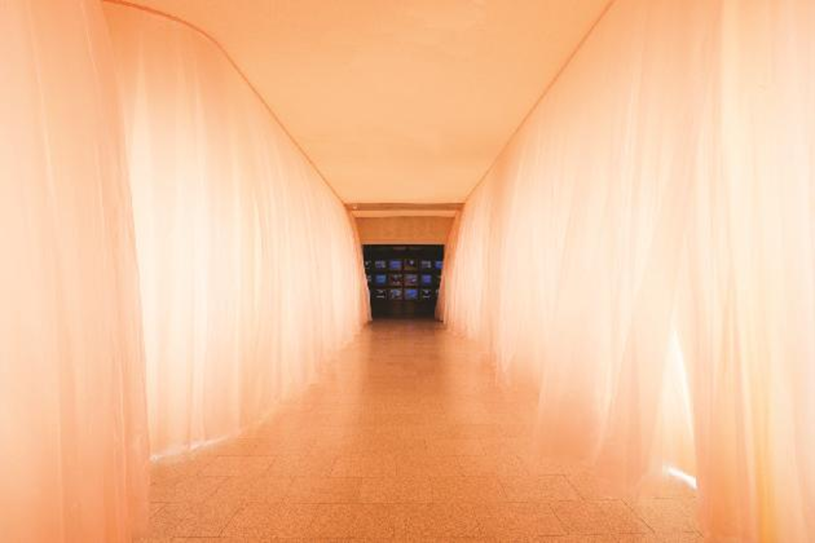
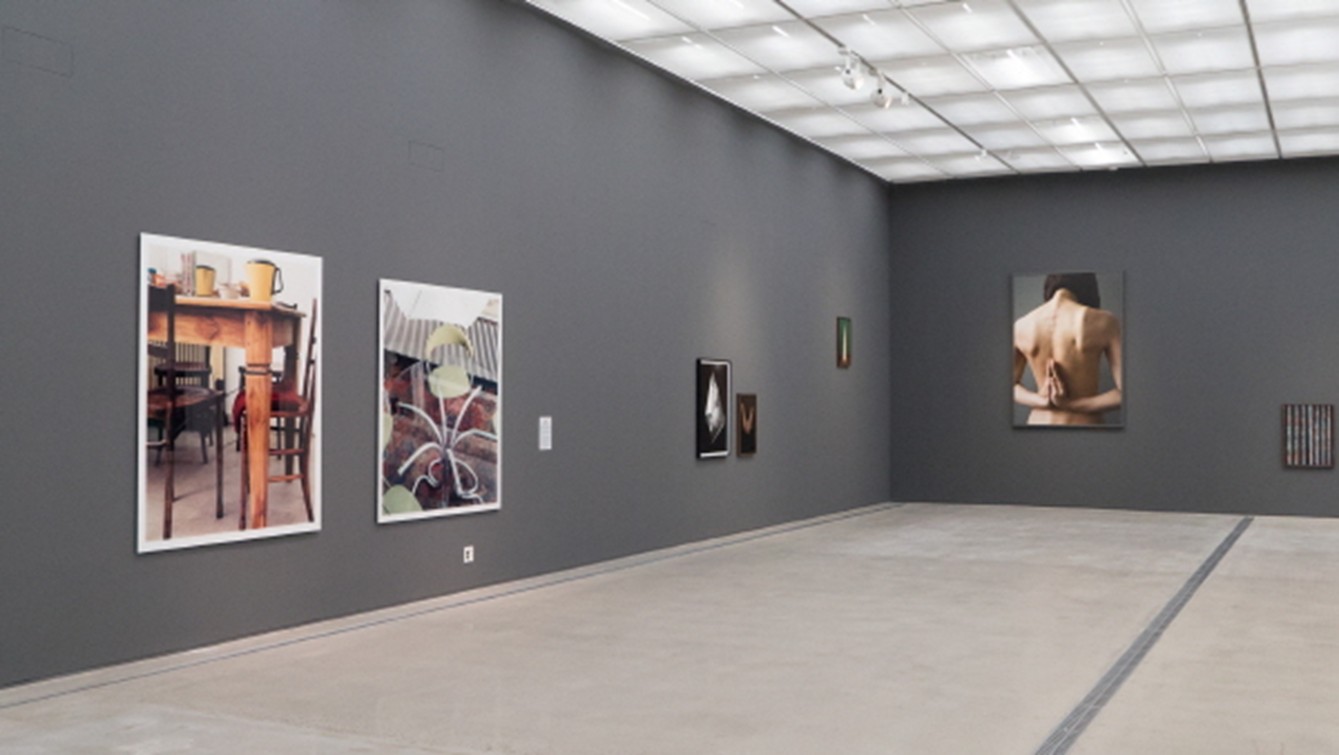
Lee’s solo exhibition 《MANUAL》(2021, Soul Art Space, Busan) can be understood as a meditation on invocation itself — an exhibition that asks how audiences can comprehend and practice this artistic act of calling and mediation.

Just as his project embraces both the “before” and “after” of photography, ‘MANUAL’ anticipates the “before” and “after” of exhibition and collection — shifting the focus from what the artwork is to how the artwork is used. It explores how his completed photographs exist and perform within both exhibition and everyday spaces.

Returning to the prologue: who, then, is the “someone” who calls Myoung Ho Lee? It is nature itself.

Following Maurice Merleau-Ponty’s notion that human and nature exist in reciprocal interaction beyond subject-object dualism, Lee hears nature’s call — an invocation through the slash (/) between nature/human and landscape/Lee.

Responding to that call, he names what had no name — the “trivial” and the “nothing” — giving them existence through titles such as ‘Heritage’, ‘Tree’, ‘Petty Thing’, ‘Mirage’, and ‘Nothing But’ Series.

The hyphen (━) serves as a mediator, linking and extending through categories such as Re-presentation and Re-production.

Naming has always existed for the sake of calling, and calling has always presupposed the consciousness of the human subject. It is an act of mediation that connects the self and the other.

Ultimately, Myoung Ho Lee’s 《Photography-Act Project》 is a practice that names through the hyphen, invokes through the slash, and mediates through the hyphen.

His exhibition 《MANUAL》(2021) continues this logic, asking how such mediation can itself become a manual — a system connecting artist–act–canvas–photograph–viewer through endless hyphenation.
 
As poet Chun-Su Kim once wrote:
“When I called his name, he came to me and became a flower.
Just as I called his name, may someone call mine,
so that I too may go to him and become his flower.”
 

Source/
Sung-Ho Kim, “Invocation and Mediation: Myoung Ho Lee’s Photography-Act Project,” in Myoung Ho Lee, Exhibition Catalogue, ‘MANUAL’(2021.9.10–11.17, Soul Art Space, Busan).

References