‘Sadang’
means shrine but with a nod to the continuous, the title ‘Sadang B’ replaces a
possible sense of the ultimate icon. The suggestion here is that Young In does
not wish her exhibition to aim to function as the end of the subject or
journey, but to be instead a mere participant in a series of actively asked
questions. ‘Sadang B’ implies that there is also an A, a C, and perhaps even a
plan D. This shrine is not the only shrine, and B is part of a range of
categorization. This title immediately implies another, perhaps parallel,
order, process and rationale. Life, goes on, it seems, elsewhere.
As
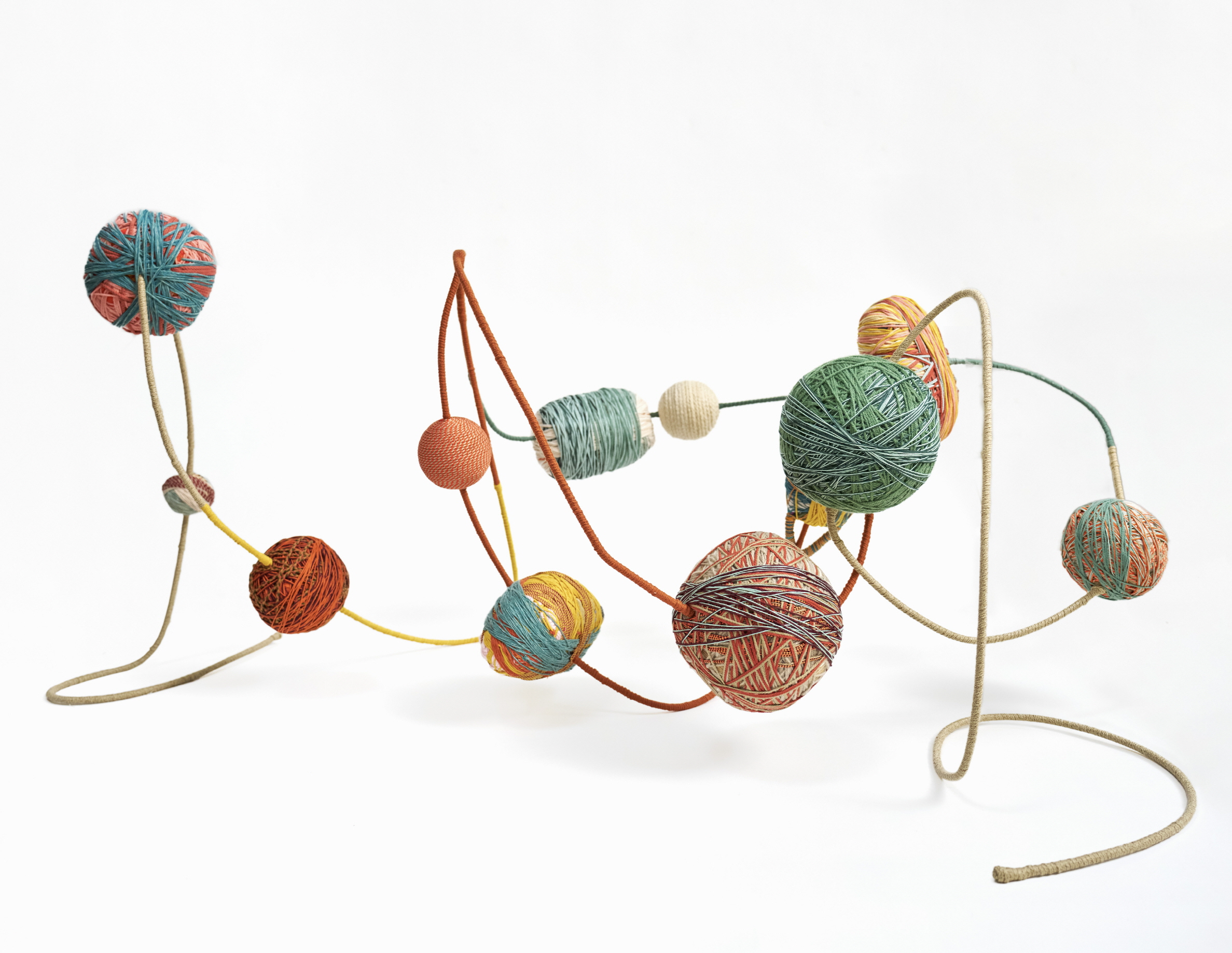
a highly accomplished artist, Young In uses whatever medium seems right and
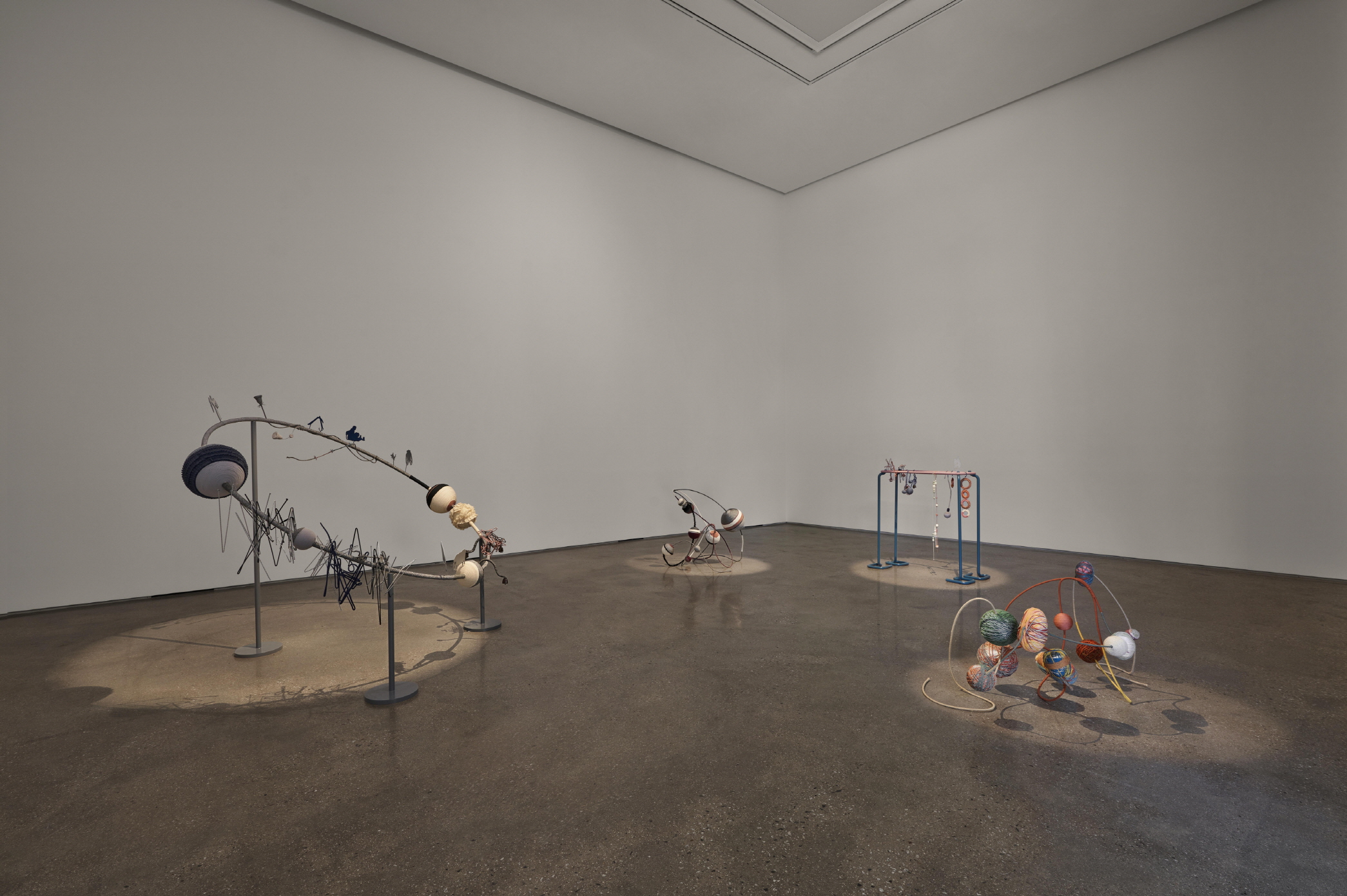
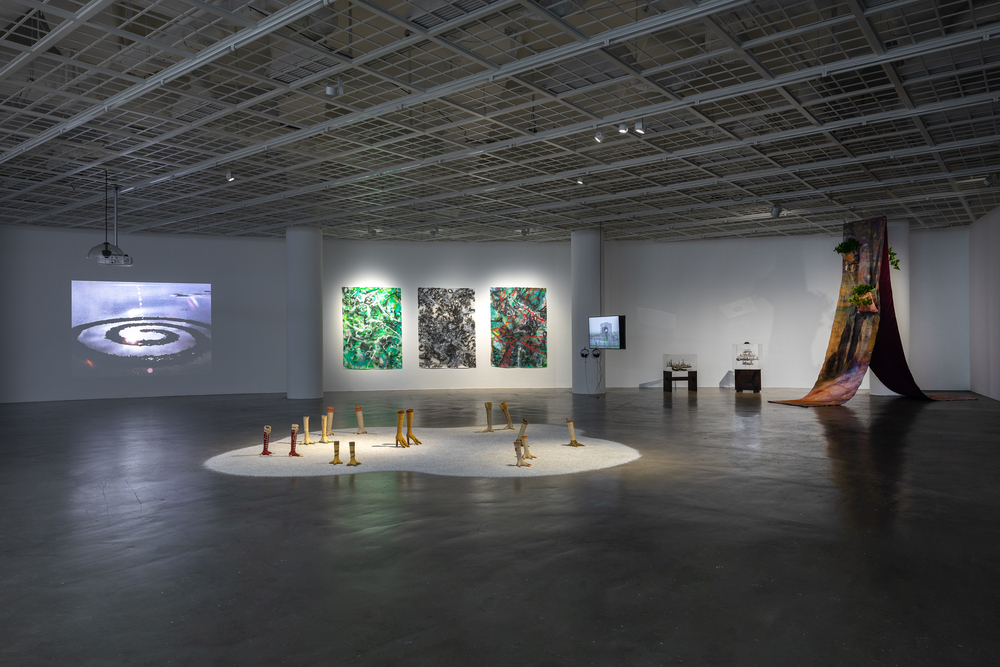
relevant for whatever she needs to say at any particular time. 《Sadang B》 is an exhibition of
three works, with three types of moment, action, and ritual, taking place
in three different sections of the gallery. The artist’s characteristically
generous repertoire is represented here, in part, by audience involvement with
different forms of movement to improvised music, sewn objects, recorded bird
sound, and choreographed movement.
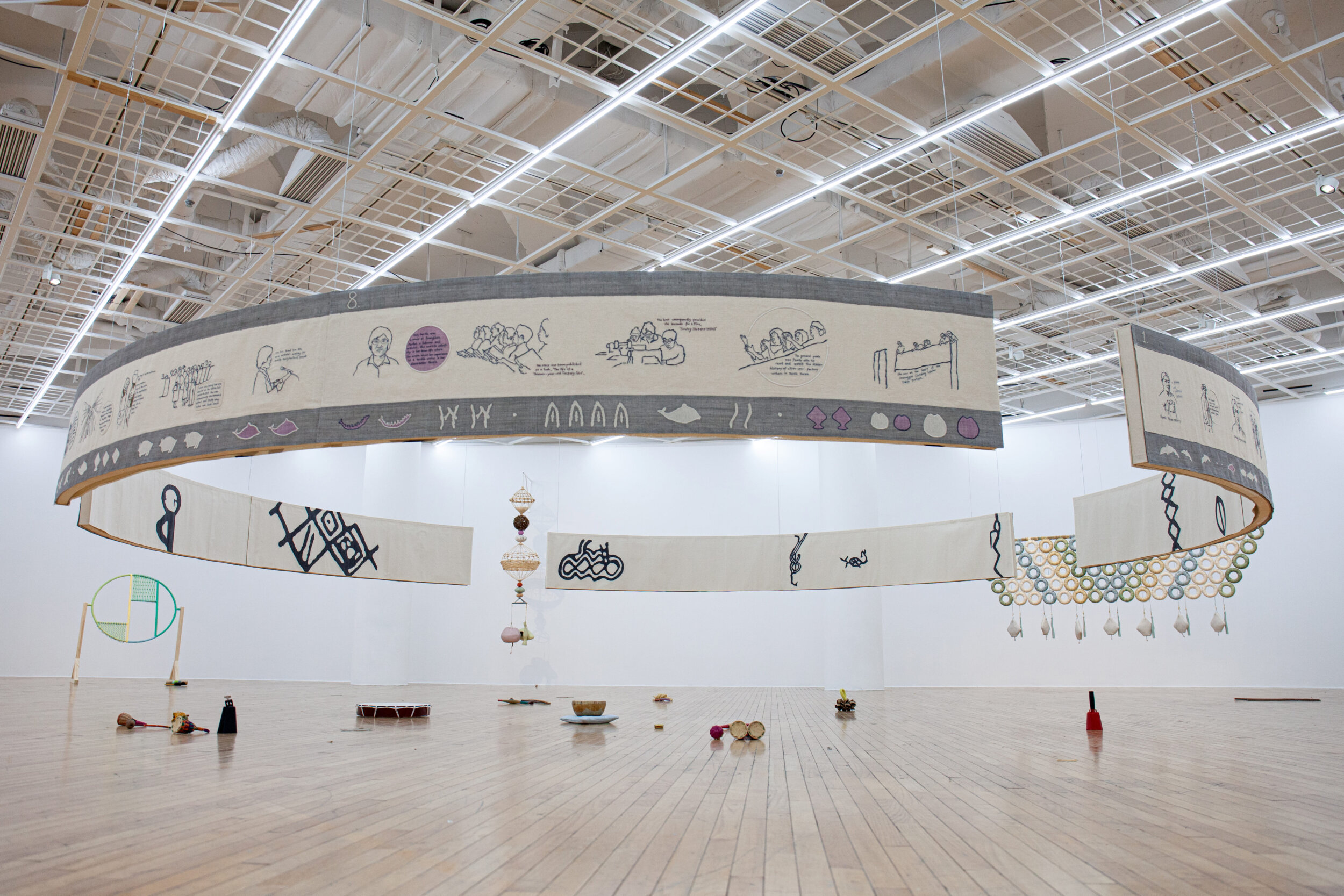
The
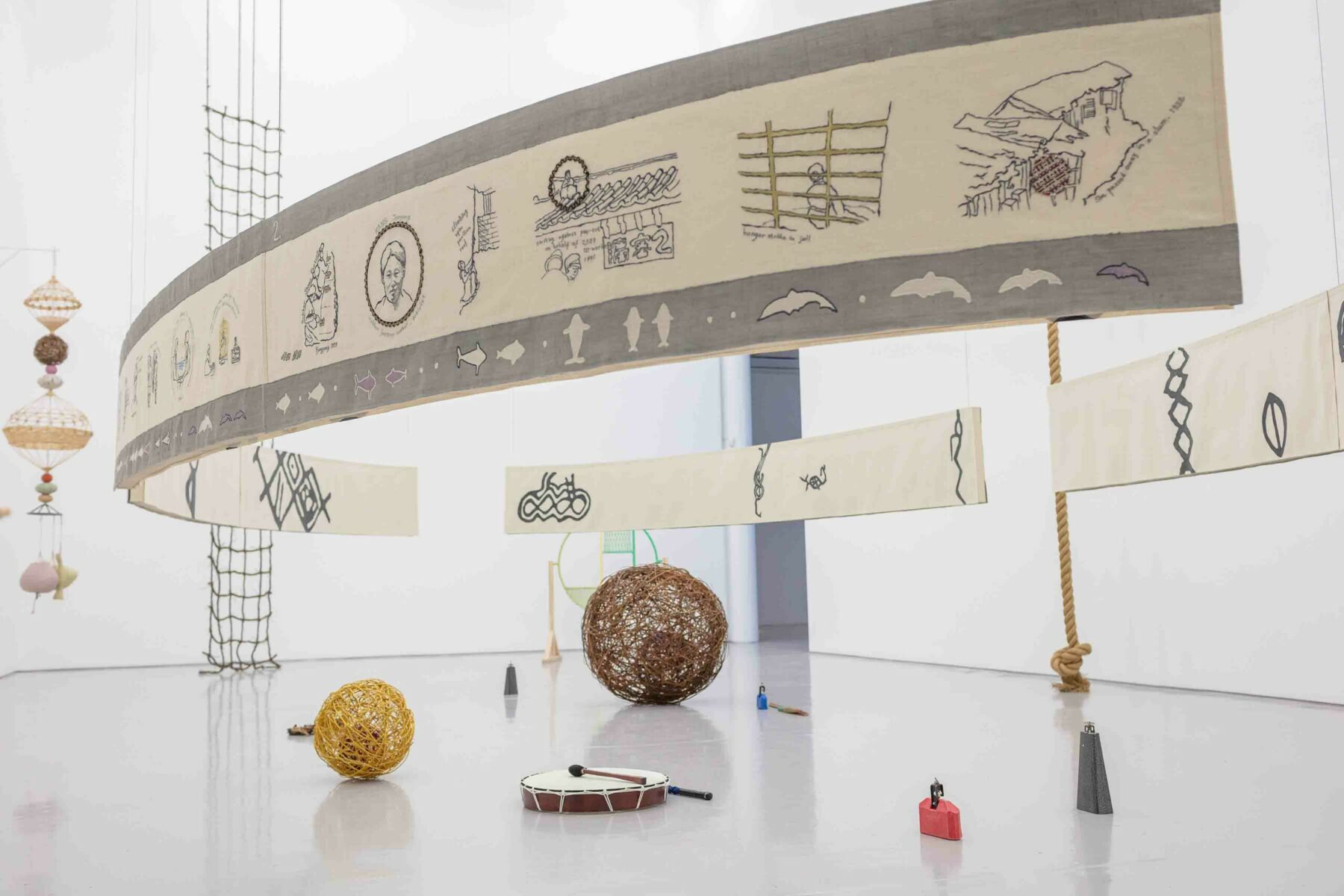
notion of the permanent is challenged by the temporary. A range of
embroidery, collage, tapestry and drawing move from the fabulous to the
perfunctory with work that mimics a change in a skyline, for instance, as it
traces the outline of figures, buildings, trees and crossroads to become
imbedded in a two-dimensional horizon. Often, once a line emerges and takes its
role here, the everyday inevitably can be elevated into much greater theatre,
and vice versa. The artist traces, literally, old photographs in her
recent works, and tried to touch some of the shifts and disruptions in the
history of Korea over the last thirty years.
Utilizing the cultural and
folkloric iconography of Korean culture, the artist hopes to forensically
unearth something that is significant and yet perhaps unclear. A
compression of space and experience runs alongside the visualization of past
and current struggles in her native Seoul. For the artist, any rise in
simplistic characterisation means that a wide-open pride in National
identity has to be feared. Her process of sorting through found images and
museum photo archives mixes with childhood, adolescent, and student memories to
create a fundamental, and multilayered process of questioning for Young In, who
now lives in England.
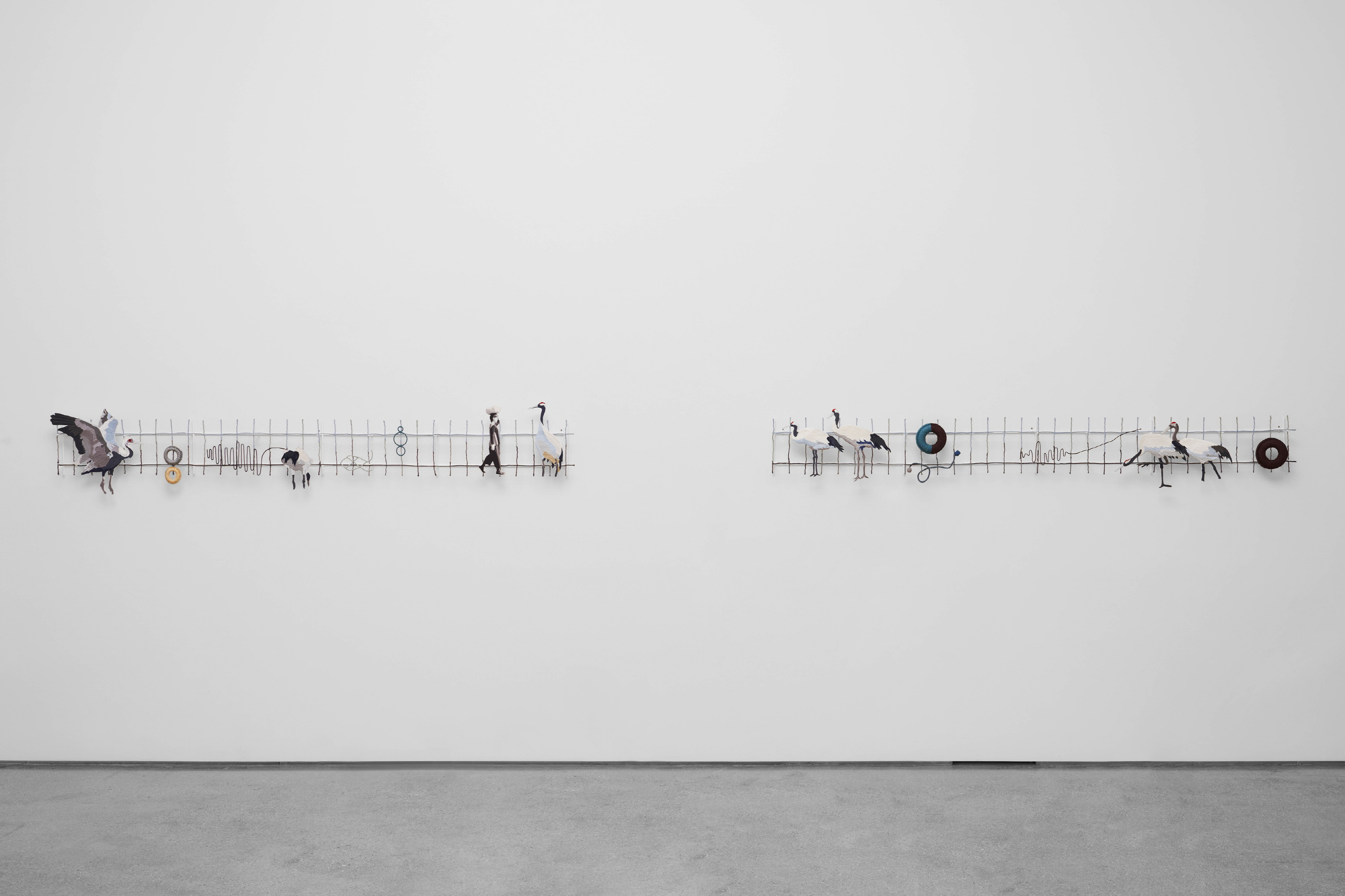
With
sinister tweeting on one side, and simple ominous shadow on the other, the
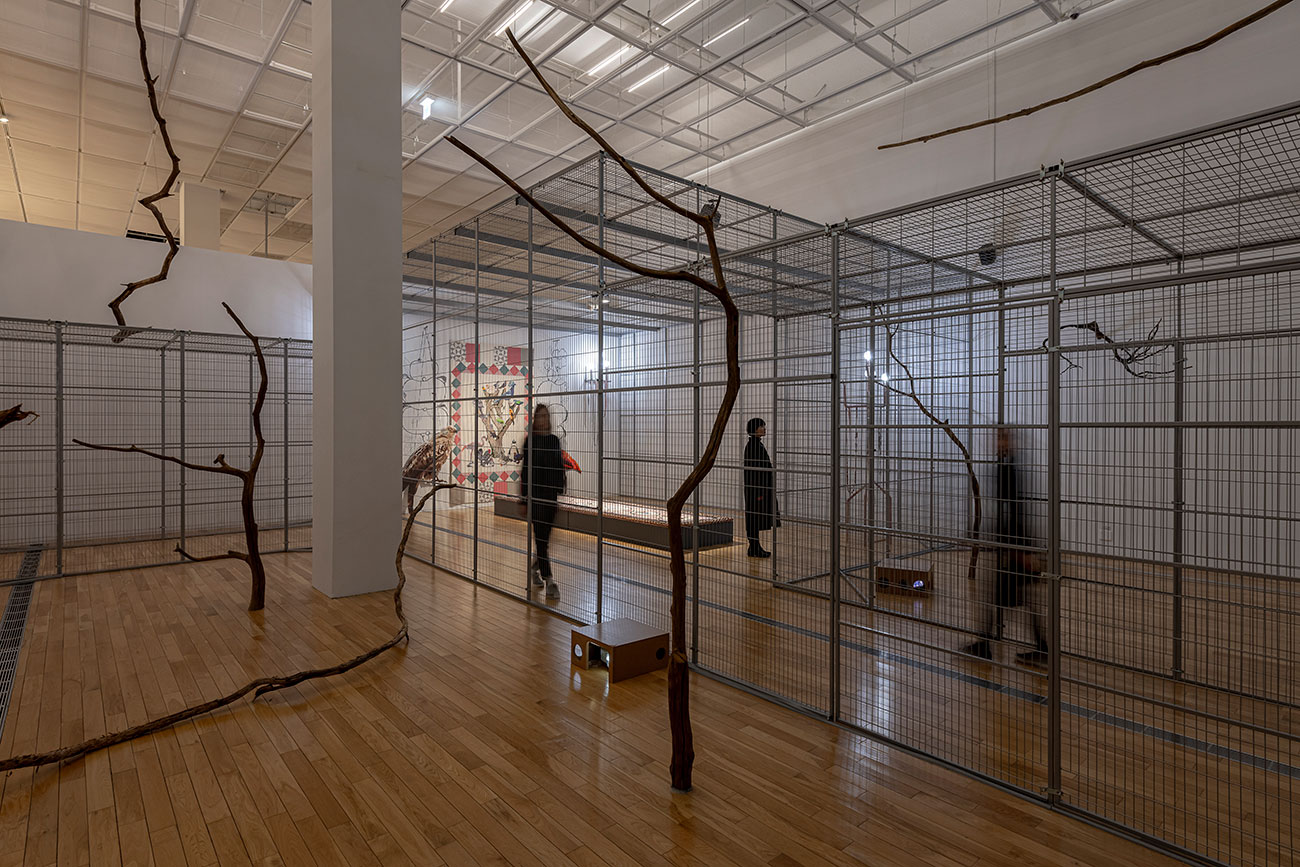
first piece, To Paint the Portrait of a Bird shows the
artist seeming to already question notions of freedom. Who can be free to do
whatever he, she or they, wants? A loud tweeting in this huge bird cage, and
the implication is that you cannot get out, sits with fantastic heraldic
embroidery, mustered and gathered together to conjure the most convincing
equivalent of a series of coats of arms. This work, an engagement with belief,
also draws a parallel with a hierarchy of species, of assumed differences
between the animal or bird kingdom, for instance, and therefore the inevitable
conclusion about any Nationalist thought that places human over human.
Unconsciously border free, however, the birds which are sometimes outlined as
shallow sewn objects, are brought together along with real shadows. Redolent of
many cultures, birds from everywhere; penguins, ducks, and flamingos, seem
to represent different countries to characterize local as well as other places
and climates. Held on to, sewn or tacked into simple, decorous,
delicate traditional icons, these apparently direct metaphors show the artist
appearing to question this or any hierarchy, aware, anyway, that birds are
capable of flying further and longer than any high-powered business woman or
man.
There
is no innocence anywhere and Young In trails, or sprinkles the subject of
destruction and preservation, taste, history, and identity to run alongside and
through her work. Questions about value, the role, absorption and rejection of
cultural history prevail. What about the control of grand imperial vistas and
colonial buildings? Should they be bought down or left to be overtaken by new
histories?
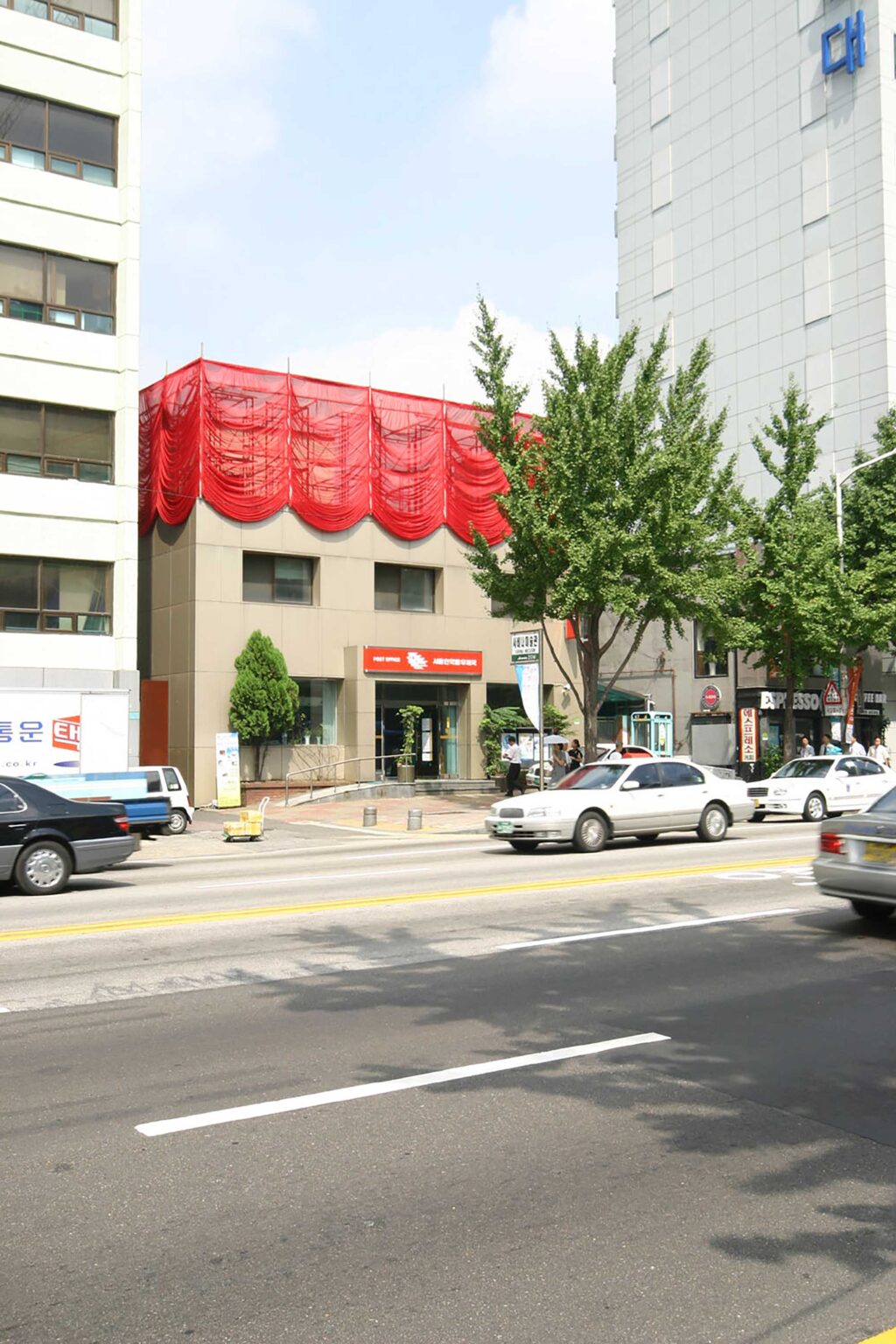
Young In talks about being disturbed, for example, by the
full-scale demolition of the Japanese General Government Building, a
Colonial building in Seoul. This place had great significance for her as a
child because of the ‘lovely’ garden, in part. The government said the building
‘blocked the energy of the Nation’, the public agreed. It is impossible
to argue about such a representation of a subjugation to an external power, and
it was demolished in 1996.
Although
of great significance, a shrine is still a construction. The role of the
audience is key in that each spectator is identified with, a participant in,
the artist’s active, three dimensional, questioning of change. The significance
of the religious relic, itself a matter of belief, runs alongside the whole
process of the making and perpetuating of art. It runs beside the fact that
value, again so nebulous, lies not in the financial value of a material used,
and in a different significance. Young In is playing with a whole
building, and then destroying belief.
Her work deals with manifestations of a
recent past, the city outline that sways the way that art tells truth and lies
at the same time. She plays with the way that history elevates elements, only
to dash them because of a change in significance and circumstance. One person’s
hero is another person’s personification of hell, after all, and Young In works
between the construction of meaning in an artistic sense and the significance
of memorialisation. From the outside she observes a country that seems to try
to act tougher like a family putting the right foot forward and down.
At
the beginning of the exhibition the audience starts with active
involvement. Young In makes a shrine that has the depth, intensity and abstract
use of a Confucian ancestral ceremony carried out by sons of the family while
the women wait outside. She introduces an underlying theme to the exhibition
which is very much about the way that women are meant to behave. So the
audience starts out at the beginning in a cage, albeit with the ability to walk
through.
The audience is implicated, surrounded and involved in a way it cannot
avoid, and then, next door, the same member of the audience becomes a
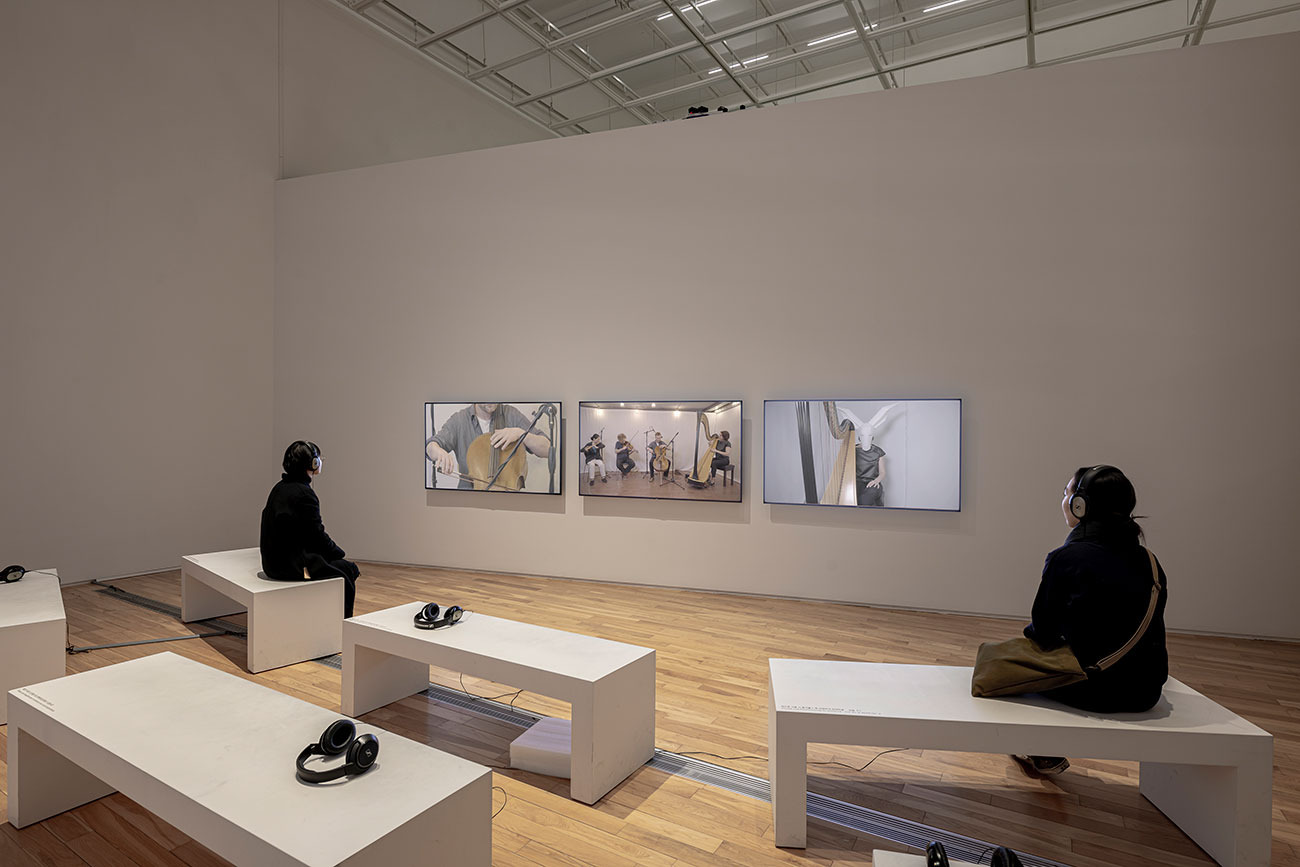
spectator, listening through speakers as well as headphones. The second work, The
White Mask is straight forward in its delivery but complex in its
relation to the artist who asked, or perhaps instructed, musicians, from the
celebrated Notes Inégales group in London to follow instructions. She asked
them to play their classical instruments with their total personification, or
animalization in mind.
They become or became creatures and the result is clear,
in a way. These musicians practice the deepest, frankest, most creative level
of collaborative improvisation and music making. It was said at the time ‘but
we are animals already.’ Young In is an accomplished musician, and much of her
recent work, Prayers (2017) and Looking Down from
the Sky (2017) involves the making and performing of scores often
extrapolated from the outline of a historical photograph of Seoul.
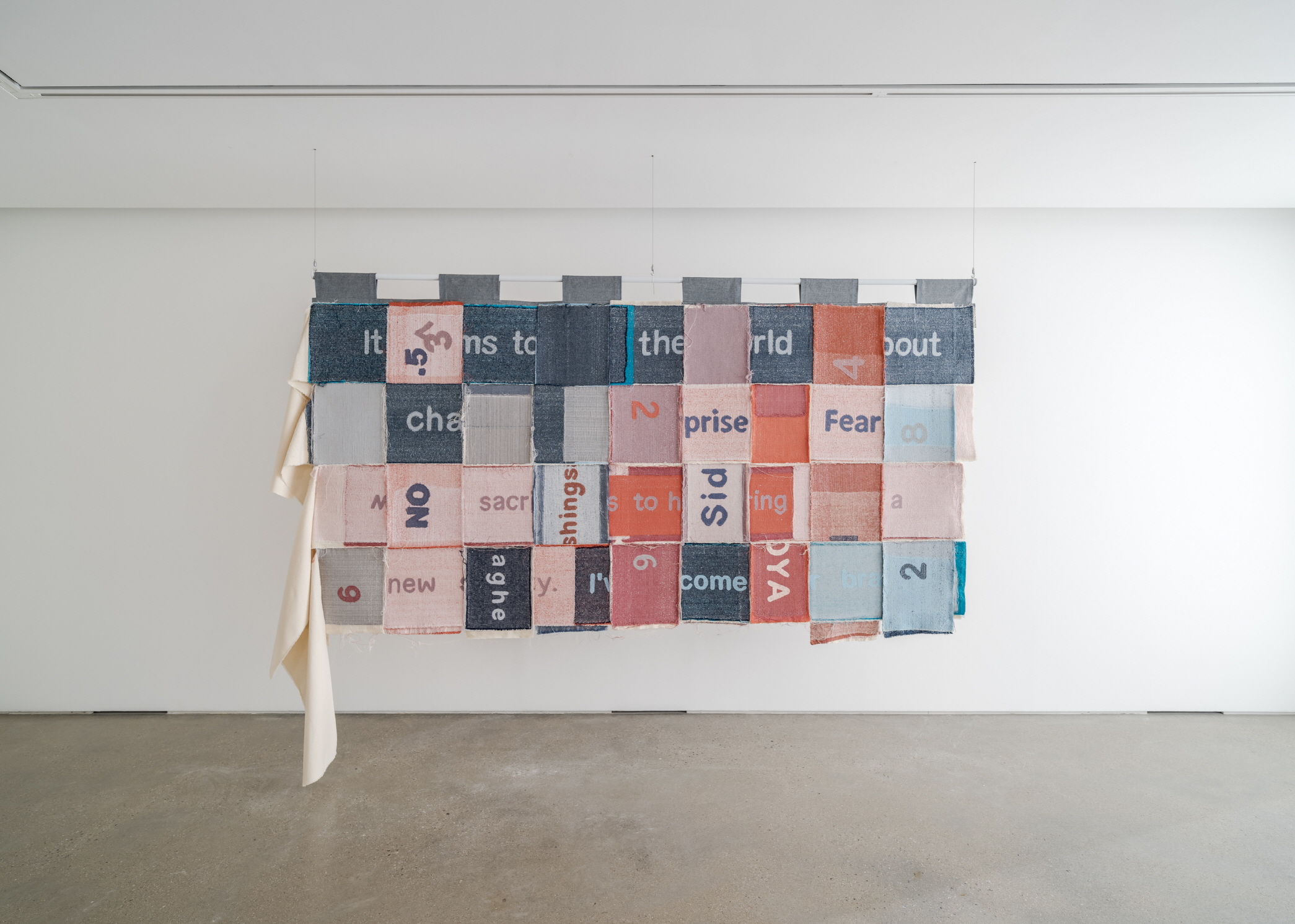
Un-Splitting
consists in part of a performance projected onto the wall and an embroidered
label announcing the schedule of further performances at unspecified spots in
the lobby and outside the gallery. The performances are a response to the
repeated movement of women working in factories found in photographs by
the artist. Performers act out instructions to women factory workers, obeyed
not so long ago. Studying images, like many she uses, found in the Seoul
Museum of History, Young In works with performers and a choreographer to
construct movement, bringing in the actions of perhaps even less ‘valuable’
animals and birds as well as that of women at work in factories.
She says she
actually senses women’s fight to address the idea that their labour is ‘lower’
than that of a man. Movement brings everything together in an attempt to see if
by perhaps looking somewhere else, looking down, or up, and across
species, there might be a better way to communicate, and therefore
exist. A collective movement of the combined body of performers, some
professional, some volunteers, is powerful and touching. Having advertised and
recruited online, Young In has brought contemporary dancers, theatre
actors, members of the general public and university and high school students
together.
Divided into two groups, each of six to seven performers, they
reinforce apart from everything else the fact that women workers were expected
to smile all the time. Workers were called by numbers not names, as well,
not long ago; perhaps they still are? Each piece is different but
connected. The tone the performers take is democratic but also influenced by
whoever and what else is there. Performances programmed elsewhere other than in
the gallery bring the work back to places Young In spent time in as a child,
and where she now engages as an artist.
Attempting
a complex but apparently sound method for renegotiating not only the
representation, but the effect, of reality, Young In’s work is based very much
around a precarious relationship to the past, about the way that it can be
re-interpreted in different ways in terms of what is being looked at,
preserved, re-considered, and surveyed in both pictorial and emotional
terms. Aiming for a new way to communicate she is able to use what is out
there, to transform, in terms of function, whatever it is that she traces and
identifies.
The outline of a horizon in a photograph, for instance, is used to
write a score; the sewing machine turns into a musical
instrument; the outline of a sewn, projected, drawn or collaged bird
becomes the harbinger of good and bad, as well as the representation of trapped
desire in a confident, heartening, but open contemplation of the design of
political will.