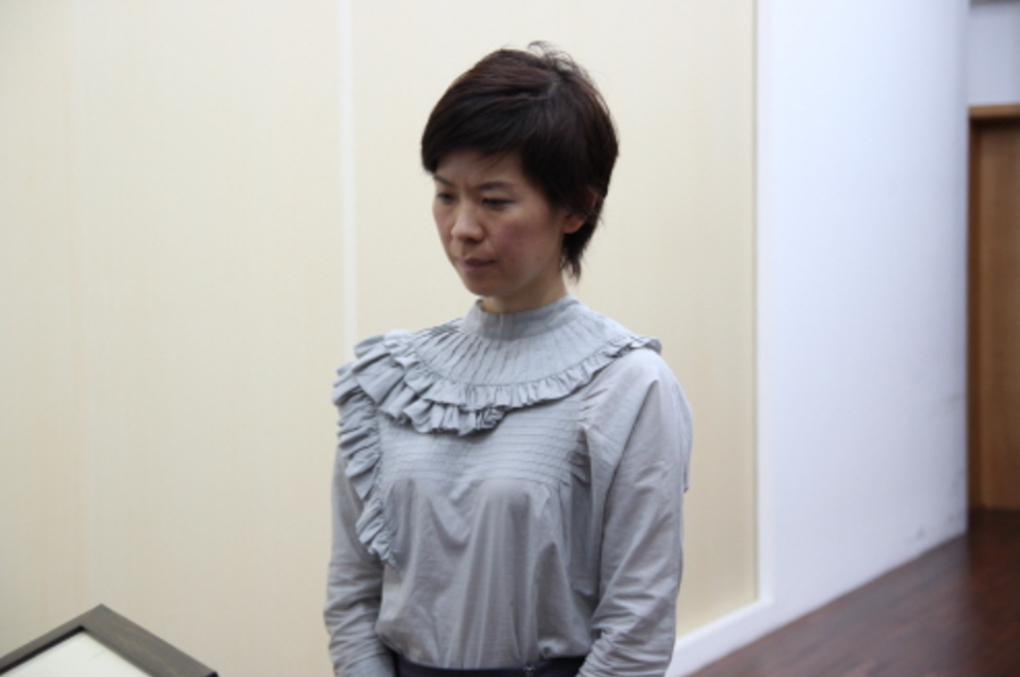
According
to Young In Hong, her work is about seeking ways in which the concept of
‘equality’ can be questioned and putting them into practice through art. These
words might remind one of sociopolitical activist art, which dominated the art
scene of the 1980s and 1990s. In terms of subject matter, most of her works
deal with those people whom society regards as minorities, and in terms of
medium she often uses methods that are not usually associated with high art
such as sewing and embroidery.
Hong’s approach to the idea of equality is,
however, considerably different from the familiar and typical modes of tackling
sociopolitical issues. The voices that speak of what is marginal are easily
subject to the danger of falling prey to an oppositional dichotomy. The label
or category of minority itself is an obvious sign of approving the existing
hierarchy between the central and the marginal, and the efforts to defend the
rights of the marginal frequently turns into the struggle for recognition to
replace the central with the marginal. How can we pay attention to those who
are marginalized without categorizing them as a specific group or embrace the
marginal without differentiating or objectifying them? Hong’s practice presents
us with a small suggestion as to a possible answer to this difficult question.
There
are two points for an artist to consider if s/he intends to embody equality in
a visual language: one is a content-oriented embodiment using it as a subject;
the other is to incorporate it into the production process or form. The former
is the relatively easier and general approach, but it has an unavoidable
limitation in that content and medium work separately. It is at this very point
that Hong’s method stands out: in her work, not only the content but the
process and the resulting body (form) likewise defy the established hierarchy,
quietly but clearly. Consequently, equality operates and is achieved with
respect to both content and form, namely, both internally and externally.
The
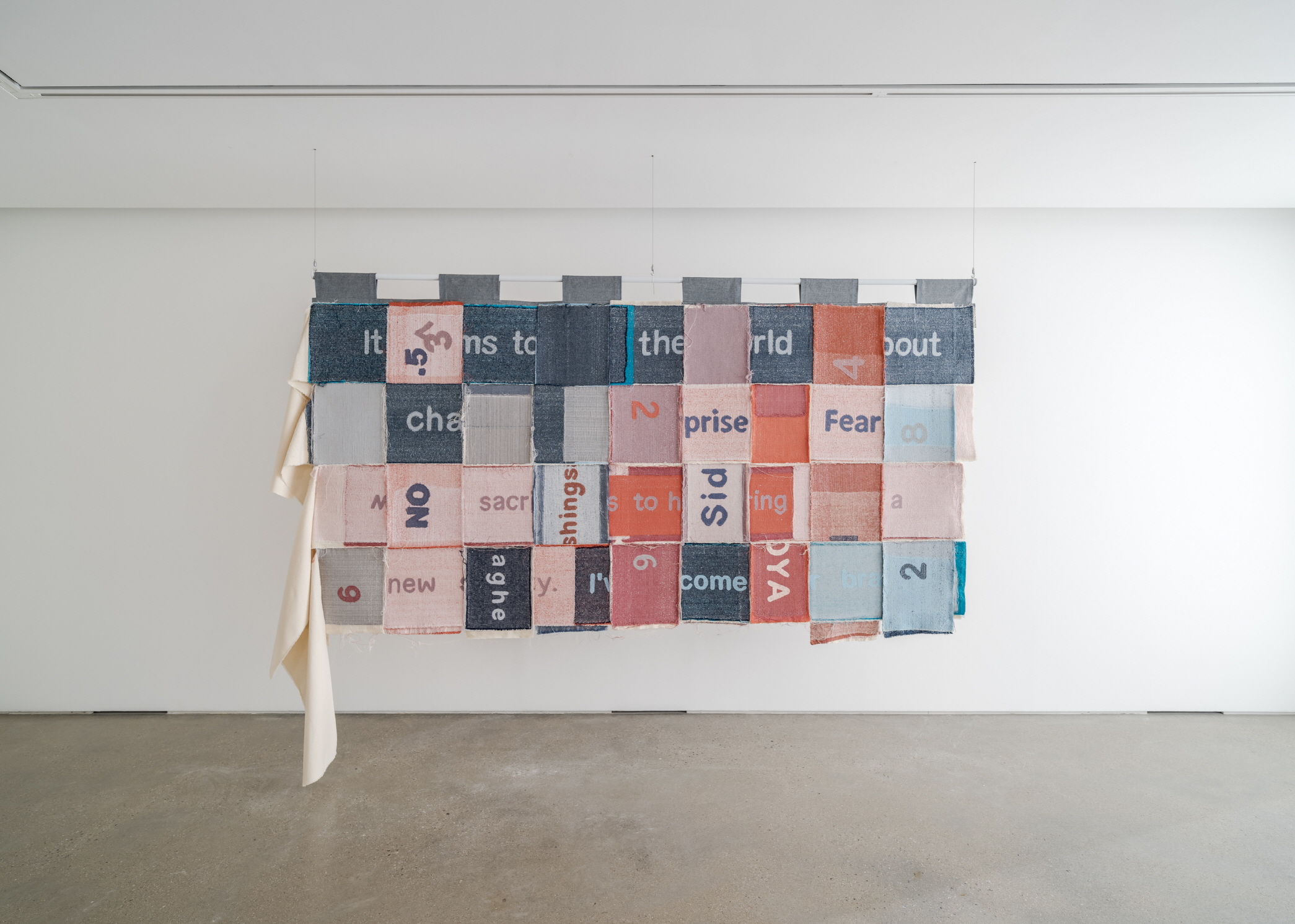
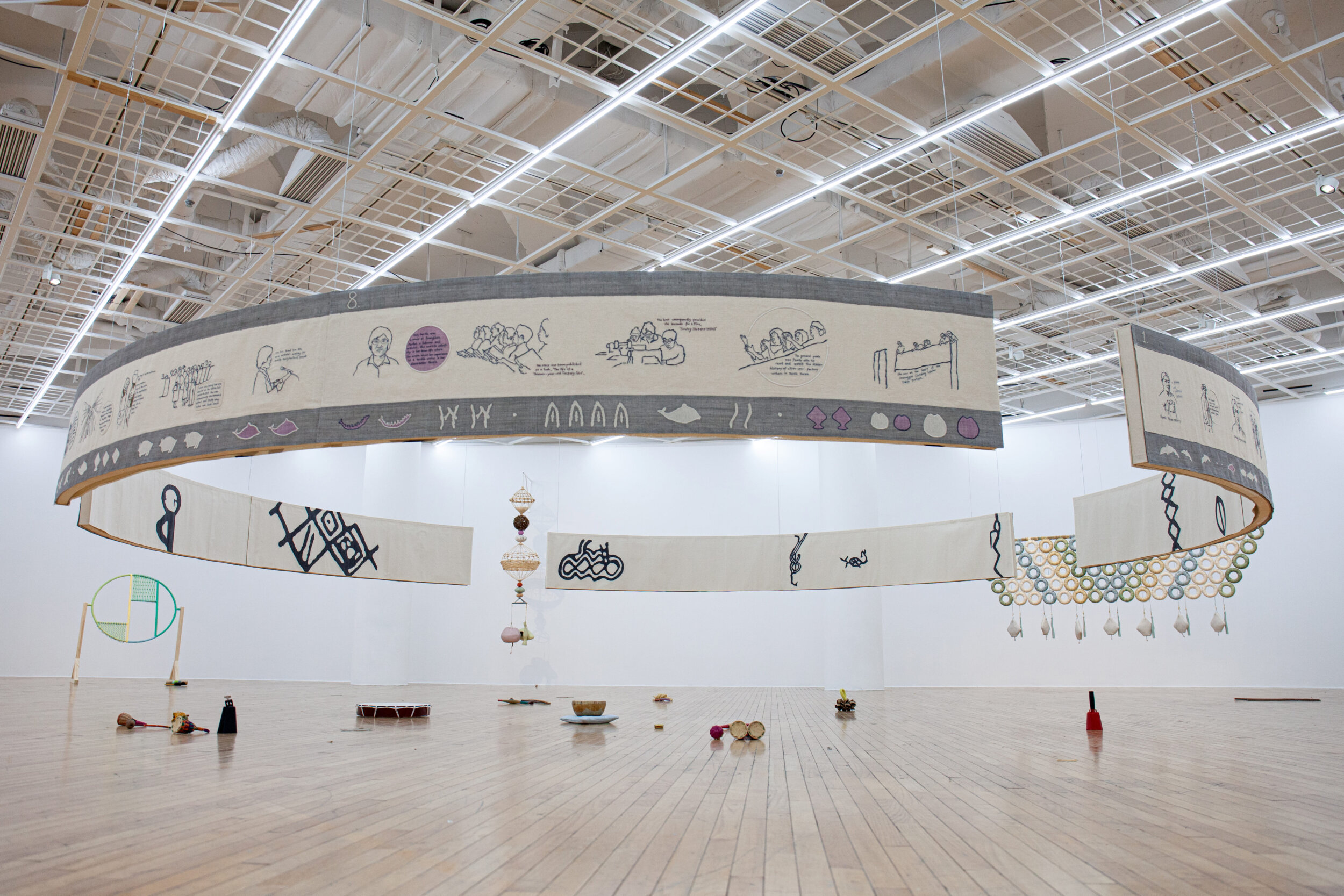
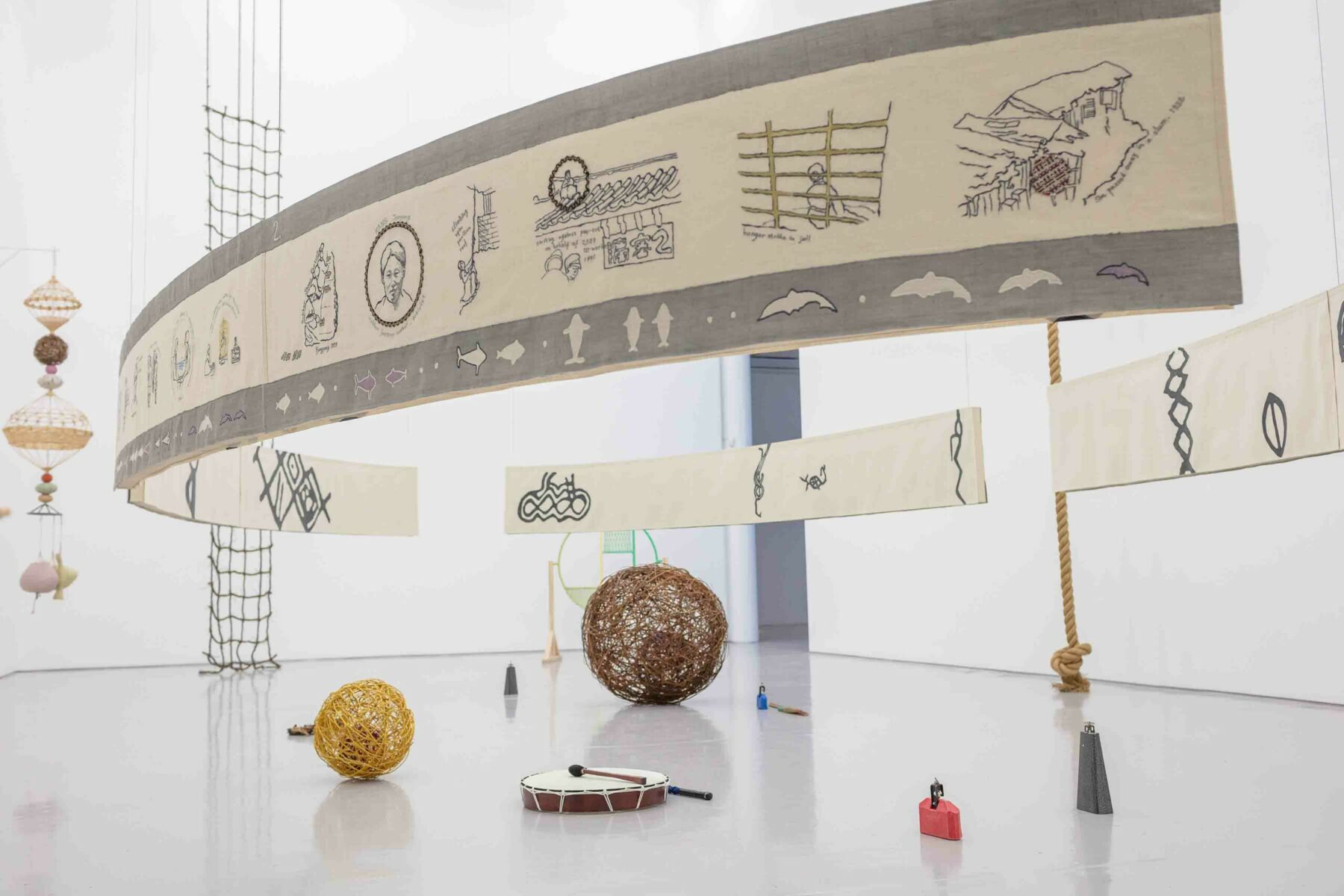
most conspicuous feature is the use of needlework or a sewing machine. The
low-wage labor of sewing, which is done largely by female factory workers in
the region of Asia, is a good referent for otherness in terms of both gender
and class. In fact, the artist learned this skill from the seamstresses working
at Dongdaemun Clothing Market. Yet in Hong’s work sewing is employed to reflect
neither femininity or Asianness nor a subcultural identity.
The intent behind
her utilization of sewing is not targeted on the portrayal of otherness itself
but is to reveal the boundaries of which we have never been aware. An example
would be the criteria for the category of high art. By adopting the element of
needlework, which is excluded from the realm of fine arts as craftwork, in
realizing the conceptual and intellectual content of the work, the artist blurs
the divisions within the genre of high art and brings together differences. The
fact that it not only criticizes the institution internal to art but also that
it necessarily corresponds to the content of the work attests to the very depth
of Hong’s work.
For instance, Burning Love (2014) is an
embroidery work of the spectacular scene of the candlelight vigil protesting
against the import of U. S. beef in May 2008, which deals with the affections
of ordinary citizens (especially teenage girls) who are not the protagonists of
the official history of the event. The form of embroidery that requires the
honest labor of making one stich at a time is an adequate medium to cast light
on every individual who gathered in the streets voluntarily. Here, a large
number of people participating in the protests are referred to not as members
of a group like a race or a nationality but an assembly of different
individuals, that is, a multitude. The small but passionate aspirations of each
participant are stitched with much care, manifesting themselves as proud pages
of history as a galaxy with a plethora of stars.
On
the other hand, in her performance work, another medium for the investigation
of the keyword of equality, social issues and fine art elements are more
actively interlaced with one another. Owing to its attributes of chance and
immateriality, performance can easily cast off the limitations of originality
and uniqueness that works in the objet format have difficulty escaping from —
even when using unconventional means such as sewing.
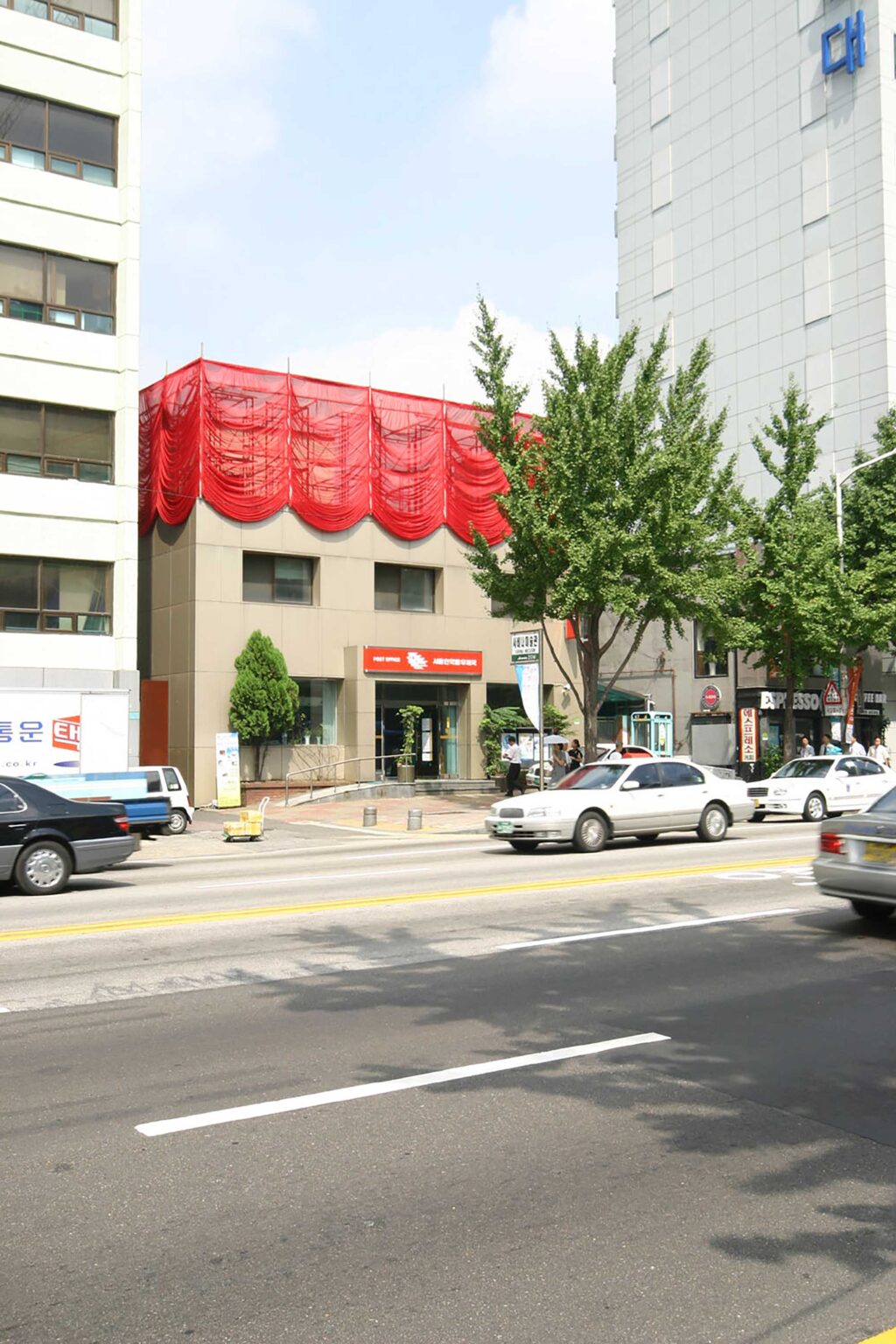
Furthermore, the control
of the work can be more impeded by the voluntary participation of the general
public than when carried out by casted performers. 5100: Pentagon
(2014), premiered at the Gwangju Biennale, is a performance piece where the
volunteer audience performs the choreography inspired by the May 18 Gwangju
Uprising. Participants vary every time, and so does the performance. As various
groups of people from outside of the art scene act as subjects in creating a
work of art, the performance opens up a small interstice in the closed category
of the museum. As each of today’s different others ruminates on the painful
history of Gwangju in his/her own way, they form a small temporary and loose
solidarity. These ripples wipe out the border between art and non-art and what
is experienced here lingers on in the minds of the participants.
In
her recent work, Prayers (2017), embroidery and performance
integrate. Hong transcribed a part of a news photo of a landscape of postwar
Korea onto fabric in embroidery and played this like a “graphic score.” Her
work of this method — also called “photo-score” — is the act of rewriting the
mainstream history of Korea, which is South Korea-oriented and male-dominated.
The trivial details irrelevant to the imparting of the message of the news
photo are part of the unrecorded history. By erasing the center and slightly
raising the details, the artist transposes the center of gravity of the
historical narrative. The history, primarily rewritten through the artist’s
embroidery, becomes a music score and once again undergoes a reversal. Even if
there is just one score, its interpretation divides into as many as the number
of the players. Each performer plays differently and each performance is
thereupon a version of history written by an individual.
As my experience and
yours are different, the year 2019 as I remember it is inevitably different
from the way you remember 2019. Accordingly, how inadequate must the mainstream
history be that leaves aside all of these countless memories. Its
interpretation varies depending on the performer, and those interpretations
split into ceaseless derivative versions, muddling up you and me, man and
woman, and Korea and other nations. In the middle of this, the boundaries
between the artist and the audience and between art and society are blurred. A
cheerful stage of hybridity where the history I wrote and the history you wrote
coexist and harmonize; this is the way Hong sees difference, as it is the hope
that she harbors.
In
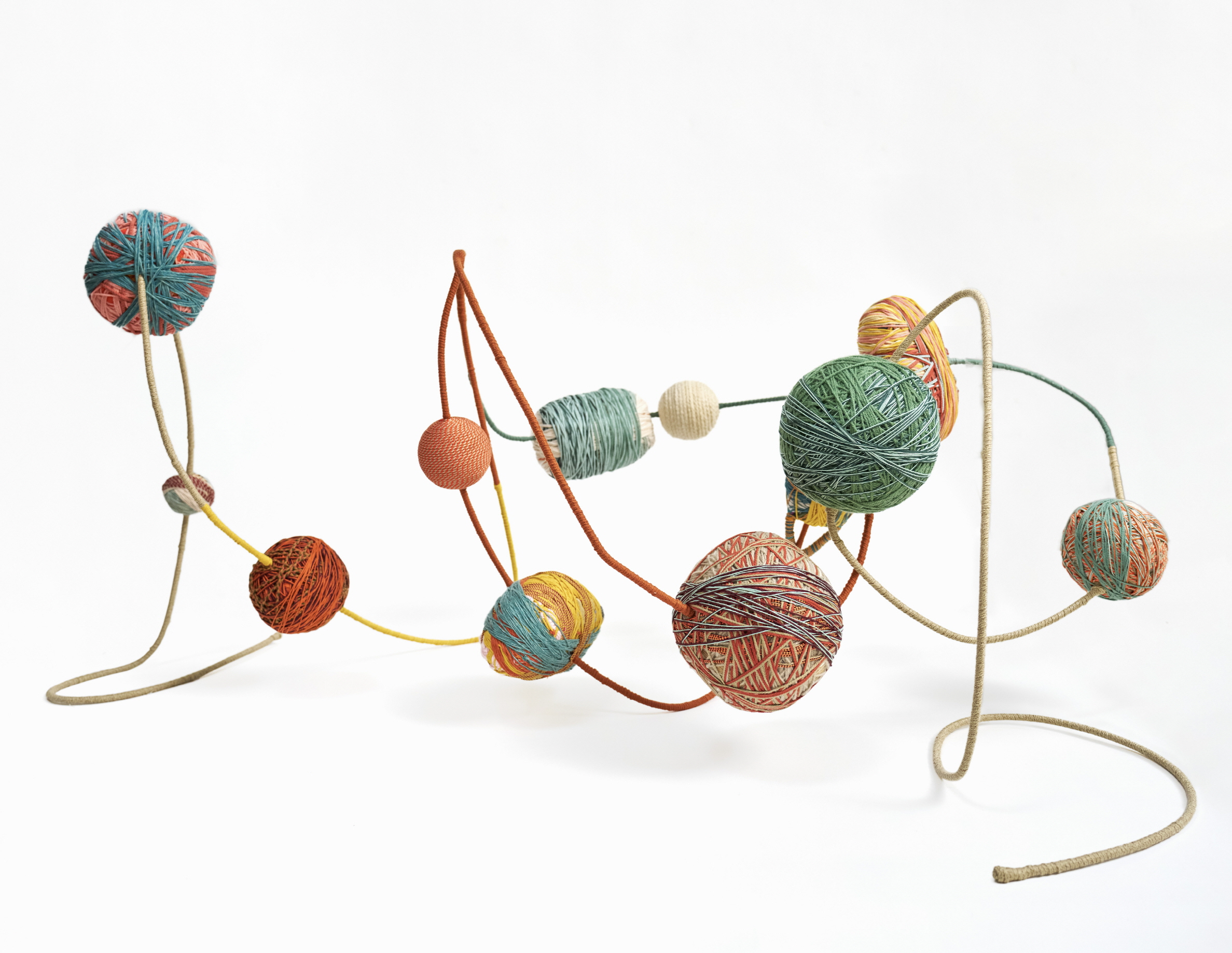
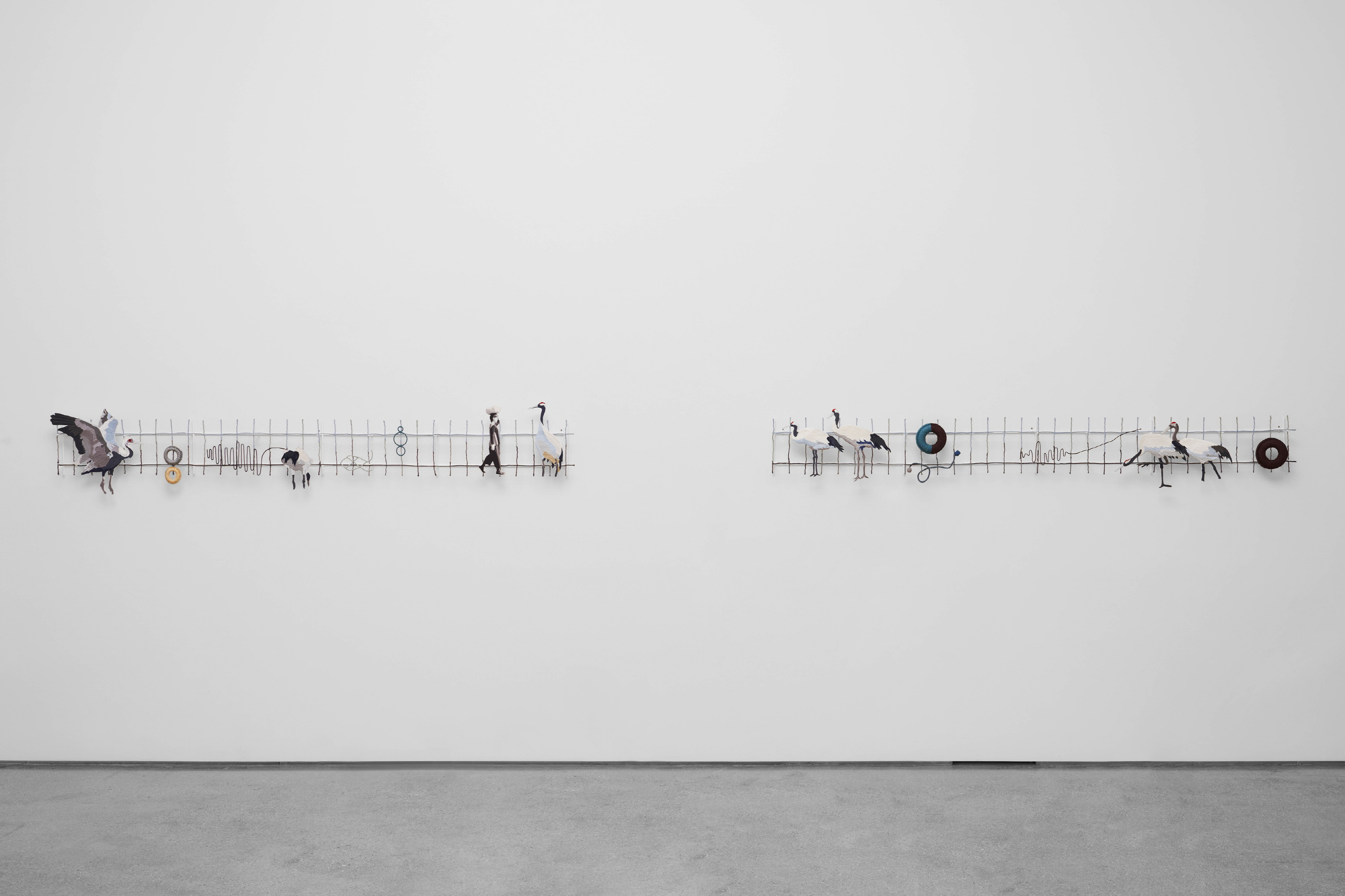
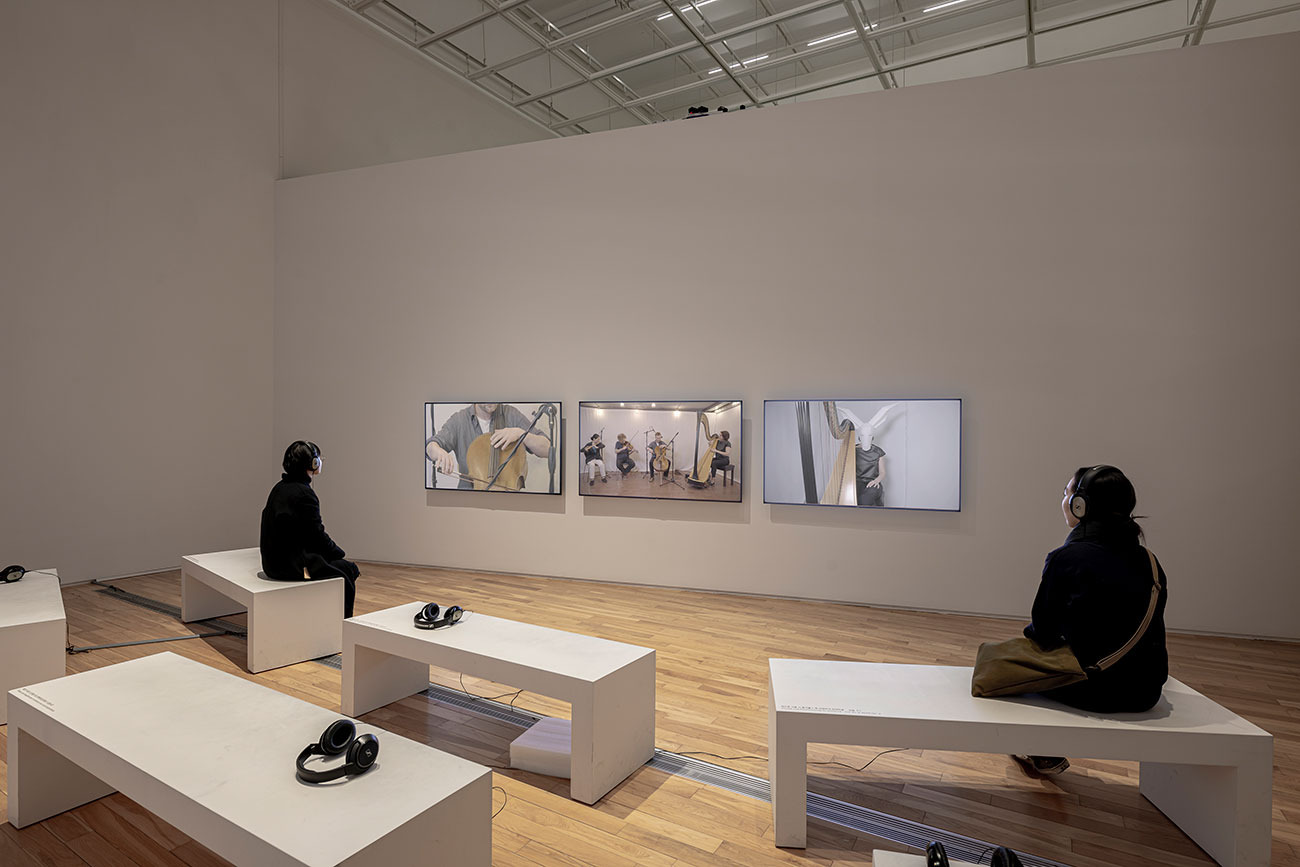
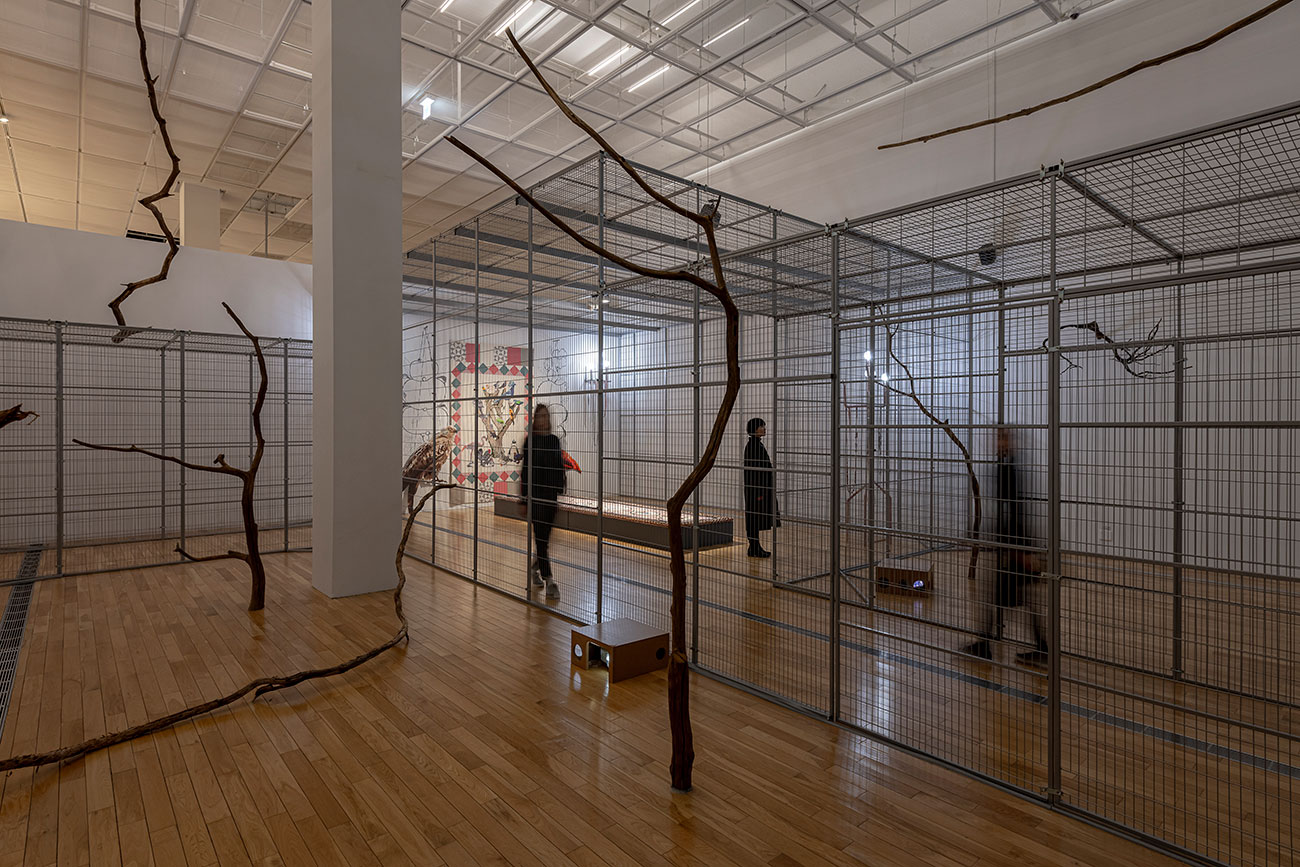
the 《Korean Artist Prize 2019》 exhibition, Hong extends the concept of equality beyond humans to
apply to non-human agents. Comprised of three new works, Sadang B
(2019) attempts to rethink the dominant (human)-oriented viewpoint by
positioning birds and animals as subjects. Here, one is driven to be confronted
with a strange unfamiliarity: the ironic situation in which viewers are placed
inside the birdcage looking out to the space where birds are; the
improvisational performance by the musicians who are trying hard to become
animals; the dance where performers mimic how females labor and how animals
move.
This discomfort is, in fact, a necessary emotion. For it allows one to
realize how difficult it is to become the other on the one hand and on the
other points out the value of the attempt to try to walk in the shoes of the
weak, even though it would never come to pass. Hong pursues a delicate quest
for a certain balance that is very particular and yet universal and individual
and yet collective, and it is hoped that this quest of the artist is shared
with many more people. In South Korea where dichotomous stances and loud voices
are dominant, aimless resistance, non-group identified subjects, and
non-divisive coexistence are such rare and scarce values. It is hoped that this
exhibition will be an opportunity to witness the quiet permeation of its
genuine radicality into the mind of each viewer.