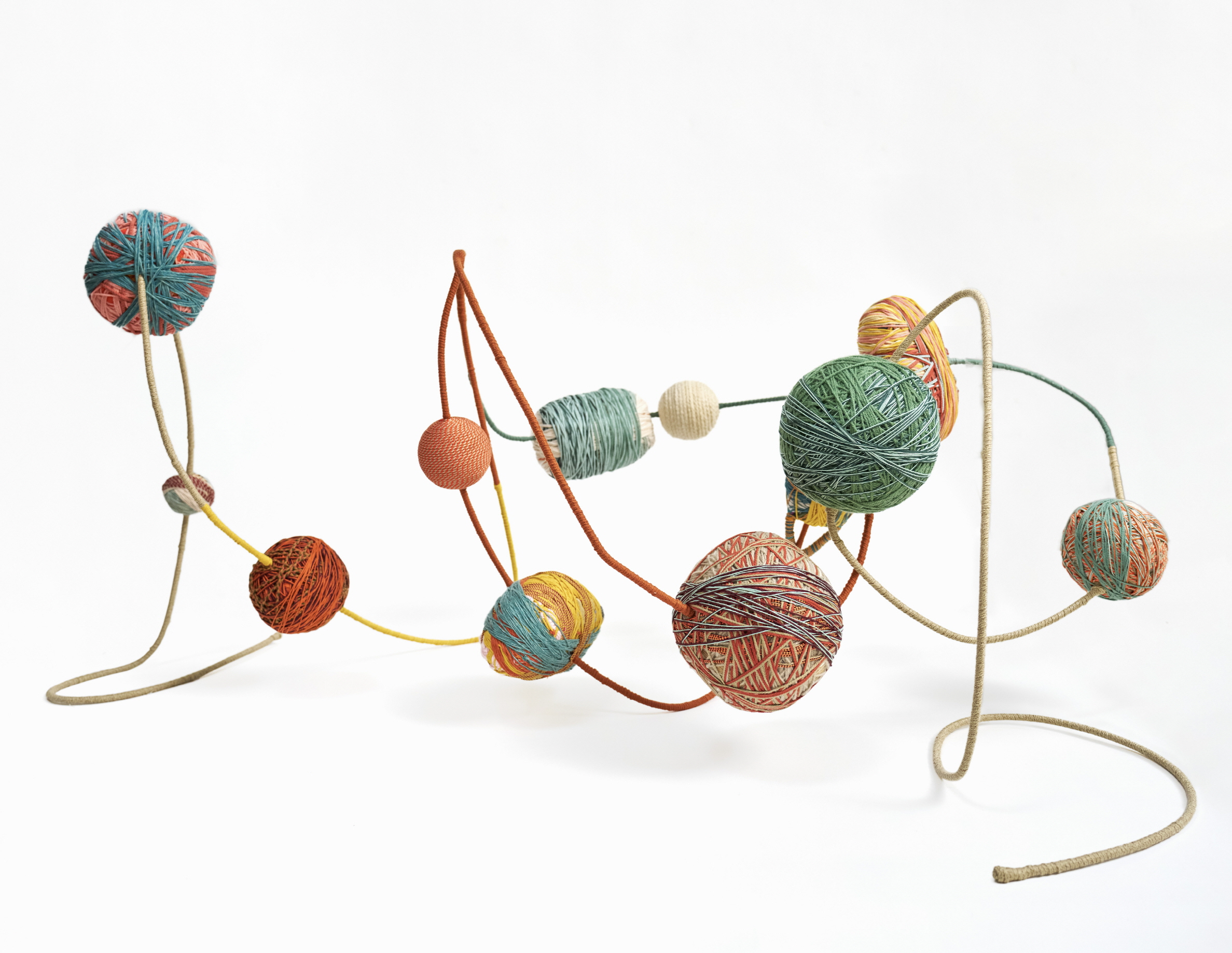
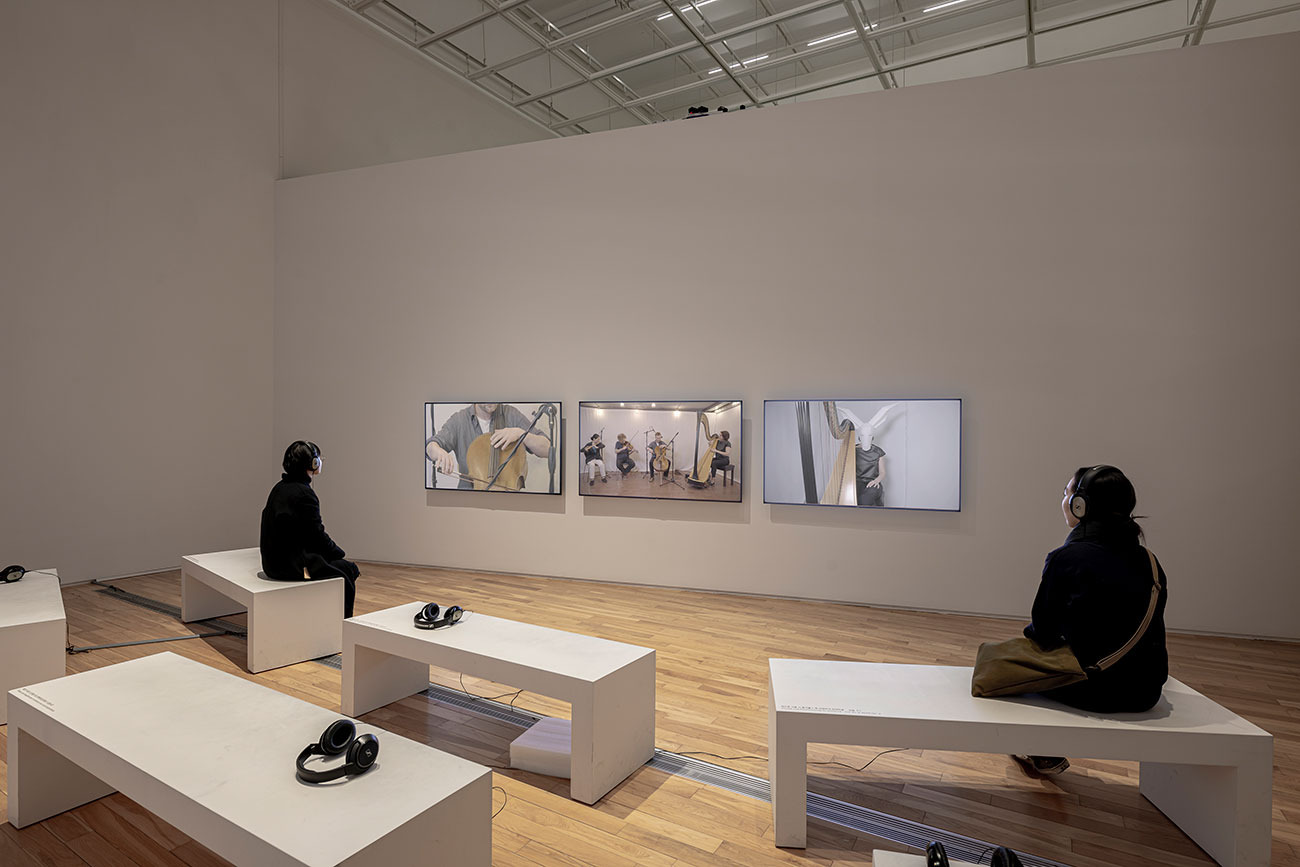
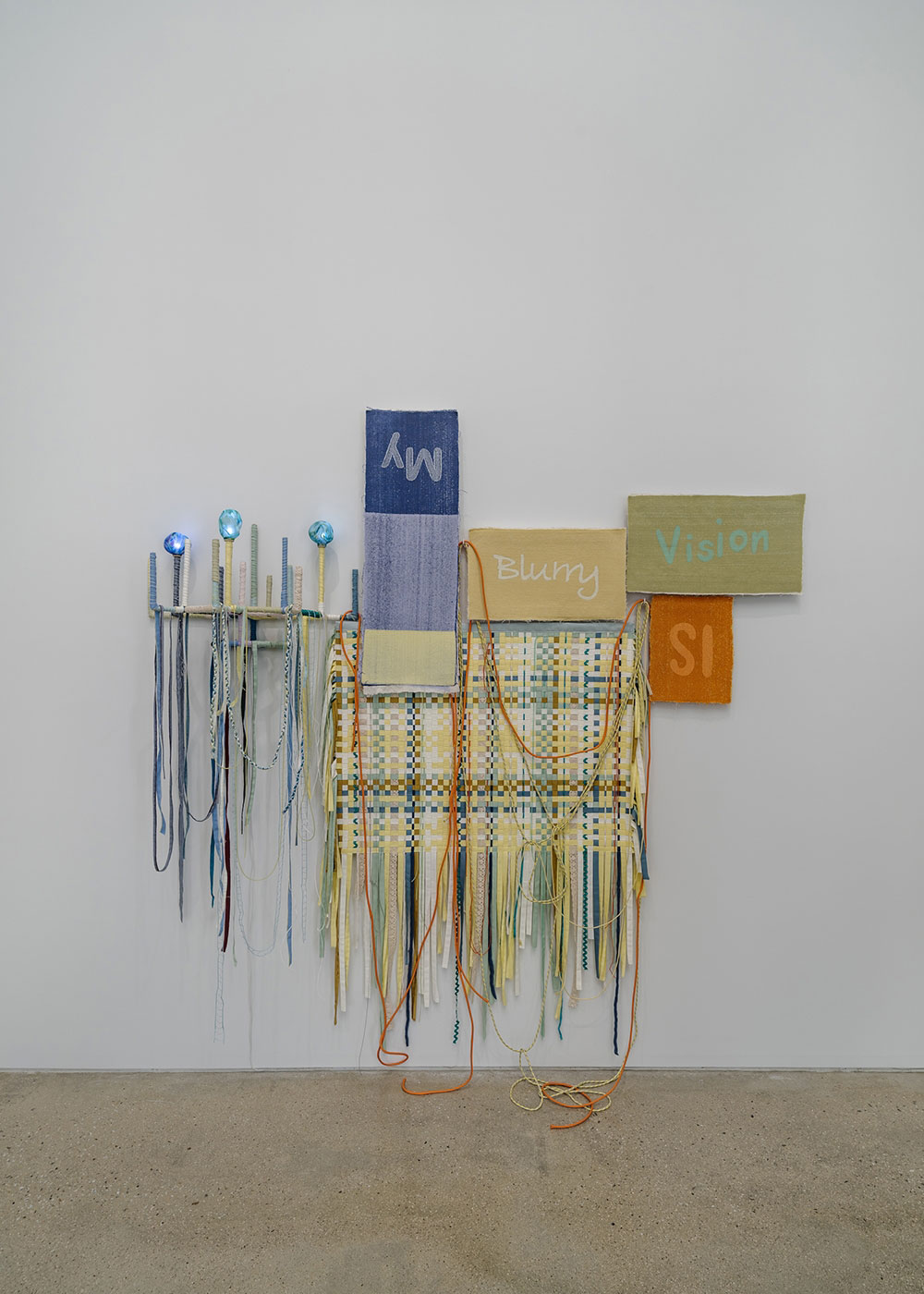
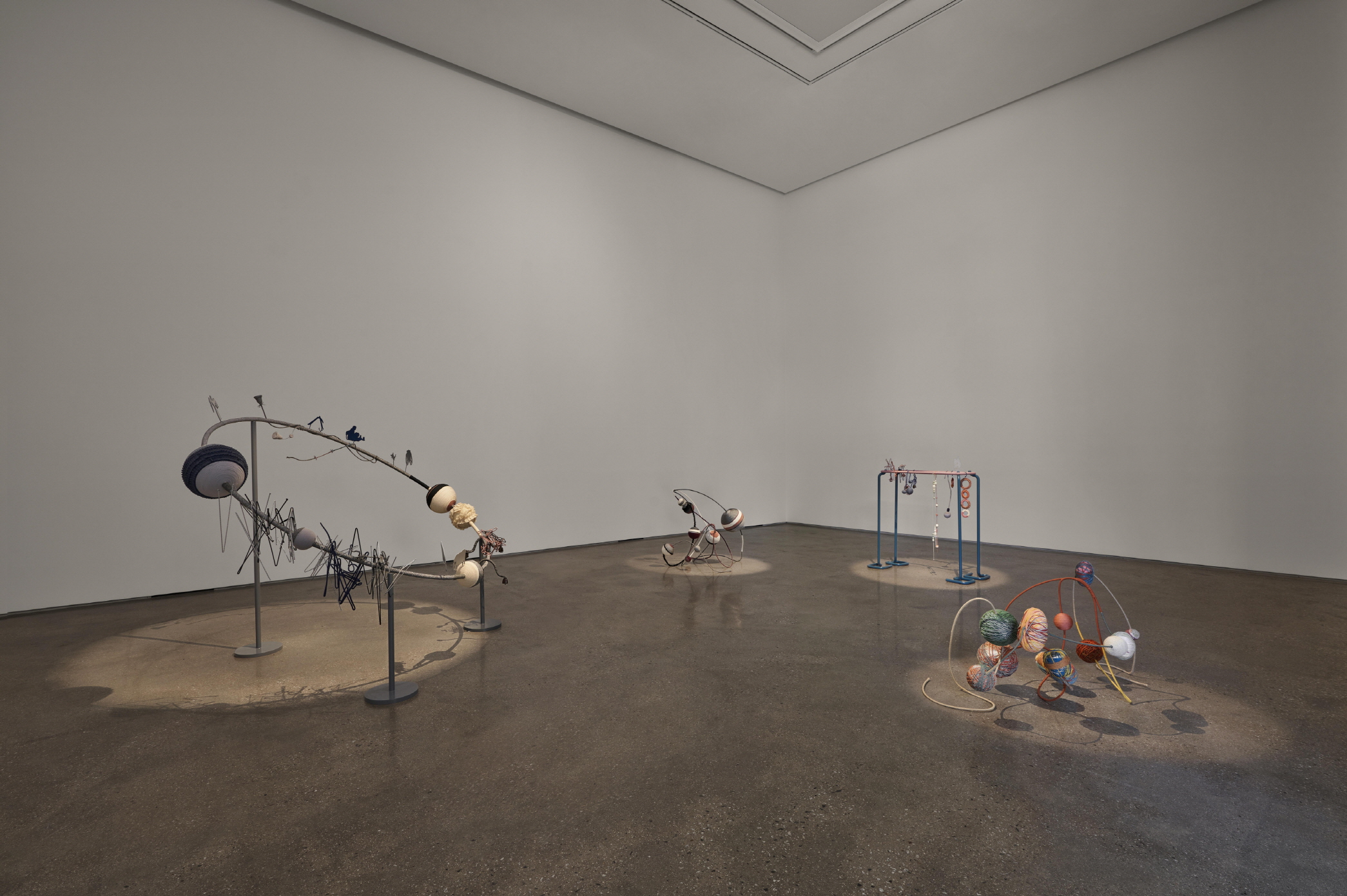
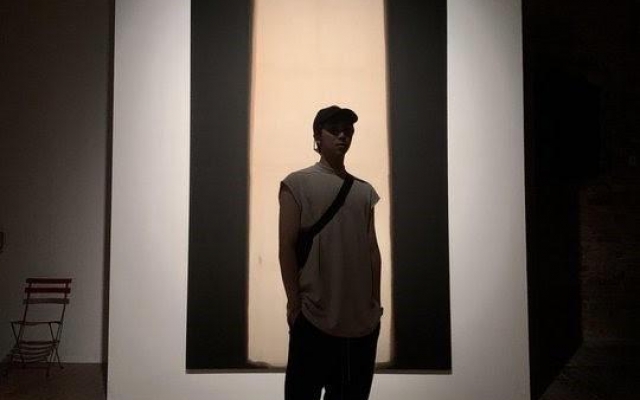
Young In Hong, A Colourful Waterfall and the Stars, 2021 © Young In Hong

1. Objects and Traces

What is the moment, or the condition, under which an object appears as an artwork? Reading the gallery’s description of “a sound installation that brings multigenerational elephant kinship groups into the exhibition space,” I am reminded of Martin Heidegger’s The Origin of the Work of Art. In the section “Thing and Work,” Heidegger asks: “As long as the thing is a thing, what is the thing as thing? When we ask in this way, we want to learn what constitutes the thingness of the thing. The problem is to experience the thingly character of the thing. To do so, we must recognize the domain to which all those entities belong that we have long referred to as things.”

Can an aesthetic construction or object that emerges from an event—one in which elephants are absent, landscapes are delivered through sound, and man-made objects woven from straw are presented—be truthful? It is questionable whether a text written in an era when airplanes and radios were considered the most familiar things can still serve as a framework for thinking about art and artworks. Yet would it be strange to insist that the way objects and artworks reveal art, and seek truth amid confusion, still retains its validity? As Werner Heisenberg once stated, “The idea that the smallest units of the objective real world exist objectively in the same way that stones or trees exist independently of observation is impossible.”

This reflection on the world inhabited by objects, works, and art constitutes the political aesthetics of relationality that Young In Hong undertakes. It may be understood as a response by contemporary art to the discourse on the death and decline of art.


2. Sound Art

A landscape can be understood as a site of perception. To speak in Foucauldian terms, it is structured by an order of discourse specific to a given era, within which we come to perceive and judge. Michel Foucault termed this structure the episteme. According to this logic, to understand something is to understand its episteme. How, then, are we to locate the framework of order that governs and encompasses our perception, and how should we define and employ it?

I believe we must examine artistic perception within the framework of episteme without hastily systematizing it, instead considering it through the dimensions of thought, existence, and practice projected by the consciousness of the artist, Young In Hong. In her work, the sensory fusion produced by sound and landscape is something that contemporary art has rescued from the oblivion of art. Synesthesia, once regarded as a modern characteristic, was almost simultaneously excluded from painting and sculpture as “pure art” in modern aesthetics. At these points of divergence, Hong intervenes and engages in a form of geopolitical reflection.

“When there is no sound at all, hearing becomes extremely acute. Rilke’s phrase in Duino Elegies, ‘the unceasing news that comes from silence,’ reflects this idea. For those with acute listening ability, silence itself becomes news. Even if one wishes to improve the design of the world’s soundscape, this can only be realized after silence is restored as an active condition in daily life. Quieting the noise within the mind—this is our first task.”

In relation to R. Murray Schafer, who coined the term “soundscape,” Torigoe Keiko offers the following assessment: “The concept of the soundscape is not merely a new musical idea appealing only to contemporary composers or sound artists. It carries a message for professionals beyond music—architects, urban planners, and environmental researchers who have focused primarily on visual design and object-making—urging them to recognize sound and the sonic environment as issues within their own fields.

Furthermore, soundscape thinking hopes that ordinary citizens, too, will enjoy listening to and savoring sound in everyday life. More precisely, it implies nurturing the capacity to discover hidden problems in the surrounding environment through one’s own ears, and the capacity to experience the environment’s appeal, thereby leading to a richer and more generous life.” Such a perspective is likewise demanded when engaging with Young In Hong’s sound installations.

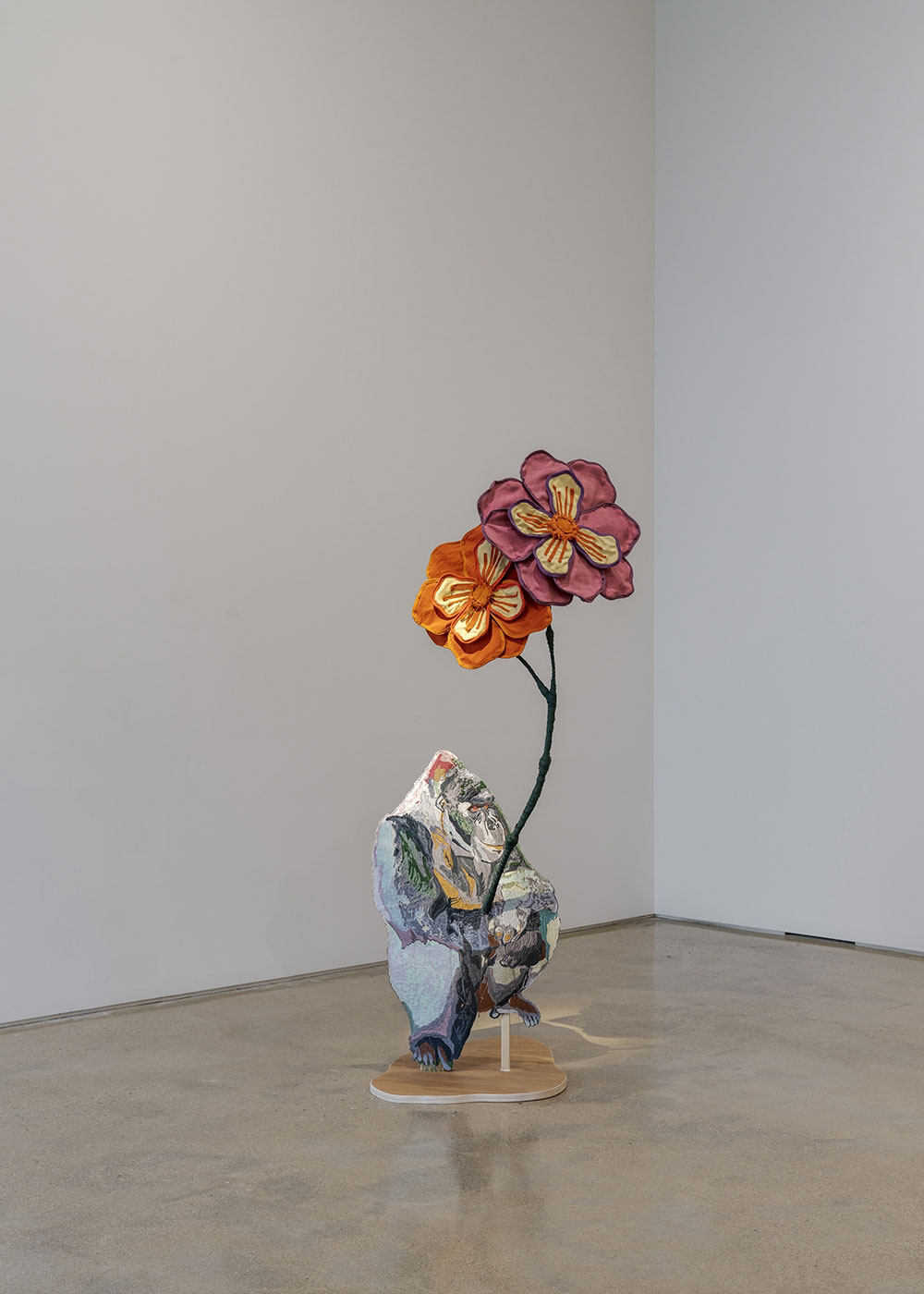
Young In Hong, Ishmael_Even the Gorilla Needs a Flower, 2021 © Young In Hong

3. The Political and Social Choices of the Object

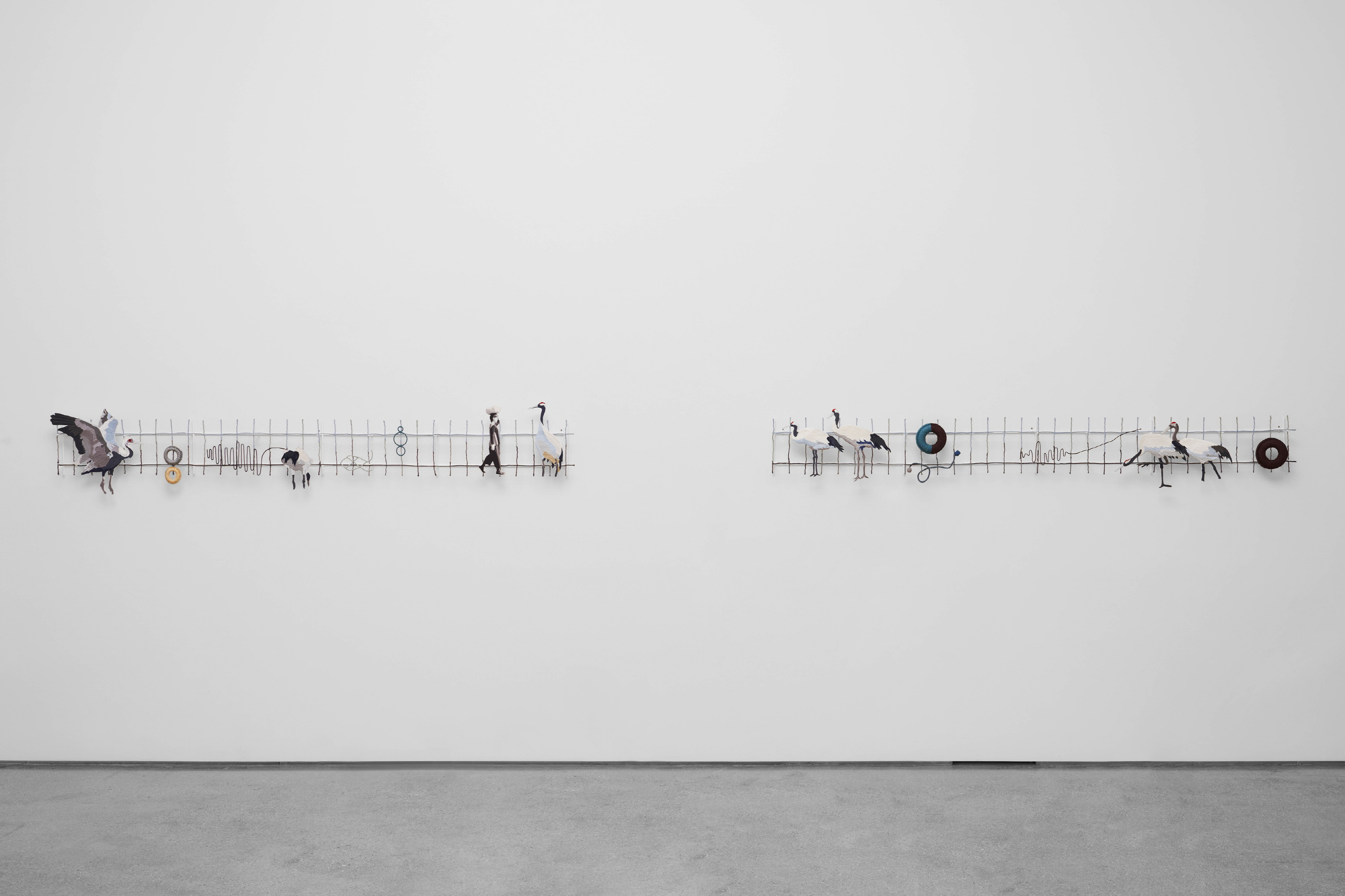
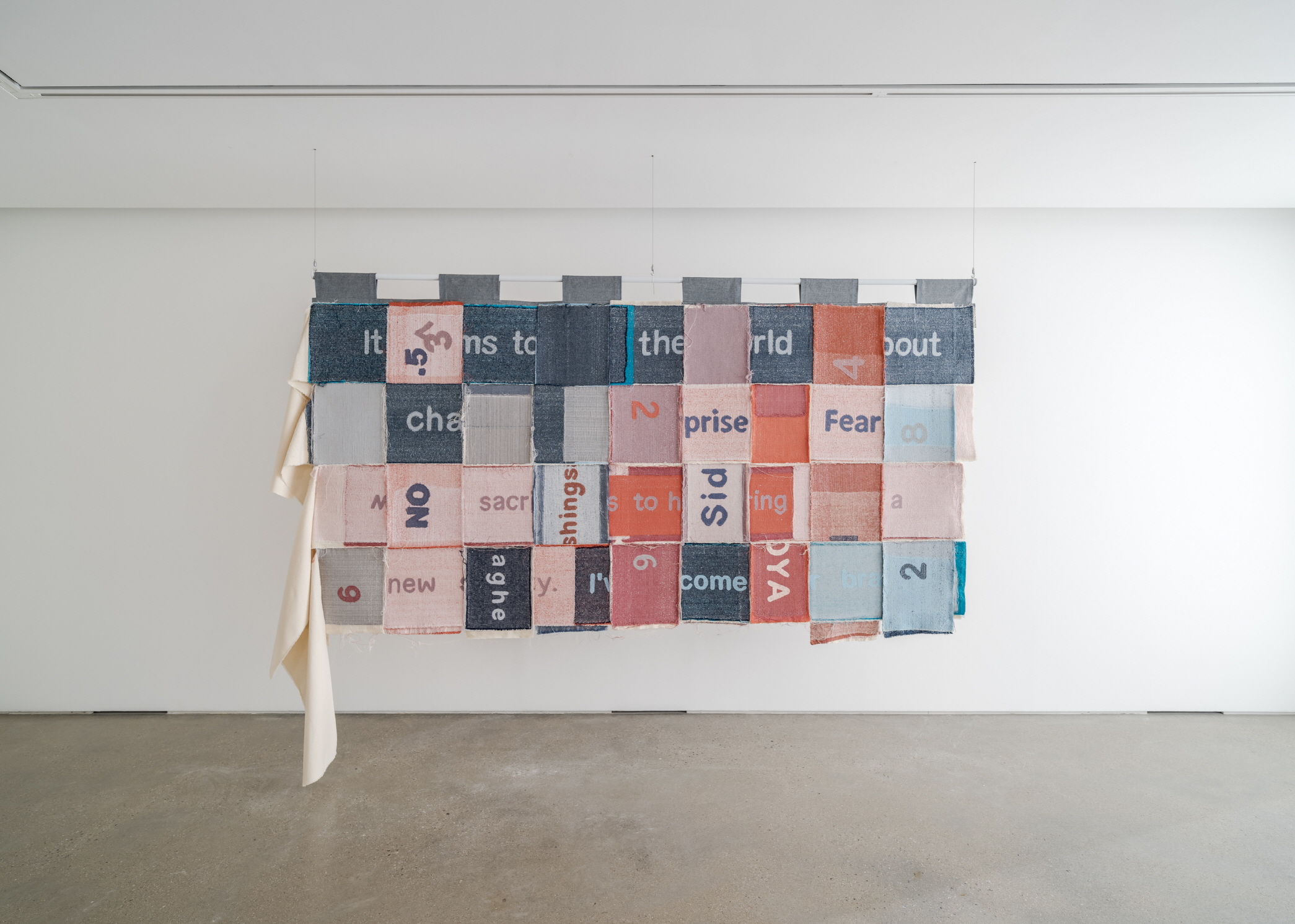
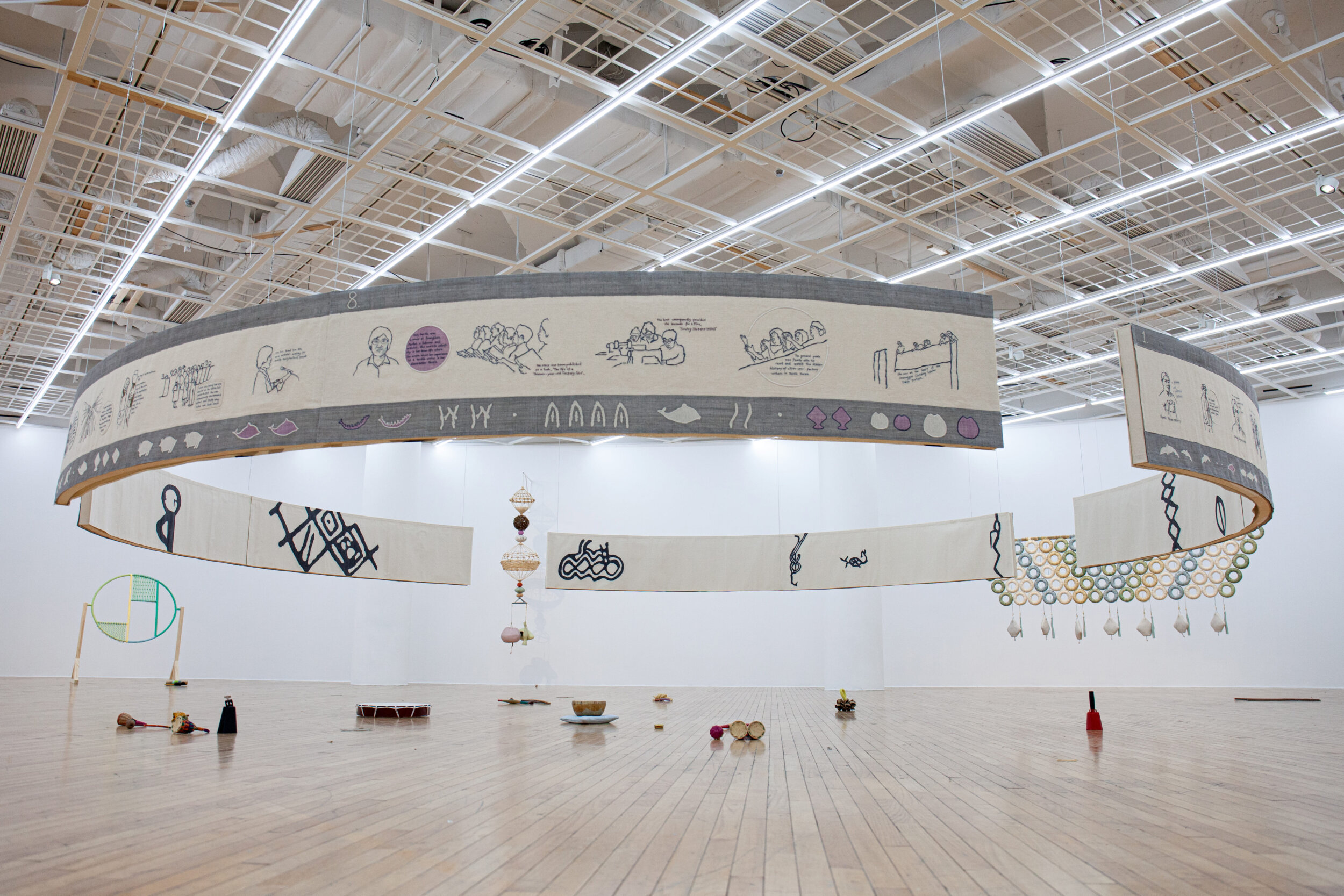
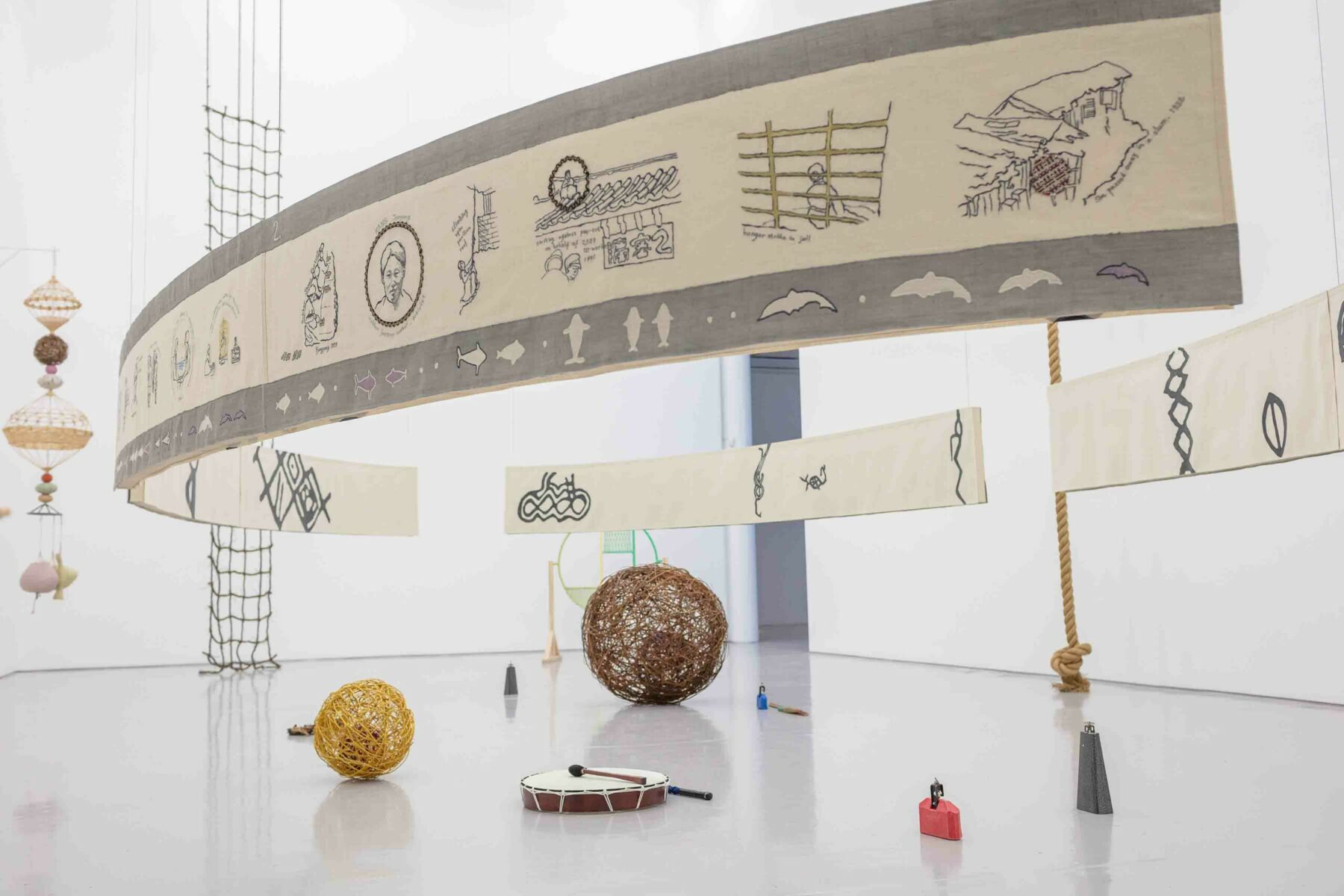
Line drawings and sewing derived from photographs of Korea’s modern period, felt sculptures, and musical performances pose a double question: by what criteria does the artist collect her data, and how does so-called artistic practice correspond to reality? Looking Down from the Sky, described as a “photo-score” work in which silhouettes extracted from Korean documentary photographs are transformed through drawing and embroidery into musical notation, demonstrates a range of artistic processes. Similarly, Prayers is a series that originates from photo archives documenting postwar urban landscapes on the Korean Peninsula and the history of struggles during modernization.
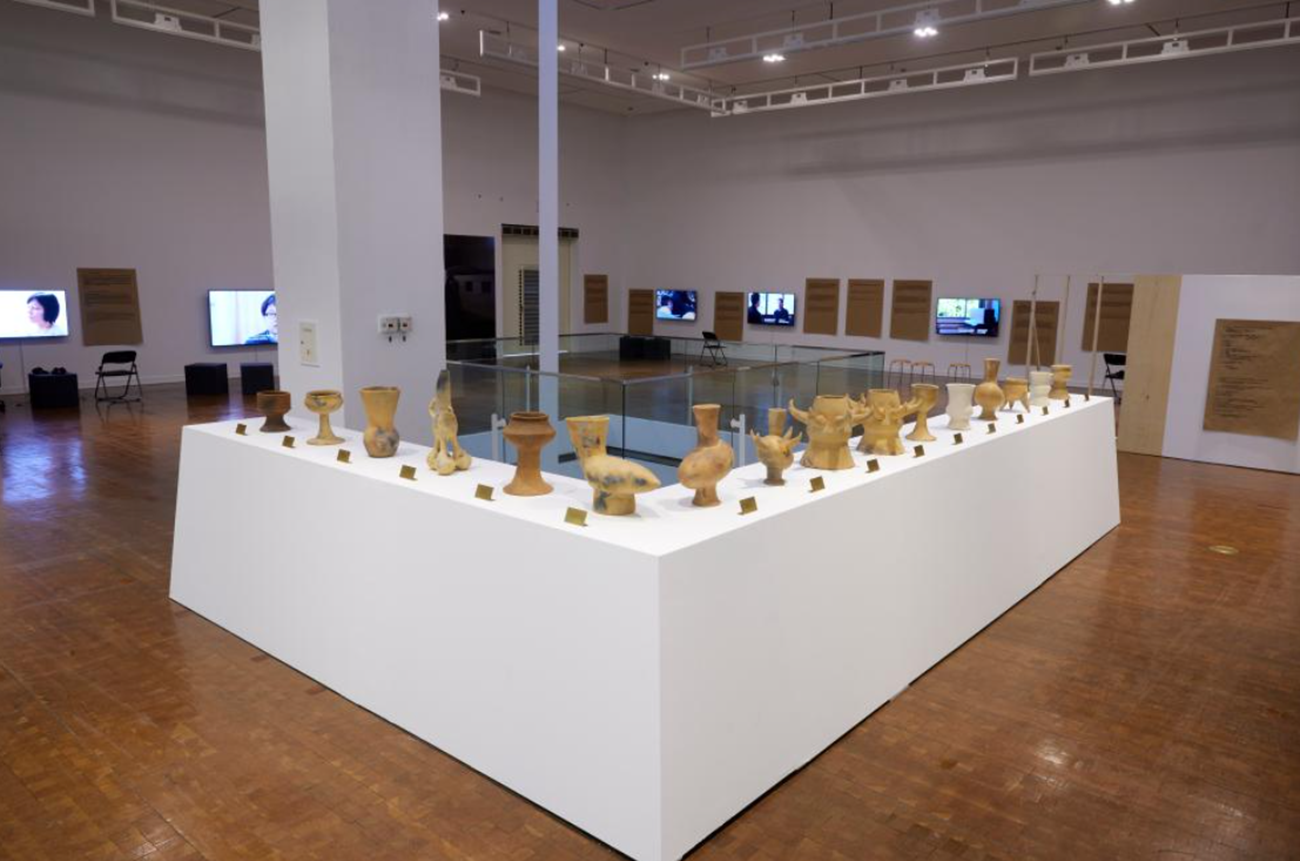
The aesthetic principle at work in both cases is a peculiar form of mimesis. Such relationships can be found even in non-artistic actions—wherever a behavioral model is reproduced as another appropriate action, as in dance, gesture, ritual, children learning to speak, or athletes at play. Performed actions appear to observers as though they have stepped into the place of reality itself. The mimetic world is a world of “as if.” Kendall Walton argues: “To understand pictures, theater, film, and novels, we must first look at dolls, rocking horses, toy trucks, and teddy bears… Representational artworks function as props in games of make-believe, much like dolls and teddy bears do for children.”

Children devote immense time and effort to make-believe, a practice that appears nearly universal rather than confined to specific cultures or societies. The impulse toward make-believe and the needs it fulfills seem fundamental. It would be surprising if make-believe were to disappear without leaving any trace at the moment of adulthood. Though resembling the primary world it models, it is an entirely different world—one whose creation carries profound meaning for human beings. The artist has understood the world, and I understand her world.

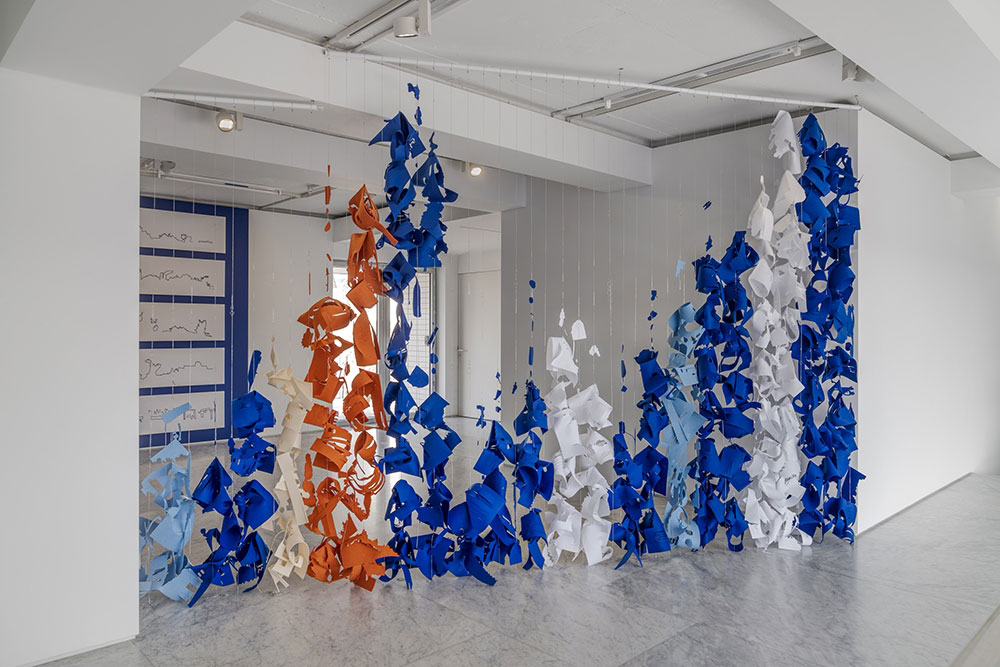
Young In Hong, Colourful Land (An Homage to Robert Morris), 2021 © Young In Hong

4. A Buddhist Worldview?

Early Buddhist icons revealed the presence of the Buddha without depicting him. In India, mural paintings adorned temples even during the lifetime of Śākyamuni, yet no records indicate that his figure was depicted. Until roughly five hundred years after his passing, there was no tradition of representing the Buddha in human form.

During this “aniconic period,” the Buddha, having entered nirvana, was believed to be invisible and therefore impossible to represent anthropomorphically. Instead, symbolic art flourished, replacing the Buddha with motifs such as the Bodhi tree, the wheel of dharma, footprints, or lotus flowers.

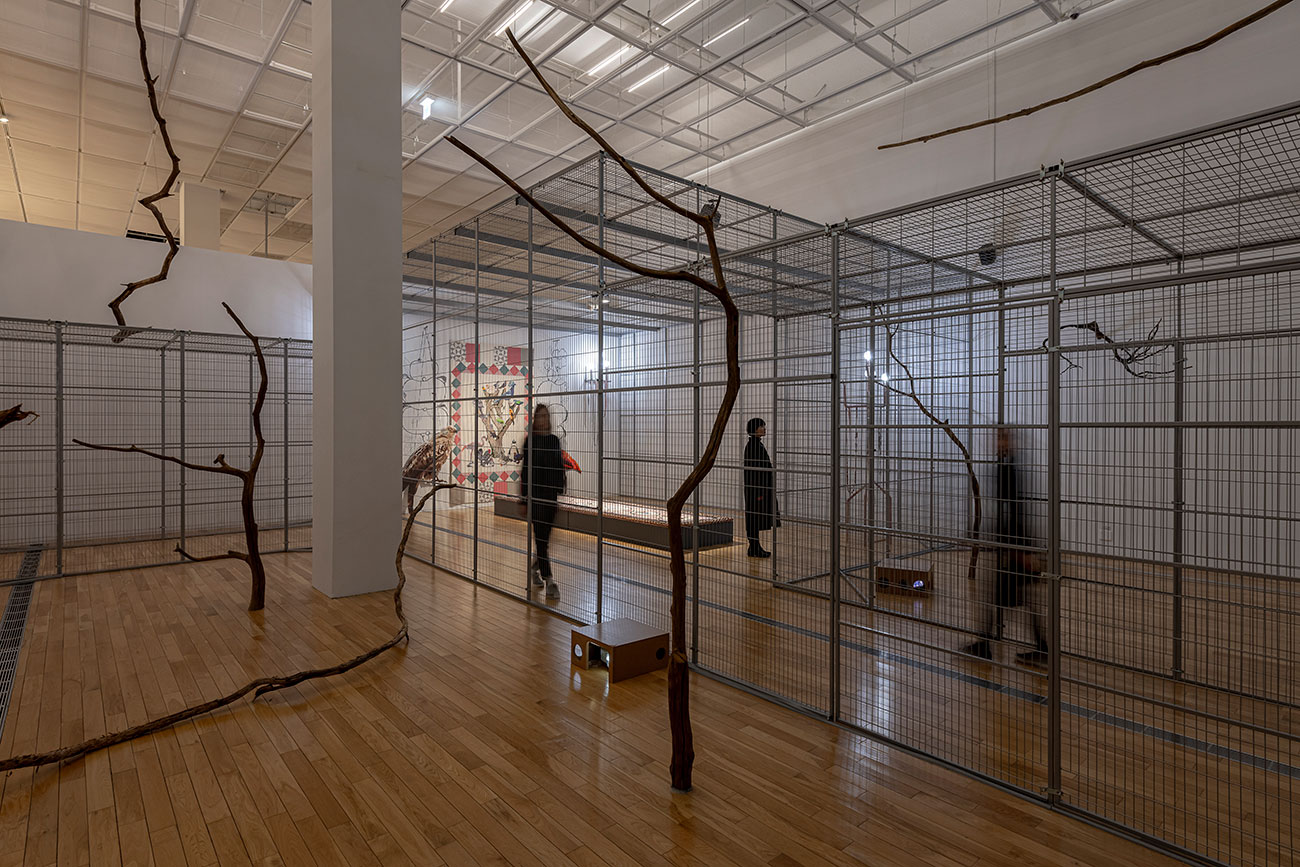
Hong stages scenes observed at Chester Zoo in the UK as though elephants were “shedding their gods” within the exhibition space. Another work, inspired by Gamno Yeojae-do, is an embroidered piece that appears to render the invisible visible.


5. On Relationality

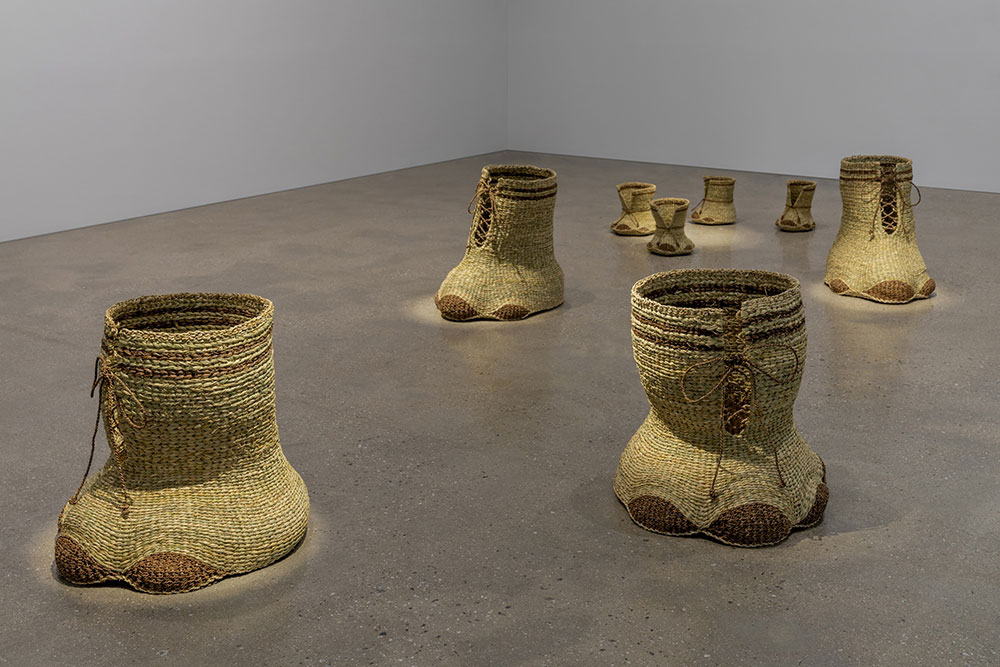
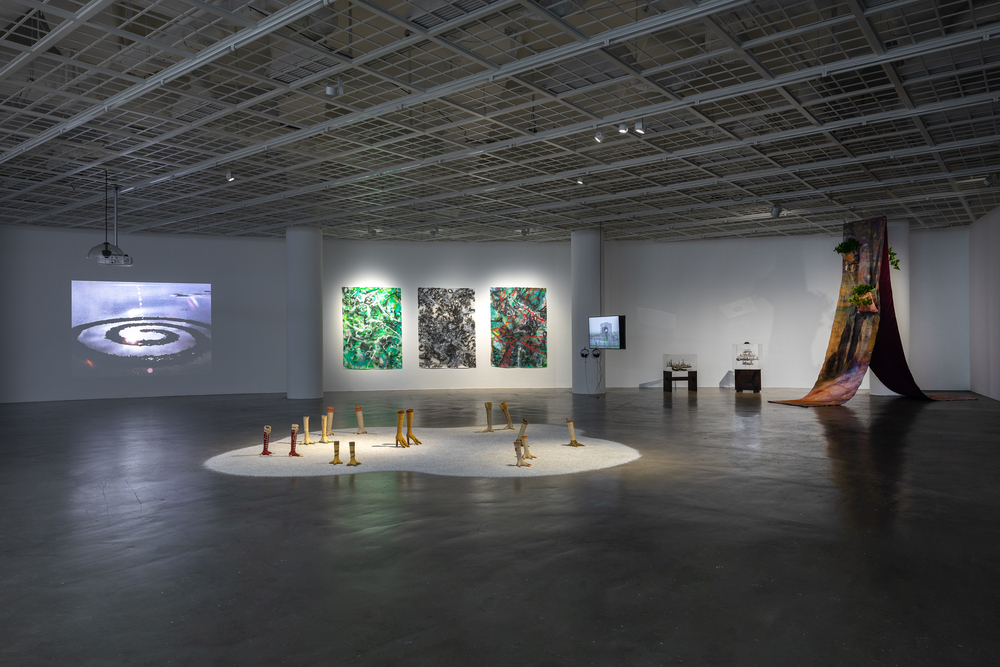
Straw is twisted into rope. Elephant kinship is shown through straw shoes. Craft-based objects and situations or events described through sound—this staged scene was completed through collaboration with straw craft masters Lee Chung-kyung and Park Yeon-hwa. The soundscape, which surrounds the exhibition space and evokes forests, watering holes, Indigenous wedding ceremonies, and zoos—places where humans and elephants might encounter one another—was produced in collaboration with electronic musician Miles Otto and saxophonist Andrew Neil Hayes.

In A Philosophical Enquiry into the Origin of Our Ideas of the Sublime and Beautiful, Edmund Burke addresses the beauty of touch and then the beauty of sound, stating: “All our senses are mutually related. They are affected differently by different kinds of objects, yet the manner in which they are affected is the same.” Craft objects that allow tactile sensation within a visual art exhibition reveal a contemporary aesthetic through “the slight resistance they generate.” We take the greatest pleasure in objects whose surfaces continually change.

While musical beauty often aligns with clear, smooth, and gentle sounds—leading to aesthetic melancholy, such that “the passion excited by beauty is, in fact, closer to melancholy than to joy”—Hong refuses to leave beauty there. She frees herself from the one-sidedness of beauty and the sublime. Experiences that escape the metaphorical application of sweetness to sight and sound are deeply political.

Young In Hong, Thi and Anjan, 2021 © Young In Hong

6. (De-)Historicity and Anachronism

Art history, often considered closely aligned with historiography, tends to align its categories with the divisions between modern and contemporary art. Yet is art history truly history? Even if art and reality are inseparable, classification need not follow historical models, as the contexts in which objects acquire meaning differ. Art historicality? The historicity of art? Or the aestheticization of history?

If one were to append a subtitle to Young In Hong’s work, it might read: “Historicity and Anachronism in Contemporary Art.” Gianni Vattimo’s interpretation is instructive here: the death of art observed in the modern world does not mean exactly what Hegel meant, but appears in a strangely twisted form, as Adorno repeatedly showed.

As information dominance spreads, it may represent a transformed victory of absolute spirit—a universe of representation indistinguishable from reality. Though mass media is not absolute spirit, it may be a caricature of it, containing epistemic and practical possibilities yet to be explored.


7. Perhaps Neither Craft nor Fine Art

Contemporary art is currently surging in the market, not solely due to recent booms but also because of the privileged status of fine art. Critical discourse played a decisive role in granting fine art this status, with aesthetic theories updated in the eighteenth century by Baumgarten, Burke, and Kant. Such discourse provided the intellectual foundation for transforming fine art into a conceptual and intellectual practice rather than mere commodity or handicraft. Craft, by contrast, has lamented its exclusion from this process of “intellectualization.” Is this a justified complaint?

Young In Hong offers no direct answer. Yet her practice—crossing disciplinary boundaries—is at once historical and ahistorical, challenging the historicity of aesthetics and neutralizing boundaries through a sensibility of contemporaneity.

References