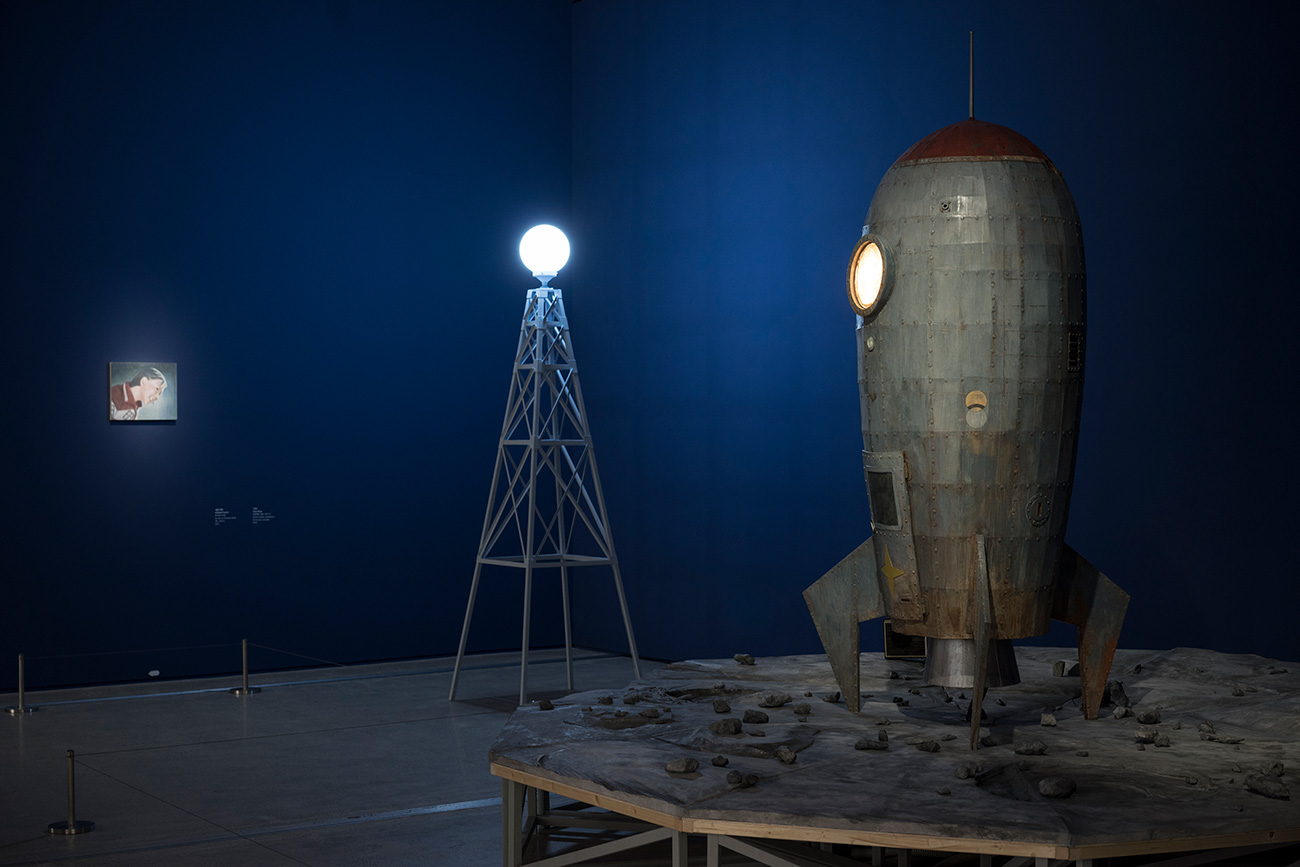
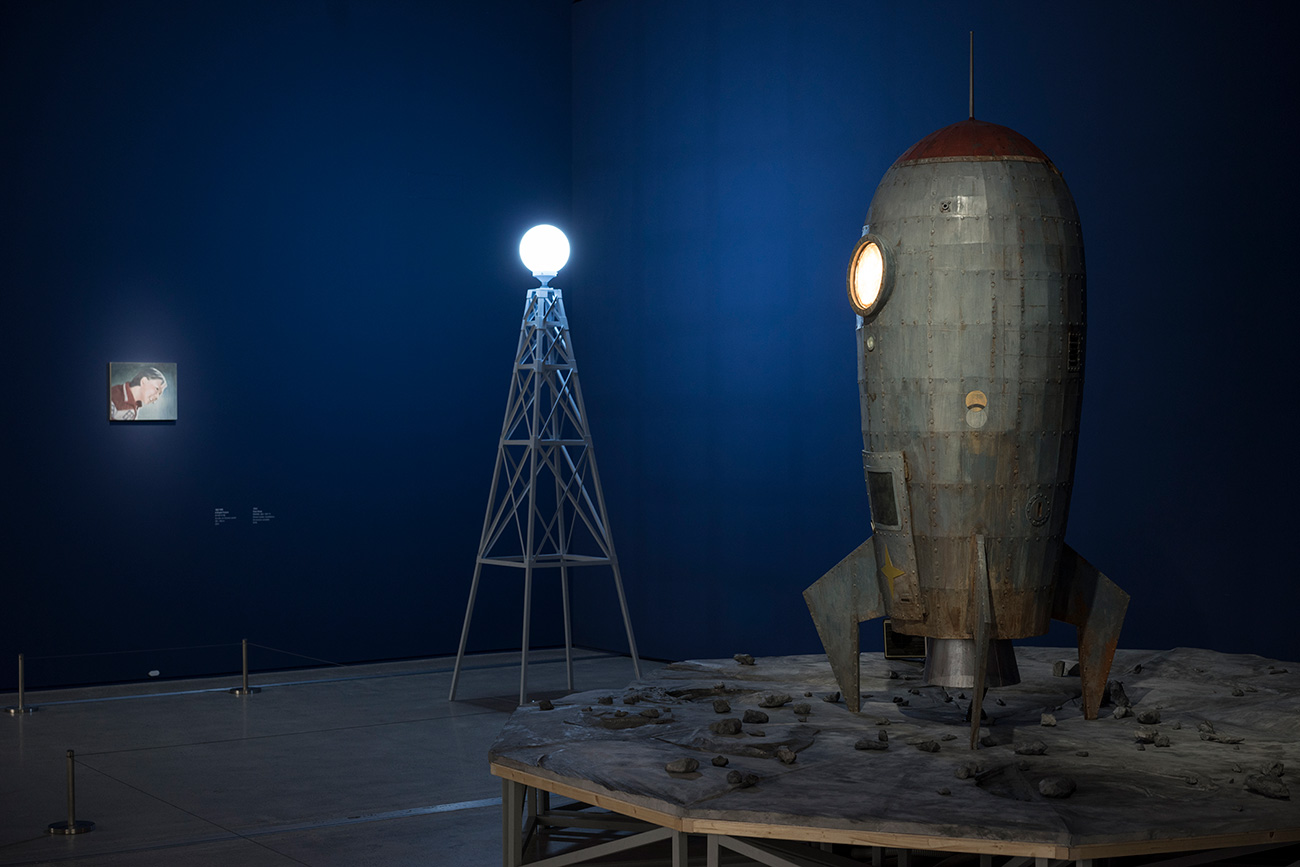
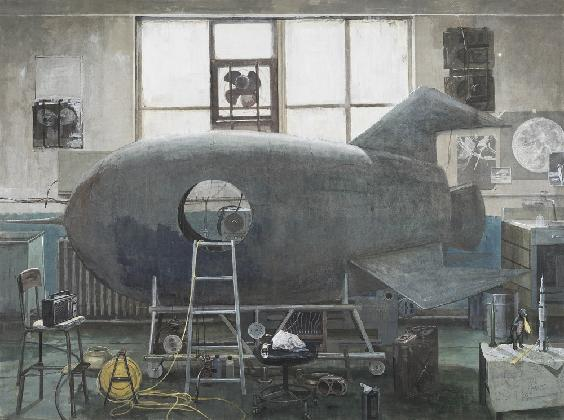
Planet
is a good index of the themes and ideas Jaeho Jung’s paintings intend to convey
and his artistic attitude. Through a rough terrain over which large flakes of
snow fall diagonally a steam train is rushing to the right out of the picture
plane. This image is borrowed from one of the photographs of Korea after the
Liberation, and according to the artist, the steam train is “adrift” in snowy
fields.
To him an image referring to a specific moment of the past history
never dies. It is not something that lived in the past and has been dead for
long. Instead, it makes constant appearance before us like a ghost and throws
cold water on our/the present’s directions, coordinates, ideologies and
desires. Image is history itself and even ourselves: “For me, the image of a
steam train running through cold, snowy fields occasions the most severe
feeling of solitude. It has a fixed trajectory, but it seems that it will never
arrive at its destination. So distant and so nebulous.”
There
are two reasons for my recommendation of Jung for the 《Korea Artist Prize 2018》. First, amidst of
the high popularity of a kind of mental landscape that stresses arbitrary
dismantlement- reconstruction-interpretation in the contemporary Korean
painting community, Jung tackles head-on the important points with respect to
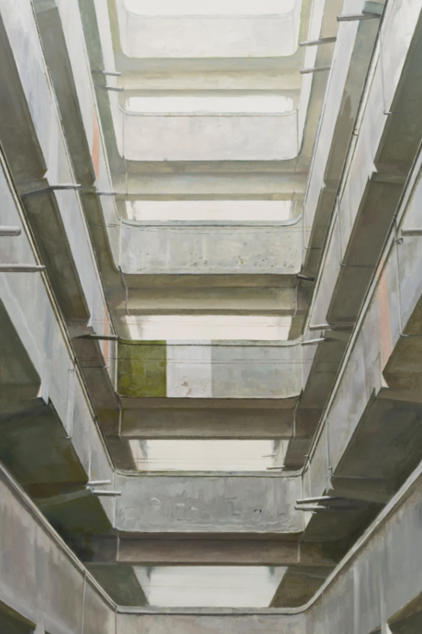
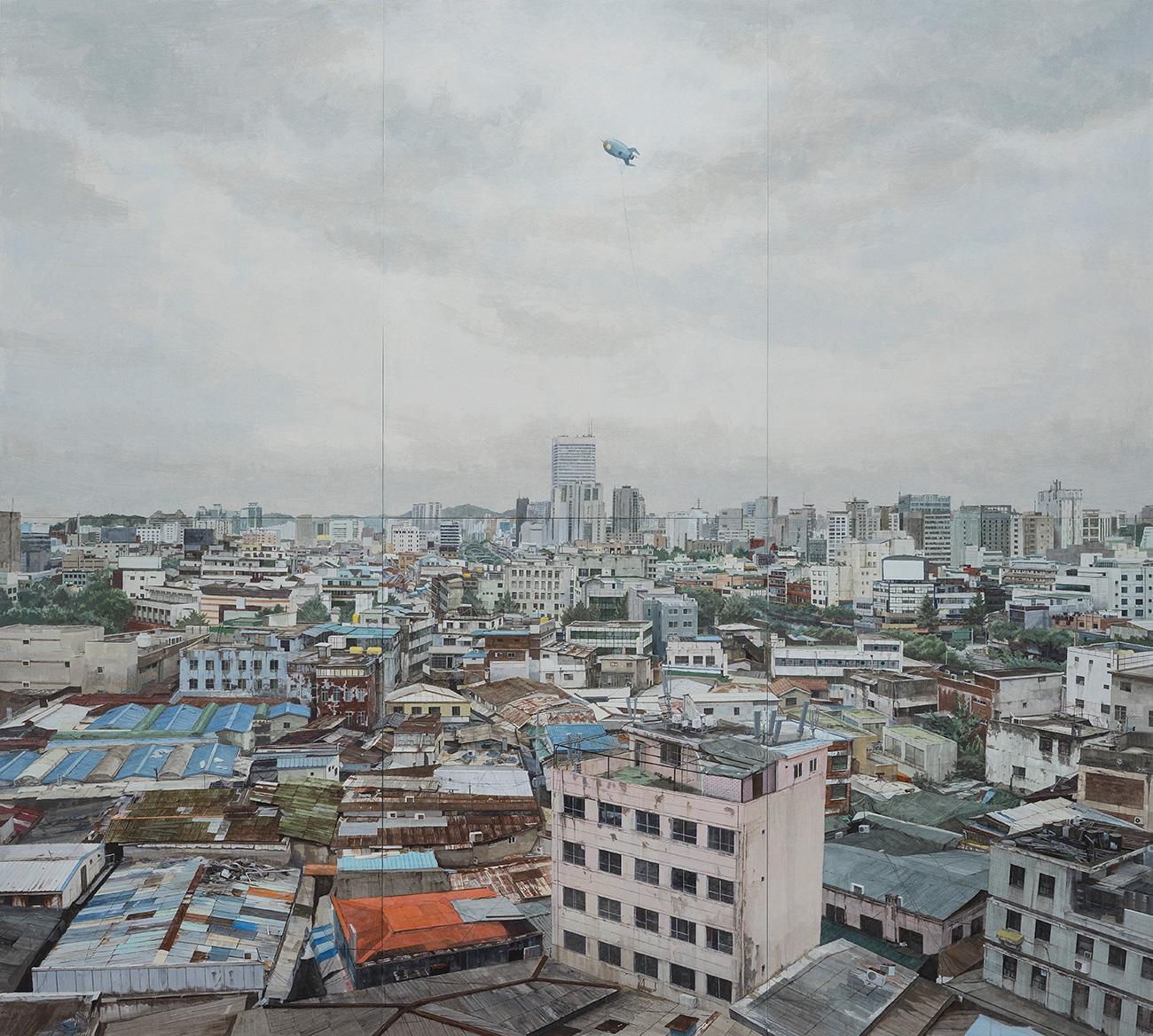
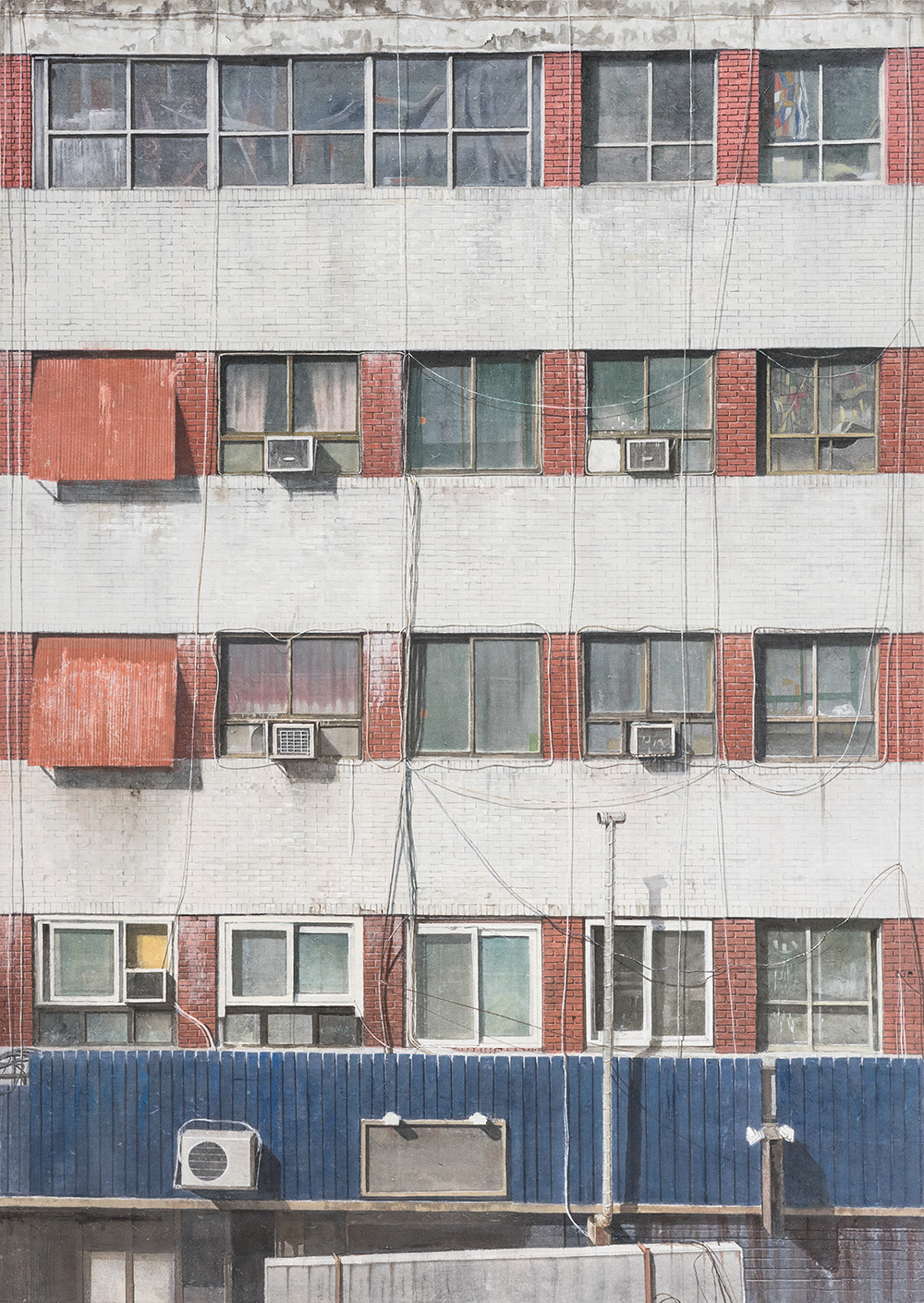
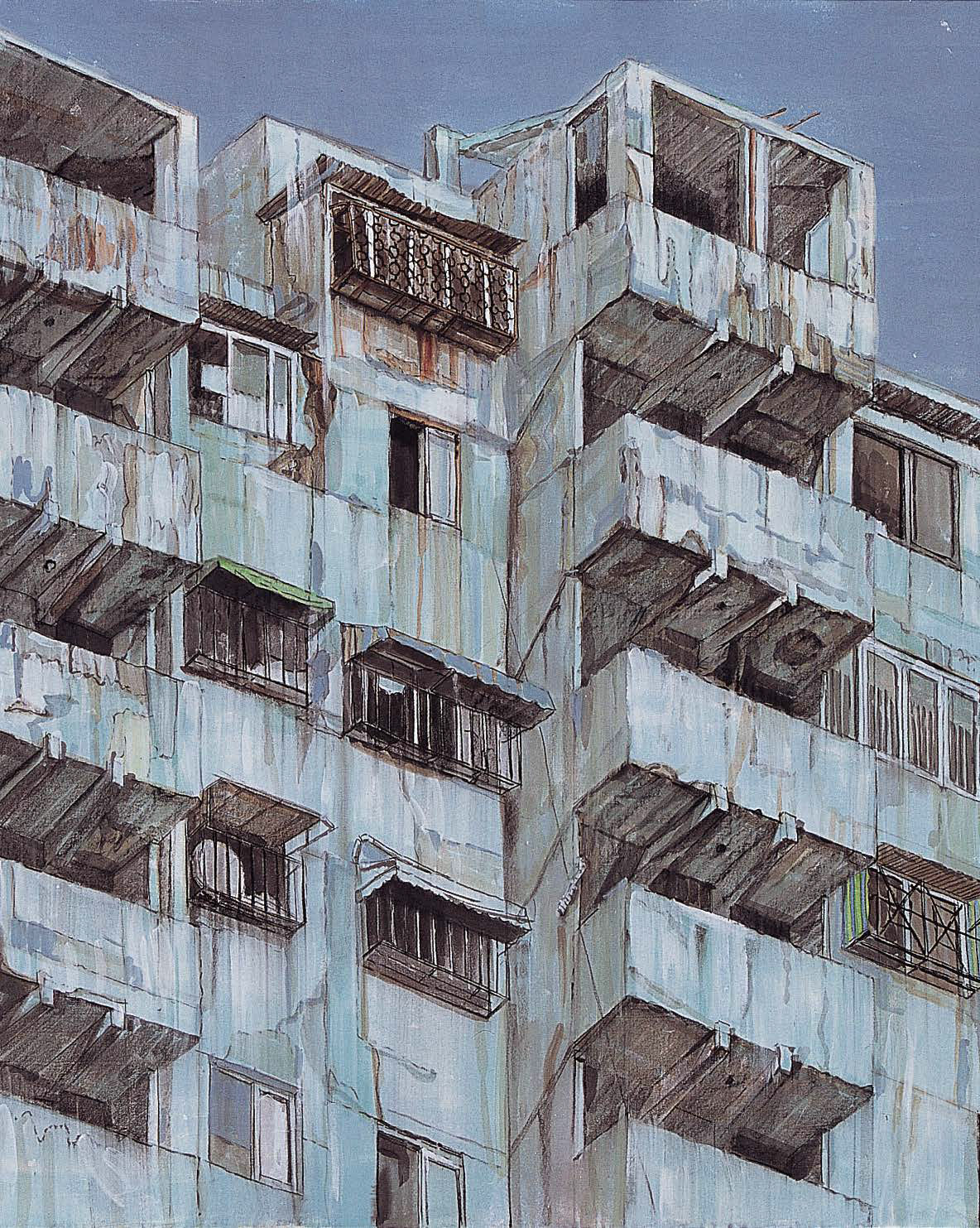
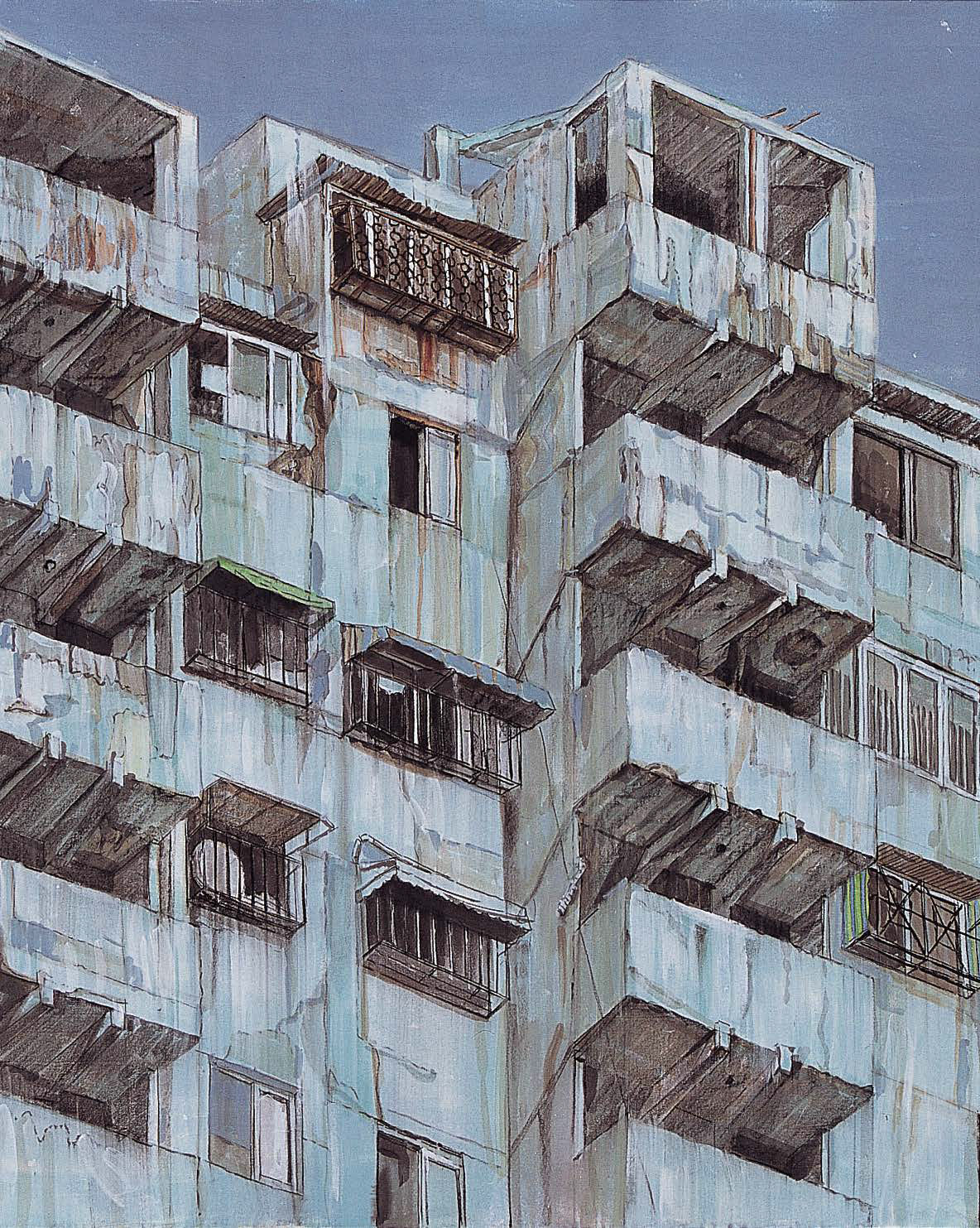
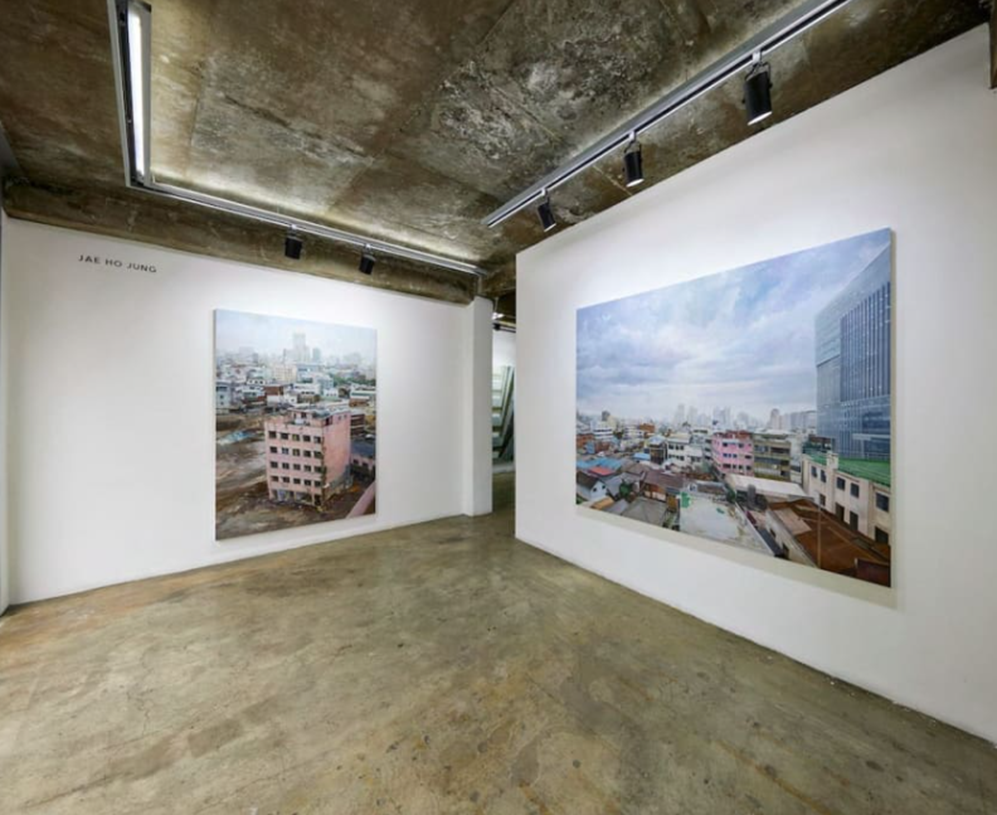
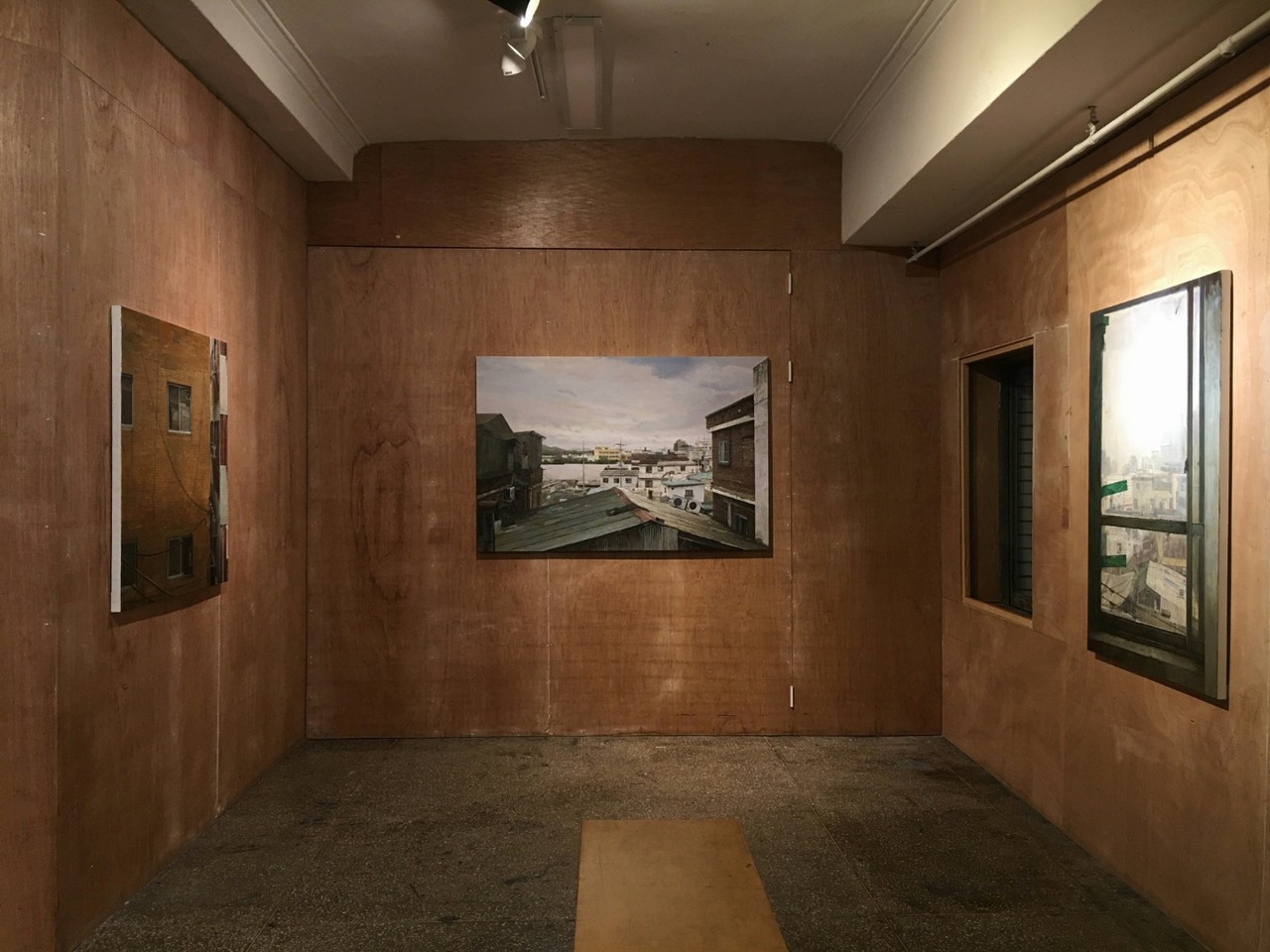
attitude and ideas. His series of painting projects known as “Apartment”—Cheonguun
Simin Apartment (2004), Old Apartment (2005), Ecstatic
Architecture (2007) and Heat Island (2017)—makes
a detailed exploration of the subjects as if he were a documentary director.
His detailed brushwork deals in particular with those old apartment buildings
to be torn down due to urban redevelopment or collective residential buildings
for urban low-incomers. His aim is not the accurate, photographic
representation of the façade of those sceneries but to portray the landscapes
as comprehensive environments with their own history and presence or as living
breathing organisms. So his apartments are living bodies breathing with
us—individuals/groups/ histories—rather than some objects over there.
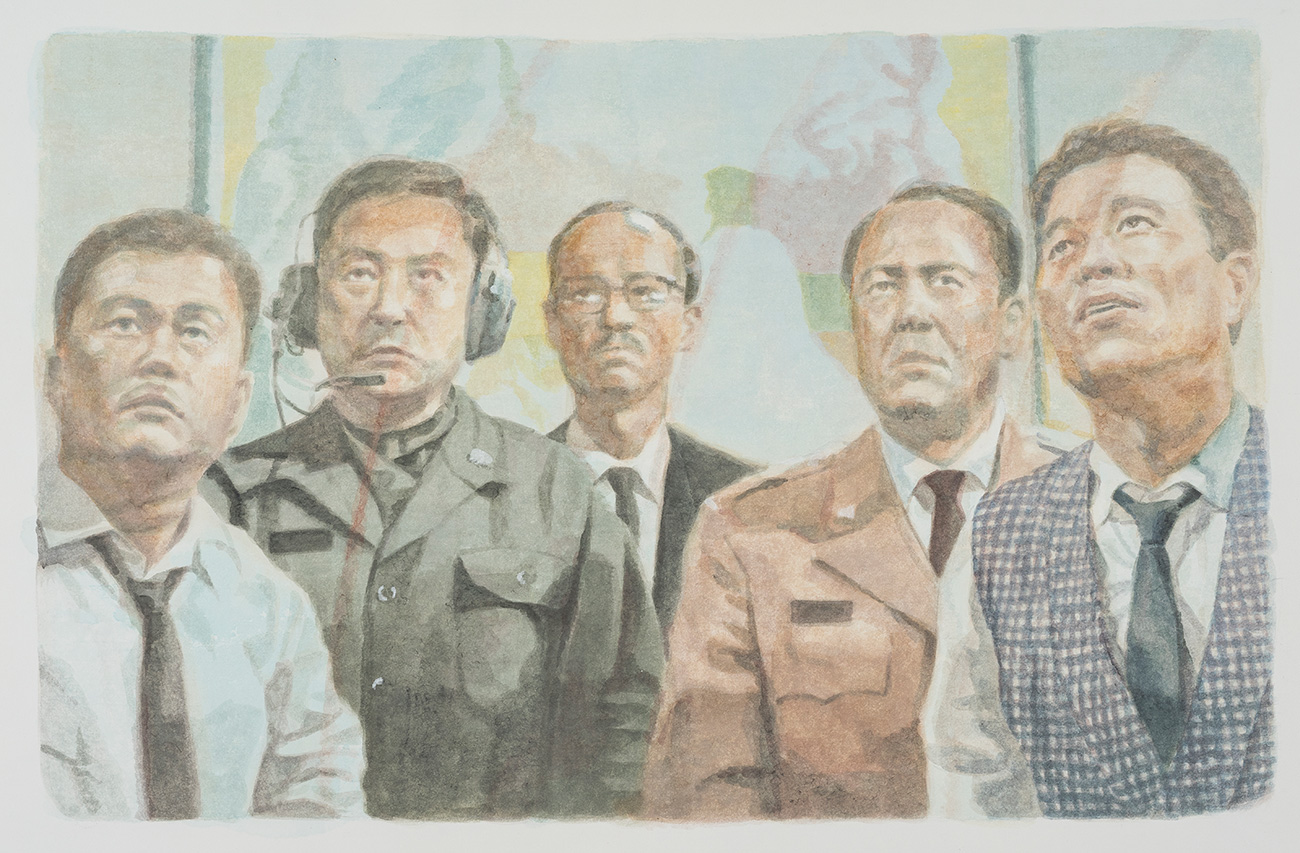
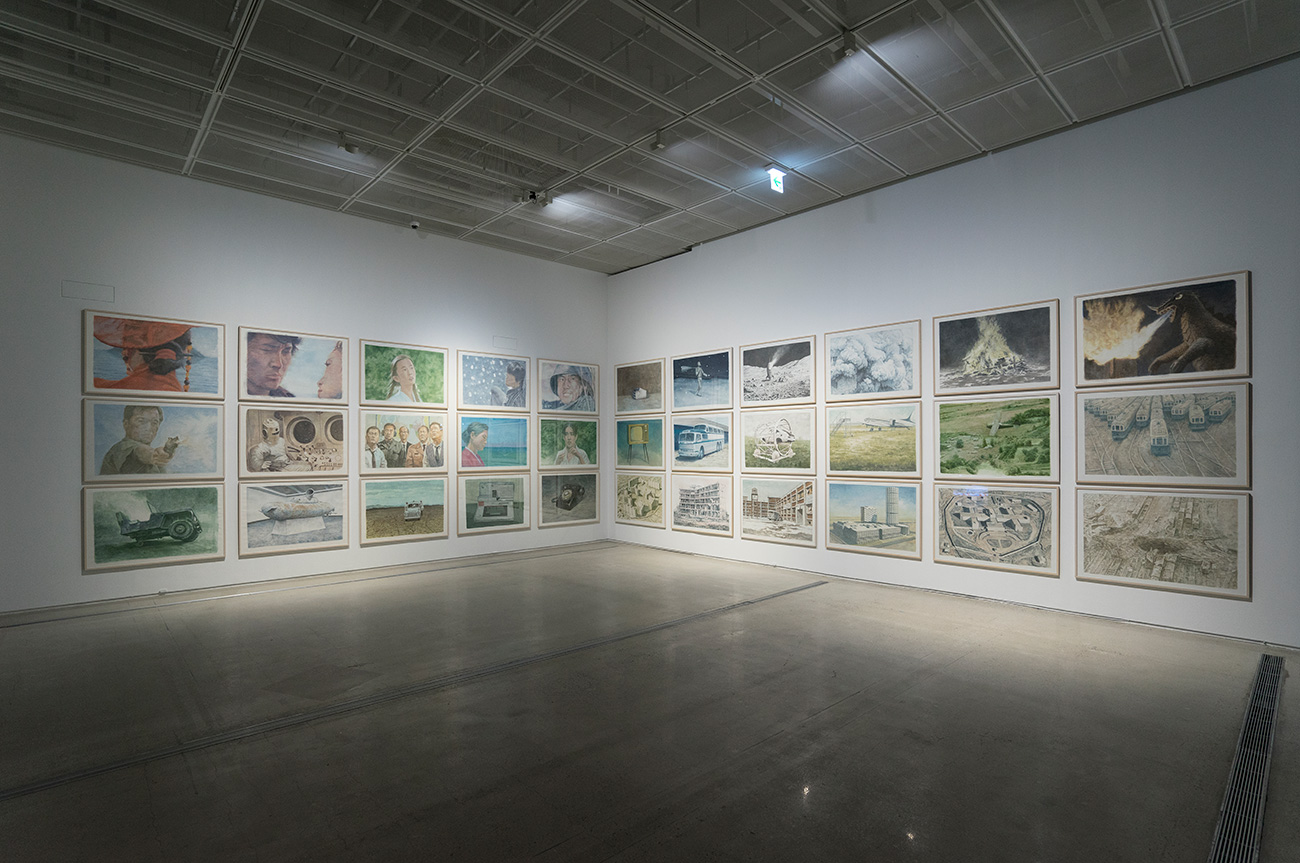
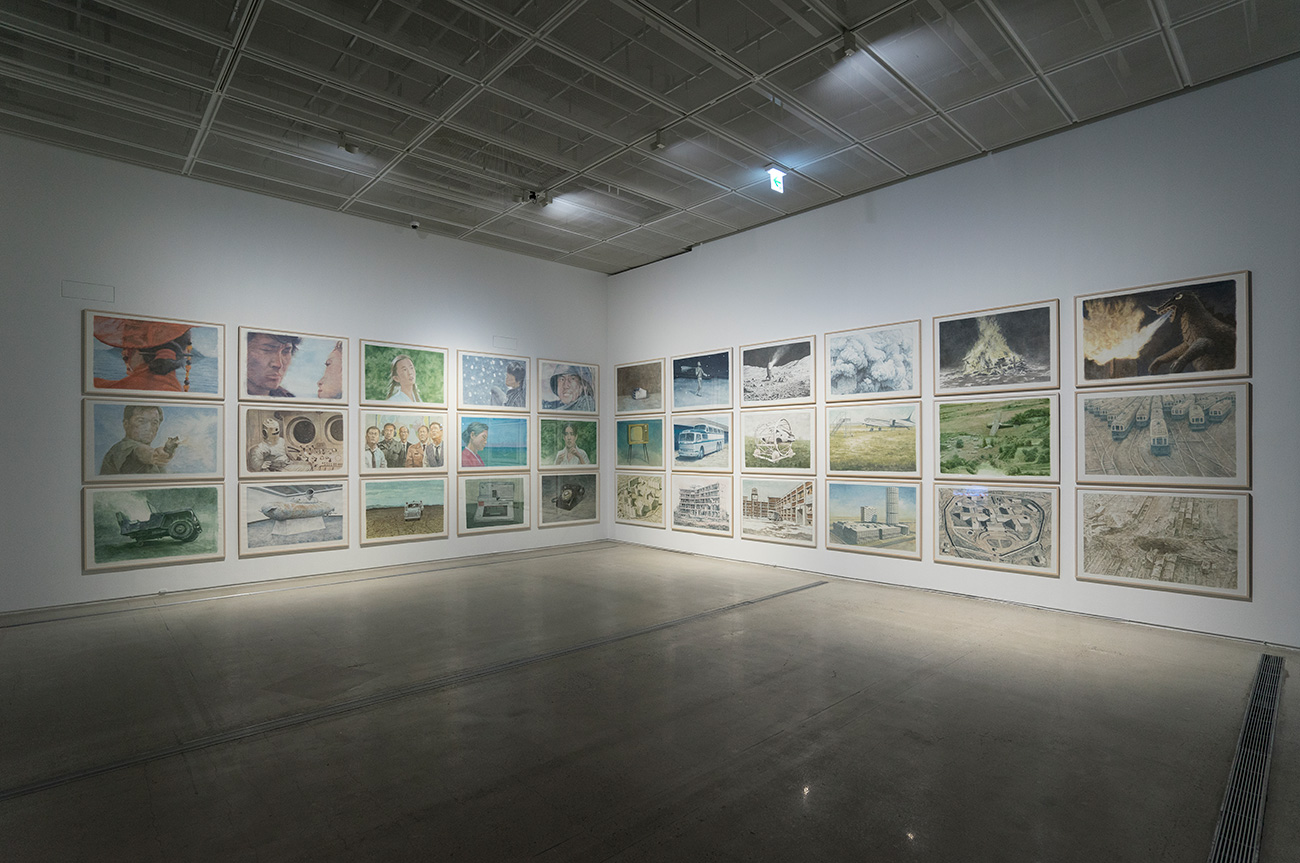
What is
also well known together with his ‘Apartment’ series among his works is his
series of paintings whose images are indebted to photographs of certain
incidents in the modern and contemporary history of Korea that he selected as
an archivist—Father’s Day (2009), Planet
(2011) and Days of Dust (2014). As mentioned briefly
above, in these paintings Jung’s past/image haunts us/the present like a ghost
or a fog or repeatedly puts our lives back to ruins. This past/image the
painter scoops up from the abyss enables us to manage to meet ourselves hanging
on just barely above the water.
Secondly,
Jung leads us to look into the reflection on the aesthetics and medium from the
context of Korean modern and contemporary art. As well known, most art
practices and aesthetics on Korean ink painting in 20th Century have‘t been
liberated from the colonized aesthetics from 《Joseon Art Exhibition》 under the
Japanese occupation or been obsessed with that of the literary painting as a
doctrine for the radical recoil.
As a result, the ink painting artists of today
have to find their way to be free from the colonial aesthetics and ideological
nationalism/traditionalism from the ground. We should raise a question if the
artist with brush and ink to confront head-on the jarring conditions of the
city with new sensibilities, from new critical perspectives and with new
insights while still working with traditional painting materials while
following the canons and languages of western art instead of our tradition of
“Poet- Calligraphy-Painting”.
It
might go too far but Jung is the first artist of our contemporaries who goes
into the city and the life in it while using the traditional medium like Ungno
Lee in 1950s. Ungno Lee, who left tranquil scenary paintings for 《Joseon Art Exhibition》 during Japanese
occupation, produced improvisational paintings on the vivid daily lives of
lower classes in the city from 1945 to the mid-1950s. After the liberation in
1945, Lee was liberated from the classicism or the canon of colonialism and
went into the street where the real lives resided in humble but vivid way.
To
encounter reality and the world with nothing but his or her own bodily senses,
Ungno Lee painted the world nothing but his own bodily senses and feeling. Jaeho
Jung has been away from the doctrines of the history and tradition and put
himself into the “bodily encounter” with the real lives since he graudated from
the university.
Jung
undoubtedly stand out in the history of modern and contemporary Korean
art—namely in the history of Korean art since Korean literati ink painting the
modernization of Korean art gave rise to the reduction of its classical
paradigm of literati ink painting that combines text, calligraphy and painting
to Western-style visual artistic practices, and when one sets out to find among
painters working with paper, brushes and ink those who have felt, experienced,
questioned and interpreted his or her body, reality and the world with nothing
but his or her own bodily senses, For Jung, all his senses—not only visual
sense but also auditory, olfactory, gustatory, tactile sense— from his own body
became an artistic medium instead of pursuing freehand painting or thoughts
from the heart.
Then
artist body becomes a media between the world and art and the modernity of
sense and medium begins at this point. This is what the Korean ink painters
missed in 20th Century. They seem to come to close to the visual modernity via
adopting western art canons at a glance but they never consider the modernity
themselves from the perspective of sense, recognition, attitude and body. Since
Ungno Lee expand the boundary of Ink Painting with his own spirit to what he
saw, listened, smelled, savored, touched without the conventional concept and
composition in 1950s, Jaeho Jung treats all the images produced in the Korean
modern history whether they are real landscape or object as the real body.
For
him, they are not the shadows of the world but also the real body it affects to
the world. For Jung, the most essential concept is a kind of “vividness”. This
“vividness” or “vivid energy” is born in the relationship between artist’s body
and the world. For Jung, to paint is an encounter the world with his own senses
as a reality and an attitude to access the light and shadow of life, and even
the decision to open up himself to the inner/outer world. (Modernity begins
from the body, its senses, and the world interpreted by them. If ink painters
can’t realize it, they cannot but escape from the trauma of the distorted
modernity. Artists should open his body not to art but to the world.