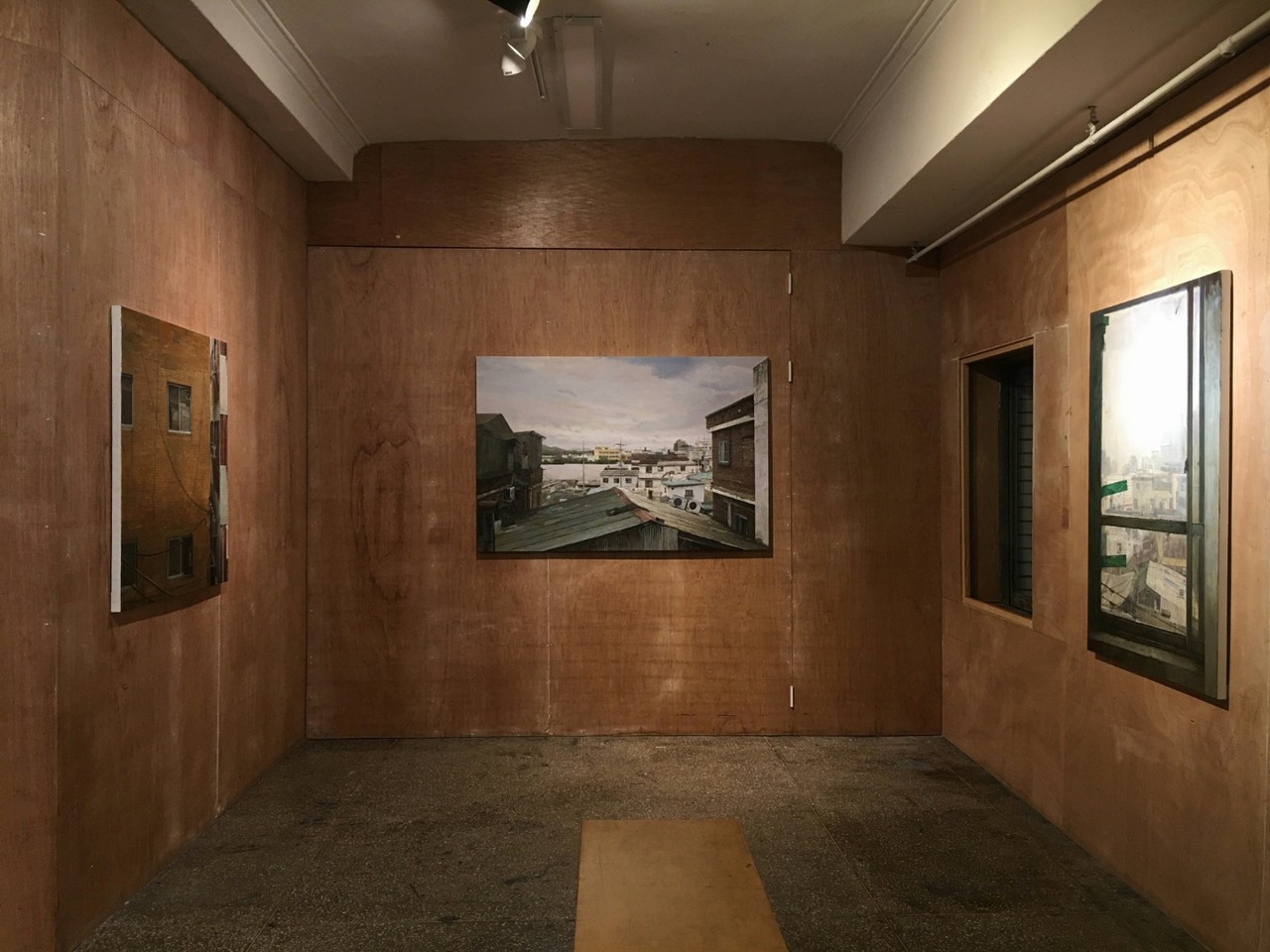
Jung’s
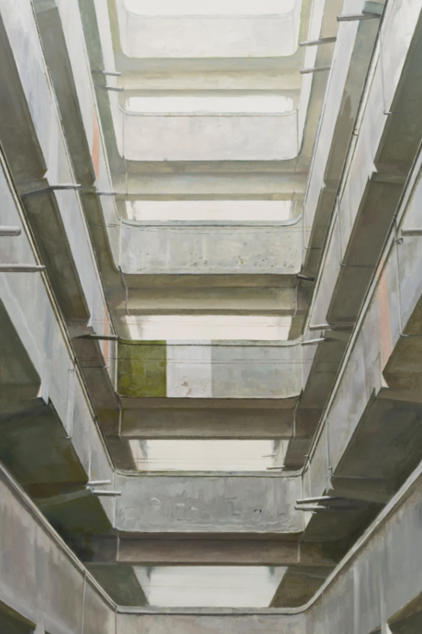
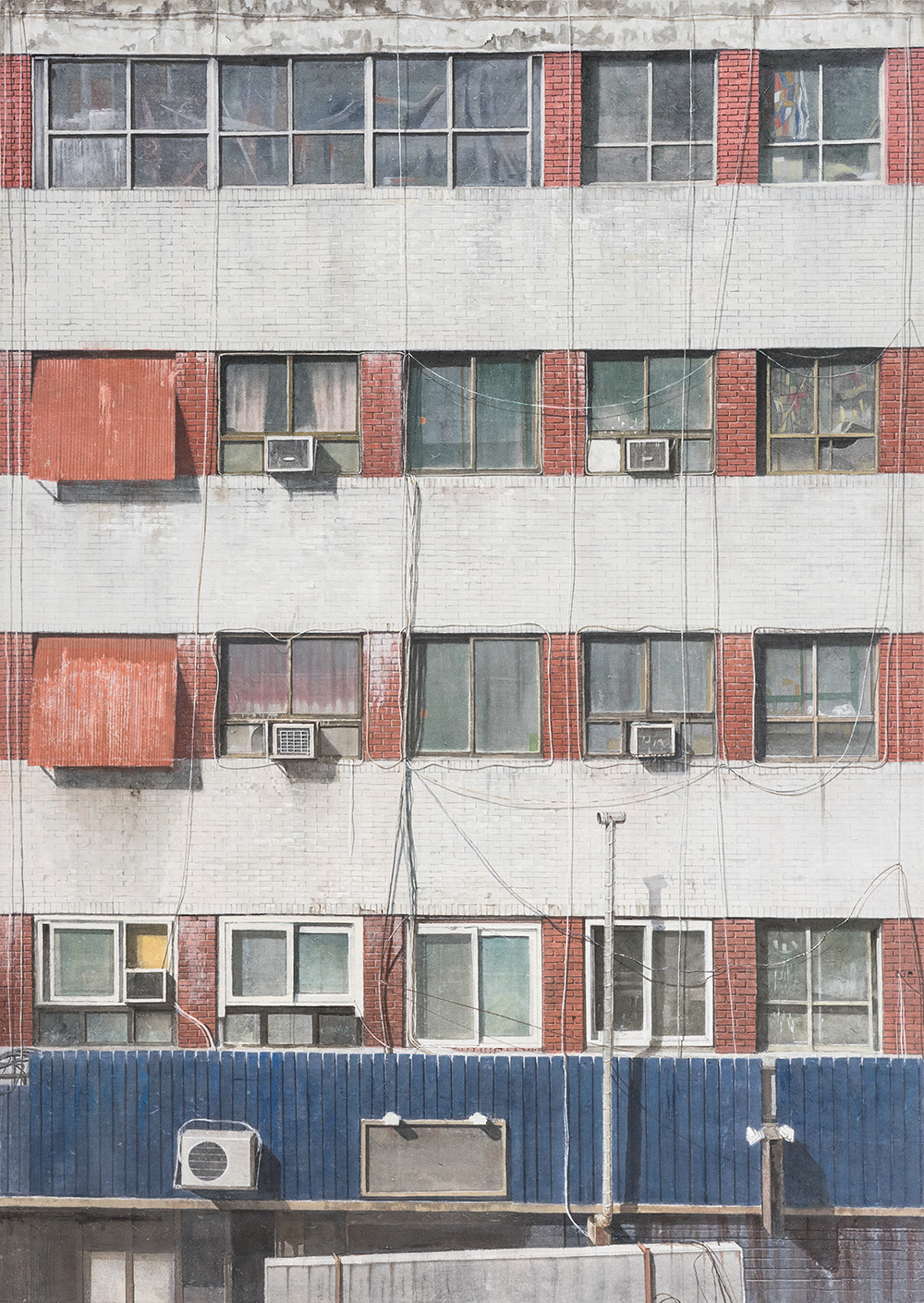
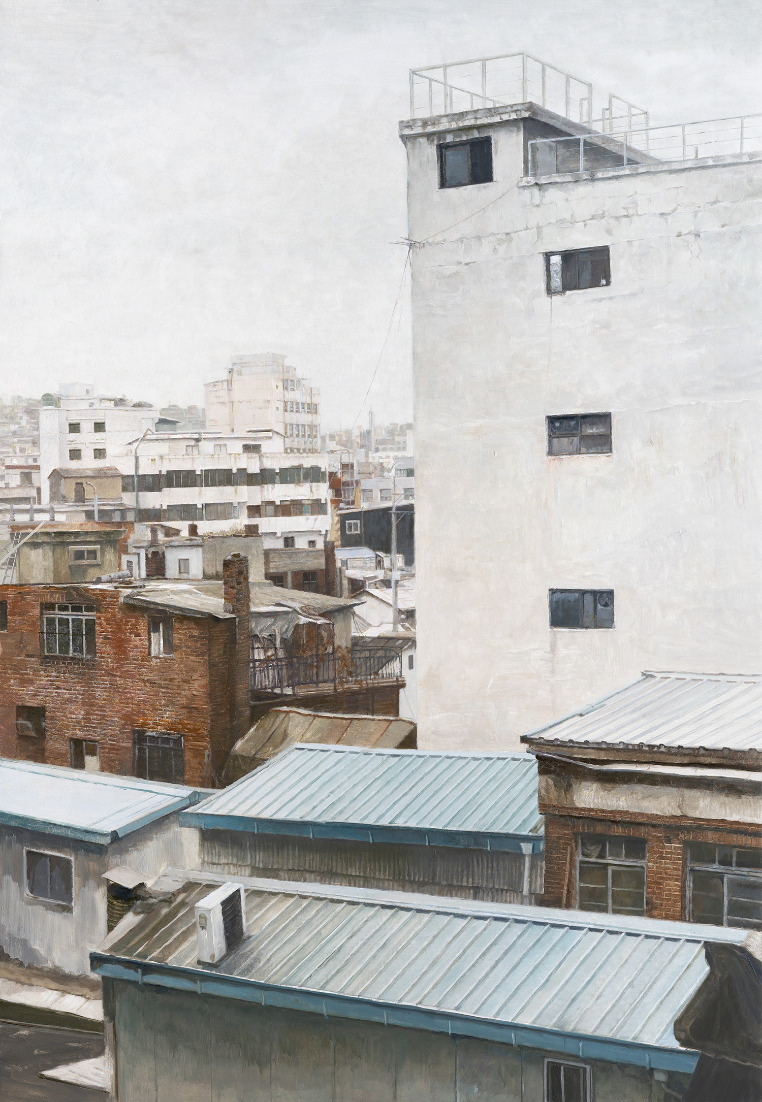
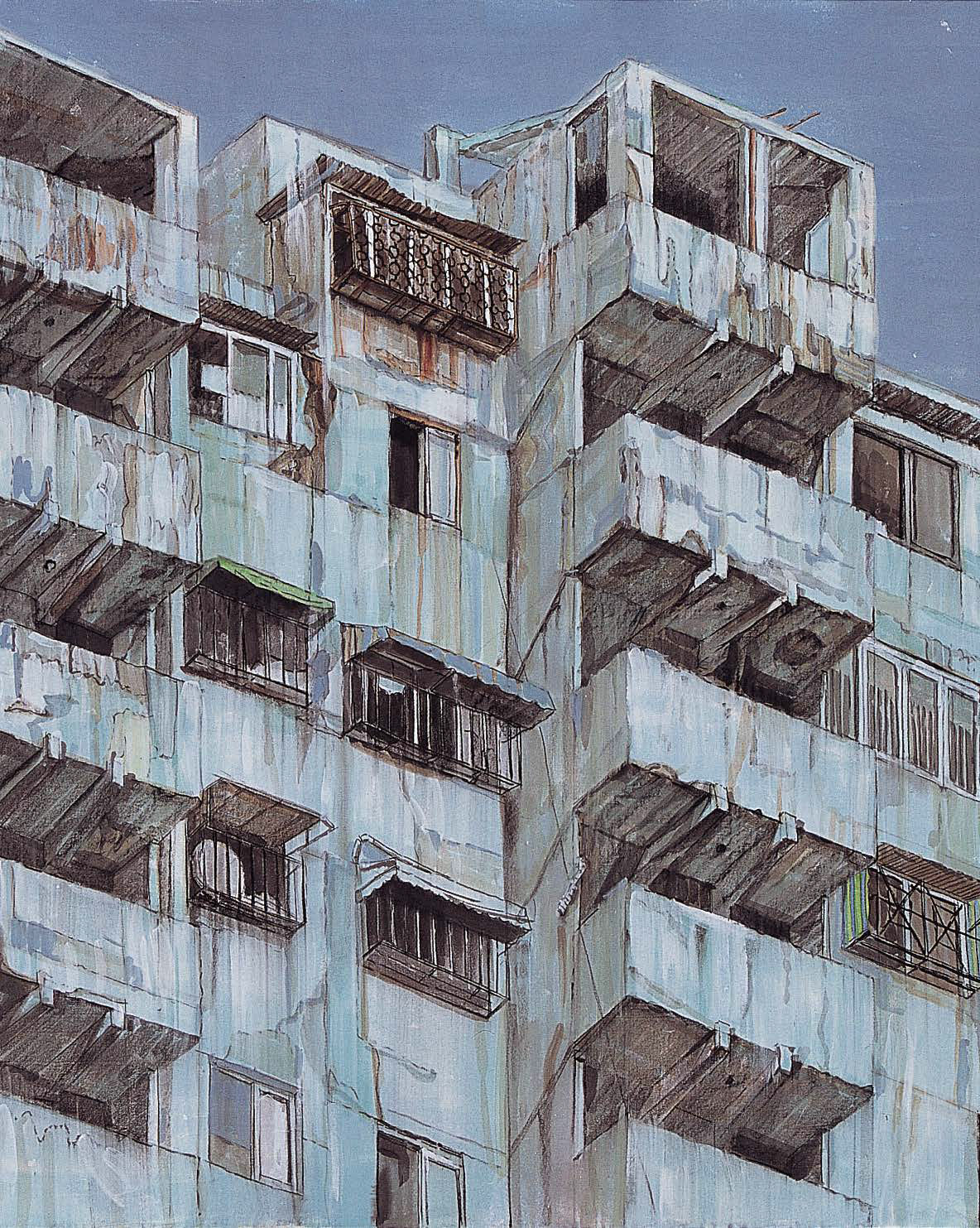
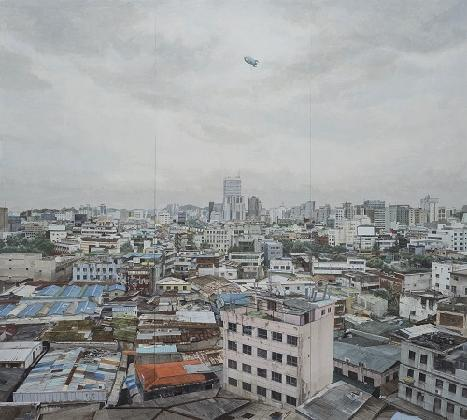
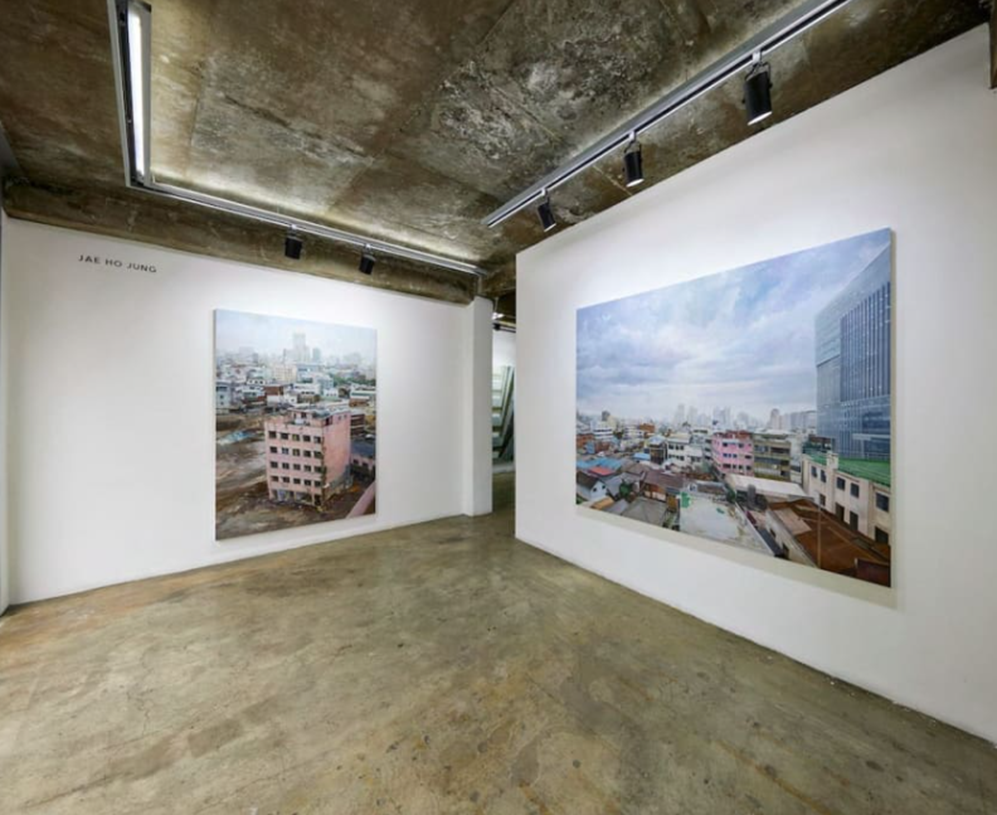
paintings are characterized by meticulous, persistent realism. In early
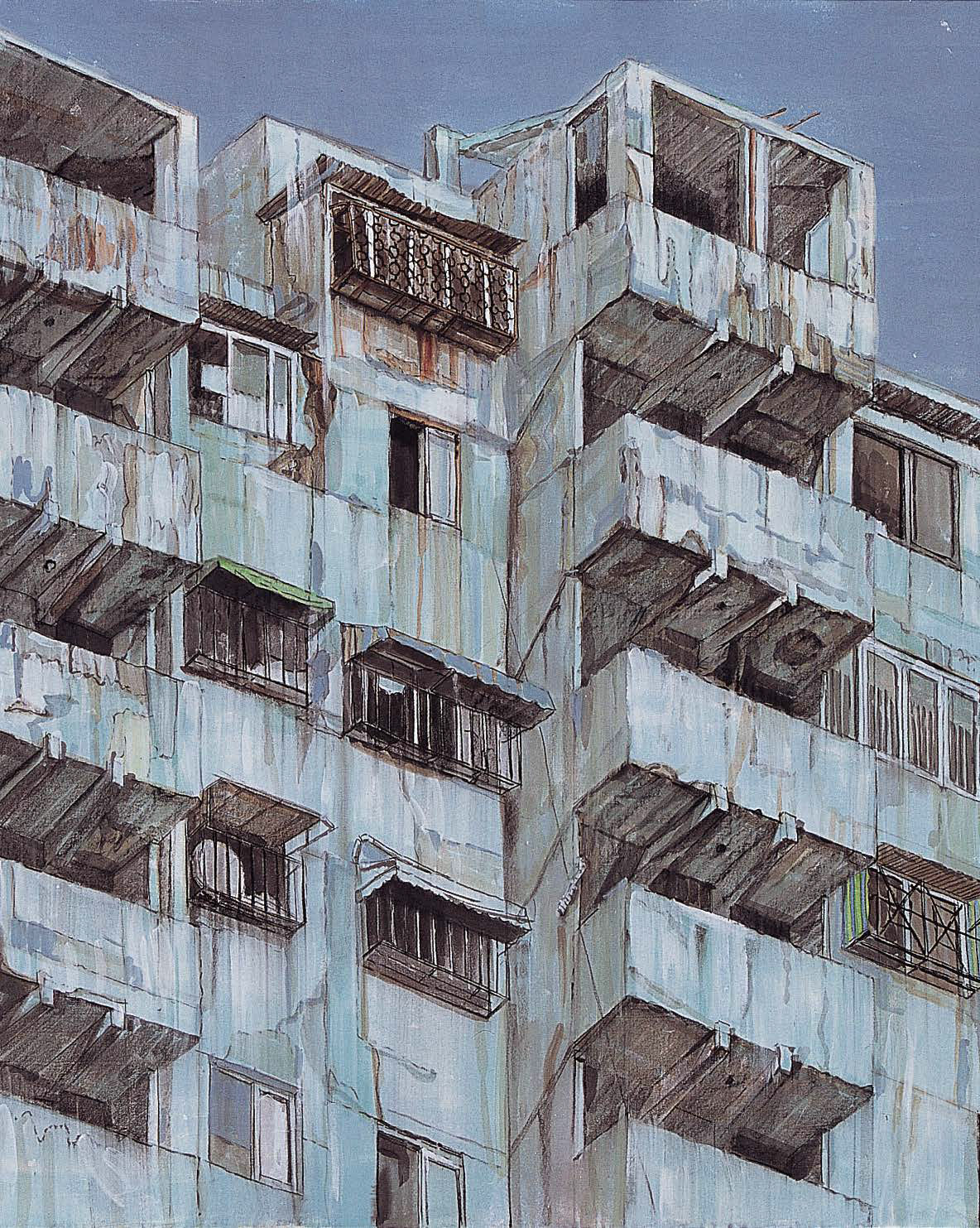
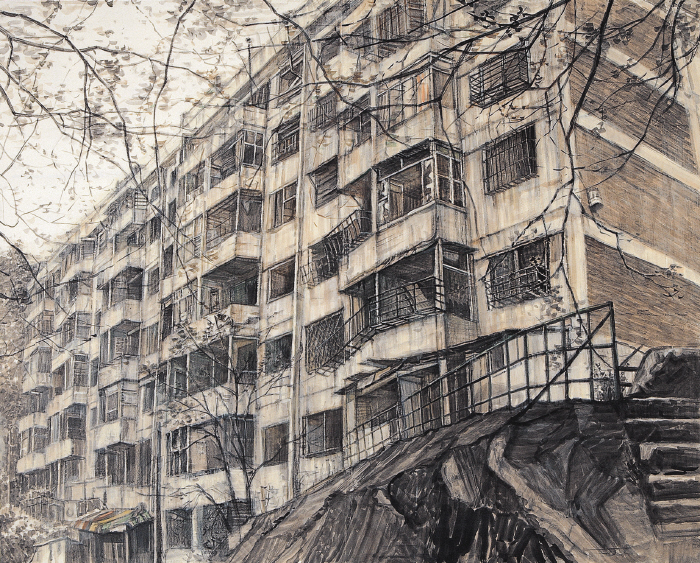
apartment works such as Cheongun-dong
Monument and Geumhwa Citizen
Apartment(2005), he employed a combination of hanji, ink, charcoal,
and acrylic to precisely record stains, cracks, and signs of deterioration on
building façades. The juxtaposition of traditional East Asian materials with
Western painting media intensifies the fragile presence of architectural forms
on the brink of disappearance.
Following
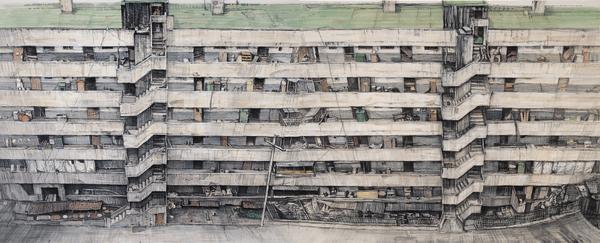
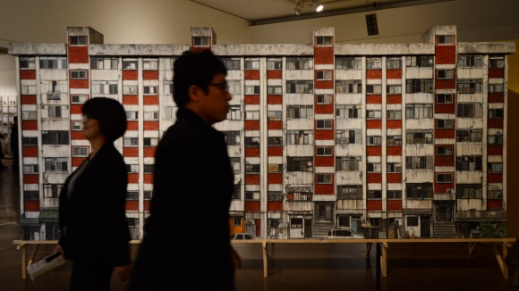
the exhibition 《Old Apartment》(Kumho Museum of Art, 2005), his compositions increasingly aligned
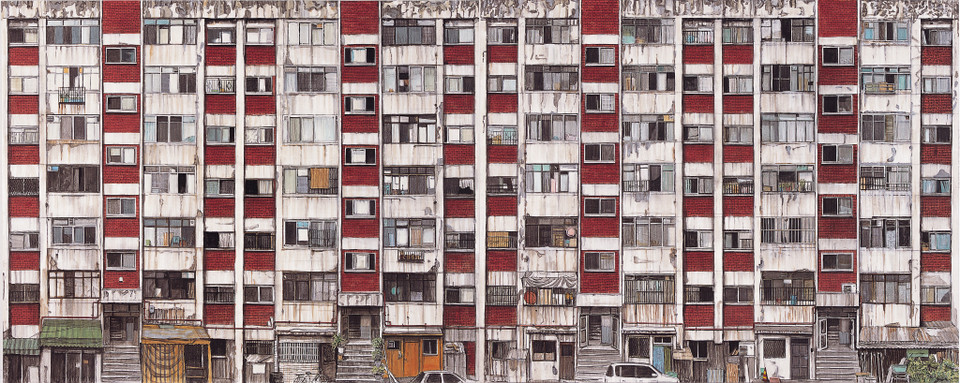
the building façade directly with the picture plane. Works such
as Riverside Hotel–Joongsan Pilot Apartment(2005)
densely fill wide horizontal canvases with frontal views of apartment
buildings, presenting them almost as portraits and inviting viewers to confront
architecture as they would a human face. From this period onward, Jung’s
paintings take on a clearer identity as “paper monuments.”
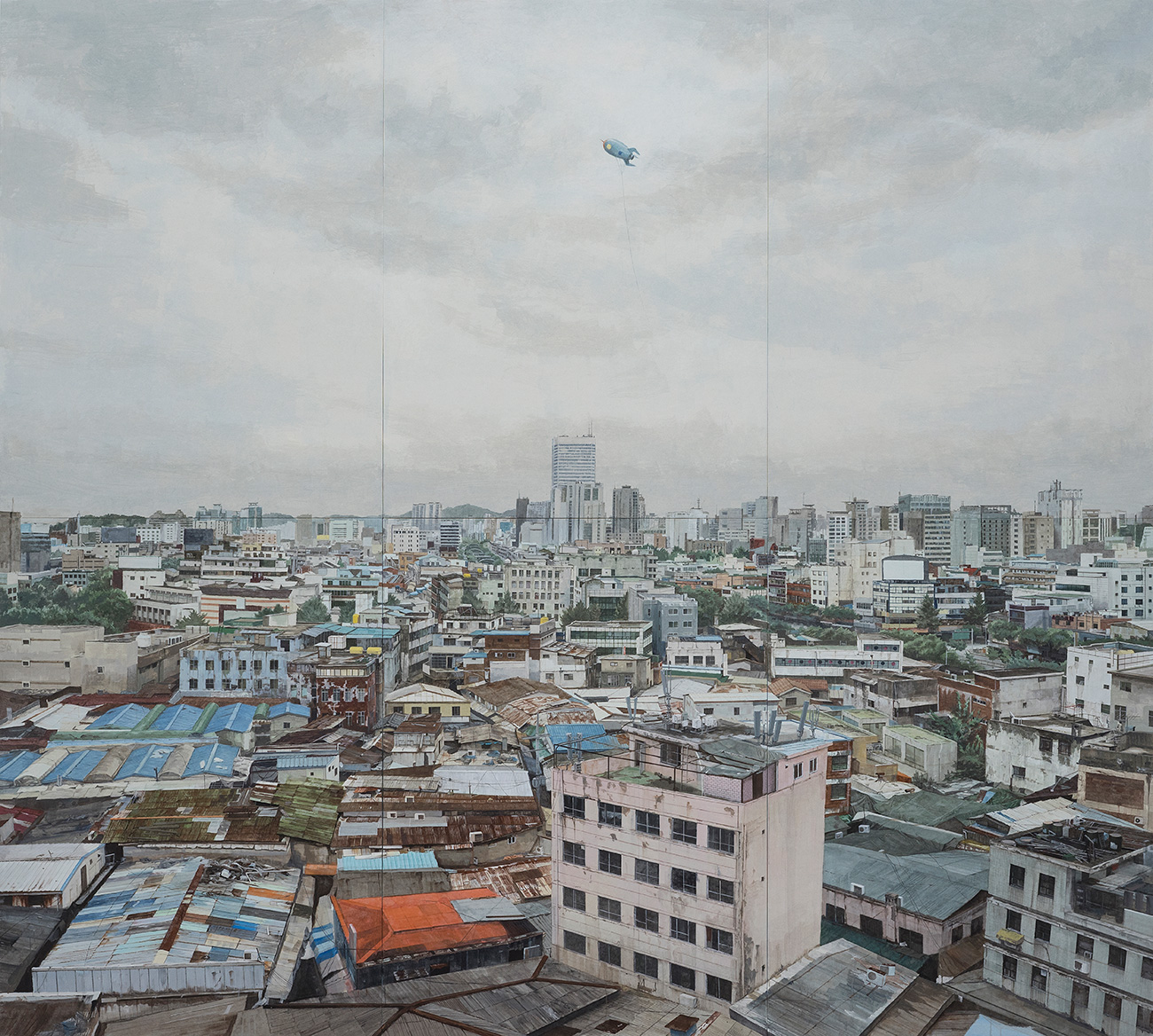
In the
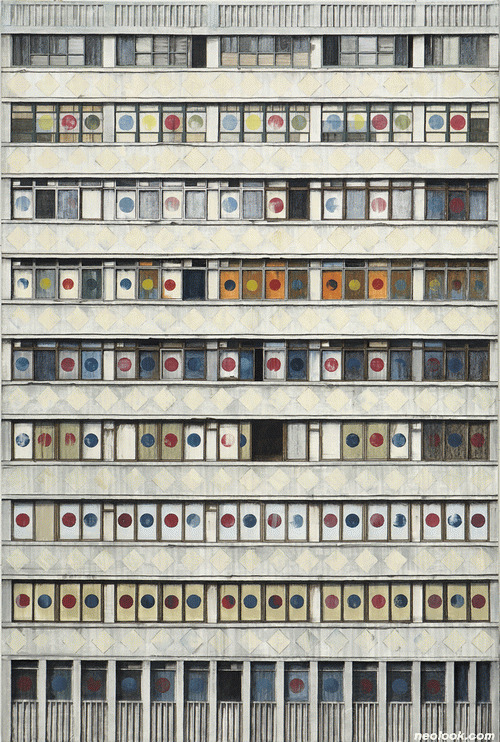
‘Ecstatic Architecture’ (2006–2007) series, Jung’s intervention becomes more
pronounced atop his documentary approach. In works such as Modern
Arcade(2007), real buildings serve as points of departure, but
exaggerated patterns or altered architectural elements translate the artist’s
sensory experience of accumulated time into painterly form. These works mark a
transition from documentation toward a more relational mode of painting that
foregrounds the artist’s sustained engagement with specific structures.
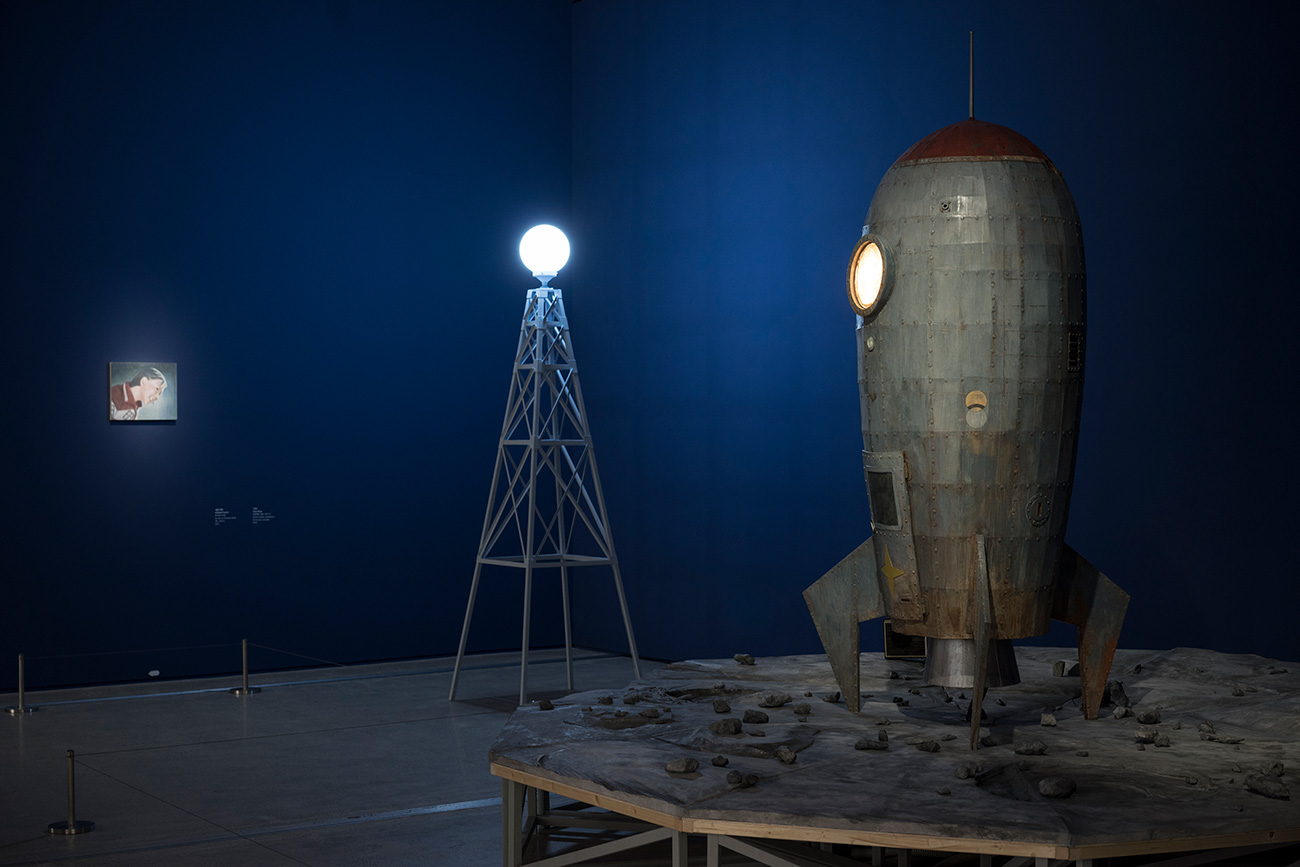
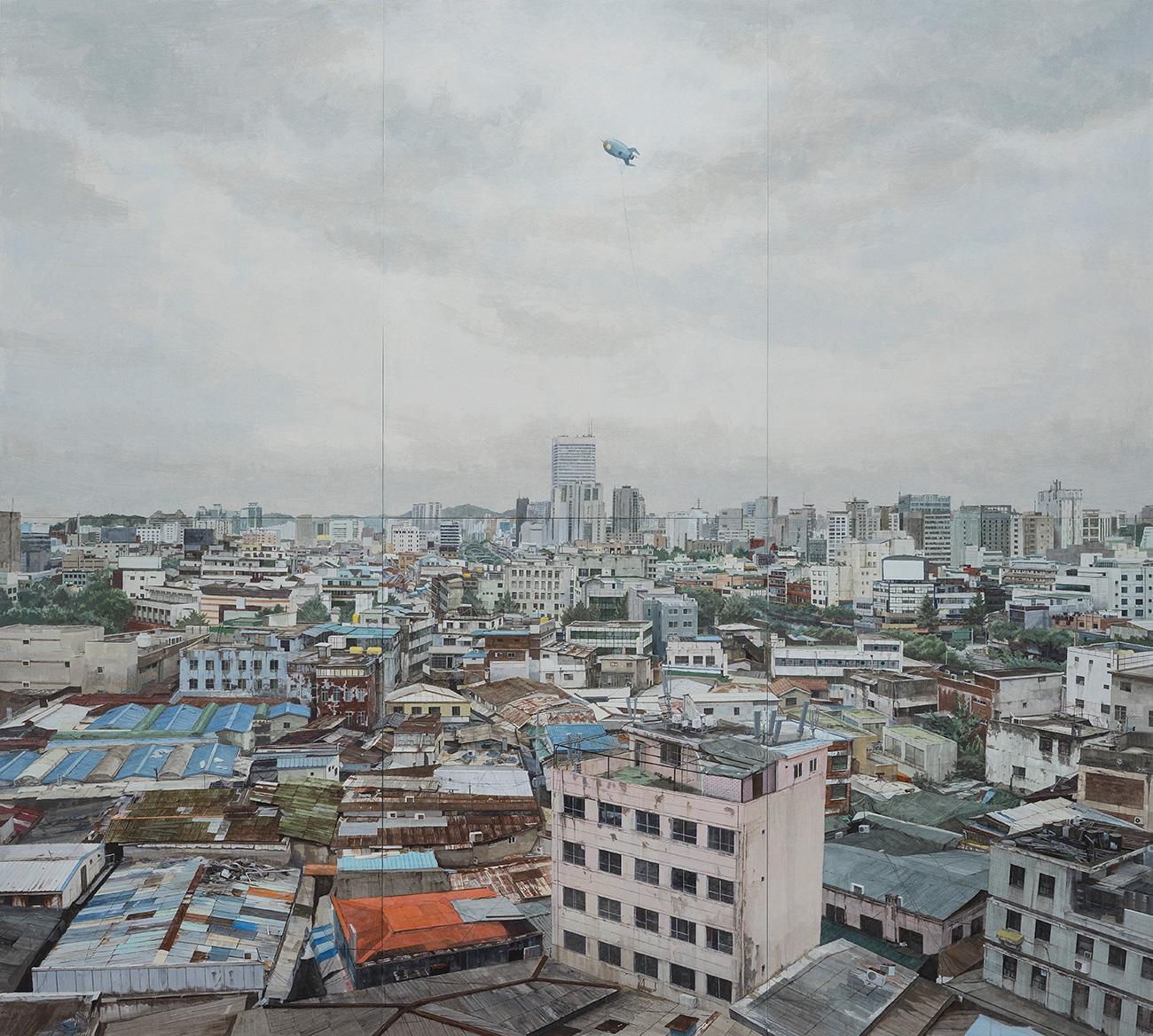
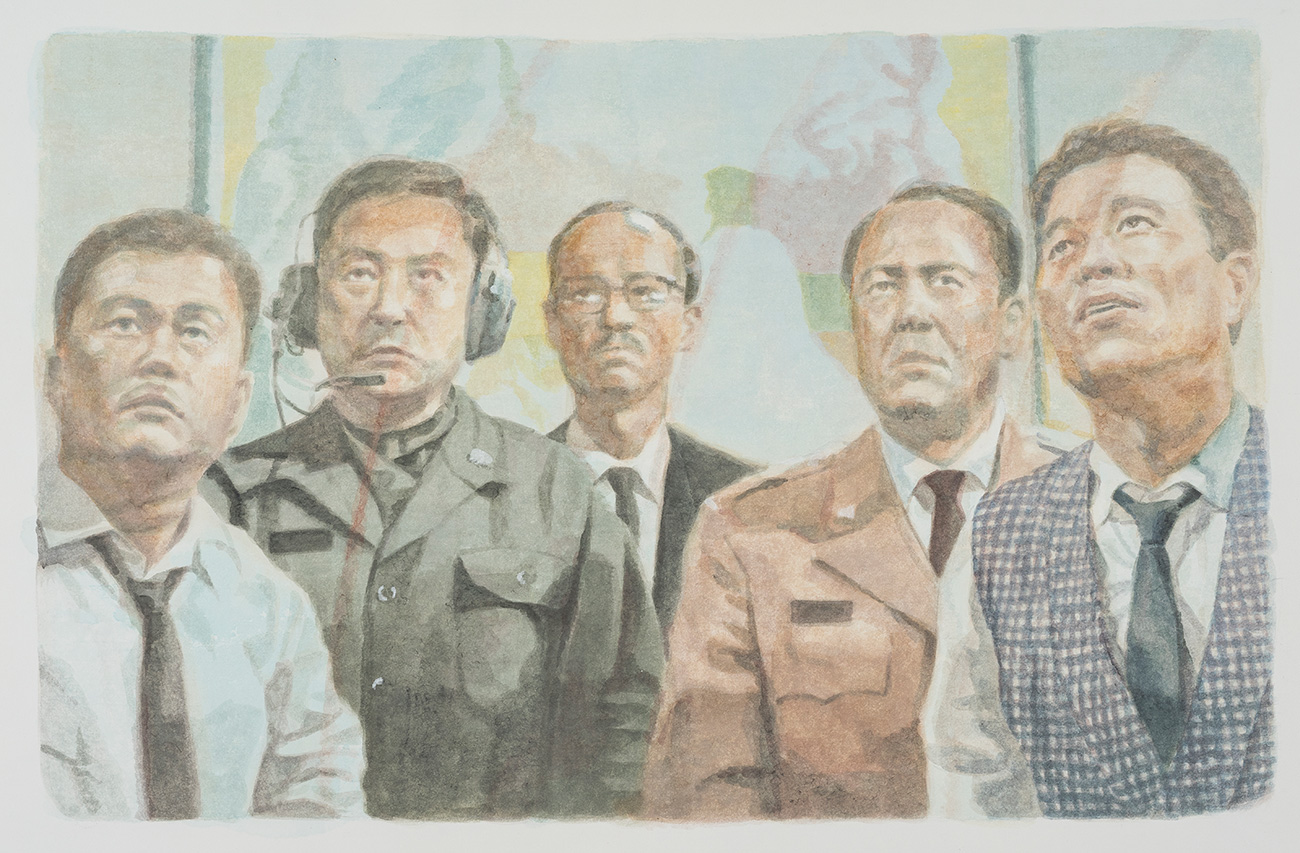
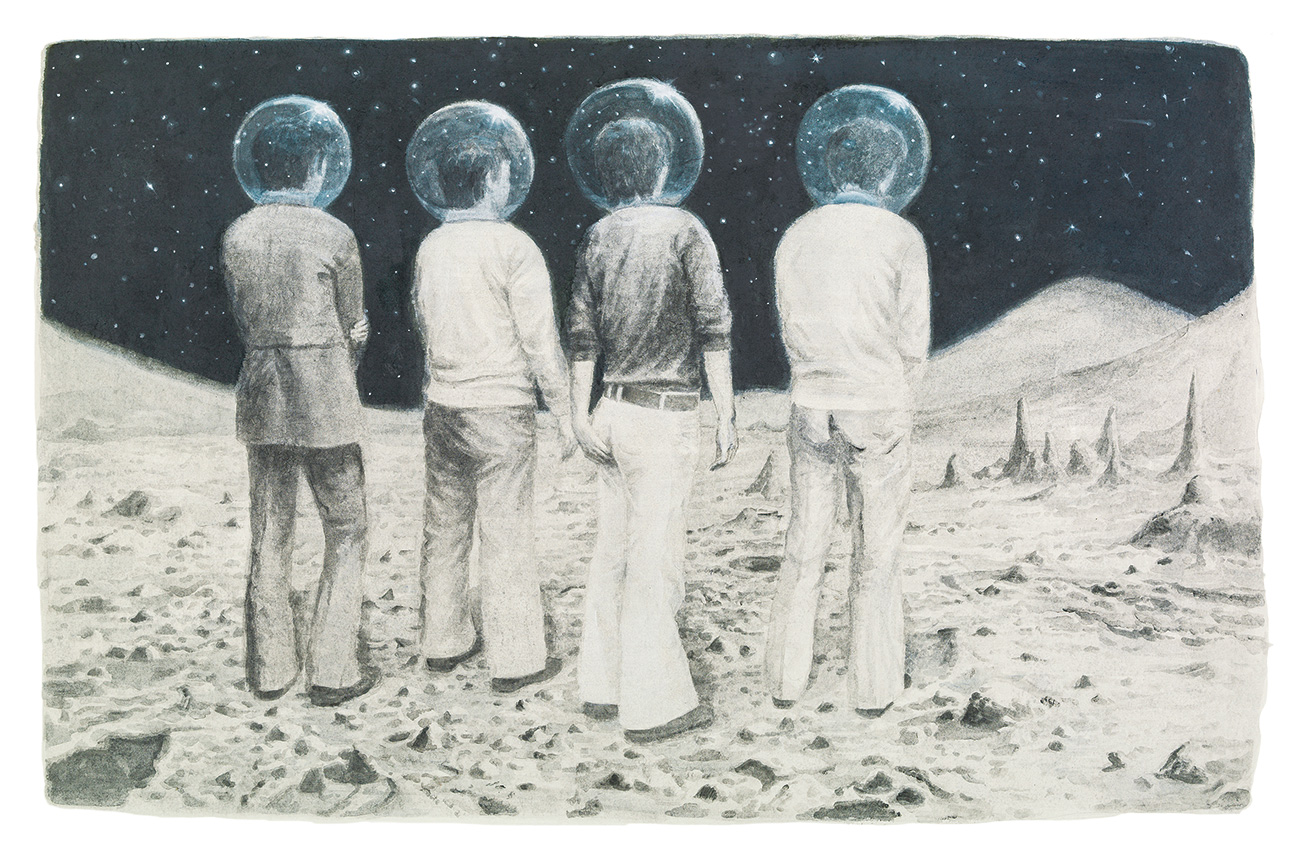
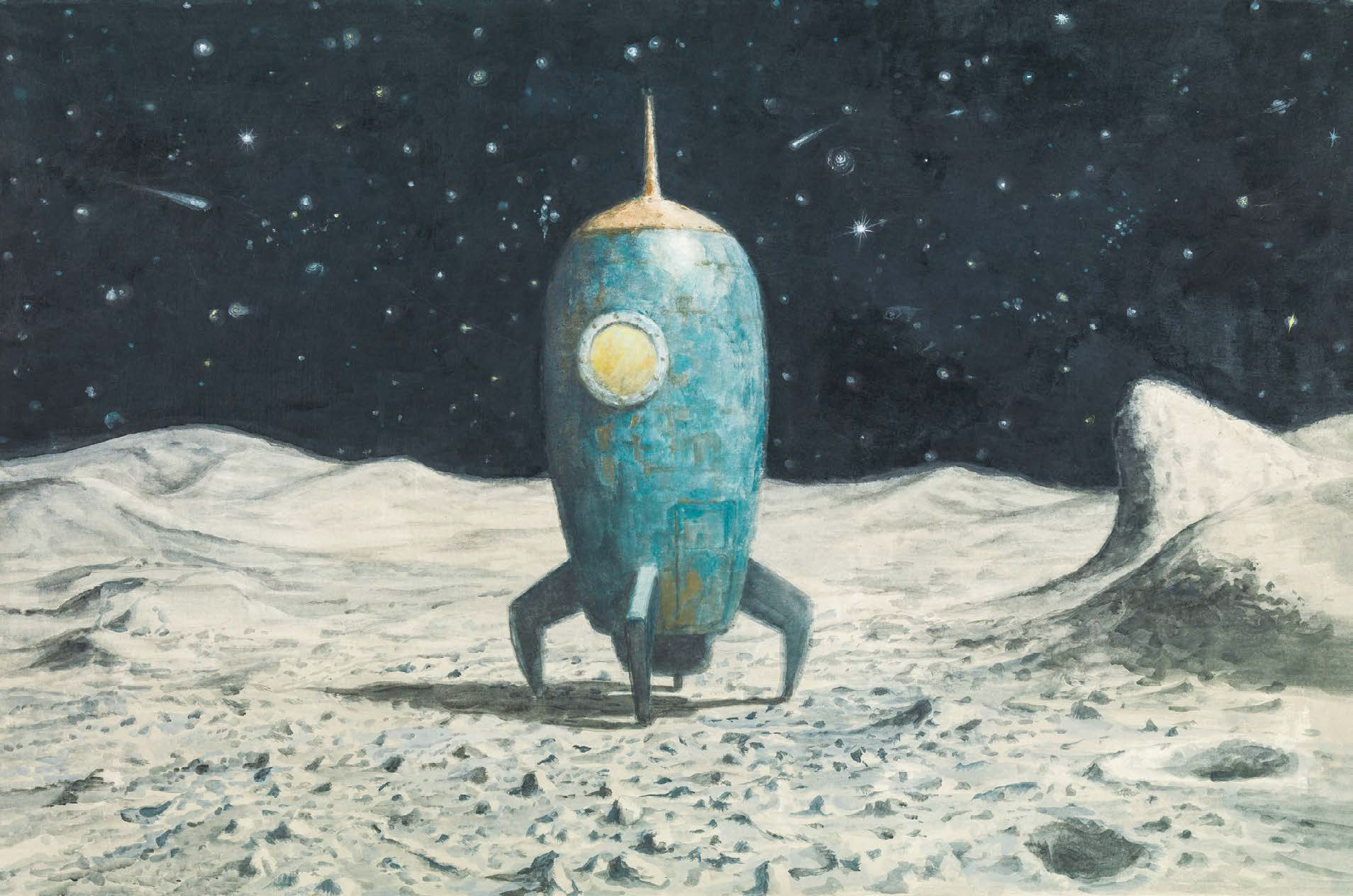
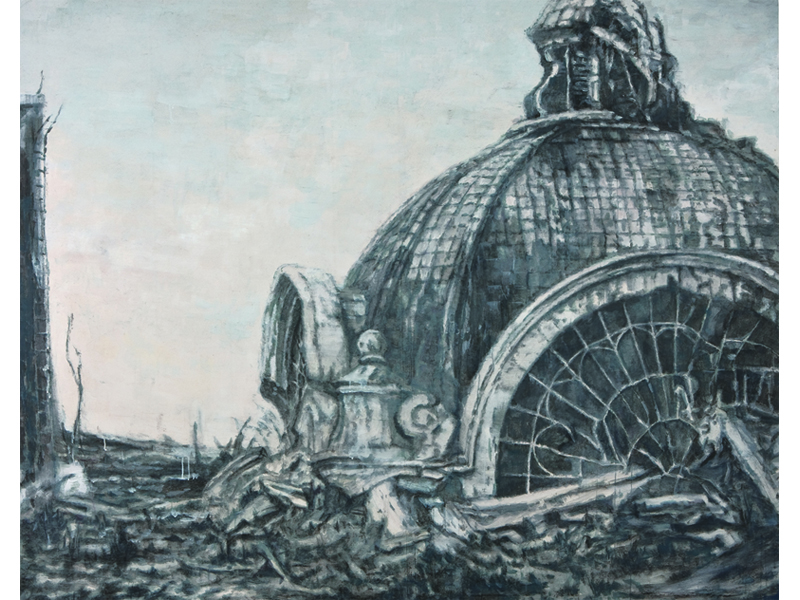
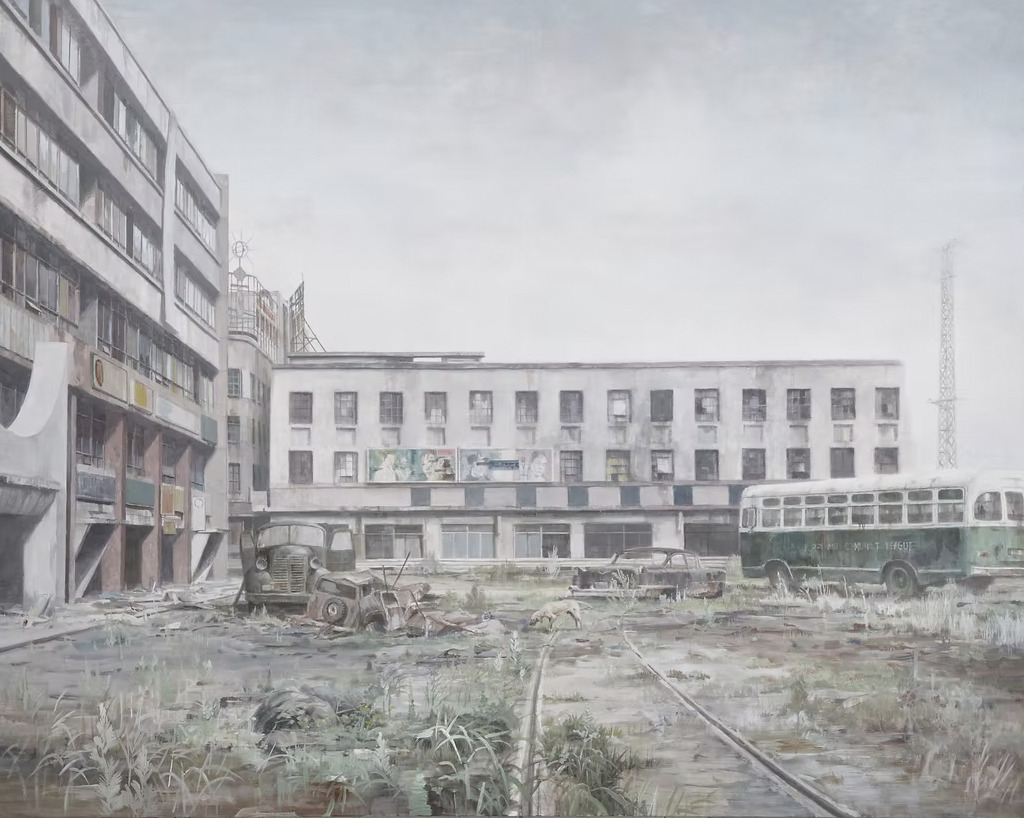
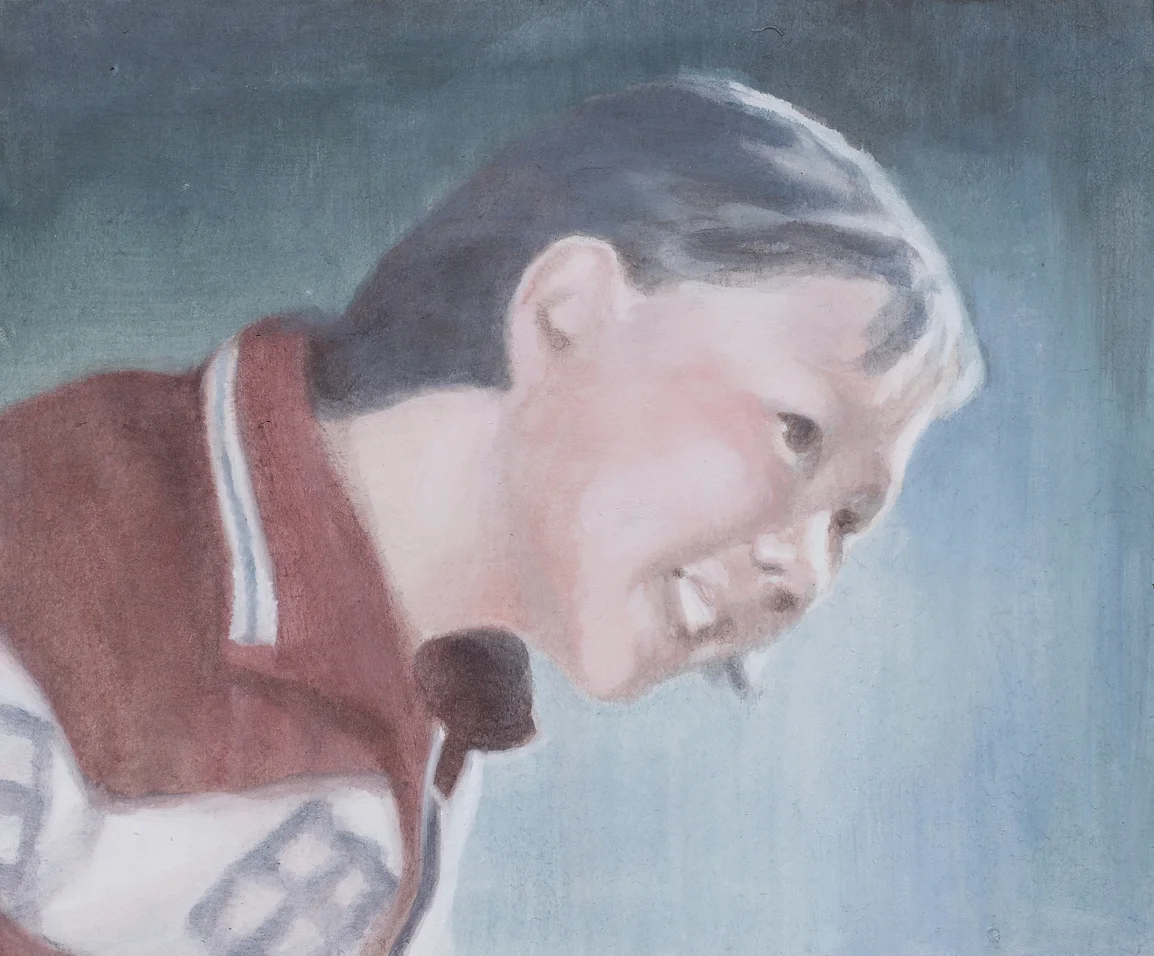
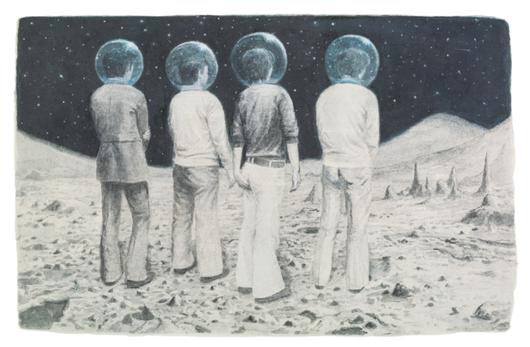
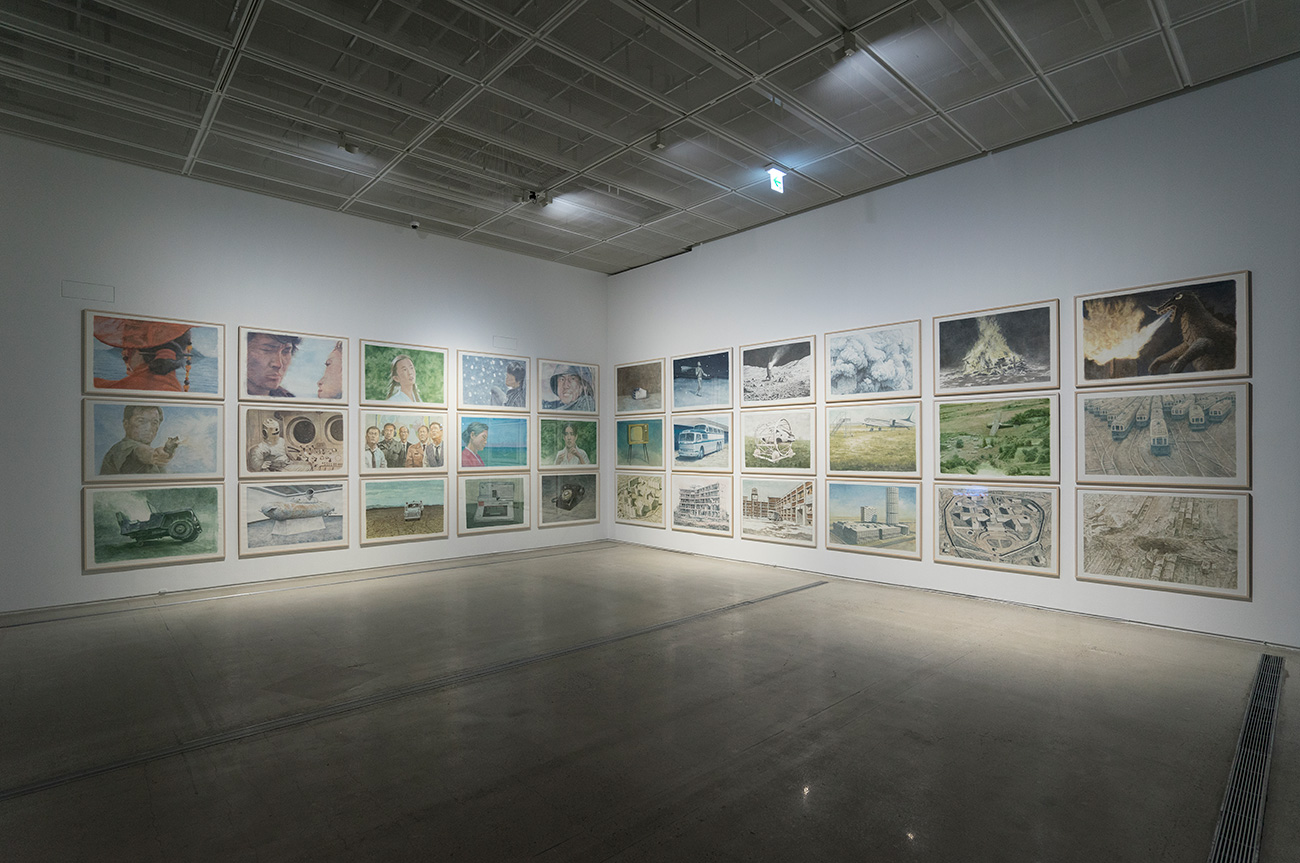
From the
2010s onward, Jung’s “archive paintings” actively incorporate photographs,
video stills, and internet-sourced imagery. Works such
as Youth(2012), Bright
Future(2011), and A Ball of a Dwarf(2018)
combine and transform images from disparate temporal and spatial contexts,
revealing the past not as a closed chapter but as a continuous layer shaping
the present. In this phase, painting functions simultaneously as a recording
device and as a means of intervening in historical imagery.