1.
Proposition: The Abyss of Time
Three
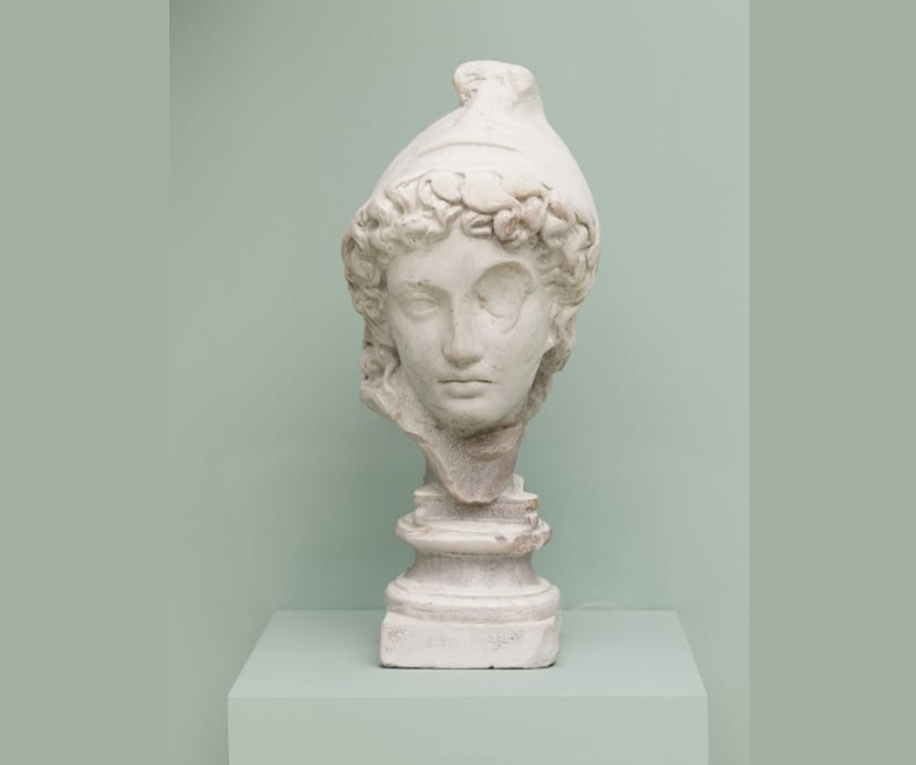
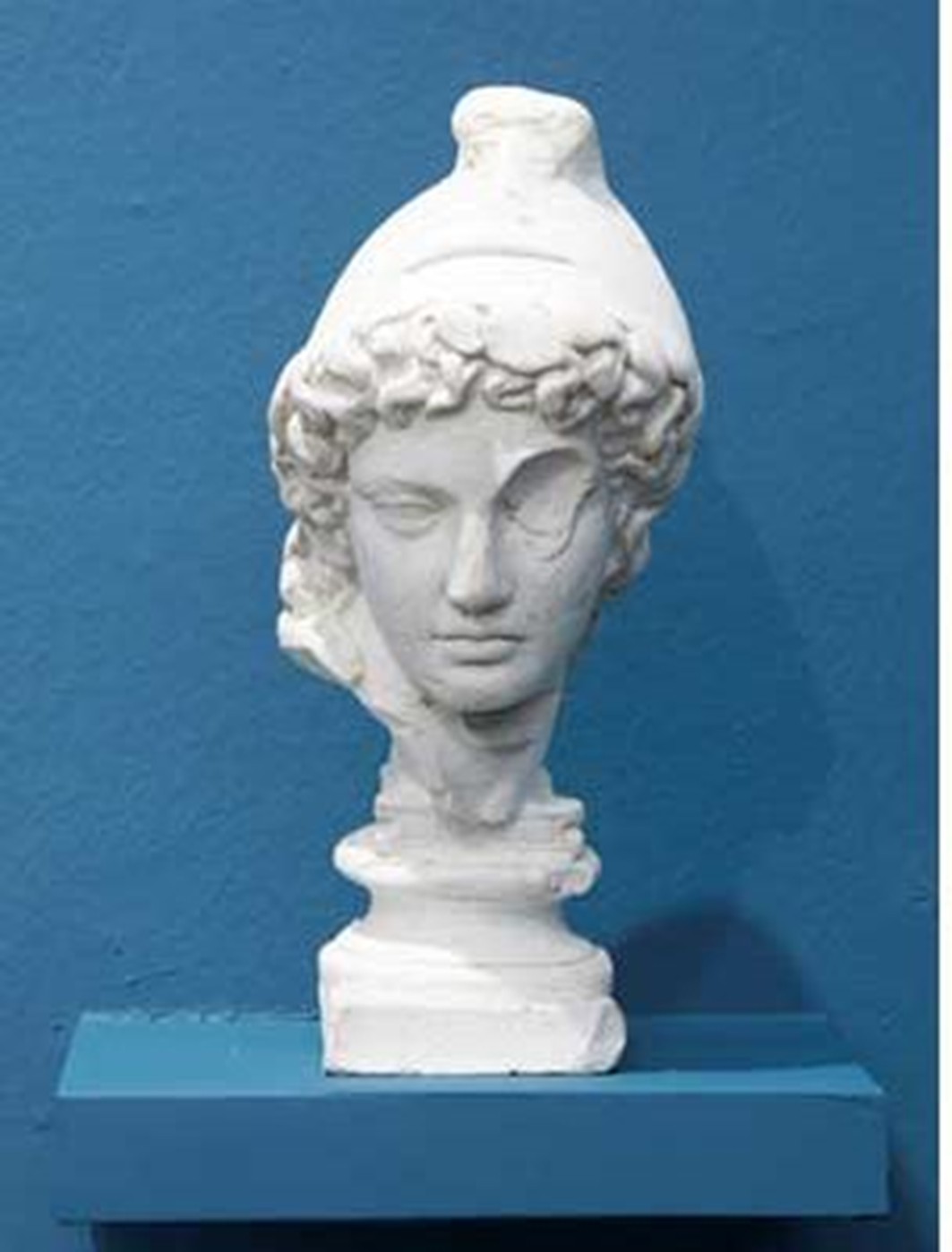
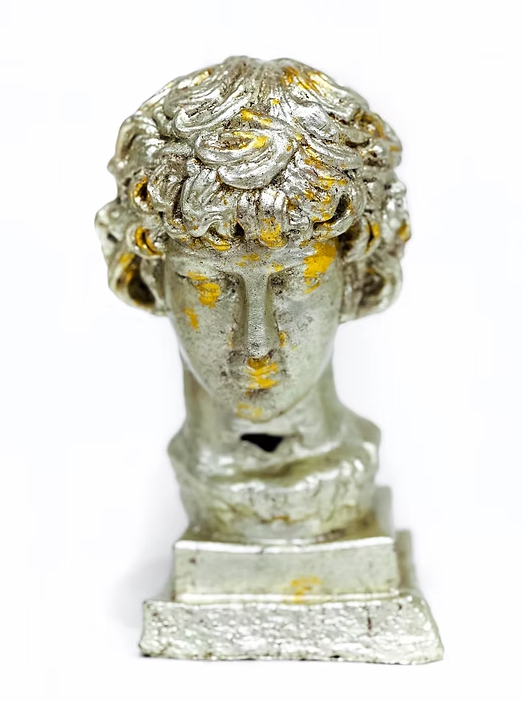
Venus heads are installed on the wall of the gallery building. They are the
“soap pieces” installed outside, in the very midst of the hot and humid
weather, for Meekyoung Shin’s solo exhibition. These works, named Weathering
Project(2010), arouse the feeling of the sense of place of the
building’s exterior through installing a fourth Venus head in the hallway that
leads indoors. The four Venus heads, mass-produced plaster statues cast in
soap, are iconic figures, and they not only attract the curious eyes of the
public in the plaza, Maronnier Park of Darhak-ro where the Arko Art Center is
located, and of the viewers visiting the gallery, but also inspire a series of
significant questions. Who brought the Venus statues to the plaza and why? What
are they made of, and why are they so wet, and seem as if they are going to
melt? Why are these fragile statues placed in this uncertain situation? What
will happen to these statues in the end?
Meekyoung
Shin suggested the title The Abyss of Time as she leads the flow of the
exhibition from the outside to the inside. This is paradoxical expression that
puts two opposite meanings, “to disappear” and “to exist”, in a parallel state,
implying a concept of “time” that embraces the contexts of the Weathering
Project, the Petrified Time Seriesand Ruinscape.
In particular, Ruinscape considers the true nature of
“various layers of time” and the uncertain existence that both are “becoming”
due to a decentred temporality.
Ruinscape also reveals a
destructuralized space and time, in which the inside and the outside, or the
past and the present, are loosely opened up and endlessly segmented, and which
discovers multiple layers of time that are accumulated in this chaotic
“intermediate place”. In this way, “something that disappears and still exist”
implies a series of locales and temporality while paying attention to the many
“intermediate forms” to be encountered in an accidental moment where these two
properties cross and connect. It reminds us of the chaotic middle that is
becoming deterritorialized by the numbers of connections, just like the plateau
of multiplicity of Gilles Deleuze and Felix Guattari.
It
has been a few years since Meekyoung Shin expanded the Weathering
Project into an architectural project, and she has been paying
continuous attention to its large architectural scale and to the context of
time and space in which such a scale is place. She studies the temporality
inherent in museums, which is represented as the “enumeration of stopped times”
or “the display of petrified times”, through the 《Cabinet of Curiosities》 (2014) held at The
National Centre for Craft & Design. Ruinscape is the
output of the works created in the continued process of these two perspectives,
and it signifies the decentralized and nonhierarchical system of time and
space, just like a large “plateau”, where multiple times and forms are
condensed and meet at some point.
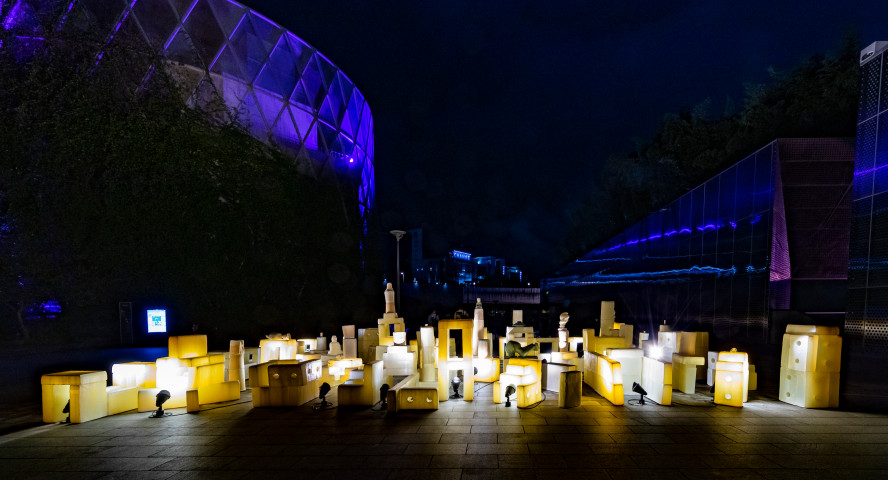
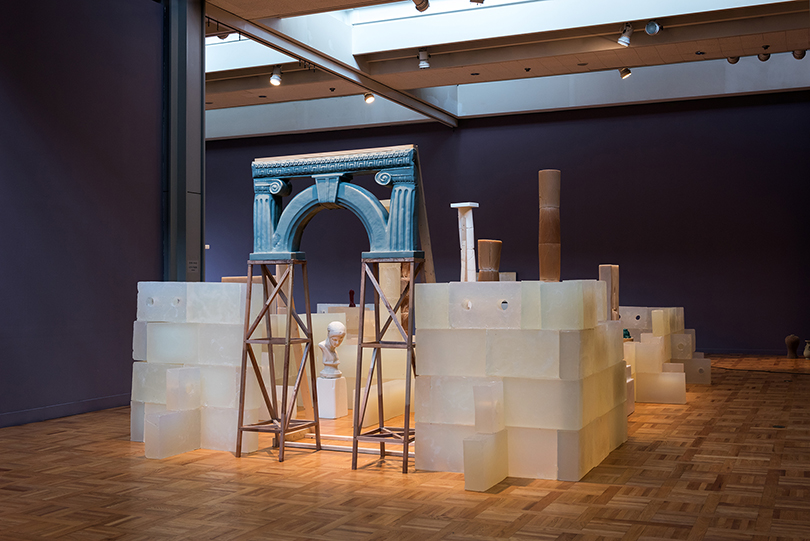
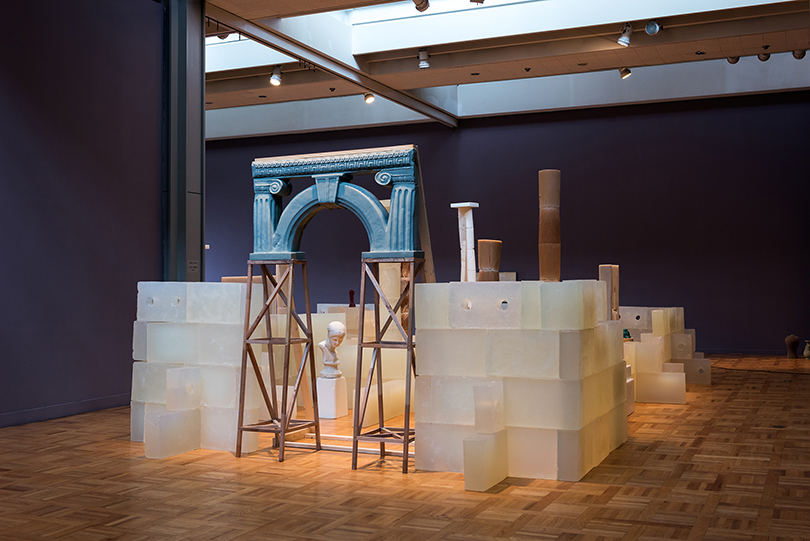
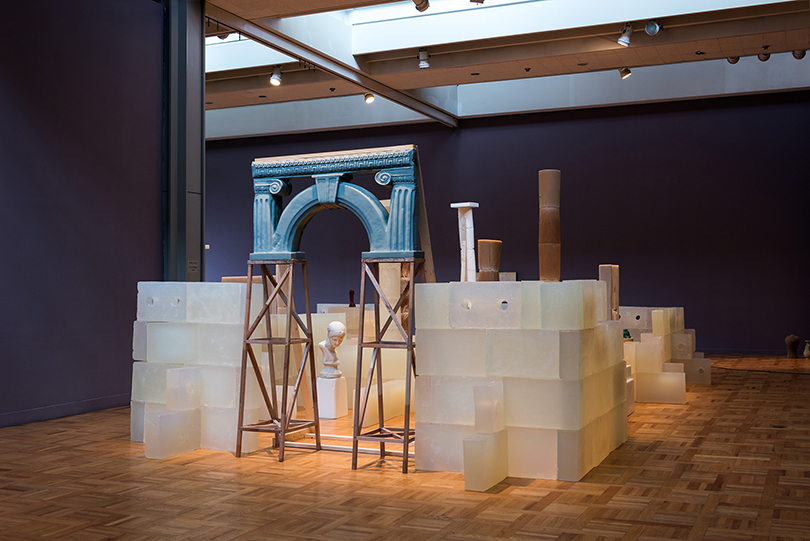
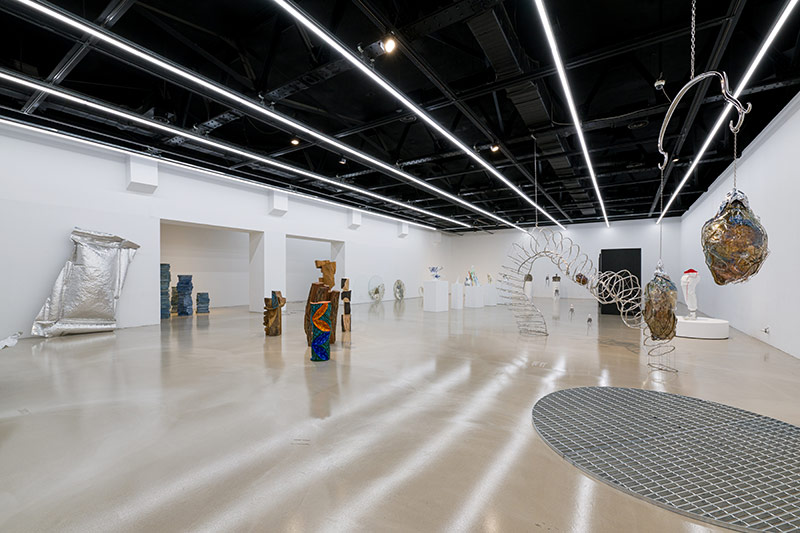
Boiled and cast soaps are stacked up like
bricks and form the architectural spatial outline of Ruinscape
to intensify the conditions of the ruin. When looking at the architectural
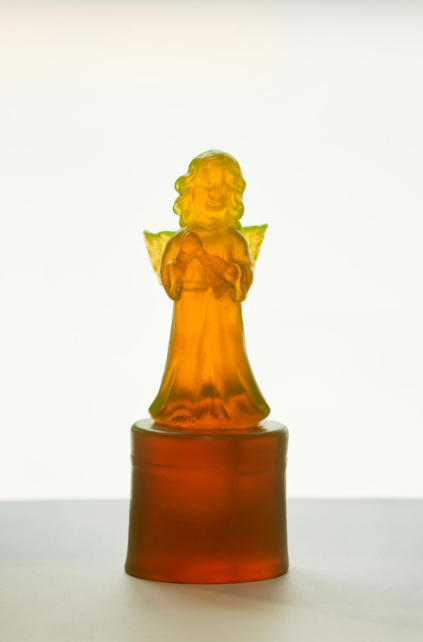
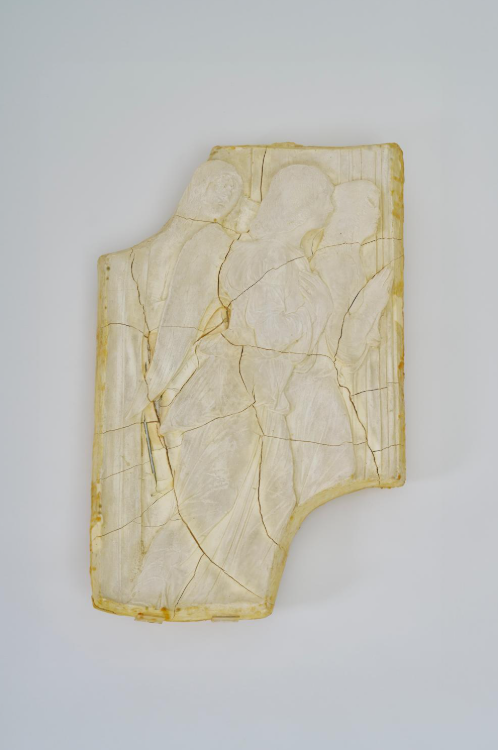
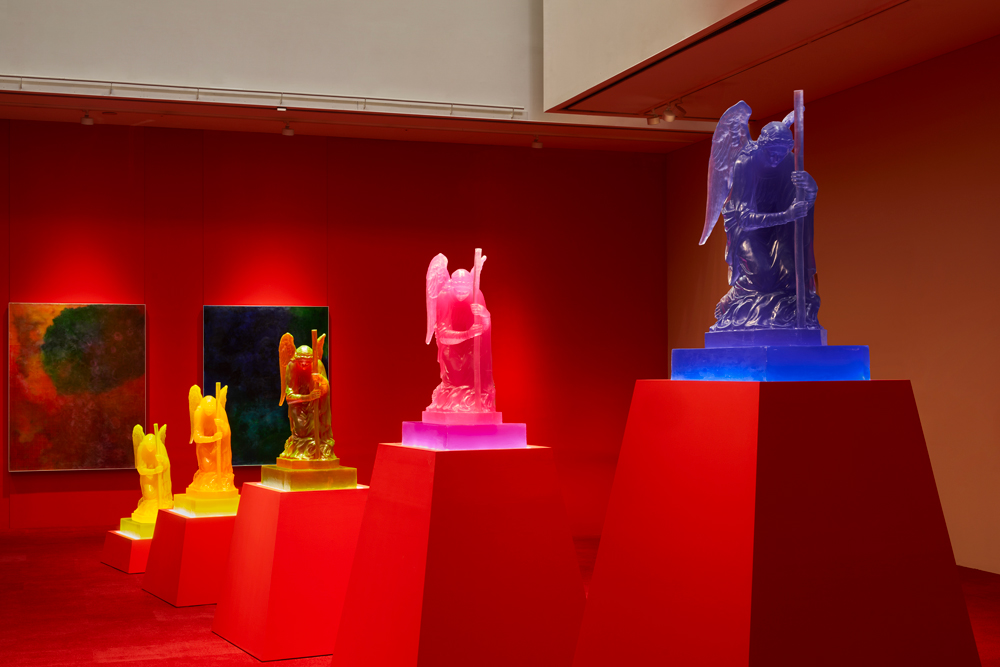
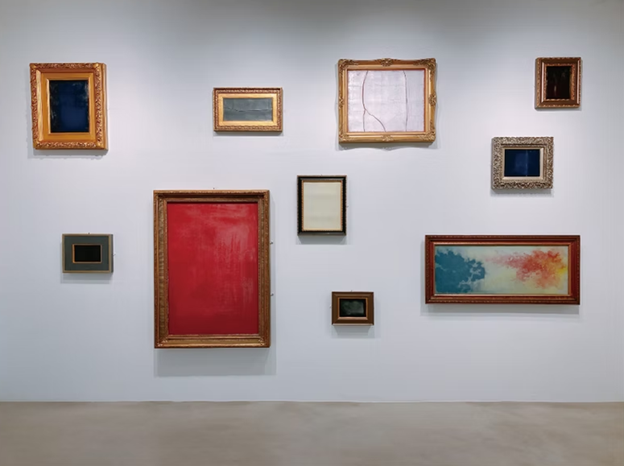
structures of Ruinscape: a wall (2018), Petrified
Time Series: a Mirror (2013), Petrified Time Series: Angel
(2013), the forms dragged by Meekyoung Shin into the time and space of “ruins”,
we feel that they are referring to the existences that could be self-sufficient
in the “eternal currentness of the moment”. When the existences in the “eternal
currentenss”, which have been defined transcendently from reality, come to an
end, called a “ruins” as a series of intermediate forms that do not have any boundary
between disappeared things and existing things by considering the narrative
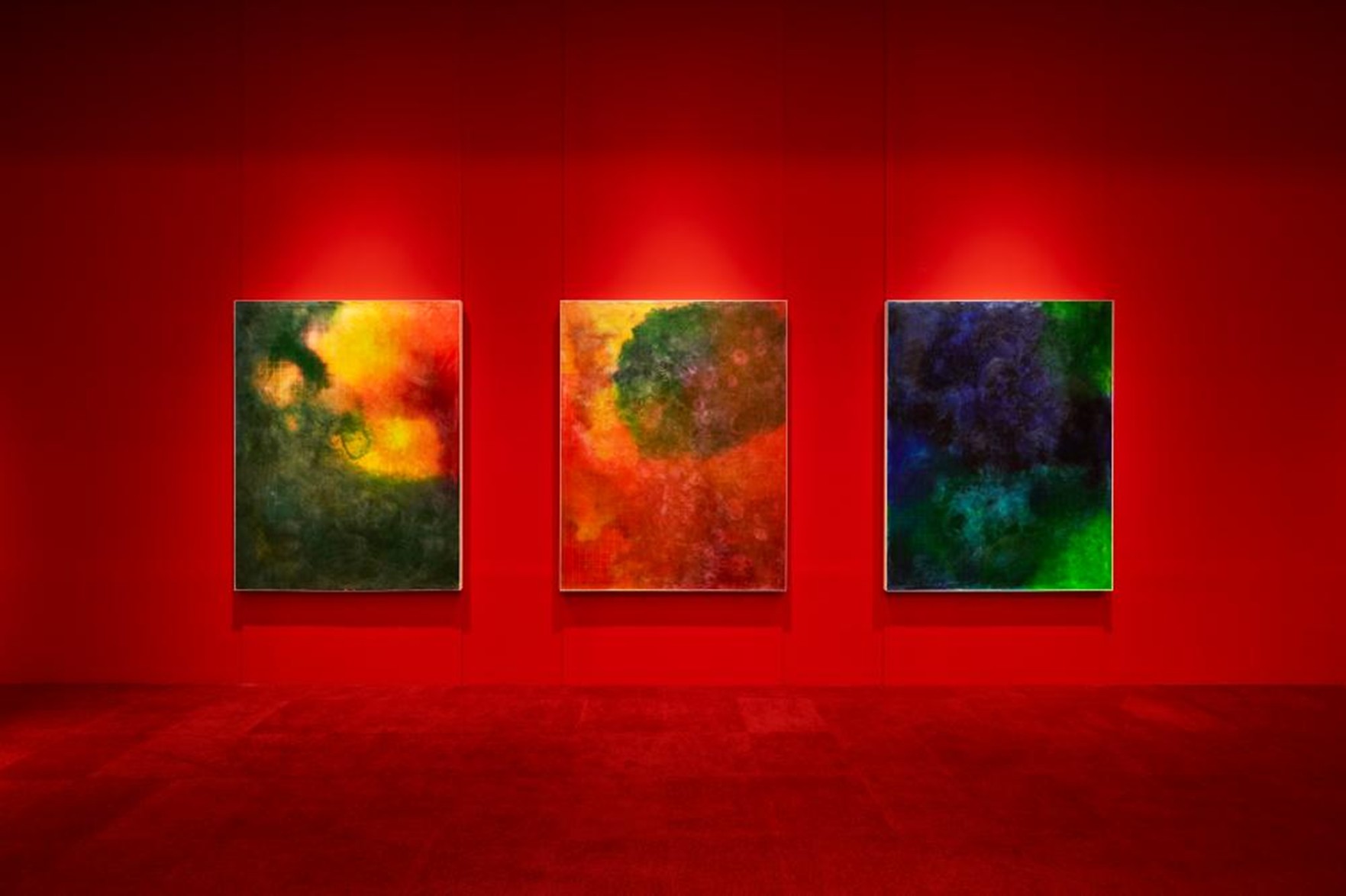
times and visualising the property of those times through “walls”, “paintings”
and “mirrors” in the form of soaps.
As
Suasn Buck-Morss borrowed the idea of Walter Benjamin and described a “ruin” in
‘The Dialectics of seeing: Walter Benjamin and The Arcades Project’ (1991),
ruined buildings, like a collapsed castle, have the trances of the matter that
is revealed when the vitality of the building has escaped. In that sense,
Meekyoung Shin’s ruins significantly emphasized the time (history), in which
the collapsed and decayed form lasted for a long time, and the properties of
the remains. Interestingly, this can be seen in her new works; A
Disembodied Soul 1(2018) and A Disembodied Soul 2
(2018). But the “lying” body figured made with white casting tapes are
explained as a “bodiless soul” instead of a body without soul. In Ruinscape,
Meekyoung Shin brought back the timeless existences (spirits) that existed in
the history of times and transposed them into the physical traces remaining in
the time called a ruin, like fossils. In other words, a bodiless soul is close
to representing the matter and traces of an intermediate form that “disappears
and exists” in ruins.
2.
The Logic of Time: The Process of Translation and Petrification
Ruinscape
is a paradoxical place where the current time has ceased forever and therefore
can be present. Meekyoung Shin probably thought about the logic of the times to
be brought into reality through the soap sculptures solidified with boiling
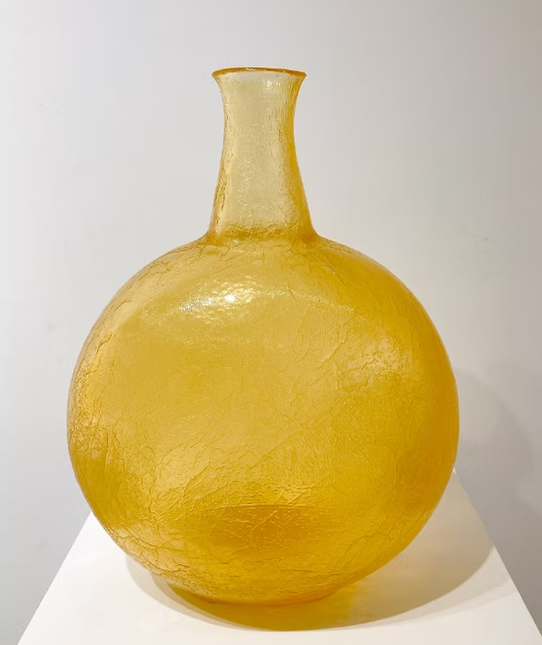
liquid, as if freezing flowing time. For instance, she had been immersing
herself in creating the forms that are “becoming” as they transform by
expressing the concept of time through “translation” and “petrification”. Let’s
look into her work process of transforming and condensing actual times into
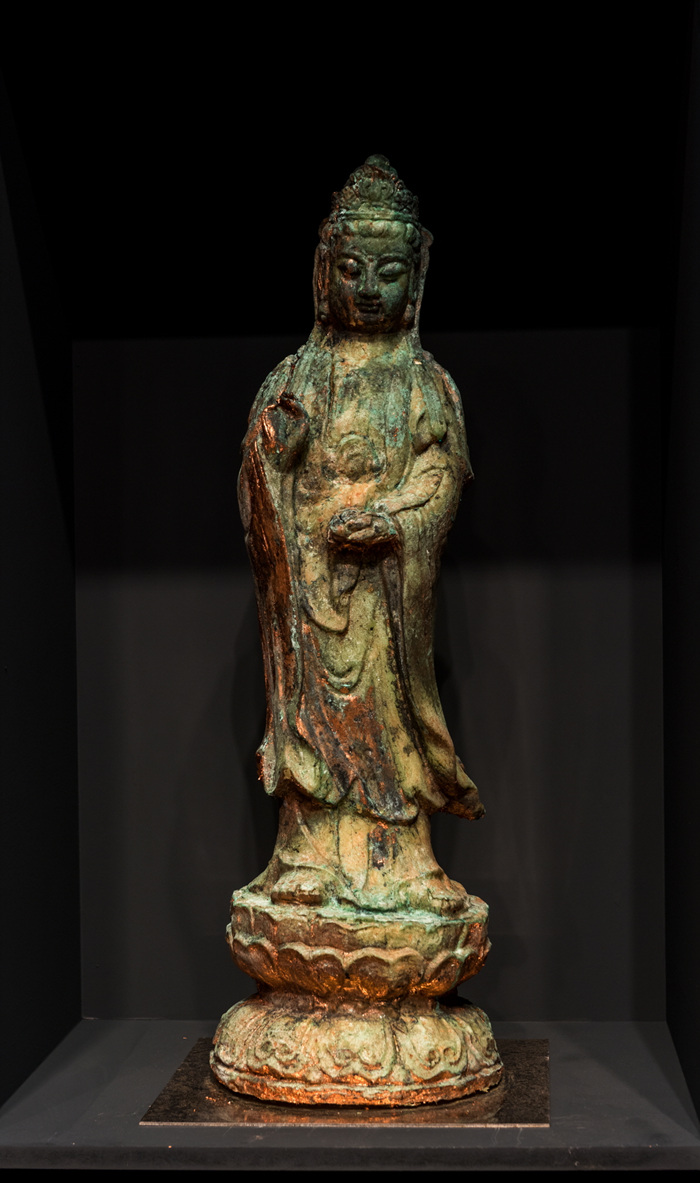
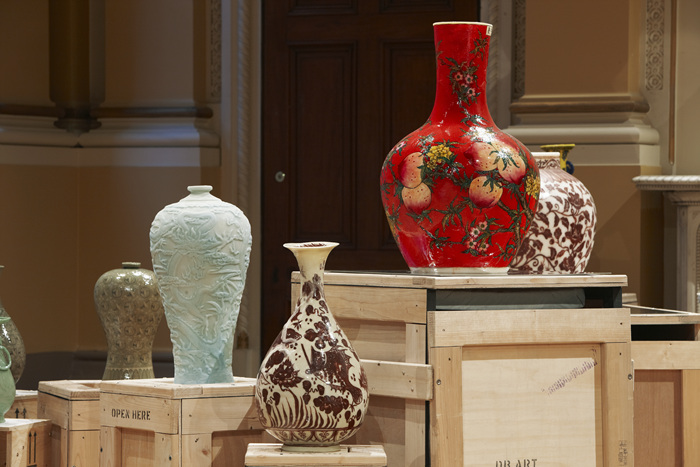
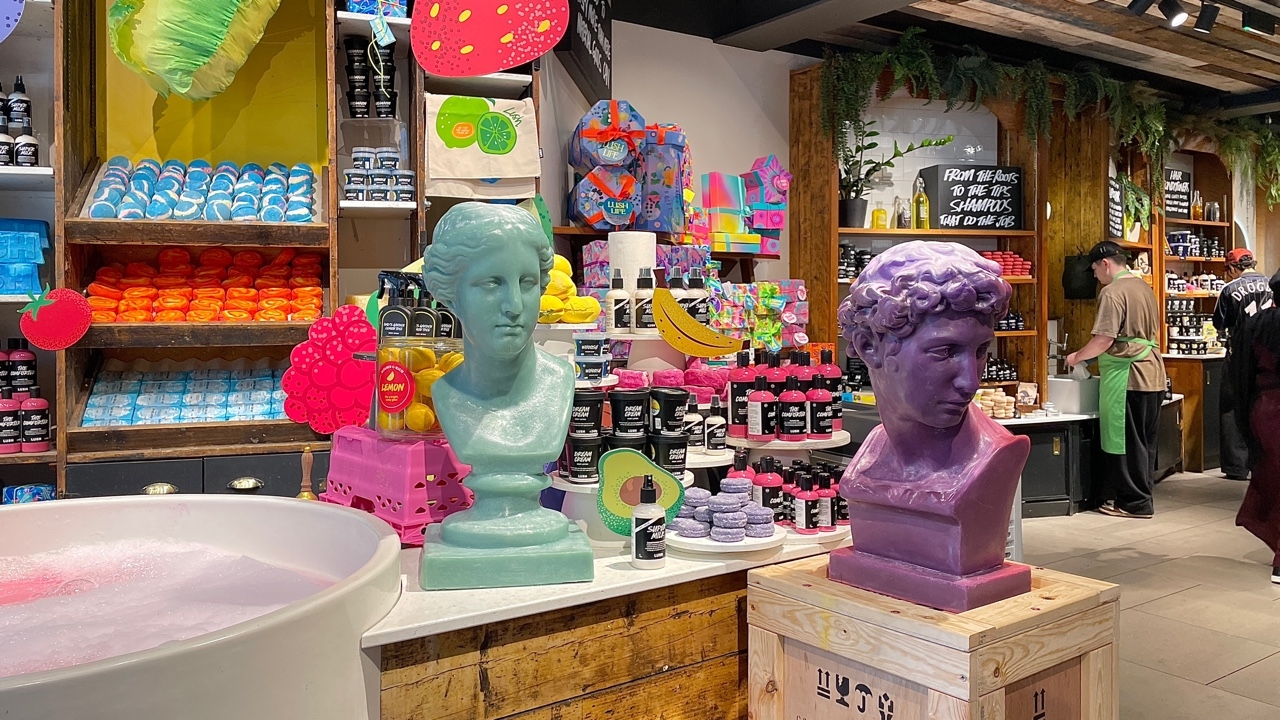
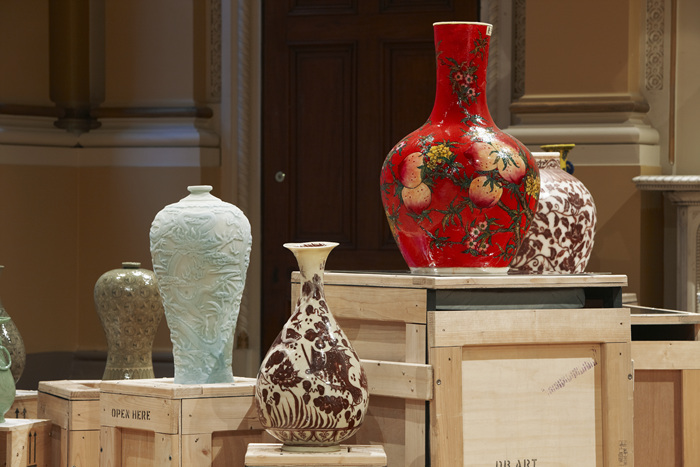
different speeds through petrification process. In Toilet Project,
eekyoung Shin created copies of classical statues and Buddha statues through
soap casting and installed them in public toilets to make a soap that fulfilled
its purpose, regardless of the aesthetic or religious meaning of the statues.
When the soap statues were used by an anonymous public and visibly transformed
by becoming worn down, Meekyoung Shin found the condition to redefine the
copied products, which functioned as soap, into sculptural forms by pausing
time at a certain moment. This object, discovered and newly defined by a
person, obtains its status and value as an “artwork” that no longer allows any
transformation when it is officially placed on the display stand of an
exhibition hall, although it still connotes the potential to be transformed
over the course of time. Meekyoung Shin, in short, has been seeking to disable
a single time inherent in the original form during the process of petrification,
and to define new forms created from the transformation in overlapping and
complex layers of times.
If
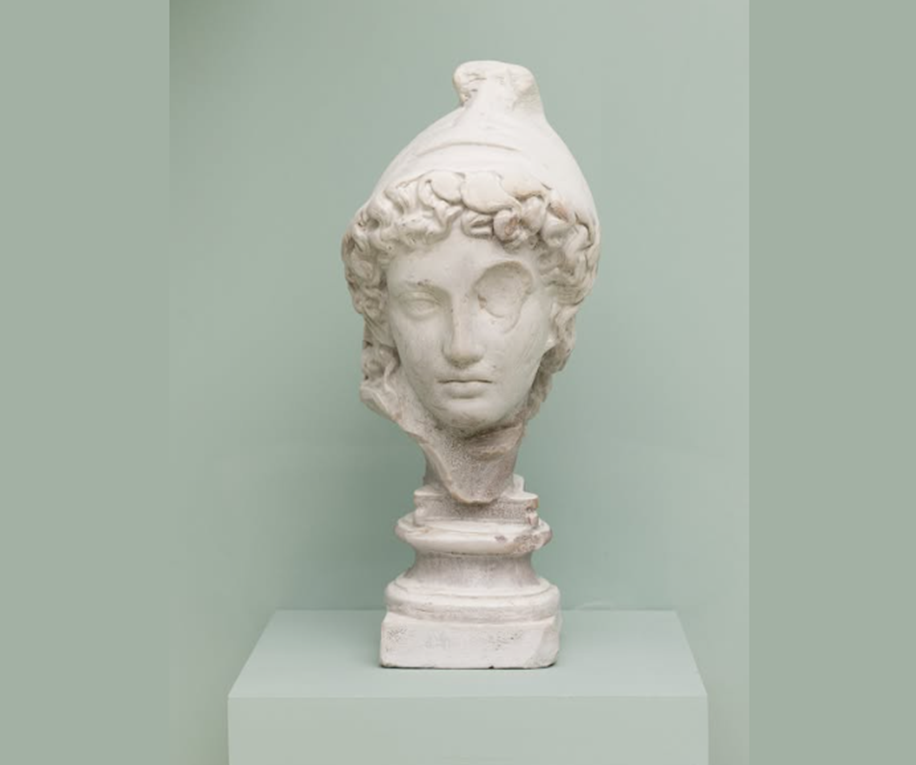
we look back to her earlier works, we can meet her representative work Translation
Series, Toilet Project or Weathering
Project experiments with the transformation and dissipation of forms
in this existing time, and suggests a discussion about the unique and
monumental value that is obtained when time is frozen in the process. On the
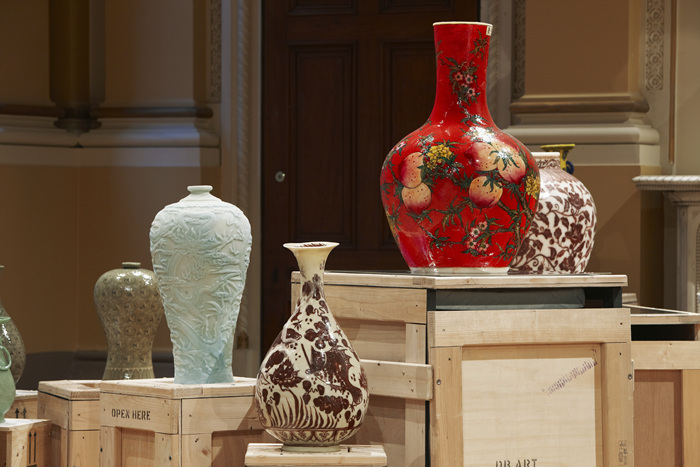
other hand, the preceding work, Translation Series, embraces
a discussion on the cultural time/spectrum differences that imperfectly
translate the solid symbolism of the classics and a tradition beyond time. 《The Abyss of Time》, Toilet Project
and Translation Series are installed in the same space
facing each other.
One thing to not in Translation Series is
the unavoidable mistranslation of the time difference that is derived from the
translation process, and this inevitable circumstance is the same as a
misalignment of the time occurring when the “sense of time” accumulated in the
original form cannot be shared. In other words, Toilet Project
or Weathering Project froze the temporality that has been
accumulated through experiences into our common history (time), but Translation
Series directly faced the imperfection of translation and whether or
not it is possible to translate the accumulated sense into the frozen time.
Petrified
Time Series (2018), which is expanded as a new version in this
exhibition, leaves the impression that is regathers and materializes the
scattered discussion on the sense of time from Translation Series
to Toilet Project and Weathering Project.
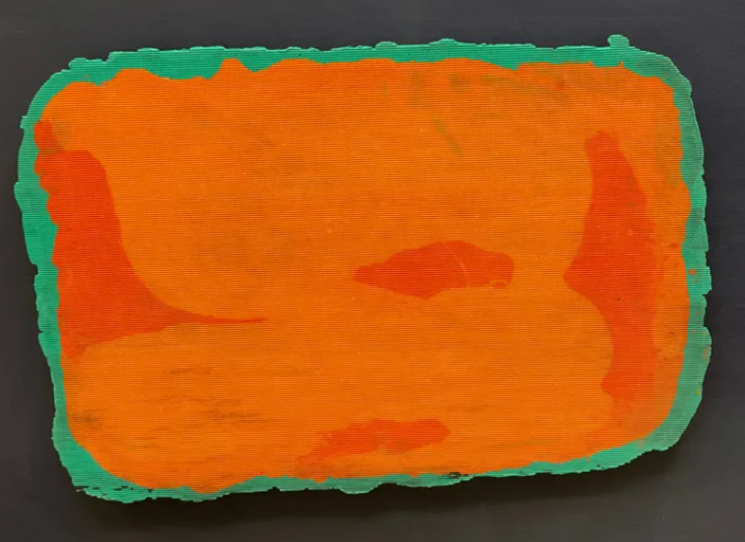
Petrified Time (2006) and Petrified Time Series:
Drawing (2009), which now have naturally transformed surfaces as they
were left in a corner of the studio for a long time, foreshadow a sense of time
connoted in “Petrified Time”.
Meekyoung Shin paid attention to her past work
from Translation Series, where the pictures drawn on the
surface of soap pottery with metal powders are completely transformed over time
due to oxidation. She concentrated more on the temporality that may be inherent
in the pottery shape found in her studio, just like an old artifact made of
metal, and created the new version of Petrified Time using
metal powders by systemizing the logic of time.
Considering
the incomplete forms scattered around the architectural structures of Ruinscape,
Meekyoung Shin is learning a sense of time in which the previously completed
work is “being discovered as” or “becoming” a new form by connecting they
layers of multiple times. We can say she experimented with the possibility
where the failed and neglected soap potteries can become the unique symbols of
a “petrified time”, owing to the accumulated time that condenses the failed
form in the existing time by covering them with silver or copper foil and
quickly oxidizing the surface.
It is clear that the architectural indoor scene
seems more “sculptural” than the four damp Venus heads outside because a sense
of a “petrified time” led these two forms to “become” something else. This
means that Meekyoung Shin has been continuously exploring the way in which a
series of forms existed in many times. Her works, in particular, experience the
stage of “becoming” due to an accumulated time as they enter into the
exhibition hall as stationary forms.