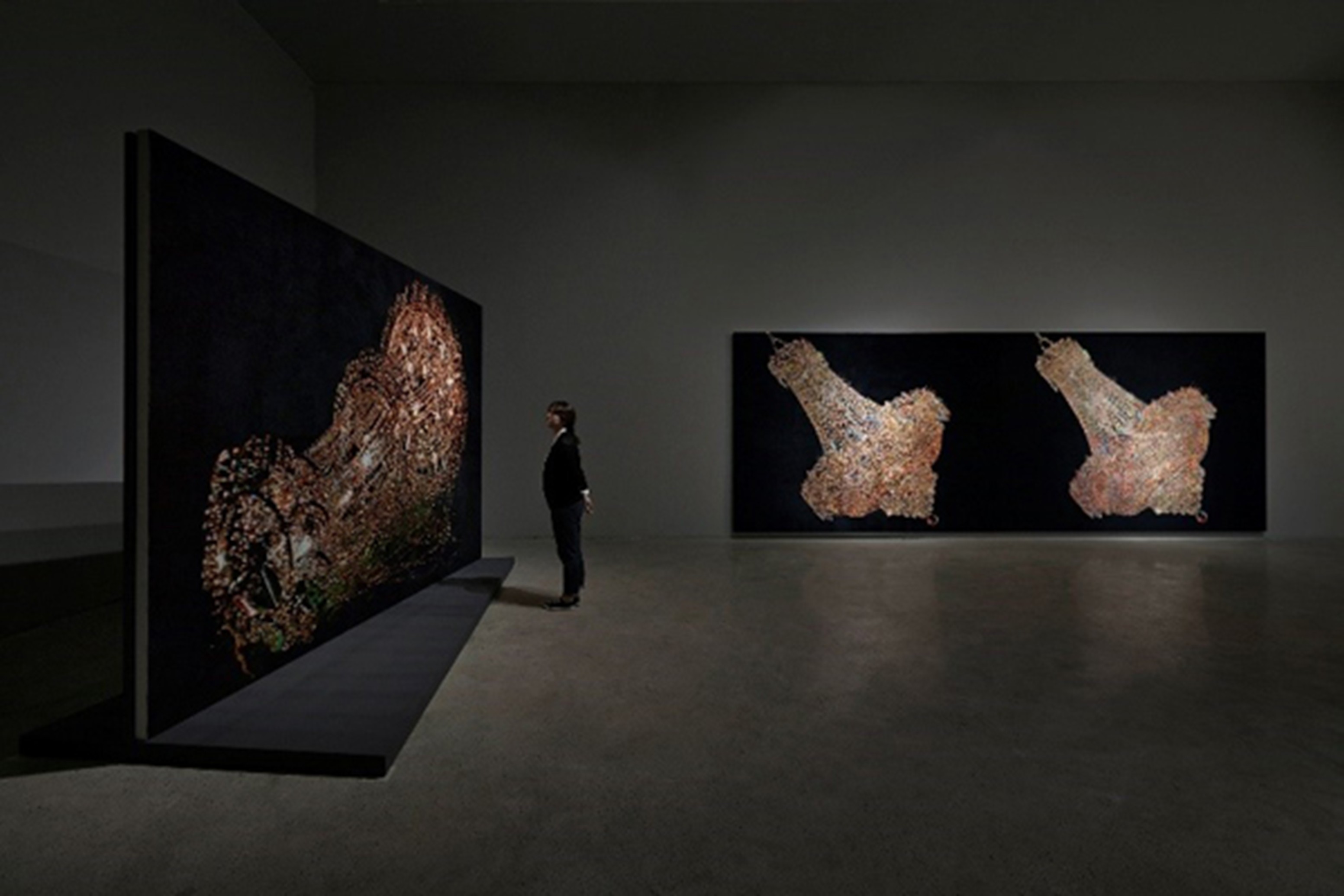
Ham’s work
addresses one of the most sensitive issues in modern Korean history—division
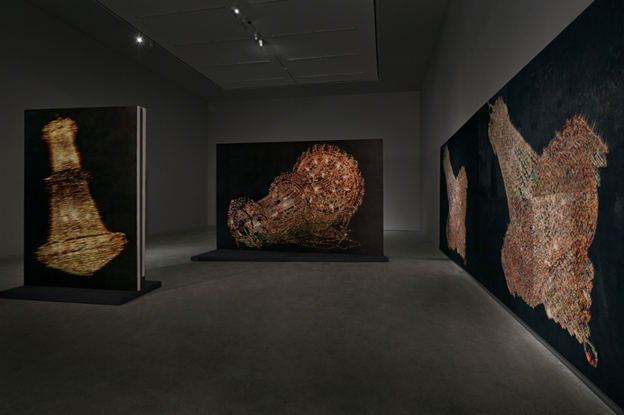
and ideology—without reducing it to direct representation. North Korea does not
simply “appear” on her surface. Instead, she incorporates collaboration with
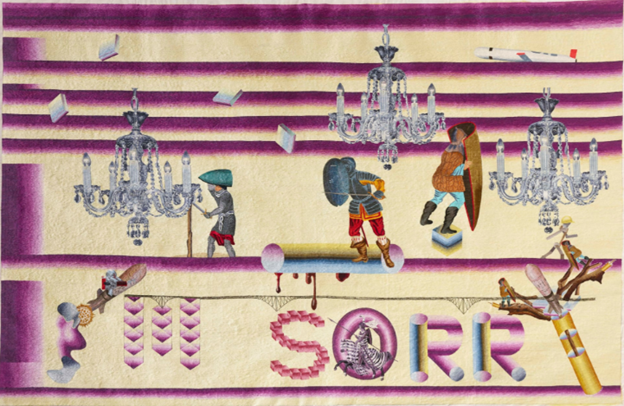
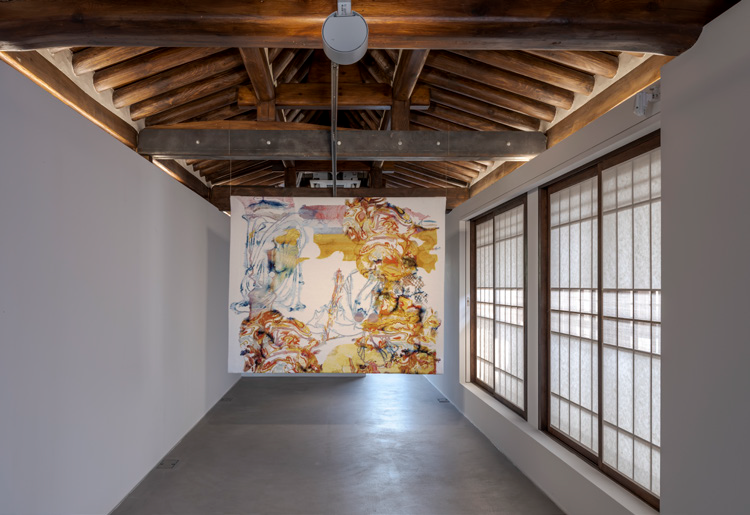
North Korean embroidery workers into the very structure of production. Division
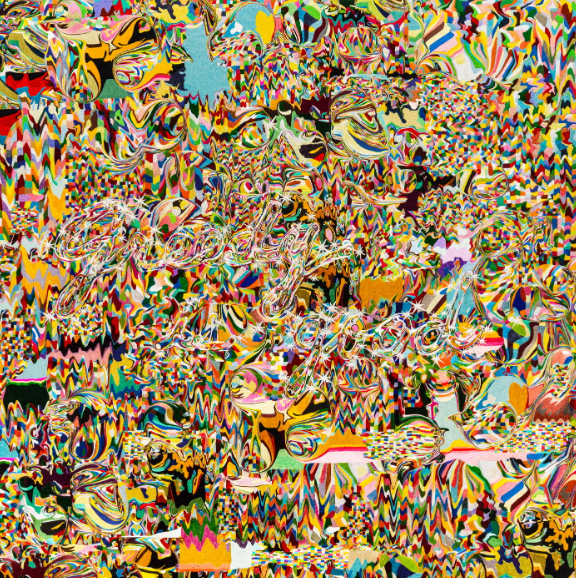
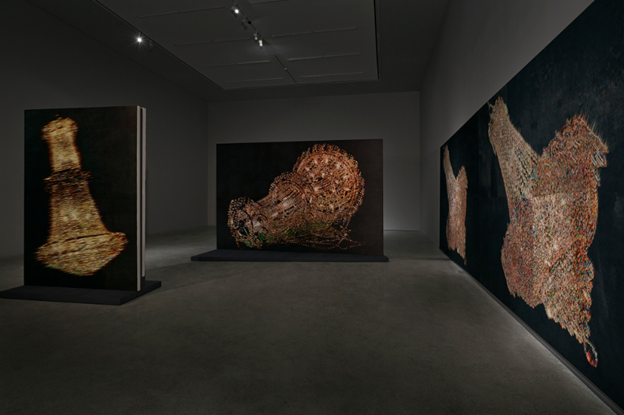
thus becomes a process rather than an image. The completed embroidered surfaces
are decorative and lavish, yet behind them lie unpredictable delivery routes,
delays, risks, and tensions. Ham’s work incorporates this entire invisible
process as part of the artwork itself.
This is
also what distinguishes her embroidery from other contemporary fiber-based
practices. While many textile works focus on tactility or the recovery of
labor, in Ham’s case labor operates as a political structure rather than merely
a material quality. The questions of who makes the image, where, and under what
conditions sustain the work. The uncertainty and uncontrollability embedded in
production are not background circumstances but foundational conditions shaping
its form.
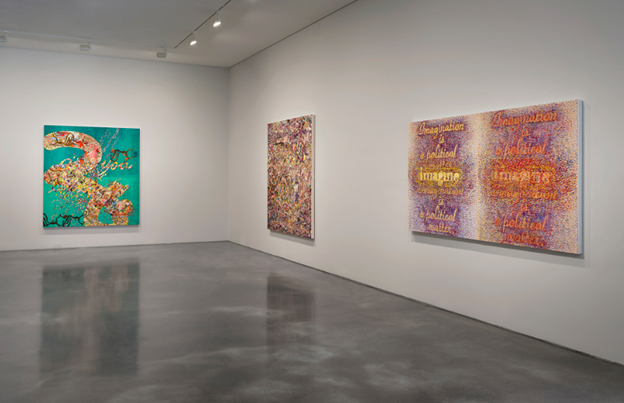
In her
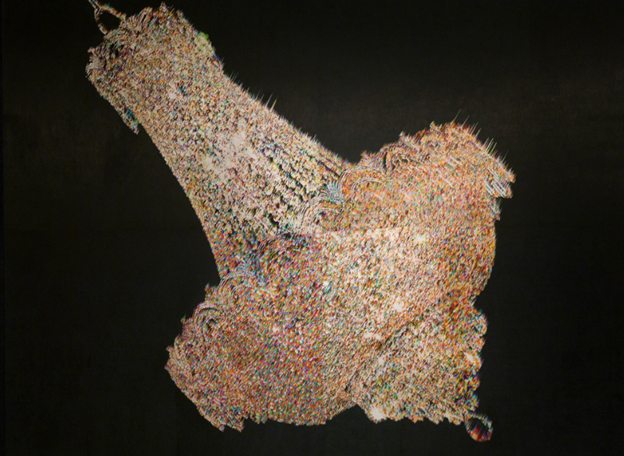
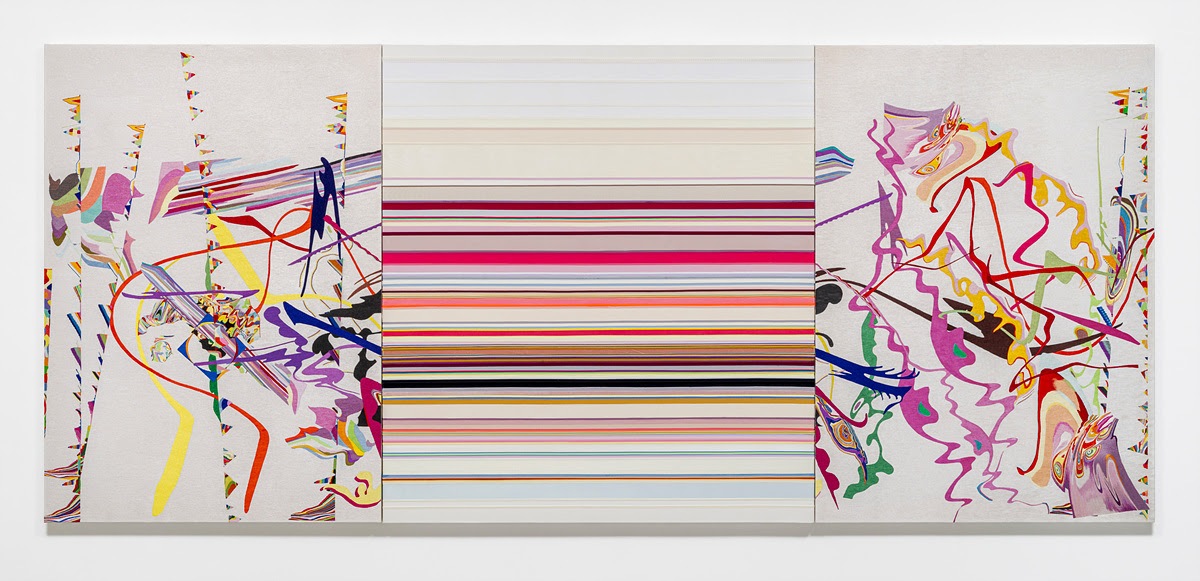
recent works, this tension shifts direction. In 《Phantom and A Map》, ribbon tapes and woven
grids evoke digital screens while remaining materially grounded. The experience
of communicating through digital networks during the pandemic prompted renewed
reflection on the gap between virtual and physical realms. Notably, as digital
environments expand, she observes that emotions intensify in increasingly
primitive and analog ways. These recent works present abstract surfaces where
these two dimensions collide.
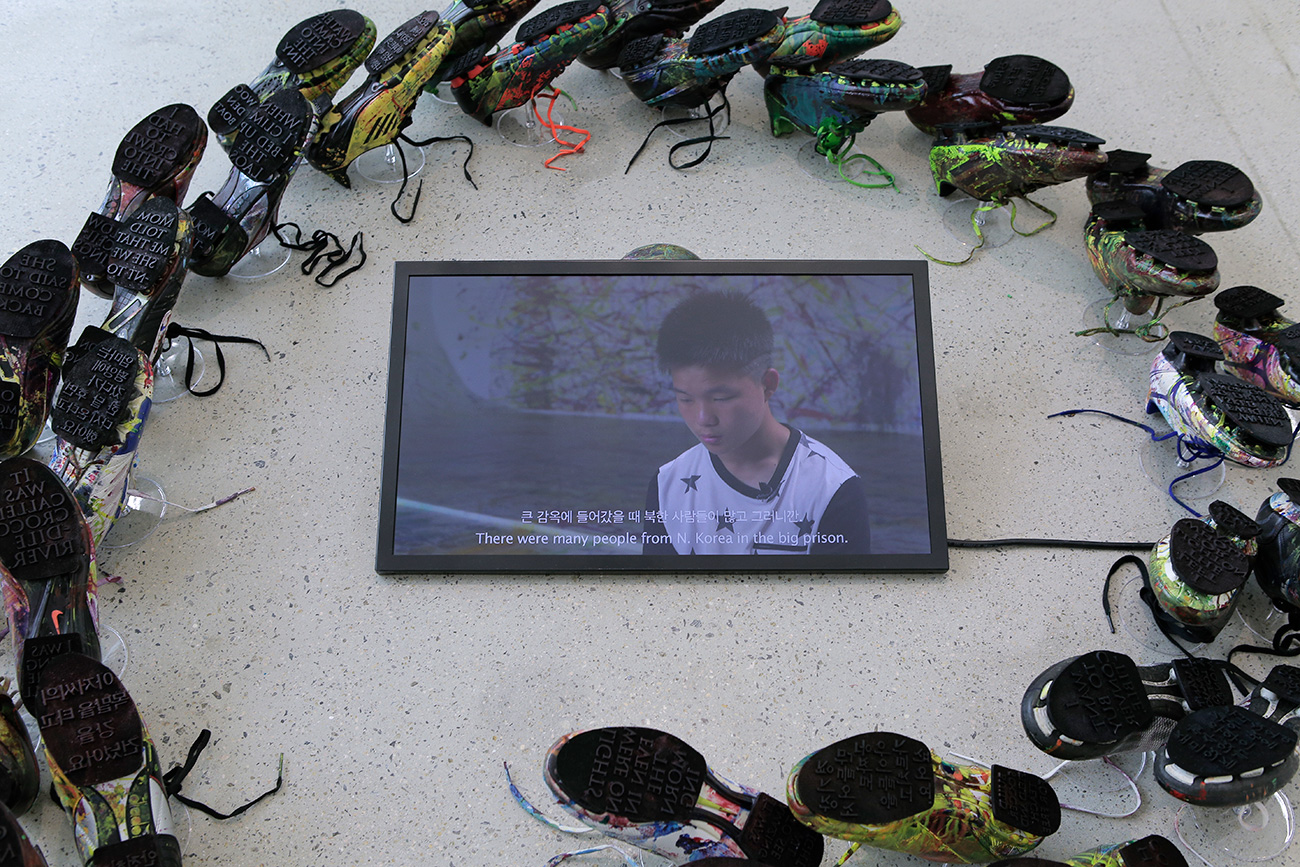
Ham has
consistently pursued what is unseen: North Korean laborers, defectors,
histories of plunder, and emotional states within digital networks—entities
that are real yet difficult to grasp. Rather than revealing them directly, she
approaches them through traces, structures, delays, and absences. Though her
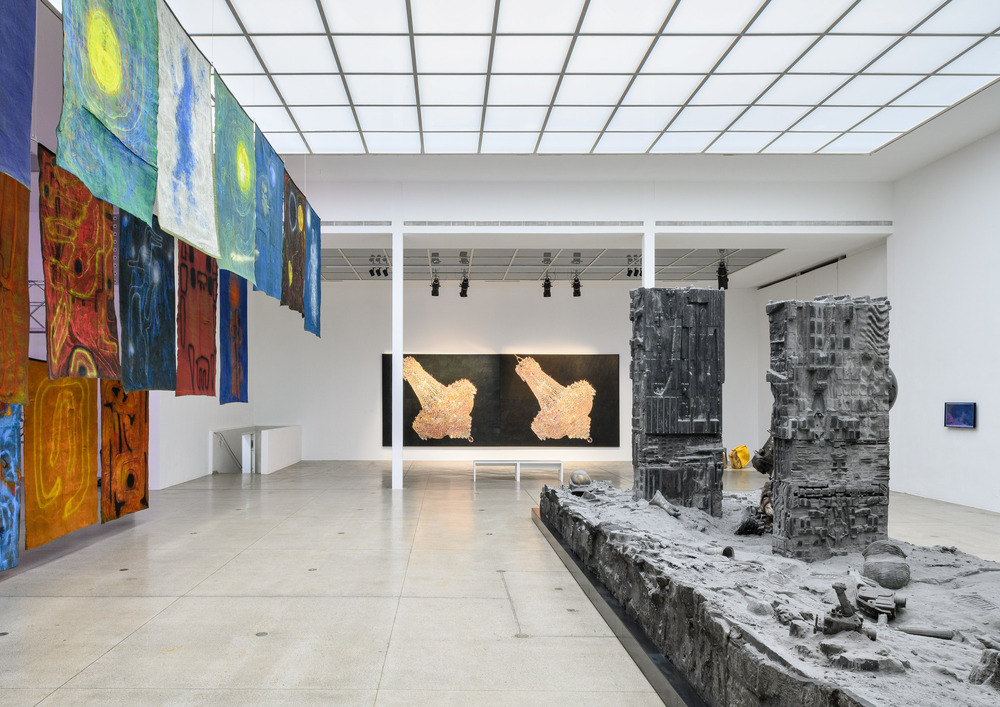
practice begins from the historical context of Korean division, it is actively
discussed within international art institutions. She has participated in major
exhibitions including 《The Shape of
Time: Korean Art after 1989》(Philadelphia Museum of
Art, 2022), 《Hallyu! The Korean Wave》(Victoria and Albert Museum, London, 2023; Museum of Fine Arts,
Boston, 2024), as well as the 1st Asia Society Triennial(New York, 2020), the
10th Taipei Biennale(2016), and the 4th Guangzhou Triennial(2012). These
participations demonstrate that her work is read beyond regional issues within
the broader context of global power structures and image politics.
Thus,
Ham’s practice should not be reduced to “division art,” but understood as a
contemporary methodology that structurally embeds collaboration, production
processes, and invisible labor within the artwork itself. Rather than
speculative predictions, her future trajectory can be anticipated on the basis
of the international exhibitions and institutional networks she has already
accumulated. Her pursuit of the phantom remains constant, while the contexts in
which it is articulated continue to diversify within international platforms.