Looking
at an artwork is like looking into the world of the artist. But as the time the
artist is passing is naturally different from my time, I’m just merely
witnessing a certain point in time that he is passing for a moment.
Looking
at a work of art is a three-dimensional act, which entails more than the
physical movements of one’s eyes looking at the subject. Although this act
involves employing all of one’s senses, people often believe that only one’s
eyes are in charge of this act. Perhaps the entire body should go through the
process of becoming an eye for one to be able to understand the work in its own
way.
I
decided to take a close look at my own process of looking at art. When I come
across something that grabs my attention at an exhibition, I continue to look
at it until it gives me some clue as to where it comes from and what it is.
Then I carefully observe the artist’s intentions, actions and movements, and
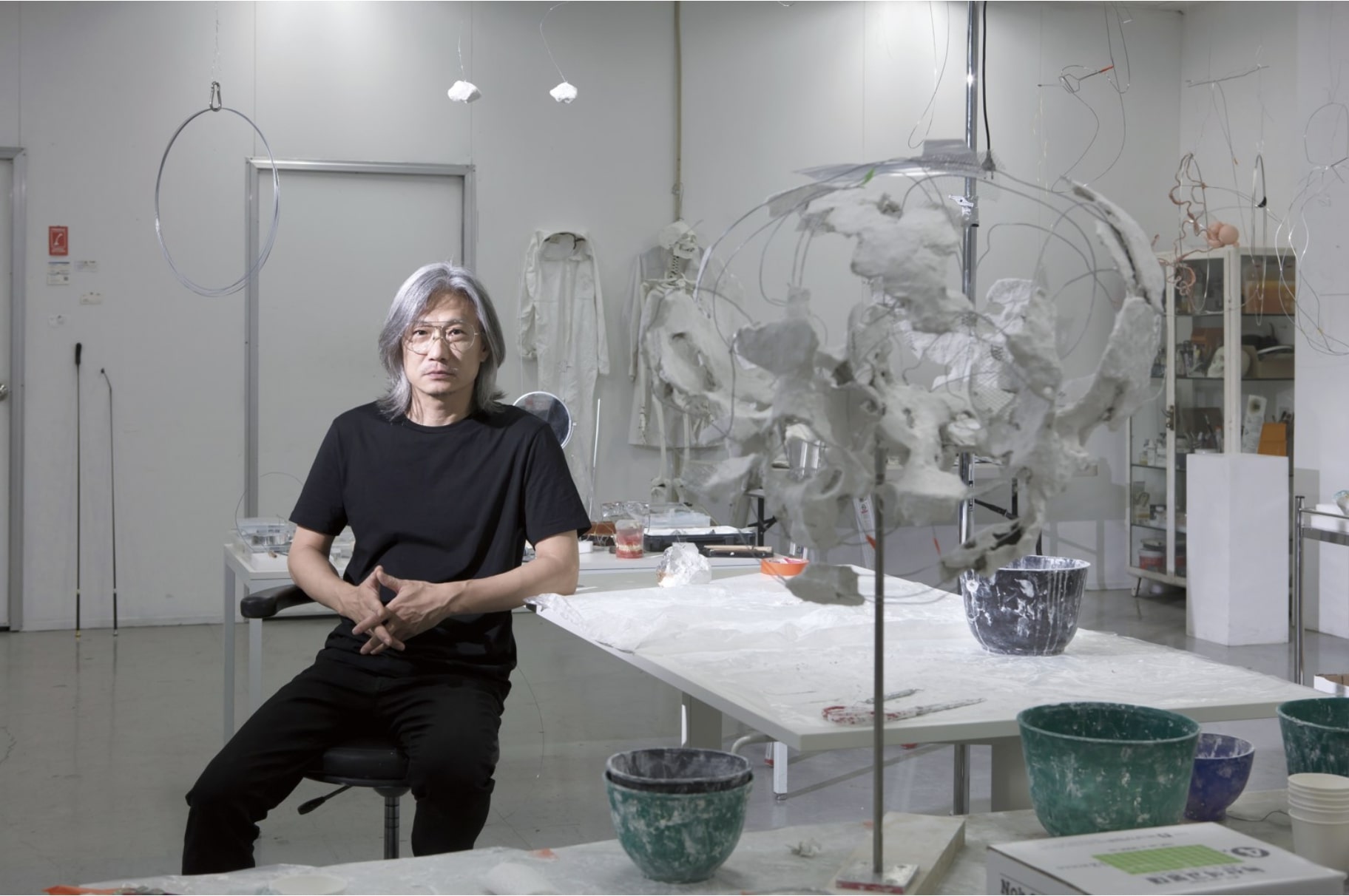
even visit the artist’s studio in an attempt to discover the meaning hidden
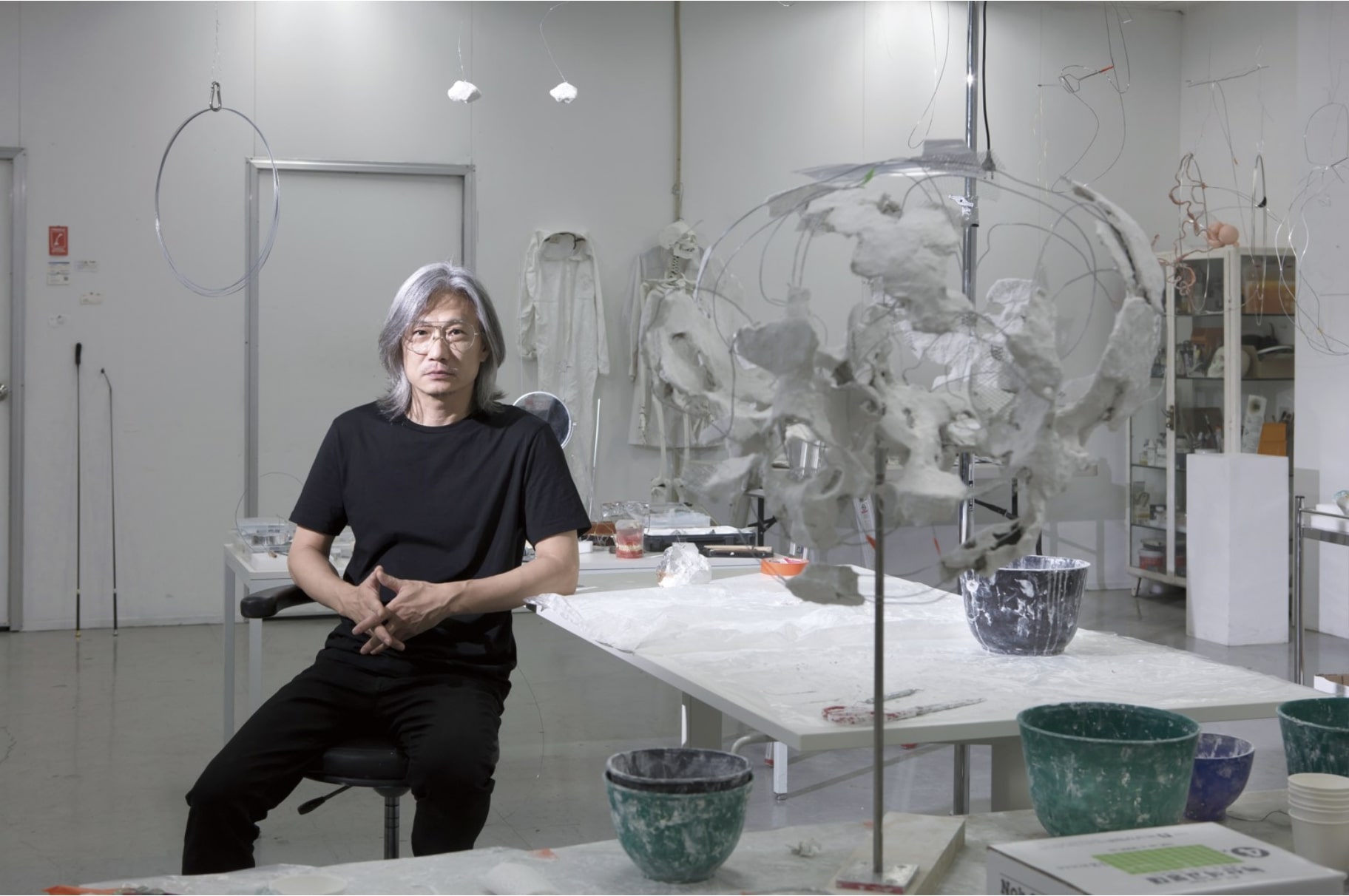
within the work. The studio is where art and the artist spend the majority of
time, and most often in their purest and most natural states. So, the missing
pieces that often can’t be found within the confines of an exhibition space can
frequently be found in the studio to complete the puzzle. I believe that the
clues to the work can eventually be found in the studio which clearly reflects
the artist and the process of their work.
It
was probably about 10 years ago when I first visited Hyungkoo Lee’s studio. His
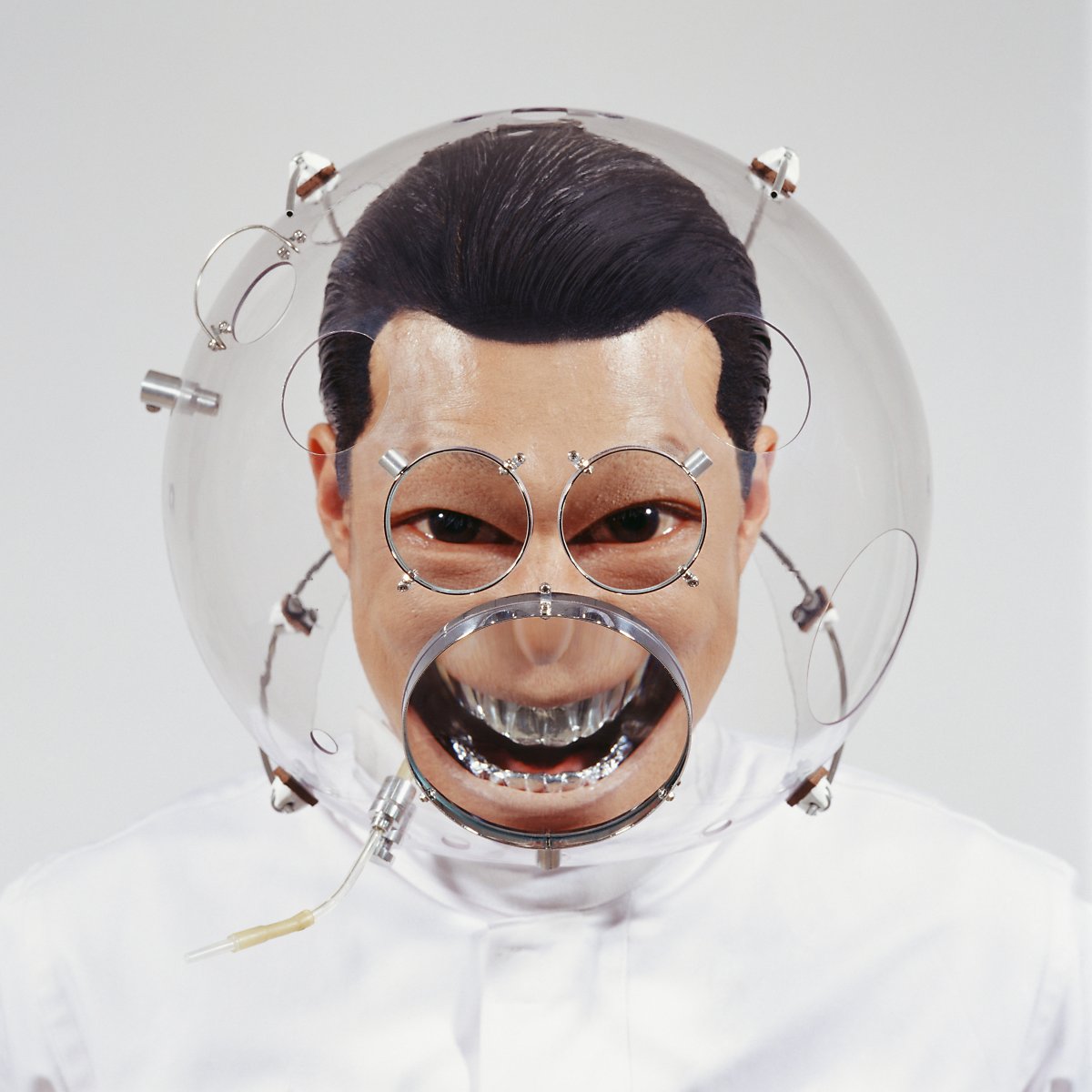
fascination with the human body resulted in ‘The Objectuals’ series, which is a
series of devices used to distort parts of the human body, like in a cartoon.
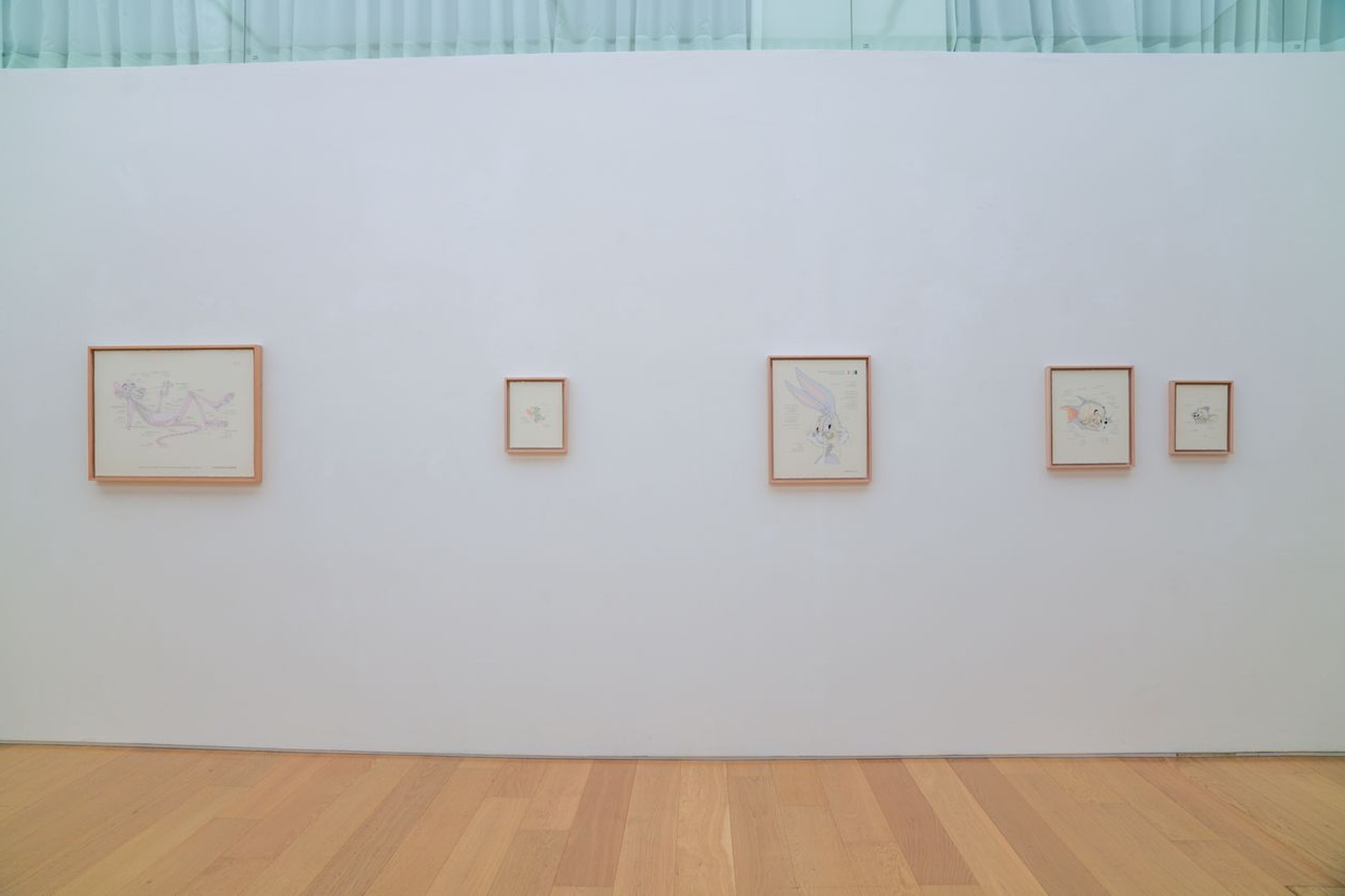
His investigation went further in ‘Animatus’ series, which elaborately fused
cartoon characters with human skeletal structures and created the illusion that
they are bones of creatures that existed at some point in the past. He
continued this line of exploration in ‘Eye Trace’ and ‘Measure’, in which
sensory organs of other animals are applied for experimentation.
I began to
delve deeper into Lee’s work around the time when he was producing works to be
shown in his exhibition in 2014, 《Measure》. The artist was still persistently
continuing his experimenting with subjects of interest in his studio, engaging
in a process of trying to understand humans, and even himself. Between walking
outside and creating art inside, as if to undergo training, Lee was walking a
tightrope of balance and imbalance, what’s natural and unnatural. Today, in
2020, the artist persists with experiments, as a part of his daily life. The
frenzied movement of his body, unable to rest from dawn to dusk, repeatedly
becomes a part of his work that occupies space, then vanishes.
The artist is
currently working on a new creation, as a continuation of his 2019 works, X
and Psyche up panorama. I visited his studio several times
in the last few months to conduct interviews with him, and I was able to
observe a part of the process of this new work. Examining the work gradually
transform with every visit, the artist’s words were slowly becoming a part of
his work, which was suddenly being taken over by my own voice. My questions to
the artist progressively became questions I was asking myself, and what was
intended to be an interview with the artist at one point became my own
testimony of the artist and his work.
Most
artists search for the right materials for themselves that suit their own
character, experiences, and the intention of their work. And as the material
becomes familiar to the artist, the artist's thoughts become increasingly
likely to be realized by hand. Lee has also visualized his process of
exploration through photography, video and performance, and by using different
materials including resin, plastic, papier-mâché, bronze, lead, etc. The
materials in Lee’s hands may be something that he has used in the past, but can
also be transformed, reconstituted in new ways, or even left out. And the
obstacles or delays that come his way in the process of his work take him to
re-encounter, as if by chance, the materials he has used in the past, or the
combination of other methods or experimentation of new materials.
For example,
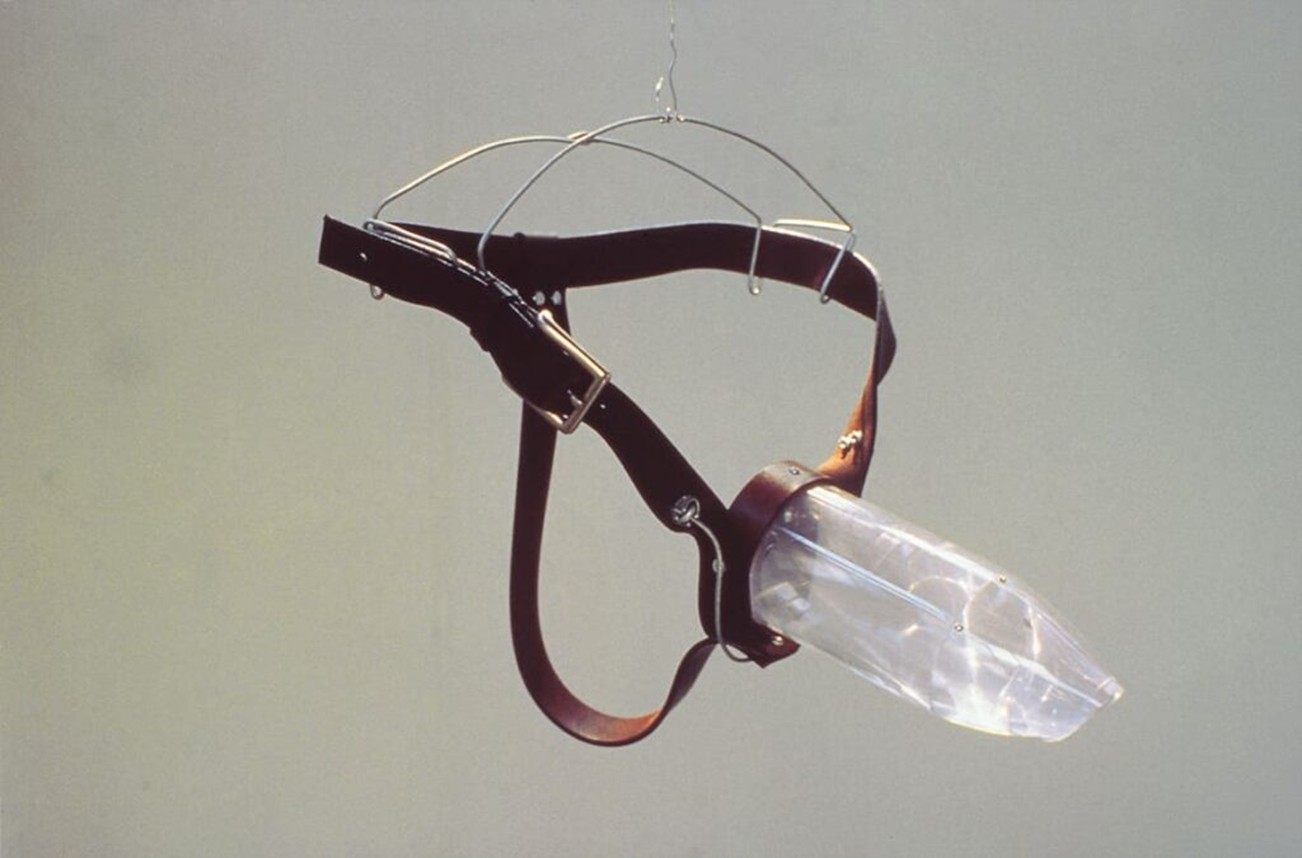
in his work A Device (Gauntlet 1) that Makes My Hand Bigger
(1999), Lee combined transparent plastic bottles with glasses to make a
glove-like device. The plastic bottles, which haven’t been used in his works in
a long time, are reappearing in his recent practice along with various other
materials. In this case, one can say that the sensation and memories of
materials used in the past, lying dormant in the artist, are revived at moments
when needed. So perhaps it’s only natural that works from the past are summoned
like fragments in Lee’s works in progress. The experimentation of materials is
sometimes irrelevant to the exhibition, but the outcomes of such
experimentation can become a part of the work in other ways. The artist
remarked that when there’s a problem that cannot be solved at the time, he’d
leave it unsolved until there comes an opportunity when it can actually be
solved. This approach seemed to reflect the way I see artworks: when I come
across an unidentifiable work of art that leaves me curious and wondering, I
would continue to observe that artist’s work for years.
Lee
is impatient when it comes to boredom in his work and always attempts at making
new things. However, while he willingly accepts the difficult processes that
repeatedly accompany his attempts at something new, he stubbornly and
unhesitatingly propels towards wherever the image that only he can see leads
him. Every time he starts on a new work, he’d set up a type of coordinates,
then keep himself busy trying to physically realize images that exist in his
head. The coordinates he sets up may begin with a very concrete form, while at
times, be a symbol of direction or speed like arrows. Lee’s judgement of
materials, techniques and formal composition that are made as he imagines and
makes art takes place in an intuitive and perceptive manner. However, the issues
that arise in the process of artmaking operate as a powerful drive to solve
them, elaborately and persistently clinging to each other. Difficult problems
left unsolved today can become a driving force for tomorrow. Thus, I believe
that every day spent this way will build up to ultimately bring the work closer
to Lee’s intentions.
From
the onset of Lee’s work process, he thinks about the space where his work will
be placed and acts accordingly. Although the work may stand as an independent
unit, it’s also a part of the artist’s big picture in the overall space where
it will be shown. While the individual devices in ‘The Objectuals’ series are
actual objects that exist, they were shown in an exhibition as still images of
figures wearing the devices, or along with other devices that look like
laboratory instruments. In ‘Animatus’ series, each of the characters were
exhibited in a line of movement the artist planned, like stuffed animals in a
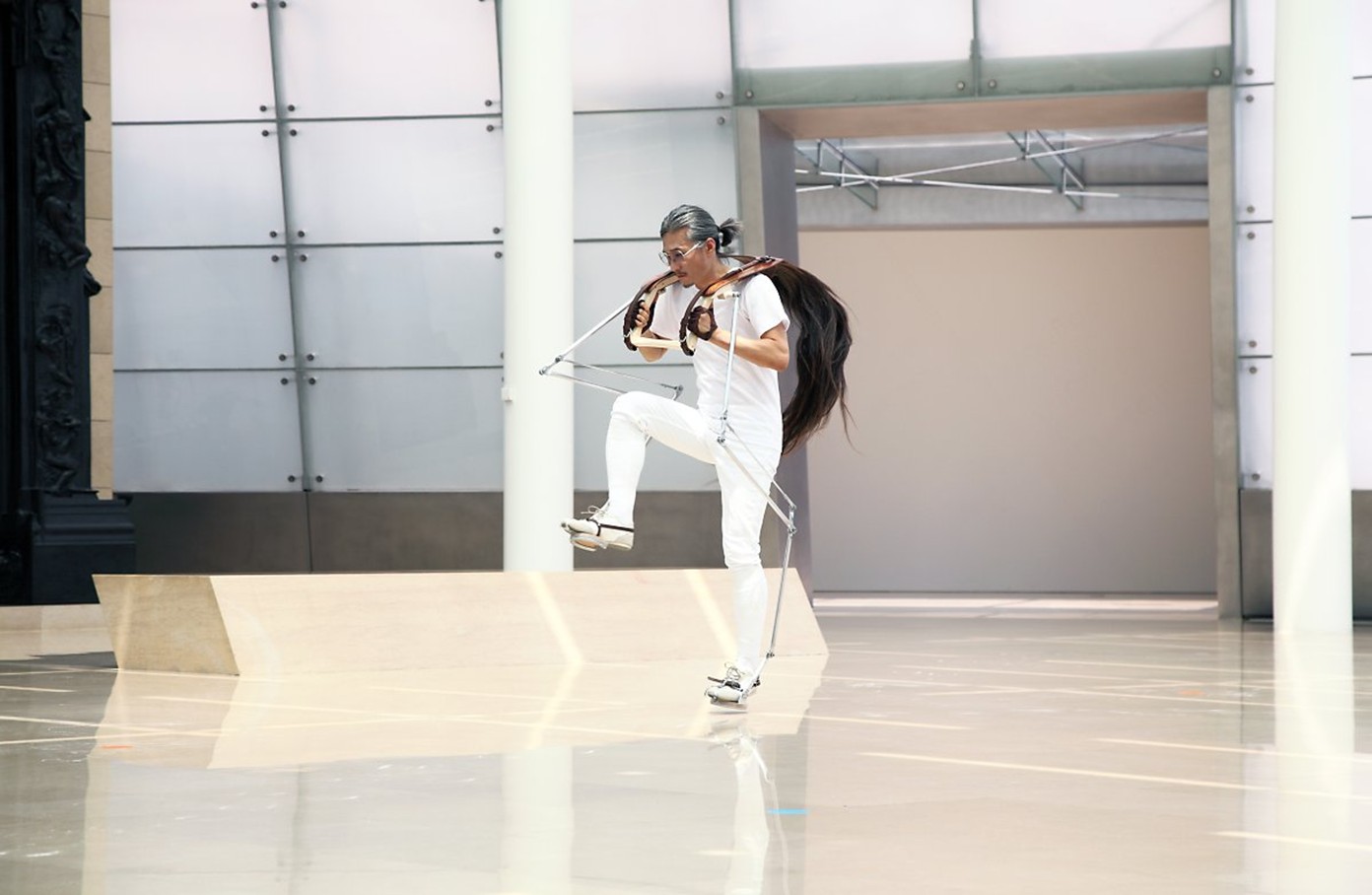
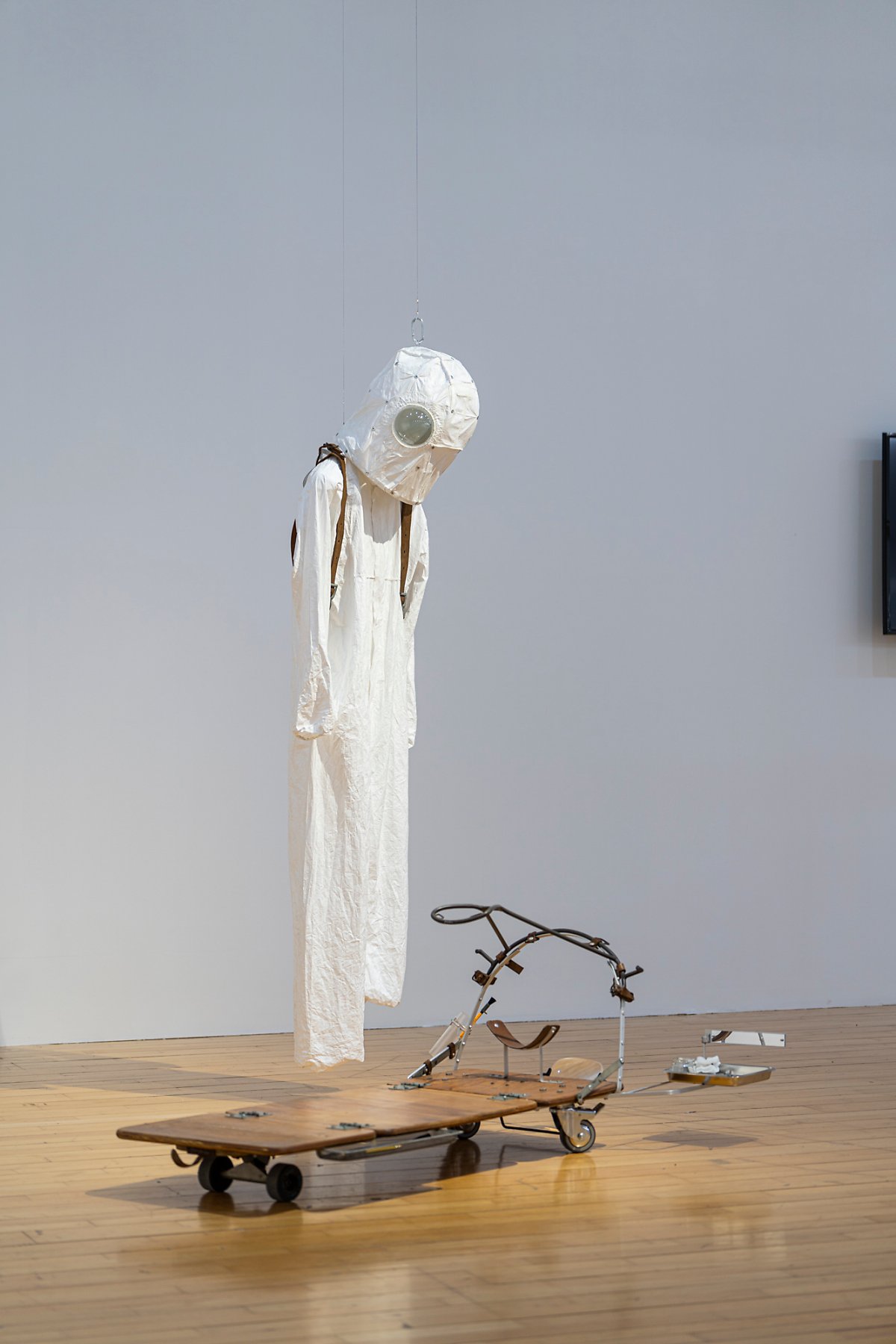
puppet theater. In 《Measure》, Lee presented Instrument 01 (2014), in which
the artist reenacted a dressage, dressed himself like a horse, wearing a device
that reminded one of the skeletal frames of the hind legs of a horse.
Finally, Ritual
(2014) captured drawings, sculptural works and traces of Lee’s movements. While
Measure (2014), a video documenting the artist doing a
performance wearing Instrument 01, is from the same series
of works, it was also shown in different spaces depending on the situation and
space. All the drawings, sculptures, performances that are produced in the
process of producing and organizing a series of works into an exhibition, and
videos that document the works, are all naturally presented in the exhibition,
but sometimes only a select choice of the works may be shown depending on how
the artist maps out the space. And the works omitted from an exhibition are not
destroyed, but are put on hold, waiting to be shown at a different opportunity.
As we observe how one series of works is made by an artist and passed to the
next, one naturally comes to think about the life of the work.
Just like human
life, which goes from birth to childhood, adolescence, adulthood and old age,
work also goes through a similar cycle in the artist’s life. Questions that
start with simple curiosity or doubt goes through a series of trials and errors
and survive to produce an outcome of artworks, which are then exhibited and
made known. Then, over time, a certain series of works naturally appears to
eventually disappear. And if the artist still has lingering questions to ask,
it will not end there but gain the strength to continue on. Lee’s expanding
interest and research on the body and its senses becomes manifest across the
formal boundaries of figurative and abstract art in Lee’s work, making two
categories impossible to distinguish.
So
far, Lee’s exhibitions were planned in such a way as to let the audience view
his works in an elaborate line of movements in space. No other decision had to
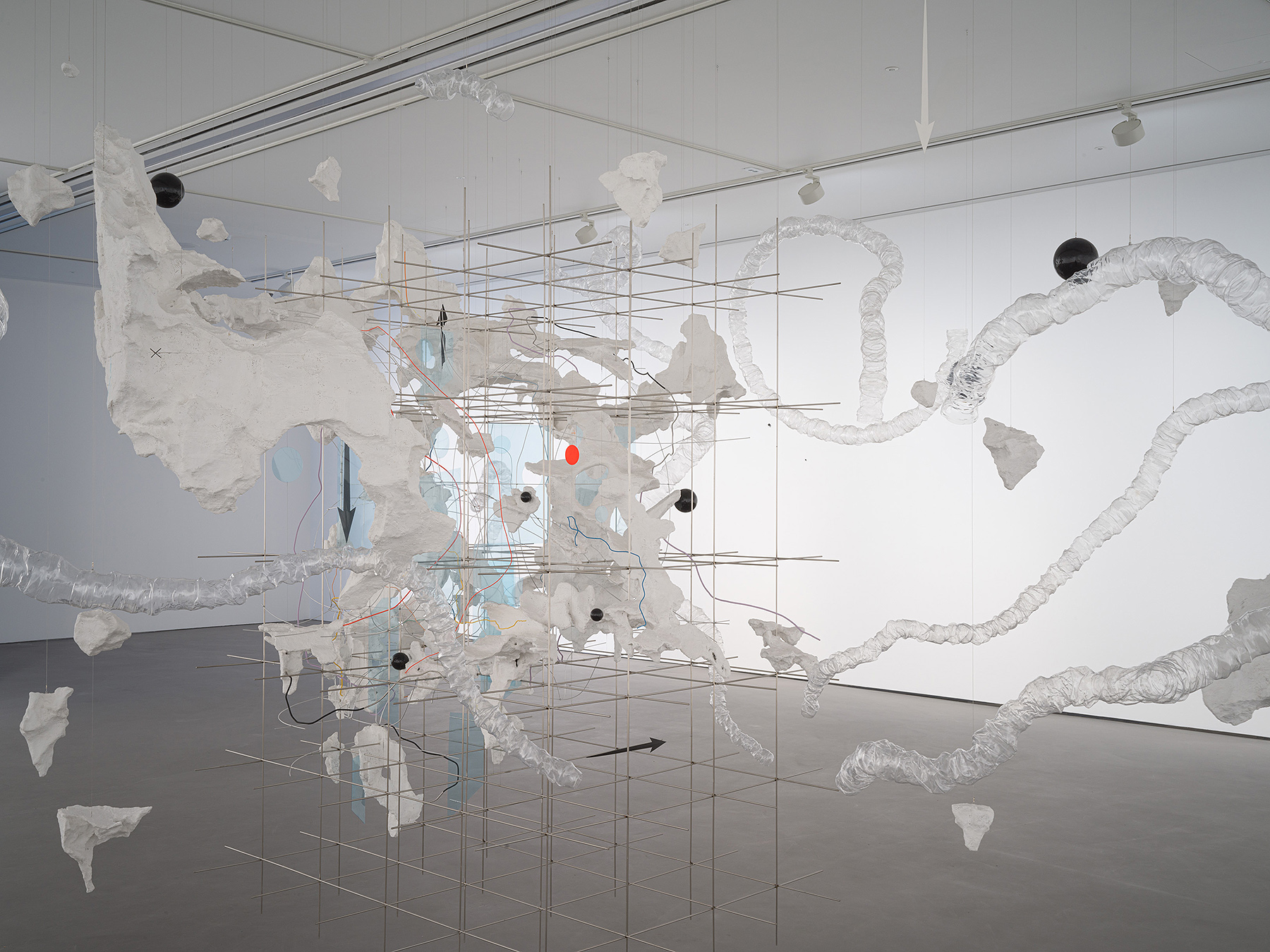
be made by the audience. However, the ongoing works that are the continuation
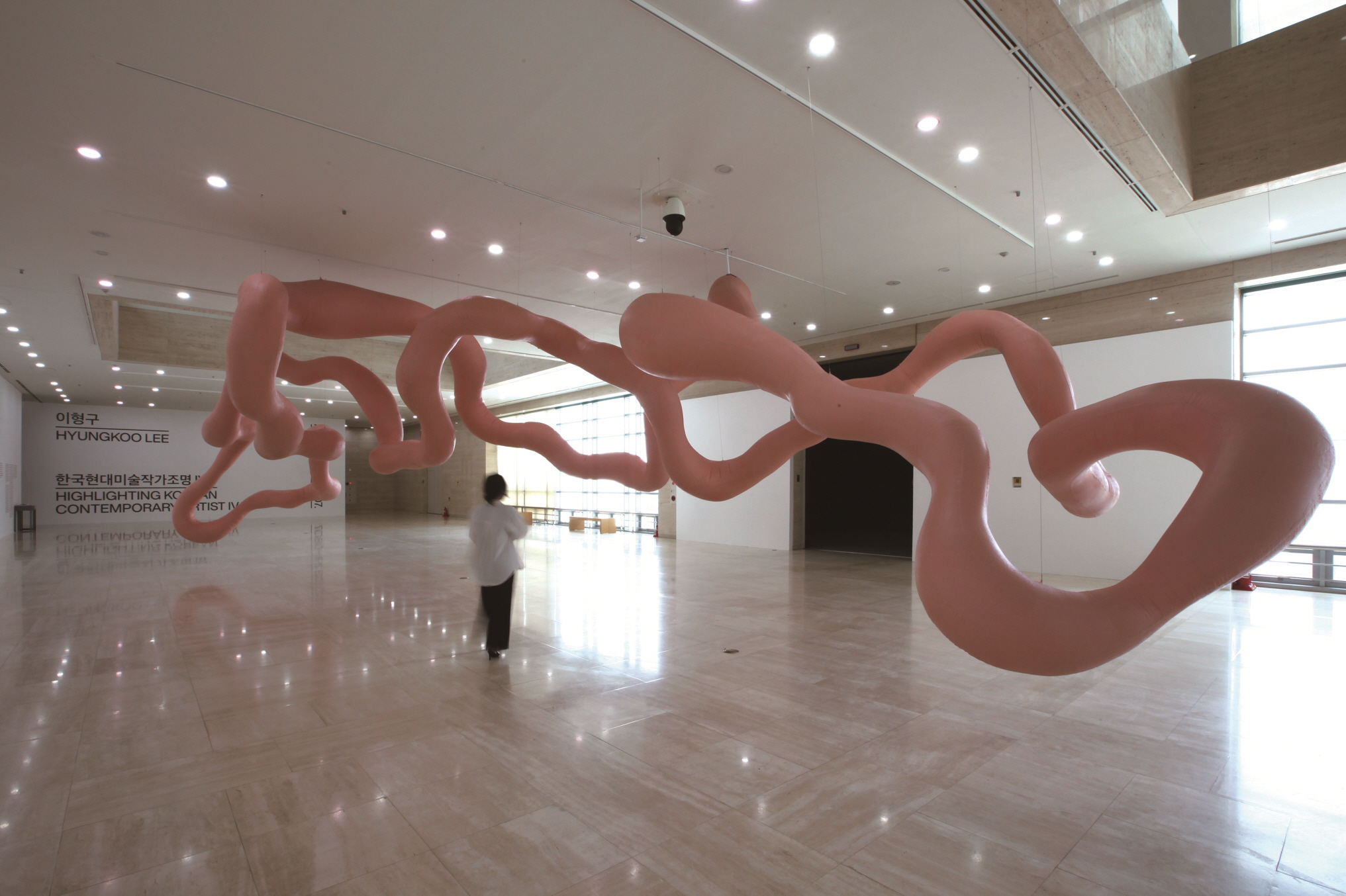
of X (2019) and Psyche up panorama
(2019), create an expanded landscape like splattered paint in a vacuum space.
The audience is invited to a more open interpretation through which they can
transform the exhibition to their own experience, while still delicately
coordinating and leading the audience to the artist’s intended line of movement
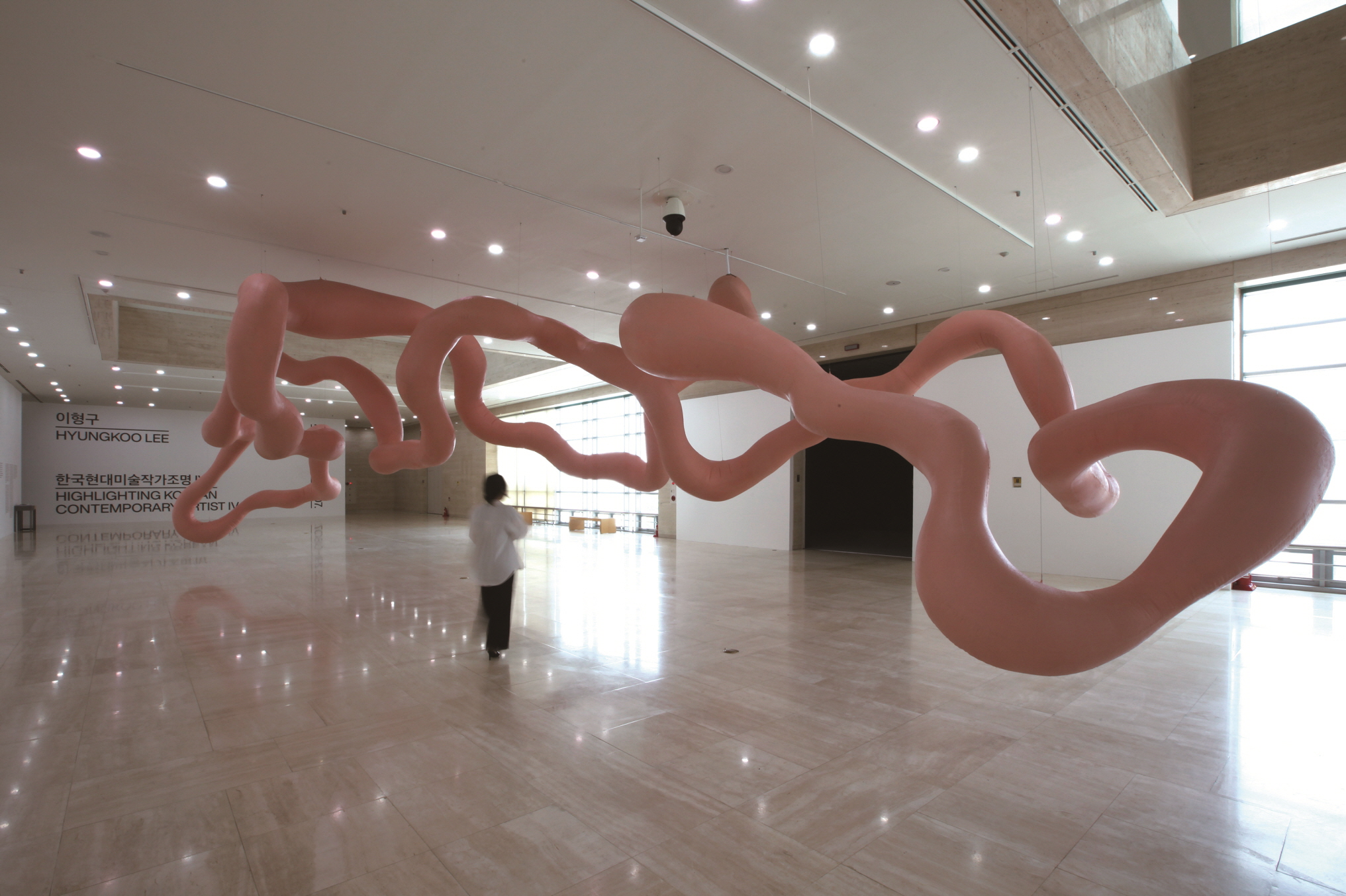
throughout the space. His art started with the body, but now the space itself
has become the body, allowing us to imagine traversing inside and outside like
air.
While
talking to the artist, it dawned upon me that perhaps Lee may have begun from
the beginning, with the images he wanted to see in his head. The process of him
finding a suitable visual language in creating what he attempts to produce
coincides with my own painful attempts to capture his work through language.
While I cannot see the images that he’s trying to articulate, I’m still trying
to create my own images based on our conversations thus far and my ideas of
what the artist is trying to articulate. That sense of uncertainty—in not being
able to predict at which point our languages will go in and out of sync—will
continue to be my driving force. My eyewitness testimony is ongoing.