As
in the 2011 MMCA exhibition 《Stories of 23
Artists of the Year 1995–2010》, Park’s works featuring
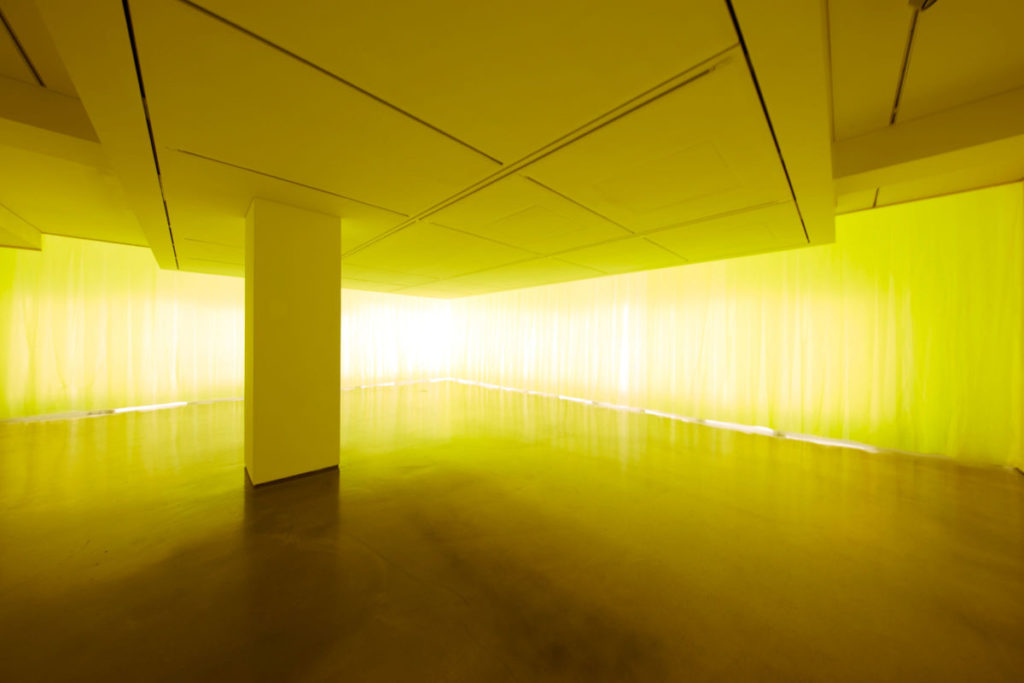
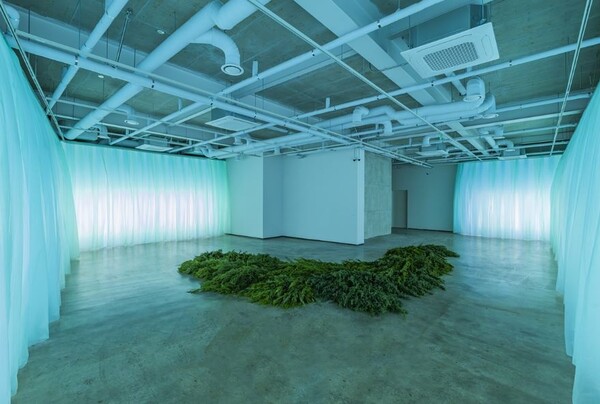
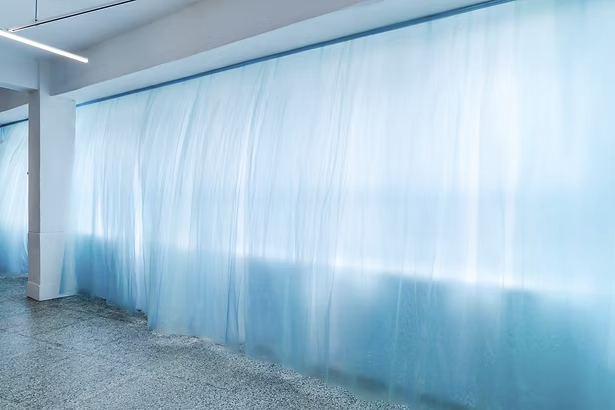
colored vinyl curtains fluttering like drapes also appear in many large-scale
exhibitions. These works trace back to his Volume installation
at Melbourne’s Centre for Contemporary Photography in 1997, which used
colorless transparent vinyl. “I think the appearance of the space where the
work is installed is as important as the work itself. For that reason, the work
must not damage the given space. I wanted to realize the space with minimal
form. I wondered what medium would best achieve this, and I thought of thin,
transparent vinyl.”
From
the exhibition at DDP in 2015, to the 30th Anniversary Special Exhibition 《The Moon is Waxing, Waning, and Eclipsed》 at
the MMCA Gwacheon in 2016, to the solo exhibition 《Growing
Space》 at 313 Art Project, the 2018 OCI Museum of Art
exhibition 《And Said Nothing》,
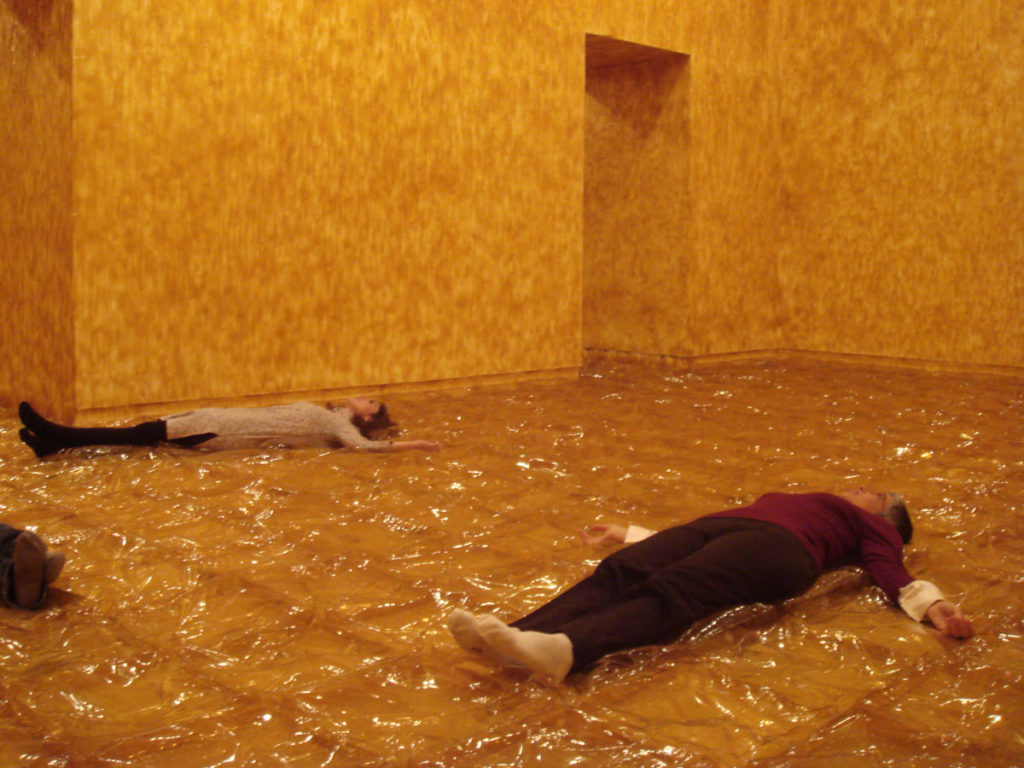
and now Red Room at 《Continuity》. Park’s colored vinyl works illuminated by LED lighting have become
his signature series, demonstrating the perfect coexistence of work and space.
Among
these, the work many remember is Sunshine, presented
at 《Esprit Dior》 at DDP. In
this exhibition, which featured six representative Korean artists including Do
Ho Suh, Lee Bul, and Kim Heyryun, Park created a dreamy installation of pink
and red vinyl illuminated by LED lights, combined with his ‘Width’ series hanji
paintings, to evoke Christian Dior’s world of charming colors. “Four years have
passed, but I still feel a deep satisfaction when I think of that exhibition.
Dior’s Paris headquarters directly handled the show, and I felt the process was
very sophisticated. Their consideration for artists to focus on their work was
impressive. The six artists’ works came together harmoniously thanks to the
curator’s ability.” Dior’s keyword for him was “from pink to red.” With all
shades of pink cascading like a waterfall against the tall ceilings of DDP, the
work rustled and danced as visitors passed by, offering audiences another
chance to reflect on the vital interplay between contemporary art and space.
Park’s
relationship with Parisians, which he recalled as “sophisticated,” continued
the following year in 2016. He had the opportunity to install a 10-meter steel
structure titled Flash Wall, expressing wishes for
peace and reunification, on the façade of the Grand Palais during Art Paris.
Made of interwoven wires flanking the entrance to the Grand Palais, the work
carried a message of solace for the scars of terror in Paris and of peace. His
bold gesture, adorning the entrance of the Grand Palais—a venue for exhibitions
by artists like Anish Kapoor, Christian Boltanski, and Daniel Buren—was quietly
but widely shared through art journalism and the social media of visiting
tourists.
As
anyone who has experienced Park’s exhibitions can easily imagine, most of his
works are site-specific. Unlike artists who rely on steady labor grounded in
daily routine, Park’s process of hurried preparation begins only once an
exhibition is confirmed. One wonders about his everyday life. “Even though I do
space works, on days without installation schedules, I like to take my time
painting. Especially on hanji. I also spend my days making small sketches or
noting down new materials or methods. Once an exhibition space is set, I
consider the nature of the site and refer to past sketches or notes.”
The
《Continuity》 exhibition
held at 313 Art Project, located in a residential alley in Seongbuk-dong, is a
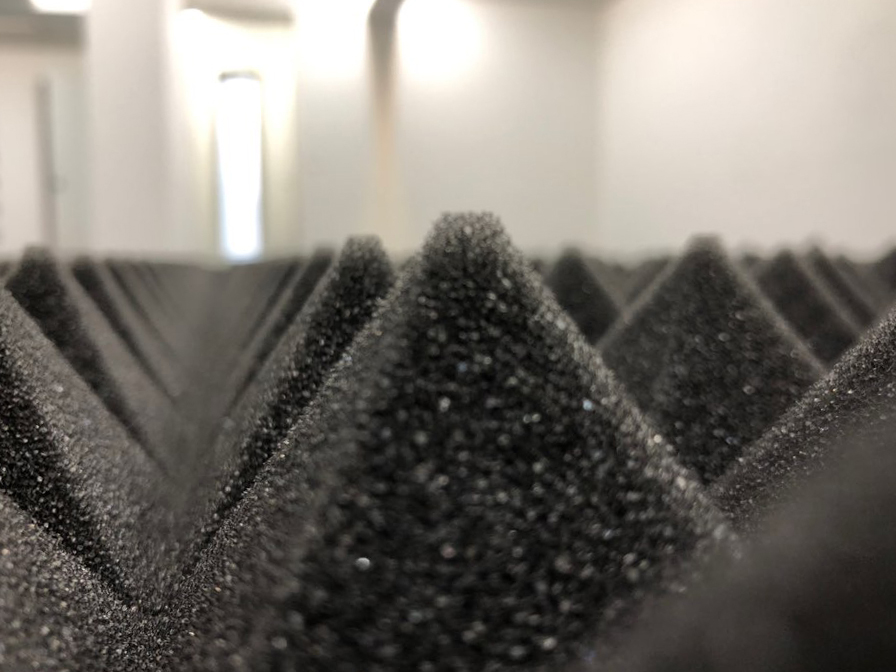
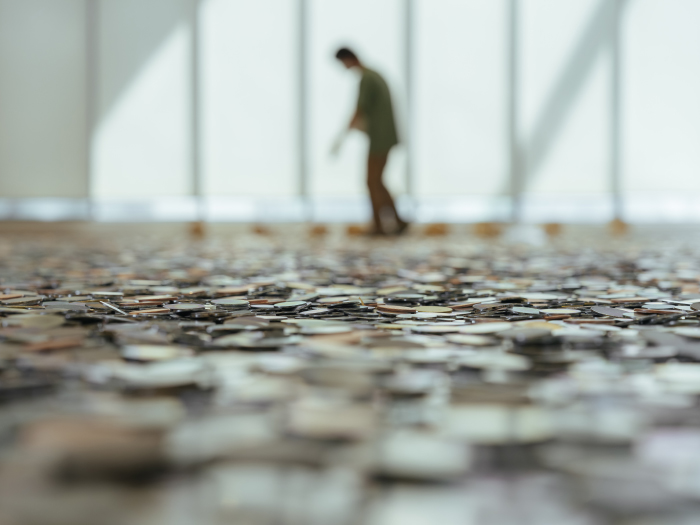
reflection of such ongoing musings. The pyramid-shaped black sponge floor
filling the first-floor gallery was an idea he had long been interested in.
Wishing to create a piece that would let visitors feel as though resting in a
grassy field, he cut black sponge into finger-length pyramids and spread them
across the entire floor. Visitors changed into slippers or wore only socks at
the entrance and experienced new tactile sensations by stepping on the spongy
pyramids. Standing, walking, and sometimes sitting on the floor, they observed
one another and discovered new landscapes shaped by space. “I always hope my
works appear like backgrounds. So when I work, I keep in mind situations where
works and people are intermingled. Rather than the cliché of ‘a work hanging on
a wall with a spectator standing before it arms crossed,’ I think about how
both works and viewers can become protagonists together.”
Considering
the gallery’s unusual circulation—retaining the structure of an old
Seongbuk-dong house rather than a pristine white cube—Park devised diverse
spatial arrangements. “The overall circulation here is unique, especially the
long distance from the gallery gate to the exhibition space. I wanted the first
piece viewers encountered upon opening the gate to give a hint about what would
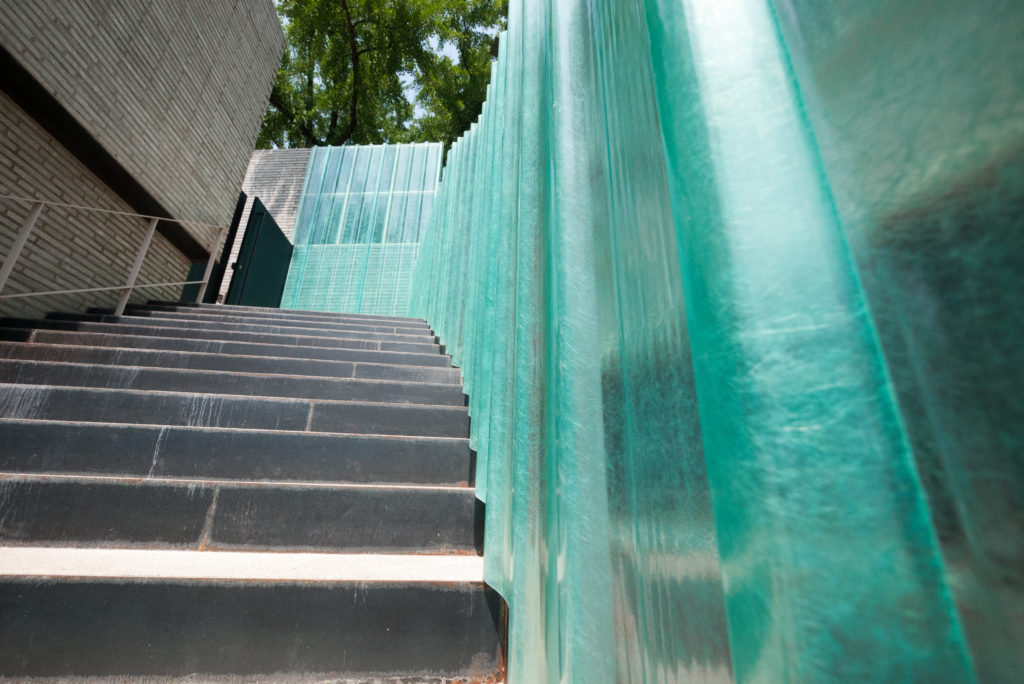
unfold inside. So I installed Disappear Entrance,
covering the passage from the gate to the main building entrance with
jade-colored FRP boards.”