Inhyeon Lee (b.1958) - K-ARTIST
Inhyeon Lee (b.1958)

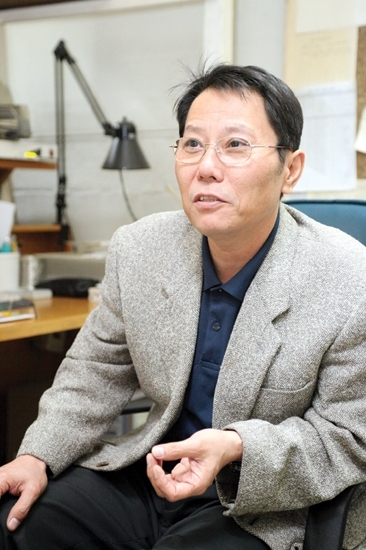
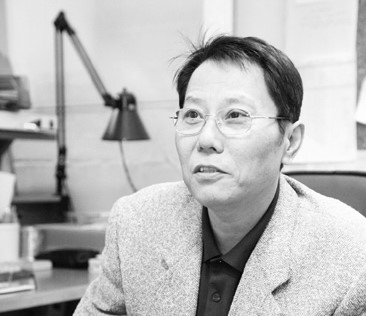
Inhyeon Lee holds a B.F.A in Art from College of Fine Art in Seoul National University, and a M.F.A and a D.F.A from College of Fine Art in Tokyo National University. Lee currently serves as professor of painting in the Painting Department in Hansung University.

Solo Exhibitions (Brief)

Lee Inhyeon has held solo exhibitions at major Seoul galleries including Gaain Gallery (1993, 1994, 1995, 2012), KUKJE Gallery (2002), Gallery Roh (2003), Sai Gallery (1998), IHN Gallery (1997), Gallery SoSo (2022), and Gahoedong60 (2015), as well as at RYU International Gallery (Tokyo, 1993).

Group Exhibitions (Brief)

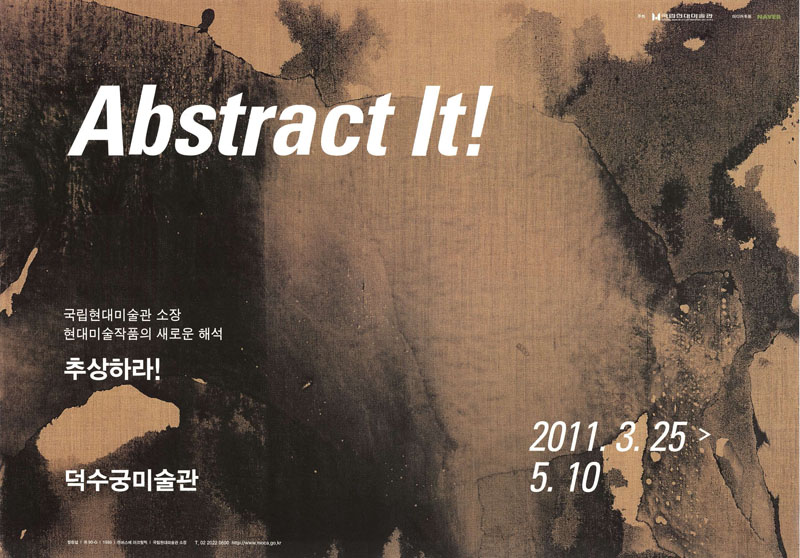
He participated in major group exhibitions and international presentations at the National Museum of Contemporary Art, Korea (2001, 2012), Seoul Museum of Art (1994, 1998, 1999, 2004, 2013), Museum of Art, Seoul National University (2015, 2016), Busan Museum of Art (2002), National Museum of Modern and Contemporary Art, Deoksugung (2011), Tokyo Opera City Art Gallery (Tokyo, 2017, 2021), Exhibition Halls of the Gwangju Biennale (2013), Fukuoka Asian Art Museum (2004), Heritage Museum (Hong Kong, 2003), and Seibu Museum of Art (Tokyo, 1987).

Awards (Selected)

He received the Award of Excellence at the 1st SPACE International Prints Biennale and the Grand Prix at the 10th Seoul International Print Biennale.

Collections (Selected)

Lee Inhyeon's works are included in the collections of major public institutions, including the National Museum of Contemporary Art, Korea (Gwacheon), Seoul Museum of Art, Busan Museum of Art, Seoul National University, Art Sonje Center, Tokyo Opera City Art Gallery, and the British Museum (London).
Works of Art

Originality & Identity

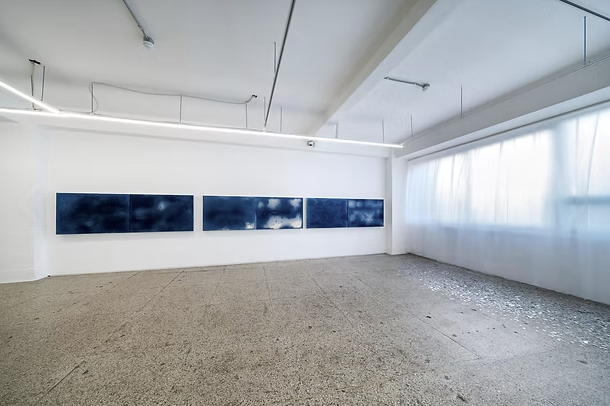
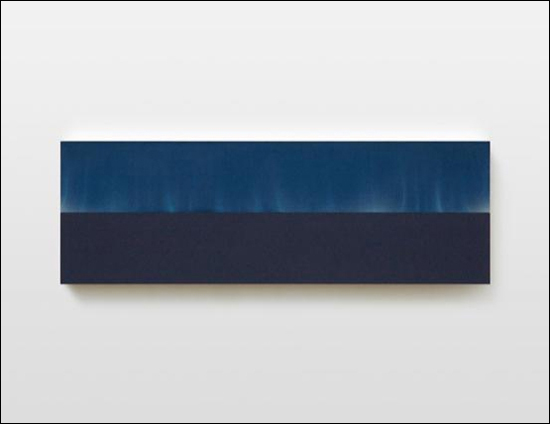
Lee Inhyeon’s practice has unfolded since 1993 under the consistent title ‘L’épistémè of Painting’. Here, the term “stratum” does not merely function as a formal metaphor for layers of pigment or the spread of paint, but operates as a conceptual device referencing Michel Foucault’s notion of the “épistémè”—the underlying structure that conditions knowledge in a given era. Rather than presenting individual works as self-contained outcomes, Lee approaches painting as an ongoing investigation into the ontological and epistemological conditions of the medium itself.
 
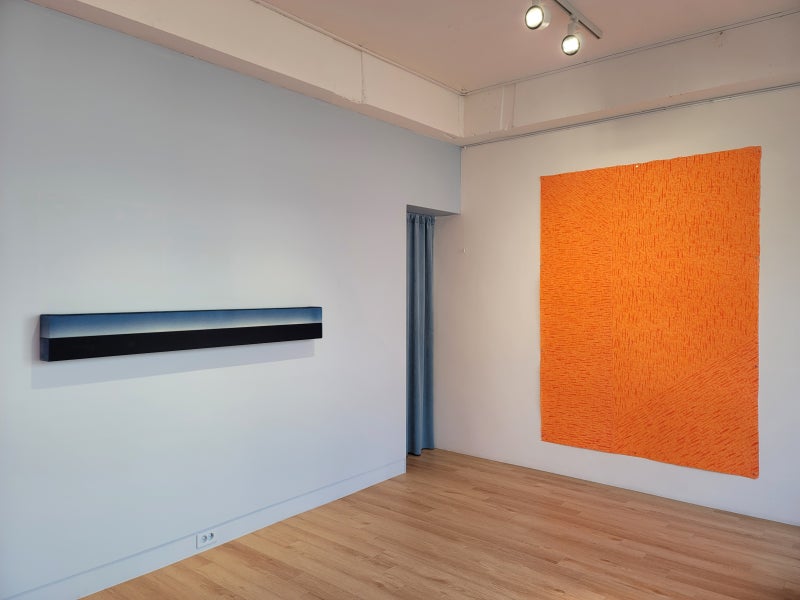
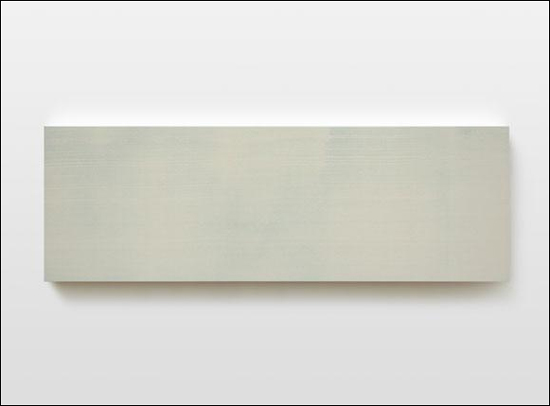
His paintings do not reject modernist flatness, yet they redefine it. The surface is not a frontal, reductive plane but rather the skin of a volumetric body—a single-layered plane that belongs to an object with mass. From this perspective, he appears to deny illusion, a foundational convention in the history of painting. Yet in fact, he does not exclude illusion; instead, he accepts the retinal illusion that arises spontaneously in perception. In this sense, his work differs from minimalism, which sought to eliminate illusion in pursuit of objecthood.
 
For Lee, originality does not lie in inventing radically new forms. He retains the most conventional elements of painting—the rectangular canvas, pigment, and surface—while subtly reconfiguring their internal relationships. By destabilizing hierarchies between front and side, material and image, depth and surface, he proposes painting not as a fixed essence but as a constantly reorganized field.
 
Ultimately, his practice continuously renews the fundamental question: What is painting? His artistic identity is defined less by a recognizable style than by an enduring investigative attitude. His works operate as sites of thought, engaging with the structural conditions that precede image and meaning.

Style & Contents

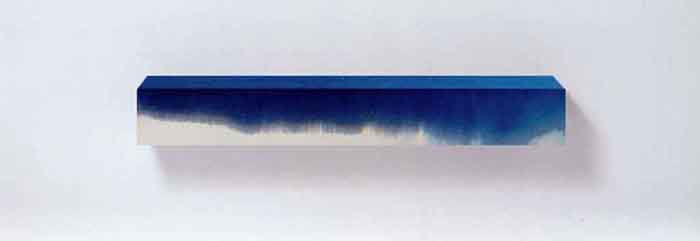
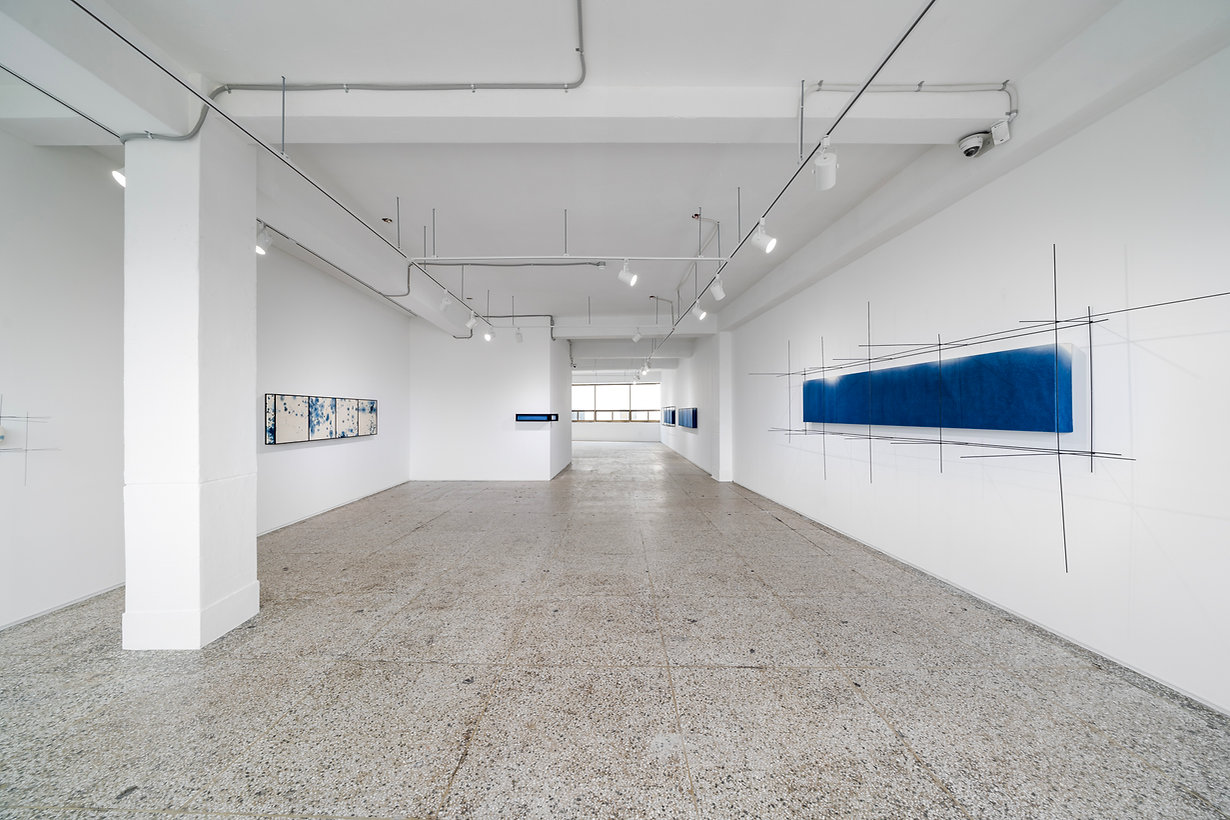
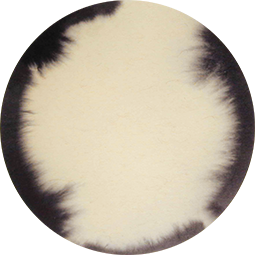
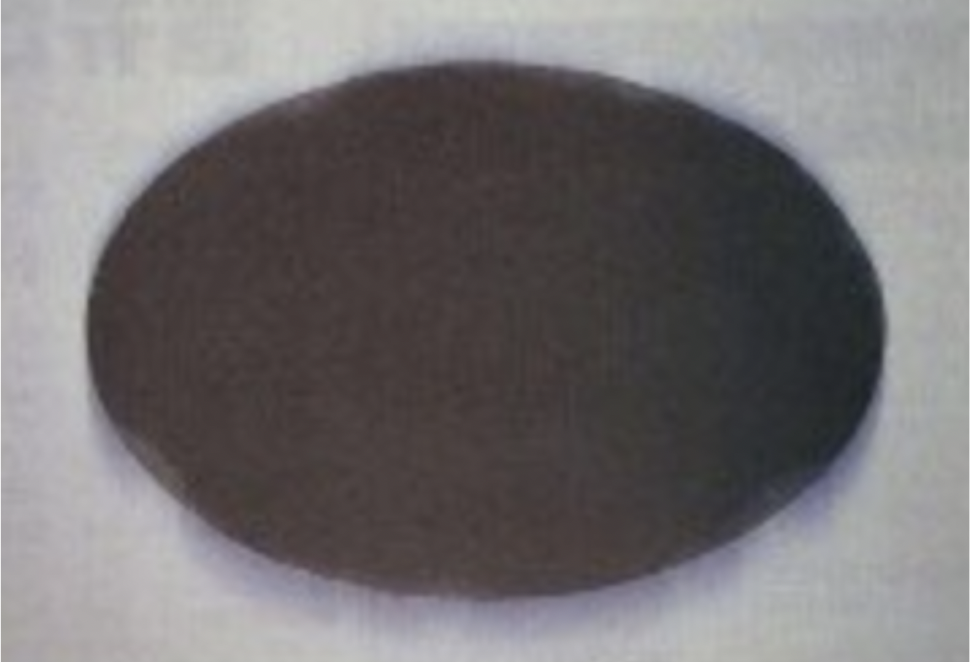
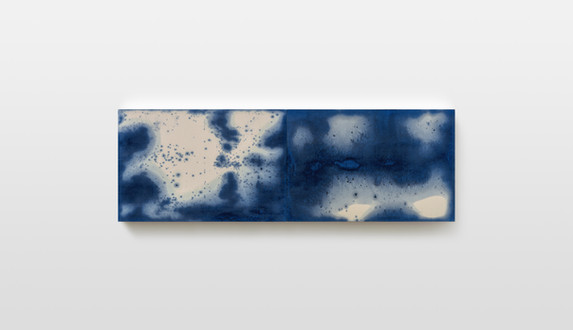
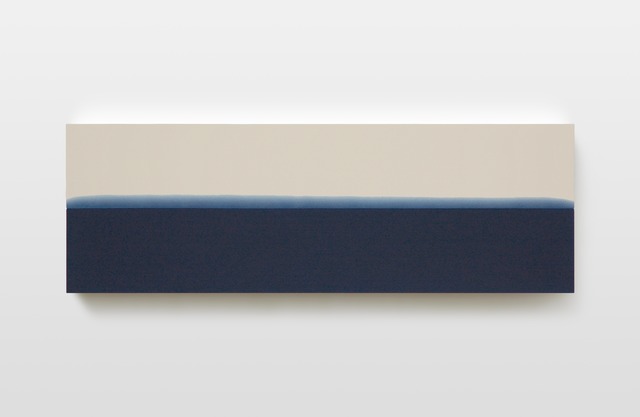
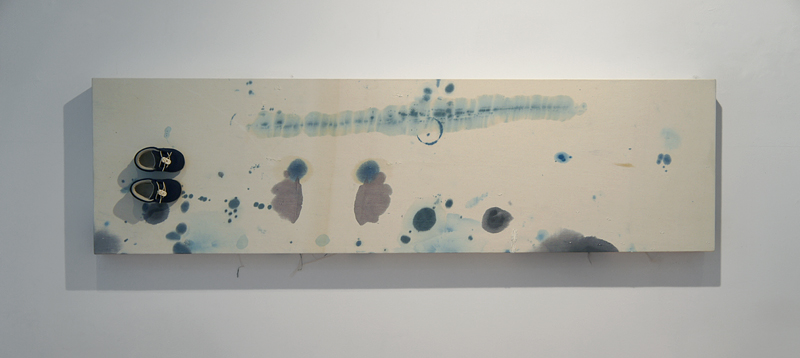
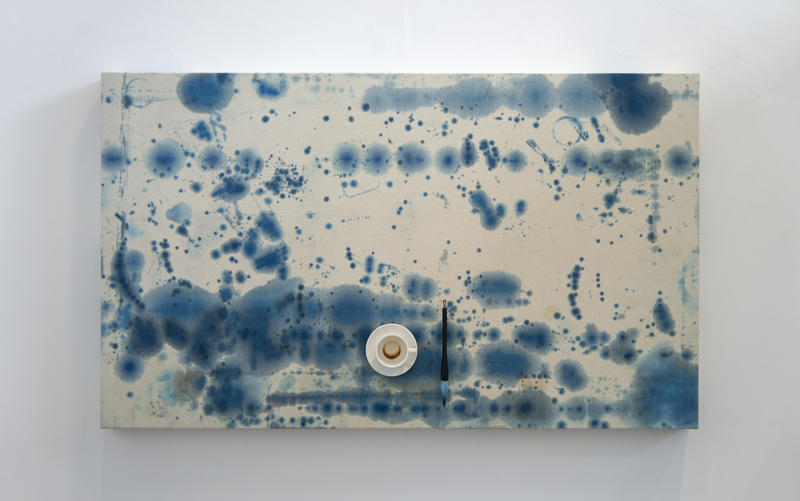
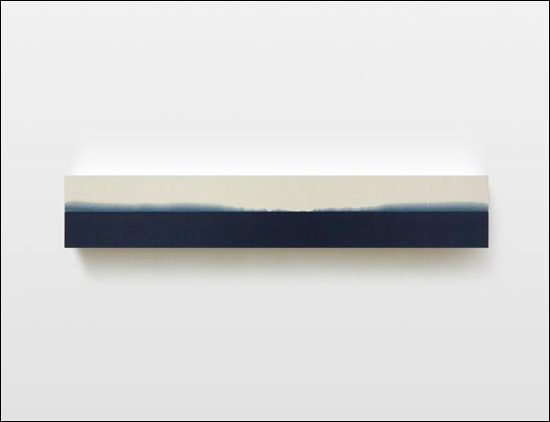
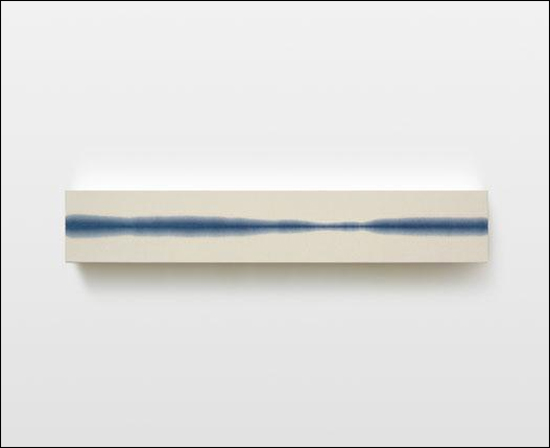
Formally, Lee’s work is characterized by diffusion, seepage, and restrained gradations of color. On unprimed canvas, he applies oil paint mixed with turpentine, allowing pigment to move according to gravity and absorption. While the process is meticulously calculated, it inevitably includes uncontrollable elements. Matter does not fully obey intention; it is precisely at this threshold that painting becomes an event.
 
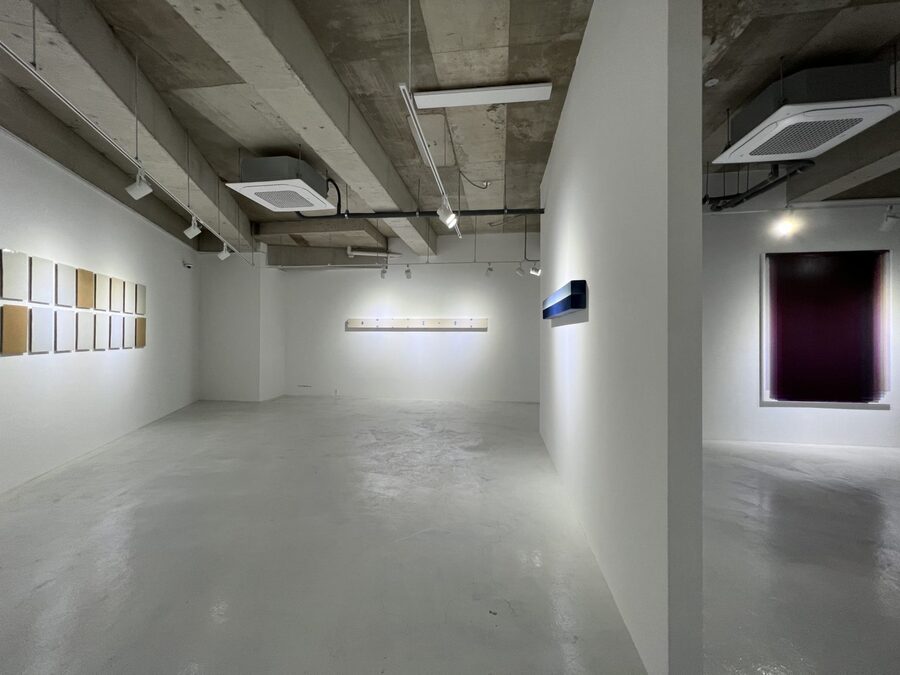
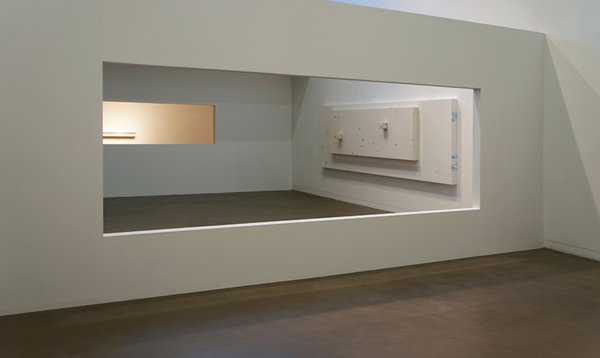
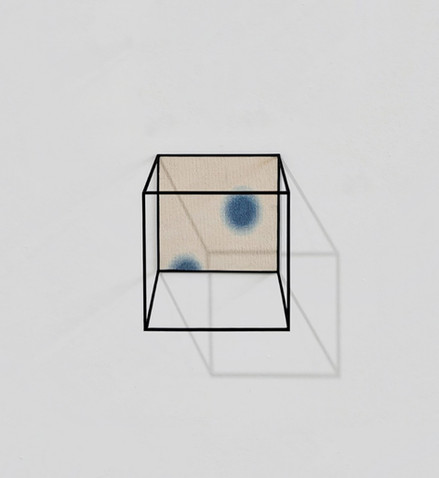
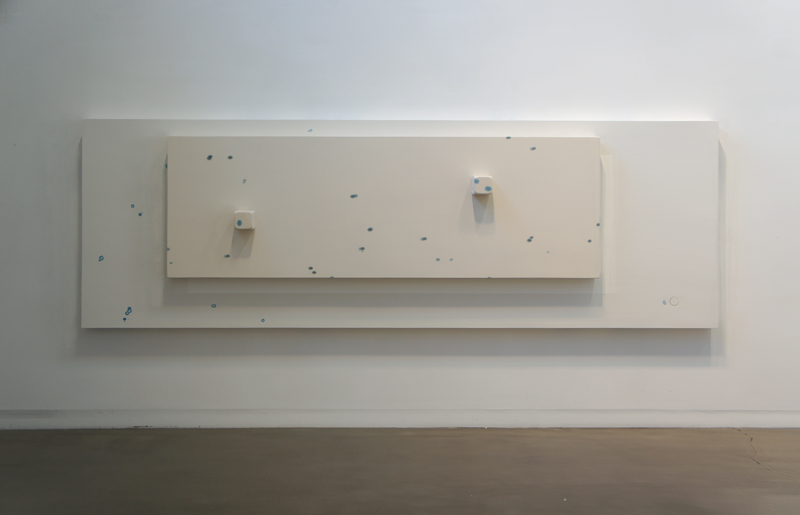
His frequent use of multi-panel compositions and cube-like canvases with painted five sides challenges the frontal conventions of traditional painting. The side is no longer secondary but becomes another active pictorial surface, where the traces of material flow and temporality are concentrated. The viewer cannot grasp the work in a single glance; the image unfolds through movement, through the time spent circling and observing.
 
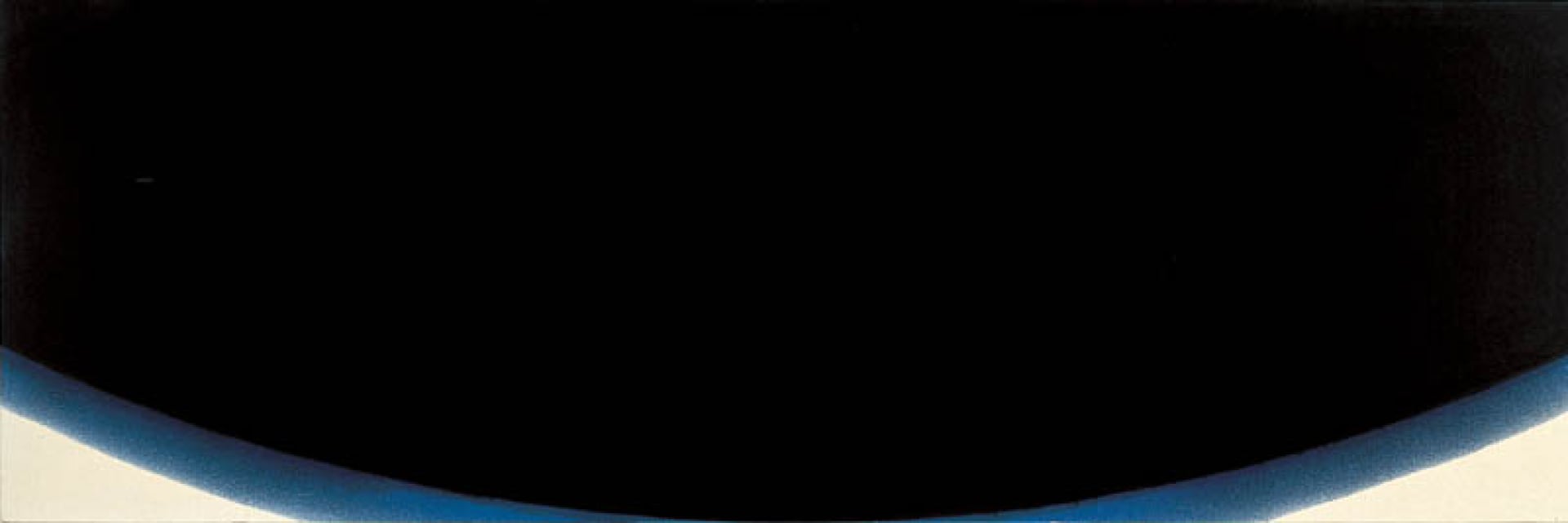
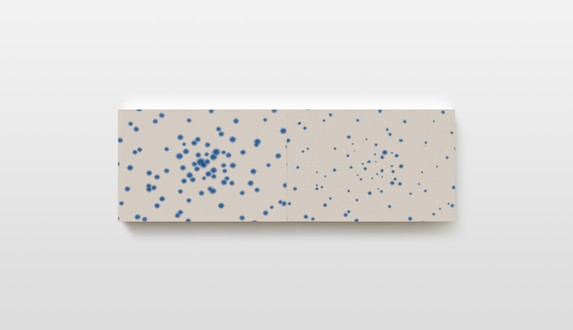
Although his work does not aim at representation, it often evokes associations in the viewer—rivers, horizons, clouds, rain, distant lights. These images are not constructed depictions but retinal phenomena generated by the interaction of material elements. Lee does not reject such associations; rather, he embraces their poetic potential as part of painting’s experiential dimension.
 
Thus, while formally restrained, his paintings contain complex intersections of space, time, matter, and perception. The canvas becomes not a fixed image but a dynamic site of becoming, where material processes visualize duration and transformation.

Topography & Continuity

One of the most striking aspects of Lee’s practice is its sustained continuity. For over three decades, he has worked under the unified title ‘L’épistémè of Painting’, choosing deepened inquiry over radical rupture. His trajectory is marked less by abrupt shifts than by gradual modulation and expansion.
 
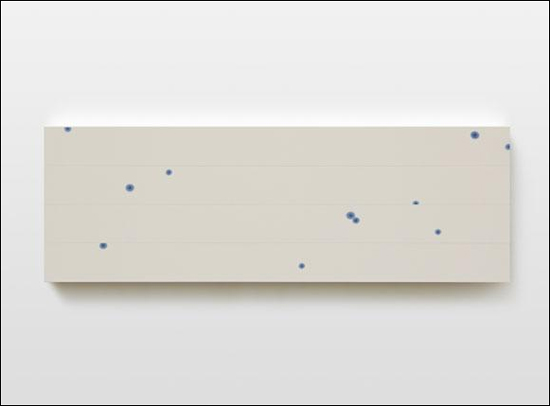
From early works on Korean paper and printmaking to thick-edged canvases, dot paintings, and time-based 4D series, his media have evolved while his central concerns remain constant: the structure of painting, the conditions of perception, and the relationship between matter and time. In his dot works, for instance, planes are reduced to points, and space is transformed into distance, suggesting a topological understanding of painting rather than a purely geometric one.
 
A long-standing interest in astronomy also permeates his practice. The universe seen through a telescope—light emitted from distant, perhaps already extinguished stars—resembles his conception of painting. What we see is not pure presence but the residue of time. The surface of the canvas, likewise, accumulates traces of irreversible processes. Painting becomes a site where existence and disappearance intersect.
 
Lee’s cartography is not the repetition of a style but the persistent reorientation of a question. As front and side exchange roles, as material and image blur, as center and periphery are inverted, his paintings continually renew themselves. This continuity is not static repetition but constancy within transformation—a sustained thinking-through of painting itself.

Works of Art

Articles

Exhibitions

Activities