Hong Jungpyo (b.1976) - K-ARTIST
Hong Jungpyo (b.1976)

Hong Jungpyo earned his BFA and MFA in Sculpture from Hongik University. Through the reproduction of everyday objects and the repeated assembly of geometric structures, he explores how sculptural forms are created and transformed.

Solo Exhibitions (Brief)

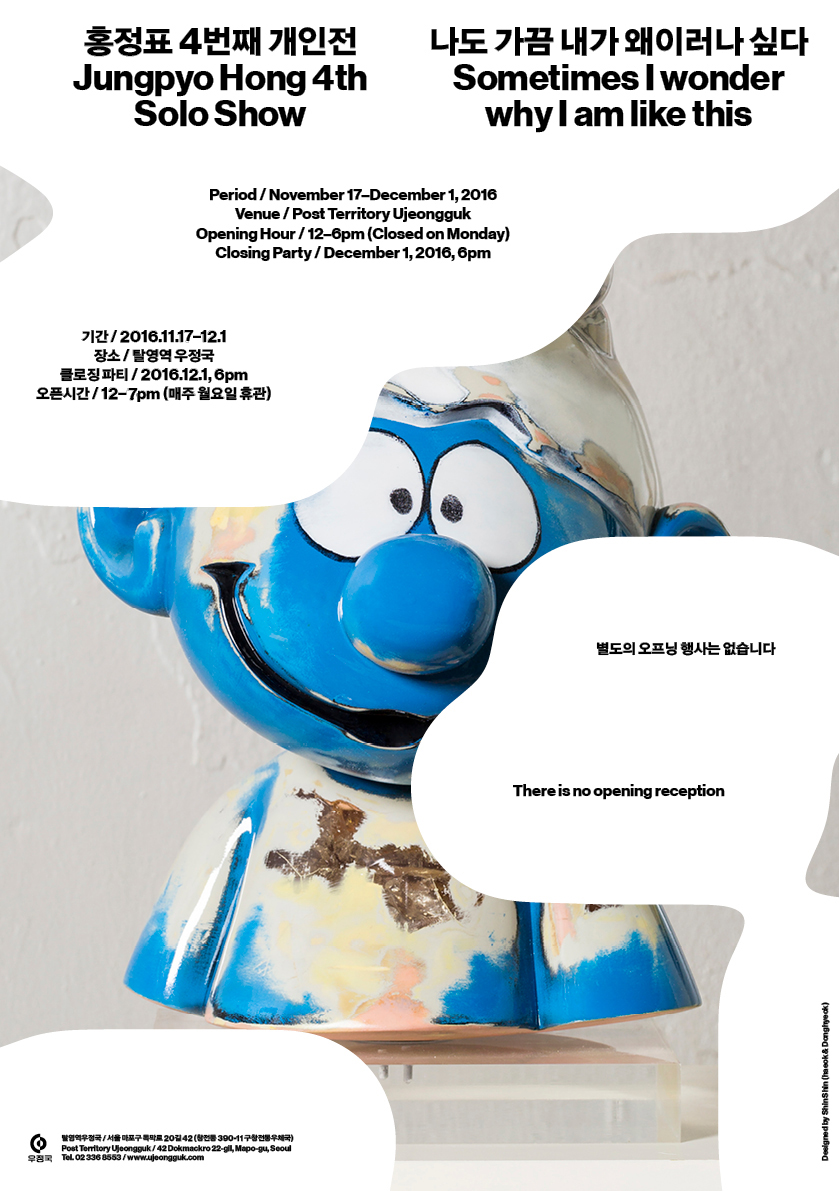
Hong Jungpyo has held solo exhibitions at Gallery Skape (2008), Post Territory Ujeongguk (2016), and 313 Art Project (2017, 2021) in Seoul, as well as HRD Fine Art (2018) in Kyoto, Japan.

Group Exhibitions (Brief)

Hong Jungpyo has participated in group exhibitions at the Buk-Seoul Museum of Art (2014, 2015), Savina Museum of Contemporary Art (2015), Space K Daegu (2015), and Art Centre Art Moment (2023), among others.

Awards (Selected)

Hong Jungpyo received the Grand Prize at the 26th JoongAng Fine Arts Prize and the Excellence Award at the 10th Speech of Rising Artists, organized by the art magazine 《Misulsegae》, in 2004.

Residencies (Selected)

Hong Jungpyo has participated in artist residency programs at MMCA Residency Goyang (2008–2009), Cité internationale des arts in Paris (2010–2011), and SeMA Nanji Residency (2014), among others.

Collections (Selected)

Hong Jungpyo's works are held in the collections of the MMCA Art Bank (2022) and the Buk-Seoul Museum of Art (2015).

Works of Art

Errors and Uncertainties in the Process of Completing a Sculpture

Originality & Identity

Hong Jungpyo has consistently questioned the meaning of art and the criteria for sculptural completion through repetition and obsession inherent in the process of making sculpture. Taking everyday objects and actions as his starting point, he investigates how seemingly purposeless, repetitive behaviors relate to artistic practice.

In his 2013 artist statement, Hong questioned what role contemporary art could play if deprived of its conventional conditions of appreciation, proposing an approach that removes the functions of everyday objects while preserving their formal beauty and meaning. Actions repeated for personal satisfaction, despite their apparent lack of practical purpose, become closely connected to the artist's pursuit of sculptural completion. By applying conventional notions of utility and purpose to sculpture, Hong reconsiders the necessity and value of artistic activity.

These concerns become more specific through the relationship between the pursuit of perfect form and the errors that emerge during production. Hong devotes considerable labor to refining the surfaces of objects and correcting technical imperfections, while recognizing that such efforts do not necessarily produce the intended results.

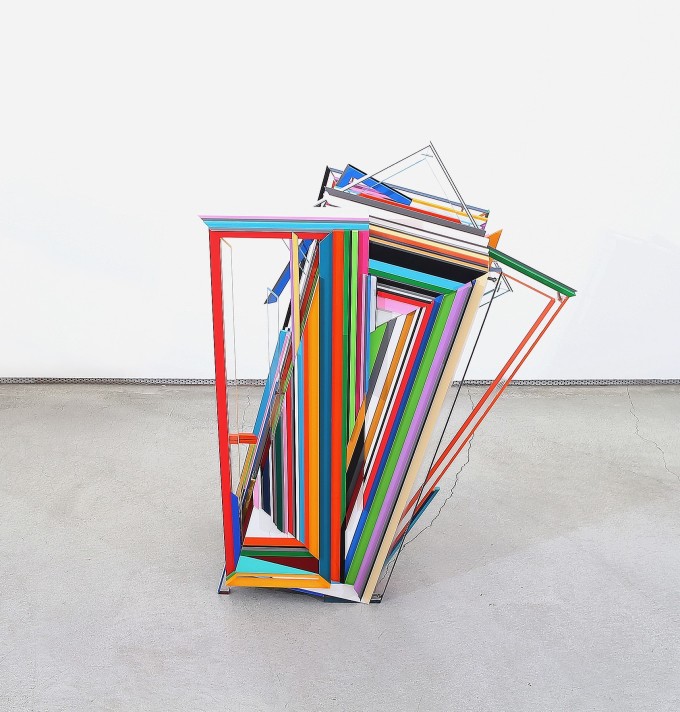
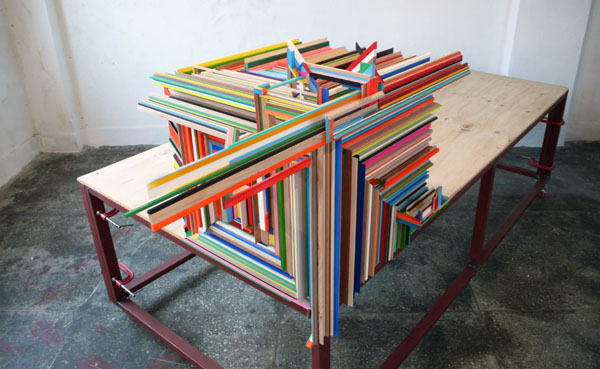
His ongoing ‘Hidden edge’ series, initiated in 2013, exemplifies this contradiction. Adding new structural elements to conceal exposed material cross-sections at the edges inevitably creates additional cross-sections, prompting the artist to repeat the same action. What begins as a simple plan gradually develops into a complex structure, as the pursuit of completion itself becomes the source of endless modification. Through this process, Hong explores the possibilities of sculptural forms that exceed the artist's original intentions and control.

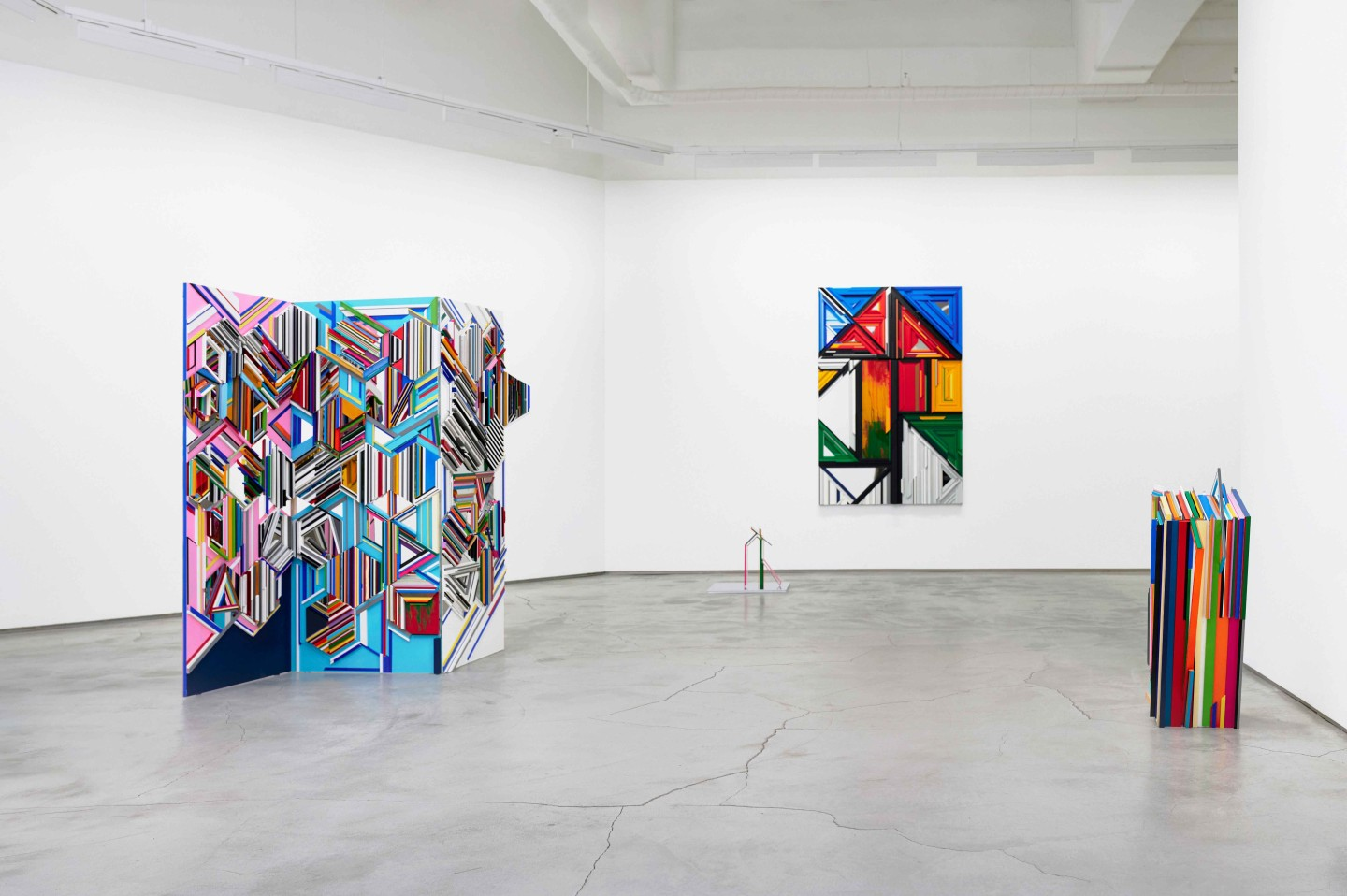
Questions of sculptural completion also extend to the relationship between artworks and their viewers. Hong is interested in how formal decisions made during production may be interpreted entirely differently by those encountering the finished work. In his 2024 solo exhibition 《Different Feelings》, he exposed both meticulously finished surfaces and reverse sides bearing traces of production, examining discrepancies between artistic intention and audience interpretation.

A form that the artist considers complete may acquire new meanings depending on the viewer's experiences and perspectives. In this way, Hong's practice expands from the act of making sculpture to broader questions concerning the criteria for completion and who determines the meaning of an artwork.

Style & Contents

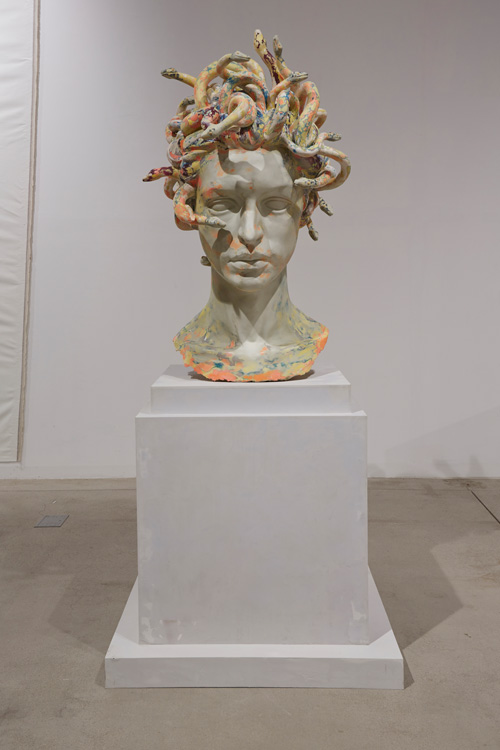
Hong Jungpyo's sculptures are characterized by vivid primary colors, meticulously finished surfaces, and precisely assembled lines and edges. Incorporating everyday objects and industrially manufactured materials, he develops sculptural forms through repetitive processes of casting, sanding, painting, and assembly.

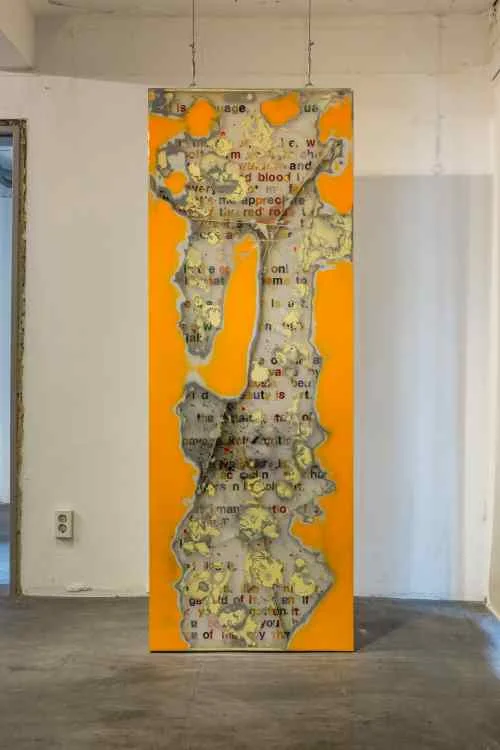
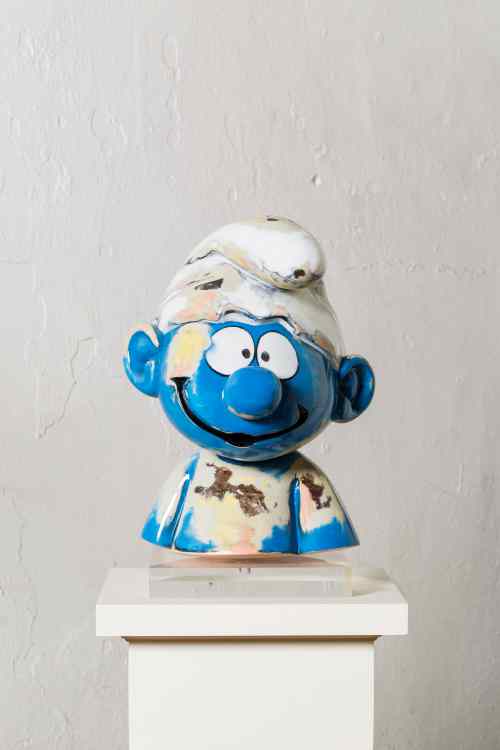
In his 2005 ‘Artactually’ series, Hong reproduced familiar objects, such as mackerel and doughnuts, at their actual sizes, translating their recognizable forms and material qualities into sculpture. The ‘Artactually-krispykreme’ series, in particular, involved casting actual doughnuts in transparent fiberglass-reinforced plastic (FRP), then repeatedly sanding their imperfect surfaces and filling them with colored FRP to address irregularities caused by the original material.

The carefully finished appearance of Hong's works thus emerges from extensive manual labor and repeated corrections, while errors occurring during production also play an important role in determining their final forms.

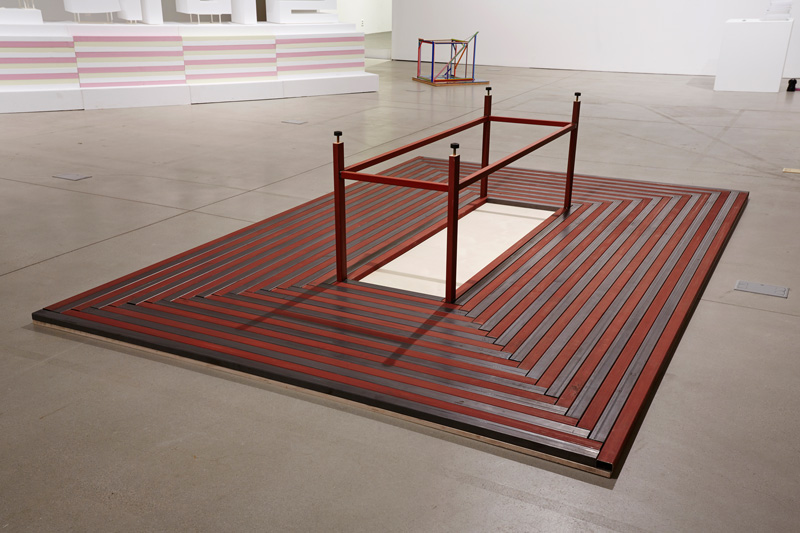
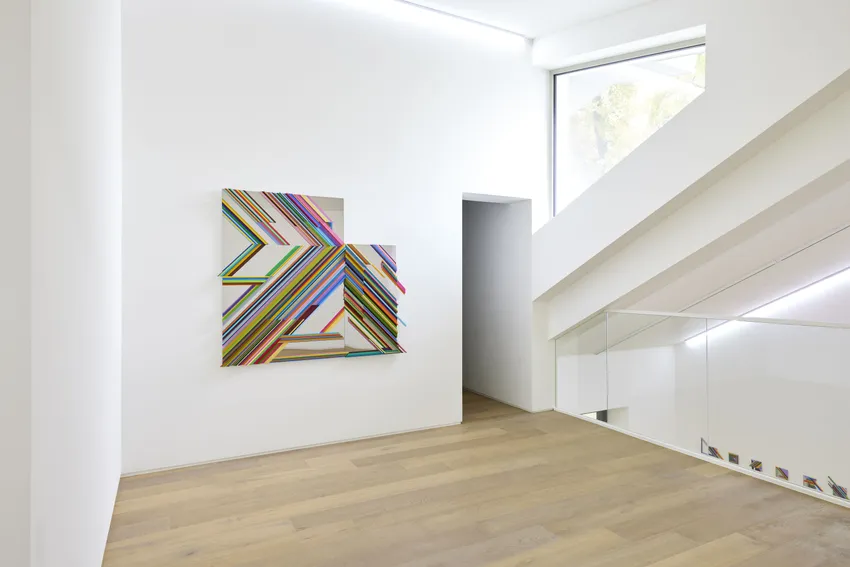
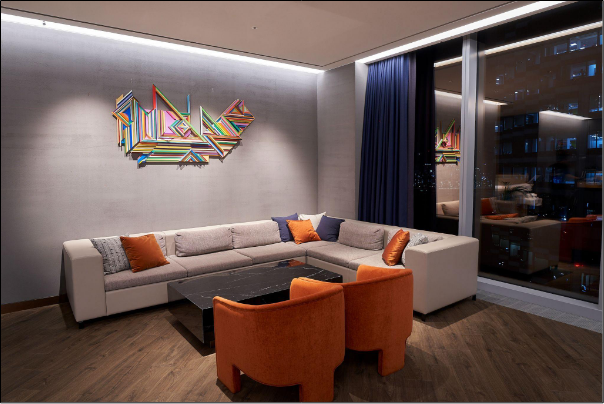
In the ‘Hidden edge’ series, his earlier methods of reproducing objects develop into the construction of geometric structures. Drawing upon architectural molding techniques used to create smooth transitions between rough surfaces, Hong repeatedly adds structural elements to conceal exposed material cross-sections, only to cover the new cross-sections that emerge as a result. Intersecting horizontal and vertical lines, edges protruding at various angles, and components of different thicknesses are continuously assembled into increasingly complex structures.

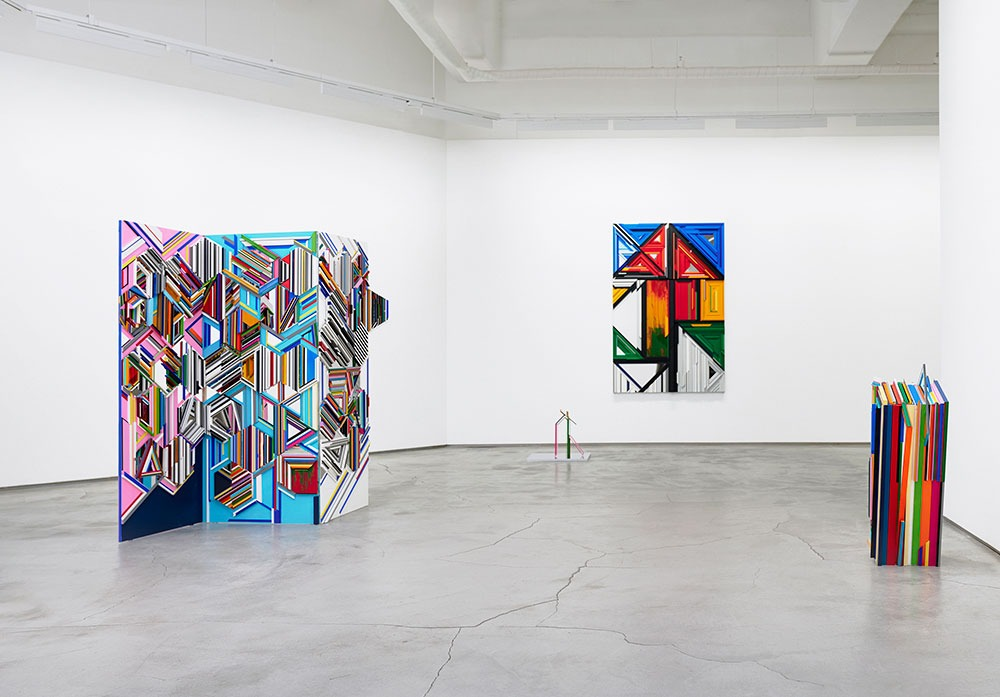
While the early works emphasized three-dimensional forms based on hexahedral frameworks, the series subsequently evolved toward linear configurations and wall-mounted reliefs. In works such as Hidden edge #101 (Concealing the Cross-section #101) (2021), these constructive principles generate structures that move between two and three dimensions, emphasizing the spatial relationships formed between sculptural surfaces and edges.

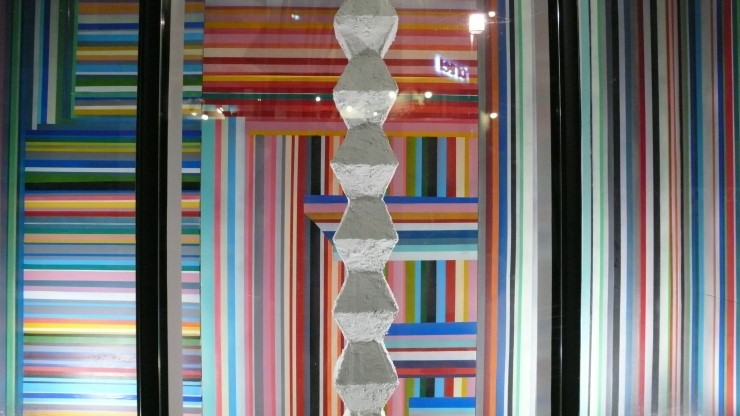
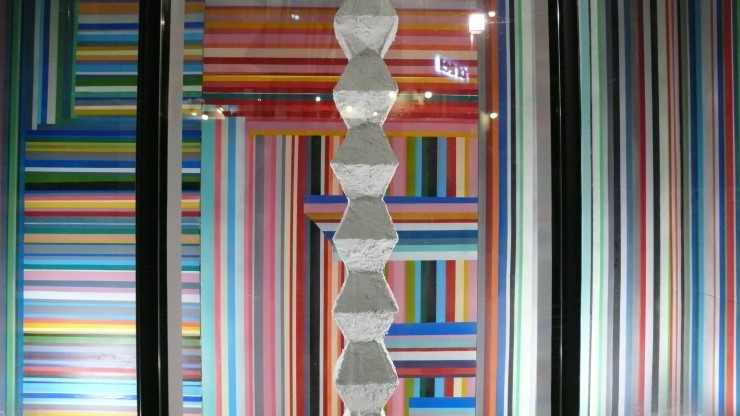
Hong has also expanded the visual experience of sculpture by manipulating the relationship between sculptural structures and their surrounding spaces. In Infinite Pillar (2014), he installed highly reflective super mirrors on the ceiling and floor and arranged repetitive lines and a column-like structure to create the illusion of a confined exhibition space extending infinitely in the vertical direction. In the ‘Hidden edge’ series, the arrangement of lines and edges connecting interior and exterior spaces produces varying perceptions of depth depending on the viewer's position.

In Hidden edge #18 (Concealing the Cross-section #18) (2021), he incorporated mirrors to superimpose the physical space of the structure and its reflected image, while No decision #002 ver.HE (2021) uses a special pigment to conceal the underlying construction process. Through the physical thickness of materials and the visual effects of surfaces, these works explore the relationship between the space occupied by sculpture and the space perceived by viewers.

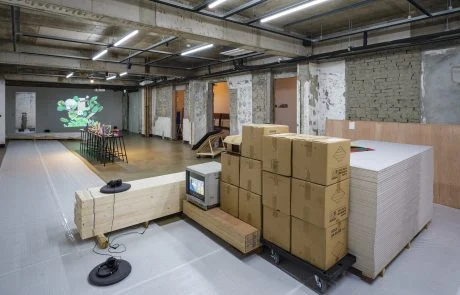
More recent works actively incorporate architectural structures and existing objects, transforming their functions and modes of installation. Lerberg and No Use (2024) are based on an IKEA shelving unit and a steel pipe hanger, respectively, presenting formerly functional objects as independent sculptural forms. In I Don't Want the Bottom of the Object to Get Dirty (2024), Hong alters the structure of a sculptural pedestal, reversing the conventional relationship between support and artwork.

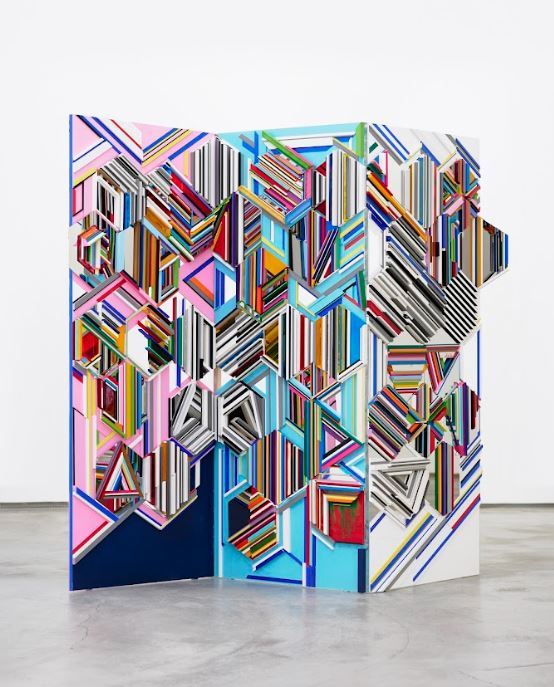
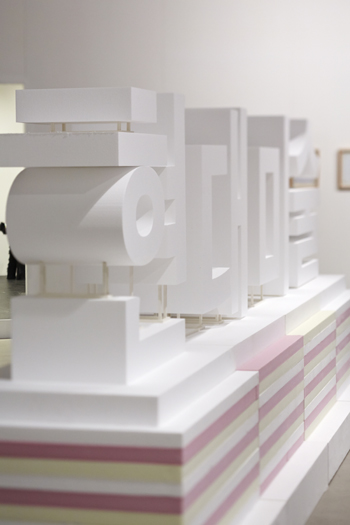
Meanwhile, the ‘Loading in 9 Times’ series combines moldings of varying thicknesses to explore structures extending along three spatial axes. In Different Feelings (2024), he simultaneously exposes the front and back of a folding-screen-like form, revealing both the finished surface and traces of the production process. Maintaining his characteristic precision in surface treatment and structural assembly, Hong continues to broaden the expressive possibilities of sculpture by transforming the functions, orientations, and visible surfaces of objects.


Topography & Continuity

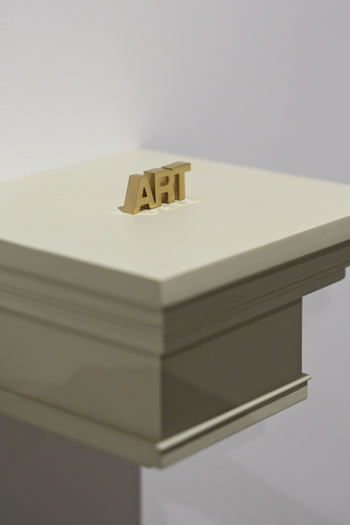
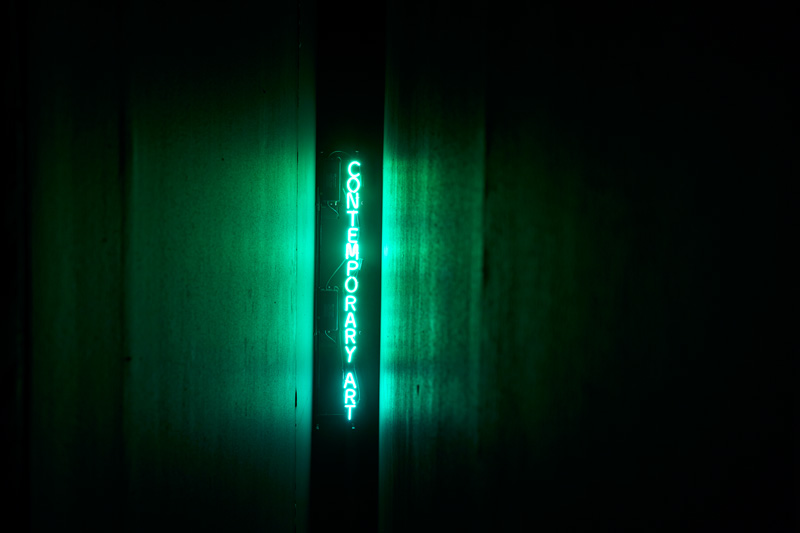
Since the early 2000s, Hong Jungpyo has developed his practice around questions concerning sculptural production methods and artistic activity. His early ‘Artactually’ and ‘Art is’ series focused on casting and reproducing everyday objects and widely recognizable images, repeatedly correcting errors that emerged during production.

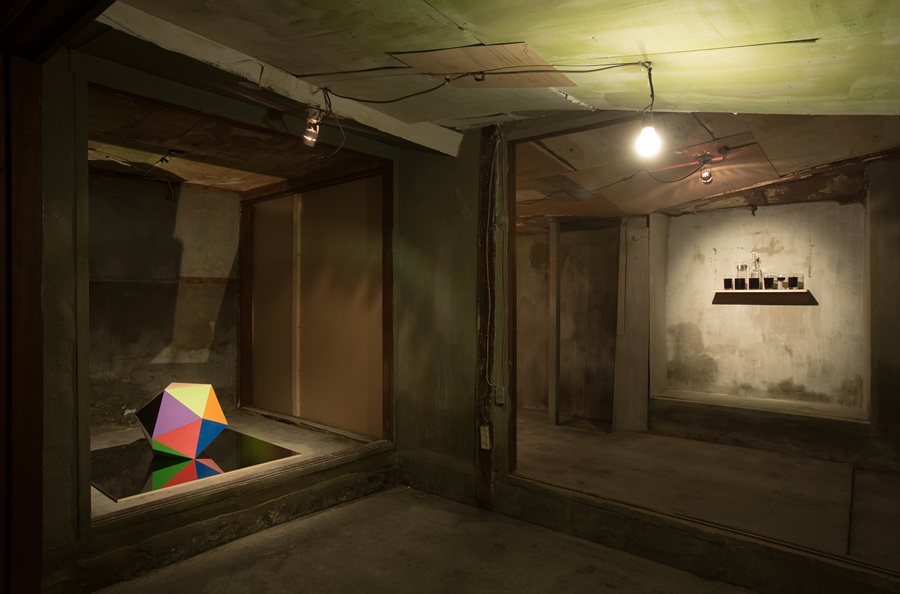
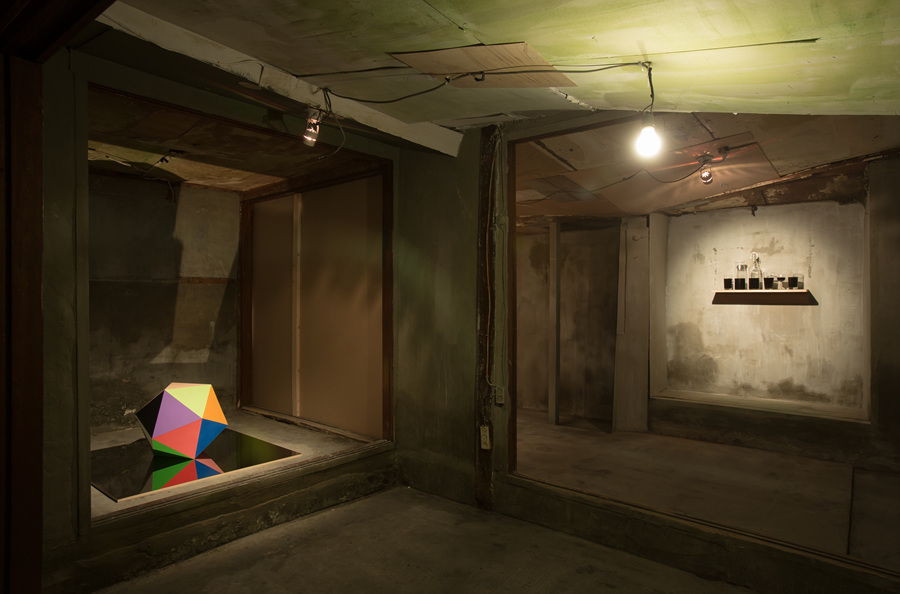
These experiments prompted a reconsideration of the functions and appearances of objects while revealing both the sculptor's technical proficiency and his obsessive pursuit of completion. In his 2013 solo exhibition 《The Neat Life》, presented as part of CAN Foundation's Old House Regeneration Project, Hong questioned the function and purpose of art through everyday objects and seemingly meaningless repetitive actions. During this period, he began developing the imperfections arising during production and the actions taken to correct them into central principles of his practice.

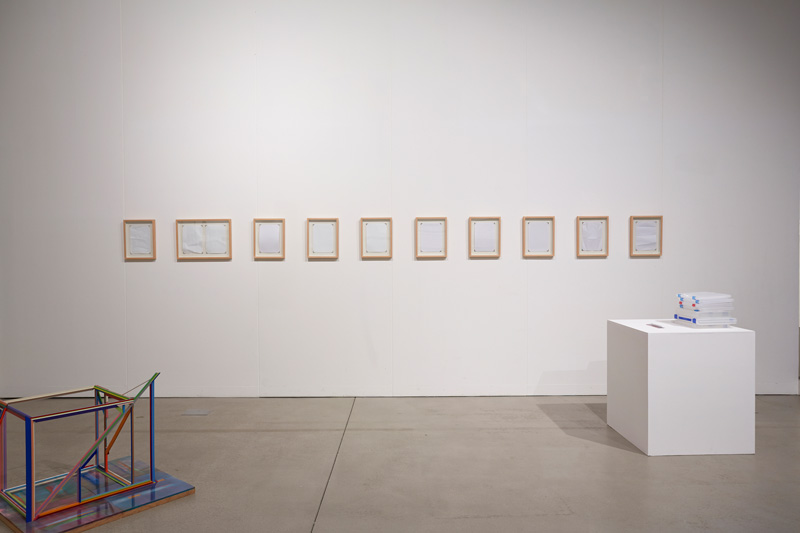
Initiated in 2013, the ‘Hidden edge’ series represents the continued development of these interests. The original Hidden edge (2013) was based on a hexahedral structure, while Hidden edge #2 (2014) and Hidden edge #3 (2015) increasingly emphasized interior planes, edges, and linear construction. Hidden edge #4 (2016) incorporated the structure of a sculptural pedestal, and beginning with Hidden edge #6 (2018), the series expanded into wall-mounted reliefs.

Although the structures and methods of installation evolved, the underlying rule of repeatedly adding components to conceal exposed cross-sections remained consistent. In his 2021 solo exhibition 《Untitled Title》 at 313 Art Project, Hong presented works including ‘No decision’ and ‘Loading in 13 times’, further investigating the relationships between sculptural surfaces, space, and the acts involved in their construction.

While reconsidering traditional principles of sculptural production, Hong's works have been presented across a variety of exhibition contexts within Korean contemporary art. The 2015 exhibition 《Title Match: gum nuri vs Hong Jungpyo》 at the Buk-Seoul Museum of Art brought together sculptors from different generations, highlighting their respective questions concerning art and artistic production.

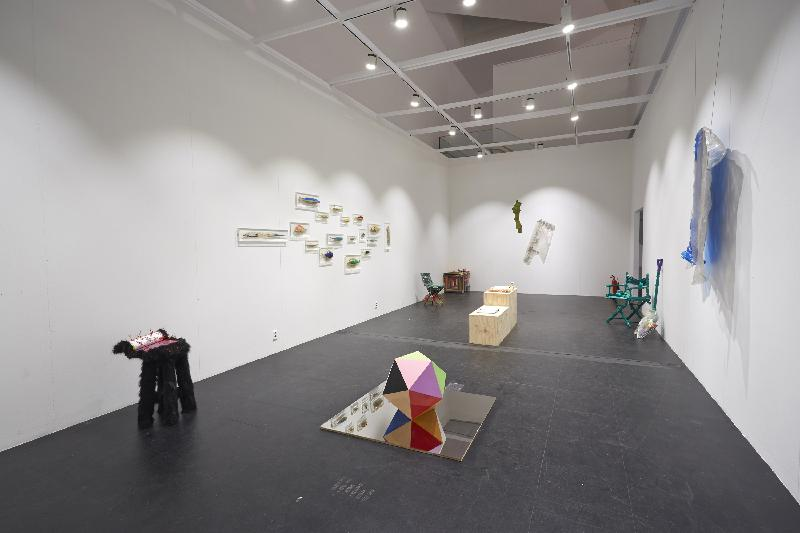
His 2016 solo exhibition 《Sometimes I wonder why I am like this》 at Post Territory Ujeongguk foregrounded questions about artistic completion and obsessive production processes, while his practice also reached international audiences through a solo exhibition at HRD Fine Art in Kyoto, Japan, in 2018.

Across public museums, independent exhibition spaces, and galleries in Korea and abroad, Hong has continued to experiment with the concepts and forms of sculpture. The contradiction between meticulously finished surfaces and imperfect production processes remains a recurring characteristic of his work in these different exhibition contexts.

In recent years, Hong has increasingly explored the relationships between artworks, viewers, and exhibition spaces while maintaining his established sculptural methods. In the 2023 group exhibition 《OFF-TIME》 at Art Centre Art Moment, he presented Loading Nine Times, a work exploring the repeated frustration of efforts toward completion, connecting his practice to the exhibition's broader concerns with productivity and efficiency.

His 2024 solo exhibition 《Different Feelings》 incorporated industrially manufactured objects and architectural structures while examining discrepancies between artistic intention and audience interpretation.

Despite these developments, Hong's practice remains characterized by a consistent pursuit of formal precision alongside an acceptance of the errors and uncertainties that arise during production. Through sustained experimentation with the making, viewing, and spatial conditions of sculpture, he continues to reconsider the very notion of completion.

Works of Art

Errors and Uncertainties in the Process of Completing a Sculpture

Articles

Exhibitions

Activities