Woongcheol Lee (b.1983) - K-ARTIST
Woongcheol Lee (b.1983)

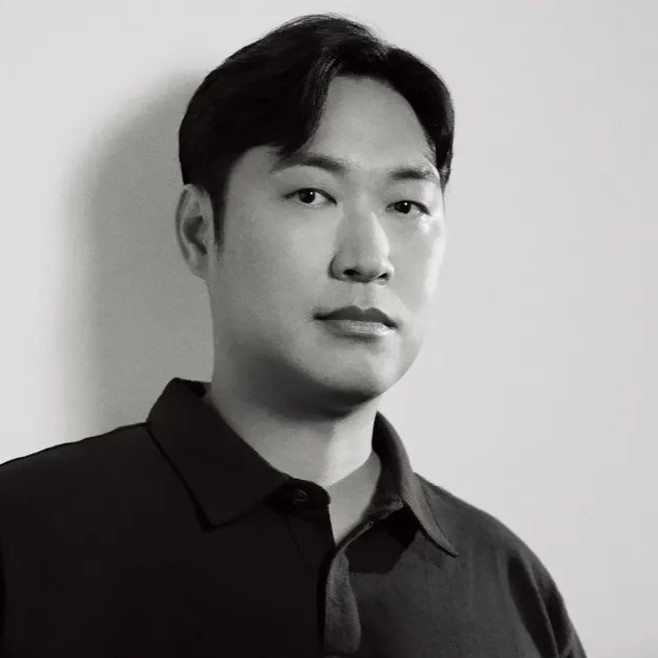
Woongcheol Lee earned his B.F.A. in Sculpture from Kookmin University and his M.F.A. in Painting from Hongik University. He currently lives and works in Seoul.

Solo Exhibitions (Brief)

Woongcheol Lee has held solo exhibitions including 《Non-World》 (WWNN, Seoul, 2025), 《The Image of Mana》 (Ingahee Gallery, Seoul, 2025), 《The Line – Mirror of Memory》 (Jeju Museum of Contemporary Art, Jeju, 2024), 《Memories of Black Stone》 (Ingahee Gallery, Seoul, 2024), and 《The Black Stone and the Iron》 (TINC, Seoul, 2023).

Group Exhibitions (Brief)

Lee has also participated in numerous group exhibitions, including 《Loop Lab Busan》 (Grand Josun Busan Hotel, Busan, 2025), 《Eternally Reborn》 (Museum Hanmi, Seoul, 2024), 《Public Art New Hero》 (K&L Museum, Gwacheon, 2024), 《POV-Point of View》 (PYO Gallery, Seoul, 2023), 《Video Bites》 (Platform-L Contemporary Art Center, Seoul, 2022), and 《seeState (between)》 (Art Center White Block, Paju, 2021).

Awards (Selected)

Lee was selected as a ‘Public Art New Hero’ artist in 2023,

Residencies (Selected)

Lee has participated in residency programs including Chuncheon Art Village (2024), Artist Residency TEMI (2022), and Gyeonggi Creation Center (2019).

Collections (Selected)

Lee’s works are held in the collection of the Gyeonggi Museum of Modern Art.

Works of Art

Structures and Sensibilities Beneath the World Order

Originality & Identity

Woongcheol Lee has explored points where the boundaries between reality and virtuality, material and immaterial, life and non-life, nature and the artificial become blurred. He understands “accident” not simply as an unexpected event, but as a catalyst that allows us to perceive the familiar world differently.

In his early works, Lee observed the repetitive structures and standardized bodily experiences that compose the urban environment. The way identical products and cultural forms are replicated, and the way residential and work spaces designed around efficiency standardize the movement of the body, became an important starting point for his practice.

The Geometry of Reality
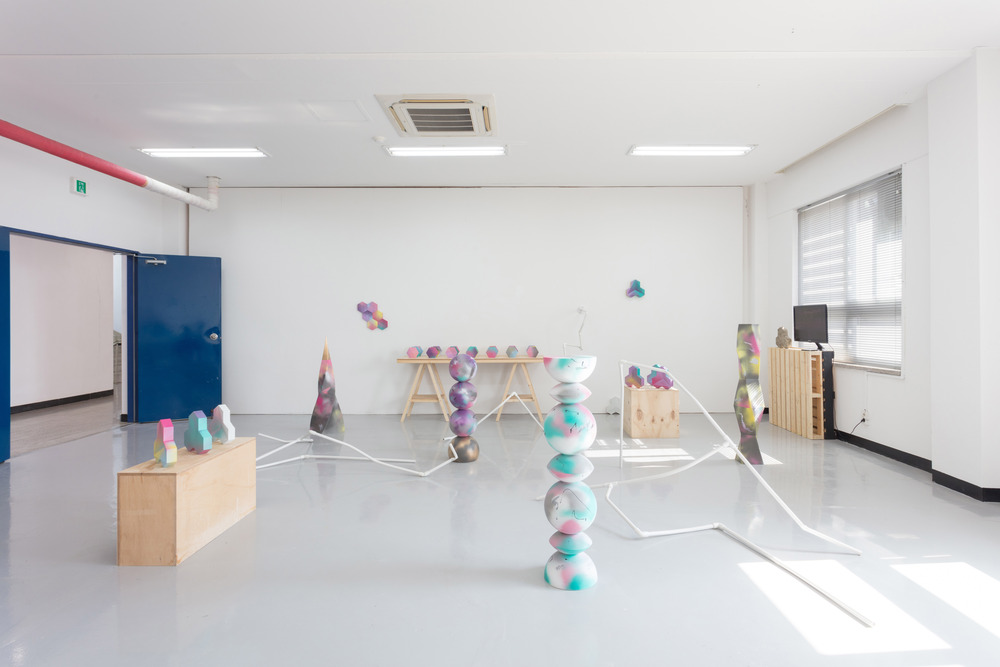
(2017) and Color-field Relief(2018) reveal the repetition and modular structure of the urban system through forms where flatness and volume intersect.
 
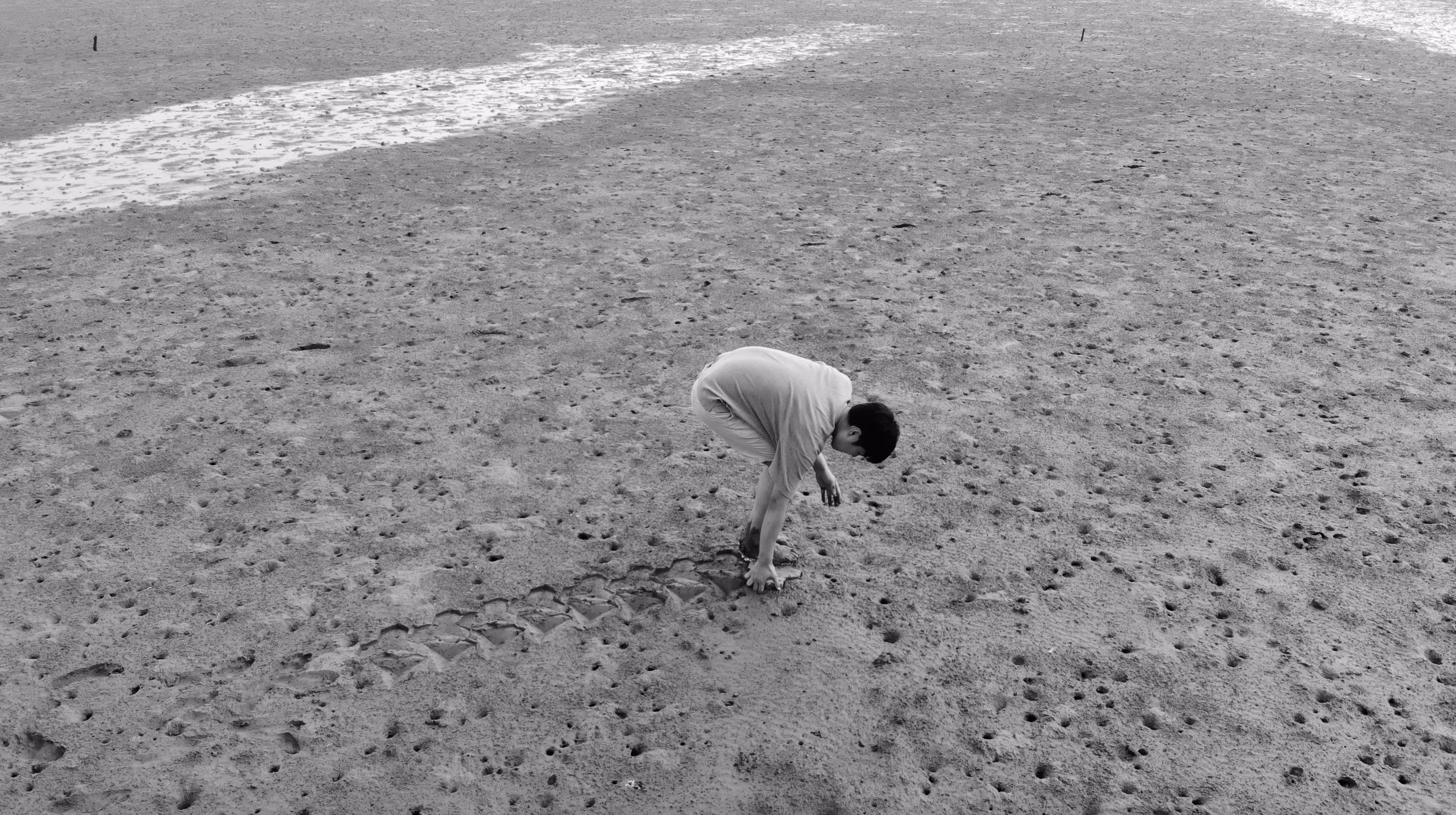
Lee’s interest later shifted from critically analyzing the structure of the city to the bodily sensations situated within that structure. In Agitated Step(2019), the artist places concrete panels extracted from urban structures like stepping stones across the mudflats near Tando Port in Ansan, and slowly walks over them.

Through this slow movement, fragments of the city come into contact with the surface of nature, and the artist’s body becomes a mediator temporarily connecting different environments.

Ice-cream concrete(2019) uses errors and failed objects produced during the 3D printing process as sculptural material, overlaying their surfaces with images from online “Satisfying Videos.” Here, Lee brings into his work not only the physical modules of the city, but also the light and fluid sensations produced by digital interfaces.
 
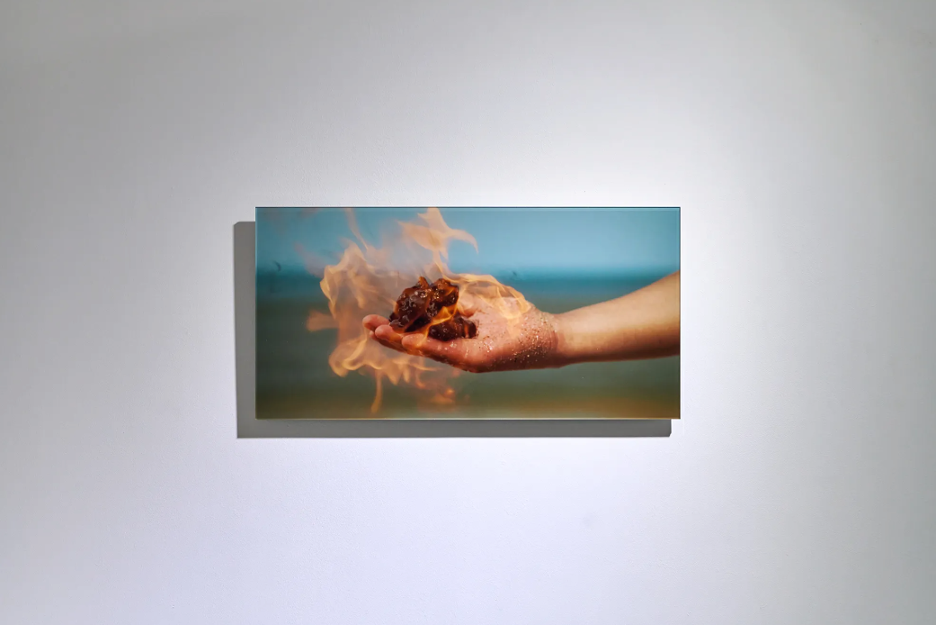
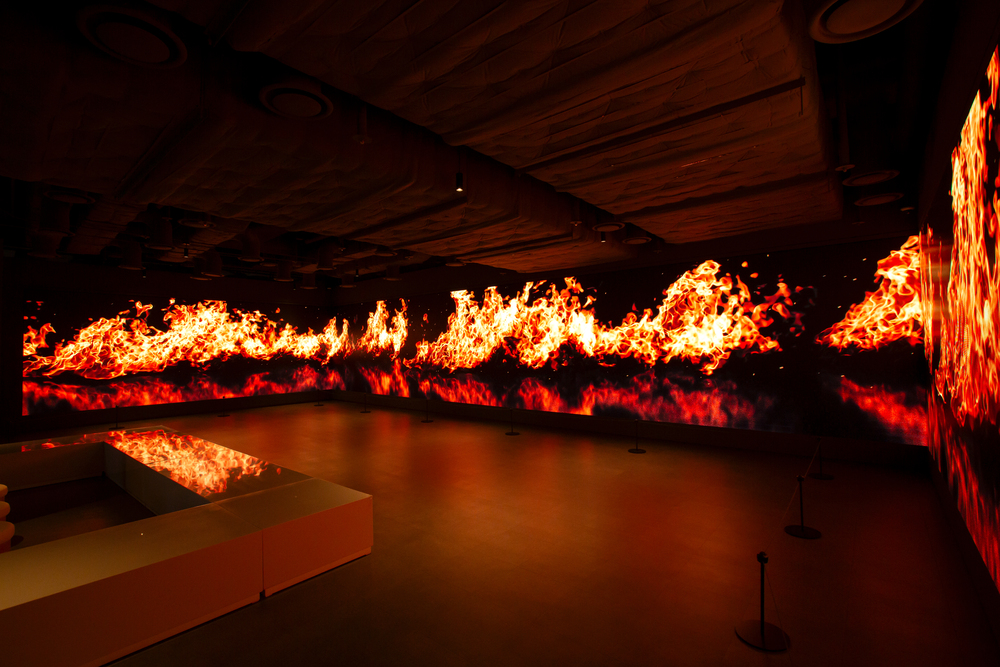
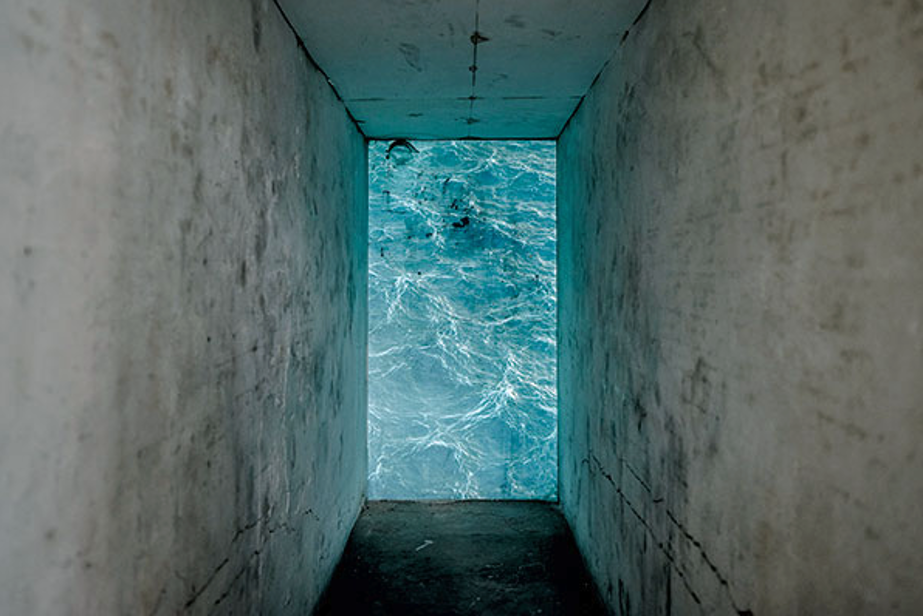
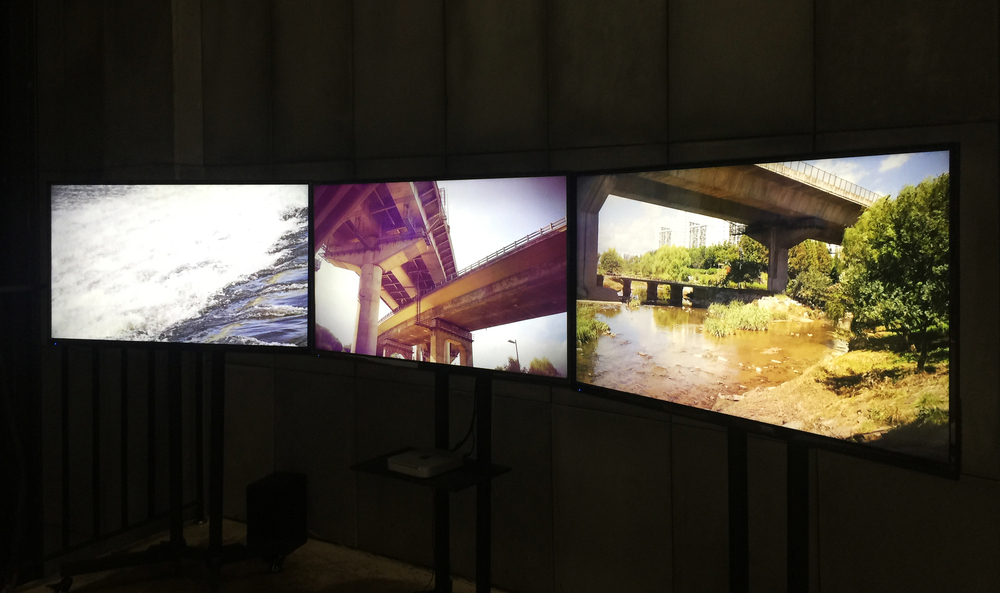
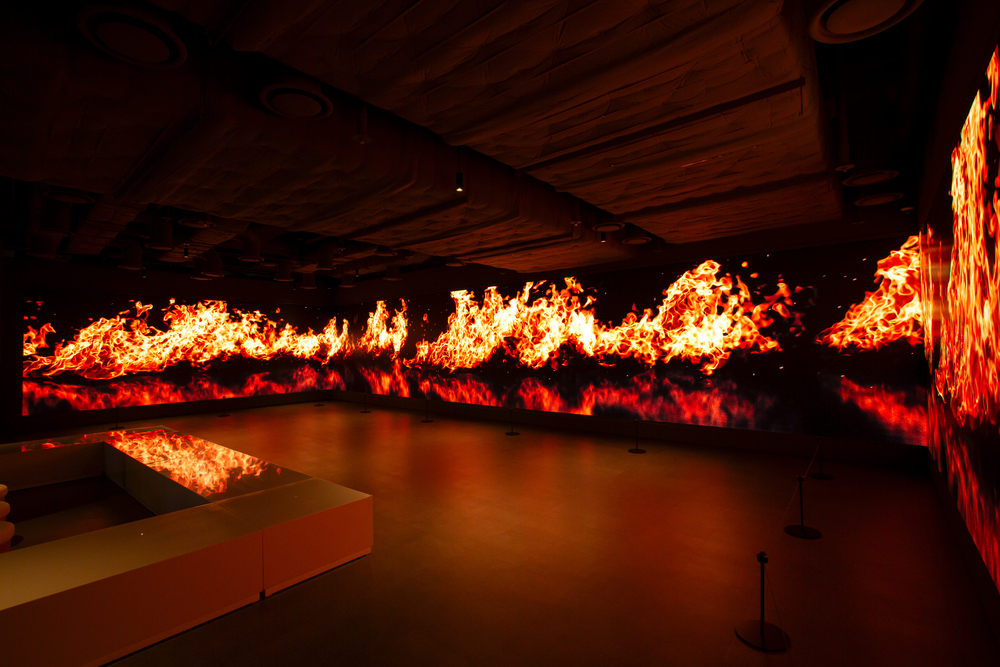
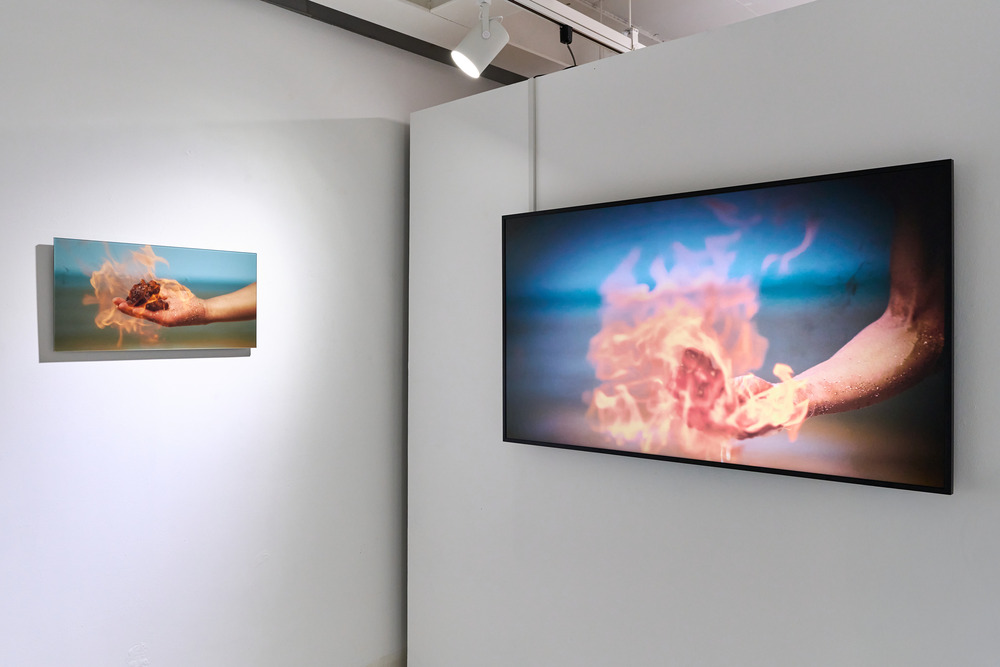
In works from the early 2020s, the relationship between the virtual and the real becomes a more direct subject. Surface of Water(2020) and Surface of Fire(2021) use digital images to realize water and fire, showing how scenes that first appear real reveal themselves as virtual through mismatched temporalities and physical laws.

After Effect(2021), Perforated Sculpture(2022), and Strange Garden(2022) experiment with the way sculpture and video supplement each other’s incompleteness. Sculpture can be sensed by the body but struggles to contain time, while video lacks physical tactility but can reveal the interior and transformation of sculpture. Lee does not divide the two into original and copy, but treats them as media that supplement and unsettle one another.
 
Since 2023, Lee’s work has expanded toward personal memory, the history of industrialization, energy resources, and mythic imagination. 《The Black Stone and the Iron》(TINC, Seoul, 2023) begins from the memories of the artist’s father, who worked as a construction laborer in Iran and Saudi Arabia in the 1970s and 1980s.

Rather than reconstructing this as a retrospective narrative, Lee transforms it into sensory scenes where labor, capital, national development, and the individual body intersect through Prospect(2023), Inside the Black Stone(2023), performance, sound, and installation. In 《The Image of Mana》(Ingahee Gallery, Seoul, 2025), he explores the relationship between invisible energy and matter through concepts such as petroleum, mana, aether, and plasma.

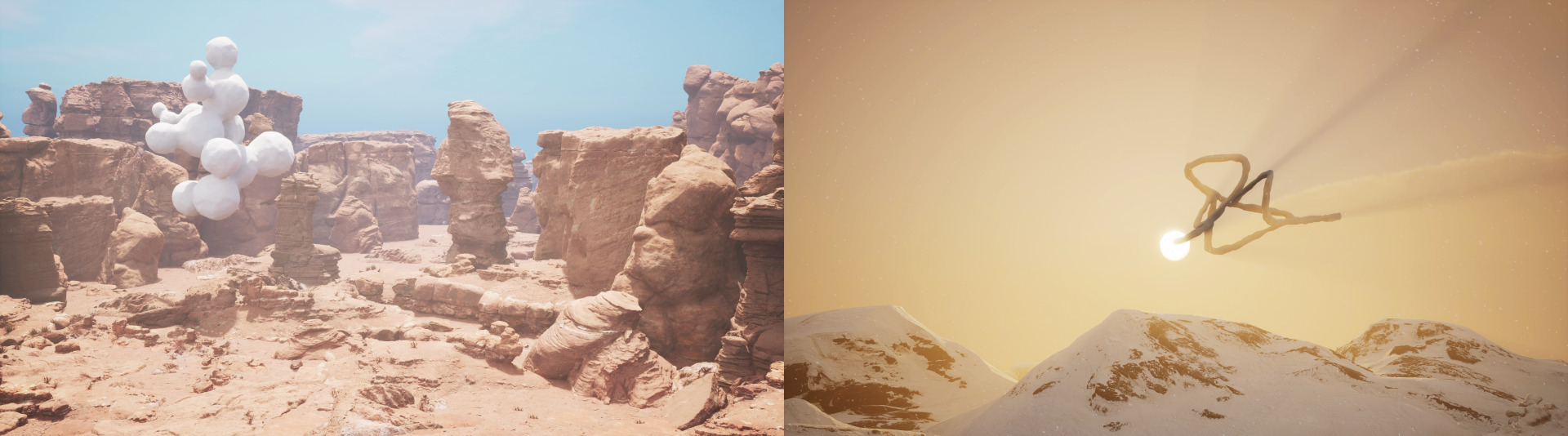
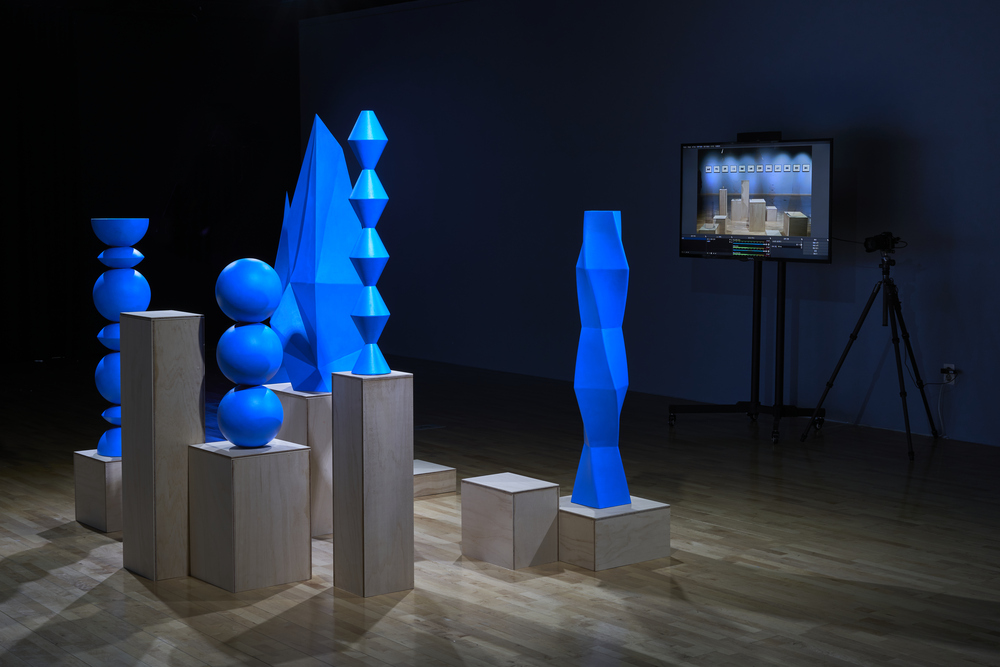
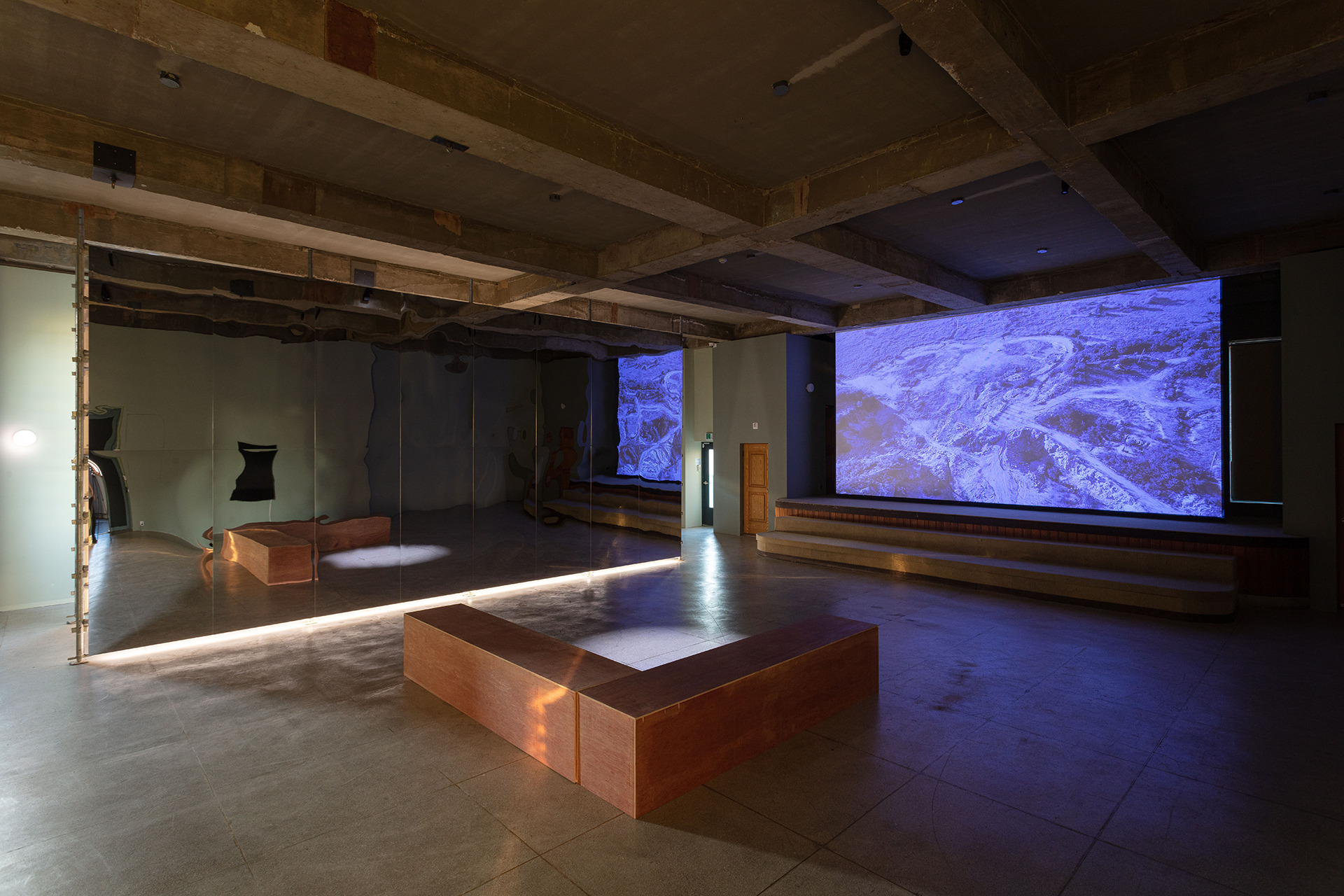
In 《Non-World》(WWNN, Seoul, 2025), he imagines the possibility of nonhuman sensations and relationships that may continue after the disappearance of humanity. His practice has gradually moved from the repetitive structures of the city toward the body, digital images, memories of industrialization, energy, and posthuman worldviews.

Style & Contents

Lee’s practice is centered on sculpture, yet it does not remain enclosed within sculpture alone. He works across painting, installation, video, 3D scanning, 3D printing, drone footage, sound, performance, and ceramics, making the movement between matter and image central to his practice. In his early works, architectural materials and modules such as concrete, pipes, tiles, and geometric structures played an important role.

By extracting, transforming, and recombining structures found in the city, the artist revealed the hidden discomfort and mechanisms of control embedded in the objects and spaces we use every day. 《Designed Experience》(Pappappa Tamgooso Sewoon, Seoul, 2017) clearly shows this concern, presenting how everyday design shapes the body and behavior through sculptural form.
 
The introduction of digital tools significantly changed Lee’s formal language. Drones transform architecture into floating images that seem to have lost gravity, while 3D printers leave unintended errors in the process of producing identical units. Lee does not remove these errors as failures, but accepts them as variations that arise within repetitive structures.

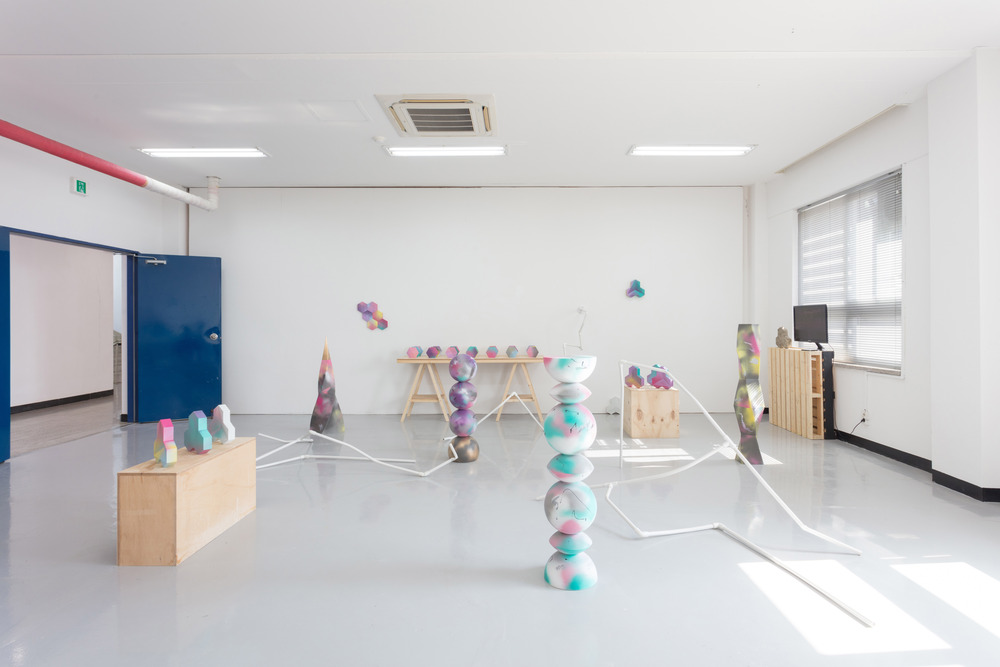
Ice-cream concrete stacks and arranges failed 3D-printed objects into sculptures, combining the solidity of concrete with the slippery surface of digital imagery. In this work, sculpture becomes less a heavy and fixed object than a temporary overlap between physical materiality and virtual images.
 
After Surface of Water and Surface of Fire, Lee began to treat video and sculpture as both supplementary devices and tense counterparts. After Effect captures a single moment from irregular movement generated through a generative design program and realizes it as sculpture, while video supplements the temporal change that sculpture cannot contain.

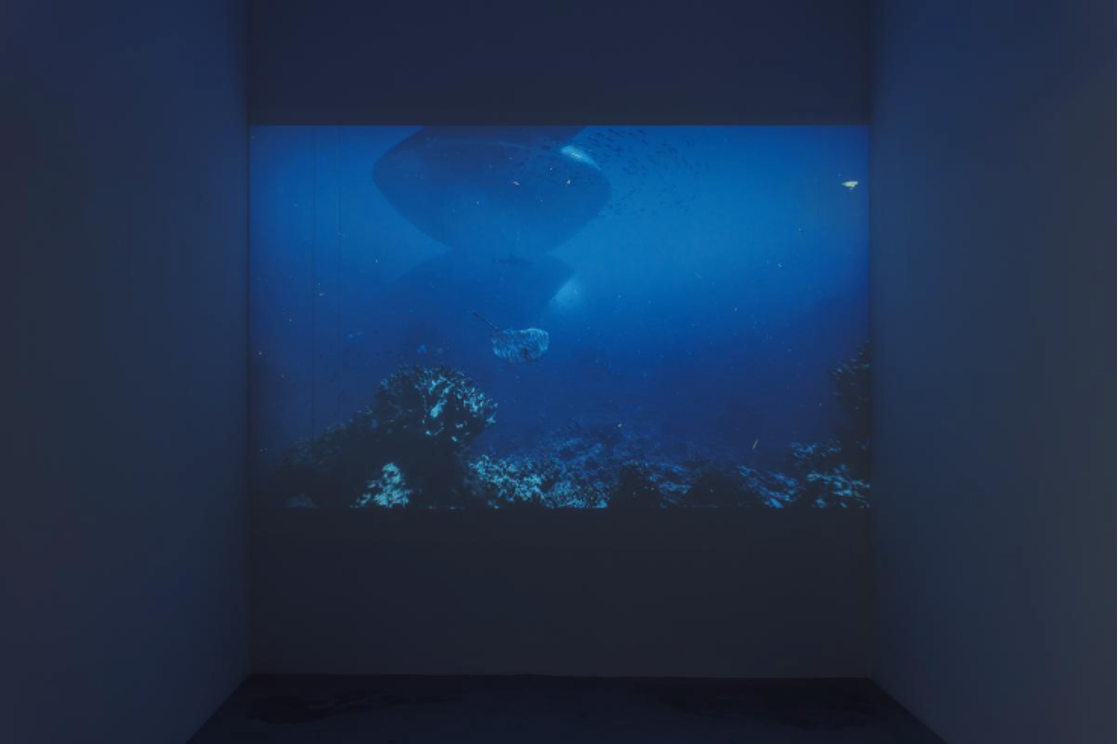
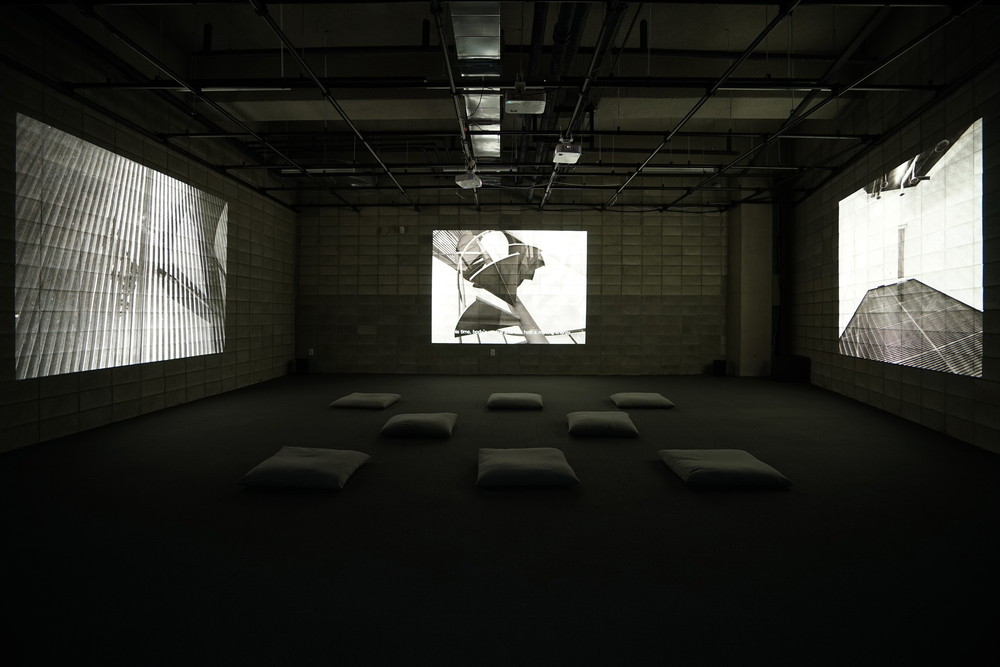
Perforated Sculpture slowly rotates a 3D-scanned sculpture within an artificial natural space, erasing the weight of reality through the difference between the sculpture’s actual scale and its scale within the video.

《Mysterious Garden》(Seoul Arts Center, Seoul, 2022) combined 3D-scanning-based video, digital sculpture, cast objects, and fractal images in a single space, organizing the entire exhibition as a kind of mixed reality. In this process, viewers experience not only sculpture itself, but also the way virtual images reorganize physical space.
 
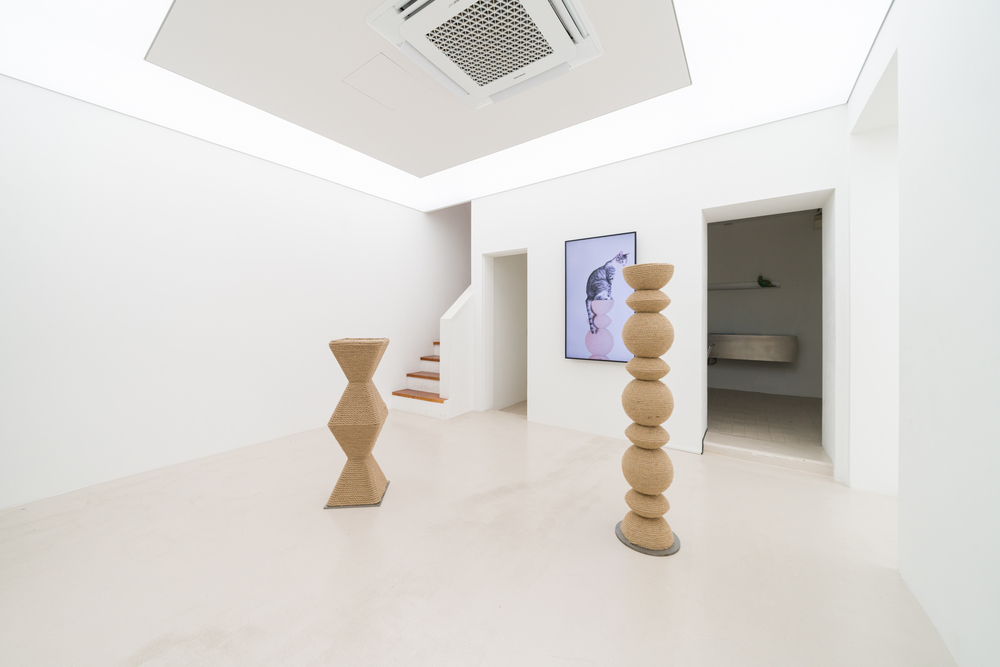
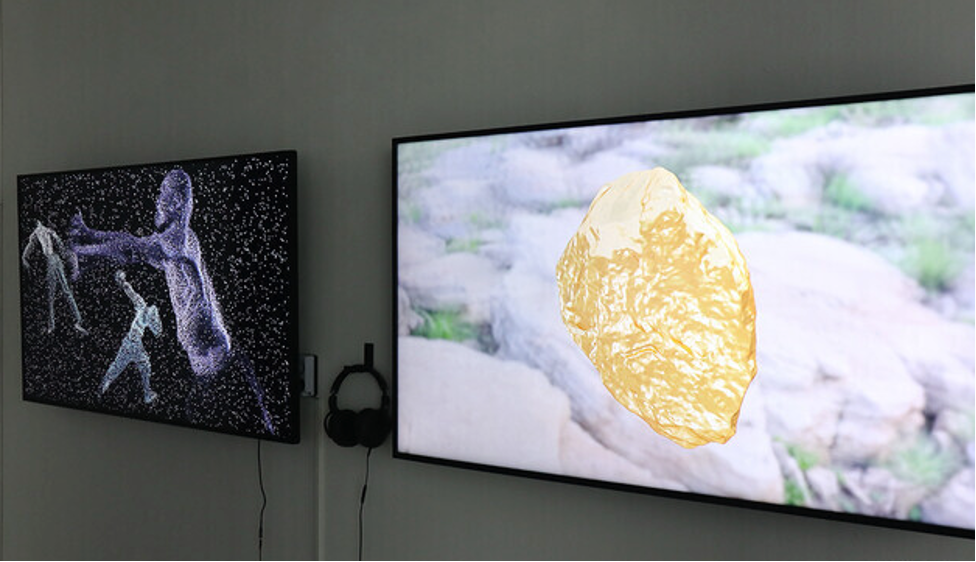
In recent works, the range of Lee’s forms has expanded further. 《The Black Stone and the Iron》 combines video, installation, poetry, sound, and performance to sensorially summon the memory of his father and the time of Korea’s industrialization. Philosopher’s Stone: The First Object(2024) constructs a mythic image around the alchemical symbol of the philosopher’s stone, connecting resources, labor, capital, and memory.

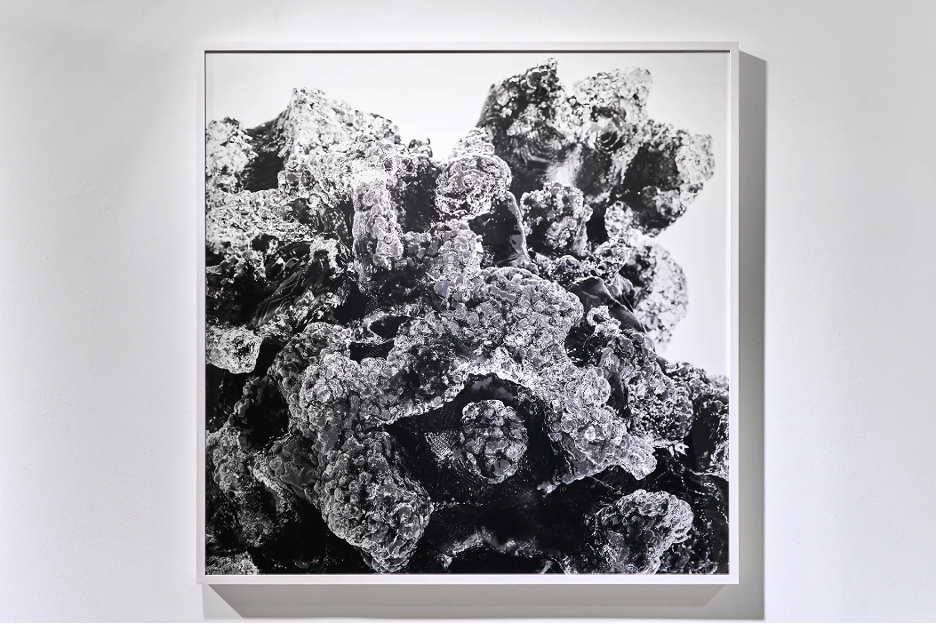
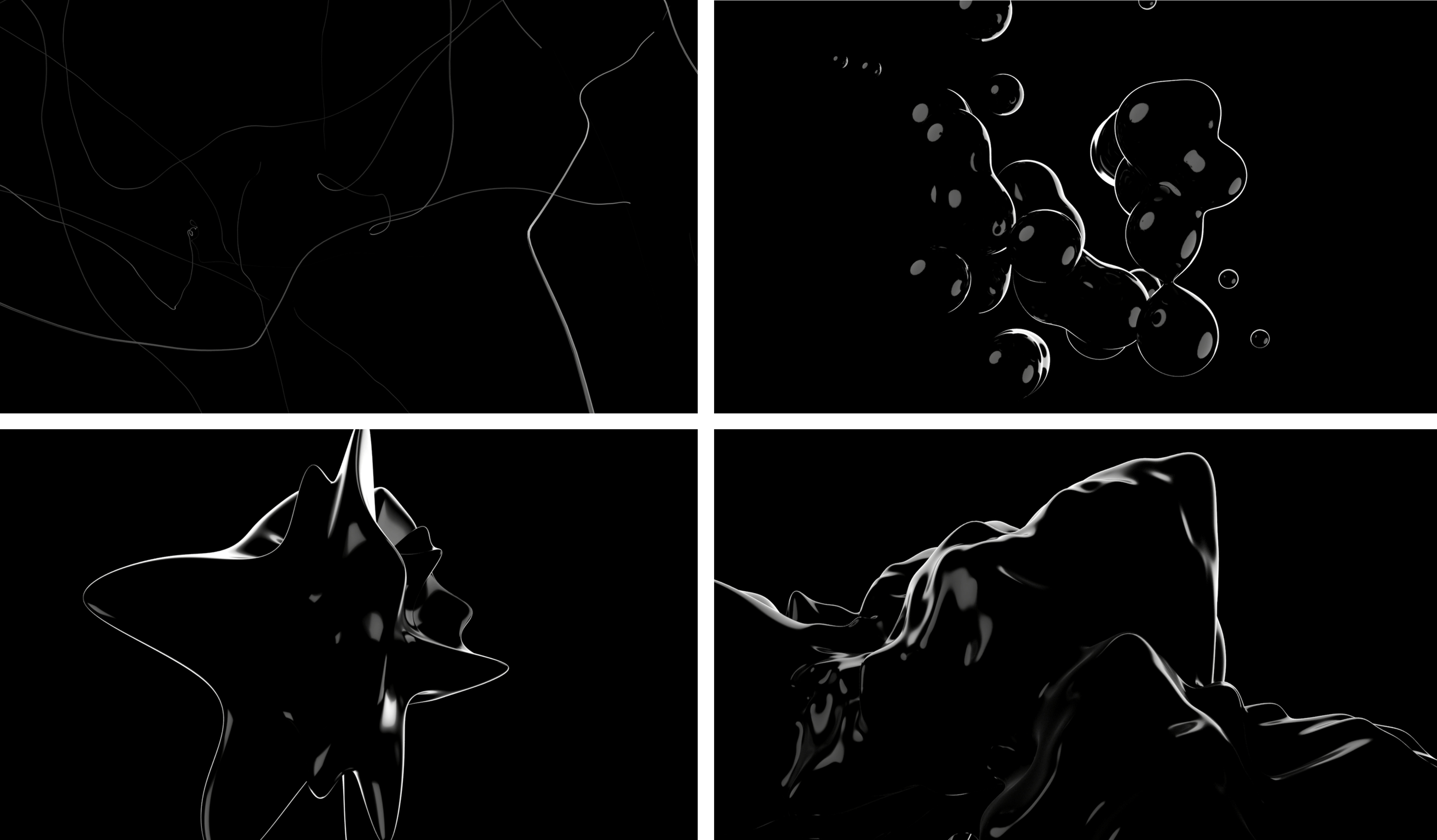
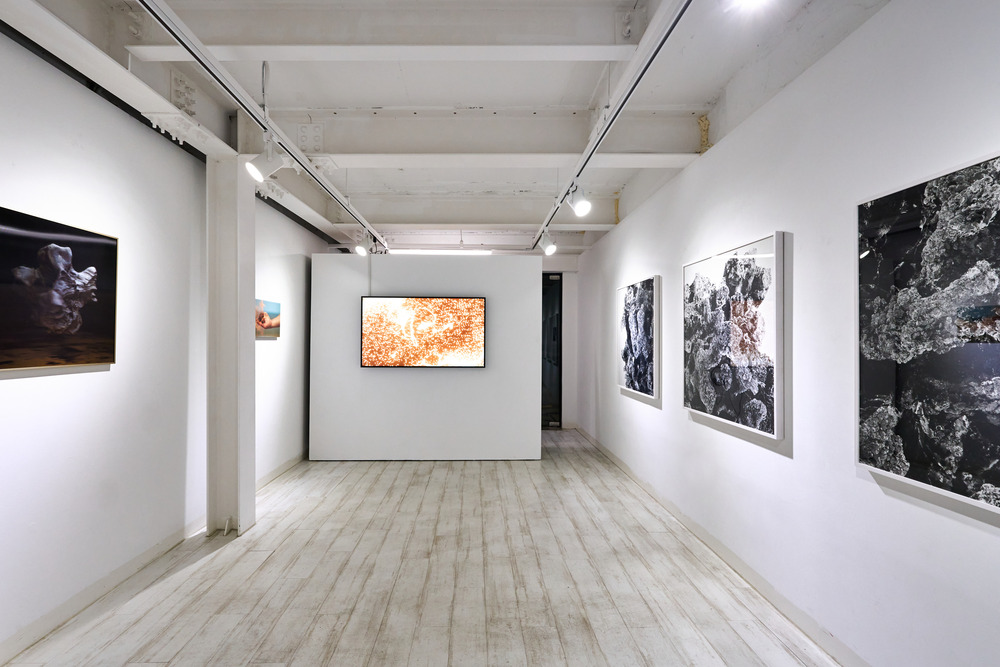
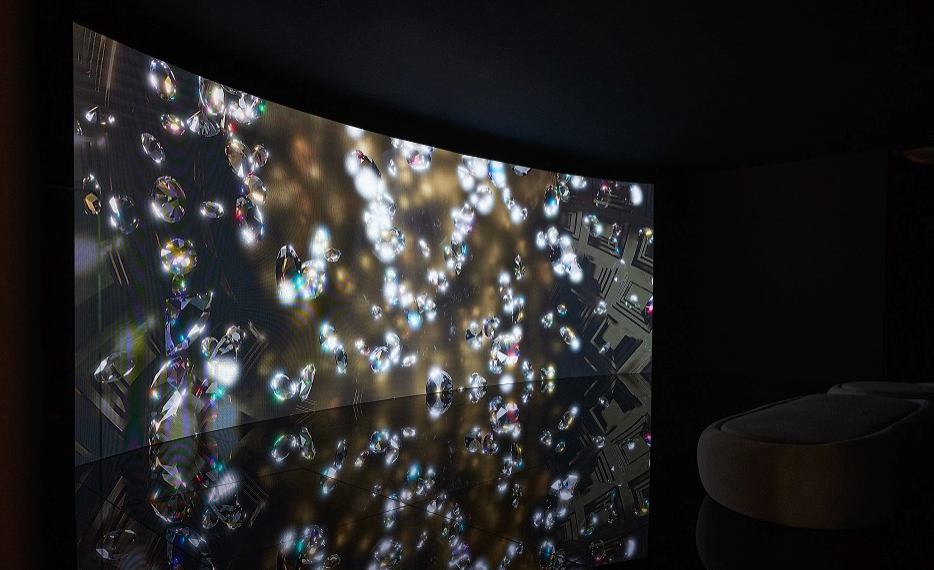
In 《The Image of Mana》, Origin of Mana(2025), Enantiotropy(2025), Firestone(2025), and Transform No.3(2025) deal with the transformability of matter through natural landscapes, digital imagery, 3D scans of stone, and intermediate states between graphite and diamond.

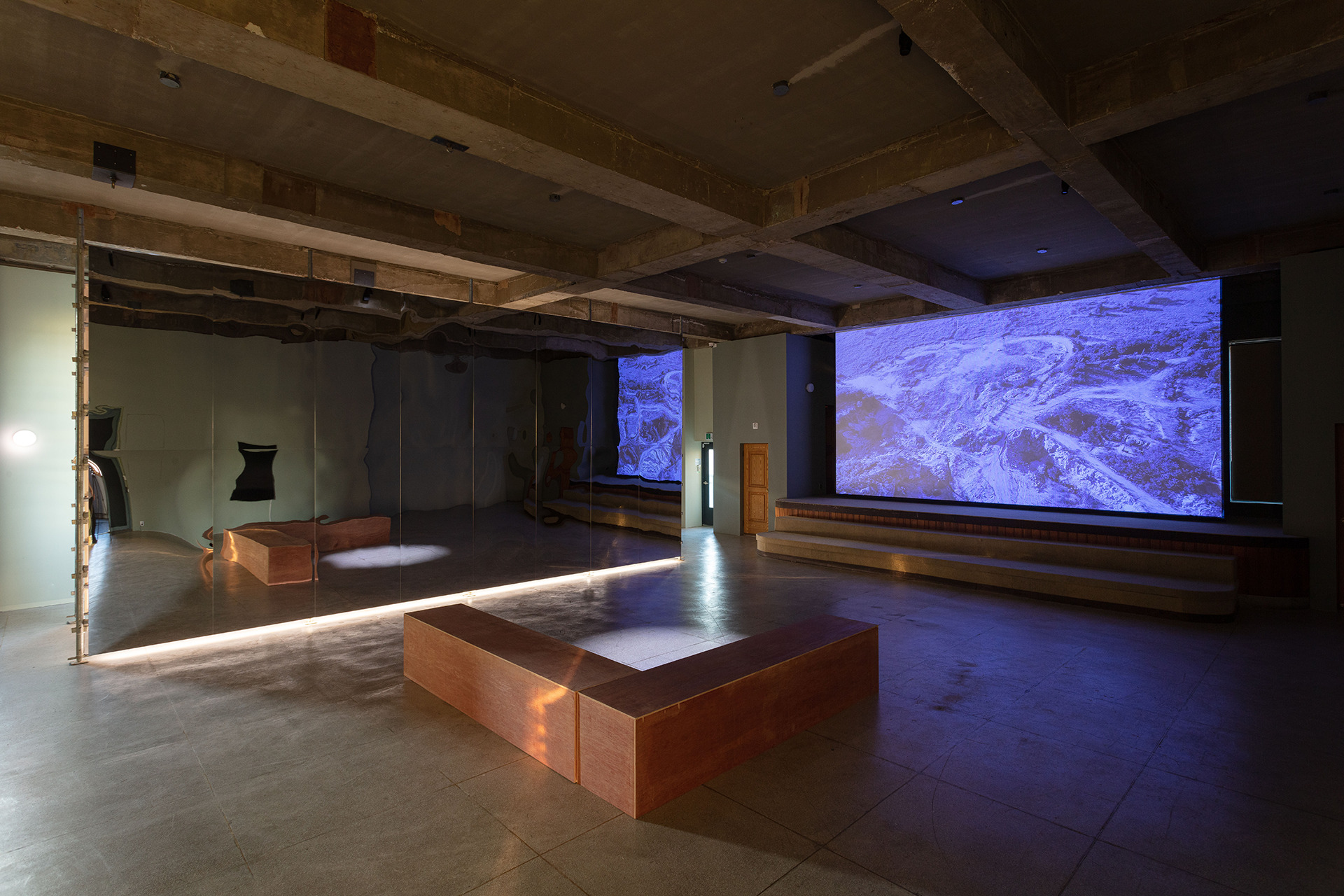
In 《Non-World》, Tower(2025), Replay(2025), Coordinates(2025), and Terra Nova(2025) create new devices for sensing a posthuman world through sculpture, LP sound, ceramic coordinates, and an artificial ecosystem composed of mirrors and plants.

Topography & Continuity

The distinctiveness of Lee’s work lies in his treatment of sculpture not as a fixed object, but as a condition through which reality and virtuality, body and data, matter and image pass into one another. While many media-based practices focus on the visual effects of digital images, and many sculpture-based practices emphasize the weight and spatial occupation of matter, Lee holds onto the unstable intermediate state between the two.

In his work, sculpture becomes video, video supplements the interior and temporality of sculpture, and digital error becomes not failure but a condition that generates new form. In this sense, his practice moves between sculpture and media art, installation and performance, material experience and virtual perception, building structures that cannot be reduced to a single medium.
 
Tracing the development of his practice, Lee first focused on dismantling the repetition of the city and designed experiences. If The Geometry of Reality and 《Designed Experience》 observed urban structures and everyday design, Agitated Step passed through those structures through the body and revealed bodily sensation. After Ice-cream concrete, digital interfaces and errors in 3D printing became important sculptural materials.

Through Surface of Water, Surface of Fire, After Effect, Perforated Sculpture, and Strange Garden, his experiments in unsettling the hierarchy between reality and virtuality became more explicit.

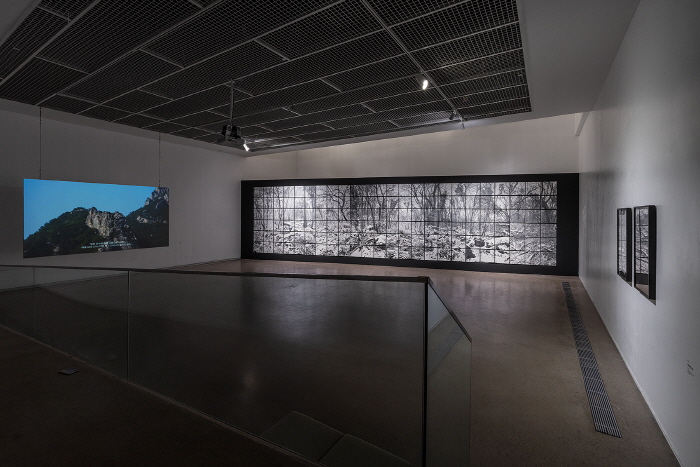
Later, 《The Black Stone and the Iron》 and 《The Line – Mirror of Memory》(Jeju Museum of Contemporary Art, Jeju, 2024) connected family history, Korean industrialization, Middle East construction labor, and contemporary images of development such as Neom City, expanding the temporal and historical scope of his practice.
 
The 2025 exhibitions 《The Image of Mana》 and 《Non-World》 show how Lee’s work is moving beyond personal memory toward broader questions of energy, ecology, and nonhuman sensation. “Mana” is matter that moves the real world, like petroleum, while also functioning as an invisible force in myth and fantasy. Through this concept, Lee explores how matter is transformed into energy, capital, labor, image, and myth.

In 《Non-World》, he moves further to imagine a world after humans, presenting scenes in which monuments become habitats for other life forms, human faces remain as unreadable coordinates, and plants multiply endlessly in mirrored space. This is not simply a critique of human-centered order, but a sensory hypothesis that the world may continue in other forms even after disappearance.

Rather than the boundaries of a specific medium, Lee’s practice centers on the boundaries of sensation and perception, suggesting further possibilities for expanding sculptural language where technology, myth, energy, ecology, and memory overlap.

Works of Art

Structures and Sensibilities Beneath the World Order

Articles

Exhibitions

Activities