

Bae Yoon Hwan (b.1983) - K-ARTIST
Bae Yoon Hwan (b.1983)

Bae Yoon Hwan was born in Chungju, Chungcheongbuk-do, in 1983. He received a BFA in Fine Arts from Seowon University and an MFA in Painting from Kyungwon University. He is known for narrative paintings that combine allegorical imagination with social realities. He currently lives and works in Seoul.

Solo Exhibitions (Brief)

Bae Yoon Hwan has presented solo exhibitions at Space K Seoul (2025), Incheon Art Platform (2023), Gallery Baton (2017, 2022, forthcoming in 2026), Doosan Gallery Seoul (2017) and New York (2018), and Insa Art Space (2014), and presented a solo project in the Film Sector of Art Basel Hong Kong in 2018.

Group Exhibitions (Brief)

Bae Yoon Hwan has participated in group exhibitions at Daegu Art Museum (2015), Seoul Museum of Art (2018, 2022, 2024), Gallery Baton London (2022), DOOSAN Gallery (2023), SONGEUN (2024), Gyeongnam Art Museum (2025), and Jeju Museum of Contemporary Art (2025).

Awards (Selected)

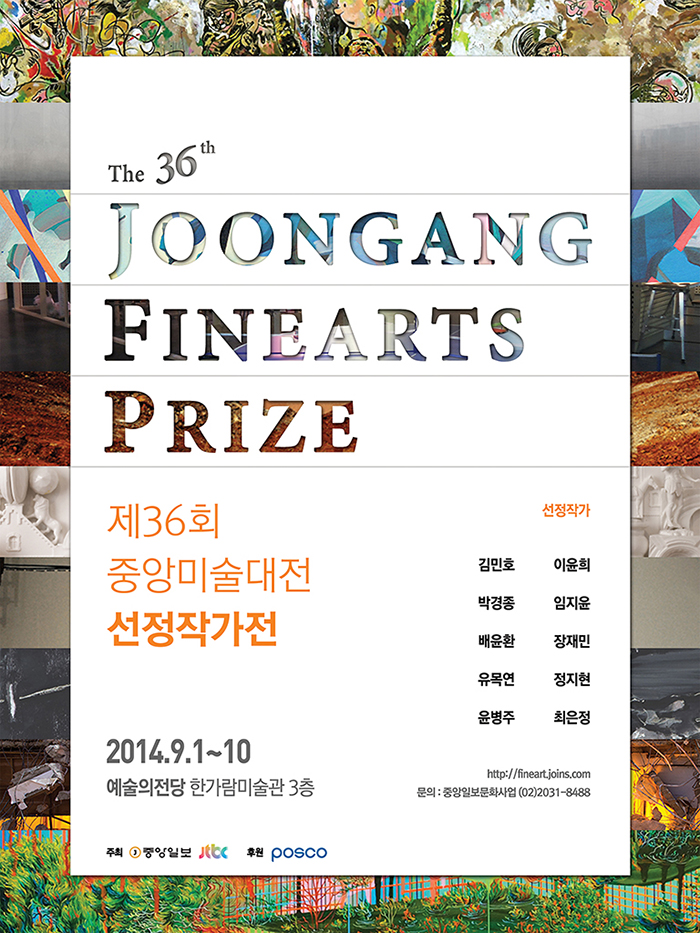
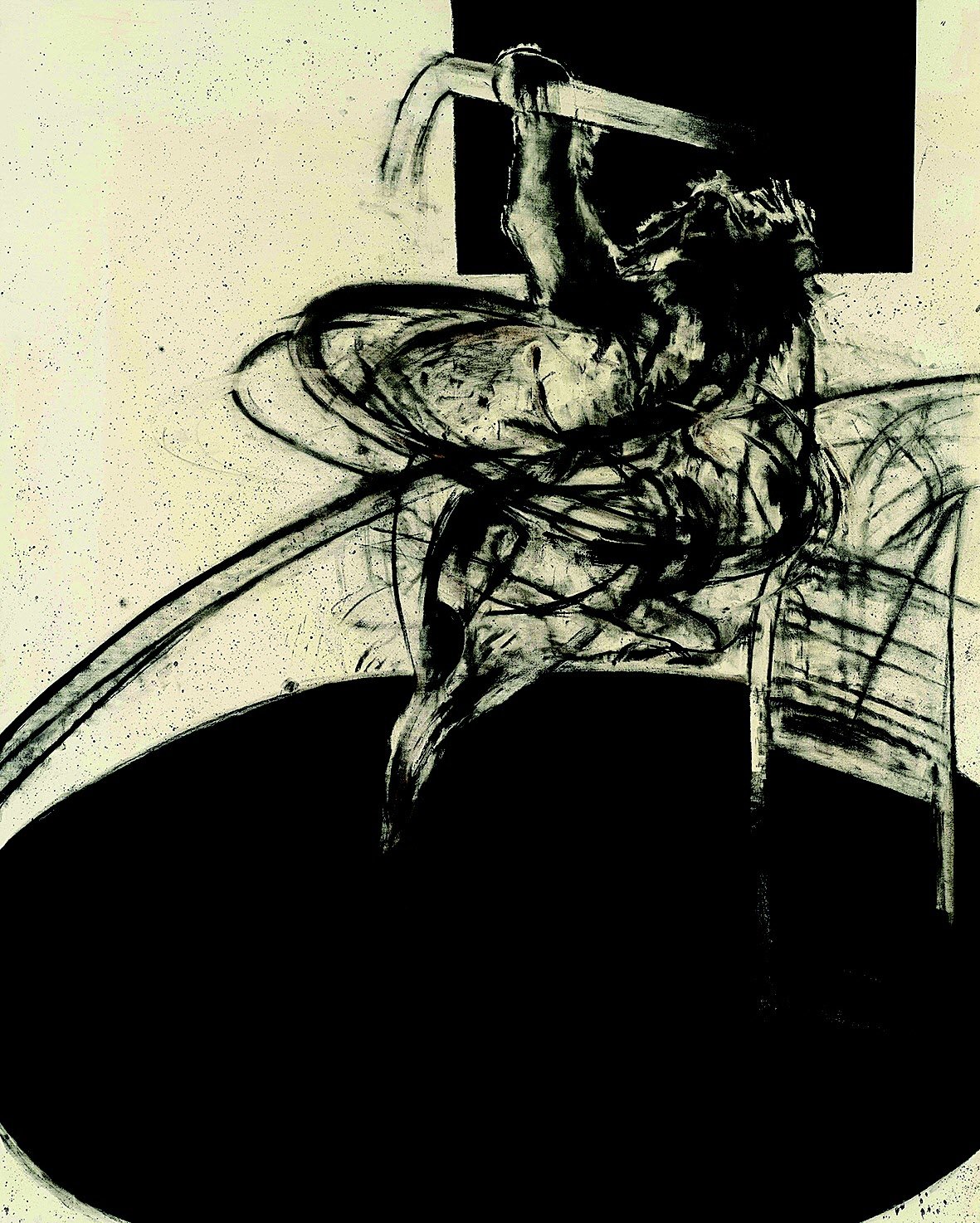
Bae Yoon Hwan received the Grand Prize at the 36th JoongAng Fine Arts Prize in 2014 for his work Cliff Hanger and was shortlisted for the 24th SONGEUN Art Award in 2024.

Residencies (Selected)

Bae Yoon Hwan has participated in residency programs including MMCA Residency Goyang (2021), Incheon Art Platform Residency (2023), DOOSAN Residency New York (2018), and SeMA Nanji Residency (2016).

Collections (Selected)

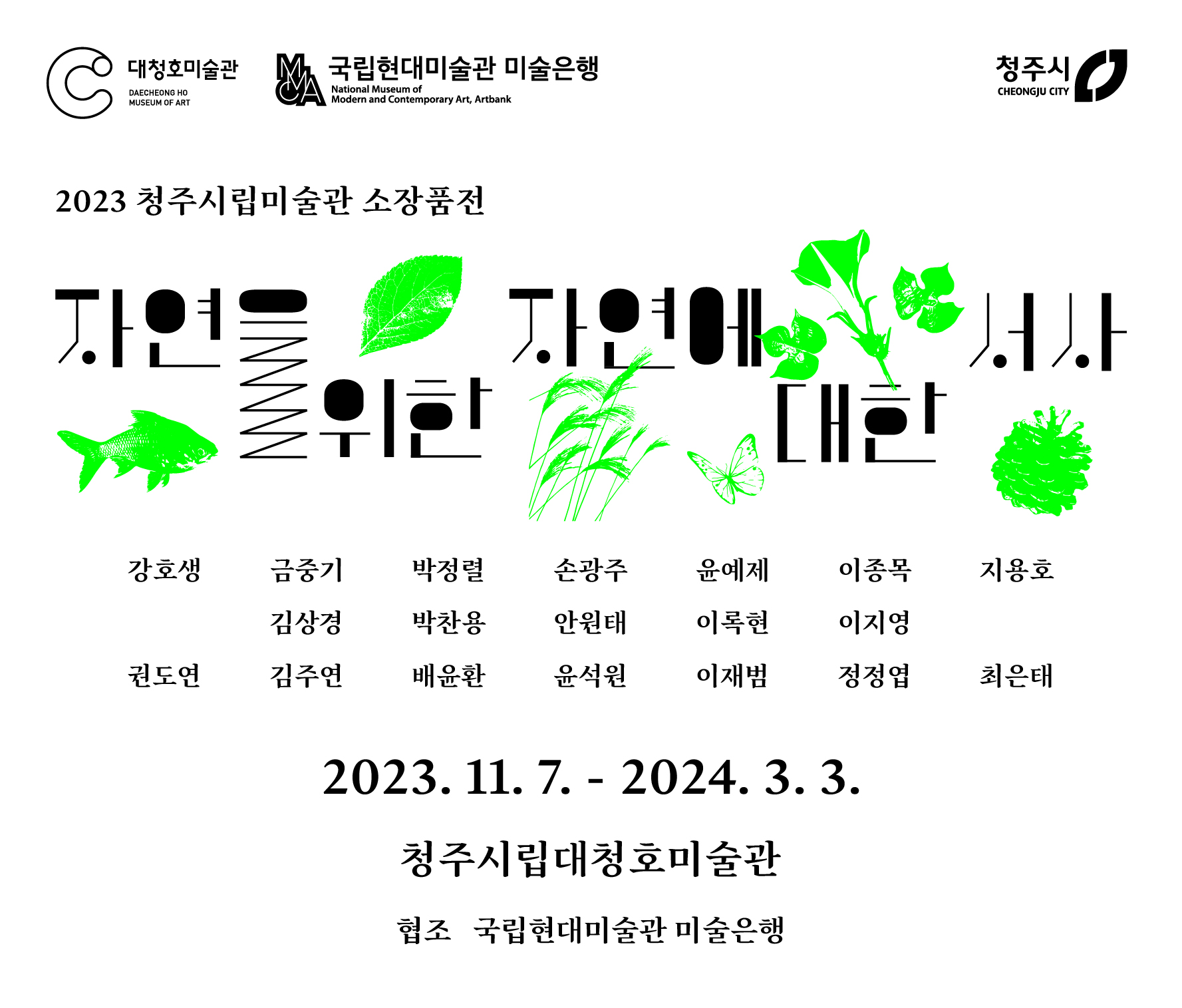
Works by Bae Yoon Hwan are held in the collections of the National Museum of Modern and Contemporary Art, Seoul Museum of Art, Museum of Contemporary Art Busan, Daegu Art Museum, Cheongju Museum of Art, Seongnam Cube Art Museum, the Doosan Yonkang Foundation, KD Collection, and the Montecito Contemporary Art Collection (MCAC).
Works of Art

Porous Worlds Reflecting Reality

Originality & Identity

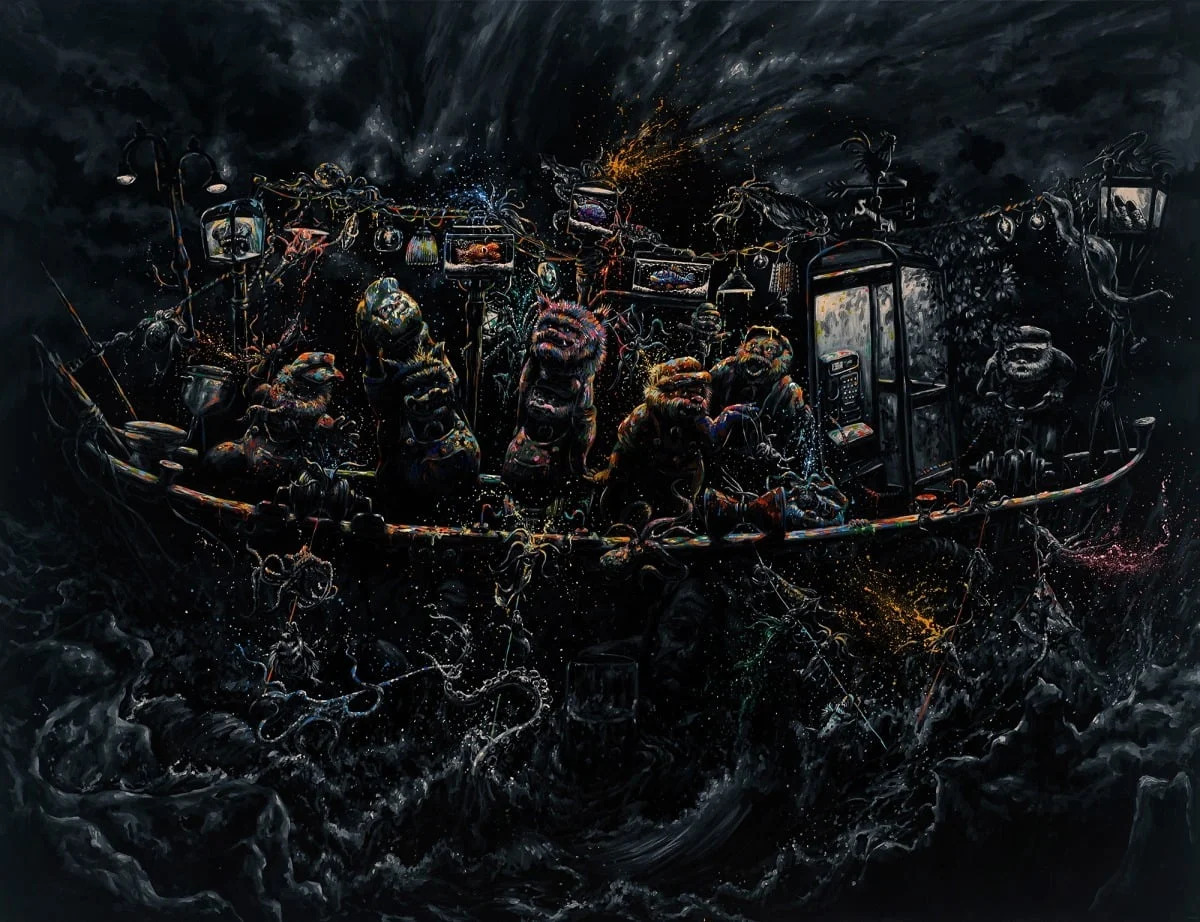
Bae Yoon Hwan reconstructs fragments of reality and imagination, personal experience and social events, news, folklore, internet imagery, and memory into expansive narrative ecosystems. His work places particular emphasis on the processes through which disparate images intersect, diverge, and give rise to new narratives.

Across painting, video, and installation, he consistently organizes heterogeneous images into loosely connected worlds, a defining characteristic that continues to underpin his practice.

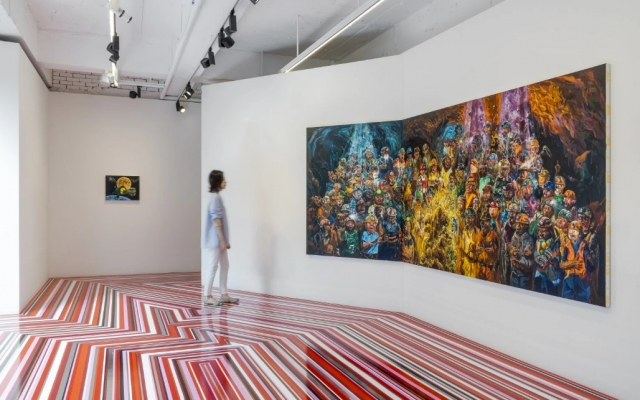
Nonlinear storytelling is a defining characteristic of his work. Political events, social issues, personal memories, mass media, internet culture, urban legends, and fables coexist within the same pictorial space, maintaining their individual identities while forming broader associative structures. Bae has described these worlds as “islands” or “porous worlds,” in which fragmented scenes remain autonomous yet contribute to a larger narrative whole.

Another key aspect of his practice is the cyclical relationship between creation and destruction. Bae repeatedly draws, erases, transforms, and reassembles images, generating new forms through continuous processes of revision. In his animated works in particular, the act of recording disappearance often becomes more important than movement itself, reflecting his awareness of instability, impermanence, and the shifting conditions of contemporary life.

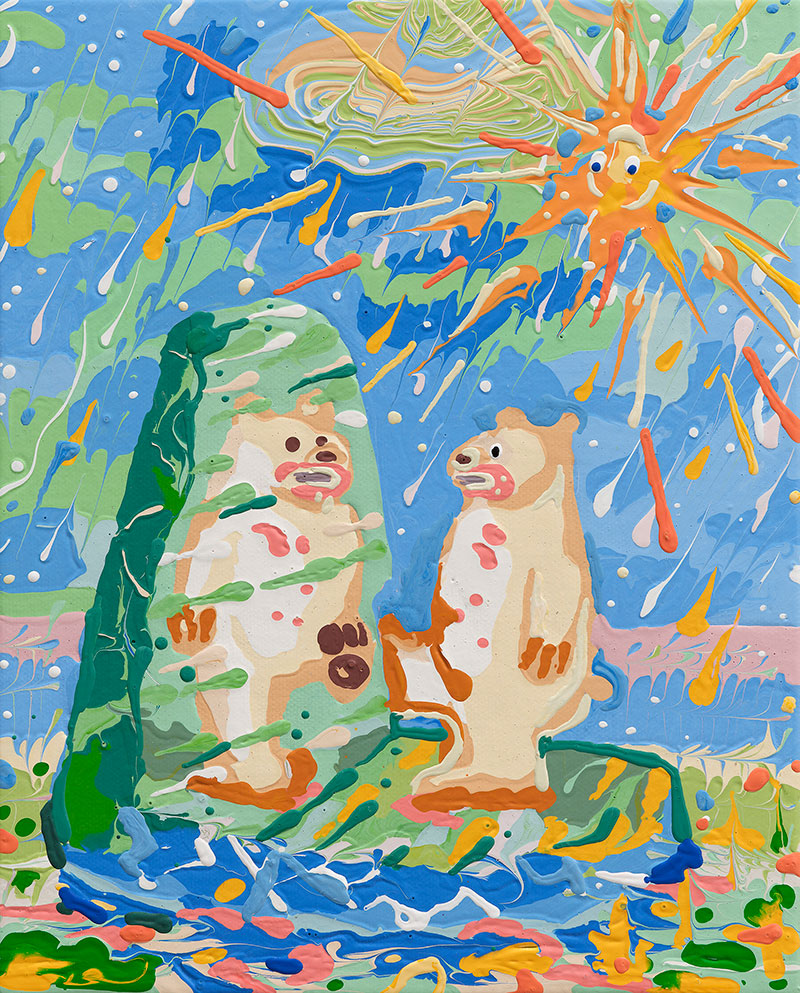
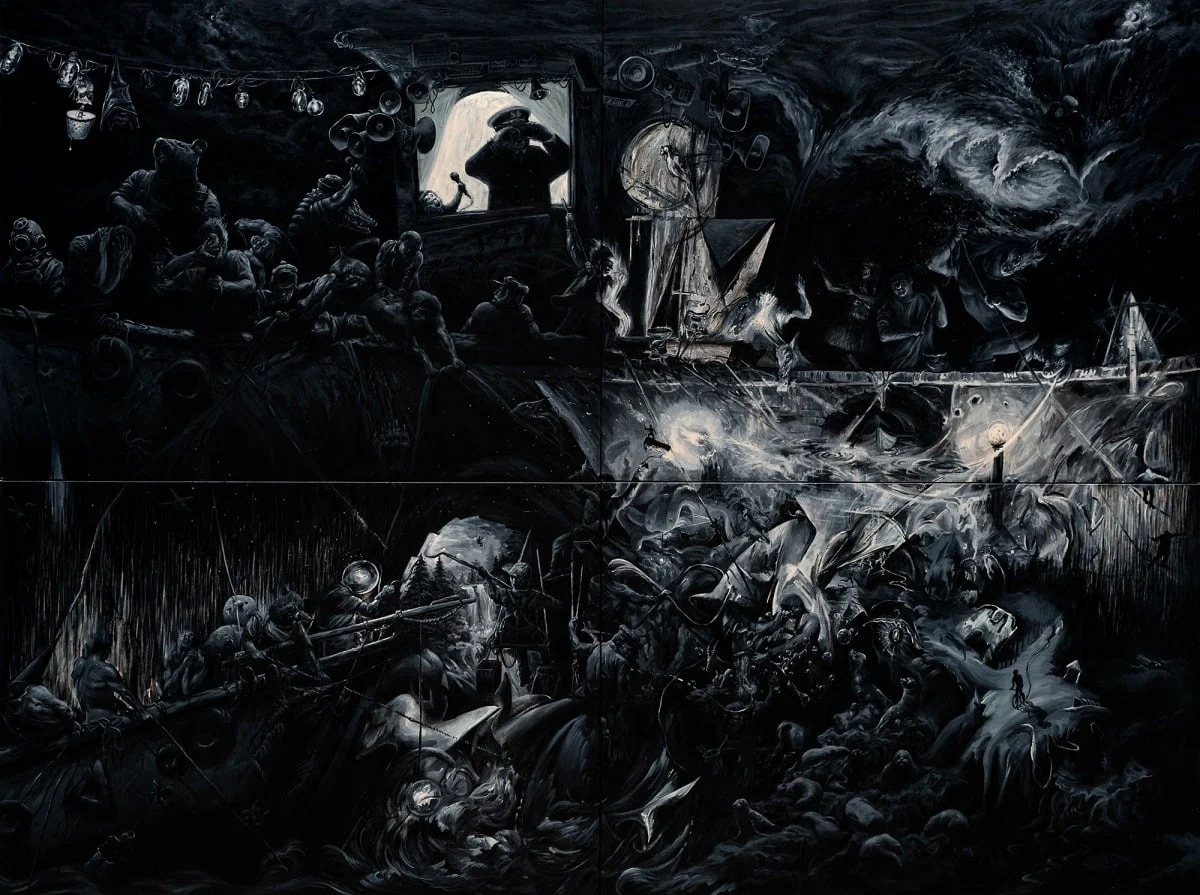
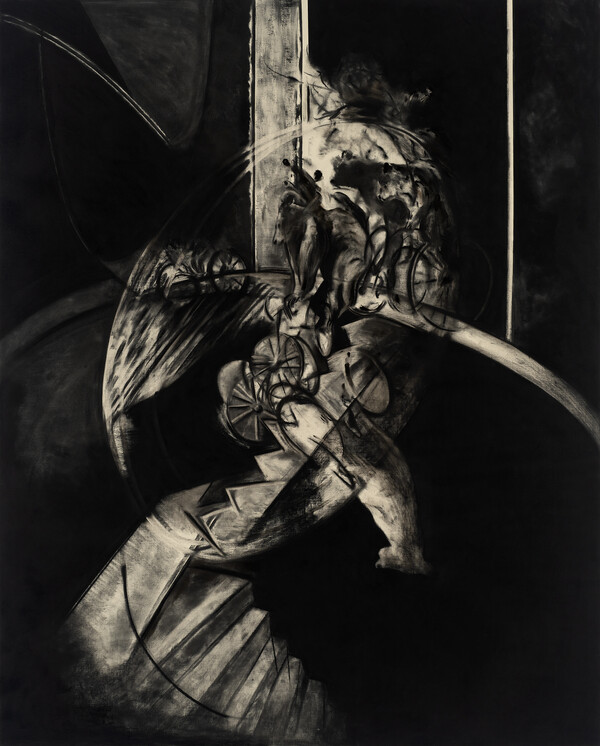
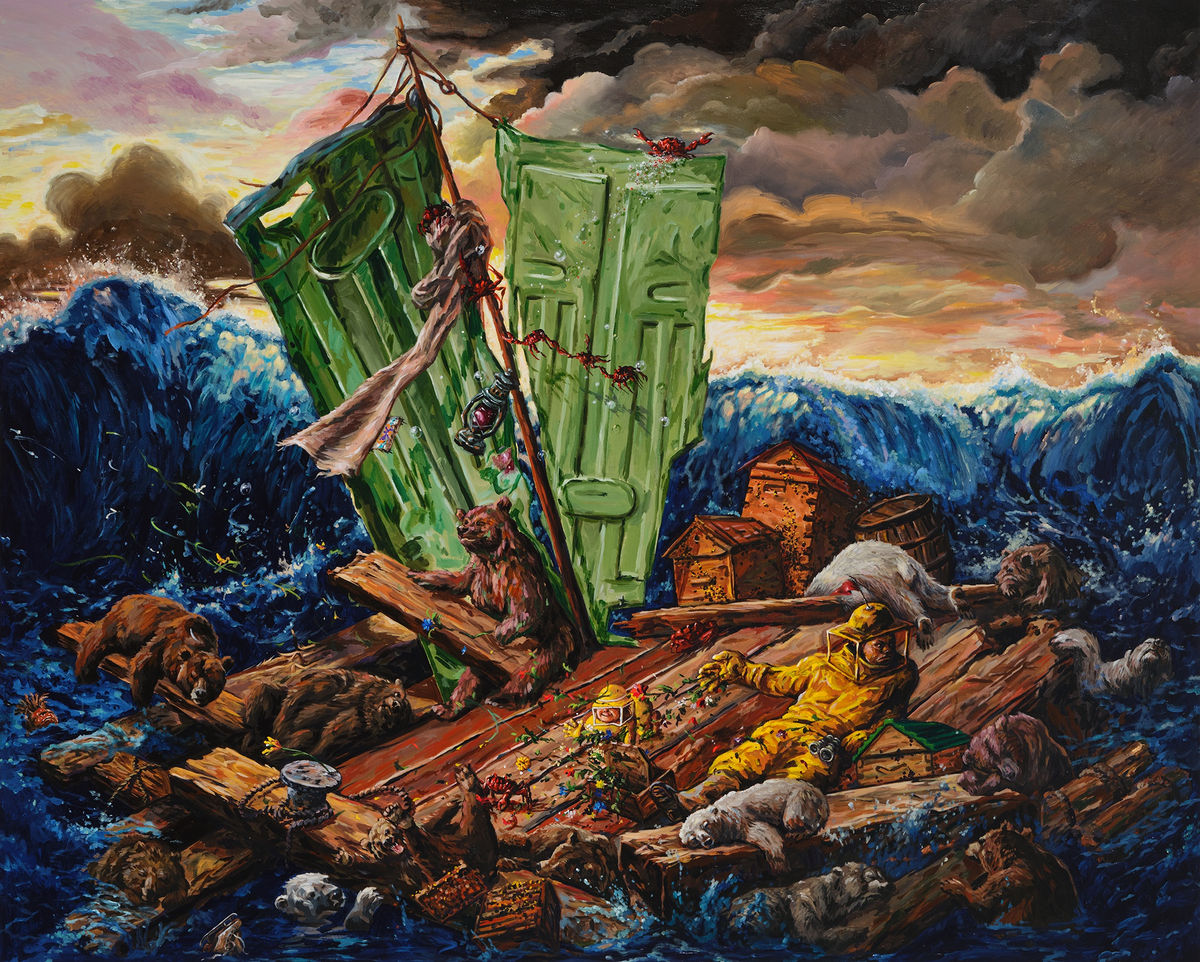
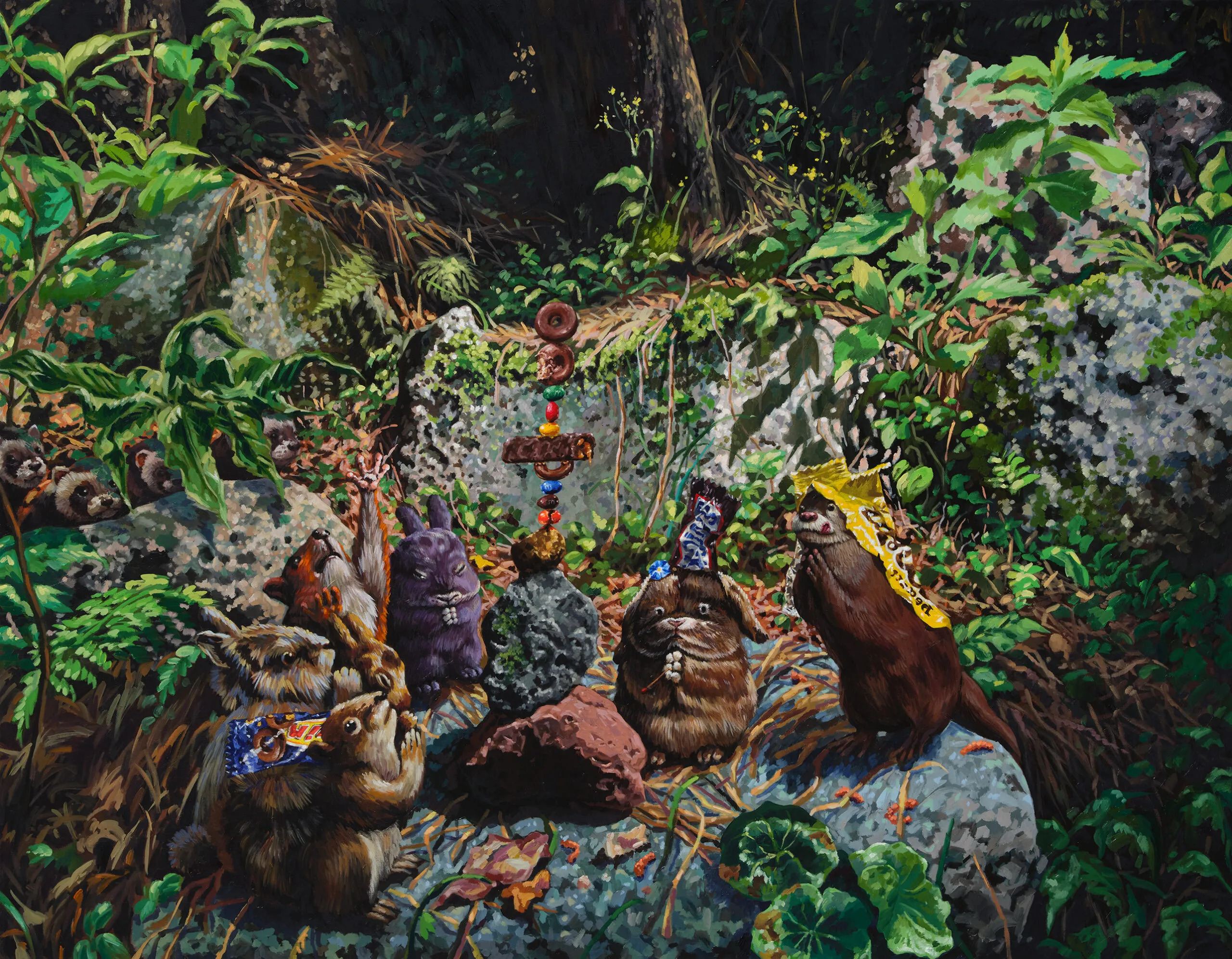
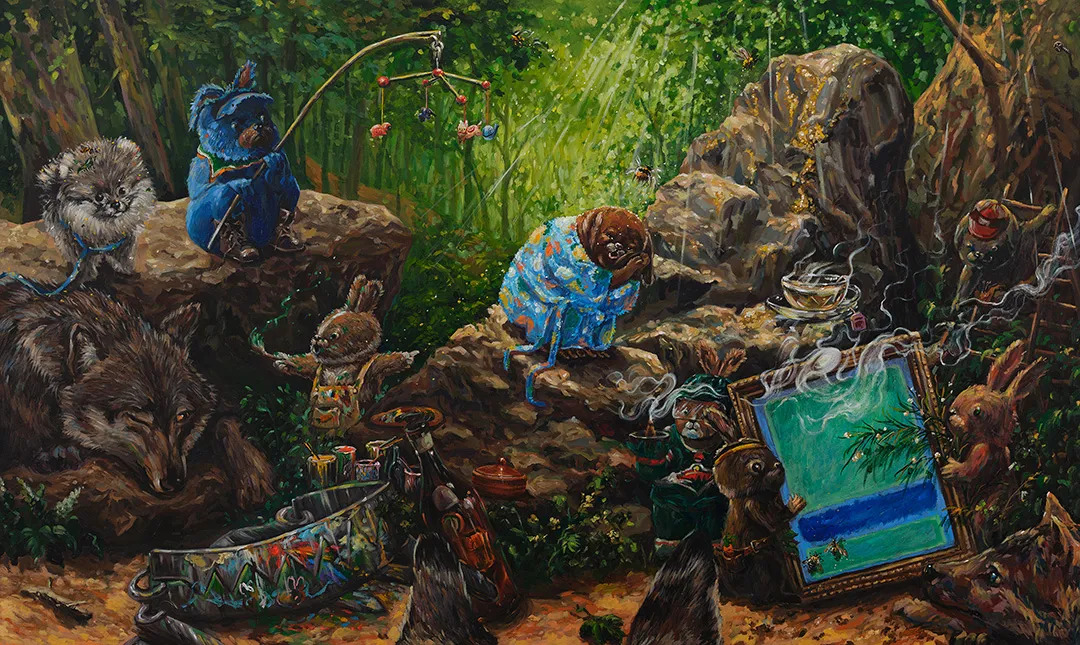
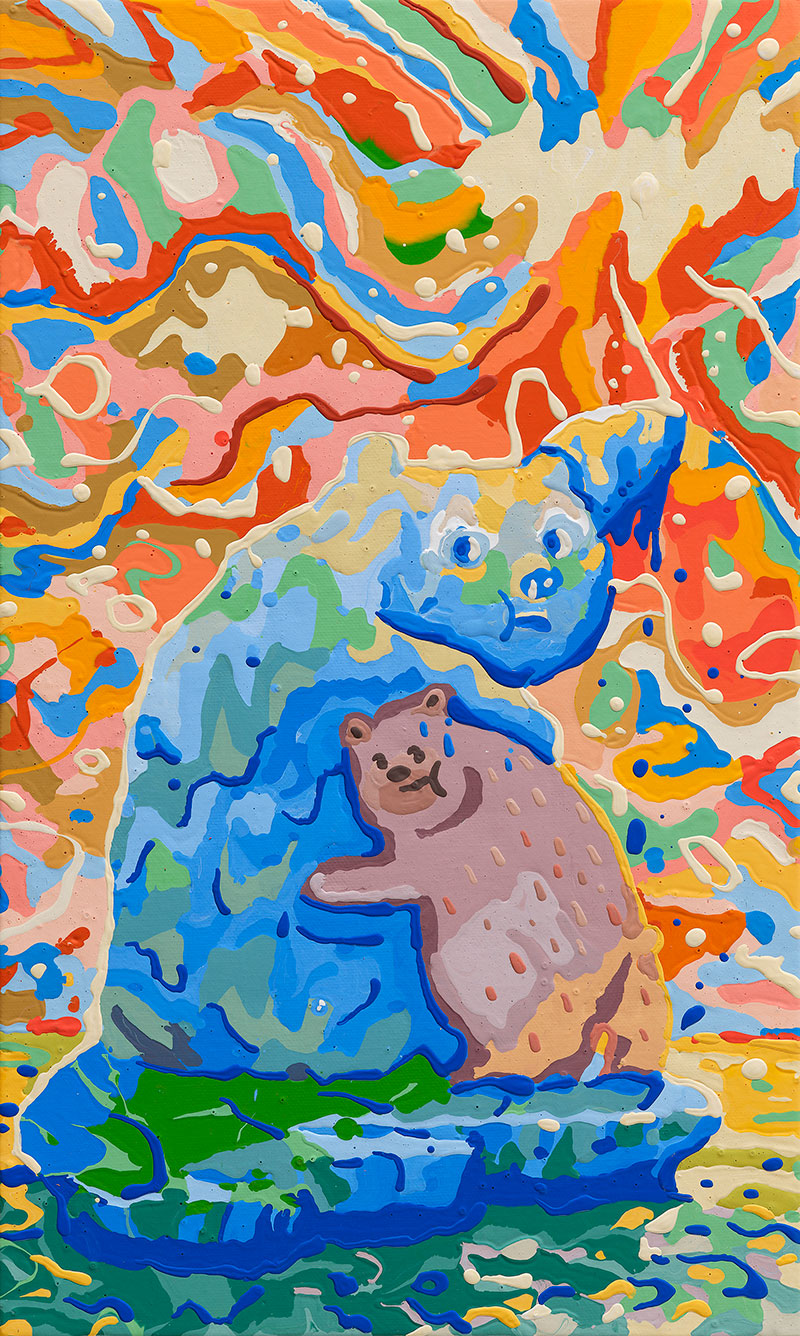
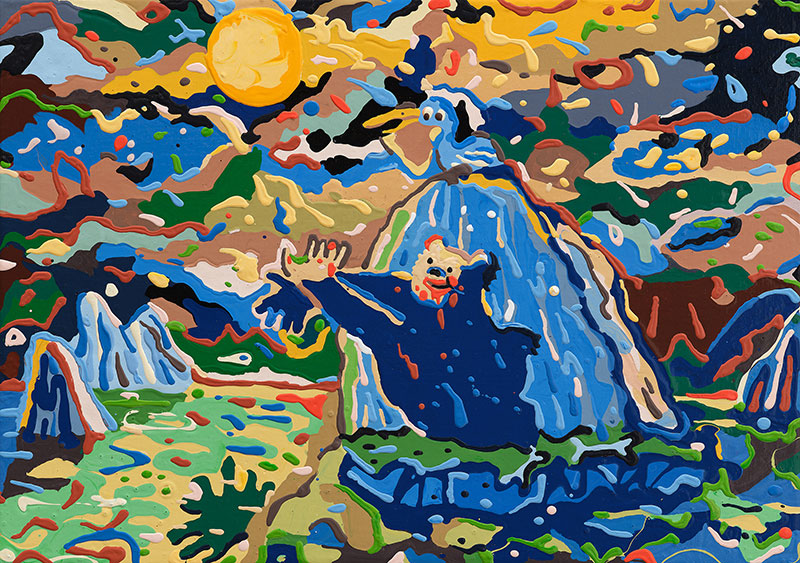
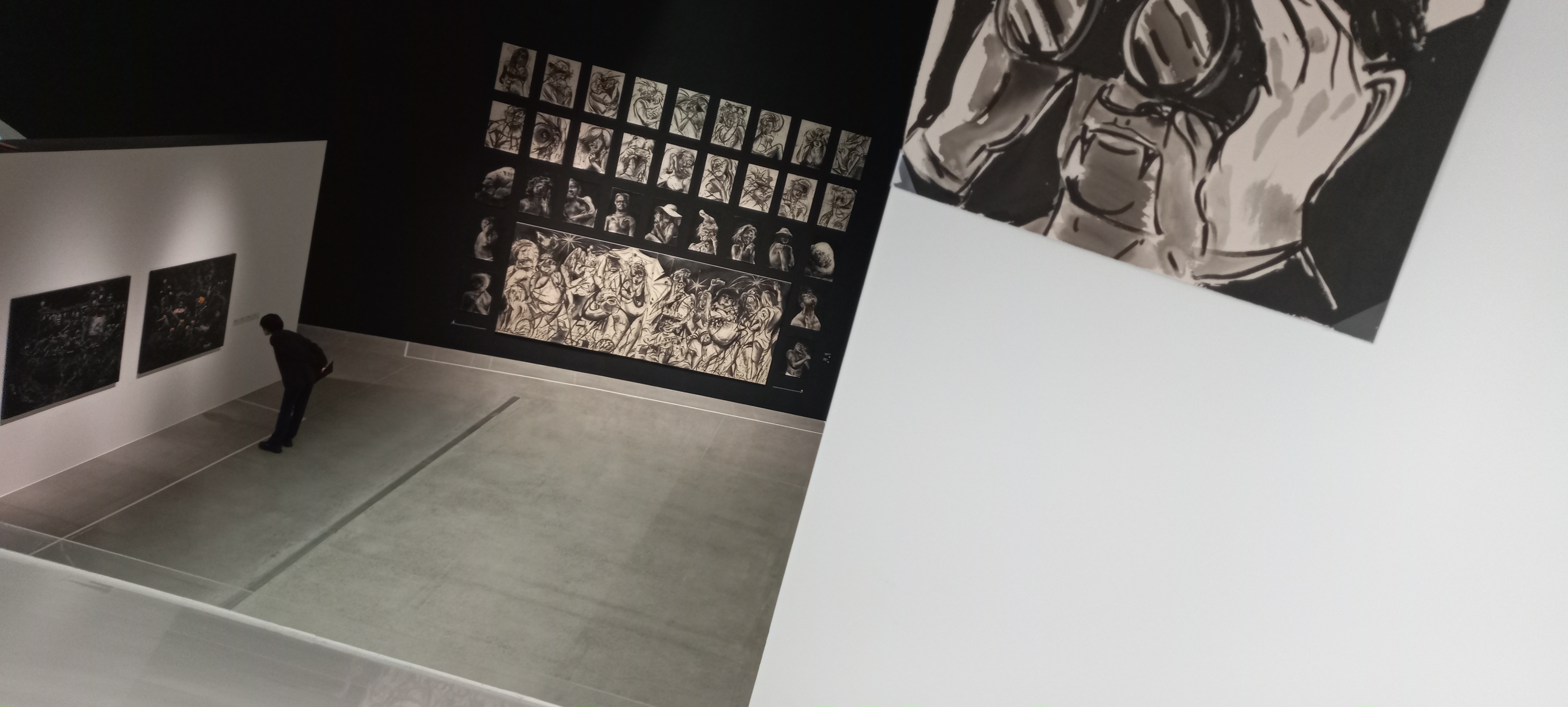
Recent works by Bae Yoon Hwan continue to explore the formal possibilities of painting while addressing environmental issues and the contradictions of contemporary society through allegorical narratives. From narrative paintings featuring anthropomorphized animals to the recent monochromatic series presented in 《Deep Diver》, he has reinterpreted anxieties and tensions surrounding individuals and society through a wide range of pictorial forms.

The artist describes this trajectory as a journey from “complex and explicit forms” toward “simple and non-formalized forms,” and in recent years has sought a more condensed and direct pictorial language that moves beyond narrative and representation.

Style & Contents

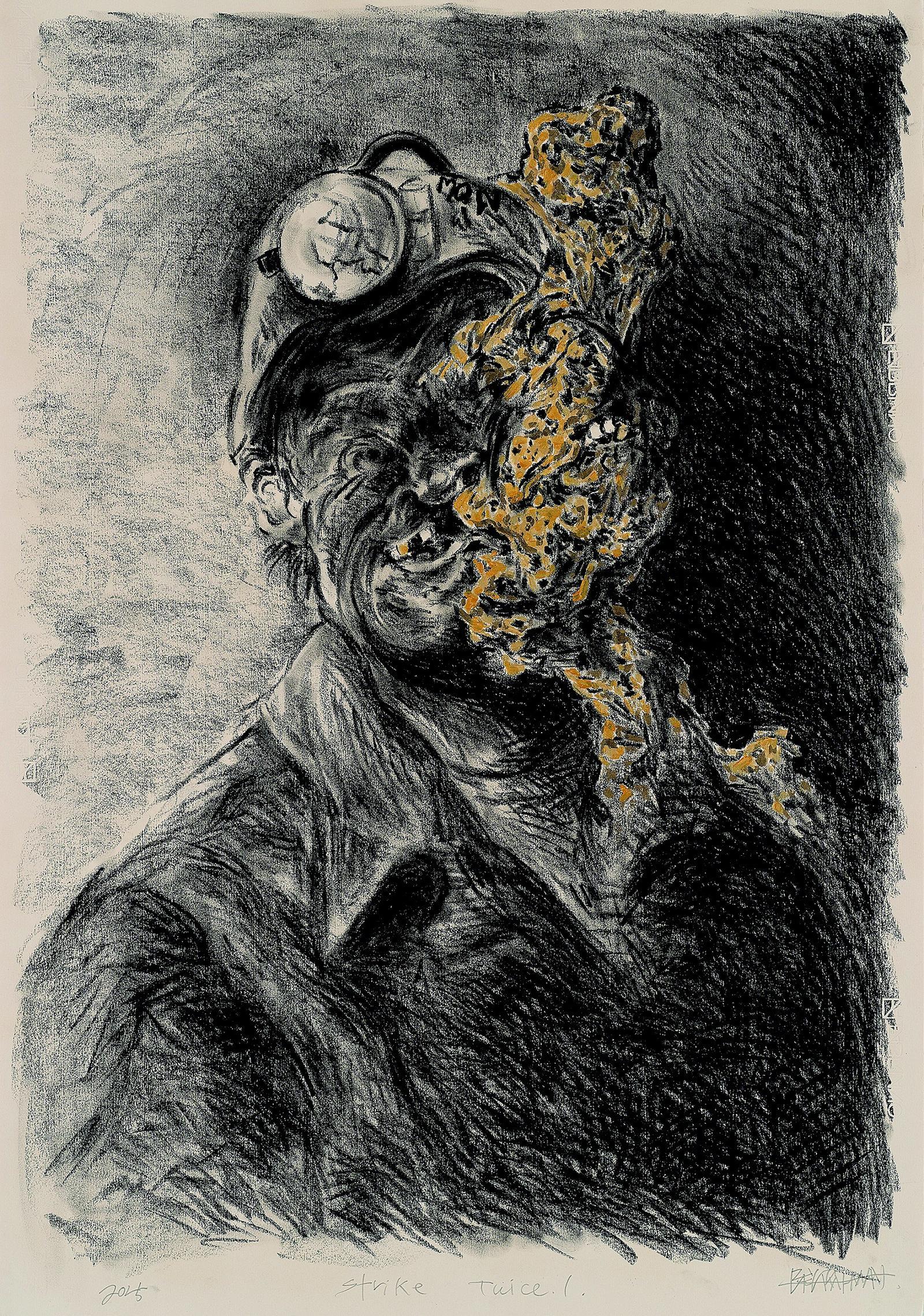
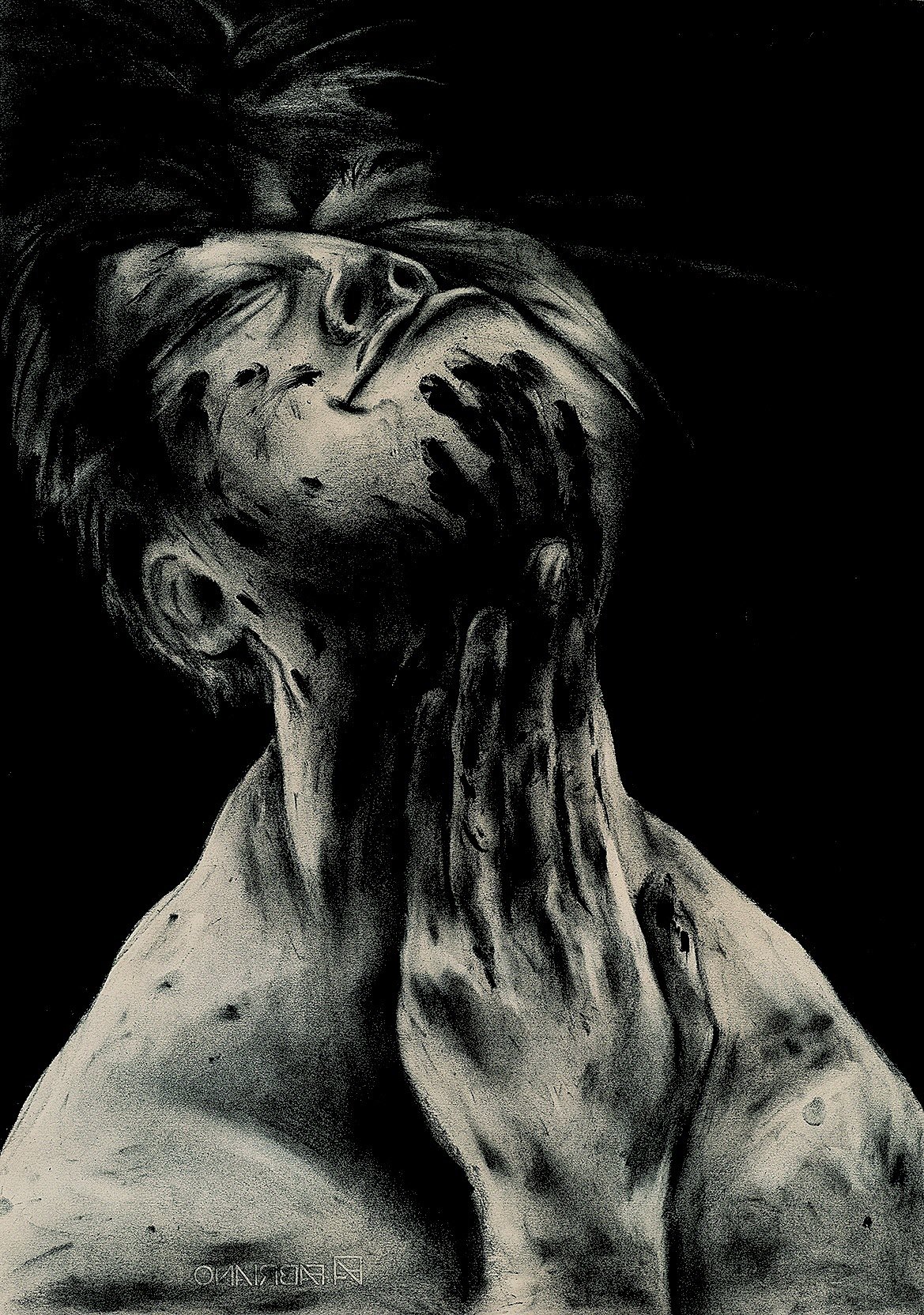
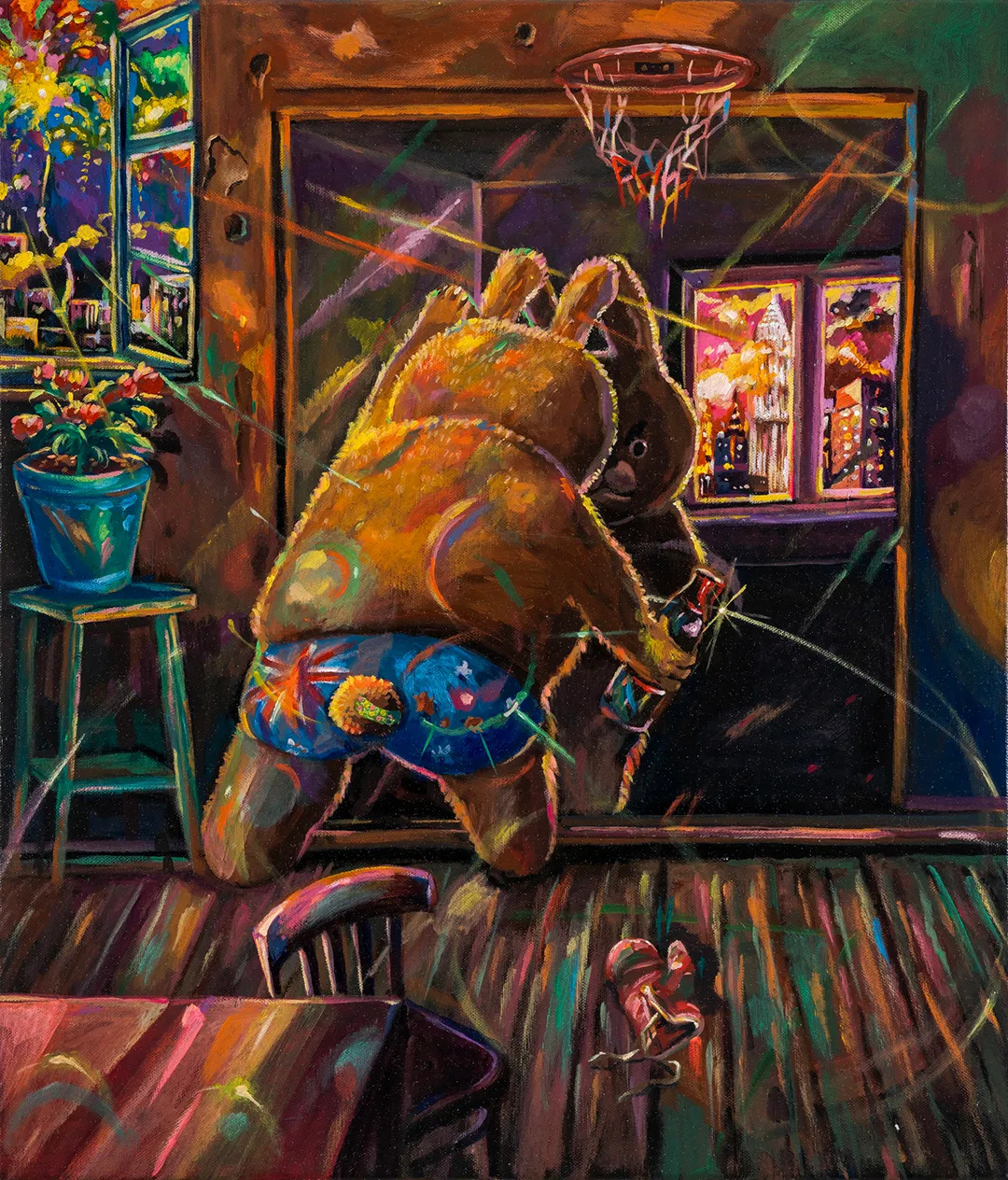
Bae Yoon Hwan’s practice is grounded in a highly developed sense of drawing. Working with intuitive materials such as oil pastel, acrylic, and charcoal, he constructs images through direct gestures and spontaneous mark-making.

His paintings prioritize energetic line and concentrated composition over meticulous representation, maintaining a strong visual rhythm despite the presence of numerous figures, animals, and objects. This drawing-based visual language extends consistently across his paintings, sculptures, installations, and animated works.

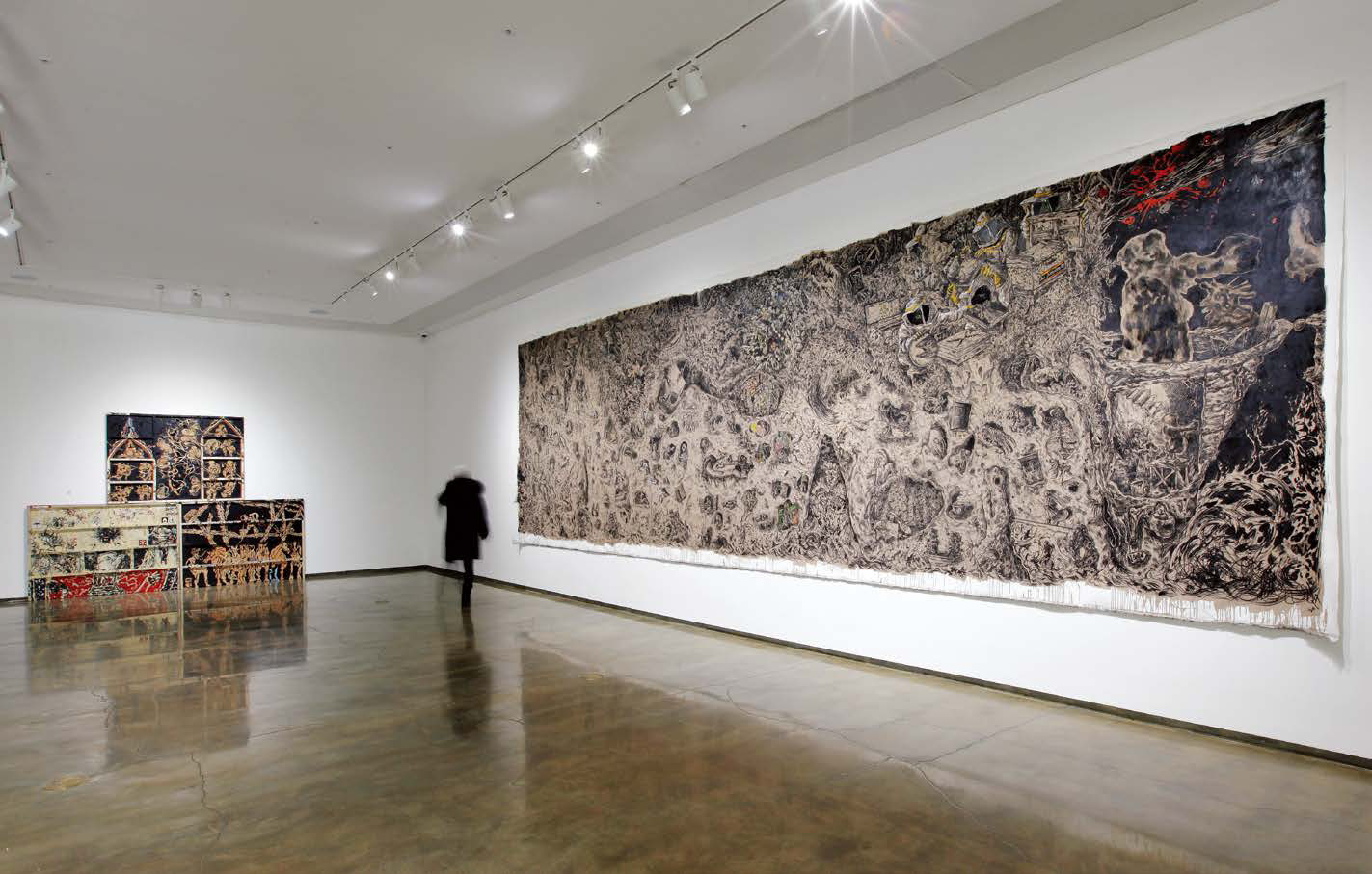
From his early to mid-career works, Bae developed distinctive narrative structures through the use of large-scale formats. Monumental scroll paintings and expansive multi-figure compositions accumulate individual images into vast pictorial worlds. Rather than converging toward a single narrative center, scenes collide, overlap, and coexist, producing nonlinear flows of meaning. This strategy serves as a visual articulation of the multifocal perspective and fragmented perception of reality that have long occupied the artist’s attention.

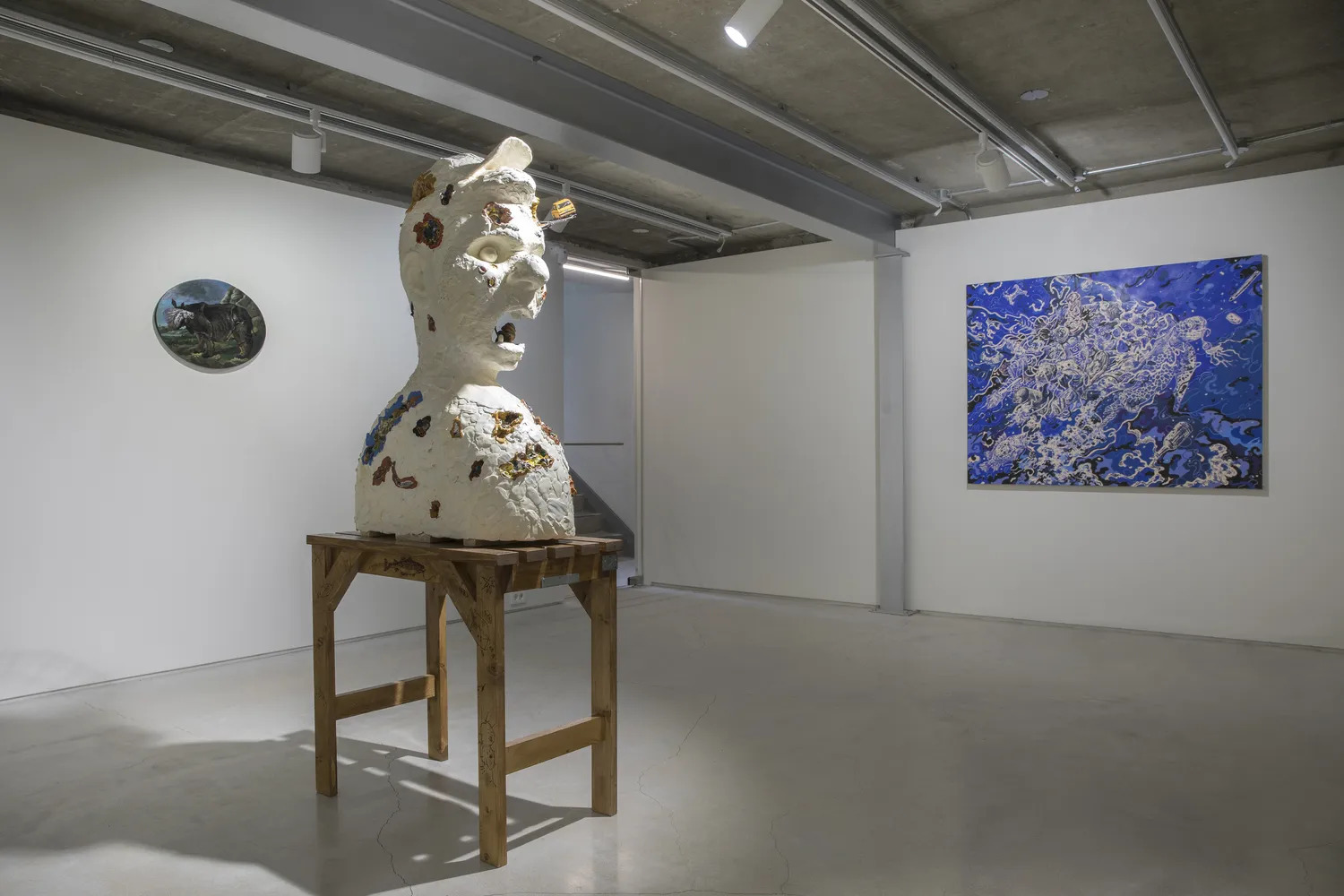
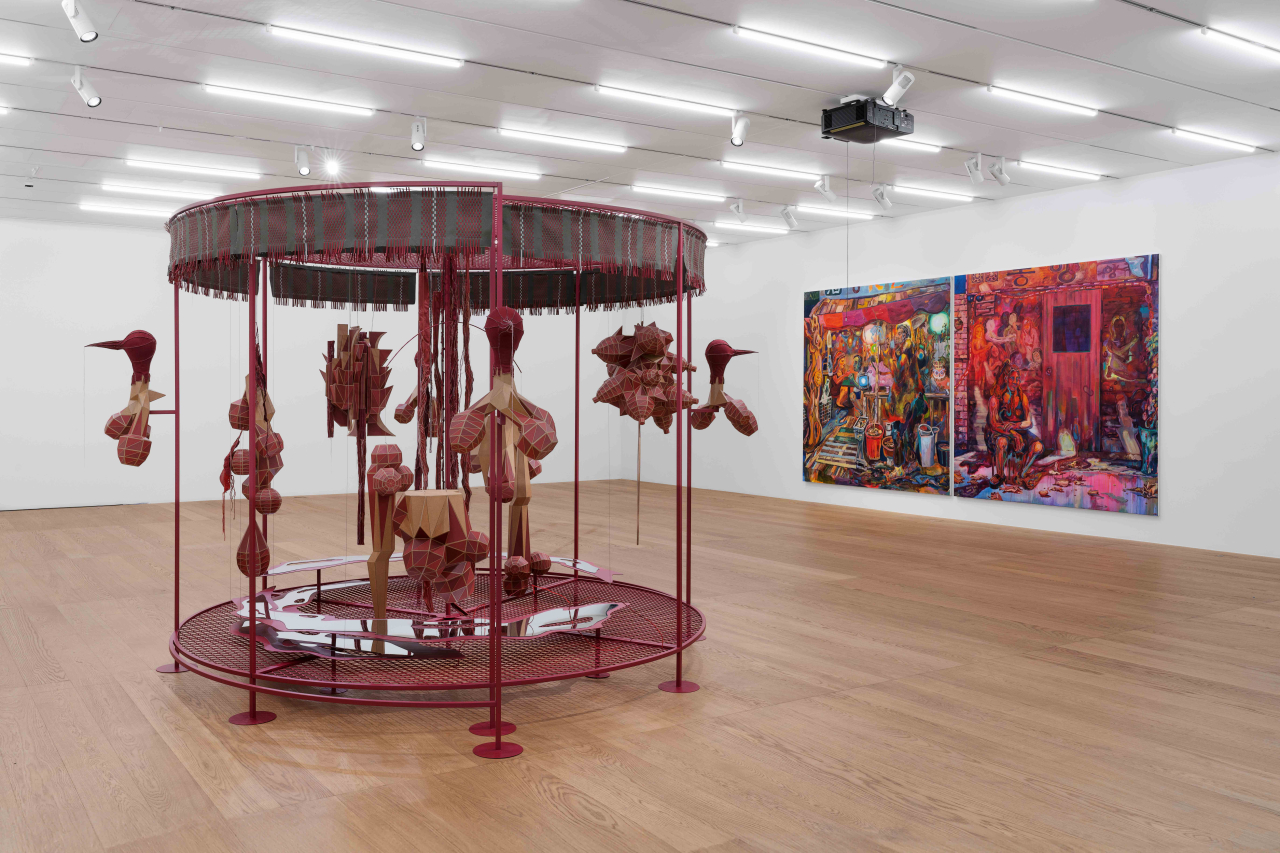
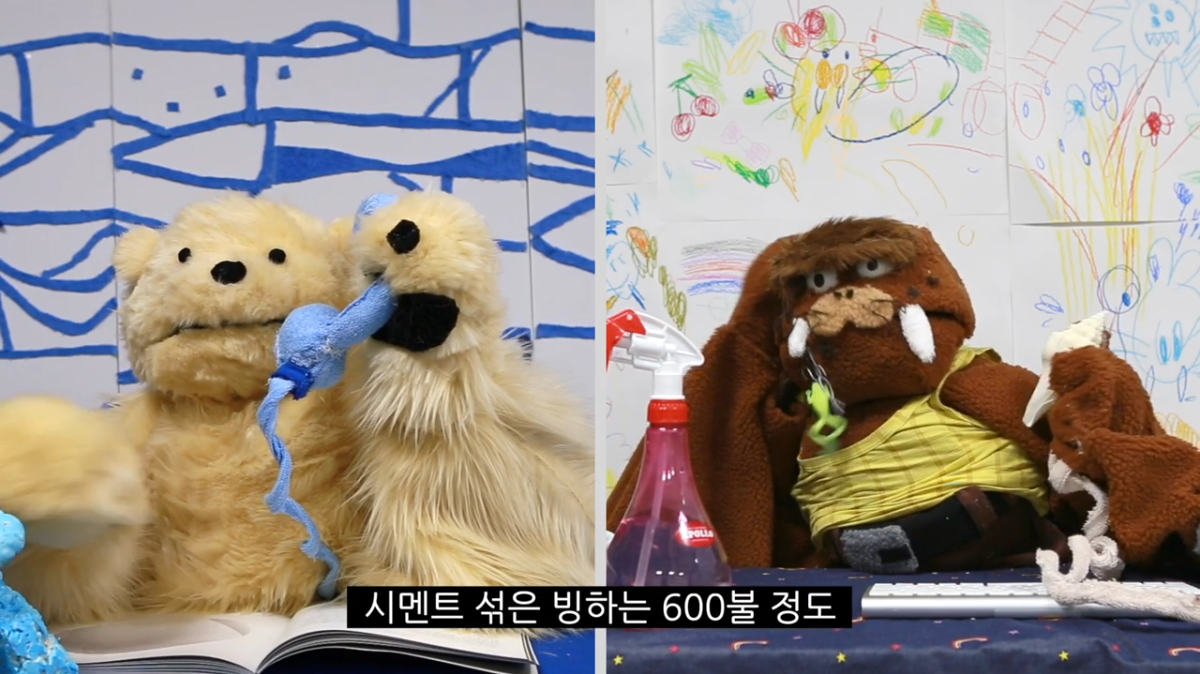
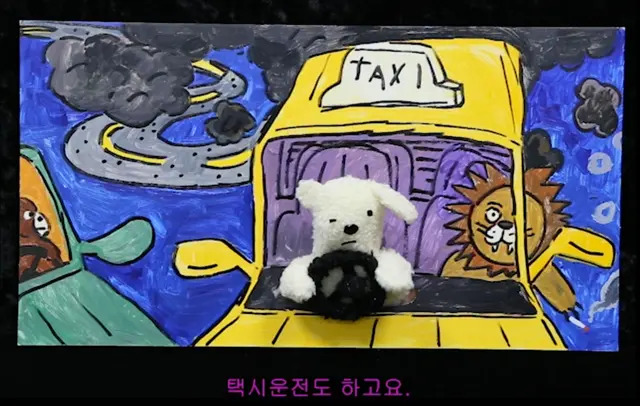
While painting remains central to his practice, Bae has continuously expanded his narrative language through video, sculpture, and installation. His stop-motion animations combine drawing, clay, and found objects to record processes of creation and transformation, moving fluidly between pictorial and temporal media. These works often emphasize process over permanence, revealing an experimental approach that treats change itself as a creative material.

Recent works demonstrate a shift away from the densely populated narratives of earlier years toward more condensed and focused compositions. Anthropomorphized animals and symbolic figures employ humor and satire to address environmental concerns and the contradictions of contemporary society, while brighter colors and a more playful visual rhythm have become increasingly prominent.

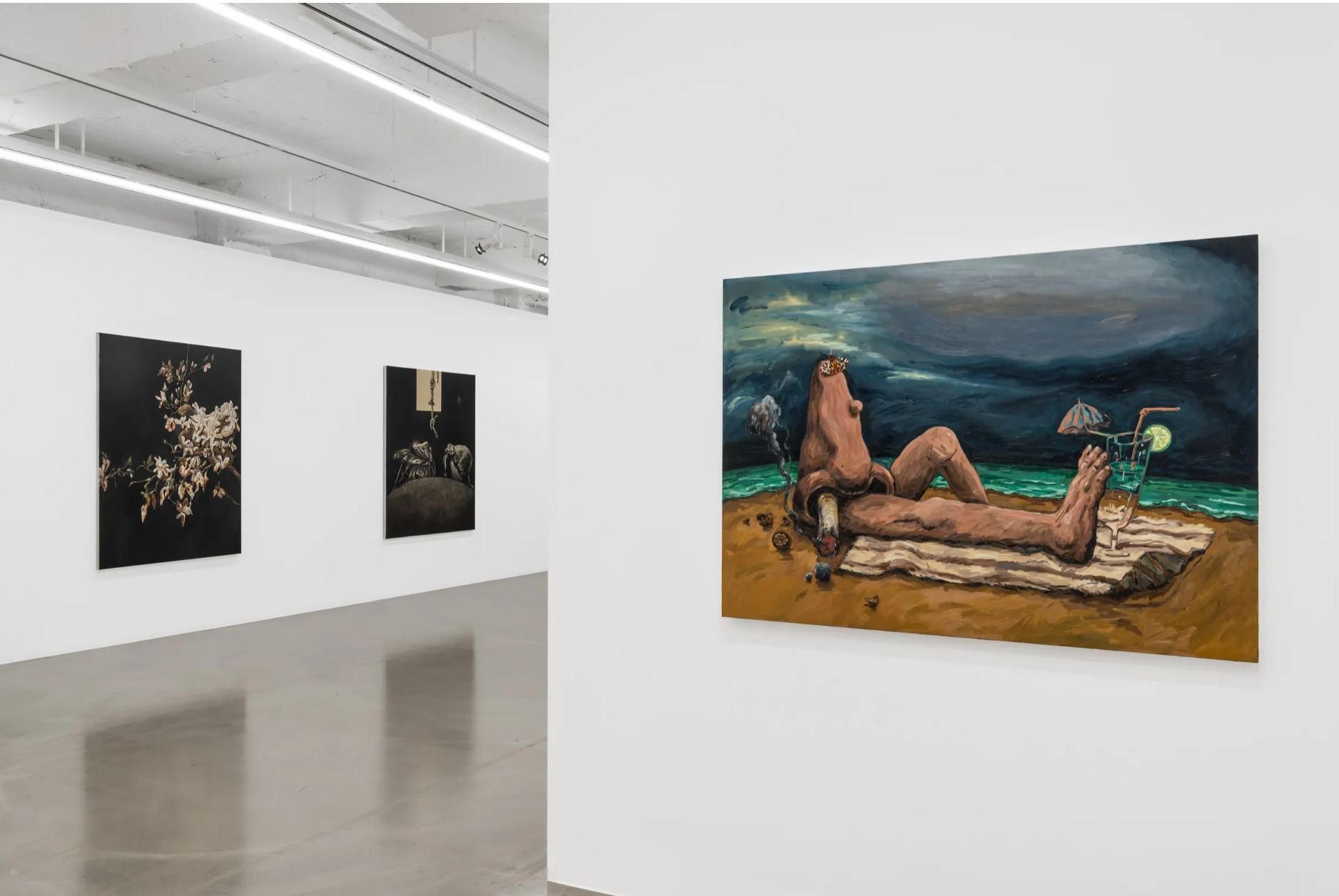
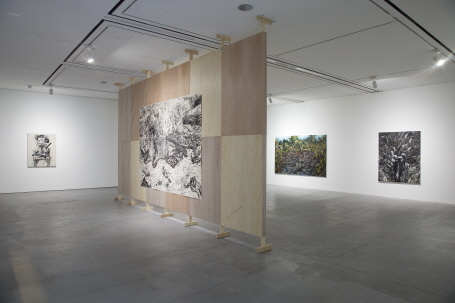
At the same time, his recent monochromatic paintings explore the expressive potential of painting through movement, touch, and sensory perception, revealing an ongoing willingness to reinvent his pictorial language.

Topography & Continuity

Although the forms and subjects of Bae Yoon Hwan’s work have undergone significant transformations over time, his interest in organizing disparate images and experiences into narrative structures has remained remarkably consistent.

From his early large-scale multi-figure paintings to animation, installation, and his recent allegorical works featuring animals, Bae has continually explored points of intersection between reality and imagination, personal memory and social events. While the form of his work has evolved, its underlying narrative logic has endured.

Throughout his career, Bae has drawn upon the coexistence and collision of countless thoughts, emotions, and images as the starting point of his practice. Political events, news media, popular culture, personal experiences, animals, and the natural world have emerged as recurring subjects at different moments, yet each functions as a component within a broader narrative ecosystem. This open-ended structure resists singular interpretation and encourages viewers to discover their own pathways through the work.

His movement between painting and animation further demonstrates this continuity. Although the medium changes, his commitment to generating, recording, transforming, and recombining images remains constant. The repetitive processes of drawing, erasing, reconstructing, and reshaping reveal a sustained engagement with cycles of creation and disappearance, accumulation and transformation—concerns that continue to underpin his practice across media.

In recent years, Bae’s work has expanded toward contemporary issues such as climate change, environmental degradation, and the relationship between humans and animals. Yet these concerns remain connected to questions that have long occupied his practice. The narratives that once emerged primarily from personal experience have broadened into social allegories, and fragmented image structures have gradually become more focused and cohesive.

Even so, the fundamental impulse to observe the world and reconstruct it through new forms of storytelling continues to define the trajectory of his work.

Works of Art

Porous Worlds Reflecting Reality

Articles

Exhibitions

Activities