Joon Moon (b.1982) - K-ARTIST
Joon Moon (b.1982)

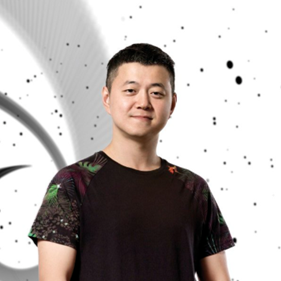
Joon Moon was born in Busan. He studied Visual and Multimedia Design in the Department of Design at Konkuk University’s College of Art and Design, and earned an M.F.A. in Design and Technology from Parsons School of Design. His thesis work Augmented Shadow(2010) drew attention after being presented at several international museums, including the Museum of Modern Art, New York.

Solo Exhibitions (Brief)

Joon Moon has held solo exhibitions including 《From Environment to Immersion》(Museum Ostwall, Germany, 2024), 《Joon Moon: Augmented Shadow》(Gwangju Media Art Platform, 2024), 《CHASING STARS IN SHADOW》(Heyri Bookhouse Art Space, 2022), 《Somewhere Beyond the Gaze》(Keumsan Gallery, 2020), and 《Sensitive Tangibility, Tangible Sensitivity》(Gallery GODO, 2012).

Group Exhibitions (Brief)

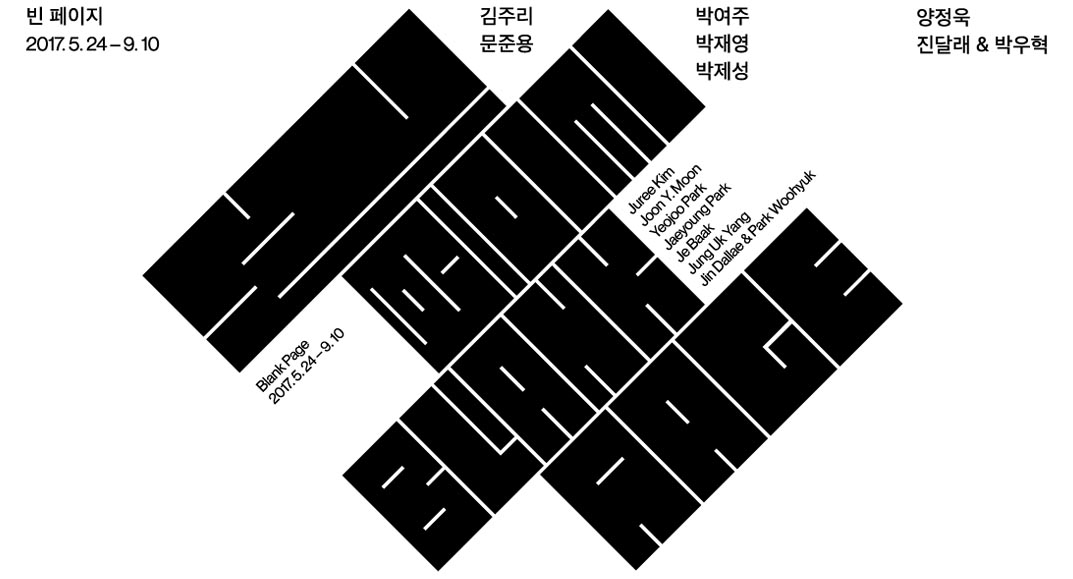
Joon Moon has presented his works in numerous group exhibitions, including 《Gray Box Area》(Kiaf SEOUL, 2023), 《The Signs of Doubt》(VT Artsalon, Taiwan, 2020), Open Media Art Festival 2020 《Black Swan: Unpredictable Future》(Oil Tank Culture Park, 2020), 《2020 PARADISE ART LAB FESTIVAL》(Paradise Cultural Foundation, 2020), 《Blank Page》(Kumho Museum of Art, 2017), 《The Future is Now!》(National Museum of Modern and Contemporary Art, Korea, Seoul; Rome, Florence, Budapest, Marseille, 2014), and 《Talk to Me》(The Museum of Modern Art, New York, USA, 2011).

Awards (Selected)

Joon Moon received the Excellence Award in the Art Division at the Japan Media Arts Festival(2022) and was nominated for the STARTS Prize of the European Commission(2019).

Residencies (Selected)

Joon Moon has been selected for residencies and support programs including Incheon Art Platform Residency, Asia Culture Center Residency, and the Seoul Museum of Art Emerging Artists Support Program.

Works of Art

A World of Shadows Traversing Reality and Virtuality

Originality & Identity

The work of media artist Joon Moon does not begin from using technology merely as a device or effect. Having also worked as a mobile game developer, he uses augmented reality, interactive interfaces, projection, sensors, and computation, yet at the center of his practice is always the question of how viewers sense an invisible world, how they enter it, and what kind of relationship they form with that world.

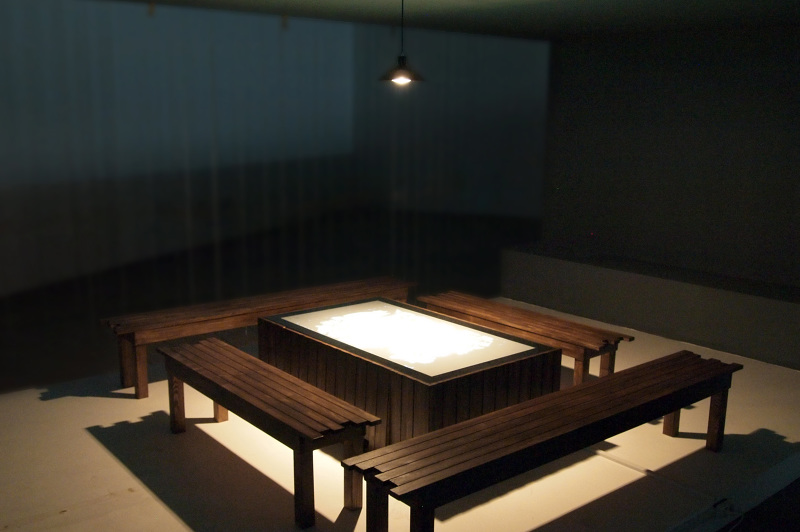
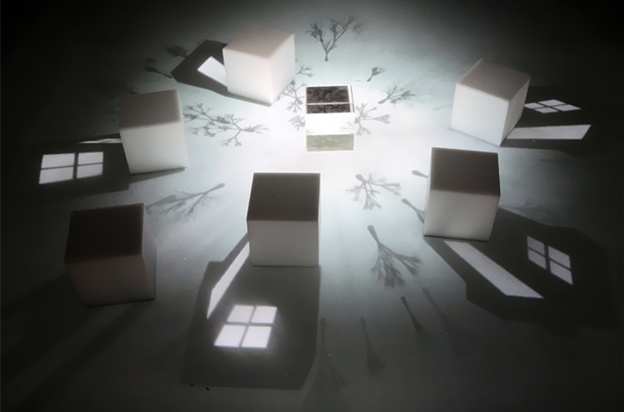
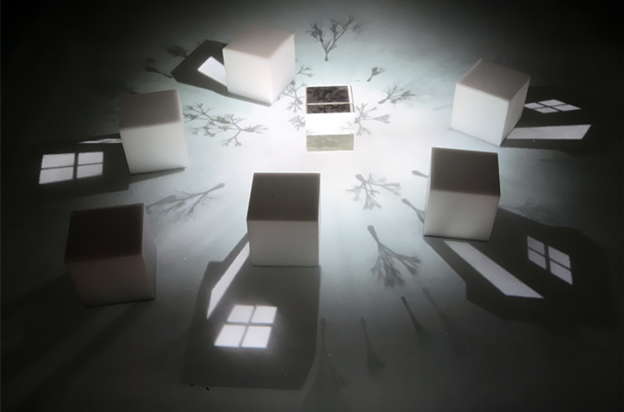
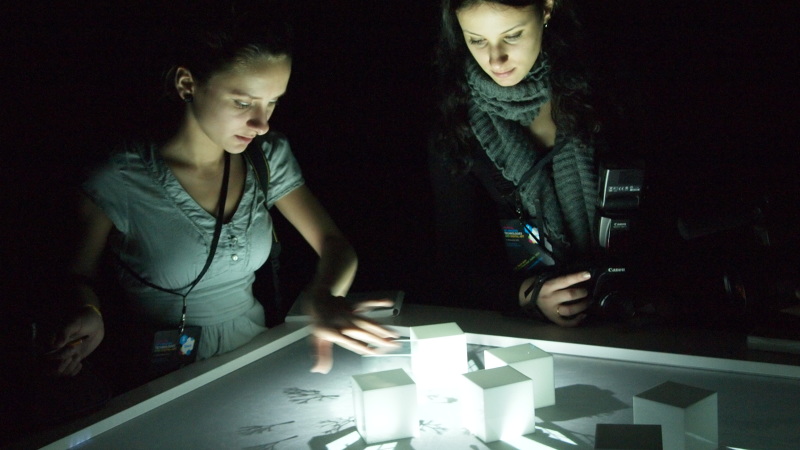
 Augmented Shadow(2010), his M.F.A. thesis work at Parsons School of Design in New York, is an early work in which this concern was first clearly formulated. Through cubes placed on a table and the shadows generated beneath them, the work experiments with how reality and the virtual, the material and the immaterial, and fantasy can coexist within a single narrative environment.

Viewers move the cubes, inducing changes in the shadow ecosystem, and the work responds to those movements by creating new events. Here, technology is not an object that displays its method of operation to the viewer, but a medium that reveals another world hidden close to reality.

Joon Moon has since developed “shadow” into his representative artistic language. Makuro Kurosuke Table(2011), a work that was also presented at the Gwangju Biennale, takes its motif from the dust-like creatures in the Japanese animation My Neighbor Totoro, transforming the experience of discovering, observing, and cautiously coexisting with an unknown being into an interaction model. 

Inter-Scenery(2012) inserts the viewer’s silhouette into a virtual space, composing a “scenery” in which the screen, the exhibition space, the viewer’s body, and the virtual space within the video overlap with one another. What is important in the works of this period is not the presentation of virtual reality as an independent world outside reality, but the way it is brought into reality through the viewer’s body and movement.

The boundary between reality and the virtual, between the visible and the invisible, is not a fixed line but a sensory field that is continually redrawn through the viewer’s participation.

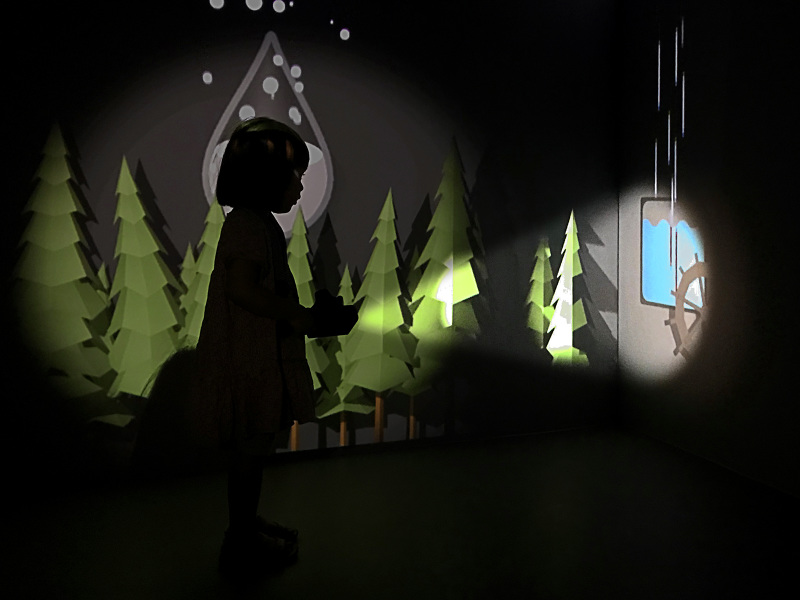
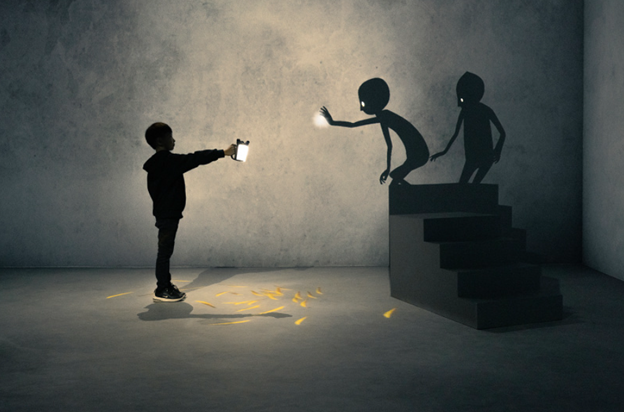
In the works produced after 2018, augmented reality using shadows expands into larger spaces and more concrete narrative structures. Hello, Shadow!(2018) is designed so that viewers search for the proper position of a lighting device and make eye contact with a virtual human in the shadow world, while Lighting the Eco(2018) uses a flashlight to activate changes in water, clouds, rain, rivers, fish, flowers, bees, and trees, allowing viewers to experience the causal relationships of an ecosystem as play.

In these works, viewers are not simply users who trigger responses, but explorers who hold light and discover a world. Joon Moon’s interactive works go beyond the level at which the user’s choices alter the outcome; they are structured so that viewers themselves create the flow of cause and effect, encounter and change, discovery and learning from within the story.

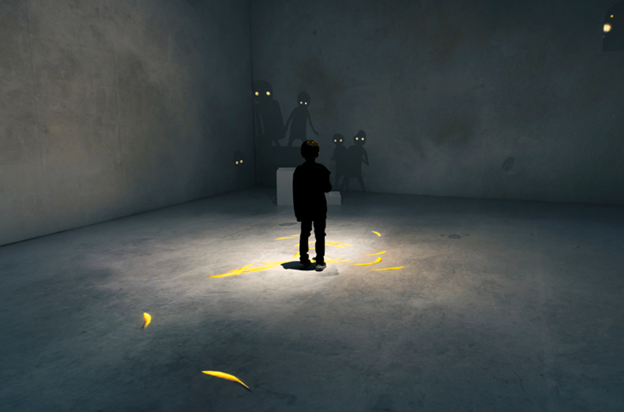
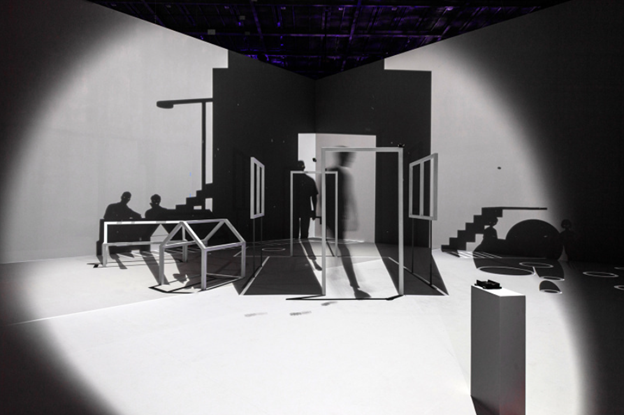
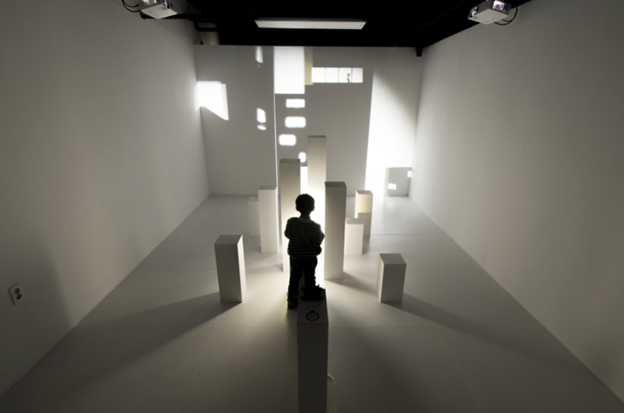
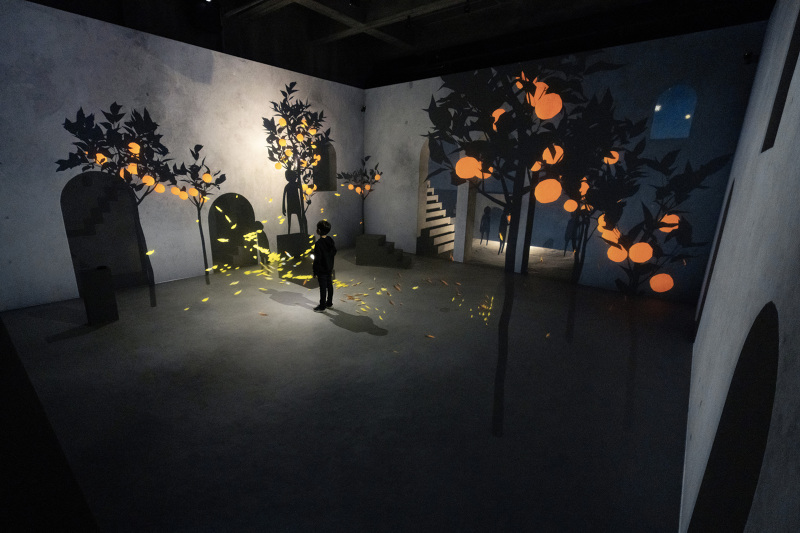
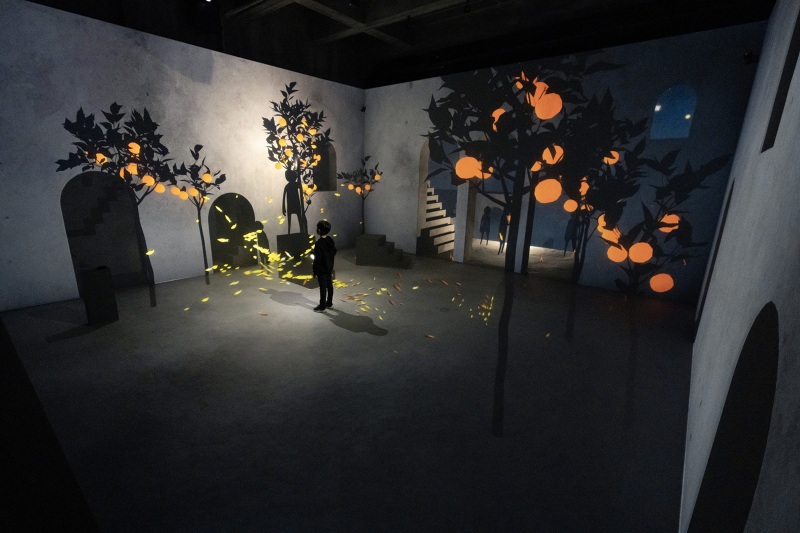
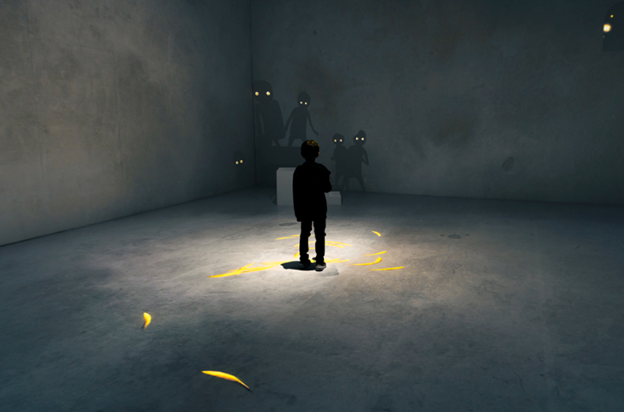
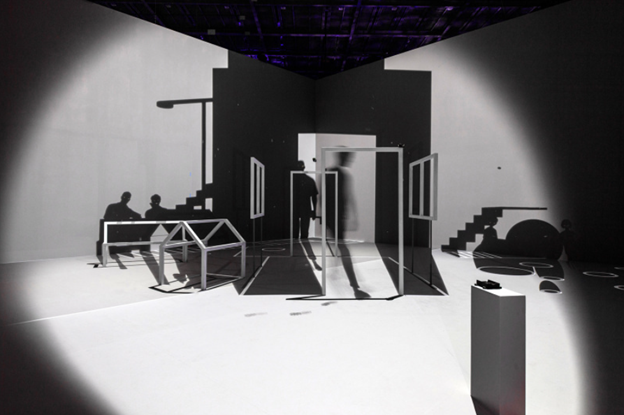
In relatively recent works such as Augmented Shadow : Inside(2020) and Augmented Shadow : Chasing Stars in Shadow(2022), he integrates shadow, light, optical illusion, immersive space, and storytelling into a single structure. Augmented Shadow : Inside allows viewers to enter shadows at a 1:1 scale and look at overlapping realities and virtual spaces, while Augmented Shadow : Chasing Stars in Shadow tells the story of shadow children who move between flatness and three-dimensionality, receiving the viewer’s light and moving into a new space.

For Joon Moon, shadow is not an image of lack, but an active medium that connects reality and the virtual and opens the viewer’s senses. His artistic practice has developed beyond the creation of fantasy through technological experimentation, moving toward the production of experiences in which viewers actually form relationships, move, and understand a world within that fantasy.

Style & Contents

Joon Moon’s practice is centered on interactive installation, combining computers, projectors, sensors, position-tracking devices, LEDs, custom electronics, and custom software. His early work Augmented Shadow uses a relatively small interface composed of a display table and cubes, connecting objects touched by the viewer’s hand with the shadow world generated beneath them. 

Makuro Kurosuke Table is also based on an everyday object, a tea table, and creates a scene in which small beings of light gather and disperse through the simple action of placing a hand or object on the table. In this way, while using complex technology, his early works constructed emotional and narrative experiences through small-scale interfaces that viewers could approach intuitively.

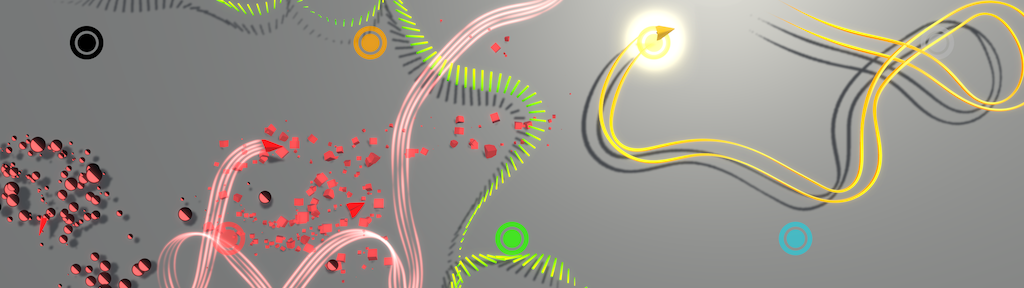
In later works such as Inter-Scenery and Flying – Body Pen(2017), the viewer’s entire body becomes the interface. Inter-Scenery draws the viewer’s silhouette into the virtual space within the video, while Flying – Body Pen expands the relationship between the body and the screen through a method in which images are generated by bodily movement.

Here, the viewer’s body is not a hand that manipulates the work from outside, but a condition that generates images and events within the work. In Joon Moon’s practice, the interface is not a separate operating device such as a button or joystick; rather, it combines with the viewer’s hands, body, gaze, and position, and is gradually absorbed into the content of the work.

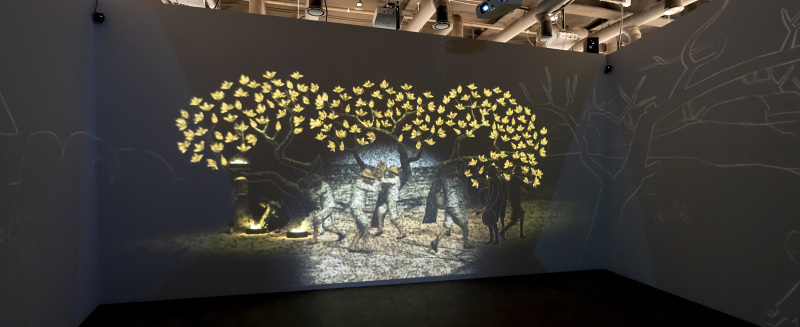
In Hello, Shadow!Lighting the Eco, and Park Soo Keun, The Light Village(2020), a flashlight-like device appears as an important medium. When viewers shine the light, images are overlaid on that point, and images and events hidden in the darkness are revealed. In particular, Lighting the Eco is an educational interactive installation structured so that children can use a flashlight to discover changes in an ecosystem, showing that media art can contain play, learning, and narrative at the same time. 

Park Soo Keun, The Light Village also suggests the possibility of a meeting between painterly images and interactive technology by activating a specific image world through light. These works do not require complex commands from viewers; instead, they operate through very simple bodily actions such as “shining,” “searching,” and “approaching.”

In Augmented Shadow : Inside and Augmented Shadow : Chasing Stars in Shadow, which expand into large-scale immersive installations, the form and content of the works become more tightly connected. Augmented Shadow : Inside overlays virtual space onto the shadows of physical objects such as doors, windows, walls, and chairs, allowing viewers to move between inside and outside, reality and the virtual, and the positions of seeing and being seen. 

Augmented Shadow : Chasing Stars in Shadow uses the lighting device held by the viewer and a position-tracking system to change the shadows and lighting of an entire room in real time, making those changes themselves the method by which the story progresses. In this work, the viewer’s light is neither merely illumination nor simply a controller. It is the central narrative device that enables exchange with the shadow children, calls forth fish, trees, and doors, and expands the closed room into a sea of stars.

His works, presented in the recent solo exhibition 《Joon Moon: Augmented Shadow》(Gwangju Media Art Platform, 2023) and 《Gray Box Area》(Kiaf SEOUL, 2023), combine the existing grammar of projection mapping, augmented reality, and immersive space with the viewer’s shifting point of view, transforming the screen from an object to be viewed into an environment to be entered and experienced.


Topography & Continuity

The originality of Joon Moon’s work lies in his transformation of “shadow” into an emotional interface for augmented reality. While much media art creates immersion through clear images, large screens, and overwhelming visual effects, he instead activates the viewer’s imagination through shadow, an incomplete and immaterial image.

Shadow arises from an object in reality, but at the same time its form is distorted, easily changes, and suggests another world depending on the angle of light. Joon Moon uses these characteristics to handle the precision of technology and the ambiguity of fantasy together.

As a result, technology in his work does not appear only as a cold or mechanical system, but functions like an entrance to a story that viewers cautiously enter through the light they hold in their hands.

His artistic practice has expanded from a shadow ecosystem on a small table to virtual scenery involving the viewer’s whole body, play and educational media using flashlights, and augmented-reality narratives that move an entire immersive room. In Augmented Shadow, viewers moved cubes and observed a shadow world; in Hello, Shadow!, they encountered figures within shadows; in Lighting the Eco, they activated an ecosystem with light; and in Augmented Shadow : Inside and Augmented Shadow : Chasing Stars in Shadow, they entered the space of the work and carried the story forward.

This trajectory can be understood as a process in which the interface becomes increasingly natural, and technological devices become increasingly part of the narrative. Rather than “using” the work, viewers follow light and shadow and find themselves placed within an event.

Joon Moon places greater emphasis not on the effect of a response, but on how that response leads to story and emotion. While his work demonstrates the technical possibilities of projection mapping and augmented reality, it translates those possibilities into concrete experiences such as the viewer’s bodily senses, childhood play, the exchange of light, and encounters with unknown beings.

In this regard, although he works with technology, he is closer to an artist who creates sensory structures that viewers can easily understand and become immersed in, rather than one who places technology itself at the forefront. His interaction begins not with a complicated method of operation, but with simple actions: shining the light in one’s hand, approaching a shadow, and waiting to see what kind of world will open.

Joon Moon’s works have been presented at international exhibitions and platforms including The Museum of Modern Art(MoMA), New York, Ars Electronica, Microwave, Onedotzero, FILE, Cinekid, and Scopitone, and have also been shown at major Korean institutions such as the National Museum of Modern and Contemporary Art, Korea, Seoul Museum of Art, Gwangju Design Biennale, and Kumho Museum of Art.

His representative ‘Augmented Shadow’ series was also nominated for the STARTS Prize of the European Commission, received an Excellence Award in the Art Division at the Japan Media Arts Festival, and was officially invited to the Kaohsiung Film Festival, China’s Sandbox Immersive Festival, and the Bucheon International Fantastic Film Festival.

These records show that his work can be read across multiple fields, including media art, design, interactive storytelling, and XR-based art. Rather than focusing on the newness of technology itself, his practice seems likely to continue asking what kinds of sensory passages and narrative spaces that technology can open for viewers. 

Works of Art

A World of Shadows Traversing Reality and Virtuality

Exhibitions