Sejin Hong (b.1992) - K-ARTIST
Sejin Hong (b.1992)
Sejin Hong (b.1992)

Sejin Hong graduated from the Department of Painting at Incheon Catholic University College of Fine Arts and earned her Master’s degree in Painting from Hongik University Graduate School, where she also completed her doctoral coursework. She is based in Seoul.

Solo Exhibitions (Brief)

Hong’s solo exhibitions include 《Crosspoint》 (Boan1942, Seoul, 2024), 《Swaying Straight Line》 (SeMA Storage, Seoul, 2023), 《Always Just Out of Reach》 (GalleryMEME, Seoul, 2022), and 《Hidden Languages》 (OCI Museum of Art, Seoul, 2021).

Group Exhibitions (Brief)

She has also participated in numerous group exhibitions, including 《Like a Poem She Never Wrote》 (CHOI&CHOI Gallery Cologne, Cologne, 2025), 《Prism》 (Sahng-up Gallery, Seoul, 2025), 《Gestus》 (Daejeon Museum of Art, Daejeon, 2024), 《Turing Test》 (Seoul National University Museum of Art, Seoul, 2022), 《Gravity Shower》 (N/A, Seoul, 2021), and 《MUMU》 (Platform-L, Seoul, 2019).

Awards (Selected)

In 2025, she was selected as a semi-finalist for the ‘Kiaf HIGHLIGHTS’.

Residencies (Selected)

Sejin Hong has completed residencies at major institutions such as the MMCA Residency Changdong and the Seoul Art Space Geumcheon.

Collections (Selected)

Hong’s works are included in the collections of the MMCA Art Bank.

Works of Art

The Bodily Language that Perceives Sensation

Originality & Identity

Sejin Hong’s practice begins with an exploration of the gap between perception and the world. Having lost her hearing in childhood and come to perceive sound through a cochlear implant, she experienced perception not as something naturally given but as a process constantly restructured through technology and environment. As seen in her early works such as 〈dot, dot, dot〉(2019) and 〈Leaves and Sculpture〉(2019), the artist translates her experience of “incomplete perception” into the structure of painting, persistently transforming distortion and absence into new forms.

Her first solo exhibition 《A clear noise》(Shinhan Gallery, 2019) marks the point at which she began to fully reveal the gap of perception and the uncertainty of language. The indistinct sounds of the world—heard through her cochlear implant and hearing aid—intersect with the clarity of visual perception, forming the landscapes within her paintings. Seeking to capture “a language that is visible even without being spoken or heard,” Hong treats the “utterance of the non-verbal” as a fundamental means of relating to the world.

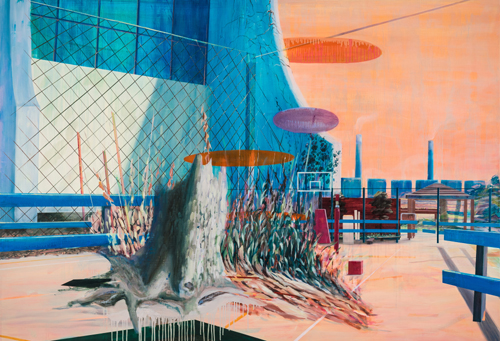
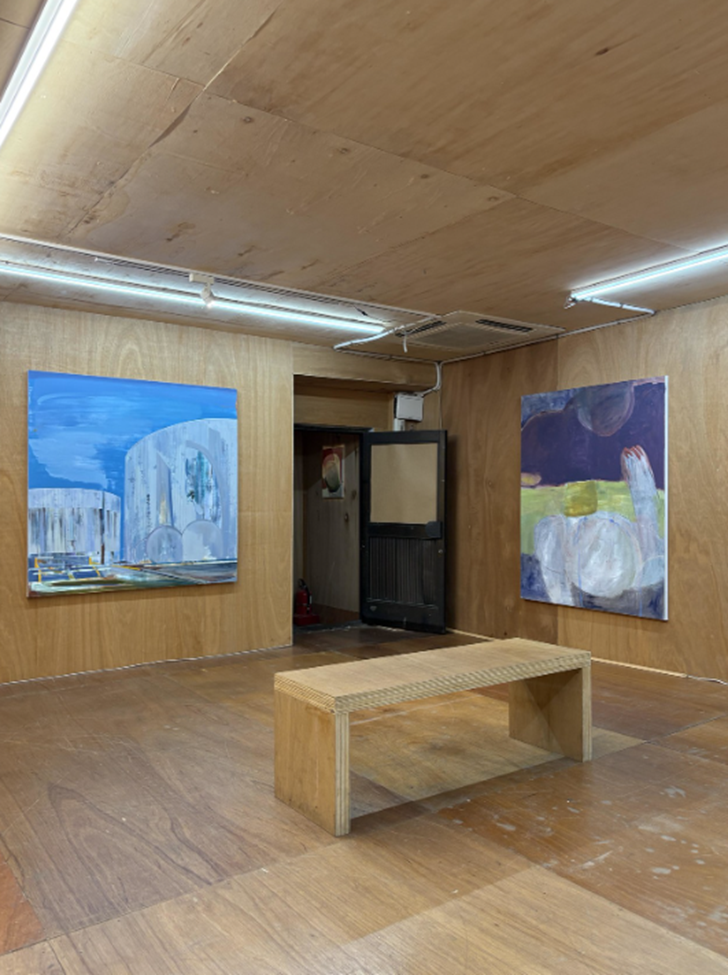
In 《Hidden Languages》(OCI Museum of Art, 2021), the “uncertainty of sound” expands into a “complexity of vision.” The artist transforms the cold, industrial landscapes of Euljiro’s ironworks into metaphors of sensory experience, translating the artificial timbre of sounds perceived through technology into visual textures. The works from this period overlap real and imagined spaces, visualizing the way perception diversifies into multiple sensory channels.

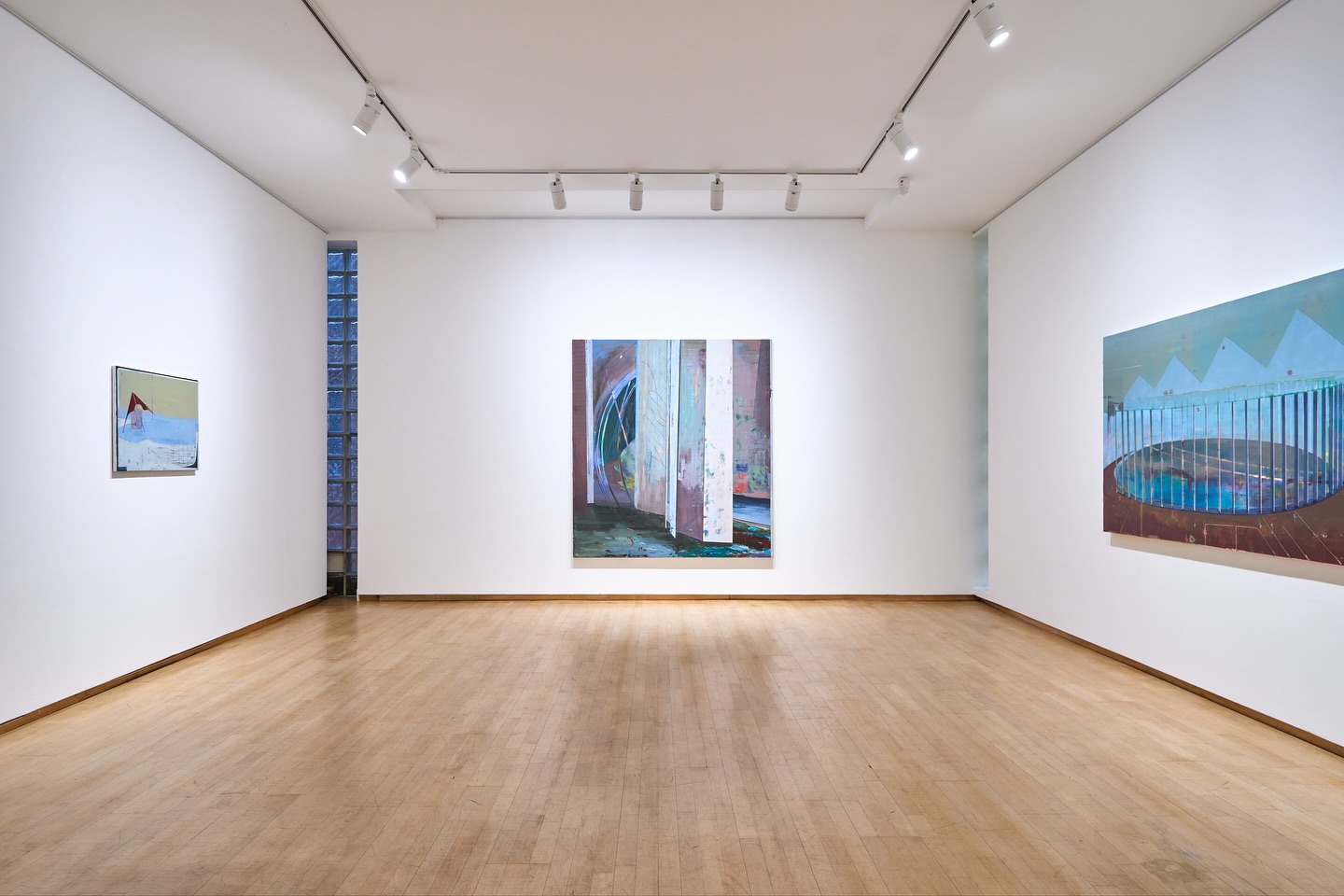
In recent exhibitions such as 《Swaying Straight Line》(SeMA Storage, 2023) and 《Crosspoint》(Boan1942, 2024), her exploration evolves beyond the structure of perception toward a reconsideration of how the world itself is recognized. Hong no longer regards the incompleteness of perception as a flaw, but as a creative medium through which perception and the world are reoriented. She investigates the ways in which the world reveals itself through the gaps of perception, establishing this inquiry as her own pictorial language.

Style & Contents

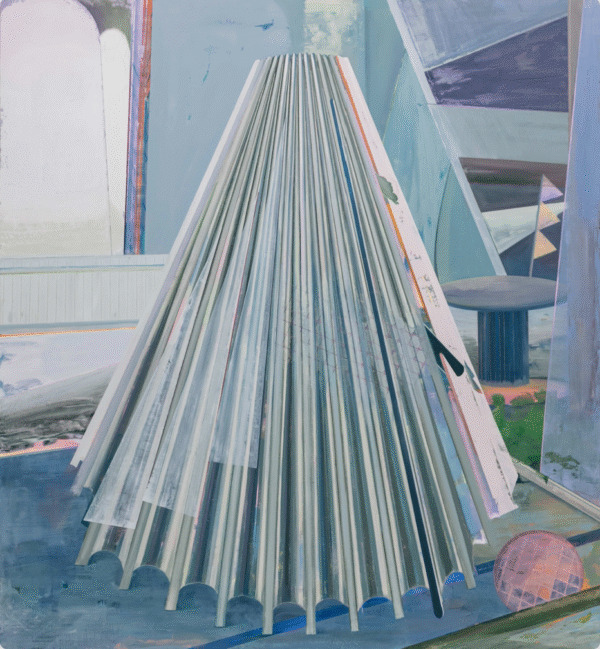
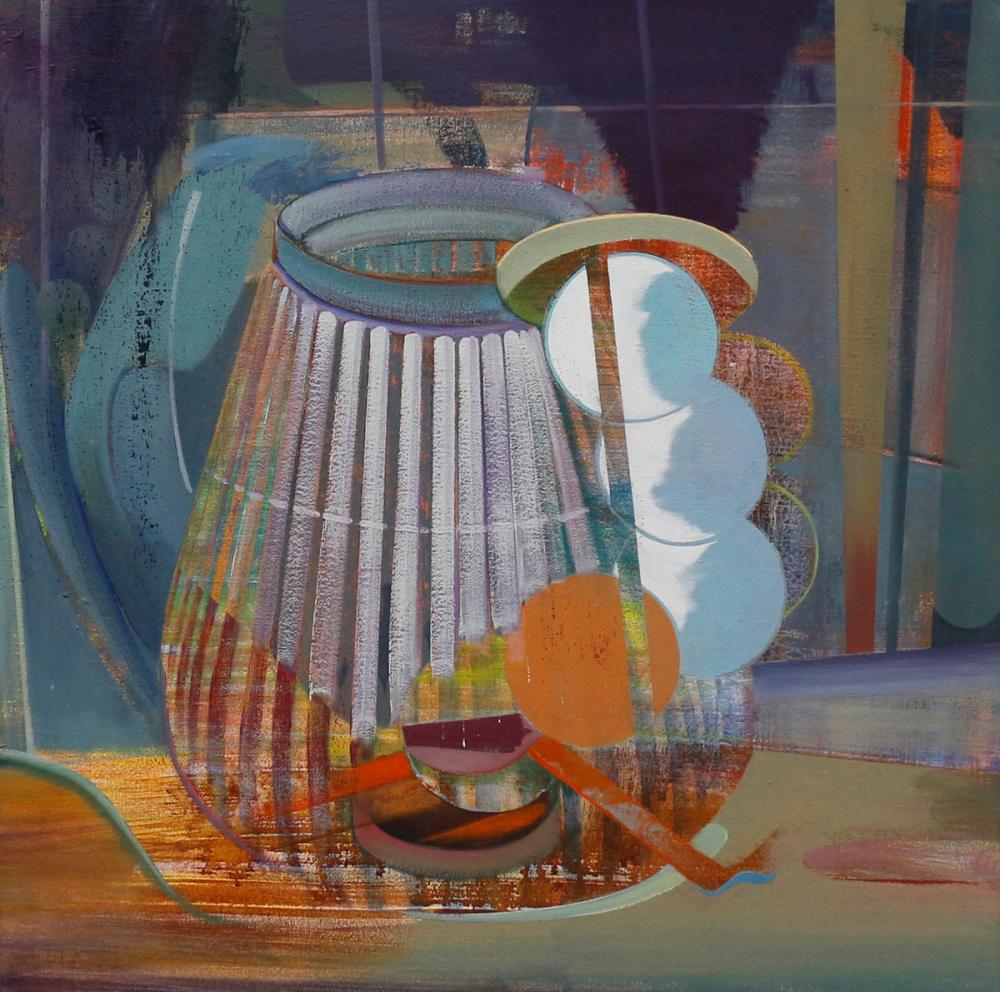
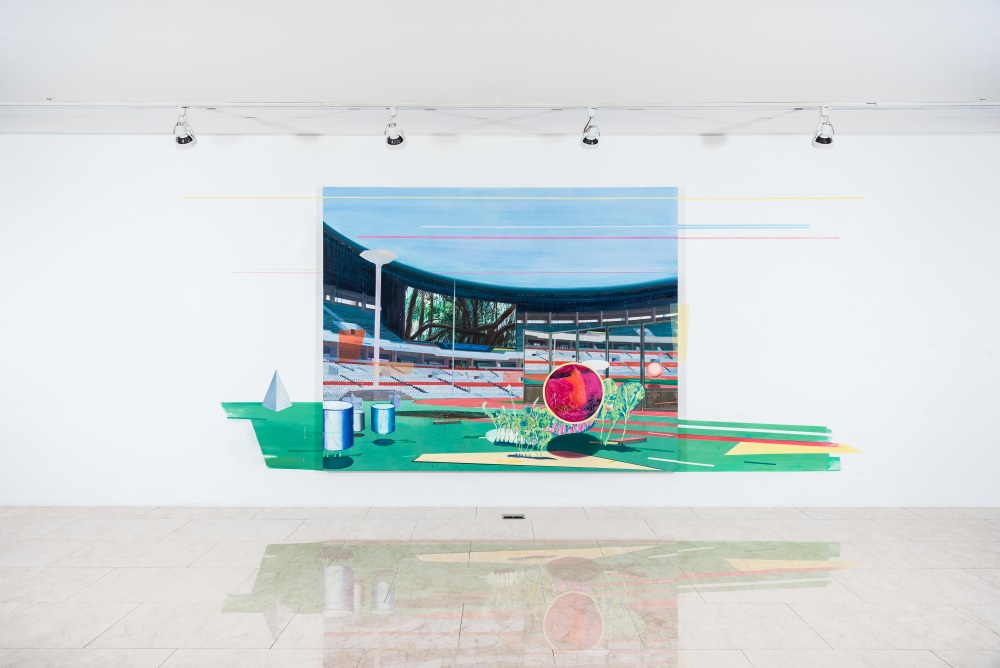
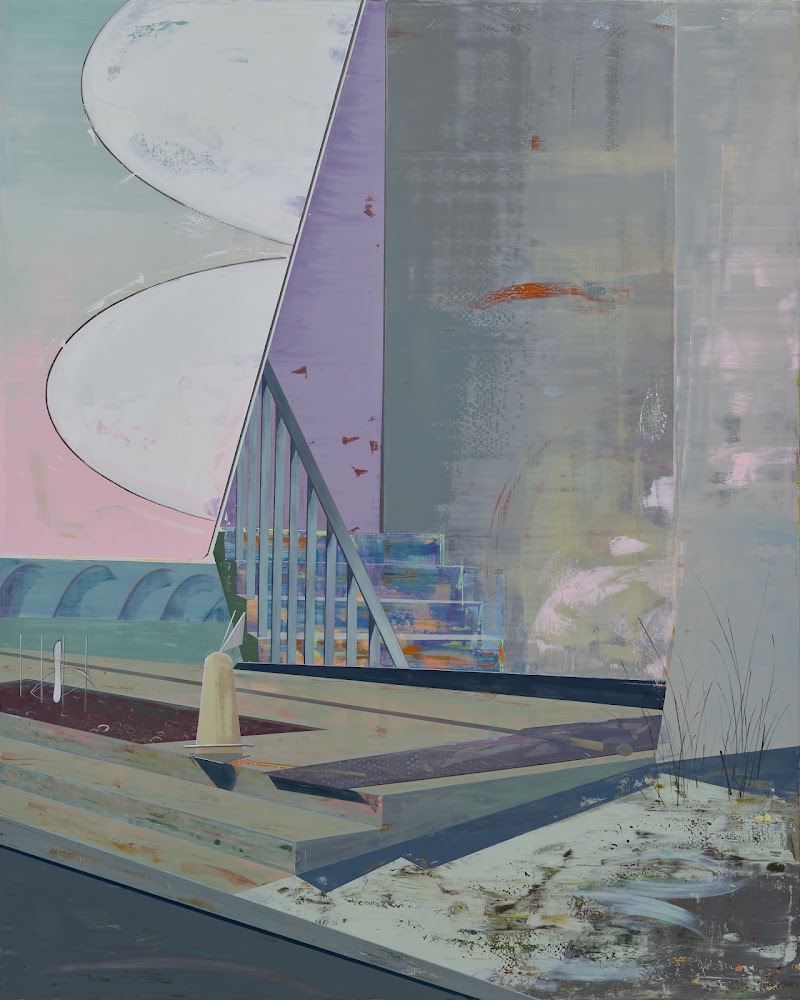
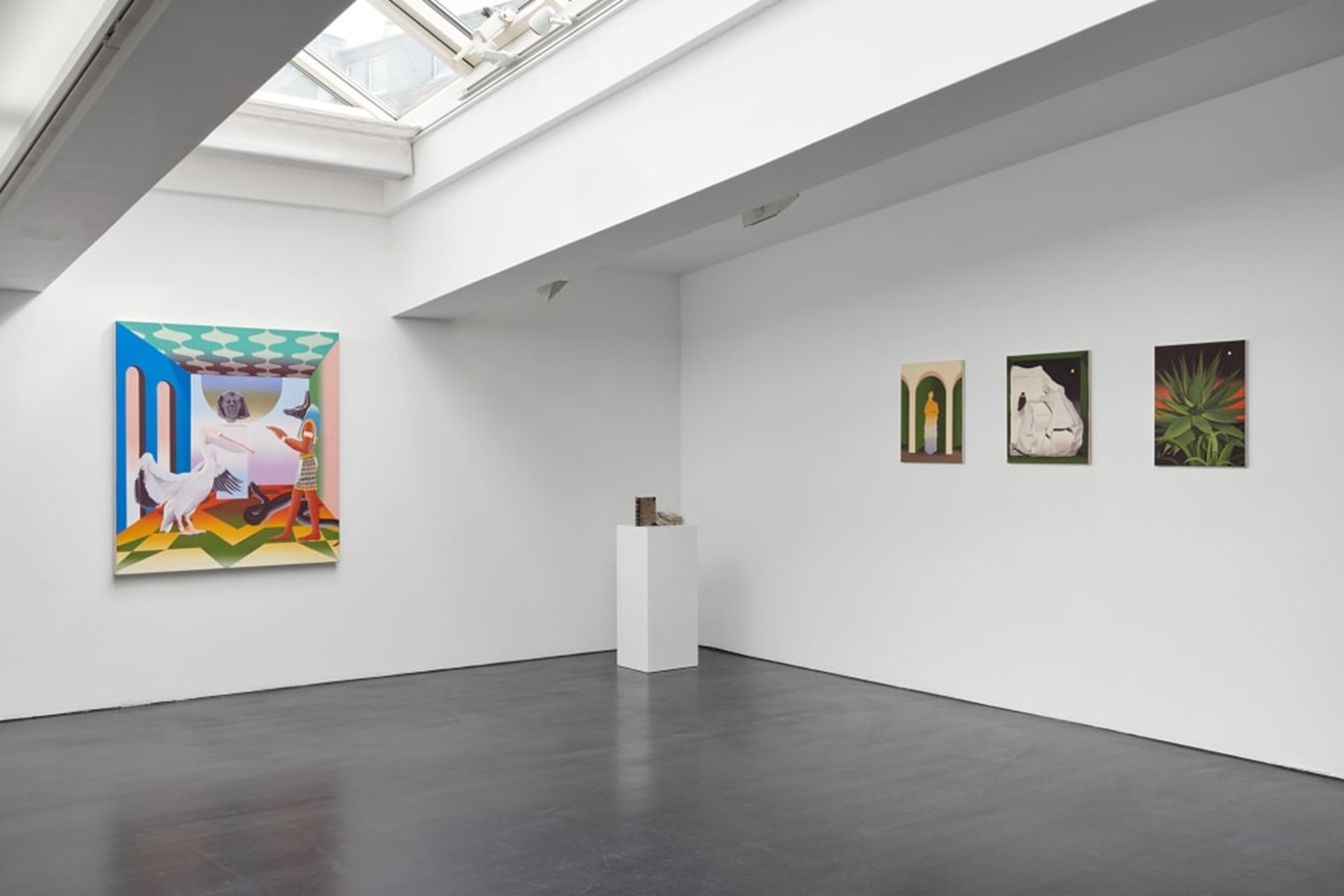
Hong’s paintings visualize the fragmentation of perception through geometric composition and the juxtaposition of heterogeneous objects. Early on, she frequently depicted everyday mechanical devices such as electric fans, water tanks, and stadium floor lines. To the artist, these resembled the mechanisms of her hearing aids—objects that fall silent when disconnected from power, recalling the moments when her own hearing ceased. Works like 〈Stadium〉(2019) and the installation 〈Tip of the Needle〉(2019) use such motifs to reveal the disconnection, reconstruction, and opacity inherent to sensory experience and language.

In 《Hidden Languages》, these sensory mechanisms evolve into a more advanced painterly experiment. The canvases intertwine industrial objects from the Euljiro district with abstract shapes and imagined fragments, where straight and curved lines, planes and volumes, and color fields and geometric forms coexist without merging into a single image. By layering or cutting photographs and printed images, Hong arranges fragments of reality into what she calls a “sensory montage.” Works such as 〈Noise〉(2021), 〈Large and Small Lines〉(2021), and 〈How to Water a Tree〉(2021) exemplify this hybrid compositional approach.

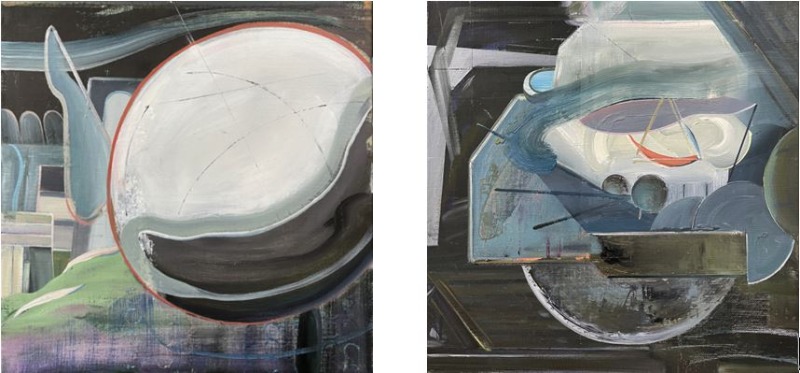
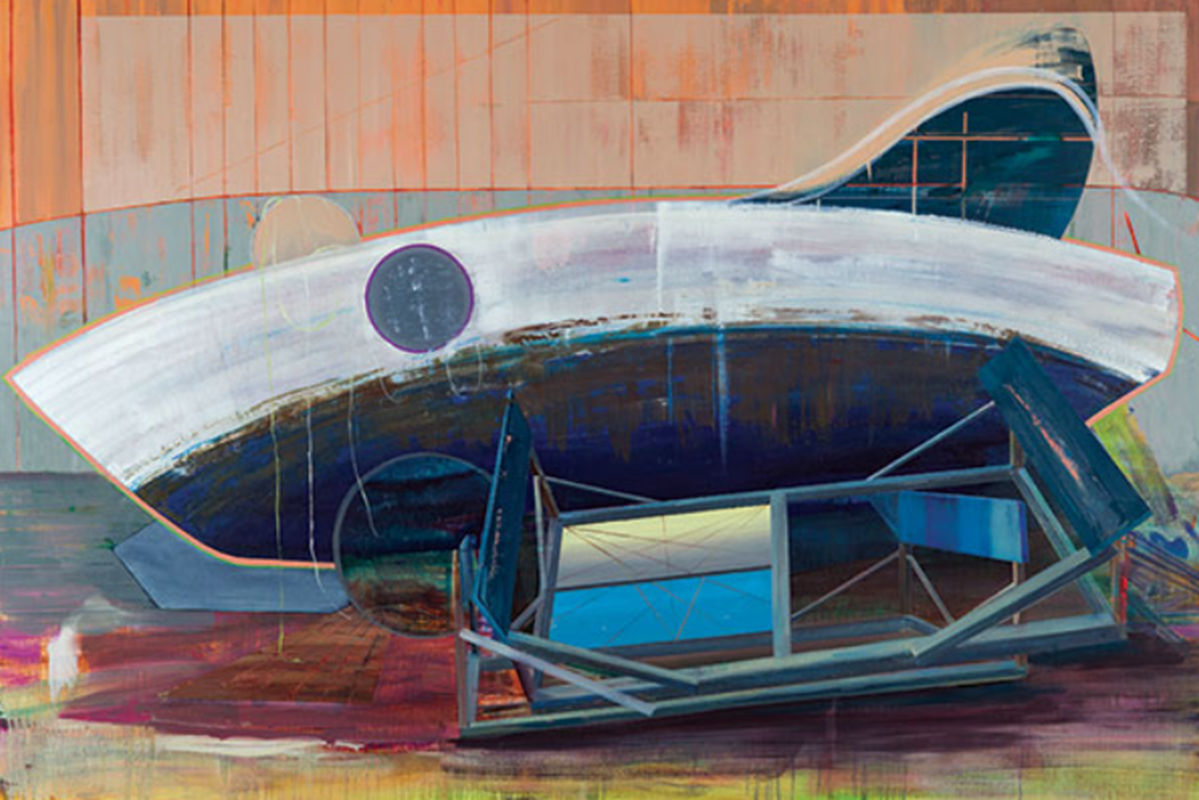
Later, the artist translates the evolving sensory experiences brought by technological advances in hearing devices into the compositional principles of painting. In the series ‘Landscape of Shapes’(2021), she intentionally omits the individuality of objects, reducing them to simplified lines and forms, and interprets the blank spaces as “folds” or “wrinkles.” Here, absence is no longer a void but a generative space where overlapping sensations give rise to new visual languages.

Her recent paintings move toward emphasizing flatness and spontaneity. Through image collage, scraping, and layered textures, Hong achieves a sense of improvisational structure and constructs what can be described as visual “sound layers.” Works such as 〈Circling Line〉(2023) and 〈Triangular Wave〉(2024) translate the vibration of sound and the rhythm of perception into painterly form.

Topography & Continuity

Hong’s body of work transforms the incompleteness of perception into a visual language, positioning her practice within the expanded field of sensory awareness and media consciousness in contemporary Korean painting. By reinterpreting her personal experience of hearing loss through the framework of technological mediation, she treats the gap of perception as a principle of artistic creation. In this sense, her paintings go beyond narratives of “disability,” offering a visual reflection on perception, technology, and existence in the modern age.

While her early works were closer to personal restoration of sensory experience, her practice since the 2020s has expanded toward an awareness of a “multi-channel world” shaped by perception itself. As seen in 《Crosspoint》, she constructs painterly structures that show the interaction between material and immaterial, object and space, reconfiguring the “language of perception” at the boundary between reality and the virtual.

Hong’s paintings continually question the relationship among sensation, technology, and the world while renewing a fundamental inquiry of visual art—“What can painting say?” Her approach aligns with the contemporary concern of how painting might reclaim material sensibility in the digital era. Going forward, she is expected to continue expanding her pictorial language through the combination of geometric flatness, nonverbal perception, and an ongoing investigation into new perceptual structures mediated by technology.

Works of Art

The Bodily Language that Perceives Sensation

Articles

Exhibitions

Activities