Nayoung Kang (b.1989) - K-ARTIST
Nayoung Kang (b.1989)

Nayoung Kang graduated from University of Leeds with a bachelor’s degree in Fine Art and received her Master’s degree from Royal College of Art of Sculpture. She currently lives and works in Seoul and London.

Social Ventilation for Care

Solo Exhibitions (Brief)

Kang has held solo exhibitions including 《A Sunday Outing》 (Kumho Museum of Art, Seoul, 2025), 《Heavy-Duty》 (CR Collective, Seoul, 2024), 《The Missing Fish》 (osisun, Seoul, 2023), among others.

Group Exhibitions (Brief)

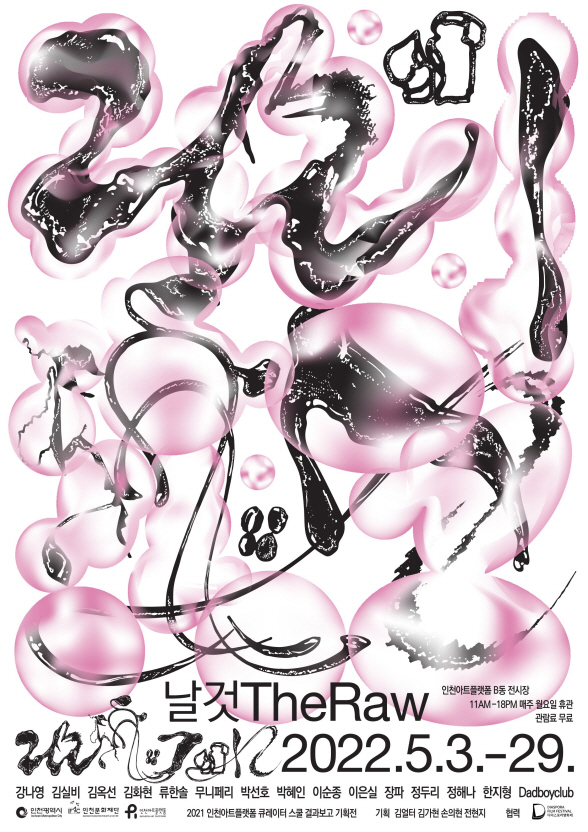
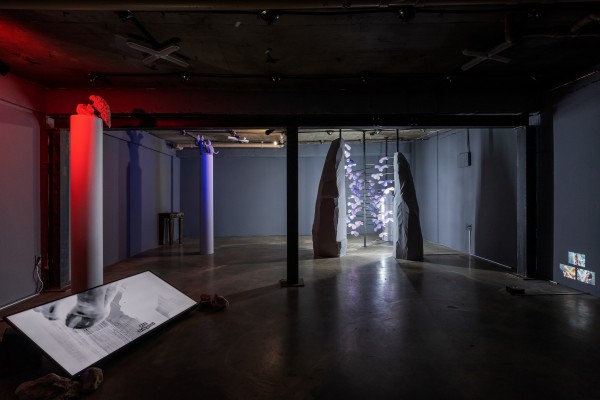
Kang has also participated in numerous group exhibitions, including 《Young Korean Artists 2025: Here and Now》 (MMCA, Gwacheon, 2025), 《DOOSAN Art Lab Exhibition 2023》 (DOOSAN Gallery, Seoul, 2023), 《re;side》 (Suwon Art Space Gwanggyo, Suwon, 2022), 《The Raw》 (Incheon Art Platform, Incheon, 2022), 《Fingers Crossed》 (out_sight, Seoul, 2021), 《Non-self Standings》 (Amado Art Space, Seoul, 2020), 《Parlour Geometrique》 (Chiswick House, London, 2018), and 《Hypnogogic Holiday》(Safehouse Gallery 2, London, 2018).

Residencies (Selected)

Kang has participated in residency programs, including MMCA Residency Goyang (Goyang, 2025), Suwon Cultural Foundation’s Pureunjidae Changgiak Saemteo (Suwon, 2022), and the Mas Els Igols Artist Residency Program (Barcelona, 2018).

Works of Art

Social Ventilation for Care

Originality & Identity

Nayoung Kang’s early works were based on her personal experiences during her time living abroad, exploring psychological states such as instability and loneliness encountered as a foreigner. In works such as 〈The Road〉(2019), she addressed the point at which an internal gaze collides with an external gaze—where the personal meaning of life clashes with an objective judgment from the outside, resulting in a sense of meaninglessness.

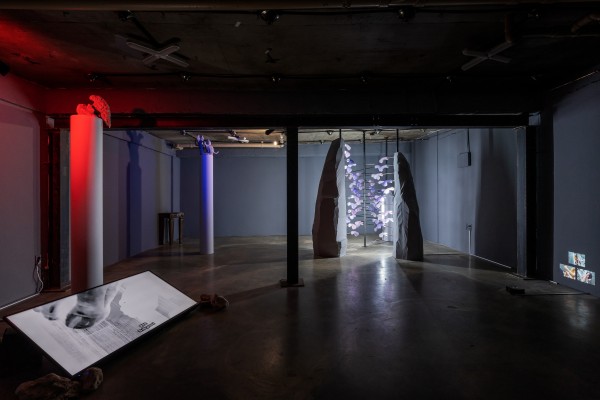
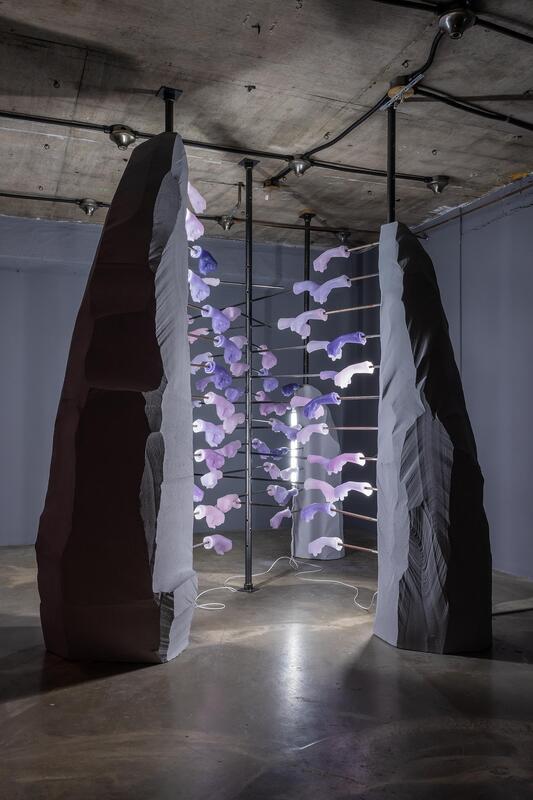
This thematic focus expanded into a more specific, relationship-centered realm, leading to For the Fist Bump I(2021) and For the Fist Bump II(2022). From this period, the artist began to focus on the decline of bodily functions and the resulting physical and emotional tension, examining these within the context of caregiving, and imbuing specific body parts—such as the “right hand”—with symbolic meaning to explore basic functions and the diverse significations surrounding them.

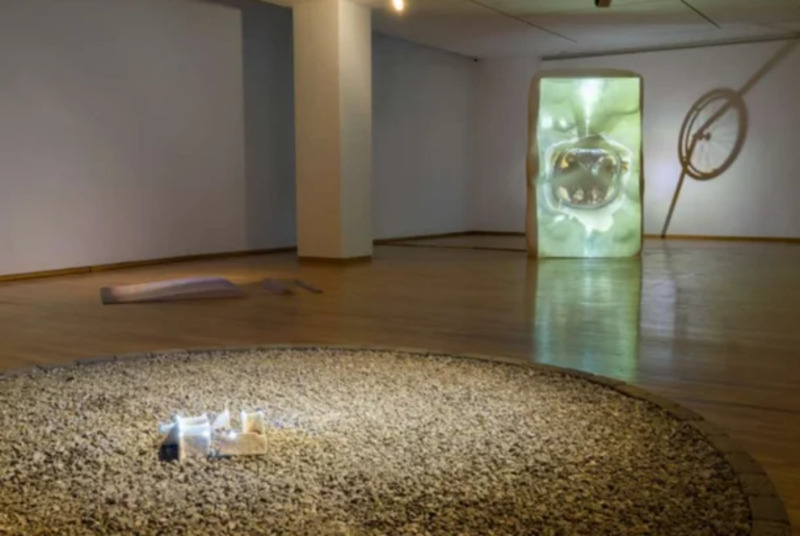
She later extended her interest to concrete scenes and physical environments in which caregiving takes place. In To Barely Fit(2023) from 《DOOSAN Art Lab Exhibition 2023》, she reinterpreted the revolving door, an everyday architectural feature, by noting that it can act as an obstacle for certain bodies. Here, she translated the themes of accessibility, protection, and physical accommodation into spatial structures, expressing the possibility of overcoming physical barriers through a “gesture of gentle support.”

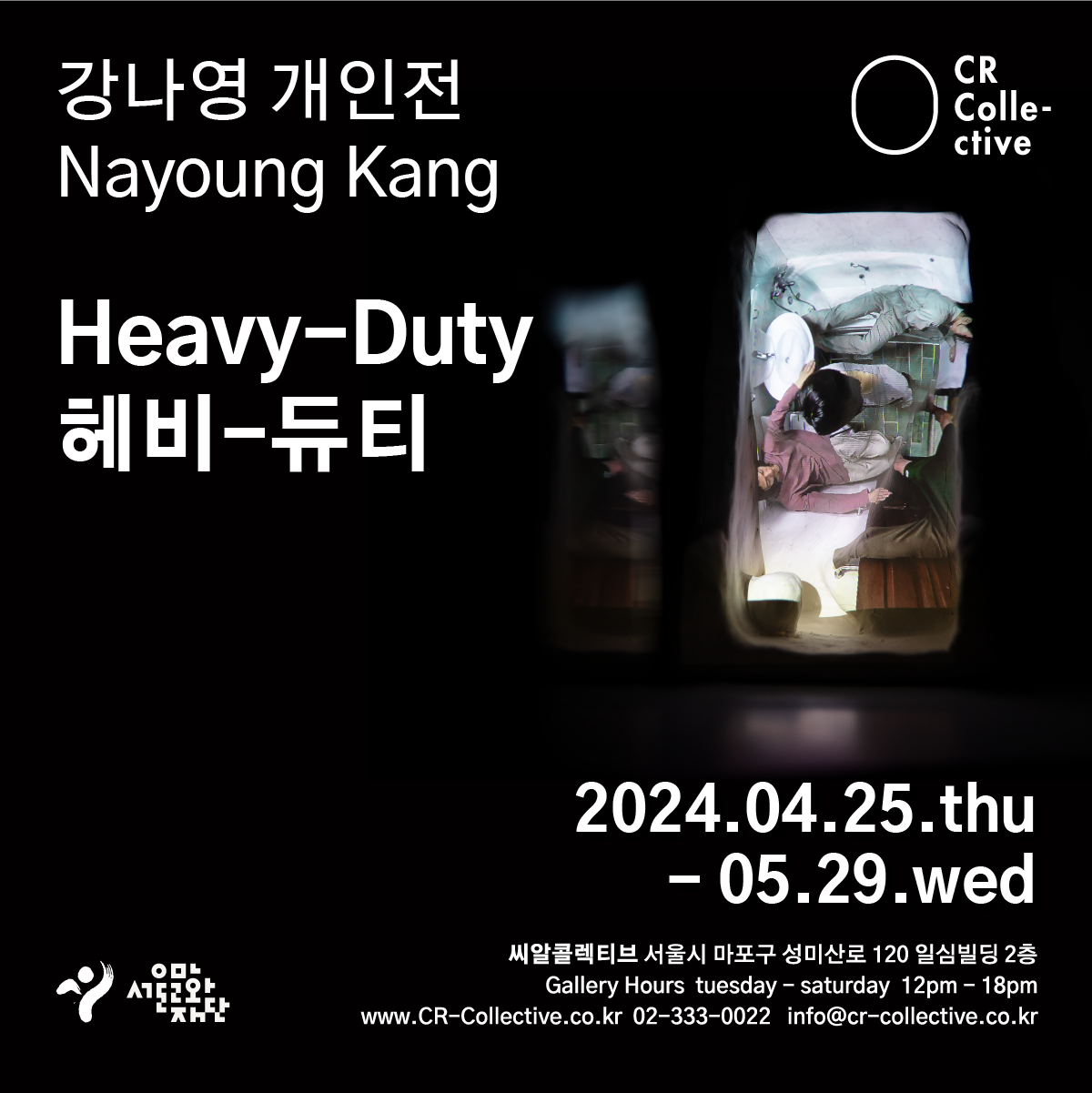
In solo exhibition 《Heavy-Duty》 (CR Collective, 2024), Kang expanded the metaphor of the “home” into a site of relationality, visualizing moments of training, daily routine, tension, and balance within landscapes of mutual dependence created by assistive devices and living spaces. In the ‘Local Rule’(2024) series, works such as Local Rule: Bathroom and Local Rule: Mind the Gap addressed processes of rehearsal and coordination that take place in thresholds and spaces such as doorsteps, bathrooms, and entrances, revealing a relational sensibility for managing fragile strength.

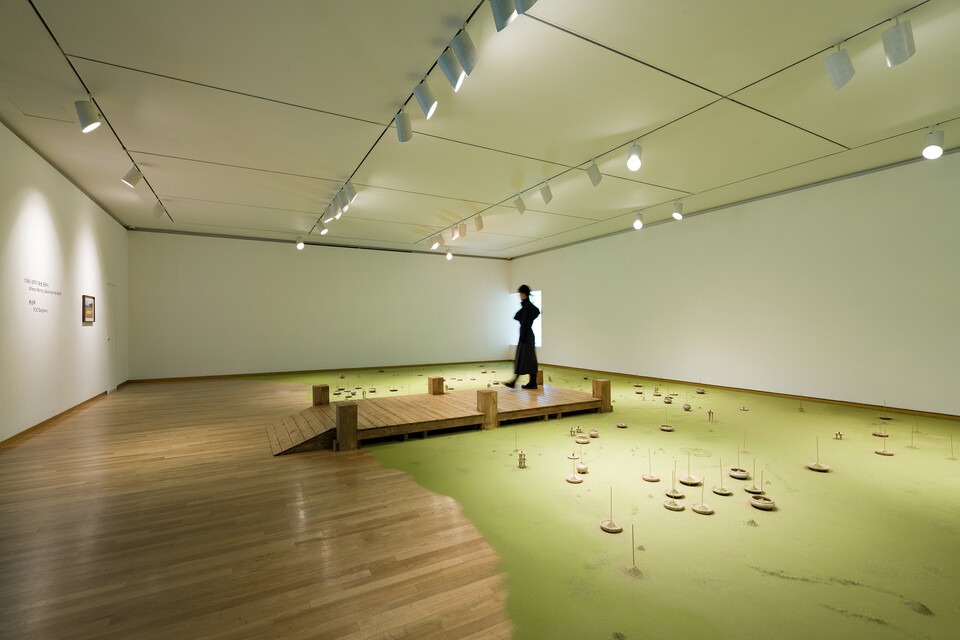
In her recent solo exhibition 《A Sunday Outing》(Kumho Museum of Art, 2025) and in the work E14(2025) presented in 《Young Korean Artists 2025: Here and Now》(MMCA), she focused on journeys that traverse the boundaries between inside and outside the home, emphasizing elements such as time, speed, distance, and emotion embedded in the process of movement. In particular, she used concrete sites such as cars, movie theaters, and parking lots as narrative mediators to convey both the yearning for “ordinary life” with a family member with disabilities and the tensions that arise throughout the process.

Style & Contents

Kang combines sculpture, installation, video, and sound to sensorially reconstruct the relationship between the body and its environment. In The Road, she used rough materials such as cement putty, asphalt, and polystyrene foam to translate psychological instability into physical texture. In the ‘For the Fist Bump’ series, she employed artificial yet tactile materials such as paraffin, steel pipes, and LED lights to sculpturally express the symbolism of the body and the weight of relationships.

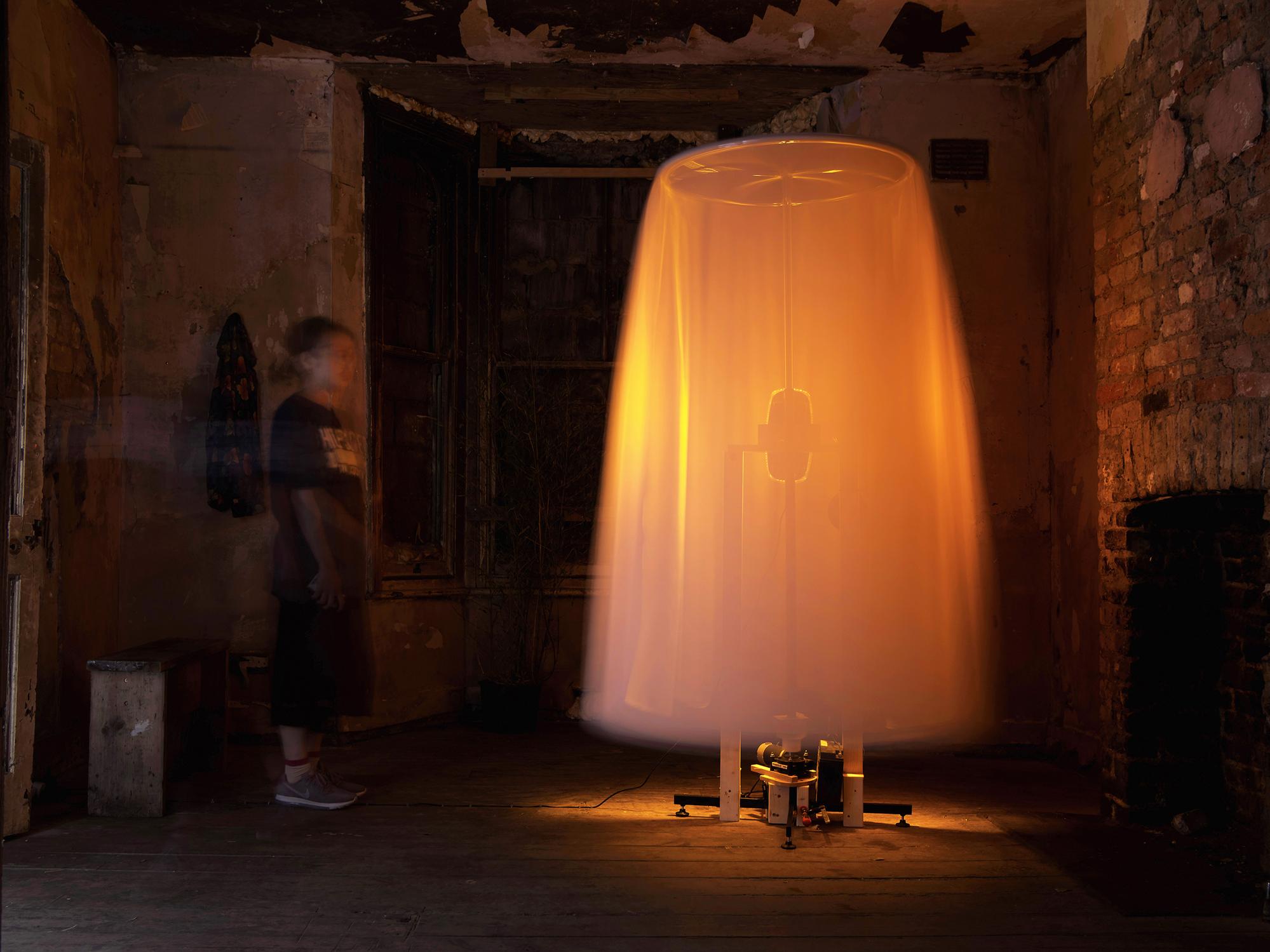
In To Barely Fit, she merged protective materials used for prosthetic limbs, such as silicone and sponge, with everyday construction materials like birch plywood to redesign the function of the structure and emphasize its physical compatibility with the body. Mechanical elements such as a motor that deliberately slowed the revolving door’s rotation created a physical rhythm that audiences could directly experience.

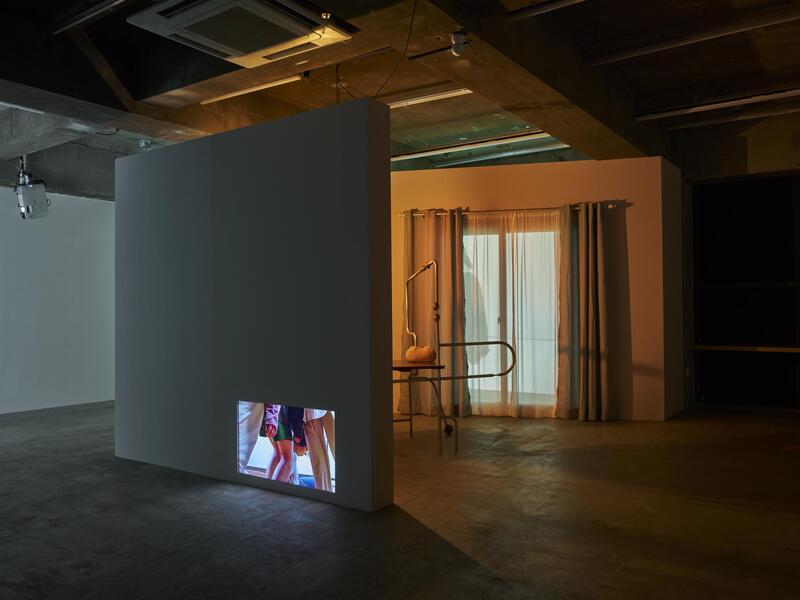
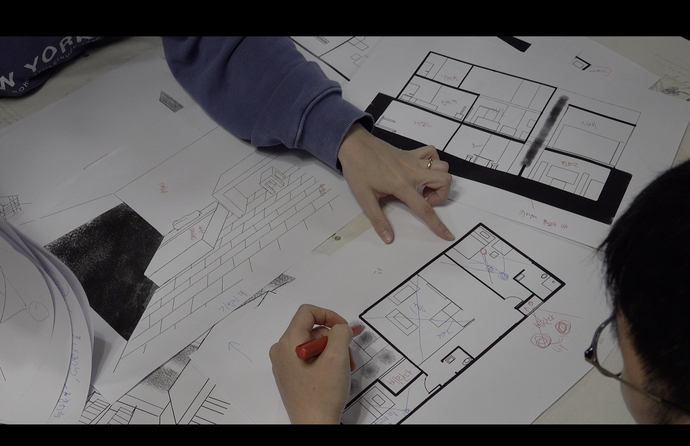
In the ‘Local Rule’ series, she adopted an installation format combining video and objects to present scenes of caregiving from multiple perspectives. In Local Rule: Bathroom, she arranged everyday tools such as soap and toothbrushes as sculptural objects, combining the movements and tension in the video with a tangible spatial presence. In doing so, the work offers a multisensory experience that encompasses not only visual and auditory elements but also pathways and layers of bodily sensation.

In her recent group exhibitions, she has used the “real-time” quality of video as a primary formal device. By presenting the family’s entire journey without editing, the audience experiences the full passage of physical time, while the installation space—featuring physical structures such as uneven paths or obstacles—encourages the audience’s bodily 

Topography & Continuity

Nayoung Kang is recognized in contemporary Korean art for intricately embedding “physical vulnerability” and “relational interdependence” into materiality and spatial structures. Beginning with early explorations of psychological and existential concerns, she has gradually expanded her focus to the dynamics of relationships shaped by social structures and environments. Throughout, she has consistently visualized the body, space, and emotional networks as a unified, three-dimensional structure.

Her work gains strength where personal narratives intersect with social contexts. While her early works explored unstable selfhood and the gaze of the other, her later projects have carefully constructed scenes of mutual support within specific living environments and institutional barriers. She has continually expanded the experimental trajectory of her materials and formats, refining her integration of sculpture, installation, and video with audience-participatory structures.

The artist has developed a visual language that repositions bodies outside the category of “normal” as sites of new social and aesthetic value, reconfiguring accessibility and spatial experience. In particular, by comparing and transforming caregiving environments and physical barriers across different cultural contexts, she is expected to establish herself as an artist who presents the visual language of care and accessibility within a global framework.

Works of Art

Social Ventilation for Care

Articles

Exhibitions

Activities