Jewyo Rhii (b.1971) - K-ARTIST
Jewyo Rhii (b.1971)
Jewyo Rhii (b.1971)

Jewyo Rhii majored in Western Painting at Ewha Womans University and later obtained a Master of Fine Arts degree from the University of Pennsylvania and Chelsea College of Arts.

Solo Exhibitions (Brief)

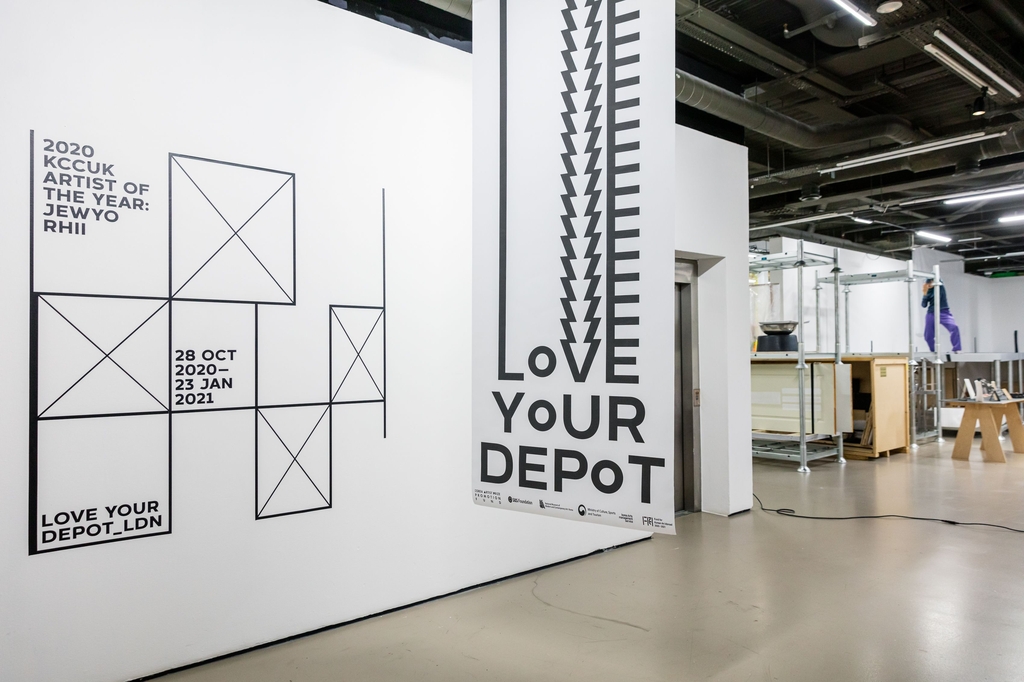
Major solo exhibitions by Jewyo Rhii include 《Of Hundred Carts and On》(Barakat Contemporary, Seoul, Korea, 2023); 《Love Your Depot_LDN, Artist of the Year 2020》(The Korean Cultural Centre UK (KCCUK), London, UK, 2020); 《The Day 3, Walls and Barbed》(Amanda Wilkinson Gallery, London, UK, 2017); 《Walls to Talk to》(Museum für Moderne Kunst (MMK), Frankfurt, Germany, 2013); 《Walls to Talk to》(Van Abbemuseum, Eindhoven, Netherlands, 2013); 《Night Studio》(Art Sonje Center, Seoul, Korea, 2013–2014).

Group Exhibitions (Brief)

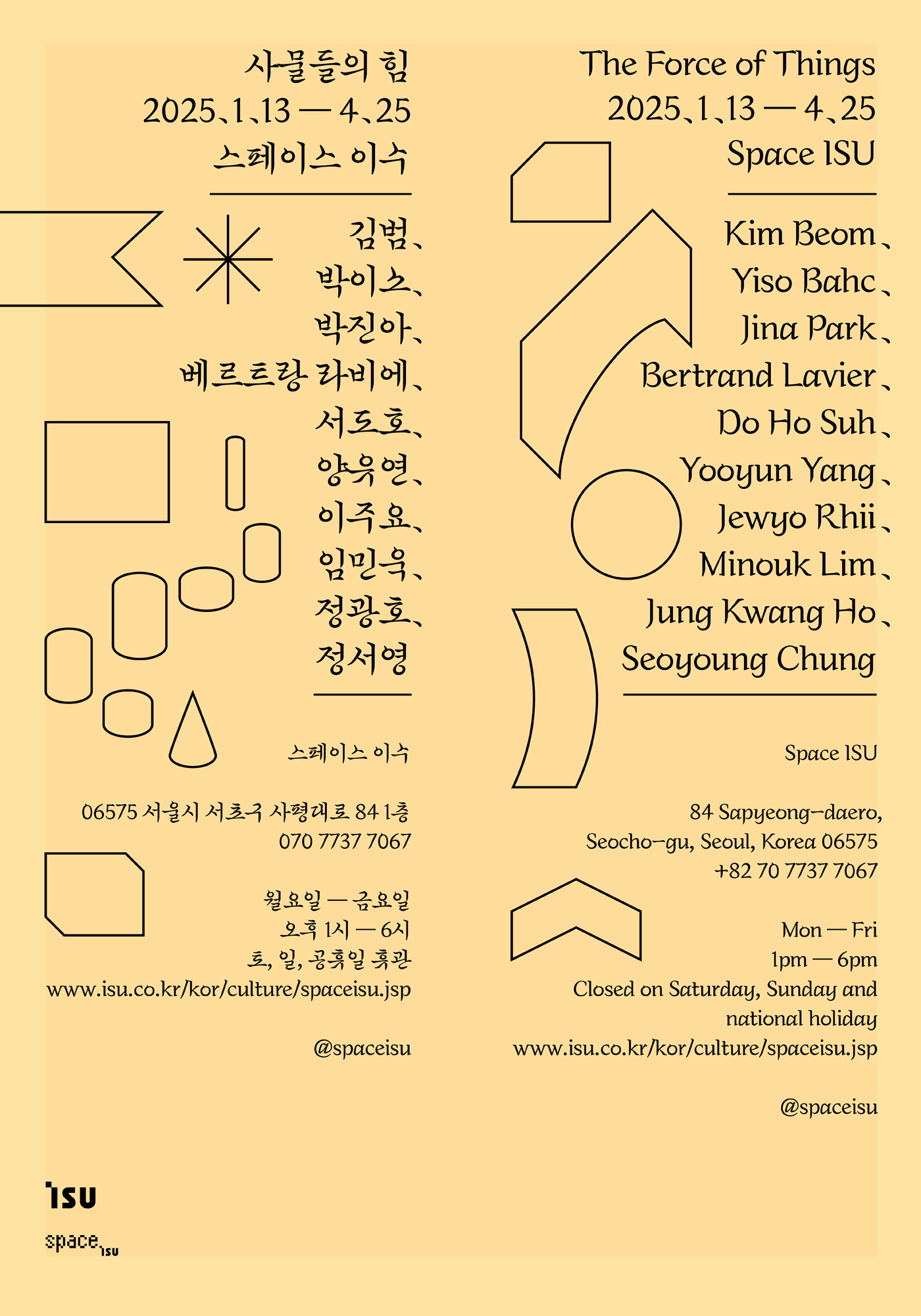
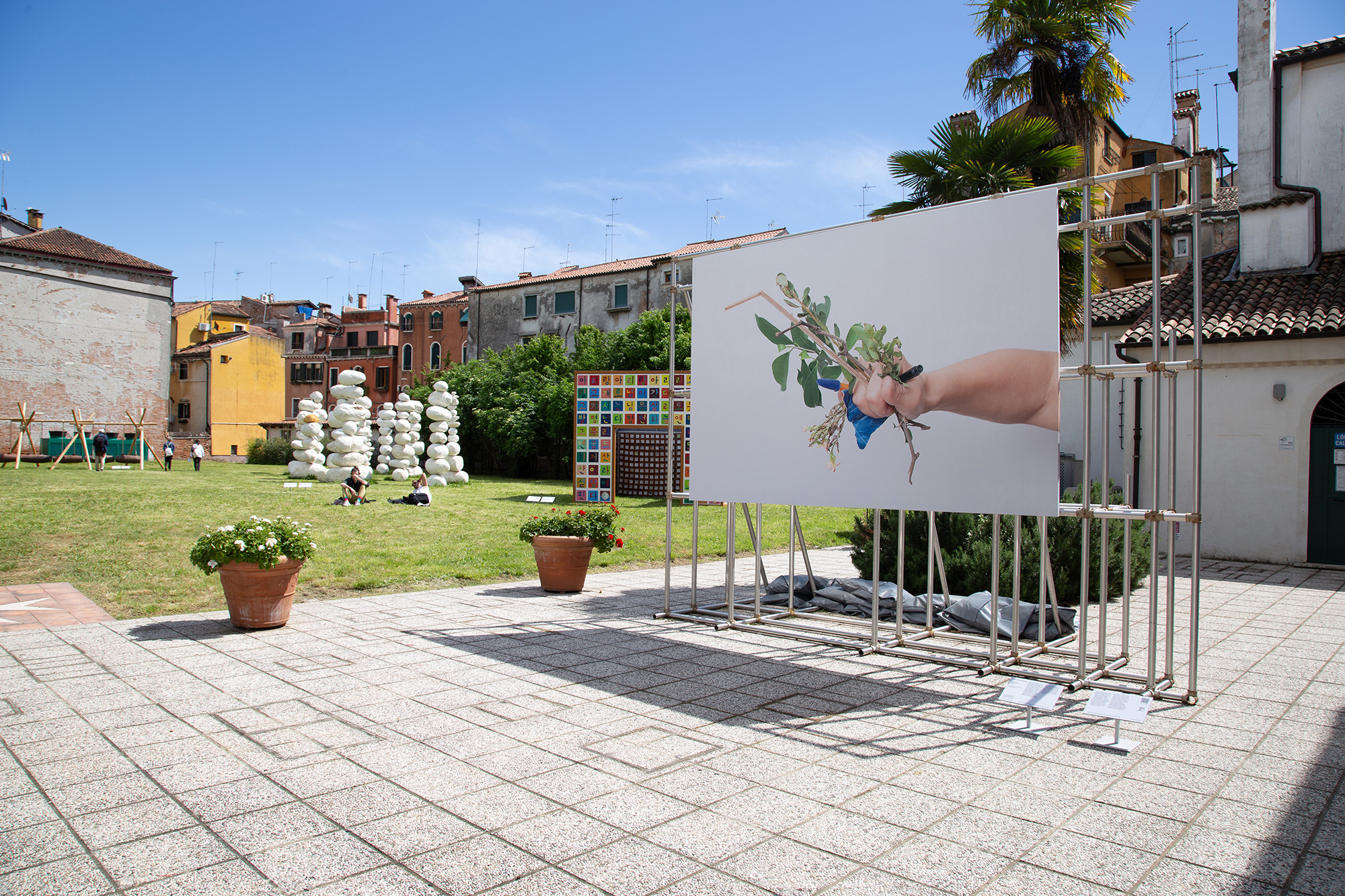
Rhii also has participated in various group exhibitions including 《The Force of Things》(Space ISU, Seoul, Korea, 2025); 《Every Island is a Mountain》(30th Anniversary Exhibition Celebrating the Korean Pavilion at the Venice Art Biennale, Venice, Italy, 2024); 《Collection Variable》(Museum of Modern and Contemporary Art (MMCA), Seoul, Korea, 2021); 《Love Your Depot, Korea Artist Prize 2019》(Museum of Modern and Contemporary Art (MMCA), Seoul, Korea, 2019); 《The Eighth Climate (What Does Art Do?)》(The 11th Gwangju Biennale, Gwangju, Korea, 2016); 《Unknown Packages (Dawn Breaks)》(Queens Museum, New York, US, 2015); 《Boom She Boom: Works from the MMK Collection》(MMK Museum für Moderne Kunst, Frankfurt, Germany, 2014); 《Intense Proximity》(La Triennale / Palais de Tokyo, Paris, France, 2012); 《The River Project》(Campbelltown Arts Centre, Campbelltown, Australia, 2010); and 《In the Language of the Other》(The 10th Istanbul Biennial, Istanbul, Turkey, 2007).

Awards (Selected)

Jewyo Rhii was awarded the Korea Artist Prize 2019 (National Museum of Modern and Contemporary Art, MMCA, Seoul) and the 3rd Yanghyun Art Prize (Yanghyun Foundation, Seoul, 2010).

Residencies (Selected)

Jewyo Rhii has been an artist-in-residence at Queens Museum (New York, US, 2015) and Doosan Gallery (New York, US, 2011), among others.

Collections (Selected)

Rhii’s works are held in the collections of the National Museum of Modern and Contemporary Art (MMCA), Seoul Museum of Art (SeMA), Leeum Museum of Art, Art Sonje Center, Doosan Art Center, Museum für Moderne Kunst (MMK), Frankfurt, and Van Abbemuseum, Eindhoven, among other leading institutions worldwide.

Works of Art

Nomadic Art

Originality & Identity

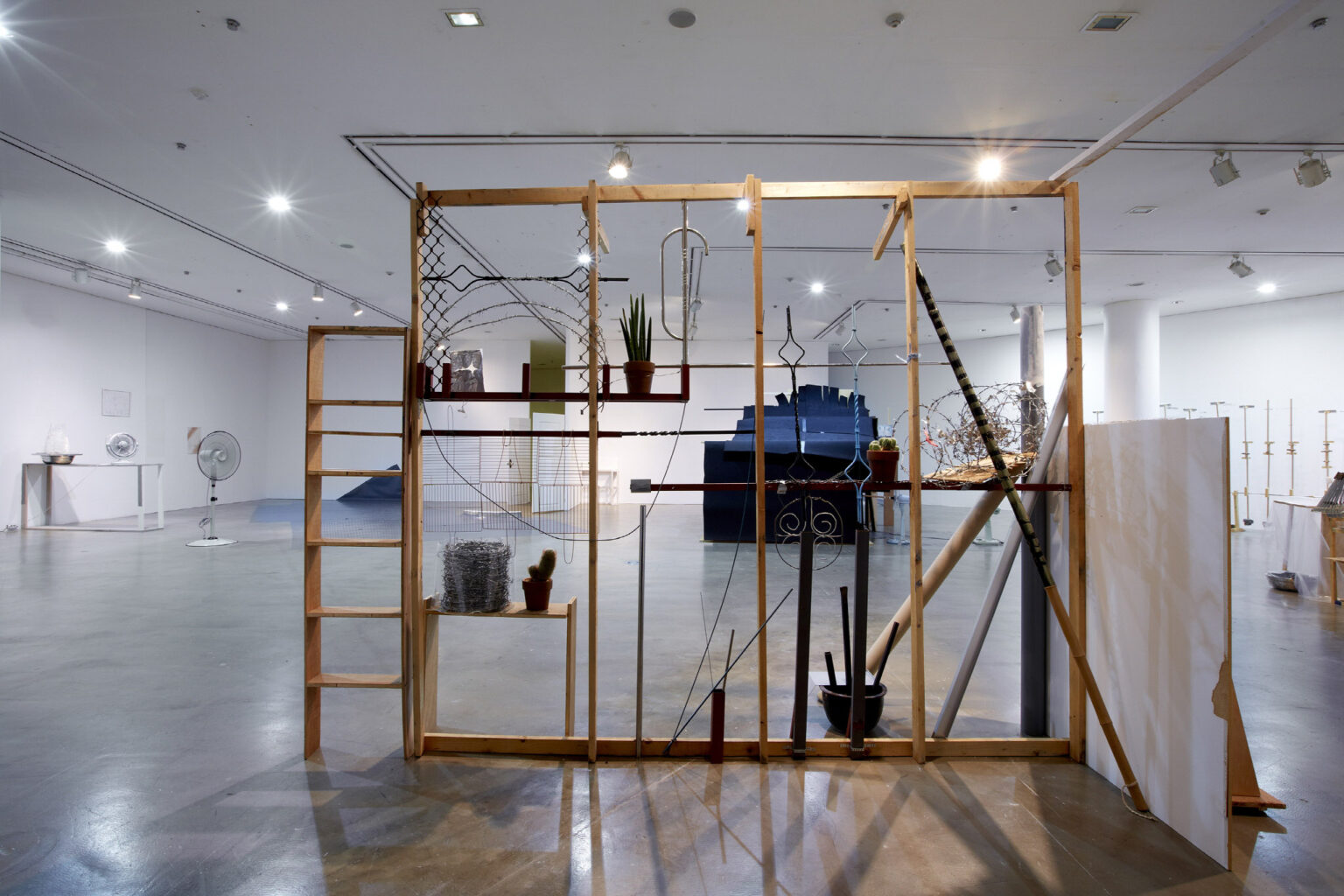
Jewyo Rhii’s practice unfolds around the question, “How can an artwork’s life continue in a reality governed by fragility and indeterminacy?” The early Night Studio (2008–2011) records moments when personal anxiety and the physical conditions of the environment become the point of artistic decision, through everyday techniques and improvised responses initiated in her Itaewon home/studio (modifying found furniture to her height, devising security and insulation devices).

This private experiment soon moves into a public sphere: in 《Jewyo Rhii: Night Studio》 (Art Sonje Center, 2013), the very “passage” of works—whose meanings are layered and revised with changes in time, place, and relationships—becomes the subject of the exhibition.

Between 2015 and 2017, a narrative strategy that recontextualizes past works into present stories takes full shape. Co-directed with curator Hyunjin Kim, the performance Ten Years, please (Namsan Arts Center, 2017) summons entrusted-and-forgotten works back to the stage as protagonists, revealing how the artist’s life and the artworks’ lives reflect one another and reignite.

The project Dawn Breaks (Queens Museum, 2015; Gwangju Biennale, 2016; Art Sonje Center, 2017) narrativizes fragmentary objects within a shared rhythm and trajectory through parade performance and installation, incorporating collaboration with others into the very nature of the work.
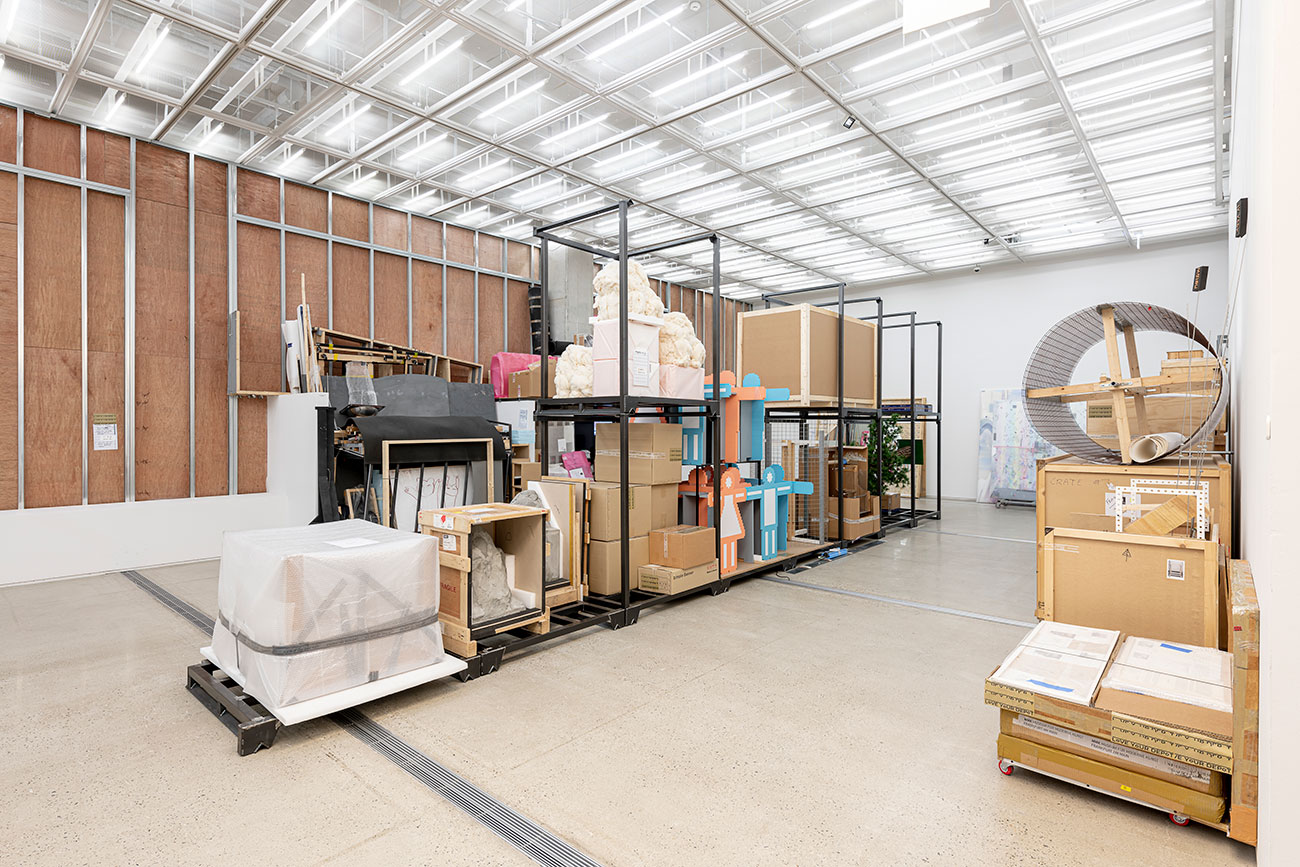
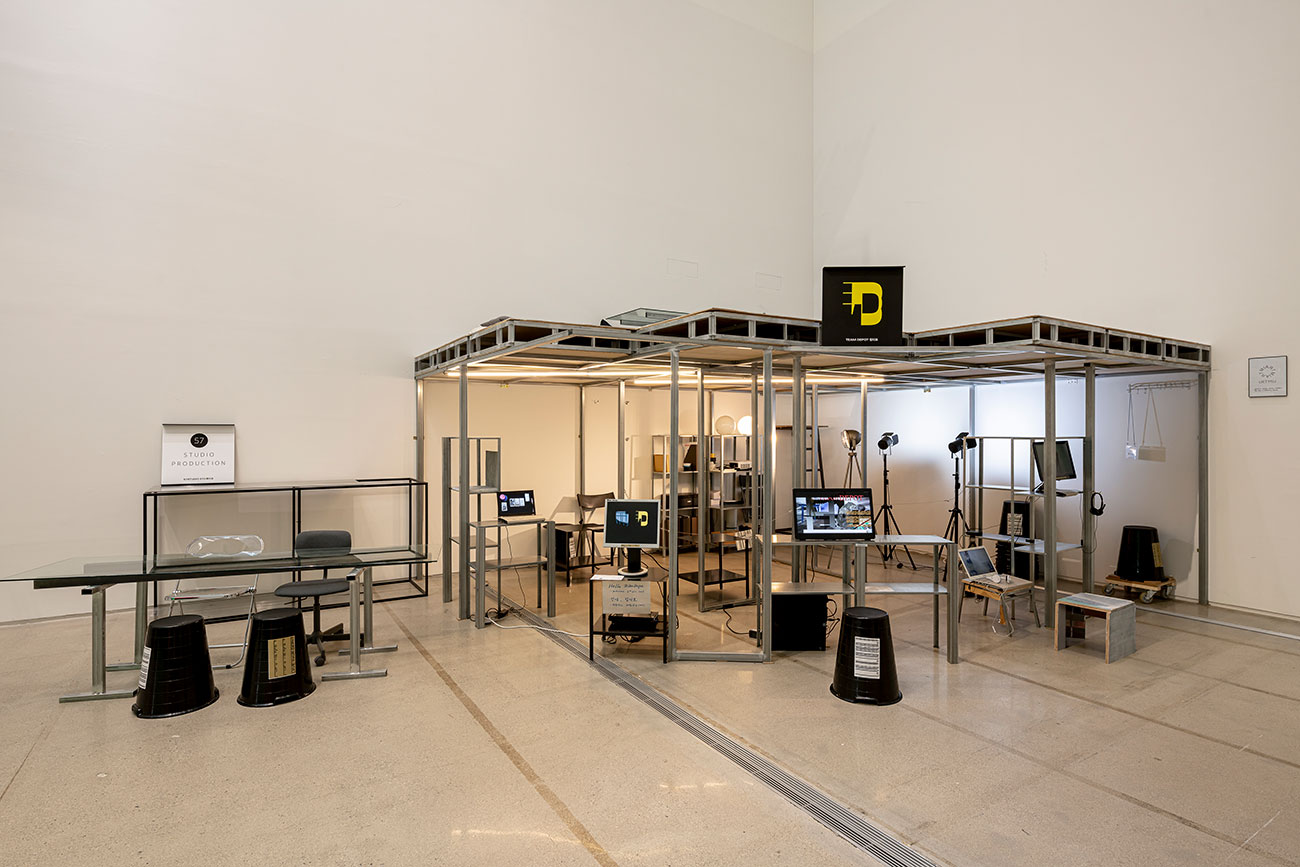
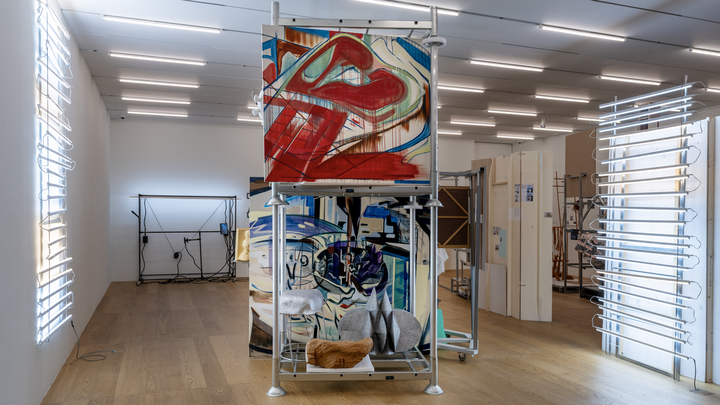
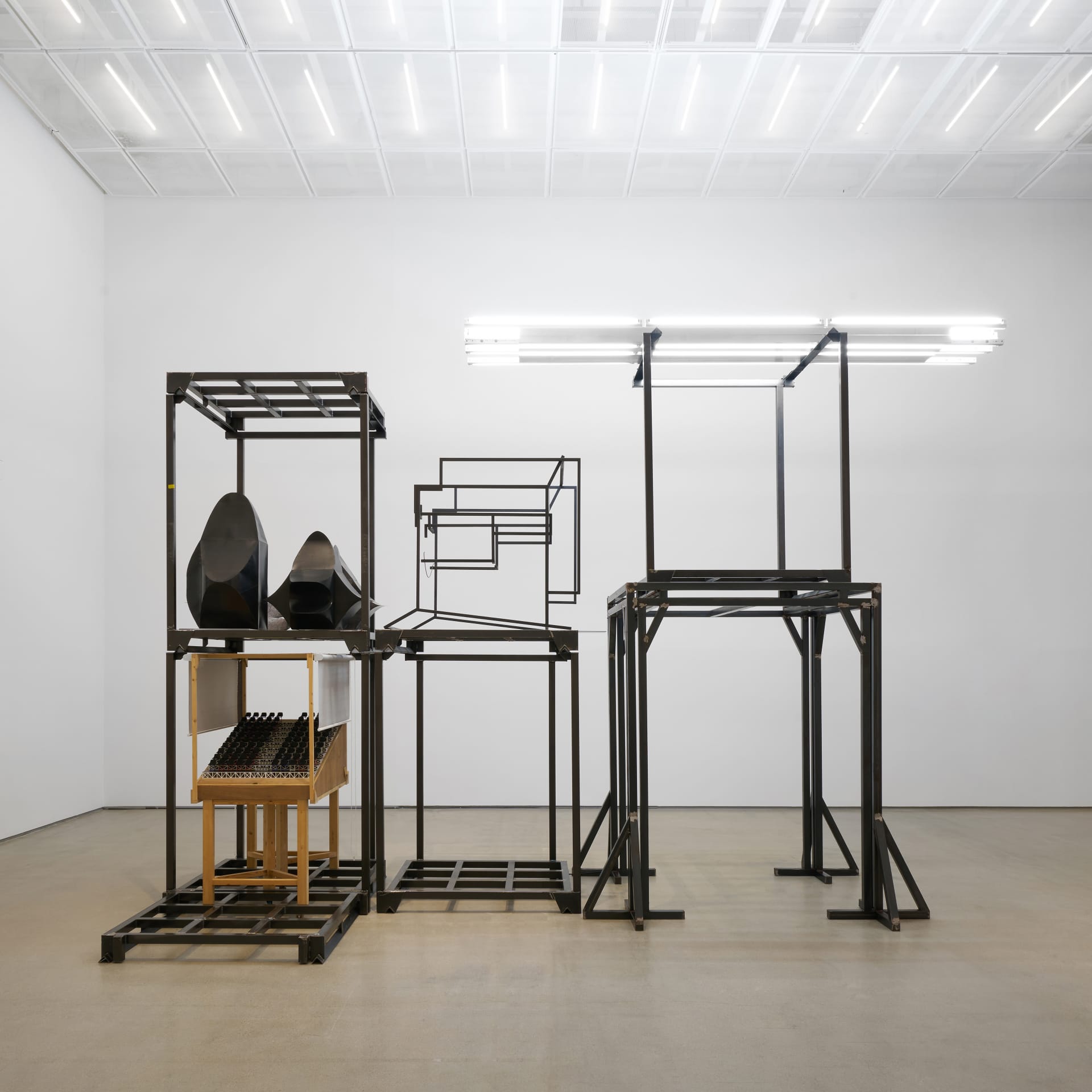
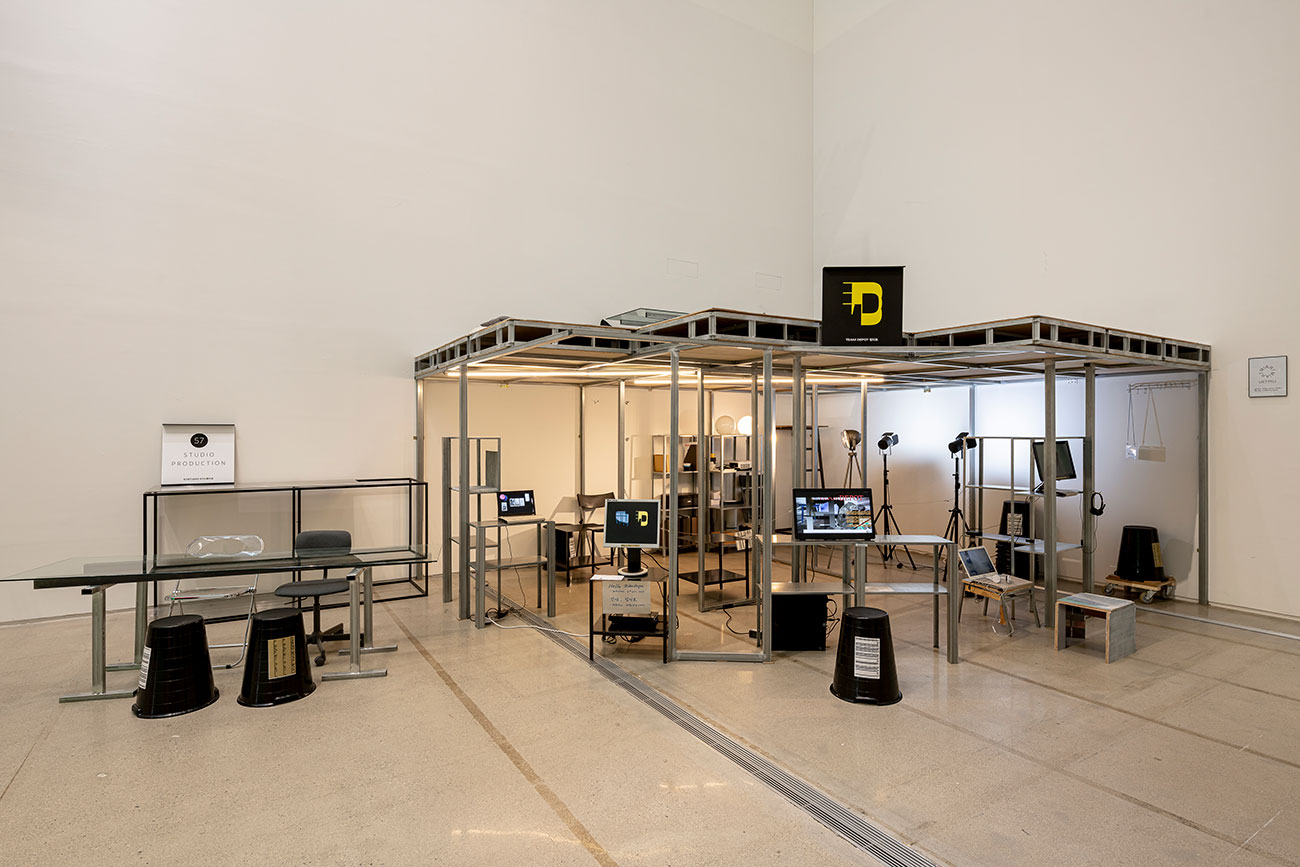
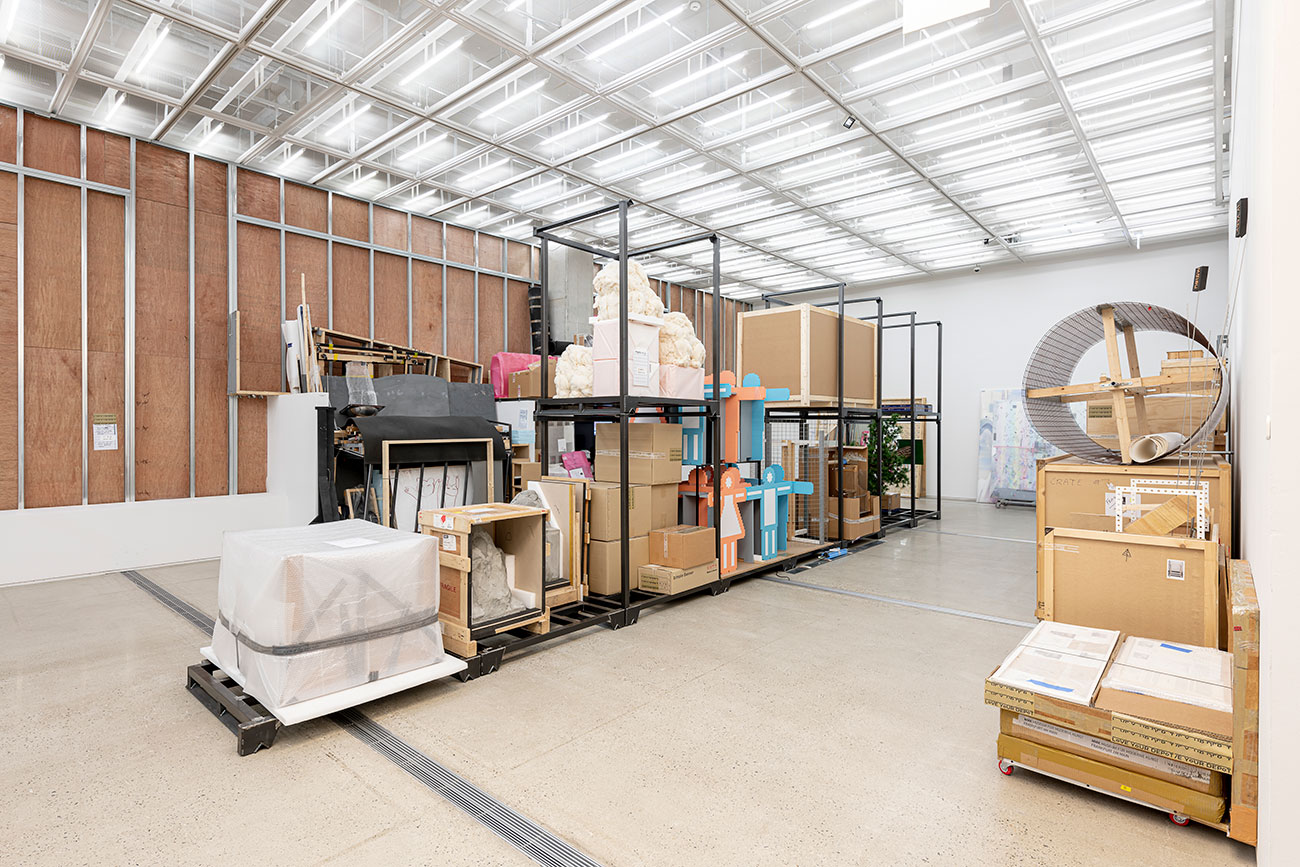
Since 2019, the inquiry has expanded to encompass the artwork’s entire life cycle. Five Story Tower (2019–2020) and Love Your Depot (2019), presented in 《Korea Artist Prize 2019》 at the National Museum of Modern and Contemporary Art, foreground storage, safekeeping, and circulation, shifting the decision of “retention/disposal” to a public judgment outside the market and proposing an institutional imagination that buys time for marginalized works. Here, storage is defined not as closure but as infrastructure for a “next time”—a practice of care.

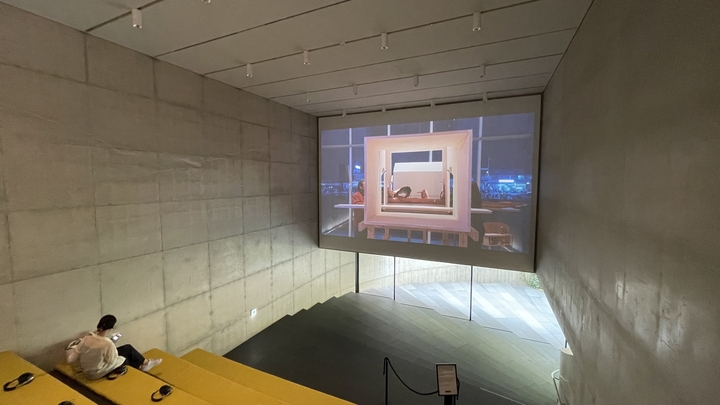
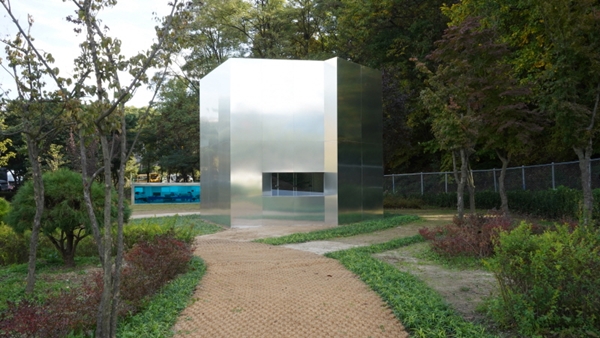
This conception enters the public domain as a real-world experiment. Love Your Depot_Gangnam Pavilion (2021– ) is a reinstallation of Love Your Depot—the final winner of the Korea Artist Prize 2019—as public art in Gungmaeul Park, Suseo-dong, Gangnam. By transplanting devices for storage, screening, and encounter into the everyday infrastructure of a park, it explores how citizens and artworks entrust time to each other.

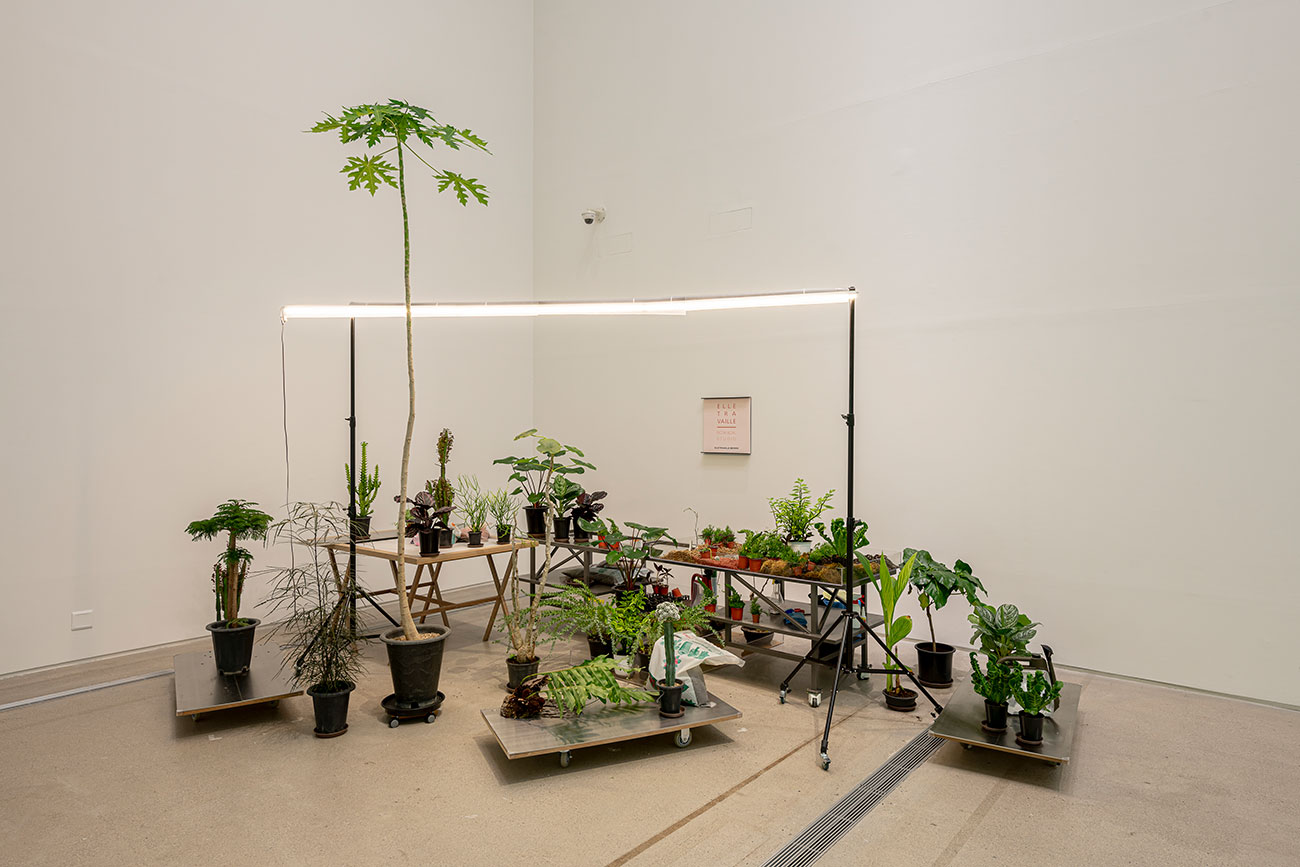
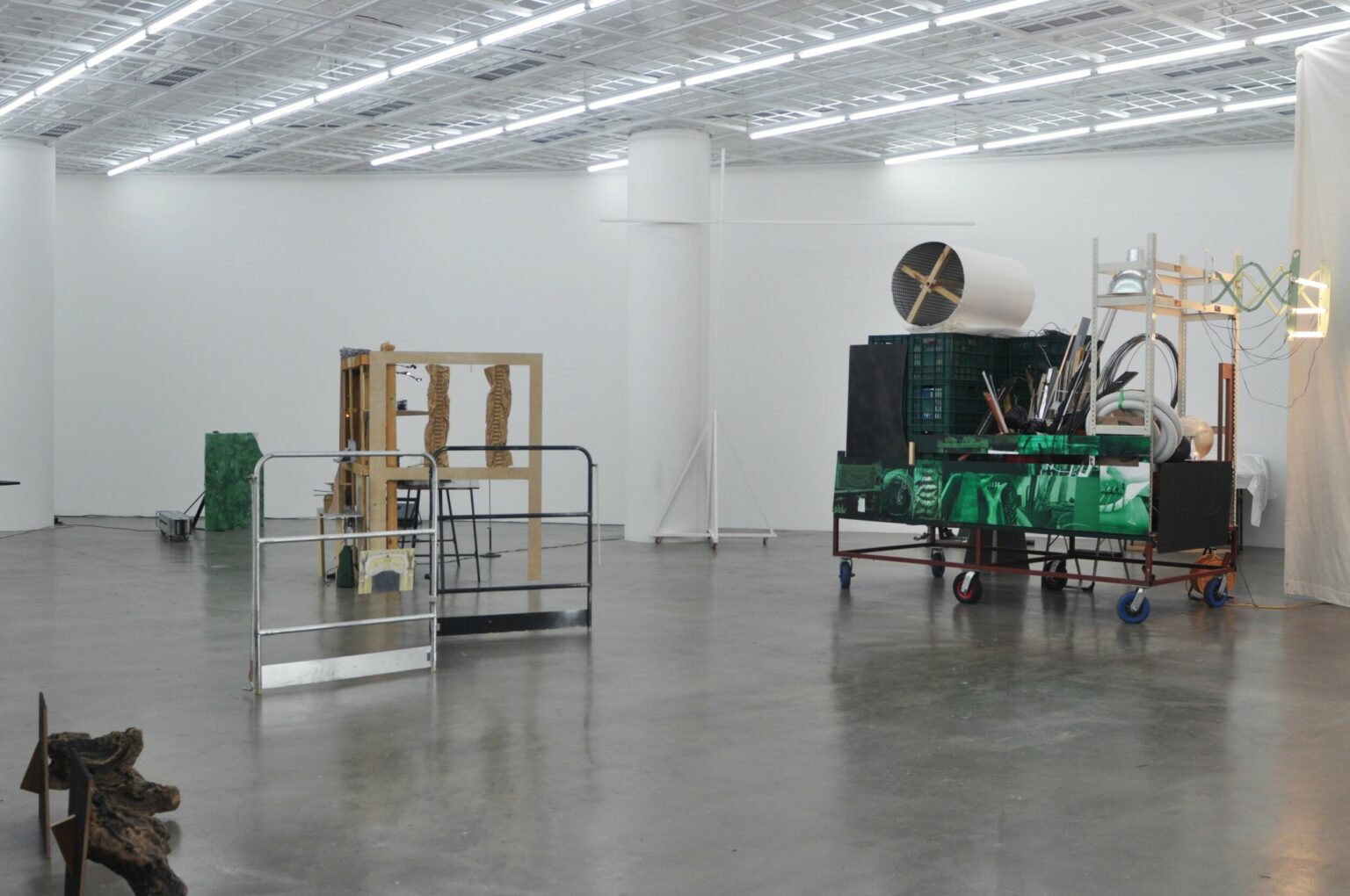
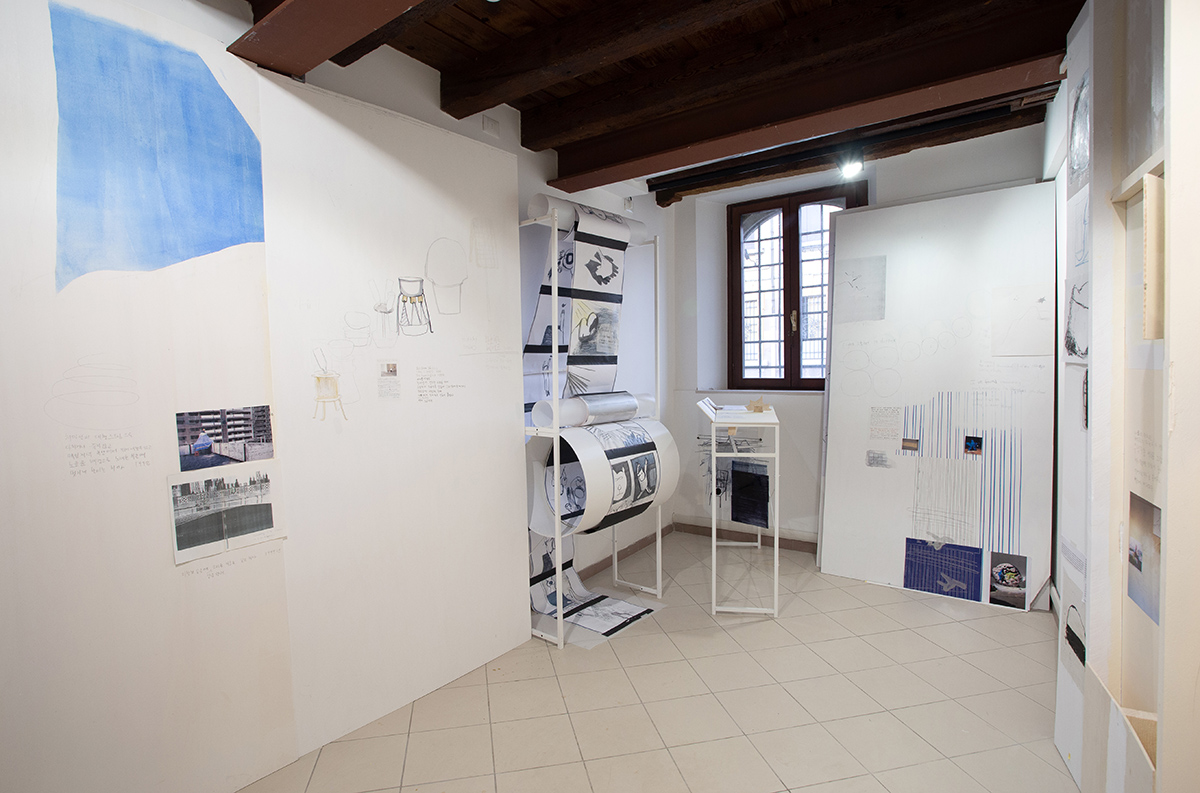
Most recently, the solo exhibition 《Of Hundred Carts and On》 (Barakat Contemporary, 2023) made visible the ethics of mobility, temporariness, and sharing that sustain unstable peripheries through the journey in which “five carts,” rooted in a personal narrative, proliferate into “a hundred carts.”

Style & Contents

Form evolves from research-based installation into an apparatus-like stage that translates the exhibition space’s physicality into the viewer’s body. In 《Jewyo Rhii: Night Studio》 (2013), Moving Floor places a mobile plate made of the same material as the gallery floor underfoot, making visitors tread an “unstable ground” and transposing private experiences (fear, anxiety) into public sensation. This aligns with the artist’s declaration of “physicality,” binding material, body, and movement into a single grammar.

Ten Years, please and Dawn Breaks adopt opposing elements—speech/silence, light/darkness, movement/stillness—as the vocabulary of scene construction, reconstructing remnants of past works (objects, images) into present-tense events. The parade format, in particular, carries objects through six chapters, creating a “moving theater” that grants order, time, and relation without text.

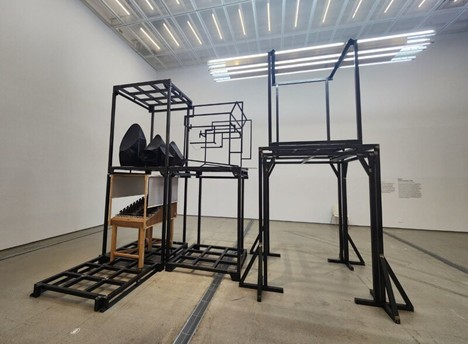
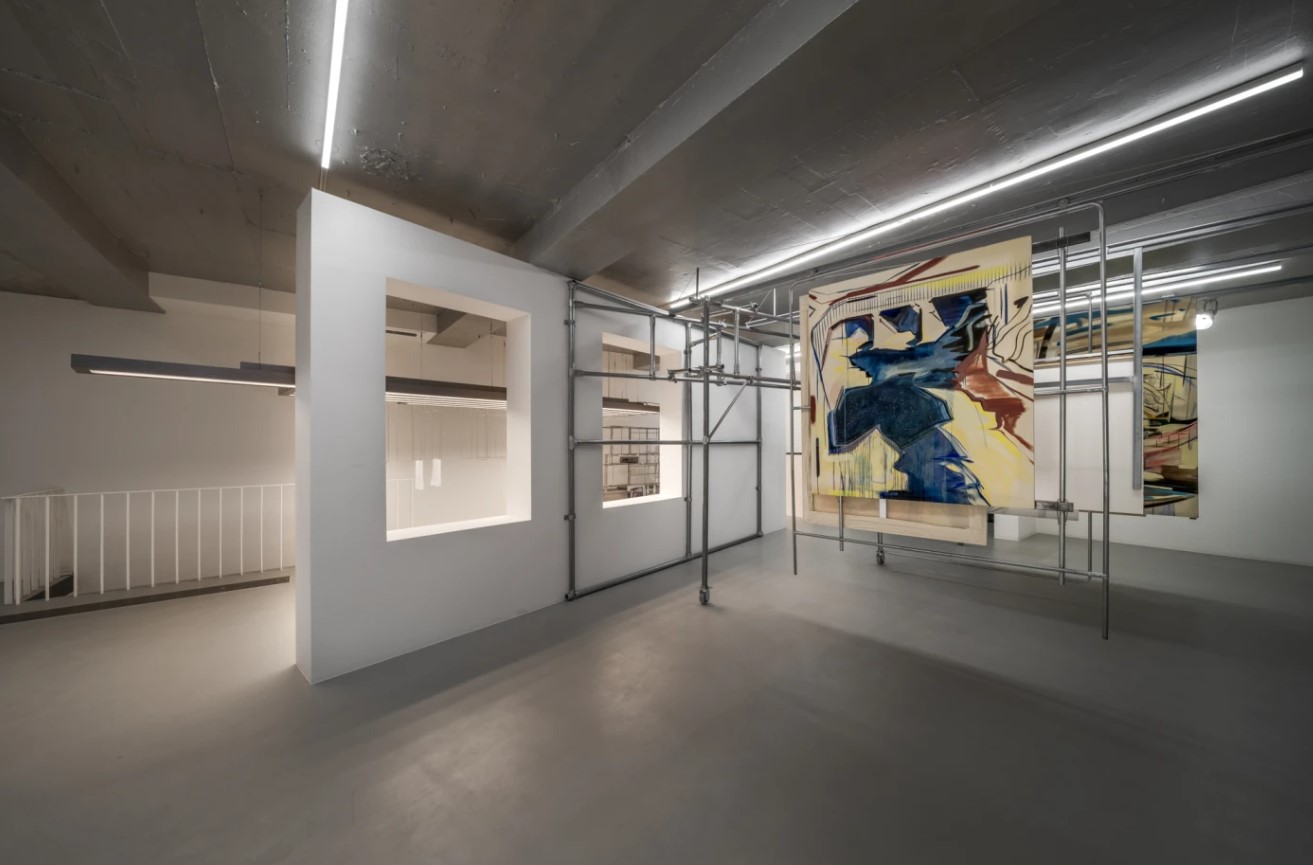
Five Story Tower exposes a “material science of storage”—powder-coated steel structure, galvanized square pipe, steel wire, blinds, fluorescent lamps—in a modular rack that can be variably installed in eight configurations depending on ceiling height and conditions. Love Your Depot integrates on-site participants’ recording and live broadcasting to operate “open storage” and “content circulation” as a single platform. Here, distribution functions not as the opposite of consumption but as the renewal of sharing, and storage functions not as the opposite of ownership but as the extension of time.

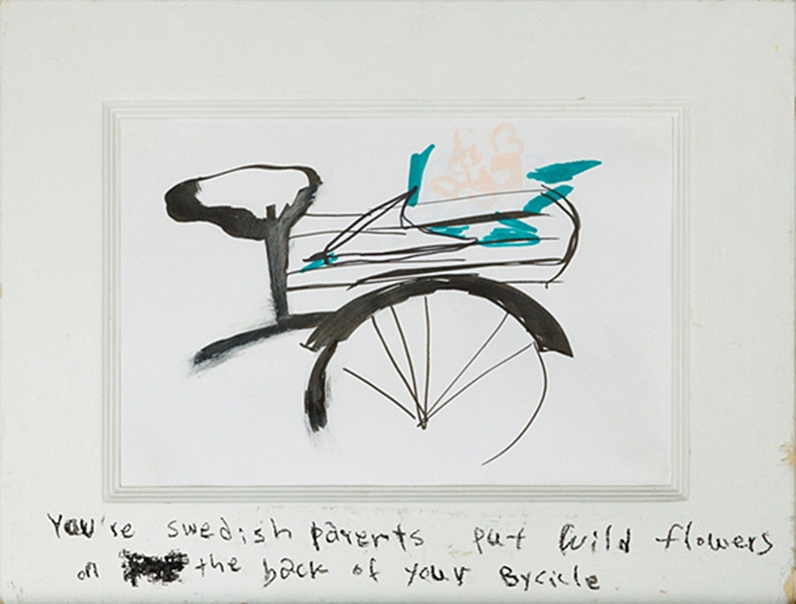
At Love Your Depot_Gangnam PavilionTurn Depot visualizes “continuous transformation” with an ultra-slow rotating floor on a three-minute cycle and a reflective aluminum skin, while Under Depot uses electronically switchable glass to shuttle between exhibition space and screen, redesigning the conditions of storage/screening for immaterial works (smoke, light, sound, video, performance). In 《Of Hundred Carts and On》, Painting Plate(2023) multiplies viewing angles for two-dimensional works via a left–right sliding frame, and recasts wooden elements in metal to materially reinforce the sustainability of “fragile structures.”

Topography & Continuity

The distinctiveness running across Rhii’s practice converges along three axes. First, an ethics of “open storage/distribution” that extends the time after exhibition (Five Story TowerLove Your DepotLove Your Depot_Gangnam Pavilion). Second, a device design that turns mobility/temporariness/sharing (carts, racks, pavilion) into a sculptural vocabulary, positioning the audience as witnesses and co-custodians. Third, a posture that renews the balance among artwork–public–institution by traversing institutional interiors (collection/preservation discourse) and the urban public sphere. This orientation was recognized early with the 3rd Yanghyun Art Prize (2010) and validated as a practice connecting inside and outside the institution with the Korea Artist Prize (2019).

The developmental arc is equally clear. Night Studio, which revealed survival techniques within a private space, expanded in the mid-2010s into Ten Years, please and Dawn Breaks, establishing a narrative and collaborative form that recontextualizes residues of past works into present-tense events. This process accumulated in international exhibition contexts as well—at the 3rd Paris Triennale (2012) and the 11th Gwangju Biennale (2016), where the language of mobility, temporariness, and collaboration was tested in the public sphere. Five Story Tower and Love Your Depot then brought storage, safekeeping, and circulation to the fore as core content, expanding the focus to “designing the artwork’s life cycle.”

Today, Rhii stands as a finely articulated case of a rare “infrastructural aesthetics” in contemporary Korean art. 《Of Hundred Carts and On》 visualized an expansion from personal narrative to care for peripheries outside the institution, while Love Your Depot_Gangnam Pavilion tested open-storage protocols within the everyday infrastructure of a park. Simultaneously, within museum discourse, attempts continue to translate the ethics of “open storage” into institutional language—as in the redeployment of Five Story Tower in 《Collection Variable》 (MMCA Seoul, 2024).

In short, Rhii has sought ways to turn the end of exhibition into the beginning of an artwork’s life, constructing infrastructures of storage, distribution, and movement as a sculptural language for solidarity with indeterminate beings, and presenting a rare, practice-based model of “institutional renewal” within contemporary Korean art.

Works of Art

Nomadic Art

Exhibitions