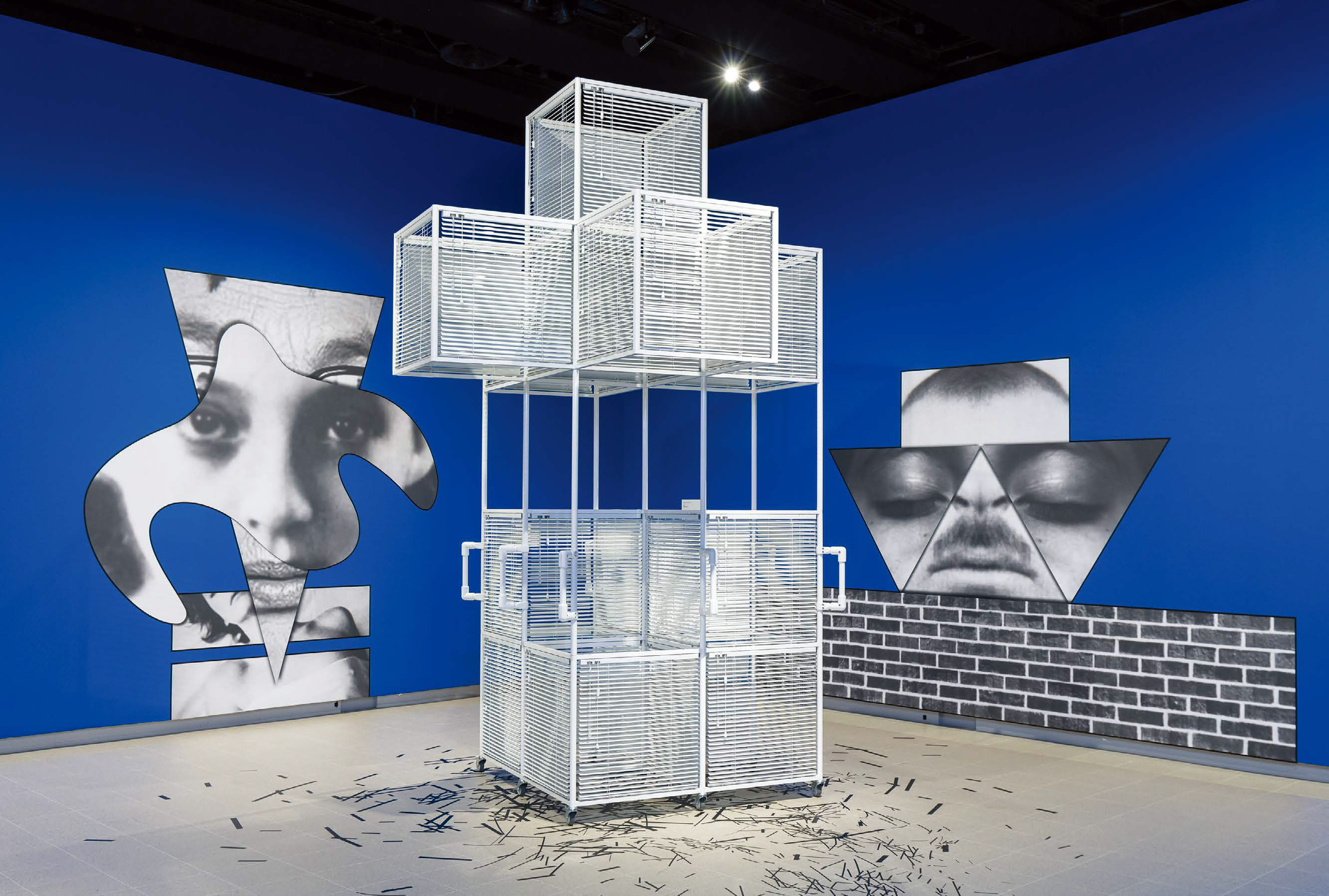


Sol LeWitt Upside Down – Cube Structure Based on Five Modules, Expanded 186 Times #95-D - K-ARTIST

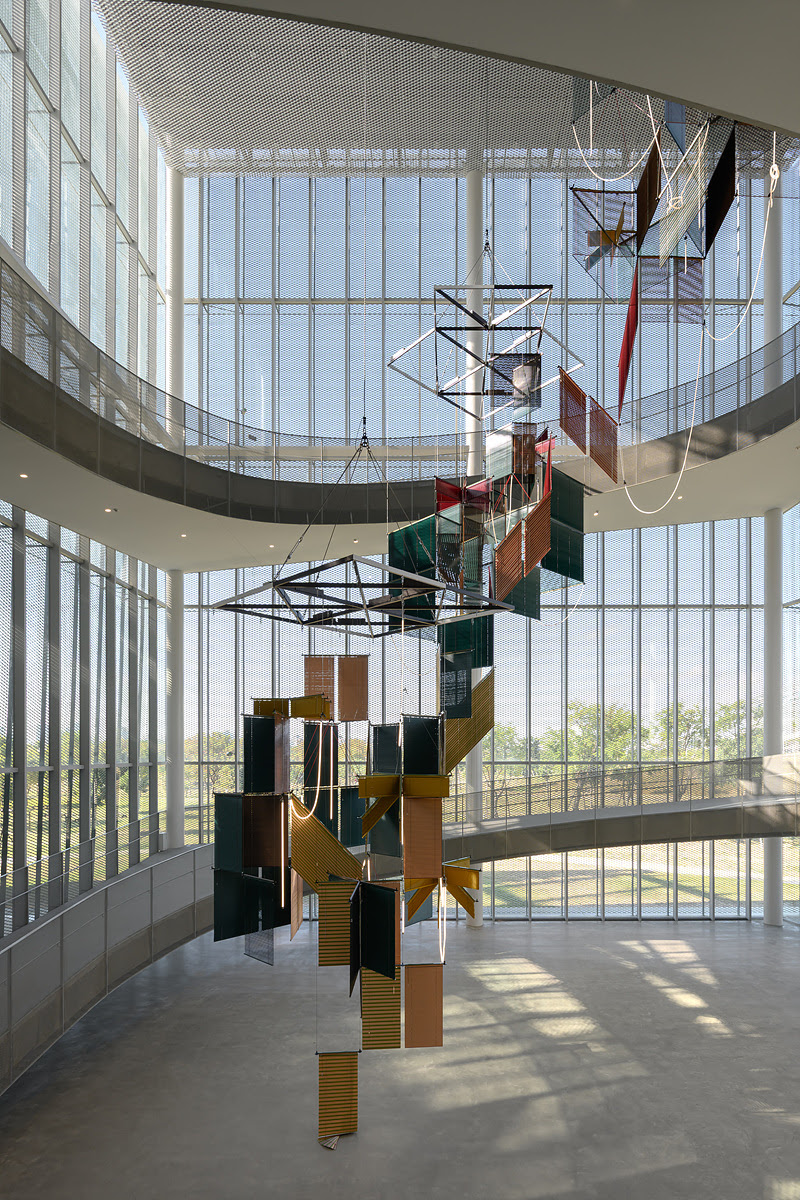
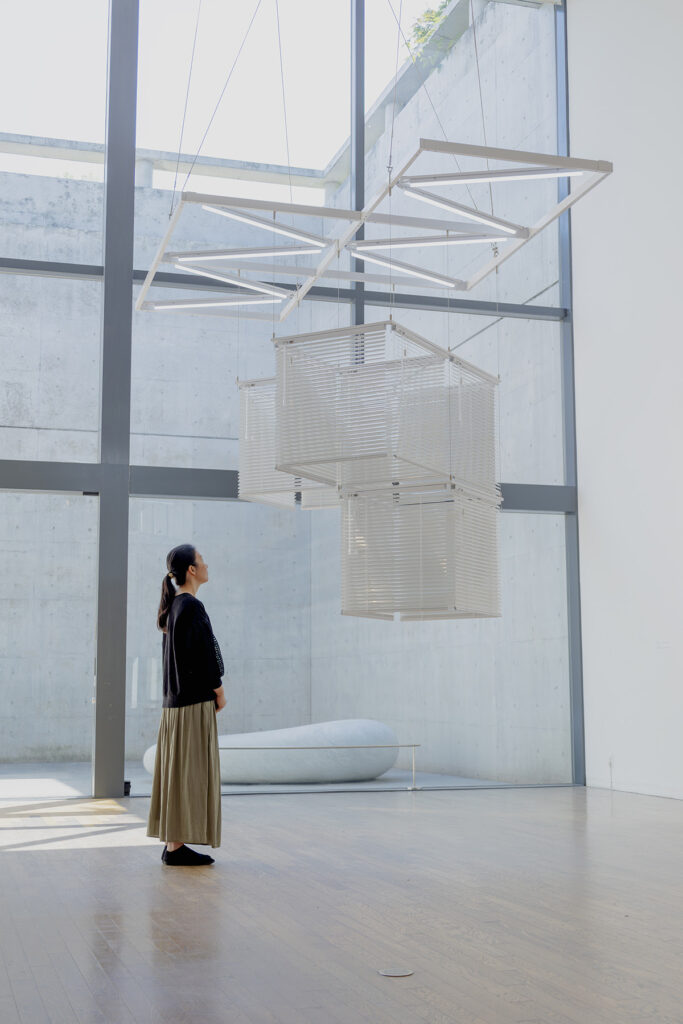
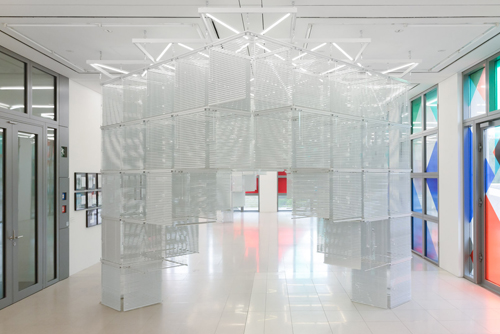
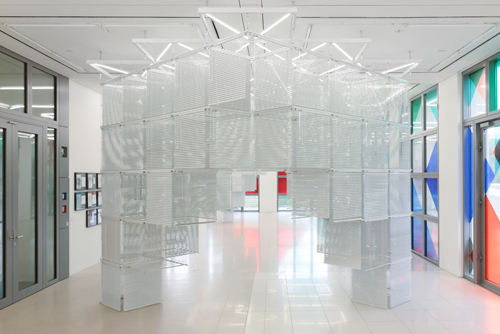
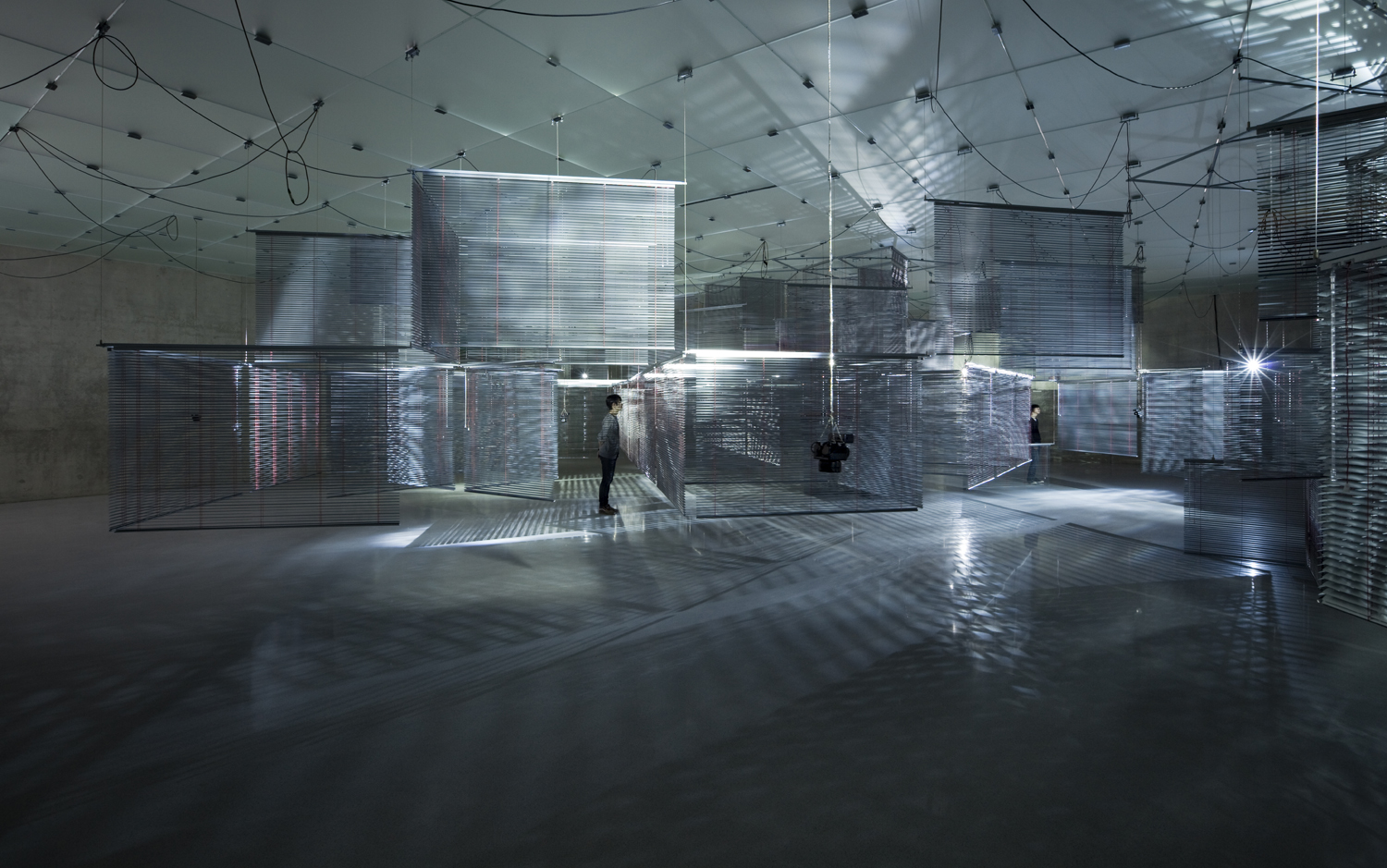
Sol LeWitt Upside Down – Cube Structure Based on Five Modules, Expanded 186 Times #95-D

2016
Aluminum Venetian blinds, aluminum hanging structure, powder coating, steel wire, LED tubes, cable
379 x 497.5 x 497.5 cm
About The Work

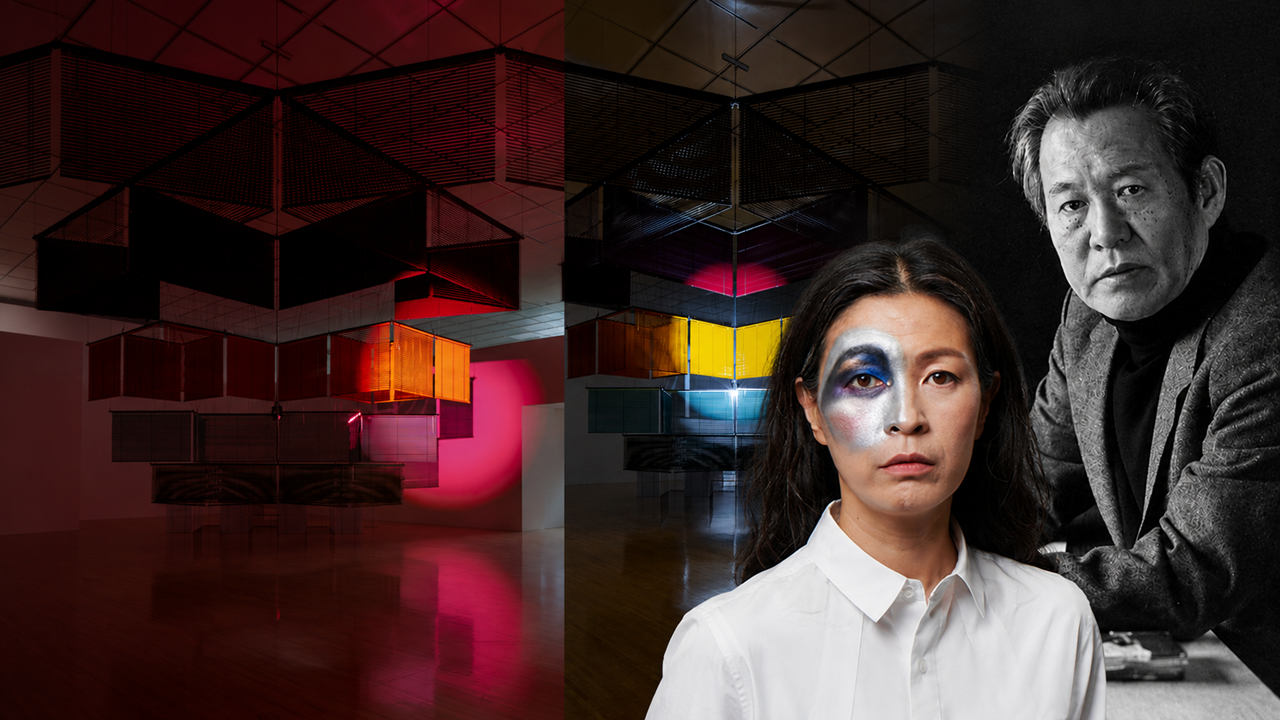
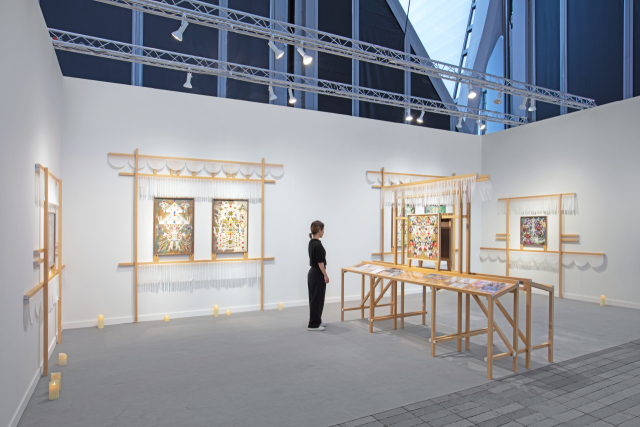
Haegue Yang’s practice begins at the intersection of everyday objects and mythological narratives, as well as personal experience and collective memory. Drawing on a wide range of materials—from domestic items and industrial objects to traditional craft elements—she dismantles their functional meanings and reveals the symbolic and political layers embedded within them. This approach extends beyond the surface of objects to investigate the networks in which they operate, focusing on the fluid reconfiguration of boundaries between objects and subjects, reality and imagination.
 
Central to Yang’s work is a sustained engagement with narrative. Beginning with the appropriation of literary structures, particularly in dialogue with the writings of Marguerite Duras, her practice has expanded toward archetypal narratives found across diverse cultural contexts, including shamanistic traditions, folktales, and diasporic experiences. These narratives are not confined to specific regions or histories but instead point to recurring universal structures that emerge across different contexts. For Yang, narrative functions not merely as a vehicle of storytelling but as a medium that connects disparate beings and worlds.
 
In this regard, Yang’s work embodies an agnostic disposition. Rather than presenting fixed meanings or definitive conclusions, she maintains an open field of interpretation, inviting viewers to engage with her work through their own experiences and perceptions. Mythological motifs, anonymous traces, and everyday objects are presented not as complete entities but as elements in a continuous process of interpretation and reconfiguration. This condition becomes particularly evident through her exploration of intermediate beings—such as the Imoogi—figures that traverse the boundaries between the divine and the human, the past and the present, the center and the periphery.
 
Ultimately, the “subject” of Yang’s work is a relational structure generated through the interaction of multiple layers. Rather than directly representing universal archetypes, she foregrounds the movement toward them. Her work thus operates not as a finished product but as an ongoing process—a performative act of connecting and understanding the world. In this sense, Yang’s practice establishes a distinctive identity within contemporary art through an “aesthetics of connection,” where the materiality of the everyday converges with mythological thought.

Solo Exhibitions (Brief)

Haegue Yang began her international career with her solo exhibition 《Lacquer Paintings 2000》 at Galerie Barbara Wien in Berlin. In 2004, she introduced 《Storage Piece》 at Gallery Lawrence O’Hana in London, a work that critically reflected on the condition of an artist in transit and the systems of exhibition and value in contemporary art. The piece, composed of older works packed and stacked on shipping pallets, became a seminal installation that was later exhibited in several cities across Europe and South America. In 2006, she transformed her late grandmother’s vacant house in Incheon into the exhibition 《Samlip 30beonji》, creating a highly personal and sensorial spatial installation that resonated deeply with Korean audiences.

In 2009, Yang was selected as the representative artist for the Korean Pavilion at the 53rd Venice Biennale, presenting 《Condensation》, which marked a significant turning point in her international recognition. That same year, she held a major solo exhibition, 《Integrity of the Insider》, at the Walker Art Center in Minneapolis, further cementing her status in the U.S. art scene. In 2010, she presented 《Voice Over Three》 at Art Sonje Center in Seoul and 《Voice and Wind》 at the New Museum in New York, both of which explored the multisensory and spatial dimensions of installation.

In 2015, her solo shows 《Shooting the Elephant, Thinking the Elephant》 at Leeum, Samsung Museum of Art in Seoul, and 《Come Shower or Shine, It Is Equally Blissful》 at Ullens Center for Contemporary Art in Beijing showcased her capacity to weave conceptual depth with cultural specificity. The following year, she held 《Lingering Nous》 at Centre Pompidou in Paris, an exhibition that reinforced her critical acclaim in Europe. Throughout 2016, she continued the 《Quasi-Pagan》 series across major institutions including Serralves Museum in Porto, Hamburger Kunsthalle in Hamburg, Galeries Lafayette in Paris, and Greene Naftali in New York.

From 2019 to 2021, Yang’s landmark solo exhibition 《Handles》 at the Museum of Modern Art (MoMA) in New York presented an immersive and expansive exploration of her signature sculptural and sound-based works. In 2023, she mounted solo exhibitions at the National Gallery of Australia in Canberra, S.M.A.K. in Ghent, and Pinacoteca de São Paulo. In 2024, she continues this trajectory with a solo show focusing on her two-dimensional works at the Art Club of Chicago, followed by a large-scale survey exhibition at Hayward Gallery in London featuring over 120 works.

Group Exhibitions (Brief)

Haegue Yang began actively participating in international group exhibitions in the early 2000s, including 《The Living Archive》 at the 2002 Gwangju Biennale and Air and Water in Frankfurt. In 2005, her participation in 《Lichtkunst aus Kunstlicht》 at ZKM in Karlsruhe marked her growing recognition for experimental installation using artificial light. By 2007, she was participating in significant exhibitions such as 《Brave New Worlds》 at Walker Art Center and Made in Germany in Hanover, expanding her presence across the U.S. and Europe.

In 2008 and 2009, Yang joined large-scale group exhibitions including the 3rd Guangzhou Triennial, the Carnegie International, and the Venice Biennale’s main exhibition 《Making Worlds》. Her inclusion in 《Your Bright Future: 12 Contemporary Artists from Korea》 (2009–10), which toured major U.S. museums like LACMA and MFAH, further amplified her global profile.

Throughout the 2010s, she was consistently invited to major international biennales and triennales, including 《Maninbo》 at the 8th Gwangju Biennale (2010), dOCUMENTA 13 in Kassel (2012), the 12th Sharjah Biennial (2015), the Taipei Biennial (2014), and the Lyon Biennale (2015). Notably, her works were also featured in thematic exhibitions such as 《Storylines at the Guggenheim Museum (2015), 《Scenes for a New Heritage》 at MoMA (2015), and After Babel at Moderna Museet in Stockholm.

In recent years, Yang has participated in exhibitions like 《Lesson Ø》 at the National Museum of Modern and Contemporary Art in Korea (2017), 《Looks Good on Paper》 at STPI in Singapore (2016), 《Mobile M+: Live Art》 in Hong Kong (2015), and 《New Décor》 at Hayward Gallery (2010), affirming her presence in Asia and reinforcing her position as a major voice in global contemporary art.

Awards (Selected)

Haegue Yang received early international recognition in 2007 when she was awarded the Baloise Art Prize following her participation in Art Basel’s Statements sector. This milestone led to a solo presentation at the Kunsthalle Hamburg the same year. In 2018, she became the first Asian female artist to receive the prestigious Wolfgang Hahn Prize from the Museum Ludwig in Cologne, a historic acknowledgment of her contributions to contemporary art in Europe. In 2022, she was awarded the Benesse Prize, becoming the first Korean artist to receive the honor, which further underscored her international significance.

Residencies (Selected)

Yang’s practice has been deeply informed by her involvement in various artist residencies around the world. In 2003, during a residency in London, she created Storage Piece, a work that encapsulated her transient status and logistical constraints as a nomadic artist. Since then, she has participated in programs in Germany, Switzerland, France, the Netherlands, Argentina, China, and the United States. Notably, her time at Akademie Schloss Solitude in Stuttgart and Siemens Art Program in Munich provided critical opportunities to reflect on the relationship between institutional systems and artistic autonomy. Her work is shaped not by rootedness but by continuous engagement with different contexts, making her a quintessential "nomadic" artist in both thought and practice.

Collections (Selected)

Haegue Yang’s works are held in the collections of leading museums worldwide. In the United States, her work is part of the Museum of Modern Art (MoMA) and the Guggenheim Museum in New York, the Walker Art Center in Minneapolis, the Carnegie Museum of Art in Pittsburgh, the Los Angeles County Museum of Art (LACMA), and the Museum of Fine Arts in Houston. In Europe, her works are housed in the Museum Ludwig in Cologne, Hamburger Kunsthalle, Kunstmuseum Stuttgart, Galerie für Zeitgenössische Kunst in Leipzig, the Centre Pompidou in Paris, Serralves Museum in Porto, and the Muzeum Sztuki in Łódź, among others.

In Asia, her works are included in the National Museum of Modern and Contemporary Art (Korea), Seoul Museum of Art (SeMA), Leeum Samsung Museum of Art, and the AmorePacific Museum of Art in Korea. Her work is also part of the M+ Museum collection in Hong Kong and Guggenheim Abu Dhabi. In addition, private and nonprofit collections such as Sammlung Haubrok and Neuer Berliner Kunstverein (Berlin) have collected her works. These holdings reflect the wide resonance and institutional recognition of Yang’s practice across geographies and cultures.
Works of Art

Agnostic Attitude

Originality & Identity

Haegue Yang’s practice begins at the intersection of everyday objects and mythological narratives, as well as personal experience and collective memory. Drawing on a wide range of materials—from domestic items and industrial objects to traditional craft elements—she dismantles their functional meanings and reveals the symbolic and political layers embedded within them. This approach extends beyond the surface of objects to investigate the networks in which they operate, focusing on the fluid reconfiguration of boundaries between objects and subjects, reality and imagination.
 
Central to Yang’s work is a sustained engagement with narrative. Beginning with the appropriation of literary structures, particularly in dialogue with the writings of Marguerite Duras, her practice has expanded toward archetypal narratives found across diverse cultural contexts, including shamanistic traditions, folktales, and diasporic experiences. These narratives are not confined to specific regions or histories but instead point to recurring universal structures that emerge across different contexts. For Yang, narrative functions not merely as a vehicle of storytelling but as a medium that connects disparate beings and worlds.
 
In this regard, Yang’s work embodies an agnostic disposition. Rather than presenting fixed meanings or definitive conclusions, she maintains an open field of interpretation, inviting viewers to engage with her work through their own experiences and perceptions. Mythological motifs, anonymous traces, and everyday objects are presented not as complete entities but as elements in a continuous process of interpretation and reconfiguration. This condition becomes particularly evident through her exploration of intermediate beings—such as the Imoogi—figures that traverse the boundaries between the divine and the human, the past and the present, the center and the periphery.
 
Ultimately, the “subject” of Yang’s work is a relational structure generated through the interaction of multiple layers. Rather than directly representing universal archetypes, she foregrounds the movement toward them. Her work thus operates not as a finished product but as an ongoing process—a performative act of connecting and understanding the world. In this sense, Yang’s practice establishes a distinctive identity within contemporary art through an “aesthetics of connection,” where the materiality of the everyday converges with mythological thought.

Style & Contents

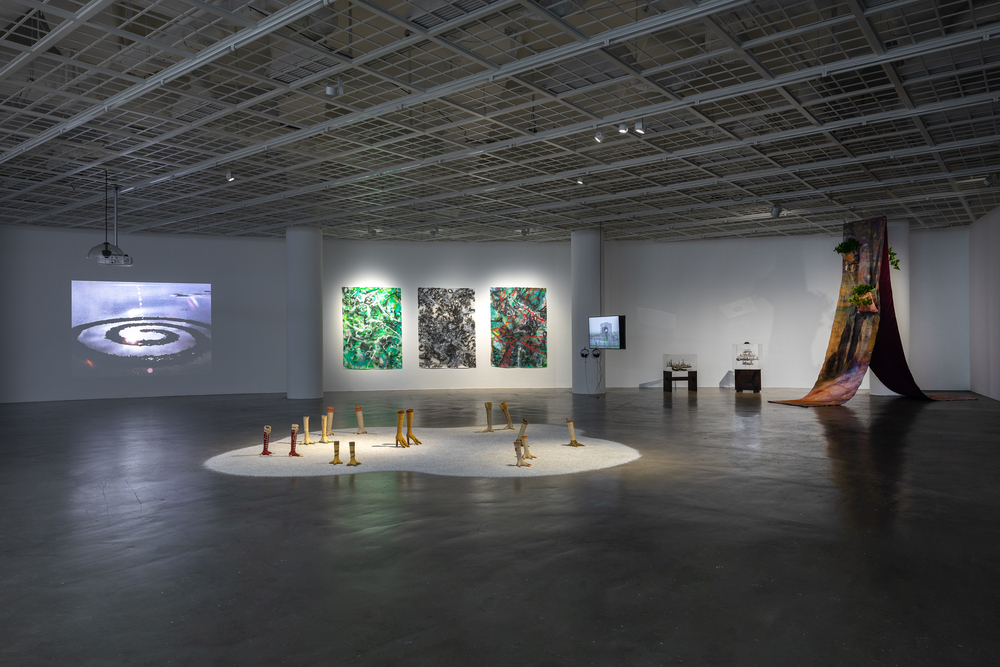
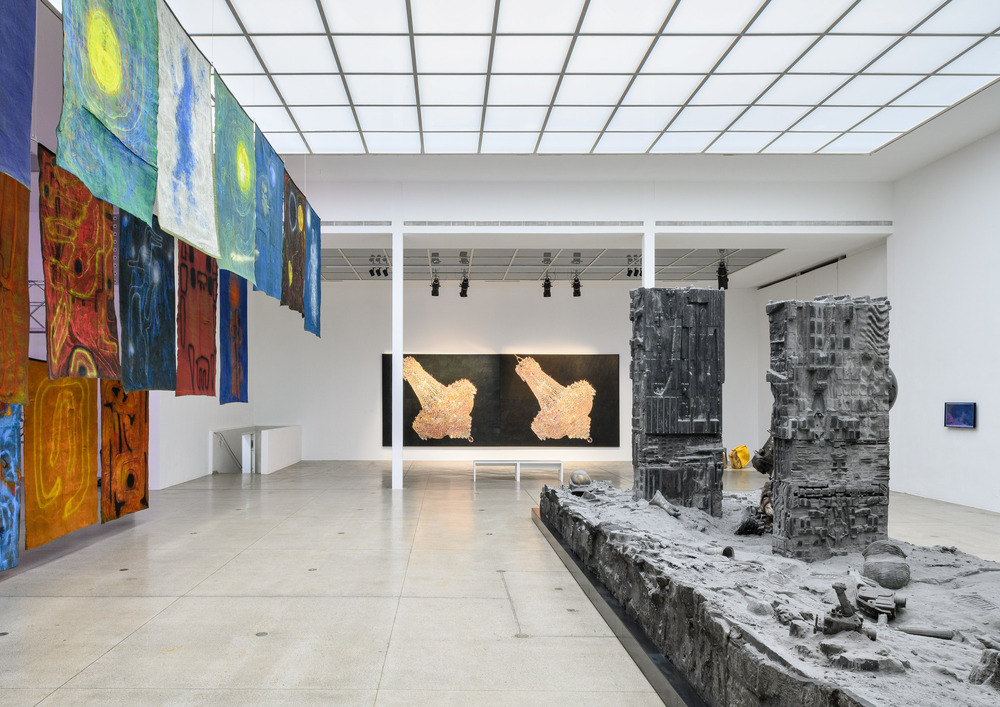
Haegue Yang’s practice is characterized by a multilayered structure that resists confinement to a single medium. Sculpture, installation, performance, text, video, and drawing intersect and interact, continuously combining and separating within individual works. This fluidity of media is closely tied to the themes she engages, forming an “open structure” that transforms according to context and relationships rather than adhering to a fixed form. Her works do not exist as self-contained objects but operate as processes that evolve through the viewer’s movement, the passage of time, and the intervention of performance.
 
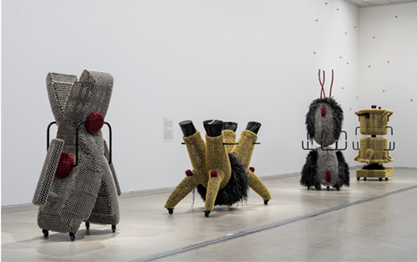
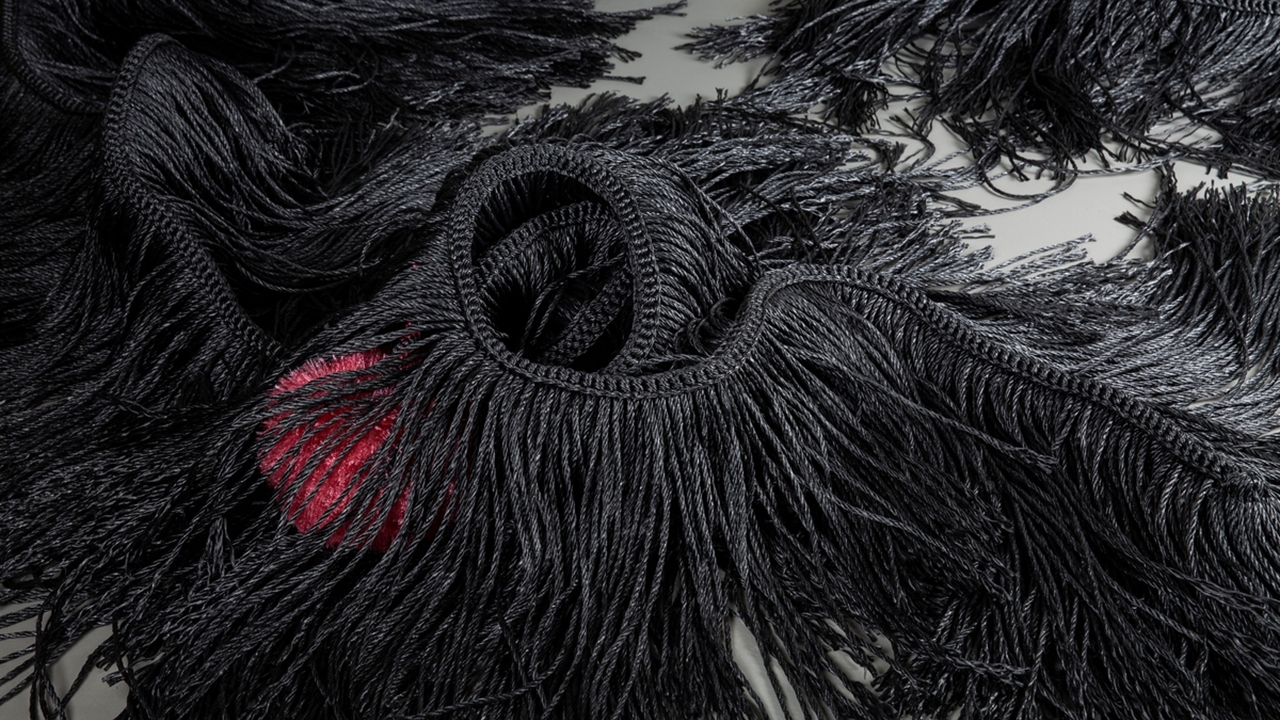
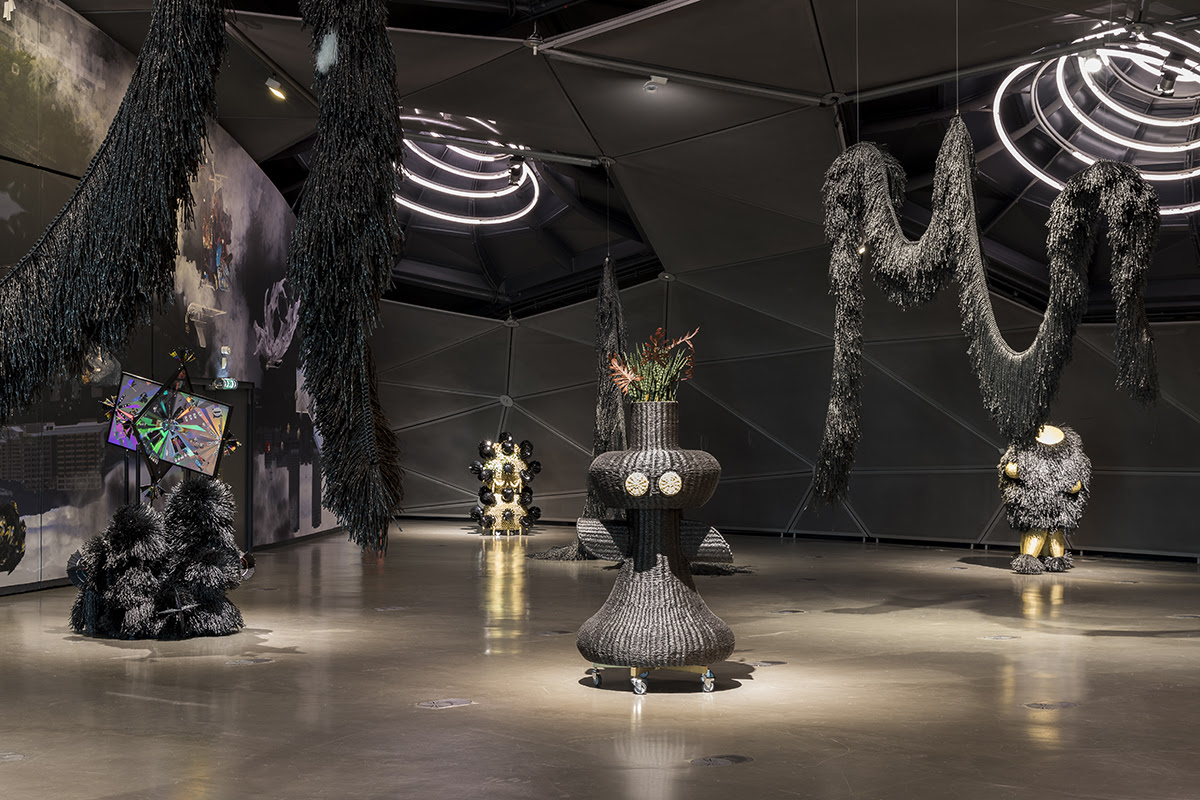
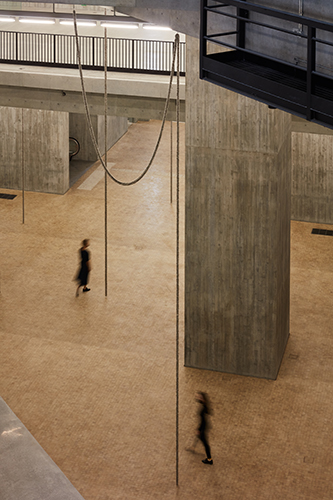
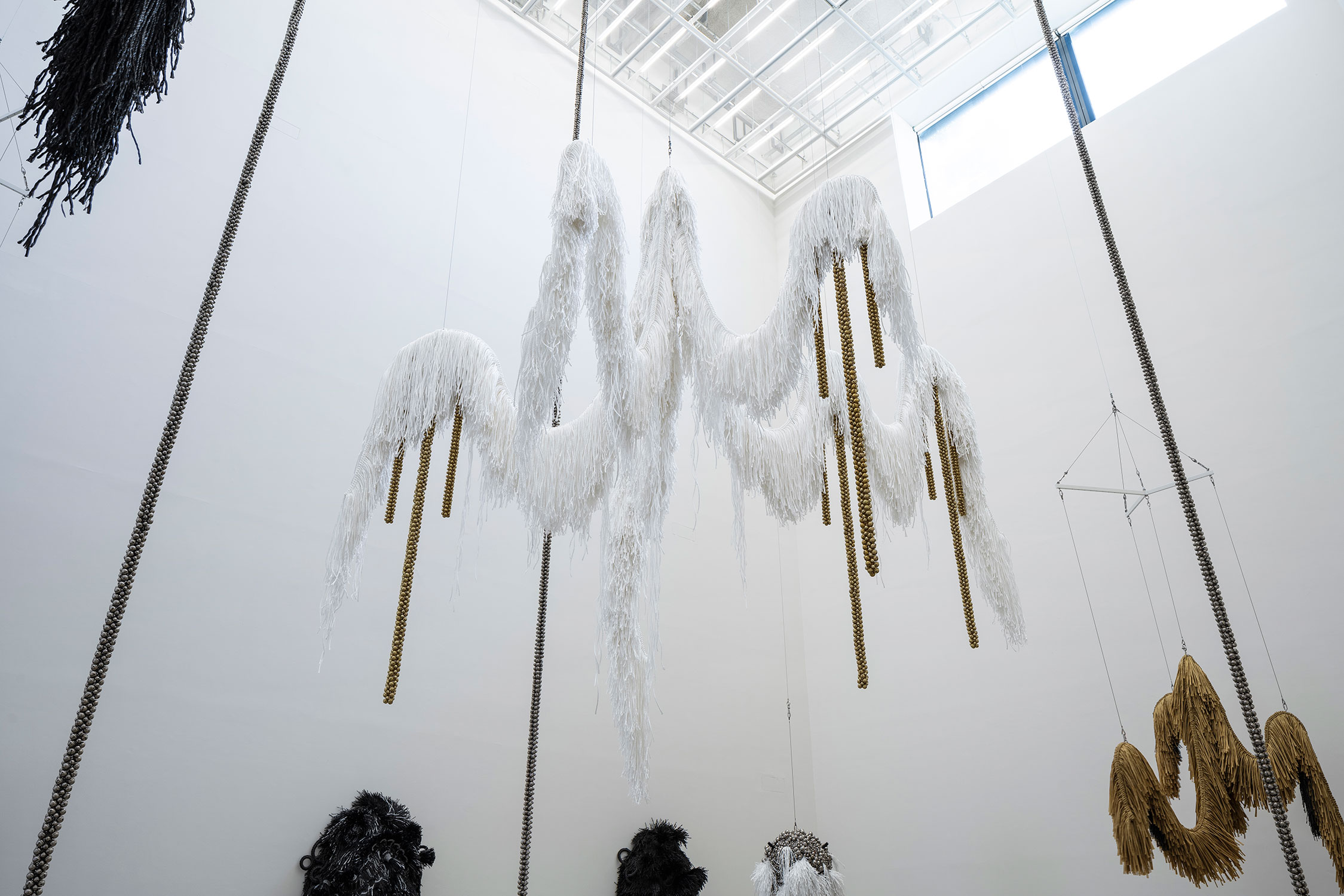
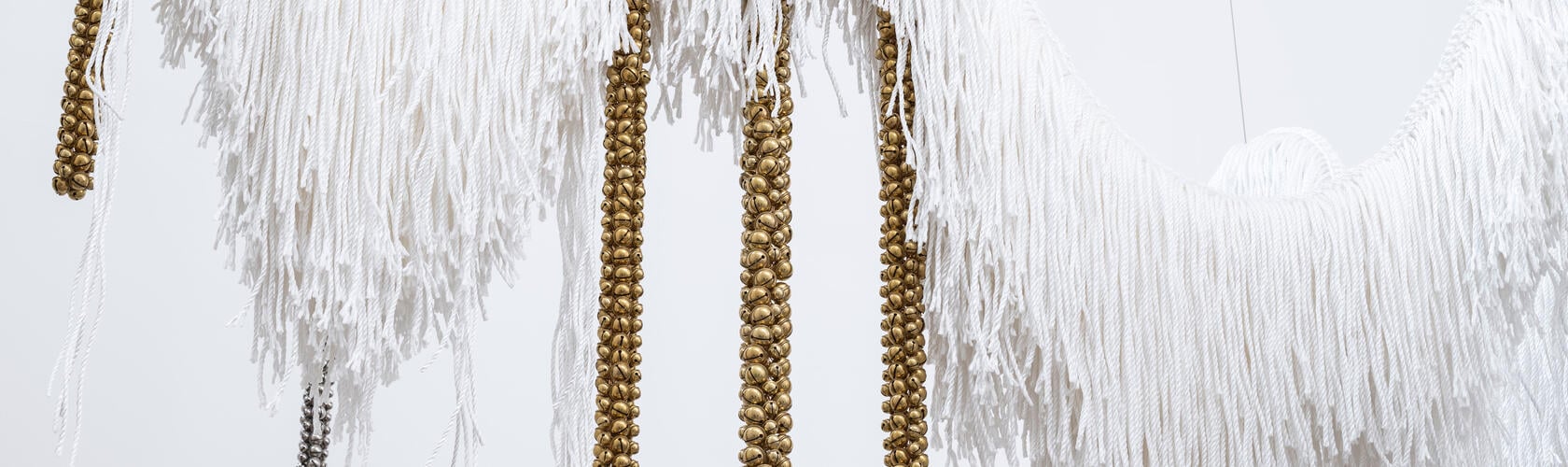
The selection and composition of materials constitute another defining formal aspect. Everyday and industrial objects—such as venetian blinds, clothes racks, bells, straw, metal frames, and household appliances—are reconfigured into a new sculptural language while retaining traces of their original functions. In this process, objects become not merely materials but devices that generate sensory experiences. For instance, sculptures equipped with bells produce sound in response to the movement of viewers or performers, actively engaging the auditory dimension beyond the visual. This multisensory approach transforms the work from a static object into a living, dynamic structure.
 
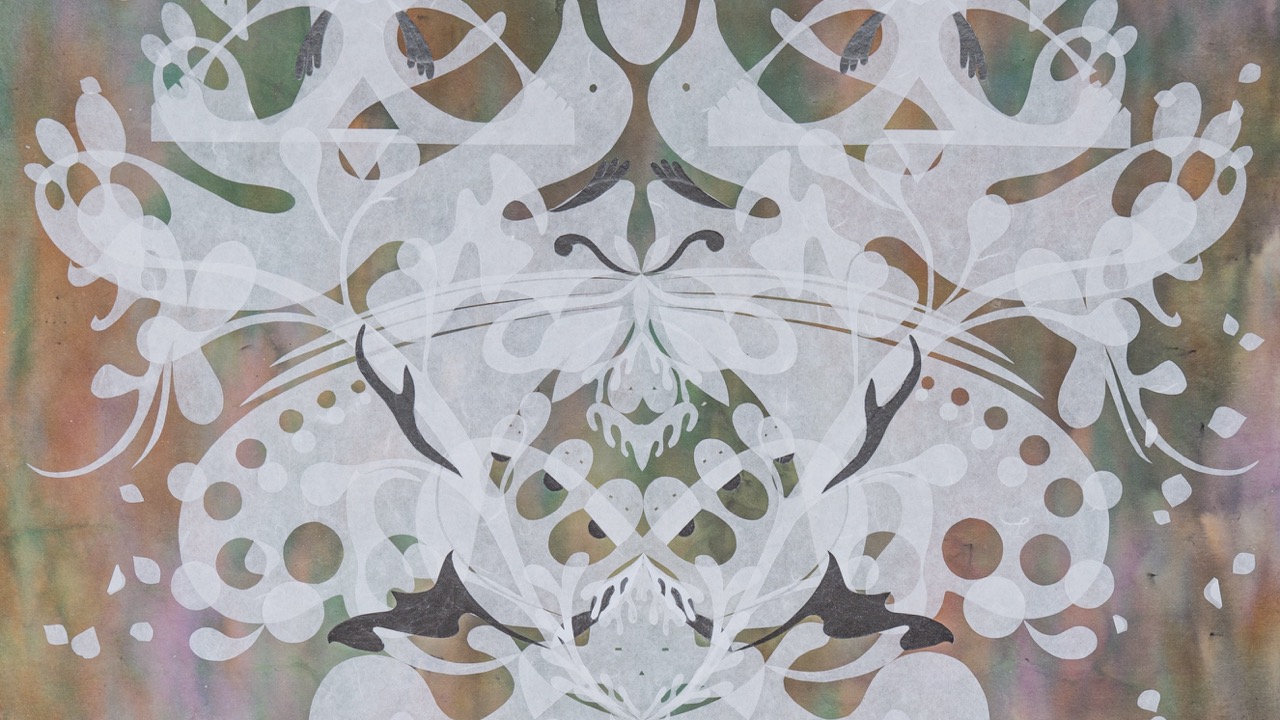
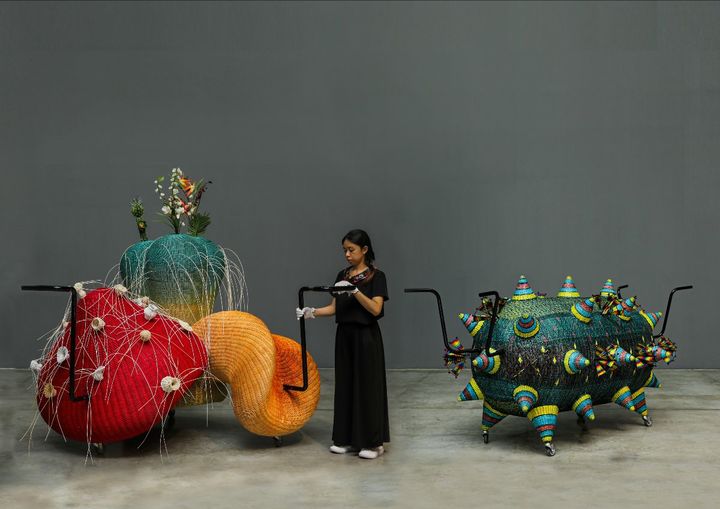
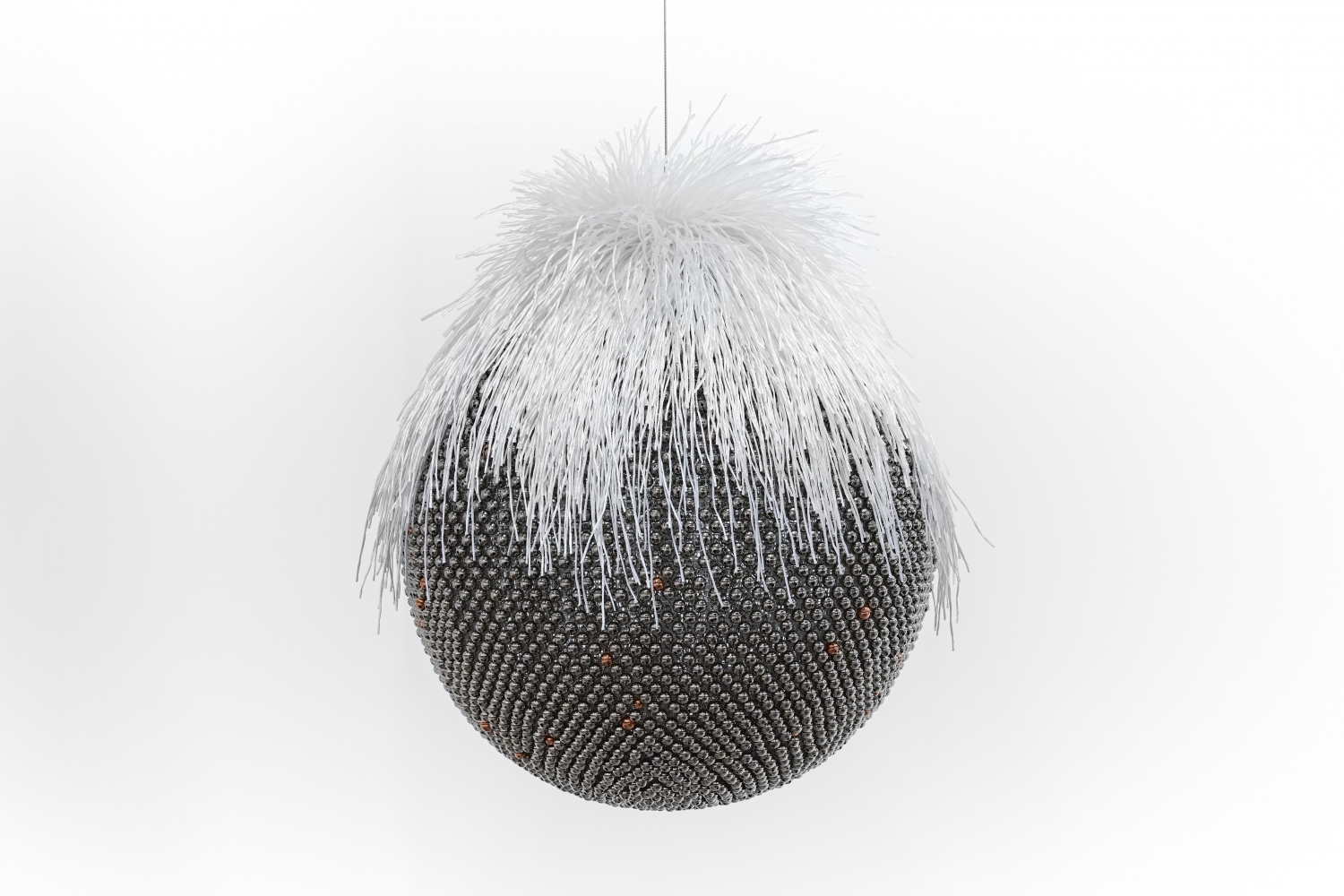
The ‘Sonic’ series and the ‘The Intermediate’ series exemplify Yang’s formal experimentation. The ‘Sonic’ works blur the boundary between sculpture and performance through the use of bells, wheels, and mobile structures, generating relationships through movement and sound. In contrast, ‘The Intermediate’ series draws on traditional techniques such as straw craft while incorporating artificial materials, revealing a tension between organic form and structural order. Together, these bodies of work juxtapose contrasting elements—sound and touch, tradition and modernity, organic and artificial—expanding the artist’s formal vocabulary.
 
In Yang’s practice, form is not an external shell separate from content but a fundamental mechanism for producing meaning. The arrangement, repetition, transformation, and subtle deviation of objects—such as the “one-degree tilt”—defamiliarize familiar structures and open up new modes of perception. While her work references diverse art historical contexts, including Minimalism, Conceptual Art, and traditional craft, it does not replicate them as fixed styles but reconfigures them within contemporary conditions. As a result, Yang’s practice constructs a complex field in which materiality, sensation, structure, and narrative intertwine, establishing a distinctive system where form and content are inseparable.

Topography & Continuity

Haegue Yang’s practice forms a kind of “topography” that expands across time and space, rather than being confined to a specific period or medium. From her early works in the early 2000s to her recent large-scale installations, her practice has evolved through variation, repetition, and gradual expansion rather than rupture. Recurring themes such as mobility, boundaries, diaspora, and mythological narrative reappear across different forms and media, creating not a linear progression but a network of intersecting trajectories. In this sense, Yang’s work is less a movement toward a fixed conclusion than an open terrain that continually branches into new directions.
 
Her practice is also characterized by a dual relationship to place: it is deeply site-responsive yet never fixed to a single location. From early projects in an abandoned house in Sadong, Incheon, to exhibitions across cities such as Berlin, London, New York, and Kassel, her works reflect specific historical and social contexts while simultaneously pointing toward broader, translocal structures. This mobility is closely tied to the artist’s own diasporic experience, allowing objects and narratives within her work to traverse multiple cultural layers. As a result, Yang’s practice operates as a “mobile topography” that accumulates traces of place without being anchored to any one of them.
 
At the same time, Yang repeatedly returns to certain motifs and formal elements without fixing them into stable forms. Elements such as venetian blinds, bells, clothes racks, and straw are continuously transformed and recombined, acquiring new meanings in different contexts. For example, the clothes rack, which appears in her early works, later evolves into “vehicle” structures or performative sculptures, while bells expand into the auditory and ritual dimensions of the ‘Sonic’ series. This repetition is not mere reproduction but a process that generates difference, producing both continuity and transformation throughout her practice.
 
Ultimately, constancy in Yang’s work does not lie in maintaining sameness but in sustaining a flow of relationships that are continuously reconfigured and renewed. Her practice connects past forms with present contexts, individual experience with collective memory, while remaining open to future possibilities. In this sense, Yang’s art is not a closed system but an ongoing process—a living topography that adapts and evolves in response to the shifting conditions of contemporary art.

Works of Art

Agnostic Attitude

Articles

Exhibitions

Activities