
Overlapped Tents - K-ARTIST

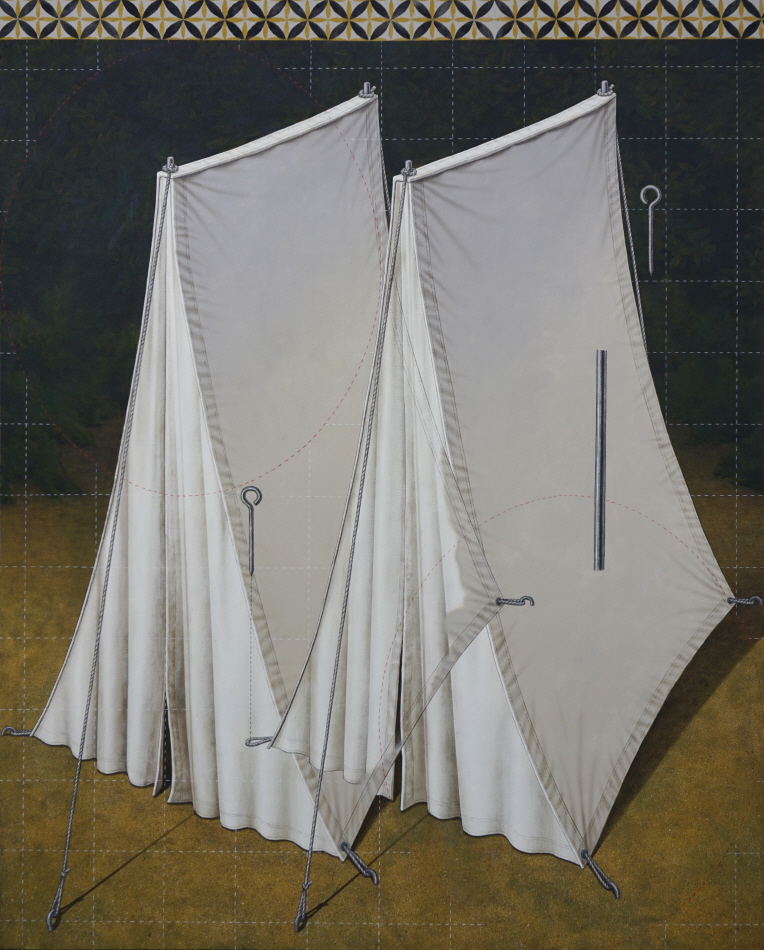
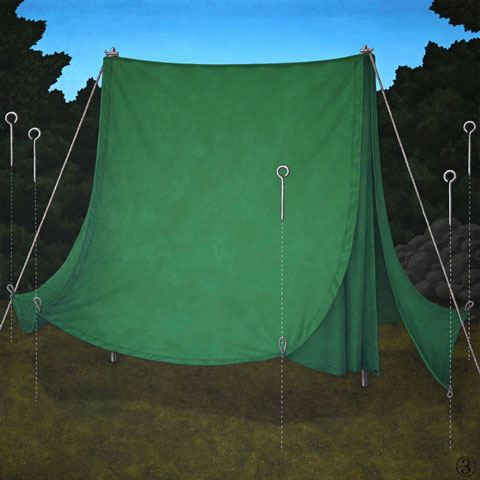
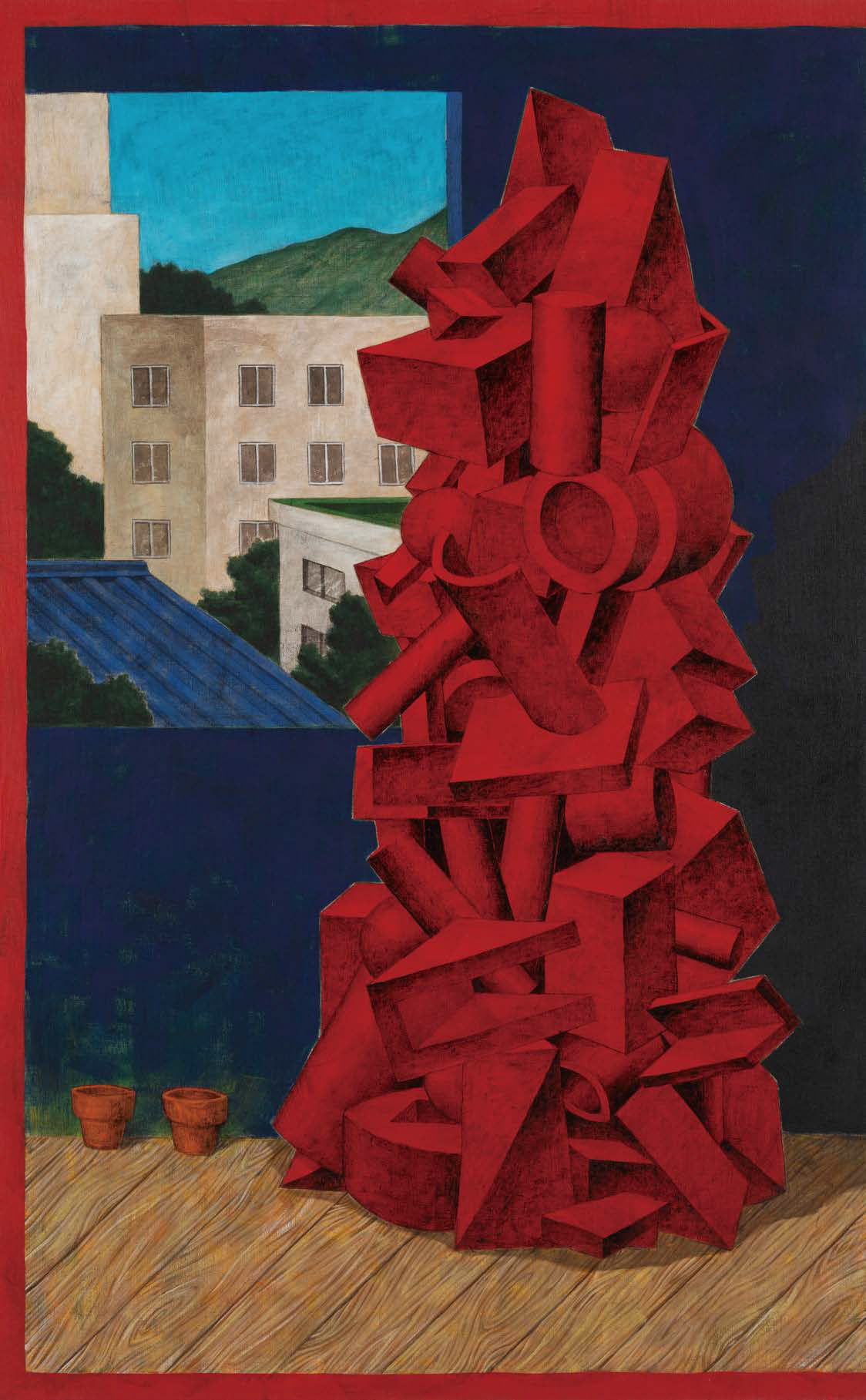
Overlapped Tents

2020
Acrylic on canvas
162.2 x 130.3 cm 
About The Work

The artist has explored the relationships between the body and objects, structure and the individual, as well as control and freedom. In his early works, he focused on the similarities between the human body and machinery, employing a method of juxtaposing fragmented and disassembled body parts with mechanical components. Over time, his interest expanded beyond the interplay of the body and machines or social structures to encompass broader physical orders and structural mechanisms in nature, such as gravity, celestial movements, and the relationship between the natural and the artificial. 


His paintings now metaphorically engage with physical phenomena and digital environments, extending his exploration to a grander scale. His compositional approach has also become more refined, moving beyond mere fragmentation and juxtaposition toward a more layered structure that incorporates intricate patterns and spatial complexity.

Solo Exhibitions (Brief)

Lee has held solo exhibitions at Gallery Baton, Seoul (2023); Chapter II, Seoul (2023); Seoul Museum of Art (SeMA) Storage, Seoul (2021); and Hakgojae PROJECT SPACE, Seoul (2021); Gallery MEME, Seoul (2020); M2 Project Room at Lee Ungno Museum, Daejeon (2018).

Group Exhibitions (Brief)

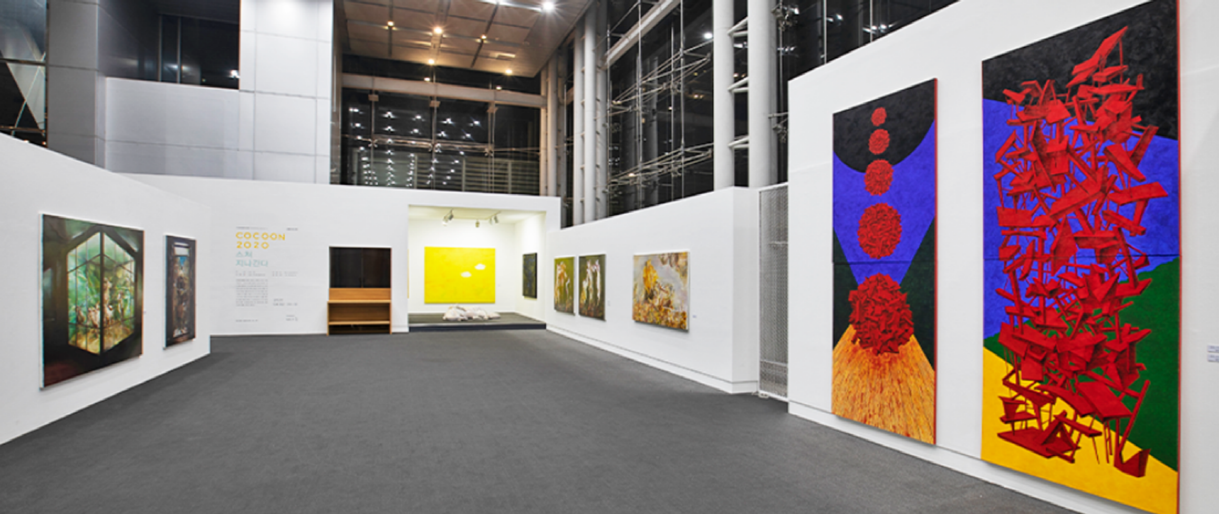
He has participated in group exhibitions, including Daejeon Art and Science Biennale 2024 《Magnum Opus》 (Daejeon Museum of Art, Daejeon, 2024), 《Hysteria: Contemporary Realism Painting》 (Ilmin Museum of Art, Seoul, 2023), 《Collected Landscapes》 (Gwangju Museum of Art, Gwangju, 2022), 《Cocoon2020》 (Space K, Seoul, 2020), 《POP-UP LAP》 (Daejeon Museum of Art, Daejeon, 2019), among others.

Awards (Selected)

Lee was selected as an artist-in-residence at Studio White Block Residency Program (2022-2024). 

Collections (Selected)

His work is represented in the collections of MMCA Art Bank, Daejeon Museum of Art, CNCITY Energy, KOLON Corp., etc.
Works of Art

Relationship Between Body and Object

Originality & Identity

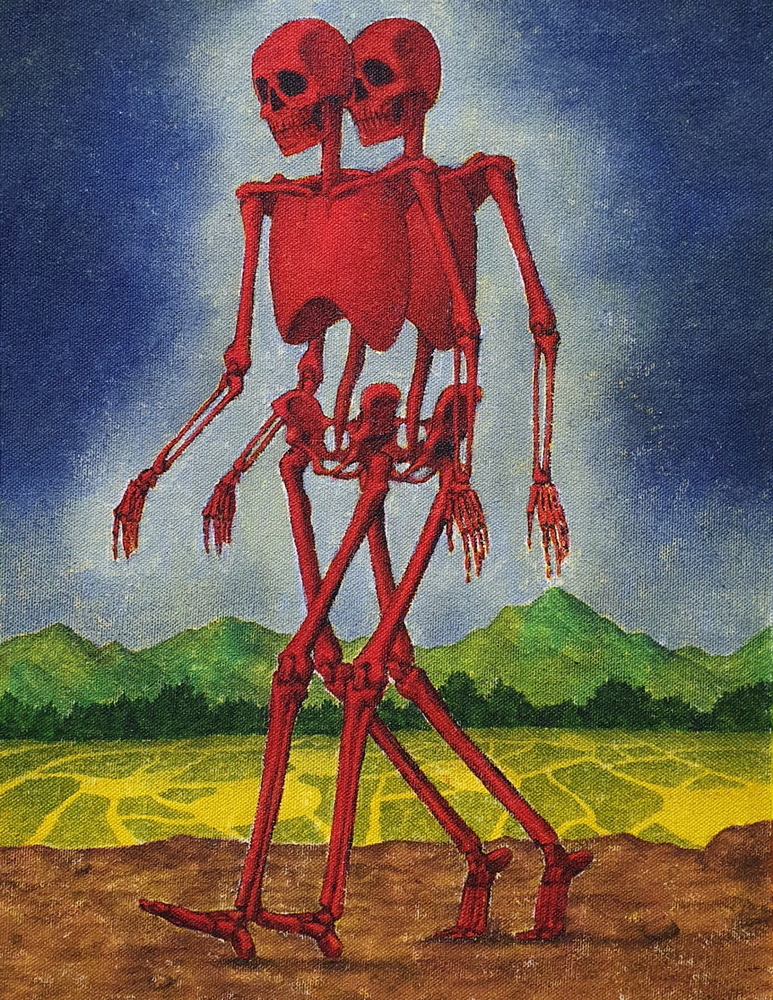
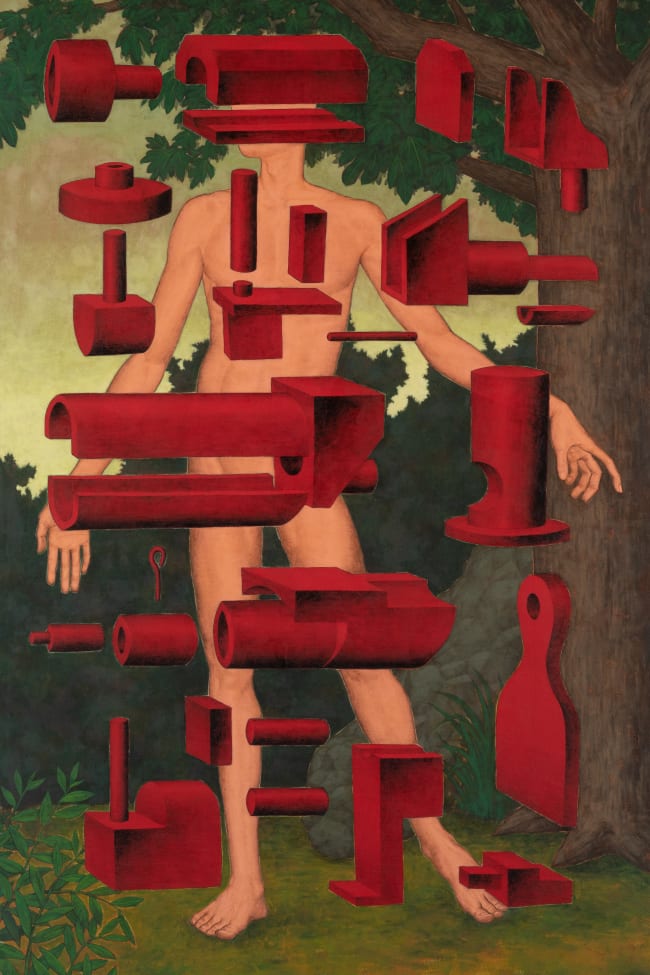
Jaeseok Lee's artistic practice begins with an exploration of the relationship between the human body and mechanical objects. His early works emphasize the mechanical aspects of human existence and the systematic structures within society by juxtaposing or deconstructing bodily and mechanical elements. In Arranged Parts(2018), human body parts and mechanical components are arranged in the same manner, reducing the body to a functional element. This visual approach symbolically exposes how individuals are assimilated into collective structures, akin to components in a machine.

Lee’s fascination with the intersection of the body and machinery originates from his military service, where he experienced a severe injury requiring surgical implantation of metal fixations. This bodily transformation heightened his awareness of the mechanical logic that governs both organic and artificial structures. In The Instructions with the Body (2018), human figures dissolve into mechanical fragments, further exploring this concept of bodily disassembly and integration with industrial mechanisms.

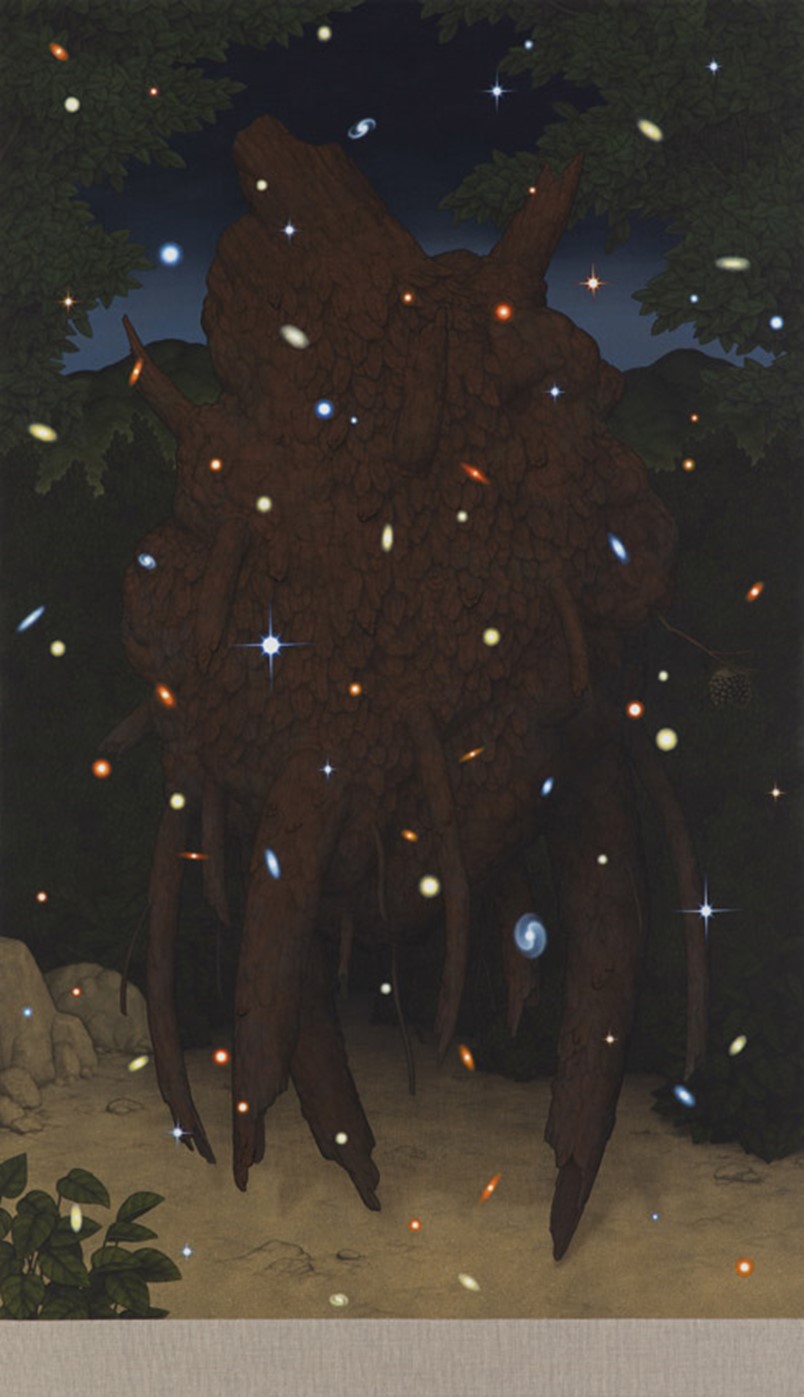
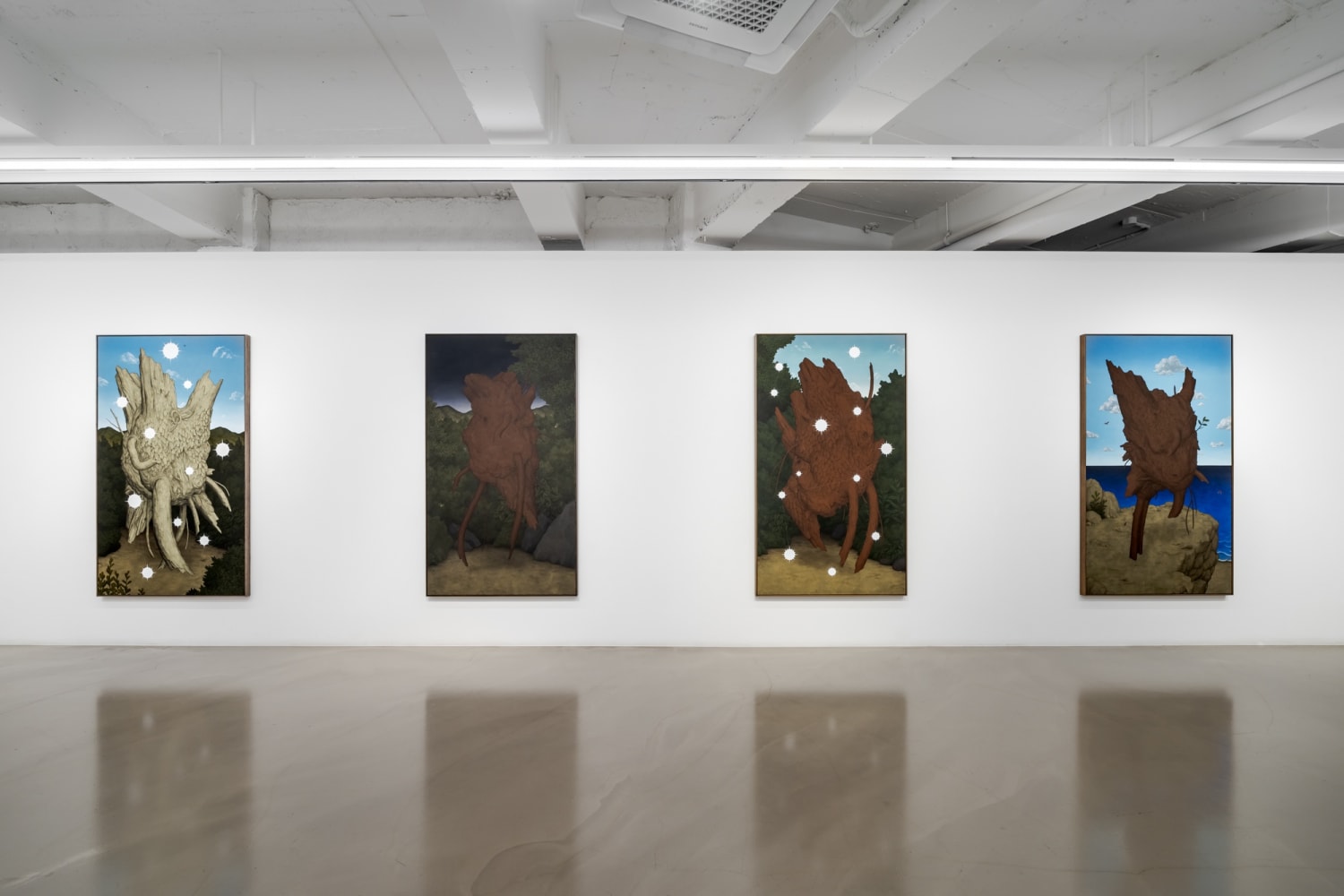
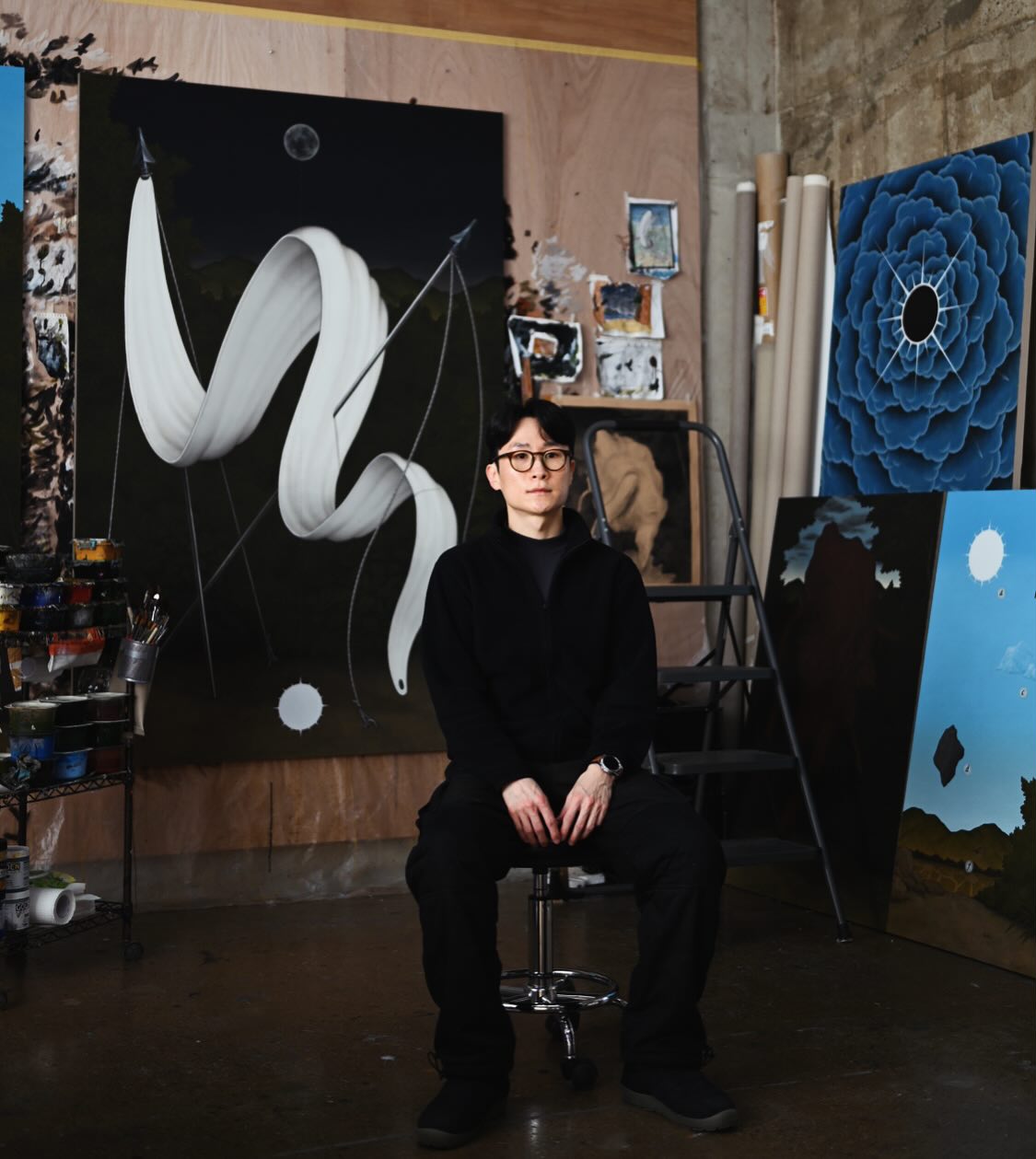
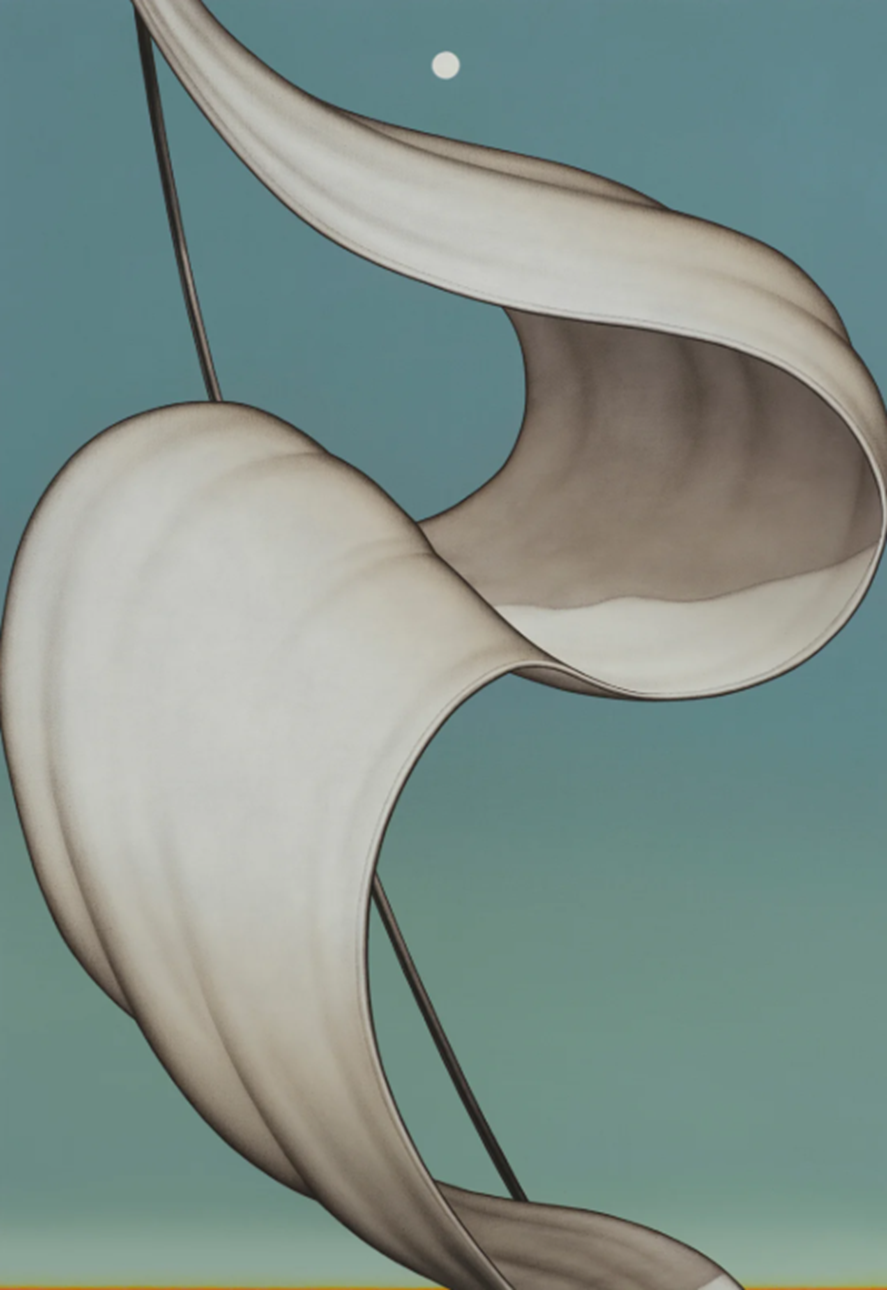
More recent works mark a shift away from a strict dichotomy between body and machine, expanding into an inquiry into the physical order of nature and the cosmos. In Alignment(2023), Lee visually interprets gravitational structures and cosmic forces within the framework of painting.

Style & Contents

Lee's works often employ diagrammatic representations to illustrate the structural similarities between the body and mechanical systems. In Arranged Parts and Alignment of Parts(2020), mechanical parts and body elements coexist on the same plane, serving as a painterly analysis of how individuals function as mere components within a larger societal system.

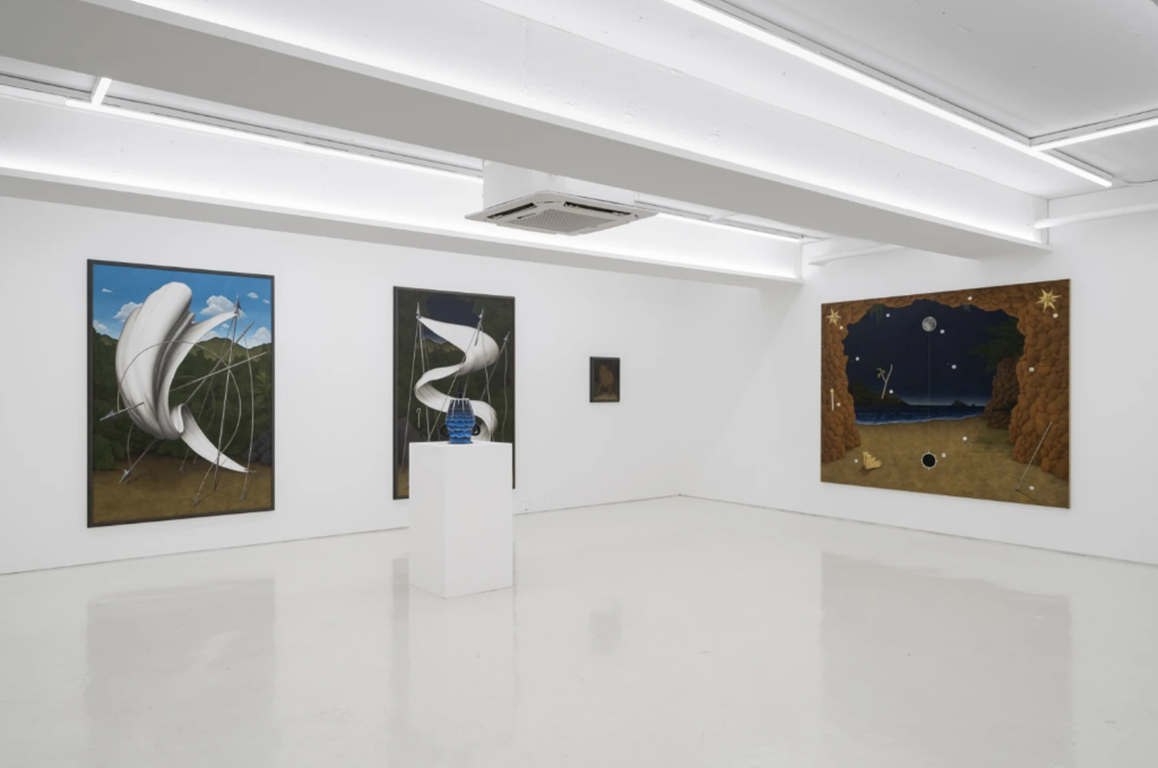
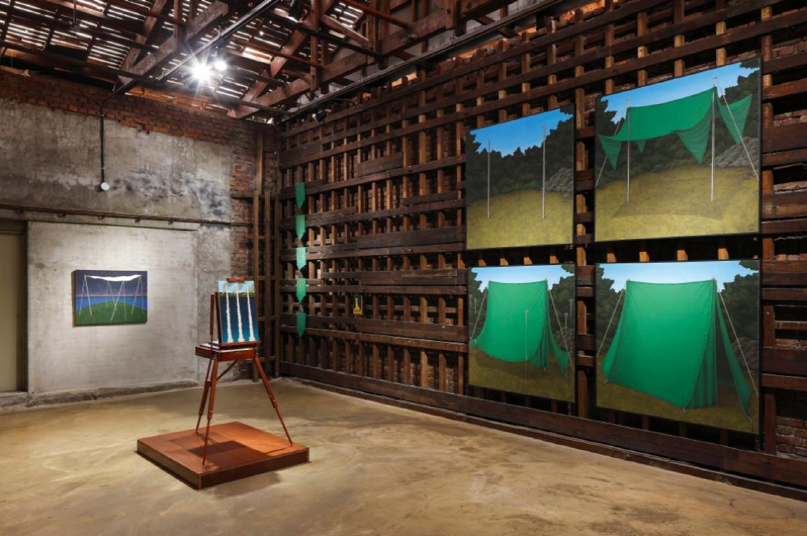
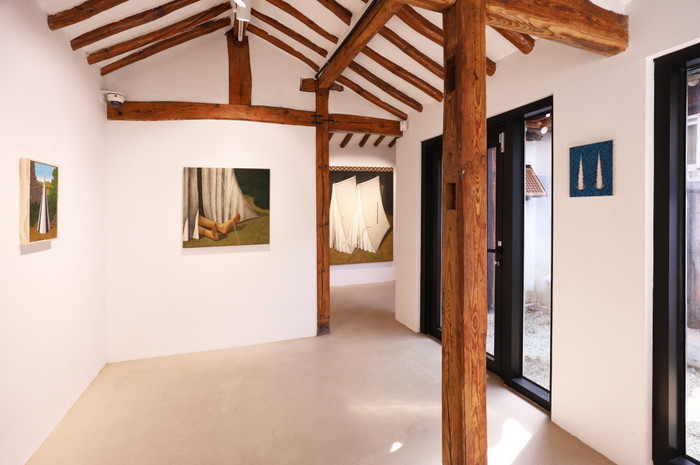
His solo exhibition 《Boundaries》 (2021) at Hakgojae Gallery marked a shift toward more fluid compositional structures. Works such as Camping(2020) and Overlapped Tents(2020) investigate the structural logic of military tents, exploring the ambiguous boundary between interior and exterior, as well as the individual and the collective. Tents act as both protective barriers and porous membranes, much like the boundaries between human bodies and social constructs. This exploration continues in the series ‘How to Set Up the Tent’(2020), where floating components and dotted guide lines evoke assembly instructions, reinforcing the idea that individuals (or individual components) are structured and dismantled within a broader system.

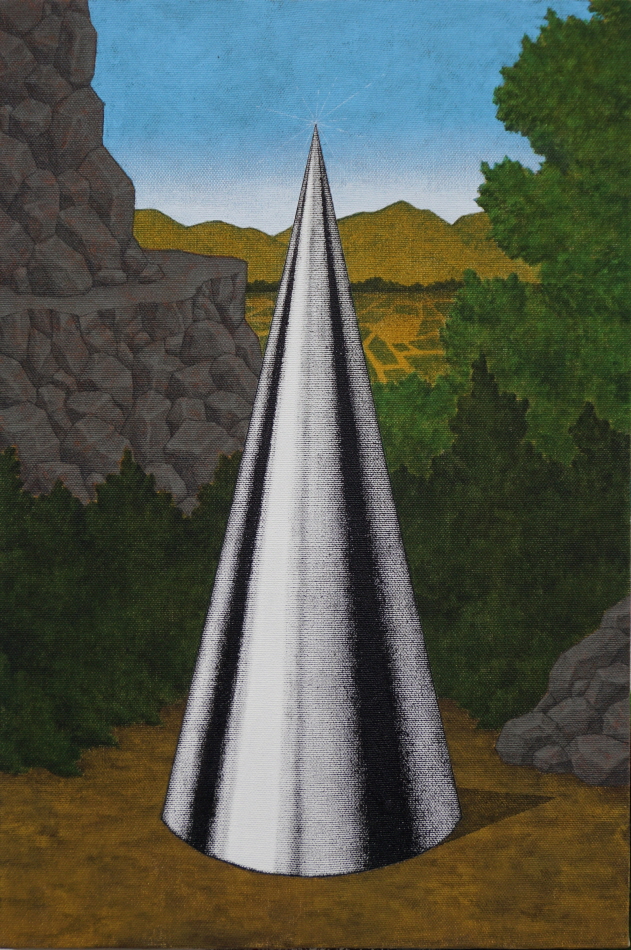
In recent work Linkage (○―○―●―○―○)(2024), Lee departs from his previous reliance on fixed, singular perspectives and adopts a more multifaceted approach. The work features abstracted landscapes where topographical elements are flattened and patternized, creating an illusion of abstraction while maintaining a structured composition.

Topography & Continuity

The artist has explored the relationships between the body and objects, structure and the individual, as well as control and freedom. In his early works, he focused on the similarities between the human body and machinery, employing a method of juxtaposing fragmented and disassembled body parts with mechanical components. Over time, his interest expanded beyond the interplay of the body and machines or social structures to encompass broader physical orders and structural mechanisms in nature, such as gravity, celestial movements, and the relationship between the natural and the artificial.

As seen in Arrangement and Linkage (○―○―●―○―○), his paintings now metaphorically engage with physical phenomena and digital environments, extending his exploration to a grander scale. His compositional approach has also become more refined, moving beyond mere fragmentation and juxtaposition toward a more layered structure that incorporates intricate patterns and spatial complexity.

Works of Art

Relationship Between Body and Object

Exhibitions

Activities