

A Beautiful Match Made in Heaven - K-ARTIST

A Beautiful Match Made in Heaven

2013
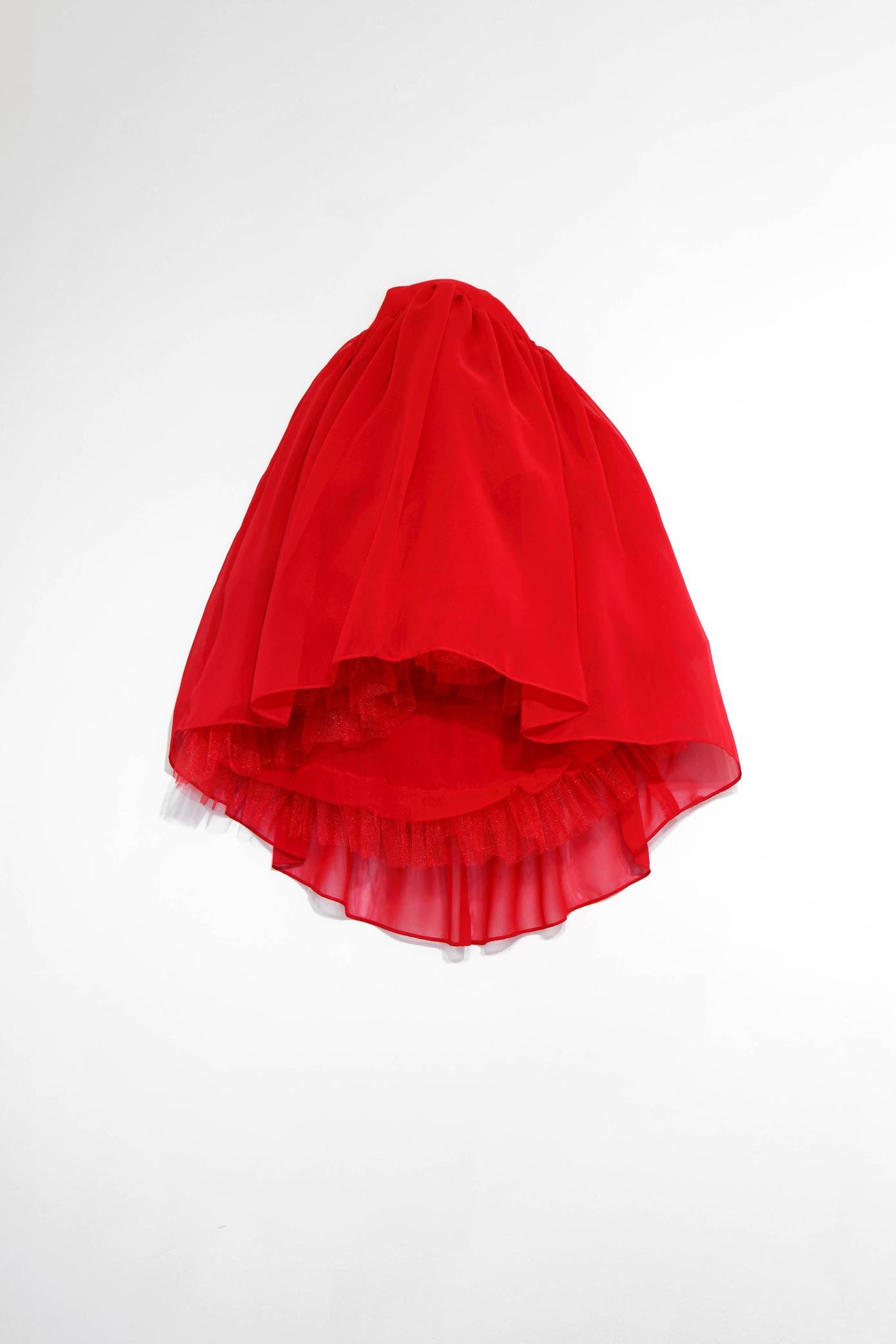
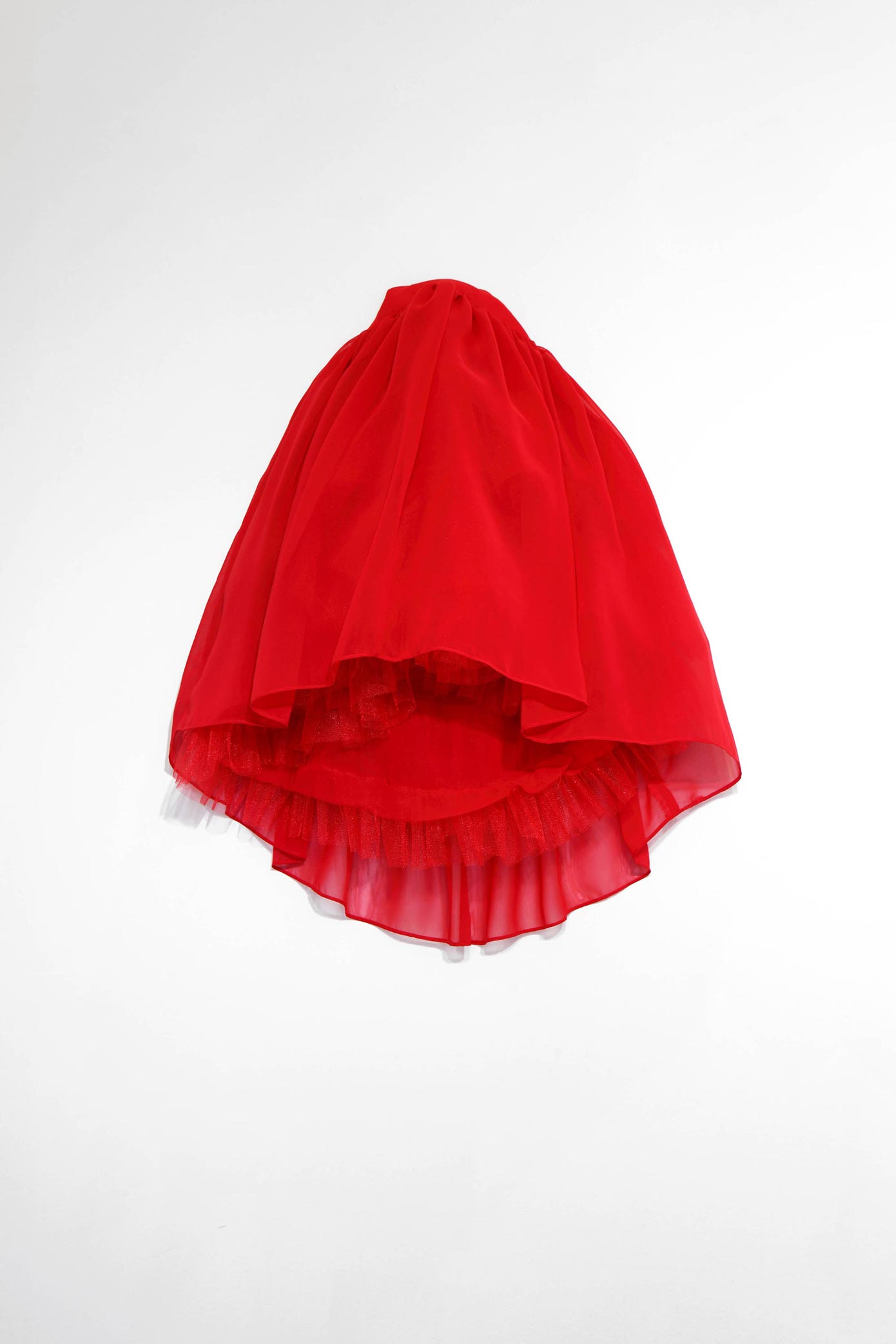
Speaker, Red skirt
47 x 60 x 25 cm
About The Work

Cho explores female bodies within complex social contexts, including Western Orientalism, capitalism, pre-modern patriarchy, and contemporary media. In her early works, she narrated personal experiences as an Asian woman abroad, addressing cultural identity and social othering. Over the past decade, Cho has expanded her focus to highlight the experiences of diverse female groups—children, adolescents, middle-aged women, mothers, and migrant women—through critical examinations of care labor and emotional labor. Her work employs performance, video, and installation to articulate broader social critiques.

Solo Exhibitions (Brief)

Her works are exhibited in various solo exhibitions, including 《My public affairs》(2013, Space Mass, Seoul), 《Mild depressive episode》(2013, Corner Art Space, Seoul), 《Our little gender stories》(2014, Space Mass, Seoul), 《Miss Lee and Mrs. Kim》(2018, Art Space No, Seoul), 《Mrs. Jellyby's magnifying glass》(2019, PLACEMAK LASER, Seoul), 《Mrs. Jellybee's Magnifying Glass》(2019, PLACEMAK LASE, Seoul), 《Five Seasons》(2020, Seoullo Media Canvas), 《Cotton Era》(2020, Alternative Space LOOP, Seoul), 《Cadenza》(2024, SONGEUN), among others.

Group Exhibitions (Brief)

Youngjoo Cho also has participated in numerous group exhibitions, including 《BOUNDARY AND CHANGE》(2002, Korea-Japan Exchange Workshop and Exhibition, Nakatsue, Japan), 《Parcour Artistique》(2005, Chateau de Petit Malmaison, Rueil-Malmaison, France), 《Made in Asia, The 5th International Contemporary Art Festival 'Nuit Blanche'》(2006, Le Divan du Monde, Paris, France), 《Splendid Isolation-Goldrausch 2009》(2009, Kunstraum Kreuzberg/Betanien, Berlin, Germany), 《Rebus New York City》(2012, Emily Harvey Foundation, New York, U.S.A.), 《When Cattitudes Become Form》(2014, Gallery de l'Angle, Paris, France), 《A Moist Lunch by the Watery Madames: Artists' Lunch Box》(2015, Seoul Museum of Art, Seoul, South Korea), 《Video Portrait》(2017, Total Museum of Contemporary Art, Seoul, South Korea), 《The Arrival of New Women》(2018, National Museum of Modern and Contemporary Art (MMCA), Seoul, South Korea), 《Re: International Exchange Exhibition of Cultural Spaces using Abandoned Industrial Properties》(2018, F1963, Busan, South Korea), 《NaNa Land》(2019, Savina Museum, Seoul, South Korea), 《Promenade Run》(2019, Art Space EMU, Seoul, South Korea), 《Carpenter’s Scene》(2019, Insa Art Space, Seoul, South Korea), 《Focus On X OVNI: Objectif Video Nice》(2019, Nice, France), 《Marginalized Histories of Korean Women》(2019, Ridderhof Martin Gallery, University of Mary Washington, Virginia, U.S.A.), 《Un-wall》(2019, Kunstquartier Bethanien, Berlin, Germany), 《Interlude》(2019, Insa Art Space, Seoul, South Korea), 《Merry Mix: The More, The Better》(2022, National Museum of Modern and Contemporary Art (MMCA), Gwacheon, South Korea), 《Seoul Convergence Art Festival Unfold X ‘Shaping the future’》(2022, S-Factory, Seoul, South Korea), 《Flower Power》(2023, Videocity x SONGEUN, Tübingen, Germany, Seoul, South Korea), and 《Orange Sleep》(2023, ONE AND J. Gallery, Seoul), among others.

Awards (Selected)

In 2020, Cho was selected as the Grand Prize Winner of the 20th SONGEUN Art Award.

Collections (Selected)

Her works are part of collections at institutions such as the National Museum of Modern and Contemporary Art Korea, Busan Museum of Contemporary Art, Seoul Museum of Art, and the SONGEUN Art and Cultural Foundation. 
Works of Art

The Stories of Marginalized

Originality & Identity

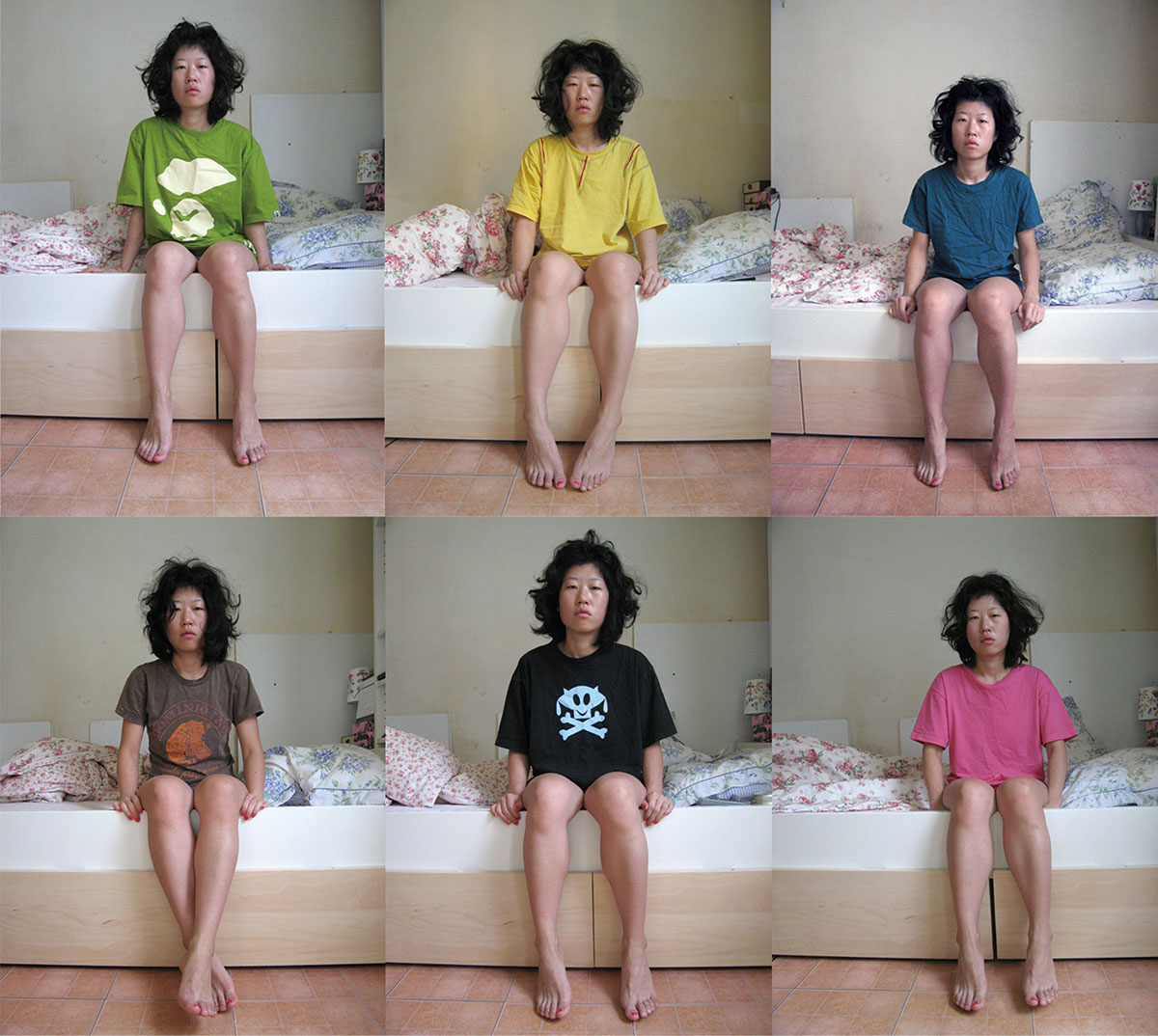
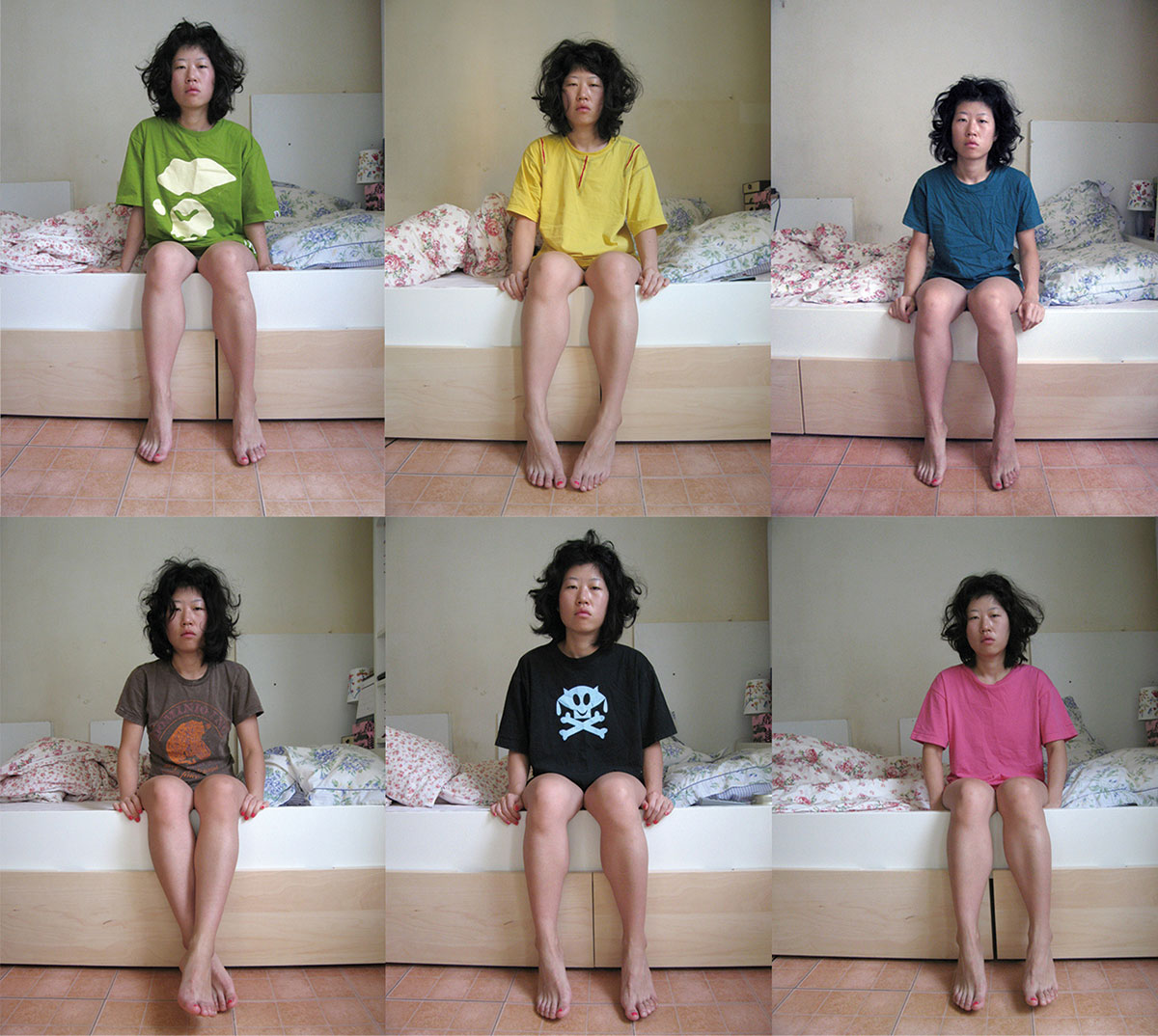
Youngjoo Cho's body of work centers on the exploration of female identity and social positioning, consistently maintaining a feminist perspective that critiques and deconstructs patriarchal structures within Korean society. Her early works draw on personal experiences from her time studying in France, questioning cultural identity and gender roles by highlighting the othering and stereotypes faced by Asian women in Western society. In the photo series One night with someone’s t-shirt in my bed (2006–2007), Cho subverts the sexualization and submissive stereotypes associated with Asian women, challenging the gaze directed at female bodies.

In the 2010s, Cho shifted her focus to the anonymity and ordinariness of middle-aged women in Korean society, exploring the social contexts surrounding female bodies. In Floral Patterned Romance (2014), she used the symbolic garment of “mompe” (baggy floral pants) to overturn the fixed image of women and their anonymity within Korean culture. Collaborating with middle-aged women in industrial areas, Cho transformed familiar gestures and habitual movements into new bodily expressions, revealing the potential and freedom of female bodies. Similarly, the performance video series Grand Cuties (2015), The Divas go out (2015), Watery Madams (2015), and Demilitarized Goddesses (2015) explore the “anonymity” embedded in middle-aged women's bodies, not to fix them in a specific social role but to liberate them through “unrestricted gestures.” Through these works, Cho disrupts social taboos and stereotypes inscribed on female bodies, re-examining the social positioning of female identity.

After becoming a mother, Cho's work deepened its critique of care labor, emotional labor, and the role of women within capitalist societies. In her solo exhibition 《Cotton Era》 (2020, Alternative Space LOOP), Cho used the symbolic material of “cotton”—representing diapers, bedding, and towels associated with caregiving labor—to visualize the hidden and exploited physical and emotional labor of women within patriarchal capitalism. Against the backdrop of the COVID-19 pandemic, where physical contact became taboo, she expanded her exploration of “care” to broader sociocultural perspectives, raising fundamental questions about the value and status of women’s labor.

Style & Contents

Youngjoo Cho employs a diverse range of mediums and formats—including performance, installation, photography, video, and sound—to explore female identity and social roles within Korean society. Her approach deconstructs and reconstructs these themes within broader sociocultural contexts. In her early works, she utilized photography and sound installations to critique societal stereotypes surrounding female identity through visual and auditory experiences.

In the photo series One night with someone’s t-shirt in my bed (2006–2007), Cho subverted stereotypes by wearing the shirts of unfamiliar Western men, challenging the objectification and prejudice directed at Asian women. A Beautiful Match Made in Heaven (2013) is a sound installation featuring a red skirt paired with a speaker playing recordings from matchmaking agency consultations. By exposing how Korean society categorizes individuals by age, height, weight, and income, the work critiques the absurdity and melancholy of modern-day patriarchy intertwined with capitalist values.

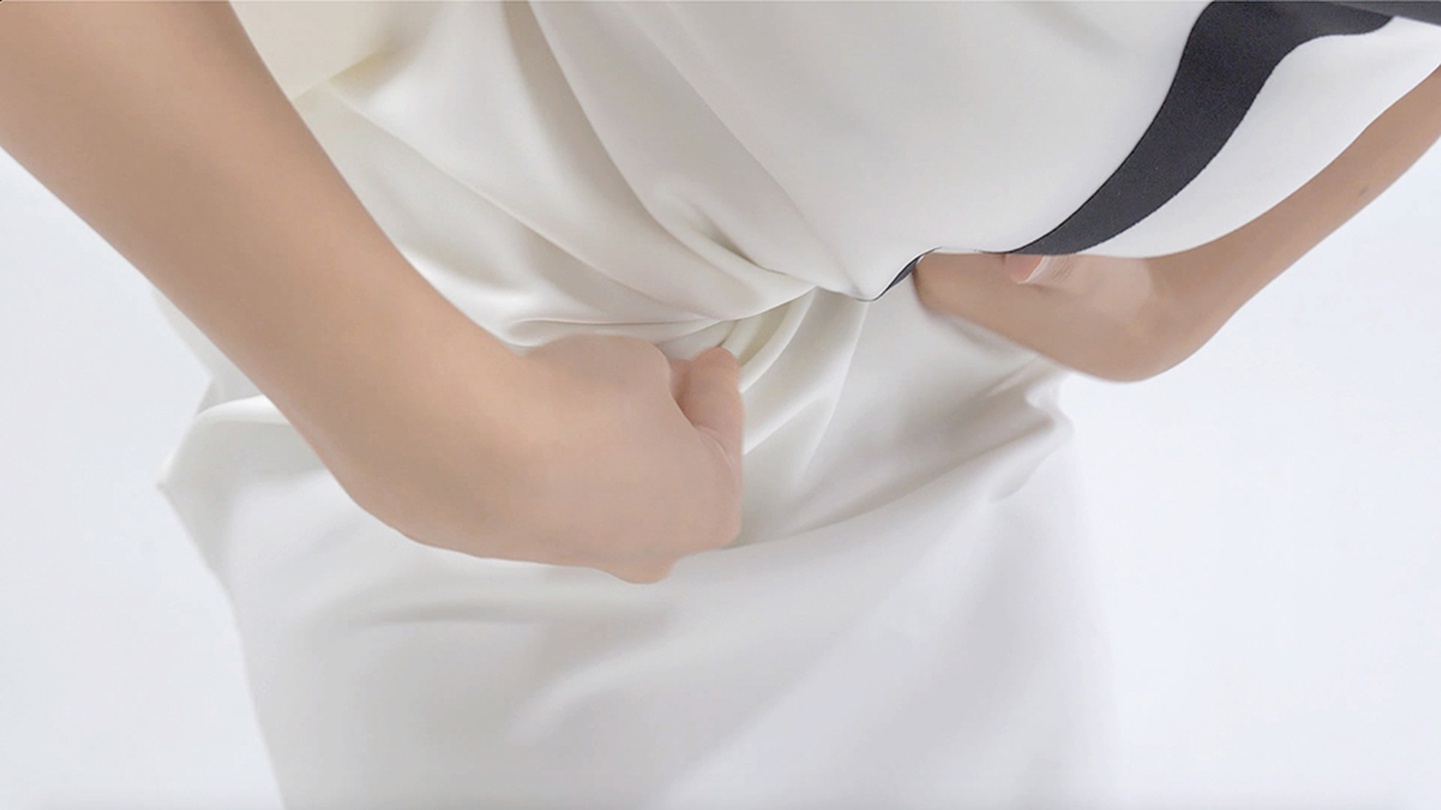
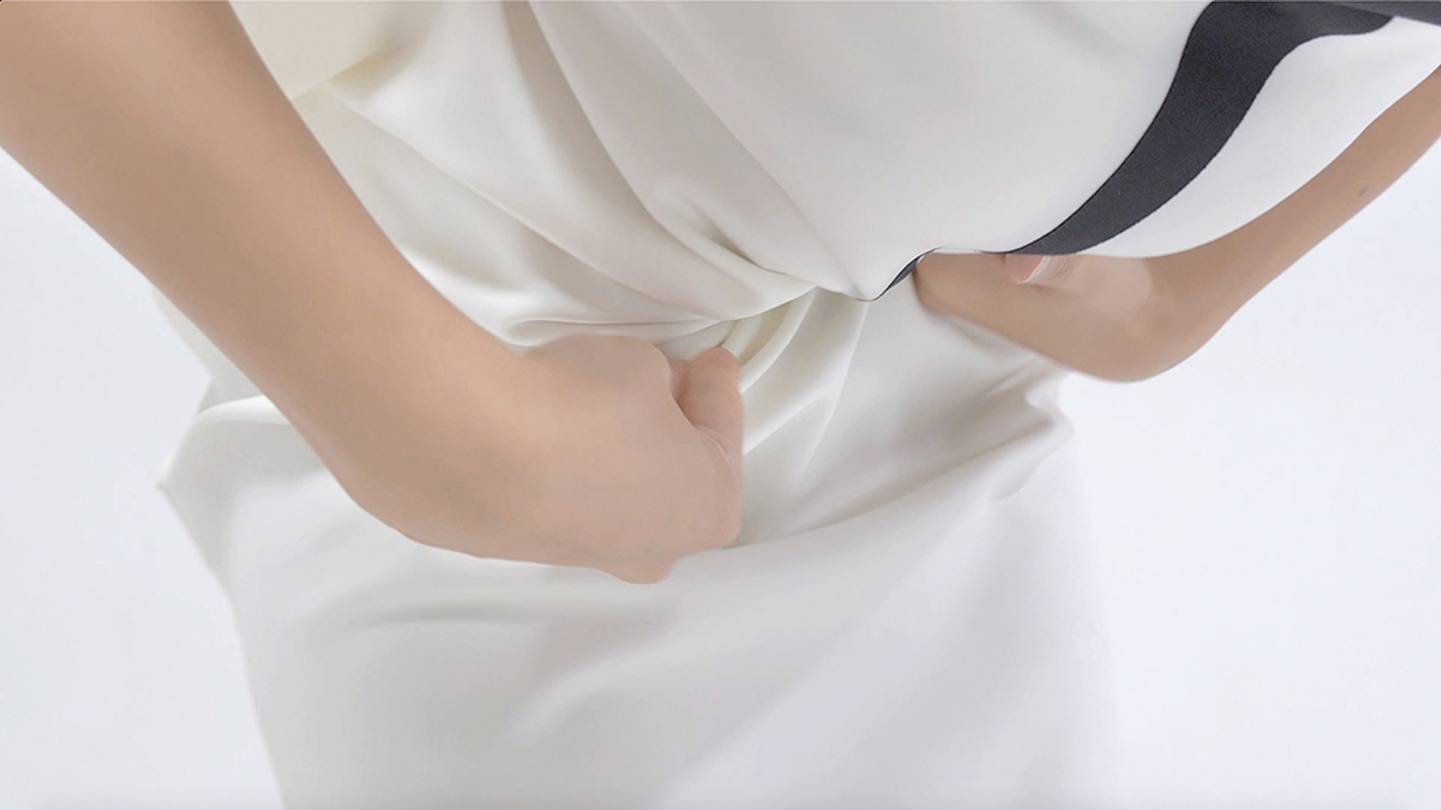
Following the birth of her child, Cho began exploring motherhood and its societal implications through video and performance. Writing my body (2019) uses choreographed movements and a sonata composed from her childcare diaries to reflect on the transformation of the female body post-childbirth. By translating repetitive gestures and rhythmic patterns into physical experiences, the work interrogates the labor and social roles performed by female bodies.

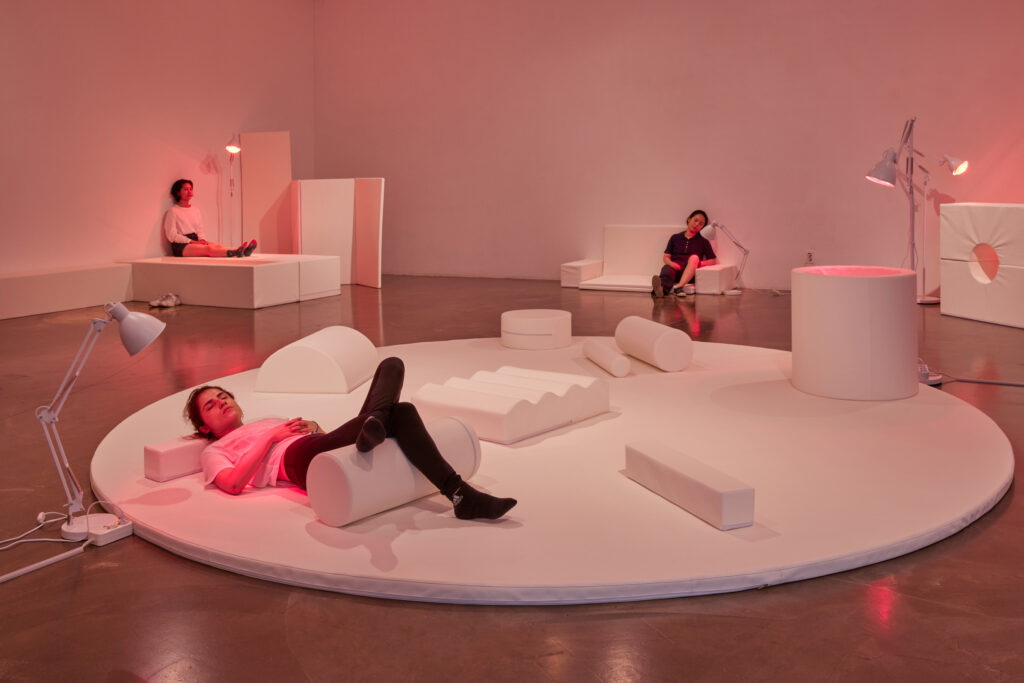
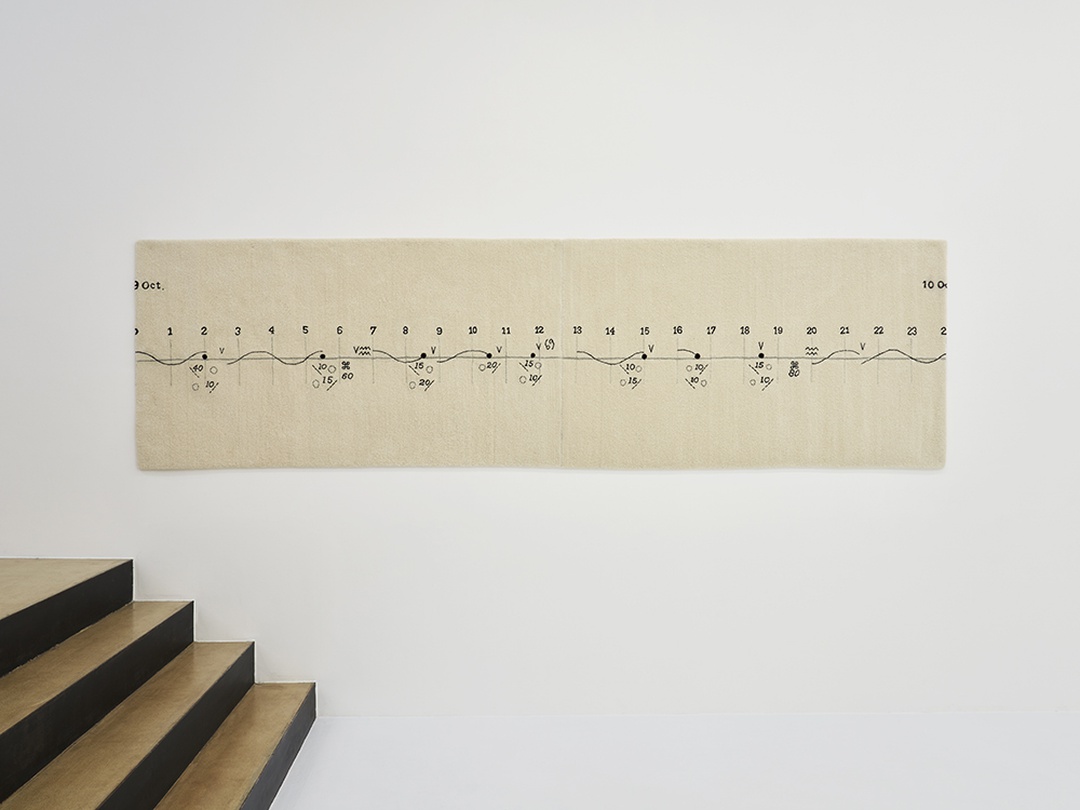
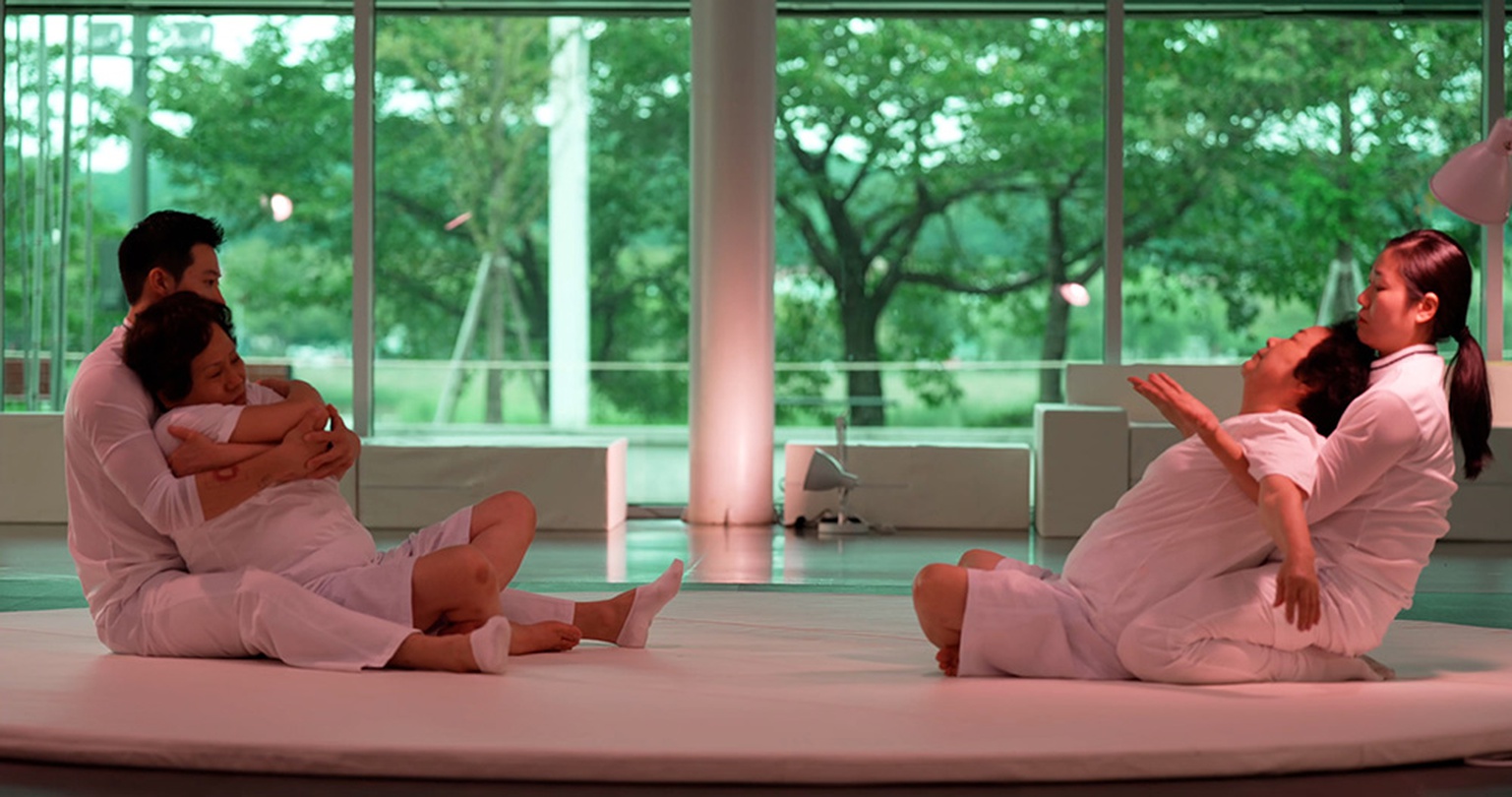
From 2020 onward, Cho expanded her practice into immersive installations, creating participatory experiences that blend sensory engagement with narrative exploration. Human Garten (2021–2024) draws on caregiving spaces such as homes, daycare centers, hospitals, and nursing homes. Using sponge mats and exercise equipment, the installation visualizes the relational dynamics and empathy involved in caregiving labor. Viewers are invited to participate through movement, rest, and interaction, facilitating an embodied experience of caregiving.

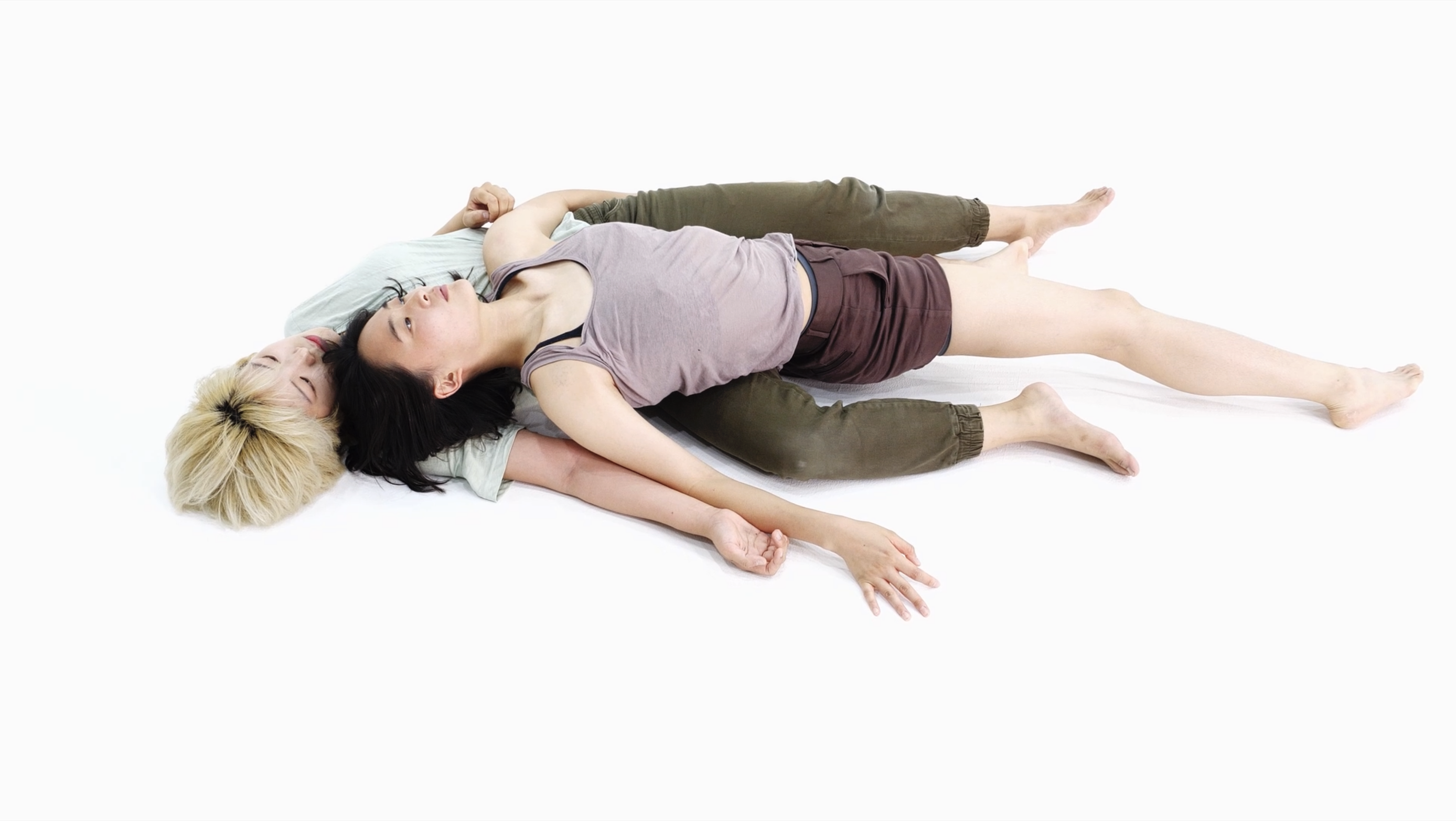
Dispersed Bodies Reunion (2022) critically examines how contemporary media portrays women’s bodies during tragic historical events in Korea. By repeatedly framing women’s bodies in trance-like states, the video installation explores the consumption and reproduction of female bodies within media, emphasizing the psychological dissonance between physical presence and recorded image. Through these varied mediums, Cho continues to deconstruct stereotypes and reconstruct narratives of female identity and caregiving within sociocultural contexts.

Topography & Continuity

Cho explores female bodies within complex social contexts, including Western Orientalism, capitalism, pre-modern patriarchy, and contemporary media. In her early works, she narrated personal experiences as an Asian woman abroad, addressing cultural identity and social othering. Over the past decade, Cho has expanded her focus to highlight the experiences of diverse female groups—children, adolescents, middle-aged women, mothers, and migrant women—through critical examinations of care labor and emotional labor. Her work employs performance, video, and installation to articulate broader social critiques.

A distinctive feature of Cho’s artistic language lies in her use of “repetition” and the “rhythm” it creates through choreographed gestures and video editing. This rhythmic repetition effectively conveys the fatigue and alienation experienced by women within social structures, sensorially communicating the emotional and physical burdens of female labor. This unique approach has established her as an influential voice within contemporary feminist art.

Through various mediums, Cho visualizes “female identity,” “corporeality,” and “labor” within layered social frameworks shaped by patriarchy, capitalism, and media. By doing so, she advances expanded feminist discourses within contemporary art, positioning herself as a pivotal figure driving these dialogues forward in the global art landscape.

Works of Art

The Stories of Marginalized

Exhibitions

Activities