
Hub, 310 Union Wharf, 23 Wenlock Road, London, N1 7ST, UK - K-ARTIST

Hub, 310 Union Wharf, 23 Wenlock Road, London, N1 7ST, UK

2015
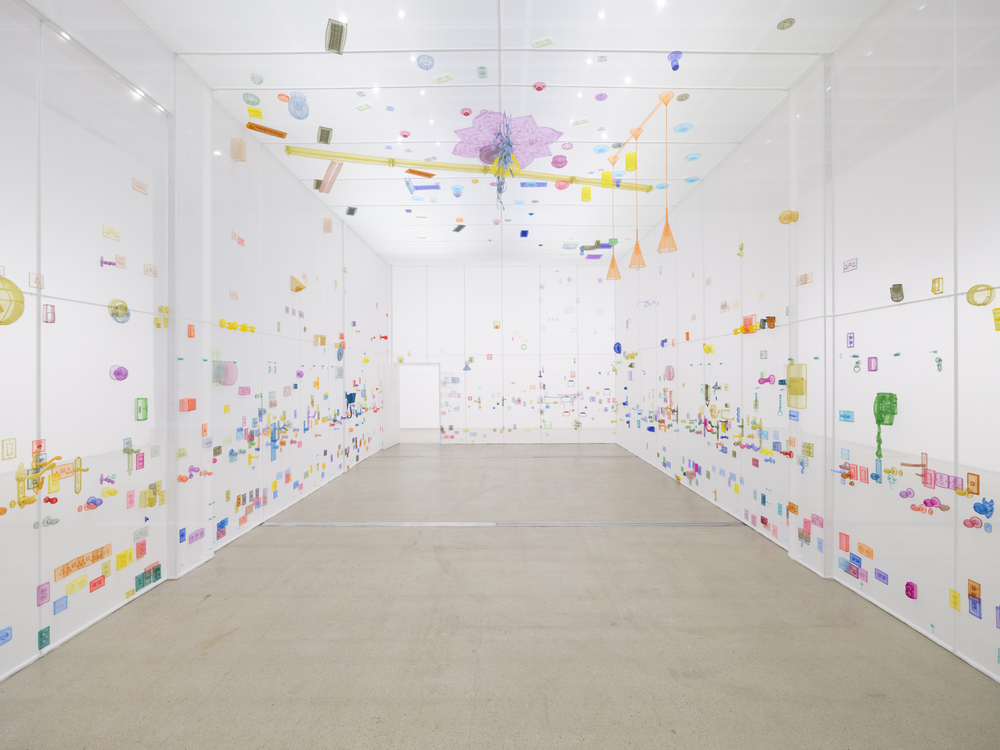
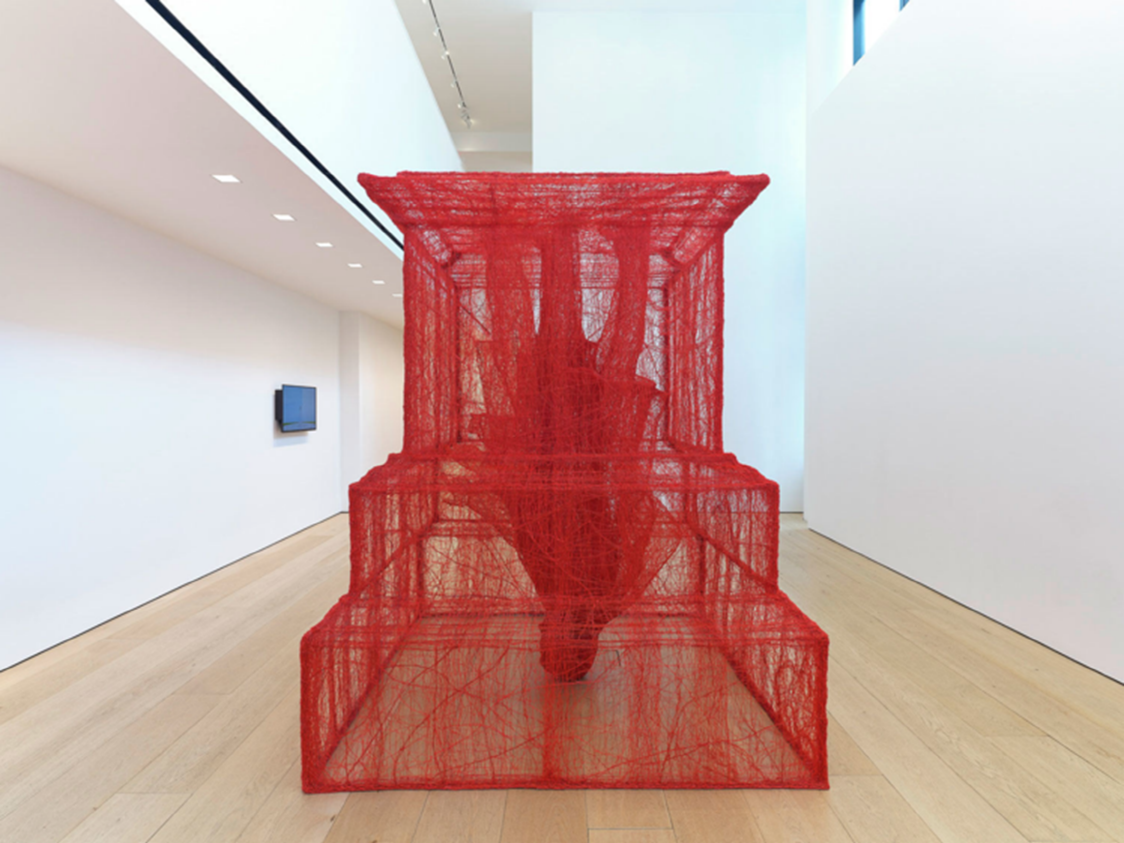
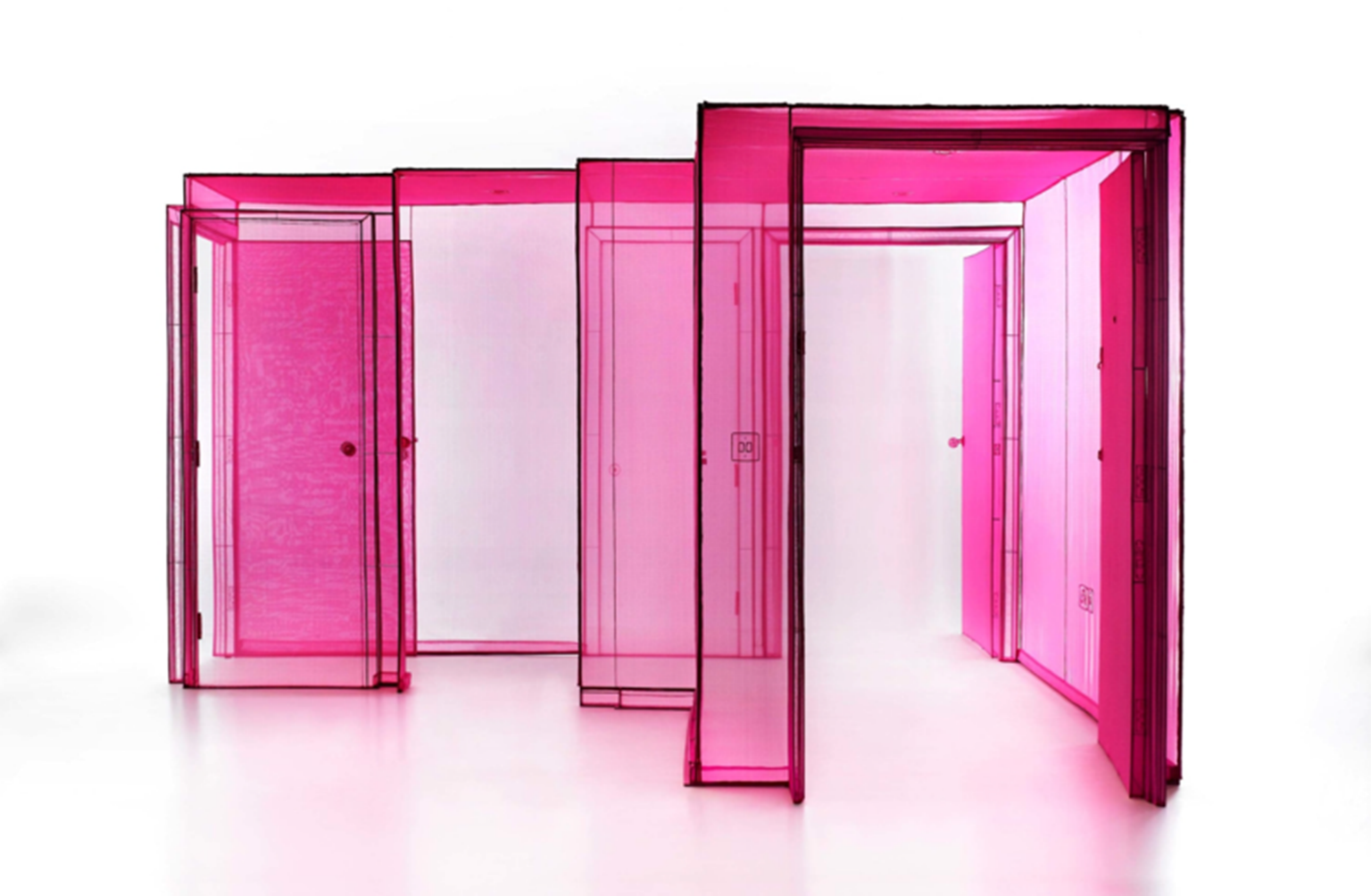
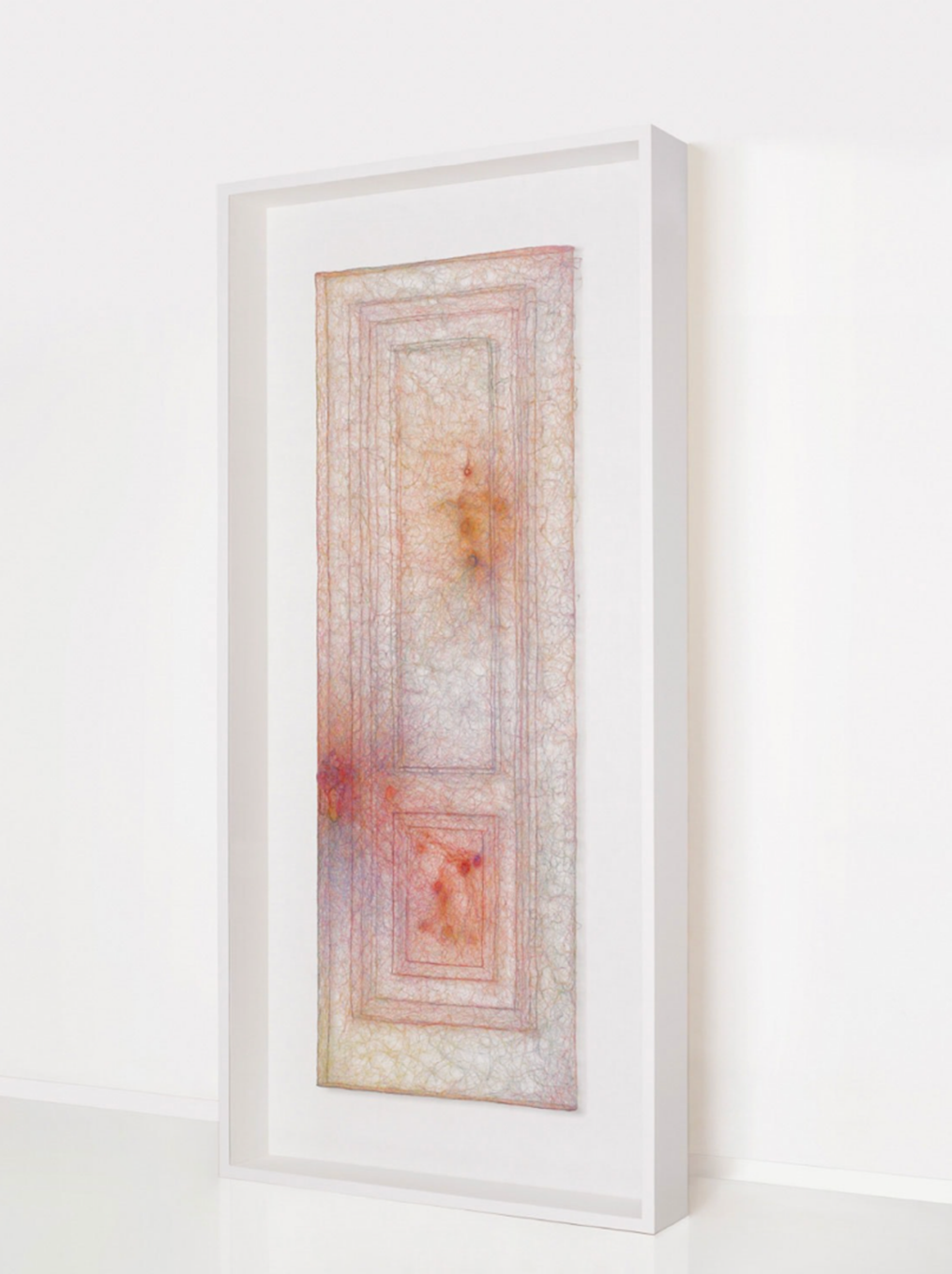
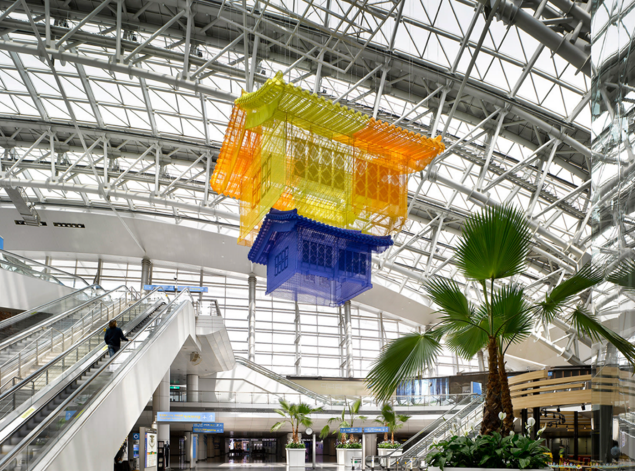
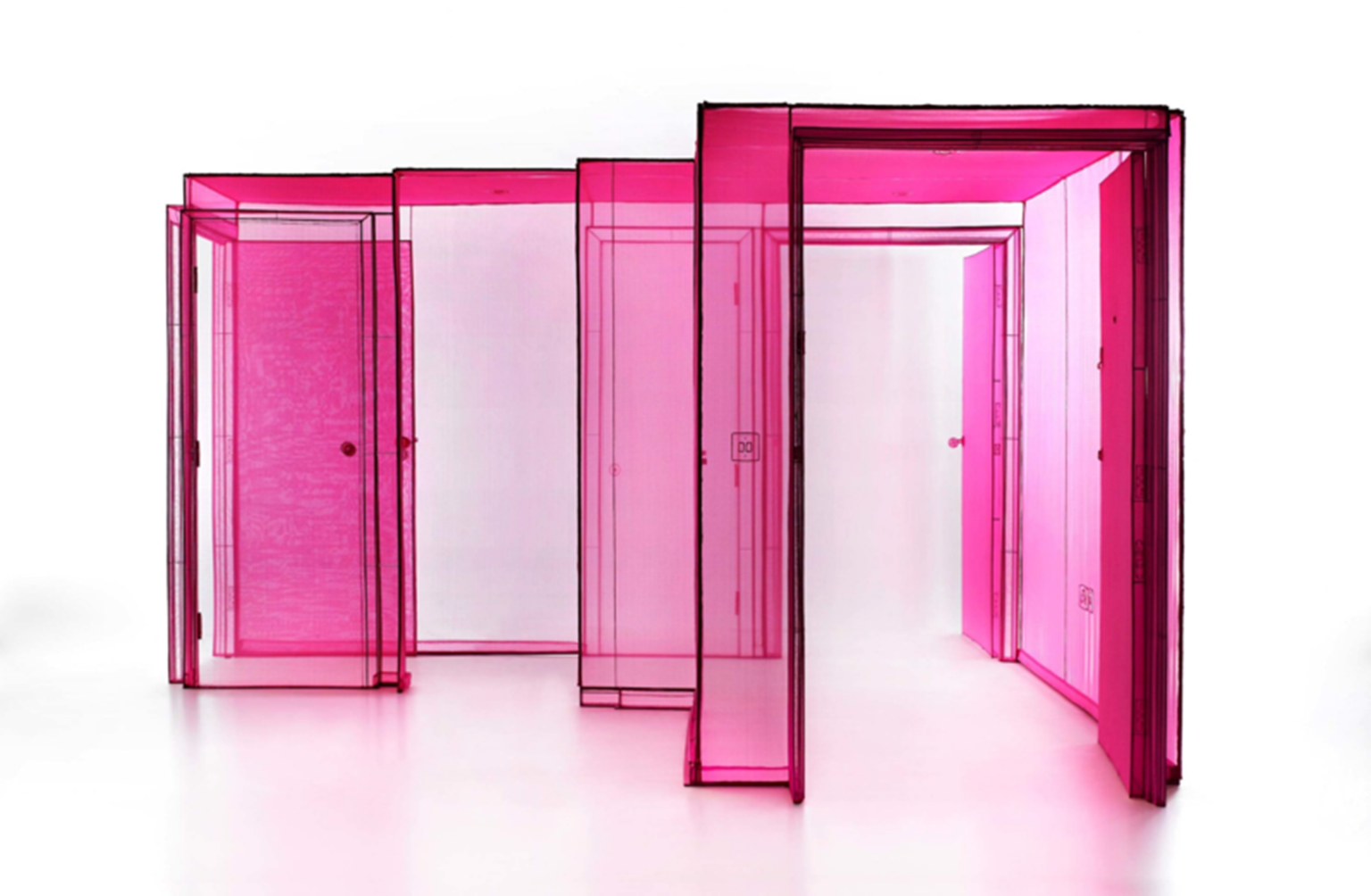
Polyester fabric, stainless steel
215.7 x 471.5 x 370.1 cm
About The Work

Do Ho Suh explores the relationships between space, mobility, and identity, visualizing how contemporary identity is shaped and transformed. His work simultaneously addresses the dichotomies of individual and collective, fixed and fluid, memory and place, creating a layered representation of both physical and psychological experiences. For Suh, space is not merely an architectural structure but a fundamental component of personal identity. His works raise questions about habitation, migration, and fluid existence, reflecting “diasporic life” and “transnational modes of being” in contemporary society. 

Solo Exhibitions (Brief)

Do Ho Suh began gaining international recognition in the late 1990s, with solo exhibitions such as 《Do Ho Suh》(1999, Art Sonje Center, Seoul, Korea) and 《Seoul Home/L.A.》(1999, Korean Cultural Center, Los Angeles, USA). In the early 2000s, he further established his global presence through solo exhibitions in major art institutions in New York and London, including 《Do Ho Suh》(2002, Serpentine Gallery, London, UK) and 《Home in Home》(2012, Leeum, Samsung Museum of Art, Seoul, Korea). These exhibitions contributed to solidifying his artistic concept of “migratory architecture.”

In the 2010s, he expanded his exploration of personal memory and architecture through exhibitions such as 《Do Ho Suh: Passage/s》(2017, Bildmuseet, Umeå, Sweden) and 《Do Ho Suh: Almost Home》(2018, Smithsonian American Art Museum, Washington, D.C., USA). Notably, 《Do Ho Suh: 348 West 22nd Street》(2019, Los Angeles County Museum of Art, Los Angeles, USA) presented a precise recreation of his New York apartment, resonating widely with audiences.

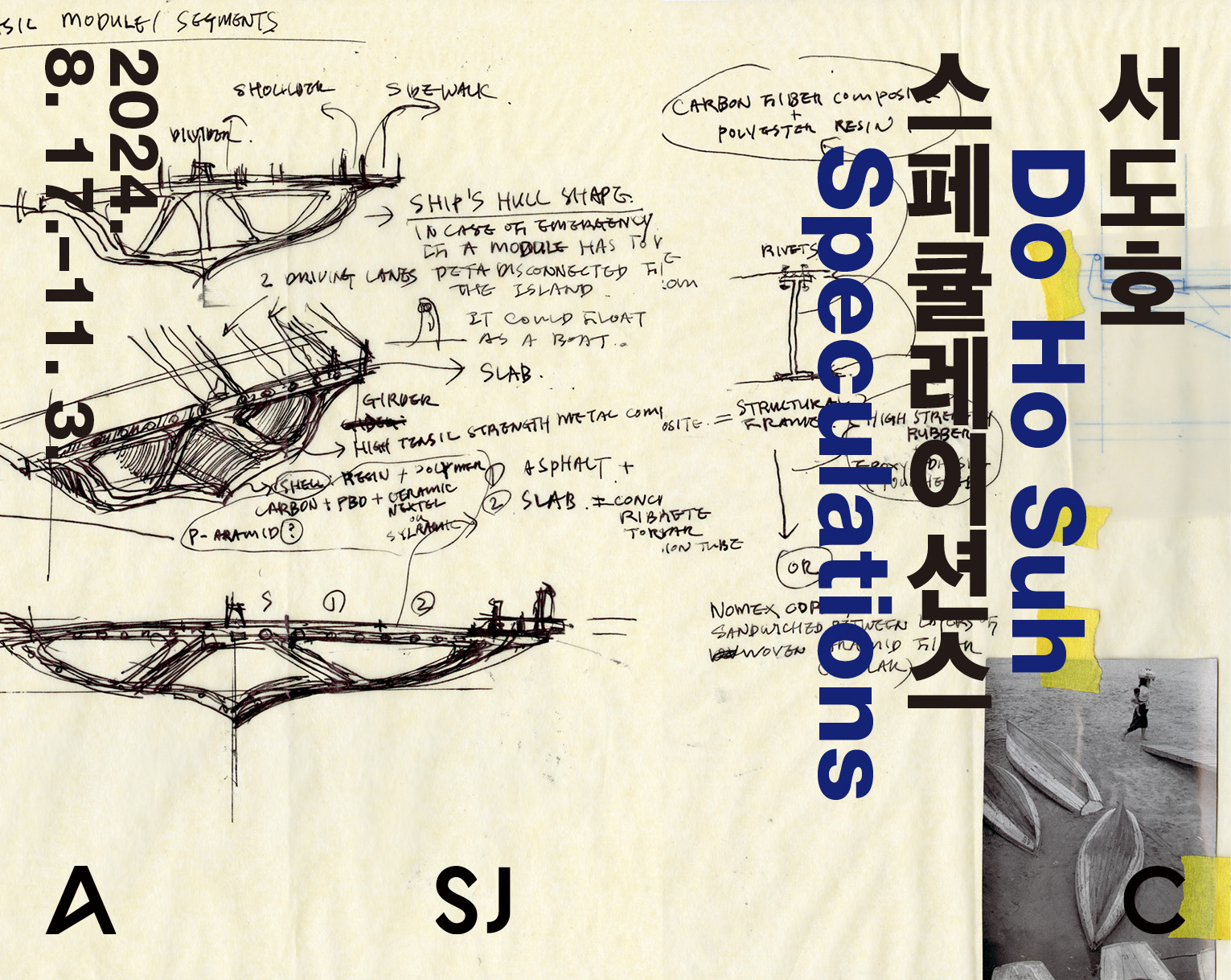
Recently, his solo exhibition 《Do Ho Suh: Speculations》(2024, Art Sonje Center, Seoul, Korea) continued his investigation into space and home, leading up to upcoming major solo exhibitions at Tate Modern, London, UK (2025), further pushing the discourse on architecture, personal memory, and displacement.

Group Exhibitions (Brief)

Do Ho Suh first gained international attention with his participation in 《Venice Biennale Korean Pavilion》(2001, Venice, Italy). His work was later introduced as a key figure in contemporary Korean art in 《Your Bright Future》(2009, Los Angeles County Museum of Art, Los Angeles, USA; Museum of Fine Arts, Houston, USA). In 《Lesson Zero》(2017, National Museum of Modern and Contemporary Art, Korea), he reexamined the historical context of contemporary Korean art.

Throughout the 2010s, he continued to explore architecture, memory, and social issues in exhibitions such as 《Robin Hood Gardens: A Ruin in Reverse》(2018, Victoria and Albert Museum, London, UK) and 《Catastrophe and Recovery》(2021, National Museum of Modern and Contemporary Art, Korea). His works on migration and identity were also featured in 《When Home Won’t Let You Stay: Migration Through Contemporary Art》(2019-2021, Museum of Fine Arts, Boston, USA; Minneapolis Institute of Art, Minneapolis, USA; Cantor Arts Center, Stanford University, Stanford, USA), engaging in global discussions on displacement.

More recently, he has participated in major exhibitions such as 《Super Fusion: Chengdu Biennale 2021》(2021, Chengdu Tianfu Art Park, Chengdu, China) and 《Kak》(2022, HITE Collection, Seoul, Korea), continuing his exploration of the relationship between space and human existence in contemporary art.

Awards (Selected)

In 2017, he was awarded the Ho-Am Prize and in 2013, he received the Innovator of the Year Award in Art from The Wall Street Journal Magazine.

Collections (Selected)

His works are included in the collections of major public and private institutions worldwide, including The Museum of Modern Art(New York, USA), Whitney Museum of American Art(New York, USA), Solomon R. Guggenheim Museum(New York, USA), Los Angeles County Museum of Art(California, USA), Tate Modern(London, UK), Leeum, Samsung Museum of Art(Seoul, Korea), Art Sonje Center(Seoul, Korea), Mori Art Museum(Tokyo, Japan), and 21st Century Museum of Contemporary Art(Kanazawa, Japan), among others.
Works of Art

Weaves Shapes of Memories

Originality & Identity

Do Ho Suh explores the relationships between space, mobility, and identity, visualizing how contemporary identity is shaped and transformed. His work simultaneously addresses the dichotomies of individual and collective, fixed and fluid, memory and place, creating a layered representation of both physical and psychological experiences.

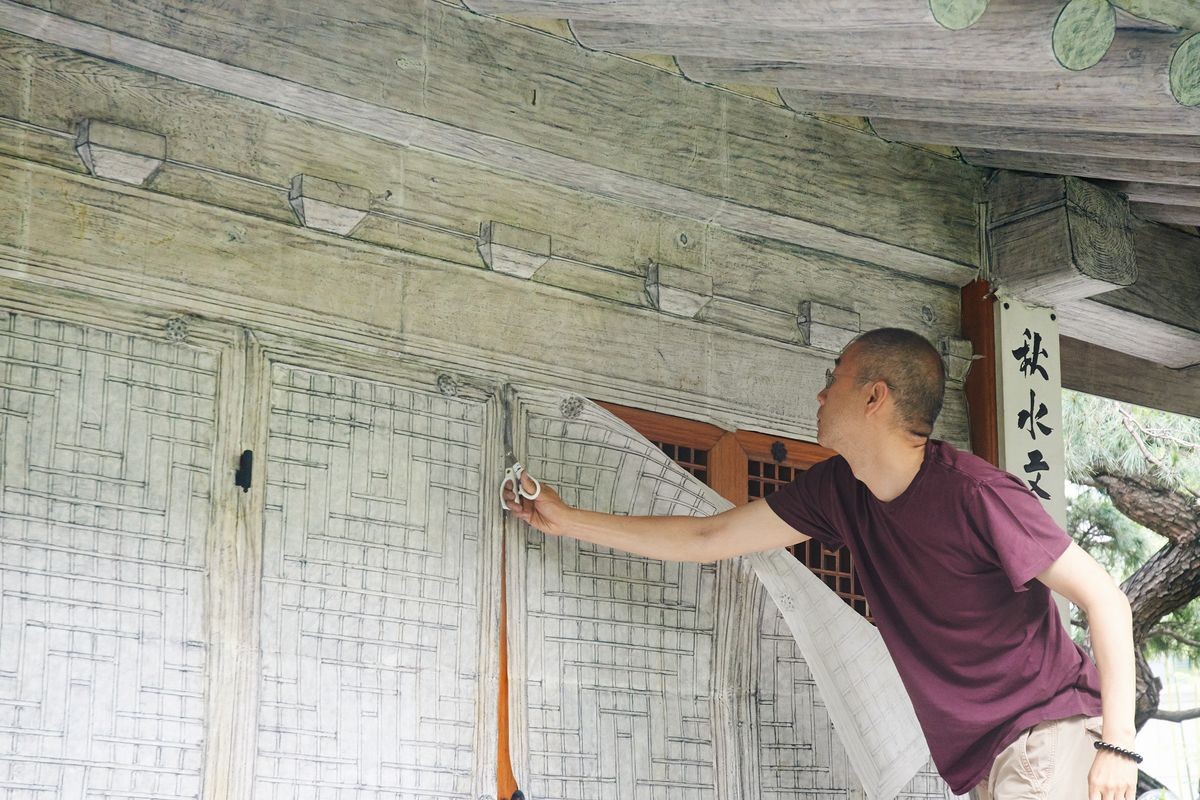
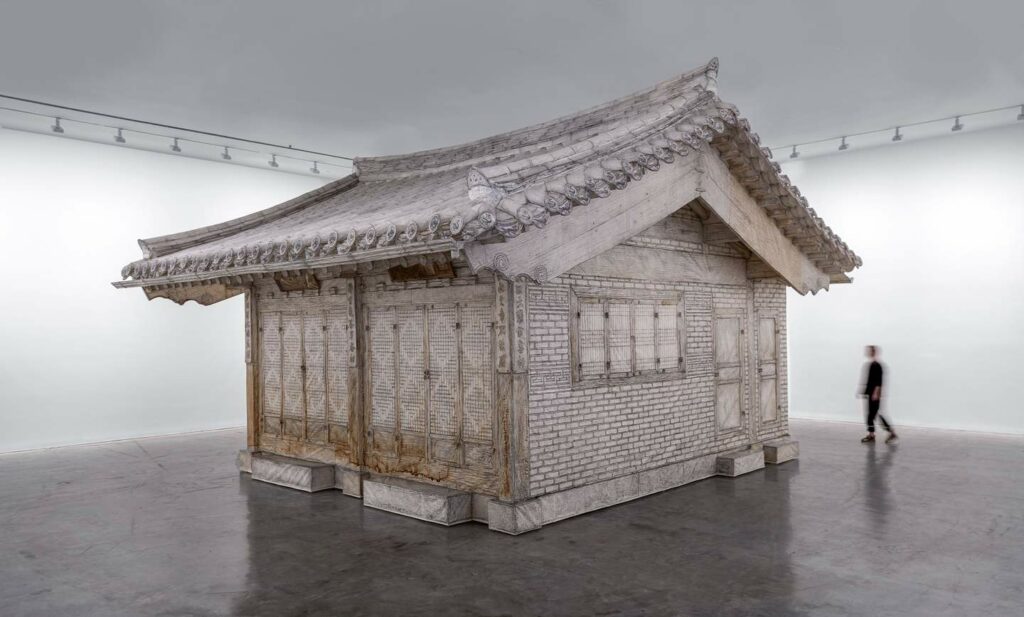
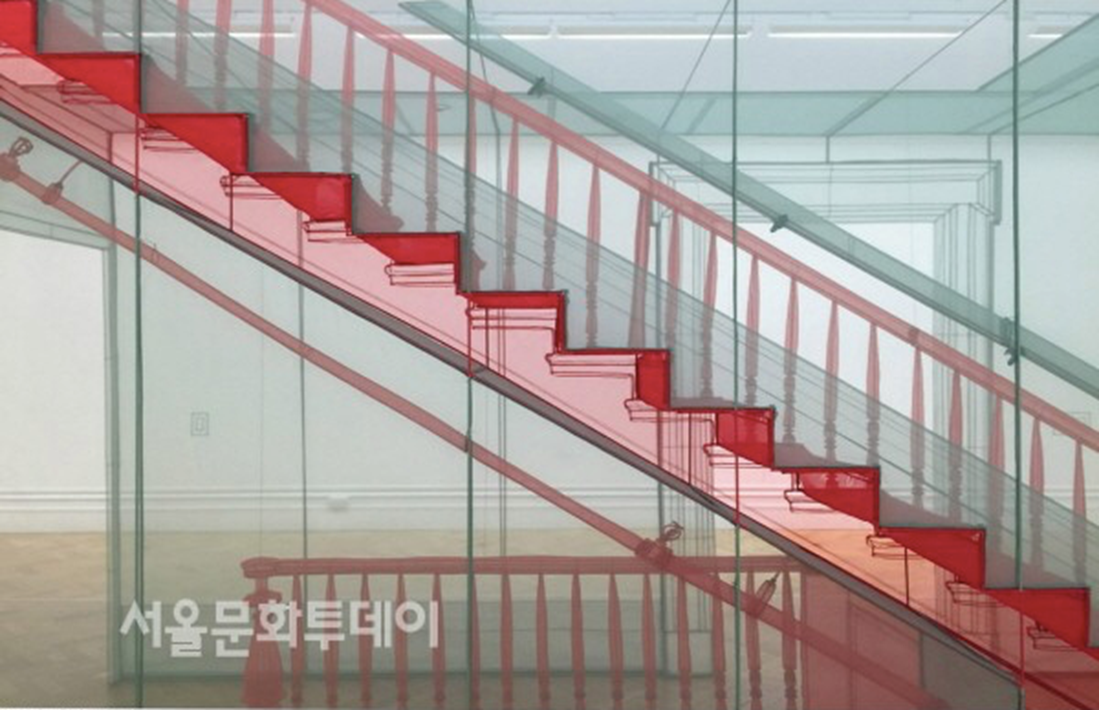
His practice revolves around two primary concepts: “site-specific spatial experiences” and “mobile architectural structures.” A notable work, Seoul Home/L.A. Home(1999, Los Angeles Korean Cultural Center, Los Angeles, USA), recreates the hanok of his childhood in translucent silk fabric, examining the transformation of meaning when a familiar space is transposed into a new environment. Later, 《Home within Home within Home within Home within Home》(2013, National Museum of Modern and Contemporary Art, Seoul, Korea) overlaps architectural structures from Seoul and New York within a single space, visualizing the cultural collision and integration process.

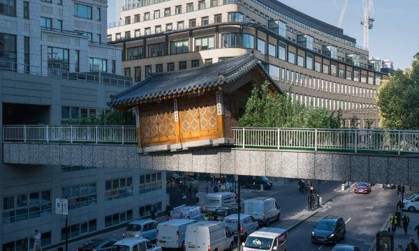
For Suh, space is not merely an architectural structure but a fundamental component of personal identity. His works raise questions about habitation, migration, and fluid existence, reflecting “diasporic life” and “transnational modes of being” in contemporary society. This concept is especially evident in public installations such as 《Bridging Home》(2018, Wormwood Street, London, UK), where a traditional Korean hanok is precariously placed on a pedestrian bridge in London. The piece symbolically visualizes the identity of immigrants and the cultural tensions embedded in urban settings.

Style & Contents

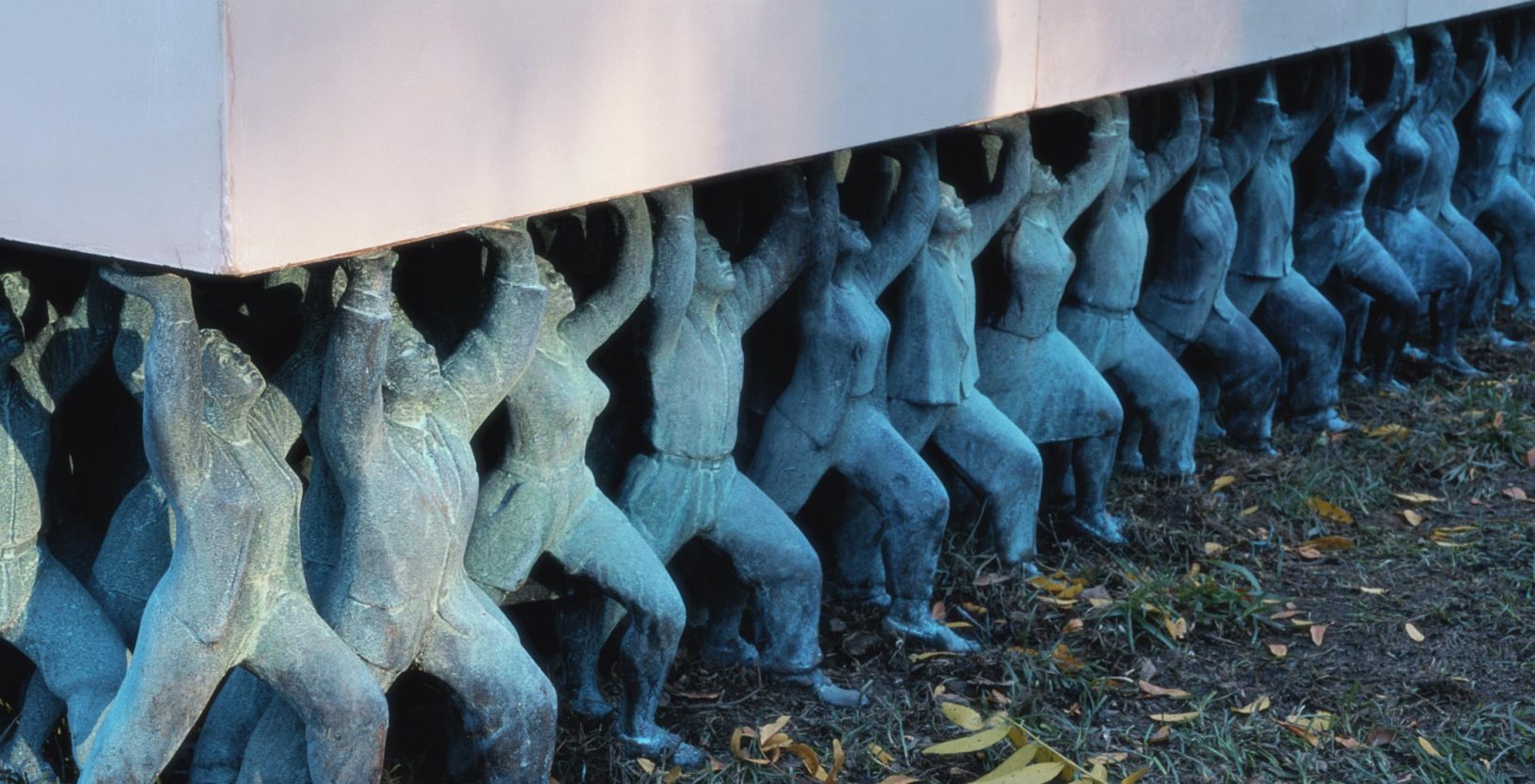
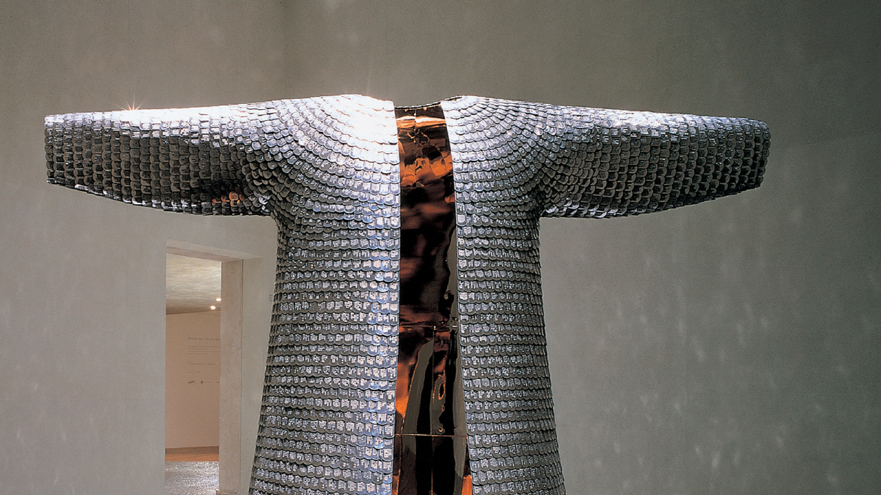
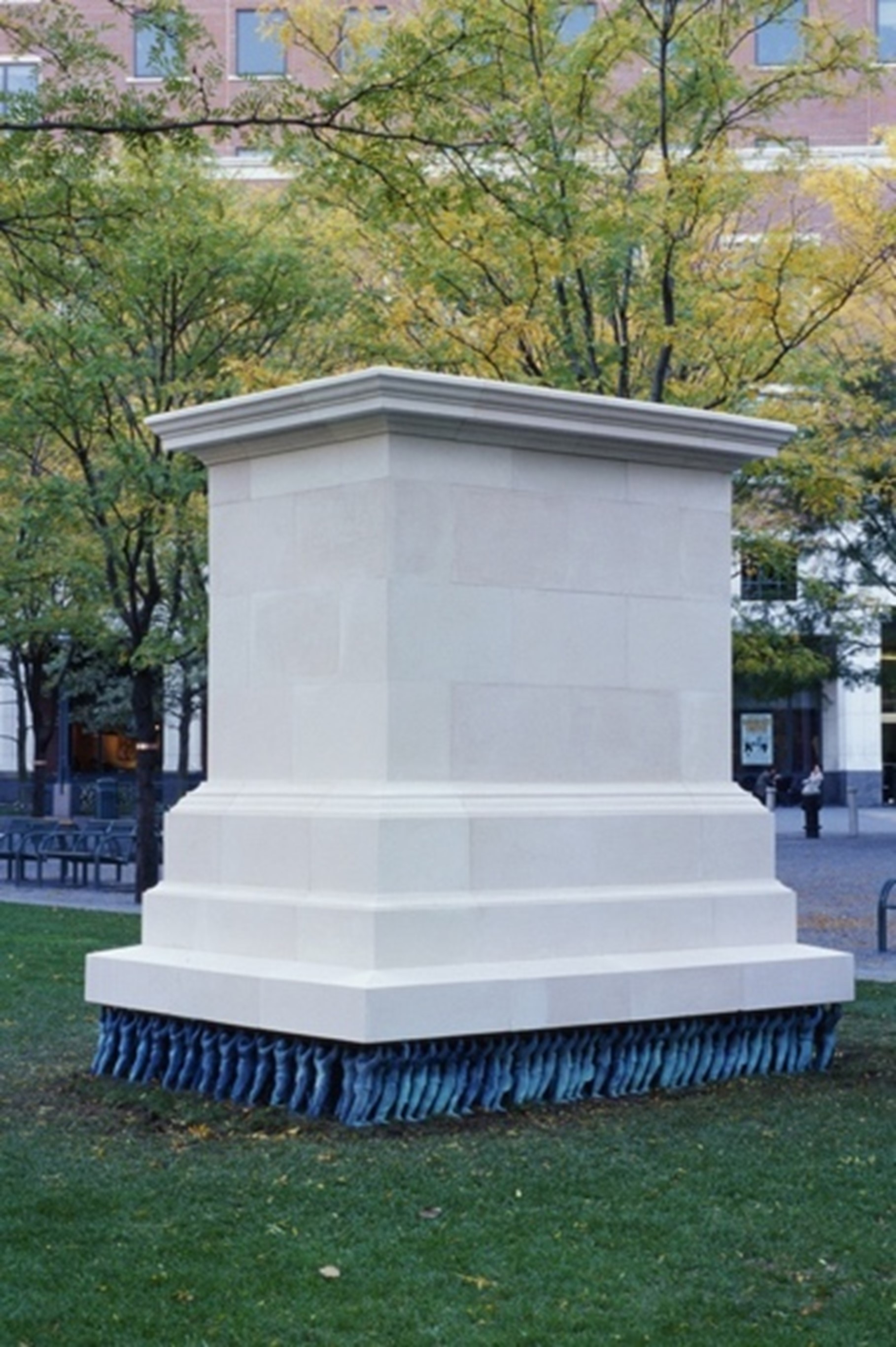
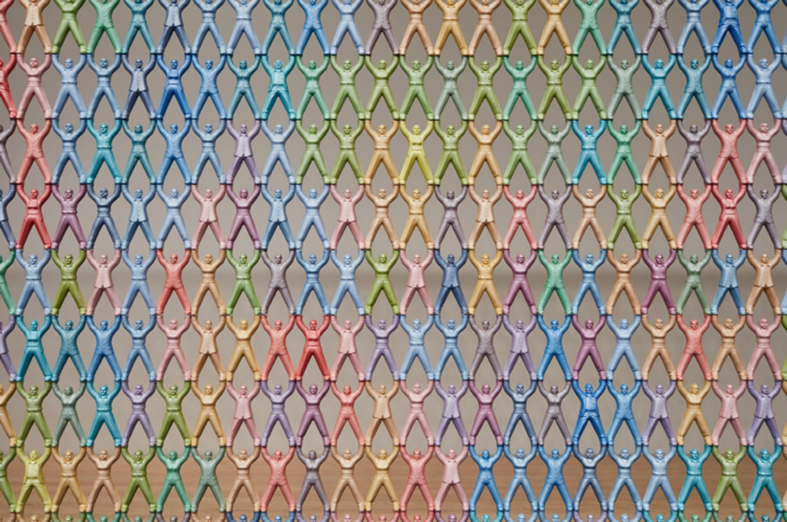
Suh transforms architectural elements into physical spaces that embody memory and bodily experience. One of his key works, Floor(1997-2000, Solomon R. Guggenheim Museum, New York, USA), features thousands of small human figures supporting a glass floor, symbolizing the relationship between individuals and collectives, as well as the structural dependence of society on its members. Similarly, Some/One(2001, Seattle Art Museum, Seattle, USA) is composed of thousands of stainless steel military dog tags forming an enormous suit of armor, reflecting on the anonymity of individuals within collective identity and the symbolism of military culture.

A key aspect of Suh’s work is the mobility of architectural structures. He reinterprets the concept of ‘home’ by transforming fixed architectural forms into portable structures. In 《The Perfect Home II》(2003, Whitney Museum of American Art, New York, USA), Suh recreates his apartment in Chelsea, New York, in fabric, designed to be folded and transported, presenting the idea of a “portable home.”

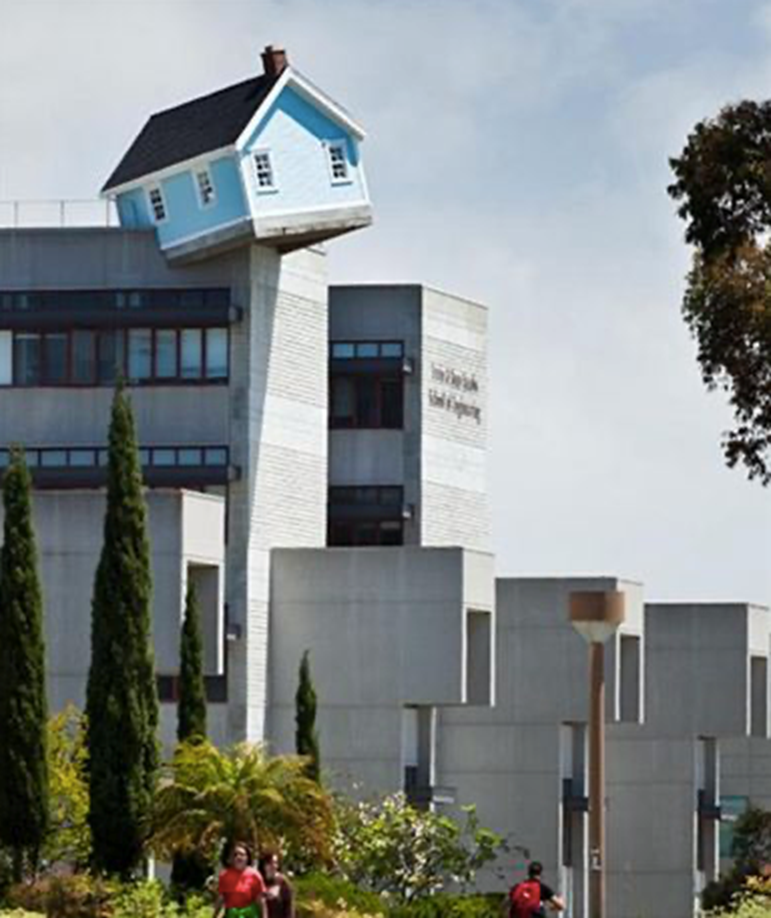
This sense of mobility and physical flexibility is also evident in his public art projects. Fallen Star (2012, Stuart Collection, University of California San Diego, San Diego, USA) is a small house installed at a dramatic tilt on the rooftop corner of UCSD’s engineering building, embodying the experience of cultural displacement and instability through architectural intervention. His works emphasize not only structural experimentation but also the emotional and psychological dimensions inherent in physical spaces.

Topography & Continuity

Do Ho Suh has played a pivotal role in expanding the international presence of contemporary Korean art. He gained global recognition as the Korean representative at the 49th Venice Biennale (2001, Venice, Italy) and subsequently exhibited at major institutions such as Tate Modern (London, UK), Mori Art Museum (Tokyo, Japan), and Whitney Museum of American Art (New York, USA).

His work extends beyond architectural replication to engage with public art that carries sociocultural significance. Commissioned by the Victoria & Albert Museum, 《Robin Hood Gardens: A Ruin in Reverse》(2018, Victoria & Albert Museum, London, UK) documents the interiors of the demolished British public housing complex ‘Robin Hood Gardens.’ Through this video project, Suh explores the historical layers of urban space and the relationship between architecture and memory.

Over more than two decades, Suh has continually developed his artistic inquiry into memory, space, architecture, and mobility, establishing himself as one of the most innovative artists exploring identity through spatial structures. His work, simultaneously experimental in form and deeply reflective of the transnational experience of contemporary life, is expected to continue expanding its reach in the years to come.

Works of Art

Weaves Shapes of Memories

Exhibitions

Activities