Human Copyright Information - K-ARTIST

Human Copyright Information

2007
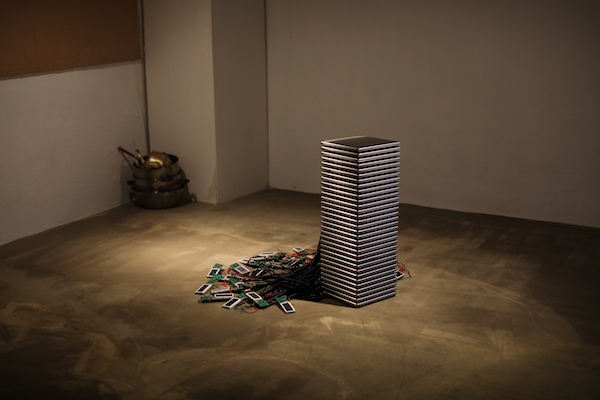
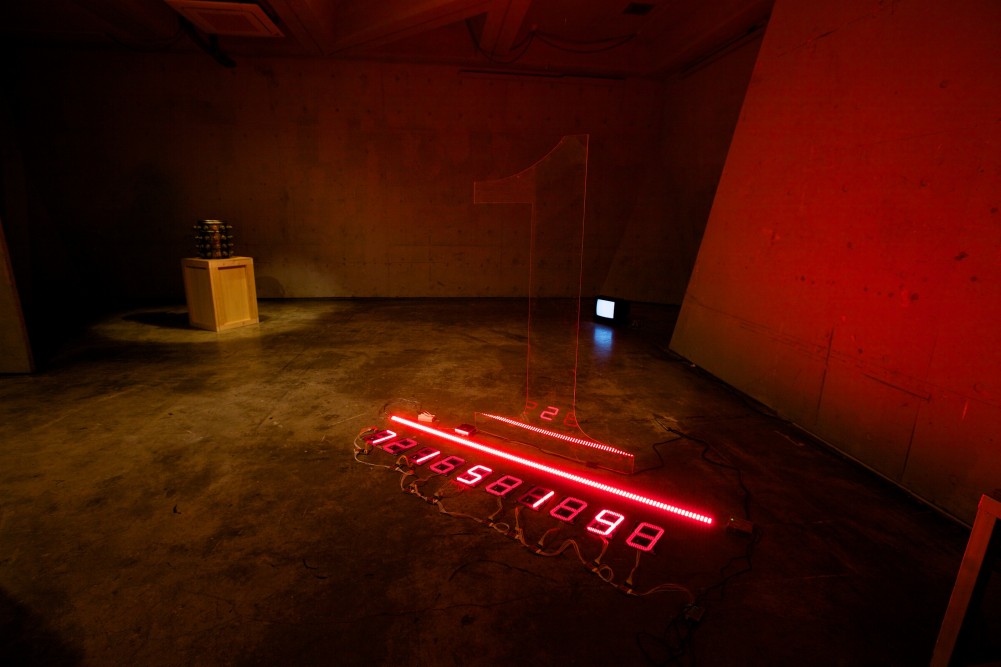
Digital print and installation
Dimensions variable
About The Work

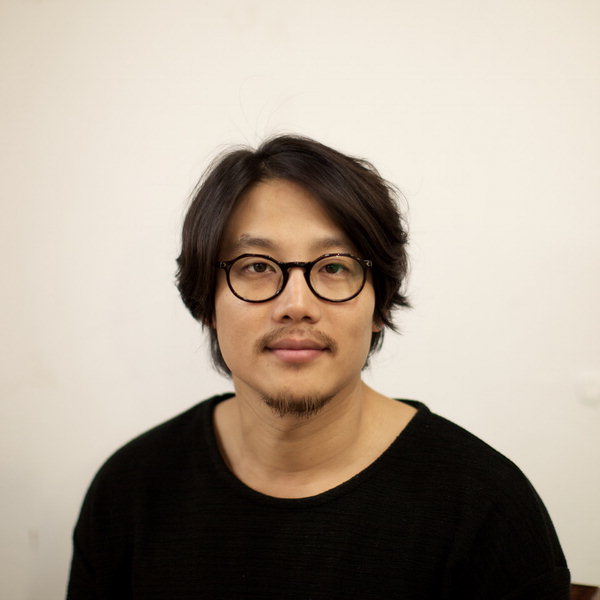
Sangjin Kim’s practice begins with fundamental questions about how humans perceive and understand the world. Systems constructed by humans—such as language and symbols, time and space, religion and institutions—have long been accepted as universal orders. In fact, however, they are shaped by social consensus and convention, and are inherently limited in their ability to fully explain or represent the objects they describe.

Kim examines the arbitrariness and incompleteness of these systems and standards, exploring the gaps and contradictions between perception and reality. By questioning the ways in which language and the senses operate in everyday life, Kim reconsiders how the rules that shape our familiar world are established and maintained.

Through installations that combine sound, mechanical devices, video, sculpture, and everyday objects, Kim transforms abstract concepts into tangible sensory experiences. His works frequently feature devices designed to perform specific functions, such as speakers, printers, air purifiers, and displays.

By placing these devices in contexts that depart from their intended uses or altering the ways in which they operate, Kim creates subtle discrepancies between an object's function and how it is perceived. Bringing together precisely constructed mechanical systems and unpredictable outcomes, his works unsettle viewers' expectations of familiar objects and technologies, at times producing scenes of uncanny humor and absurdity.

Situated at the intersection of media art and conceptual art, Kim’s practice uses technological devices as a means of questioning how humans understand and represent the world. While examining changes in sensory experience brought about by digital technologies, the production and reproduction of information, and the formation of social norms, Kim has consistently maintained an approach rooted in everyday objects and familiar phenomena.

His practice has developed in tandem with the social transformations of the past two decades, during which technology has become deeply embedded in human life, forming a distinctive perspective from which to critically examine contemporary reality.

Solo Exhibitions (Brief)

Sangjin Kim has held solo exhibitions at Kumho Museum of Art (2013), Alternative Space LOOP (2014), out_sight (2016), and Wumin Art Center (2021), among other venues.

Group Exhibitions (Brief)

Sangjin Kim has participated in major group exhibitions at the 4th Moscow International Biennale for Young Art (2014), the National Museum of Modern and Contemporary Art, Korea (MMCA; 2015, 2021), Saatchi Gallery (2017), the Museum of Contemporary Art Busan (2021), the Victoria and Albert Museum (2022), and Buk-Seoul Museum of Art (2023), among others.

Awards (Selected)

Sangjin Kim received the 19th Wumin Art Award in 2020 and was selected as one of four finalists for the Korea Artist Prize 2021, co-organized by the National Museum of Modern and Contemporary Art, Korea (MMCA) and the SBS Foundation.

Residencies (Selected)

Sangjin Kim was selected as a resident artist for the 9th edition of the Kumho Art Studio residency program, operated by the Kumho Museum of Art, in 2013.

Collections (Selected)

Sangjin Kim's works are held in the collections of the Kumho Museum of Art, ARARIO MUSEUM, Museum of Contemporary Art Busan, and the Victoria and Albert Museum (V&A), among others.

Works of Art

Questioning the Rules That Shape Our World

Originality & Identity

Sangjin Kim’s practice begins with a fundamental questioning of how human beings perceive and understand the world. Systems constructed by humanity, such as language, signs, time, space, religion, and institutions, have long been accepted as universal orders. Yet these systems are formed through social agreements and conventions, and inevitably possess limitations in their ability to fully describe or represent their subjects.

Kim examines the arbitrariness and incompleteness of standards commonly regarded as absolute, exploring the gaps and contradictions that emerge between perception and reality. By questioning the operations of familiar languages and sensory experiences, he investigates how the rules structuring our understanding of the world are established and sustained.

These concerns extend to the relationship between originals and copies, reality and representation. Kim has explored how advances in digital technology blur the distinction between originals and reproductions, allowing signs and information to increasingly substitute for reality.

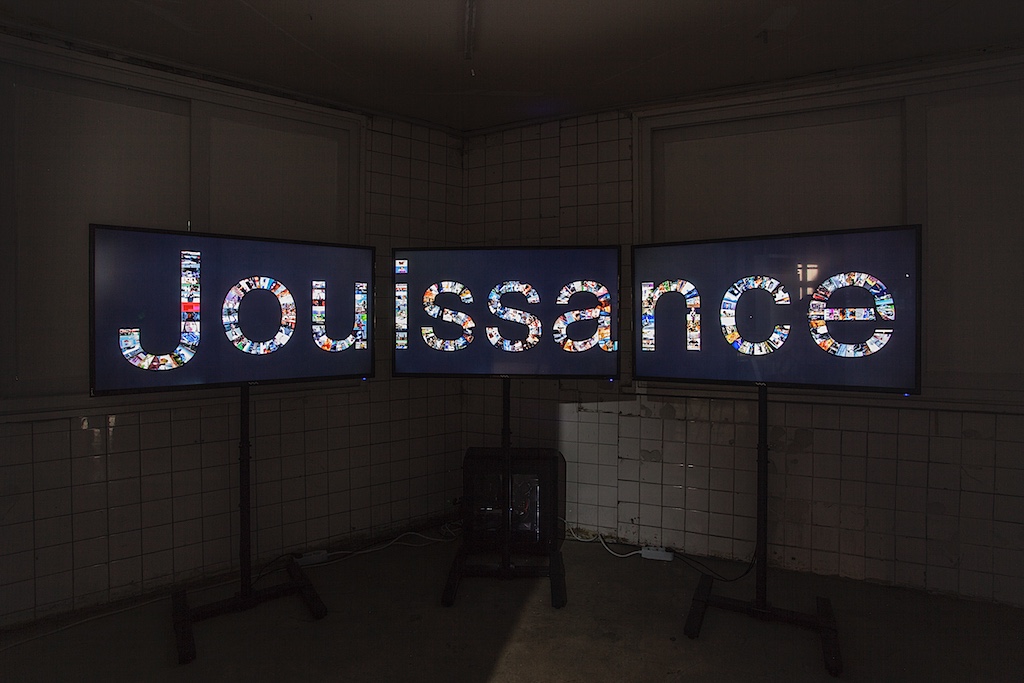
Dog Sounds (2010) reveals the arbitrary relationship between language and its referent by overlapping representations of dogs barking in different languages, while Air Purifier (2011) exposes the discrepancy between sensory experience and mechanical judgment through an air purifier that detects the fragrance of flowers as a pollutant.

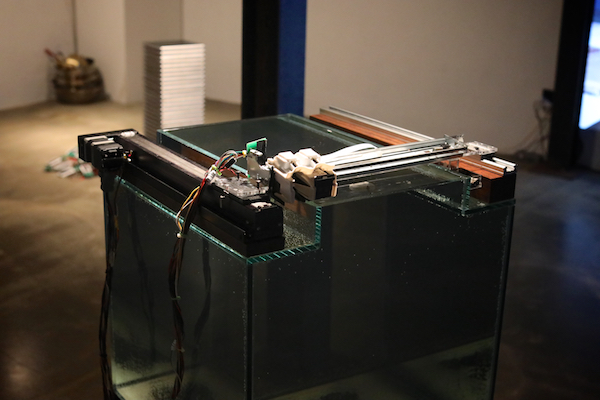
In the 'In Visibility' series, letters and images printed onto the surface of water gradually disperse and intermingle, visualizing the transmission and dissolution of information and the instability of the order embedded in signs. These works present the paradox that systems constructed to represent the world may themselves distort or omit aspects of reality.

The artist’s inquiry has gradually expanded to address the power relations and mechanisms of control embedded within systems of perception. Human-made rules and classifications maintain social order while simultaneously excluding entities and phenomena that fall outside their established categories.

Kim reveals the operations of these structures by collecting elements that resist interpretation within existing systems of signs or by altering the functions and meanings of familiar objects. Acts such as the illicit reproduction of currency and the removal of corporate symbols from advertisements draw attention to how the values assigned to objects and images are sustained through social authority and institutional conventions.

By creating situations in which signs become detached from their established meanings or lose their intended functions, the artist critically examines the structures of control that operate under the principles of rationality and efficiency in contemporary society.

Since the late 2010s, Kim’s practice has increasingly focused on transformations in human existence and identity amid the expansion of digital environments. As the boundaries between the virtual and the real become increasingly indistinct and human experiences are reconstructed through data and images, he explores both the possibilities introduced by technology and the anxieties and emptiness that accompany them.

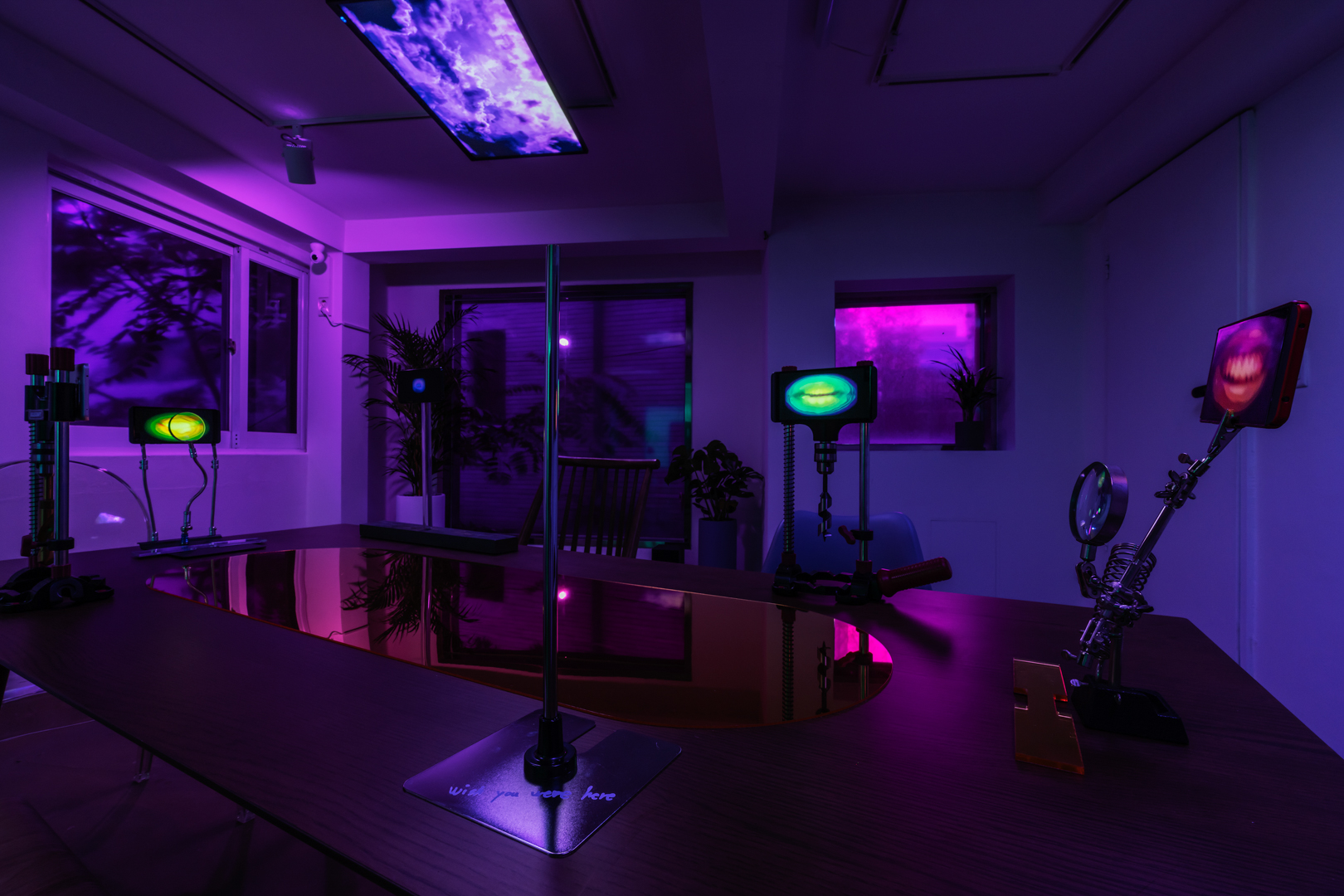
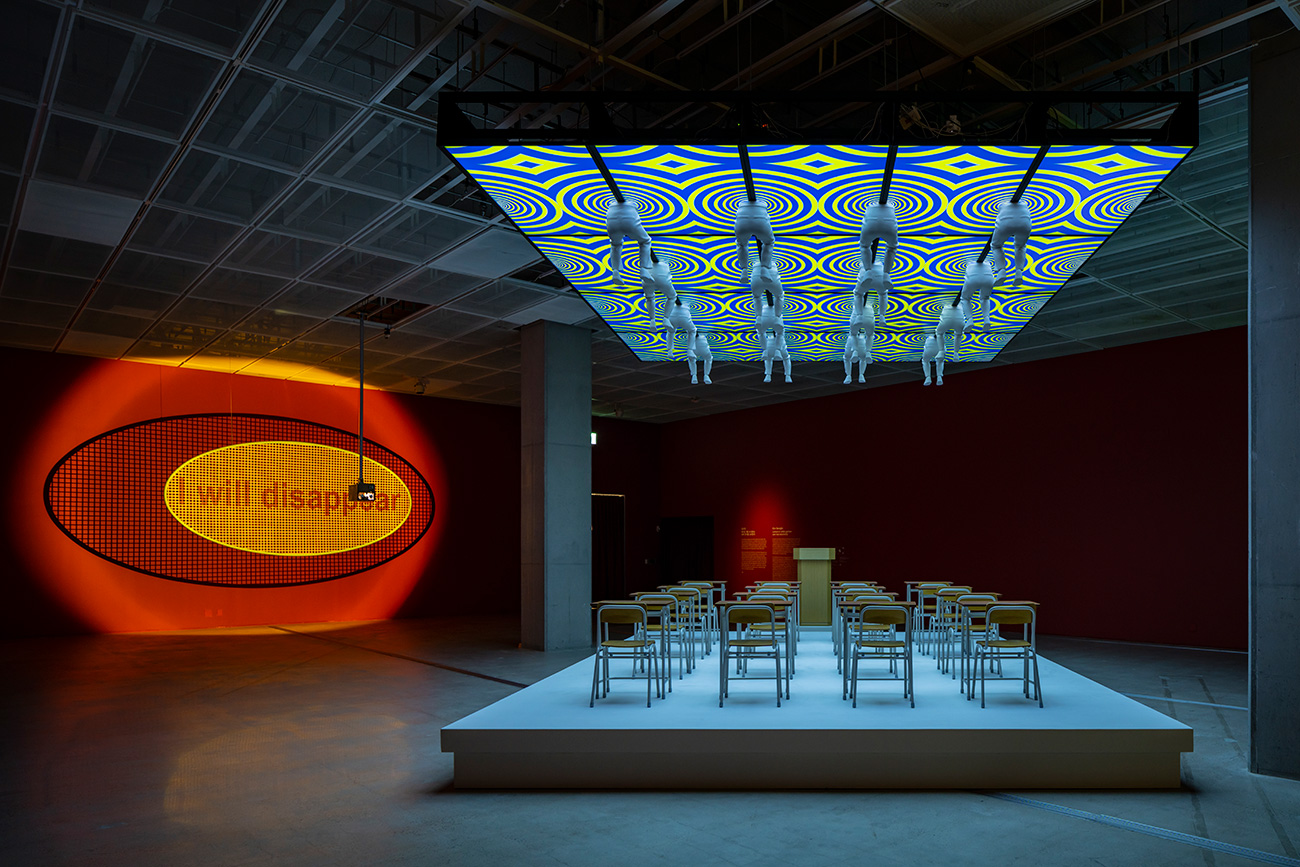
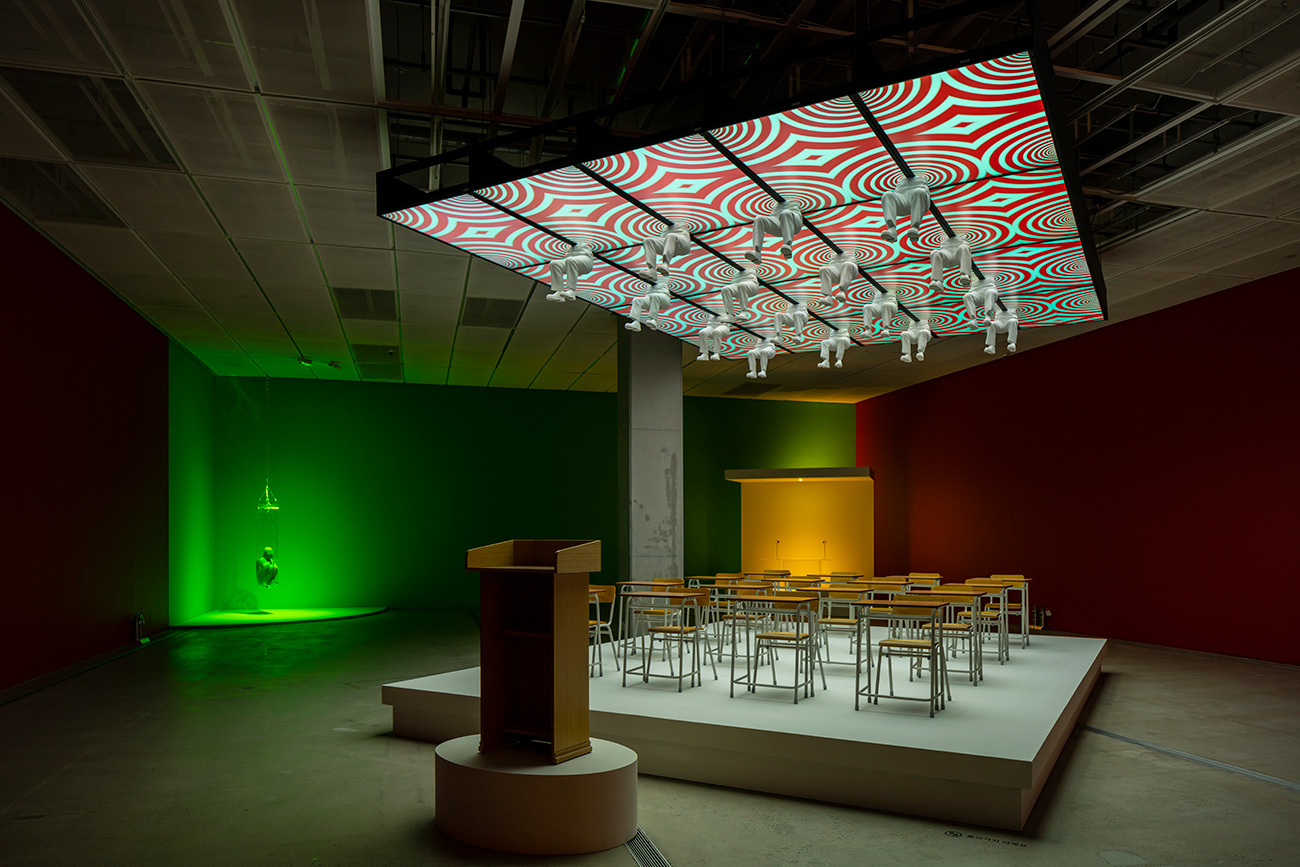
Fuck You and I Will See You Tomorrow (2020) depicts a scene in which human conversation is replaced by interactions between digital devices, while Lo-fi Manifesto_Cloud Flex (2021) portrays contemporary individuals immersed in virtual environments yet unable to escape the physical limitations of their bodies.

Through these investigations, Kim traces the continual reconstruction of human perception and identity within technological environments, persistently questioning the nature of the world we accept as reality and the conditions of human existence within it.

Style & Contents

Sangjin Kim transforms abstract concepts into tangible sensory experiences through installations that combine sound, mechanical devices, video, sculpture, and everyday objects. His works frequently incorporate functional apparatuses such as speakers, printers, air purifiers, and digital displays.

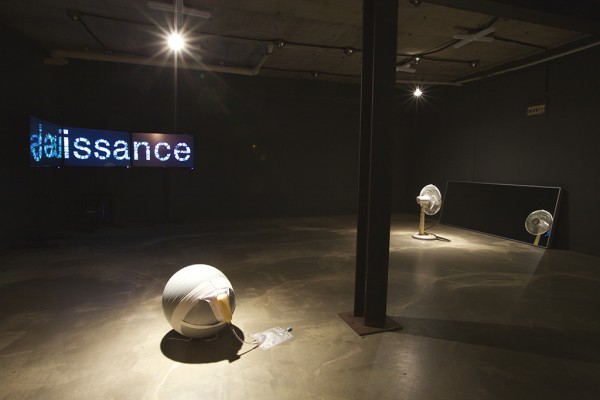
By placing these devices in situations that depart from their intended purposes or modifying their operations, Kim creates subtle discrepancies between the functions of objects and the ways they are perceived. The coexistence of precisely constructed mechanical systems and unpredictable outcomes challenges viewers’ expectations of familiar objects and technologies, often producing scenes marked by peculiar humor and absurdity.

In his early works, Kim experimented with the relationship between physical subjects and their sensory representations through sound reproduction and mechanical movement. Dog Sounds (2010) simultaneously plays 48 onomatopoeic representations of barking collected from 40 languages, creating a situation in which distinct linguistic meanings dissolve into an indistinguishable mass of noise.

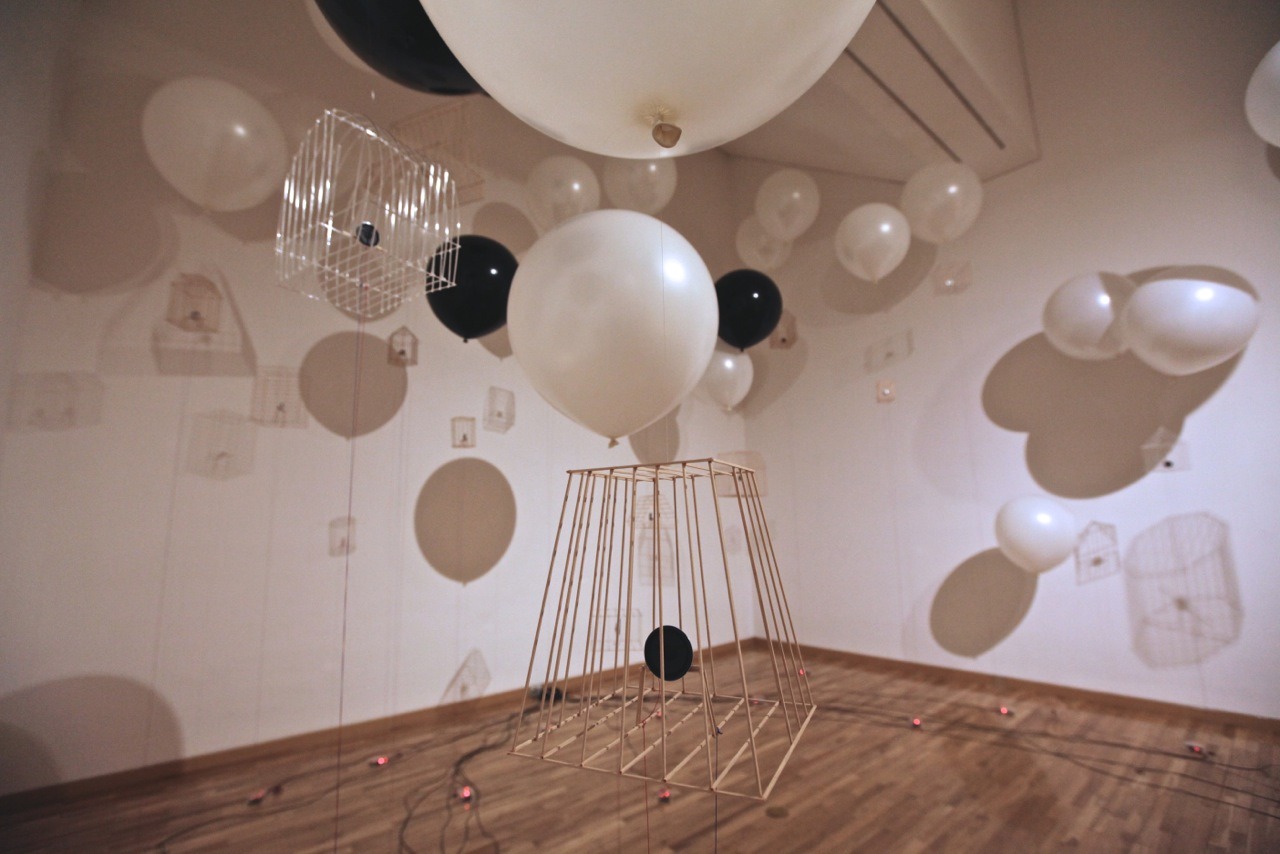
In Meditation (2013), the movements of machines seemingly striking wooden percussion instruments are disconnected from the sounds reproduced through speakers, while Icarus Stuffed Birds (2013) presents suspended birdcages emitting birdsong in the absence of actual birds. In these works, sound suggests the presence of an object while simultaneously preventing its physical source from being confirmed. Viewers encounter the limitations of representation through discrepancies between the visual information provided by the apparatuses and their auditory experiences.

The transformation of objects and the meanings of signs over time also constitutes an important formal characteristic of Kim’s installations. In the 'In Visibility' series, printers repeatedly produce letters and images on the surface of water, only for the ink to dissolve and lose its form. As the printing continues, the initially transparent tank gradually becomes opaque with accumulated signs, paradoxically allowing the accumulation of information to result in a loss of legibility.

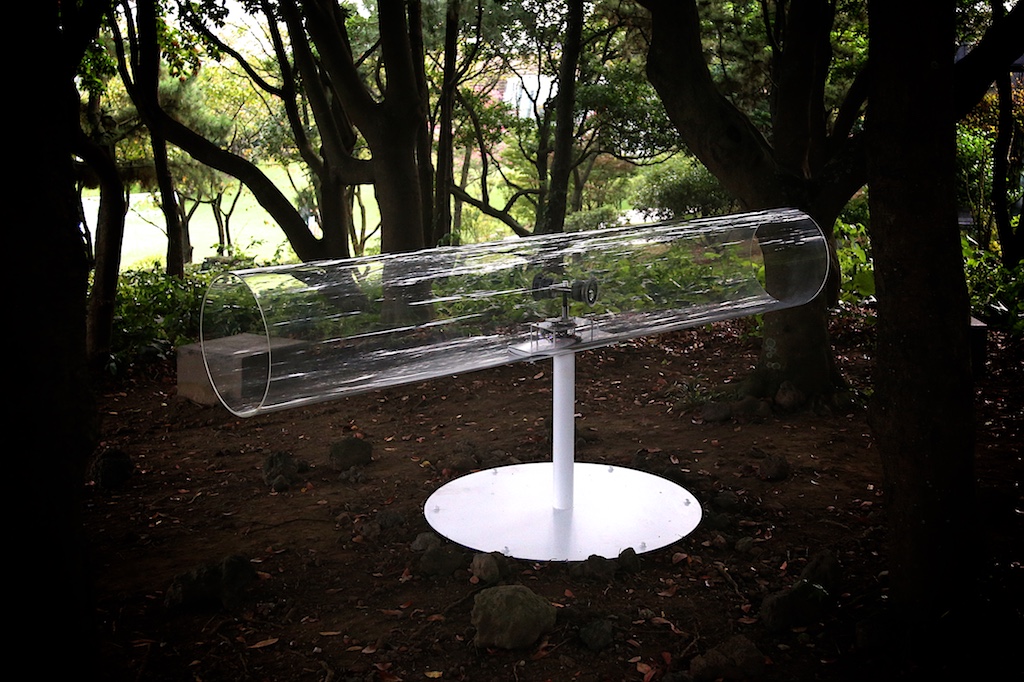
In Air Purifier (2011), an air purifier operates inside a sealed glass enclosure to eliminate the fragrance of flowers, which gradually wither in the process. By incorporating repetitive mechanical operations and material transformations into his works, Kim reveals how contradictory outcomes can emerge even when systems appear to function as intended.

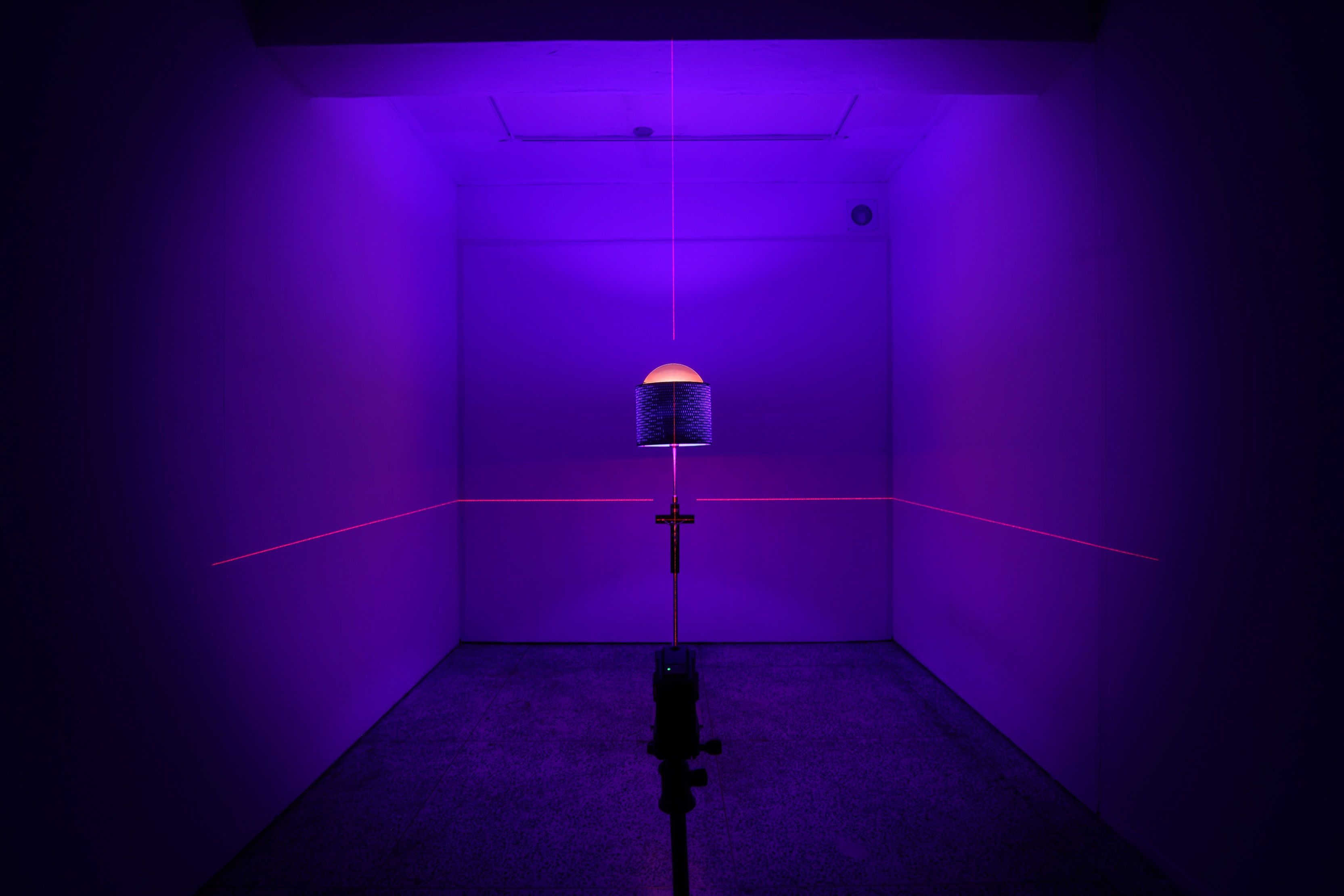
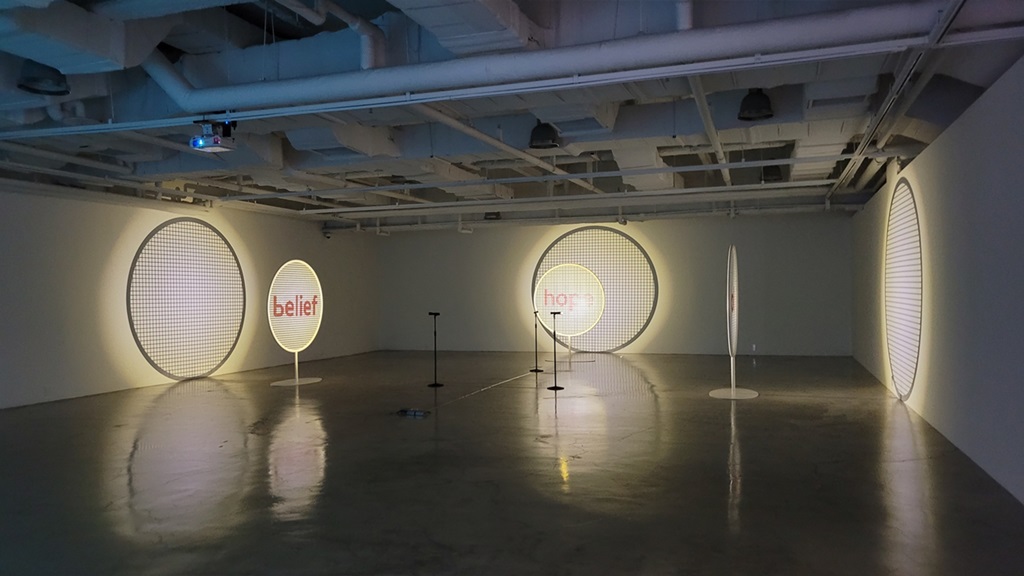
Since the late 2010s, Kim’s practice has increasingly emphasized the theatrical arrangement of text, images, lighting, and video throughout exhibition spaces. Crosscheck (2019) superimposes a Christian cross and the crosshairs of a laser level, bringing religious symbolism and the standards of scientific measurement into visual confrontation. In belief, hope, love, intense illumination produces shadows in which the letters disappear while the grid structure remains, revealing the relationship between presence and absence.

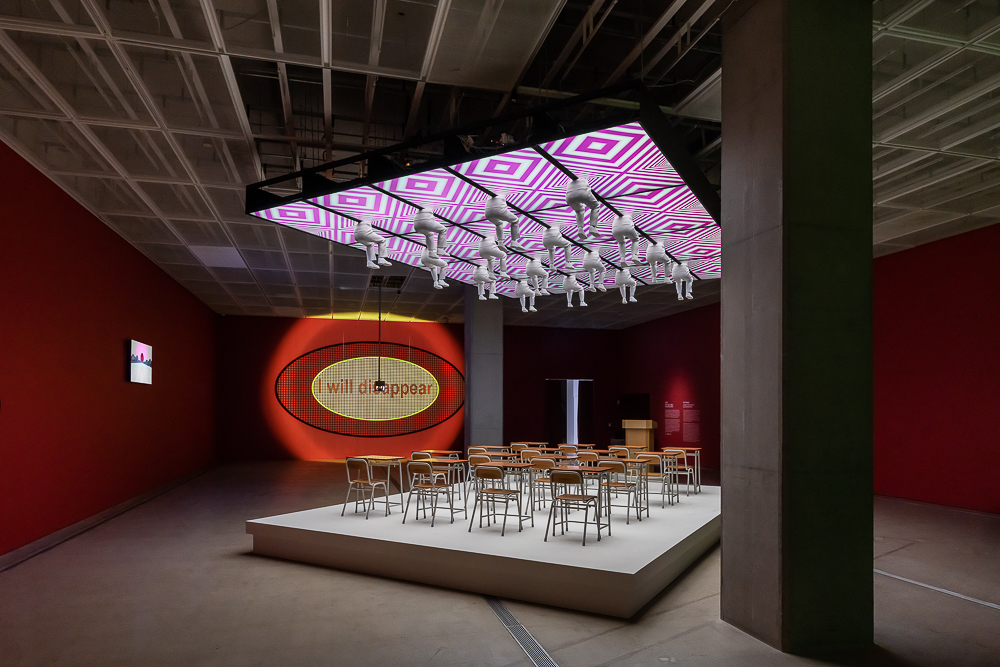
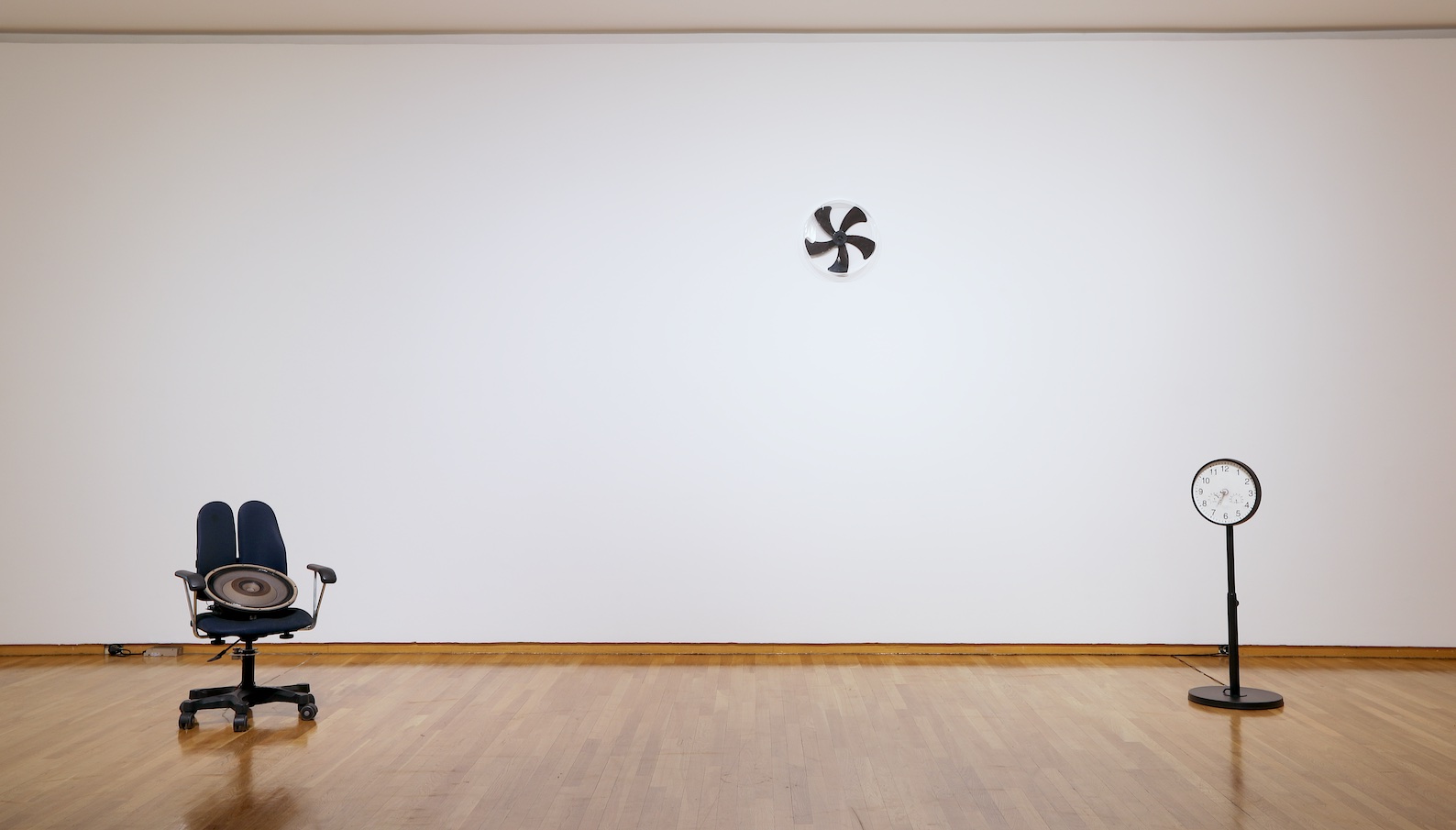
Such spatial compositions have subsequently expanded into works combining digital imagery with physical objects. Fuck You and I Will See You Tomorrow (2020) arranges smartphones, displays, and furniture to stage a scene of conversation without human participants, while Lo-fi Manifesto_Cloud Flex (2021) combines repetitive imagery across 20 screens, music, and sculptural representations of bodies emerging above desks to visualize human immersion in virtual environments.

Through these carefully orchestrated relationships between sound, imagery, and physical objects, Kim encourages viewers to experience the boundaries between reality and representation through their own senses.


Topography & Continuity

Since the mid-2000s, Sangjin Kim has explored the relationship between technology and human perception through conceptual installations incorporating sound, mechanical devices, and digital media. Situated at the intersection of media art and conceptual art, his practice employs technological apparatuses to question how human beings understand and represent the world.

While examining transformations in sensory experience, the production and reproduction of information, and the formation of social norms amid technological advancement, Kim has consistently maintained an approach grounded in everyday objects and familiar phenomena. This artistic position has developed alongside the social transformations of the past two decades, during which technology has become increasingly embedded in human life, shaping a distinctive practice that critically examines contemporary reality.

Kim’s early works concentrated on the limitations of language and sensory perception, as well as the relationship between originals and their representations. The discrepancies between perception and reality explored in Dog Sounds (2010) and Air Purifier (2011) developed into broader investigations of digital reproduction and signification in his 2013 solo exhibition 《Landscape: Chicken or Egg》 at the Kumho Museum of Art.

His subsequent exhibition 《Phantom Sign》, held at Alternative Space LOOP in 2014, examined how sensory experience is conditioned by technological systems through the recording and reproduction of sound. These works exposed the inherent limitations of linguistic, visual, and auditory representation while emphasizing how human perception is shaped by particular technological and social conditions.

Through these experiments, Kim established the relationships between signs and reality, perception and systems, as central concerns that would continue to inform his subsequent practice.

By the mid-to-late 2010s, Kim’s interests had expanded from individual perception to the structures of social norms and control. Works presented in his 2016 solo exhibition 《Control beyond control》 investigated how language and signs classify and regulate reality, as well as the operations of power embedded within these processes.

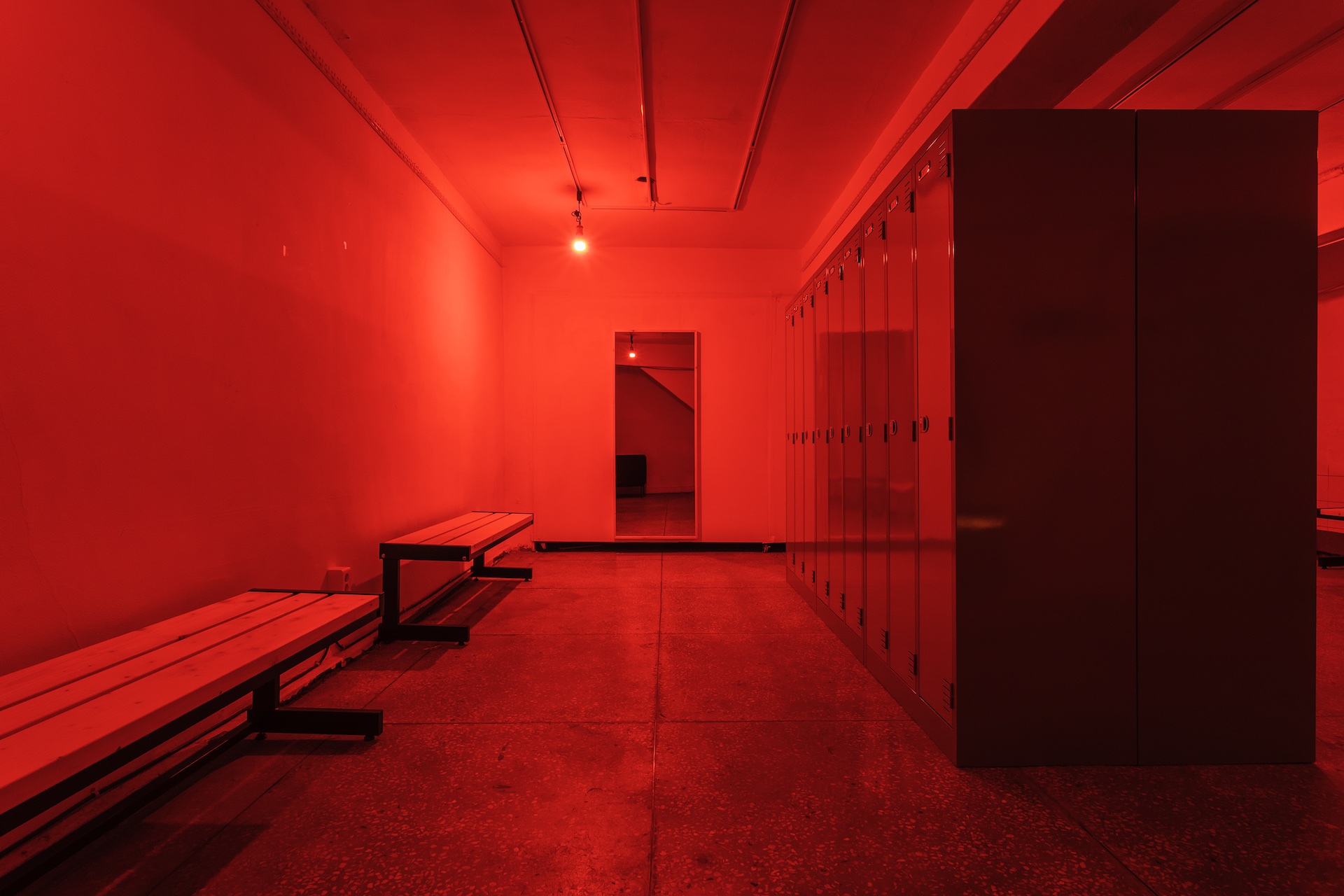
In Crosscheck (2019) and Evil Residence (2019), he explored the instability of established orders by presenting situations in which divergent value systems, such as religious belief and scientific rationality or good and evil, collide or coexist. Alongside his artistic practice, Kim served as director of the exhibition space out_sight from 2016 to 2021, combining artistic production with curatorial activities. This experience demonstrates how his practice has extended beyond the production of artworks to encompass the presentation and discussion of contemporary art.

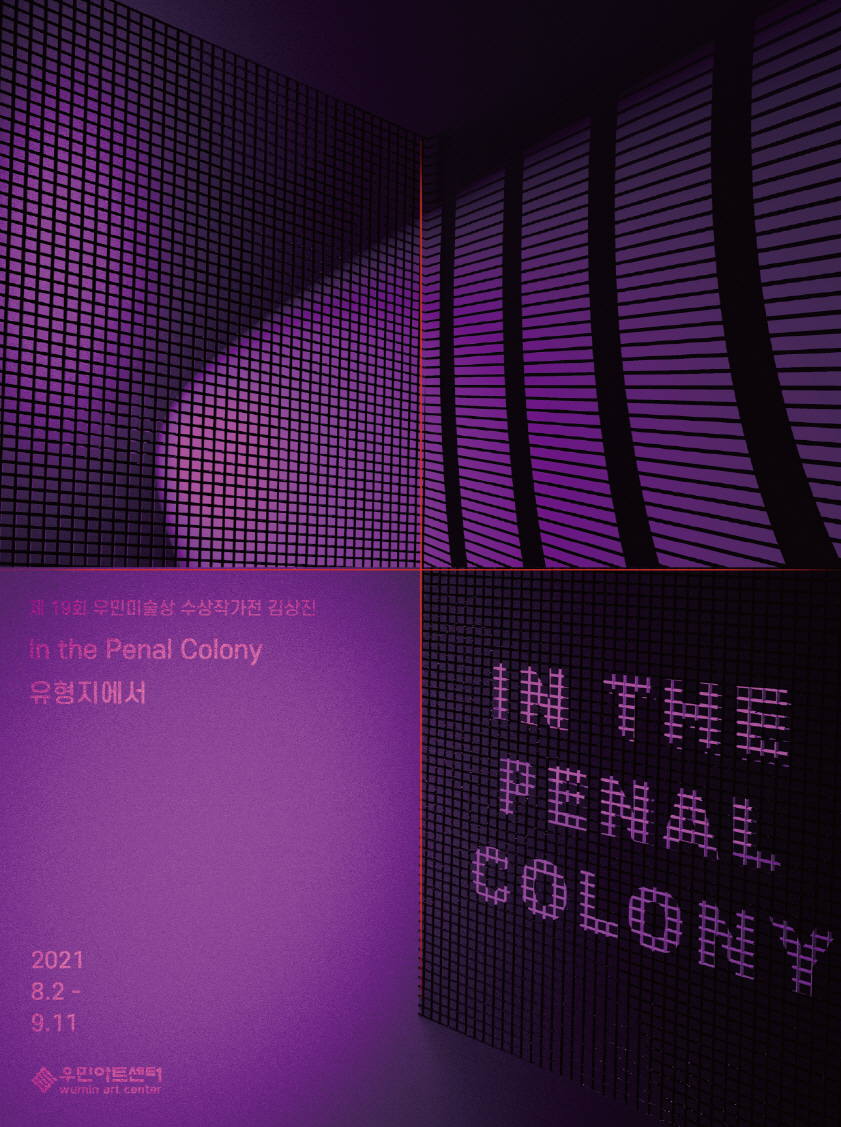
From 2020 onward, the pandemic and rapid transformations in digital environments became significant contexts for Kim’s work. His 2021 solo exhibition 《In the Penal Colony》 at Wumin Art Center examined ruptures in human-made systems of order and the operations of power through religious symbols, language, and moving images.

In the same year, his presentation at 《Korea Artist Prize 2021》 at the National Museum of Modern and Contemporary Art, Korea (MMCA), explored contemporary life in which virtual environments and physical reality coexist. In particular, Lo-fi Manifesto_Cloud Flex (2021) extended his longstanding concerns into new technological conditions by revealing the contradictions between the human mind immersed in digital environments and the limitations of the physical body.

Throughout these developments, Kim has continually engaged with changing technologies and social phenomena while sustaining his central inquiry into the discrepancies between human perception and reality and the inherent imperfections of constructed systems. His practice continues to critically examine how transformations in technological environments reshape human senses, values, and modes of existence.

Works of Art

Questioning the Rules That Shape Our World

Articles

Exhibitions

Activities