Dance Dance Dance #2 - K-ARTIST

Dance Dance Dance #2

2006
Digital C-print
50.8 x 50.8 
About The Work

Jinkyun Ahn has developed an experimental practice grounded in an exploration of reproducibility, an intrinsic property of the photographic medium. In particular, he draws a parallel between the principle of photographic reproduction and the resemblance between parents and children, using it to examine family relationships, the power structures operating within them, and questions of life and death. In his work, photography functions not only as a means of documenting reality but also as a tool for questioning relationships and hierarchies that we take for granted.

The artist approaches the resemblance between parents and children as a relationship between an original and its copy, expanding his personal family history into an inquiry into the photographic medium. This line of inquiry leads to a range of formal experiments, including revealing both figures and photographic equipment within the frame, flipping images upside down, and corrupting digital data. He also cuts photographic prints and assembles them into three-dimensional installations, questioning how photography represents reality and what it leads viewers to believe.

Through these practices, Ahn stages scenes in which he himself becomes the photographic subject, investigates the mechanisms of the photographic medium, and experiments with installations that move beyond the conventions of traditional photography. These experiments unsettle the established order of relationships built around resemblance, encouraging viewers to reconsider values and ideas often regarded as natural or absolute.

Solo Exhibitions (Brief)

Jinkyun Ahn has held solo exhibitions including 《Permanent Vacation》 (SeMA Storage, Seoul, 2022), 《Slice》 (Artspace Boan 2, Seoul, 2019), and 《Hanged Man》 (Efremidis Gallery, Berlin, 2019).

Group Exhibitions (Brief)

Ahn has also participated in numerous group exhibitions, including 《etcetera》 (SeMA Nanji Residency, Seoul, 2024), 《Ghost Light》 (Space Æfter, Seoul, 2023), 《NANJI ACCESS with PACK: Mbps》 (Seoul Museum of Art, Seoul, 2022), 《River of Inspiration》 (Gana Art SOUNDS, Seoul, 2020), 《The Art of Fighting》 (SeMA Nanji Residency, Seoul, 2018), and 《Intro》 (MMCA, Seoul, 2015).

Residencies (Selected)

Ahn was an artist-in-residence at the SeMA Nanji Residency (2023) and the MMCA Residency Goyang (2015).

Works of Art

A Photographic Approach to Subverting Hierarchies of Resemblance

Originality & Identity

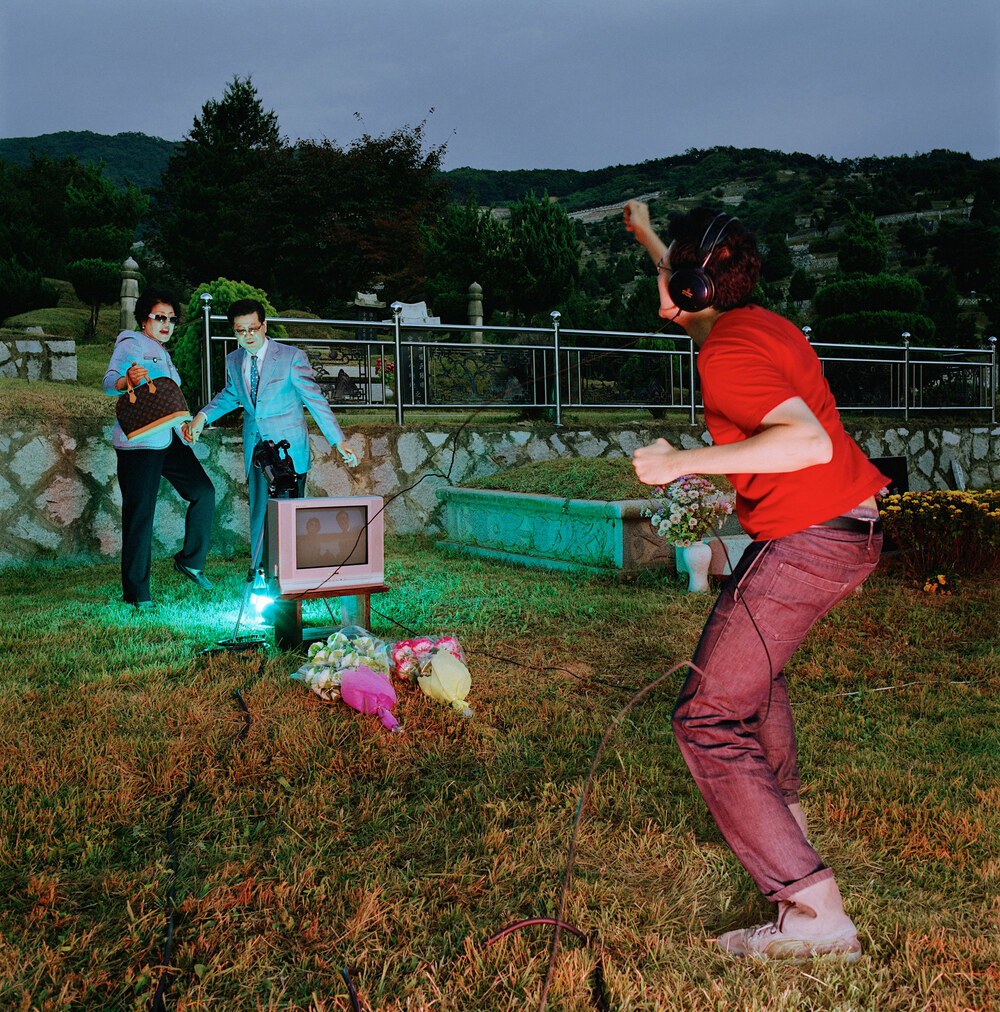
Jinkyun Ahn explores family relationships, the authority operating within them, and questions of life and death by drawing parallels between photographic representation and the resemblance between parents and children. In his practice, photography serves not only as a means of recording reality but also as a tool for questioning relationships and structures that we ordinarily take for granted. His early series ‘Dance Dance Dance’ (2006) marks the starting point of these concerns.

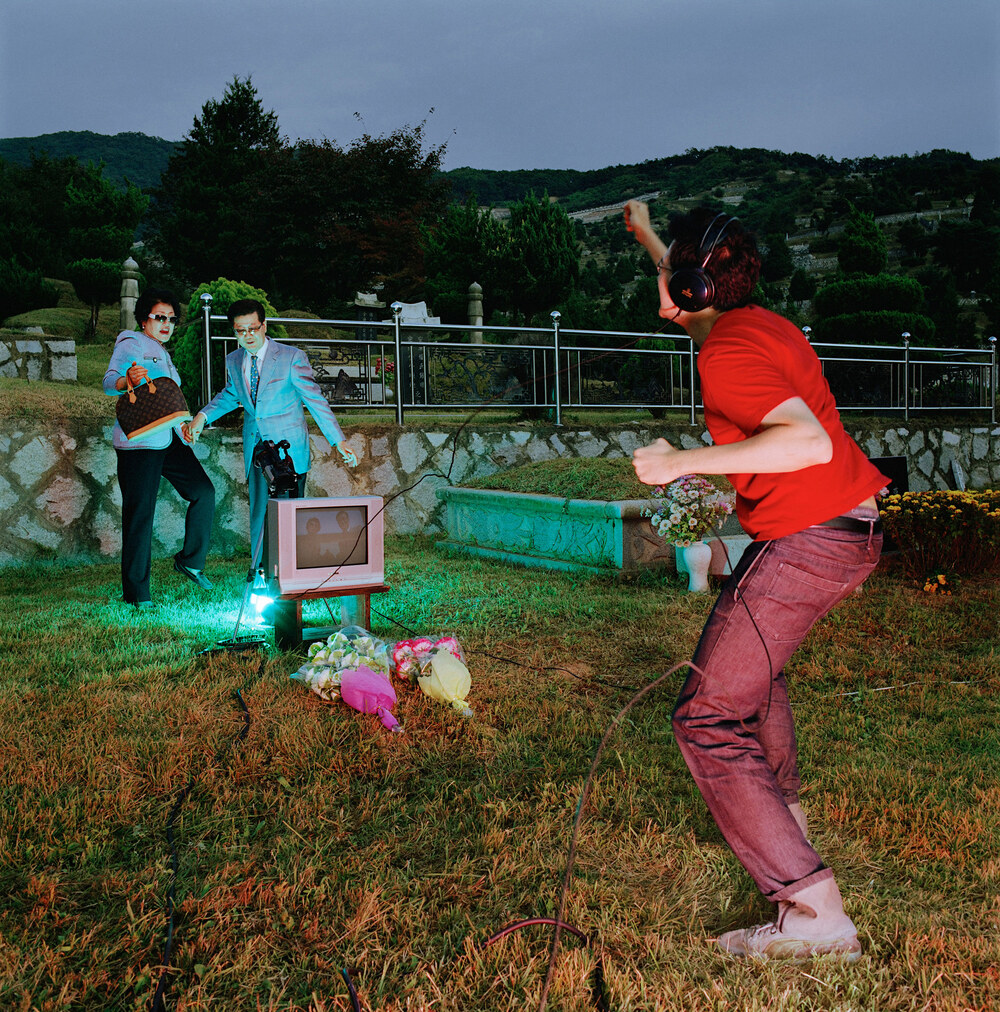
Ahn stages a scene in which he dances with his parents at the empty burial plot where they will eventually be buried. The comical yet vigorous dance performed at a place associated with impending death becomes both an act of resistance against an inevitable fate and a cynical gesture by someone who knows that this fate cannot be changed.

In the ‘Masquerade’ (2006) series, he similarly challenges the fixed roles and authority associated with family relationships by placing masks on his parents and altering the conventional composition of family photographs. From this early period, humor has functioned in Ahn’s work not simply as a means of provoking laughter but as a way of temporarily viewing an inescapable reality from a different perspective.
 
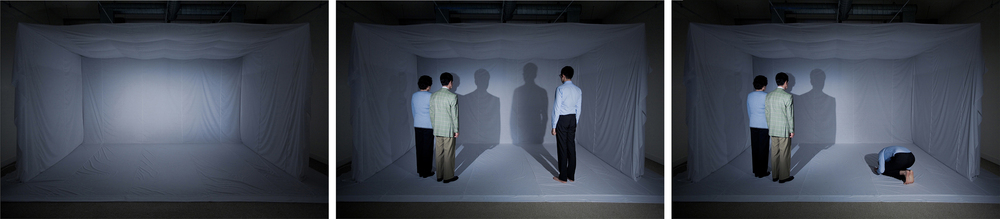
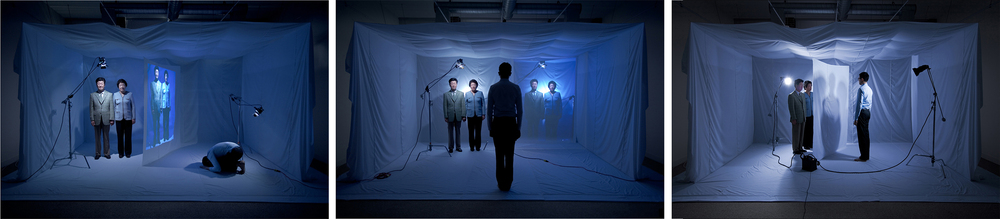
These concerns develop into a more focused investigation of the cultural structures governing family relationships and the principles of photographic representation in the ‘Encave’ (2010) series. Confronted with his parents’ empty burial plot and the realization that he will inevitably witness their deaths, Ahn constructs an imaginary stage inspired by Plato’s Allegory of the Cave.

Within this setting, the parents and son perform their respective familial roles, while the artist repeatedly bows before the projected shadows of his parents. This performance reveals how Confucian conventions and familial hierarchies shape individual behavior and perception, while raising the question of whether relationships we regard as authentic might themselves be learned and reproduced.

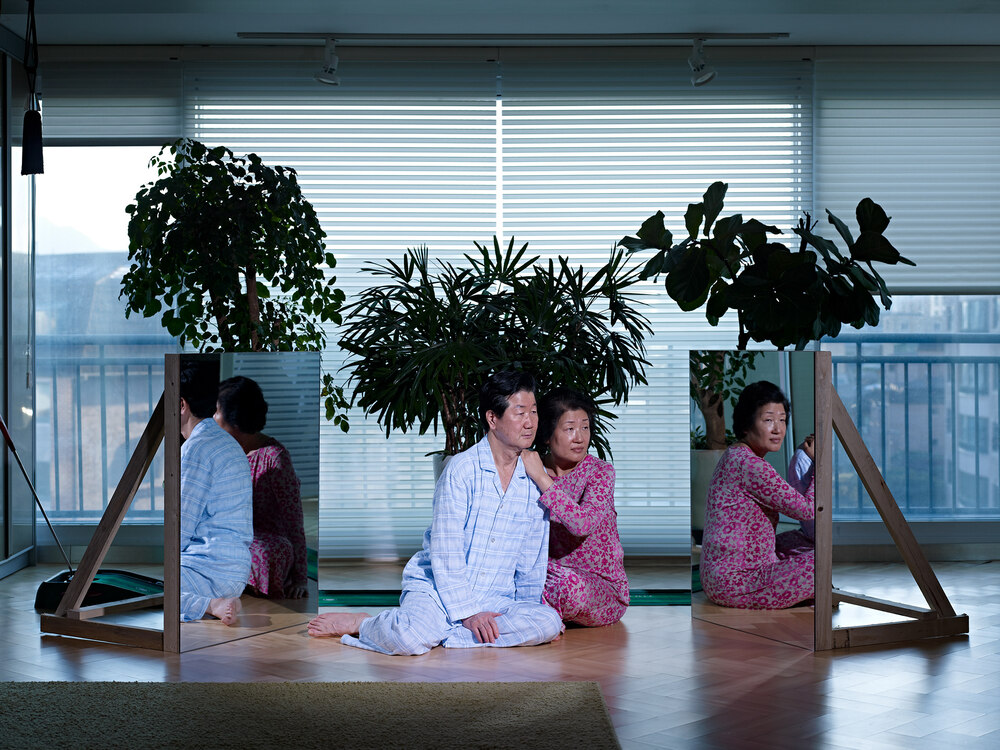
In the subsequent ‘Villa of the Mysteries’ (2012) series, Ahn blurs the boundary between life and death by connecting two locations: his parents’ burial plot and their living room. By repeating, dividing, and reconstructing images of his parents, he temporarily transforms relationships that cannot be changed in reality, seeking to observe them from a more objective distance through photography.
 
《Three Faces, Two Places, One Device》(Hada Contemporary, London, 2014) brings Ahn’s previous investigations of family relationships and photographic structures together into a coherent system. Through three faces—those of his father, mother, and himself—two places representing life and death—the living room and burial plot—and the device of the camera, he connects the transmission of hereditary traits from parents to children with the photographic process of reproduction from original to copy.

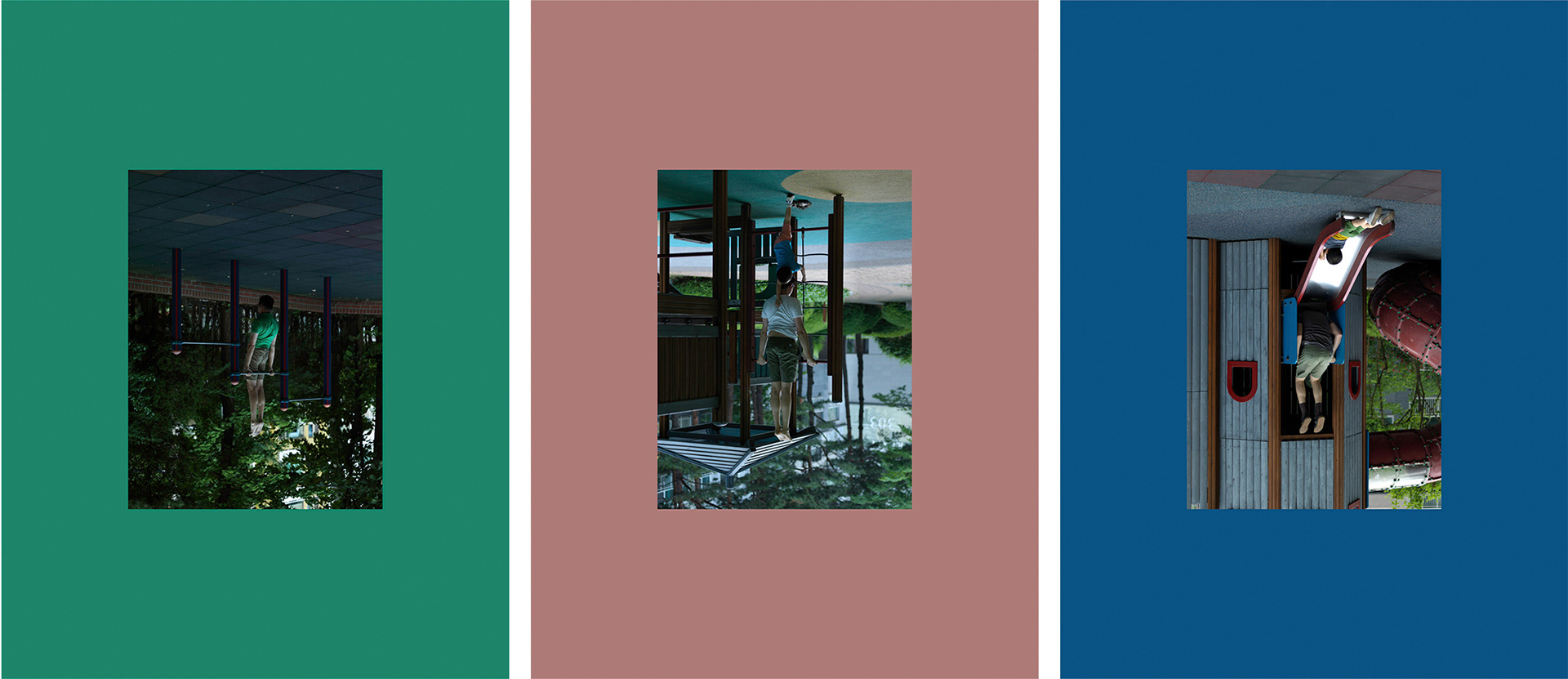
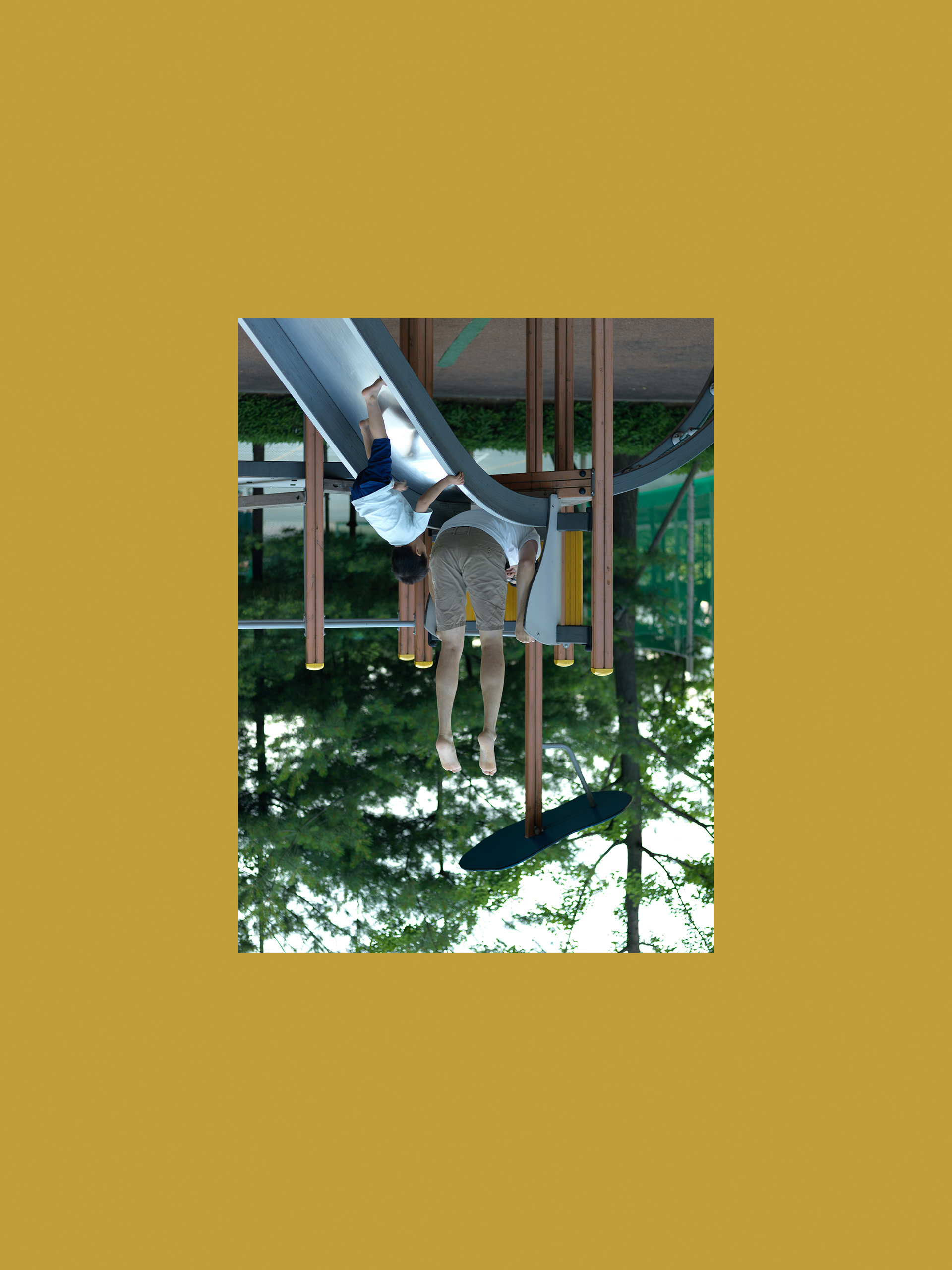
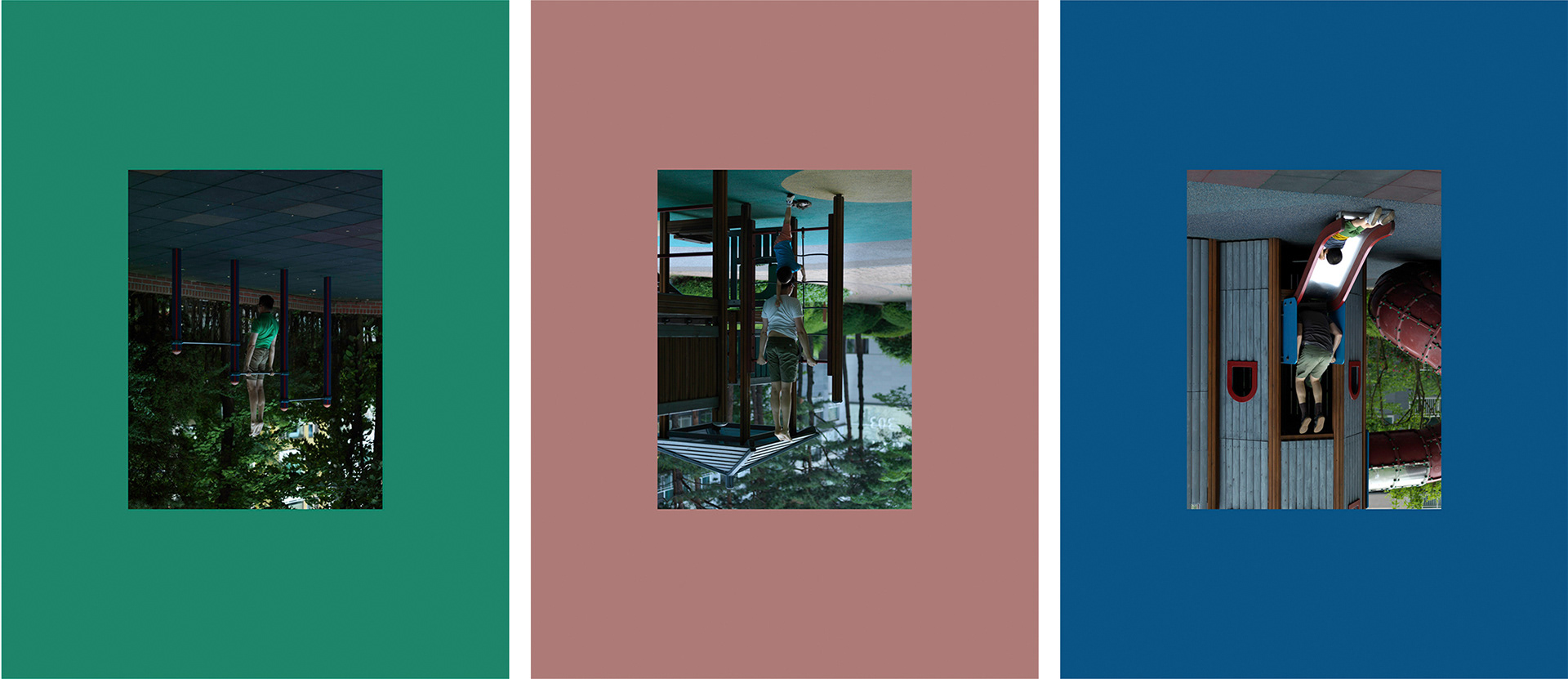
This system undergoes a significant shift when Ahn himself becomes a father. In the ‘Hanged Man’ (2016) series, he photographs himself hanging upside down at playgrounds and then inverts the images again, making his body appear as though it has been subjected to execution by hanging. This act of self-caricature and symbolic elimination, which he describes as “photographic suicide,” attempts to break the chain of resemblance and authority extending from his father to himself and then to his son.

His earlier perspective as a child confronting parental authority expands into an awareness that he, too, has become someone’s parent and original. At this point, his practice shifts from revealing familial hierarchies toward exploring the possibility of dismantling the structures through which those hierarchies are perpetuated.
 
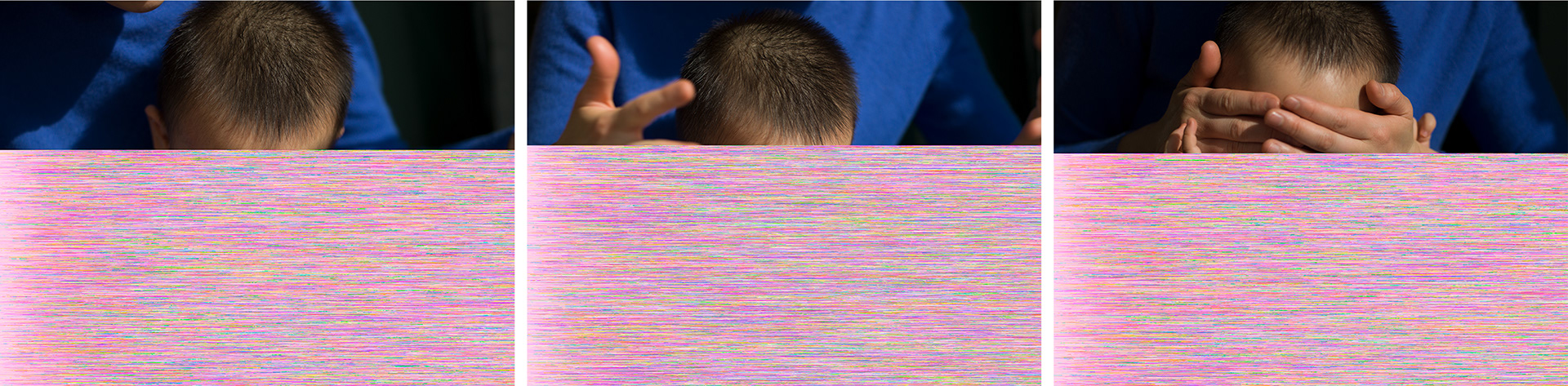
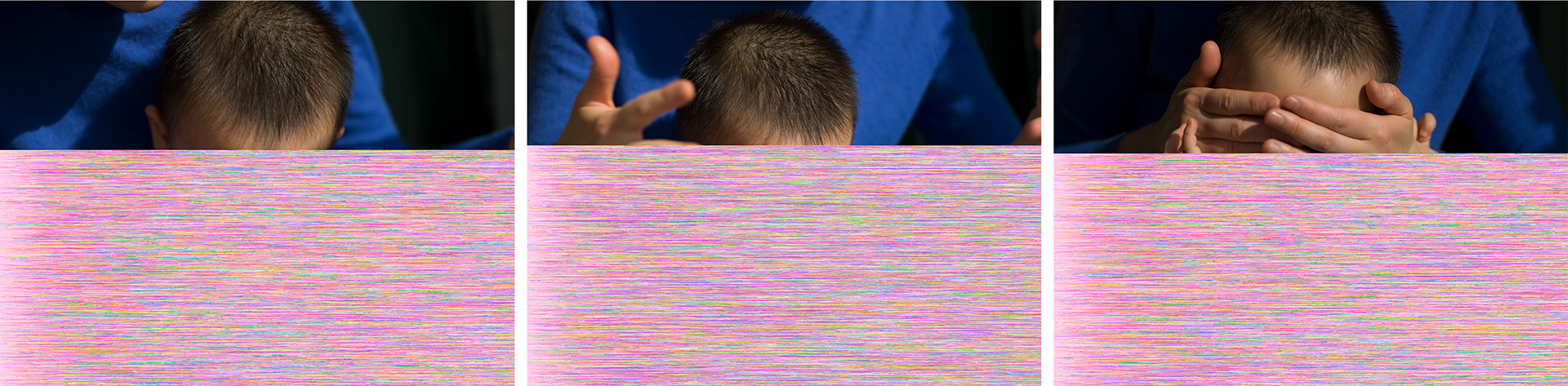
Ahn subsequently addresses the relationship between photography and memory more directly by damaging images or removing parts of them. 《Slice》(Artspace Boan 2, Seoul, 2019) originates from an incident in which stored digital family photographs were unexpectedly corrupted. As the images became fragmented, Ahn experienced the breakdown of resemblance between originals and copies, images and their subjects, interpreting this rupture as a possibility for liberation from established relational structures.

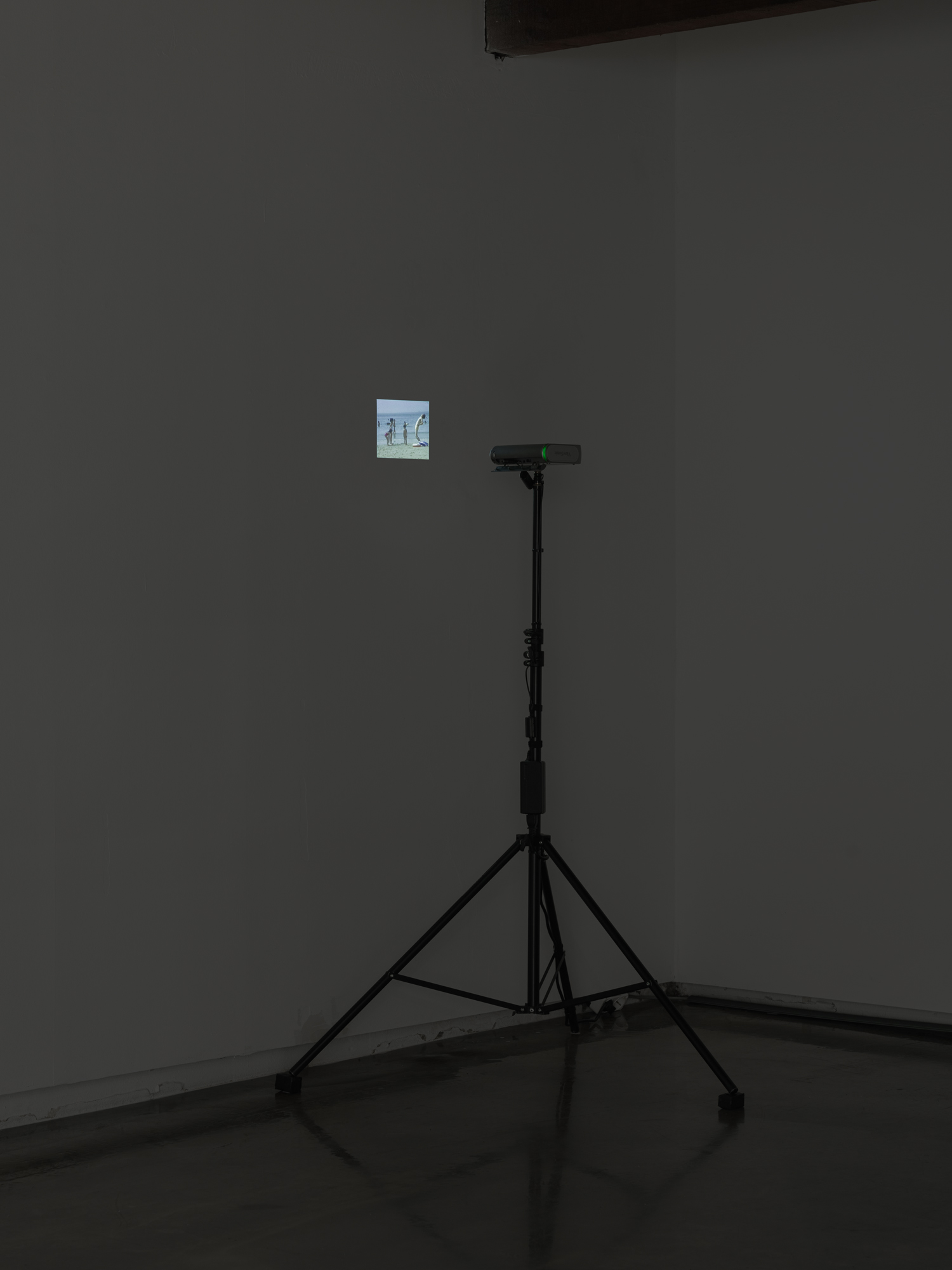
In 《Permanent Vacation》(SeMA Storage, Seoul, 2022), he develops this accidental destruction into a deliberate artistic act. Focusing on how family albums selectively preserve happy moments, he conceals or cuts away portions of photographs to evoke the uncomfortable memories excluded from these records.

The ‘Permanent Smiles’ (2022) and ‘Permanent Legs’ (2022) series reveal the paradox that photography preserves memories while simultaneously excluding others. While his early works expressed personal resistance to parental death and familial authority, his practice during this period moves toward dismantling images of the past as a means of freeing himself from the influence that memory continues to exert on the present.

Style & Contents

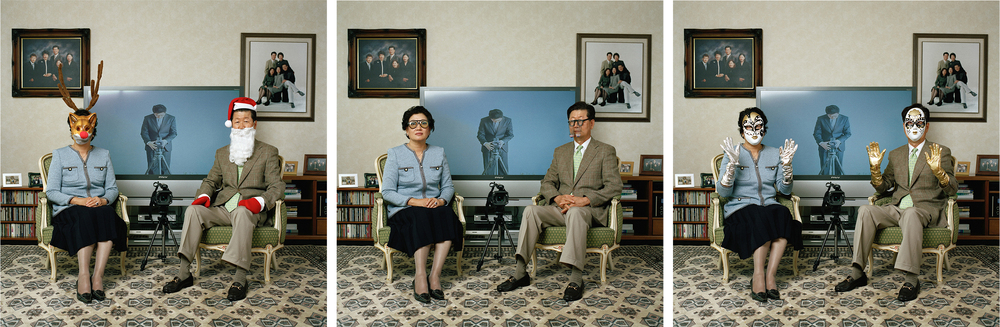
Ahn’s practice begins with staged photography, but he has consistently treated not only the photographed image but also the camera’s operating principles, the production process, and the space in which photographs are displayed as integral components of his work. In Dance Dance Dance #2 (2006), his parents pose in front of the camera while Ahn dances as he watches a monitor, leaving photographic equipment and electrical cables visible within the frame.

In ‘Masquerade’, the masks worn by his parents appear alongside a television monitor and camera, exposing the structures through which photographs are produced. This approach becomes more complex in ‘Encave’. Ahn constructs a stage using white fabric and employs shadows and digital projections to present actual figures alongside their projected images.

In Encave #1, #2, #3 (2010) and Encave #13, #15, #14 (2010), figures, equipment, and surrounding space coexist within a single scene, blurring the distinctions between photographer and subject, reality and illusion. Photography thus becomes both the final image of a staged scene and a medium that encourages viewers to examine the apparatus responsible for creating it.
 
In ‘Villa of the Mysteries’, Ahn expands the spatial possibilities of photographic images by dividing and reflecting the human body and face, or combining photographs with physical structures. Works such as Gazing #2 (2012), where is dad (2012), and where is mom (2012) employ mirrors, digital projections, aluminum, and three-dimensional structures to repeat images of his parents or position them within physical space. Through these methods, his parents’ faces become not only photographic records of their appearances but also sites where memories have accumulated over time.

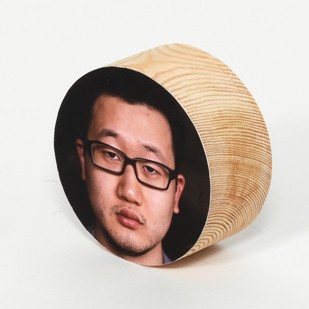
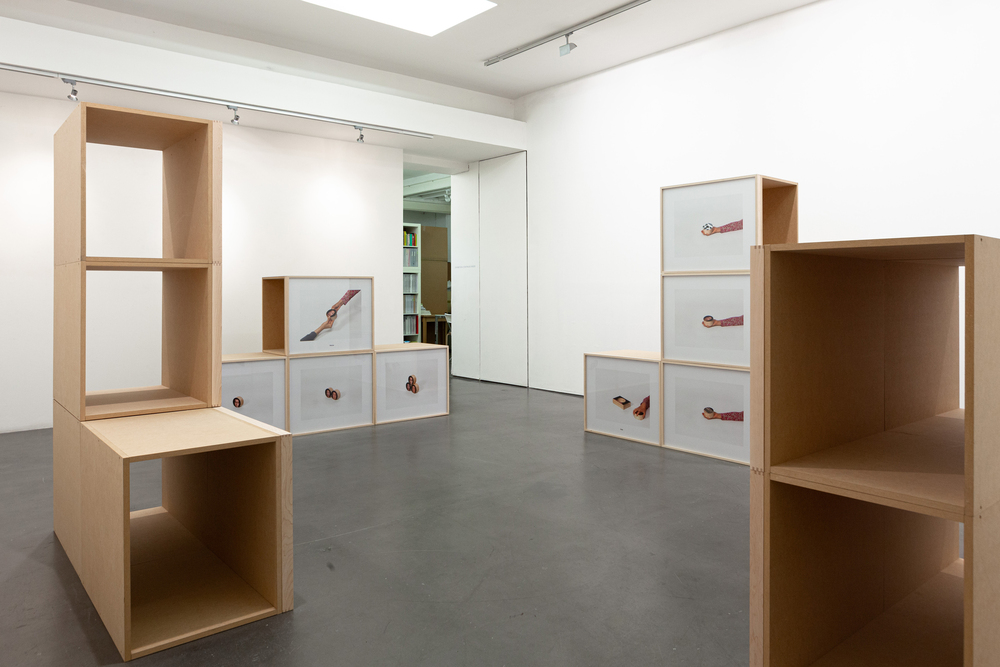
This formal exploration develops into the combination of still-life photography and objects in 《Three Faces, Two Places, One Device》. Conspiracy (2014) superimposes images of the living room and burial plot onto his parents’ faces, while Button (2014) and Cord (2014) visualize connections between generations through actions such as making holes in wooden objects bearing photographs of faces and places or joining hands through them.

By translating complex familial relationships into small objects and gestures reminiscent of children’s toys, Ahn introduces a playful sensibility into the weighty concerns of his earlier works.
 
In ‘Hanged Man’, Ahn extends his staging beyond the photographic process to encompass the viewer’s experience of the artwork. He asks his wife to take the photographs while he performs handstands or hangs from playground equipment. He then inverts the images again, revealing the optical principle by which images are formed upside down inside a camera and disrupting the viewer’s familiar sense of photographic orientation.

In Hanged Man #1, #4, #5 (2016) and Hanged Man #11 (2016), these physical actions simultaneously caricature patriarchal authority and overturn the established order of photographic representation. For 《Hanged Man》(Seoul Kindergarten, Seoul, 2016), Ahn installed temporary walls at a playground, requiring visitors to climb onto playground equipment to view the photographs.

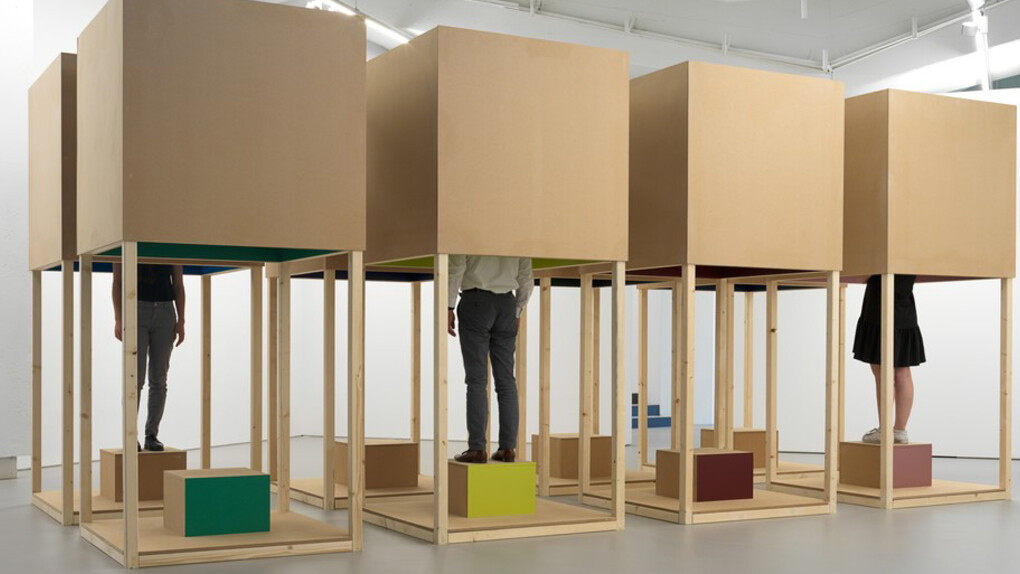
In the subsequent solo exhibition of the same title at Efremidis Gallery in Berlin (2019), visitors likewise had to enter wooden structures and step onto platforms to see the images. In contrast to this deliberate staging, mechanical errors generate new forms in 《Slice》. By printing partially fragmented photographs such as 20150208 #7 (2018) without attempting to restore them, Ahn incorporates digital data corruption itself into the formal structure of his work.
 
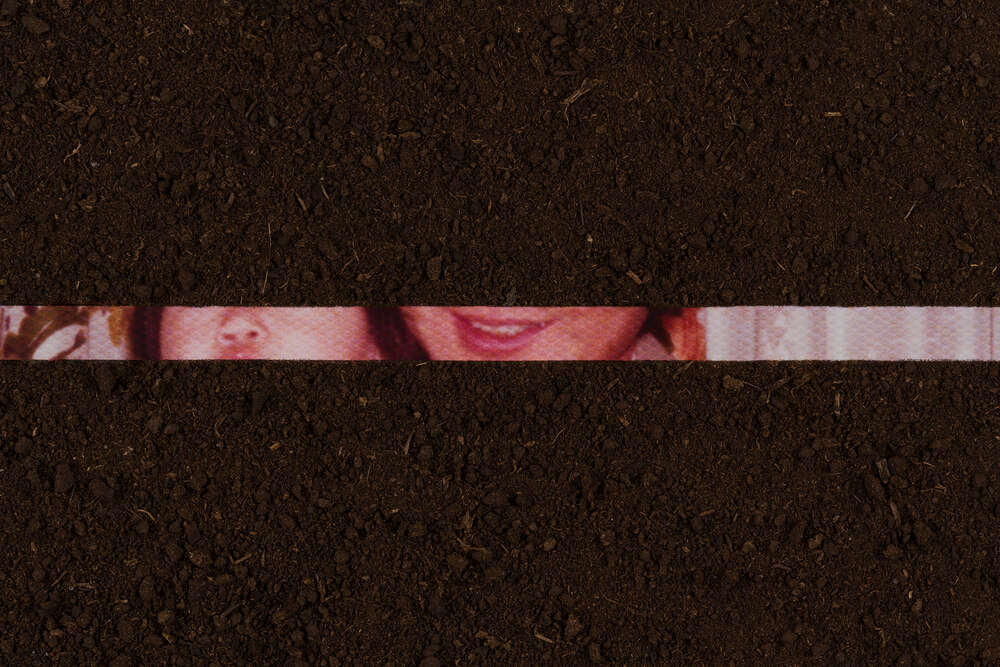
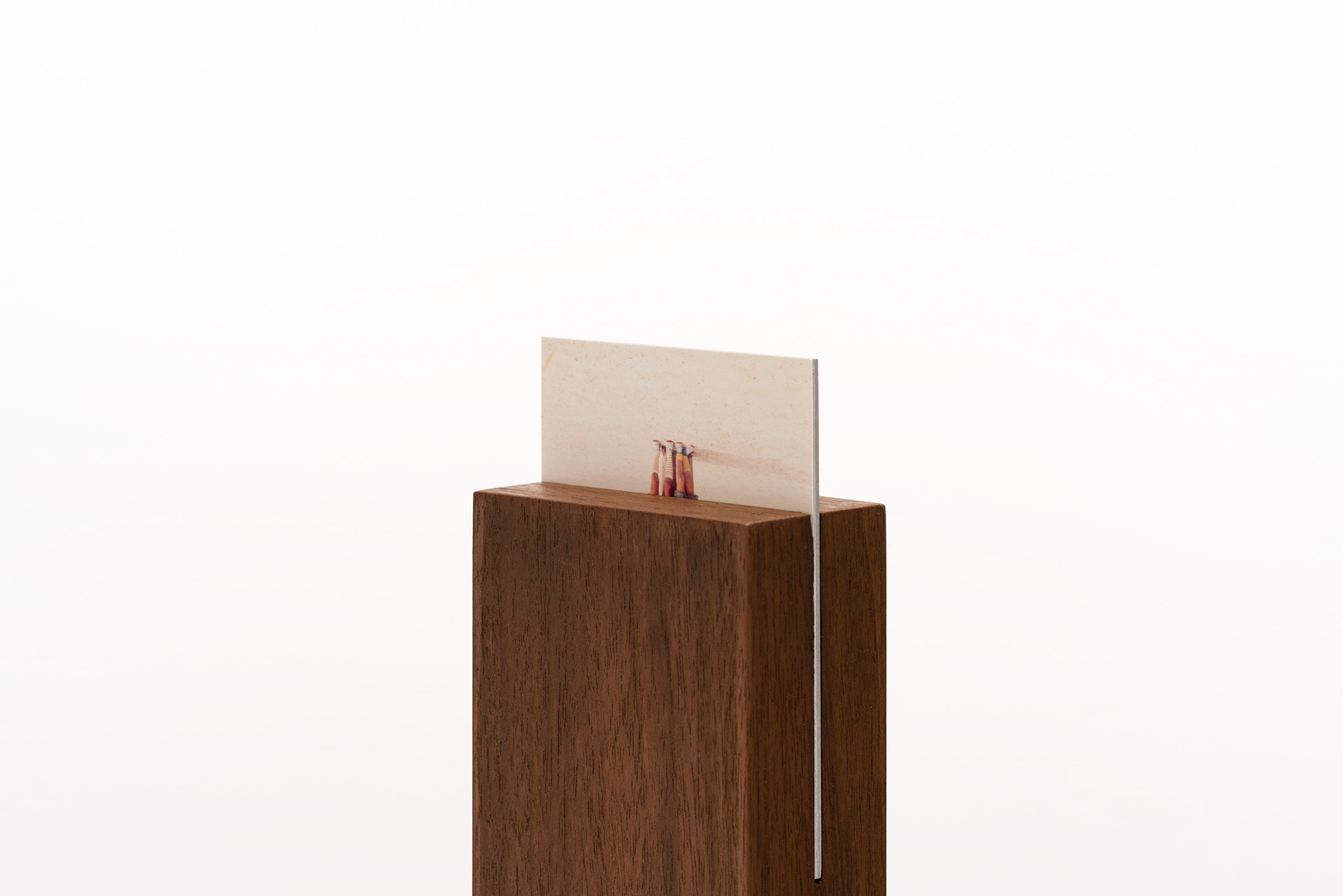
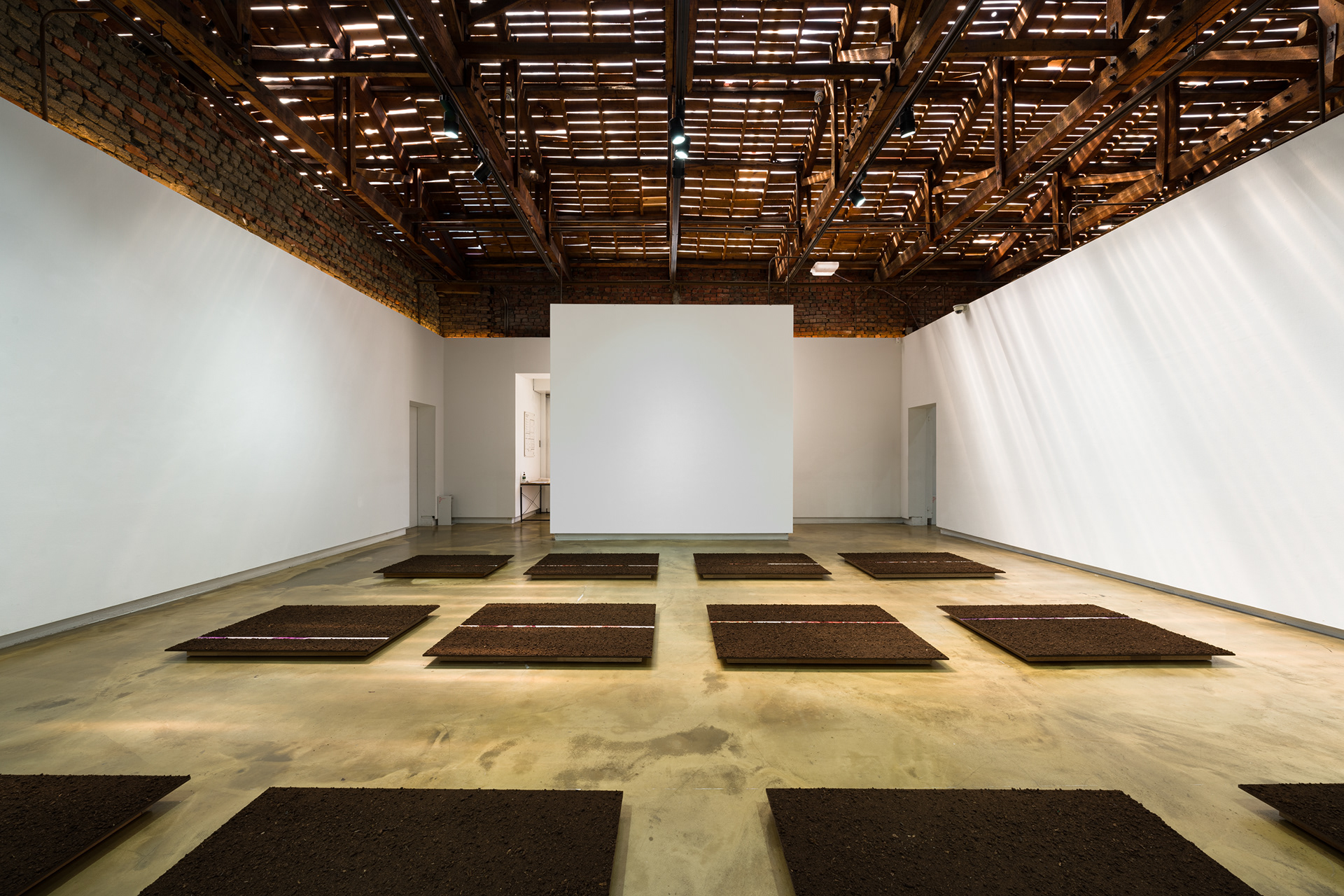
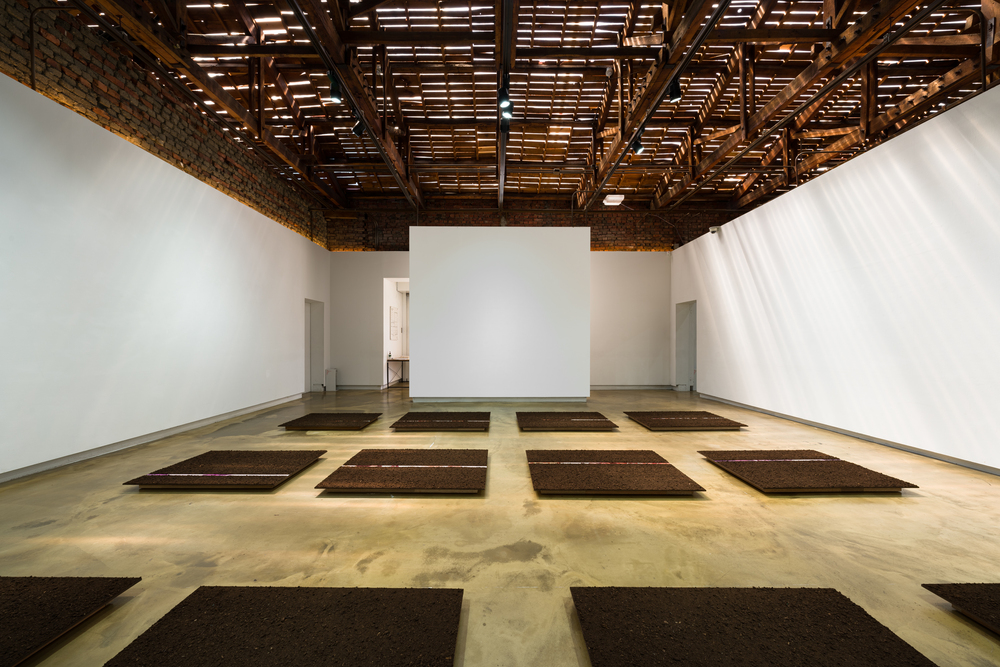
In 《Permanent Vacation》, the physical concealment and cutting of photographs become central methods of production. Permanent Smiles #1 (2022) covers a family photograph with soil, leaving only a narrow area around the mouth visible and rendering the meaning of the smile ambiguous. Permanent Legs #5 (2022) features an inverted photograph of a person standing at attention, mounted on a thin aluminum plate and sharply inserted into a wooden panel to create the illusion of a severed body.

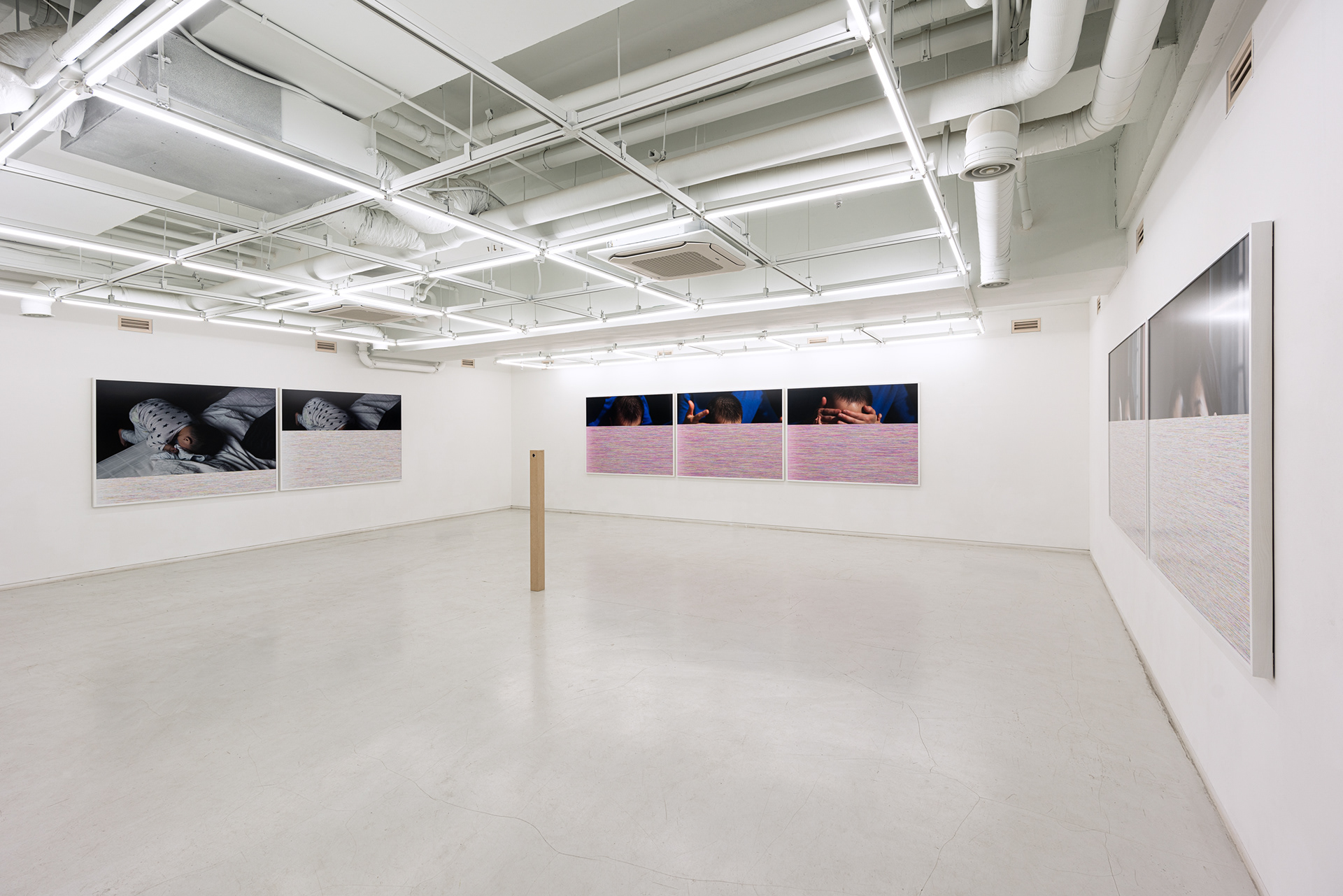
Within the exhibition, these works are arranged in forms reminiscent of gravestones and burial sites, connecting the stillness of photographic images with the presence of death. By contrast, Untitled (2022), presented in the same exhibition, and the subsequently developed ‘This’ (2022–) series suggest a different direction. Ahn photographs subjects encountered in everyday life, incorporates LED lighting that cuts across the images, and stacks multiple photographs vertically so that the lines of light form a continuous sequence.

Whereas earlier acts of cutting removed parts of images and suggested a break with the past, the light in these works divides the photographic surface while evoking possibilities beyond it. Although Ahn retains the formal language of fragmentation and division developed in his previous works, his subjects and interests begin to shift from the family’s past toward the experiences of everyday life in the present.

Topography & Continuity

A distinctive feature of Ahn’s practice is his approach to connecting the principles of photographic representation with family relationships, only to dismantle that connection through the very forms of photography. By understanding the resemblance between parents and children in terms of the relationship between original and copy, he transforms personal family history into a broader investigation of the photographic medium.

This perspective has remained consistent throughout his formal experiments. From his early staged photographs that expose photographic equipment to later works involving image inversion, data corruption, physical cutting, and three-dimensional installations, Ahn continually questions how photography represents reality and what it leads viewers to believe.

His ability to address serious subjects such as death and familial authority through absurd physical gestures, toy-like structures, and unusual optical illusions forms a distinctive sensibility within his practice. Compared with photographic approaches that prioritize visual refinement or documentary representation, Ahn places greater emphasis on the conditions under which images are produced and the process of challenging their authority.
 
Although his practice originates in the specific subject of family, Ahn has gradually expanded his interests to encompass images, memory, technological errors, and individual systems of perception. While ‘Dance Dance Dance’ and ‘Encave’ explore death and familial order, ‘Villa of the Mysteries’ and 《Three Faces, Two Places, One Device》 articulate these relationships through photographic reflection, repetition, and structures of intergenerational transmission.

‘Hanged Man’ and 《Slice》 subsequently mark a turning point in which Ahn begins to dismantle the systems he had previously constructed, while 《Permanent Vacation》 extends his investigation to the selection and exclusion of memories through the destruction of images. In particular, 《Slice》, which emerged from accidental data corruption, demonstrates how the material condition of a photograph can transform its meaning.

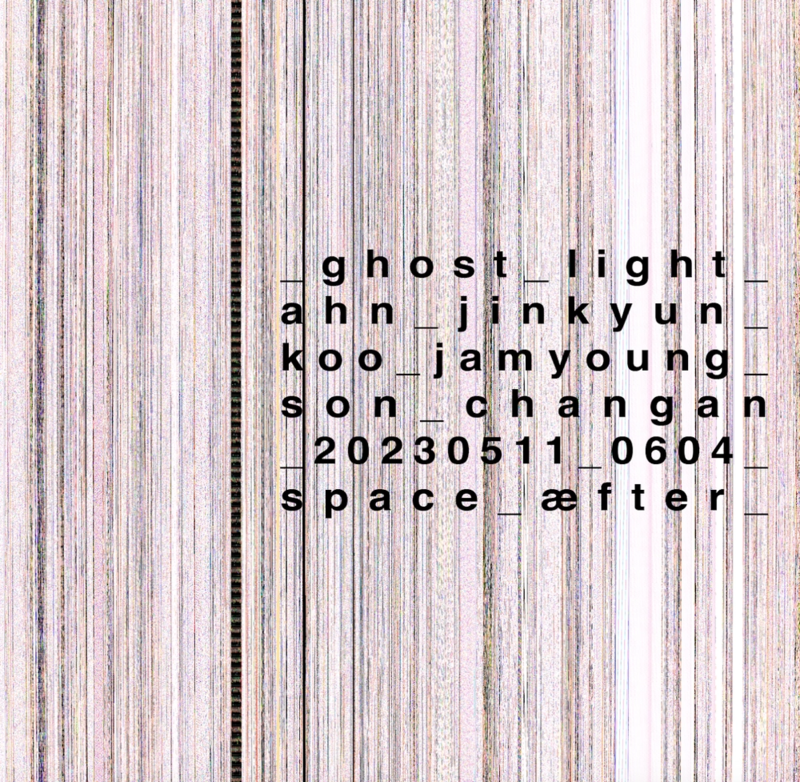
These concerns entered a broader discussion of photographic media in 《Ghost Light》(Space Æfter, Seoul, 2023), where Ahn’s work was presented alongside those of other artists investigating digital image storage, technological errors, and the materiality of data. Meanwhile, the everyday imagery and use of light in ‘This’ offer a way to consider how a new perspective on the world might emerge after the dismantling of images associated with the past.
 
Ahn has presented works combining photography and installation through solo exhibitions in London and Berlin, as well as exhibitions in Korea and abroad. He has also extended his practice into publishing through the artist books Hanged Man (2016) and Slice (2019). His approach, which does not confine photography to the two-dimensional image but experiments with the qualities of still images across different spaces and materials, provides a foundation for further formal exploration.

As his longstanding questions surrounding family and memory expand toward everyday imagery and digital environments, Ahn’s practice continues to suggest possibilities for connecting personal experience with the changing conditions of the photographic medium.

Works of Art

A Photographic Approach to Subverting Hierarchies of Resemblance

Articles

Exhibitions

Activities