Ko toku piki? Can I Pass? - K-ARTIST

Ko toku piki? Can I Pass?

2014
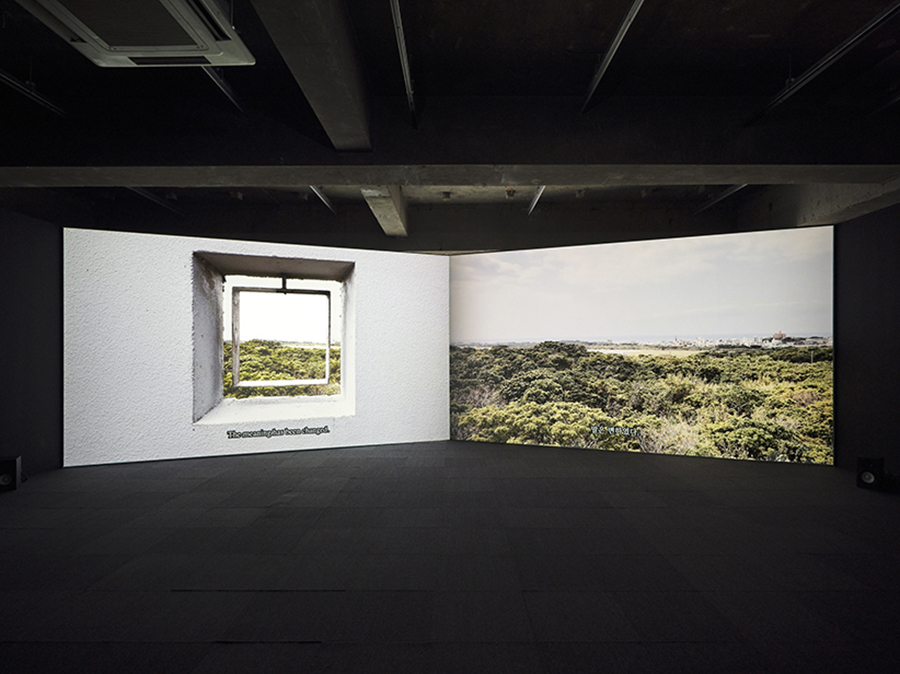
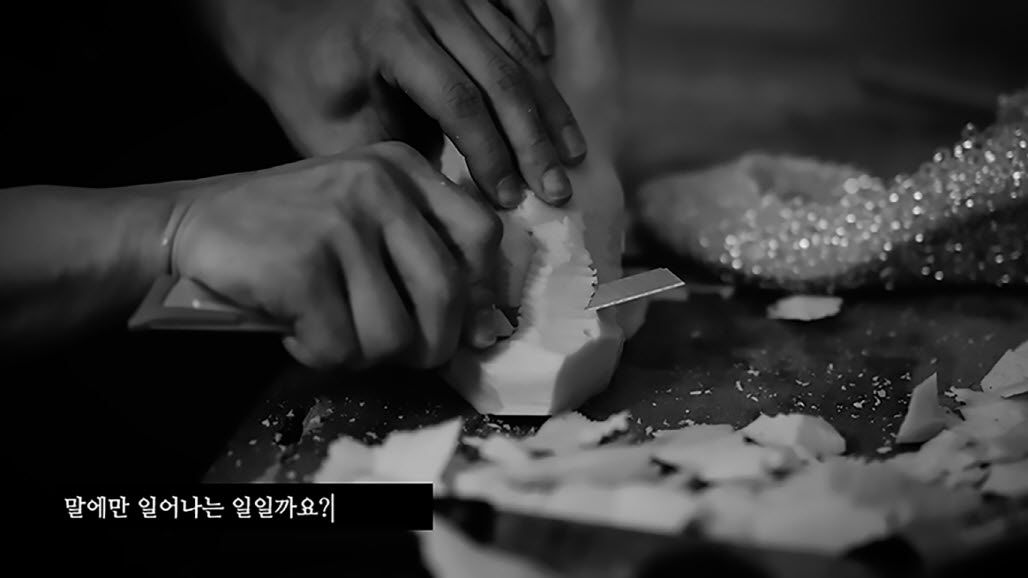
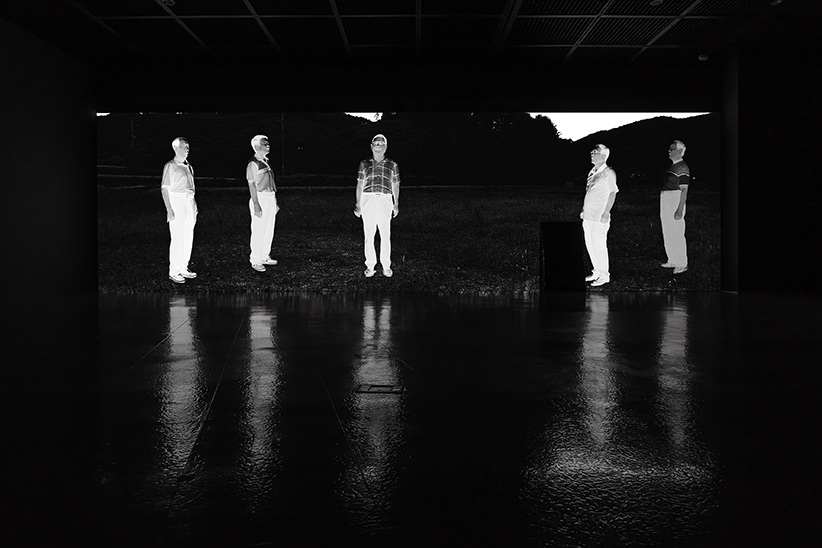
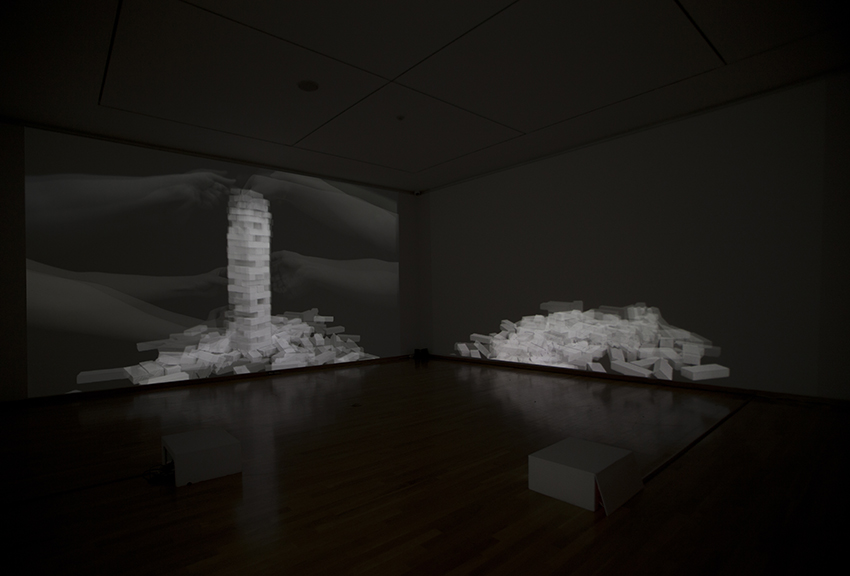
Two-channel video installation
3 min 47 sec
About The Work

Woojin Kim explores how social norms and institutions shape individual thought and behavior, focusing on invisible structures of control deeply embedded in everyday life. She is interested in how customs and rules that people take for granted are formed under specific historical and political conditions and become inscribed in the body and memory through repeated learning.

Working across video, installation, performance, and drawing, she seeks to disrupt seemingly self-evident values and established orders, creating spaces where new questions can emerge.

Kim reconstructs real-life events and personal testimonies gathered through research and interviews as audiovisual experiences. Rather than presenting records as they are, she uses repetition, juxtaposition, and reenactment to establish new contexts. By interweaving images, voices, and texts distributed across multiple screens, she encourages viewers to discover relationships and meanings among different pieces of information.

This nonlinear approach reveals both the similarities and differences between events that occurred across distinct times and places, leaving room for viewers to develop their own interpretations rather than follow a single narrative.

Kim’s practice has expanded from an exploration of the relationship between everyday life and social institutions to broader questions concerning modern and contemporary East Asian history, language, and collective memory. Connecting regions with distinct historical experiences, including Korea, Japan, Taiwan, and Hong Kong, she traces the marks left on individual lives by national modernization and colonialism.

Moving beyond critical observations of social structures, she has also expanded her practice from collecting and representing memories to exploring practical ways of preserving them and passing them on to future generations.

Solo Exhibitions (Brief)

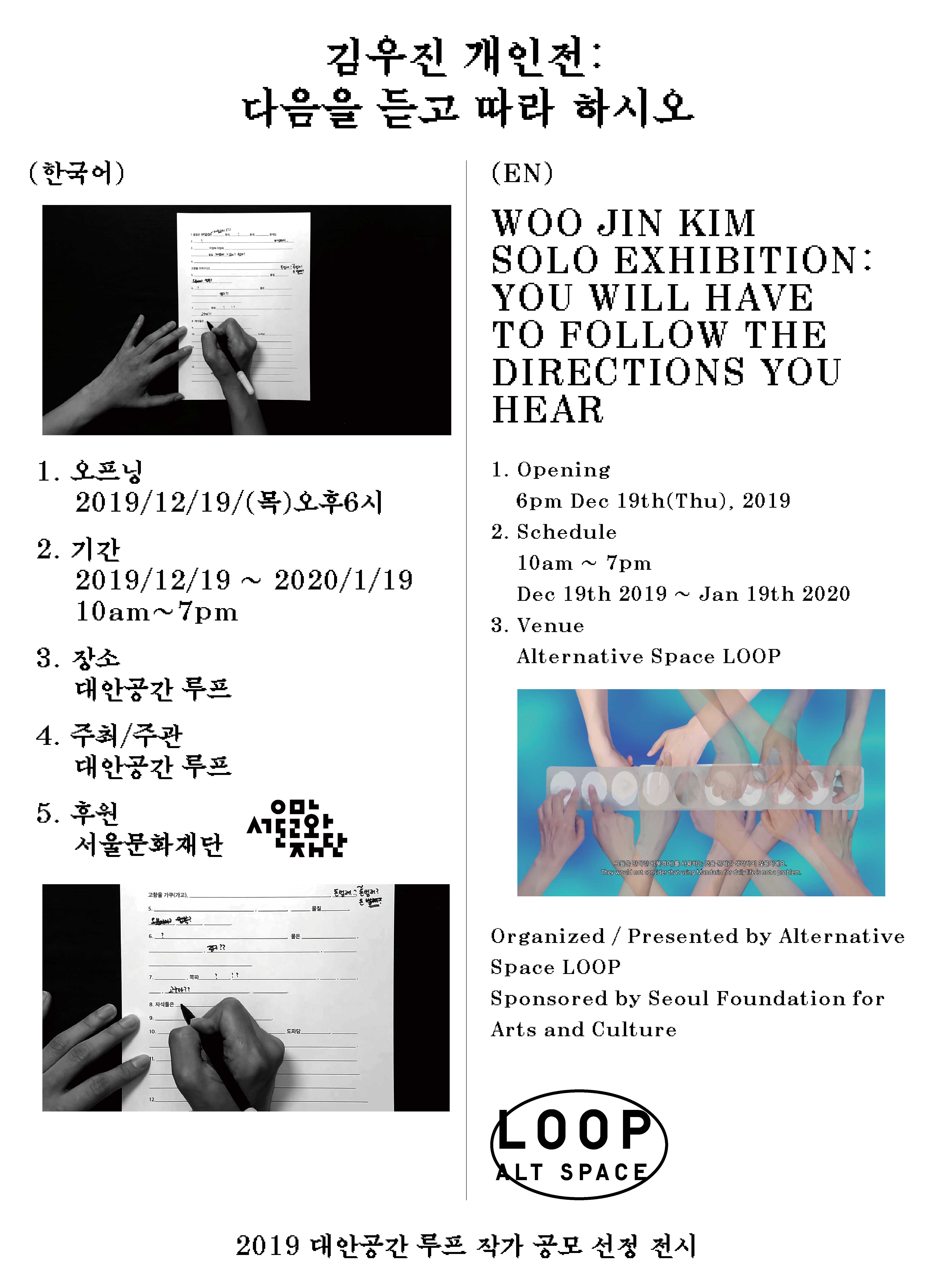
Woojin Kim has held solo exhibitions at Artside Temporary (Seoul, 2025), GALLERY MoMo (Tokyo, 2024), Kim Chong Yung Museum (Seoul, 2022), Alternative Space Loop (Seoul, 2019), Tokyo Arts and Space Hongo (Tokyo, 2017), and Seongnam Cube Art Museum (Seongnam, 2016).

Group Exhibitions (Brief)

Woojin Kim has participated in group exhibitions at Buk-Seoul Museum of Art (Seoul, 2025), Tokyo Arts and Space Hongo (Tokyo, 2024), Museum of Contemporary Art Busan (Busan, 2023), SONGEUN (Seoul, 2021, 2022), Nam June Paik Art Center (Yongin, 2020), Kumho Museum of Art (Seoul, 2018, 2019), Para Site (Hong Kong, 2018), and SOMA Museum of Art (Seoul, 2015).

Awards (Selected)

Woojin Kim received the Grand Prize of the Public Art New Hero Award in 2020.

Residencies (Selected)

Woojin Kim has participated in residency programs at Artist Support Project (ASP) (Yogyakarta, 2026), Seoul Art Space Geumcheon (Seoul, 2024), TOKAS Residency (Tokyo, 2024), SeMA Nanji Residency (Seoul, 2023), Incheon Art Platform (Incheon, 2022), White Block Cheonan Art Village (Cheonan, 2020–2022), Kumho Art Studio (Icheon, 2017–2019), Bamboo Curtain Studio (Taipei, 2016), and MMCA Residency Goyang (Goyang, 2014–2015).

Collections (Selected)

Woojin Kim's works are held in the collections of the MMCA Art Bank, Seoul Metropolitan Government, Seongnam Cultural Foundation, SONGEUN, and Wooran Foundation.

Works of Art

A Space That Disrupts Existing Structures and Opens Up Questions

Originality & Identity

Woojin Kim explores how social norms and institutions shape individual thought and behavior, investigating the invisible structures of control embedded in everyday life. Her practice examines how conventions and rules that people take for granted emerge from specific historical and political conditions and become inscribed in the body and memory through repeated learning.

Initiated in 2015, the 'Brave New Exercise Project' articulates these concerns through collective calisthenics practiced across East Asia, including Korea, Japan, and Taiwan. By observing individuals who remember and reenact state-promoted exercise routines decades after learning them, Kim uncovers traces of collective discipline embedded in the body and historical experiences shared across different societies.

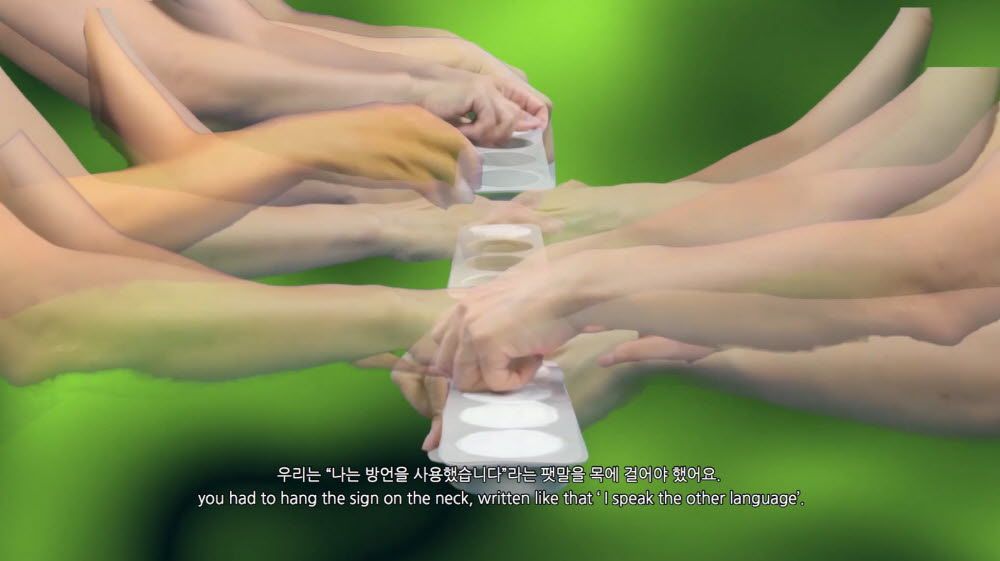
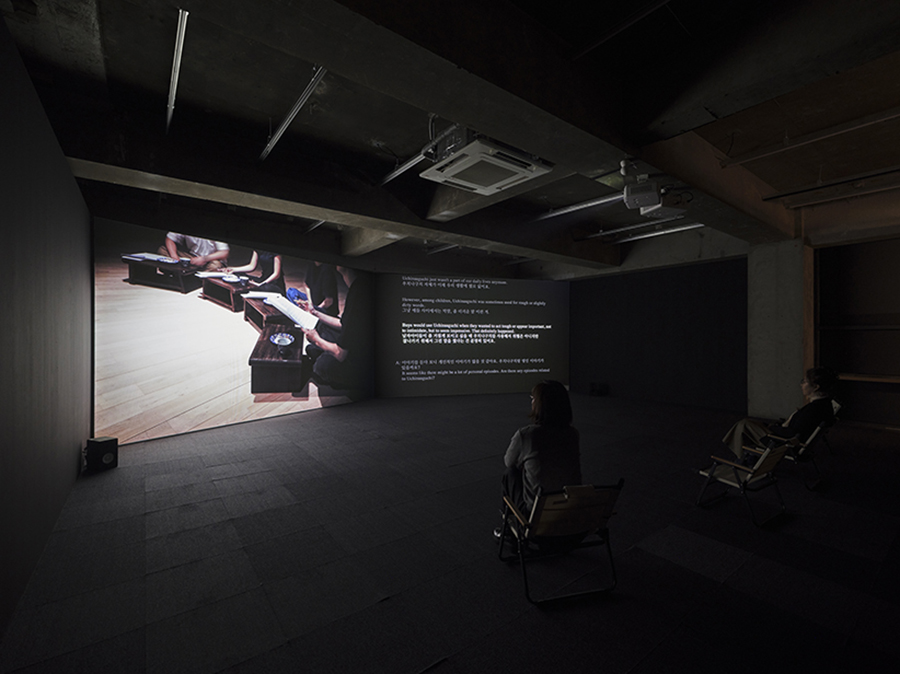
These concerns extend to the disappearance of languages and the preservation of memory through her long-term 'Memories Project'. Kim has investigated minority and regional languages in East Asia, including Jeju, Cantonese, Ainu, and Uchinaguchi, tracing how state language policies and educational systems establish certain languages as standards while marginalizing others.

Language carries the history, culture, and identity of a community, and its disappearance entails the loss of ways of life, knowledge, and memories transmitted through it. By meeting speakers of endangered languages and collecting their experiences, Kim examines how broader social transformations affect individual lives. In The Perfect Harmony (2019), she brings together the work songs of Jeju's female divers and images of disappearing figures to reveal the intertwined loss of language, labor, and collective memory.

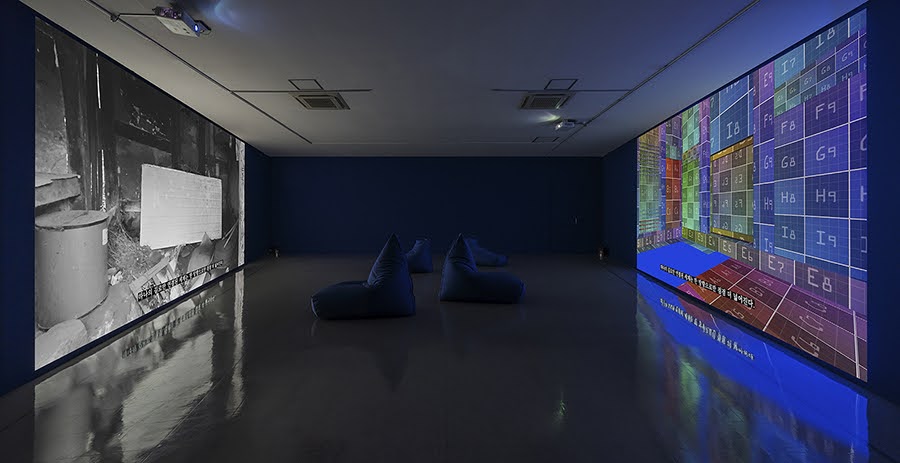
Recurring images of disappearance and absence in Kim's practice extend her investigation from language to places and individual lives. The Ghost, Sea and Möbius Loop (2022) traces remnants of everyday life in an old house abandoned amid urbanization and migration, evoking the time and memories that linger in a place whose occupants have departed.

Through mundane objects and improvised structures left inside the house, Kim draws attention to the habits and emotions of those who once lived there. The recurring presence of ghosts and disappearing spaces recalls lives and experiences forgotten or marginalized amid social change, inviting reflection on how large-scale historical transformations are experienced as tangible forms of personal loss.

More recently, Kim has expanded her inquiry to examine the impact of digital technology on language extinction and preservation. And I Decided to Make a Short Play: Part U (2024–2025), based on memories of Uchinaguchi and interviews with its speakers, addresses both the historical suppression of the language and its limited recognition within contemporary digital translation systems.

Her 2025 proposal for a 'Last Archive' further explores possibilities for recording and transmitting endangered languages without relying on electricity or digital networks. Beginning with questions about social norms, Kim's practice has thus evolved into a sustained investigation of how the memories of disappearing lives and cultures might be understood, preserved, and passed on.

Style & Contents

Woojin Kim works across video, installation, performance, and drawing, transforming materials gathered through research and interviews into audiovisual experiences. Although her practice begins with actual events and personal testimonies, she reconstructs the collected material through repetition, juxtaposition, and reenactment to establish new contexts.

By intersecting images, voices, and texts distributed across multiple screens, Kim encourages viewers to discover meaning through the relationships between different sources of information. Her compositions often depart from linear narratives, revealing similarities and differences between events that occurred across distinct times and locations.

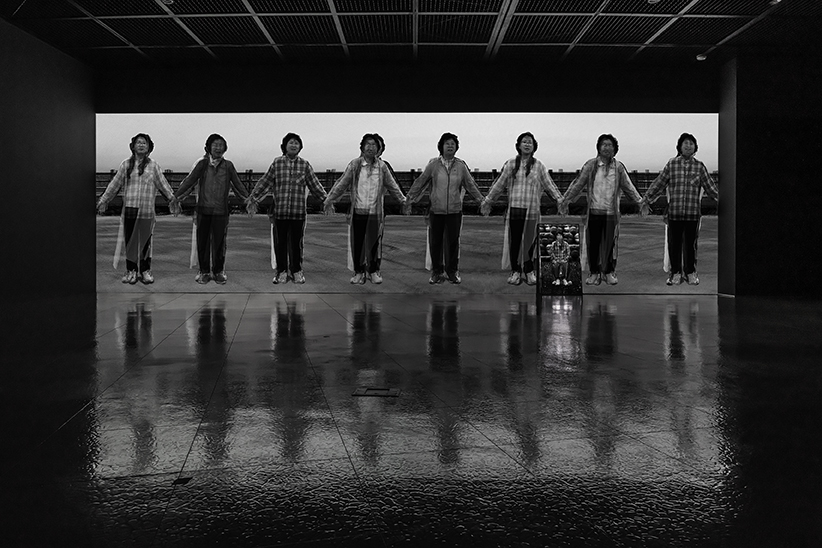
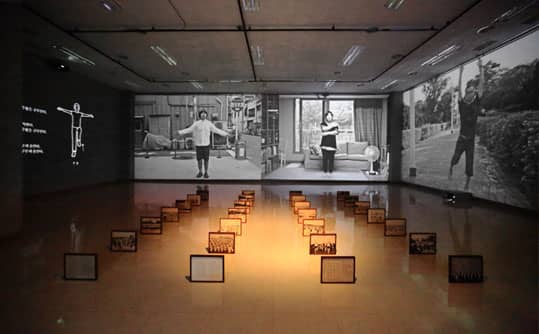
Her early works prominently feature the recording and editing of repetitive bodily movements. Brave New Exercise: Memorized Movements (2016) reconstructs collective calisthenics movements collected in Korea, Japan, Taiwan, and other regions through multi-channel video, arranging gestures performed by different individuals into seemingly continuous sequences. Kim also demonstrates the movements herself or adopts the format of instructional manuals that viewers can follow, making embodied memories visually perceptible.

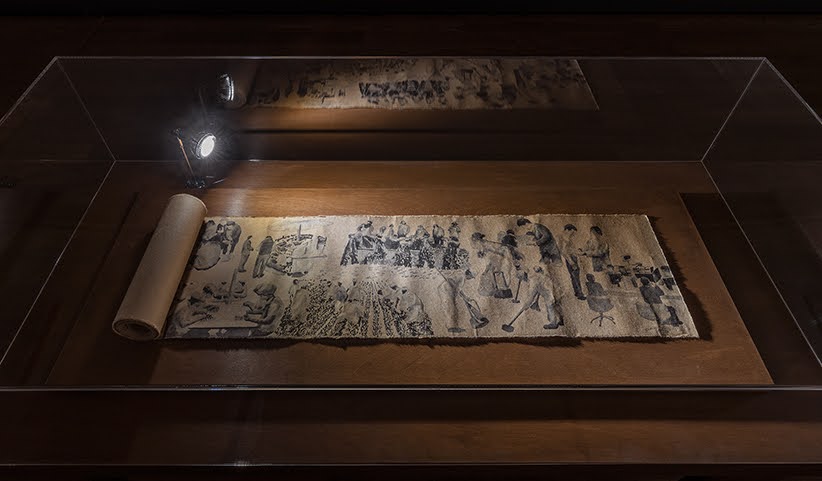
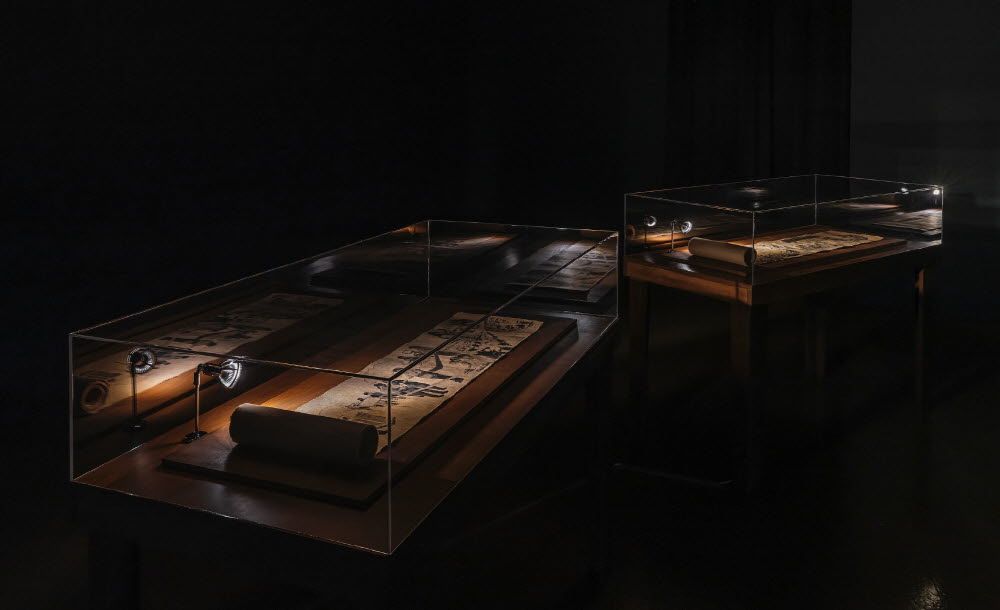
Alongside these videos, she recreates historical photographs of collective calisthenics using coffee and ink, arranging the drawings in orderly formations that correspond to the repetitive movements on screen. The combination of moving images, drawings, and spatial arrangements emphasizes the visual patterns produced by collective discipline.

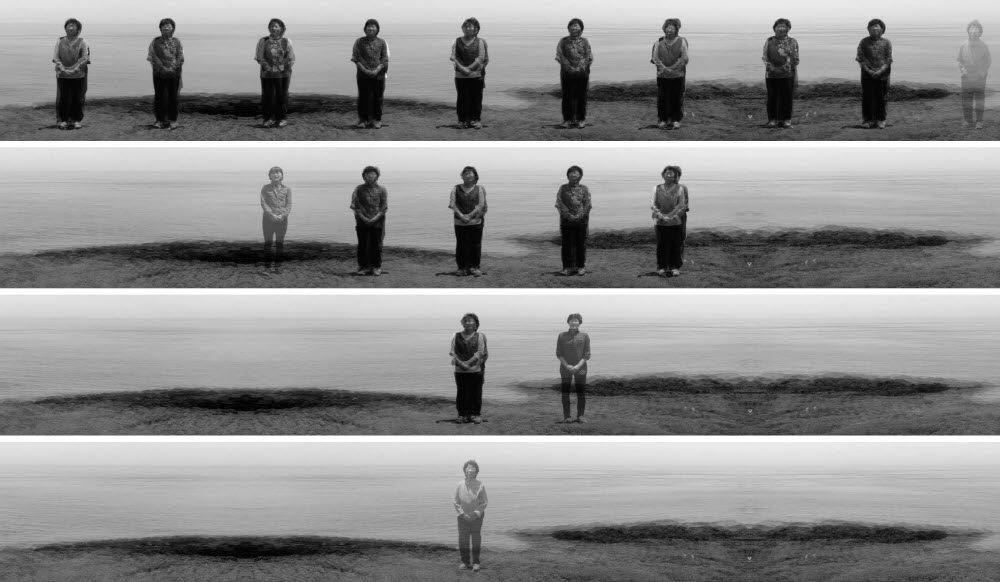
In the 'Memories Project', Kim further develops her use of interviews and archival materials in video production. She overlays recorded voices, documentary footage, and symbolic imagery, employing repetition, fade-outs, and sound effects to evoke the sensory experience of disappearing memories. In The Perfect Harmony (2019), the gradual disappearance of female divers from the screen, accompanied by their work songs, conveys an accumulating sense of absence.

The Ghost, Sea and Möbius Loop (2022) juxtaposes footage of an abandoned house with a digitally reconstructed virtual space across two screens. Moving between documentation and representation, reality and simulation, Kim visualizes the disappearance of individual memories. Her multi-screen installations encourage viewers to actively examine the relationships between images and narratives.

More recently, Kim has expanded her formal vocabulary through theatrical staging and experimental recording devices. And I Decided to Make a Short Play: Part U (2024–2025) features actors performing a script based on actual interviews, incorporating the original interviewees' voices to blur the boundaries between fact and fiction. The gradual transition to black and white, together with speech that remains untranslatable through AI systems, renders linguistic disappearance through audiovisual means.

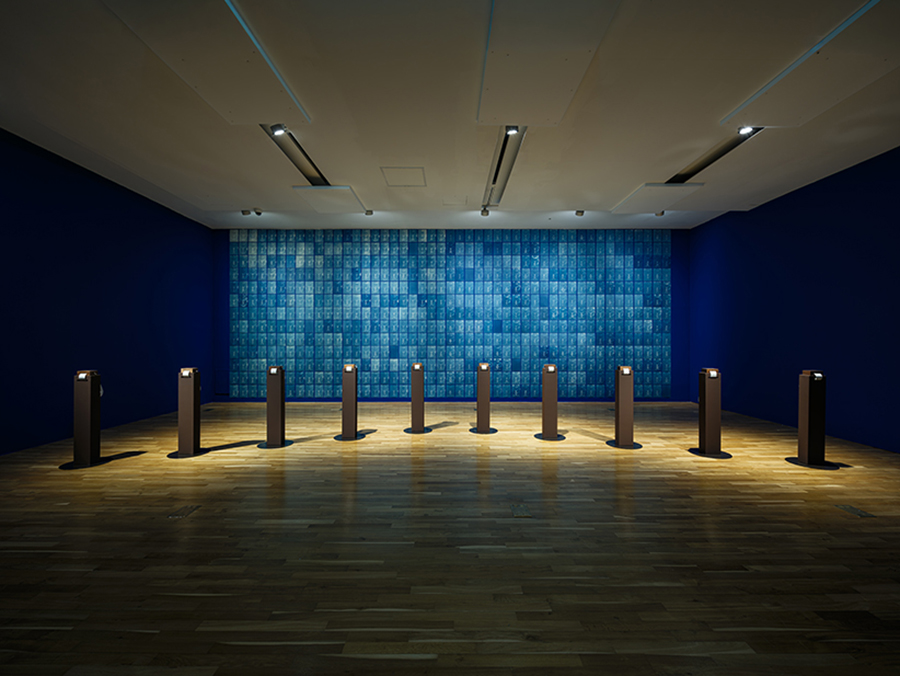
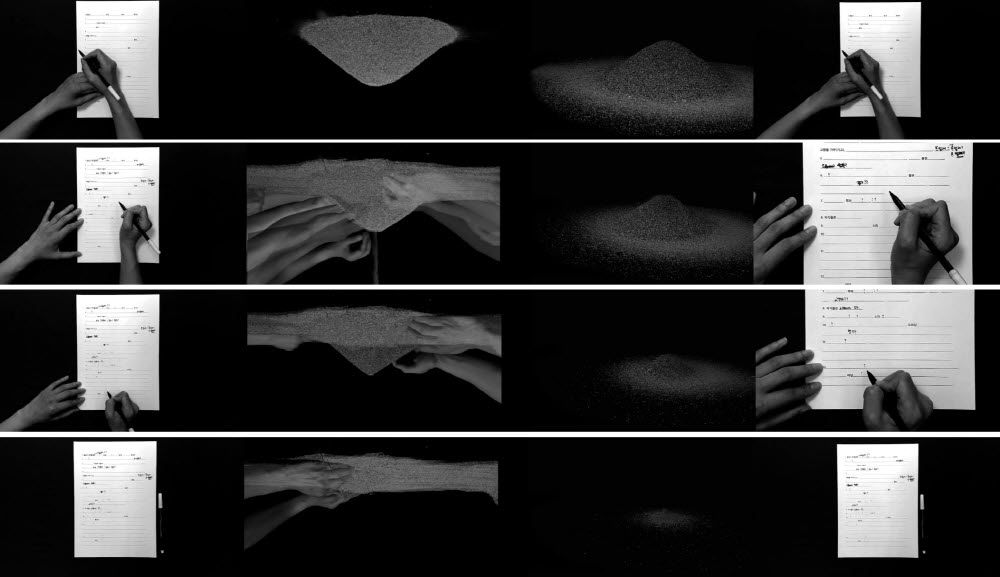
In the 'The Last Archive' series (2025), Kim experiments with transforming pronunciation and sound into physical records using cyanotype and mechanical music boxes. By combining the International Phonetic Alphabet, Morse code, and principles of musical notation, she investigates ways of preserving language through visual and auditory signs, extending her predominantly digital video practice into analog recording media.


Topography & Continuity

Woojin Kim's practice has evolved from an exploration of the relationship between everyday life and social institutions into a broader investigation of East Asian modern history, language, and collective memory. Connecting regions with distinct historical experiences, including Korea, Japan, Taiwan, and Hong Kong, she traces how modernization and colonial histories have shaped individual lives.

Her research into collective calisthenics, initiated in the mid-2010s, examined the ways in which states regulate the body, eventually leading to an exploration of linguistic standardization and extinction. Situated within research-based contemporary art, her practice engages with the historical experiences of East Asia to examine the relationships between the state and the individual, power and memory.

National and international residency programs have played a significant role in expanding the geographical scope of Kim's research and incorporating local experiences into her work. Through residencies at MMCA Residency Goyang, Bamboo Curtain Studio in Taiwan, and Tokyo Arts and Space in Japan, she has investigated the histories, cultures, and social environments of different regions while collecting testimonies from local communities.

This fieldwork has provided a foundation for comparing similar phenomena across societies while attending to their historical differences and individual experiences. In particular, her research into endangered languages involves the continuous collection of personal memories and oral testimonies, allowing her to examine broader social transformations through the lived experiences of individuals.

The continuity of Kim's practice is particularly evident in her long-term 'Memories Project', which she has developed since the mid-2010s. Initially concerned with learned bodily behaviors and social conventions, such as collective calisthenics, the project gradually expanded to questions of collective memory and identity through endangered languages, including Jeju and Cantonese.

Works such as The Perfect Harmony (2019), Between Sunshine and Night (2020), and The Ghost, Sea and Möbius Loop (2022) reveal how linguistic loss is closely intertwined with the disappearance of labor practices, ways of life, and places. By continually revisiting and reconfiguring interviews and archival materials accumulated over time, Kim deepens her earlier investigations and traces recurring concerns across different historical and social contexts.

More recently, Kim has begun exploring new directions centered on the preservation and transmission of languages, building on her accumulated research. Her 2025 solo exhibition 《Voiceless Voice》 brought together her investigations into linguistic extinction while addressing the limitations of understanding through documentation and representation, as well as the challenges posed by digital translation technologies.

In 《Prototype Version #1 for The Last Archive》 (2025), she experimented with methods of recording language independently of electricity and digital networks, exploring possibilities for transmitting endangered languages to future generations. Throughout her practice, Kim has maintained a critical engagement with social structures while continuously collecting and reconstructing memories. Her recent work extends this inquiry toward practical methods of preserving and transmitting those memories, marking a further development in her sustained artistic investigation.

Works of Art

A Space That Disrupts Existing Structures and Opens Up Questions

Articles

Exhibitions

Activities