Tension in Black VI - K-ARTIST

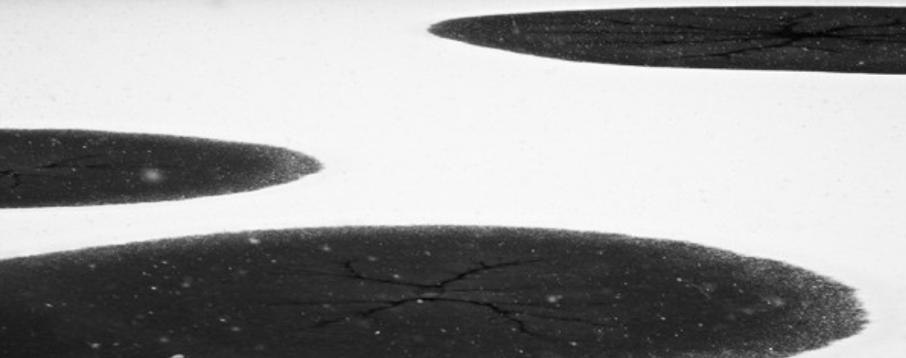
Tension in Black VI

2012
Pigment print
40 x 100 cm
About The Work

Jung Jungho explores the urban structures that emerge amid development and change, as well as the legends and hidden narratives associated with particular places. Through photography and video, he examines how beliefs about place operate through images in contemporary society. He traces urban development sites and the stories and cultures passed down in specific localities through photography, while reinterpreting objects collected on site through photographic means.

The artist follows things that disappear or transform over time, revisiting the stories concealed within them and the traces that persist into the present. His camera documents the reality before him while also capturing the layers of context accumulated beyond the surfaces of things, revealing the multiple temporal and spatial dimensions embedded within them.

Moving beyond photography as a static medium that fixes fleeting moments within a frame, his practice connects past and present, exploring the traces of time accumulated between them. It further asks how things that have disappeared or undergone change continue to persist and operate in the world today.

Solo Exhibitions (Brief)

Jung has held solo exhibitions including 《Sacred Site》 (Artspace Boan, Seoul, 2025), 《Topography of Beliefs》 (Seoul Art Space Geumcheon, Seoul, 2024), and 《Buddha and Magohalmi》 (Cheongju Art Studio, Cheongju, 2022).

Group Exhibitions (Brief)

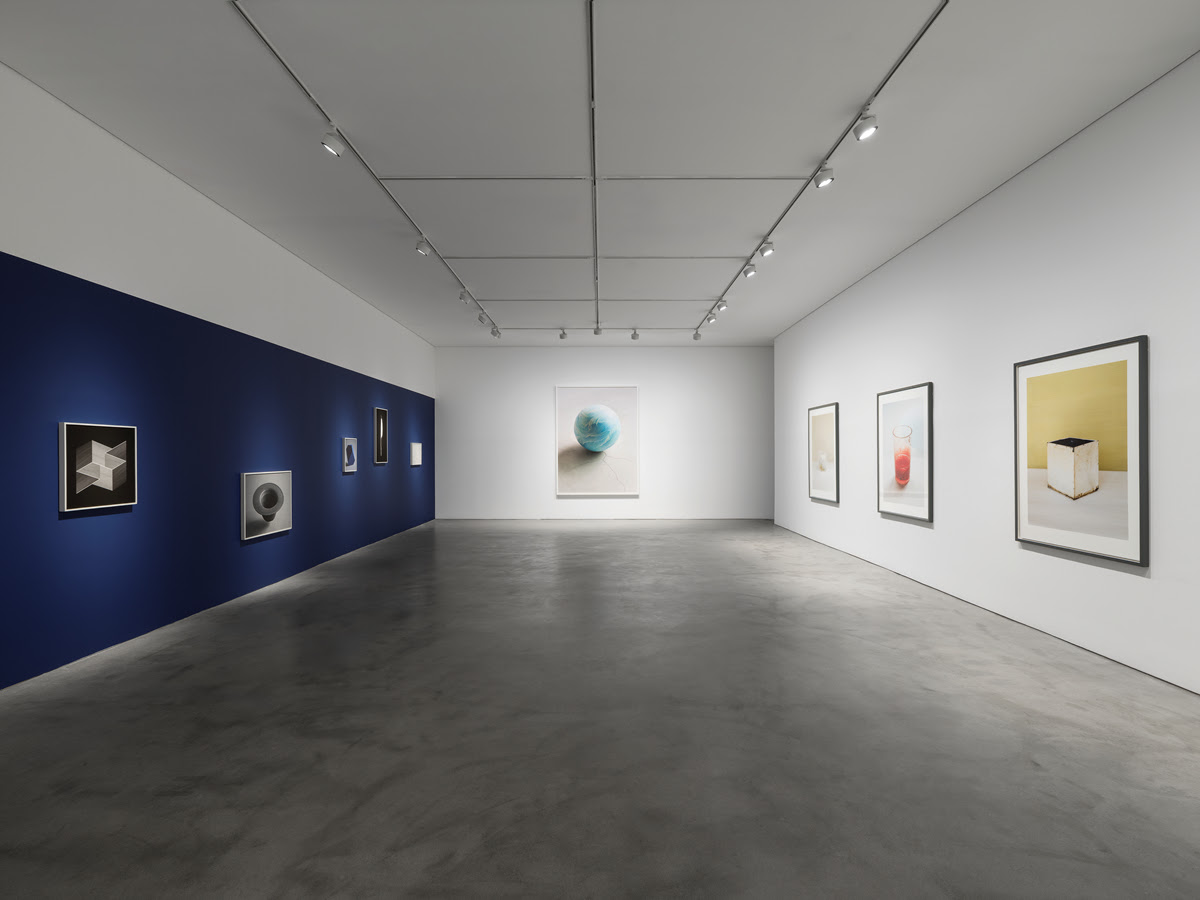
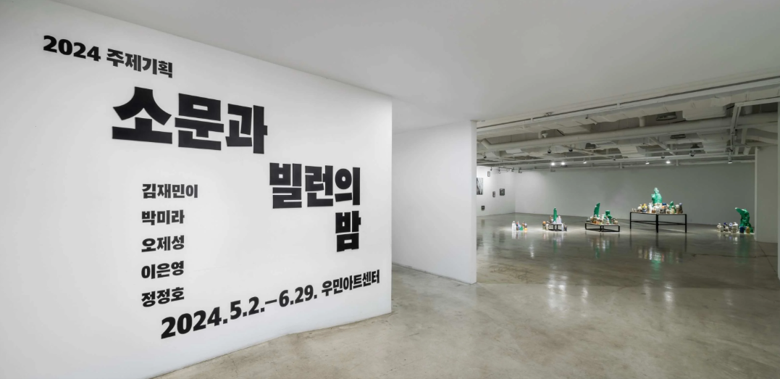
Jung has also participated in numerous group exhibitions, including 《Objects in Oscillation》 (Kukje Gallery, Seoul, 2026), the 13th Seoul Photo Festival 《Come Back Home》 (The Photography Seoul Museum of Art, Seoul, 2026), 《Journey to Distinction》 (Cheongju Museum of Art, Cheongju, 2025), 《Rumors and Villains Night》 (Wumin Art Center, Cheongju, 2024), 《To You, I Say》 (MMCA Residency Goyang, Seoul, 2023), 《Printed World》 (Buk-Seoul Museum of Art, Seoul, 2022), and 《Conservator C's Day》 (MMCA, Cheongju, 2020).

Awards (Selected)

Jung was selected as 'Global Campaigner' by Leica Camera (2020) and 'SKOPF Artist of the Year' by KT&G Sangsangmadang (2018).

Residencies (Selected)

Jung has participated in residency programs at Seoul Art Space Geumcheon (2024), Kunstlerhaus Schloss Balmoral in Germany (2023), and MMCA Residency Goyang (2023).

Collections (Selected)

Jung’s works are held in the collections of numerous institutions in Korea and abroad, including the MMCA, Seoul Museum of Art, Cheongju Museum of Art, and GoEun Museum of Photography.

Works of Art

Capturing Time and Hidden Narratives Through Photography

Originality & Identity

Jung Jungho has explored places and objects that change or disappear over time, along with the memories and stories of the people connected to them, through photography. In his early practice, he focused on observing the forms of nature and everyday objects, seeking to capture the subtle energies and sensations that exist beyond their visible appearances.

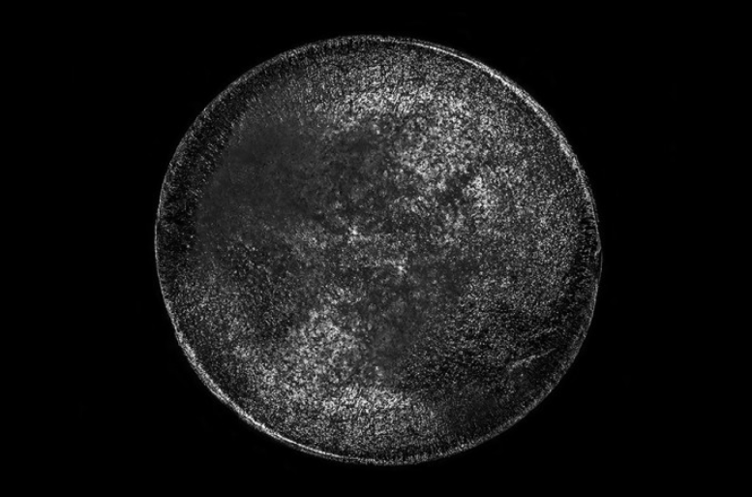
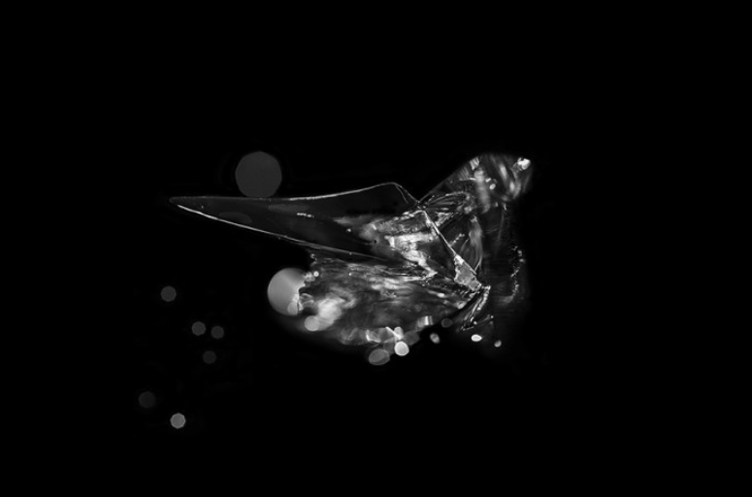
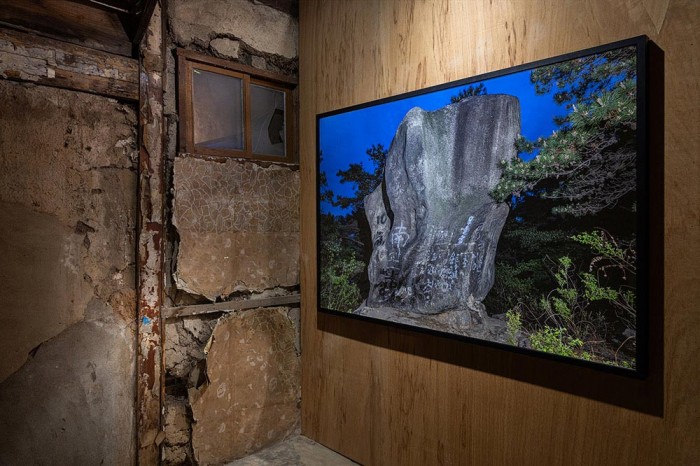
Works such as Tension in Black VI(2012), The Utterance of White(2013), Grain(2014), Study_Particle(2015), and Junction(2015) emphasize the forms and textures of natural and ordinary objects through magnification and unconventional camera angles. During this period, his photography concentrated on conveying the presence and sensations of subjects within individual images rather than communicating specific events or narratives.

His attention subsequently shifted toward urban spaces transformed by development and industrialization. In the ‘ArchiType 7017’ (2016) series, he documented the transformation of the Seoul Station Overpass into a pedestrian park, focusing on how an urban structure loses its original function and acquires a new one. For Jung, the city is not simply a collection of buildings but a place where traces of different periods and people's experiences accumulate. Photography became a means of reconsidering what is easily forgotten amid these changes.
 
This concern gradually expanded to the margins of the city and the lives of those inhabiting them. In the ‘Coincidence’ (2018) series, Jung traced the life and death of his grandfather, who had been mobilized as a laborer during the Korean War, exploring a personal history insufficiently represented in official records.

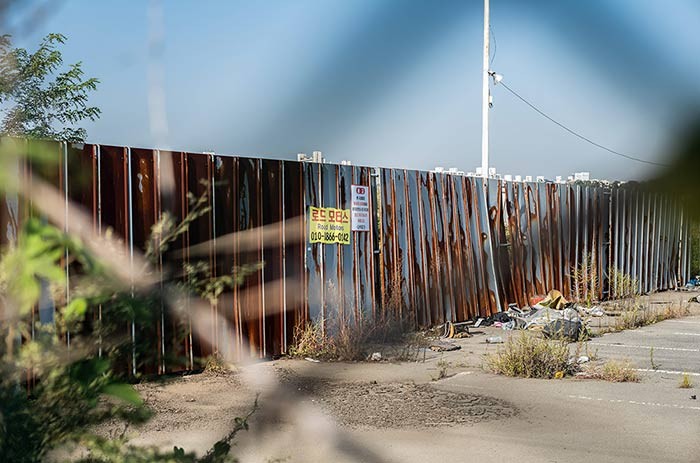
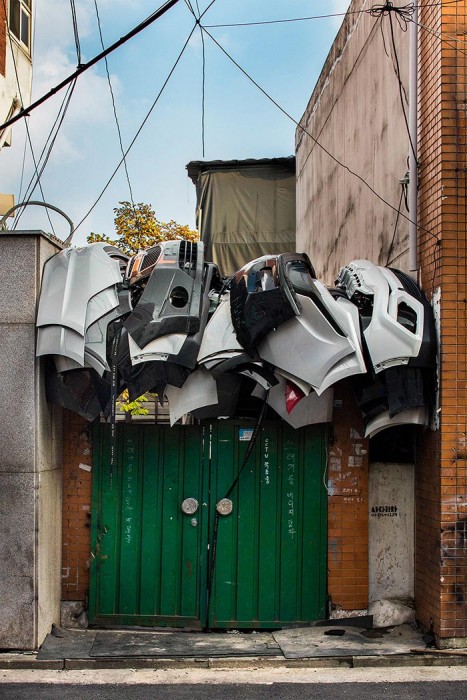
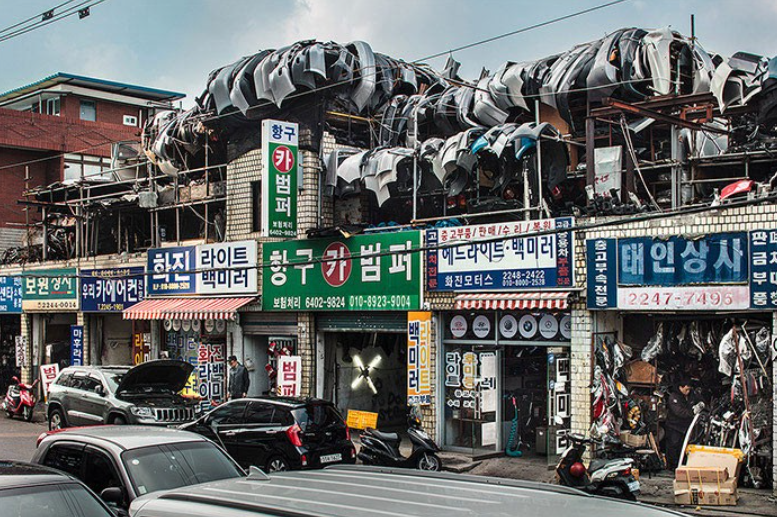
He subsequently documented the industrial traces and accumulated history of labor in Seoul's Janganpyeong secondhand automobile district, then facing redevelopment, through Archive: Machine, Car and City(2018). In Leisure Town(2020), he examined remnants of suburban leisure culture on Daebudo Island, considering how changes in development and consumption have shaped the local landscape.

These interests became more specific in Arabesque(2022). Visiting an automobile export complex in Incheon that had formerly been the Songdo Recreation Area, Jung examined the transformation of the site alongside the foreign workers employed there, their distance from the surrounding community, and the memories of a vanished leisure culture. His work during this period moved beyond documenting the physical transformation of cities to question which lives and histories remain within changing spaces and whose existence is easily forgotten.
 
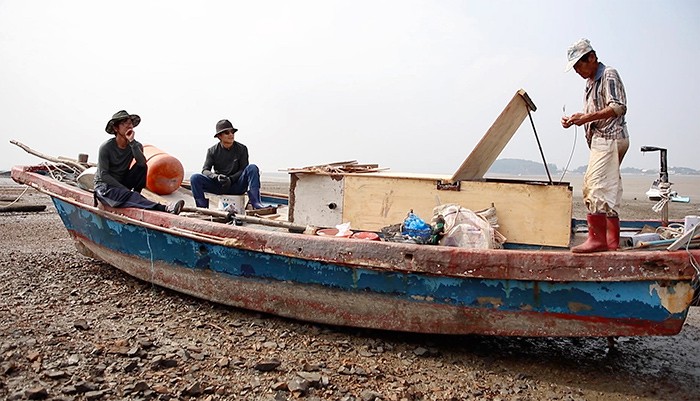
Around 2020, Jung's practice developed from documenting physical locations toward tracing invisible narratives and systems of belief. In Finding Seongam Song(2020), a collaboration with sound artist Seo Hyemin, he investigated the traditional work songs and residents' memories of Seongam Fishing Village on Daebudo, revisiting aspects of local culture at risk of disappearing.

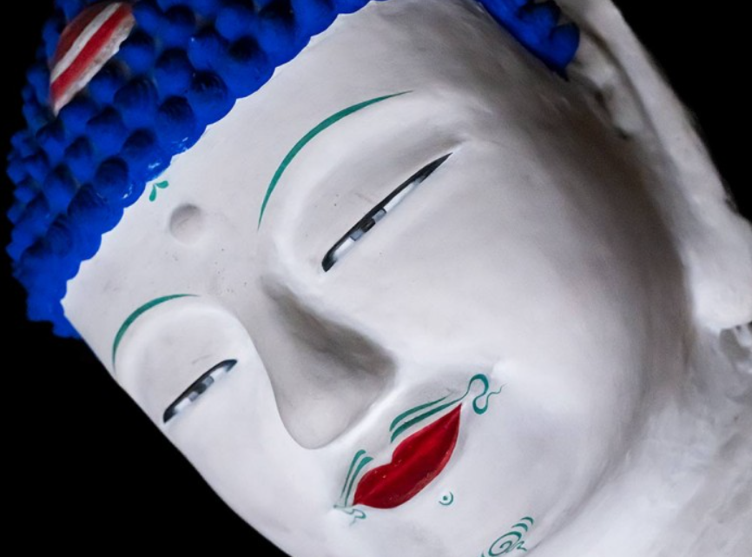
His subsequent ‘Buddha and Magohalmi’ (2021) series followed stories of a Buddha statue associated with Buldo and legends of Magohalmi, exploring how figures whose physical traces have disappeared continue to survive through place names and oral traditions. This interest continued in 《Rumors and Villains Night》(Wumin Art Center, 2024), where he examined legends associated with dragons and sites such as Dragon Cave and Dragon Rock in Cheongju.

In his solo exhibition 《Topography of Beliefs》(Seoul Art Space Geumcheon, 2024), he drew on the geomantic theories of the Buddhist monk Muhak to investigate sacred sites around Inwangsan and Hoamsan, exploring how people attribute meaning and spiritual power to particular landscapes.

《Sacred Site》(Artspace Boan, 2025) subsequently examined the history of Inwangsan and Guksadang Shrine, considering how feng shui and shamanism have persisted and acquired new meanings through historical change. Jung's practice has thus evolved from documenting disappearing places to exploring the memories and narratives associated with them, and ultimately to examining systems of belief that continue to shape people's actions and perceptions today.

Style & Contents

Working primarily with photography, Jung Jungho has gradually expanded his practice to incorporate video, field research, archival materials, interviews, and object-based installations. In early works such as Tension in Black VI, The Utterance of White, Grain, and Junction, he used close-ups and extreme high- and low-angle photography to create abstract compositions from the forms of nature and everyday objects.

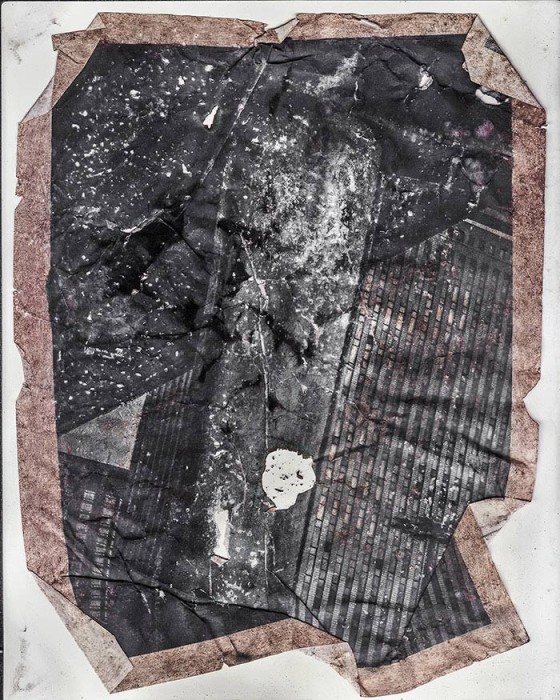
Rather than explaining his subjects as they appeared, he emphasized the relationships between composition, light, and texture, allowing each photograph to achieve its own formal completeness. This approach continued in his subsequent works addressing urban spaces. In the ‘ArchiType 7017’ series, Jung photographed the demolition and redevelopment of the Seoul Station Overpass, printed the images on paper, and buried them underground for a period of time.

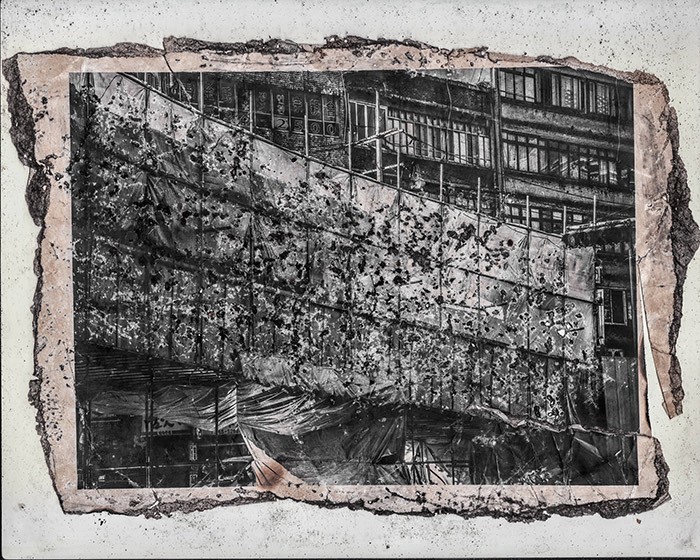
He then scanned and reprinted the photographs after they had become crumpled, torn, and discolored by soil and dust, transforming contemporary scenes into images resembling artifacts from the past. In works such as ArchiType 7017 #21_37°33'25.7"N 126°58'08.1"E(2016) and ArchiType 7017 #2_37°33'24.3"N 126°58'18.9"E(2016), photographs become more than documentary records, functioning as physical objects marked by the passage of time.

By contrast, in 《Archive: Machine, Car and City》(Ryugaheon, 2019), he adopted a more restrained documentary approach, minimizing dramatic staging and photographing his subjects from frontal perspectives. Works such as Archive Machine, Car and City 4078(2018) and Archive Machine, Car and City 4131(2019) depict oil-stained automobile parts, repair shops, building interiors, and street scenes. Rather than dramatizing the industrial environment, Jung accumulated detailed images of everyday objects and working spaces to construct an overall impression of the place.
 
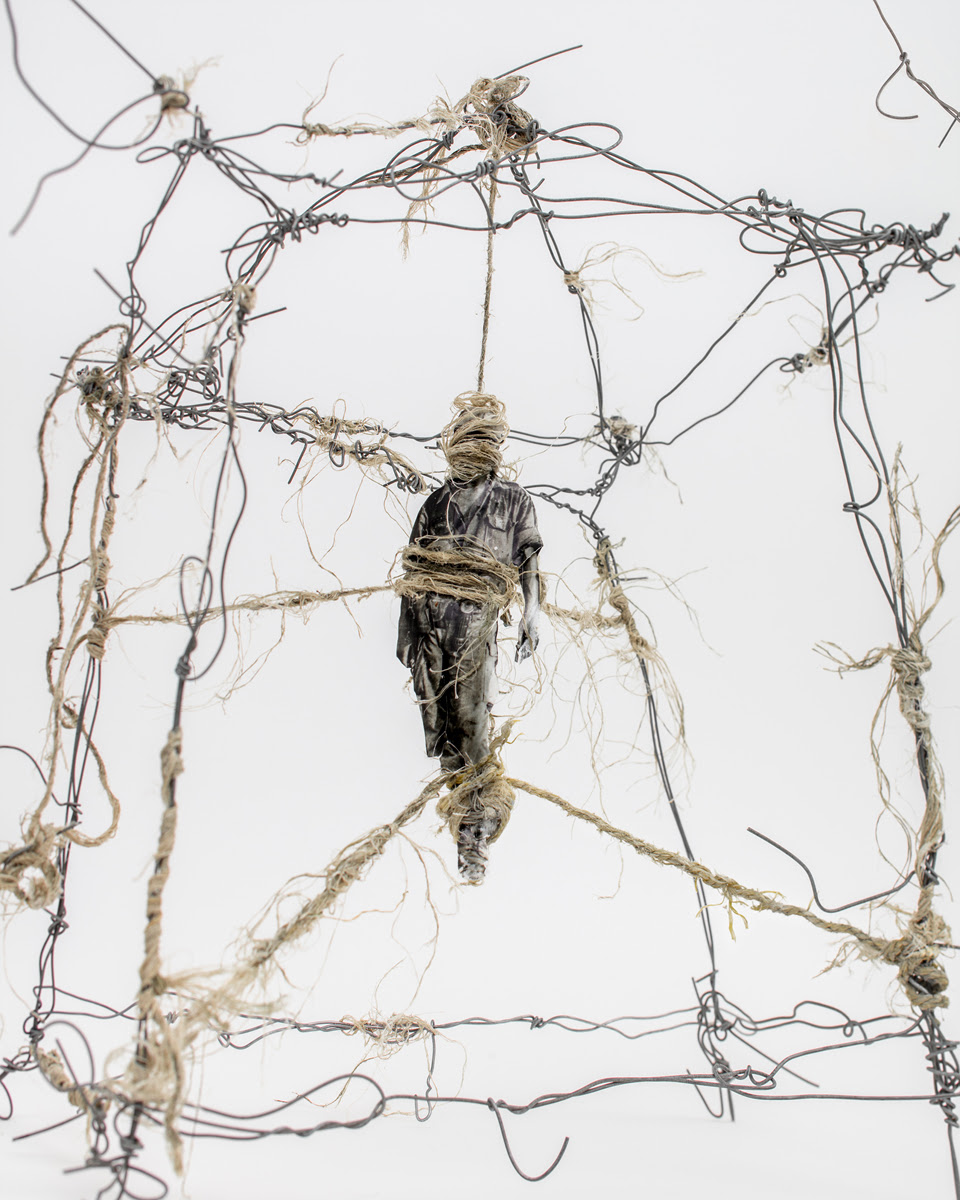
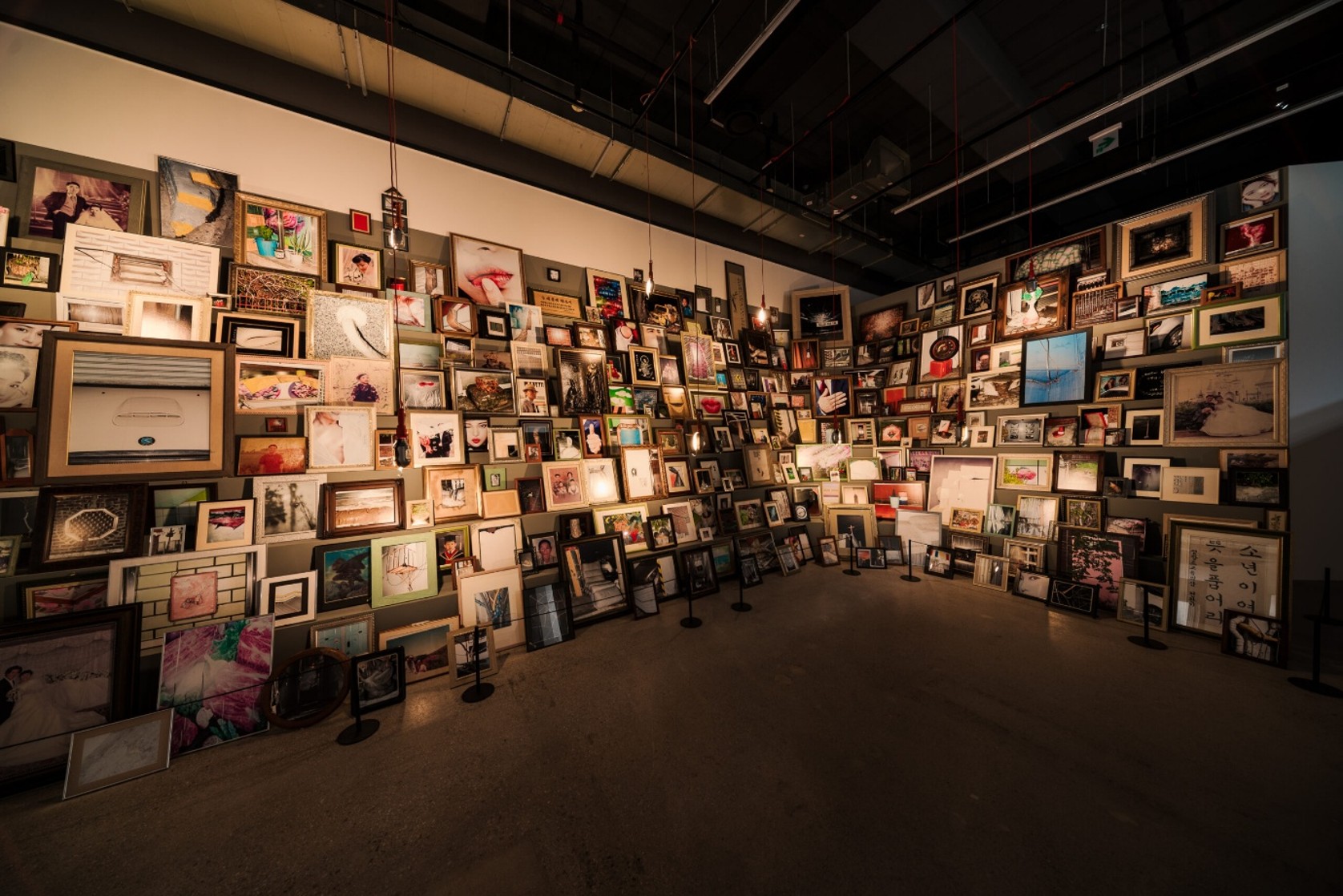
Jung subsequently began adapting his photographic methods to the characteristics of his subjects and the conditions of each site. In works such as Mirror(2018) and Doom(2018) from the ‘Coincidence’ series, he collected and rearranged materials including shell casings, wire, rope, archival documents, and family photographs before photographing them. Faced with insufficient historical records and restricted access to certain locations, these collected objects became clues through which he could imagine and reconstruct a forgotten individual's life.

In Arabesque, unlike his earlier work in Janganpyeong, Jung photographed the narrow streets of the automobile export complex while moving through them on a bicycle. Motion blur, imperfect focus, and tilted compositions were preserved without additional correction. These formal qualities reflect the physical circumstances and observational distance of an outsider who could not fully examine the site at close range.

Meanwhile, ‘Finding Seongam Song’ combined interviews with residents, field recordings, and video documentation. The single-channel video Finding Seongam Song(2020) documents the collaborative process of creating a new work song based on residents' accounts, incorporating voices, sounds, and local histories that photography alone could not fully convey. His practice thus expanded from emphasizing the formal completeness of individual photographs to incorporating processes of research, movement, collection, and personal encounters into the work itself.
 
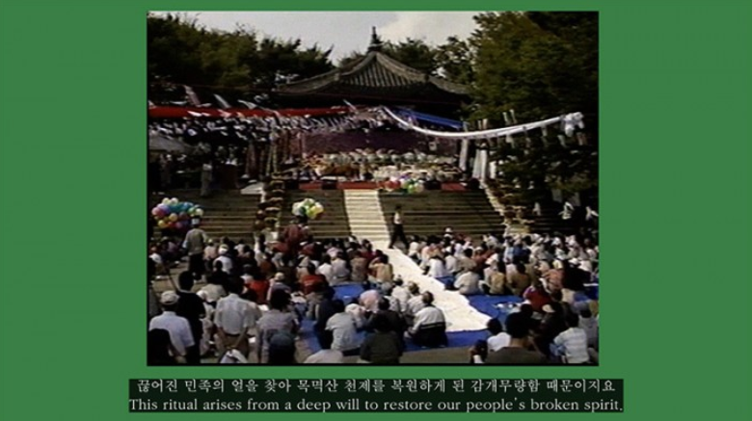
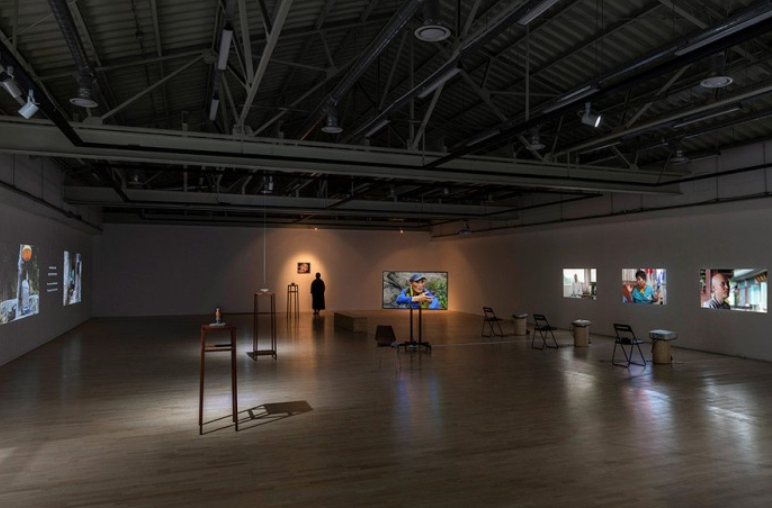
This development becomes even more apparent in his recent works addressing local folklore and religious beliefs. In 《Buddha and Magohalmi》(Cheongju Art Studio, 2022), Jung investigated historical documents and place names, gathered stories through encounters with local historians, shamans, and residents, and reconstructed his findings through photography, video, and object-based installations.

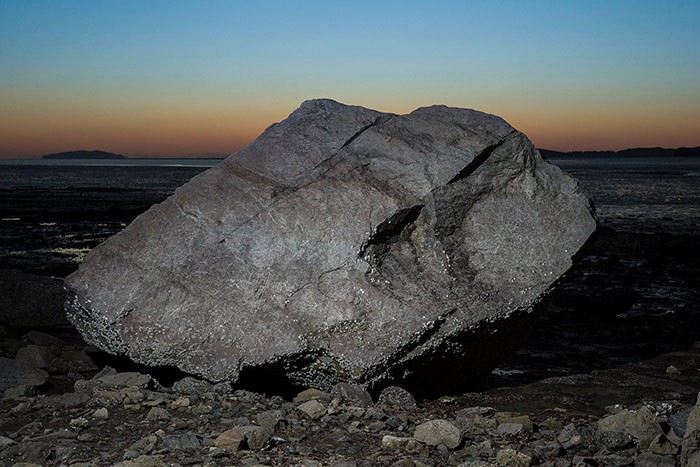
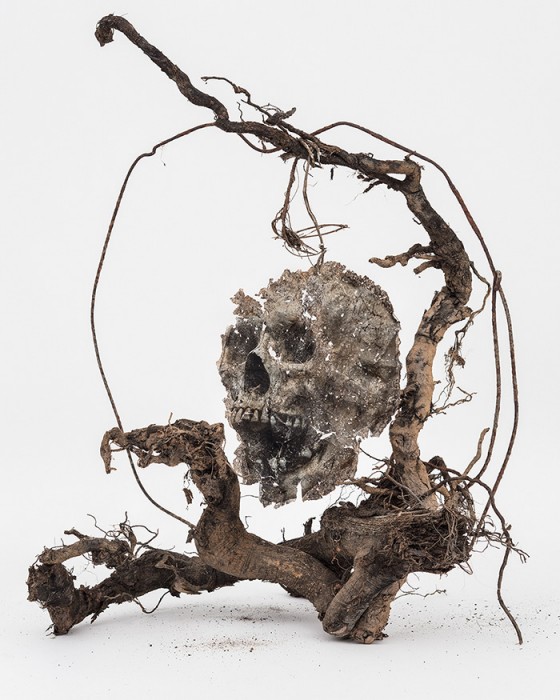
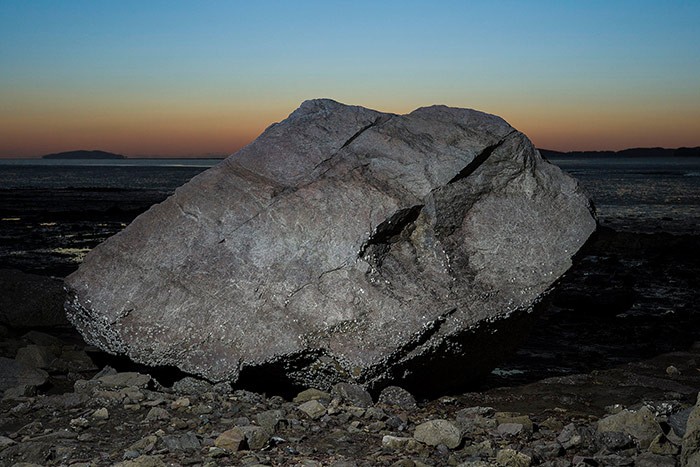
In Mago's Dust(2021), he captured the physical forms of rocks and natural objects with clarity while encouraging viewers to consider the stories and memories that may have accumulated on their surfaces over time. In 《Rumors and Villains Night》, he explored sites associated with dragon legends in Cheongju, examining the relationships between orally transmitted stories and actual places and objects through works such as Dragon Rock, The Secret of Guryongsan, Hole, and Pollack Head.

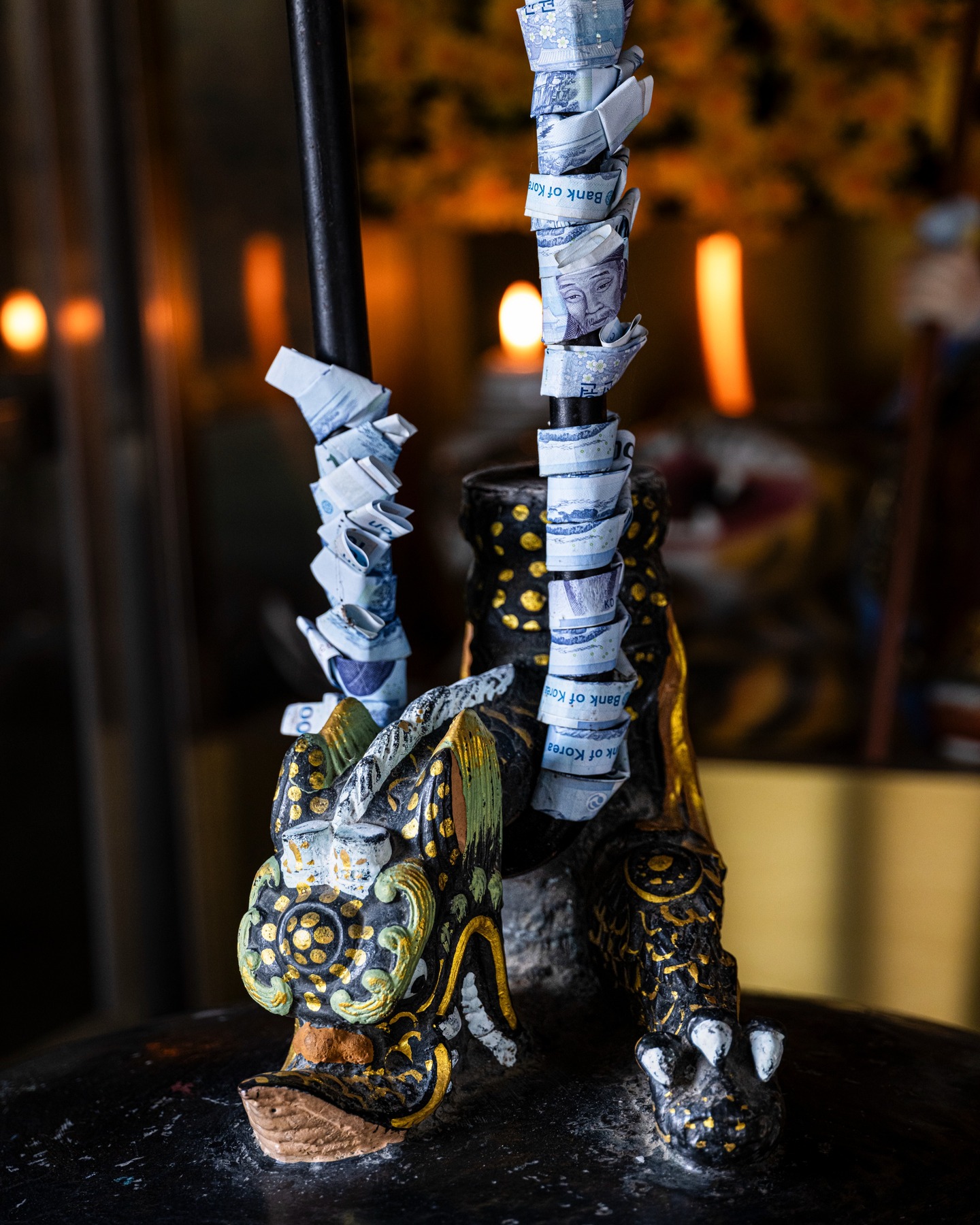
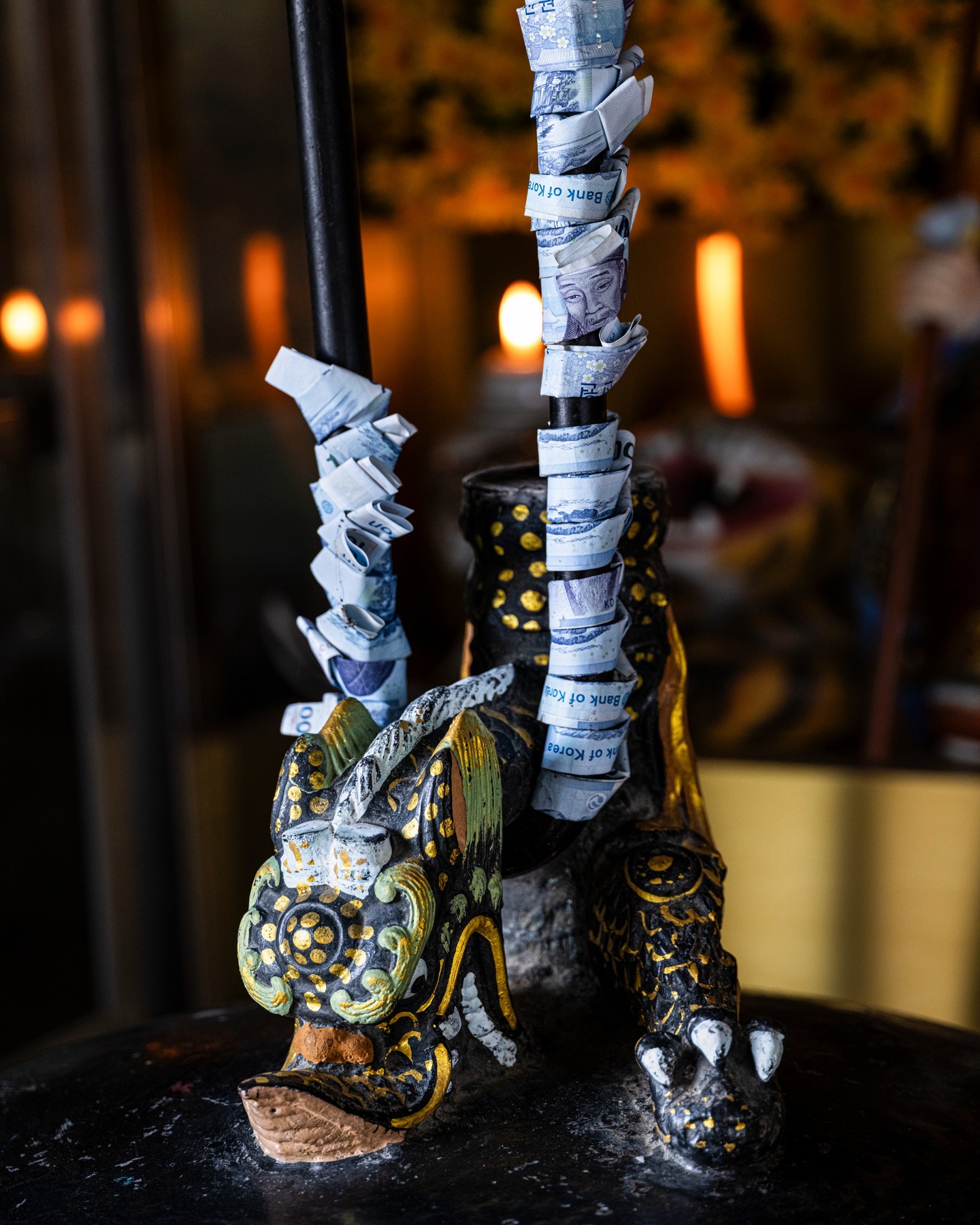
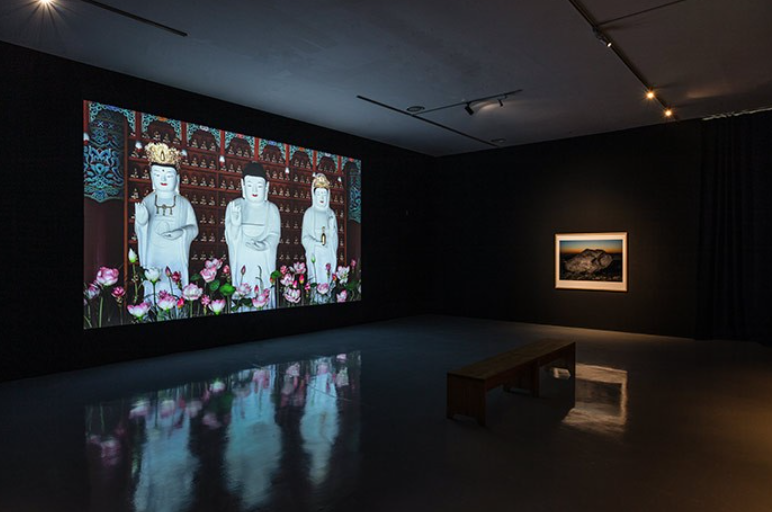
Subsequently, Topography of Beliefs(2024), presented in the exhibition of the same title, is a three-channel video combining landscapes filmed during his exploration of Inwangsan and Hoamsan with interviews involving shamans, Buddhist monks, and well guardians. In 《Sacred Site》, he photographed places and objects associated with religious beliefs and legends through works such as Chilseonggak Shrine(2025) and Dragon's Antler(2025), addressing the history of Guksadang Shrine and contemporary religious practices.

In these recent works, photography continues to reveal the physical presence of specific locations while connecting with video, oral accounts, and historical documents to provide multiple perspectives on a place. Each image functions as an independent scene while interacting with other records to construct narratives between visible landscapes and invisible beliefs.

Topography & Continuity

A consistent concern throughout Jung Jungho's practice is the desire to document what exists before his eyes while uncovering the time and memories that remain beneath its visible surface. His early work sought to capture the sensations embedded in natural and ordinary forms, while his subsequent projects documented landscapes and personal histories at risk of disappearing amid urban development and industrialization.

More recently, he has explored local folklore, shamanism, and feng shui, examining how stories continue to shape people's lives even after their physical origins have disappeared. Throughout these developments, Jung has consistently investigated the relationship between what photography can show and what remains beyond its capacity to explain.

Within documentary photography and archive-based practices concerned with the histories of places, his approach is distinguished by an unwillingness to limit his work to reconstructing established facts or presenting definitive conclusions. Instead, he incorporates incomplete records, conflicting testimonies, and legends whose origins cannot be verified into his investigations.

Photography consequently becomes both a form of objective evidence and a medium through which further stories can emerge. His commitment to visiting sites, meeting people, and preserving the distance and uncertainty encountered during these processes is a defining characteristic of his practice.
 
This attitude is also reflected in the changing forms of his work. In ‘ArchiType 7017’, Jung physically inscribed traces of time into photographs by burying and excavating them, while Archive: Machine, Car and City and Leisure Town involved sustained observation of everyday industrial environments and remnants of development. In Arabesque, he incorporated his own position within the site and the limitations of his perspective into the photographic image.

In ‘Buddha and Magohalmi’ and 《Topography of Beliefs》, he combined research materials, residents' testimonies, photography, and video to construct works in which multiple narratives coexist. Rather than treating urban transformation and local folklore as separate subjects, Jung connects them through a shared question: What disappears over time, and what traces remain?

His participation in exhibitions such as 《Conservator C's Day》(MMCA Cheongju, 2020), 《Printed World》(Buk-Seoul Museum of Art, 2022), 《Rumors and Villains Night》, 《Objects in Oscillation》(Kukje Gallery, 2026), and the 13th Seoul Photo Festival 《Come Back Home》(Photography Seoul Museum of Art, 2026) further demonstrates how his practice engages with diverse discussions surrounding documentation and conservation, urban spaces and places, personal memory, and the characteristics of the photographic medium.
 
Jung was selected as the KT&G Sangsangmadang ‘SKOPF Artist of the Year’ (2018) and served as a Leica Camera ‘Global Campaigner’ (2020). Through residency programs at MMCA Residency Goyang and Künstlerhaus Schloss Balmoral in Germany (2023), as well as Seoul Art Space Geumcheon (2024), he has continued developing site-based projects across different regions in Korea and abroad.

His works are held in the collections of institutions including the National Museum of Modern and Contemporary Art, Korea (MMCA), Seoul Museum of Art, Cheongju Museum of Art, and GoEun Museum of Photography. Although his practice begins with specific histories and locations associated with Korea's industrialization, urban development, and local folklore, its underlying concerns—the disappearance and reconstruction of memory, collective beliefs, and the relationships people form with places—resonate across different cultures and regions.

Through his recent exhibition 《Sacred Site》, Jung has continued to develop the documentation of visible subjects alongside the investigation of invisible narratives. His approach of spending extended periods in particular places, closely examining their people and histories, provides a foundation for engaging with new regions and cultural contexts while continuing to explore what photography can document and which stories it can preserve.

Works of Art

Capturing Time and Hidden Narratives Through Photography

Articles

Exhibitions

Activities