Sensible plants - K-ARTIST

Sensible plants

2016
Mixed Media
270 x 250 cm
About The Work

Kim Jee Soo explores the traces of invisible presences through the sense of smell, investigating the relationships between sensation, memory, and life.

For her, scent is a distinct language left behind by beings and a trace of time and space, serving as a medium through which forgotten memories and the atmosphere of vanished places can be revived. Her practice stems from an attempt to perceive the movements and relationships within the world that lie beyond the reach of ordinary human senses.

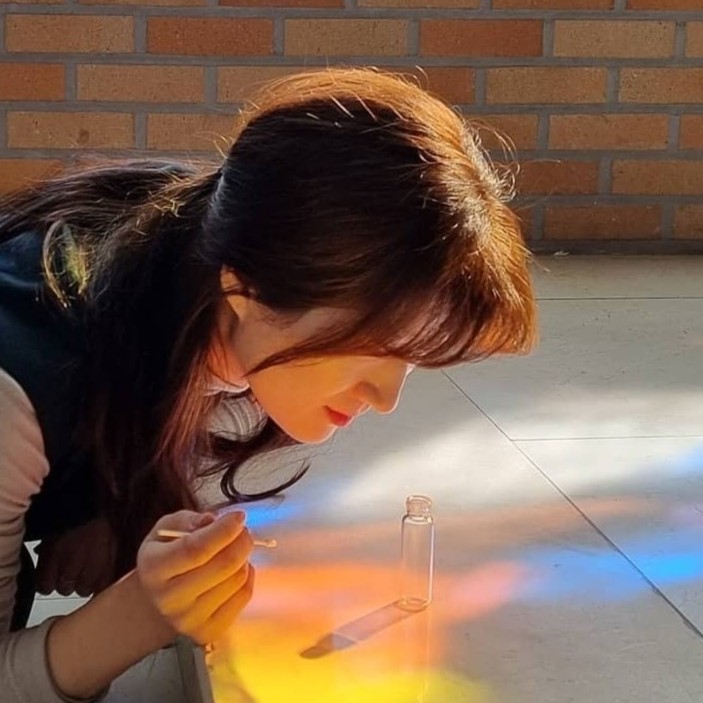
Through observing the growth and movements of plants such as mosses and ferns, Kim has focused on how different forms of life experience the world and on the rhythms of life that respond to subtle environmental changes.

She later expanded her inquiry to collecting scents from forests, gardens, old objects, and the body odors of others, tracing the sensory imprints left by different beings. The way scent disperses through the air and eventually disappears evokes the impermanence of memory and the passage of time.

Kim’s concept of “olfactory imagination” extends the experience of smell into visual and tactile sensations, as well as linguistic associations, connecting personal memories with the external world.

The process through which scent spreads without boundaries and merges with other beings invites a reconsideration of the relationships between self and other, and between humans and nature. Through this process, Kim discovers the continuity and interdependence of life, sensorially contemplating a world shared by all living beings.

Solo Exhibitions (Brief)

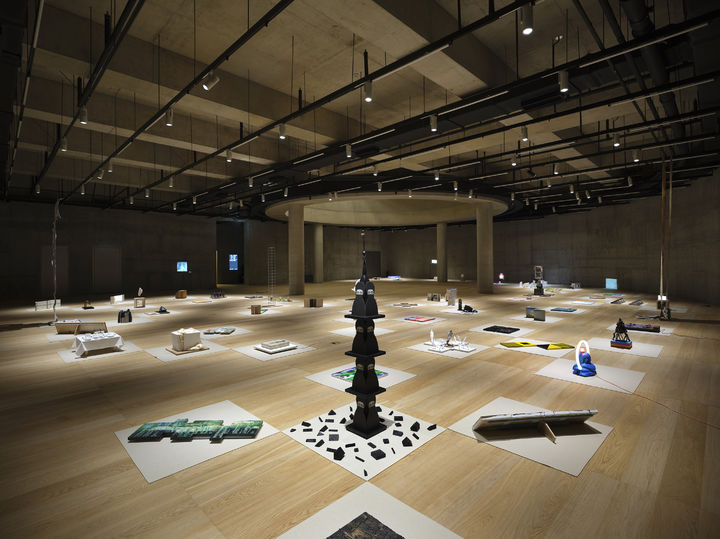
Kim Jee Soo has held solo exhibitions at Kumho Museum of Art (2025), Space CAN (2023), Art Space Hue (2019), BOAN1942 (2018), and Artist Residency TEMI (2016).

Group Exhibitions (Brief)

Kim Jee Soo has participated in group exhibitions at SONGEUN (2026, 2021), Gangwon International Triennale (2024), Busan Museum of Contemporary Art (2024), Savina Museum of Contemporary Art (2021, 2018), National Museum of Modern and Contemporary Art, Korea (2020), Gwangju Design Biennale (2017), and Musée d’art moderne et contemporain de Saint-Étienne Métropole, France (2012).

Awards (Selected)

Kim Jee Soo received the Excellence in Teaching Award from Ewha Womans University in 2016.

Residencies (Selected)

Kim Jee Soo was an artist-in-residence at Artist Residency TEMI in 2016.

Collections (Selected)

Kim Jee Soo's works are held in the collections of Daejeon Museum of Art and the Division of Biomedical Sciences at Konkuk University.

Works of Art

Olfactory Art Connecting Time, Space, Memory, and the Senses

Originality & Identity

Kim Jee Soo explores the traces of invisible presences through olfaction, investigating the relationships between sensory perception, memory, and life. The smell of old books in her father's study and the vitality of plants and animals encountered in the garden during her childhood formed an important foundation for her sensory experiences. She understands smell as a distinctive language of existence and a trace of time and space.

The experience of a particular scent evoking forgotten memories or reviving the atmosphere of a vanished place has expanded her interest in olfaction into questions of existence and perception. Her inquiry begins with the recognition that countless movements and relationships remain beyond our awareness, even within the familiar world.

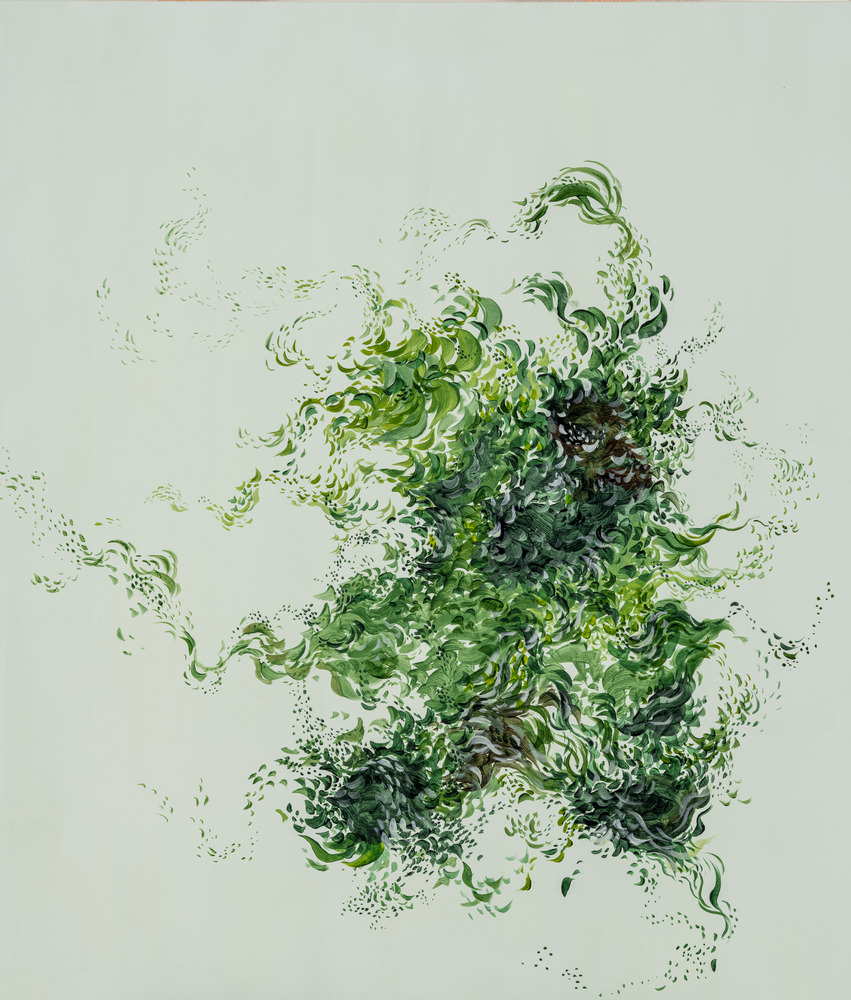
Her interest in life extends to the different ways humans and other living organisms experience the world. Through years of observing the growth and movements of plants, Kim has focused on the temporality of life that is difficult for human senses to perceive. She draws attention to the presence of organisms that respond to subtle environmental changes, particularly easily overlooked plants such as mosses and ferns.

The communication with plants explored in 《GREEN MANTLE – Sensible Plants》 (2016) developed into broader questions concerning symbiosis between humans and nature. The recognition that beings with different sensory capacities and temporal rhythms exist in relation to one another underpins her ecological thinking. Her respect for life is also evident in her practice of returning plants used in exhibitions to her studio and continuing to care for them.

These ecological concerns gradually expanded into an exploration of memory and sensory perception through smell. Kim collects scents from various sources, including forests, gardens, old objects, and the bodily odors of others, tracing the sensory impressions left behind by living beings and their surroundings. The diffusion and disappearance of smells in the air evoke the incomplete nature of memory and the passage of time.

In works developed through 《Pul Pul Pul–Scents》 (2019) and 《Smellscape》 (2023), images, emotions, and personal experiences evoked by scents intersect. What the artist describes as “olfactory imagination” begins with the experience of perceiving actual smells and extends to visual, tactile, and linguistic associations. Through this process, the senses emerge as interconnected modes of perception that connect individual memory with the external world.

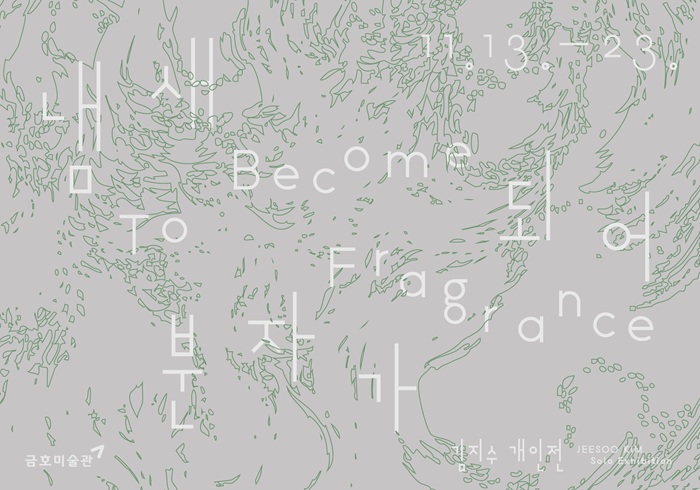
More recently, Kim's practice has moved toward contemplating the interconnectedness of life and the universe, extending beyond the sensory experiences of individual beings. In 《To Become Fragrance》 (2025), the artist imagines herself becoming an odor molecule, moving freely through the air and forests. The process by which scent spreads across boundaries and becomes part of other beings invites a reconsideration of the relationships between self and other, humanity and nature.

Here, olfaction functions as a sense that connects different forms of existence across physical distances and temporal boundaries. Through the continuous emergence and disappearance of life, Kim discovers the continuity and interdependence of existence, approaching the world shared by all living beings through sensory contemplation.

Style & Contents

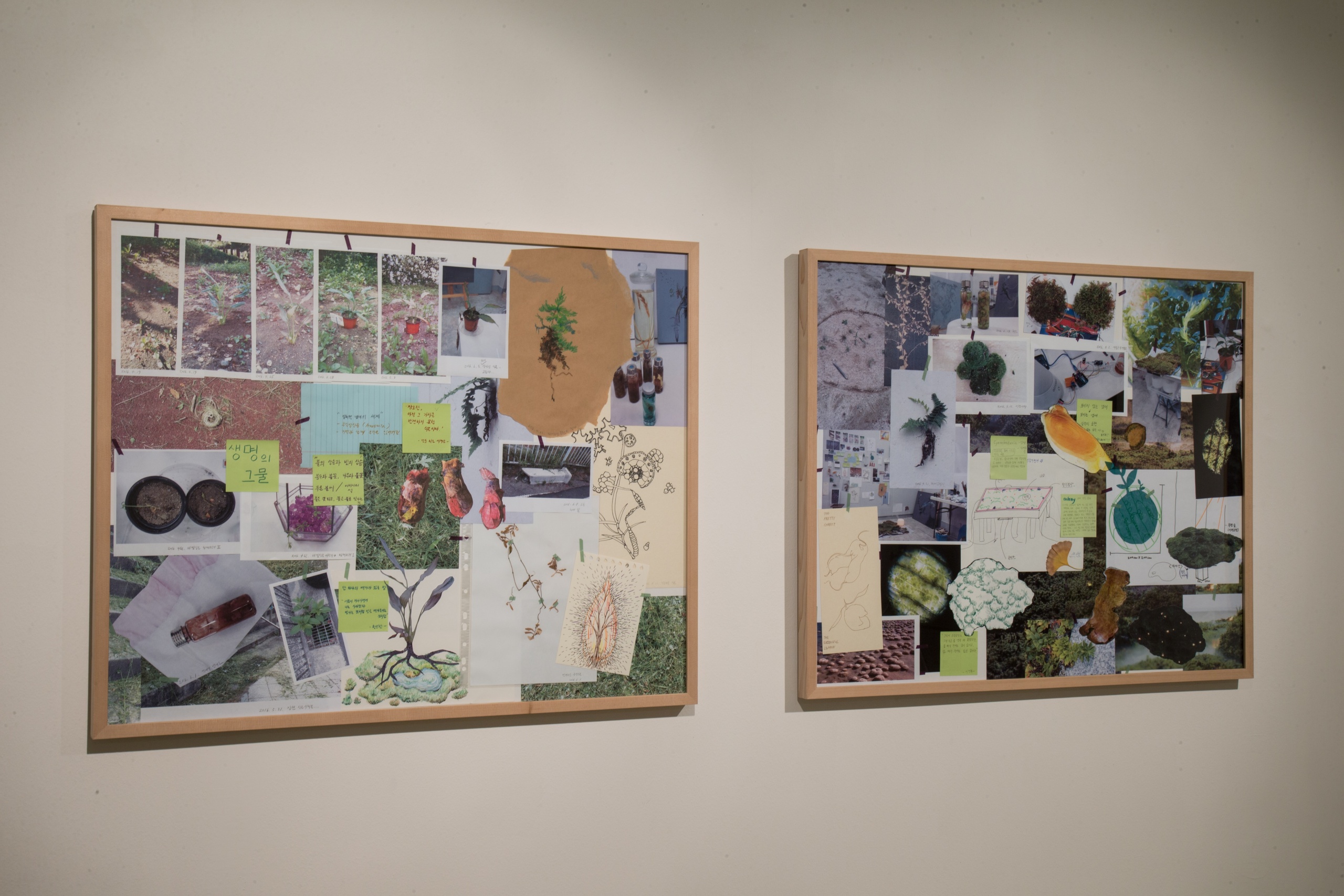
Kim Jee Soo's practice has evolved from painting and drawing into multisensory expressions combining installation, video, sound, and scent. In her early works, she emphasized tactile qualities by covering everyday objects, such as skulls, cameras, and chairs, with wool, while exploring movement and the flow of energy through repeated dots and lines. She later developed her observations of the ecological characteristics of plants and animals into what she calls “Bio-drawing,” combining biological information with personal imagination.

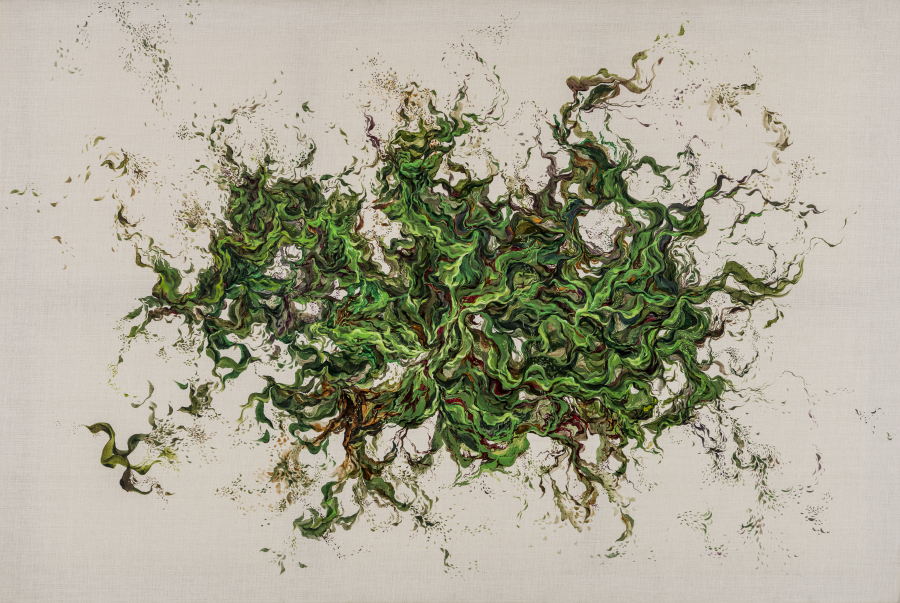
In Collected Moments (2013–2014), records of plants and animals, abstract imagery, and text coexist within the compositions, revealing the processes of observation and interpretation. This approach subsequently extended into collage and photography, in which natural forms are deconstructed and reconfigured. In TEMI Tree (2016), the artist removes the trunk of a tree and overlaps images of its foliage, creating organically proliferating forms.

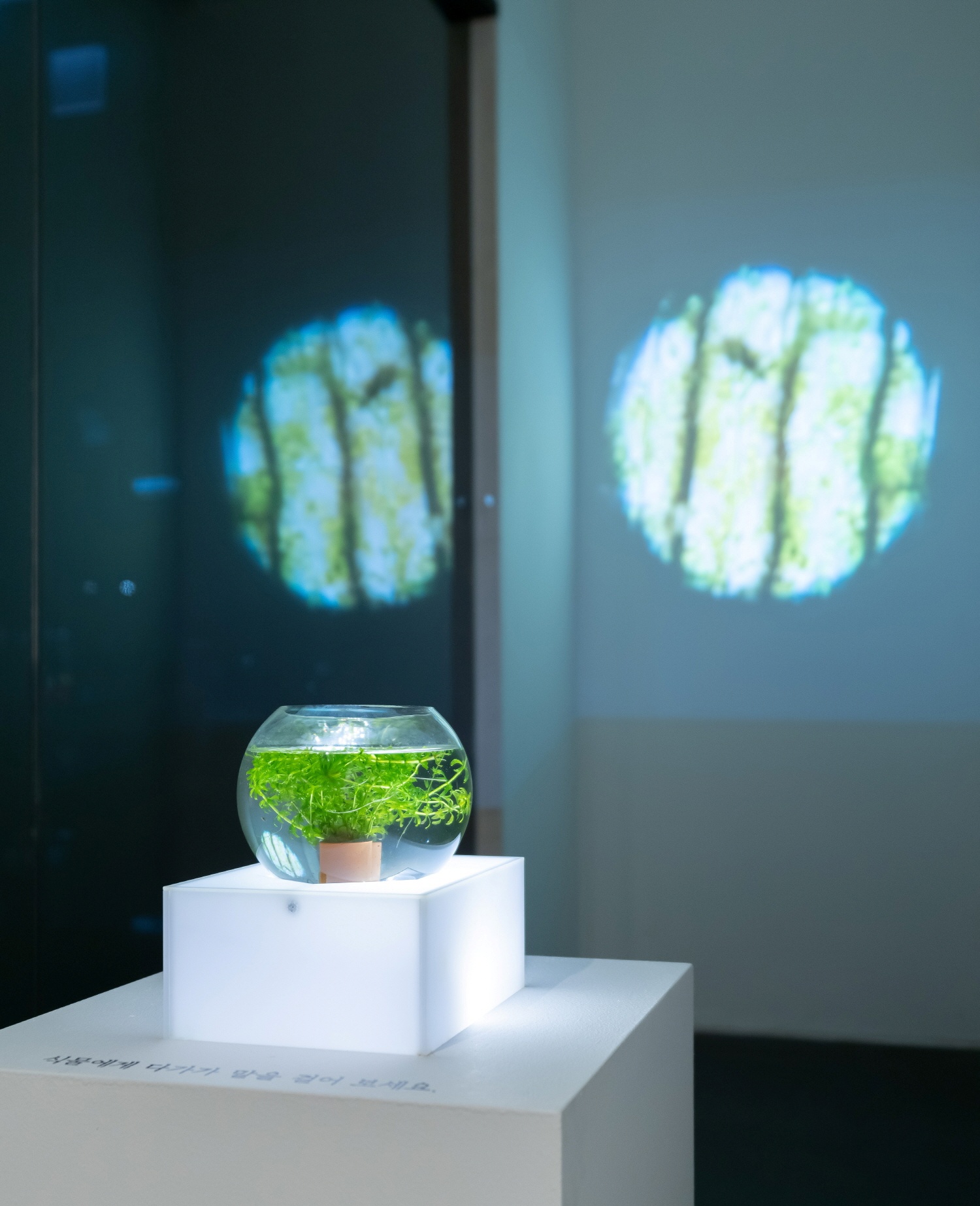
From the mid-2010s onward, interactive installations combining scientific observation and technological devices became increasingly prominent in her practice. Kim filmed the movements of chloroplasts through a microscope and connected the footage to devices that generate light, sound, and fragrance, allowing viewers to experience the responses of plants.

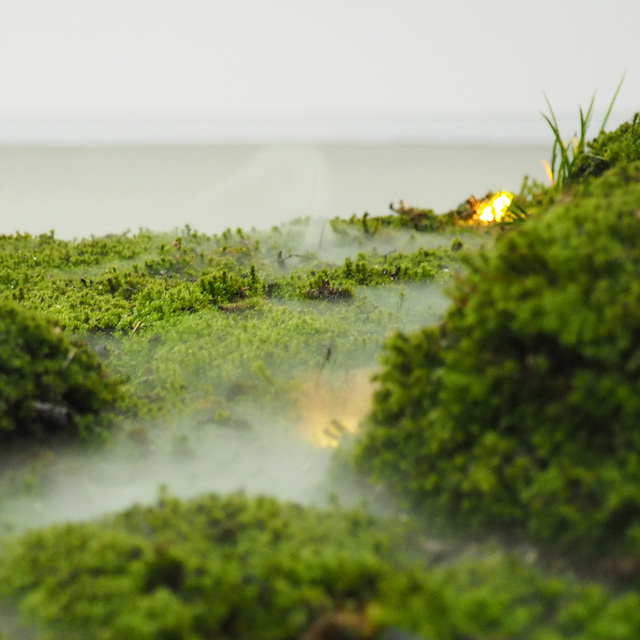
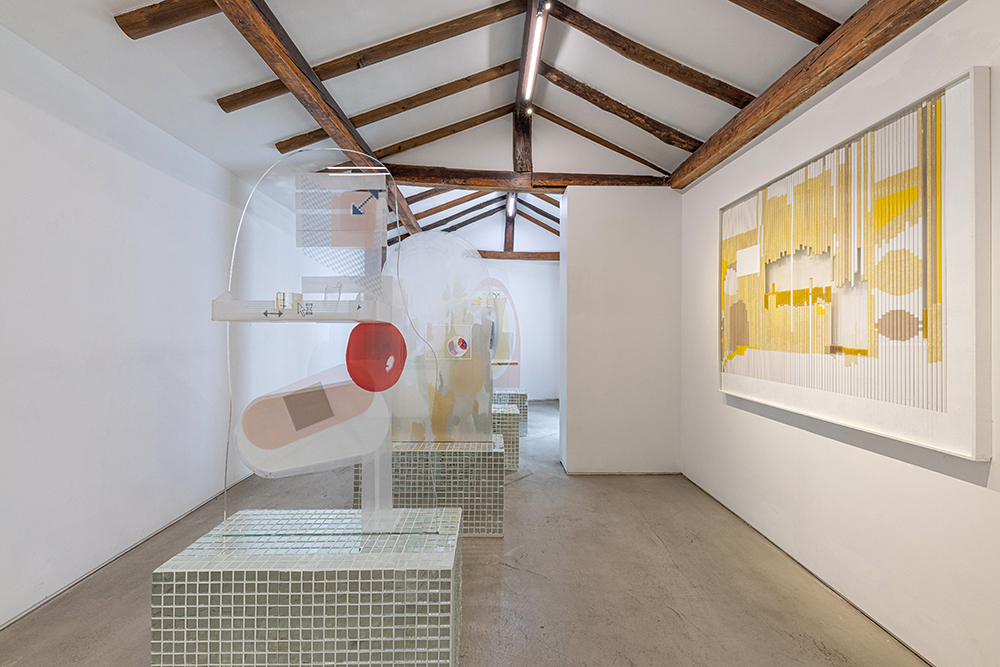
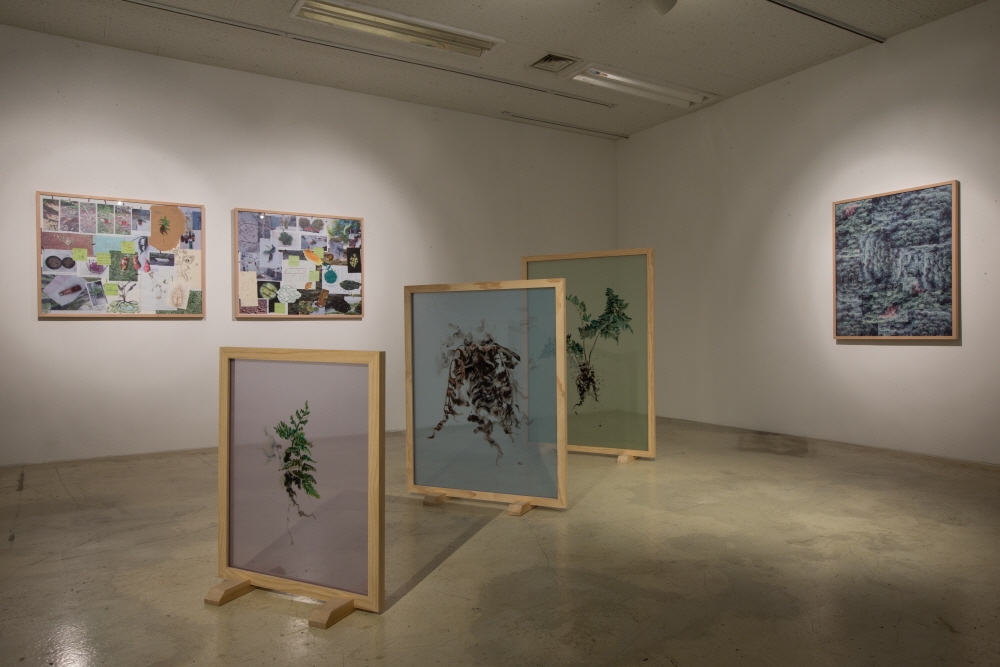
In Breathing (2016) and Sensible Plants (2016), she employed materials such as moss, wood, Arduino, LED lights, and sensors. As viewers approach or speak to the installations, lights are activated, prerecorded footage of chloroplast movements is played, or fragrances are released.

By sensorially magnifying the subtle movements of plants, these installations draw attention to the gap between the limits of human perception and the temporal rhythms of plant responses. Audience participation becomes an essential element in generating changes within the works, while the exhibition spaces are transformed into environments where the physiological characteristics of plants intersect with mechanical operations.

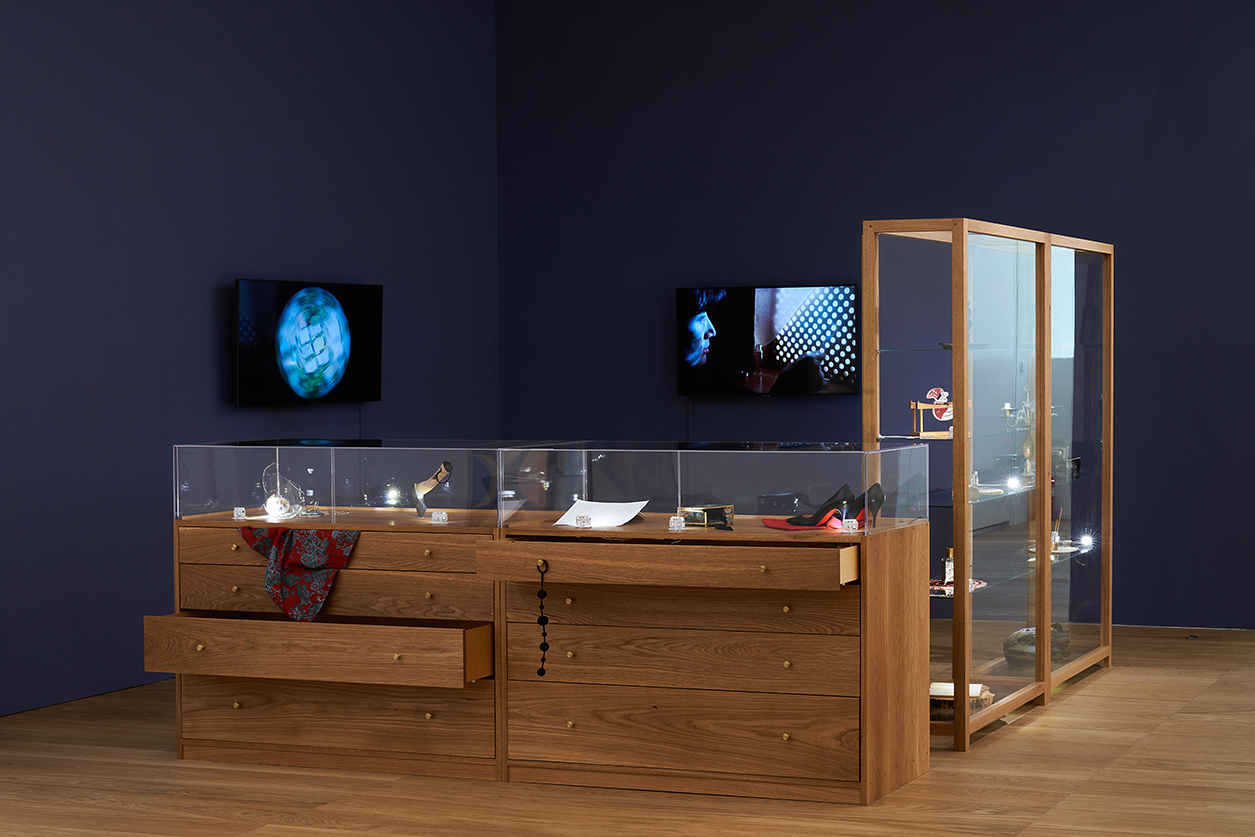
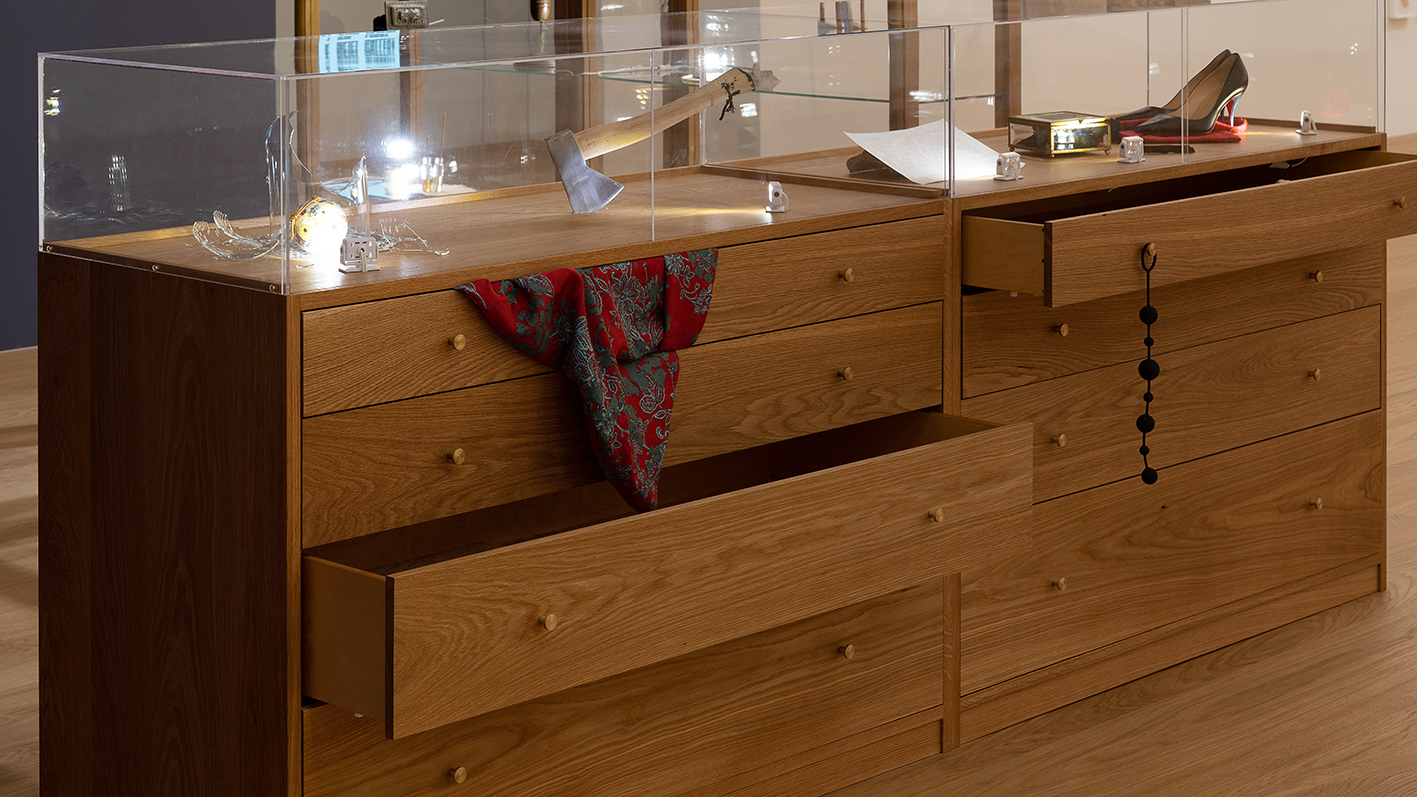
As olfaction became increasingly central to her practice, the collection, preservation, and visualization of scents also developed into important artistic methods. Kim gathers smells from the surfaces of plants and objects, the air surrounding particular places, and the bodily odors of individuals, preserving them in glass vials or capsules to accumulate sensory records.

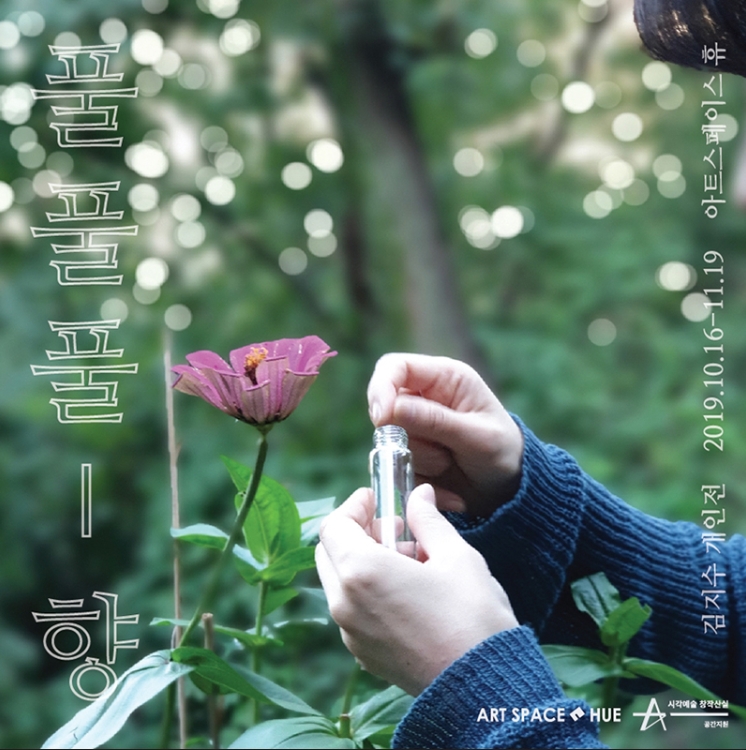
In 《Pul Pul Pul–Scents》 (2019) and Pul Pul Pul – C (2020), she presents collected scents and objects in installations. In We Are in the Air (2021), personal belongings, including books, toys, candlesticks, and moss, are arranged alongside fragrances to construct a space imbued with memory. These works closely connect the physical diffusion of scent, the material presence of objects, and the associative experiences of viewers.

Extending this exploration, 《This Is Tomorrow》 (2021) introduced imaginary scents within an online virtual reality environment, inviting audiences to envision smells through language and imagery alone and experimenting with new possibilities for representing olfactory experience.

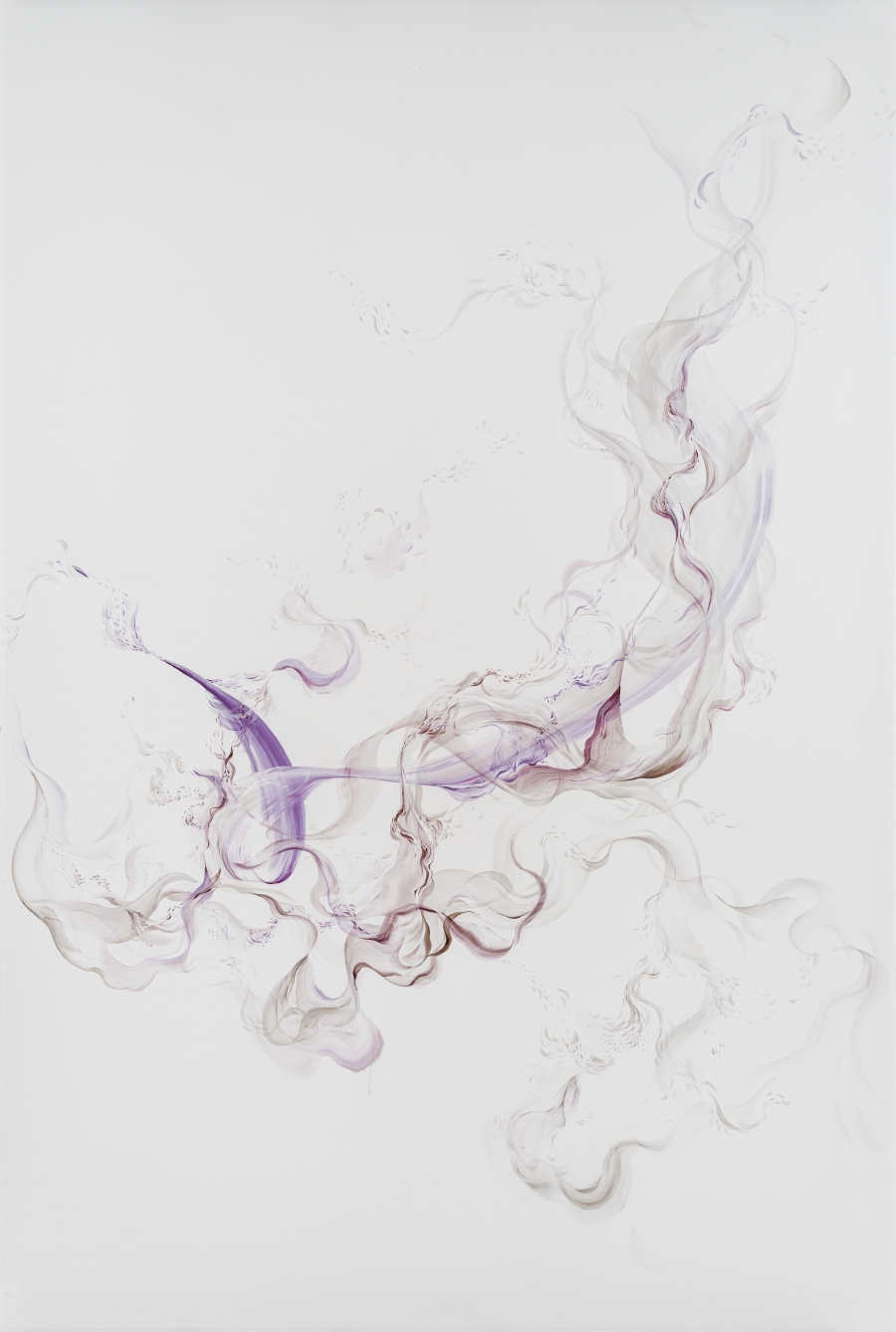
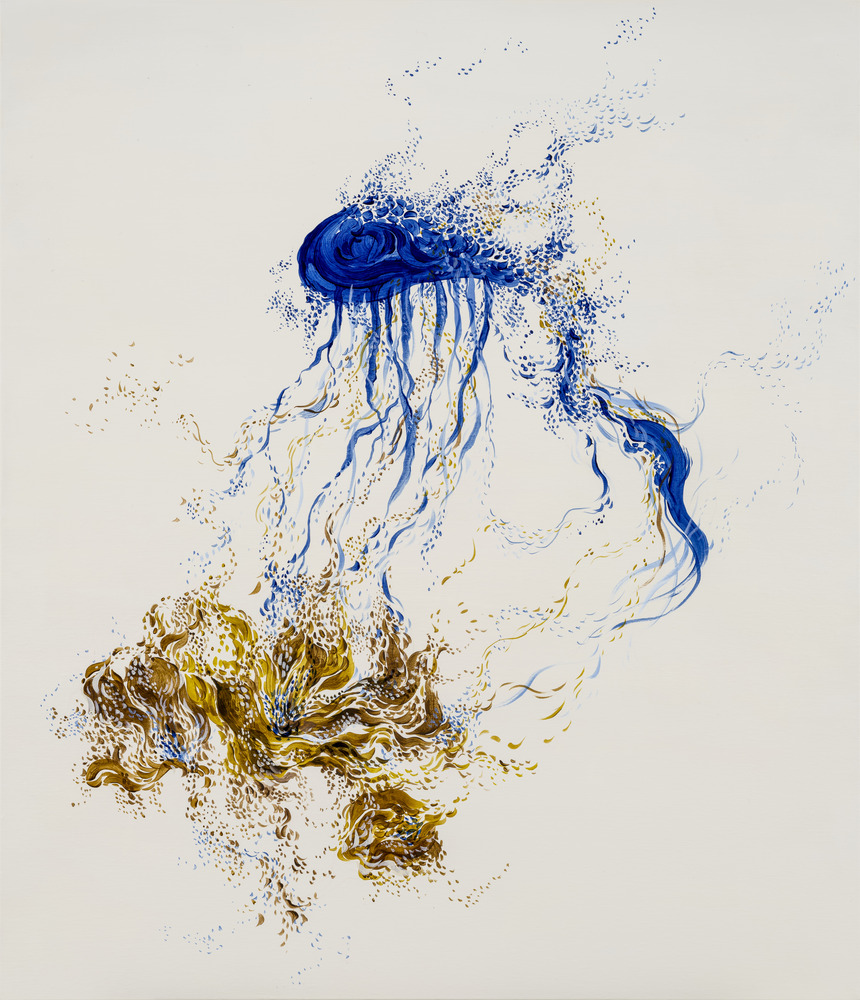
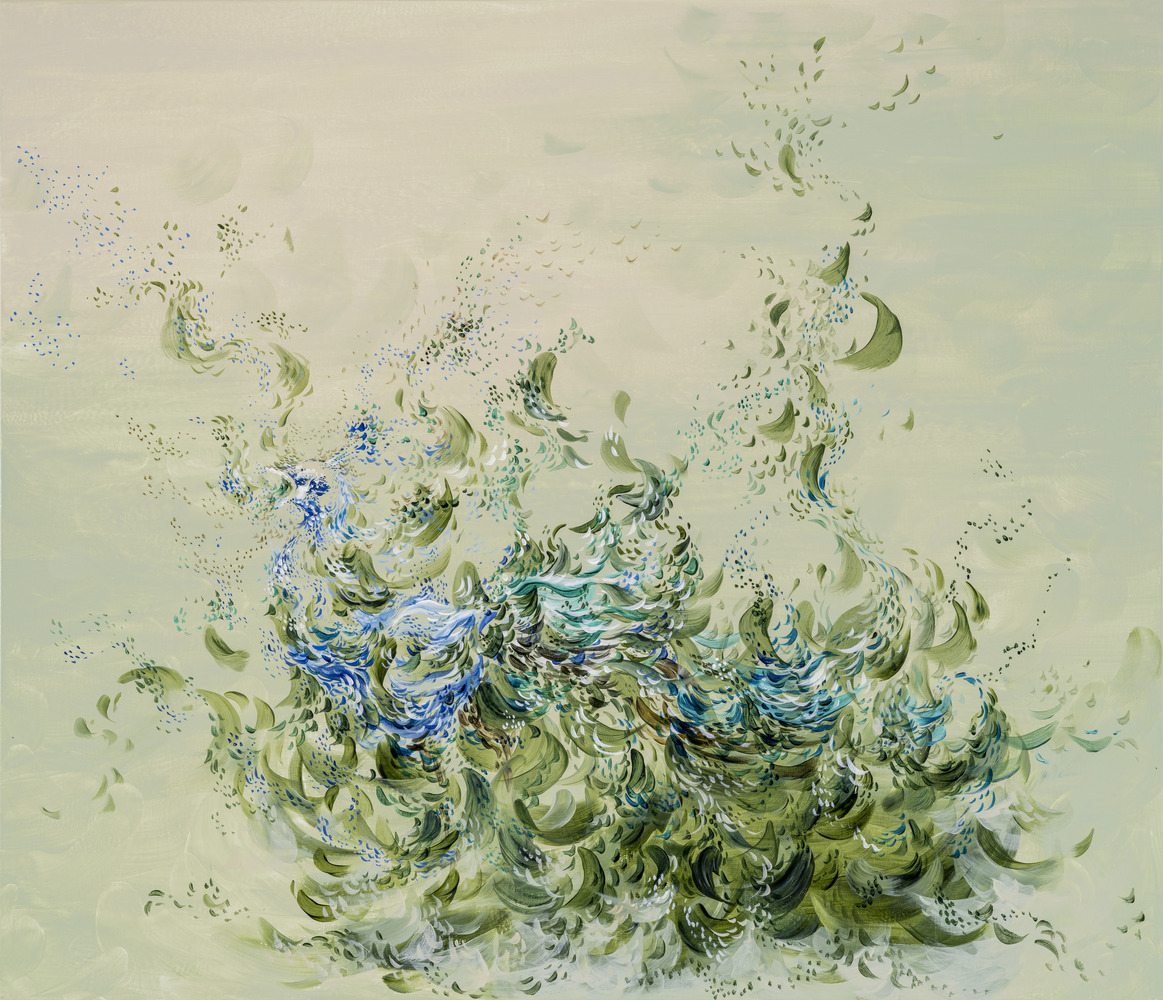
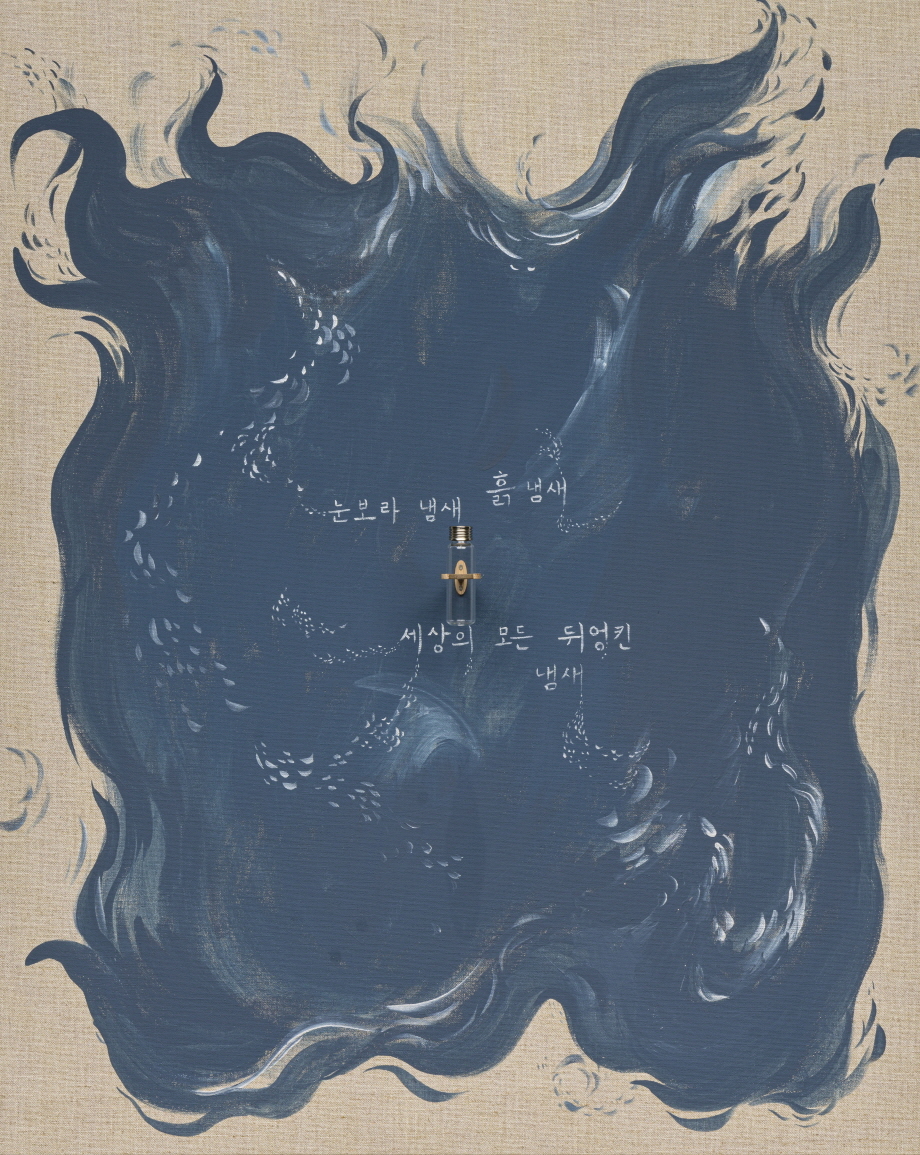
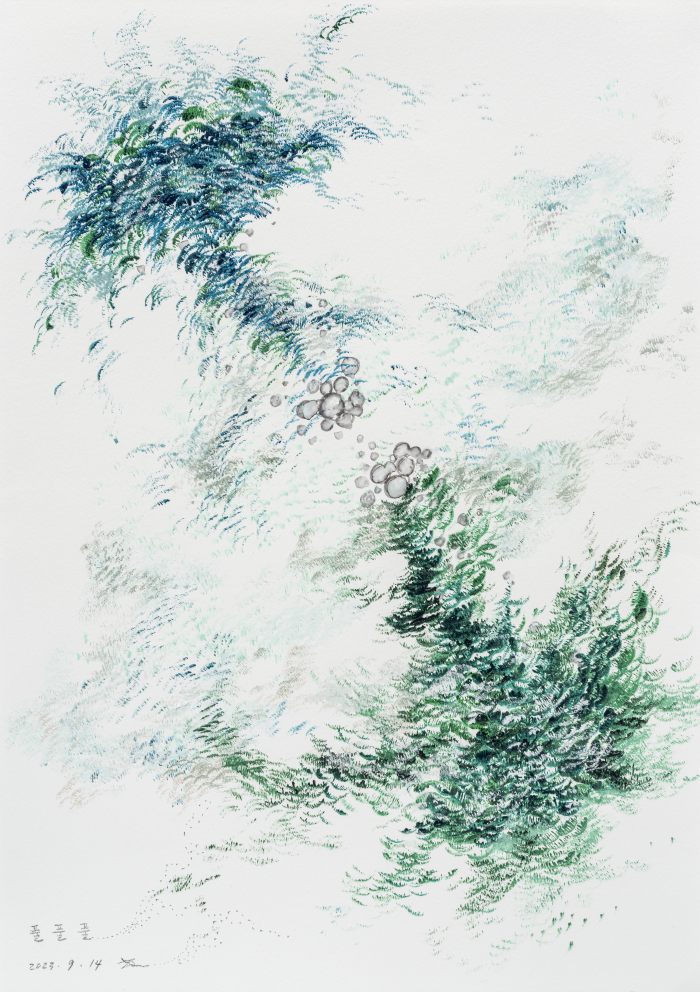
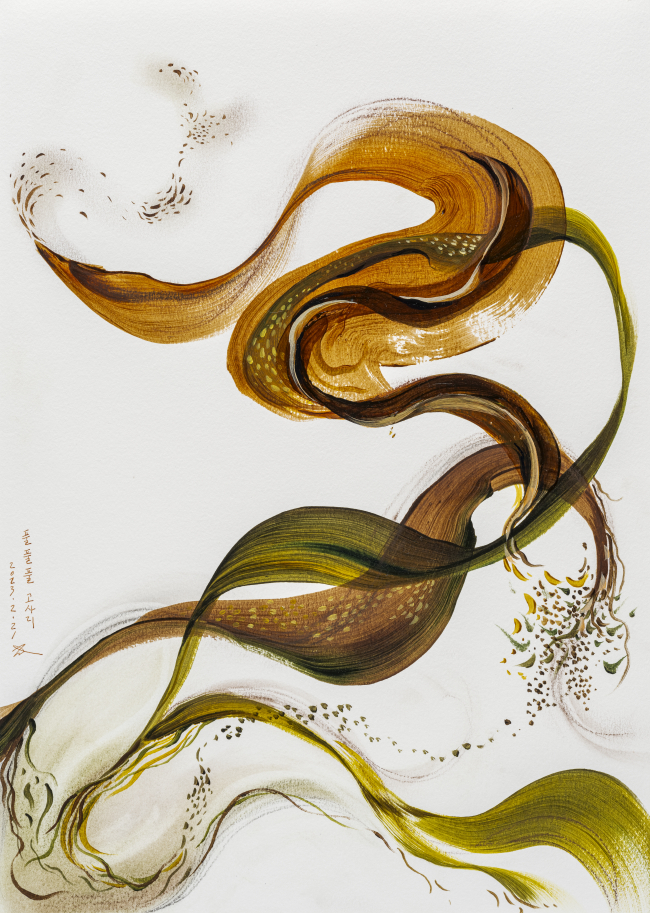
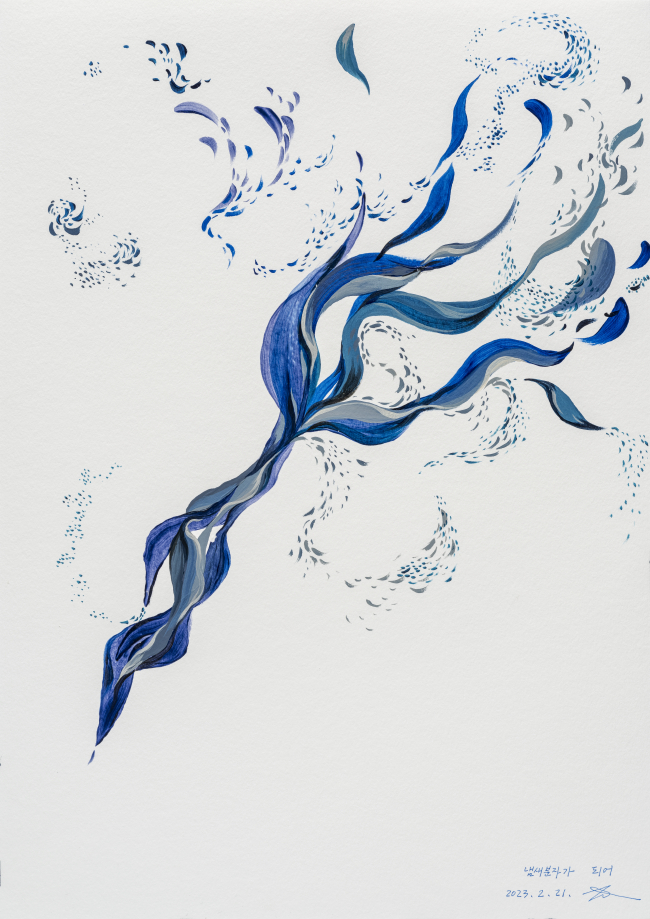
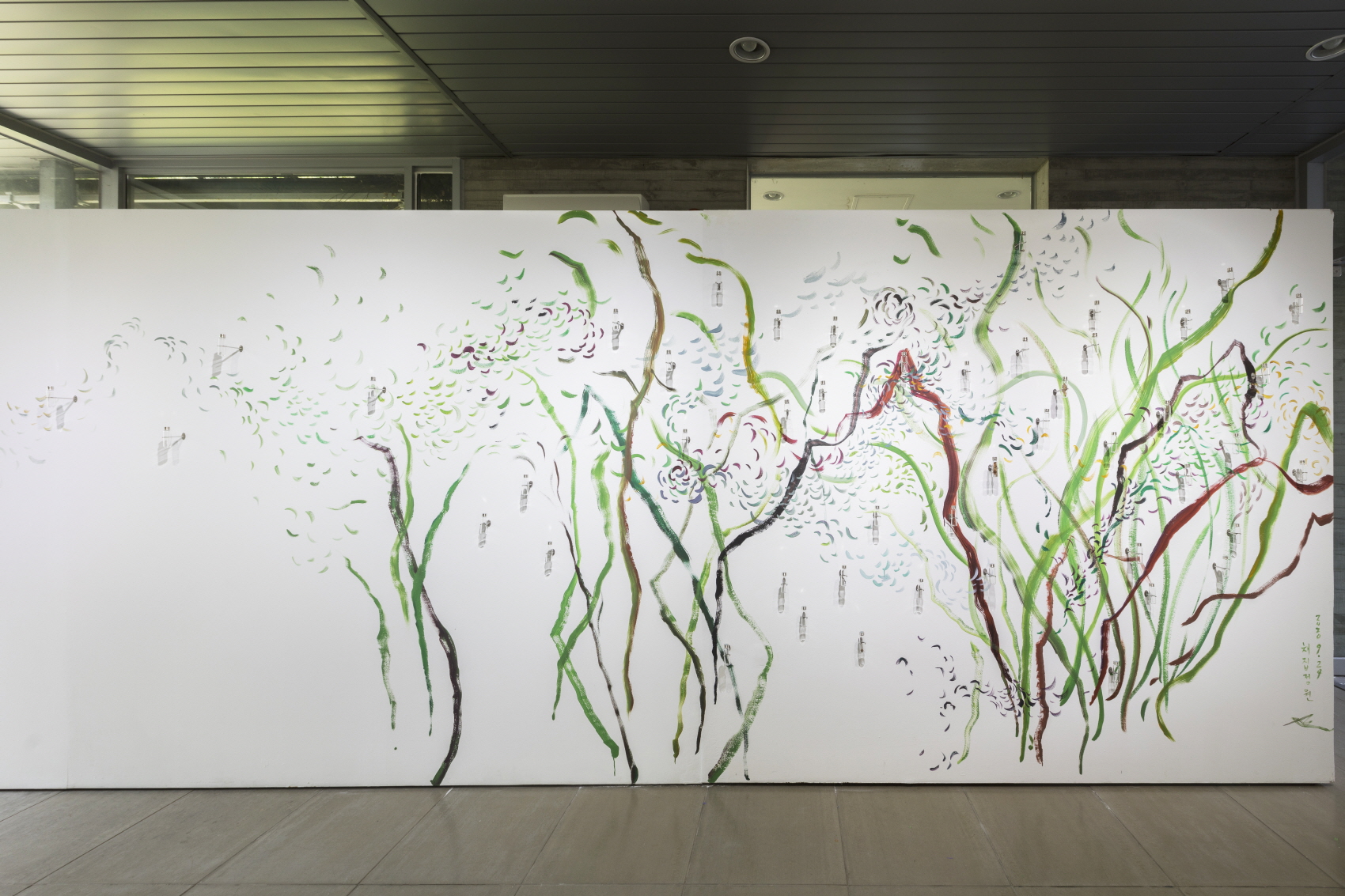
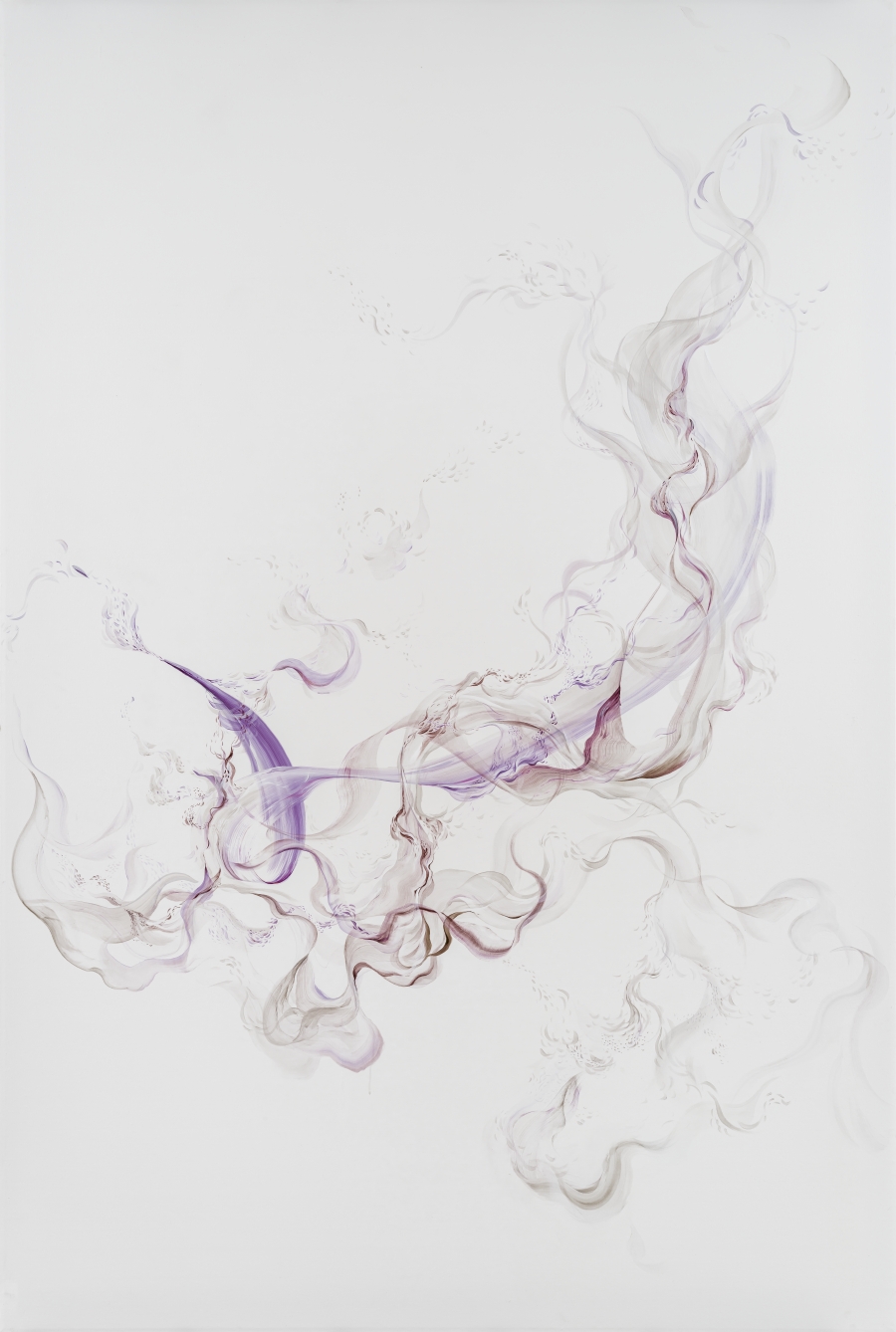
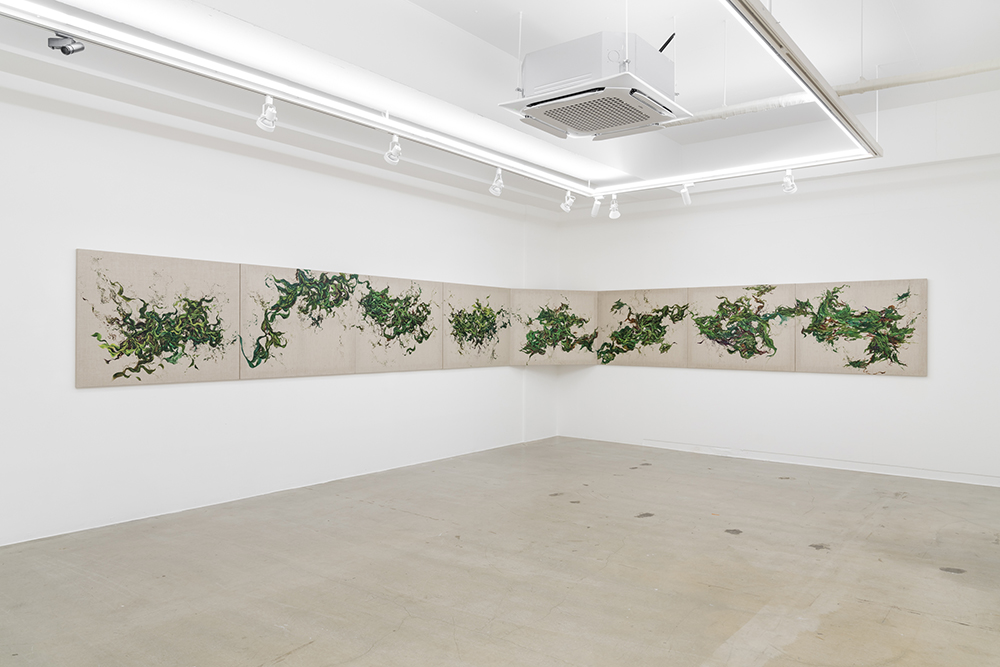
In her recent paintings and drawings, the movement and diffusion of invisible scents are increasingly articulated through color and line. In 《Smellscape》 (2023) and 《To Become Fragrance》 (2025), Kim employs organically extending lines, repeated brushstrokes, and overlapping or dispersed colors to express the fleeting transformations and movements of sensory experience.

In particular, My Poetic Universe (2025), created with acrylic and colored pencil on canvas, translates the imagined trajectories of scent molecules and the expansion of inner energy into freely flowing abstract forms. These visual expressions extend into video and text, accompanied by opportunities for visitors to experience fragrances directly within the exhibition space.

In her 2025 solo exhibition, Kim presented five tree fragrances developed in collaboration with the Jeju Plant Resources Research Institute, allowing visitors to smell them firsthand and alter the atmosphere of the space. Through the integration of painting, video, scent, and bodily participation, her practice extends olfactory imagination throughout the exhibition environment.


Topography & Continuity

Kim Jee Soo's practice has developed through a sustained exploration of sensory perception since the early 2000s. Her early works addressed the tactile qualities and movements of objects through painting and sculptural objects, while her practice in the 2010s increasingly focused on plant ecology and human sensory experience.

She subsequently developed a distinctive artistic language centered on olfaction, exploring the relationships between memory, time, and space. Although her media and subjects have evolved, her interest in experiencing invisible phenomena through the senses and communicating them through art has remained consistent. This trajectory reflects an artistic approach grounded in prolonged observation and personal experience, through which she continually expands the possibilities of sensory perception.

Kim's practice intersects with developments in Korean contemporary art concerned with ecology, nonhuman beings, and the relationship between science, technology, and art. Her participation in Artience Daejeon in 2015 and her residency at Artist Residency TEMI in 2016 provided important opportunities to integrate the physiological processes of plants with artistic imagination.

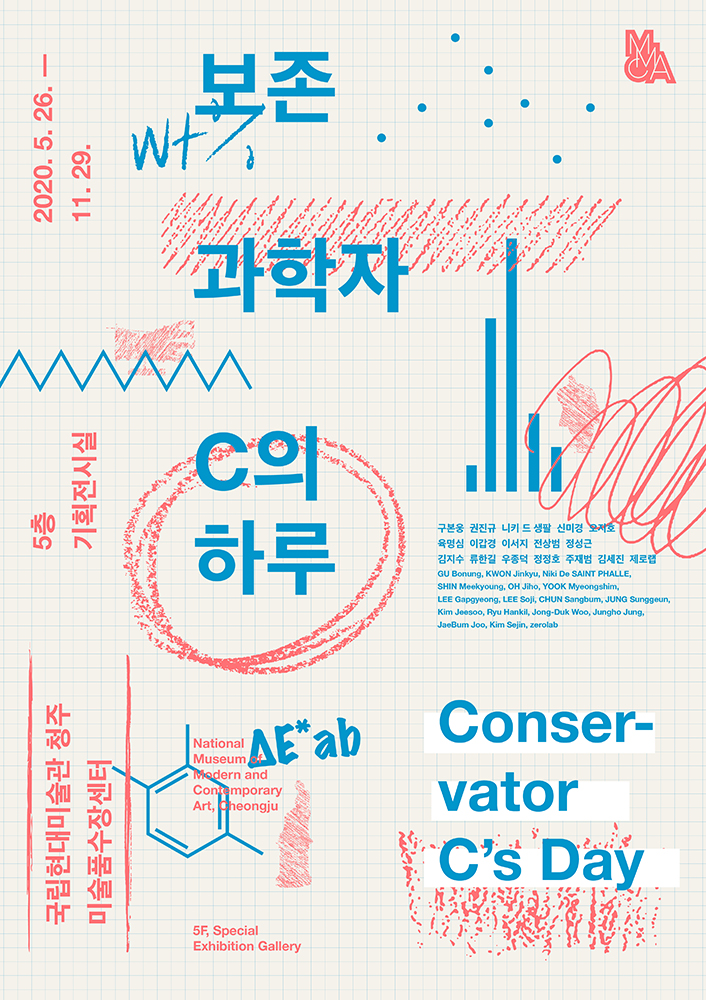
These interests continued through exhibitions at the Gwangju Design Biennale (2017), the National Museum of Modern and Contemporary Art, Korea (2020), the Gangwon International Triennale (2024), and the Busan Museum of Contemporary Art (2024).

Connecting ecological concerns with sensory experience, Kim's practice moves across diverse areas of contemporary art. Her approach, which combines scientific observation with personal intuition and places olfaction at the center of artistic expression, establishes a distinctive position at the intersection of multisensory and ecological art.

Sustained observation, research, and interdisciplinary collaboration are essential foundations of Kim Jee Soo's practice. She has cultivated plants and observed their growth and responses over many years, expanding her inquiries through exchanges with specialists in various fields, including botanists, scientists, and dancers.

These activities have developed into a practice that brings artistic experimentation and academic research together. In 2020, she published research papers on the synesthetic expression of olfaction and its relationships with memory and temporality, followed by the publication of her artist's book Smellscape in 2023.

Through her collaboration with the Jeju Plant Resources Research Institute, she has also continued to investigate local vegetation and scents, incorporating long-term observations of particular environments and living organisms into her work. This ongoing process of translating sensory experiences and knowledge accumulated through field research into artistic expression provides an important foundation for the continuity of her practice.

Her recent works continue to expand the expressive possibilities of olfactory art while raising questions about the communication and preservation of sensory experience. In 《This Is Tomorrow》 (2021), she presented a work inviting viewers to imagine fragrances that do not physically exist within an online environment.

In 《Smellscape》 (2023) and 《To Become Fragrance》 (2025), she combined painting, video, and scent to emphasize the direct sensory experiences of visitors. Her participation in 《Generative Forms》 at SONGEUN in 2026 further extended her olfactory practice into different exhibition contexts. Smells readily disperse and disappear, presenting fundamental difficulties when translated into visual images or language.

Kim embraces these characteristics as conditions of her practice, continually experimenting with the possibilities of documentation and representation, imagination and experience. Her sustained engagement with questions of sensory perception across changing media and environments suggests the directions in which her artistic practice may continue to develop.

Works of Art

Olfactory Art Connecting Time, Space, Memory, and the Senses

Articles

Exhibitions

Activities