A-Frame Ladder - K-ARTIST

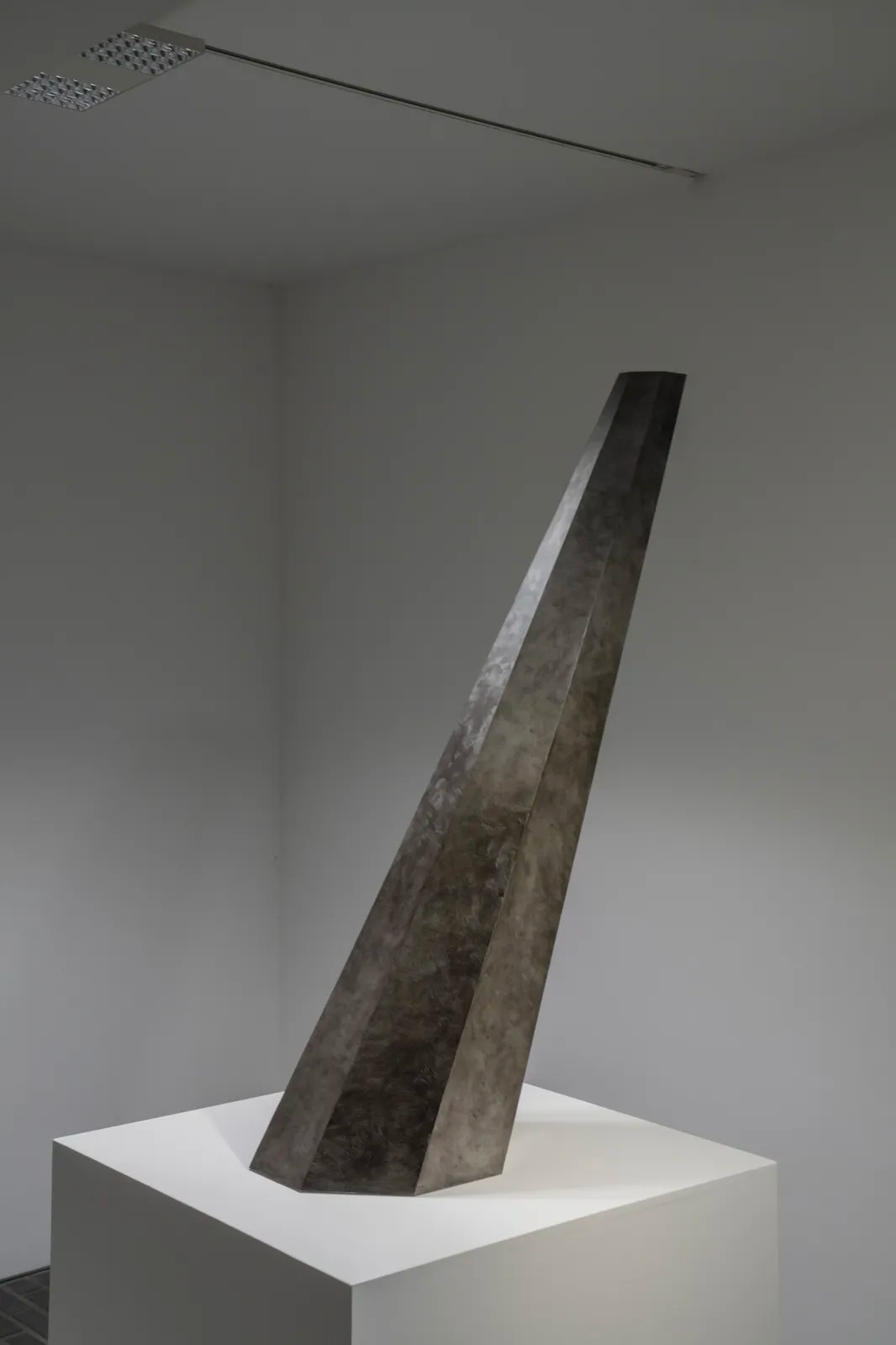
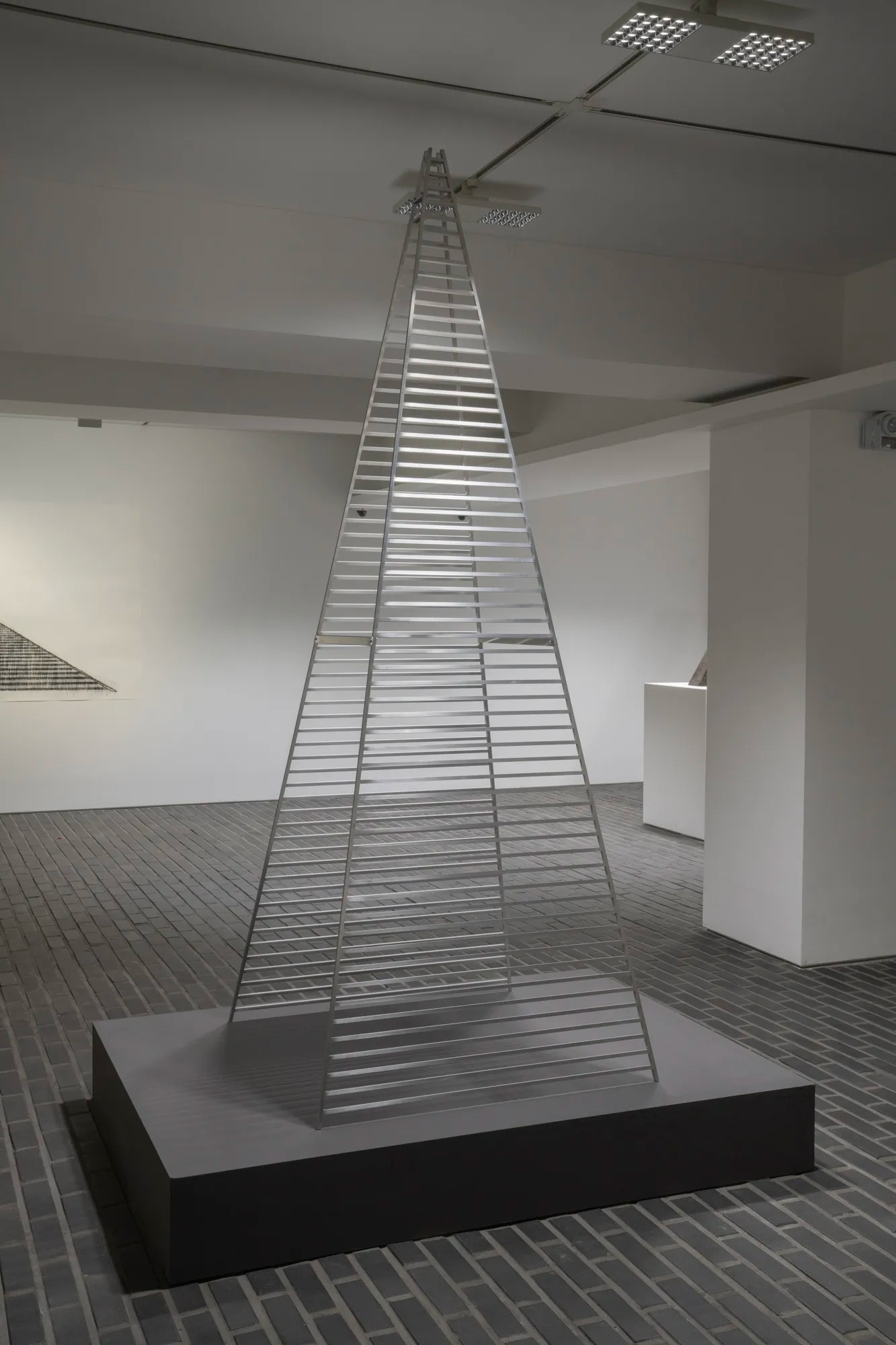
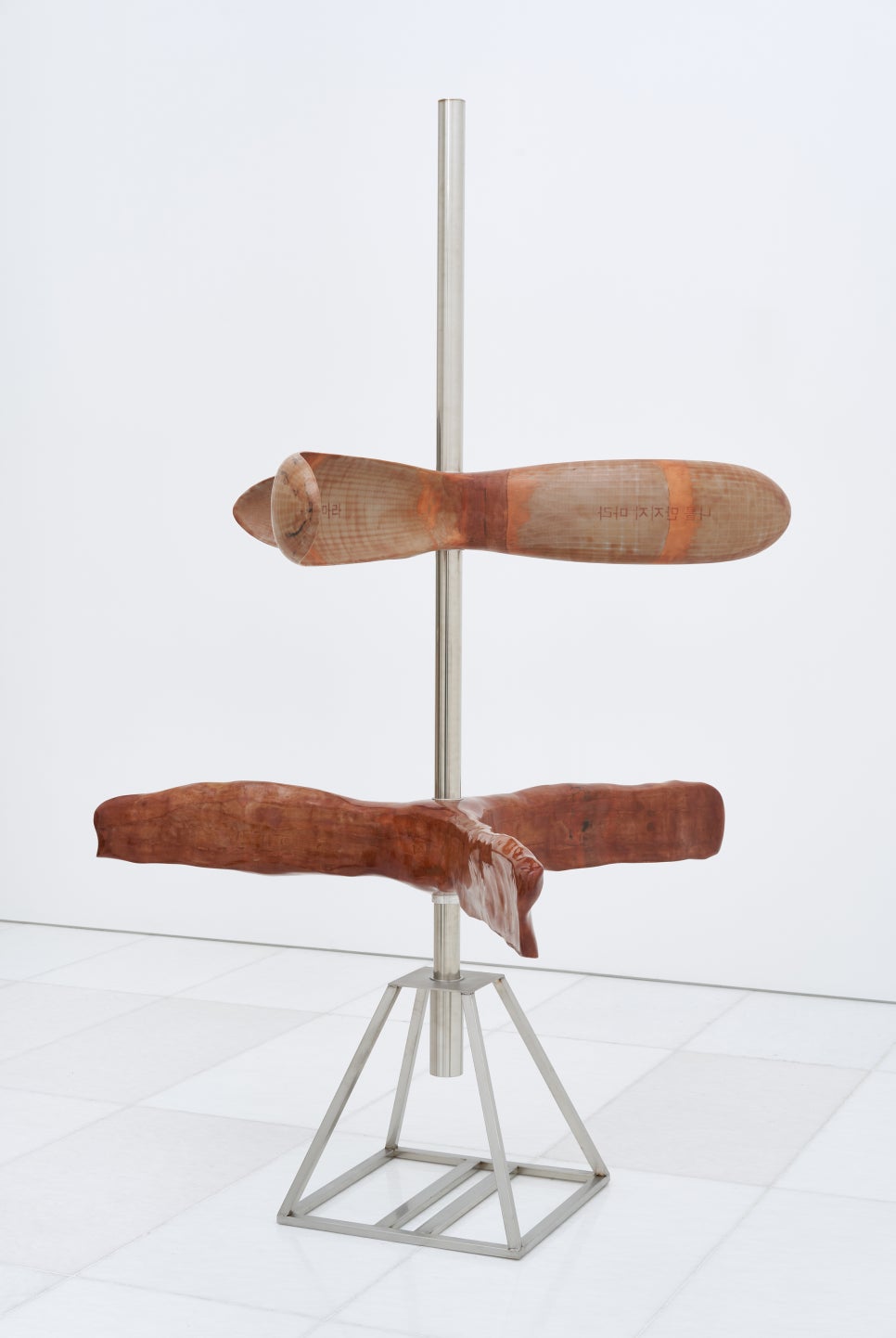
A-Frame Ladder

2026
Aluminum, stainless steel, wood, nonwoven fabric
83 x 83 x 225 cm
About The Work

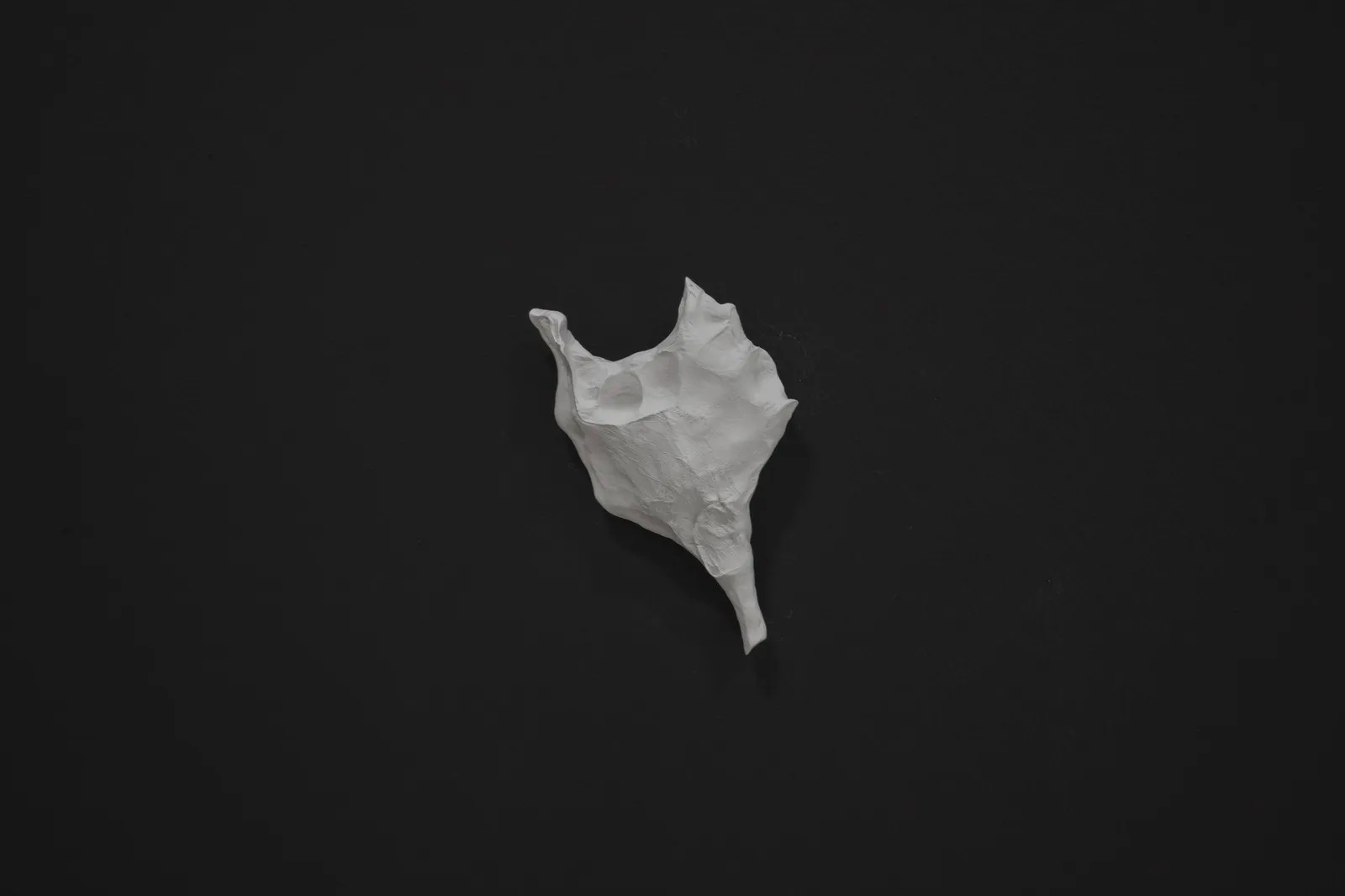
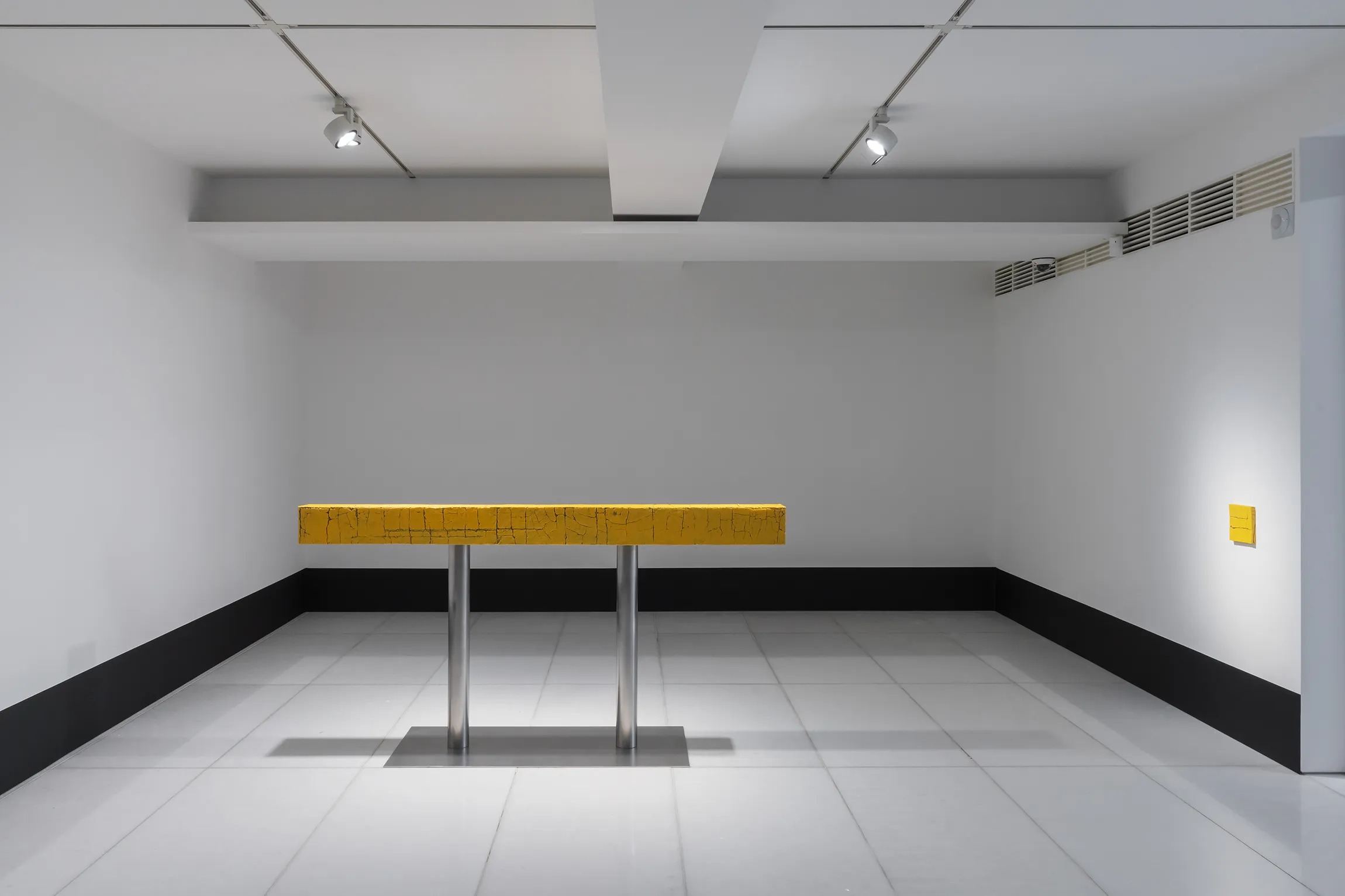
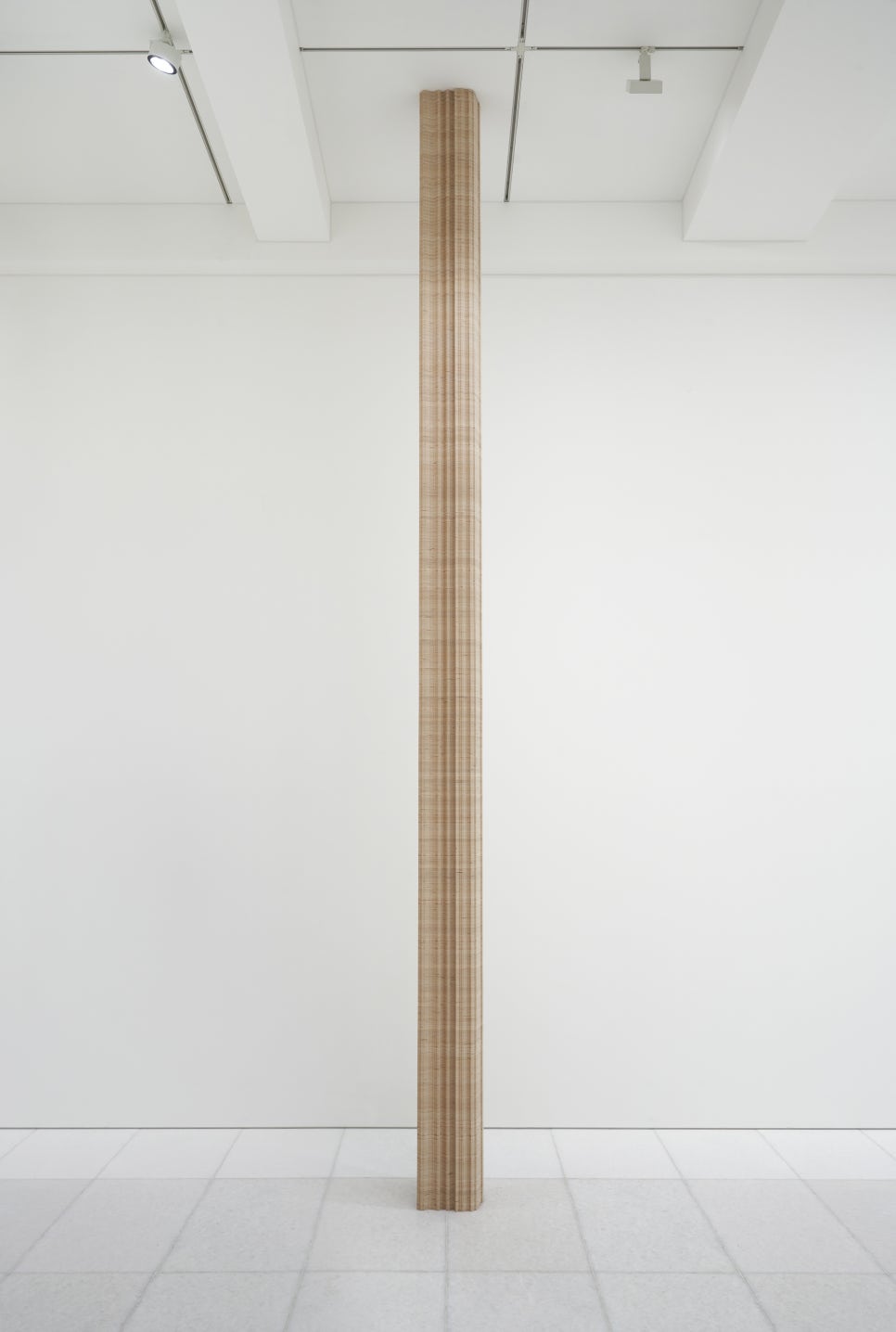
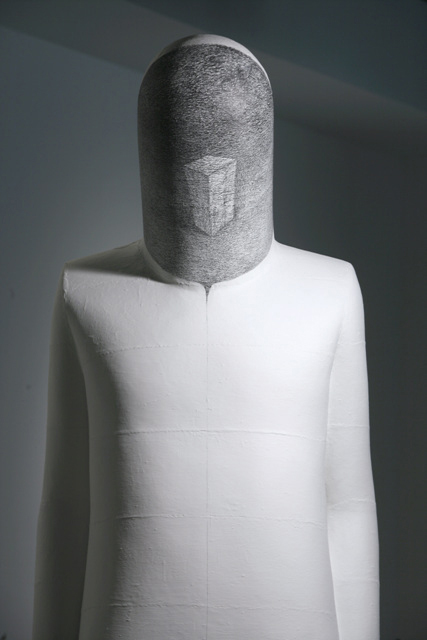
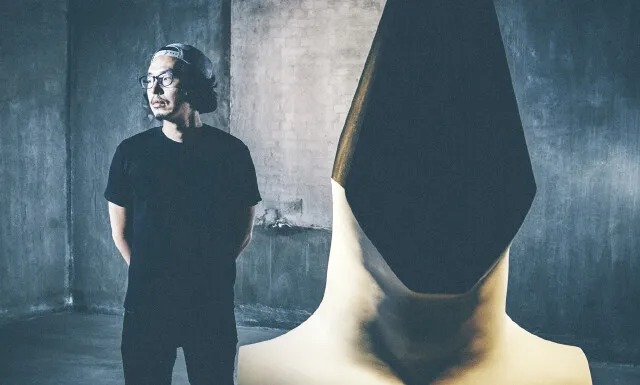
Inbai Kim explores ways of unsettling conventional perceptions and stereotypes by transforming the human body and the fundamental elements of sculpture. Rather than representing the body as a complete form, he stretches, compresses, cuts, or reduces it to lines, presenting it as a dehumanized sculptural mass.

In this process, elements such as points, lines, planes, volume, and texture are accentuated, allowing body-like forms to move between sociocultural signs and abstract vehicles of expression. Through these transformations, Kim reveals the visual rules and learned conventions that shape how we recognize objects.

Although his forms are marked by omission and fragmentation, they retain spaces that invite viewers to imagine the whole. As viewers change their positions and move their bodies, the relationships between form and space also shift, preventing the works from settling into a fixed image at any given moment. For Kim, sculpture is thus both a practice of giving matter a fixed form and a means of prompting viewers to perceive anew what they believe they already know.

Ultimately, Kim’s sculptural identity lies not in the completed form itself, but in bringing the very conditions through which forms are made, seen, and perceived into the realm of sculpture. Through distinct sculptural gestures operating at different levels, he reveals a sense of “absence” that resides beyond and between the forms visible before us, proposing new perspectives and sensory experiences that unsettle familiar ideas and preconceptions.

Solo Exhibitions (Brief)

Inbai Kim has held solo exhibitions at ARARIO GALLERY SEOUL (2007, 2014, 2026), DOOSAN Gallery New York (2010), ARARIO GALLERY CHEONAN (2011), ARARIO GALLERY SHANGHAI (2019), PERIGEE GALLERY (2020), and Primary Practice (2024).

Group Exhibitions (Brief)

Inbai Kim has participated in group exhibitions at the Seoul Museum of Art (2004, 2005, 2008, 2014, 2019), Saatchi Gallery (2009), Museum of Arts and Design (2011), Asia Culture Center (2015), Museum of Contemporary Art Shanghai (2016), Daegu Art Museum (2018, 2022), Kunstmuseum Bern (2021), and SONGEUN (2021, 2023, 2026).

Awards (Selected)

Inbai Kim received the 35th Kim Se-Choong Youth Sculpture Award in 2024.

Residencies (Selected)

Inbai Kim was an artist-in-residence at SSamzie Space Studio Program (2006), International Studio & Curatorial Program (ISCP) (2009), DOOSAN Residency New York (2011), SeMA Nanji Residency (2017), MMCA Residency Changdong (2022), and SFAC Seoul Art Space Geumcheon Residency (2023).

Collections (Selected)

Inbai Kim’s works are held in the collections of the Seoul Museum of Art, Daegu Art Museum, Busan Museum of Art, ARARIO Collection, Sigg Collection, and Ssamzie Art Collection.

Works of Art

Sculpture Through the Sensations of “Absence” and “Invisibility”

Originality & Identity

Inbai Kim’s practice has consistently questioned the process through which we look at an object and recognize it as a particular form. The human bodies and faces that repeatedly appeared in his early works likewise extend beyond representations of human emotion or individuality. In works such as I Love You and Deller hon Dainy, the proportions of the body and the structure of the face are transformed, turning the familiar human figure into an unfamiliar object and revealing the criteria by which viewers identify it as a human body or face.

At the same time, the viewer’s gaze toward the work intersects with the gaze that seems to return from it, destabilizing the relationship between the seeing subject and the object being seen. Kim has continued to treat the body as a form open to transformation, stretching, compressing, severing, or reducing it to lines in order to expose the visual rules and learned conventions through which we recognize objects.

This concern is closely connected to the question of “dimension,” which Kim has explored over an extended period. For him, dimension is not limited to a physical distinction between the two-dimensional and the three-dimensional; it also concerns a relationship in which perception shifts according to the position of the object and observer, as well as to time and movement.

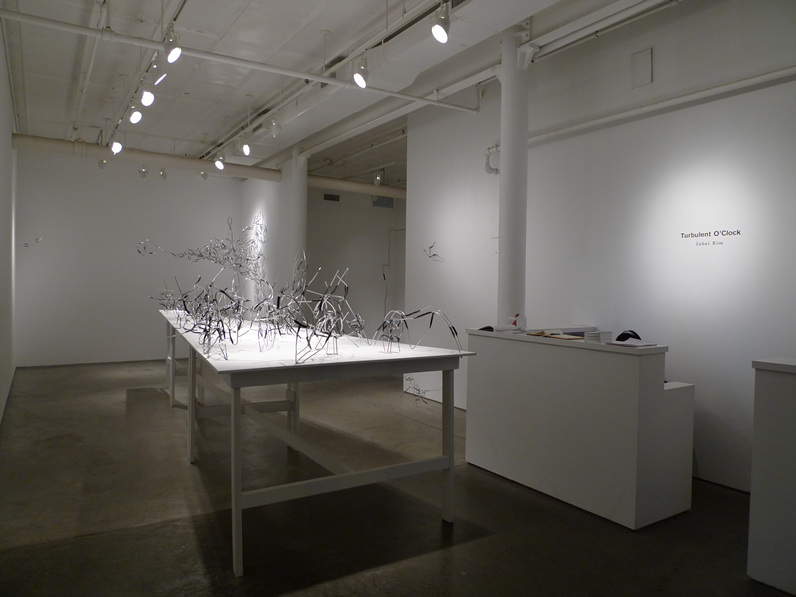
Following his experiments with transitions between drawing and sculpture in 《Stand on the Edge of Dimensions》 (2006) and 《Move in Earnest》 (2007), 《Turbulent O’Clock》 translated successive bodily movements into reduced structures of aluminum rods, unfolding them like drawings made in space. In 《Eliminate Points, Lines and Planes》 (2014), Kim questioned the visual habit of accepting points, lines, and planes as absolute coordinates for understanding objects.

As viewers change position and move their bodies, the relationship between form and space continually shifts, preventing the work from settling into a fixed image at any single moment. In this sense, sculpture for Kim is both a means of giving matter a form and a method of making what we think we already know appear unfamiliar once again.

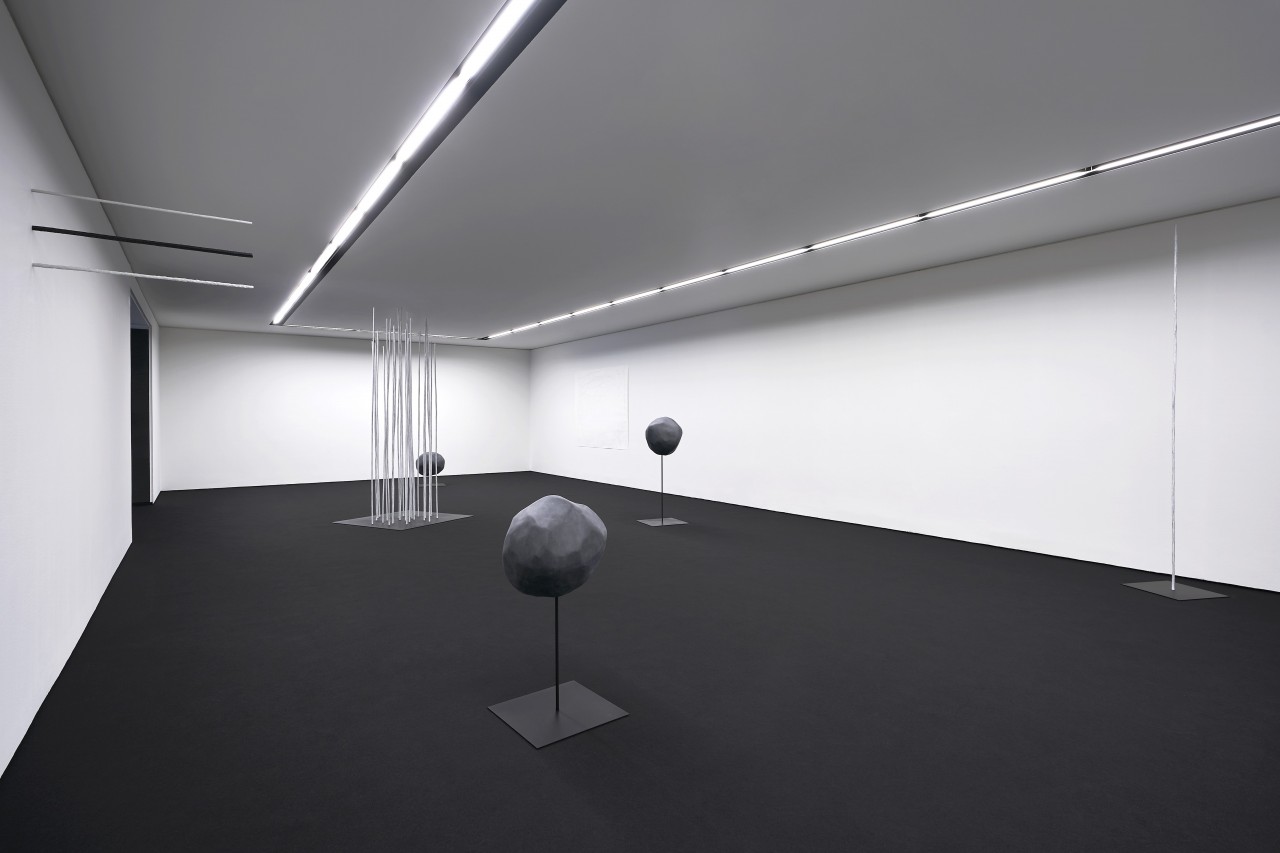
In 《Do you remember love》 (2020), these concerns are developed in greater detail through line, distance, and tactility. In Line That Wants to be a Line and Play within the Play, the line functions as a boundary defining form, a physical object that overlaps with and separates from other lines, and a visual measure whose relationships shift according to the viewer’s movement.

Constant Distance and Triptych: Size, Movement, Count invite viewers to experience a small sculpture held in the hand and a larger sculpture positioned before the eyes at the same time, bringing tactile and visual judgments of scale and distance into contact. Drawing Made from a Distance, made by attaching a pencil to the end of a long aluminum rod, deliberately inserts physical distance between the artist’s hand and the drawing surface, producing deviations between bodily control and visual outcome.

Here, the meaning of an object does not remain complete within the work itself but is continually adjusted through the viewer’s position, bodily movement, and relationship to other works. Kim’s tendency to organize an exhibition through works that correspond with and deviate from one another likewise allows viewers to experience the process through which perception is formed rather than fixing the meaning of each individual form.

In his more recent practice, Kim has extended these concerns toward “absence” and “invisibility.” In 《Seeing What Is Not There》 (2024), he drew at a distance beyond the reach of clear vision, transferred traces of actual spaces onto other surfaces, and produced molds from which the original form was absent, bringing what cannot be directly captured by sight into the domain of sculpture. Here, “absence” functions less as a lack than as a condition for imagining states that escape established visual systems.

In 《A Man Asleep》 (2026), he pushes this inquiry further by establishing situations in which forms are made solely through touch without sight, or in which two people unable to see one another perform the same action. Once visual verification is suspended, touch, distance, memory, bodily movement, and the resistance of materials emerge as determining factors in the formation of shape. At the same time, viewers confront their own visual habits as they attempt to connect imperfect forms back to familiar images.

Ultimately, the distinct identity of Kim’s sculptural practice lies in treating the conditions that determine how forms are made, seen, and perceived as material for sculpture itself. Across different periods of his work, the body, line, distance, space, and “absence” have functioned as interconnected concepts repeatedly reconfigured to delay fixed recognition and keep open the possibility of encountering an object otherwise.

Style & Contents

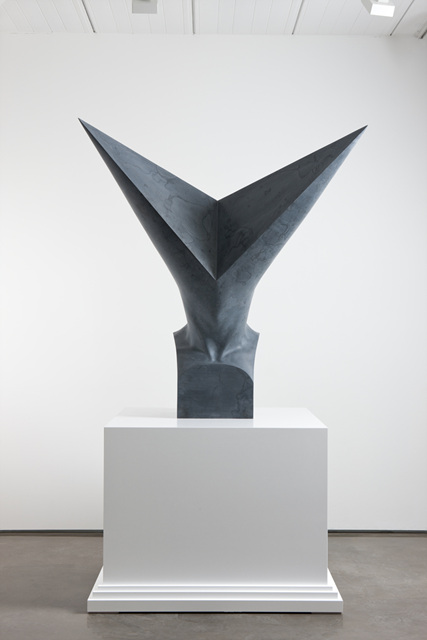
Inbai Kim’s sculpture began with the human body, yet he has consistently avoided treating it as a stable object of representation. In his early works, faces and bodies are stretched, compressed, severed, or combined with disparate organs, disrupting familiar proportions. The colossal body of I Love You, the flattened and erased faces of Deller hon Dainy, and the fish-like head of Shamoralta Shamoratha retain the outlines of the human figure while unsettling the criteria through which we recognize it.

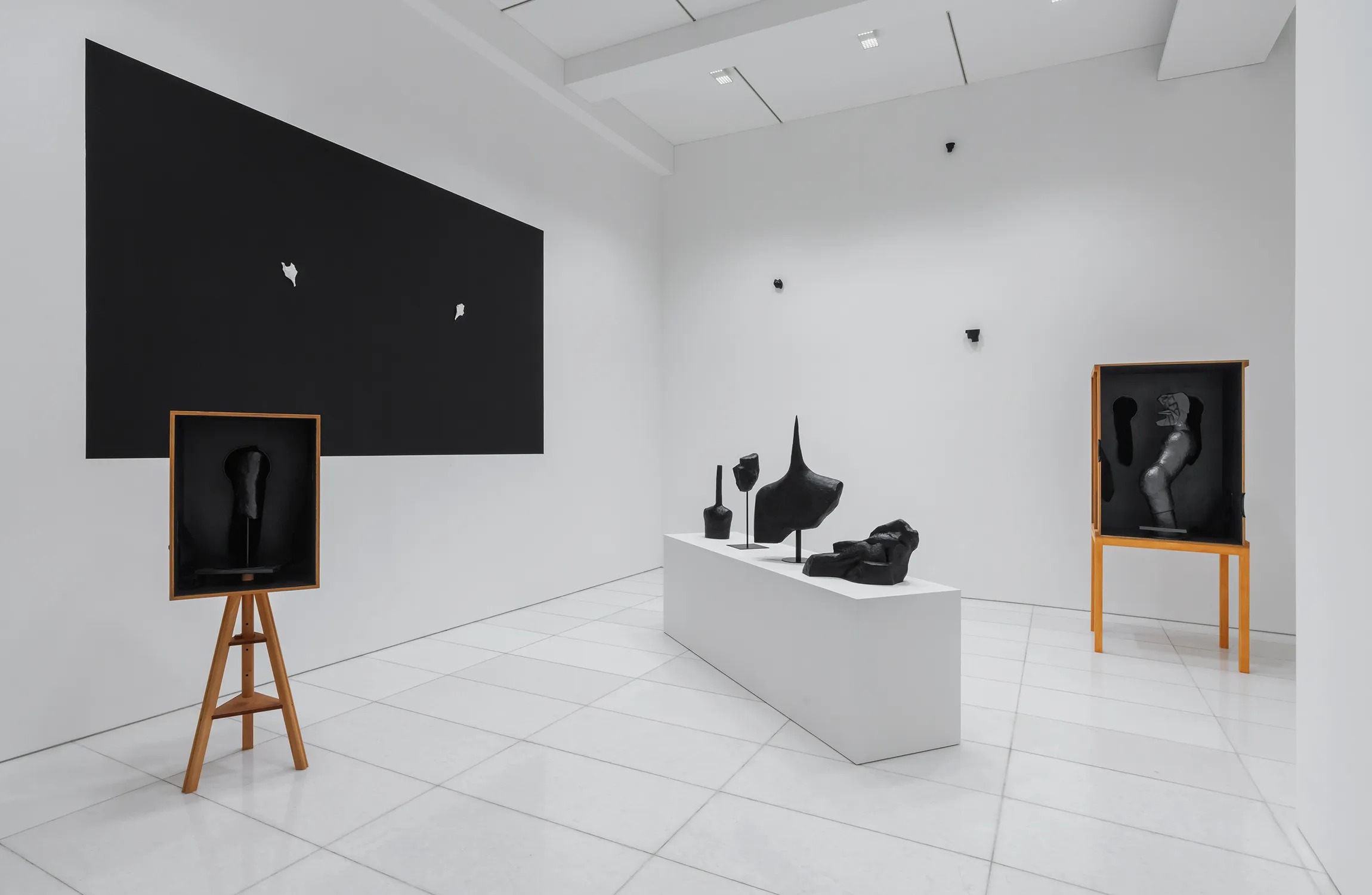
These transformations are closely connected to the materiality of sculpture. Solid masses constructed from plaster or resin and smoothly or roughly finished surfaces clearly articulate their forms, while unfamiliar angles and proportions inserted within them cause the viewer’s gaze to hesitate. The arrangement of works within the exhibition is as important as the individual sculptural forms themselves.

Kim places works at specific intervals and orientations, setting them in correspondence or opposition to one another and treating the distances between them as sculptural elements. The latent movement and displaced order embedded within the static arrangement of human figures in 《Eliminate Points, Lines and Planes》 (2014) exemplify this approach to installation.

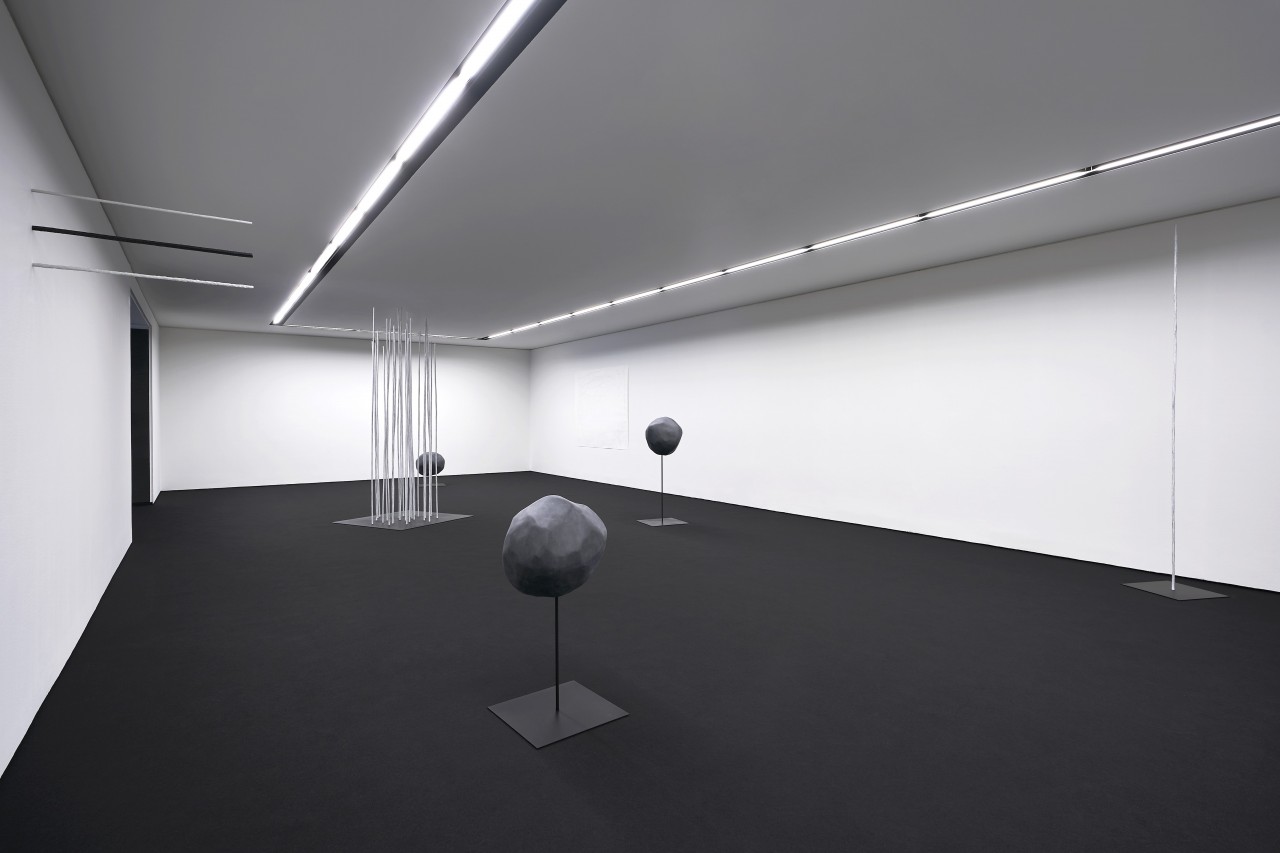
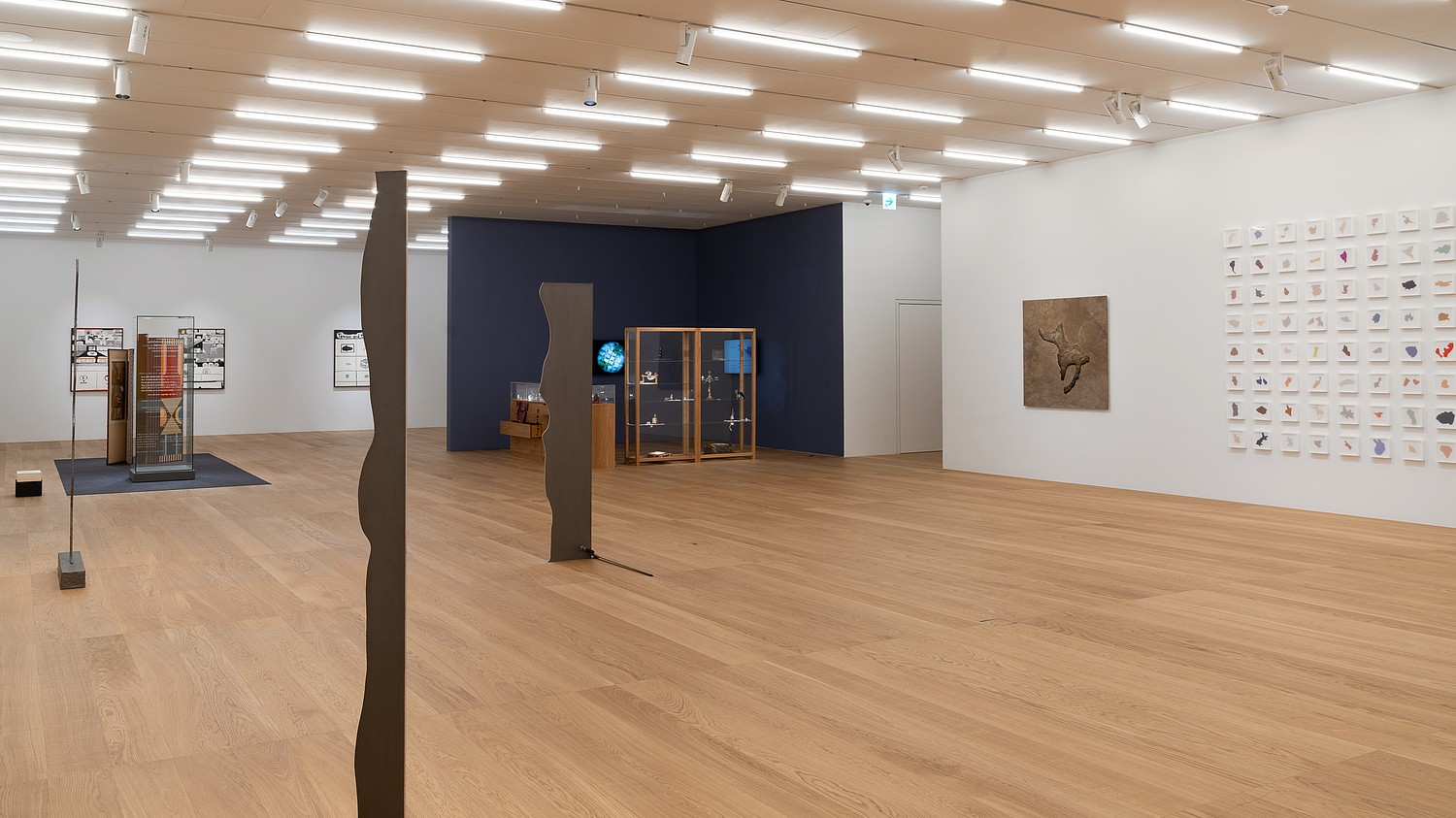
In 《Turbulent O’Clock》 (2010), the mass that had previously constituted the human body was drastically reduced to aluminum rods. Kim translated successive bodily movements such as turning, throwing, and stretching into slender linear structures, unfolding bodily movement and time within space. Aluminum rods allowed him to capture momentary actions more immediately than the process of building volume with plaster, and sculpture consequently came to resemble drawing extended into space. Here, the line is not simply an outline.

It is a material that compresses the direction, speed, and duration of bodily movement, as well as a spatial structure whose elements overlap and separate as the viewer changes position. The process of translating a two-dimensional drawing into three-dimensional form and subsequently reducing volume back into line recurs throughout Kim’s practice, becoming an important means of exploring the relationship between sculpture and drawing.

In 《Do you remember love》 (2020), line, scale, distance, and tactility intersect to produce increasingly complex formal structures. In Line That Wants to be a Line and Play within the Play, Kim overlaps, separates, enlarges, and transforms lines, creating conditions in which similar forms are perceived differently according to their position and orientation. Constant Distance is a 3D-printed reduction derived from Triptych: Size, Movement, Count, allowing viewers to hold a small mass in their hands while simultaneously looking at its larger counterpart.

The visual scale of the distant sculpture and the tactile scale of the object held in the hand interfere with one another. Drawing Made from a Distance, produced by attaching a pencil to the end of a long aluminum rod, likewise introduces physical distance into the process of making and leaves subtle deviations between the artist’s intention and the resulting line.

Although works from this period employ diverse materials and methods—including resin, aluminum, carbon fiber, urethane foam, and 3D printing—these materials are used primarily to regulate how the viewer’s eyes and body measure and perceive the work. Vertical and horizontal orientations, enlargement and reduction, proximity and distance function not as separate formal devices but as means of turning perceptual uncertainty into a physical experience.

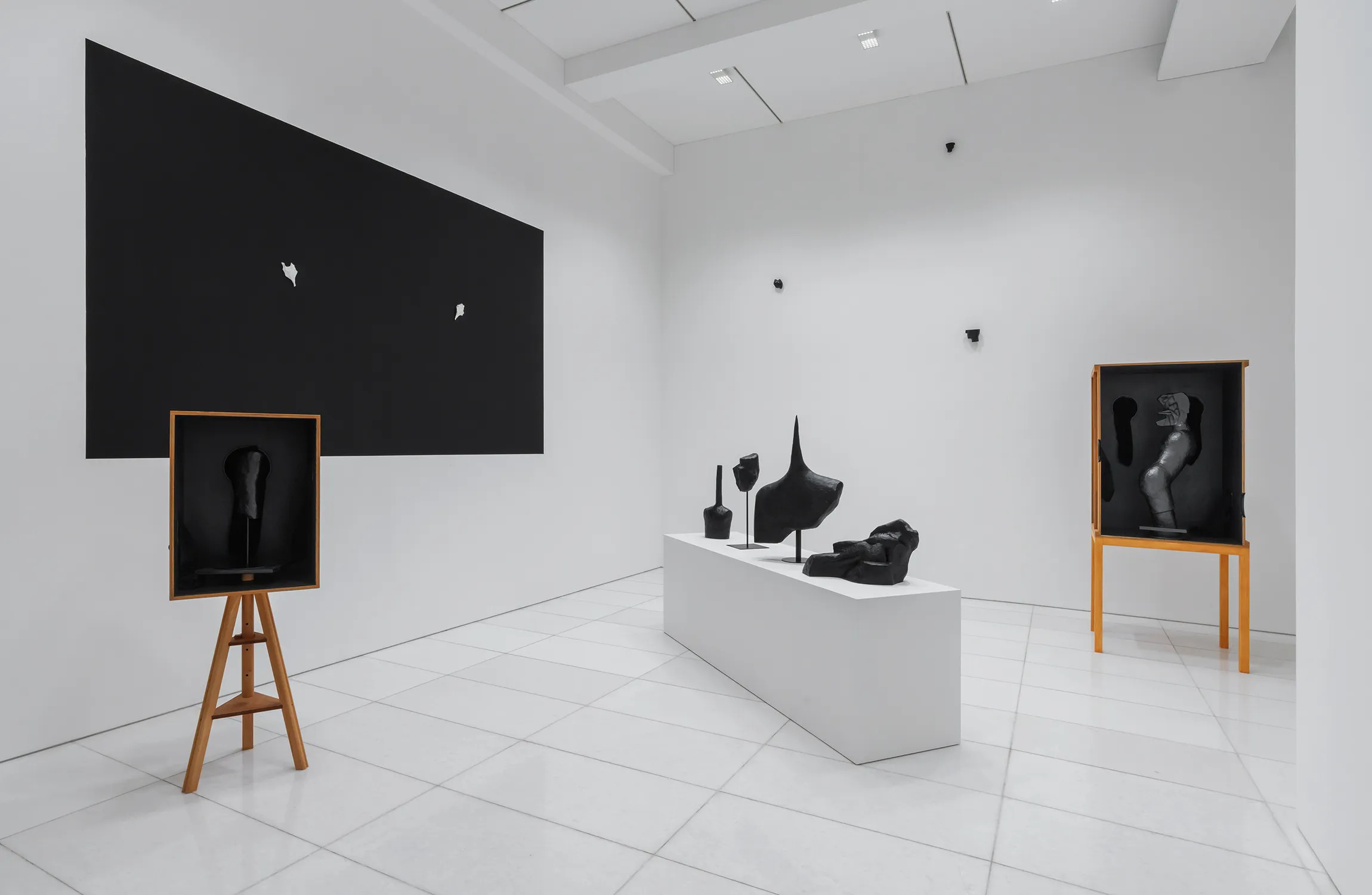
From 2024 onward, methods of production and the conditions under which works are made become increasingly explicit components of Kim’s practice. In 《Seeing What Is Not There》, he transfers traces of the ceiling and floor onto other wall surfaces, draws from a distance at which the result is difficult to verify with the naked eye, and produces molds from which the original model has been removed. Drawing, rubbing, molding, and video operate as distinct media while sharing an interest in recording spaces and objects that cannot be completely grasped through vision.

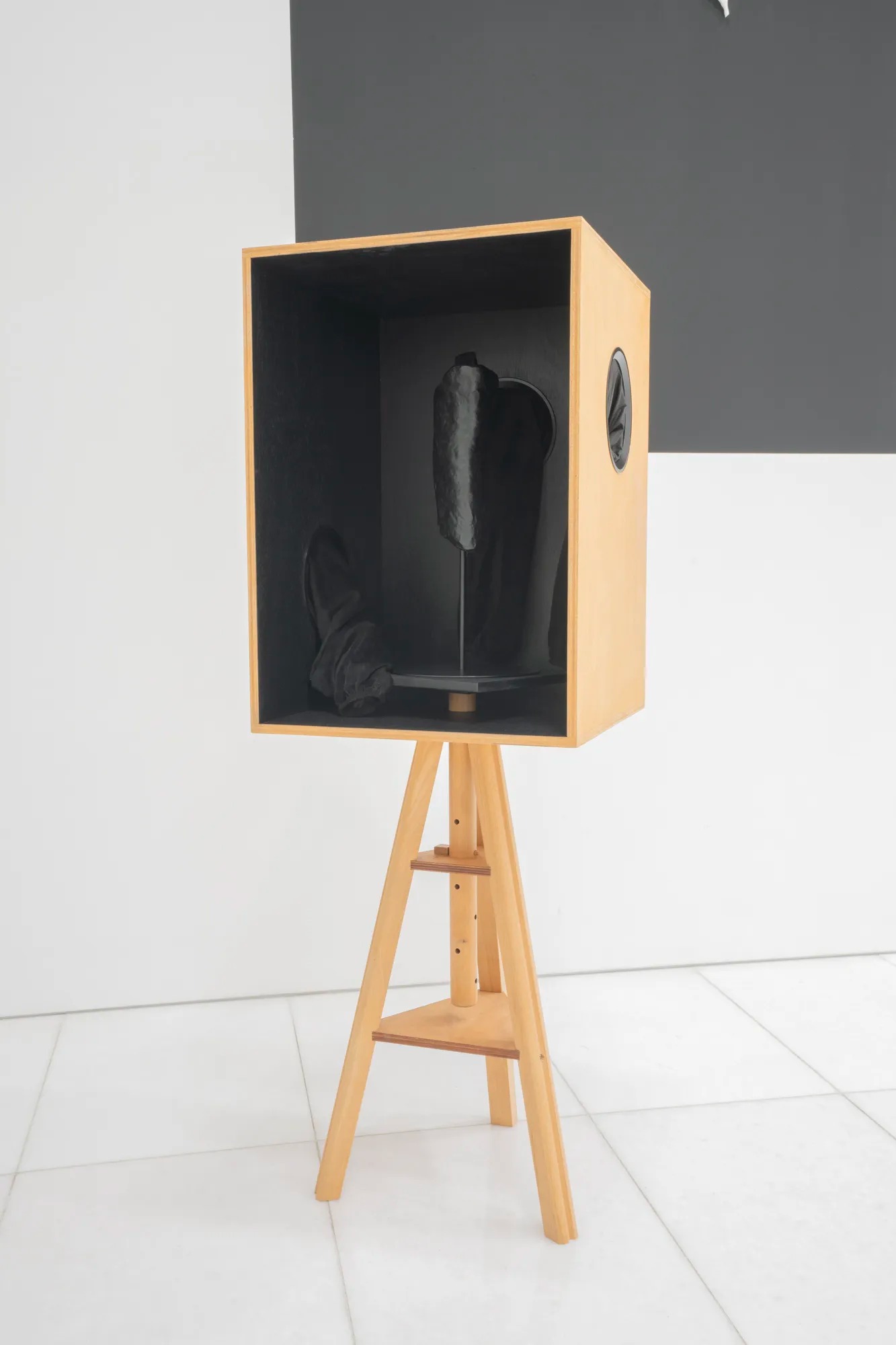
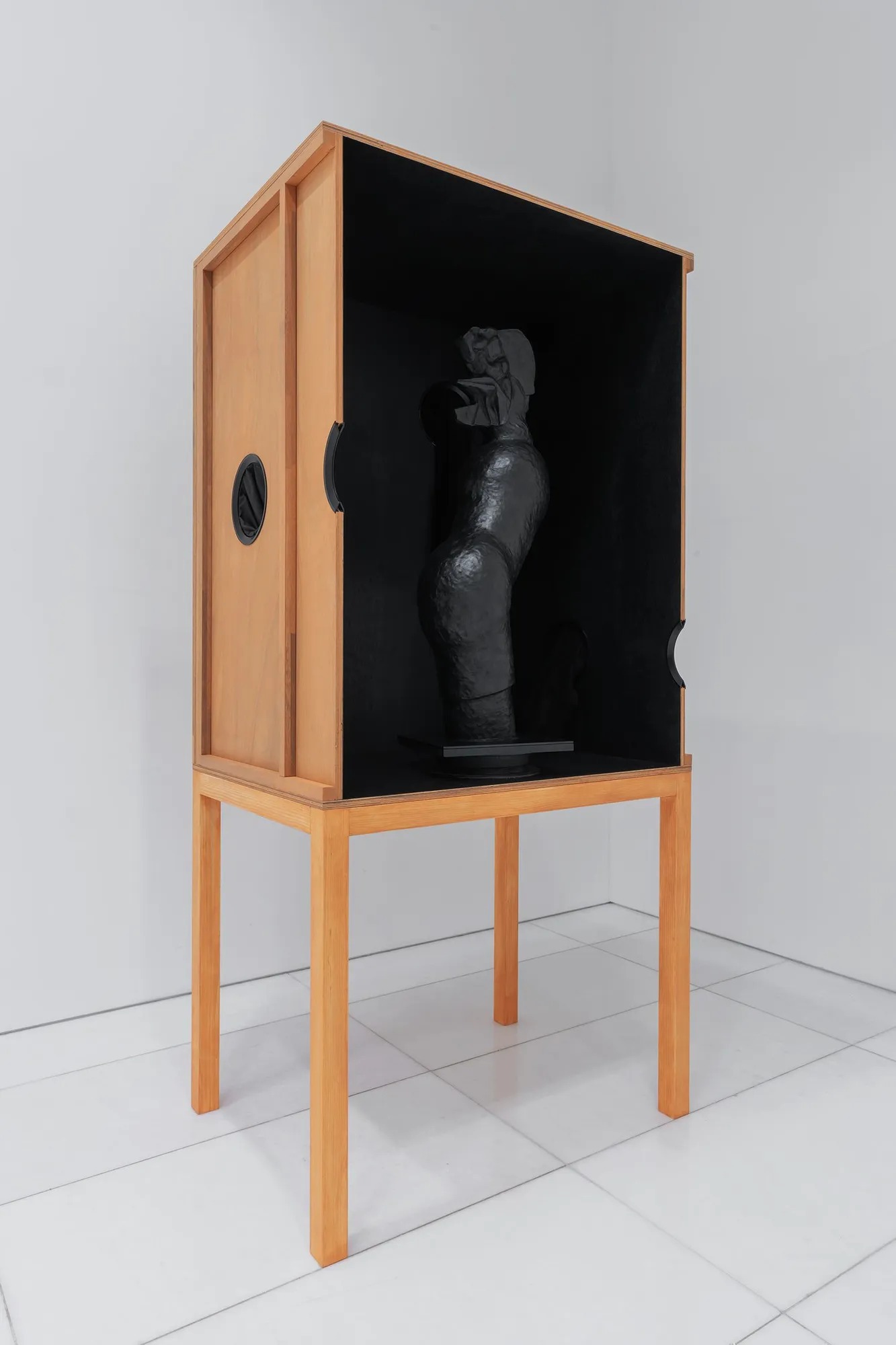
In 《A Man Asleep》 (2026), this experiment shifts more directly toward the act of making itself. Kim establishes the hypothetical condition of inserting his hands into a box whose interior cannot be seen and producing forms without visually checking or correcting them. The resistance and texture of the material against the fingertips, the movements of pressing and grasping, bodily memory, and touch consequently become decisive elements in shaping the form.

For Kim, a method of production is not exhausted as a technical procedure for obtaining a finished object. He first establishes conditions that restrict vision, increase or eliminate distance, remove the original model, or bring different senses into conflict, and then accepts the deviations and transformations generated under those conditions as part of the work.

His formal language has therefore expanded from figurative sculpture to line, drawing, installation, molding, video, and tactile experiments, while consistently treating the conditions through which form is produced and perceived as an integral part of the work’s content.


Topography & Continuity

Inbai Kim’s practice has developed since the mid-2000s from the human body as a point of departure, continually questioning the ways in which sculpture represents objects and enables them to be perceived. In early works such as I Love You, Deller hon Dainy, and Shamoralta Shamoratha, he stretched, erased, or compressed faces and bodies, demonstrating how the familiar category of the human can easily become unstable through subtle formal transformations.

Critical writing from this period likewise interpreted Kim’s bodies as entities subject to continuous transformation according to different forces and rules rather than as vessels of fixed identity. The face, too, was treated as an extension of the body rather than as the primary marker through which an individual is identified.

These early works remain an important foundation even as Kim’s concerns later expanded toward line, space, distance, and vision. What he has persistently addressed is not the image of the human body itself, but the conditions under which a familiar form suddenly appears unfamiliar and established systems of classification and perception begin to falter.

Through 《Stand on the Edge of Dimensions》 (2006) and 《Move in Earnest》 (2007), this inquiry developed into an exploration of the relationship between two-dimensional and three-dimensional space, and between drawing and sculpture. From this period onward, the differences and transformations generated in the process of translating drawing into sculpture became central to his practice. In 《Turbulent O’Clock》, successive bodily movements were unfolded through metal lines, effectively turning sculpture into a form of drawing in space.

In 《Eliminate Points, Lines and Planes》 (2014), Kim questioned geometric units such as points, lines, and planes, which are commonly used to construct visual order, and relativized that order through the body and movement. Rather than establishing vision as a fixed coordinate system, he organized forms and spaces so that their relationships would shift according to the viewer’s position and movement, making the sculpture difficult to settle into a single viewpoint.

Kim’s continual movement across sculpture, drawing, and installation can therefore be understood less as an expansion of media in itself than as an ongoing process of testing the conditions under which an object comes to be perceived as a form.

From 《Do you remember love》 (2020) onward, these concerns became more finely articulated through the relationships among line, distance, touch, and vision. The line functions both as an element that divides form and as a material object situated in actual space, overlapping and separating according to the viewer’s position and continually producing different relationships.

Works such as Constant Distance and Triptych: Size, Movement, Count allow viewers to experience different scales derived from the same form simultaneously through touch and sight, while Drawing Made from a Distance radically extends the distance between the body and the drawing surface. These strategies unsettle the reliability of vision and invite other senses into the act of perception.

The concerns with line, distance, scale, and viewpoint that become prominent during this period remain closely connected to his earlier investigations of bodily transformation and dimension. They further articulate a long-standing interest in delaying the moment at which a form becomes fixed as something recognizable and allowing the object to be reconfigured through the viewer’s movement and sensory experience.

《Seeing What Is Not There》 (2024) and 《A Man Asleep》 (2026) extend this trajectory toward questions of invisibility and “absence.” In 2024, Kim drew from distances at which the result could scarcely be verified by sight, transferred traces of actual spaces to different surfaces, and treated absence itself as a sculptural condition through molds from which the original model had disappeared.

In 2026, he introduced the hypothetical condition of producing forms with vision blocked, examining how the movement of the hand, the resistance of materials, and bodily memory intervene in the formation of shape. Across nearly two decades of practice, bodily transformation, transitions between drawing and sculpture, points, lines and planes, distance and tactility, and absence and invisibility emerge as interconnected concerns rather than isolated themes belonging to separate periods.

Whenever Kim introduces a new medium or formal method, he does not abandon his previous questions but tests them again under different conditions. This continuity situates his practice within contemporary sculpture as a sustained investigation into the visual rules and bodily experiences through which forms become perceptible, as well as the gaps that persist between them.

Works of Art

Sculpture Through the Sensations of “Absence” and “Invisibility”

Articles

Exhibitions

Activities