Anonymous - K-ARTIST

Anonymous

2020
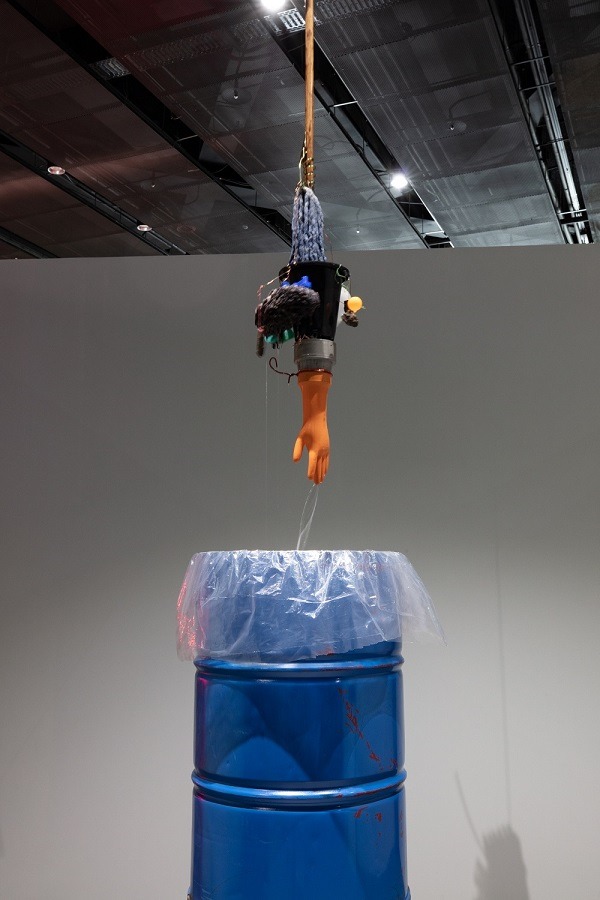
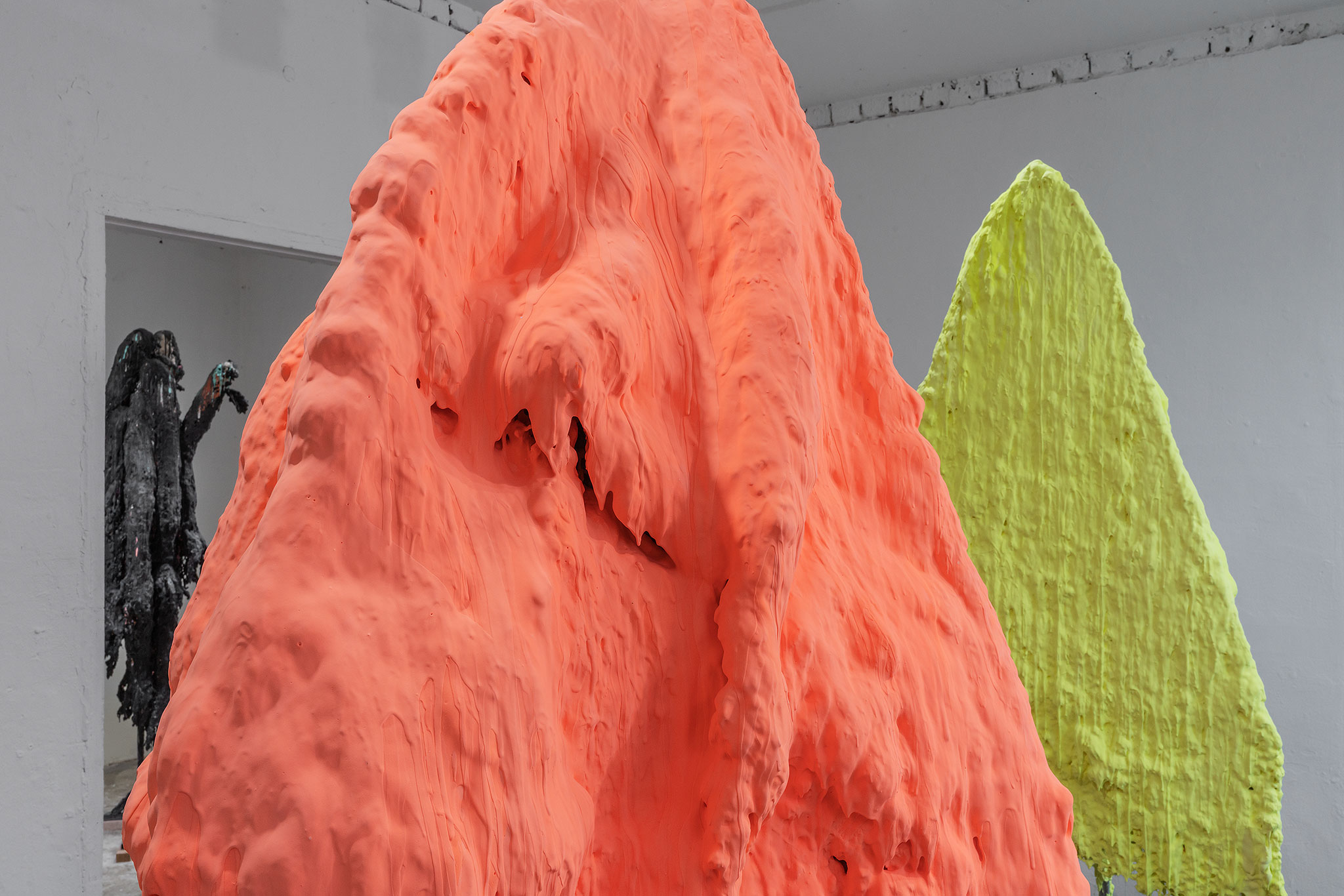
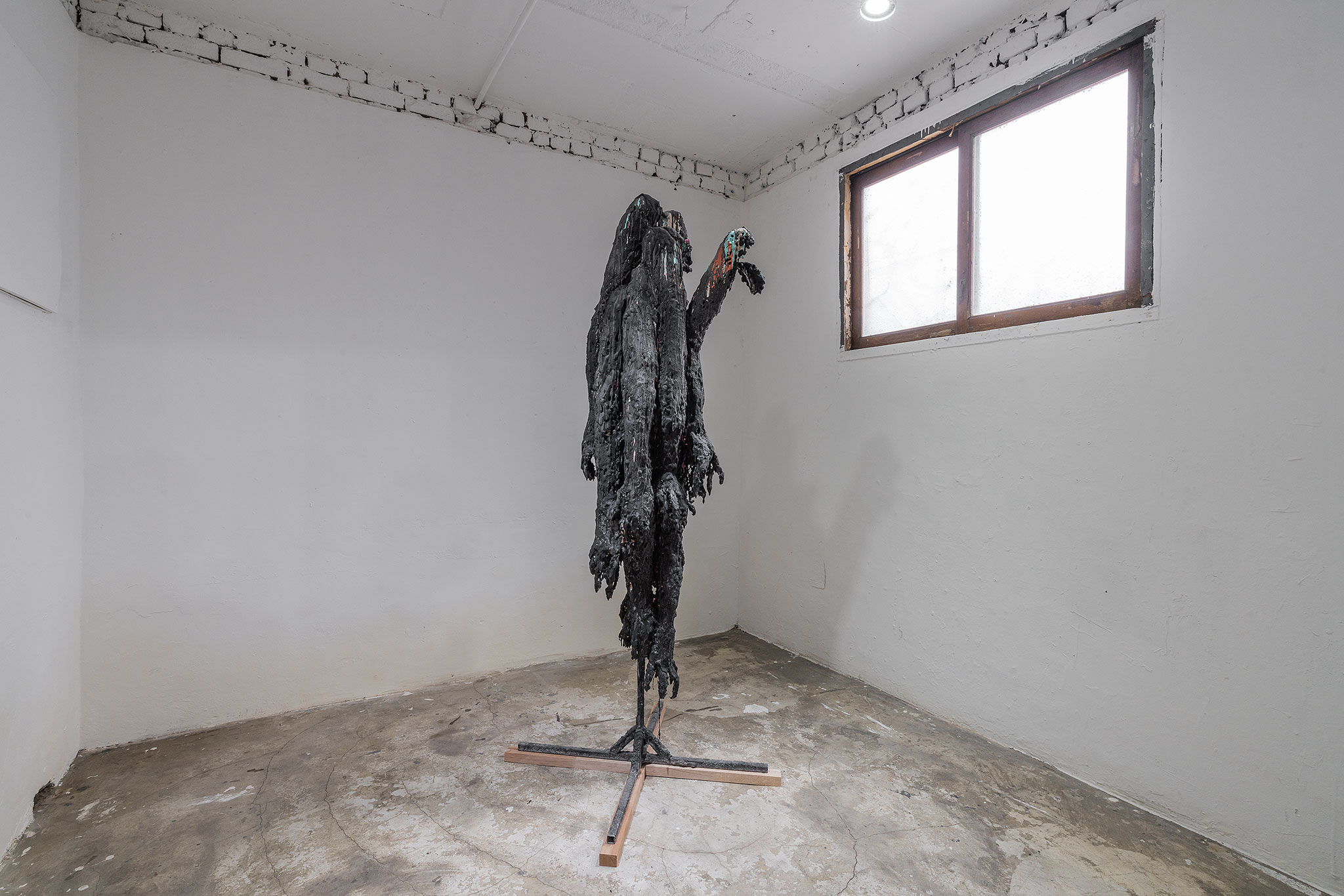
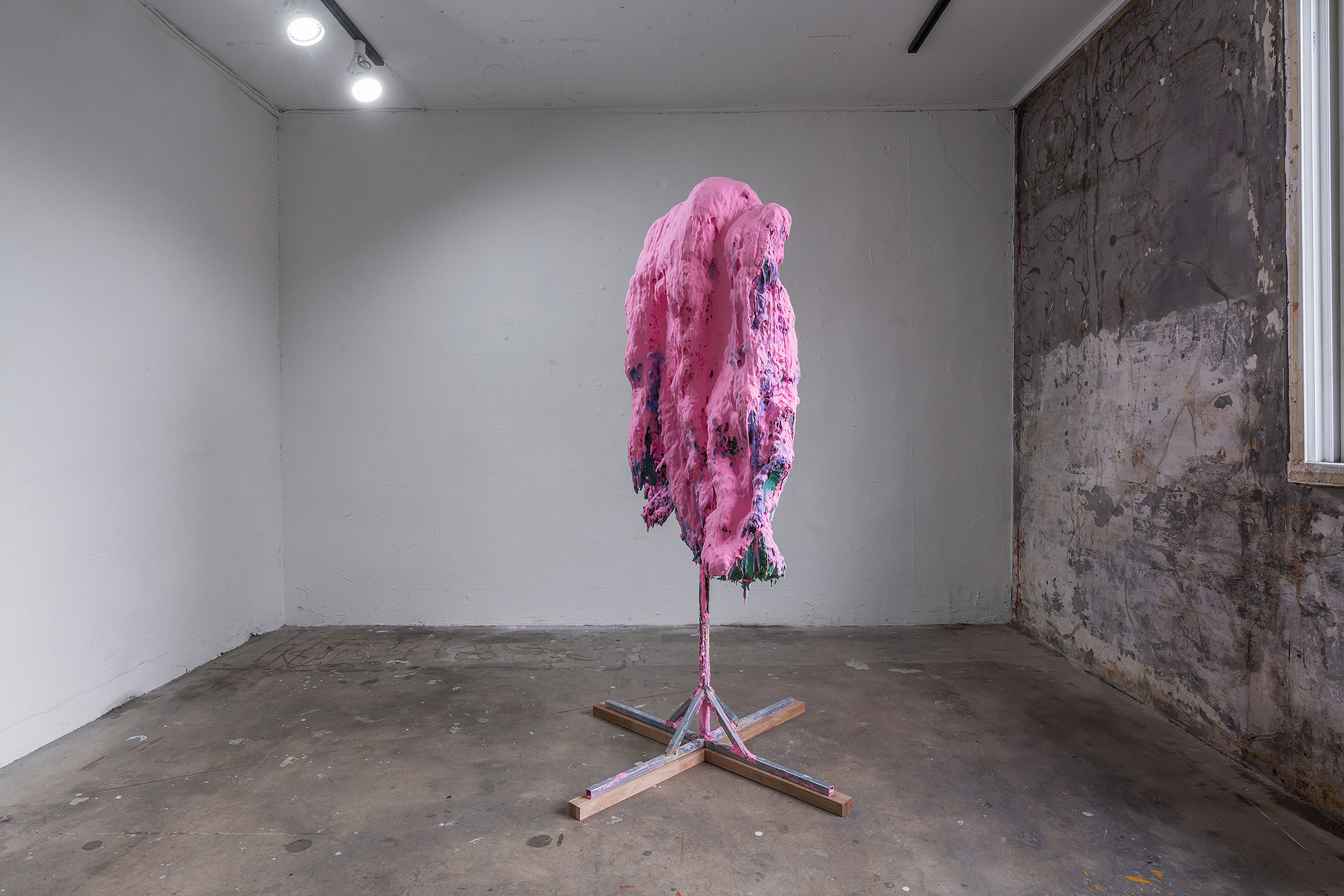
Mannequin, clothing, various electrical wires, hose, cables, urethane foam, acrylic on packaging tarp
75 x 60 x 145 cm
About The Work

Kwon Yongju has explored the social and economic structures embedded in ordinary materials, objects, and forms through sculpture, installation, and video.

His practice begins with reading human lives and attitudes in the objects and landscapes that often go unnoticed in everyday life. Items accumulated or assembled through work and daily routines, discarded materials and worn tools, and makeshift structures all retain traces of the bodies and time of those who used them.

Although Kwon’s methods have evolved from object-based installations to plaster casting, pigment sculptures, and works in FRP and bronze, his sustained interest in translating everyday objects and traces of labor into a sculptural language has remained central to his practice.

As his work has expanded from installations that arrange objects to sculptures that investigate the material properties of substances and the processes of making, Kwon has maintained a sensitivity to the aesthetic and social meanings embedded in marginal objects, labor, and temporary structures.

Through this ongoing process of observation and reconsideration, he continues to explore diverse possibilities for sculptural forms that capture and transform reality without fixing his practice into a single outward form.

Solo Exhibitions (Brief)

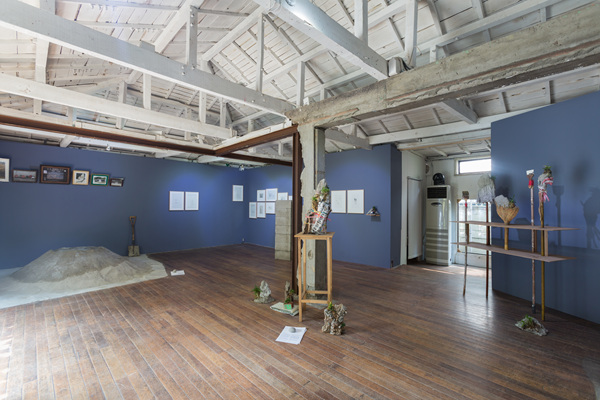
Kwon Yongju has held solo exhibitions at Insa Art Space (2010), D Project Space (2014), Art Space Pool (2016), DOOSAN Gallery Seoul (2018), Amado Art Space (2022), and Vohm Gallery (2024).

Group Exhibitions (Brief)

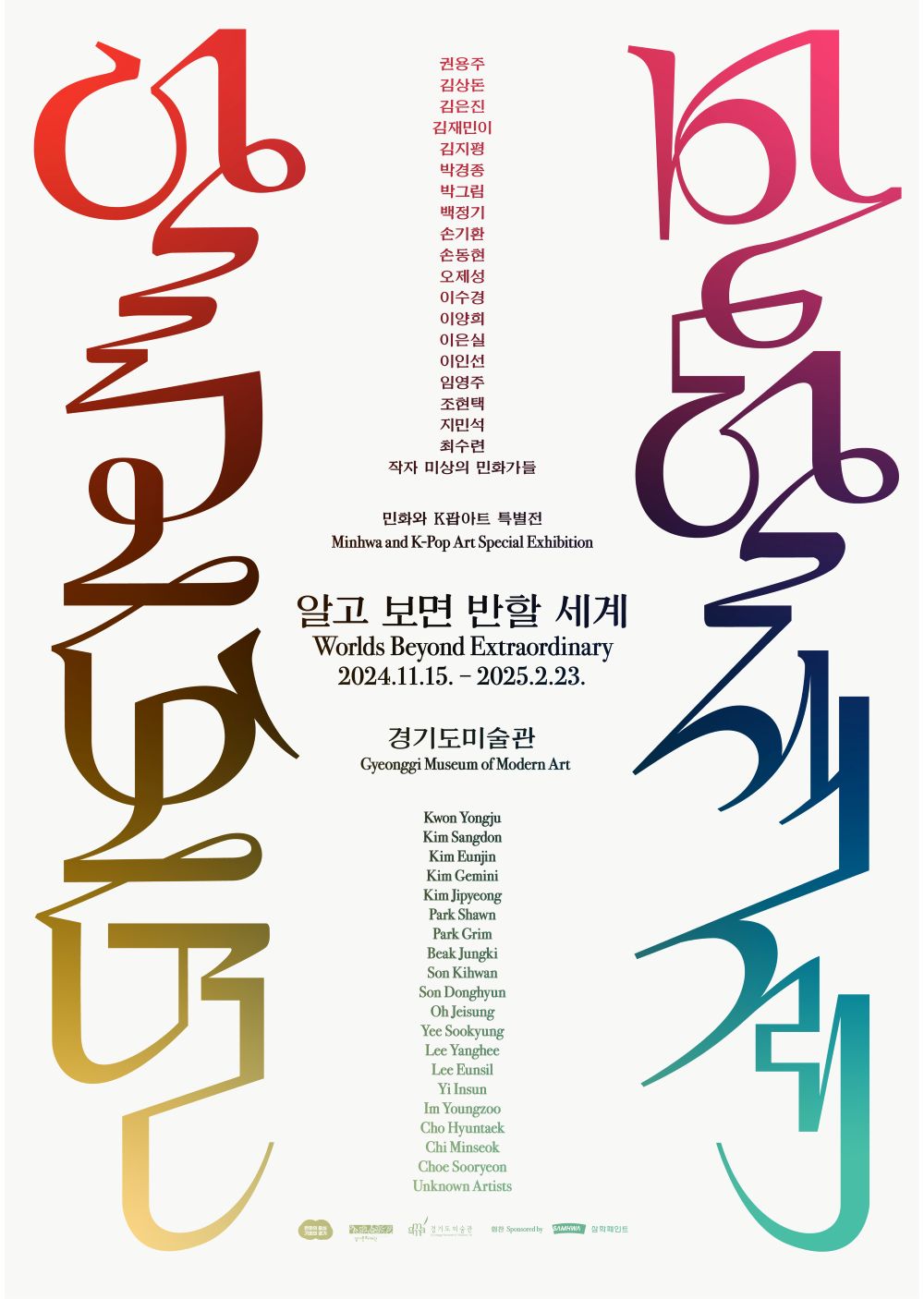
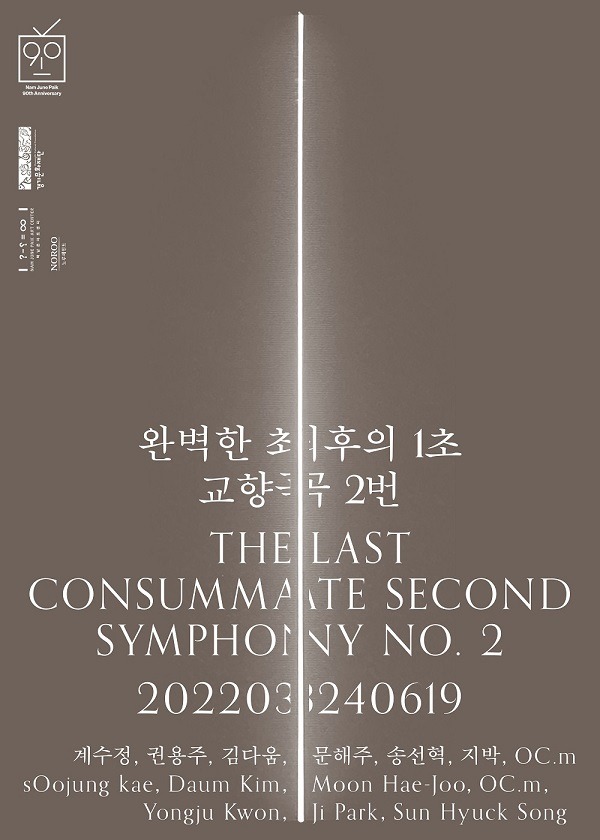
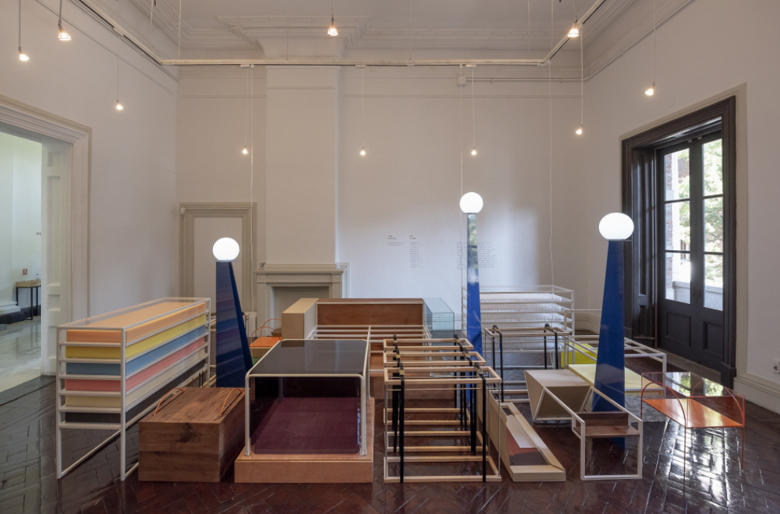
Kwon Yongju has participated in group exhibitions at the National Museum of Modern and Contemporary Art, Korea (2014), Art Sonje Center (2015), Gyeonggi Museum of Modern Art (2015, 2016), DOOSAN Gallery New York (2016), Nam June Paik Art Center (2017, 2022), Gwangju Biennale (2018), Seoul Museum of Art (2018, 2020), Busan Biennale (2020), PODO Museum (2021), and Thaddaeus Ropac Seoul (2024).

Awards (Selected)

Kwon Yongju was selected as a finalist for the 1st Seoul Sculpture Prize in 2024.

Residencies (Selected)

Kwon Yongju participated in residencies at Ggoollpool (2010), Gunsan Art Residency (2011), Gunpo International Art Residency and Seoul Art Space Geumcheon (2013), SeMA Nanji Residency (2016), DOOSAN Residency New York (2017), and Artist Residency in the House of Lee Ungno (2018).

Collections (Selected)

Works by Kwon Yongju are held in the collection of the Seoul Museum of Art.

Works of Art

Sculpture as a “Portal” Through Everyday Materials

Originality & Identity

Kwon Yongju’s practice begins with reading human lives and attitudes through ordinary objects and scenes that often go unnoticed. Piles of objects stacked or tied together in the course of work and daily life, discarded materials, worn tools, and makeshift structures retain traces of the bodies and time of those who used them.

In early works such as Buoy Light and the ‘Waterfall’ series, Kwon observed these arrangements and uses of objects and translated them into sculptural configurations, revealing the sensibilities and strategies of survival through which people sustain their lives under unstable social conditions. Objects thus allow him to approach ways of living and their surrounding social circumstances without directly depicting the people themselves.

This concern is closely intertwined with Kwon’s own experience of labor undertaken to sustain his livelihood. Skills acquired through exhibition production and work sites have accumulated in his body, shaping how he selects and handles materials, judges structures, and conceives his works. Labor in his practice extends into a way of perceiving the repetitive actions through which life is maintained and the traces those actions leave behind.

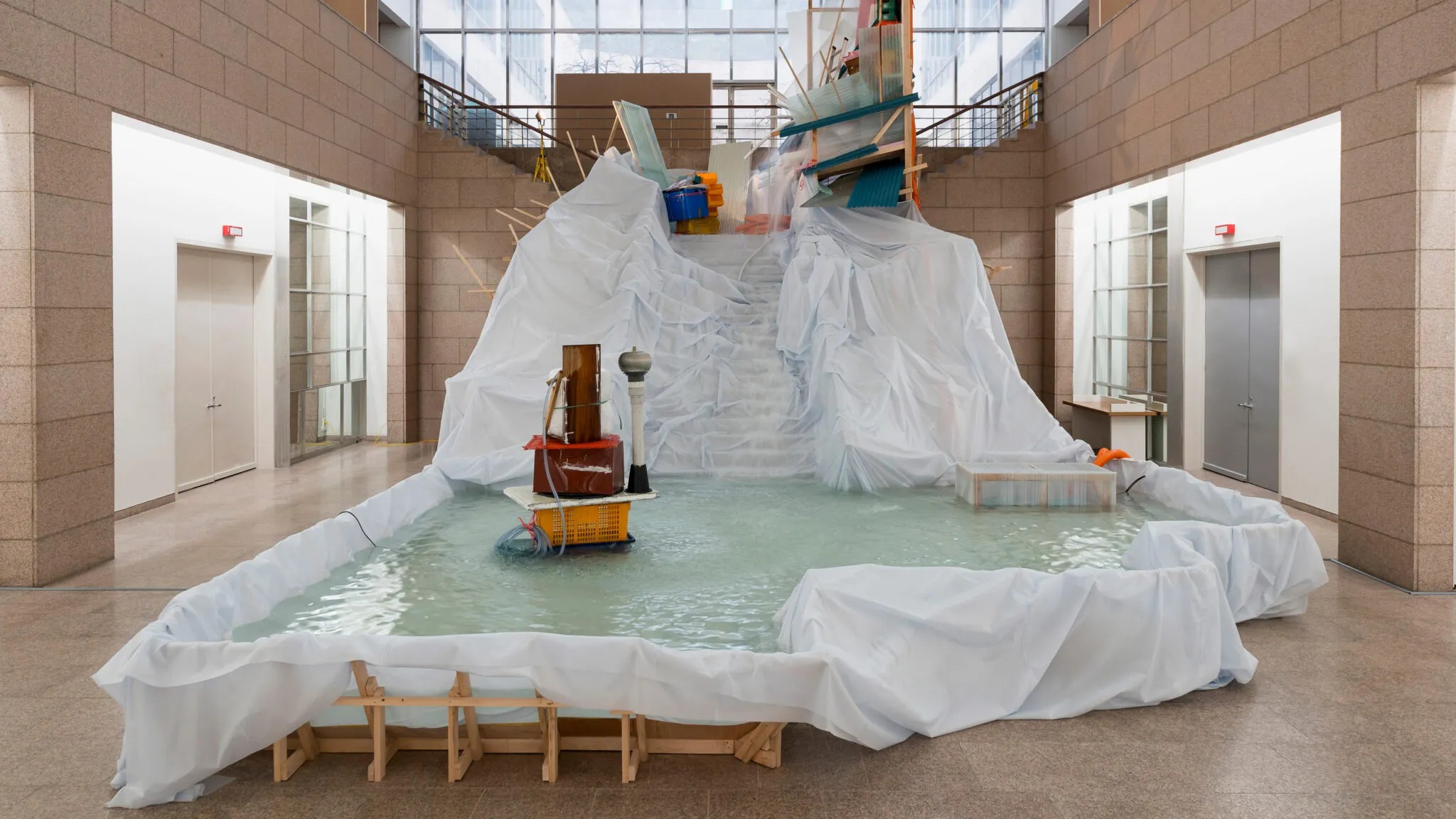
The ‘Waterfall’ series, which he began in 2011, exemplifies this continuity: while retaining the recurring structure of flowing water, different iterations have addressed the urban landscape, opposition to the Four Major Rivers Project, and socioeconomic structures according to their respective contexts.

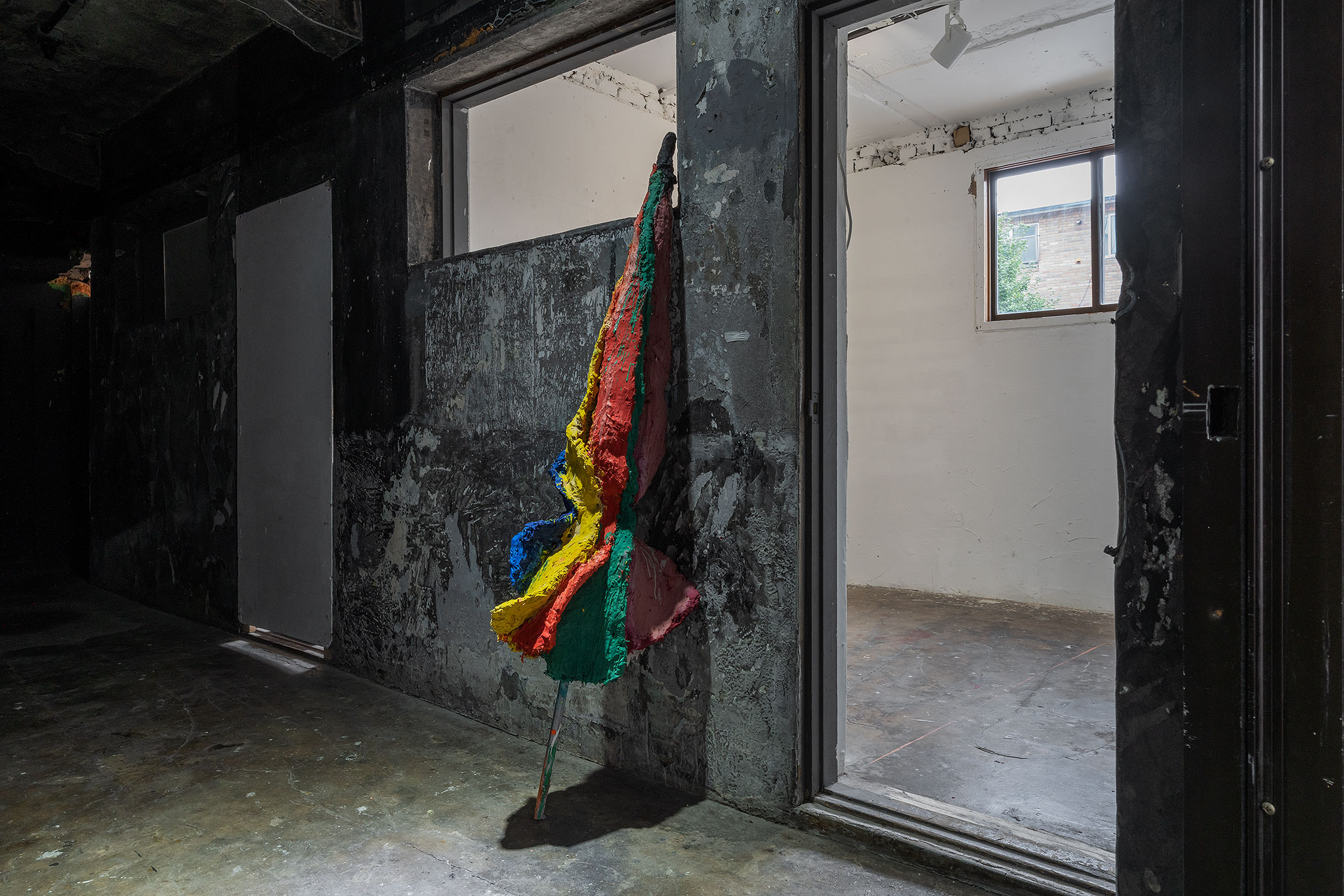
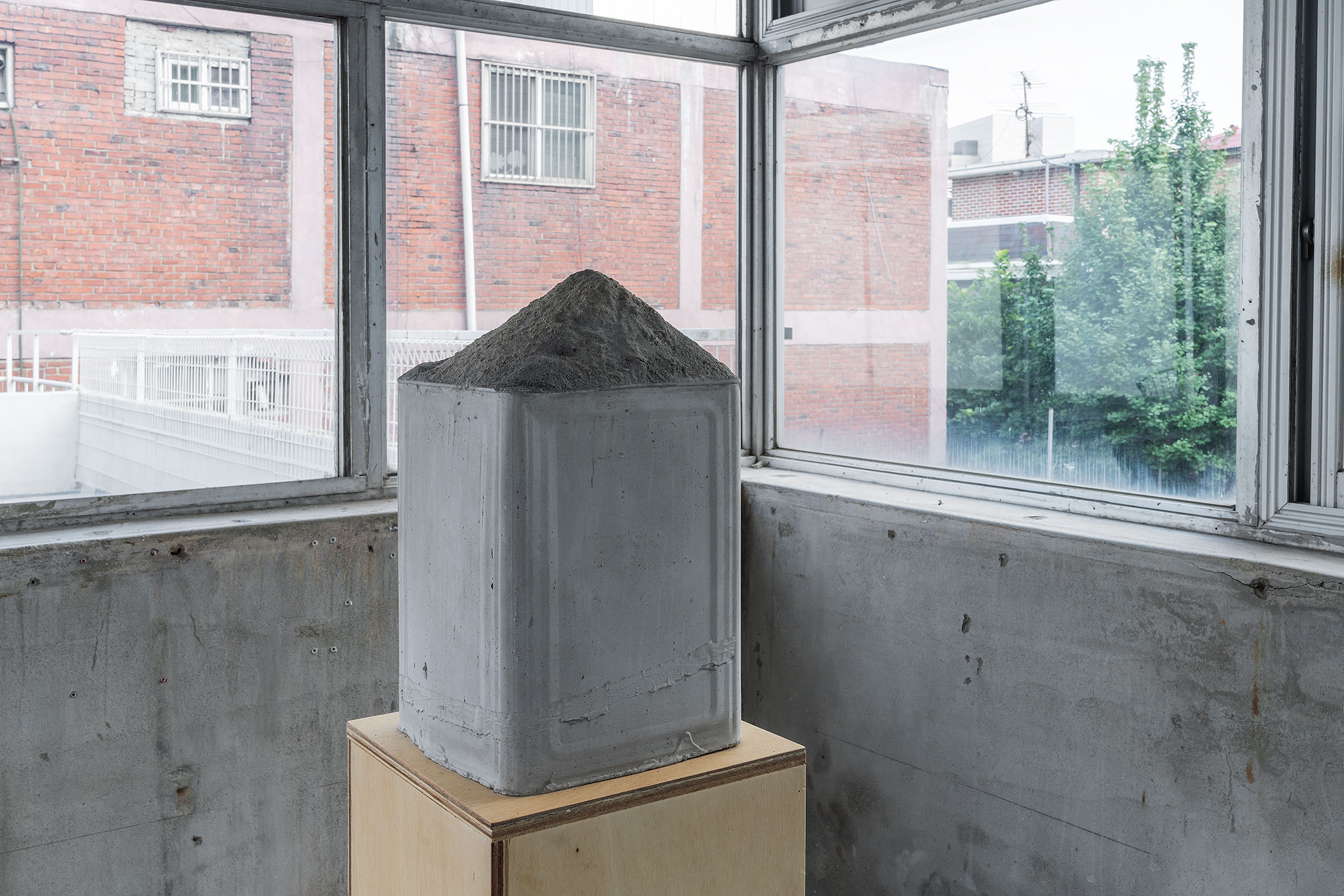
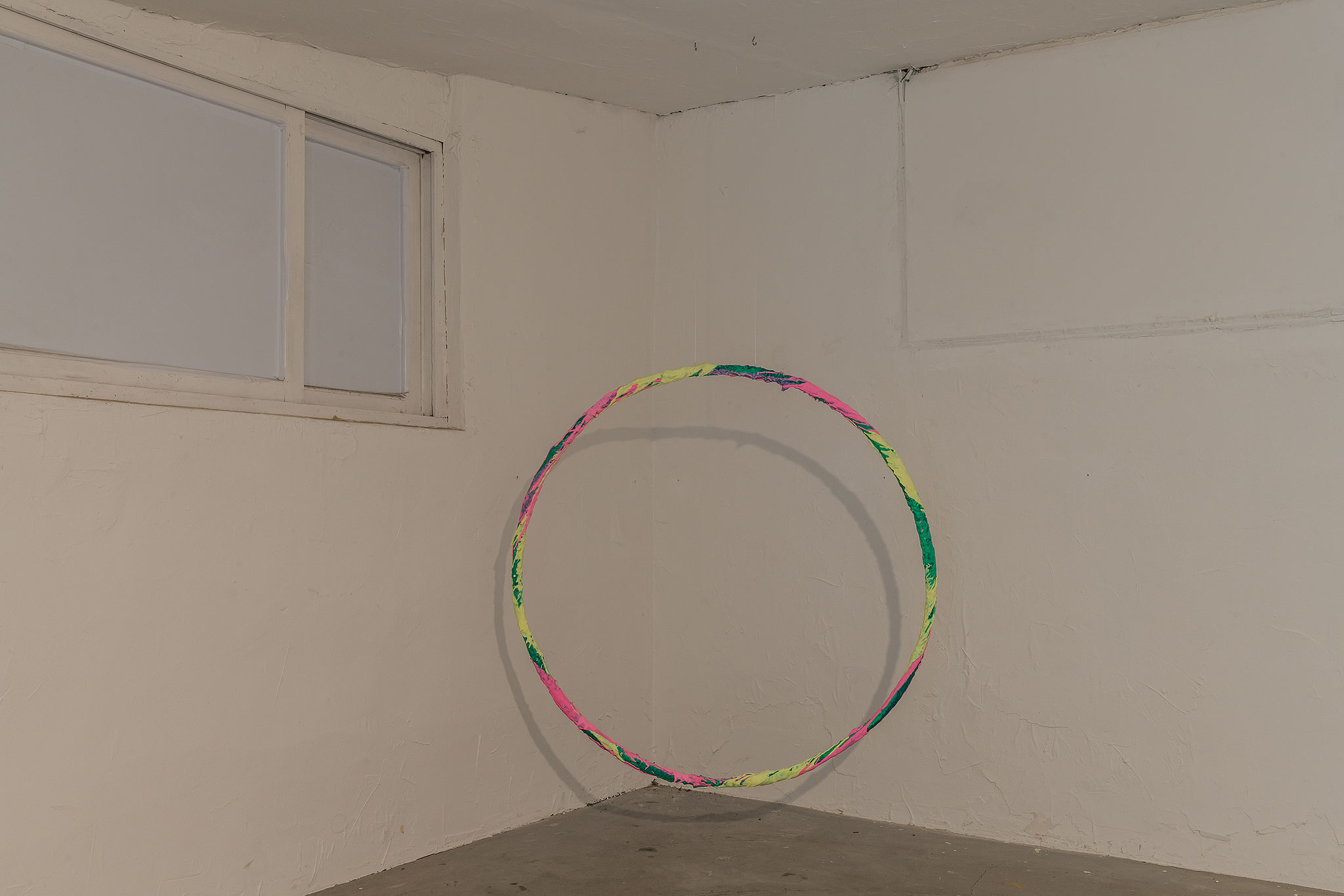
The concept of the “portal,” which Kwon began to articulate more explicitly around 2016, provides a key framework for this perception of reality. For him, a portal describes a perceptual moment in which an ordinary scene, firmly rooted in reality, suddenly opens onto another way of seeing. A loosely rolled parasol, sling belts left at an ironworks, cement hardened on a can, or a hula hoop hanging from a tree may unexpectedly appear as unfamiliar forms and prompt speculation about the lives and social relations behind them.

His subsequent research into pigments extended this inquiry toward the histories of the chemical industry, imperialism, and production labor, while also leading him to regard pigment itself as a three-dimensional substance and a minimal unit of sculpture. Associations originating in everyday objects thus develop into an inquiry in which material and society are considered together.

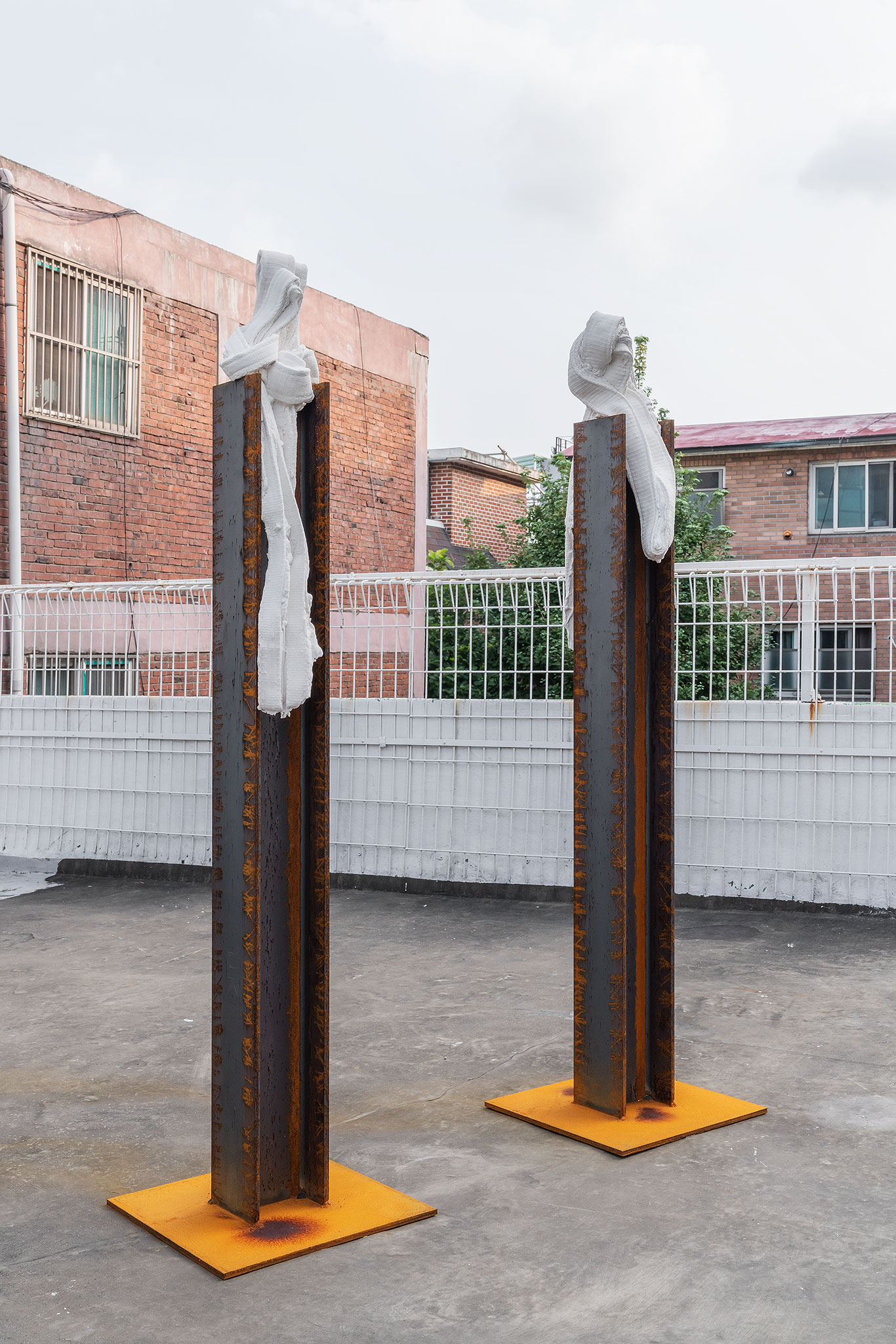
In Kwon’s recent works, invisible labor and the process of making itself have become increasingly explicit concerns. Sling Belt & Others (2024) imagines the absent bodies of workers through sling belts left behind at an ironworks and reflects on how the labor sustaining everyday life is becoming less visible. In 《Sprue》 (2026), the casting channel cut away from a completed bronze sculpture becomes a metaphor for “ghost labor”: labor and processes essential to producing the final result yet ultimately removed from sight.

Across these developments, Kwon has consistently attended to people, objects, and processes that are easily overlooked or erased from view. The distinctiveness of his practice lies in returning these traces to sculptural form, material transformation, and the act of making, allowing them to generate renewed ways of perceiving reality rather than reducing them to direct social illustration.

Style & Contents

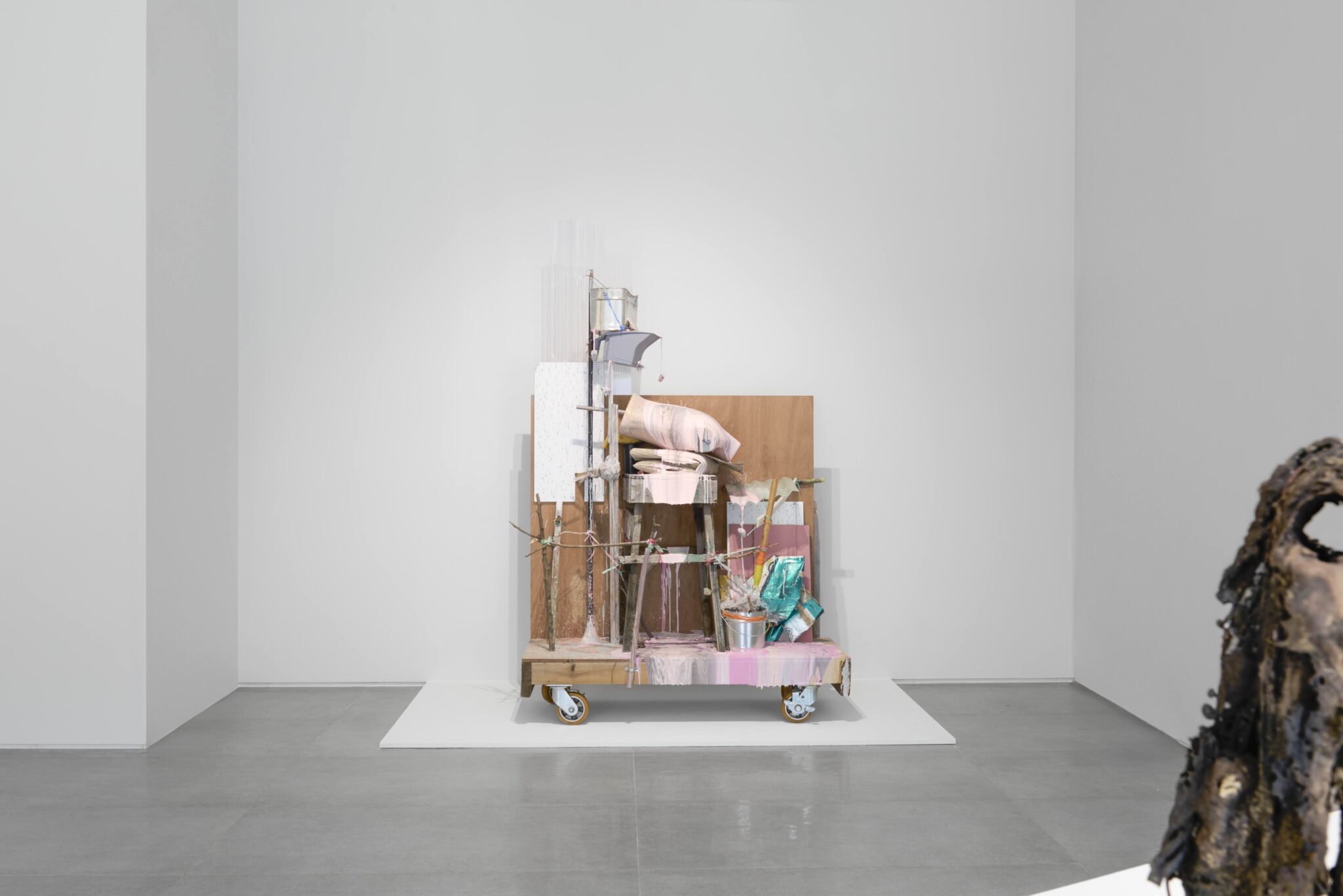
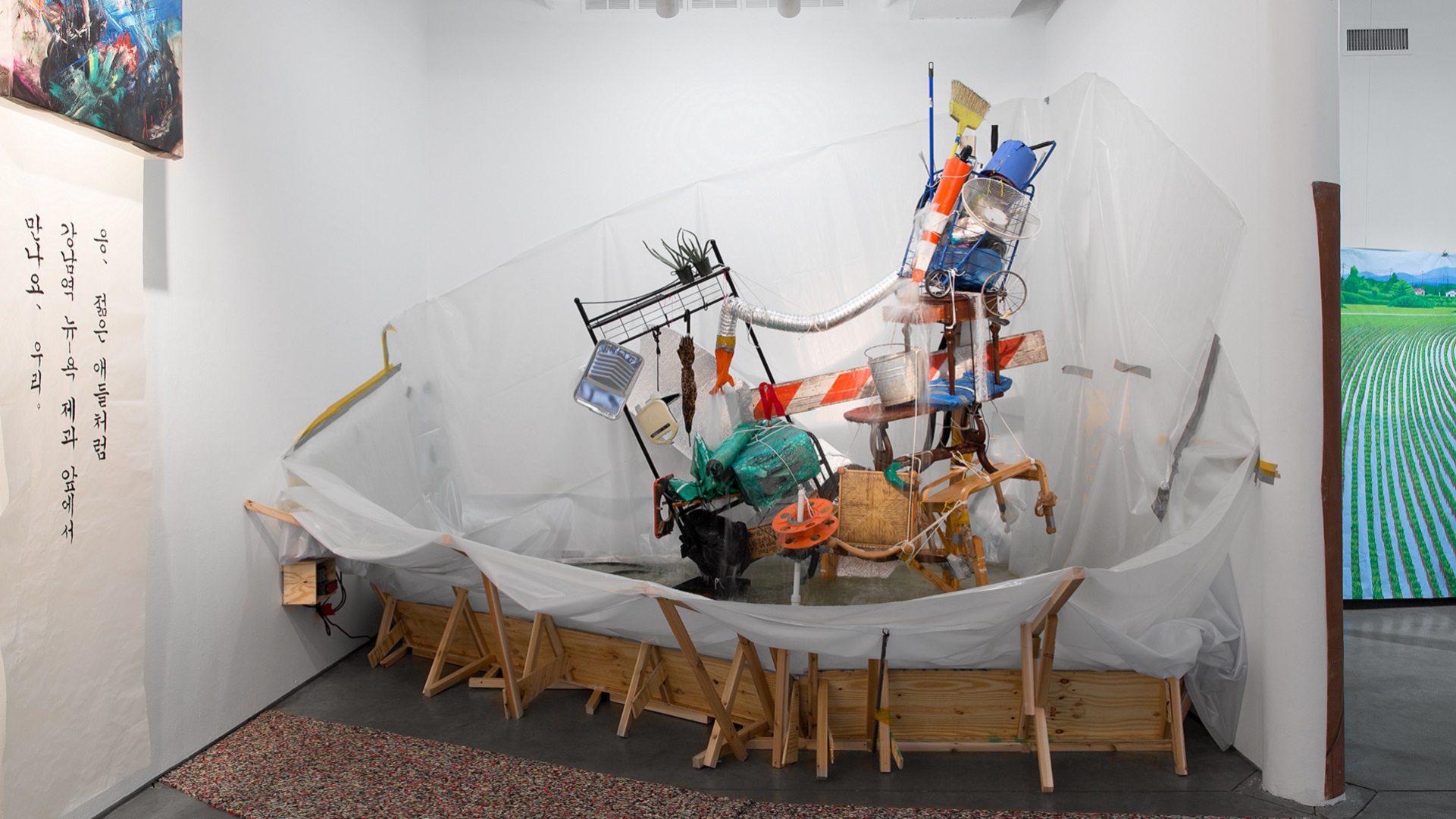
Kwon Yongju’s early practice developed through installations that actively employed the material qualities and arrangements of objects collected from everyday life and sites of labor. Discarded materials, tools, tarpaulins, ropes, and pumps—objects not originally produced as art materials—were stacked, tied, covered, and assembled into precarious structures, sometimes incorporating circulating water so that their conditions changed over time.

In the ‘Waterfall’ series, heterogeneous objects are held in unstable balance while water flows across them, with murky water and the gradual growth of algae becoming part of the work over the course of an exhibition. Traces of use and provisional modes of assembly function simultaneously as formal elements and as means of conveying the instability and strategies of survival observed in workplaces and urban life.

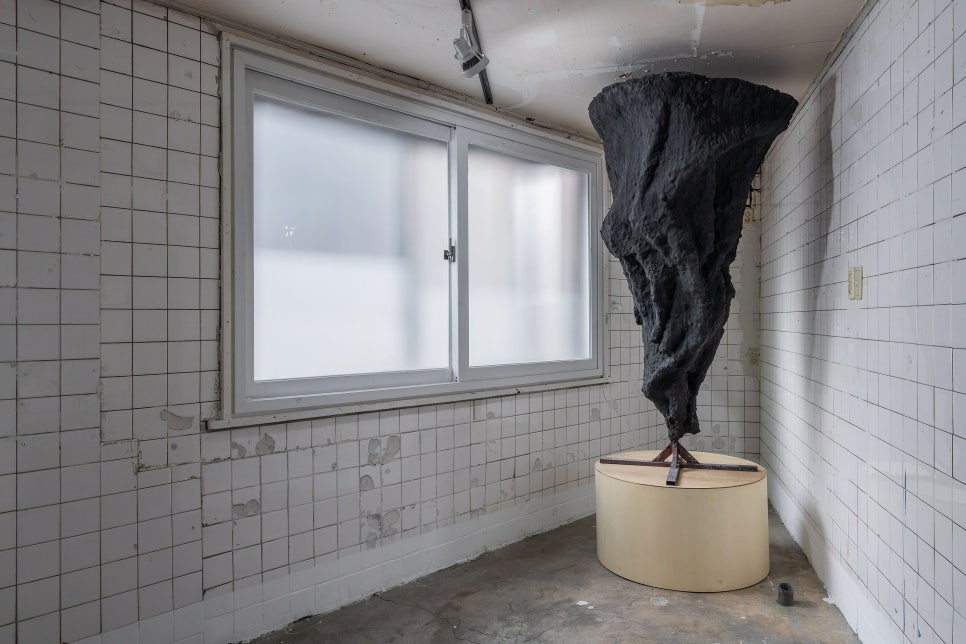
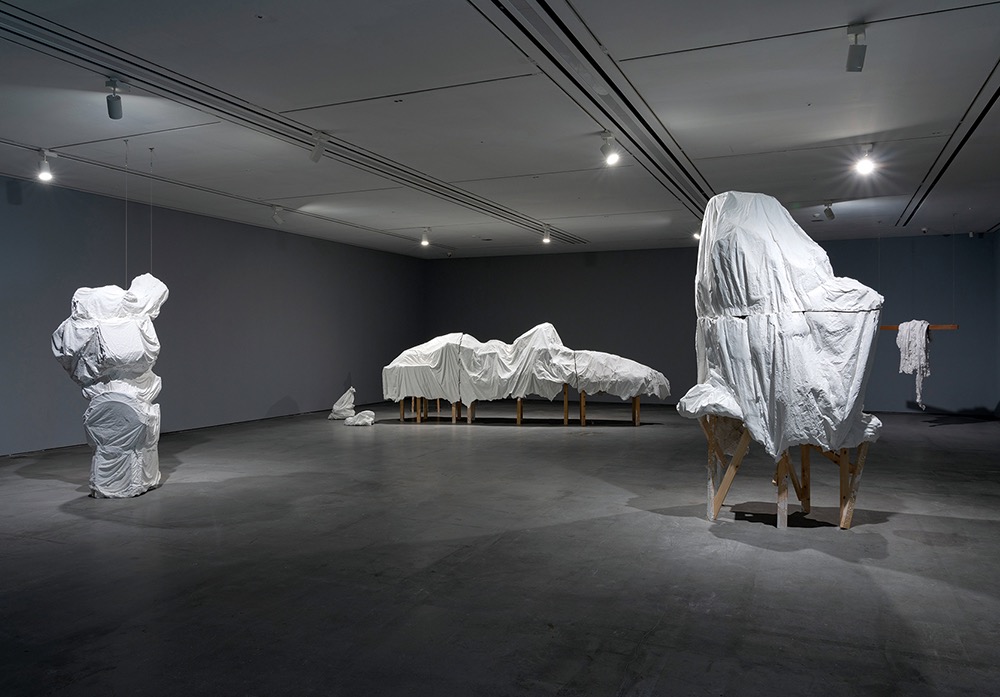
Around 《Casting》 (2018), Kwon shifted from installations that directly exposed found objects toward sculptures in which forms were reconstructed through casting. By covering assemblages of objects and structures with tarpaulins and casting them in plaster, he concealed the objects themselves while retaining their volume, weight, contours, and surface traces.

Materials of different colors and textures became unified within white plaster, compressing the dense visual information of his earlier installations into sculptural masses and surfaces. The objects thus became both the physical sources that determined the sculpture’s exterior and hidden structural causes embedded within the cast.

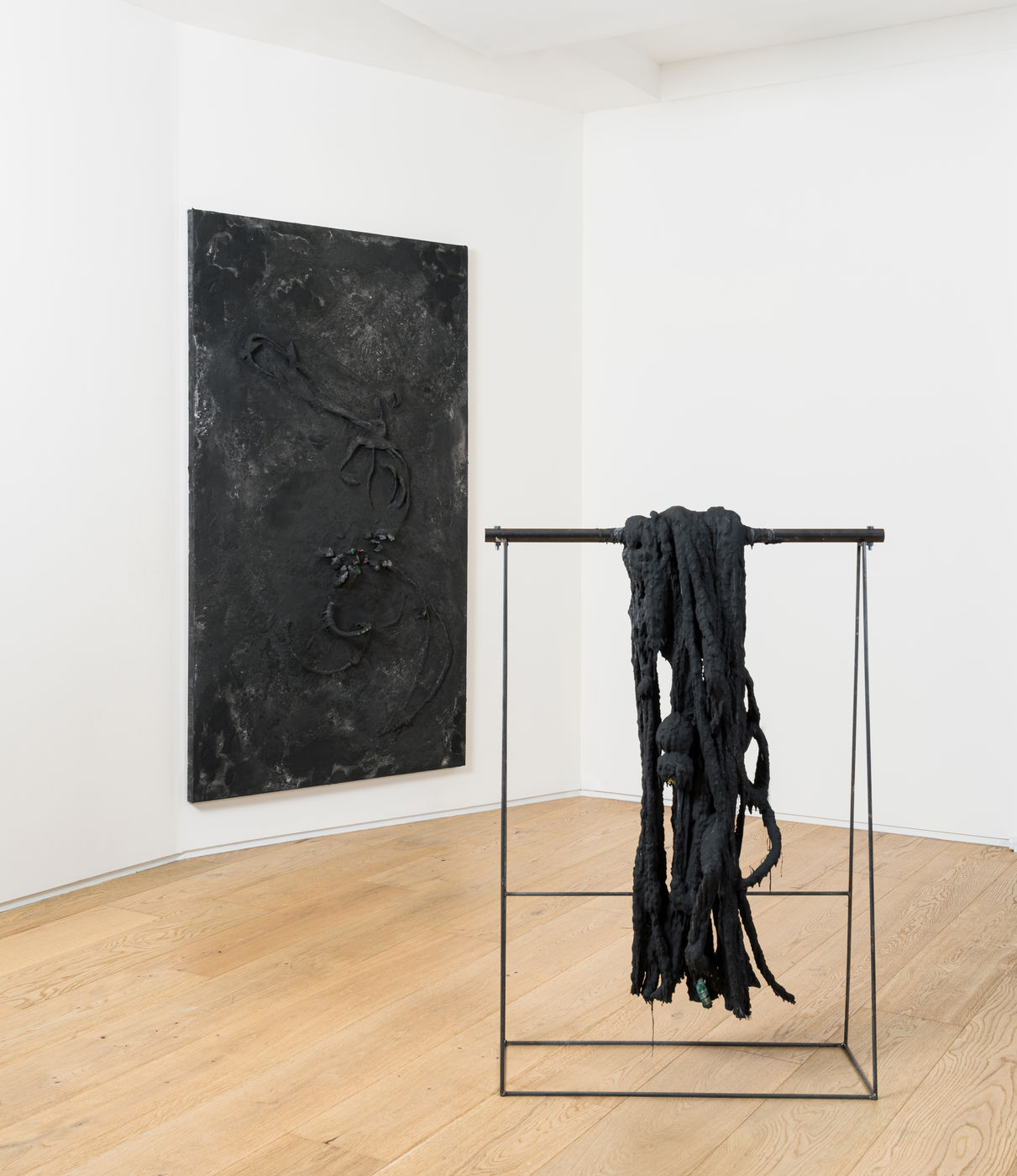
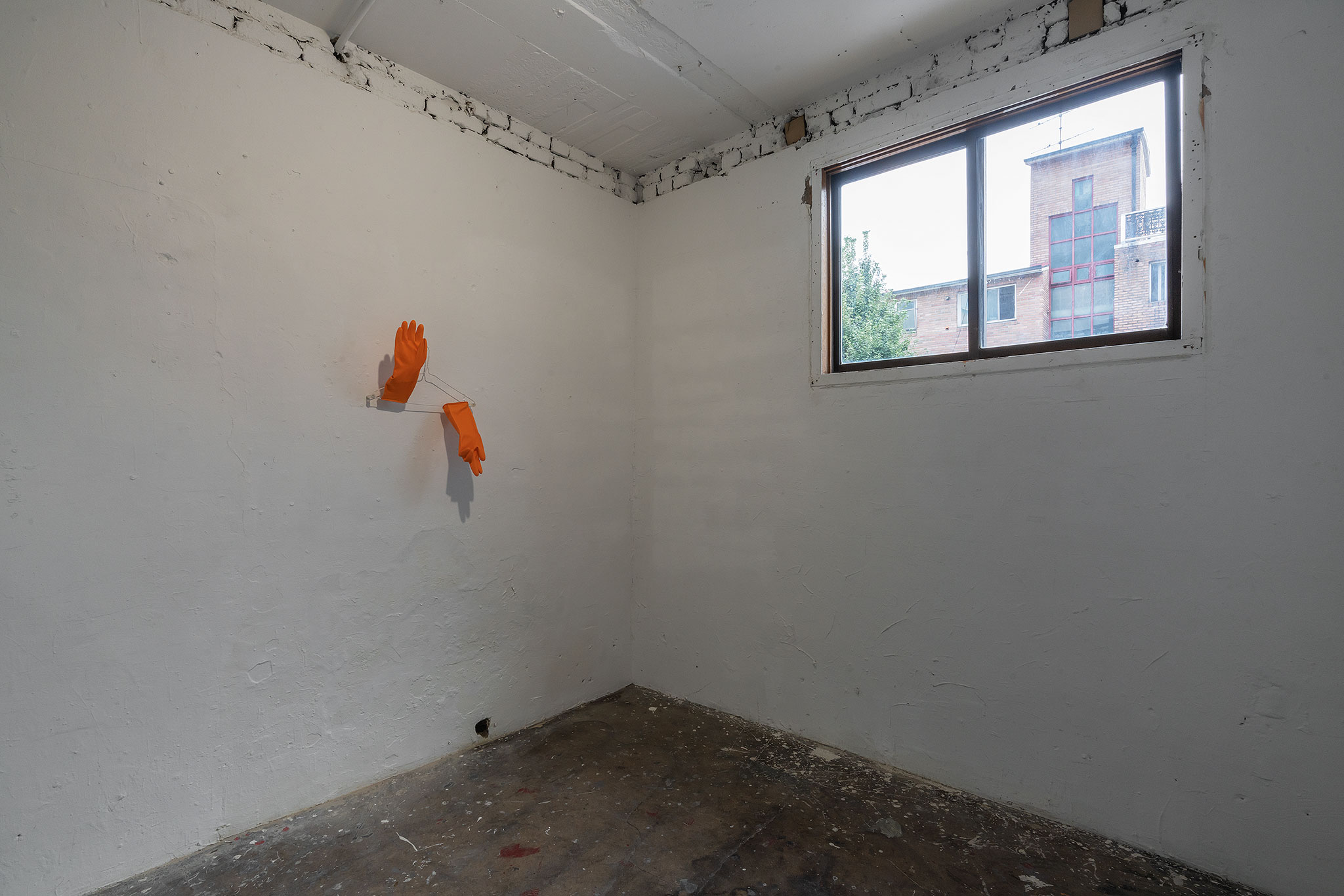
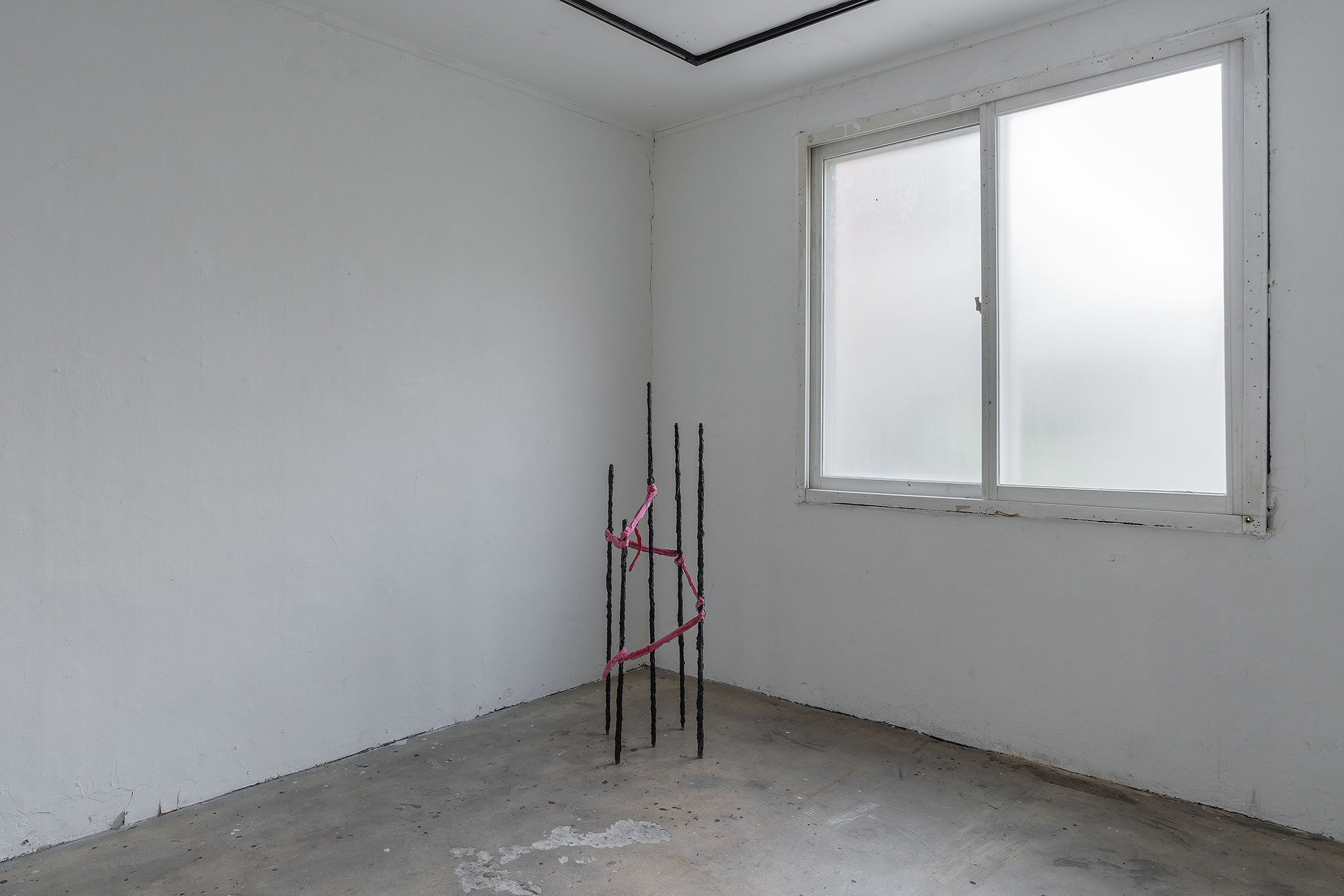
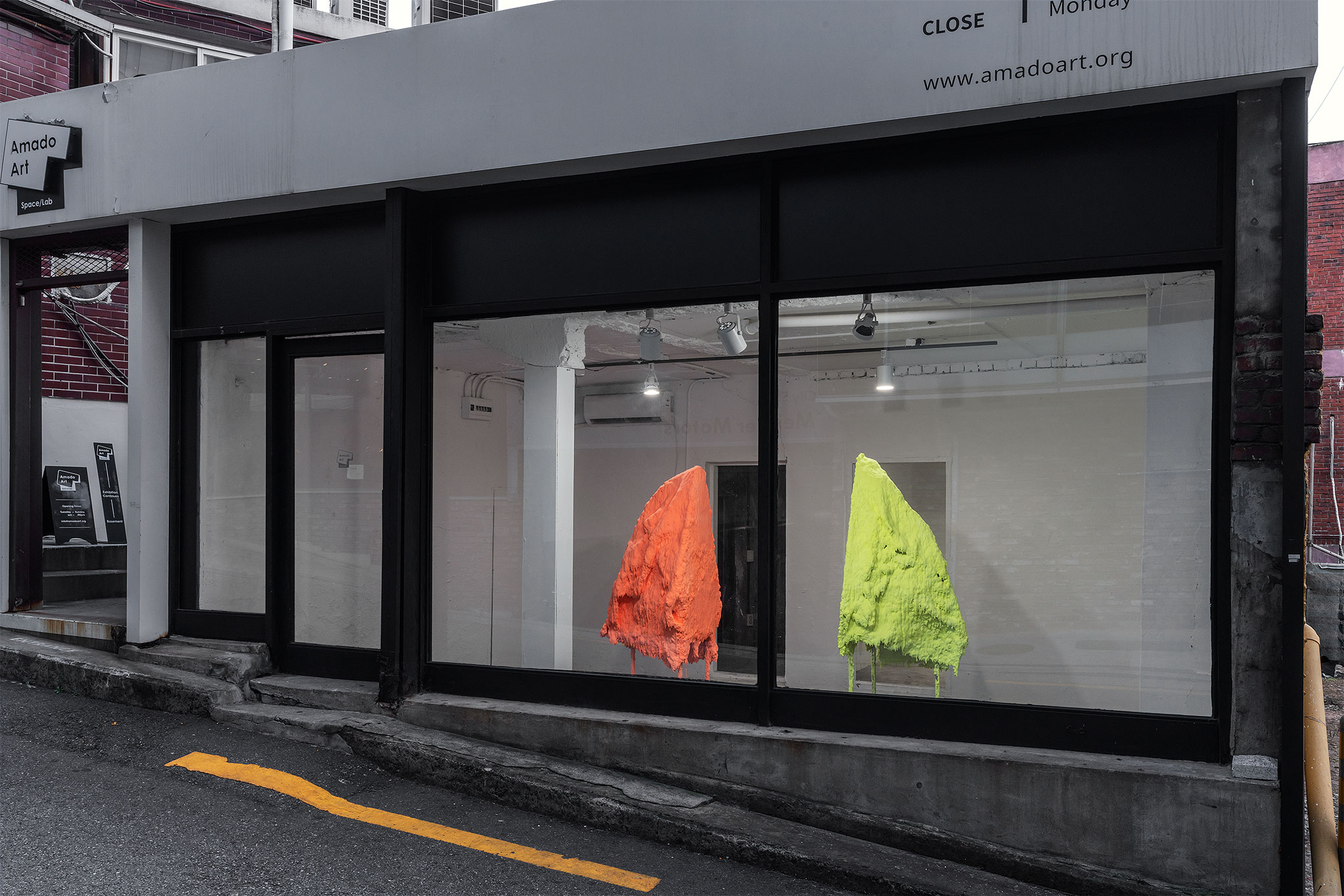
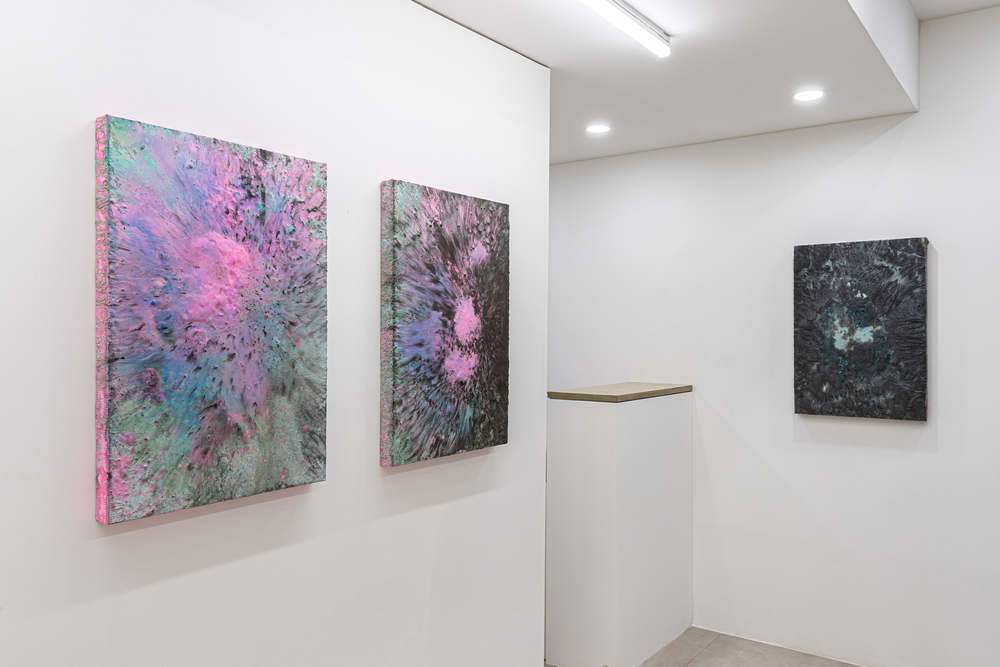
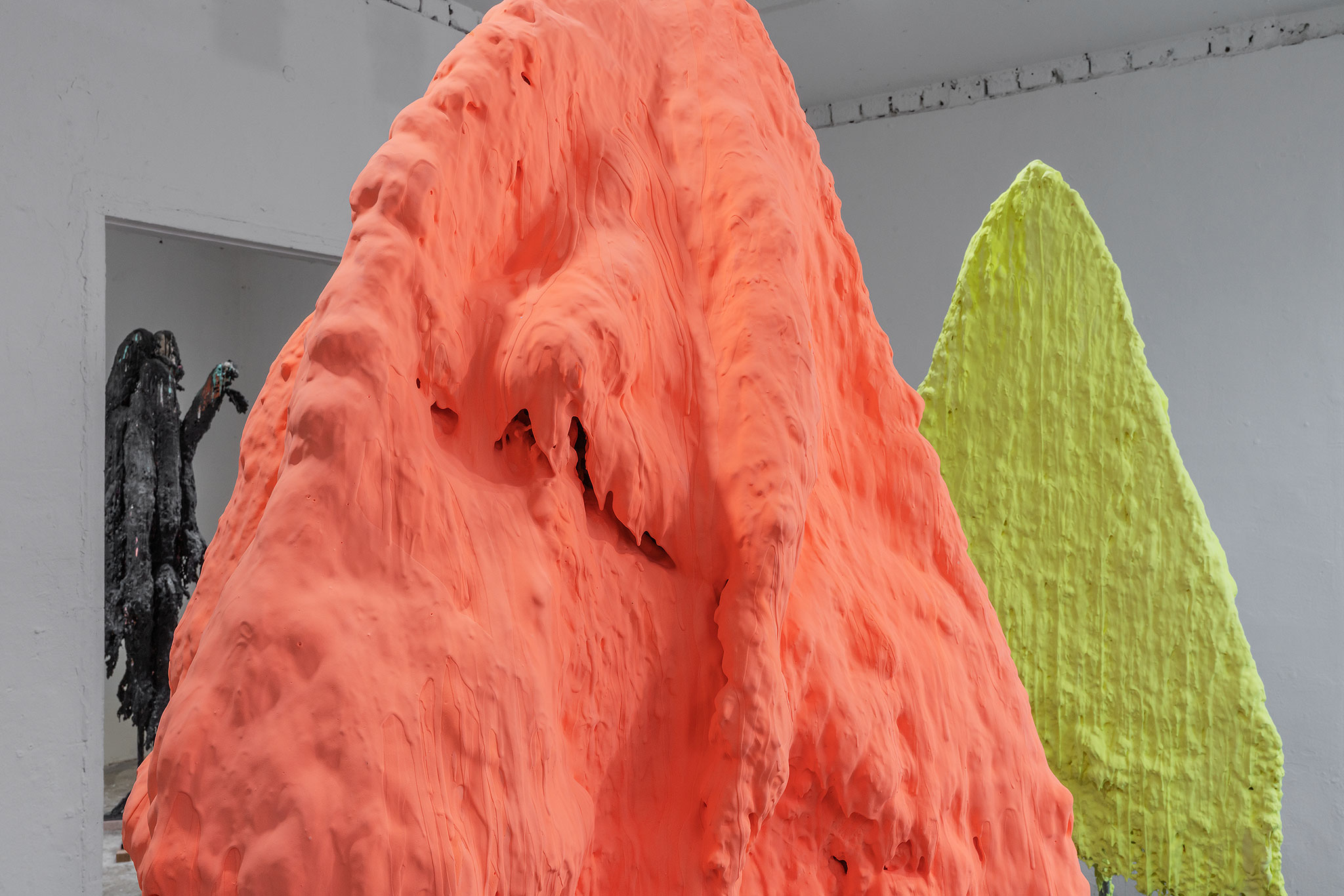
From 《Portal》 (2022) onward, Kwon has pursued both the reconstruction of scenes found in reality and more extensive transformations of form. Some works preserve the outlines of everyday objects such as parasols, sling belts, ropes, and rubber gloves while translating them into different materials; others begin with steel-pipe armatures whose forms are altered through repeated applications, pouring, and spraying of plaster and pigment. These experiments became more concentrated in 《Pigmentary Sculpture》 (2024).

Through repeated accumulation and irregular mixing of iron oxide, copper pigments, and plaster, color ceases to function merely as a surface property and instead generates volume, texture, and form. Understanding pigment itself as a minute three-dimensional substance, Kwon explores how sculpture can emerge through the accumulation and interaction of materials.

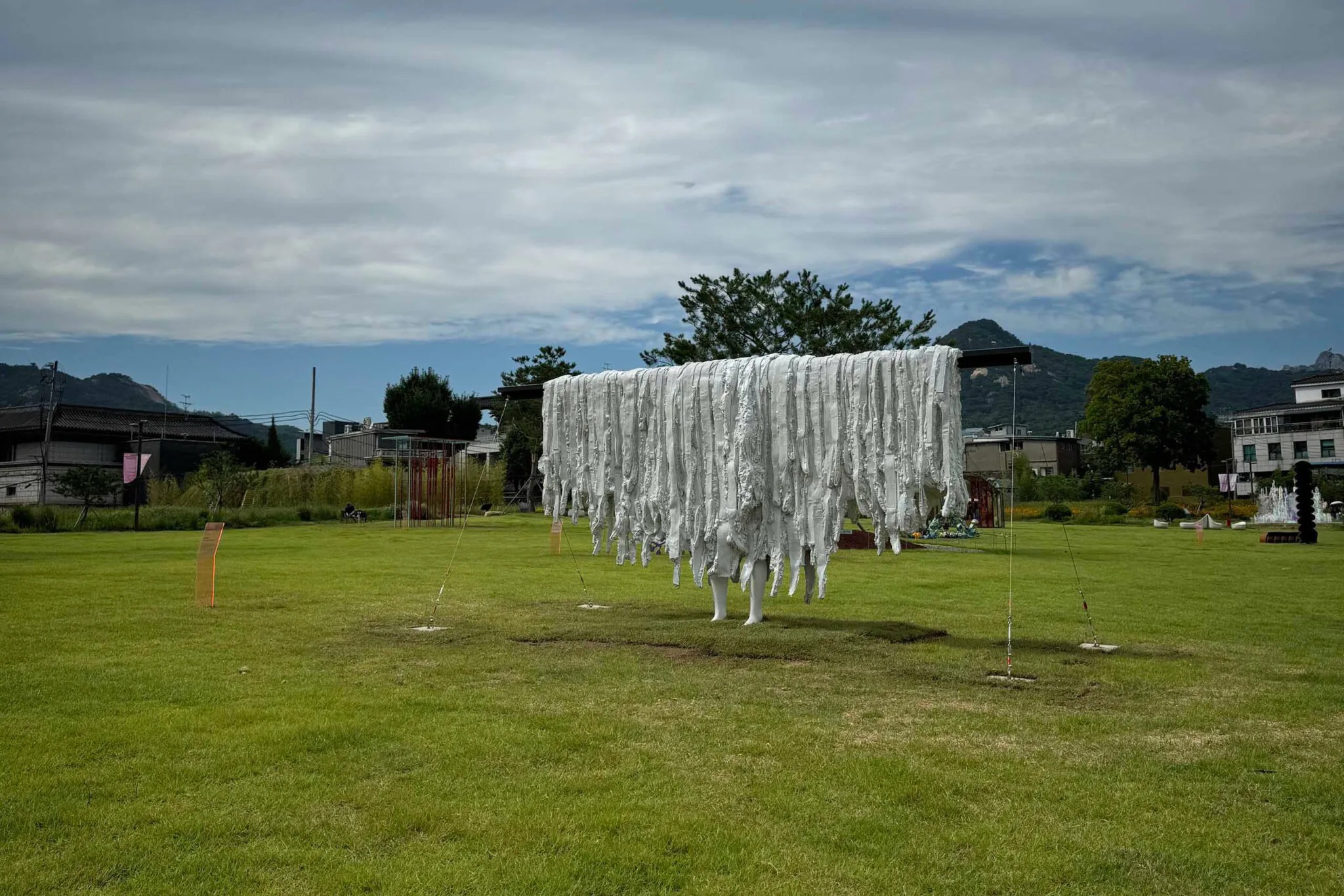
Recent works have expanded into outdoor sculpture, FRP fabrication, and bronze casting, while increasingly incorporating deviations produced by materials and technical processes. Sling Belt & Others (2024) translates the forms of the earlier sling-belt works into a large-scale outdoor sculpture through FRP casting over H-beam and steel-plate structures, introducing human legs beneath the accumulated objects and making the worker’s body more explicit.

In 《Sprue》 (2026), mold abrasion, the expansion of molten metal, and the casting channels that are normally cut away become integral conditions of the work. By observing and accommodating transformations that occur during fabrication, Kwon brings the finished form into relation with the physical processes and residues that make it possible. 

Topography & Continuity

Kwon Yongju’s methods have continually shifted from object installation to plaster casting, pigment sculpture, and works in FRP and bronze, while his sustained interest in translating everyday objects and traces of labor into sculptural language has remained consistent from the beginning.

His early attention to the ways people stack, bind, and temporarily secure objects developed through 《Casting》 (2018) into a method of condensing traces of those objects into sculptural mass and surface. In 《Portal》 (2022), he revisited subjects and processes from earlier works while exploring the relationships between representation and abstraction, material and color. Rather than abandoning previous approaches, Kwon repeatedly locates within them the conditions for subsequent works, continually renewing his sculptural forms and methods of production.

The ‘Waterfall’ series demonstrates this continuity across the longest span of his practice. Initiated in 2011, the series retained its basic structure—objects found or acquired in the city piled together with circulating water—while being recreated in different versions through 2024.

Its meanings shifted according to context, ranging from observations of urban landscapes and criticism of the Four Major Rivers Project to reflections on socioeconomic structures, while material changes such as increasingly murky water and the growth of algae continued to intervene in the work. By retaining a core structure while altering each iteration in response to temporal and spatial conditions, the series encapsulates Kwon’s continuing way of relating sculpture to reality.

His approach to labor has likewise become more explicit as his practice has developed. Earlier works indirectly evoked workers’ bodies and lives through the tools and materials they left behind, whereas Sling Belt & Others (2024) incorporates human legs beneath accumulated objects, bringing the previously absent worker’s body directly into the sculptural form.

《Sprue》 (2026) connects the casting channel removed from a finished bronze sculpture with the “ghost labor” concealed behind platform economies and algorithms, redirecting attention toward production processes and bodily traces eliminated from the final result. An inquiry that began with objects observed at work sites has thus expanded toward the increasing invisibility of contemporary labor and the conditions of making itself.

The continuity of Kwon’s practice therefore lies less in a fixed material or visual vocabulary than in his persistent effort to translate perceptions discovered in reality into sculptural questions. In 《Pigmentary Sculpture》 (2024), pigment shifts from a substance used to produce color into a material that constitutes sculpture itself; in 《Sprue》, abrasion, deformation, and residue produced during casting are accepted as conditions of the work.

As his practice moves from arranging objects toward investigating material behavior and processes of fabrication, his attention to overlooked objects, labor, and provisional structures remains intact. Through this sustained cycle of observation and revision, Kwon continues to expand the ways sculpture can register and transform the realities from which it emerges.

Works of Art

Sculpture as a “Portal” Through Everyday Materials

Articles

Exhibitions

Activities