Ritual for the Iceberg - K-ARTIST

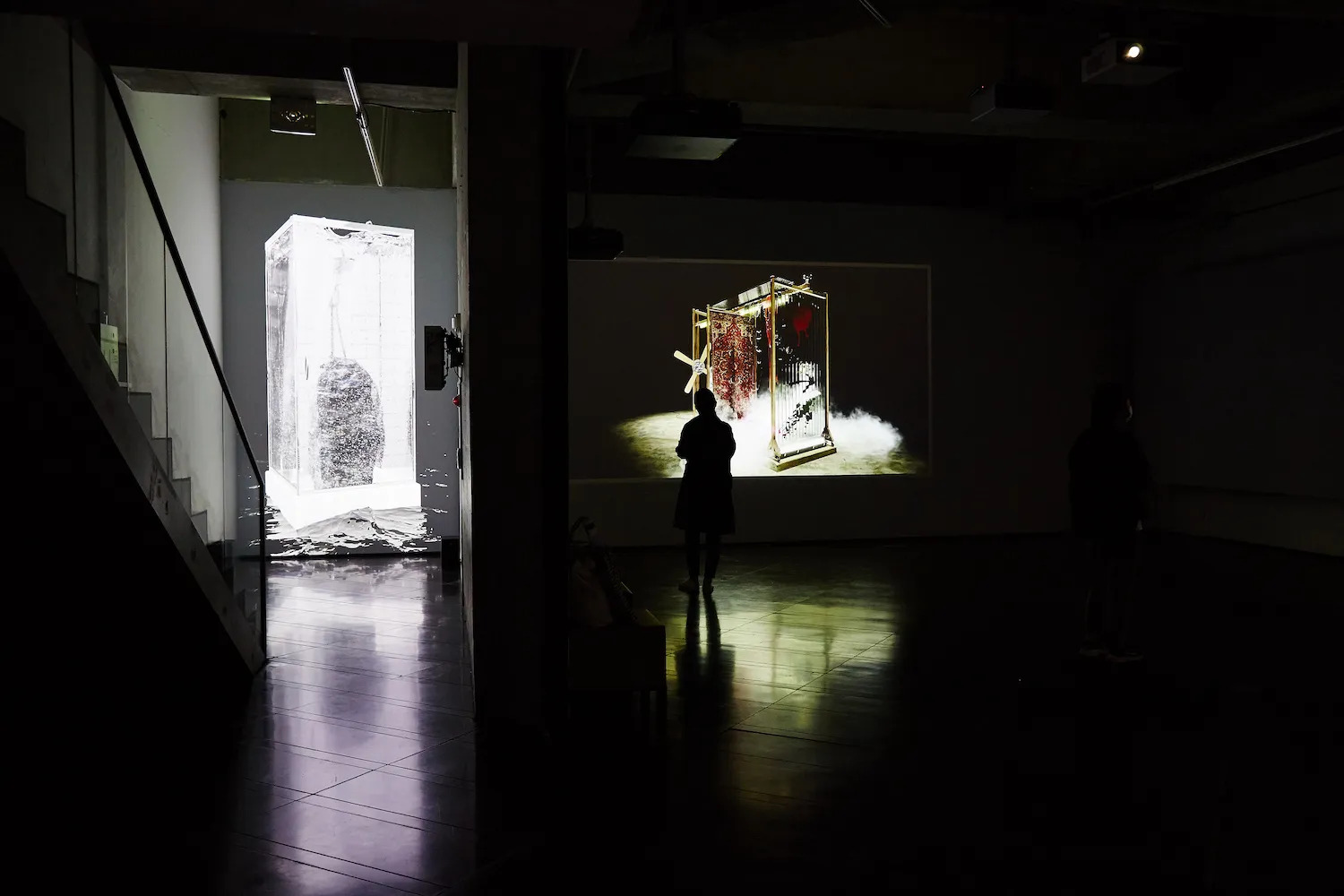
Ritual for the Iceberg

2022
3D simulation video
6min 7sec
About The Work

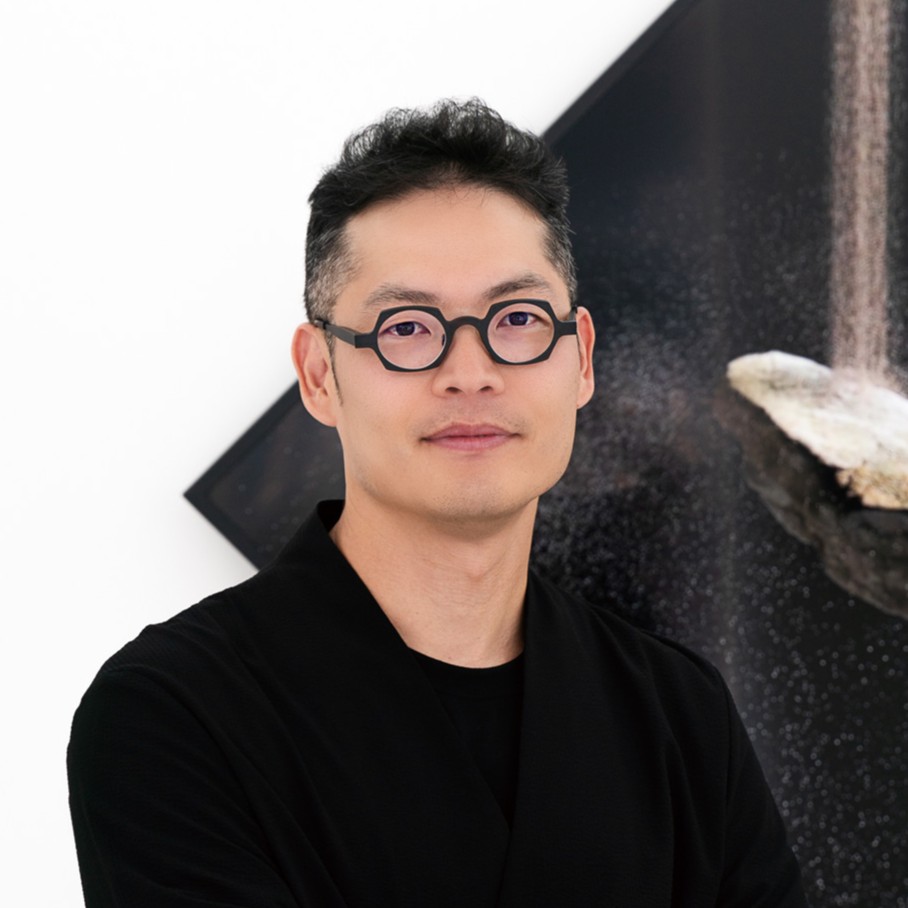
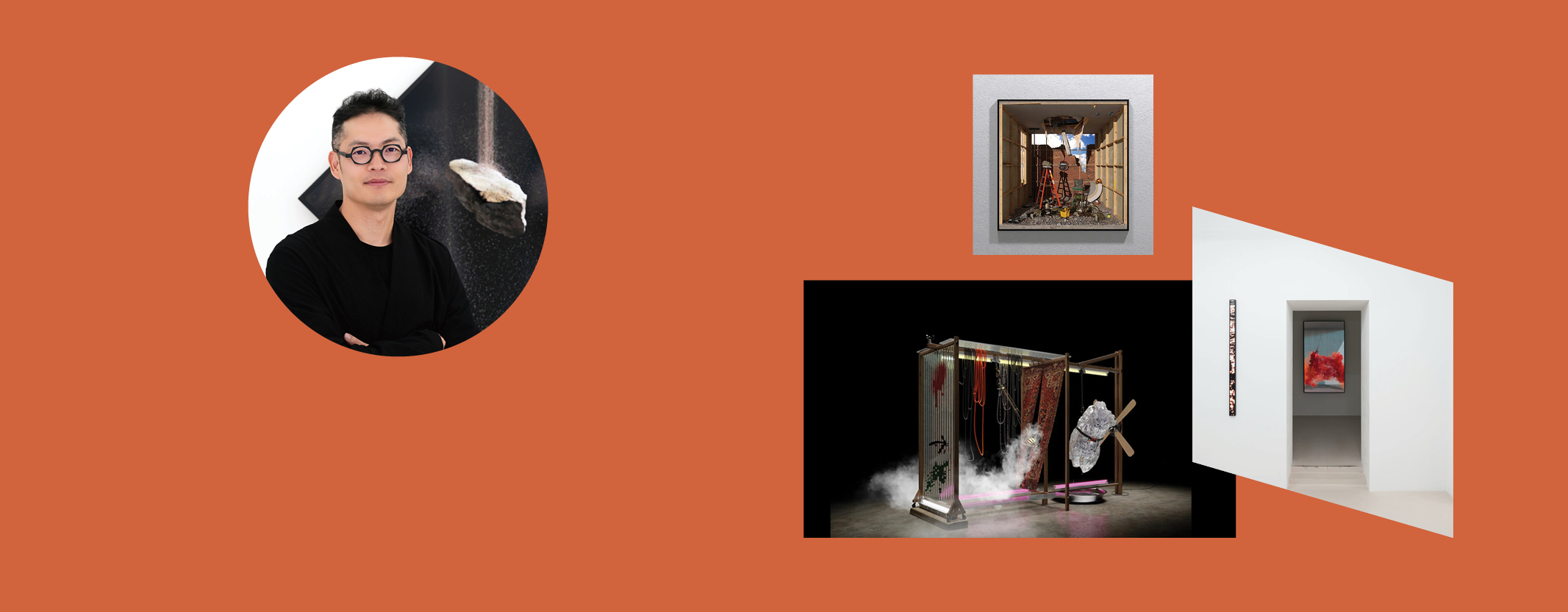
Jaehun Park is a digital sculptor, animator, and simulator who primarily uses 3D simulation as a medium within virtual digital spaces. Through sculptures and landscapes constructed in these spaces, he reveals cross-sections of social, economic, political, and cultural realities, reflecting on the impact of humanity’s endless desires on Earth’s ecosystems.

Park uses point clouds and photogrammetry to transform real-world objects into 3D data. He creates some of these assets himself while collecting ready-made data produced by game developers, which he then processes, deconstructs, and recombines before placing it within virtual spaces. The resulting assemblages reveal how all systems of order are reshaped and subordinated under hypercapitalism. By juxtaposing spectacular scenes of capitalist euphoria with apocalyptic landscapes of destruction brought about by human desire, Park suggests the tragedy underlying such spectacles.

In Park’s work, the virtual world is not a space that replaces reality but a mirror that reflects both its surface and its underlying structures. Precisely simulated physical phenomena governed by algorithms combine with objects juxtaposed without any apparent logic, transforming everyday spaces into surreal landscapes. These objects function as religious and capitalist allegories, through which Park presents a kind of self-portrait reflecting human desire and the contemporary era.

Solo Exhibitions (Brief)

Jaehun Park has held solo exhibitions including 《Overheated Windmill》 (Grote Kerk Alkmaar, Alkmaar, the Netherlands, 2026), 《POLYGON PILGRIMS》 (WWNN, Seoul, 2026), and 《Derivative Landscape》 (Sungkok Art Museum, Seoul, 2023).

Group Exhibitions (Brief)

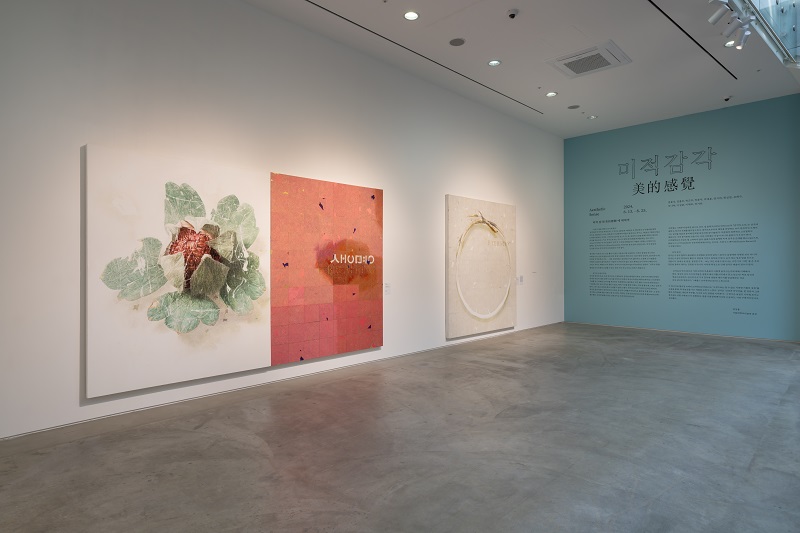
Park has also participated in numerous group exhibitions, including 《Shifting Reality》 (Bradwolff & Partners, Amsterdam, 2025), 《Rolling Eyes : Proposals for Media Façade》 (Alternative Space LOOP, Seoul, 2024), 《Aesthetic Sense (美的感覺)》 (Seoul National University Museum of Art, Seoul, 2024), 2023 Beijing Biennale 《Earth Heat Flow: the Visitor Who Returns to Solar Time》 (Beijing, 2023), and 《Art and Peace: Let us begin again from zero o’clcok》 (Ulsan Art Museum, Ulsan, 2022).

Collections (Selected)

Park’s works are held in numerous collections, including those of the Ministry of Foreign Affairs of the Netherlands, the Royal House of the Netherlands Collection, the Luc Tuymans & Carla Arocha Collection, Ulsan Art Museum, LG Display, and Hyundai Motor Group.

Works of Art

3D Simulated World Revealing a Cross-Section of the Contemporary Era

Originality & Identity

Jaehun Park’s practice begins with reading the structures and desires of human society through the objects that humans have created. For Park, objects are not simply functional tools, but signs and forms of language in which an era, a civilization, and human desire are condensed. This perspective already appears clearly in Revolving Door(2019) and High Altar(2020).

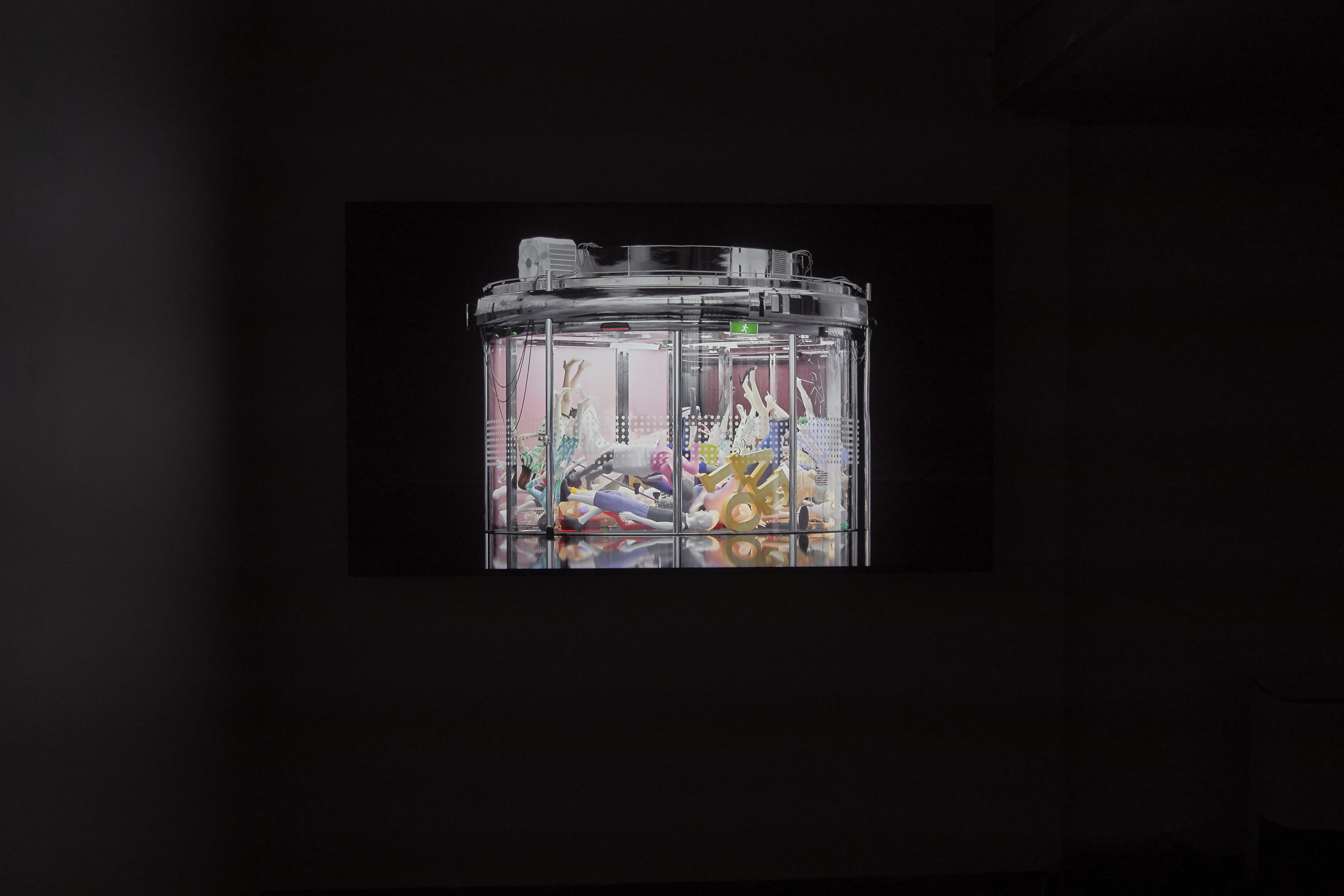
He precisely 3D-models devices closely tied to everyday consumption, such as a department store revolving door and cosmetics display counter, and combines them with mannequins, religious altars, and symbols of death, presenting consumption as a kind of ritual.

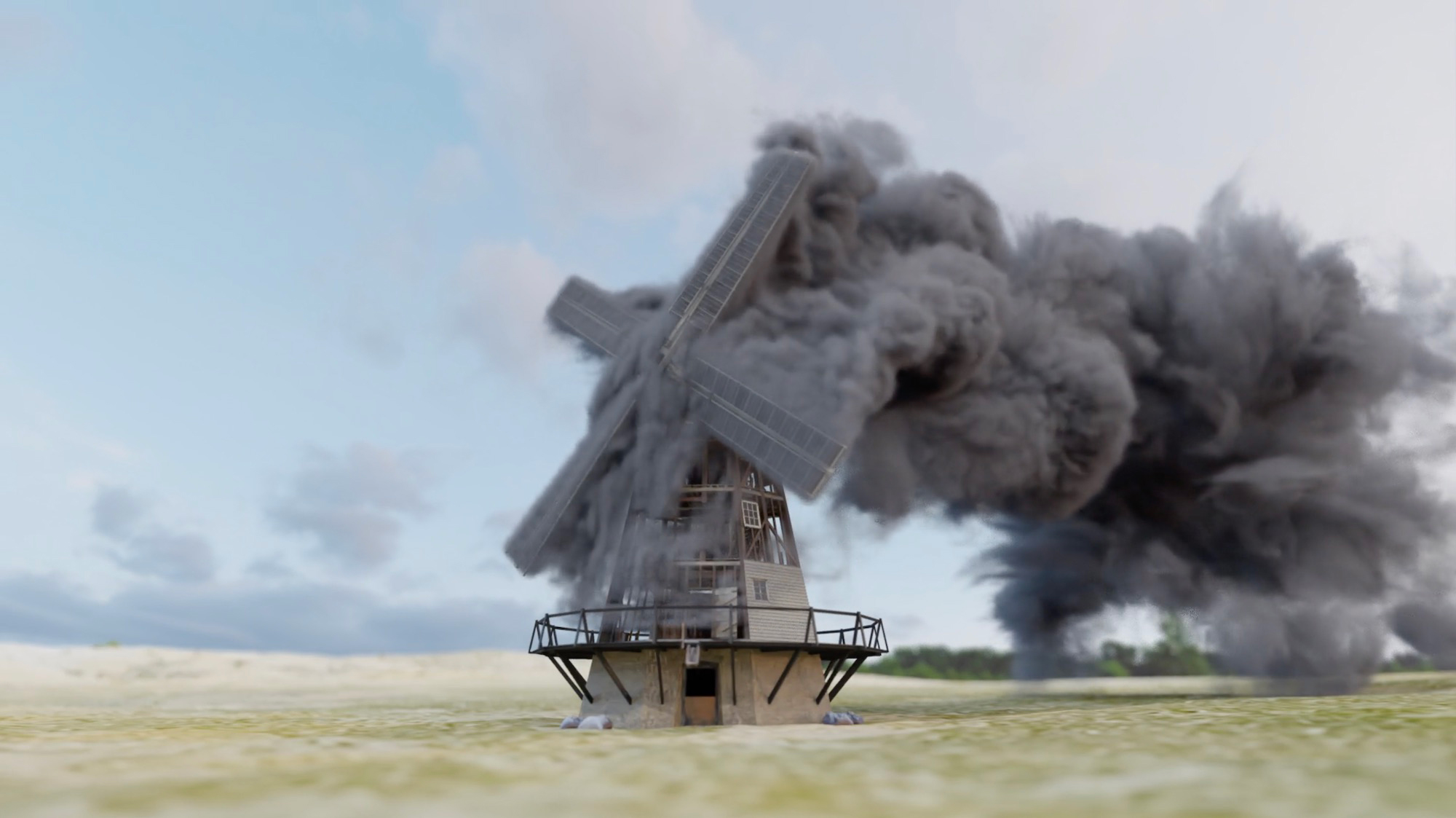
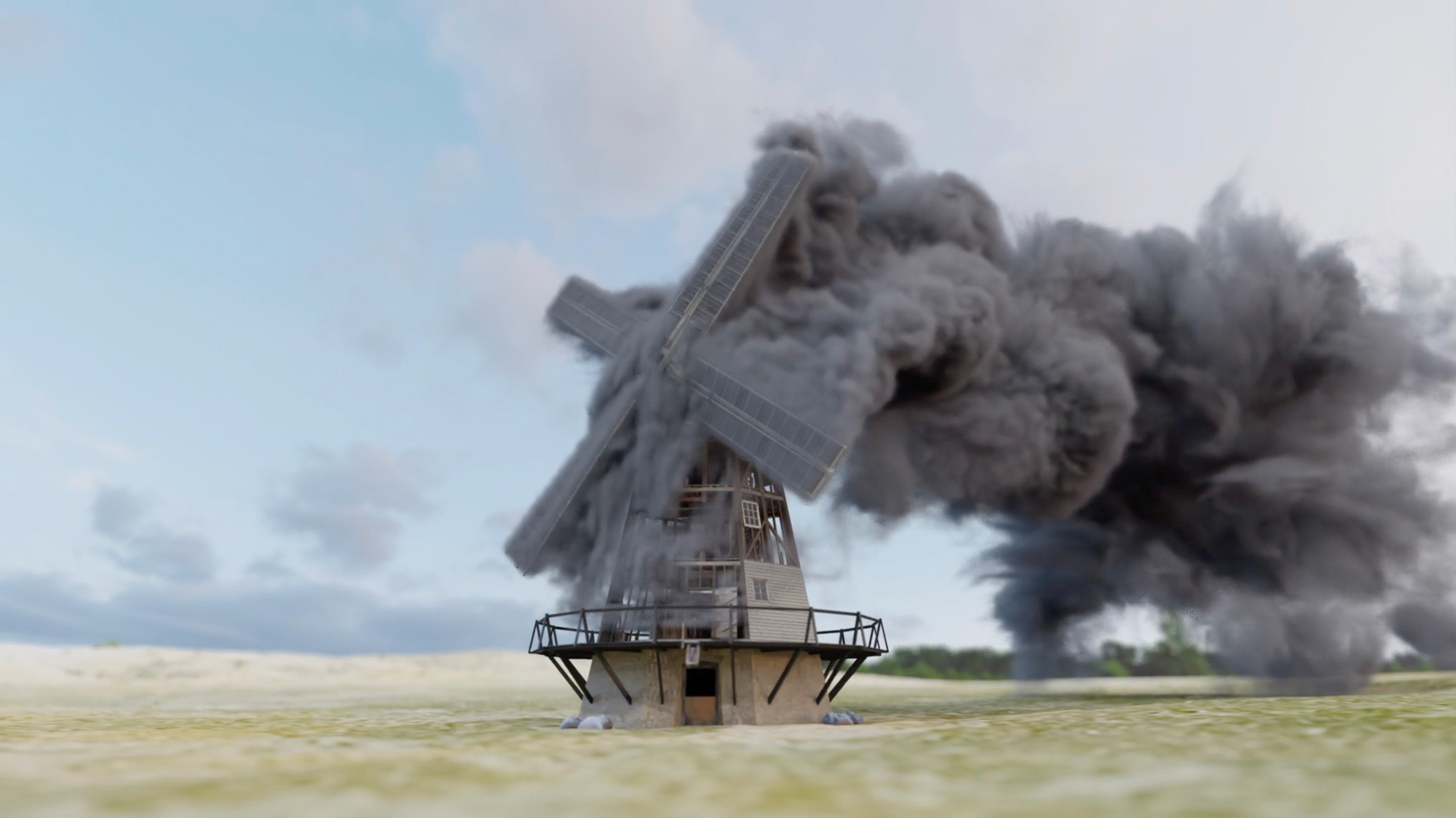
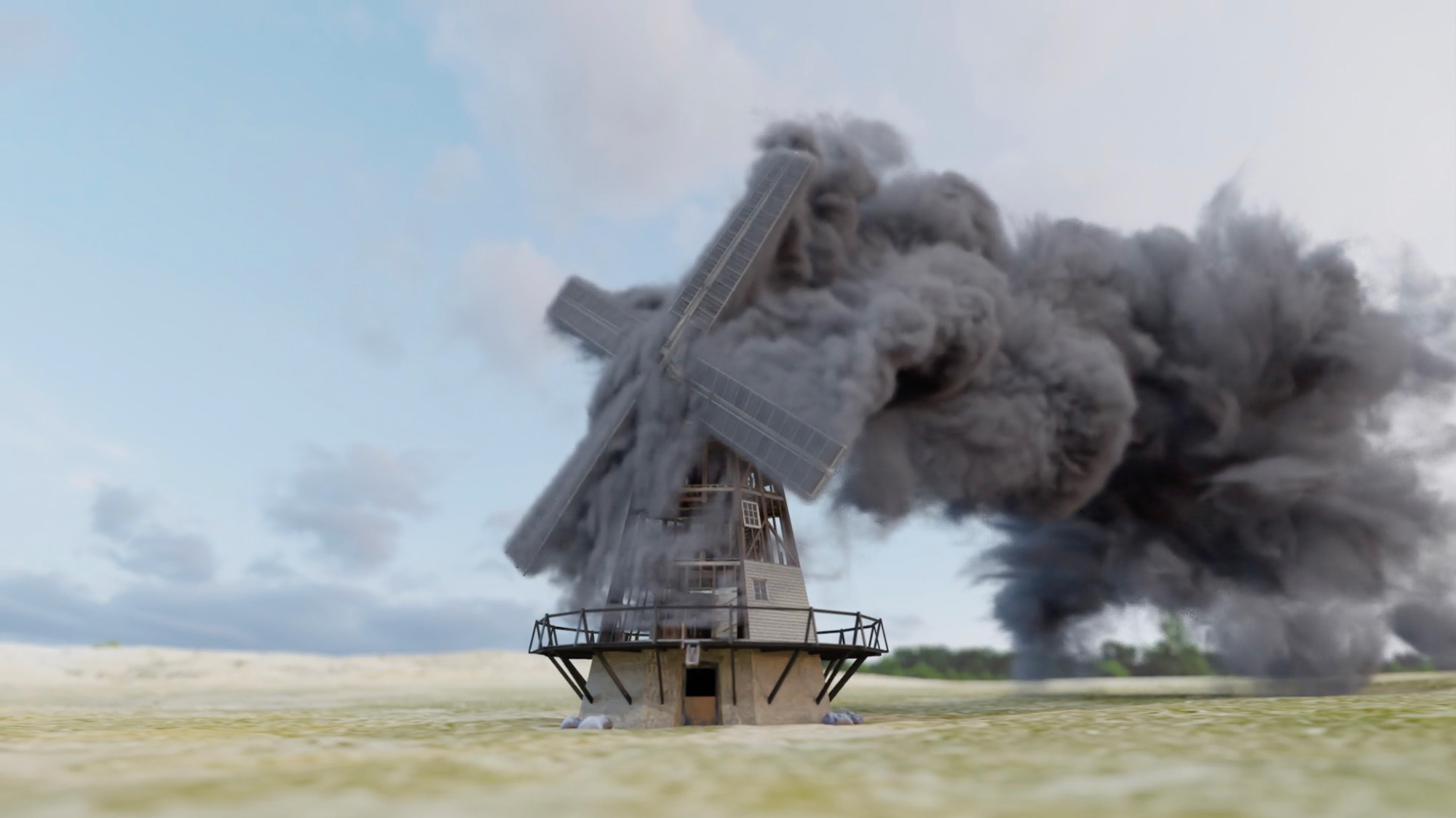
During the same period, Overheated Windmill(2020) overlays the Dutch windmill with histories of colonialism and capitalism, presenting the endlessly burning and rotating structure as an emblem of an overheated modern civilization. For Park, tracing the history of an object ultimately becomes a way of retracing the desires and systems of the humans who produced it.
 
This concern expanded into a broader worldview in 《Real-time Limbo》(Alternative Space LOOP, Seoul, 2021). Park describes a reality in which war, pandemics, poverty, and disaster occur at the same time as consumption and the accumulation of capital continue unabated as a “real-time limbo,” examining how capitalism operates as a system of belief and desire resembling religion.

Event Horizon
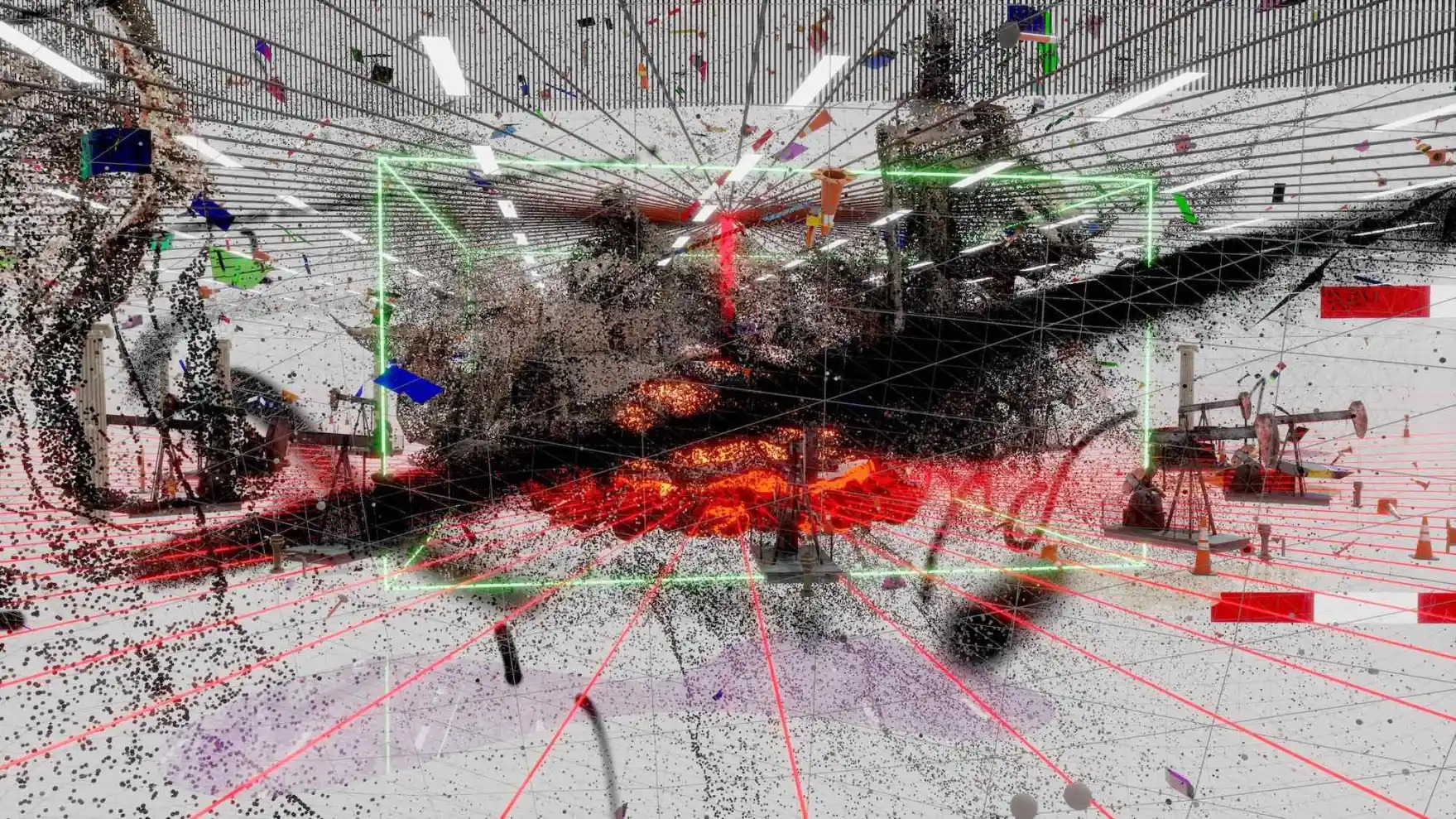
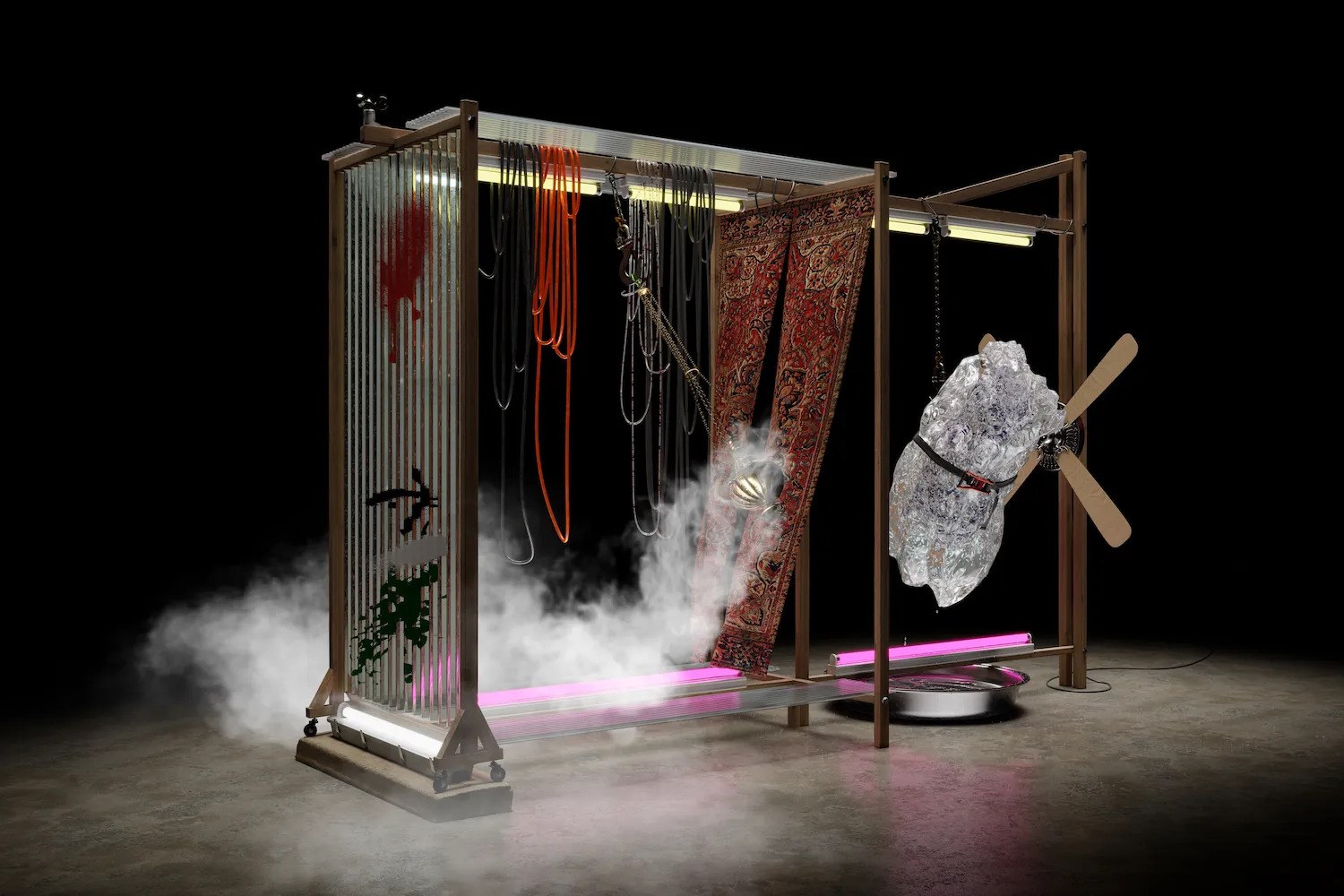
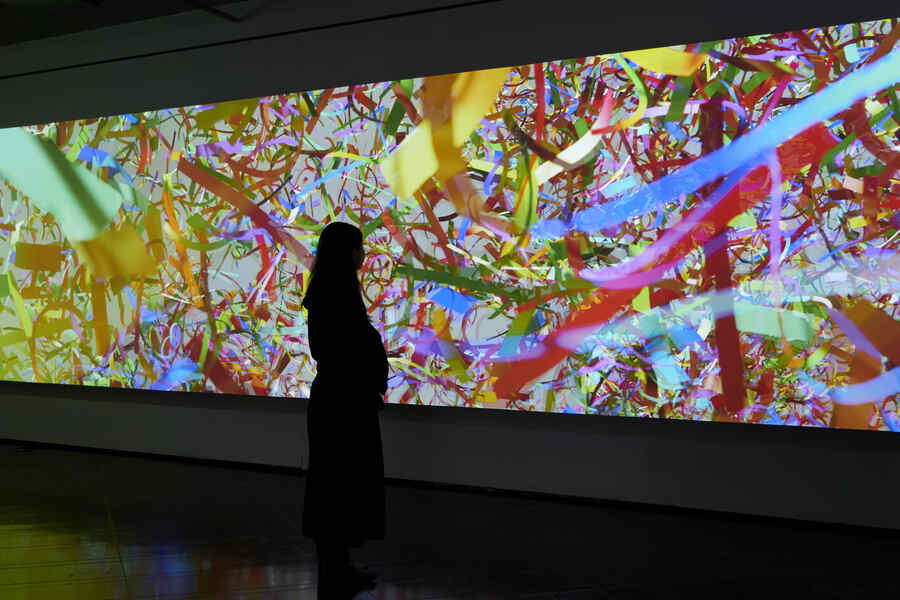
(2021) brings together the ruins of war in Syria and Palestine, the Fukushima nuclear power plant, CERN’s Large Hadron Collider, primordial stones, and celebratory confetti within a single moving image. In Ritual for the Night(2021), a religious censer, Middle Eastern carpets, medical hoses, broadcast cables, and footage of war become entangled.

Events and objects originally separated by geography and time appear simultaneously within virtual space, revealing capital, technology, war, and consumption not as isolated incidents but as interconnected parts of a single civilizational structure.
 
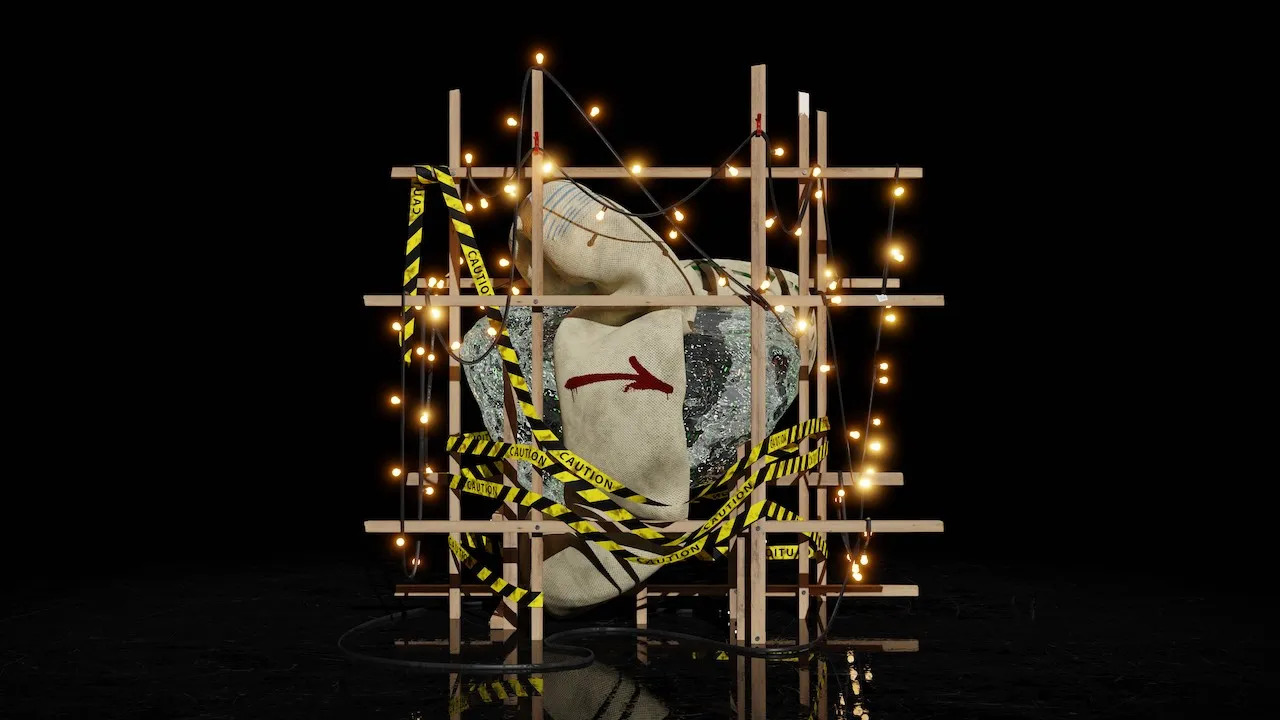
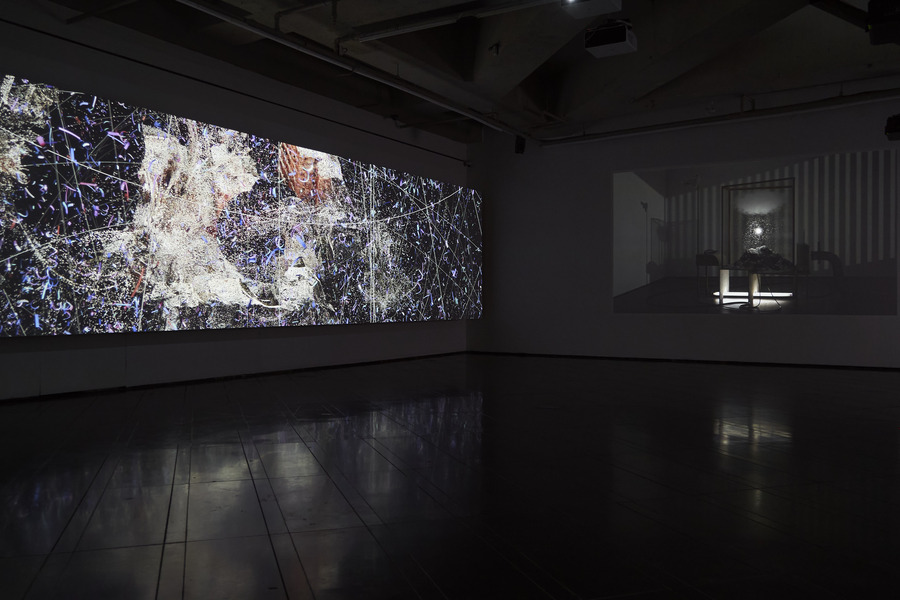
Park’s interests subsequently broaden from the structures of capitalism toward the ways humans have possessed and transformed nature and the world. Ritual for the Iceberg(2022) digitally preserves a glacier that is physically melting away by migrating it into virtual space through 3D scanning, addressing the paradox of humans using technology to preserve the nature they themselves have damaged.

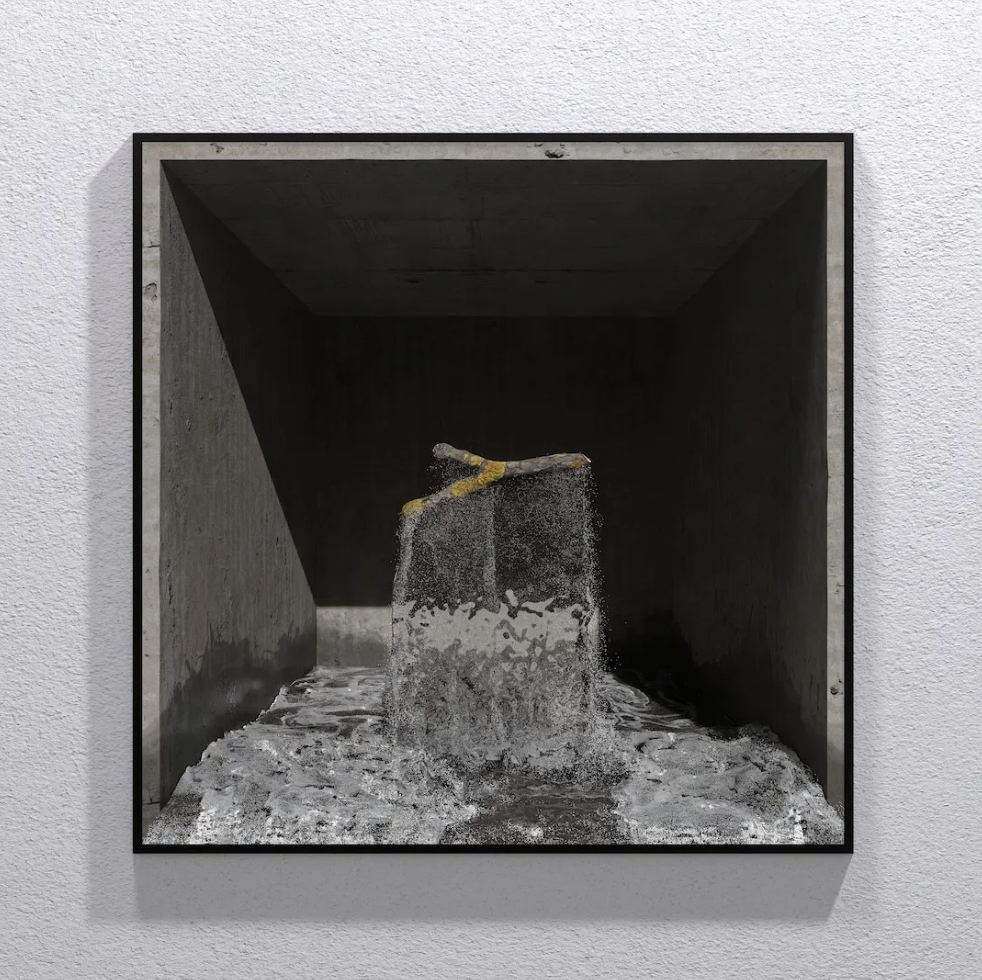
Highway Epigram(2022) combines the ruins of the war in Ukraine, the Nord Stream gas pipeline, oil-related machinery, and police equipment with the image of a highway, portraying a desire for growth and speed that appears to lead toward catastrophe. In Twig Room(2023), a branch produces an impossible waterfall inside a gray concrete chamber, presenting the coexistence of industrial civilization and nature through a more compressed scene.

From this period onward, Park’s work gradually moves beyond offering capitalism as a direct target of criticism and instead observes the contradictions of human civilization through scenes in which objects, nature, and technology become entangled.
 
The recent exhibition 《POLYGON PILGRIMS》(WWNN, Seoul, 2026) shifts these questions toward the conditions of existence within virtual space itself. In a world composed of point clouds, polygons, pixels and voxels, vectors and coordinates, humans no longer occupy the center but appear as “pilgrims” continually moving toward the unreachable origin of an absolute coordinate system.

Whereas objects once stood in for human desire in Park’s earlier works, the structures of the virtual world itself—coordinates, interfaces, movement, and deferral—now become metaphors for human life.

Movement toward a destination that can never be reached unsettles the modern understanding of time built around growth and progress, repositioning the human not as the subject at the center of the world but as one point among countless coordinates. His early interest in capital and consumption has thus developed into a broader inquiry into how humans lose their sense of direction and center within the very systems they have created.

Style & Contents

Although Park trained in painting, he developed an early interest in installation and sculpture using readymade objects and industrial materials. His childhood familiarity with construction sites, as well as his experiences with photography, interior design, and installation, contributed to his way of understanding objects as both structures and signs.

During the COVID-19 pandemic, the focus of his practice shifted from physical objects toward 3D simulation. He uses point clouds and photogrammetry to convert real-world objects into data, while also collecting 3D objects produced by game developers as “digital readymades,” which he dismantles and recombines. His simultaneous use of precisely measured physical objects and preexisting data from the game industry is distinctive in the way it treats records of reality and virtual readymades as materials operating on the same level.
 
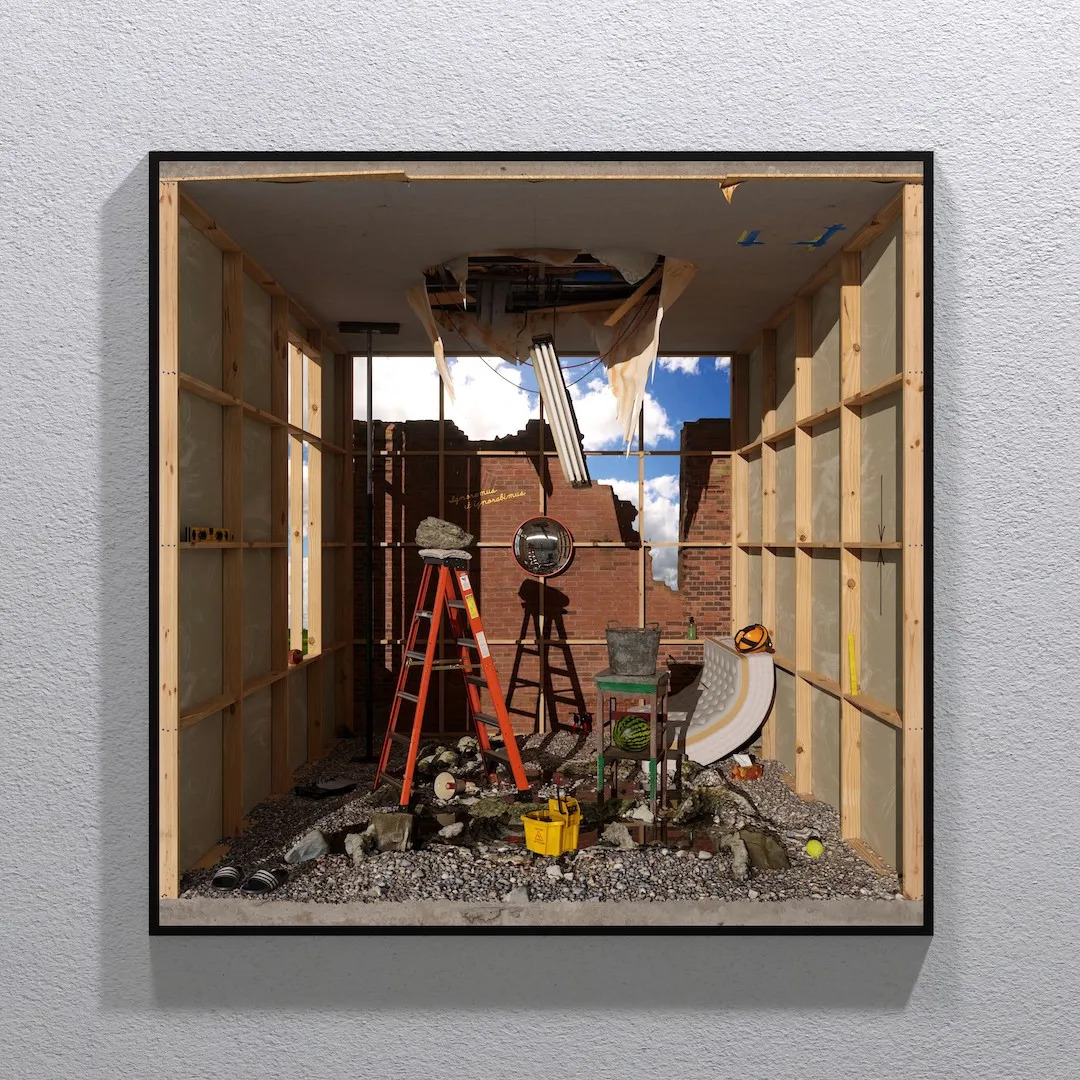
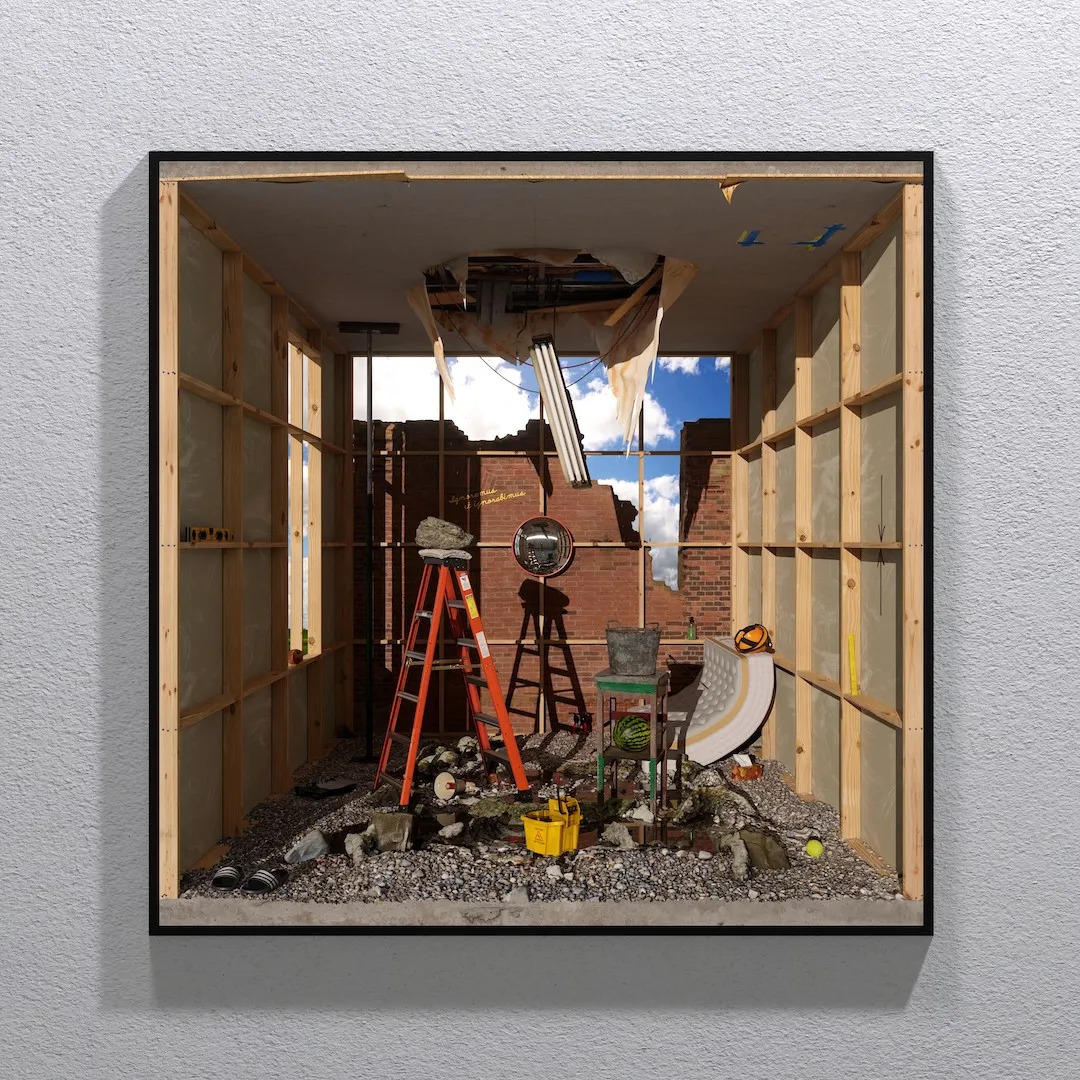
The physical laws of 3D simulation also serve as an important sculptural language. In Revolving Door, mannequins repeat movements calculated according to the speed and weight of the door and the forces of collision, while Omnishambles(2023) reconstructs a day inside a leaking room based on the composition of Jan van Eyck’s Arnolfini Portrait.

In Twig Room, water pours from a branch floating inside a concrete chamber, and an impossible event is made to operate convincingly through a digital physics engine. The particular tension of Park’s moving images emerges from this contradiction. The scenes themselves are surreal, yet the surfaces of objects, gravity, collisions, light, and the behavior of liquids are rendered with excessive precision. The resulting images resemble reality while remaining too artificial to be fully believed, exposing the artificiality and materiality of digital imagery at the same time.
 
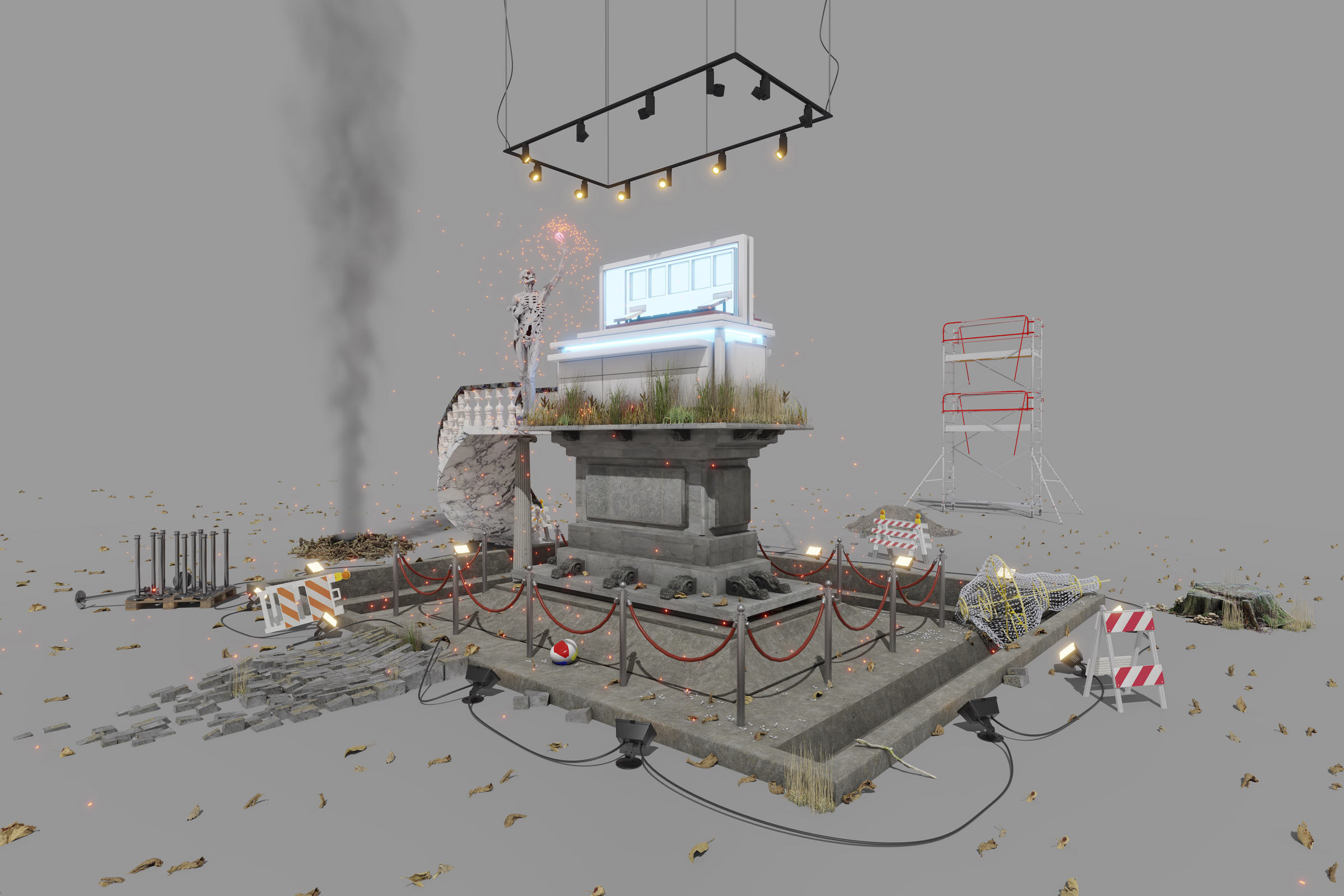
Park also chooses not to conceal the imperfections that arise in the pursuit of perfect realism. Information lost in 3D scanning, rendering errors, glitches created by overlapping surfaces, and artificial textures become traces demonstrating that technology cannot reproduce reality completely. In 《Derivative Landscape》(Sungkok Art Museum, Seoul, 2023), he combined contemporary objects such as Starlink satellites, gas pipelines, shipping containers, war debris, and nuclear weapons with imagery drawn from vanitas still lifes, arranging them like a monumental digital altar.

By contrast, works such as Stone and Sand(2023), Last Iceberg(2022), and the later ‘Bodem’ series expand his interests toward soil, mycelial networks, light, and life, suggesting that simulation can function not only as a space for staging capitalism and catastrophe but also as a means of experimenting with ecological relationships.
 
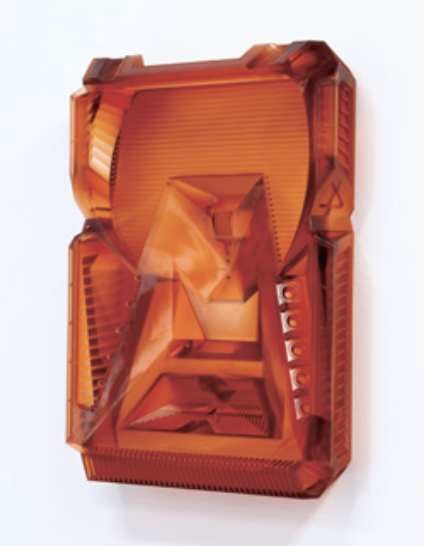
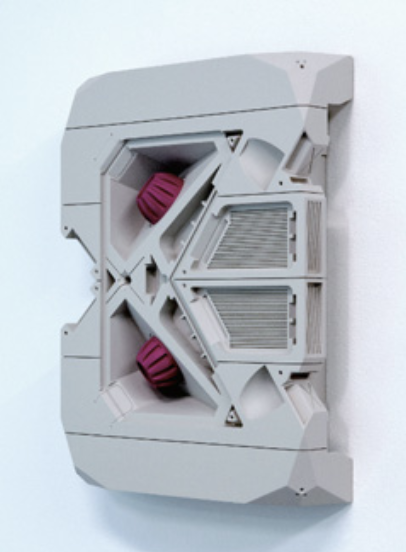
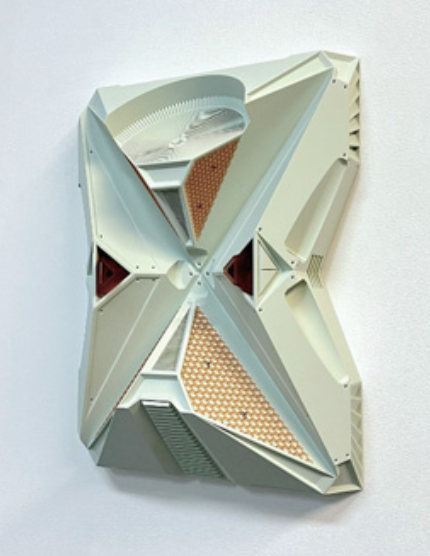
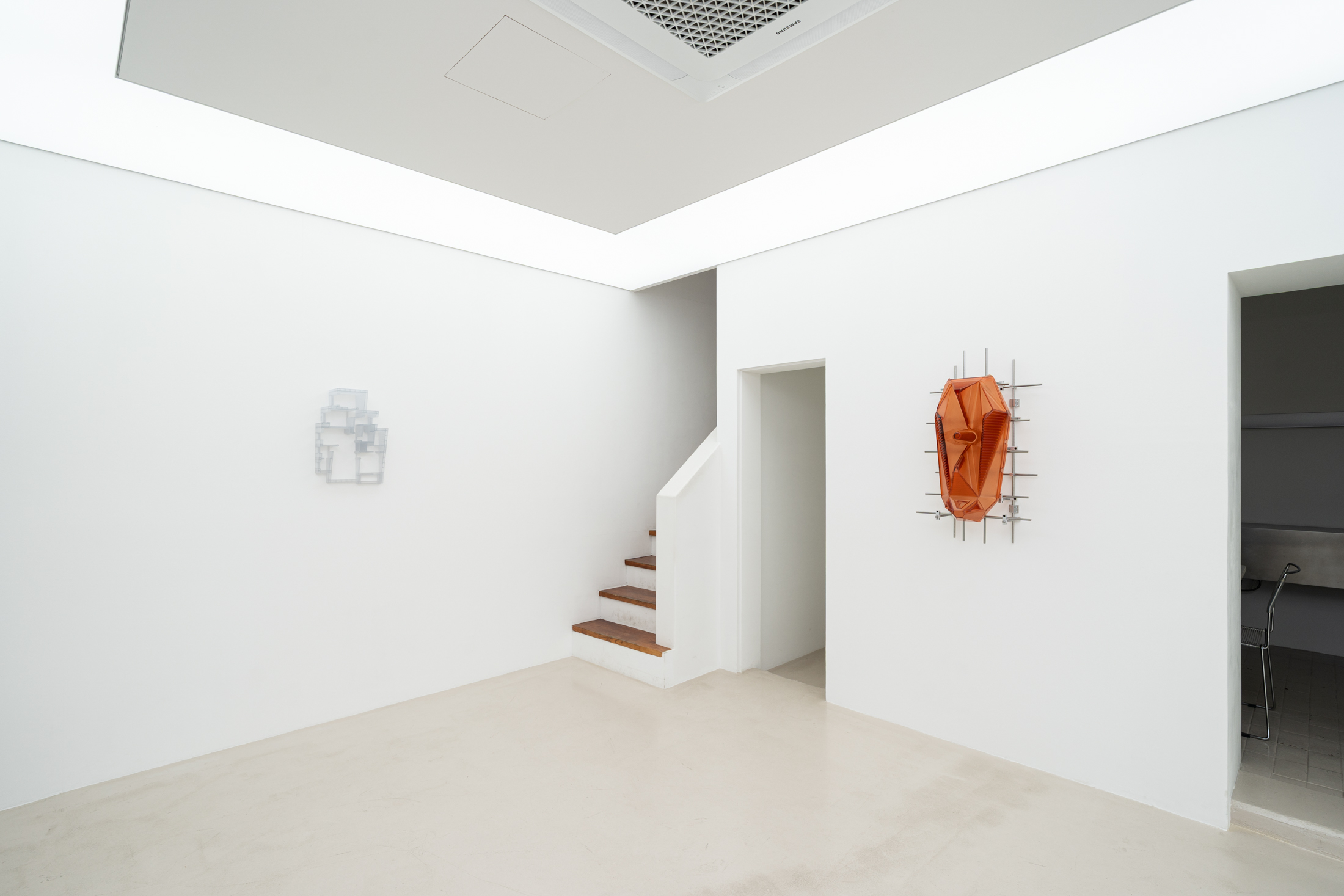
More recently, the sculptural language Park has developed in virtual space has begun to move back into physical objects. In 《Shifting Reality》(Bradwolff & Partners, Amsterdam, 2025), he presented 3D-printed sculptures based on digital models alongside his 3D simulations. Works such as Propaganda Machine(2025), Launch Pad(2025), Center Within(2025), and Astronaut Maneuvering Unit(2025) materialize forms derived from industrial design, ventilation structures, mechanical components, and geometric systems found in religious architecture and ornament through synthetic polymers.

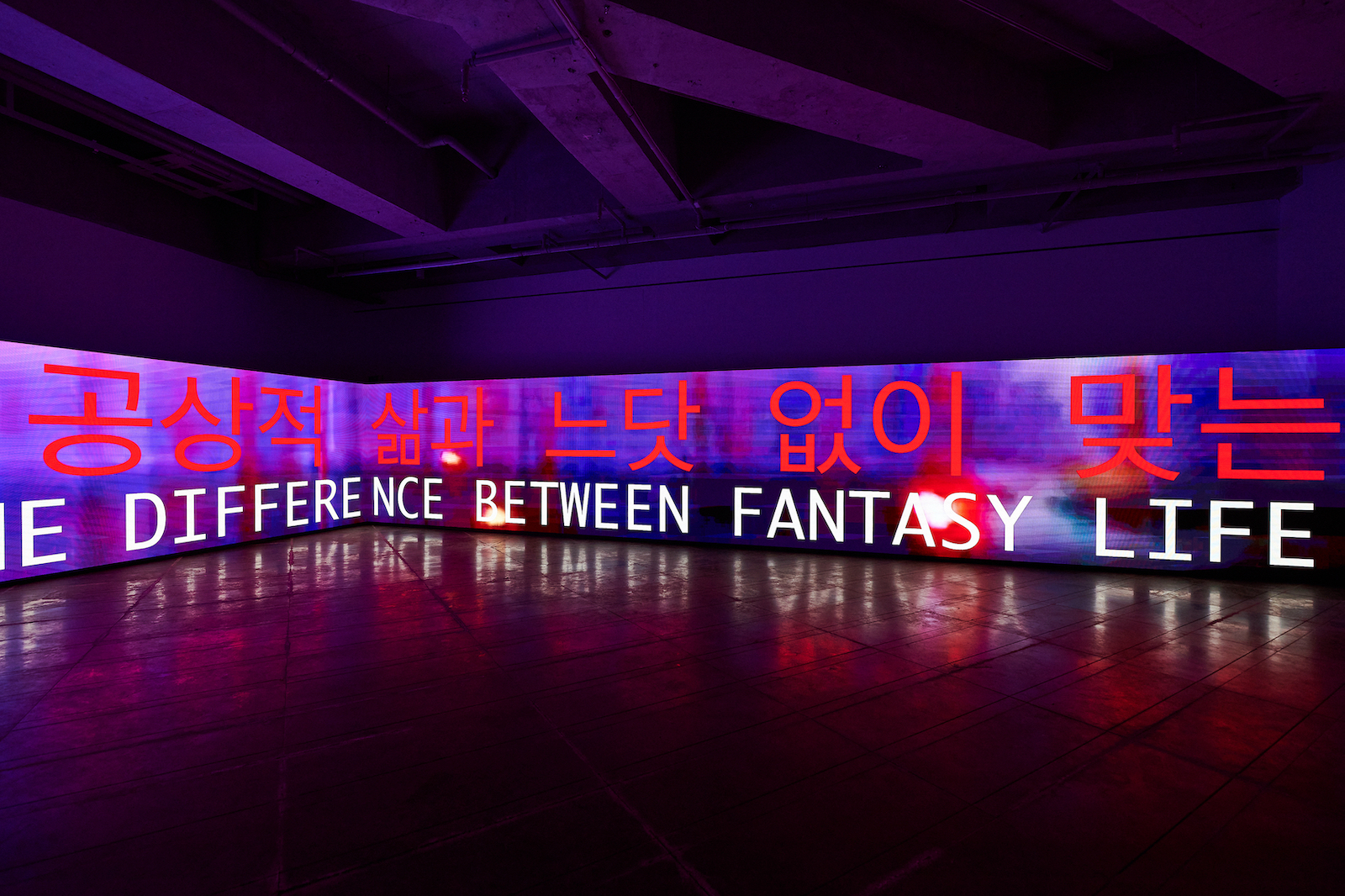
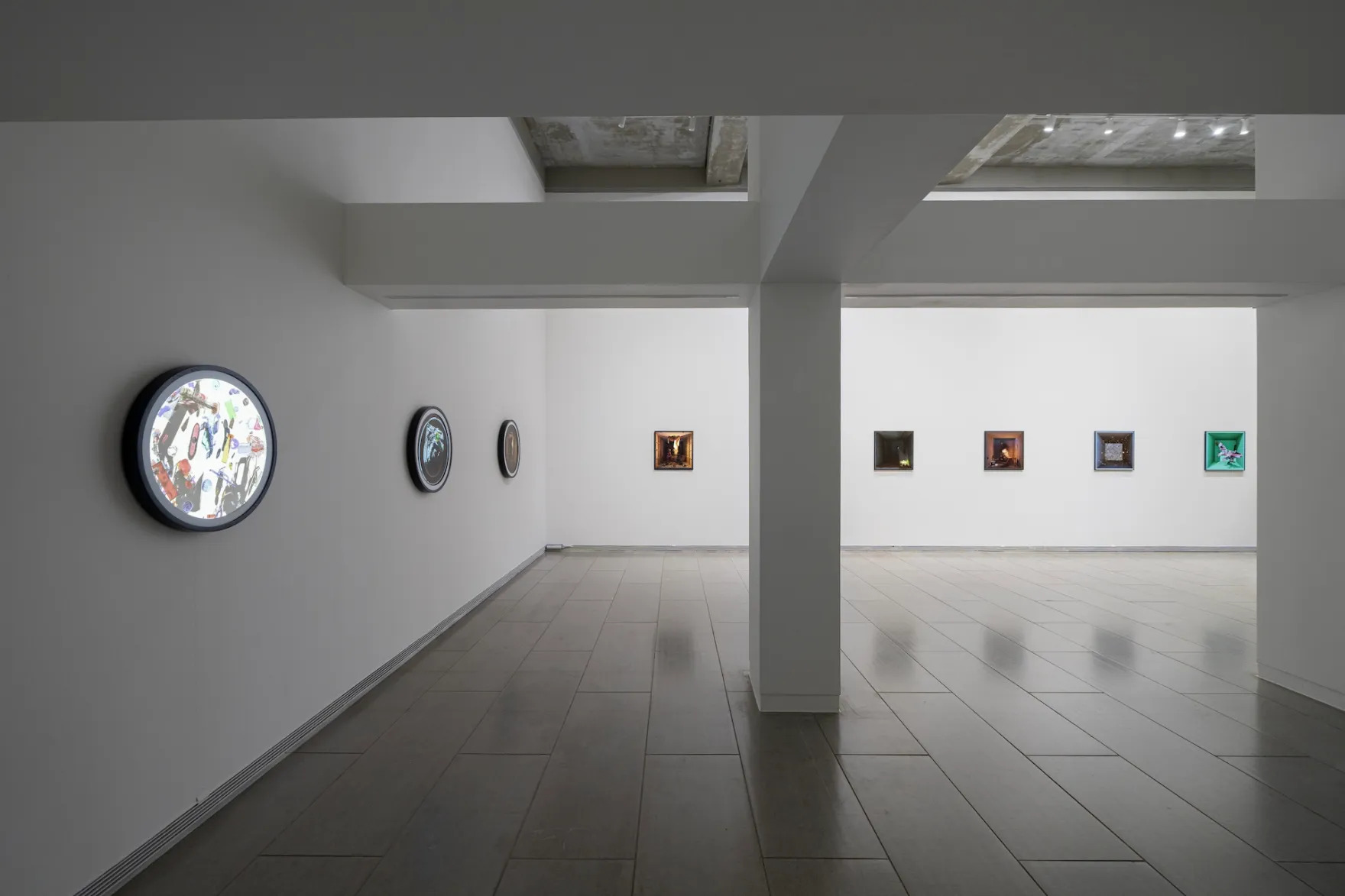
This process, in which forms generated in the digital world return as physical sculpture, reconnects his early installation practice with his more recent simulations. His use of rectangular, square, and circular LED screens likewise varies the frame itself, incorporating into the work not only what an image shows but also the perceptual structures through which humans view the world.

Topography & Continuity

One of the most distinctive aspects of Park’s practice is that he does not position the digital image as the opposite of reality. His virtual spaces are not fantasies designed to escape the physical world, but stages on which objects and events collected from reality can be rearranged more sharply. Department store revolving doors, Dutch windmills, glaciers, ruins of war, and gas pipelines migrate into virtual space as data, where they form new relationships with objects carrying entirely different histories and meanings.

As a result, his images are at once realistic and unfamiliar, beautifully composed yet unsettling. The encounter between forms drawn from art history—such as vanitas imagery and religious altars—and 3D technologies developed for the game, architecture, and film industries also produces this layered sense of time.
 
While many practices using 3D technologies foreground immersion or visual novelty, Park uses these tools as research instruments for examining, recording, and rearranging objects. To produce a work, he investigates the history and function of specific objects along with their political and economic contexts, precisely measures them or searches for open-source data, and connects these materials to real events and art-historical imagery.

The objects in his scenes therefore operate less as decorative 3D assets than as words forming a sentence. The windmill in Overheated Windmill, the pipeline and highway in Highway Epigram, and the ice in Ritual for the Iceberg each carry specific histories and realities, distinguishing his simulations from a more general form of digital surrealism.
 
The direction of his practice has also begun to form a circular structure rather than stopping at the migration of physical objects into digital space. Having moved from painting to installation and sculpture, and then into 3D simulation, Park is now entering a phase in which forms constructed within virtual worlds are returned to physical reality through 3D printing and synthetic polymers.

At the same time, 《POLYGON PILGRIMS》 extends his sculptural language beyond individual objects toward the coordinates, vectors, and interfaces that constitute virtual space itself. A question that once centered on “what should be represented?” has increasingly become one of “how is the digital world constructed, and what position does the human occupy within it?” This development does not abandon his longstanding interest in objects, but expands it toward a consideration of the conditions that allow objects to exist in the first place.
 
Park studied painting at Seoul National University before receiving an MA in Artistic Research from the Royal Academy of Art, The Hague, and currently works between Amsterdam and Seoul.

His solo exhibitions include 《Derivative Landscape》 and 《Overheated Windmill》(Grote Kerk Alkmaar, Alkmaar, 2026), his first solo museum exhibition in the Netherlands, while his work has also been presented at the 2023 Beijing Biennale, Ulsan Art Museum, Seoul National University Museum of Art, and Alternative Space LOOP. His works are held in collections including the Ministry of Foreign Affairs of the Netherlands, the Royal House of the Netherlands Collection, Ulsan Art Museum, the Luc Tuymans & Carla Arocha Collection, and Hyundai Motor Group.

As his practice increasingly moves between translating physical objects into virtual environments and returning digital forms to matter, it retains considerable room to expand through the continual exchange between these two realms, extending the very methods through which human civilization can be recorded.

Works of Art

3D Simulated World Revealing a Cross-Section of the Contemporary Era

Articles

Exhibitions

Activities