Landscape - K-ARTIST

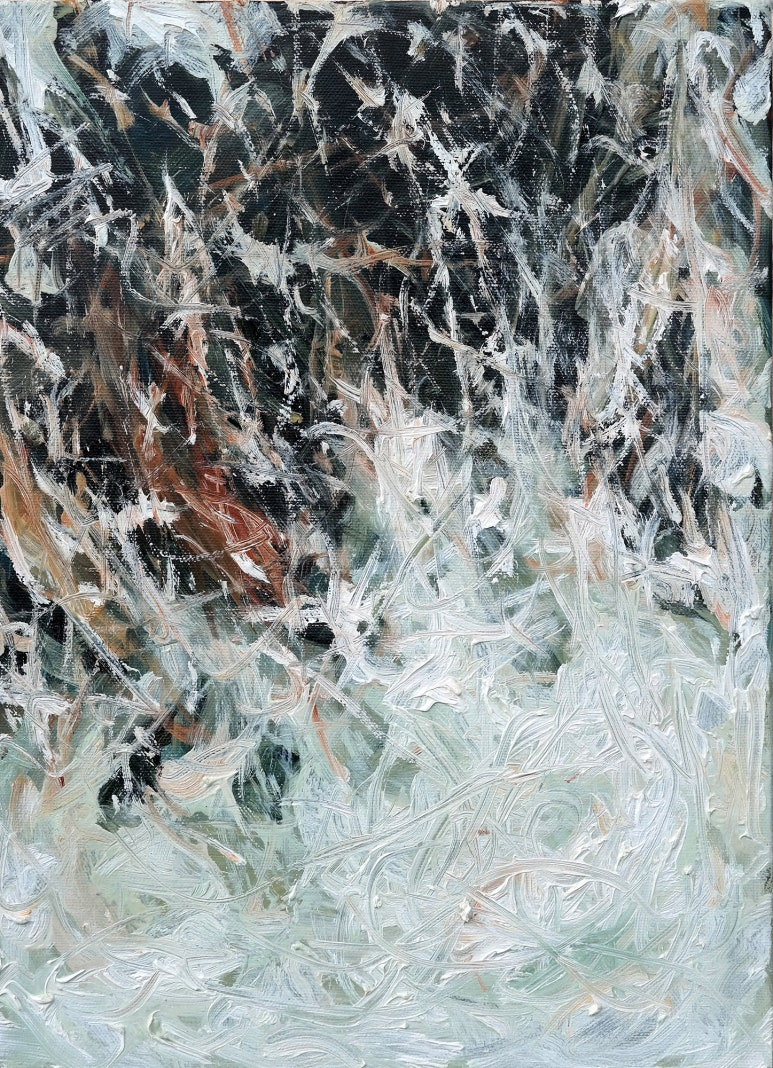
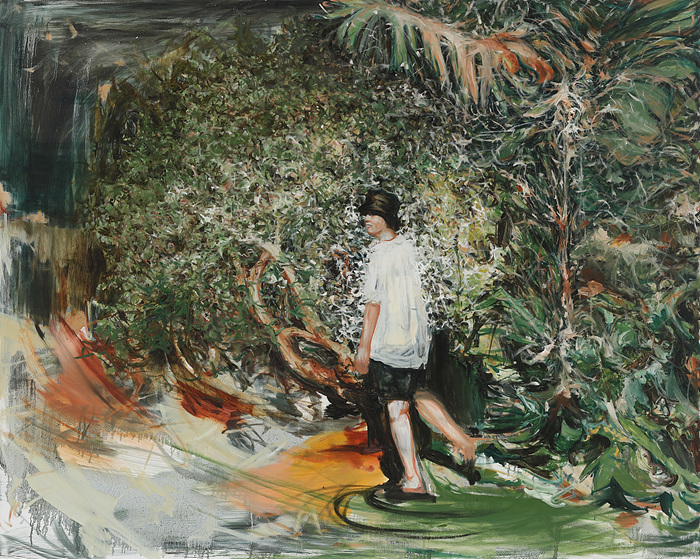
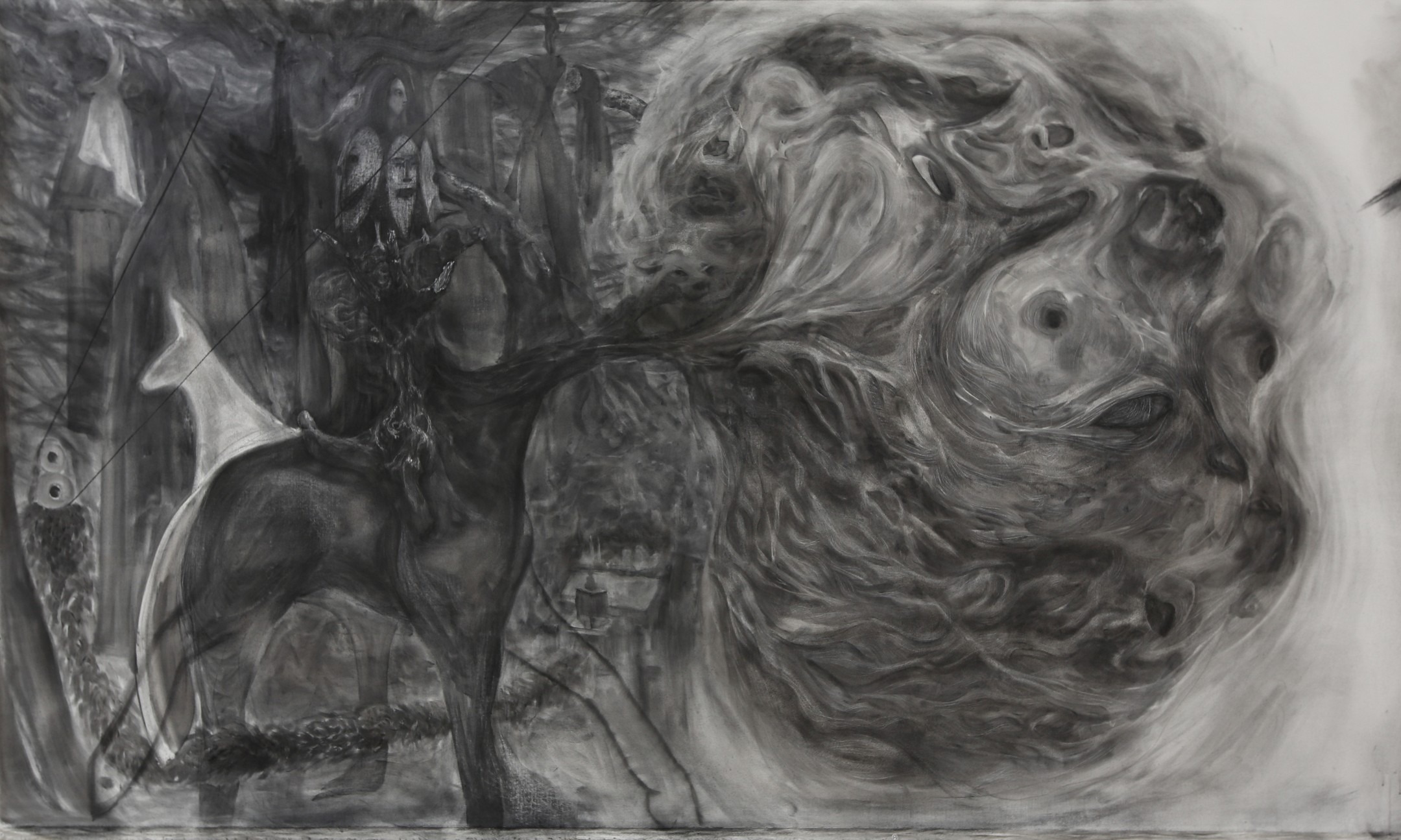
Landscape

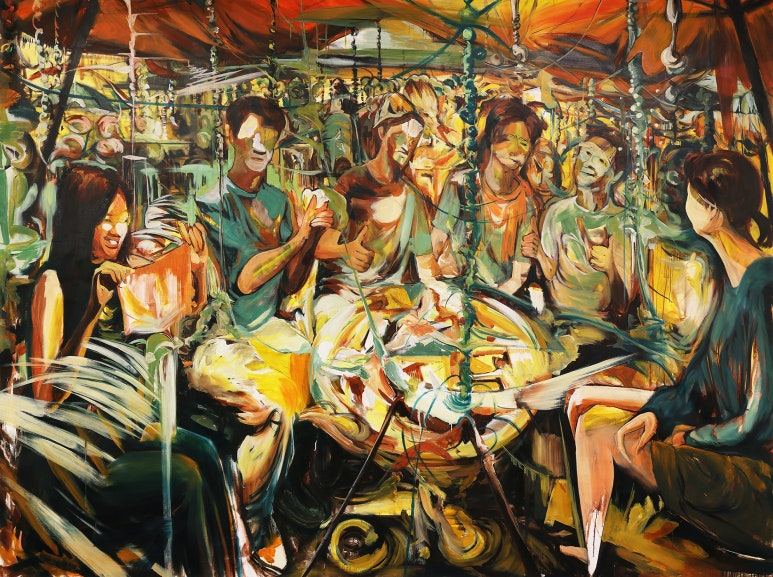
2016
Oil on canvas
227 x 870 cm
About The Work

Beom Jinyong depicts abandoned landscapes, unnamed plants, and people around him through painting, expressing scenes where memory and vitality, reality and dreams intersect.

His practice began with the habit of recording his dreams, and developed through the process of translating figures and events from his dreams into writing and painting, during which memories are transformed and new relationships emerge. For him, painting has thus become a way of examining how the world he experiences changes as it passes through memory and emotion.

His works often begin with images drawn from photographs or personal experiences, but he transforms their forms in the process of painting, embracing chance and spontaneity.

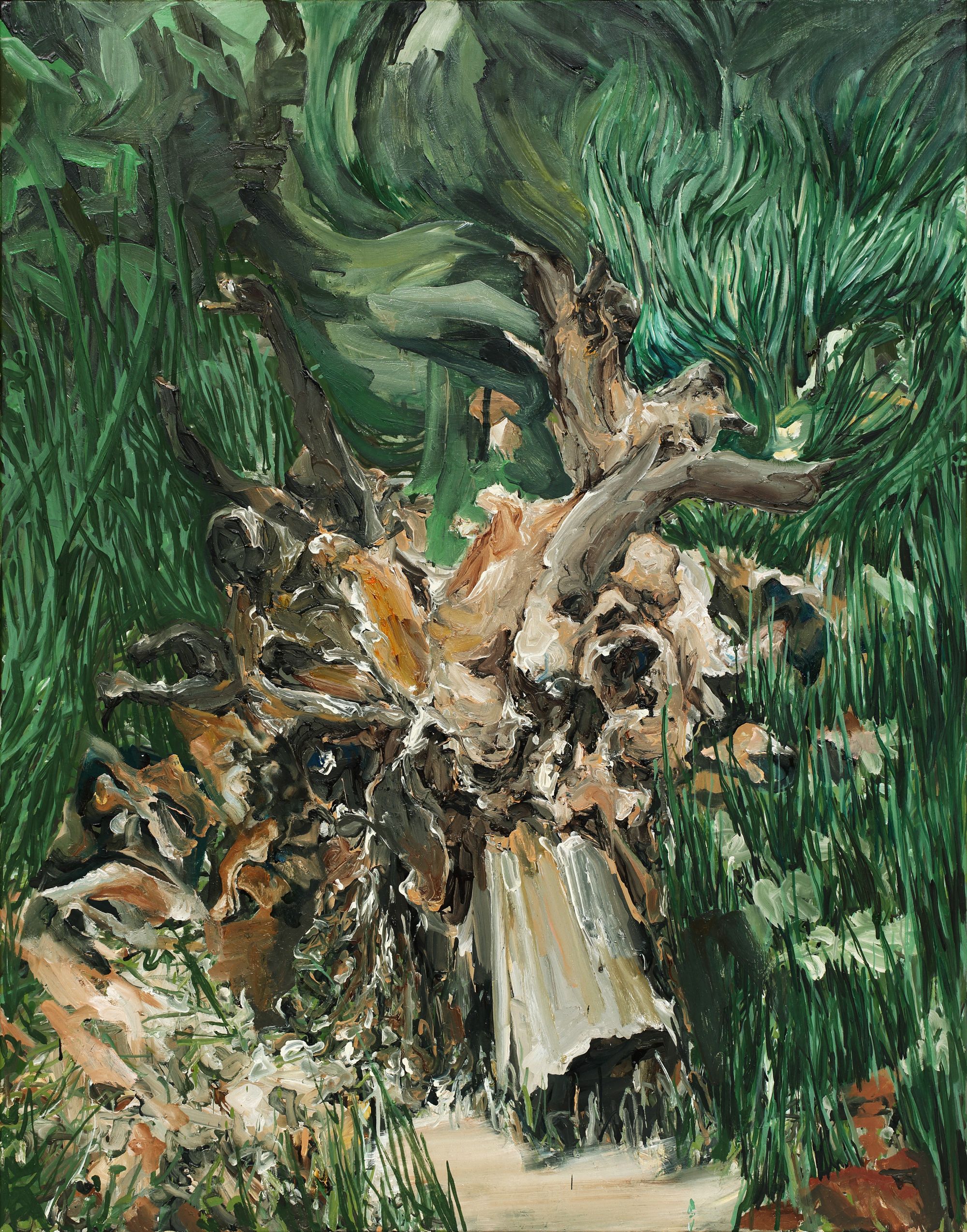
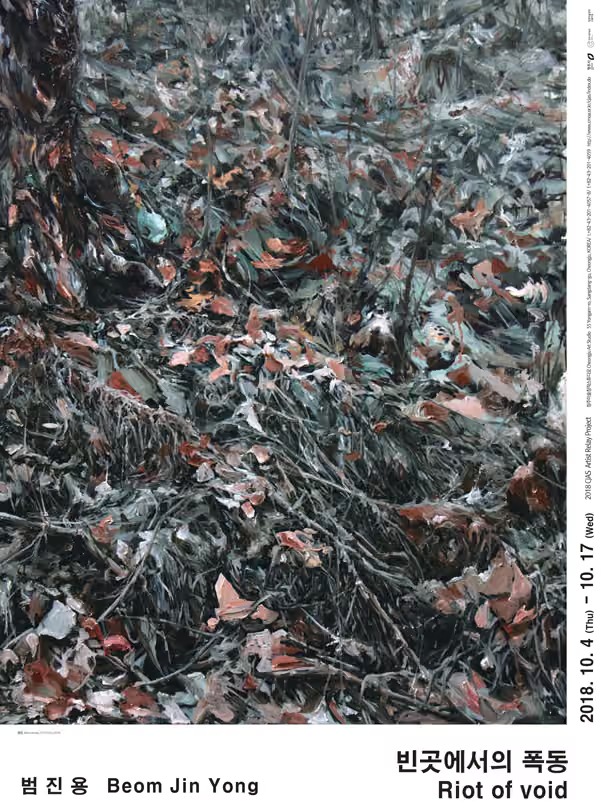
In his landscapes, unnamed grasses, forests, ponds, and snow-covered fields appear to waver and blur through dense brushstrokes, a limited palette, and thickly applied paint. While retaining recognizable forms of the landscape, he creates an impression of plants and spaces blending and moving into one another, reorganizing observed reality through a painterly sensibility.

In Beom Jinyong’s paintings, scenes from reality are partially obscured and, at times, made more vivid through the intervention of memory and emotion. Rather than simply recording the appearance of a moment he has experienced, he brings to the canvas the atmosphere and sense of life that remain long after the moment has passed.

Solo Exhibitions (Brief)

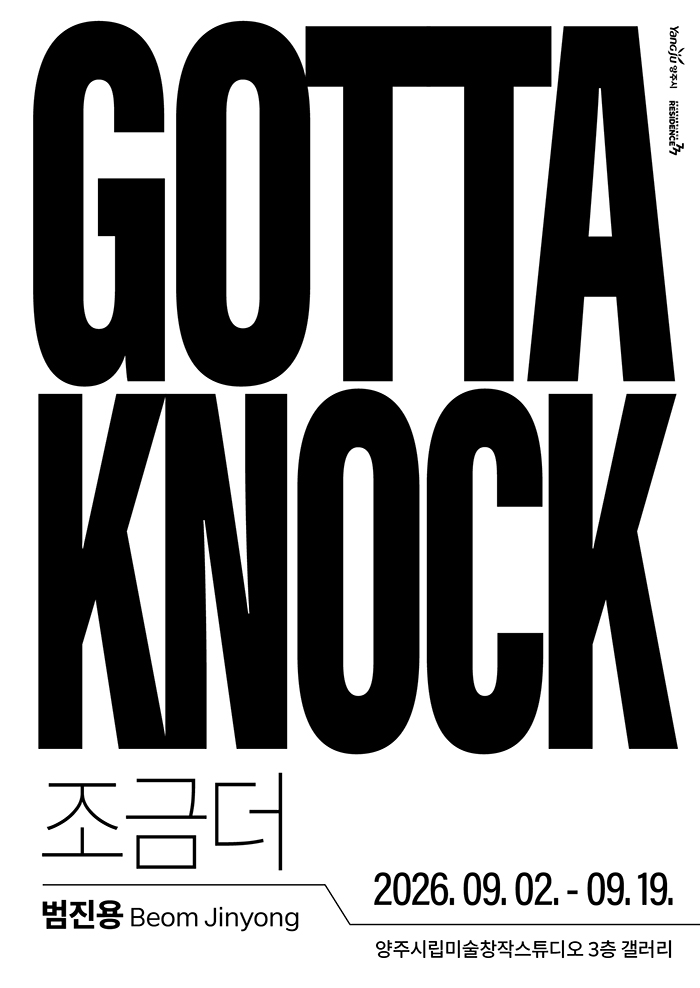
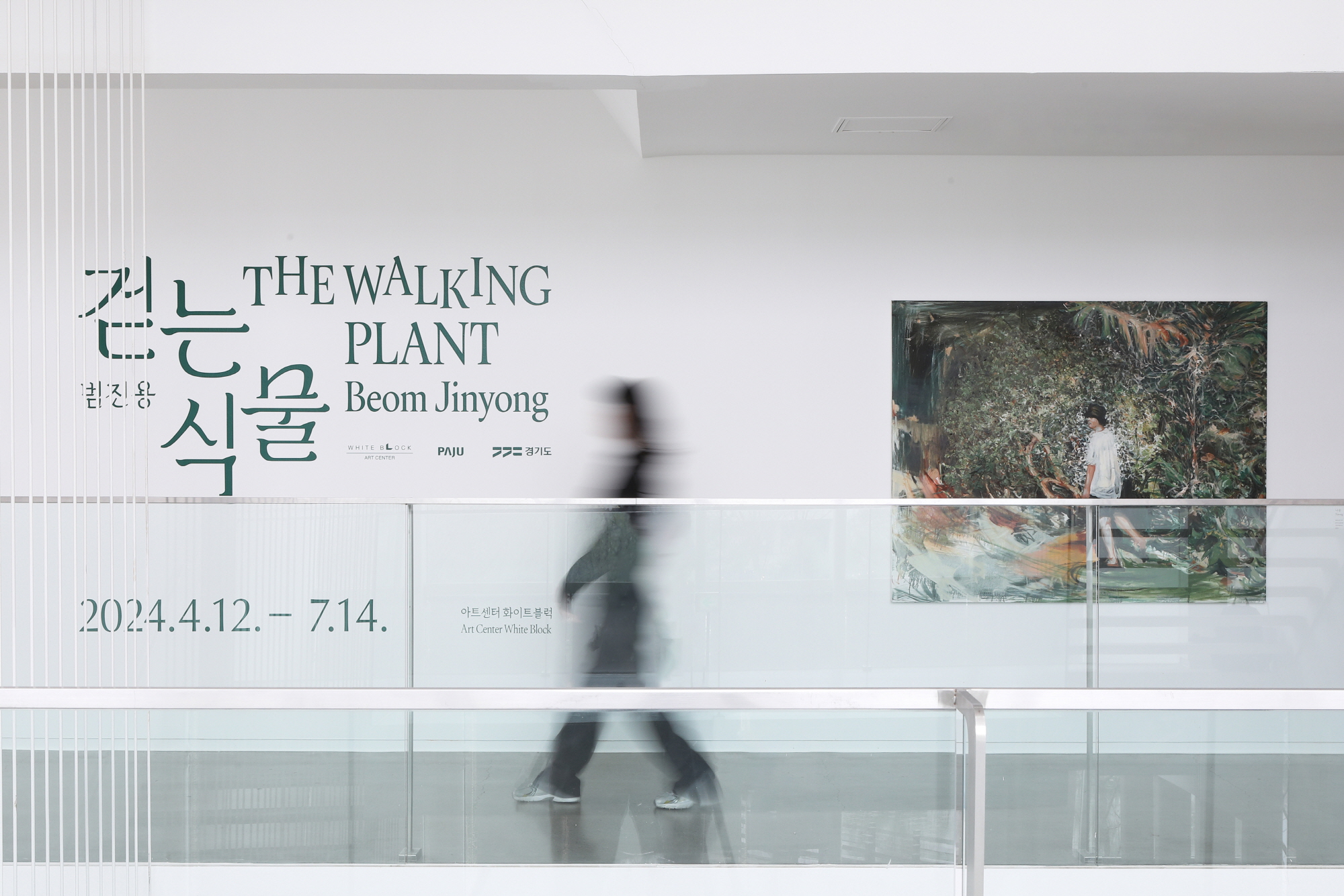
Beom Jinyong has held solo exhibitions at Yangju City Art Studio (2026), Art Center White Block (2024), Ligak Museum of Art (2019), and Cheongju Art Studio (2018), among others.

Group Exhibitions (Brief)

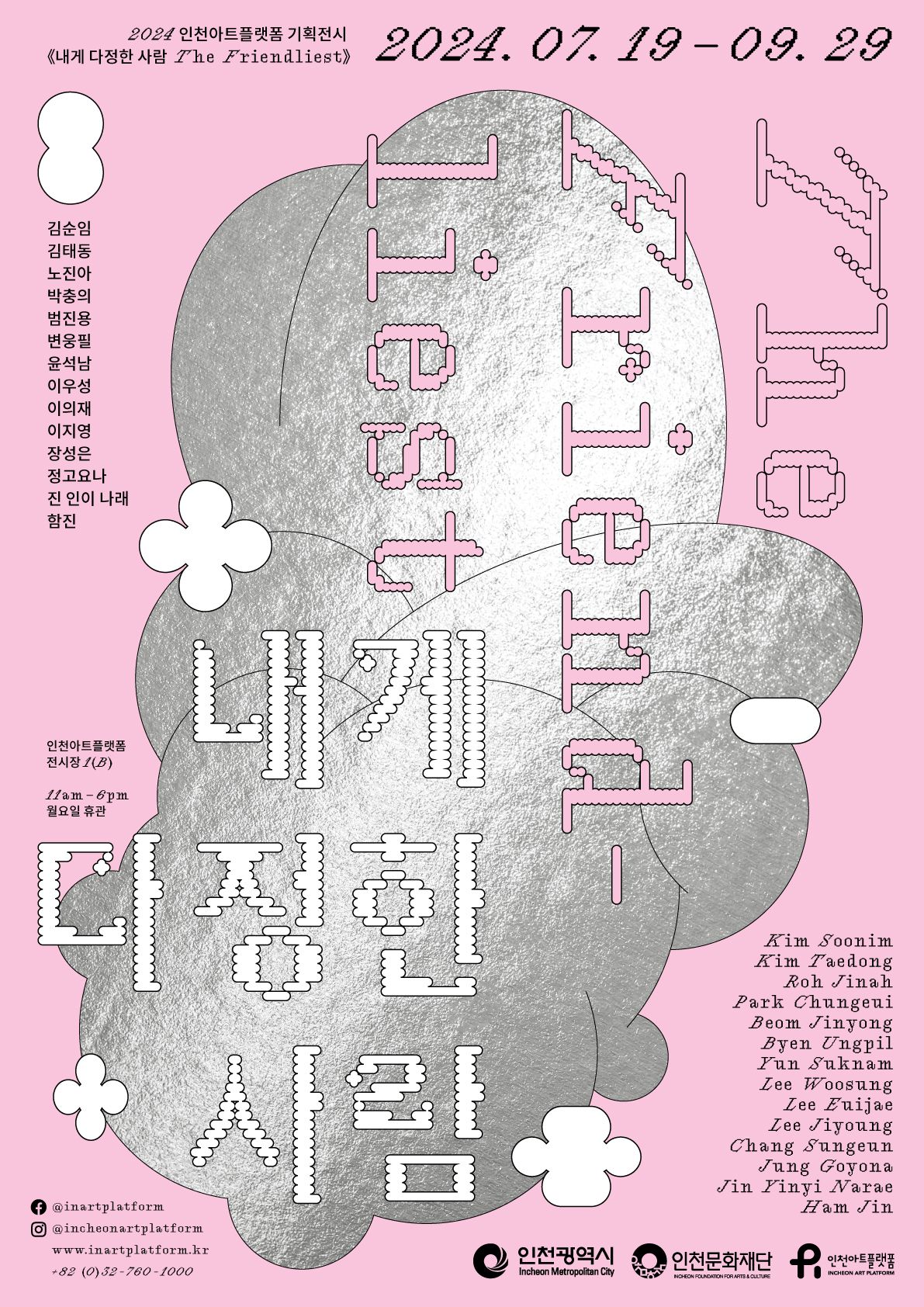
Beom Jinyong has participated in group exhibitions at Art Center White Block (2021), SPACE K Gwacheon (2018), Incheon Art Platform (2016–2017), Sejong Museum of Art and the Korean Cultural Centre India (2016), OCI Museum of Art (2015–2016), and Daegu Art Factory (2013), among others.

Awards (Selected)

Beom Jinyong received the 9th Seoul Digital University Art Award in 2019, was selected as an artist for the 38th JoongAng Fine Arts Prize in 2016, and received an Honorable Mention at the 4th Catholic Art Competition in 2015.

Residencies (Selected)

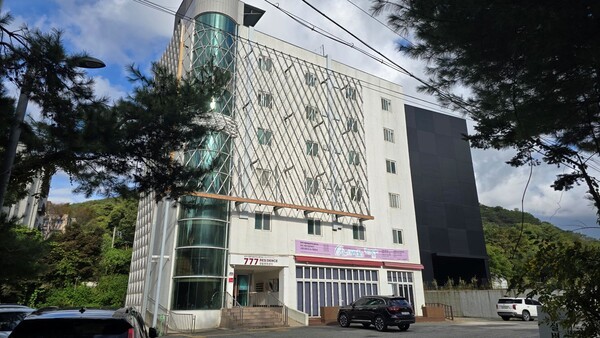
Beom Jinyong participated in the OCI Museum of Art Residency (2014–2015), Incheon Art Platform (2017), Cheongju Art Studio (2018), Studio White Block, Cheonan (2019–2020), SeMA Nanji Residency (2021), MMCA Residency Goyang (2023), and Yangju City Art Studio 777 Residency (2025–2026).

Collections (Selected)

Works by Beom Jinyong are held in the collections of the Incheon Foundation for Arts & Culture and Cheongju Museum of Art.

Works of Art

The Sensation of Life That Remains Through Memory and Emotion

Originality & Identity

Beom Jinyong’s practice began with the habit of recording his dreams. In the process of translating the figures and events he encountered in dreams into writing and then transforming them again into painting, the original memory is not preserved intact but is subtly altered each time, forming new relationships.

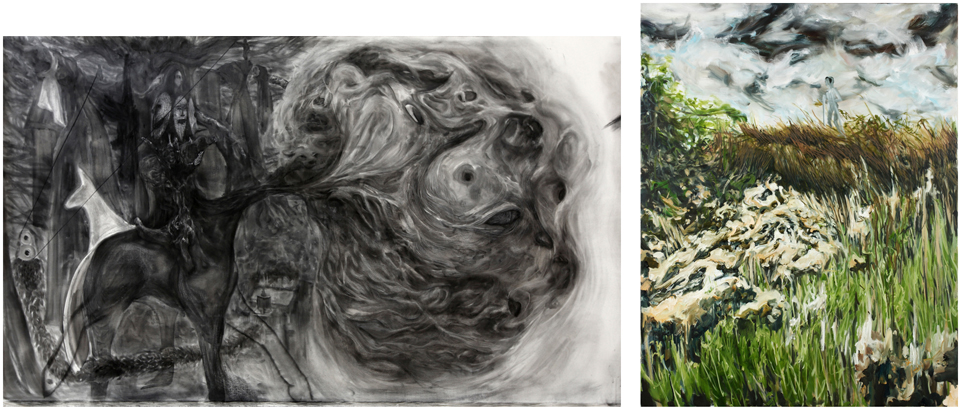
In his early ‘Dream Diary Recording’ series, reality and the unconscious, memory and imagination permeated one another to form open-ended narratives, while figures and objects from dreams were sometimes detached from their original contexts and reappeared as independent images.

This approach has continued throughout his subsequent practice, making painting for Beom a means of examining how the world he has experienced changes as it passes through memory and emotion, rather than a way of precisely reconstructing a particular event.

From late 2015 onward, his attention shifted toward abandoned places in the real world and the nameless grasses growing there. Plants that repeatedly grew and withered on neglected walking paths and at the margins of the city became subjects through which the artist sensed an intense vitality.

In the way these largely overlooked beings reemerged with each passing season, he discovered a movement of life that persists beyond control and intention. In 2024, art critic Sung-Ho KIM interpreted these landscapes and figures as “nameless” beings. In Beom’s practice, however, namelessness is less a form of anonymity that erases the subject than an attitude of looking again at ordinary presences that are easily passed by.

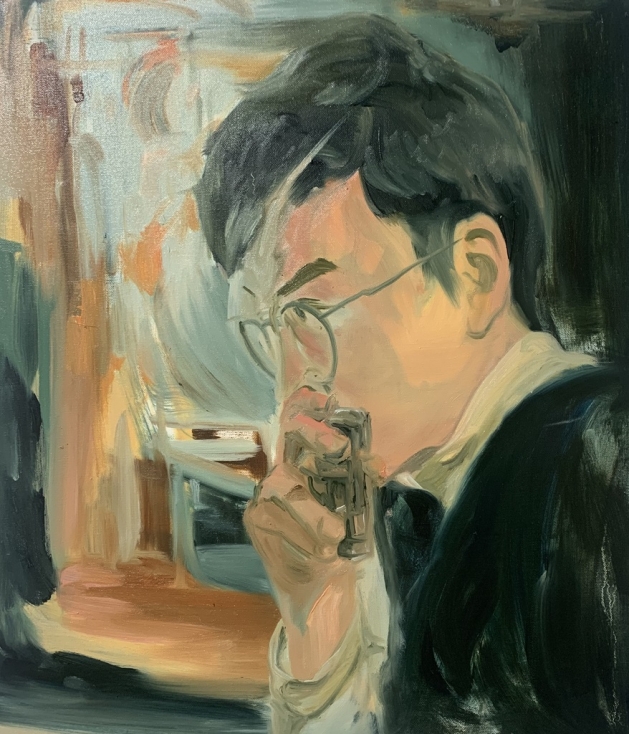
After 2019, figures gradually moved to the center of his practice alongside landscapes. Family members, acquaintances, and fellow artists within his immediate circle became his primary subjects, while his concerns expanded from vitality to memory, relationships, and a sense of absence.

Rather than images found online, he uses photographs of places he has actually passed through and people with whom he has spent time as starting points for his paintings. He does not, however, preserve the photographed moment exactly as it was. As details blurred by time intermingle with sensations that remain unusually vivid, lived experience is transformed into an image in which observation and memory, emotion and imagination overlap.

Although his subjects have shifted from unfamiliar figures encountered in dreams, to weeds in abandoned places, and then to people close to him, Beom has consistently attended to the sensations left behind by things that are easily overlooked or disappear. More recently, he has explained that he is less interested in the outward appearance of a figure or landscape than in the atmosphere that returns when he recalls the scene and in the “sense that it was alive.”

As memory and emotion intervene, some aspects of reality become blurred while others grow more vivid, and the scene is newly reconfigured through painting. Through this process, Beom seeks to convey not the outward appearance of a moment he experienced, but the atmosphere and the “sense that it was alive” that remain long afterward.

Style & Contents

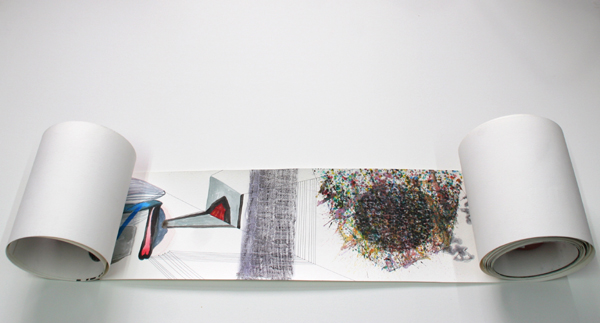
Beom Jinyong worked with drawing and acrylic in his early practice before adopting oil paint as his primary medium around 2013, while continuing to use pen and charcoal when necessary. In his early ‘Dream Diary Recording’ series, he visualized fragmented dream narratives by extending images and events across long sheets of paper or canvas.

As the scale of his paintings gradually increased, this approach expanded into large-scale landscapes composed of multiple connected canvases. In his oil paintings, Beom mixes and drags paint directly across the surface, combining rapid strokes with finely detailed brushwork within the same composition.

As the brush moves across the boundaries of objects, distinctions between figure and background, plant and space become loosened, while the movement of paint itself creates the rhythm of the image. Art critic Sung-Ho KIM has described these qualities as an “Expressionism of Neutrality,” in which restrained tonalities are combined with free and dynamic brushwork.

His works generally begin with photographs or images drawn from personal experience, yet preliminary sketches do not determine the finished result in advance. Beom begins by establishing approximate forms based on photographs, then adds lines and shapes that attract him during the painting process, adjusting colors and planes in response to the evolving flow of the composition.

Forms produced by chance, or areas that initially appear to be compositional mistakes, may remain if he feels that they work within the overall image. Improvisation and chance therefore play important roles, while the artist’s preferences and judgments continue to guide the final decisions. As a result, forms originating in photographs are progressively transformed through the act of painting, and the balance between representation and abstraction varies from work to work.

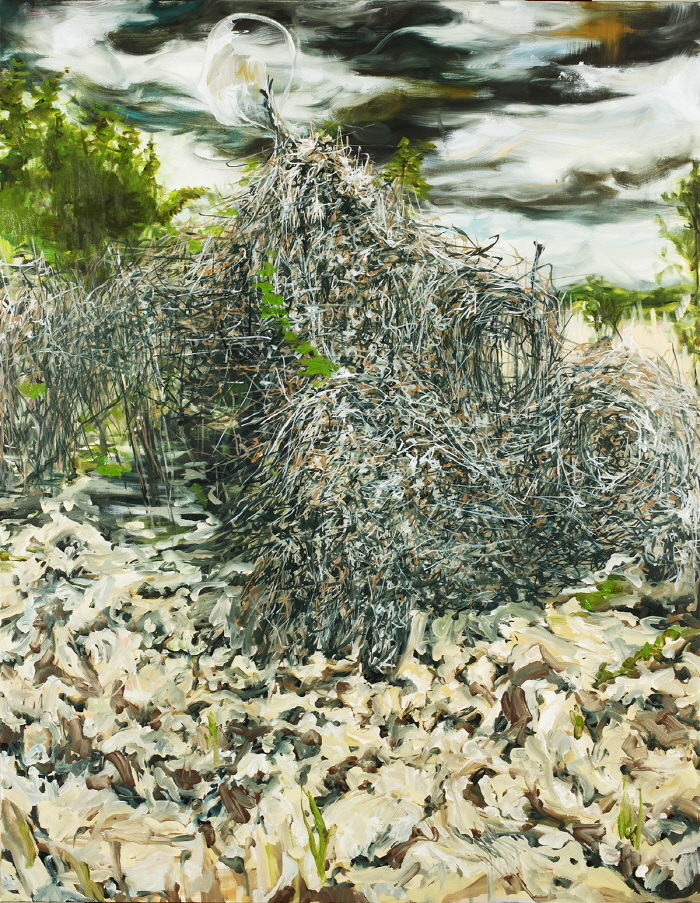
In his landscape paintings, this process is closely connected to the vitality of plants. Nameless grasses, forests, ponds, and snow-covered fields appear to tremble and spread through detailed yet strongly directional brushwork. In works such as Landscape and Snow Day, the specific forms of actual places remain recognizable, while densely repeated strokes, restrained tonalities, and thick layers of paint introduce the psychological tension and movement perceived by the artist.

Rather than fixing objects within clearly defined contours, the paintings emphasize the impression of vegetation and surrounding space mingling and shifting together, reorganizing observed landscapes through painterly sensation.

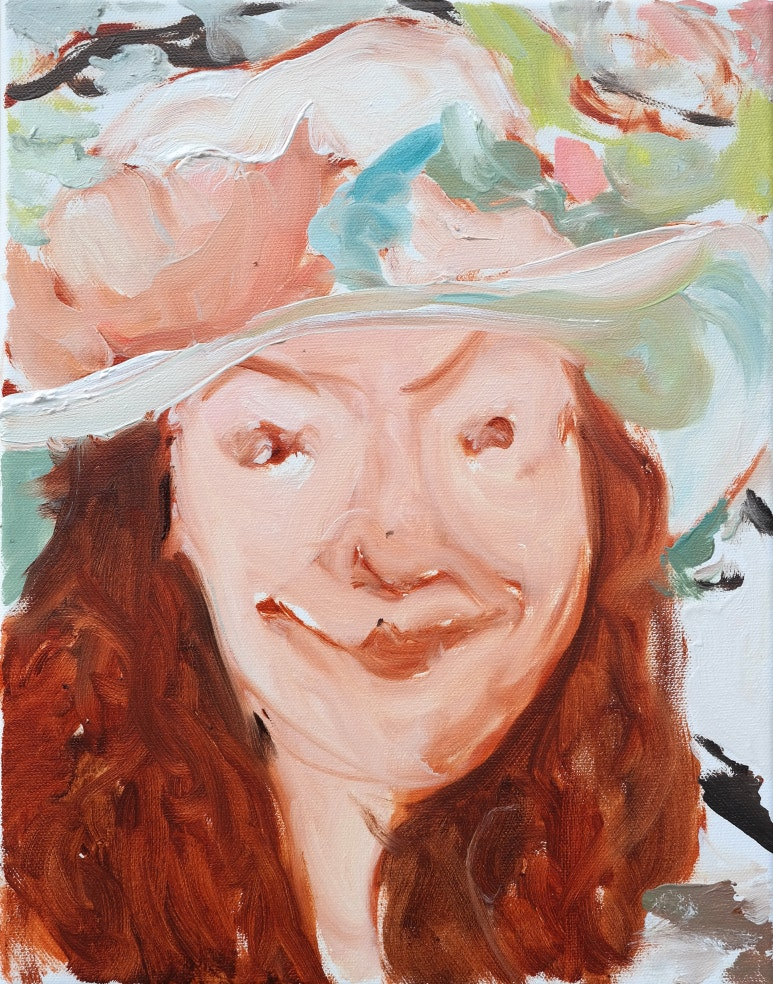
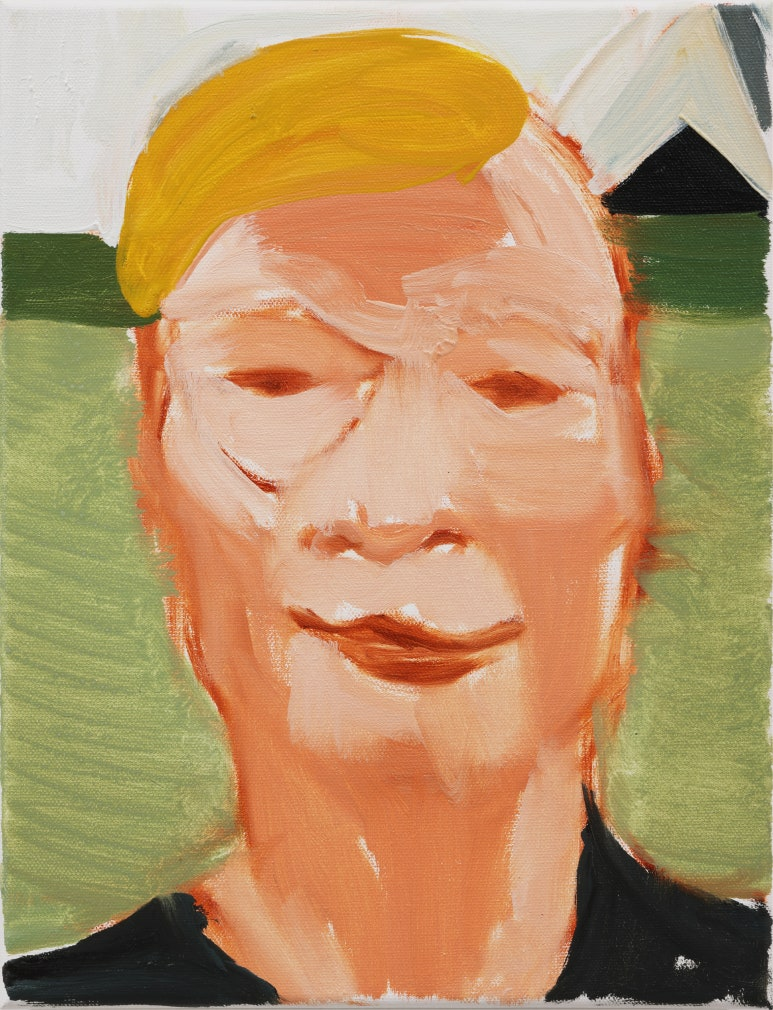
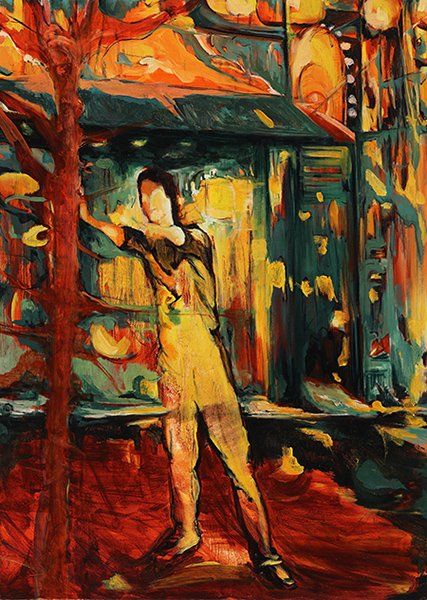
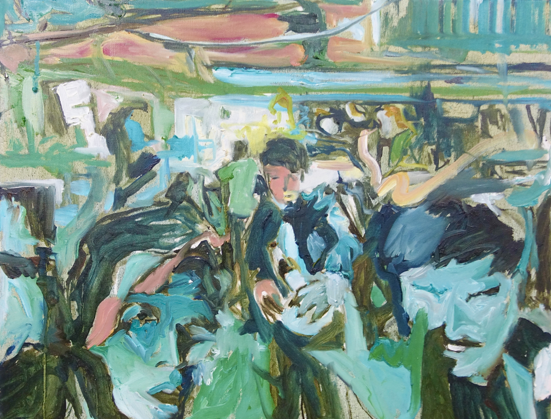
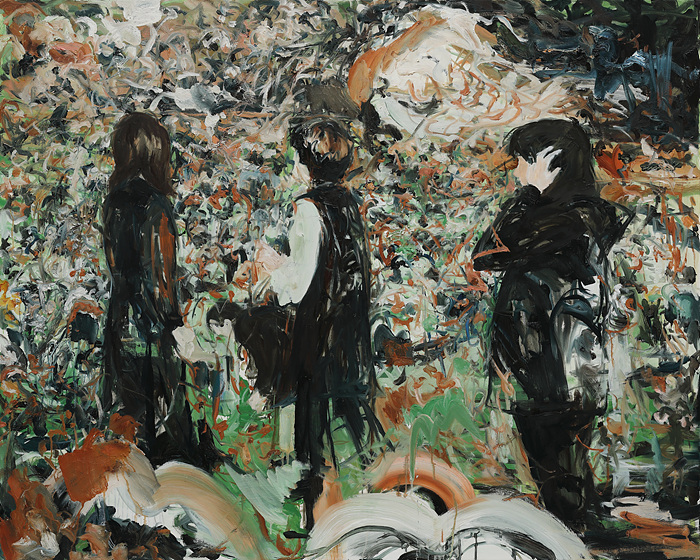
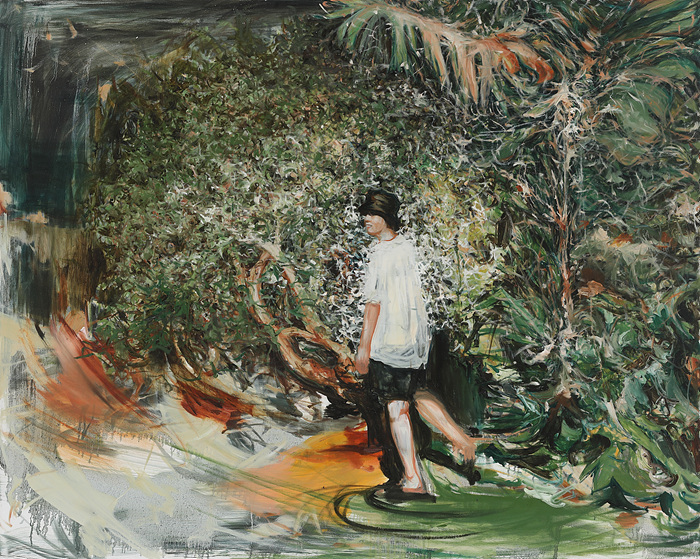
The relationship between representation and transformation continues in the figure paintings that have become increasingly prominent since 2019. In works such as A Flower Bed of Crows and Naong, figures merge into surrounding landscapes through rough brushwork, while details of faces and bodies are retained only to the degree necessary.

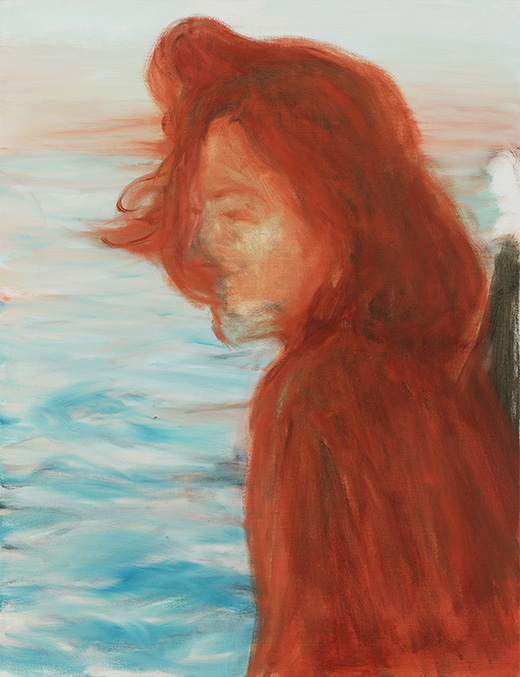
More recently, Beom has increasingly removed the landscape and focused directly on the figure, producing both paintings that preserve relatively recognizable forms and others in which line, color, and plane are handled more freely.

Since 2026, he has also shifted away from building faces through multiple layers of paint, instead experimenting with single brushstrokes and lighter surfaces. An important formal characteristic of his recent practice lies in determining anew, with each work, how much of the figure should remain and to what extent brushwork and color can take the place of representation.


Topography & Continuity

Beom Jinyong’s practice began with dream journals. In his early works, he superimposed figures and events encountered in dreams onto landscapes from reality, while from late 2015 onward his attention shifted toward abandoned places and the plants growing within them.

After 2019, works featuring figures within landscapes, landscapes without figures, and figure-centered paintings were pursued simultaneously for a time, before figures gradually assumed greater prominence. His early method of interweaving dream and reality subsequently developed into an approach that introduced memory and emotion into actual landscapes, and later into a way of reconstructing people around him through experience and recollection.

Despite these shifts in subject matter, Beom has consistently maintained an attitude of looking again at beings and moments that are easily overlooked. Figures of uncertain name and identity encountered in dreams, nameless grasses growing at the margins of the city, and the images of family members and acquaintances who remain close yet can never be encountered again in precisely the same moment may appear to be disparate subjects, but they share an association with things that disappear from everyday life or pass unnoticed.

Beom first captured the vitality of grasses that repeatedly emerge in abandoned places, and later expanded his practice through the people around him to address relationships, memory, and a sense of absence. Art critic Sung-Ho KIM’s interpretation of his landscapes and figures through the concept of the “nameless” is also connected to this sustained concern.

A certain continuity can also be found in his painterly methods. Beom has used oil paint as his primary medium since around 2013, working in response to accidental forms and the evolving flow of the composition rather than following a predetermined result. Even when a painting begins with a photograph or an actual scene, its degree of representation gradually loosens as the work progresses, while lines, colors, and forms are retained or removed according to the artist’s judgment.

The way boundaries between plants and space became unstable in his landscape paintings continues in his figure paintings as an exploration of how much of the face and body should remain recognizable, and at what point their forms may give way to the movement of brushwork and color.

More recently, Beom has been working simultaneously on figure paintings that remain relatively close to representation and others that are more abstracted, testing both directions at once. In 2026, he also began experimenting with a shift away from building up multiple layers of paint toward an emphasis on single brushstrokes and lighter surfaces.

The artist himself does not predetermine whether his work will move further toward abstraction or place greater emphasis on figuration, describing his current practice instead as an ongoing search for an order and structure that feel appropriate to him.

Works of Art

The Sensation of Life That Remains Through Memory and Emotion

Articles

Exhibitions

Activities