

Yangpyeong-Dong - K-ARTIST

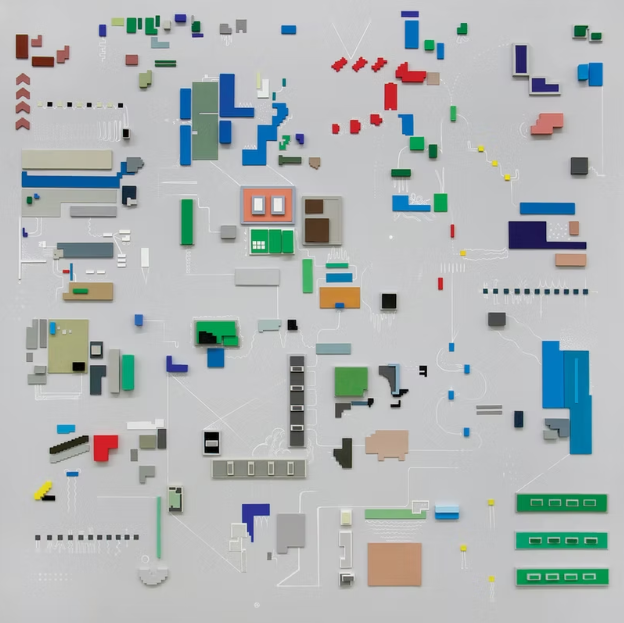
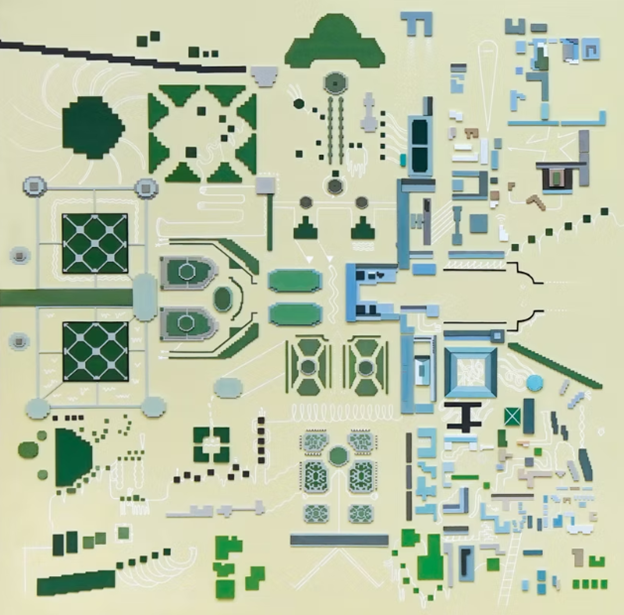
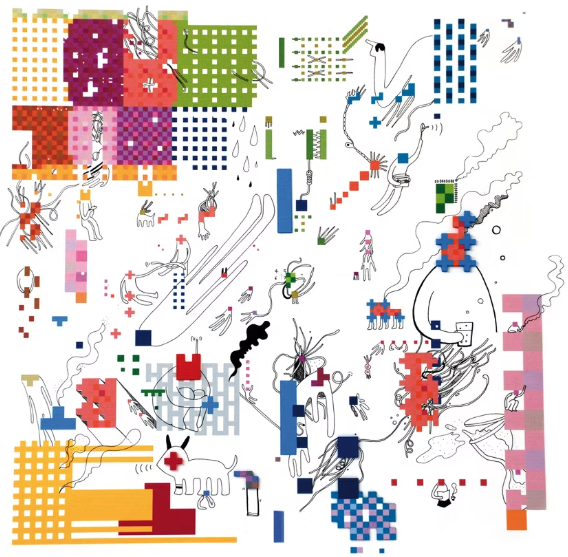
Yangpyeong-Dong

2014
Paper, pen, acrylic, paper block, glue on paper panel
50 x 50 cm
About The Work

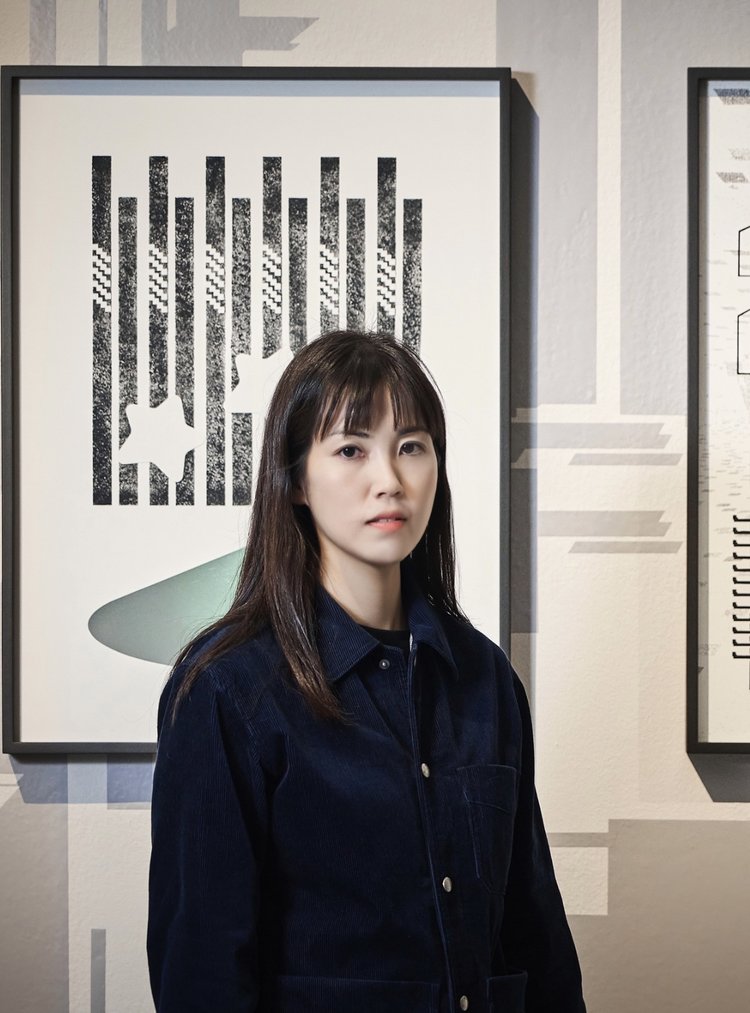
Chu Mirim’s work has consistently revolved around the structural and perceptual intersections of digital and physical environments. While her early practice was rooted in personal experiences of online communication and cultural displacement, her focus later shifted toward examining urban architecture through the lens of web-based mapping systems. More recently, she has expanded her inquiry to explore the socio-political implications of data accumulation and its influence on everyday life.

Solo Exhibitions (Brief)

Chu Mirim has held solo exhibitions at 《Chaos Kong》(BAIK ART, Seoul, 2023), 《Shape tweening》(The Great Collection, Seoul, 2022), 《Satellites》(Gallery LUX, Seoul, 2020), 《New module born from a rippling grid》(Trunk Gallery, Seoul, 2016), 《P.O.I (Point of Interest)》(Space Willing N Dealing, Seoul, 2014), 《WWW.THE WORLD WE LIVE IN》(Steph Galerie, Singapore, 2013), and 《418: I am a teapot》(Die Gallery, Seoul, 2010).

Group Exhibitions (Brief)

Additionally, the artist has participated in numerous group exhibitions at venues such as 《The 24th SONGEUN Art Award Exhibition》(SONGEUN, Seoul, 2024), 《Partners Desk》(ThisWeekendRoom, Seoul, 2024), 《Unfold X》(Culture Station 284, Seoul, 2023), 《Korean young artist 2023》(National Museum of Modern and Contemporary Art, Gwacheon, 2023), 《Singing Whales, Diving Stars》(Ulsan Art Museum, Ulsan, 2022), 《The way a Hare transforms into a Tortoise》(Nikolaj Kunsthal, Copenhagen, 2019), 《Two pillars and seven letters》(Seoul Museum of Art, Seoul, 2018), 《THREE WISHES FOR CHRISTMAS》(Art Center Nabi, Seoul, 2012), and 《WONDERFUL PICTURES》(Ilmin Museum of Art, Seoul, 2009).

Awards (Selected)

Chu has been an artist-in-residence at the SeMA Nanji Studio (2024) and the MMCA Residency Goyang (2021). In 2019, she received the Grand Prize at the Unknown Asia.

Collections (Selected)

Her works are part of collections at the MMCA Art Bank, Hanwha Life Dream House, Arario Museum and more. 
Works of Art

Digital Nostalgia and Urban Sensibility

Originality & Identity

Chu Mirim's work explores the intersection between urban and digital environments, setting them as dual systems that shape contemporary life. Her early series, 'Pixel Space' (2008–2013), emerged from her experience of cultural displacement during her time abroad. She interpreted pixels not merely as the smallest digital unit but as a symbol of identity and presence within online spaces. This concept further materialized in works such as Paris 15th Arrondissement (2014), where she incorporated the perspective of online mapping tools to examine urban landscapes.

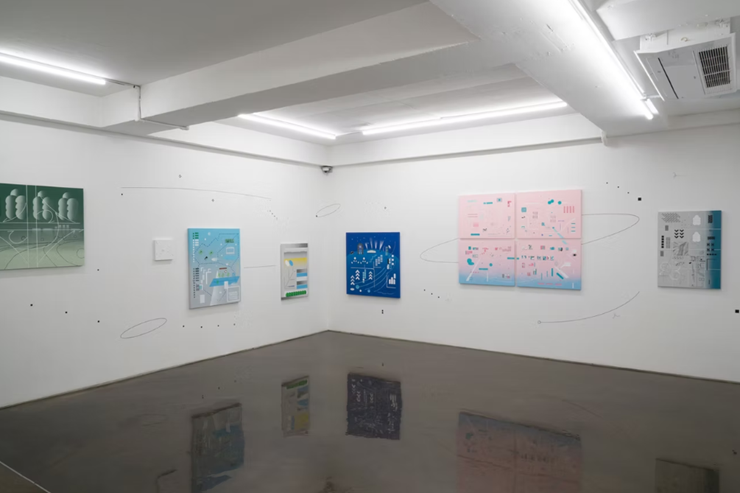
From 2016 onward, Chu deepened her engagement with the grid as a fundamental structure in both digital and architectural systems. In her solo exhibition 《New modules born from a rippling grid》 (2016, Trunk Gallery), she utilized the grid as a malleable framework rather than a rigid boundary, producing modular compositions that resonated with the fluidity of both urban growth and web-based information flow. Her exploration of digital infrastructures continued as she examined the ways in which data circulation shapes contemporary perceptions of space.

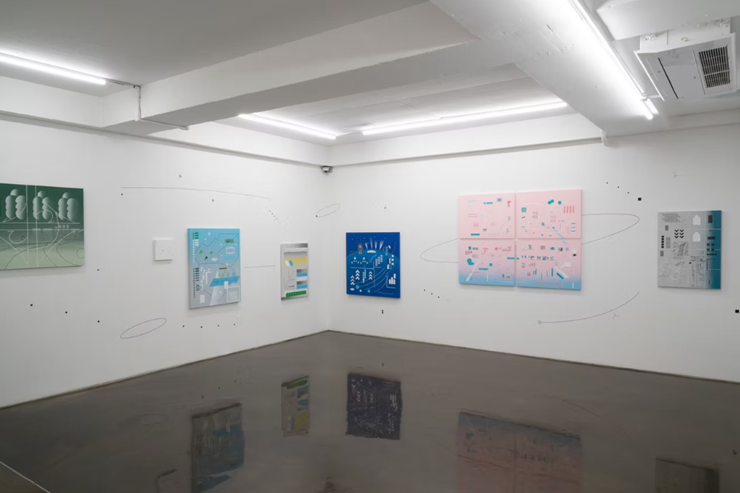
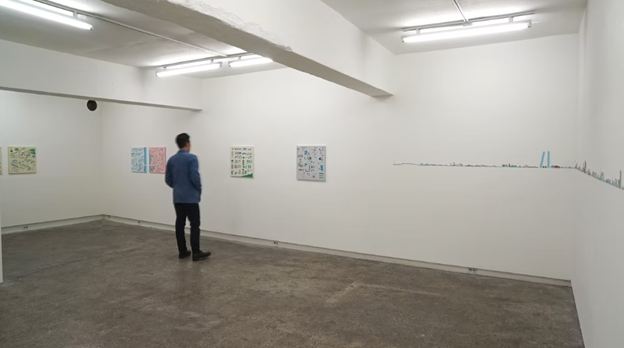
More recently, Chu has expanded her focus to interrogate how data-driven societies reconstruct human memory and experience. In 《Chaos Kong》 (2023, BAIK ART), she responded to a major server failure that disrupted digital services, prompting a reflection on how our lives are increasingly mediated by invisible data networks. By bringing lost or corrupted data into a physical exhibition space, she materialized the fragility of digital existence, further questioning how technology conditions our cognitive and sensory realities.

Style & Contents

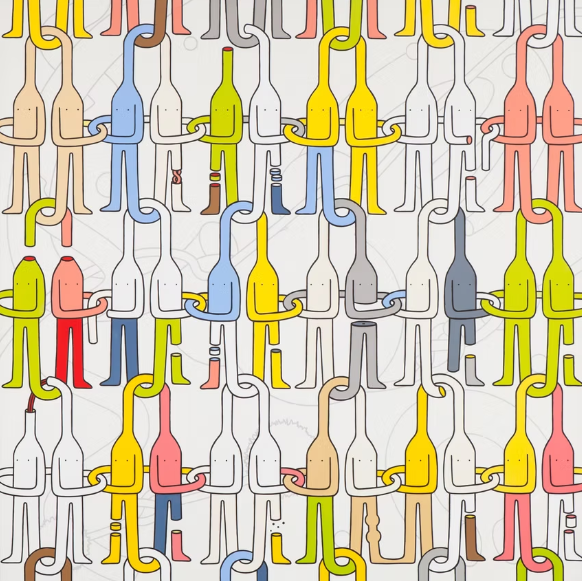
Chu Mirim's artistic approach has evolved from intricate hand-drawn compositions and layered paper structures to multi-dimensional installations incorporating digital media. In the 'Pixel Space' series, she visualized data through precise line drawings and stacked paper blocks, constructing physical manifestations of pixel-based imagery. Works like Yangpyeong-Dong (2014) moved beyond simple representations of urban landscapes, instead deconstructing and reconstructing digital maps to evoke new forms of spatial perception.

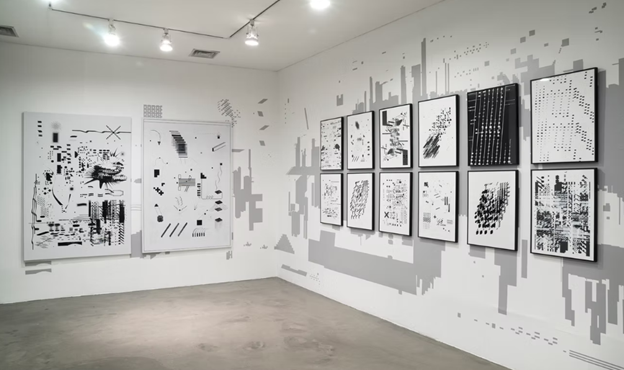
By 2016, Chu began incorporating stencil and inkjet printing techniques, expanding her material experimentation. In New Grid 001 (2016), she pushed the boundaries of geometric abstraction, emphasizing the interplay between structured grids and organic disruptions. Her work in 《Two Pillars and Seven Letters》 (2019, Seoul Museum of Art) explored the visualization of fluctuating real estate markets, stock indexes, and cryptocurrency values, linking them to larger systems of control and belief.

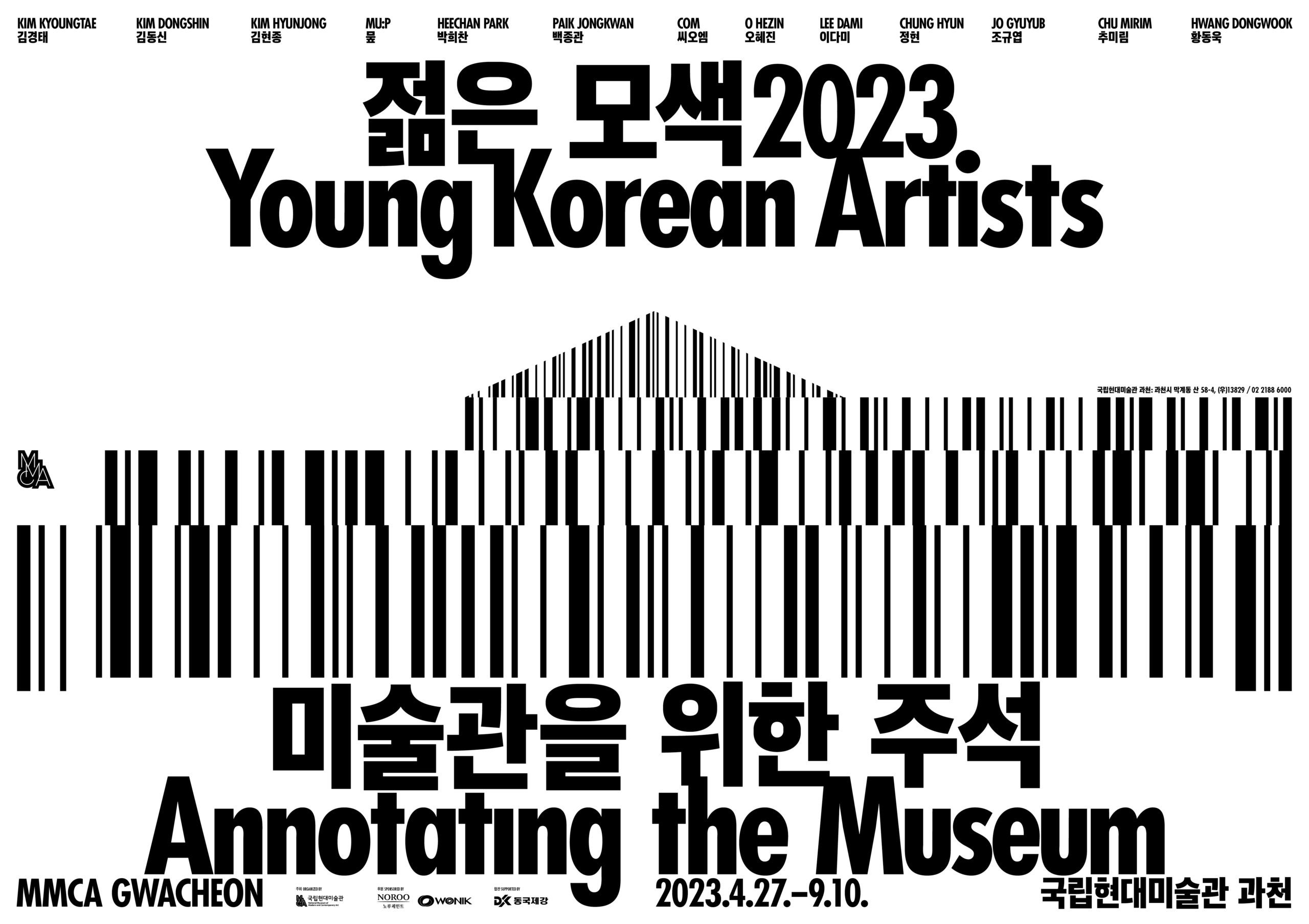
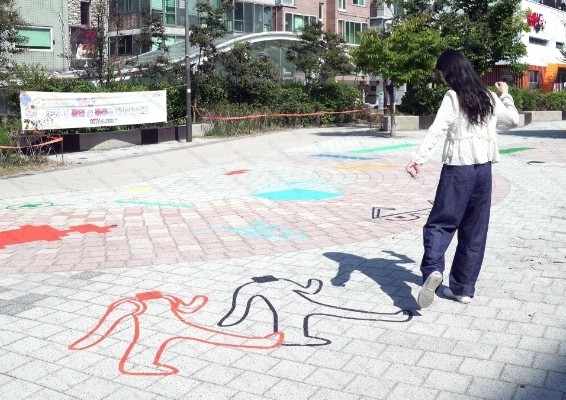
More recent projects integrate physical space as a critical element of her practice. In 《Young Korean Artists 2023》 (National Museum of Modern and Contemporary Art, Gwacheon), Lamp and Ramp (2023) was installed on an inclined platform, prompting viewers to adopt a satellite-like perspective when engaging with the work. Similarly, Fruit and Stream (2023) transformed aerial views of the Gwacheon region into a low-relief paper sculpture, emphasizing shifts in scale and perception. As Chu’s practice continues to develop, her work increasingly dissolves the boundaries between digital abstraction and tangible spatial experiences.

Topography & Continuity

Chu Mirim’s work has consistently revolved around the structural and perceptual intersections of digital and physical environments. While her early practice was rooted in personal experiences of online communication and cultural displacement, her focus later shifted toward examining urban architecture through the lens of web-based mapping systems. More recently, she has expanded her inquiry to explore the socio-political implications of data accumulation and its influence on everyday life.

Her works have been exhibited at major institutions, including the Seoul Museum of Art, the National Museum of Modern and Contemporary Art, and international venues such as BAIK ART. As one of the leading contemporary artists exploring the visualization of digital infrastructures, she continues to challenge conventional notions of spatial experience and technological mediation.

Looking ahead, Chu’s practice is expected to further investigate the materialization of digital phenomena in physical space. As society becomes increasingly enmeshed in algorithmic governance and networked data, her work will likely expand into immersive, site-specific installations that render these invisible forces visible. By maintaining her unique balance between conceptual rigor and sensory engagement, she positions herself at the forefront of contemporary discourses on digital identity, spatial perception, and the evolution of urban systems.

Works of Art

Digital Nostalgia and Urban Sensibility

Exhibitions

Activities