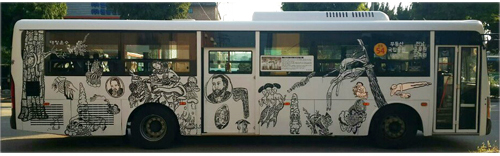
Time Machine - K-ARTIST

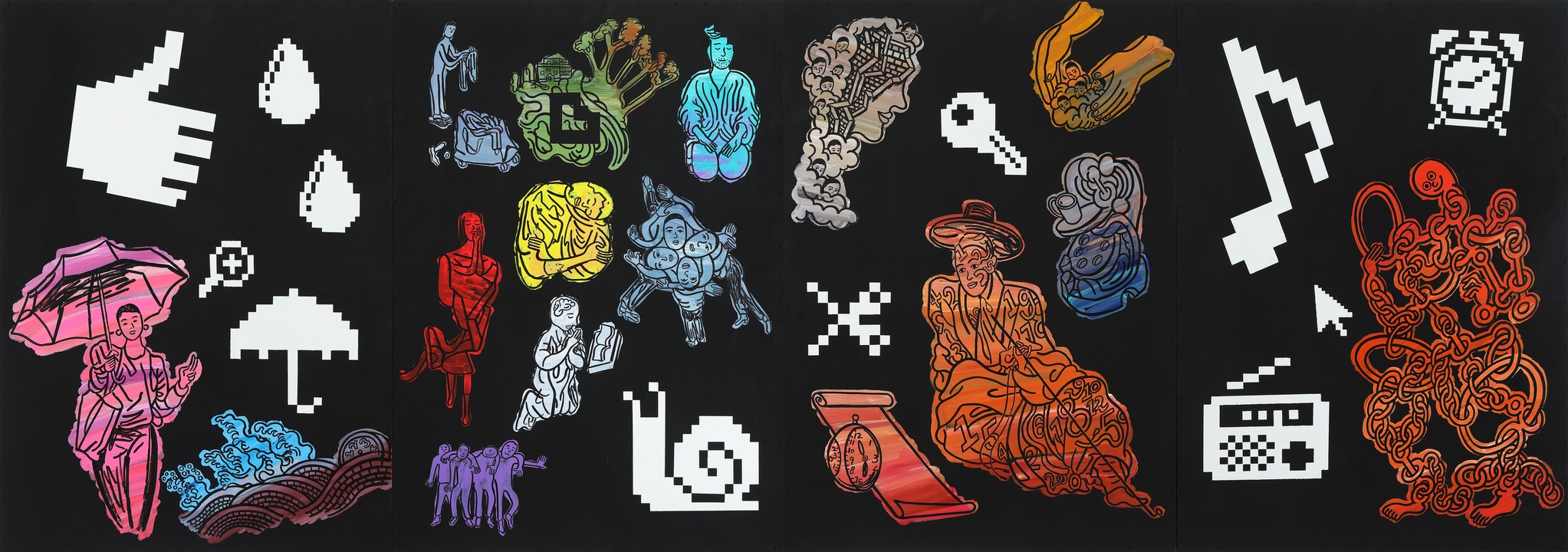
Time Machine

2017
Mural
1500 x 380 cm
About The Work

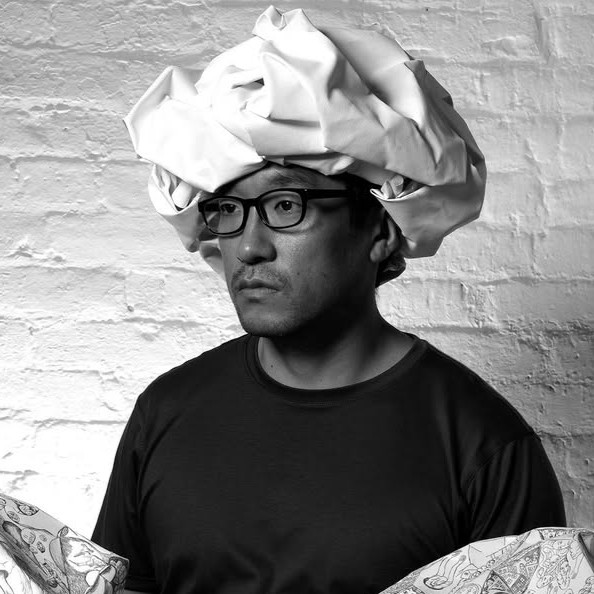
Eunhyung Kim explores experimental practices that combine drawing based on traditional ink-and-wash techniques with digital media and artificial intelligence. His work begins with the process of translating and reconnecting different sensations, times, and cultural images within drawing. Music is transformed into images, scenes from performances into drawings and murals, and historical paintings into contemporary narratives. In this process, the original context is not simply preserved but is reshaped through the artist’s memories, experiences, and imagination, taking on new narratives.

His practice has expanded at the intersection of Korean painting, contemporary drawing, installation, and media art. Beginning with ink-and-wash painting and line drawing, he has broadened his use of media to include paper sculpture, murals, light boxes, and animation, while continuously incorporating and reinterpreting diverse source materials such as opera, literature, Joseon-era painting, and popular culture. His visualization of music and performances through automatic drawings, as well as his contemporary reinterpretations of Joseon-era paintings, extends these ongoing experiments.

In this way, Eunhyung Kim has developed a distinctive practice by continually connecting and rearranging disparate elements, ranging from personal memories to historical images, performances, language, and technology. His work has expanded through the process of translating and rearranging images and sensations encountered from the outside through drawing. Elements originating from different periods, media, and cultural contexts form new relationships within his practice, generating new meanings.

Solo Exhibitions (Brief)

Eunhyung Kim has held solo exhibitions at Gallery 400 in Chicago in 2010, OCI Museum of Art in Seoul in 2012 and 2023, Seoul Museum of Art in 2016, and H-flux Gallery in Seoul in 2026.

Group Exhibitions (Brief)

Eunhyung Kim has participated in group exhibitions at Whanki Museum in 2018, Gyeonggi Museum of Modern Art and Daejeon Museum of Art in 2019, Jeju Museum of Art in 2020, SONGEUN in 2021 and 2022, and Seoul National University Museum of Art in 2022 and 2025.

Awards (Selected)

Eunhyung Kim received a Highly Recommended Award at the JoongAng Fine Arts Prize in 2002, the AHL Foundation Visual Arts Award in 2008, and the Gold Prize at the 5th ETRO Art Award in 2016.

Residencies (Selected)

Eunhyung Kim has participated in residency programs including the Skowhegan School of Painting & Sculpture in the United States in 2007, the International Studio & Curatorial Program (ISCP) and Vermont Studio Center in 2011, SeMA Nanji Residency in 2015, MMCA Residency Goyang in 2017, OCI Museum of Art’s 1211 Residency in 2019, Art Like Salt Residency in 2024, and Schloss Balmoral Artist Residency in Germany in 2026.

Collections (Selected)

Eunhyung Kim’s works are held in the collections of MMCA Art Bank, MMCA Government Art Bank, Seoul Museum of Art, and OCI Museum of Art.

Works of Art

Reconnecting Different Sensations, Times, and Cultural Images

Originality & Identity

Eunhyung Kim’s practice begins with the translation and reconnection of different senses, temporalities, and cultural images through drawing. Music becomes imagery, scenes from performances are transformed into drawings and murals, and historical paintings are carried into contemporary narratives.

In this process, original contexts are reshaped through the artist’s memories, experiences, and imagination, generating new narratives. From his early automatic drawings to visual interpretations of music and performance and reinterpretations of Joseon-period painting, this approach has remained central to his practice. Drawing serves as Kim’s primary means of rearranging existing images and personal sensations while examining how meaning shifts between contexts.

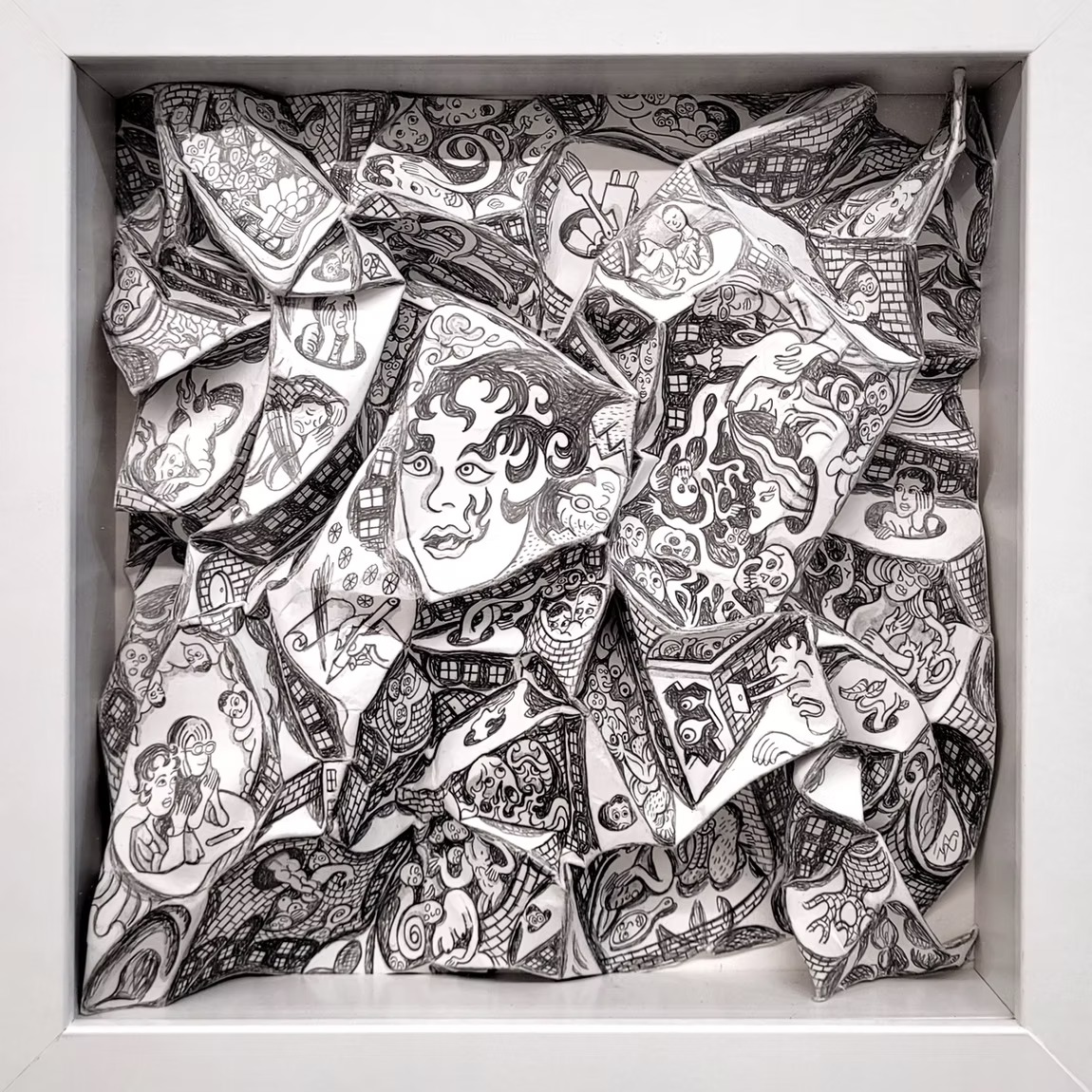
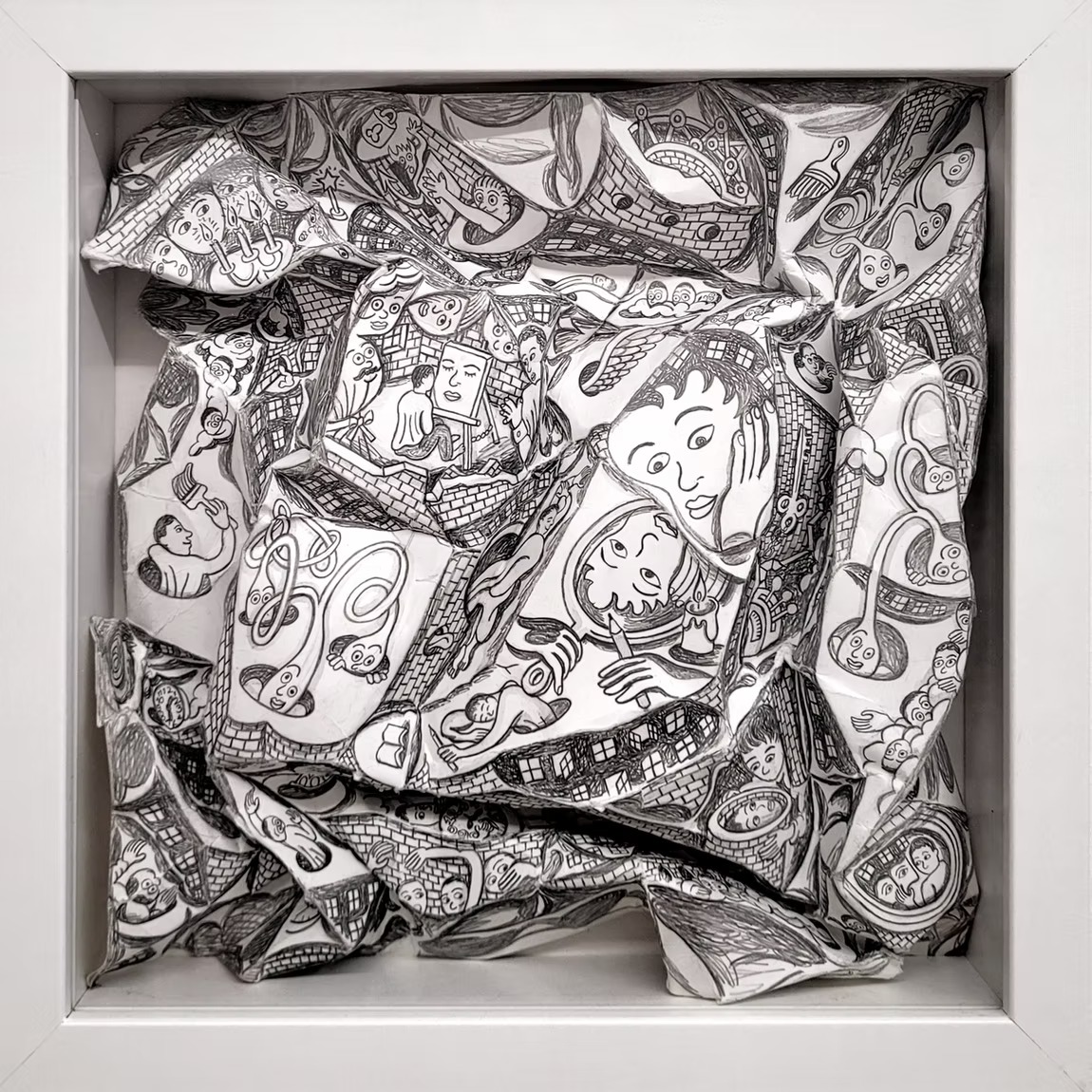
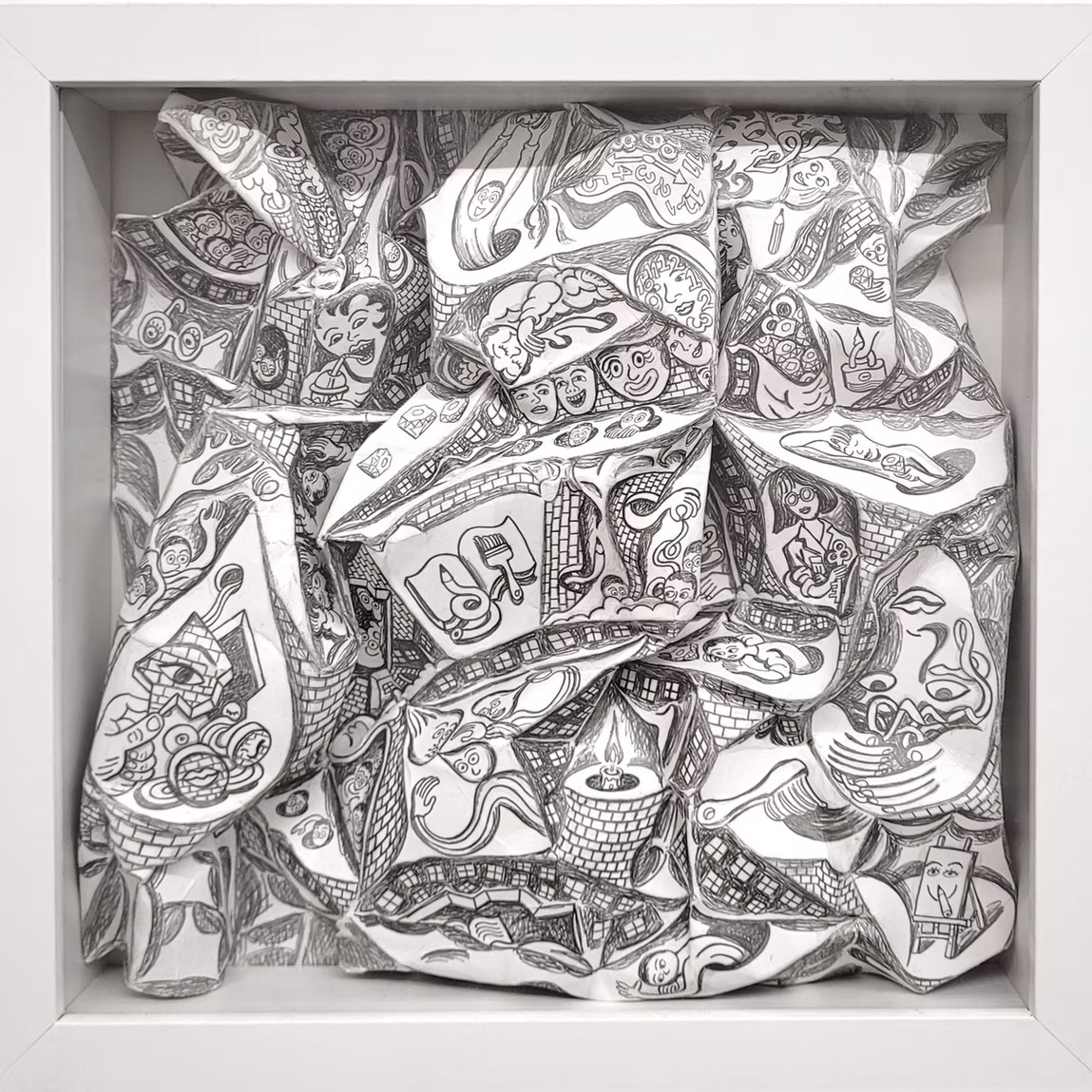
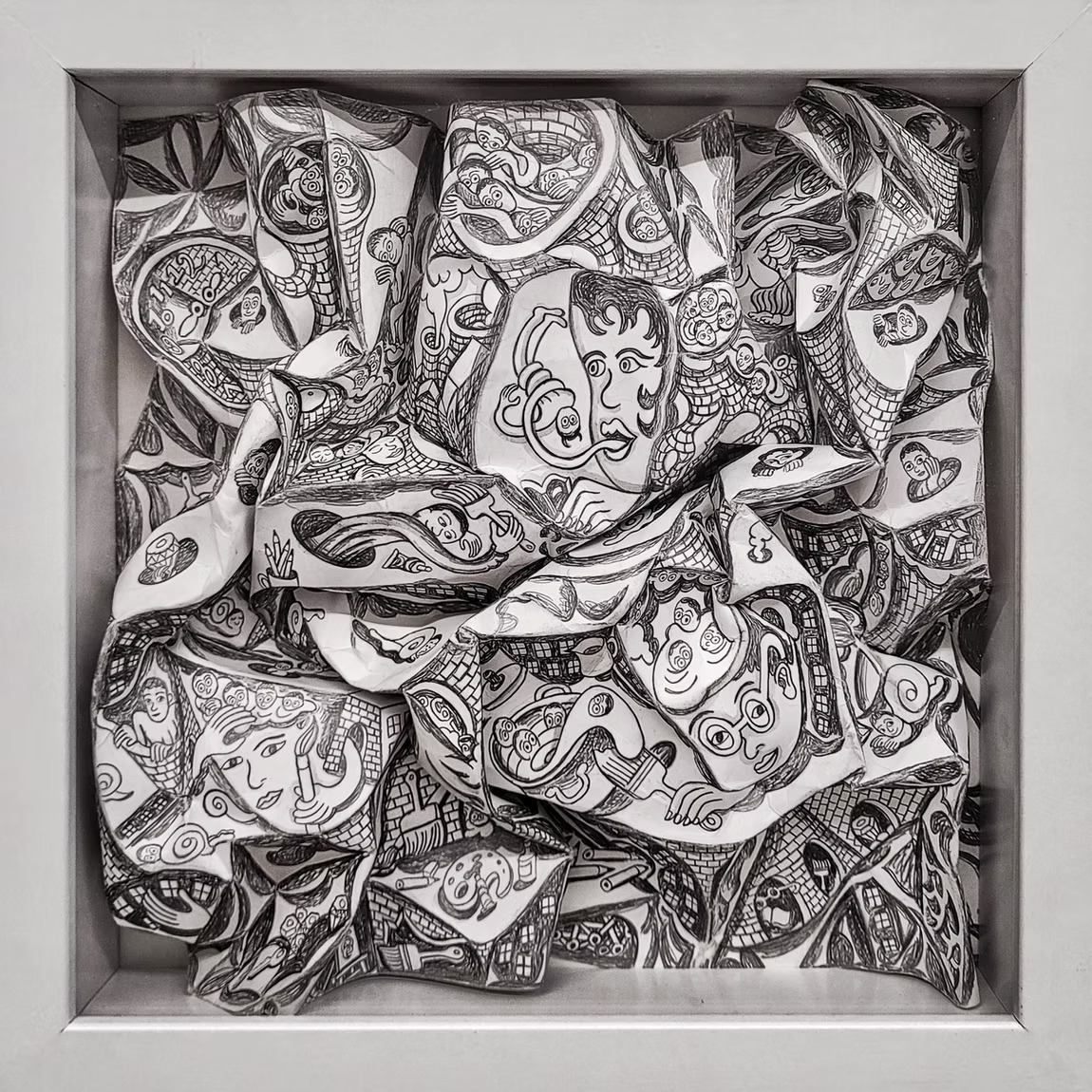
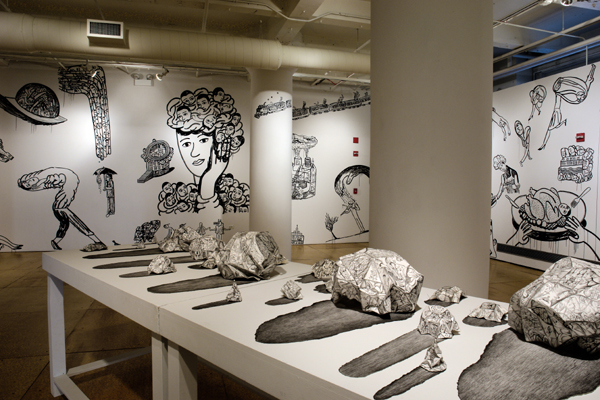
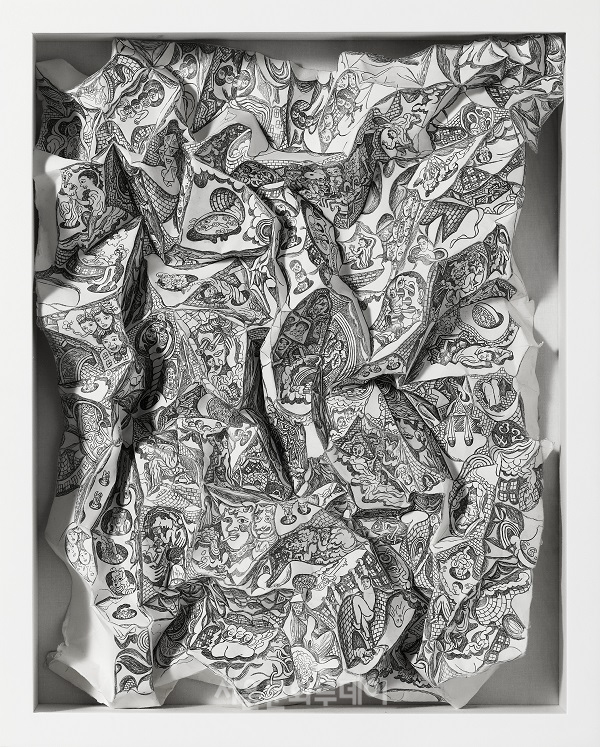
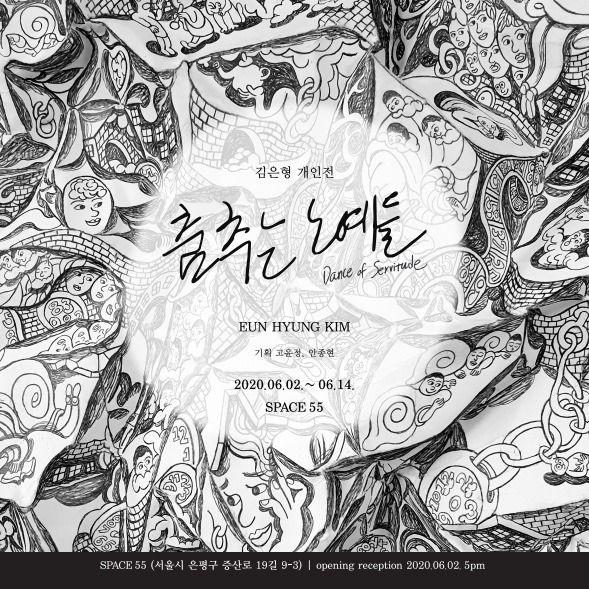
The ‘Brain-Planet’ series turns this process inward. Kim crumples a sheet of paper into a brain-like form and continuously fills it with memories, everyday experiences, imagined scenes, and whatever passes through his mind. He describes this accumulation of imagery as a simultaneous process of recording and emptying the mind. The paradox of achieving emptiness through excessive accumulation recurs throughout his later work.

Memories emerge as fragments from different temporalities, which Kim repeatedly rearranges in order to examine his identity and his relationships with others. Early criticism likewise interpreted his drawings as a means of bringing memories suspended between consciousness and the unconscious into view and reconsidering personal experience through relationships with others and society.

Kim’s engagement with music, Joseon-period painting, literature, and other existing cultural sources is closely related to the East Asian concept of fang (倣), the creative reinterpretation of an earlier work. He connects opera and classical music with imagery drawn from Joseon paintings of figures and everyday life, adding contemporary events and personal imagination to images originating in different periods.

In works such as The Elixir of Love and Alien SEX, fragments of earlier works reappear within newly constructed narratives, allowing viewers to form their own readings through visual clues and humor even without detailed knowledge of the original sources. Central to this practice is the way images change meaning as they move between periods, cultures, and interpreters. Kim himself has emphasized his interest in how the same cultural image can acquire different meanings depending on who encounters and interprets it.

More recently, this structure of translation and transformation has expanded into language and artificial intelligence. In the 2023 OCI Museum of Art exhibition 《Tales of the Barber-Curator》, Kim used ChatGPT and image-generating AI to produce fiction, poetry, and imagery, integrating them with ink painting, drawing, and animation to connect tradition, the present, and the future.

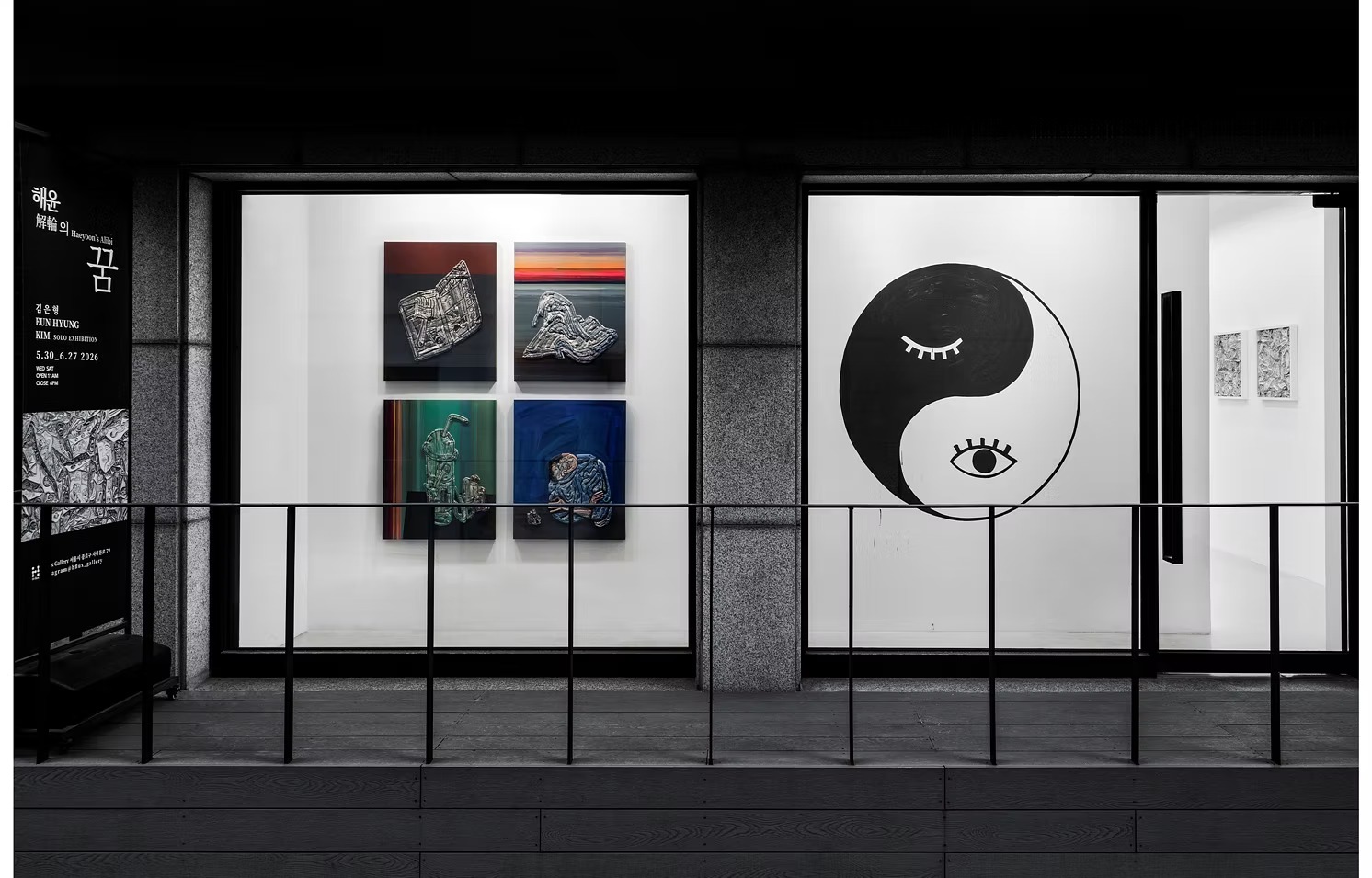
In 《Haeyoon’s Alibi》 in 2026, he further developed a cyclical method in which text generates images and images in turn call for new text, addressing the disappearance, transformation, and return of memories and emotions through the themes of conjuration, alchemy, healing, and reincarnation.

AI extends his longstanding concerns with automatism, accumulation, and translation into the digital environment. Across these developments, Kim has built a distinctive practice by continuously connecting and reorganizing heterogeneous elements ranging from personal memory and historical imagery to performance, language, and technology.


Style & Contents

Eunhyung Kim’s practice is grounded in ink drawing while extending into paper sculpture, murals, light boxes, animation, and other forms. Experiences of music and performance are translated into lines and images, while figures and motifs drawn from Joseon-period painting are reconstructed through the artist’s brushwork and imagination.

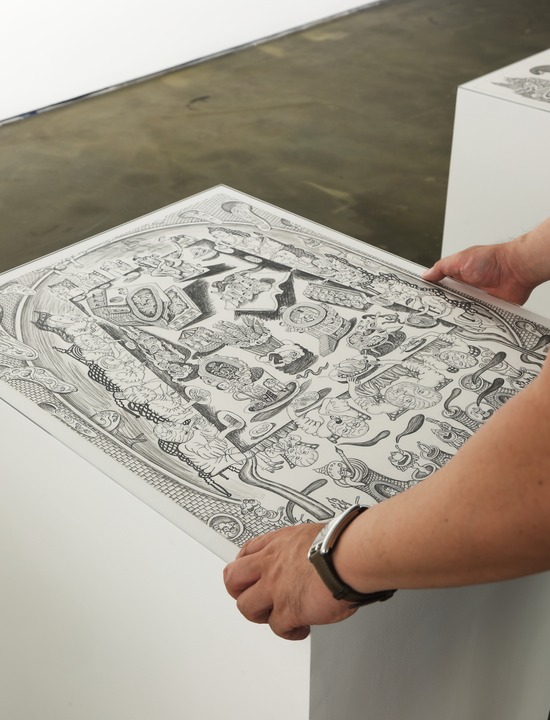
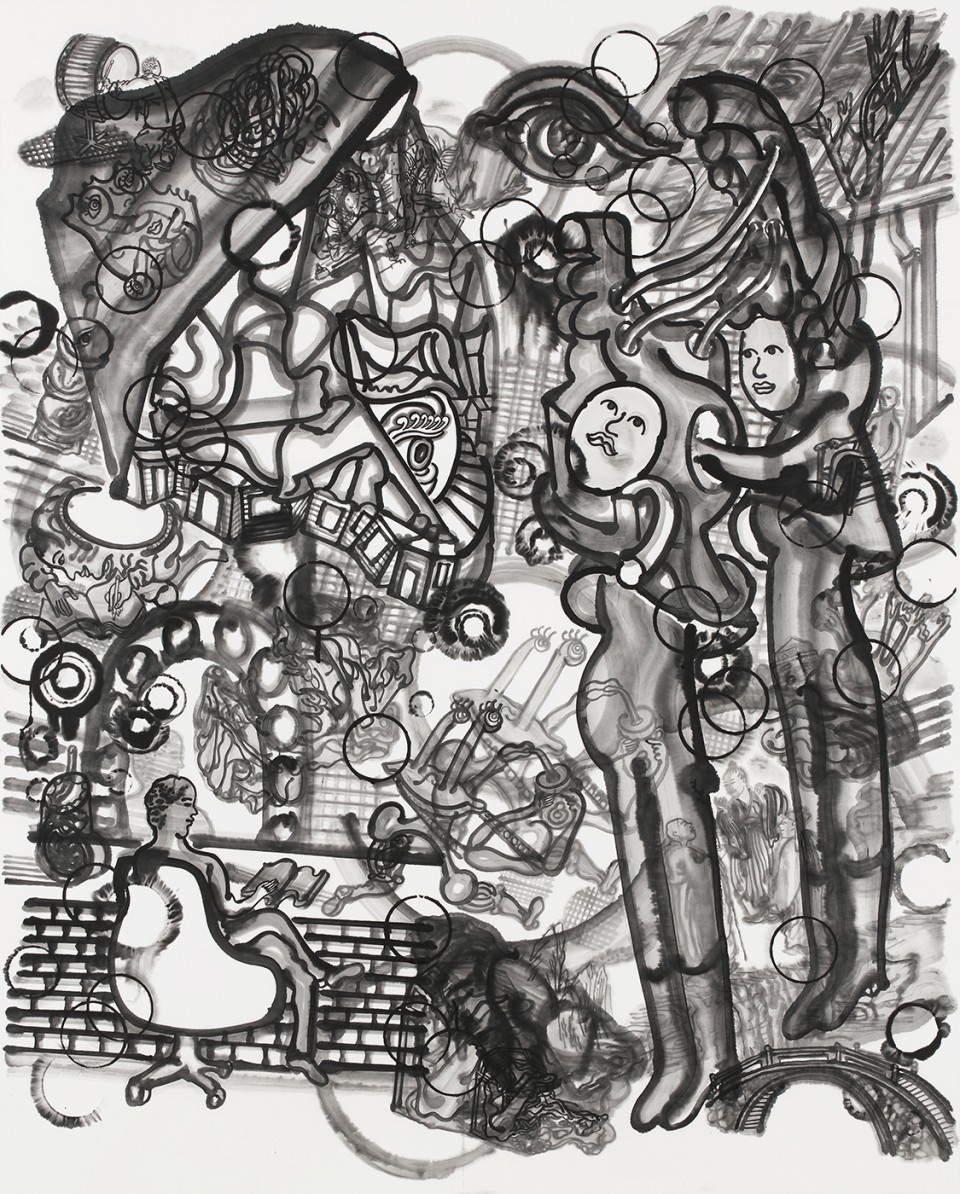
In works inspired by Mussorgsky’s Pictures at an Exhibition, Kim converts auditory experience back into visual imagery, using spontaneous and freely moving lines to create black-and-white compositions. This movement between senses demonstrates how drawing has functioned throughout his practice as a primary language for connecting different media and experiences. 

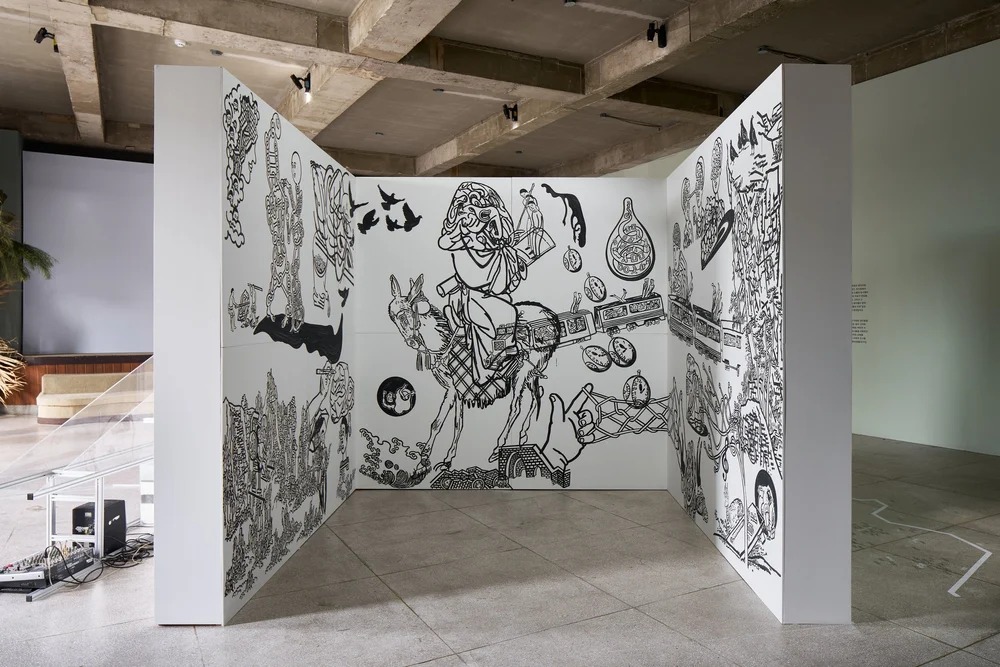
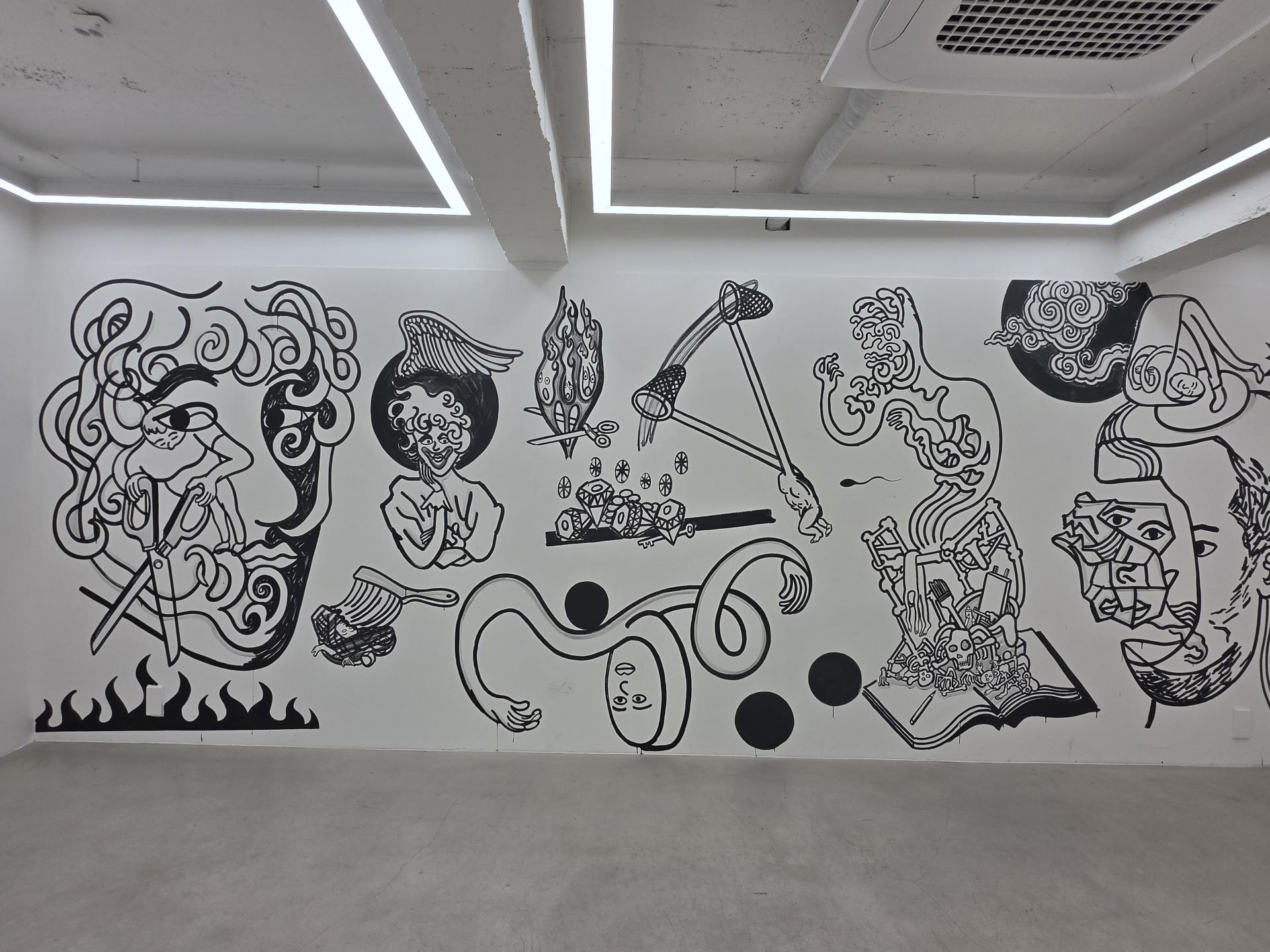
A defining formal characteristic of Kim’s work is its density and accumulation of imagery. Small figures, objects, spiraling lines, and fragmented motifs spread across the surface with little empty space, while his recent murals are structured through black contours of relatively uniform thickness.

A 2026 critique of 《Haeyoon's Alibi》 describes these lines as possessing a vector-like uniformity associated with digital drawing, emphasizing the way the artist suppresses the contingencies of the hand even while drawing manually. At the same time, immediately recognizable imagery reminiscent of comics and graffiti accumulates across the surface, combining visual accessibility with intricate density.

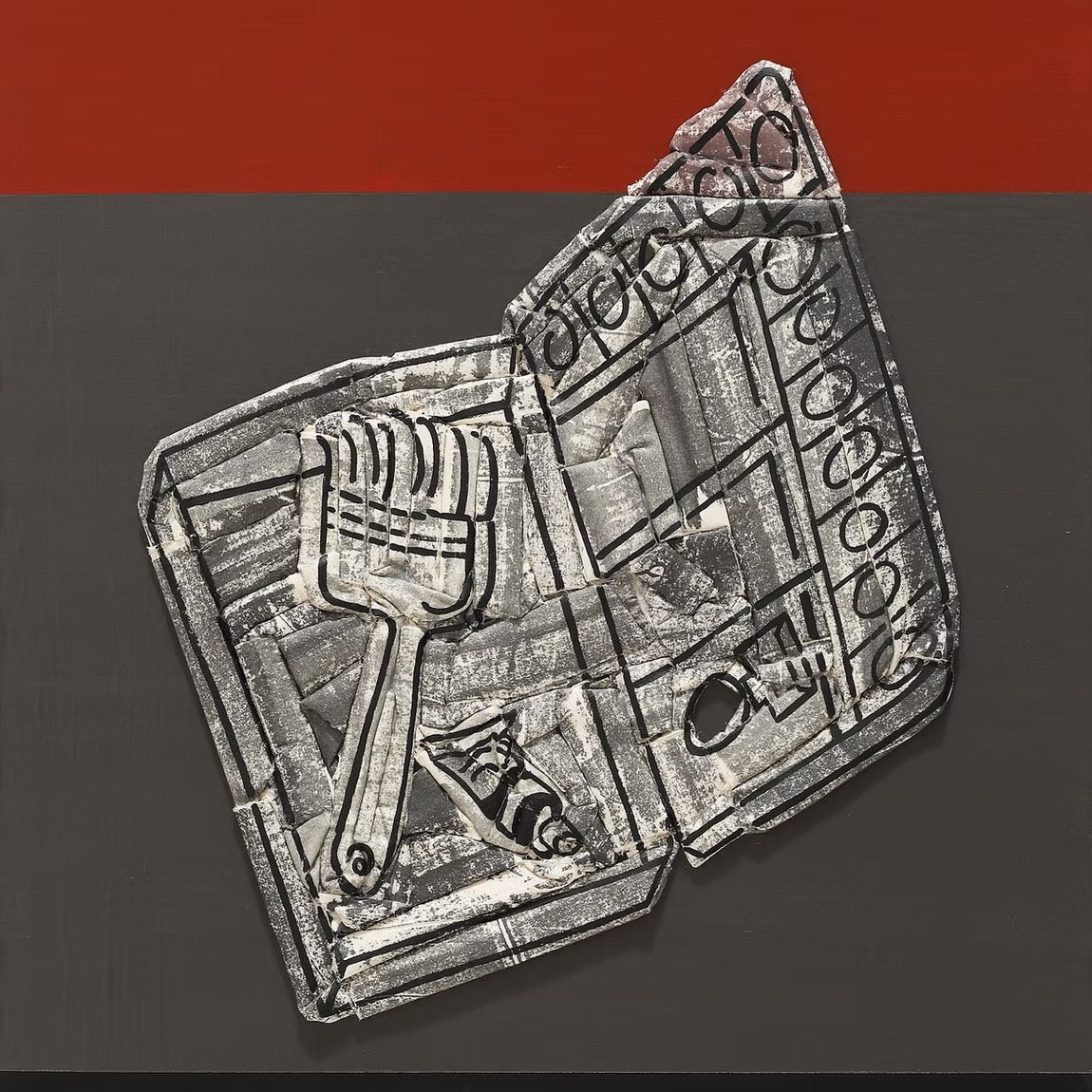
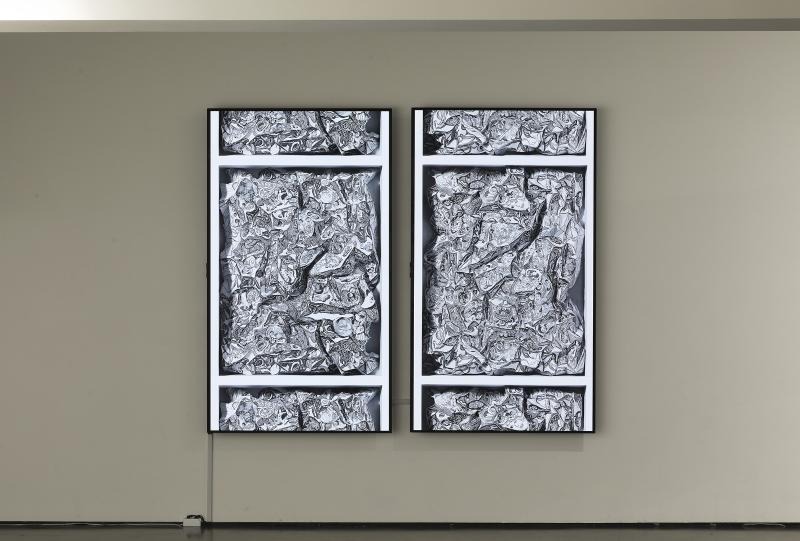
Crumpling and restructuring paper allow Kim to extend accumulated imagery beyond the flat surface. In the 'Brain-Planet' series, a single sheet of paper is crumpled into a brain-like form, causing densely drawn memories and images to overlap, disappear, and reappear along its folds.

Earlier sculptural works similarly reorganized images drawn from the space between consciousness and the unconscious into organic structures of bends and folds, connecting fragments of memory across different temporalities. In more recent framed works, the folds and shadows of crumpled paper partially obscure the imagery, making it impossible to grasp the entire drawing at once and allowing the material structure itself to shape the act of viewing.

The content of Kim’s work has developed alongside this expansion of form. Opera, classical music, Joseon-period painting, and literature have provided recurring sources, while works such as The Elixir of Love and Alien SEX recombine imagery from different periods through humor and surreal imagination.

More recently, self-written texts, poetry, and ideas or images produced with artificial intelligence have entered his working process, intensifying the exchange between language and image. Hand-drawn lines, digital imagery, crumpled paper, and temporary murals now coexist within a practice that continually expands drawing across space, time, language, and image.

Topography & Continuity

Eunhyung Kim’s practice has developed at the intersection of Korean painting, contemporary drawing, installation, and media-based practices. Beginning with ink and linear drawing, he has expanded into paper sculpture, murals, light boxes, and animation while consistently drawing from opera, literature, Joseon-period painting, and popular culture.

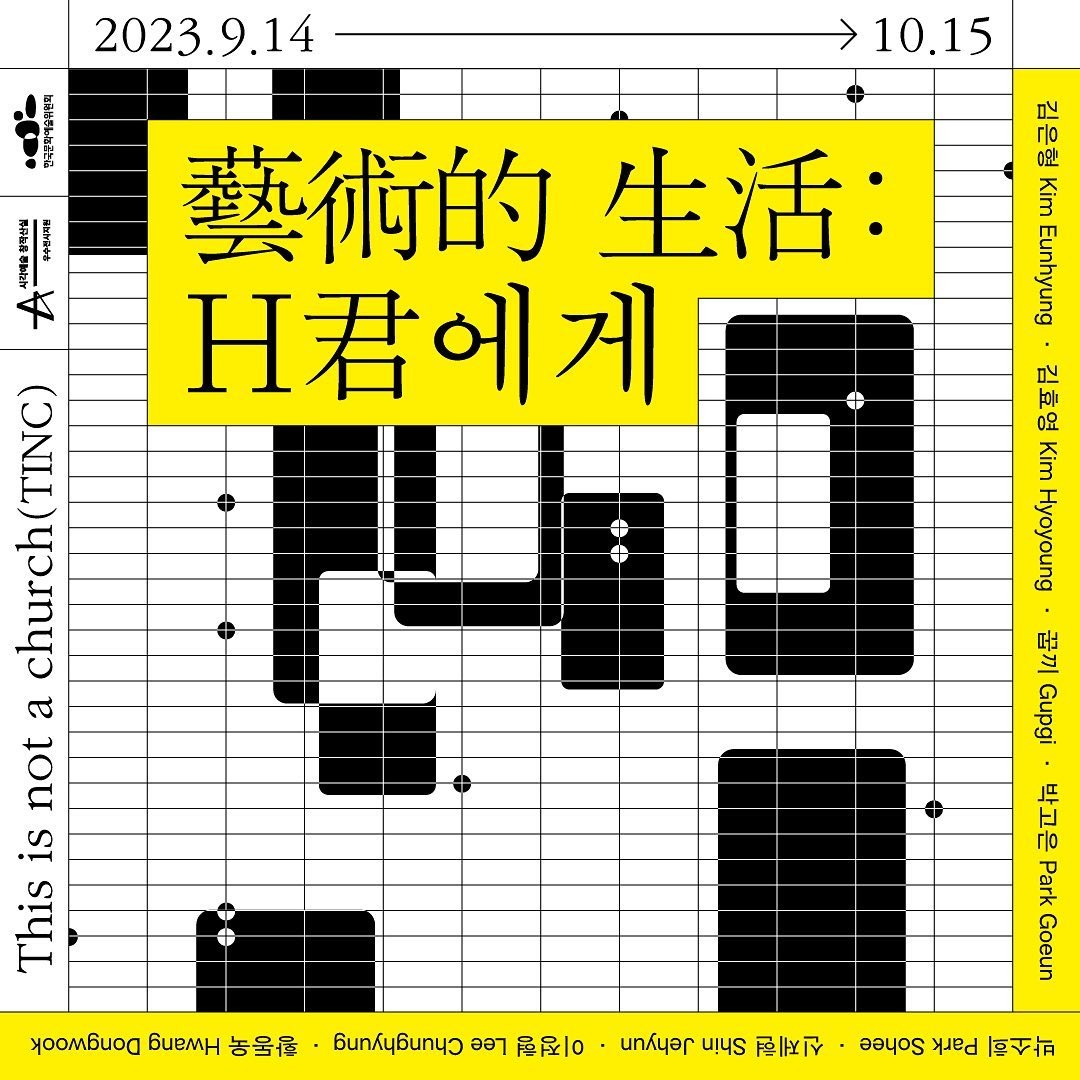
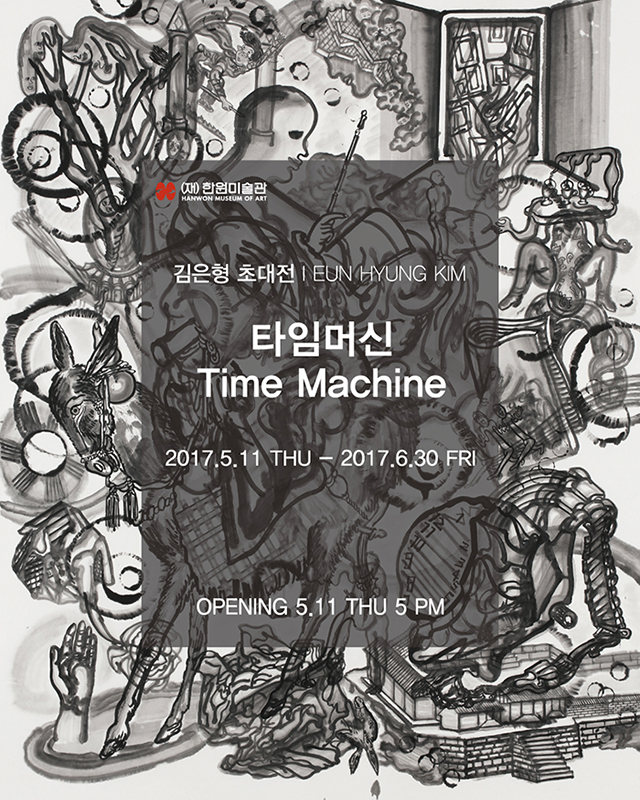
His 2017 exhibition at Hanwon Museum of Art presented this trajectory as an expansion of Korean painting through the incorporation of diverse contemporary media. The accompanying text also identified the combination of drawing, musical themes, and imagery from traditional painting as a sustained concern in his practice since 2004.

Drawing has remained central throughout these changes. In the early ‘Brain-Planet’ series, memories and unconscious imagery accumulated through automatic drawing; in his 2012 works based on Mussorgsky’s Pictures at an Exhibition, auditory experience was translated into visual imagery. His continuing engagement with opera, theater, jazz, and Joseon-period painting subsequently expanded into murals, sculpture, and animation.

Kim connects this process to the concept of fang (倣), reconstructing existing works through his own experience and interpretation. While materials and sources have shifted, the act of translating and reorganizing external images and sensations through drawing has remained consistent.

During the 2020s, Kim’s practice began to incorporate digital technology and artificial intelligence. Since 2023, he has used ChatGPT and image-generating AI to extend his longstanding interest in automatism and accumulation into generative processes, while intensifying the reciprocal movement between text, image, and drawing.

A 2026 critique emphasizes that manual labor nevertheless remains central to this development: AI-generated imagery is redrawn by hand, lines are painted directly onto walls, and paper is physically crumpled into irreversible forms. In this reading, digital generation and bodily production coexist within the same working process.

This continuity allows Kim’s practice to retain a recognizable structure without being tied to a single medium or subject. Automatic drawing, visual translations of music and performance, reinterpretations of historical imagery, and recent experiments with AI have appeared in different forms across his career, yet remain connected through a recurring process of translation, accumulation, and transformation. Kim himself defines his practice through these three terms, which provide a consistent framework linking his early drawings to his recent digital experiments.

Works of Art

Reconnecting Different Sensations, Times, and Cultural Images

Articles

Exhibitions

Activities