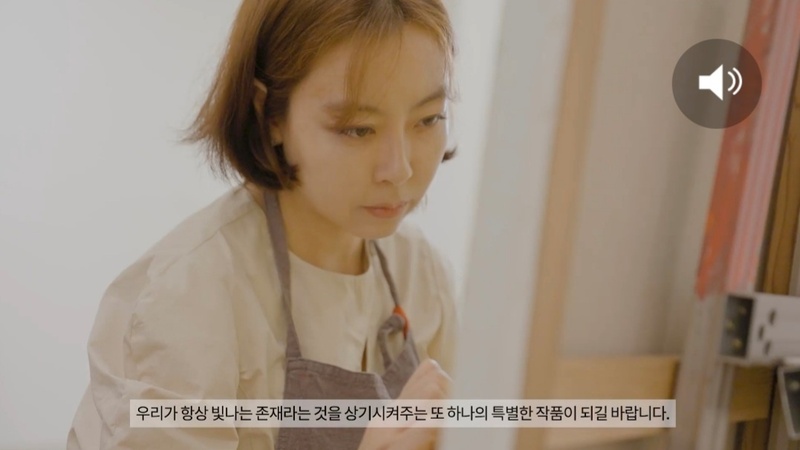
Star Wave - K-ARTIST

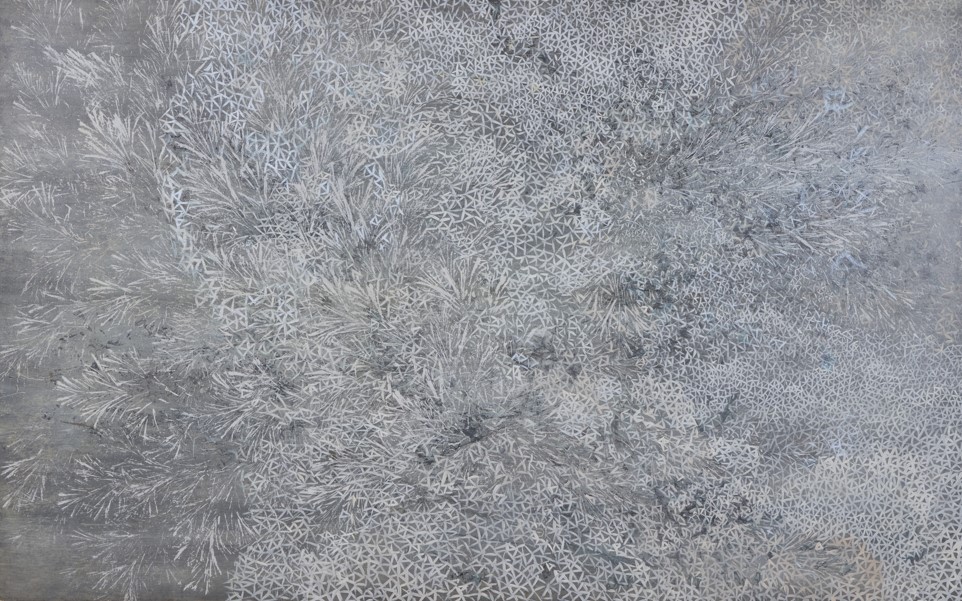
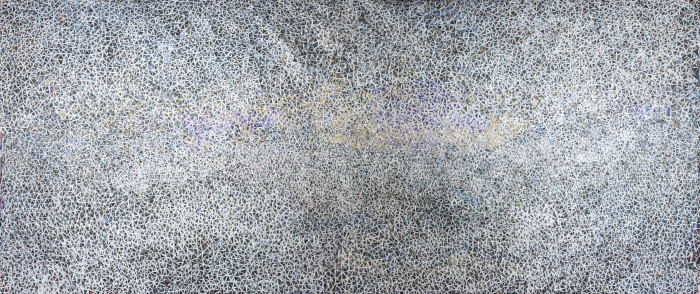
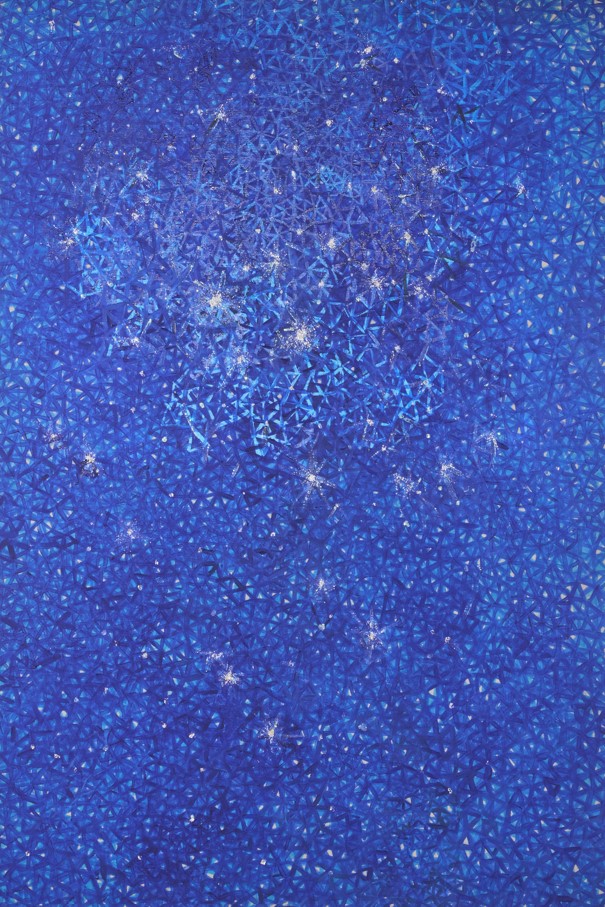
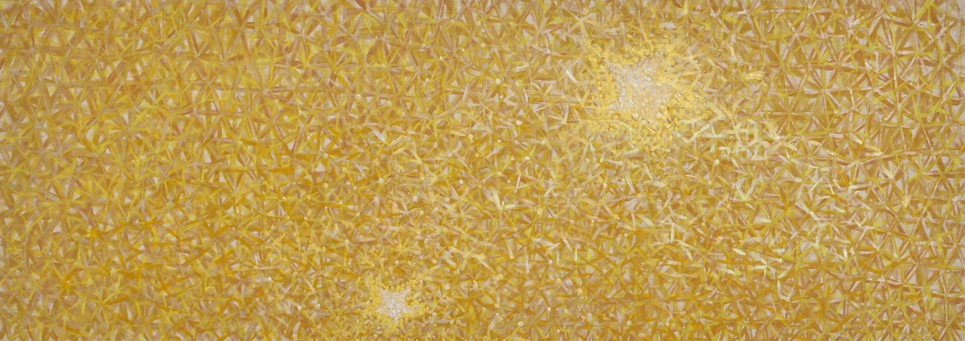
Star Wave

2025
Acrylic on canvas
270 x 600 cm
About The Work

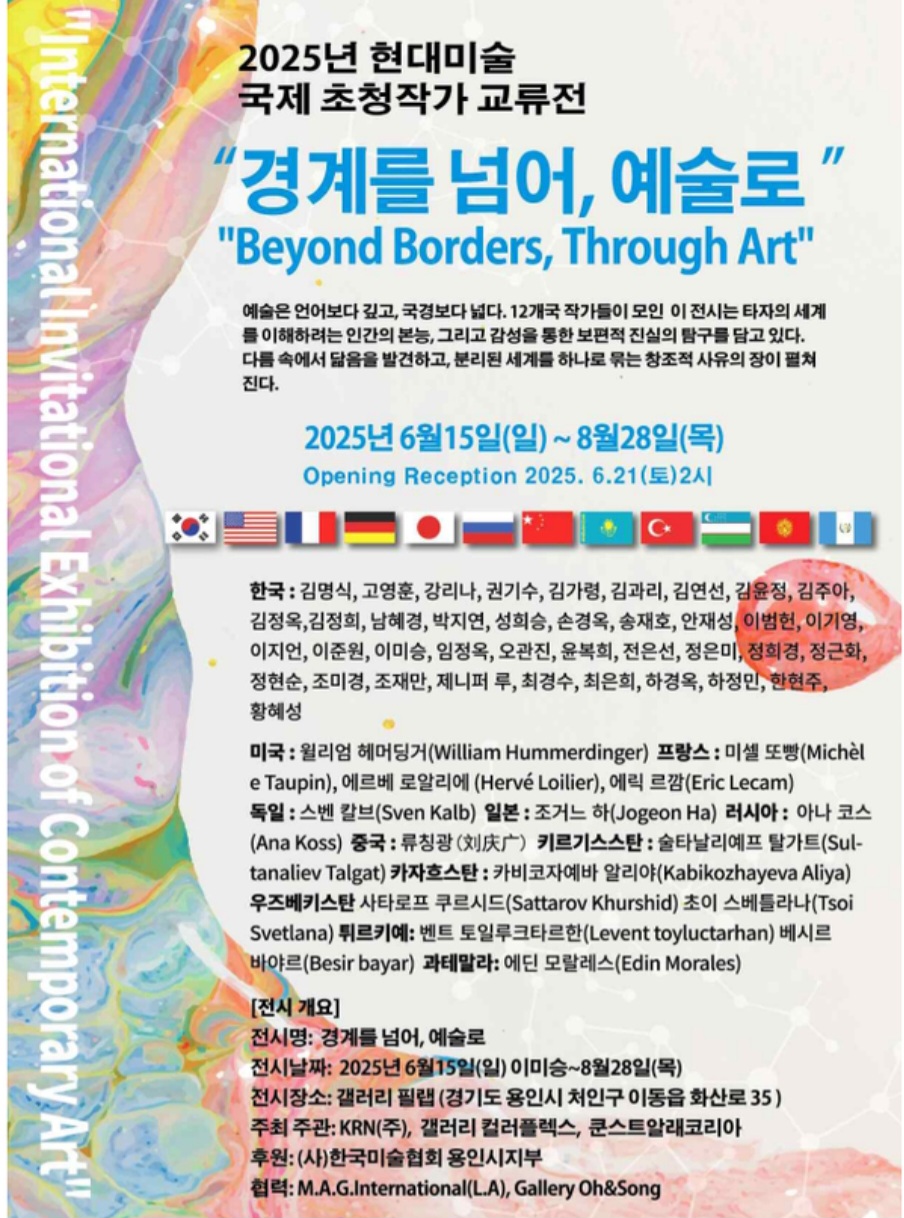
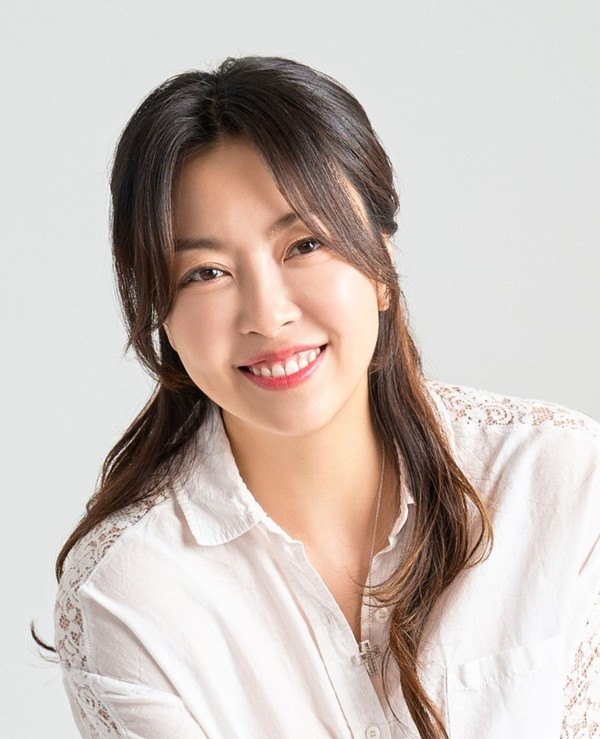
Starya Hee-seung Sung has explored the possibilities of painting through questions about the relationship between the self and the world. She approaches painting not as a finished result but as an ongoing process of becoming and movement, focusing on the traces that repeated actions and accumulated time leave on the canvas.

The central concept running through Sung’s practice is “becoming.” Rather than remaining in a fixed state, existence continually undergoes processes of generation and expansion, moving into new states through deconstruction and reconstruction. From this perspective, her paintings function as temporal fields in which repetition and contemplation, concentration and pause accumulate.

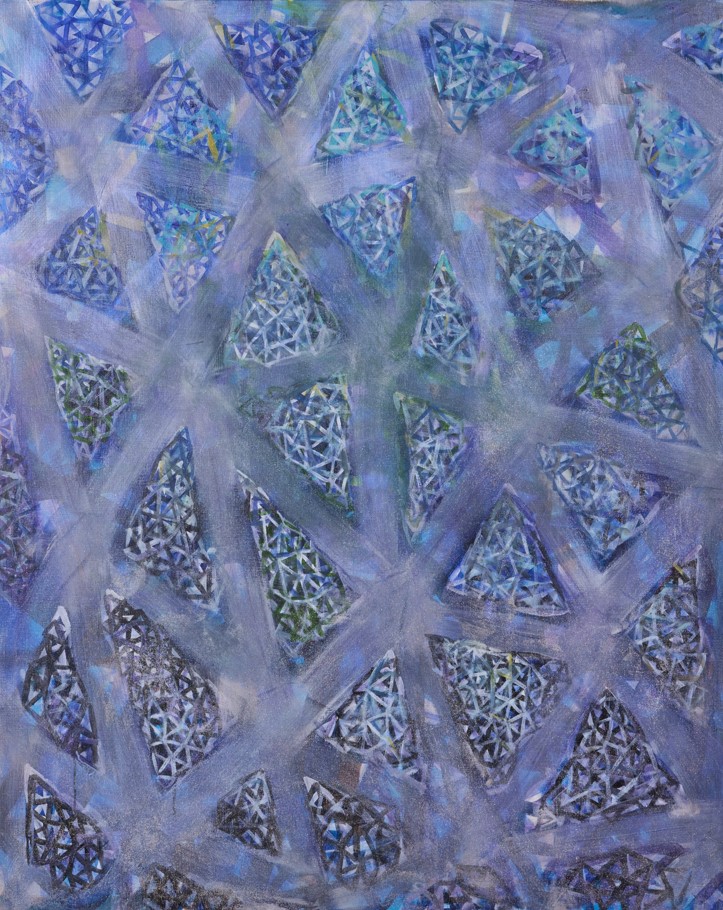
The circle, a recurring form in Sung’s paintings, symbolizes completion, cyclicality, and infinity, reflecting an attempt to encompass the world. Her subsequent exploration of the triangle marked a turning point in her practice, introducing a structure that holds stability and tension, generation and collapse in equal measure. The circle thus ceases to be an endpoint and becomes one phase in an ongoing process of deconstruction and reconstruction.

The star that emerges in her work does not point to a specific symbol or narrative. Rather, it marks a point where circles and triangles, completion and expansion overlap, revealing traces of shifting ways of perceiving the world. As a form of light that exists unmistakably yet remains beyond reach, forms relationships without being possessed, and exerts a continual influence from afar, the star gives shape to condensed sensations arising from personal experiences, memories, and the fissures of existence.

Solo Exhibitions (Brief)

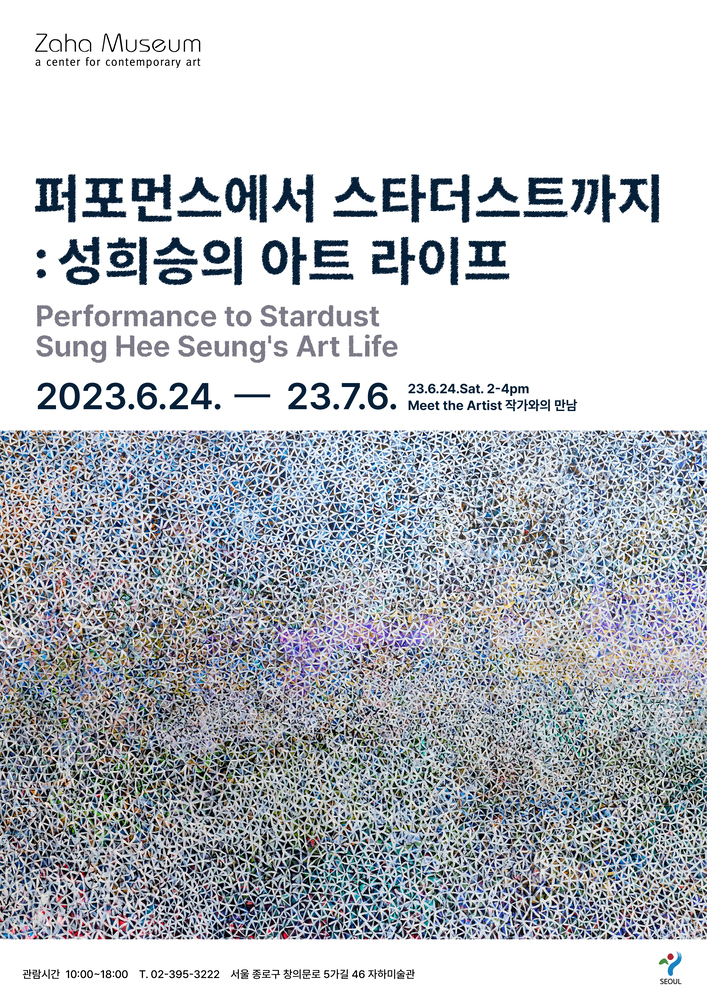
Starya Hee-seung Sung has held solo exhibitions at CICA Museum (2020), Sejong Museum of Art and Gyeonggi Arts Center (2021), Zaha Museum (2023), Youngeun Museum of Contemporary Art (2025), and Hakgojae Gallery (2026).

Group Exhibitions (Brief)

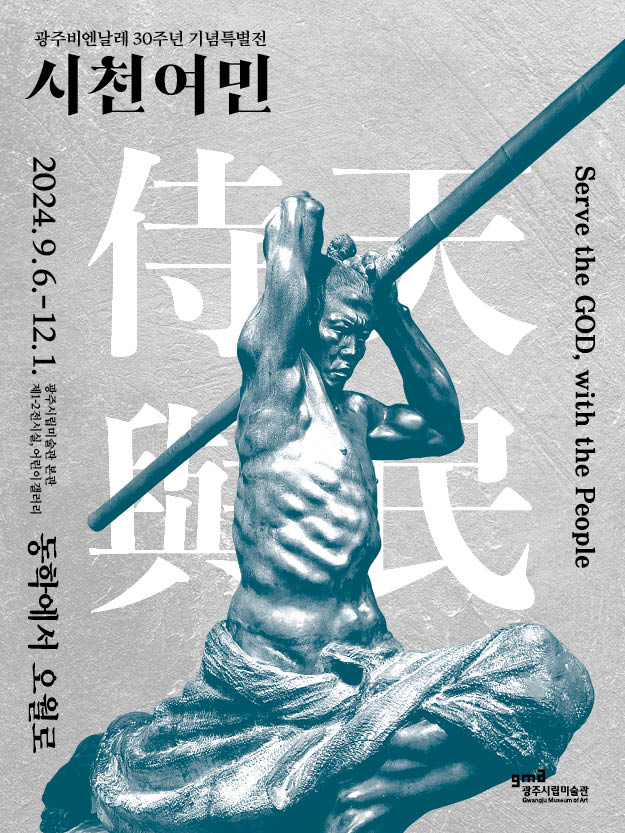
Starya Hee-seung Sung has participated in group exhibitions at the Museo Nacional Centro de Arte Reina Sofía and the International Center of Photography (2006), Korean Cultural Center France (2022), and Gwangju Museum of Art (2024), among others.

Awards (Selected)

Starya Hee-seung Sung received the 2nd Star Art Award and the Seoul Maeil Newspaper Art Grand Prize in the Artist Category in 2018, and was named a Top Emerging Artist by Saatchi Art in 2022.

Residencies (Selected)

Starya Hee-seung Sung has participated in residency programs at Vermont Studio Center (2006), Seoul Art Space Sindang (2010), GANA ATELIER and Youngeun Artist in Residency (2025).

Collections (Selected)

Works by Starya Hee-seung Sung are held in the collections of the Museo Nacional Centro de Arte Reina Sofía, Gyeonggi Arts Center, Youngeun Museum of Contemporary Art, Zaha Museum, Samsung Foundation of Culture, Yonsei University, and Deutsche Bank.

Works of Art

Painting as a Visualization of the Traces of Becoming

Originality & Identity

Across shifts in medium and form, Starya Hee-seung Sung’s practice has consistently explored the question of how the self enters into relationships with the world. In her performances and video works of the early 2000s, she intervened in existing situations and the works of others, while using her own body as a medium to destabilize boundaries between artist and viewer, creator and participant, and individual and society.

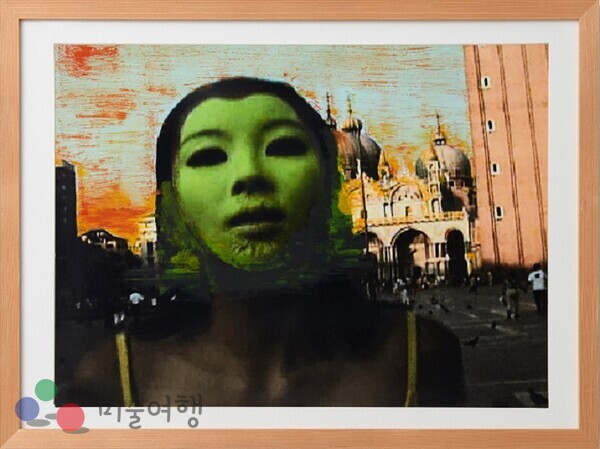
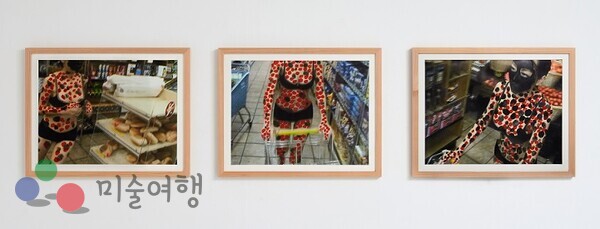
Her Uninvited/Invited performance before a surveillance camera at the Romanian Pavilion of the Venice Biennale, followed by similar interventions in supermarkets in New York, transformed devices intended for surveillance into media of communication and participation, questioning how art might emerge outside institutionalized spaces. Later performances involving head shaving and actions reminiscent of religious rituals further extended these concerns to the ego and superego, salvation and rebirth, and the relationship between the individual and the community.

As painting gradually became central to her practice, these concerns were newly condensed into the image of the “star.” For Sung, the star is neither merely a representation of a celestial body nor a romantic motif; rather, it functions as a coordinate where memory, emotion, and relationships with others intersect.

It brings together the ideal world imagined while looking at the night sky as a child, a presence that continues to shine in moments of deepest darkness, and an image of relationships in which distant beings nevertheless remain connected and exert influence on one another. Much as a single star in Antoine de Saint-Exupéry’s The Little Prince becomes a singular world through care and responsibility, Sung expands the star into a medium connecting one heart to another and into a bearer of hope, consolation, and the possibility of recovery.

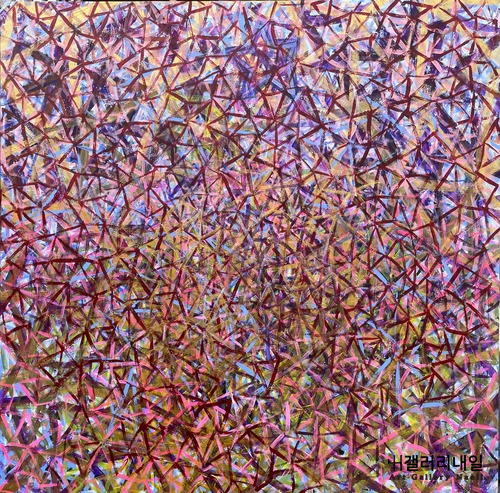
Another central concept in Sung’s practice is “becoming,” an understanding of existence as continually changing rather than fixed. The circle, which appeared in her earlier work as a form associated with completion, circulation, and infinity, gradually moved away from the idea of a closed and final structure through her exploration of the triangle. The triangle operates as a minimal unit capable of containing stability and tension, generation and collapse at once; through repetition and accumulation, it may become a star or dissolve again into a larger structure.

The star, therefore, is not a fixed symbol or ultimate form, but a provisional phase in which circle and triangle, completion and expansion, generation and disappearance intersect. In Sung’s paintings, existence is understood less as a completed state than as an ongoing process of entering into relationships, transforming, and moving toward another state.

Sung’s description of her recent abstract practice as “Hyper-Abstract” is closely connected to this position. Her abstraction is not an inquiry into pure form detached from the external world, but an attempt to encompass memories, emotions, vitality, and relational sensations that resist clear verbal articulation, including dimensions that remain invisible.

The intervening impulse that once crossed boundaries between the body and institutional systems in her early performances has shifted in recent paintings toward connection and solidarity among individual beings. The idea that point connects to point, star to star, and “I” to “you” to form a collective “we” transforms her longstanding concerns with participation and communication into an expanded language of relationship.

In this sense, despite the transition from performance to painting, Sung’s practice retains a consistent identity: it opens boundaries between existence and the world and explores the moments in which relationships come into being.

Style & Contents

Starya Hee-seung Sung’s practice has moved fluidly across painting, performance, video, and photography rather than remaining confined to a single medium. In her earlier works, she treated her own body as both surface and medium, painting her face, shaving her head, and performing before surveillance cameras. Images generated through these performances were sometimes transformed into paintings months or even years later.

In this process, action, documentation, image, and painting operate less as separate genres than as successive forms through which a work continues to evolve. Her performances of painting directly before an audience similarly render the process of production visible, extending the act of making the “invisible” visible into the work itself.

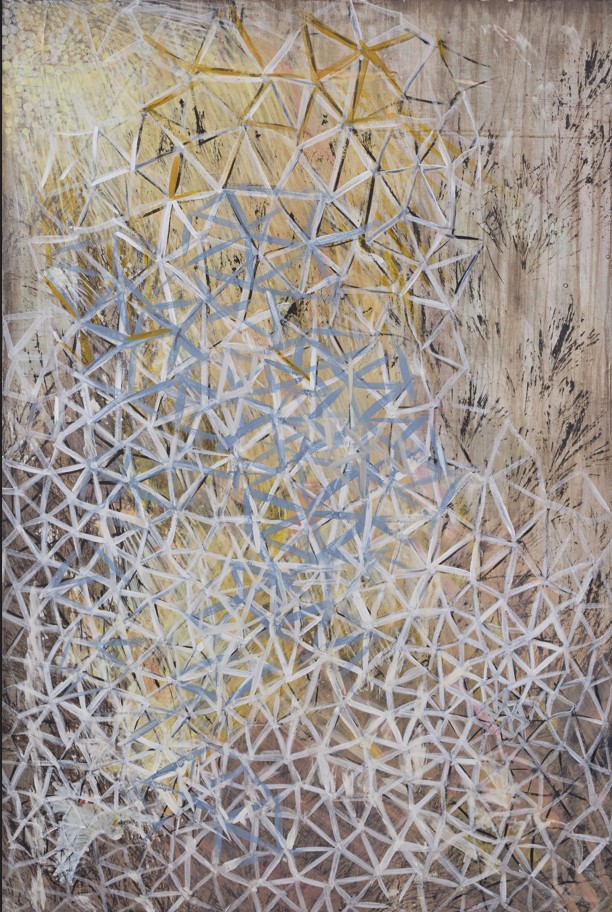
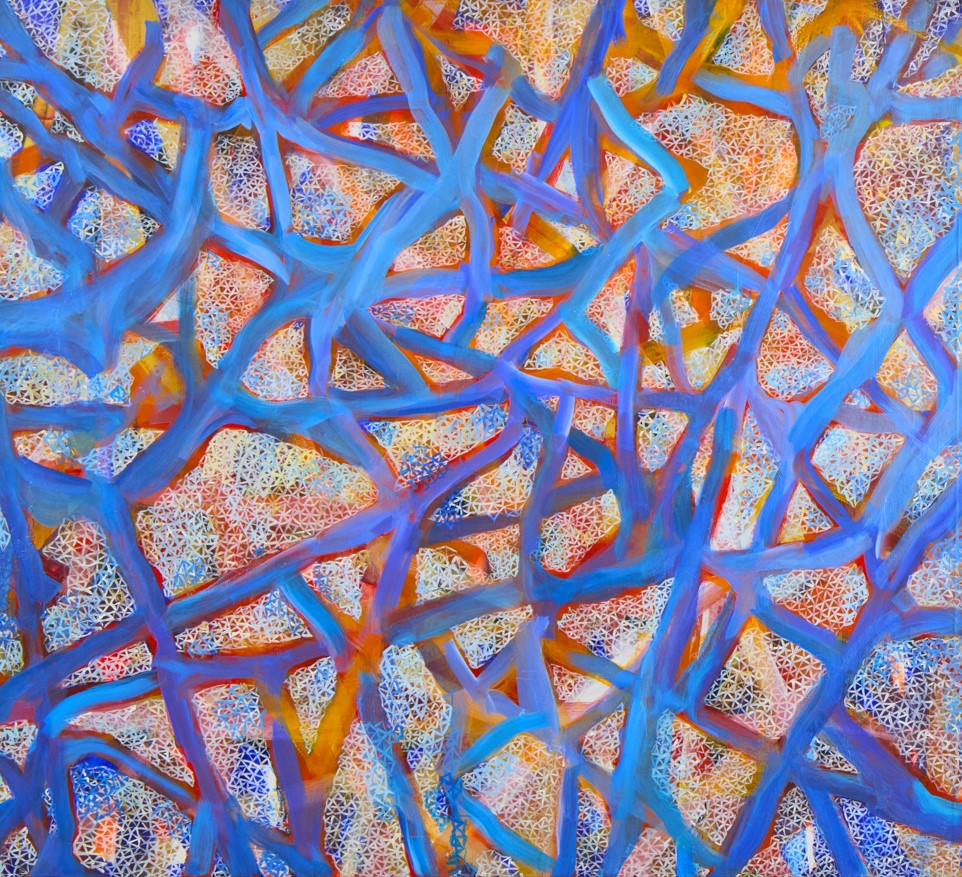
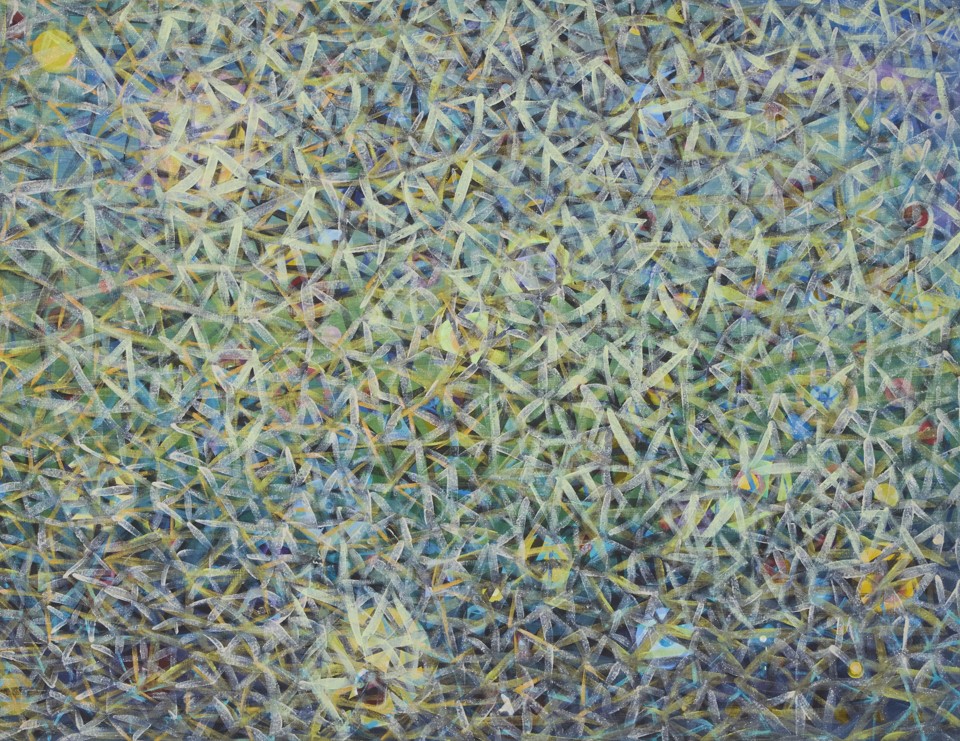
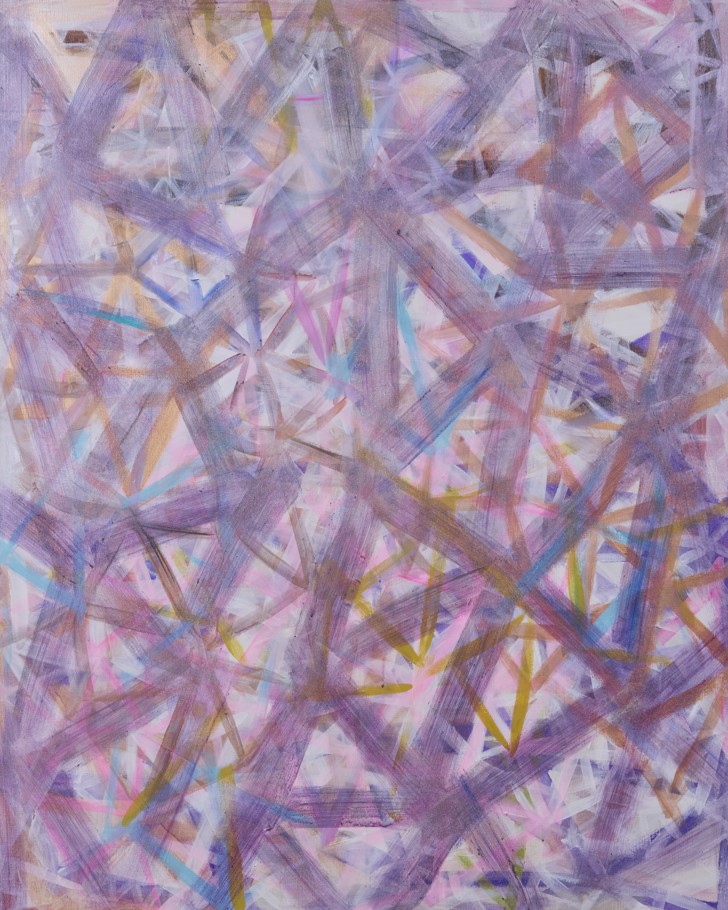
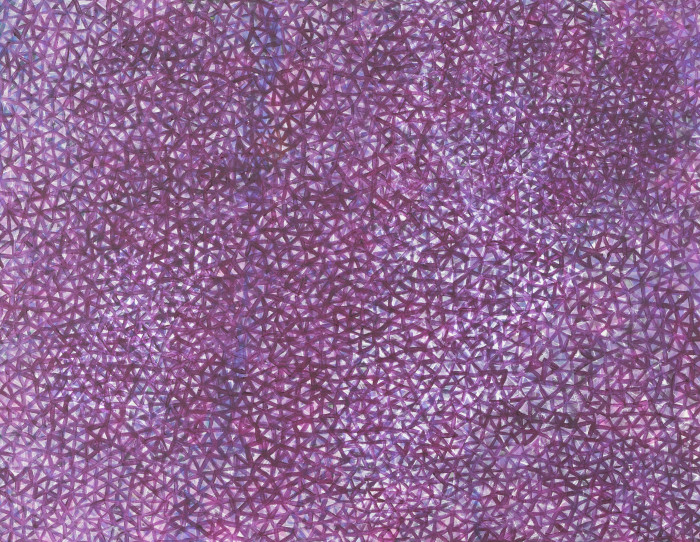
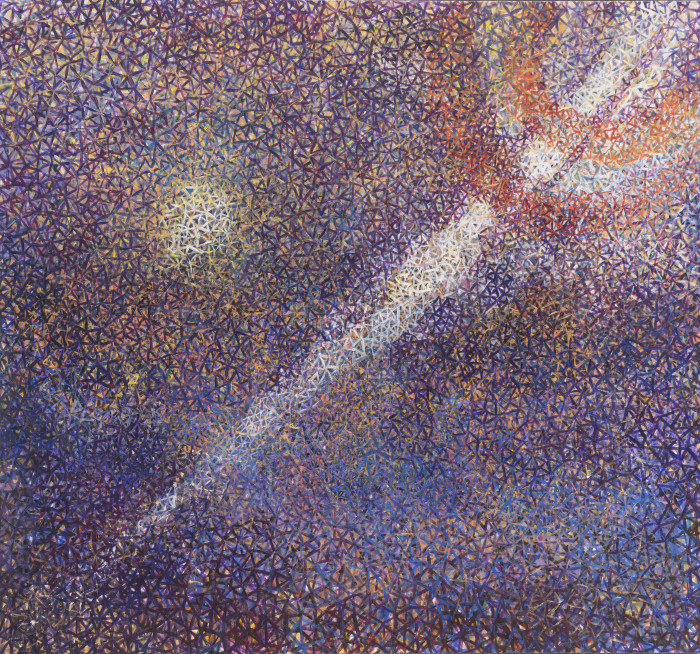
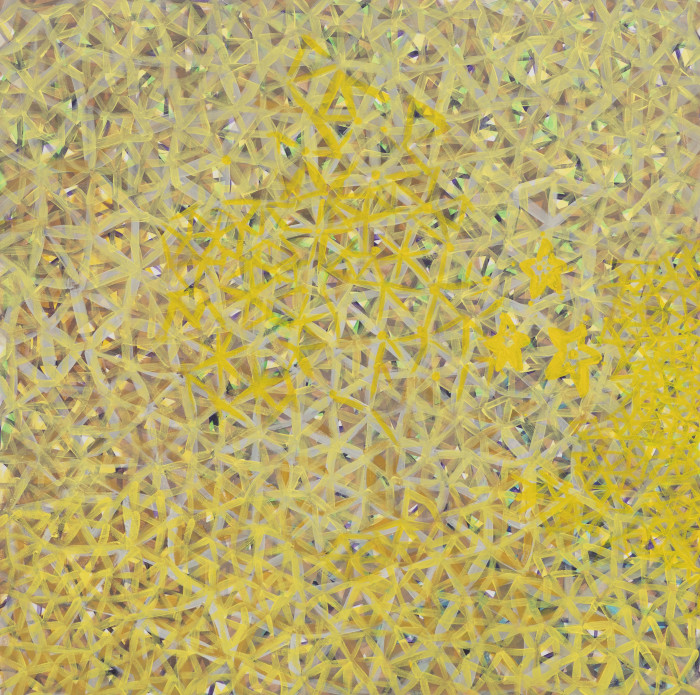
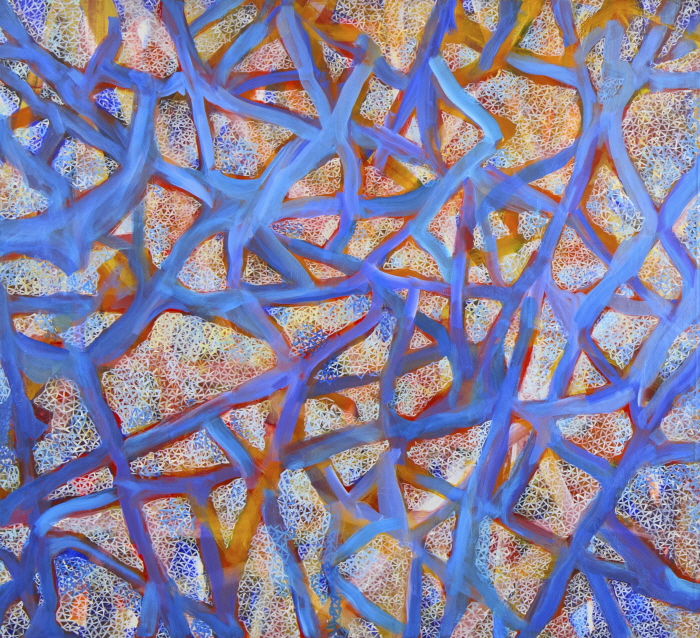
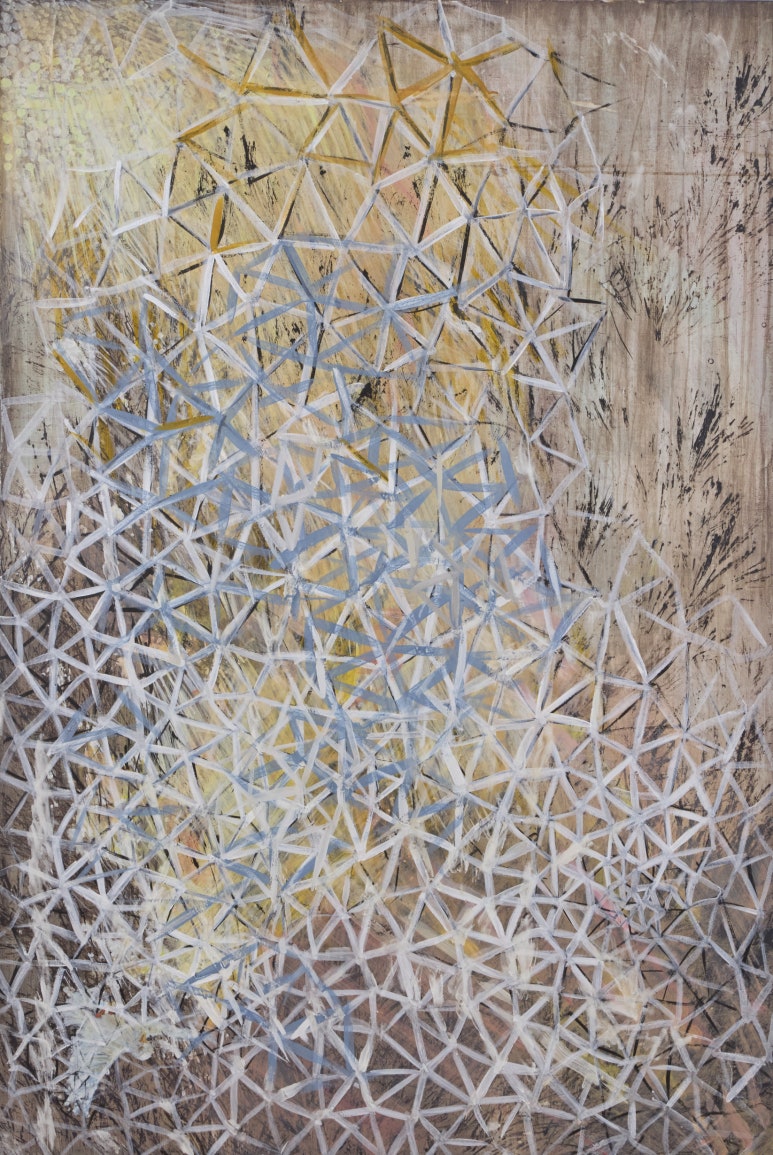
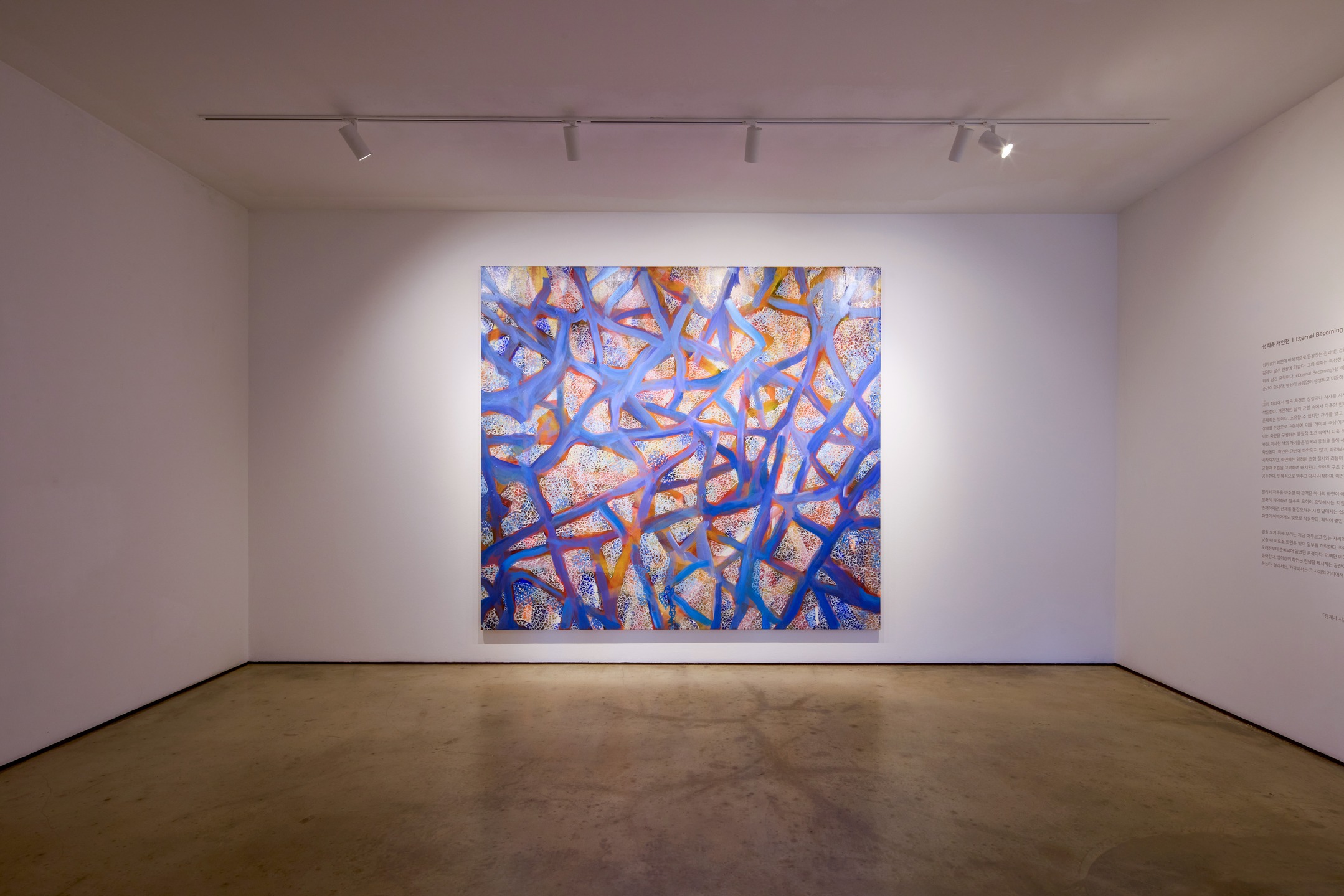
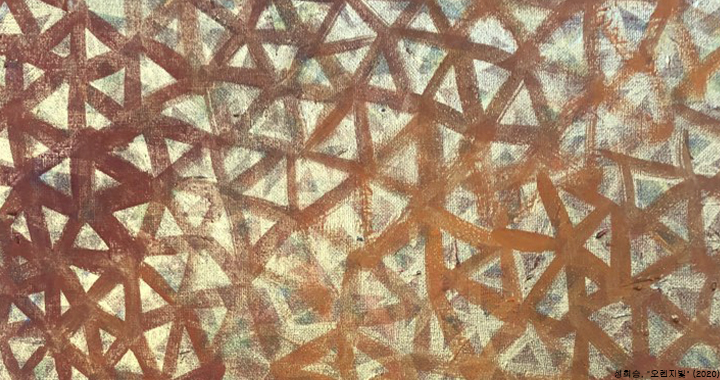
As painting became increasingly central to her practice, points, lines, and triangles emerged as the primary units organizing the pictorial field. Small triangles are repeatedly layered and connected in a process resembling the weaving of a surface, while accumulated lines spread across the canvas to produce an all-over structure. Yet Sung’s paintings differ from uniformly saturated fields.

Dense accumulations coexist with sparse areas and open intervals, while lines simultaneously divide forms and connect them. These gaps and vacant spaces prevent the surface from becoming closed, allowing the viewer’s gaze to enter and suggesting the possibility of spatial depth beyond the two-dimensional plane.

Repetition and improvisation, as well as control and chance, operate simultaneously within her process. Points, short brushstrokes, and subtle variations of color are gradually layered to build density across the surface, expanding in multiple directions rather than converging toward a single center. Although the brushwork often appears spontaneous, an underlying structural rhythm maintains the balance of the whole, while repeated pauses and resumptions add new temporal layers over existing traces.

In more recent works, her palette has shifted from intense, direct colors toward restrained tones of ivory, off-white, gray, and pastel, emphasizing subtle chromatic differences and gradations of light rather than strong contrast. While acrylic painting remains central, Sung has also expanded her material vocabulary through works incorporating Korean paper and, in Stardust, ash from a mountain fire.

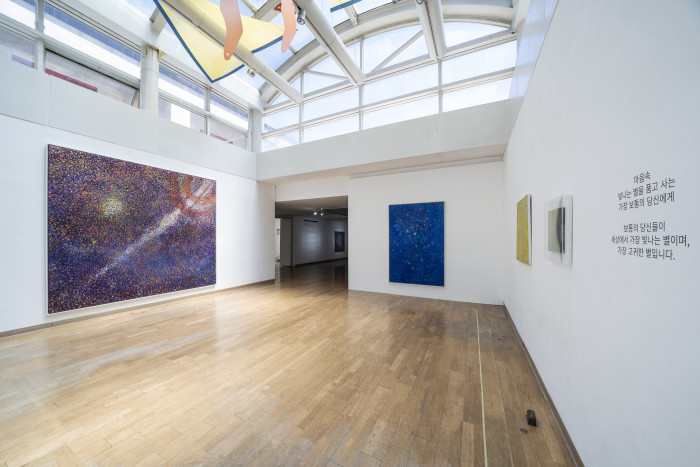
These formal strategies also determine how the works are experienced. From a distance, innumerable points, lines, and layers of color merge into a constellation or field of light; at close range, individual brushstrokes and untouched areas of canvas emerge as distinct traces. The relationship between whole and part therefore continually changes as the viewer moves and shifts focus.

Rather than allowing the image to be grasped at once, the paintings require sustained looking, making time not only something accumulated through the process of making but also a condition of viewing. Rather than directly depicting stars or the cosmos, Sung constructs sensations of light and space through the material organization of point, line, color, and emptiness, bringing abstract form into contact with memory, relationship, and emotion.


Topography & Continuity

Although Starya Hee-seung Sung’s practice has shifted in emphasis from performance and video in the early 2000s toward painting, this transition is better understood as a transformation in the form of her questions rather than a rupture with her earlier work. Her early practice directly crossed boundaries between artist and viewer, institution and everyday life through surveillance cameras, urban spaces, and her own body, while later performances of painting before audiences continued to make the process of creation itself part of the work.

If her earlier mode of “intervention and participation” involved the body entering external situations, her paintings relocate the question of relationship into the connections among points, lines, and colors, as well as into the viewer’s sustained encounter with the surface. Across these shifts in medium, her concern with how invisible relationships might be made perceptible has remained consistent.

Within the broader terrain of painting, Sung’s work intersects with the lineage of all-over abstraction, in which repeated lines and colors extend across the entire pictorial field. Critics have connected the accumulation and expansion of her small triangular units to all-over painting while also invoking the cosmic spatiality of Kim Whanki’s dot paintings. Yet Sung’s surfaces do not resolve into uniformly saturated, closed fields.

Density and openness coexist, and vacant intervals remain as passages through which the gaze may enter. Her abstraction therefore does not pursue formal autonomy alone; rather, it uses the structure of the pictorial plane to evoke intangible dimensions of memory, emotion, vitality, and the cosmos. While sharing the languages of repetition and all-over composition with modern abstraction, Sung redirects them toward a field of relational and inner experience.

The continuity of her practice is most clearly embodied in repetition and accumulation. From performances structured through repeated bodily actions to paintings constructed from innumerable points and triangles, Sung has consistently favored processes in which time intervenes over images completed in a single instant.

In her recent paintings, points and short brushstrokes accumulate, pause, and begin again, adding new layers over previous traces. This process gives formal expression to her central concept of “becoming.” Rather than arriving at a final state, the work continues through generation and dissolution, expansion and reconfiguration, leaving the pictorial field not as a fixed result but as a site where time accumulates.

This continuity also extends to the viewer’s experience. Whereas Sung’s earlier works drew viewers into performative situations and destabilized the distinction between observer and participant, her recent paintings ask viewers to remain and look over time. A surface perceived from afar as a unified field of light or cosmic space breaks apart at close range into individual brushstrokes, intervals, and layered traces, allowing the work to be continually reconstituted according to the viewer’s distance and duration of looking.

Continuity in Sung’s practice, therefore, does not mean repetition of the same form. It lies in the persistent renewal of questions concerning relationship, time, participation, and becoming across changing media and visual languages. Her trajectory from performance to painting, and from bodily intervention to perceptual duration, forms a continuous artistic arc precisely through these transformations.

Works of Art

Painting as a Visualization of the Traces of Becoming

Articles

Exhibitions

Activities