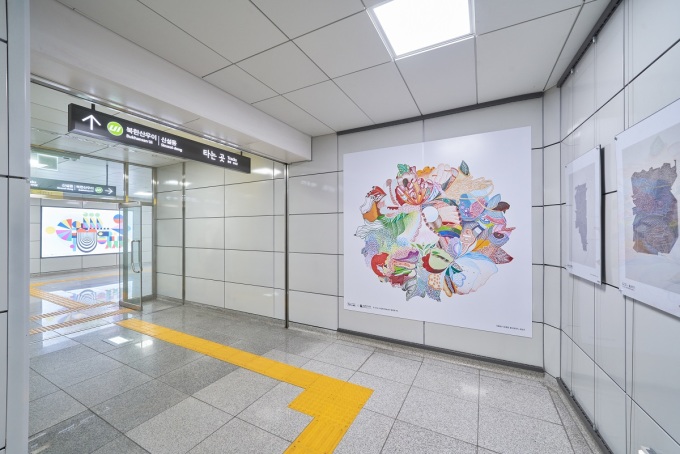
Bull Market - K-ARTIST

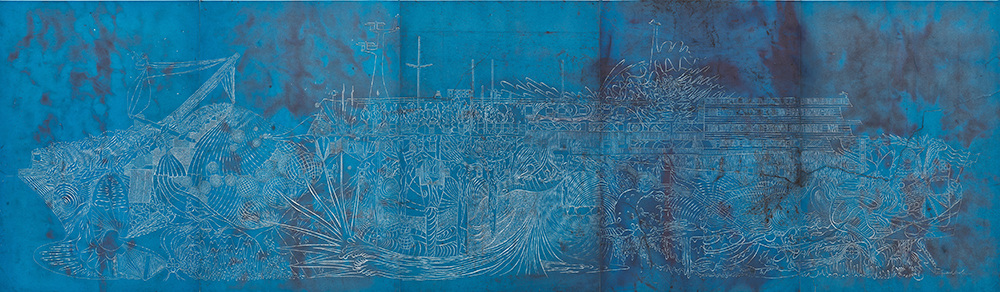
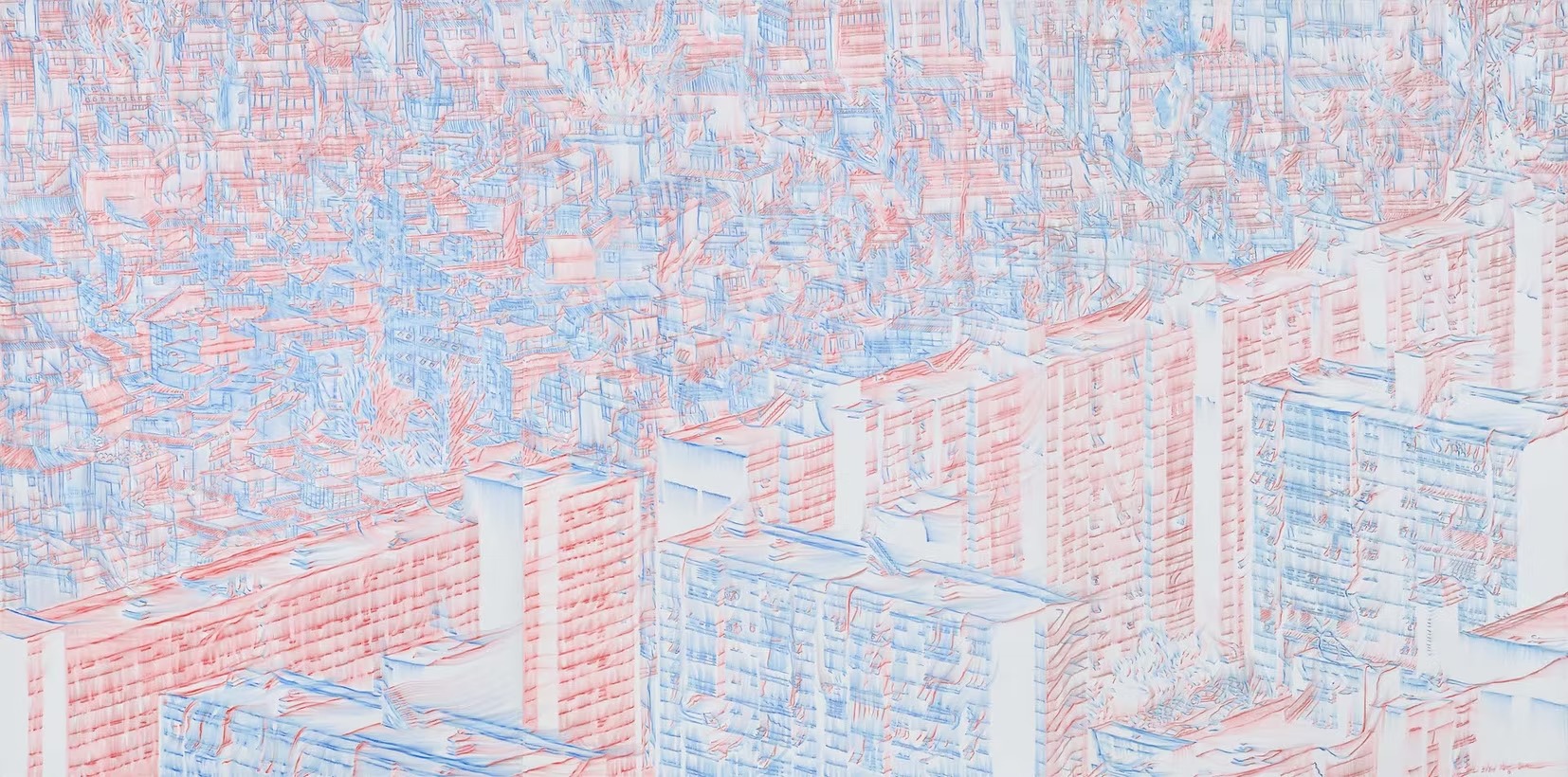
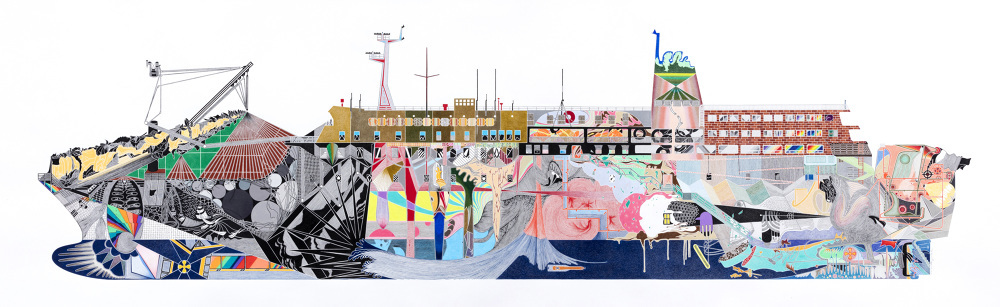
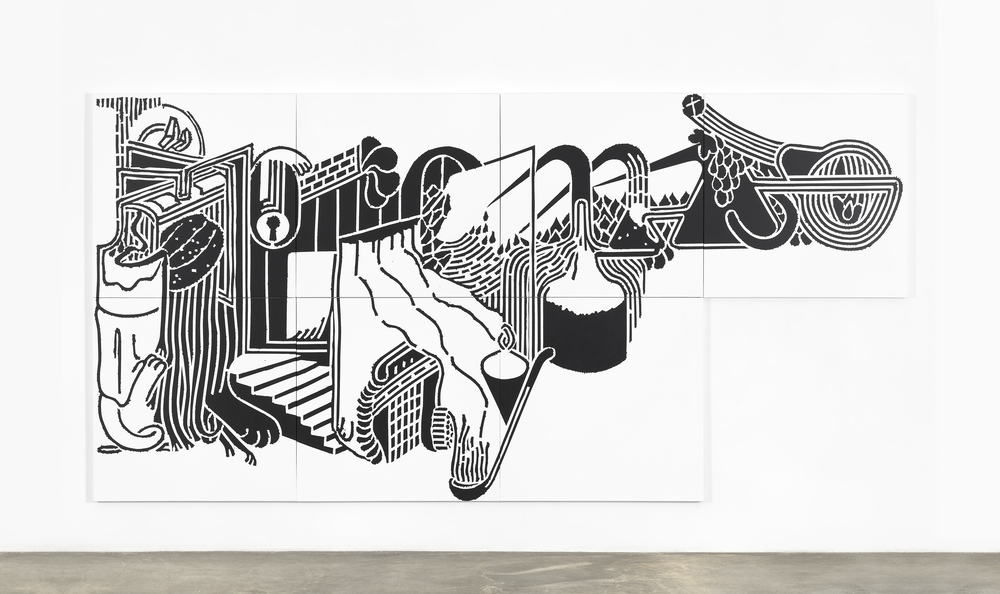
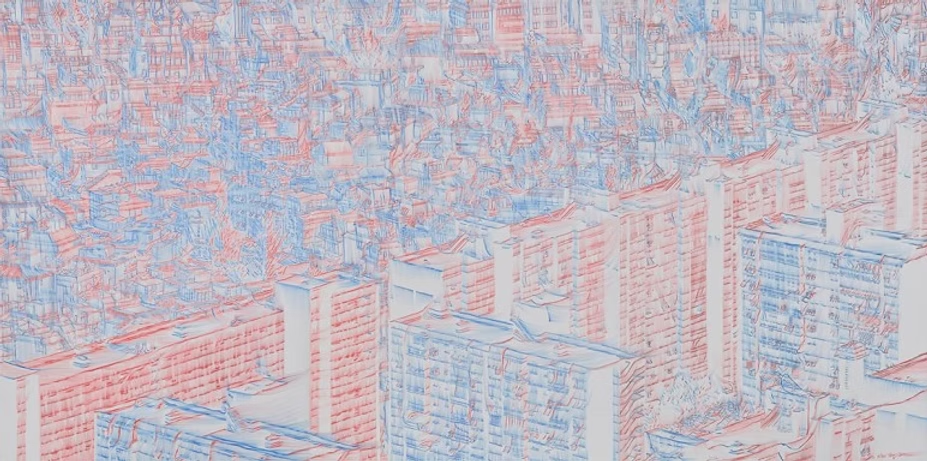
Bull Market

2022
Acrylic and oil pastel on canvas
193.9 x 390.9 cm
About The Work

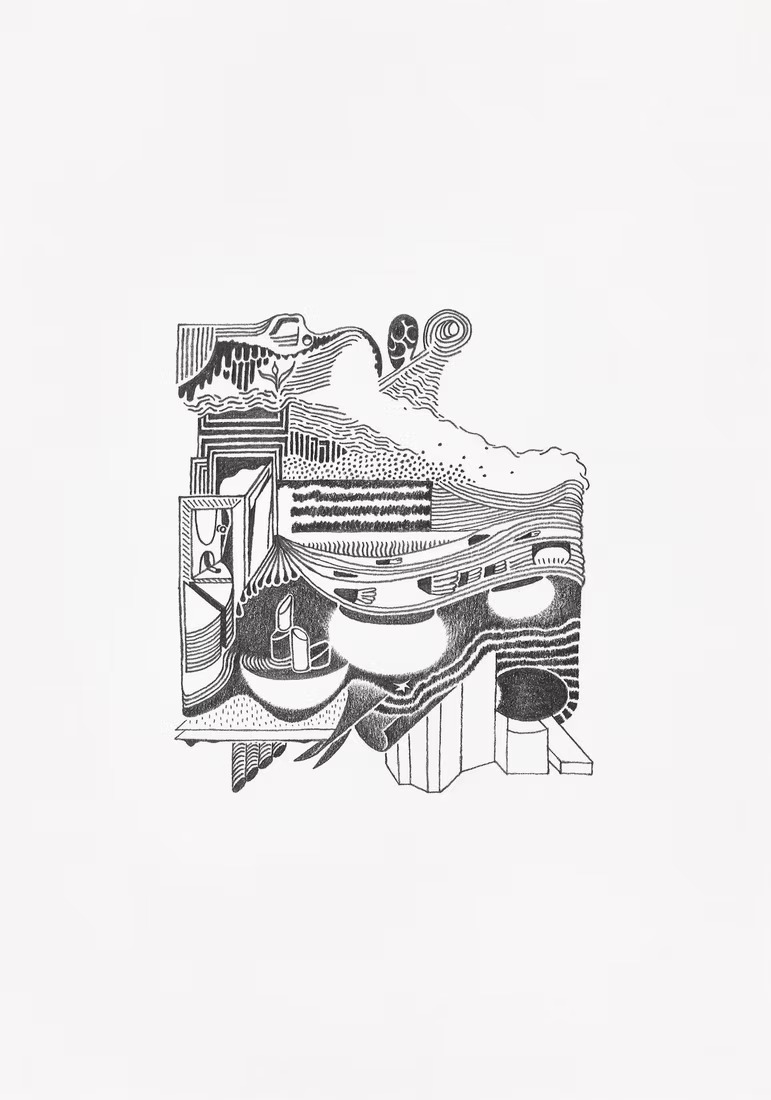
Dongwan Kook works on the unconsciousness and the way reaching it with drawing, painting, sculpture, moving image, and books. Her practice begins with capturing fleeting moments that are difficult to remember and recording sensations that have yet to find clear expression in language. Drawing on her long-standing practice of documenting dreams, she transforms memories that begin to fade upon waking into images and narratives, exploring the unconscious worlds embedded within the individual’s inner life.

For Kook, documentation goes beyond preserving the past. Meanings are continually reshaped through the interplay of memories and emotions that change over time, the present self who revisits these records, and the perspectives of others who encounter them. She gives concrete form to this inquiry through 'Hoigwang-Banjo' (回光返照),  a Buddhist contemplative practice that involves turning one’s attention inward, redirecting the light that normally shines outward toward oneself. 

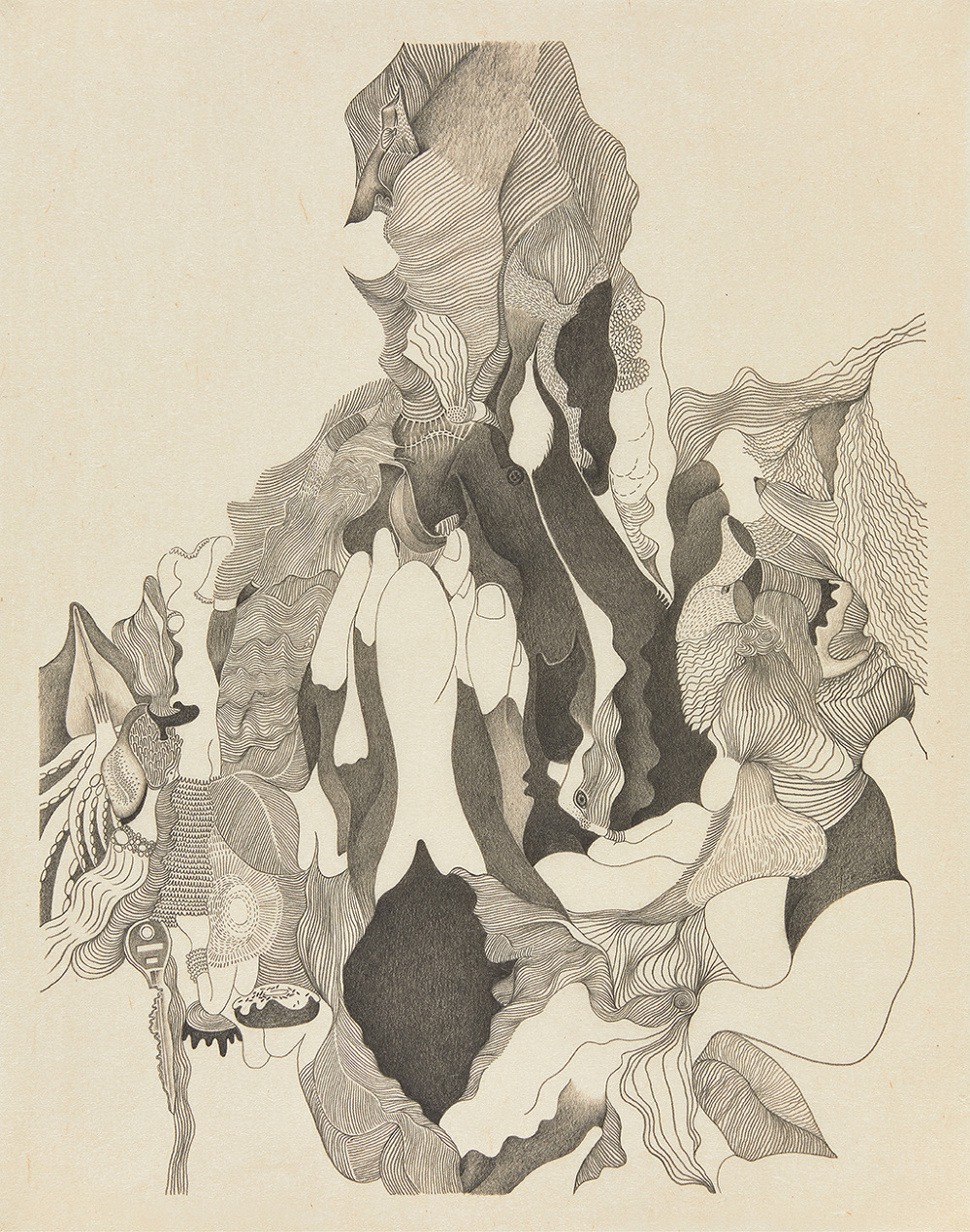
Through this approach, she observes both the subject before her and her own inner responses to it. Working without preliminary sketches or an eraser, she follows the movements of her hand to develop images and associations as they arise spontaneously, suspending conscious judgment and anticipation.

Kook’s practice, however, does not stop at the direct expression of the unconscious. By revisiting, fragmenting, enlarging, and translating drawn images into text, she discovers relationships and meanings that had previously remained beyond her awareness. Through this cyclical process, in which the hand registers something before the conscious mind interprets it, dreams and memories become starting points for continual translation and reinterpretation rather than fixed objects of meaning. 

In this way, Kook connects the act of drawing a subject with the act of looking inward through it, exploring how narratives rooted in the individual unconscious can intersect with the experiences of others and expand into universal stories of lived reality.

Solo Exhibitions (Brief)

Dongwan Kook has held solo exhibitions at Gallery Factory in 2011, Gallery Chosun in 2016, PIBI Gallery in 2021, and ThisWeekendRoom in 2026.

Group Exhibitions (Brief)

Dongwan Kook has participated in group exhibitions at the David Roberts Art Foundation in 2008, Seoul National University Museum of Art in 2010 and 2011, Museo Carlo Bilotti Aranciera di Villa Borghese in 2013, Culture Station Seoul 284 in 2015 and 2021, MMCA Residency Changdong in 2020, and SOMA Museum in 2025.

Awards (Selected)

Dongwan Kook was selected as a PUBLIC ART NEW HERO in 2017, received recognition in the Starfield Library Open Art Competition in 2019, and was selected for Chongkundang Yesuljisang in 2023.

Residencies (Selected)

Dongwan Kook participated in the Glenfiddich Artists in Residence program in 2012, Seoul Art Space Geumcheon from 2016 to 2018, and MMCA Residency Changdong in 2020.

Works of Art

Universal Stories of Reality Connected Through the Individual Unconscious

Originality & Identity

Dongwan Kook’s practice begins with an impulse to hold onto moments that resist memory and to record sensations that have not yet acquired clear language. In her long-running archive of dreams, she has documented memories that begin to disappear from the moment of waking and subsequently translated them into images and narratives.

Recording, in this sense, extends beyond the preservation of the past. Meaning is continually renewed through memories and emotions altered by time, the artist’s own rereading of her records in the present, and the gaze of others who encounter them. For Kook, dreams and memories therefore serve as points of departure for an ongoing process of translation and reinterpretation rather than as material awaiting a fixed interpretation. 

This approach takes a particularly concrete form in the method Kook calls 'Hoigwang-Banjo' (回光返照), a term derived from a Buddhist practice of turning outward-directed light back toward oneself. While looking at a given subject, Kook simultaneously observes her own internal responses to it.
Drawing without a preliminary sketch or an eraser, she follows the movements of her hand and connects images and associations that arise from moment to moment, partially suspending conscious judgment and prediction.

Yet the resulting image is never treated simply as a direct manifestation of the unconscious. Kook reads it again, fragments it, enlarges it, or translates it into writing in order to discover relationships and meanings that were initially unavailable to her. This recurring movement—in which the hand discovers first and consciousness follows through interpretation—has become a central principle of her practice, closely linking the act of drawing a subject with that of observing the self through it. 

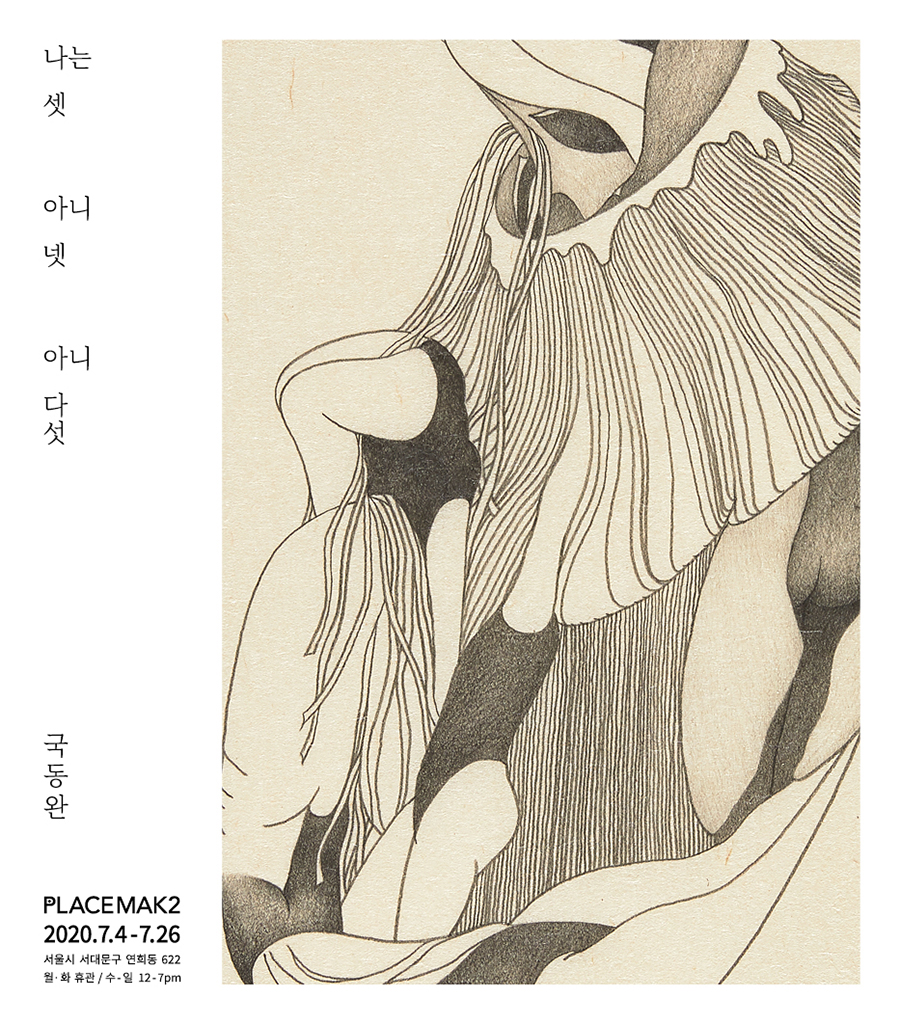
Although her work often begins with personal memory and bodily experience, its concerns steadily extend toward the world outside the self. In A Ferry, Kook recorded the helplessness and prolonged process of mourning she experienced in response to the Sewol ferry disaster. 'I Am Three or Four or Five' developed from memories of pregnancy and childbirth, the desire to have a child, and the imagined presence of a fetus, bringing the body into relation with language and memory.

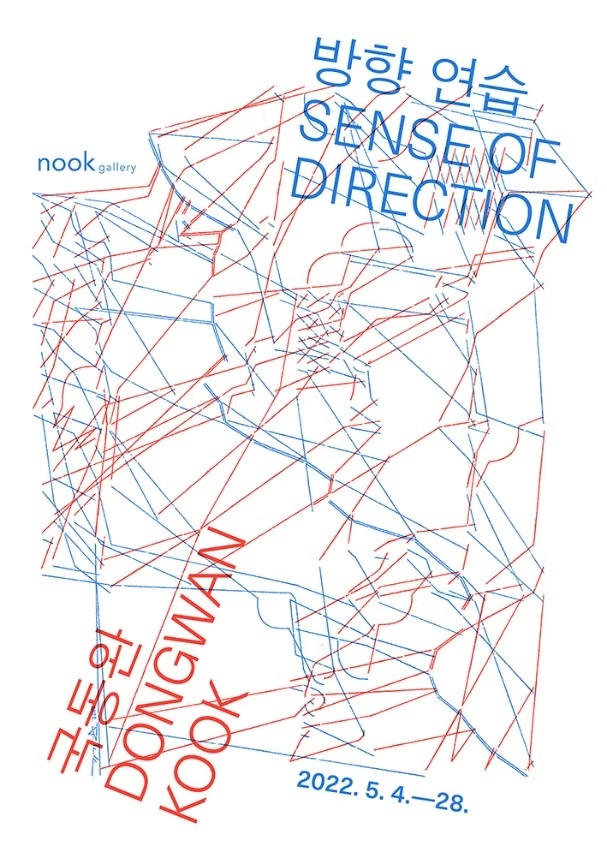
The home, first approached through memories of family and neighbors in Decalcomanie Life, later becomes entangled with soaring housing prices, the logic of capital, and anxieties over the direction of life in 'Sense of Direction' and Bull Market. Social events and structures enter her work through the sensations they leave upon everyday life and the body. Her experience of repeatedly producing images associated with the Sewol disaster regardless of the subject she initially intended to draw demonstrates how an external event can become internally inscribed and subsequently resurface through images. 

A recurring question throughout Kook’s practice, then, concerns how the self and the world leave traces upon one another. Moving between dream and reality, consciousness and the unconscious, the individual and society, and language and image, she records the process of passing between these conditions without resolving them into a single answer. Uncertainty becomes a productive condition through which new sensations and relationships can emerge.

At the intersections of spontaneous gesture and self-imposed rules, chance and control, private desire and social conditions, Kook repeatedly tests her own position and direction. The distinctiveness of her practice lies not simply in taking the unconscious as a subject, but in continually creating new connections between the inner self and the external world through acts of recording, translation, and rereading.

Critical writing on her work has likewise emphasized the way she captures traces of thought, language, and emotion and reorganizes them into structures of image and language rather than immediately explaining the experiences from which they arose.

Style & Contents

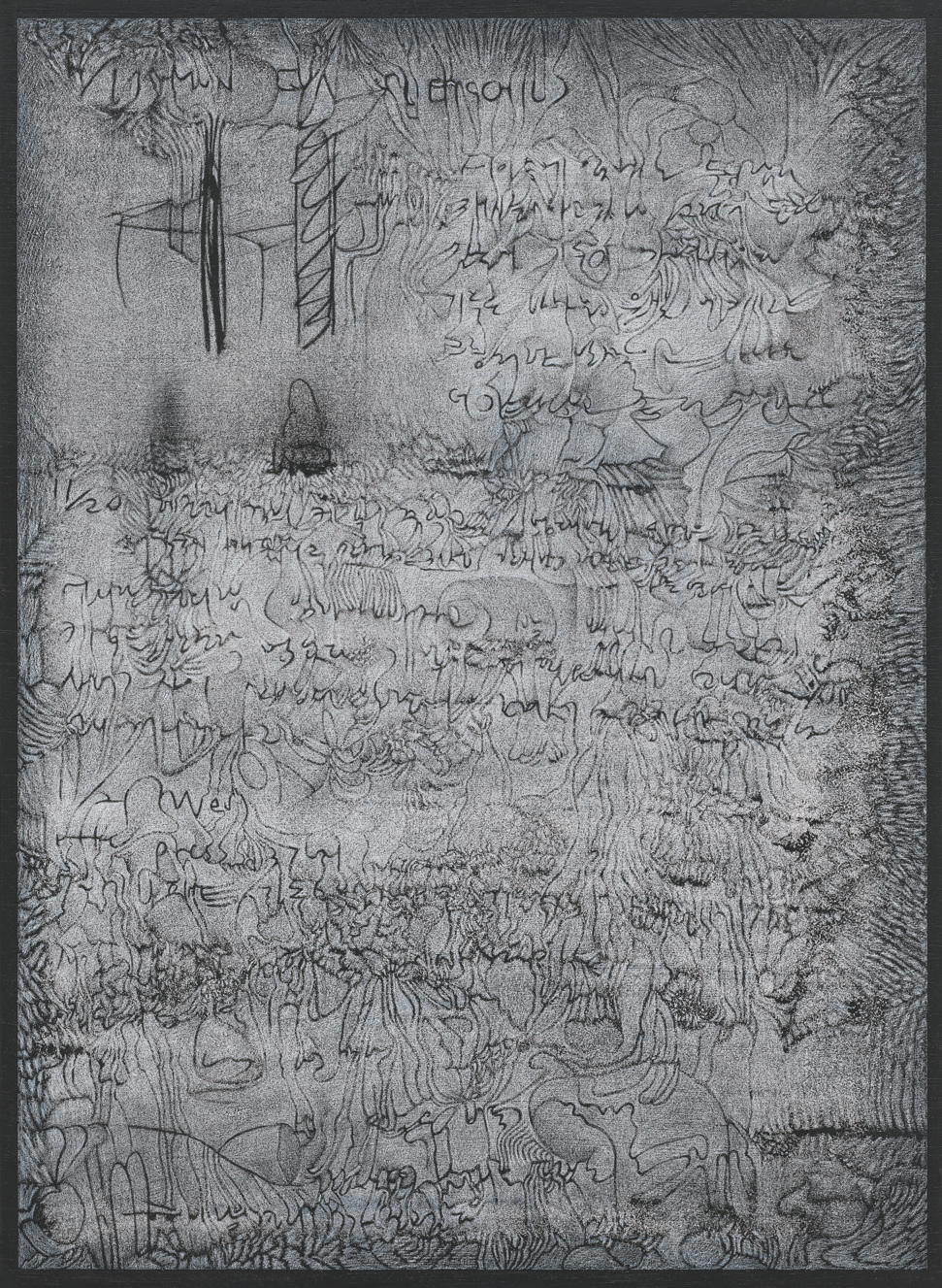
Drawing functions in Dongwan Kook’s practice both as a means of producing images and as a method for observing thought as it takes form. Emphasizing the direct contact among pencil, paper, and hand, she has developed a process in which lines unfold through spontaneous associations without the use of an eraser or a predetermined sketch.

In 'Hoigwang-Banjo' (回光返照), an image is attached to glass and illuminated from behind, providing a projected form from which further associations emerge. The reference images Kook calls “image questionnaires” offer direction without predetermining the result. Movements of the hand, momentary decisions, and unforeseen forms intervene throughout the process, turning drawing into a way of working through a question. 

Although Kook draws upon free association and automatism, her images remain closely bound to language. Dreams may first be recorded as sentences and subsequently translated into images, while forms discovered through drawing may in turn be rewritten as text. Image and language repeatedly interpret one another.

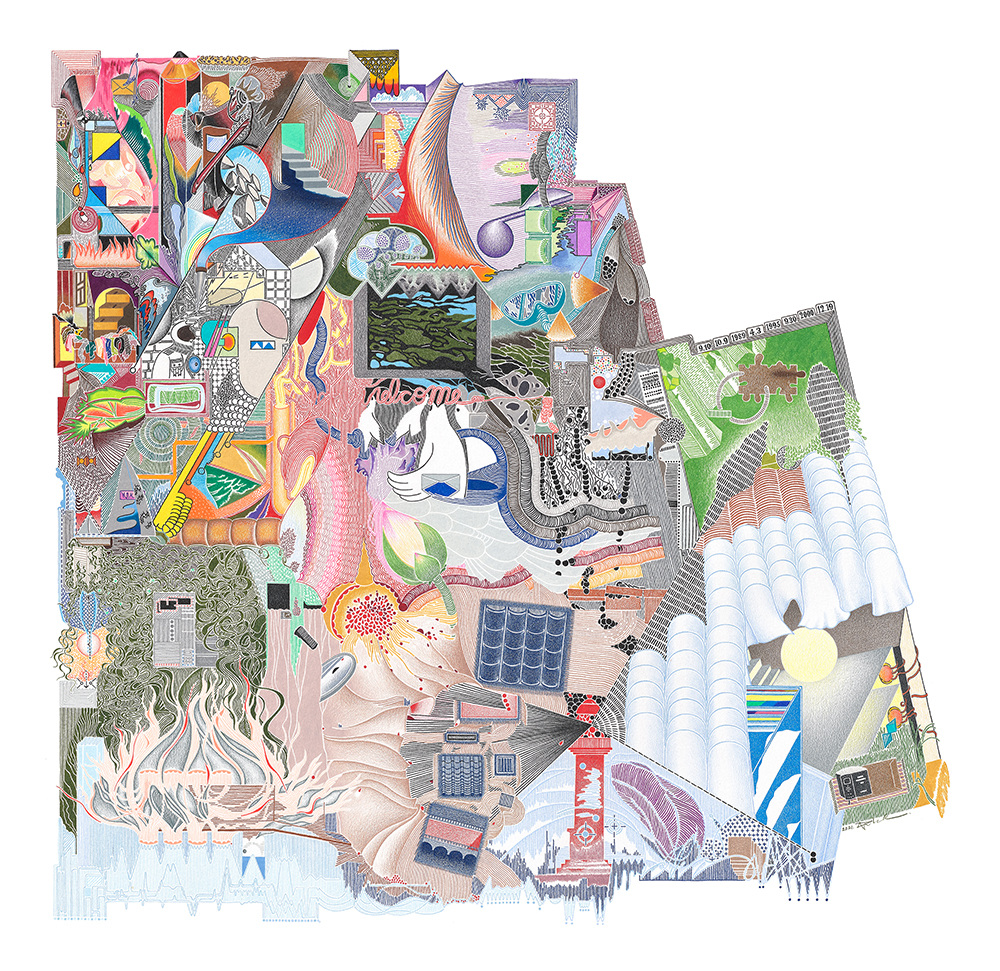
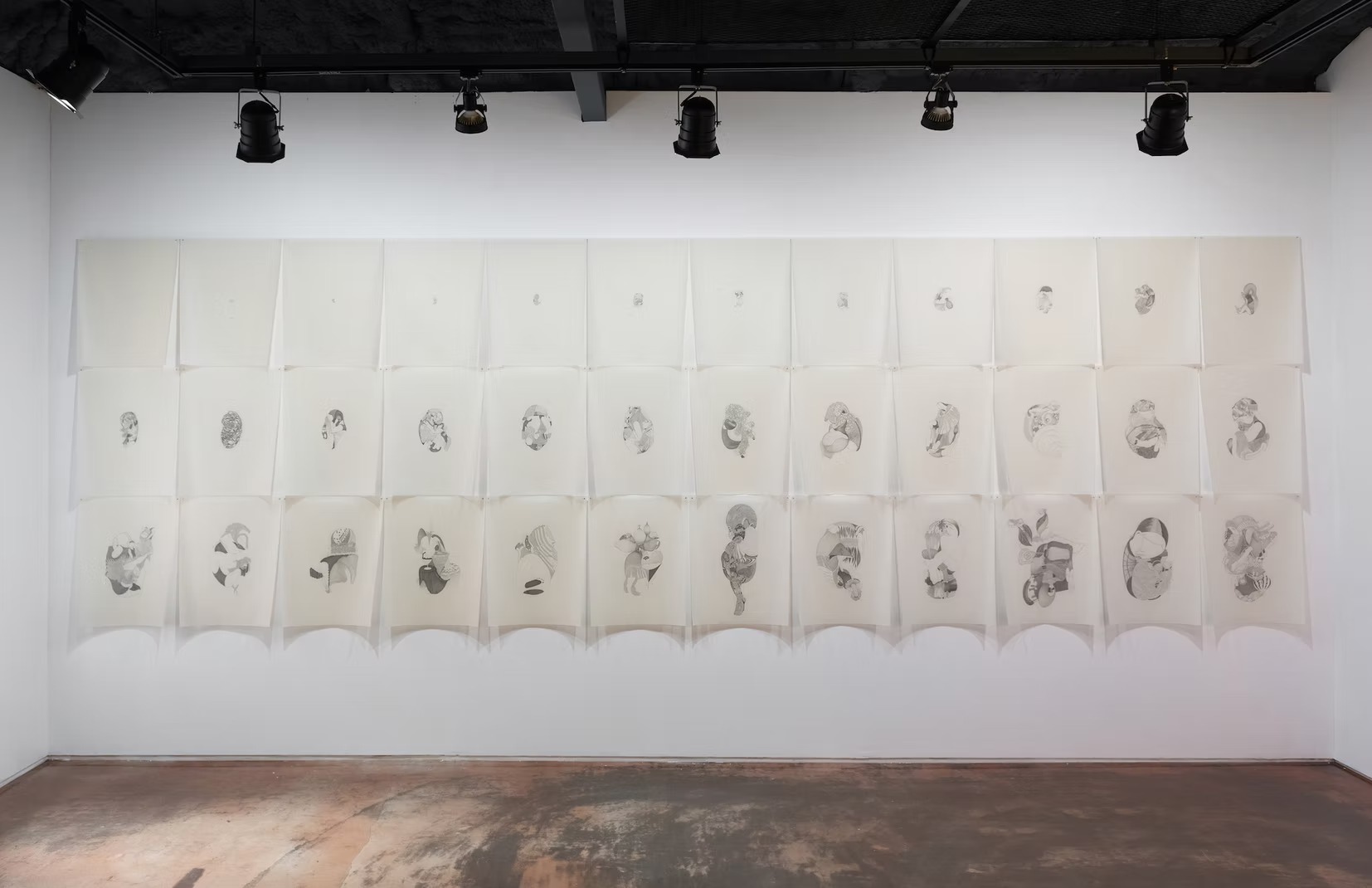
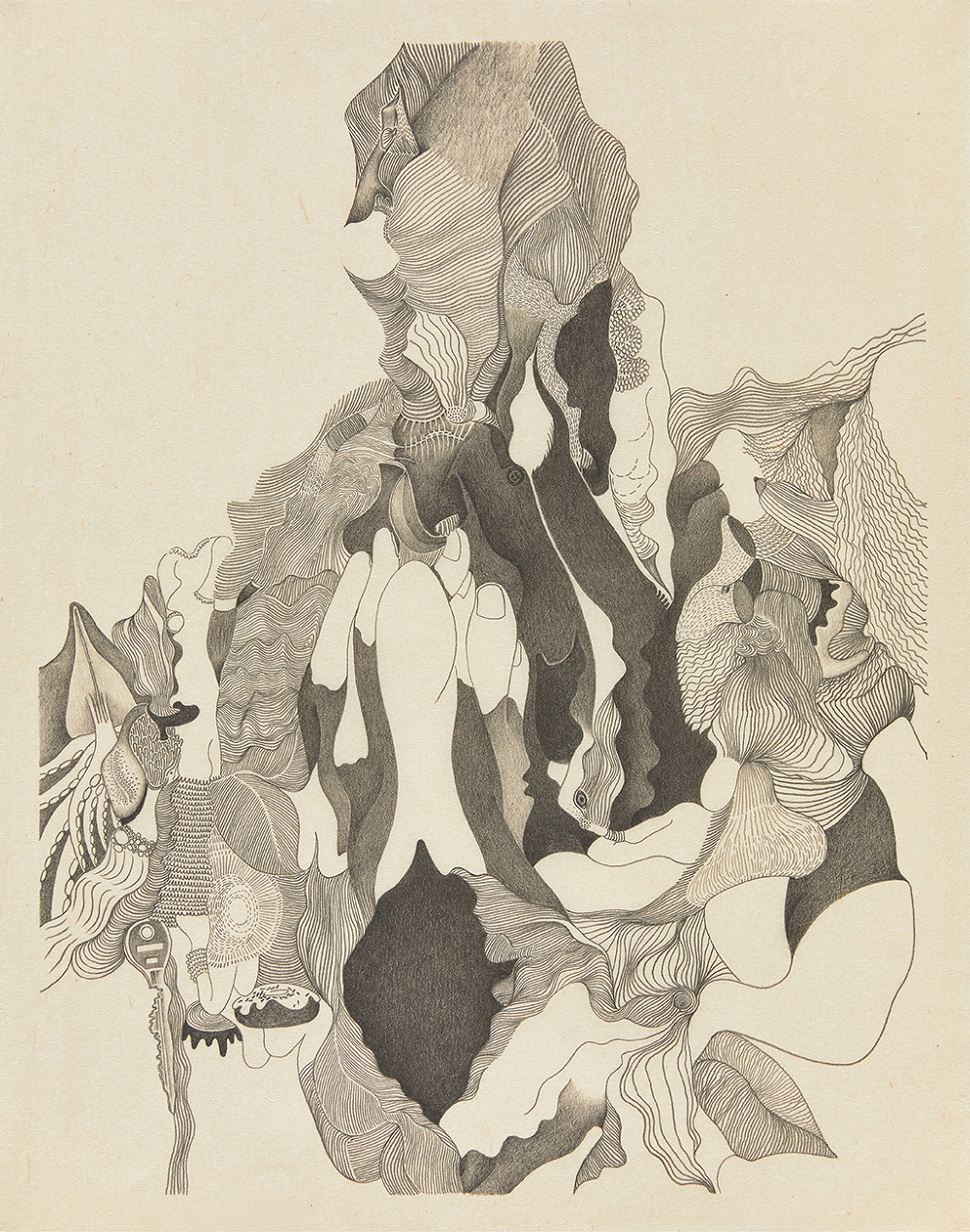
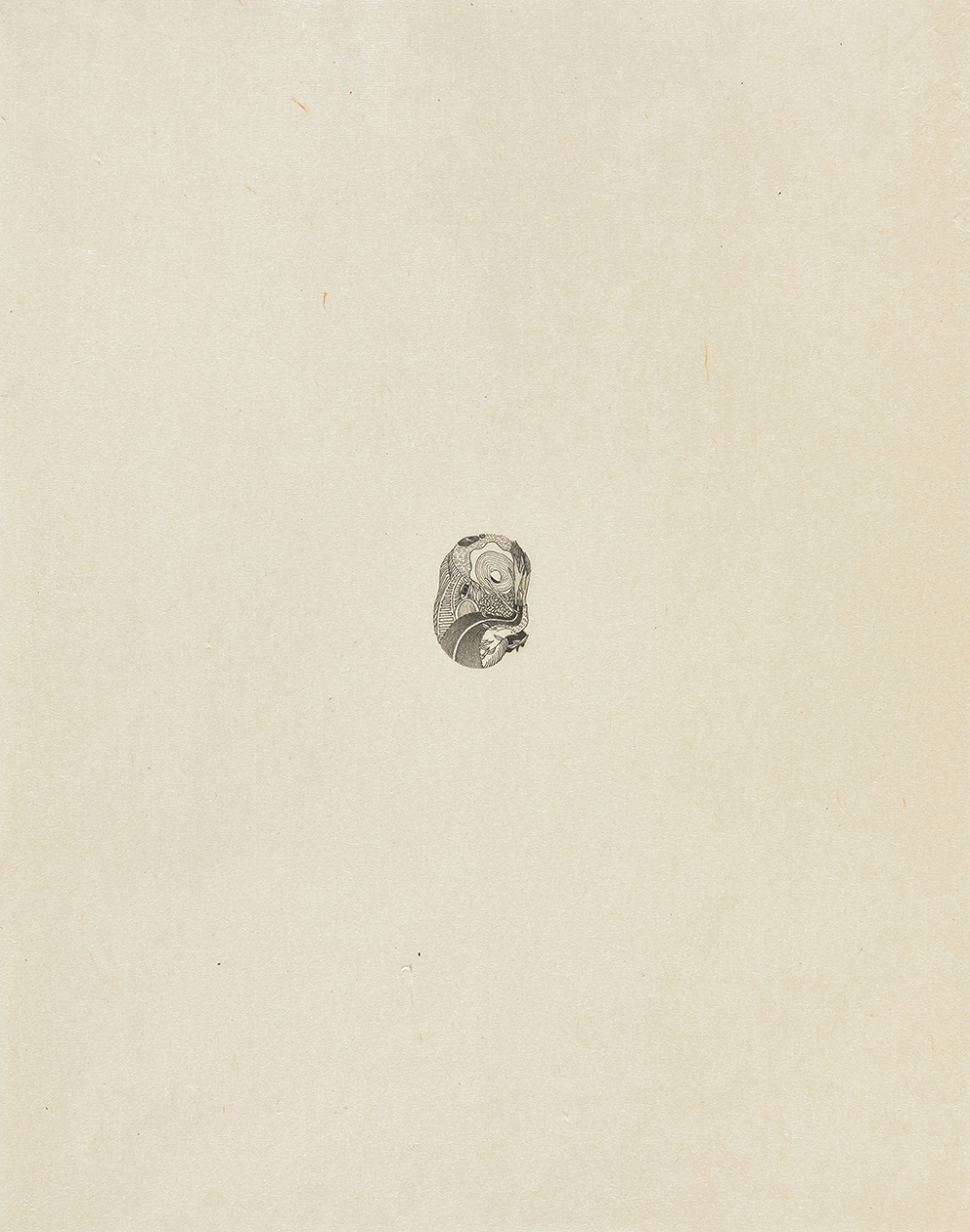
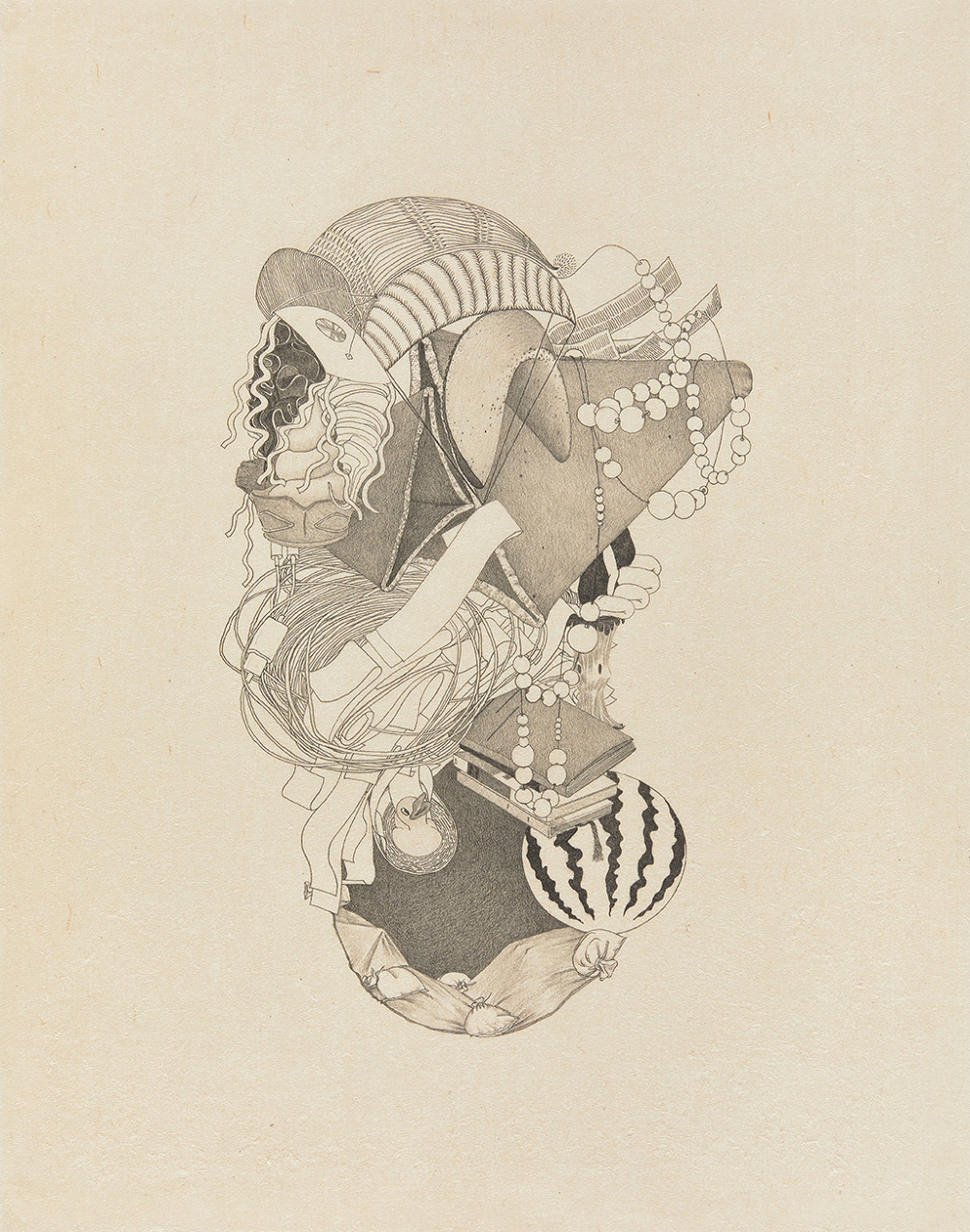
In 'I Am Three or Four or Five', small forms suggestive of animals, objects, and bodily parts are combined within the contour of a fetus, then extended into poetic texts paired with individual drawings and into a publication encompassing the series. Lines and forms that arise spontaneously are gradually named, classified, and incorporated into narrative relationships. Automatic gesture and systematic acts of reading and construction therefore continually intersect within her practice. 

The subsequent dismantling and transformation of completed images is another recurring formal strategy. Kook cuts drawings apart and rearranges related motifs, enlarges selected details, or translates blank lines from a drawing into paper tape before applying paint. The collages derived from A Ferry, the artist’s book that fragments the work into multiple scenes, the '900x Magnification' series developed from details of Decalcomanie Life, and the collages associated with 'I Am Three or Four or Five' exemplify this process.

Through enlargement, fragmentation, and recombination, small motifs can be reread as discrete signs, revealing narratives and relationships that remained latent within the original image. Drawing, painting, collage, and bookmaking thus operate as interconnected methods for reorganizing the same record through different scales, materials, and modes of reading. 

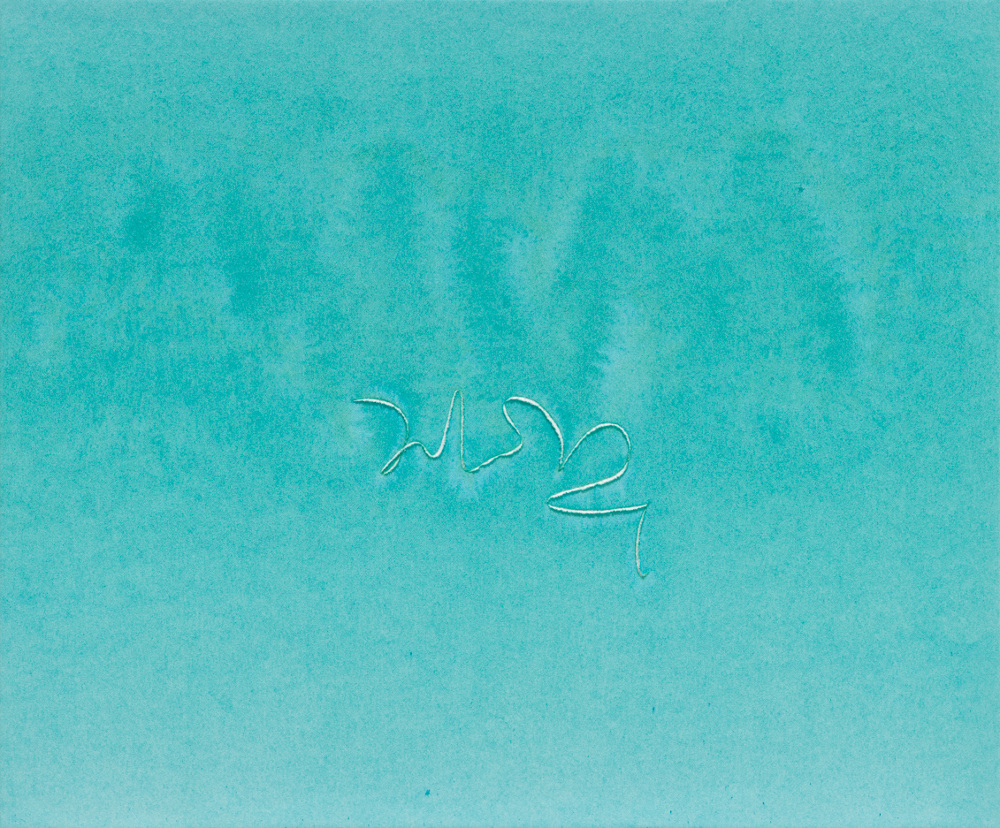
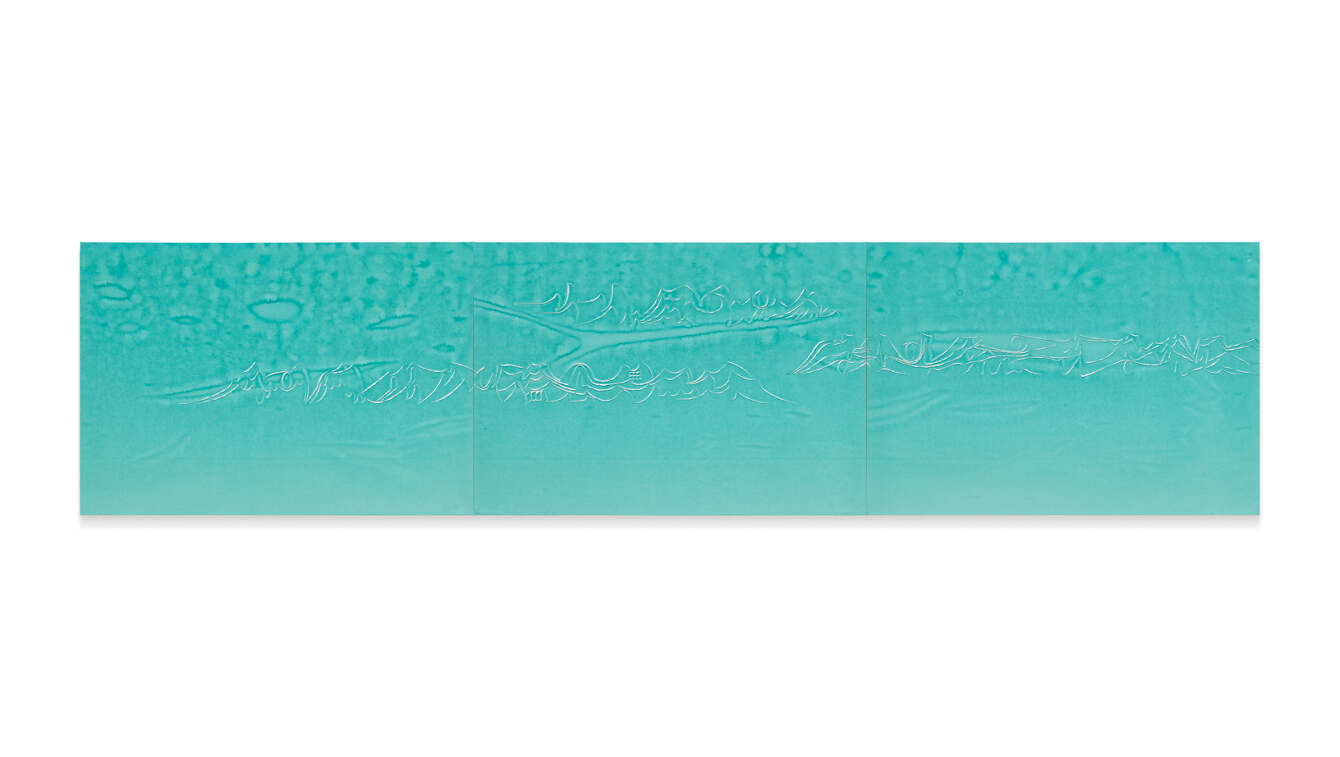
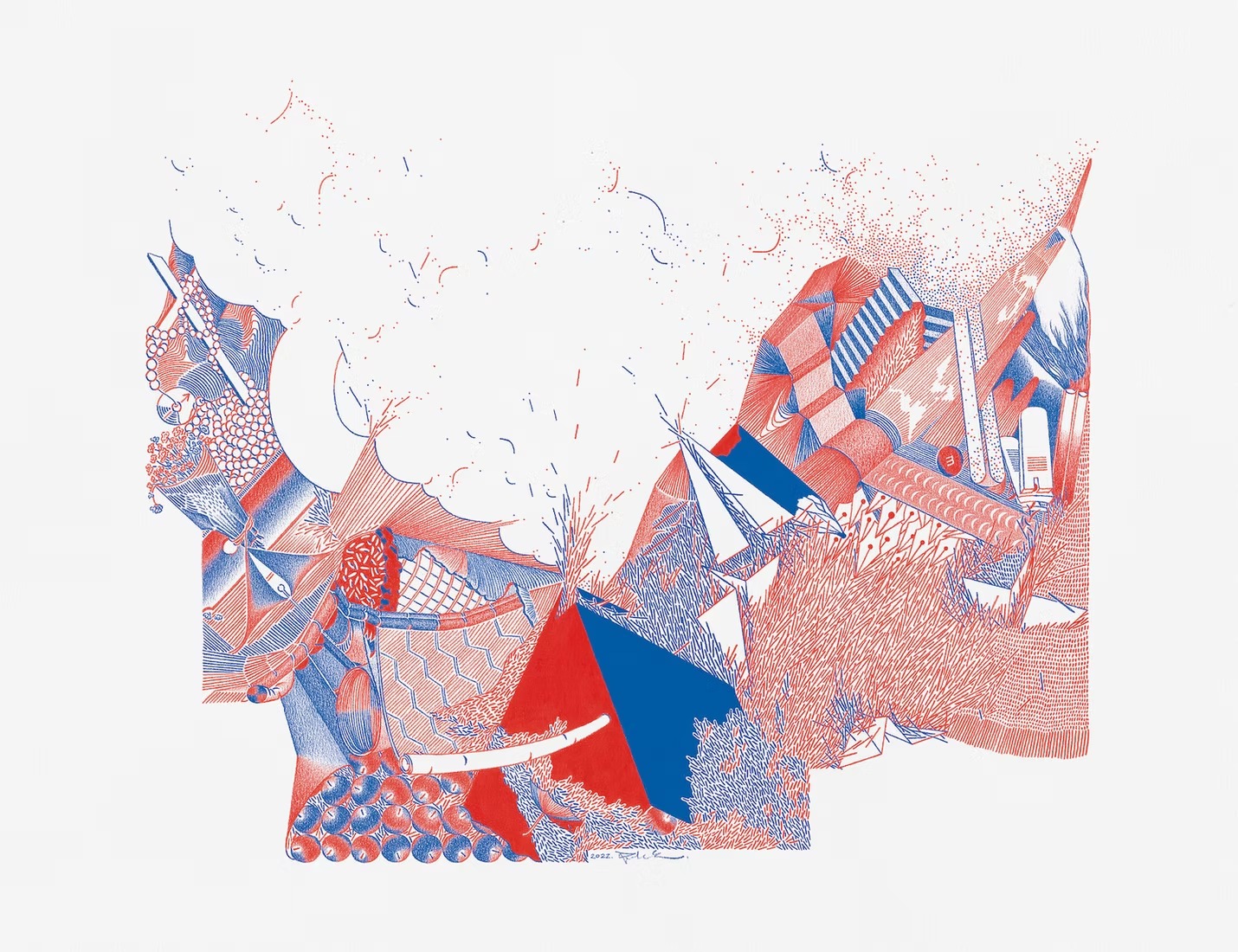
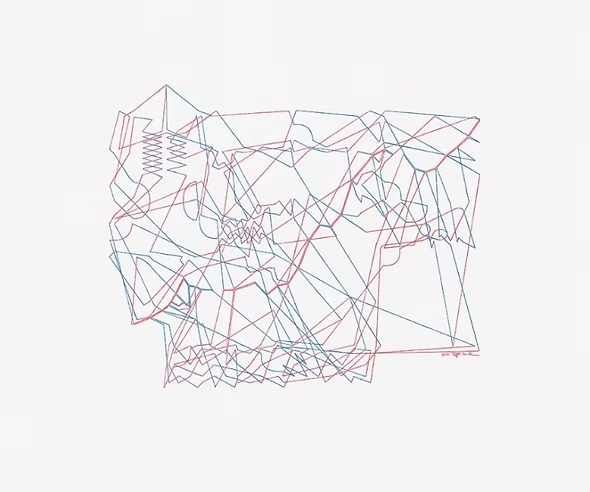
With 'Sense of Direction' and Bull Market in 2022, Kook introduced deliberate constraints into this methodology. She adopted a rule derived from stock charts, assigning red to upward movement and blue to downward movement, and in Bull Market traced an image projected onto canvas with oil pastel.

The freedom of association central to her earlier drawings is restricted, while errors produced by the rough canvas surface and the physical act of smudging and erasing lines become new variables. A hand initially compelled to follow a mechanical rule gradually generates unexpected rhythms by blurring, crossing, and redirecting those lines.

For Kook, changes in material and process therefore carry conceptual consequences: by setting conditions that alternately permit and restrict the freedom of the hand, and by accepting the resistance and mistakes that emerge within them, she extends the content of her work from interior experience toward the bodily experience of living amid housing, capital, and social systems.


Topography & Continuity

Dongwan Kook’s practice can be traced back to her ongoing documentation of dreams, begun in 2007, and has developed through a sustained process of recording, revisiting, and rereading personal memories and sensations. In her early work, dreams were experiences to be captured before they disappeared, while the resulting words and images subsequently became material for further interpretation.

What mattered was not the discovery of a definitive meaning within a particular dream, but the recurring act of returning to a record after time had passed and finding that it could be read differently. This sequence of recording, rereading, and translation has remained a central thread in Kook’s practice even as her subjects and media have expanded. 

From the mid-2010s onward, personal experience increasingly intersected with events and relationships encountered in the external world. Decalcomanie Life (2014) emerged from memories of the home in which Kook grew up and of neighboring households, while A Ferry (2014–2016) recorded a prolonged period of mourning and reflection following the Sewol ferry disaster.

In discussing A Ferry, Kook has described how her attempt to draw the ferry ultimately led her to draw herself through the subject. 'I Am Three or Four or Five' (2020) later developed memories and imaginings surrounding pregnancy, childbirth, and the fetus through relationships among body, memory, and language. Across these different subjects, a recurring structure remains: external events are absorbed through personal sensation and memory and then rearticulated through the movements of the hand. 

Kook also consistently treats completed works as material for subsequent work. Drawings are cut apart, enlarged, rearranged, and transferred into books, collages, and paintings.  A Ferry was fragmented into thirty scenes and reconfigured as an artist’s book; details from Decalcomanie Life were magnified in the '900x Magnification' series; and 'I Am Three or Four or Five' generated further works in which individual motifs were classified and recombined.

Earlier images therefore remain active within her practice, available to be reread and transformed. Lines, motifs, and working methods discovered in one project frequently become the questions or materials of another, creating continuity across works produced years apart. 

'Sense of Direction' and Bull Market (2022) extend this continuity toward questions of housing, capital, and social systems. Kook deliberately unsettled her familiar drawing process by imposing an external rule on the hand: upward movement had to be rendered in red and downward movement in blue. The constraint initially produced a sense of physical and psychological restriction, yet the subsequent acts of smudging, erasing, and redirecting lines opened new possibilities, eventually allowing the artist to play with the very rules that had constrained her.

The continuity of Kook’s practice therefore lies in a recurring cycle of posing a question, responding through bodily gesture, observing what has emerged, and devising the next method from that result. As the conditions of her life change, the questions and rules are revised accordingly, allowing accumulation and methodological renewal to proceed together across her practice. 

Works of Art

Universal Stories of Reality Connected Through the Individual Unconscious

Articles

Exhibitions

Activities