Border On - K-ARTIST

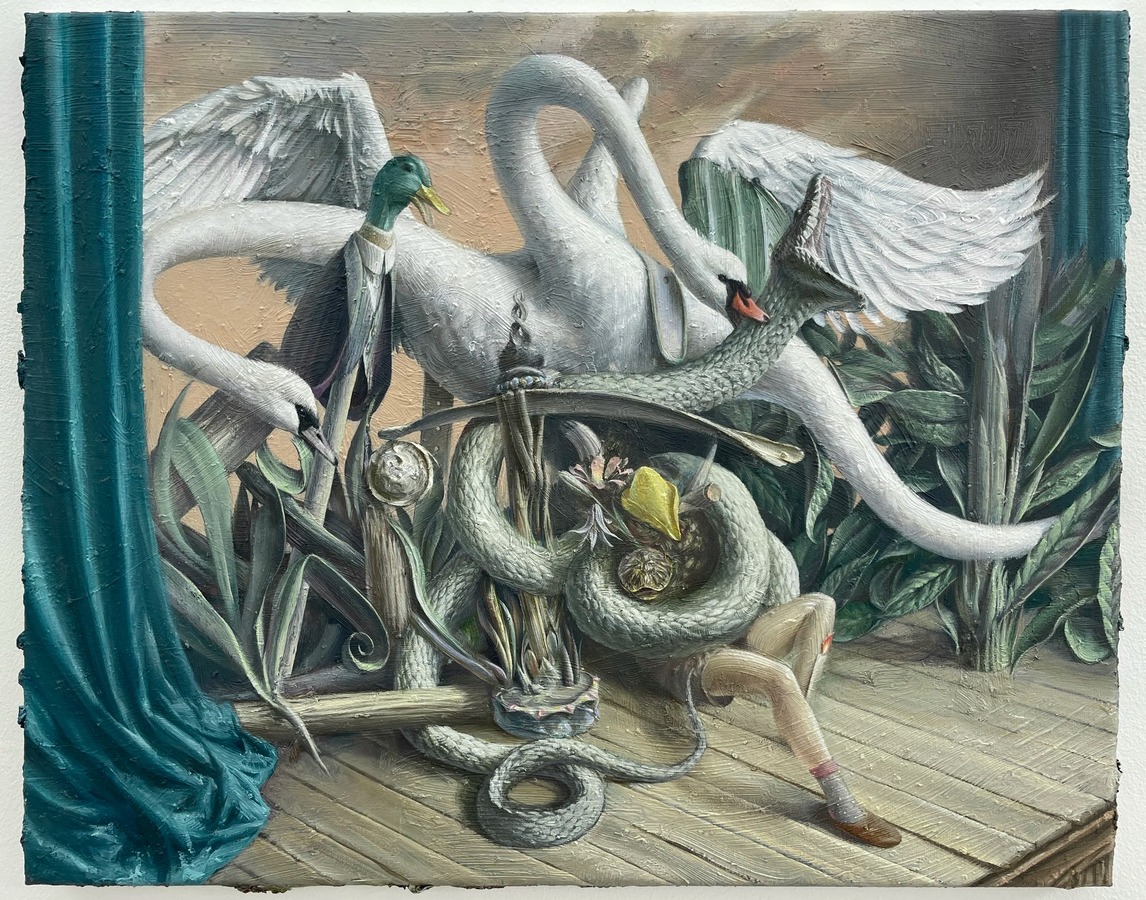
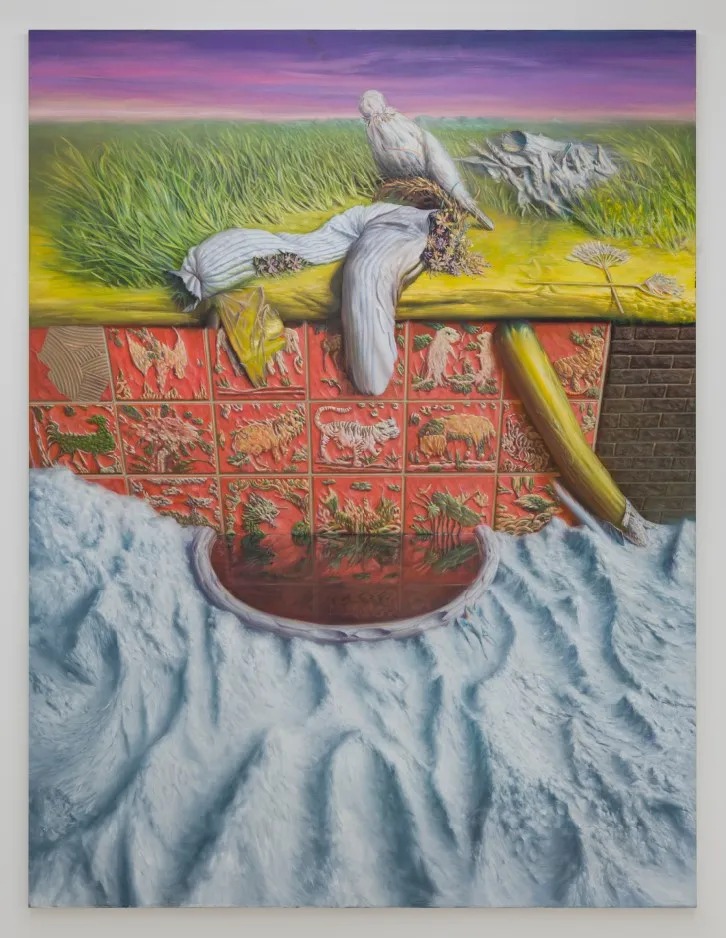
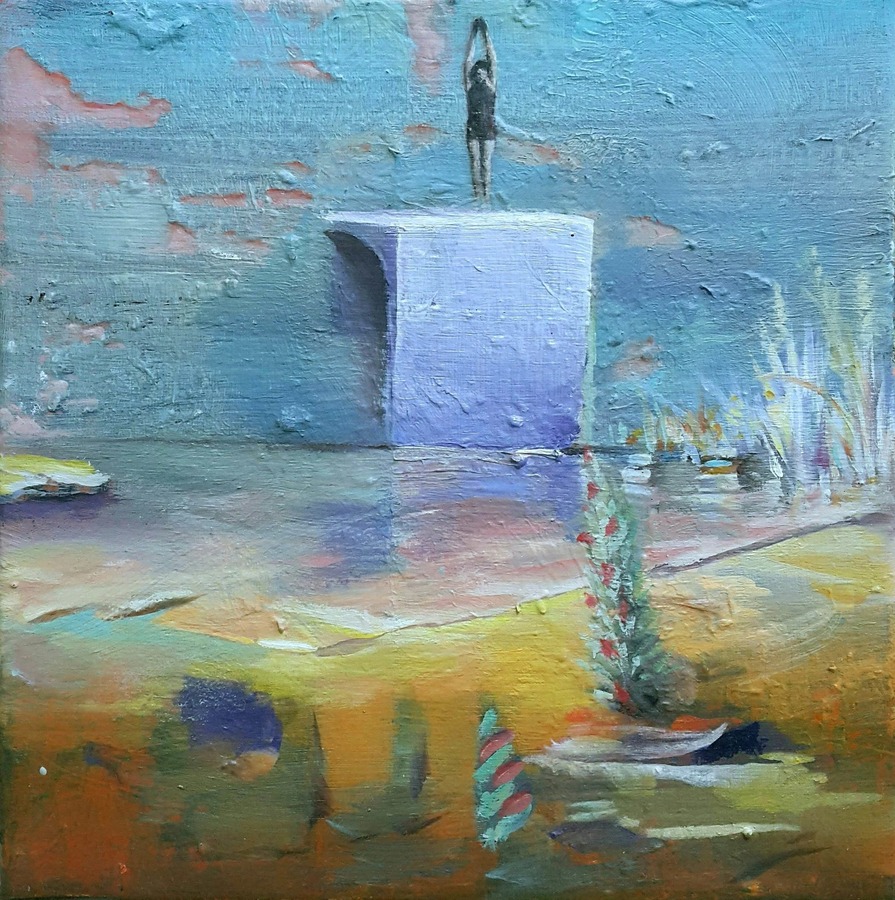
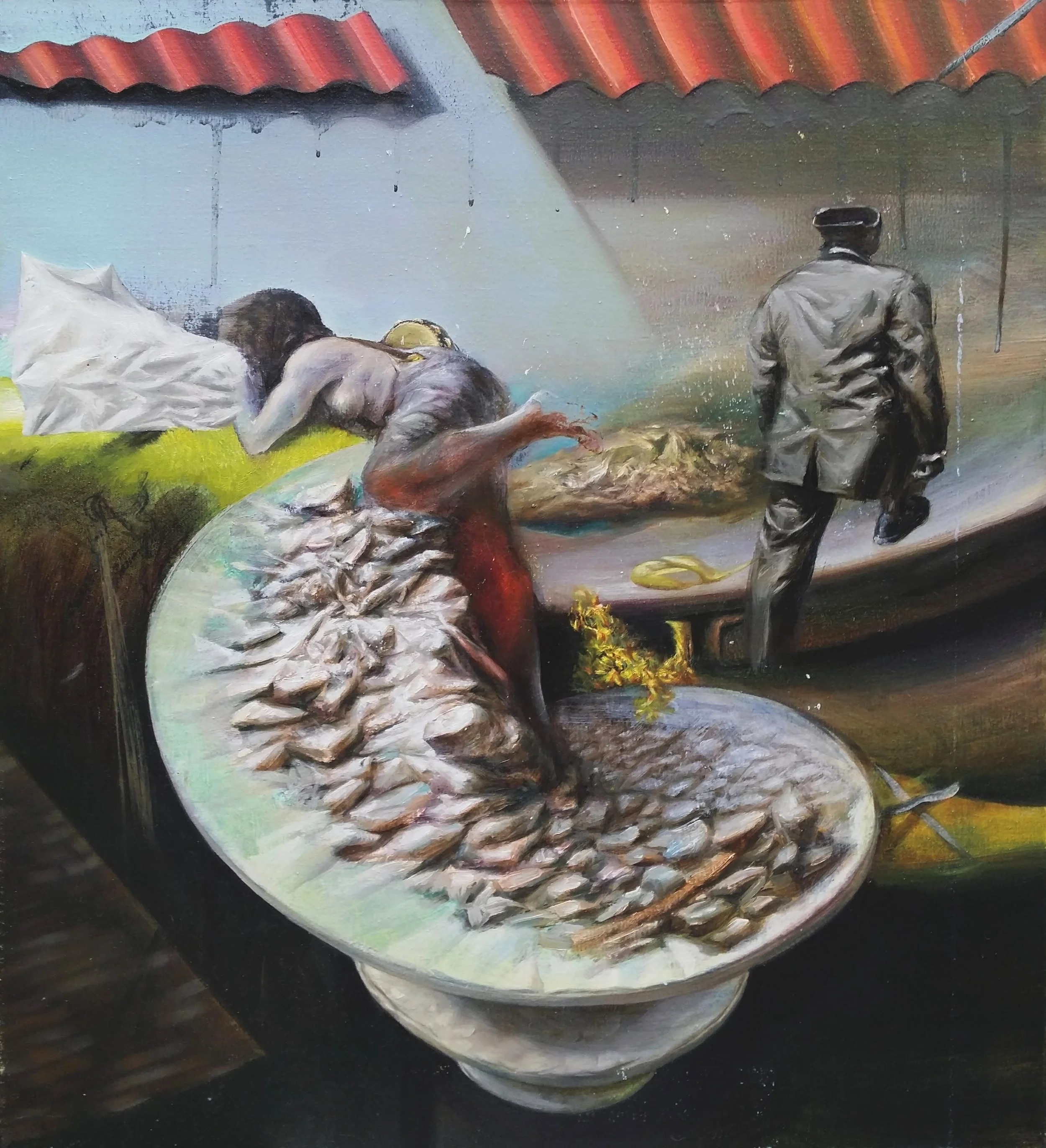
Border On

2019
Oil and acrylic on canvas
73 x 91 cm
About The Work

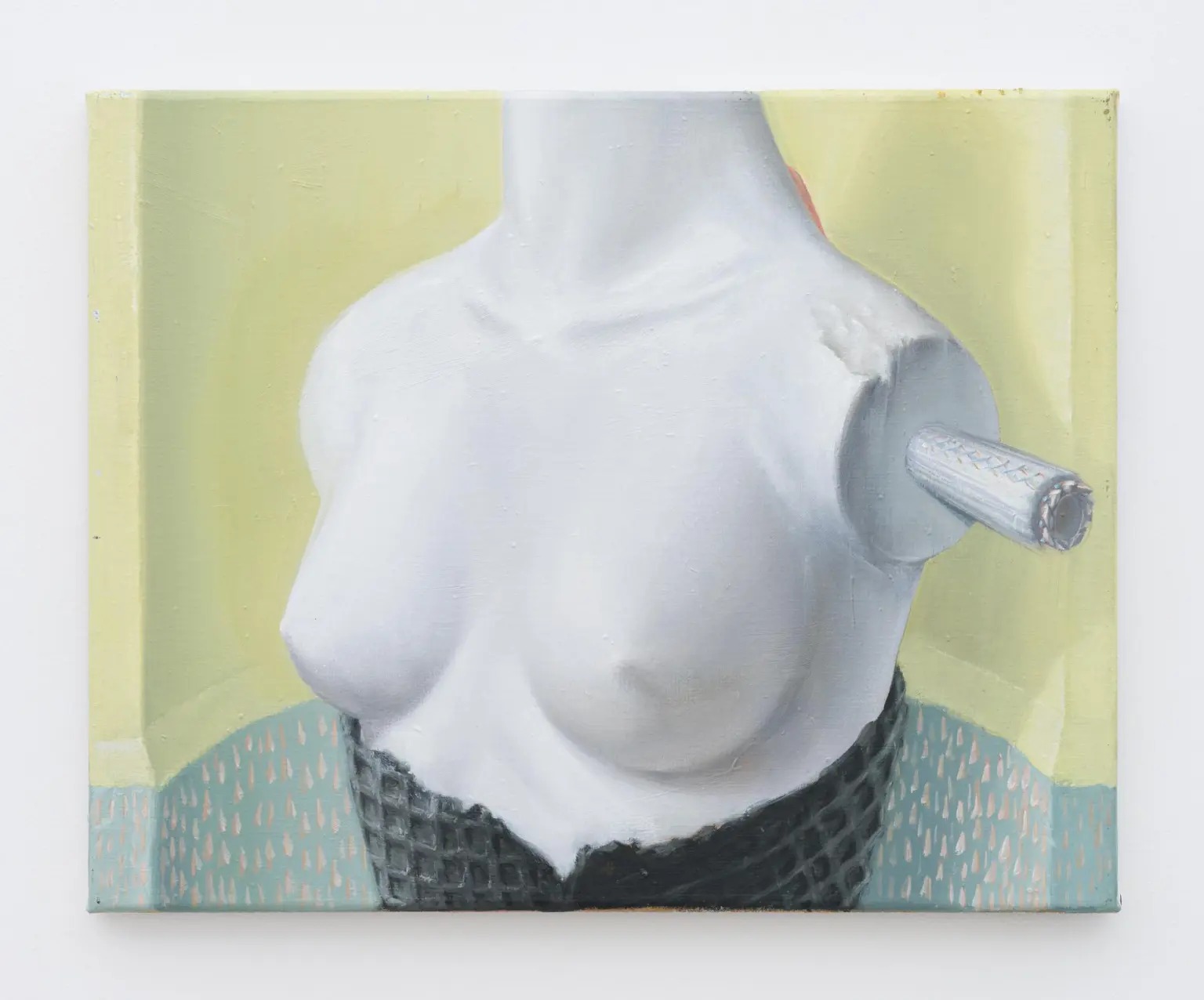
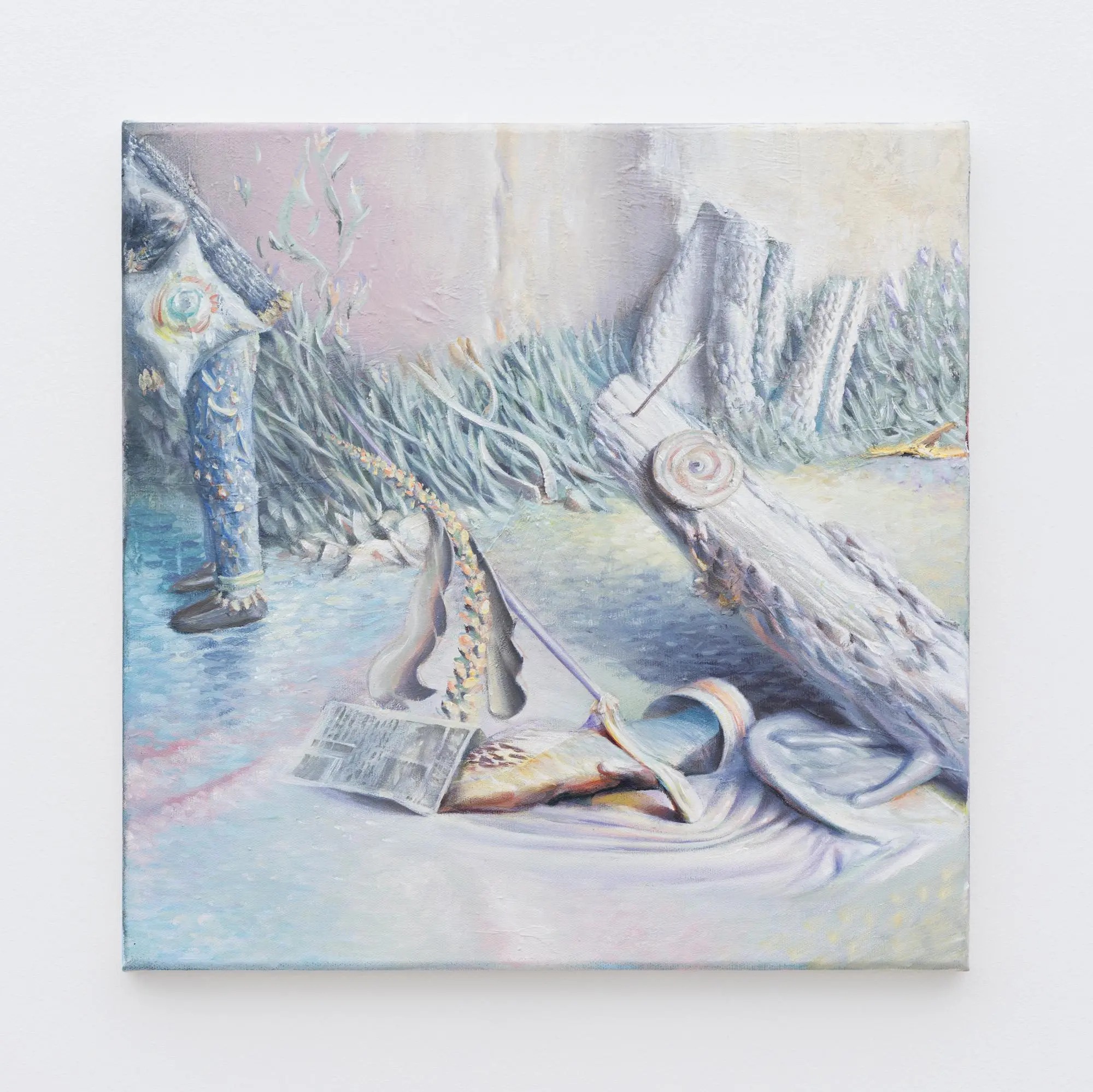
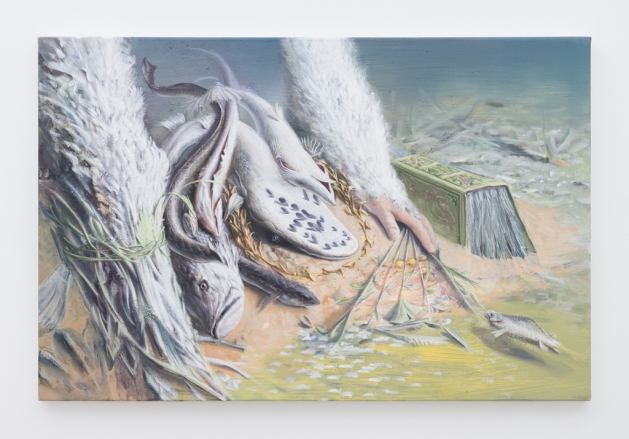
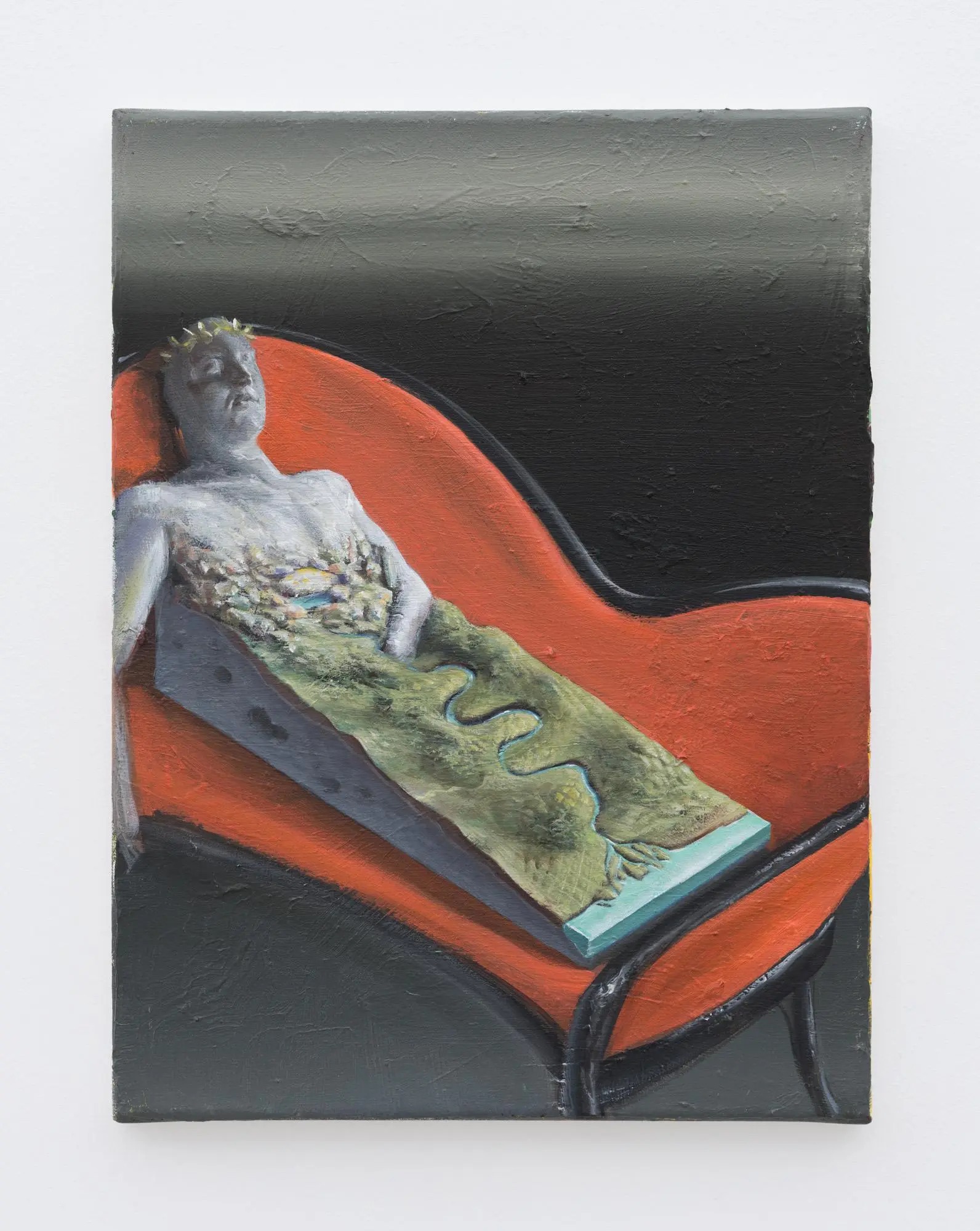
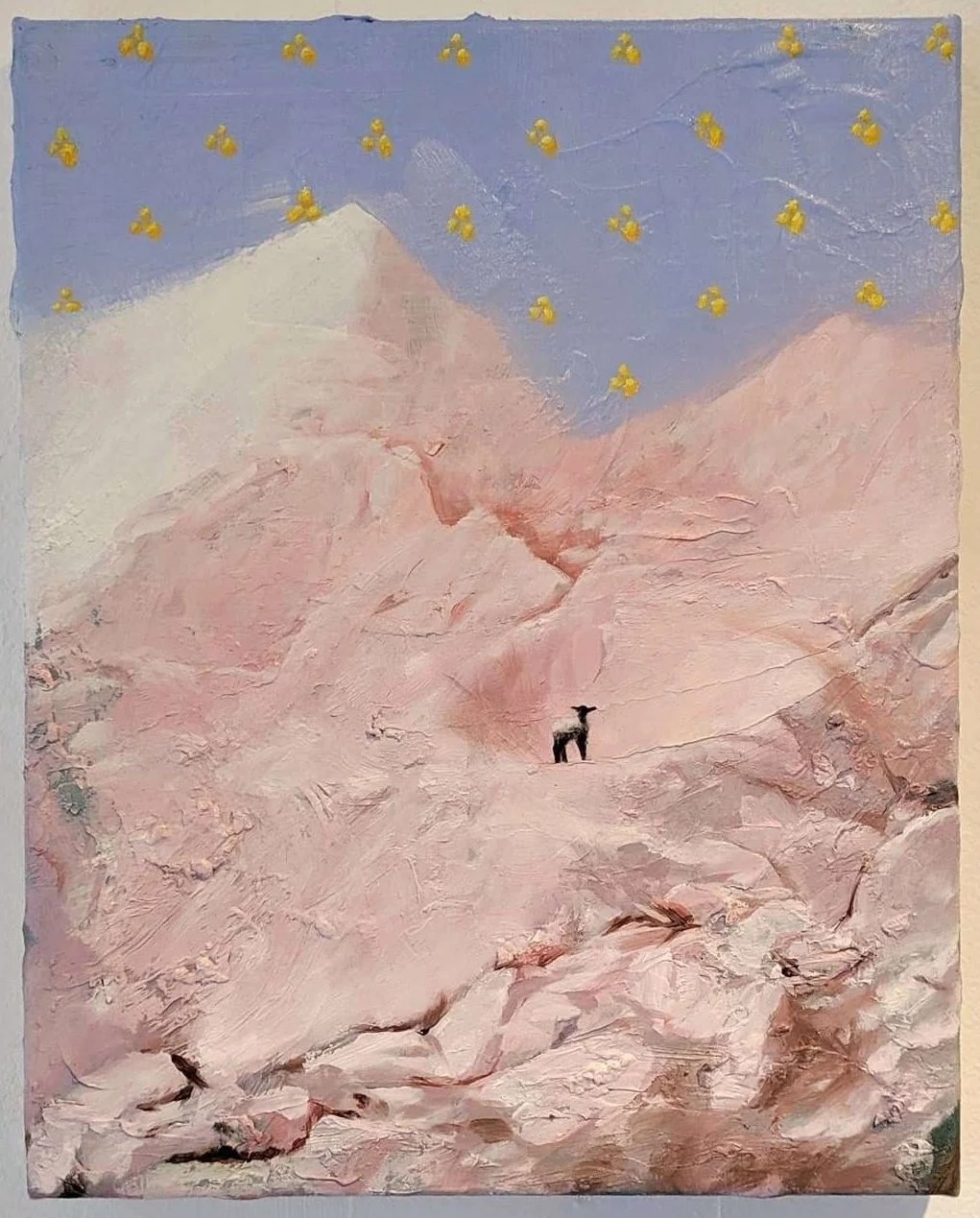
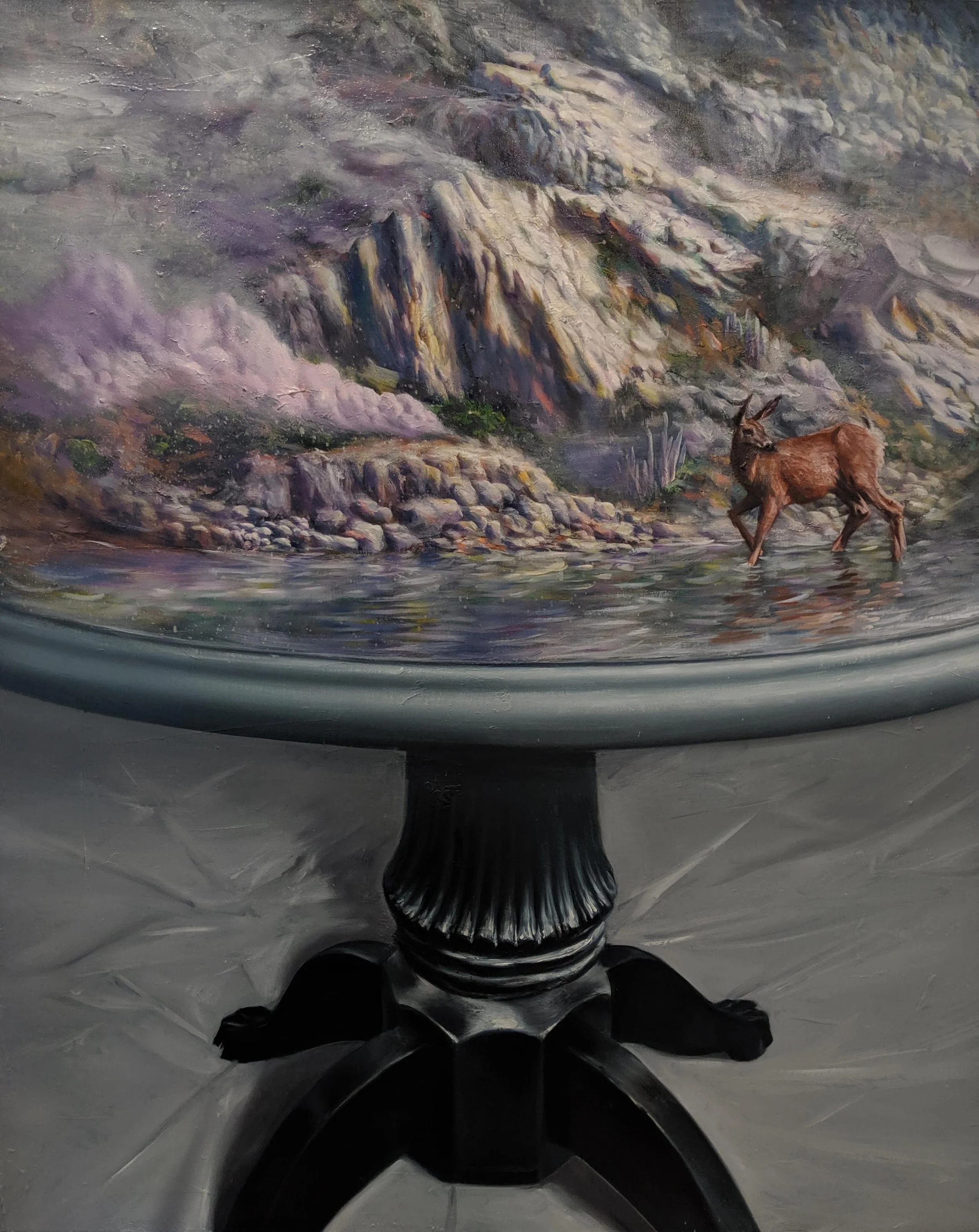
Jaehong Ahn has developed a surreal practice centered on isolation and opposition, as well as the boundaries between human perception and the unconscious.

For Ahn, separation and isolation are less subjects drawn from specific personal experiences than emotional states he has continuously sensed in his surrounding environment. Rather than defining them as problems to be overcome, he observes them from various perspectives, focusing on the ways opposing elements collide and connect.

The artist juxtaposes realistically depicted objects with unfamiliar situations, irony with mystery, light with darkness, and intention with chance within a single frame, creating scenes in which meaning remains open-ended. The titles and narratives of his works likewise retain a degree of ambiguity, leaving room for viewers to construct meaning through their own experiences and perceptions.

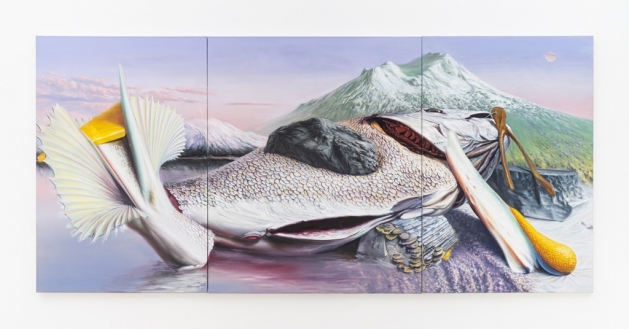
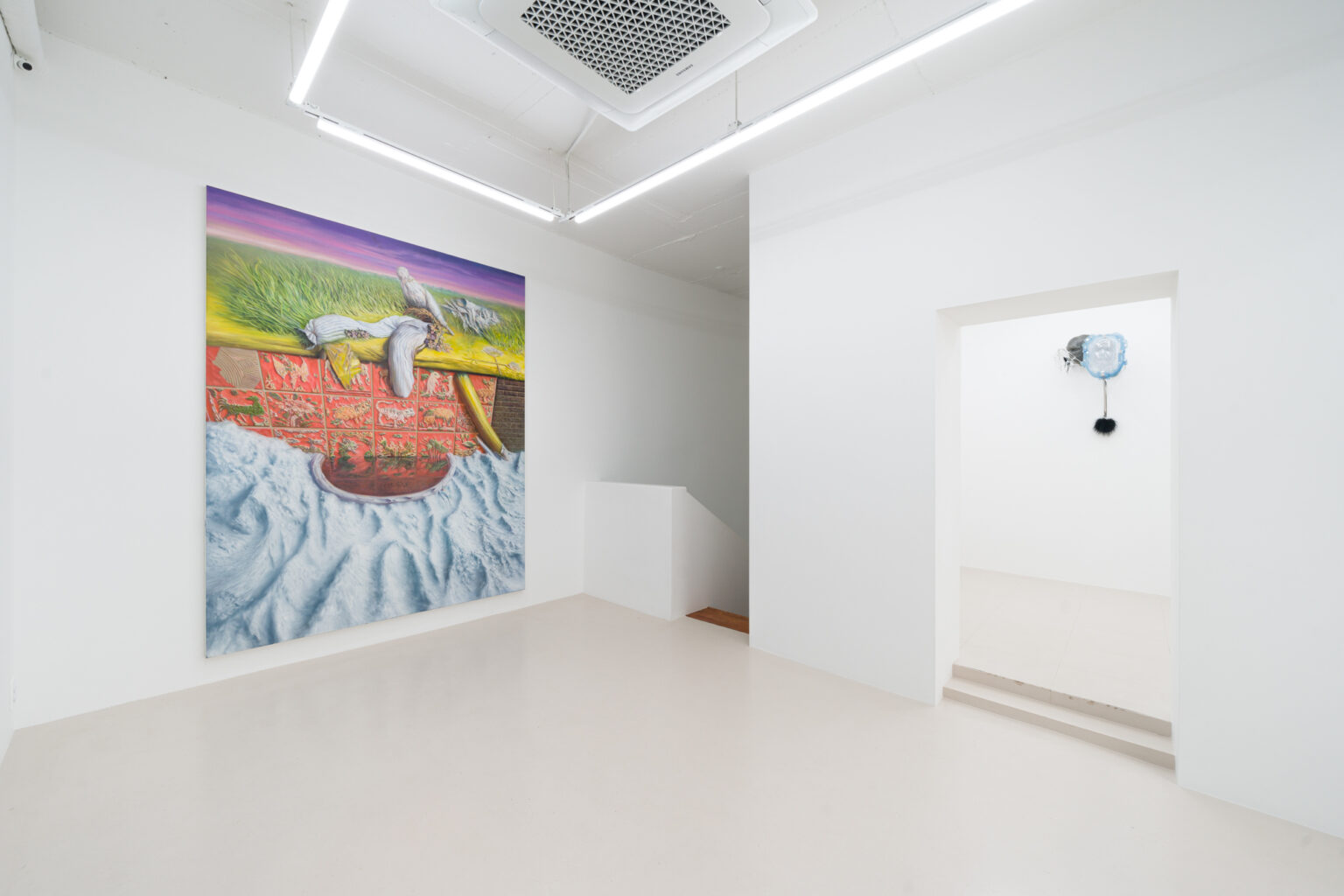
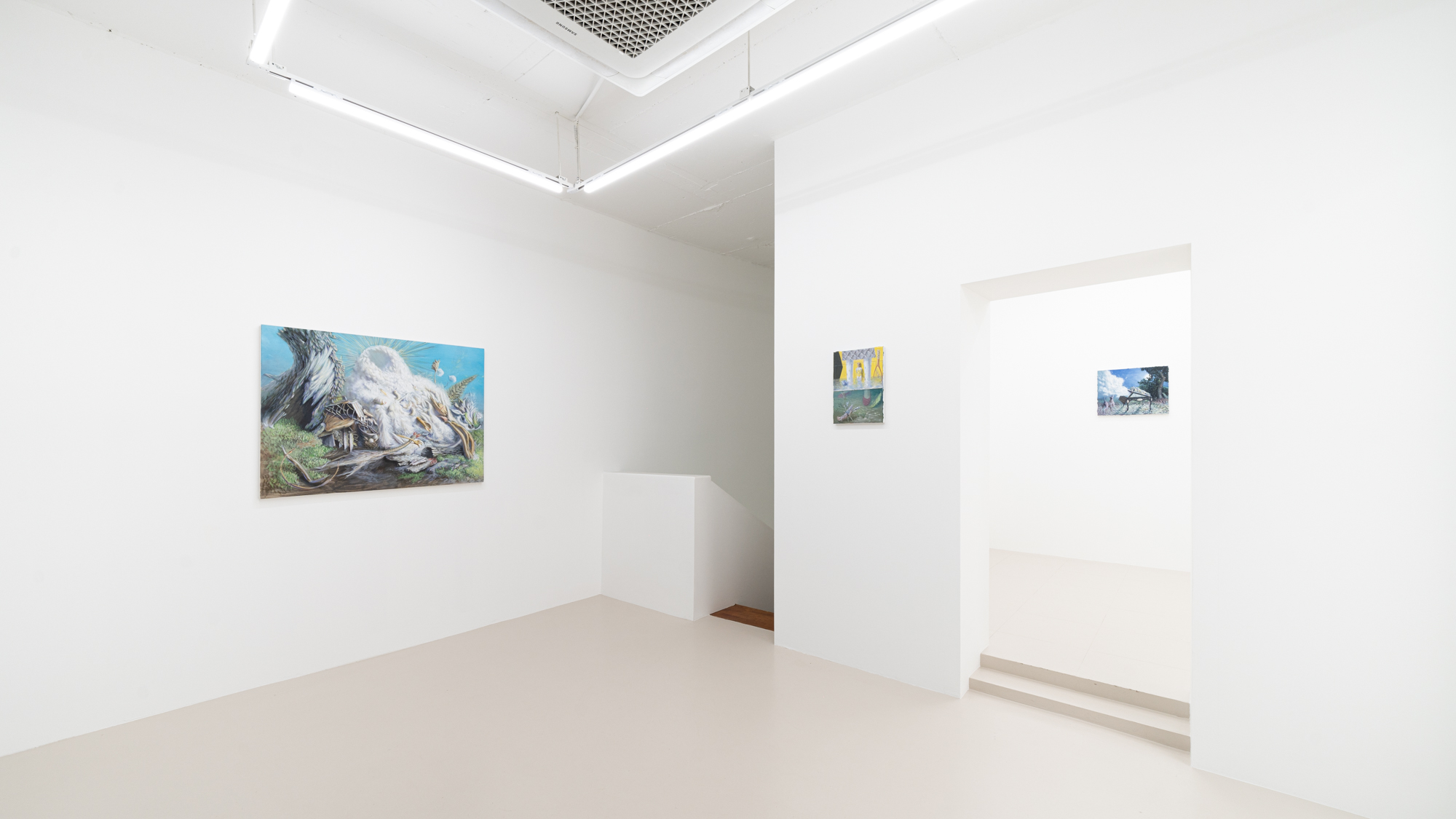
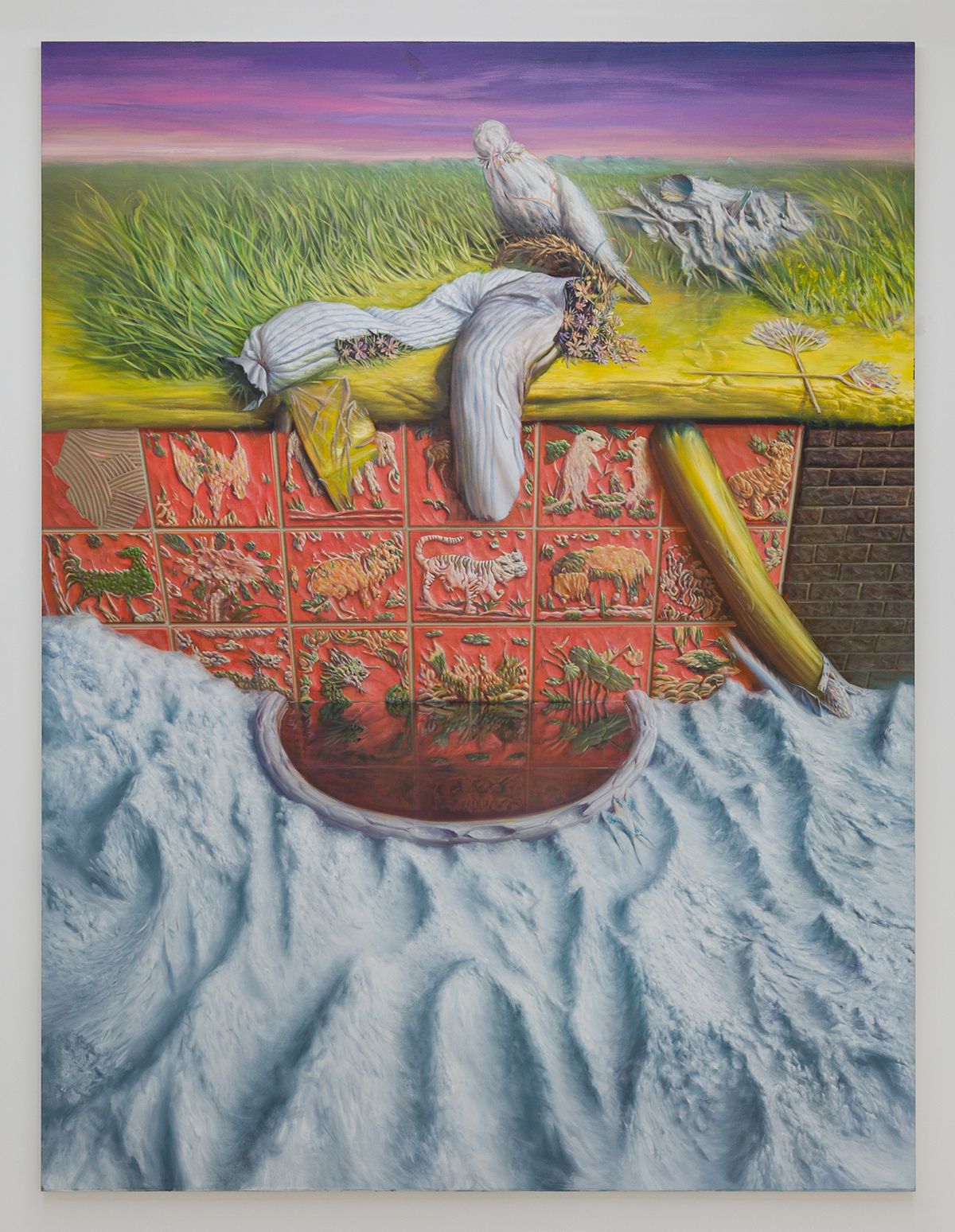
Furthermore, Ahn combines the psychological realms of the id, ego, and superego with imagery drawn from Korean folk-mythological iconography, imagined mythological beings, water, and ice to construct a distinctive world. By leaving the relationships between these different images and psychological realms undefined, his work opens up possibilities for distinct elements to collide and connect, generating new relationships.

Solo Exhibitions (Brief)

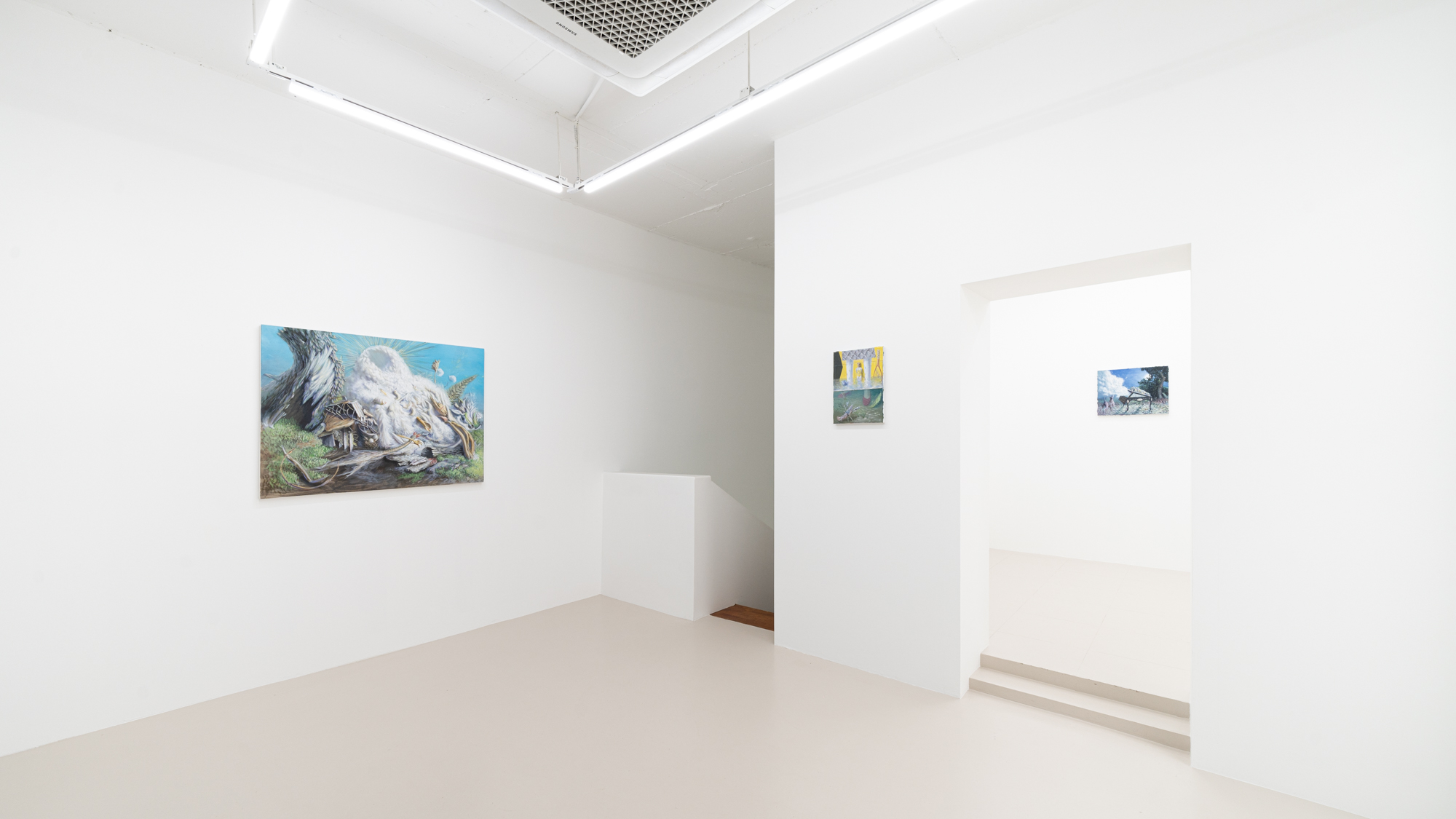
Jaehong Ahn has held solo exhibitions at Articsok Gallery in Toronto, Canada (2014) and WWNN in Seoul, Korea (2023).

Group Exhibitions (Brief)

Jaehong Ahn has participated in group exhibitions including 《NordArt 2013》 at Kunstwerk Carlshütte in Büdelsdorf, Germany (2013), as well as exhibitions at Saatchi Gallery in London (2017), KANG Contemporary in Berlin (2022, 2023), Mon Dieu Projects in Los Angeles (2023), and the 《Gangwon International Triennale》, Seoul National University Museum of Art, and Schema Art Museum in Korea (2024).

Awards (Selected)

Jaehong Ahn received the Eleanor Logan, Rose of Cedardale Award in 2002, the Eric Freifeld Award in 2003, and the Best Figurative Paintings Award at the Toronto Outdoor Art Exhibition in 2010.

Residencies (Selected)

Jaehong Ahn participated in the Leipzig International Art Programme (LIA) in Germany in 2012.

Works of Art

Exploring New Relationships Through Collision and Connection

Originality & Identity

Jaehong Ahn’s practice has long developed around the concepts of separation, isolation, and confrontation. Around 2010, while reviewing works produced over the previous six or seven years, he recognized that these themes and emotional currents had appeared repeatedly throughout his practice.

Rather than originating from a single autobiographical experience, they emerged from emotional conditions he sensed within his surrounding environment. Ahn approaches separation and isolation neither as problems to be resolved nor as positions to be asserted, but as conditions to be observed from shifting perspectives—much like repeatedly photographing the same mountain from different distances, angles, and emotional viewpoints.

This concern became more defined as Ahn moved his practice from Canada to Leipzig and Berlin. Seeking an environment marked by experiences and traces of social division, he became interested in Germany’s history of separation and reunification and in the continuing discussions surrounding that history.

His experiences in Leipzig and Berlin encouraged him to consider division and confrontation as conditions that continually change across spaces, relationships, and the dynamics between individuals and communities. Within his paintings, these ideas do not resolve into direct political statements; instead, they provide a point of departure for examining relationships among entities that remain separate while continuing to affect one another.

Although Ahn’s enigmatic figures and improbable situations often invite associations with dreams or the unconscious, he does not identify either as the direct source of his imagery. His paintings bring together realistically rendered objects and unreal situations, irony and mystery, light and darkness, intention and accident, allowing contradictory elements to coexist without settling into a fixed meaning.

Ahn is particularly interested in the openness produced when multiple interpretations remain possible, and both his images and titles retain a deliberate ambiguity. Rather than receiving a predetermined worldview, viewers are encouraged to reconstruct the relationships within the paintings through their own perceptions and experiences. 

In more recent works, this inquiry has expanded toward psychological boundaries and mythic imagination. Ahn brings together the overlapping territories of the id, ego, and superego with imagery drawn from Korean folk mythology, invented mythological beings, water, and ice, constructing a distinctive visual world in which psychological boundaries intersect and reconnect.

He deliberately leaves the correspondence between these images and psychic territories unresolved, preserving interpretive openness. In this way, his enduring interest in separation and isolation has expanded from social and spatial relationships toward questions of the boundaries that constitute the inner self and human existence, while continuing to examine how divided entities collide, connect, and form new relationships. 

Style & Contents

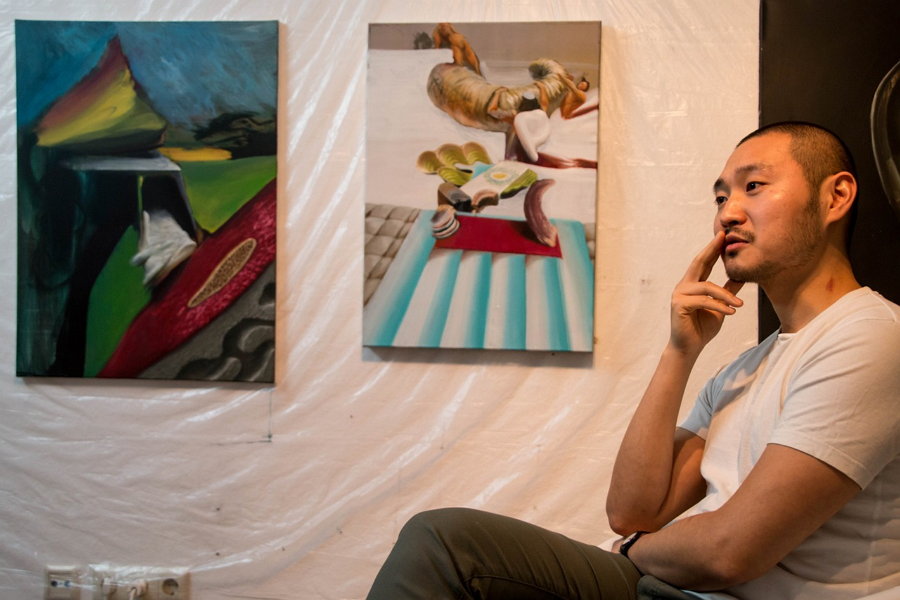
Jaehong Ahn begins his paintings without fixing a composition or specific imagery in advance. His first encounter with the canvas is guided by physical movement, as lines, colors, and irregular forms accumulate through an automatic process and initially produce an abstract field. Once he recognizes a form or relationship that resonates with him, he selectively develops it toward figuration.

Rather than reproducing a predetermined scene, Ahn discovers images within accidental traces generated by the body. Abstraction and figuration therefore remain intertwined throughout the process, repeatedly encroaching upon one another until the painting reaches completion. 

The composition subsequently develops through repeated cycles of establishing and dismantling order. Forms are painted over, erased, emphasized, or omitted; some persist until the end, while others disappear entirely. Throughout this process, Ahn remains attentive to the overall balance of the image.

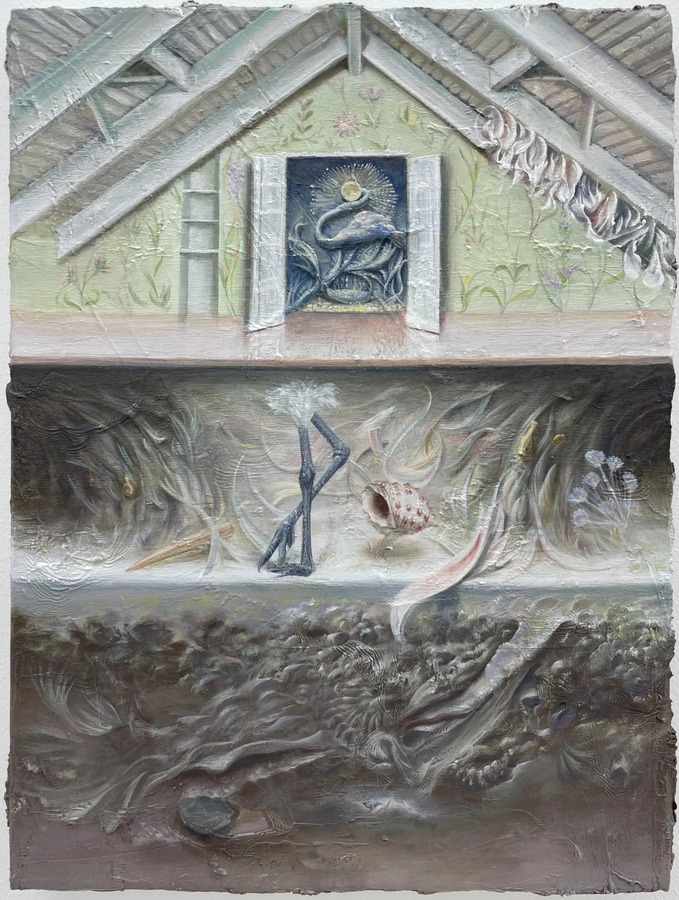
Figures and objects occupying inaccessible spaces, diagonal movements crossing the composition, and divisions between light and darkness are closely related to this method. Balance in his paintings does not imply static stability. It emerges through the sustained tension between opposing forces and separated areas, as the continual exchange between order and disorder generates the final composition. 

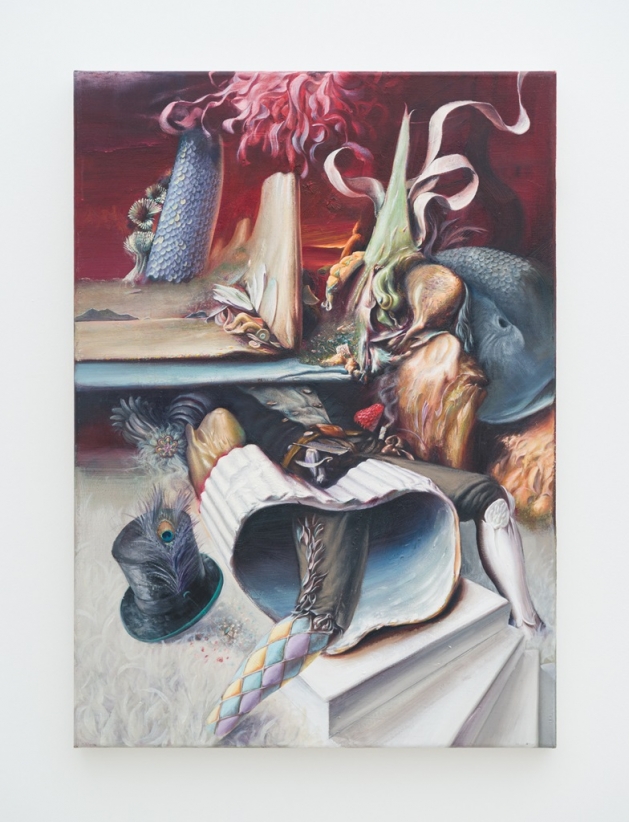
Within these structures, Ahn combines realistically rendered objects with improbable situations. Contrasting relationships—between color and shadow, intention and accident, familiarity and strangeness—intensify the irony and mystery of his imagery.

Objects and figures may appear distinctly recognizable, yet the relationships and spaces surrounding them resist definitive explanation, leaving the paintings simultaneously concrete and elusive. In more recent works, this visual vocabulary has expanded to include motifs drawn from Korean folk mythology, invented mythic beings, water, and ice, which intersect with his exploration of the human psyche. 

Ahn’s continued commitment to oil on canvas is equally significant to his formal language. For him, the brush is not simply an efficient means of executing an already determined image; painting involves a physical process of accepting, rejecting, erasing, and choosing again as the work develops. He is particularly interested in witnessing a seemingly three-dimensional world gradually emerge upon a two-dimensional surface.

His time in Leipzig also strengthened his conviction that figurative elements could remain central to his practice while engaging with contemporary painting. Through this trajectory, his work has developed around the coexistence of recognizable forms and abstract processes, material brushwork and fictional spaces.

Topography & Continuity

Jaehong Ahn’s practice can be traced through a sustained engagement with figurative painting that began in the early 2000s. During his time in Florence, he painted interiors that seemed to retain the presence of figures who had just departed, describing these works as a kind of “portraiture without the physical presence of the figure.”

His concerns subsequently expanded toward relationships between figures and objects, isolated beings, and opposing forces. Around 2010, while reviewing his earlier works, Ahn recognized separation and isolation as recurring themes that had persisted throughout his practice. His commitment to oil painting has likewise remained consistent, and works from the early 2010s through 2025 continue to stage tensions among figures, creatures, and unfamiliar spaces. 

His stay in Leipzig in 2012 introduced an important shift within this continuity. Having worked in figurative painting for more than a decade, Ahn had been considering how figuration could remain relevant within contemporary art. He has described Leipzig as the place where he first became convinced that figurative elements could coexist with contemporary artistic currents without needing to be deliberately rejected.

After relocating to Berlin, he became increasingly attentive to an environment in which diverse artistic positions coexist without being dominated by a single movement. The painterly conviction he developed in Leipzig and the cultural diversity he encountered in Berlin allowed him to sustain oil painting while continually transforming its internal structures and imaginative vocabulary. 

His commitment to figuration has never resulted in a fixed mode of representation. Ahn’s process gradually evolved into a method that begins with automatic brushwork and abstraction, discovers forms within those initial gestures, and repeatedly constructs and dismantles visual order. As a result, compositions once centered primarily on human figures have expanded into fictional environments inhabited by creatures, landscapes, theatrical structures, and ambiguous objects.

The separated figures, diagonal compositions, and dramatic contrasts visible in his works of the 2010s persist in altered forms in the 2020s, when metamorphic beings, mythological motifs, water, ice, and invented terrains become increasingly prominent. Across these changes, the tension and balance maintained among separated entities remain a consistent structural principle. 

Ahn’s recent works reconnect many of the concerns that have developed throughout his career. Paintings such as San Shin, Minotaur, and Reconciliation of the Three Tyrants bring Korean folk mythology, Western mythological references, and invented beings into shared pictorial environments, while also intersecting with his exploration of psychological structures.

In Reconciliation of the Three Tyrants, imagery associated with Korean indigenous mythology, fictional mythological creatures, and the realms of water and ice is used to consider psychic boundaries that overlap, intrude upon one another, and reconnect. Seen in this trajectory, Ahn’s continuity lies not in repeating the same imagery, but in repeatedly renewing a long-standing inquiry into separation, confrontation, and coexistence through changing pictorial systems and forms.


Works of Art

Exploring New Relationships Through Collision and Connection

Articles

Exhibitions

Activities