Great Shuttle - K-ARTIST

Great Shuttle

2020-2021
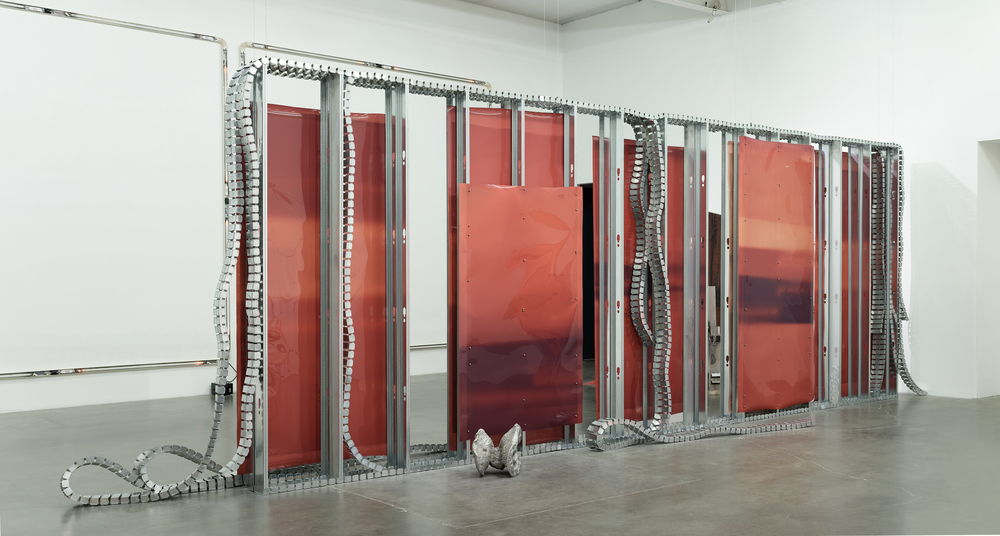
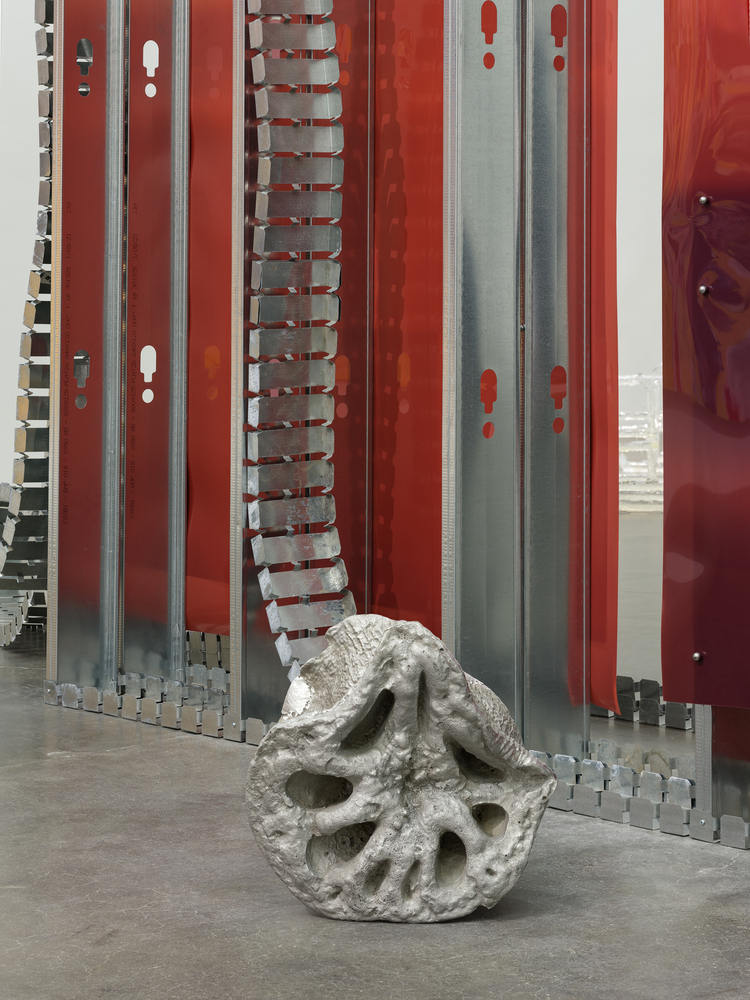
Flex track, steel studs, airline cable, hardware, unfixed and continually sensitive film, photograms, spherical magnets, silicone, thread; cast aluminum anchovies, lotus root, perilla leaf, and cabbage leaf
About The Work

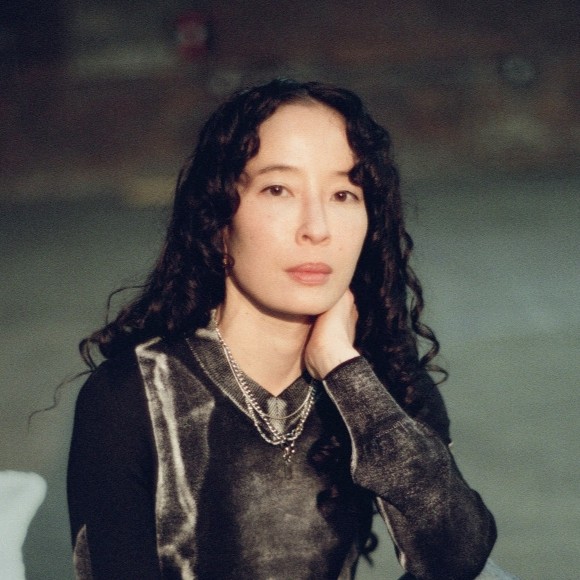
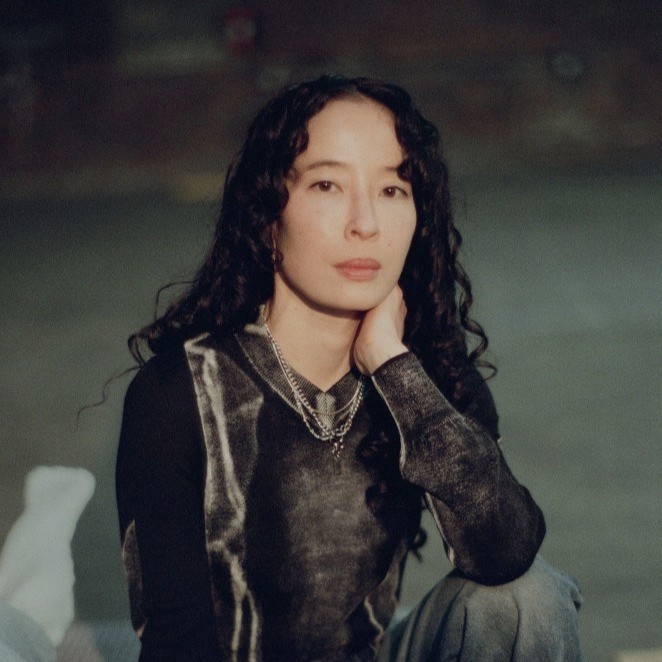
Lotus L. Kang is a Korean Canadian artist who explores questions of identity, memory, and belonging through various media, including photography, sculpture, and installation. Rather than confining personal experiences and histories to the realm of private memory, she expands her perspective to architecture, the environment, and the layers of memory accumulated within them.

Moving across diverse media, Kang’s practice has engaged with unstable materials and forms that resist fixed states, raising questions about the “becoming” of existence. For instance, she combines film, aluminum objects, and poetic texts to create environments that discolor and transform over time, sensorially translating invisible presences and traces.

By placing elements that respond sensitively to their surrounding environments and spaces at the center of her practice, Kang considers identity not as a fixed state, but as something continually influenced and transformed through its relationship with a given environment.

Accordingly, in Kang’s practice, space and the body, memory and inheritance emerge through relationships that continually change as they affect one another. Embracing the possibility of constant transformation and becoming, her work invites us to consider more fluidly the boundaries that have traditionally divided the physical and psychological inside and outside of the self, and to reflect on the ways in which these boundaries are continually reconfigured.

Solo Exhibitions (Brief)

Kang has held solo exhibitions including 《The face of desire is loss》 (Bvlgari Pavillion at the 61st Venice Biennale, Venice, 2026), 《Chora》 (Kukje Gallery, Seoul, 2026), 《Borne》 (Esther Schipper, Berlin, 2025), 《Already》 (52 Walker, New York, 2025), and 《Azaleas》 (Commonwealth and Council, Los Angeles, 2024).

Group Exhibitions (Brief)

Kang has also participated in numerous group exhibitions, including 《Printemps 2026》 (Esther Schipper, Paris, 2026), the 15th Shanghai Biennale 《Does the flower hear the bee?》 (Power Station of Art, Shanghai, 2025), 《What is Parasite and What is Kin?》 (MoMA, New York, 2025), the 2024 Whitney Biennial 《Even Better Than the Real Thing》 (Whitney Museum of American Art, New York, 2024), and 《We Are Story: The Canada Now Photography Acquisition》 (Art Gallery of Ontario, Toronto, 2023).

Awards (Selected)

In 2024, Kang was awarded a John Simon Guggenheim Memorial Foundation Fellowship in Fine Arts.

Residencies (Selected)

Lotus L. Kang has participated in residency programs including Rivers Institute for Contemporary Art and Thought in New Orleans in 2024 and Triangle Arts Association in New York in 2022.

Works of Art

On the "Becoming" and "Unfixity" of Existence

Originality & Identity

Lotus L. Kang approaches the body and identity not as fixed entities, but as states that continually shift through time, environment, memory, and inheritance. In her practice, the self is less a complete and stable subject than a porous being that constantly comes into contact with and responds to the outside world. This perspective is already clear in her early site-responsive installation A Body Knots(2018).

Using light-sensitive paper, unprocessed film, darkroom chemicals, and natural light, the work presents photography not as a medium that fixes an image, but as a material that continues to change in response to light, air, humidity, and time. Kang expands photography beyond a device for preserving memory, treating it as a kind of “skin” that shows how memory accumulates and transforms within bodies and environments.
 
Kang later began to bring personal and familial memory, migration, and inheritance more directly into her work. In 《Her Own Devices》(Franz Kaka, Toronto, 2020), she presented photograms made from bags once used to carry firewood and onions, asking what objects have carried and what bodies and memories continue to hold as they move.

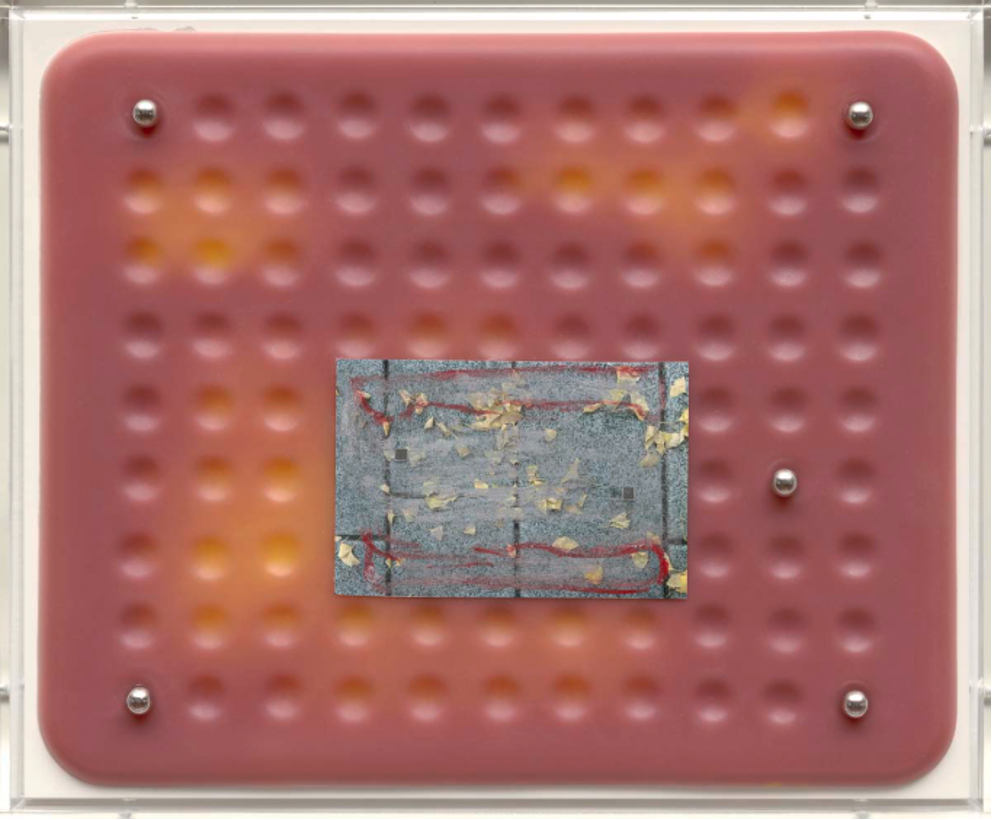
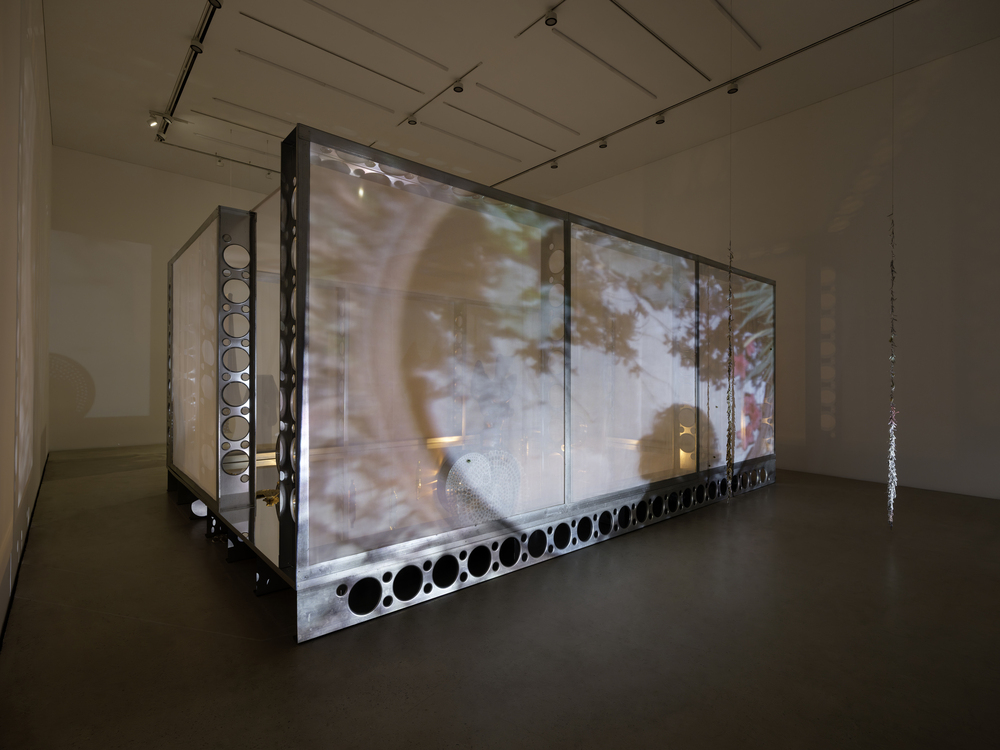
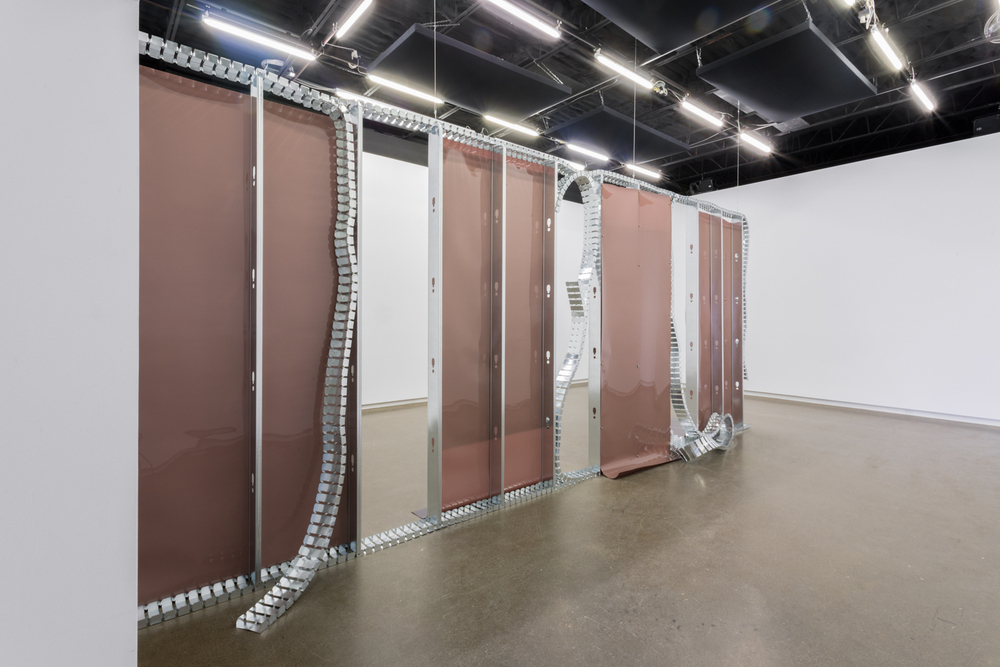
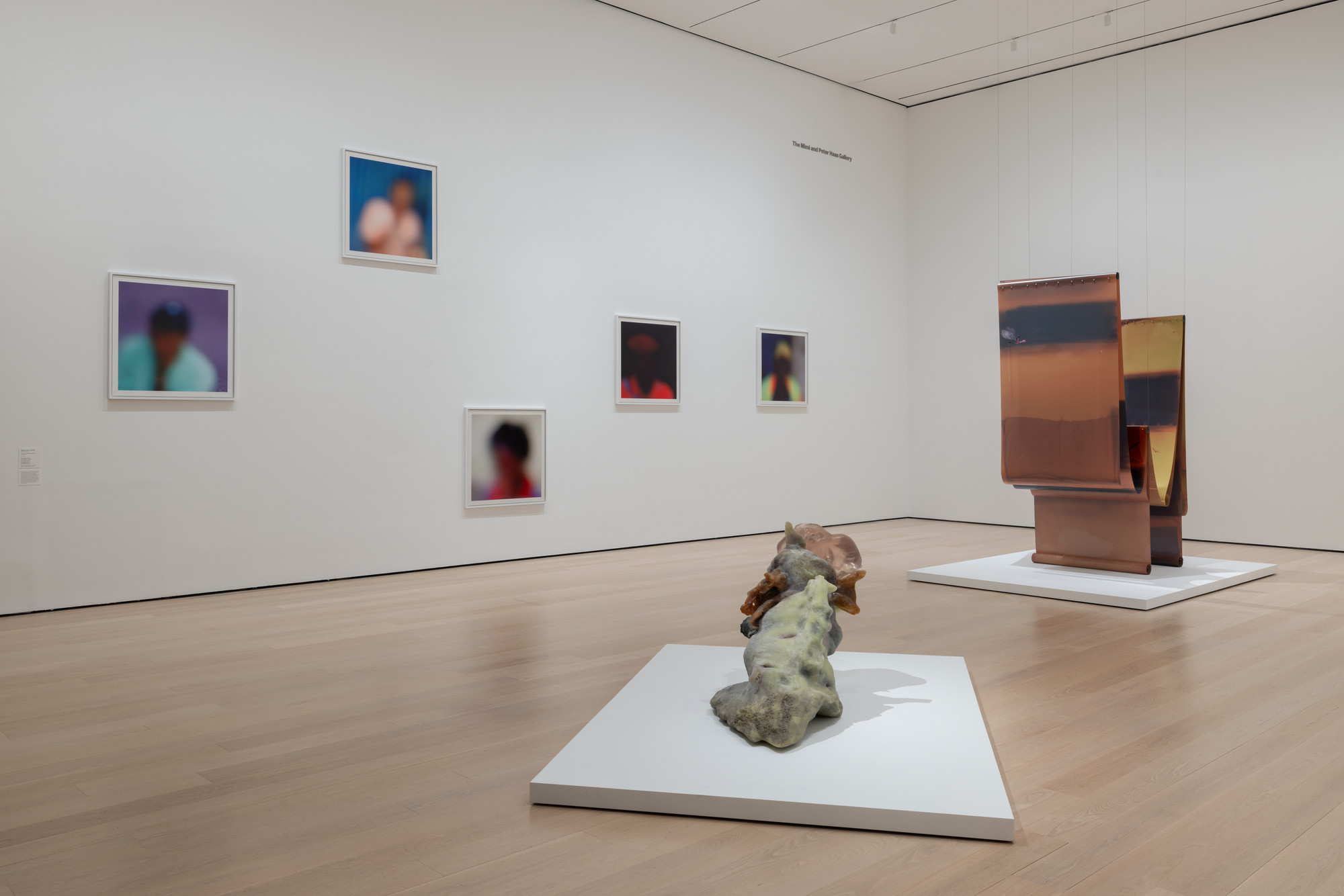
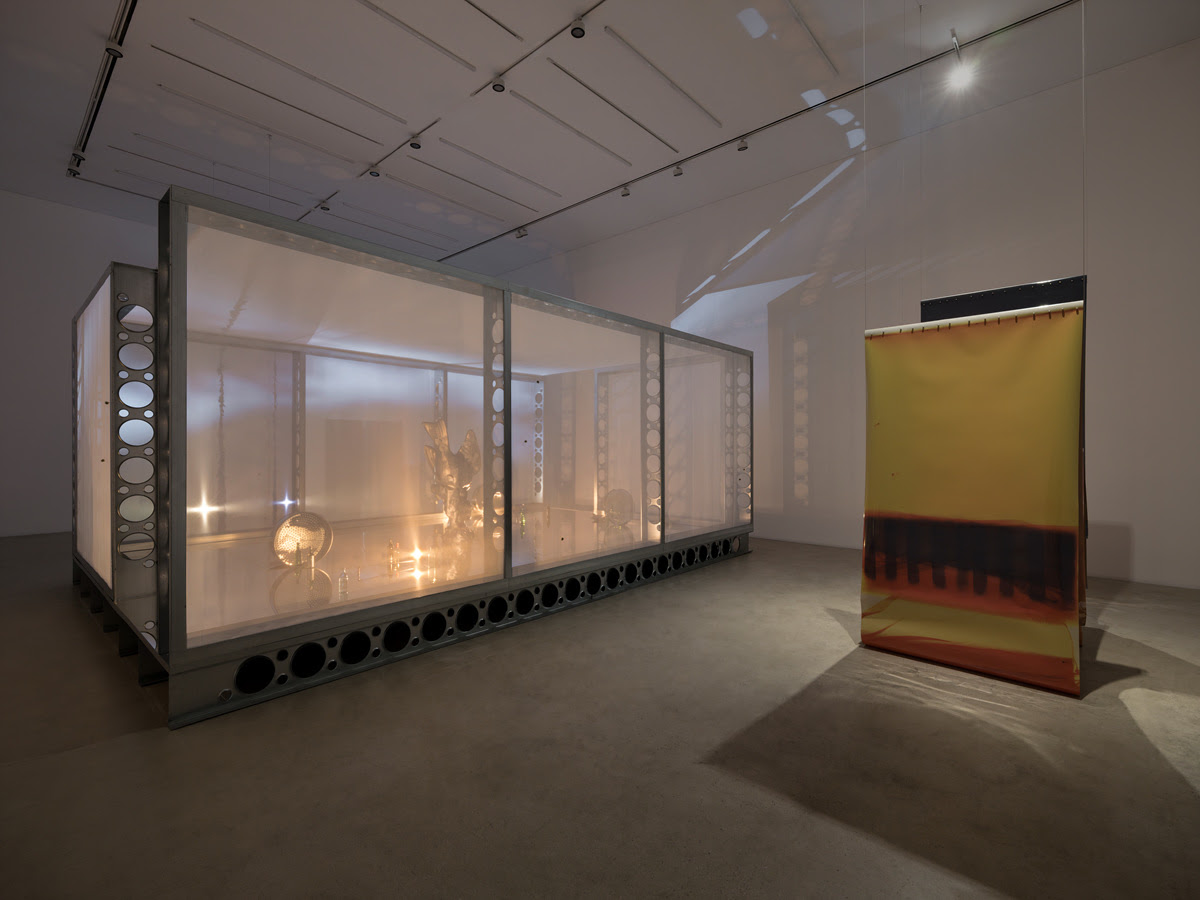
In Great Shuttle(2020-2021), shown in 《Soft Water Hard Stone》(New Museum, New York, 2021), she combines a steel track structure derived from temporary museum partition walls with unfixed film, cast aluminum anchovies, lotus roots, perilla leaves, and cabbage leaves. In this work, film functions as a temporary wall and a skin, a mutable membrane that receives the movement of viewers and the conditions of the exhibition space. Nearby, Root(2020-2021) uses the porous structure of lotus root to suggest that absence or openings can become conditions for generation.
 
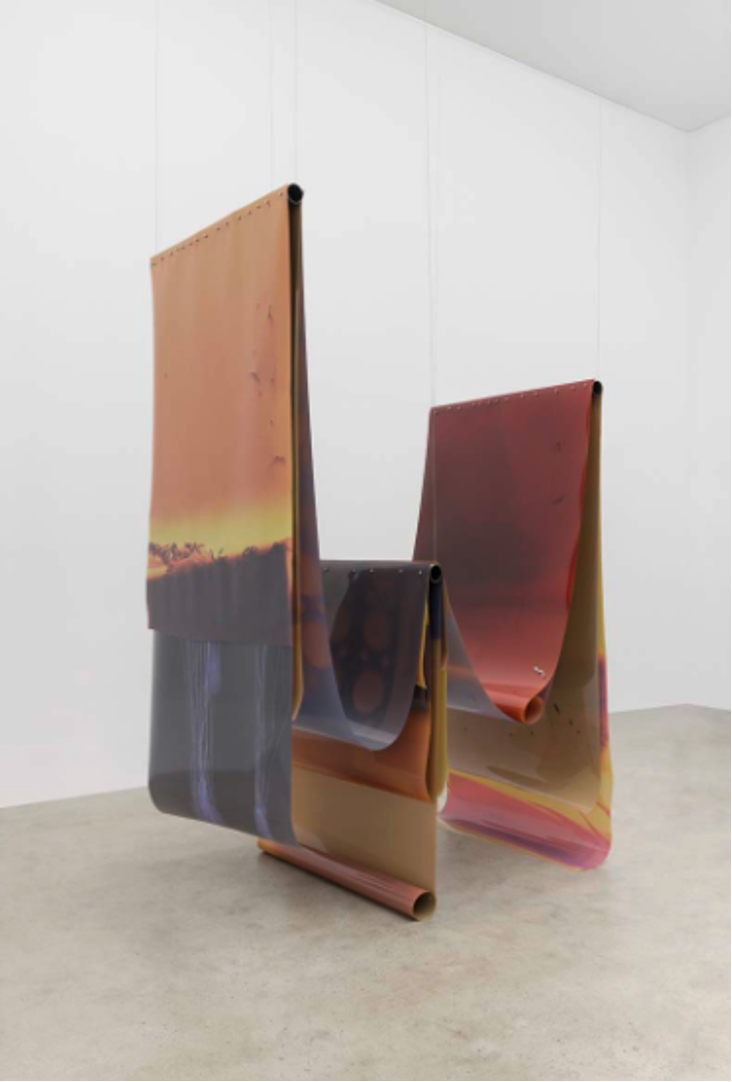
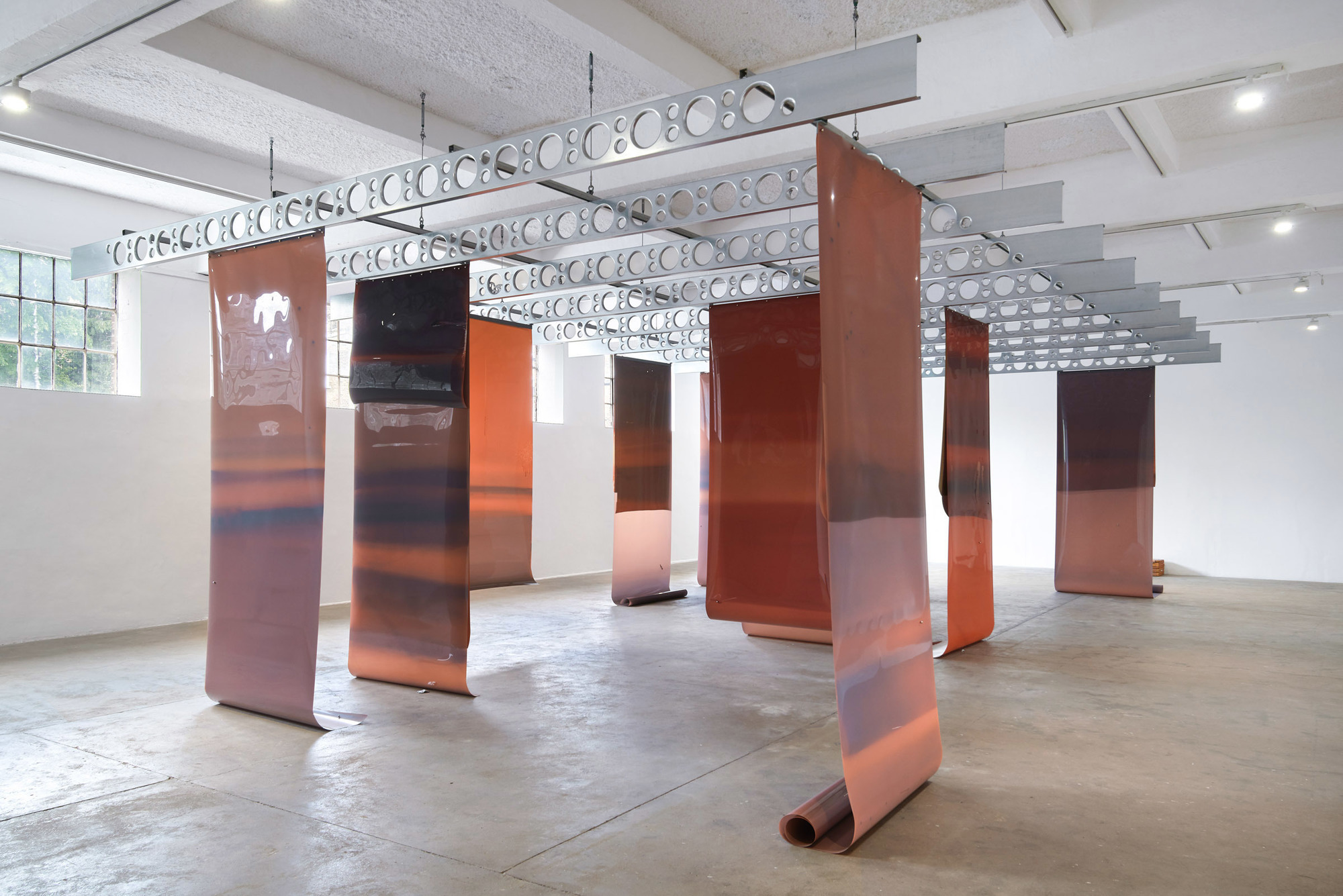
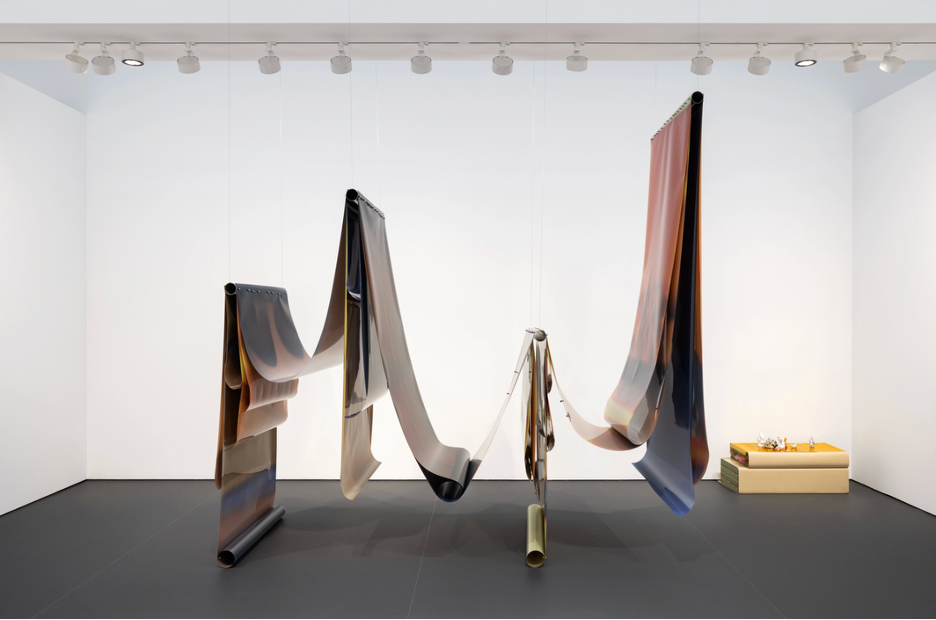
Since 2023, Kang has expanded her interest in “becoming” and “unfixity” into a larger architectural scale. In In Cascades(2023), industrial steel joists suspended from the ceiling and tanned, unfixed film connect the skin of the body, the skeleton of architecture, and the porous structure of plants within a single environment.

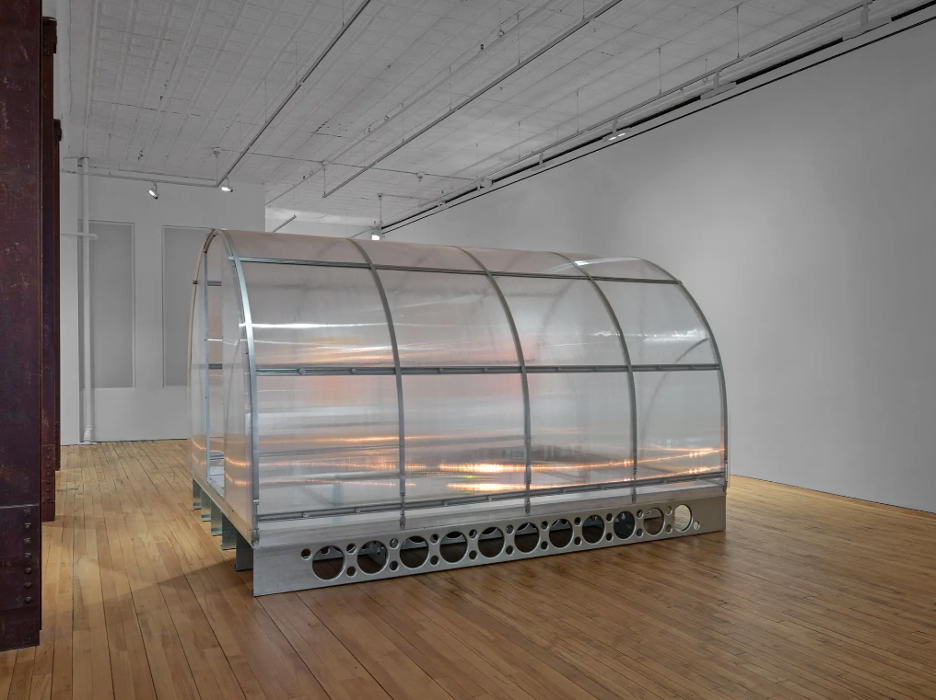
Traces of light, humidity, rainwater, and surrounding objects left on the film create layered timescales, while colors reminiscent of bruises, blood, and bile evoke the vulnerable yet resilient state of the body as it encounters the outside world. In 《Already》(52 Walker, New York, 2025), Kim Hyesoon’s poem “Already,” the Buddhist forty-nine-day mourning ritual, and Kang’s own performance 49 Echoes(2025) intersect within two greenhouse structures, Receiver Transmitter (49 Echoes I)(2022-2025) and Receiver Transmitter (49 Echoes II)(2025), opening up reflections on memory, death, cycle, and rebirth.
 
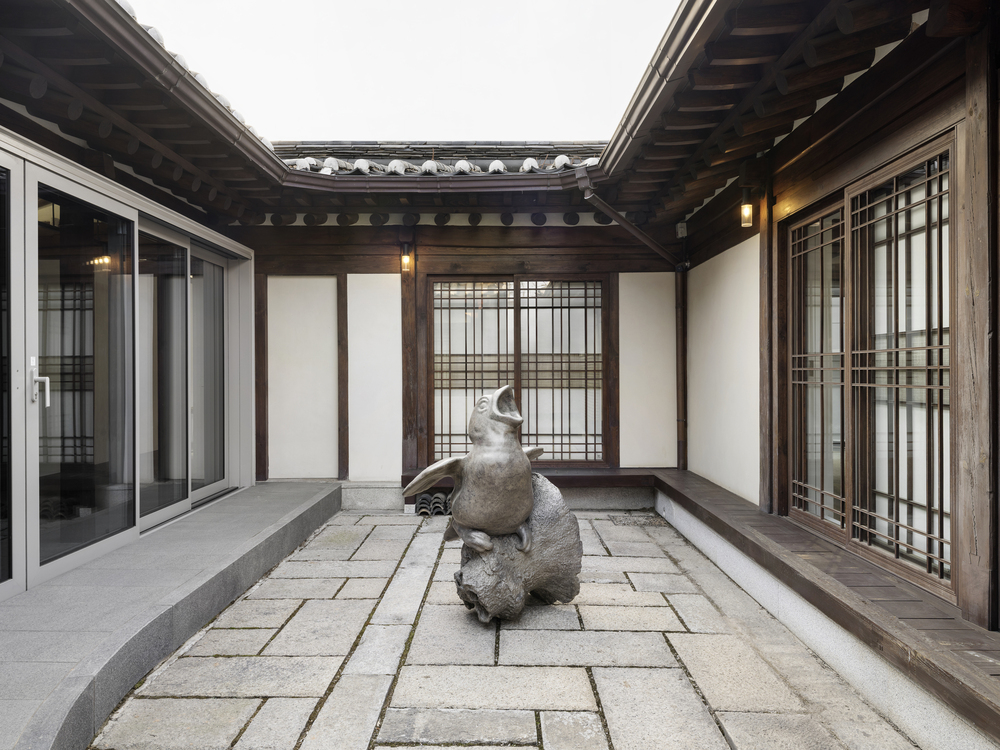
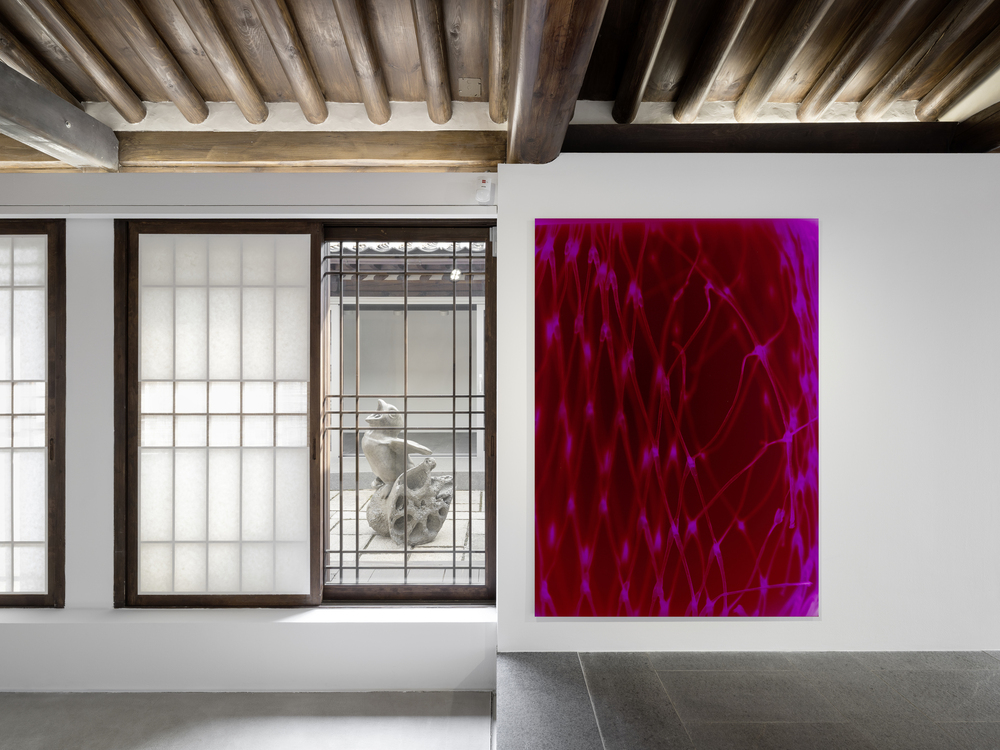
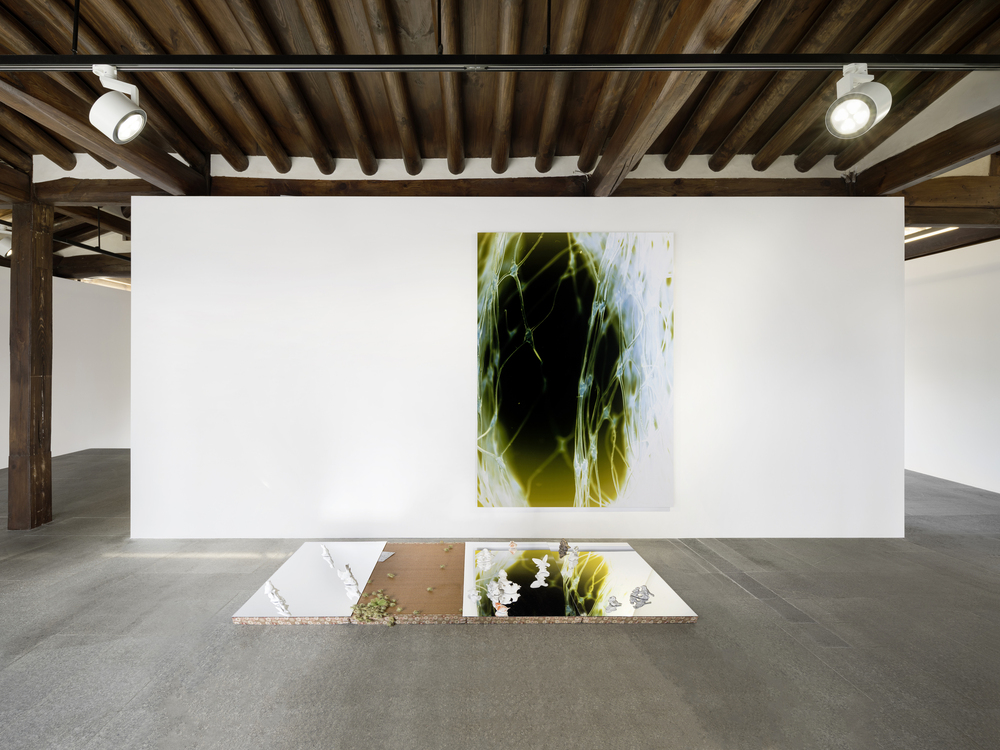
In her recent solo exhibition 《Chora》(Kukje Gallery, Seoul, 2026), Kang expands the concept of inheritance beyond lineage or family history into architecture, environment, and layered memory. The exhibition title refers to “chora,” a primordial space before meaning or form becomes fixed, which Kang interprets as a generative site of nourishment and transformation.

The courtyard of the hanok, the contemporary architecture of K3, Chora Chora(2025-2026), Chora II(2025-2026), the ‘Mesoderm’ series, and the ‘Synapse’ series all reveal states that are not yet fully formed—beings suspended between inside and outside, life and death, memory and forgetting. For Kang, inheritance is not simply something received from the past, but a living condition that continues to be transformed and translated as it passes through bodies and spaces.

Style & Contents

Kang’s practice brings together photography, sculpture, installation, sound, light, and movement, yet at its center is always the way materials respond to time and environment. She repeatedly uses unfixed photographic film and light-sensitive paper, exposing them to light, humidity, water, insects, dust, and architectural conditions. She calls this process “tanning.”

In this process, film does not preserve a clear image; instead, it absorbs its surroundings, changes color, and accumulates traces on its surface. In A Body Knots, Great Shuttle, In Cascades, and Molt (Woodridge-New York-Seoul-)(2024-2026), film functions not as an image captured by a camera, but as a bodily surface that continues to transform through contact with its environment.
 
Kang does not simply reproduce the forms of objects; she translates their cultural memory and bodily meaning into sculptural language. Lotus roots, anchovies, kelp knots, perilla leaves, cabbage leaves, yellow croaker fish, baby birds, and rats appear throughout her works in materials such as cast aluminum, bronze, plaster, glass, and ceramic.

These forms evoke food and sustenance, family history and migration, internal organs, and ecological relations at the same time. Root, for example, reveals how the holes in a lotus root turn emptiness into a condition for life, while Tract XXXI(2025) uses cast brass-bronze kelp knots suspended from nylon string to suggest seaweed, nets, and entanglement. In Tract XIX (You are already) and Tract XX (You are already II)(both 2025), anchovies, lotus root slices, and kelp knots hang from steamers reminiscent of gongs, suggesting how stories might be transmitted like vibrations from one body to another.
 
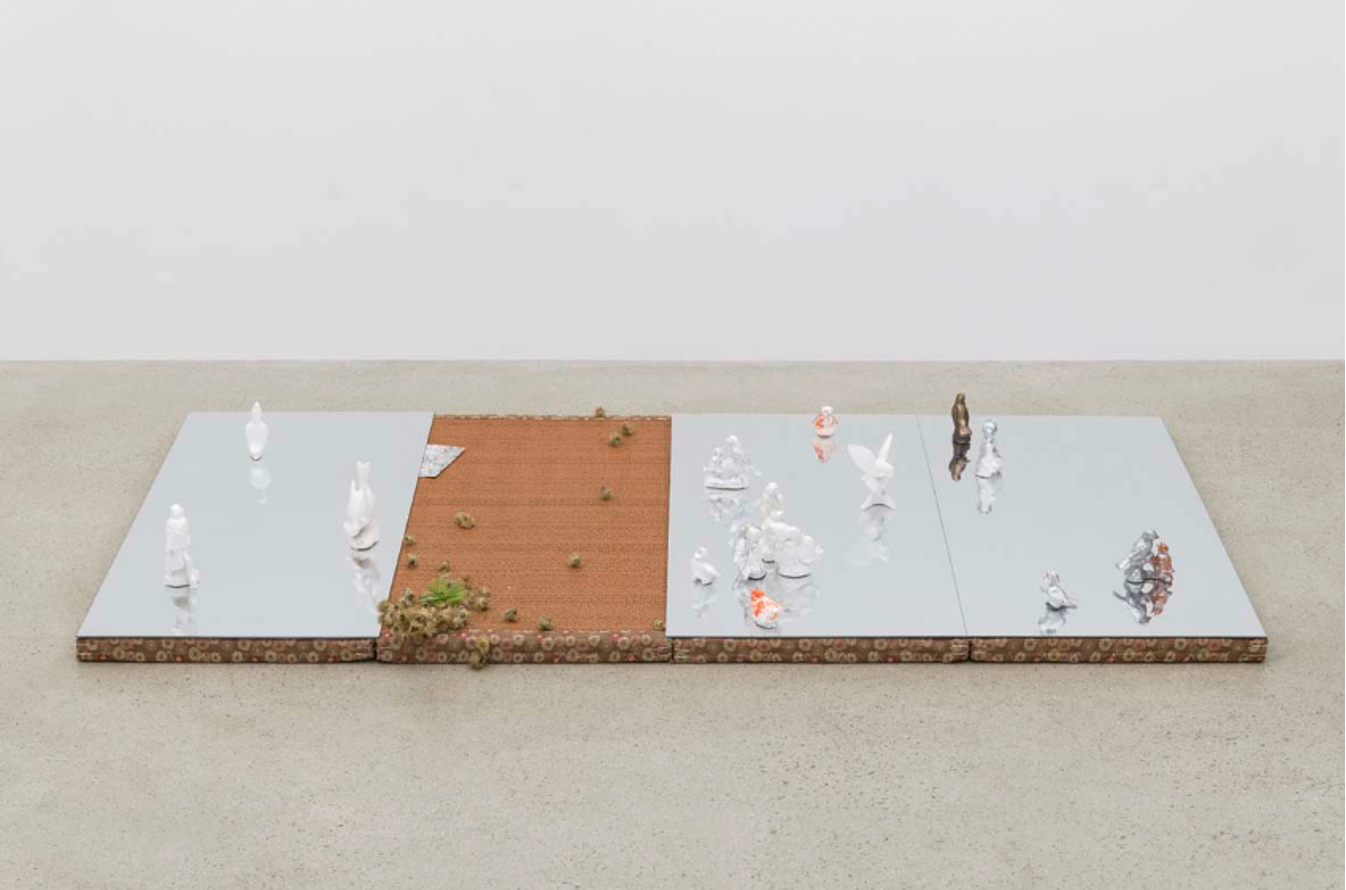
Tatami is another important formal and conceptual material in Kang’s work. In the ‘Receiver Transmitter’ series, tatami becomes both a floor structure that evokes bodies lying down, resting, dreaming, or dying, and a site where memories and objects are hidden within folds. Receiver Transmitter (Born Inside Death II)(2025) combines tatami mat, mirrored acrylic, cast plaster, cast aluminum, ink, photographs, and burrs, showing through an arrangement of objects how the body holds traces of time.

In 《Borne》(Esther Schipper, Berlin, 2025), cast aluminum perilla leaves, bottles of spirits, photographs, and baby bird sculptures are placed on and around tatami, unfolding sensations of birth and death, care and loss, inheritance and transformation like a horizontal body.
 
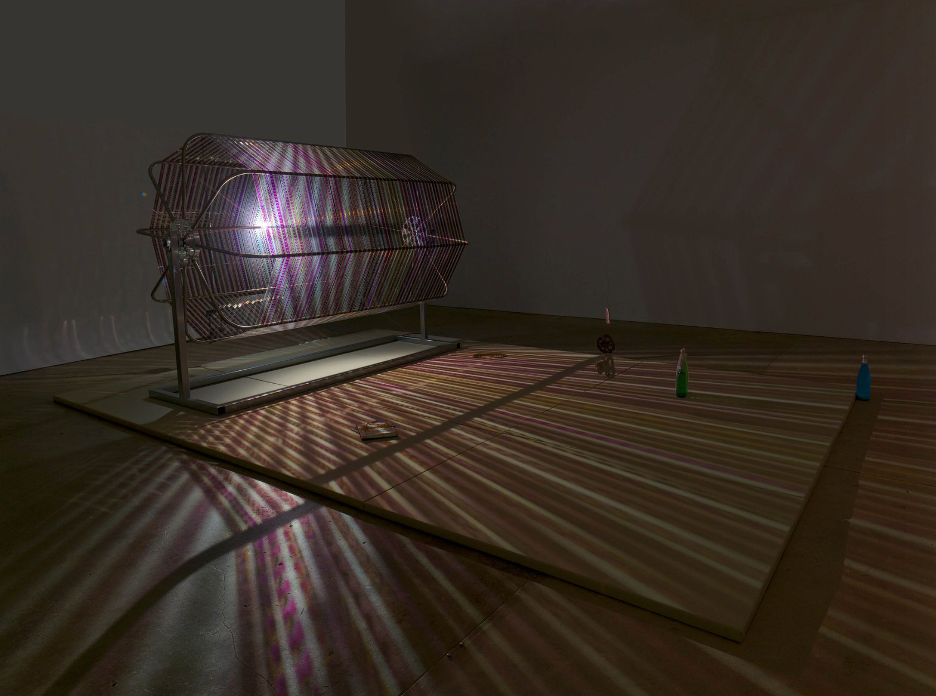
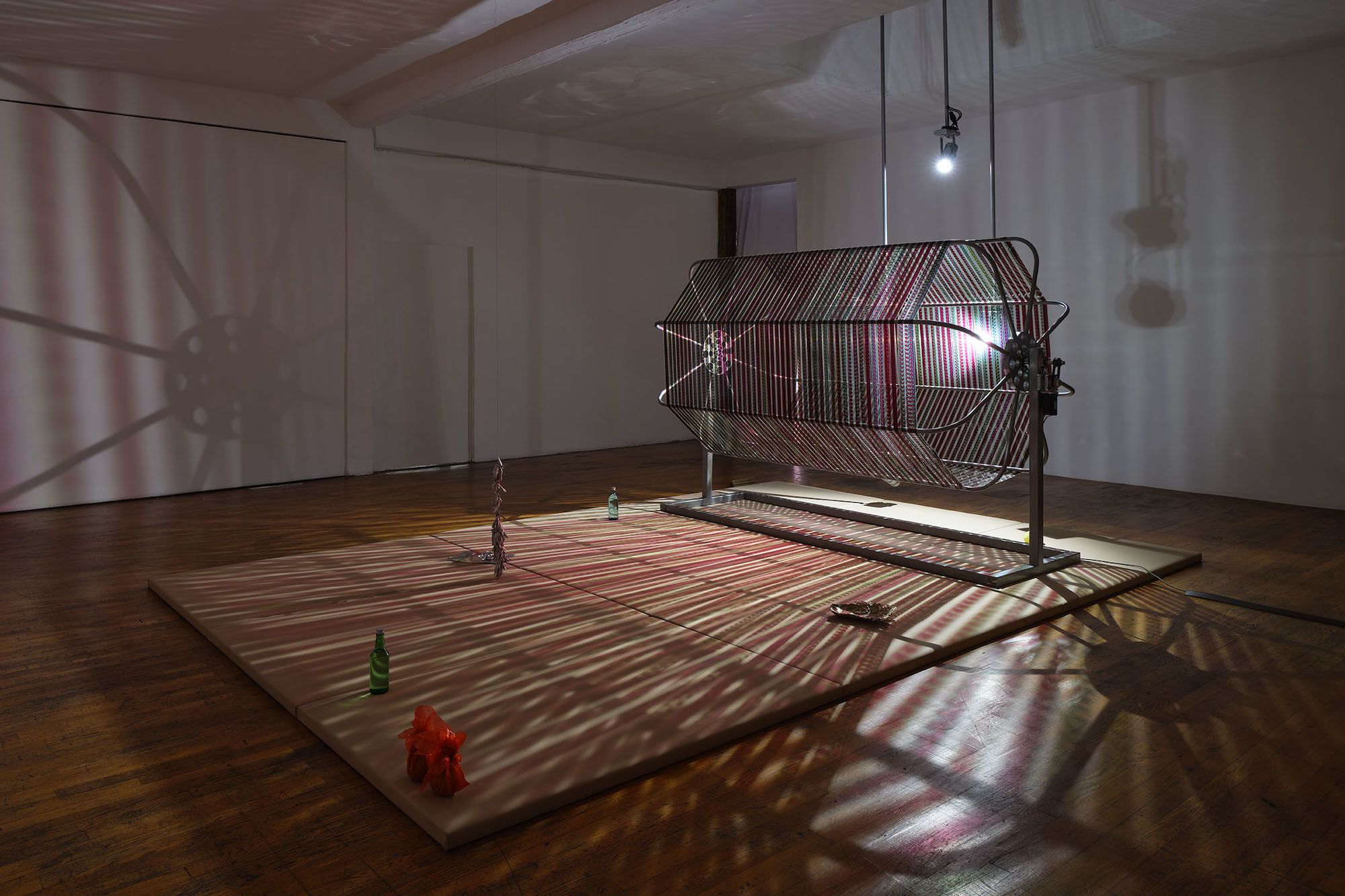
Kang also uses literature and translation as structures for her work. In 《Azaleas》(Commonwealth and Council, Los Angeles, 2024), Azaleas(2024) is a kinetic installation inspired by a rotary film dryer, combining 35mm film, a rotating drum, lights, wind chimes, and sound. The work is based on Kim Sowol’s poem “Azaleas” and poems by Kim Hyesoon, but Kang does not attempt to transfer their meanings directly.

Instead, she accepts the compression, loss, and slippage that occur in translation as part of the work’s rhythm. She calls this process “translation-regurgitation.” In 《I hear the hollow boom of time》(Frye Art Museum Seattle, Seattle, 2026), this structure expands further, with a film installation and a new iteration of Azaleas presented across a bright gallery and a dark gallery, creating a space in which body and memory, poetry and sound, photography and sculpture translate one another.

Topography & Continuity

The originality of Kang’s work lies in her treatment of photography not as a medium of fixed images, but as a living surface and changing membrane. Her films do not become finished photographs; they remain sensitive, absorb their surroundings, and move into different states over time.

This approach naturally blurs the boundaries between photography, sculpture, and installation. Film becomes wall, skin, curtain, and architectural structure. At the same time, it becomes the boundary where the body meets the outside world, a site where memory is stored and transformed, and a surface on which inheritance remains materially present while being translated anew.
 
Looking at the development of her practice, Kang has been interested from early on in the interaction between body and environment, the instability of light-sensitive materials, and the embodiment of personal and cultural memory. In A Body Knots and 《Her Own Devices》, she explored how memory remains on bodies and materials through photography and the surfaces of everyday objects.

In Great Shuttle and In Cascades, she expanded these questions into museum and architectural scales. In 《Already》 and 《Azaleas》, Korean poetry, Buddhist temporality, family history, and the sensibility of diaspora became more actively intertwined. In 《Chora》, hanok and contemporary architecture, the porosity of lotus root, the embryonic mesoderm, and luminograms suggestive of neural networks are connected within a single spatial inquiry.

Her work does not develop in a straight line; rather, it repeatedly returns to certain materials and motifs across different exhibitions and sites, each time allowing them to shift into a new state.
 
Compared with artists who also work with photography, installation, or ecological sensibility, Kang’s practice is closer to “response” than to “documentation.” She does not use photography as a window that captures the world, but as a skin that changes through contact with it. She also does not explain identity or inheritance through direct narrative, but through the states of objects: the folds of tatami, stains on film, holes in lotus root, cast anchovies and kelp knots, or the open mouths of baby birds.

For this reason, her work holds together personal history and broader histories, body and architecture, natural and industrial materials, poetry and translation, without closing them into a single conclusion. Viewers do not simply interpret the works; they move through them, sensing how time and memory seep into matter.
 
Kang has already established a strong presence across major international contexts. Her recent solo exhibitions include 《Molt》(MCA Chicago, Chicago, 2023), 《In Cascades》(Chisenhale Gallery, London, 2023), 《In Cascades》(Contemporary Art Gallery, Vancouver, 2023), 《Azaleas》(Commonwealth and Council, Los Angeles, 2024), 《Already》(52 Walker, New York, 2025), 《Borne》(Esther Schipper, Berlin, 2025), 《I hear the hollow boom of time》(Frye Art Museum Seattle, Seattle, 2026), and 《The face of desire is loss》(Bvlgari Pavilion at the 61st Venice Biennale, Venice, 2026).

She has also participated in the 2024 Whitney Biennial 《Even Better Than the Real Thing》(Whitney Museum of American Art, New York, 2024), the 15th Shanghai Biennale 《Does the flower hear the bee?》(Power Station of Art, Shanghai, 2025), and 《What is Parasite and What is Kin?》(MoMA, New York, 2026). In 2024, she was awarded a John Simon Guggenheim Memorial Foundation Fellowship in Fine Arts, and her work is held in major collections including MoMA, the Whitney Museum of American Art, the Art Gallery of Ontario, the Museum of Contemporary Art, Los Angeles, Kadist, and The Morgan Library & Museum.

Within this trajectory, Kang’s practice suggests the possibility of continuing to test, across different places in the world, the conditions through which bodies and environments, memories and materials continue to transform one another.

Works of Art

On the "Becoming" and "Unfixity" of Existence

Articles

Exhibitions

Activities