slicing with grid - K-ARTIST

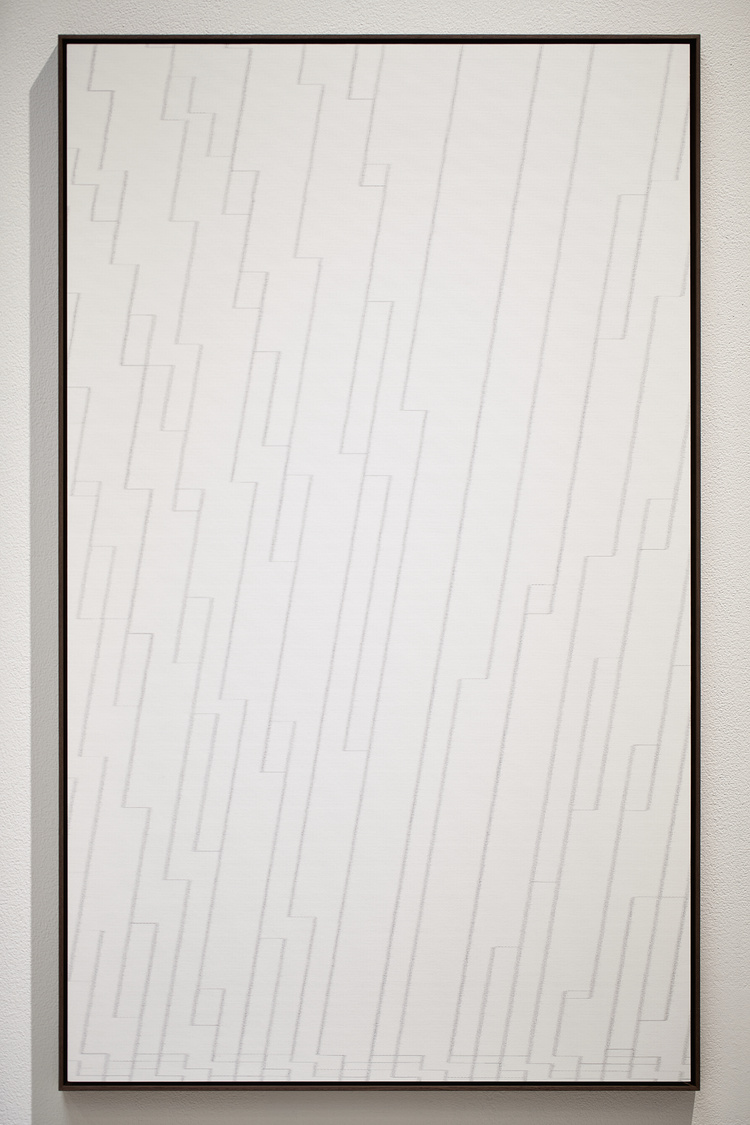
slicing with grid

2022
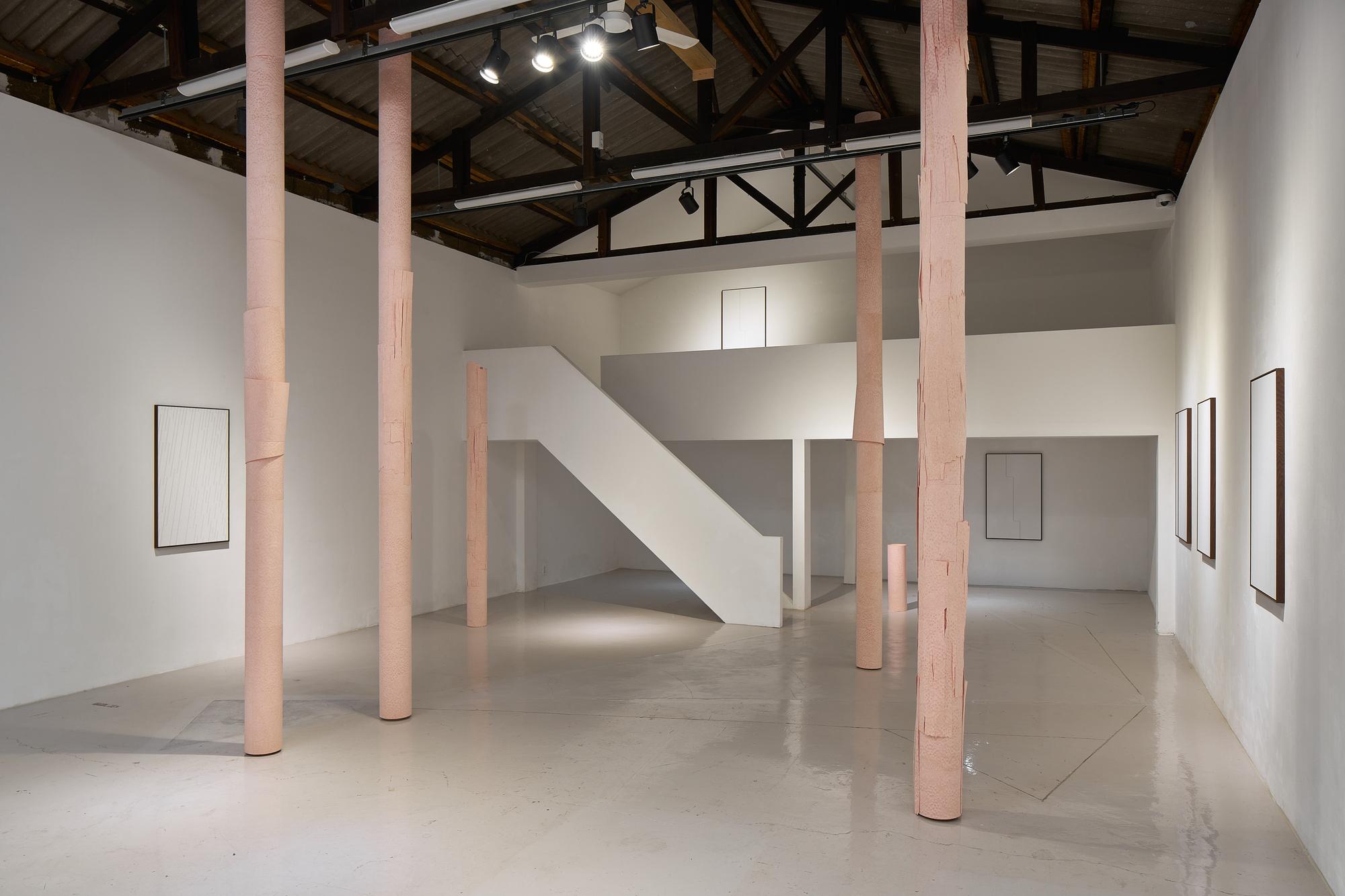
Mineral paper, drawing installation
Dimensions variable
About The Work

Shinae Kim is interested in how form and information generate one another. Through installation and drawing, she gives form to the various relationships formed among the information that exists within a space, viewing the essence of form not as a fixed shape but as a structure composed of information and relationships.

Accordingly, in her practice, form is neither independent nor absolute, but becomes a temporary event that emerges through the process of different elements entering into relationships with one another.

Kim has brought the basic elements of artistic form—point, line, and plane—which also serve as concepts for describing space and dimension, into her framework of perception, translating everyday spaces into a new visual language. In this process, form takes shape through the measurement, decomposition, and rearrangement of space.

Various conditions that constitute an exhibition space—including floors, walls, corners, ceilings, shelves, and light—do not remain external to the work, but instead function as information that constitutes the work and generates relationships.

Through this approach, Kim captures the countless pieces of information that make up our surroundings and the momentary relationships that emerge among them, transforming them into visual forms.

For her, “form-making” does not refer to a completed form, but to an event that contains the possibility of continuously circulating and being substituted by other forms, as well as a constellation of relationships already situated within a process of transformation.

Her practice encourages viewers to move beyond simply looking at or appreciating a work and instead experience the process through which forms shift and new relationships emerge with the movement of their gaze.

Kim’s form-making thus extends beyond a fixed outcome into a phenomenological experience that continuously changes and takes shape through the relationships formed among the viewer’s gaze, space, and information.

Solo Exhibitions (Brief)

Kim has held solo exhibitions including 《i.i.il.lʌ.ʌŋ》 (Seetang Raum, Jeju, 2026), 《Configuration-Event》 (Hall1, Seoul, 2024), 《Romantic Storage》 (SeMA Storage, Seoul, 2022), and 《Slicing Space》 (Seetang Raum, Jeju, 2022).

Group Exhibitions (Brief)

Kim has also participated in numerous group exhibitions, including 《code of engagrment in flatforest》 (Hošek Contemporary, Berlin, 2025), 《Sensory Projection》 (Gallery Planet, Seoul, 2025), 《et cetera》 (Nanji Residency, Seoul, 2024), 《NANJI ACCESS with PACK: Mbps》 (Seoul Museum of Art, Seoul, 2022), 《Nothing Makes Itself》 (ARKO Art Center, Seoul, 2021), and 《Spiele mit der Ewigkeit》 (Grimmuseum, Berlin, 2018).

Residencies (Selected)

Kim has participated in numerous residency programs, including the OCI Museum of Art Residency (2026), Nanji Residency at the Seoul Museum of Art (2023), and the MMCA Residency Goyang (2022).

Works of Art

Form as a Variable and Emergent Phenomenological Experience

Originality & Identity

Shinae Kim understands form as an event that arises when information and relationships temporarily intersect. She treats point, line, and plane—the basic elements of form—not simply as formal language, but as frameworks for perceiving space, showing that the spaces we believe to be familiar are in fact constructed through countless relations among information, gaze, and sensation.

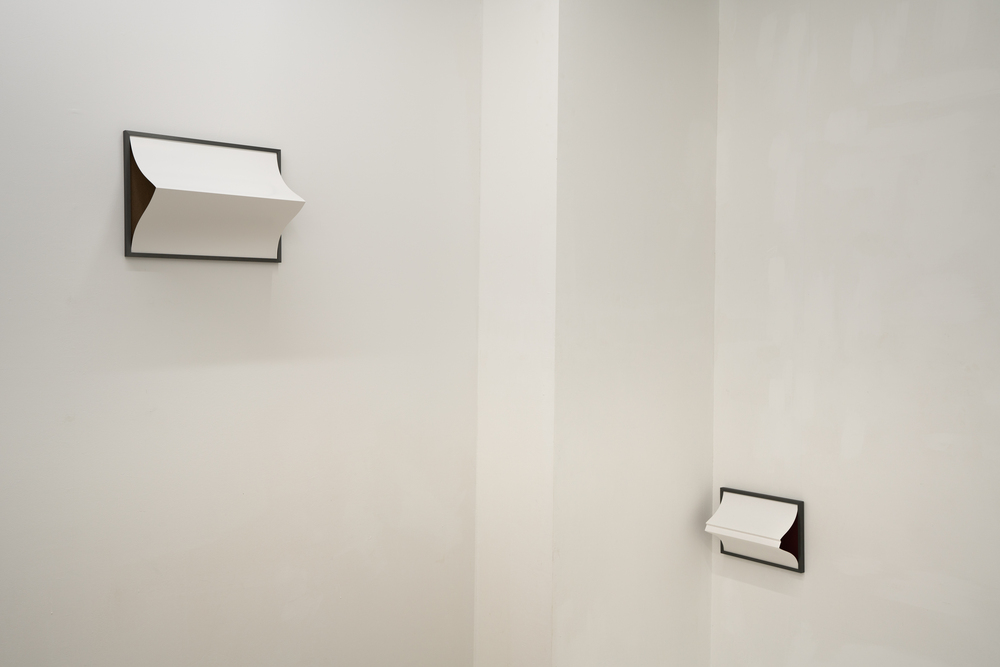
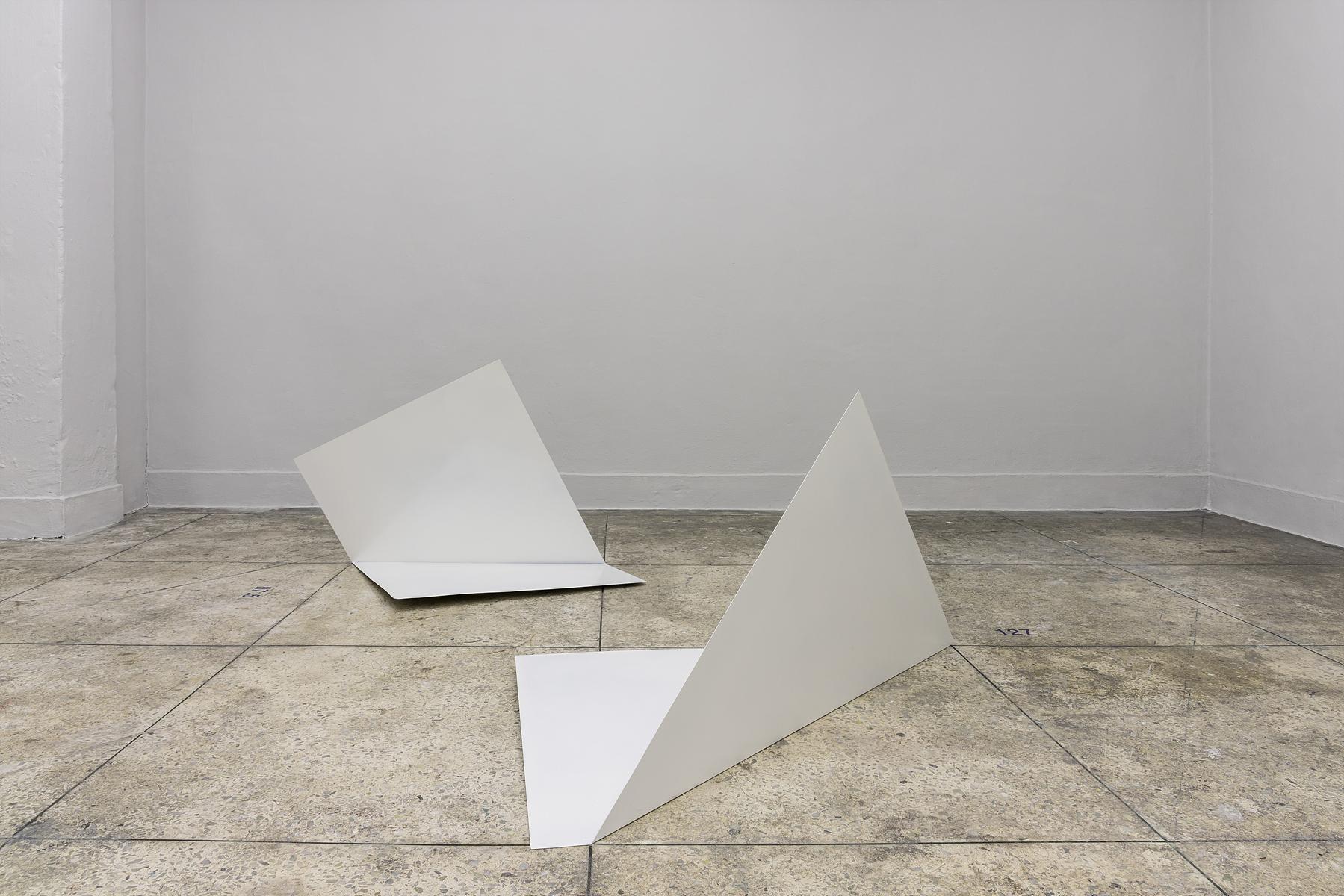
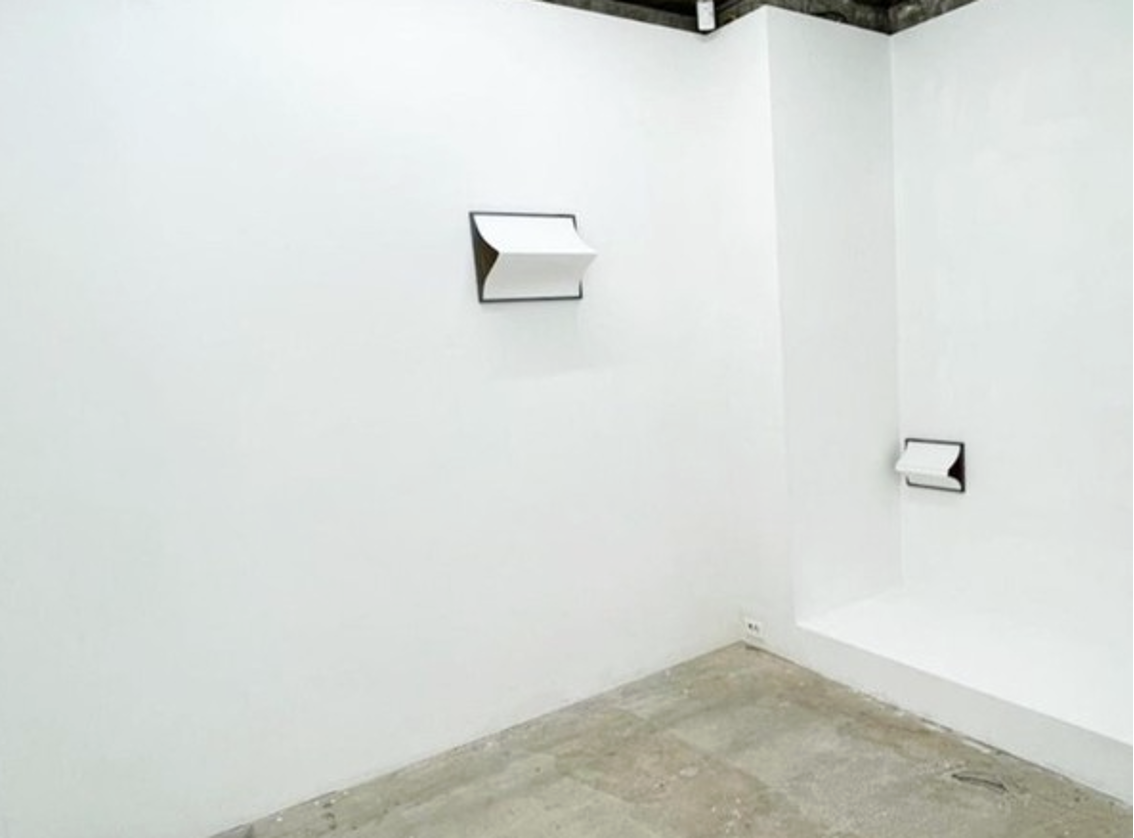
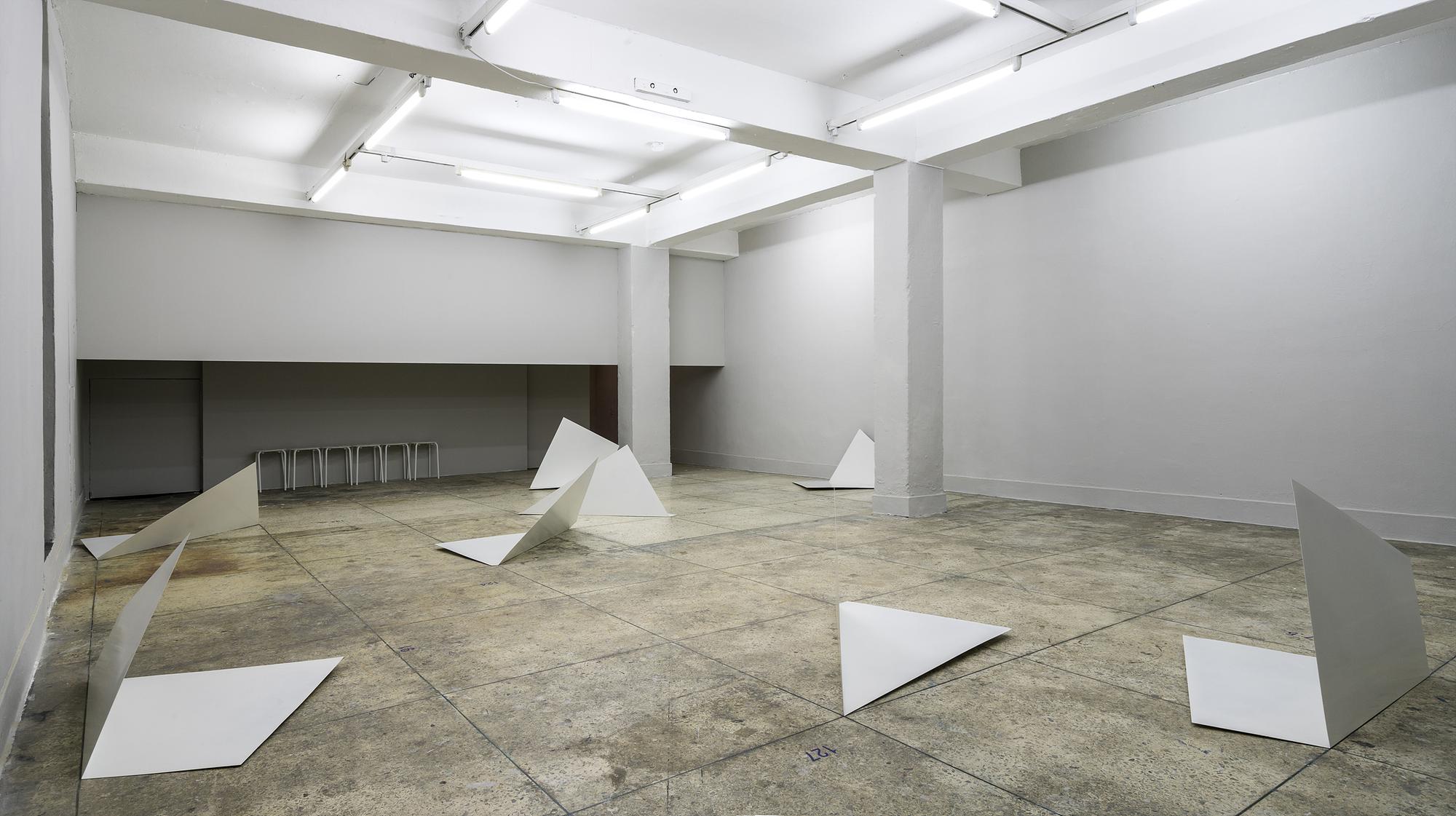
In her first solo exhibition 《Upsidesidedown》(Project Space Sarubia, Seoul, 2015), she focused on the “line” that emerges between the floor and walls of the exhibition space, folded plates, and grids. slightly out of tune(2015) reveals a point where the two-dimensional plane and three-dimensional sculpture operate simultaneously, showing that line and plane are not so much actual physical entities as events that momentarily occur within perception.
 
Kim later analyzed and formalized the informational structures that constitute space more actively. In 《Not Just Tiny But Abstract》(OCI Museum, Seoul, 2019), she selected pieces of information from the first floor of the exhibition space—such as its area, height, number of sides, edge lengths, vertex locations, wall colors, floor finish, and ceiling materials—and transformed them into installation and drawing.

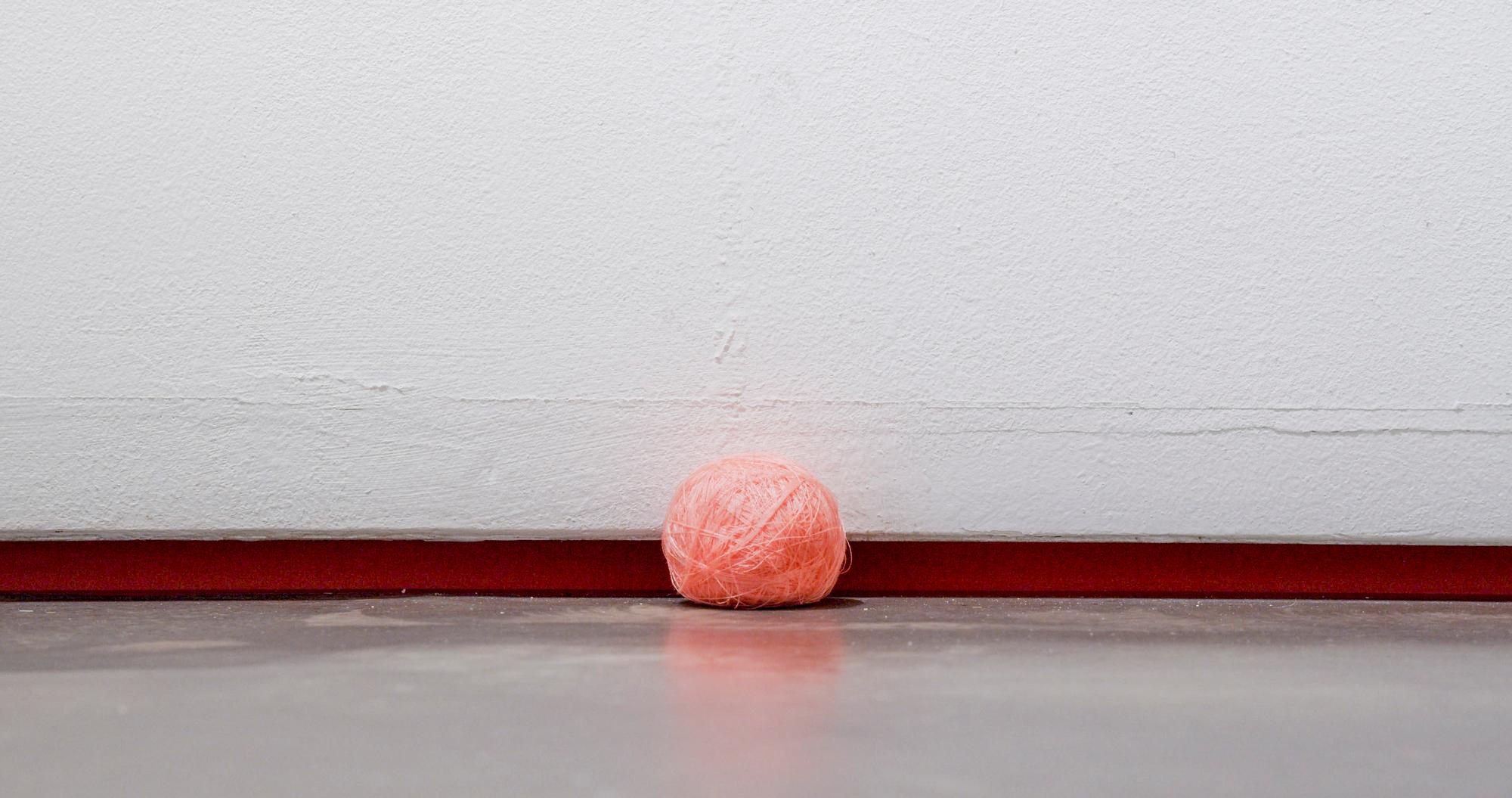
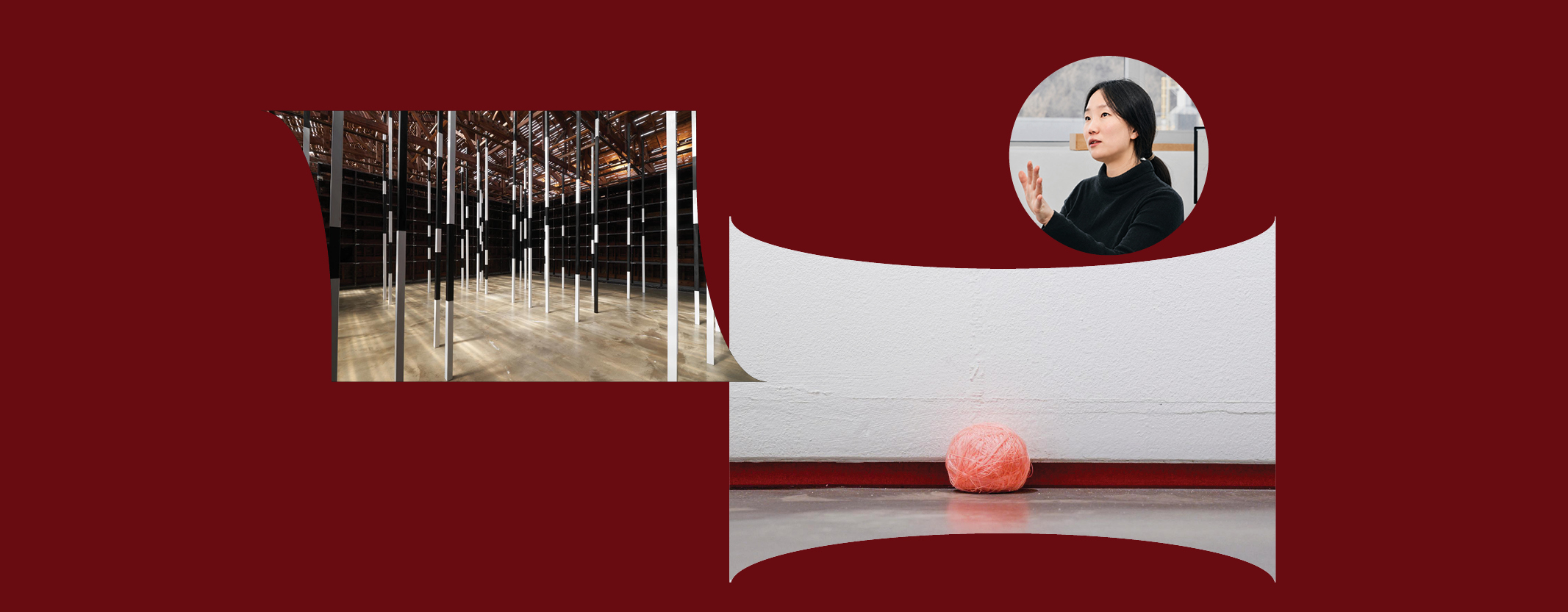
Scene 9(2019) constructs divided information from the floor plan through seven colored stainless steel lines, while Scene 5(2019) materializes the total length of all edges in the museum, 824.69 meters, as a skein of thread. Here, information is presented not as content that fully explains an object, but as an attempt to apprehend it and as an event that changes within relationships.
 
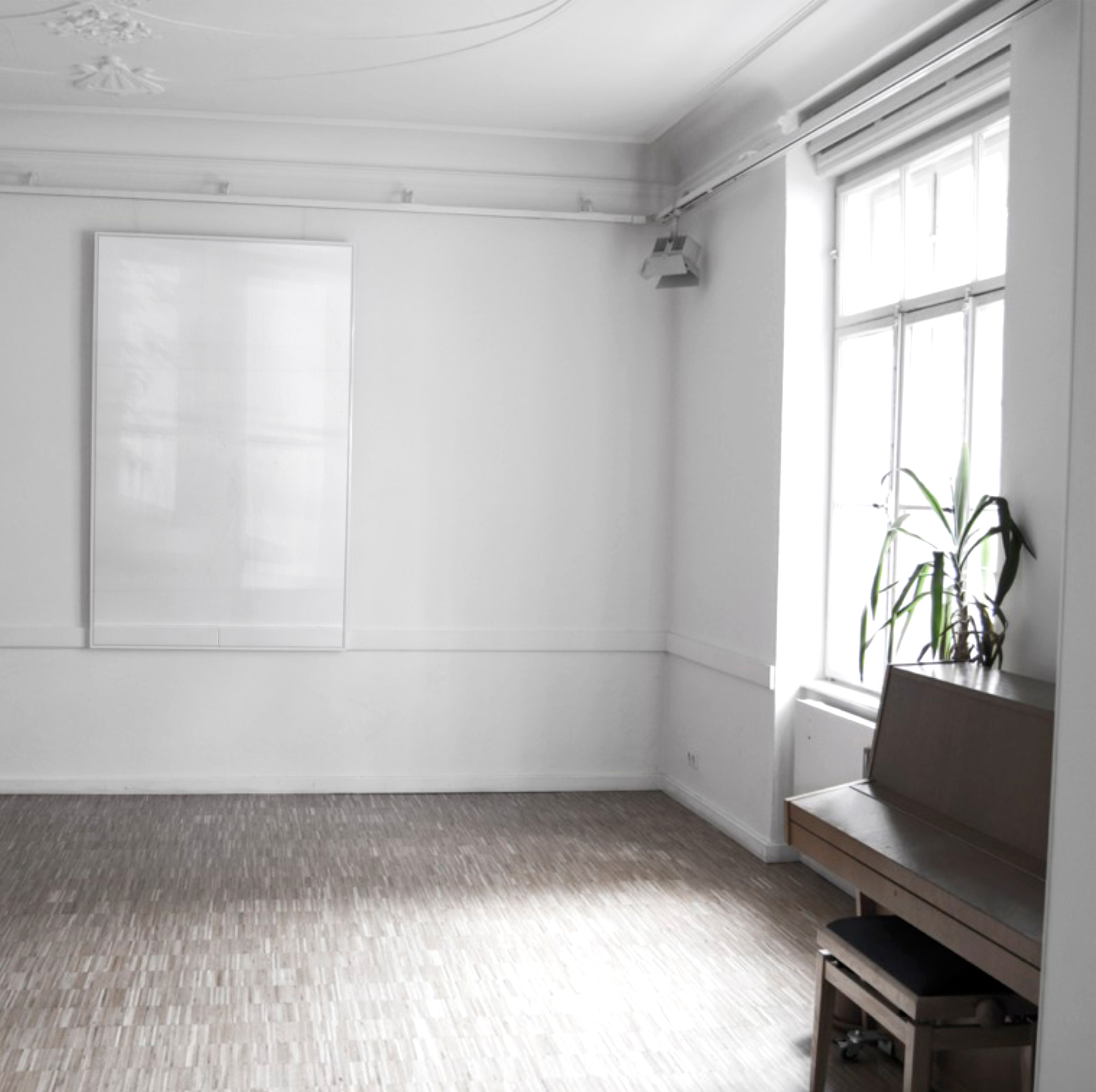
After the pandemic, Kim’s interest expanded from spatial information to planarity and screen-based experience. 《Slicing Space》(Seetang Raum, Jeju, 2022) asks what the planar qualities of space might be in a situation where experiences once grounded in physical space have been replaced by planar experiences on screens.

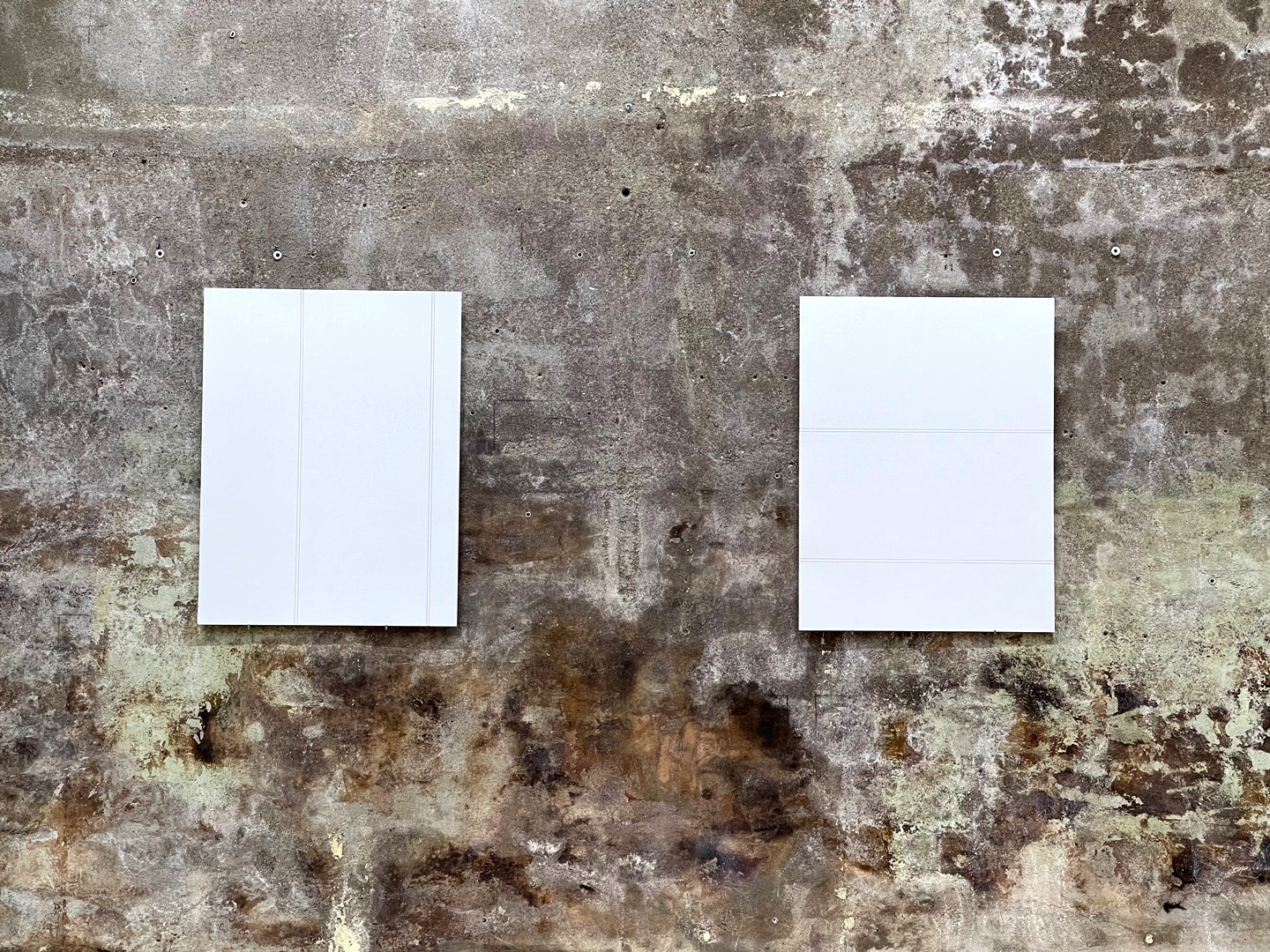
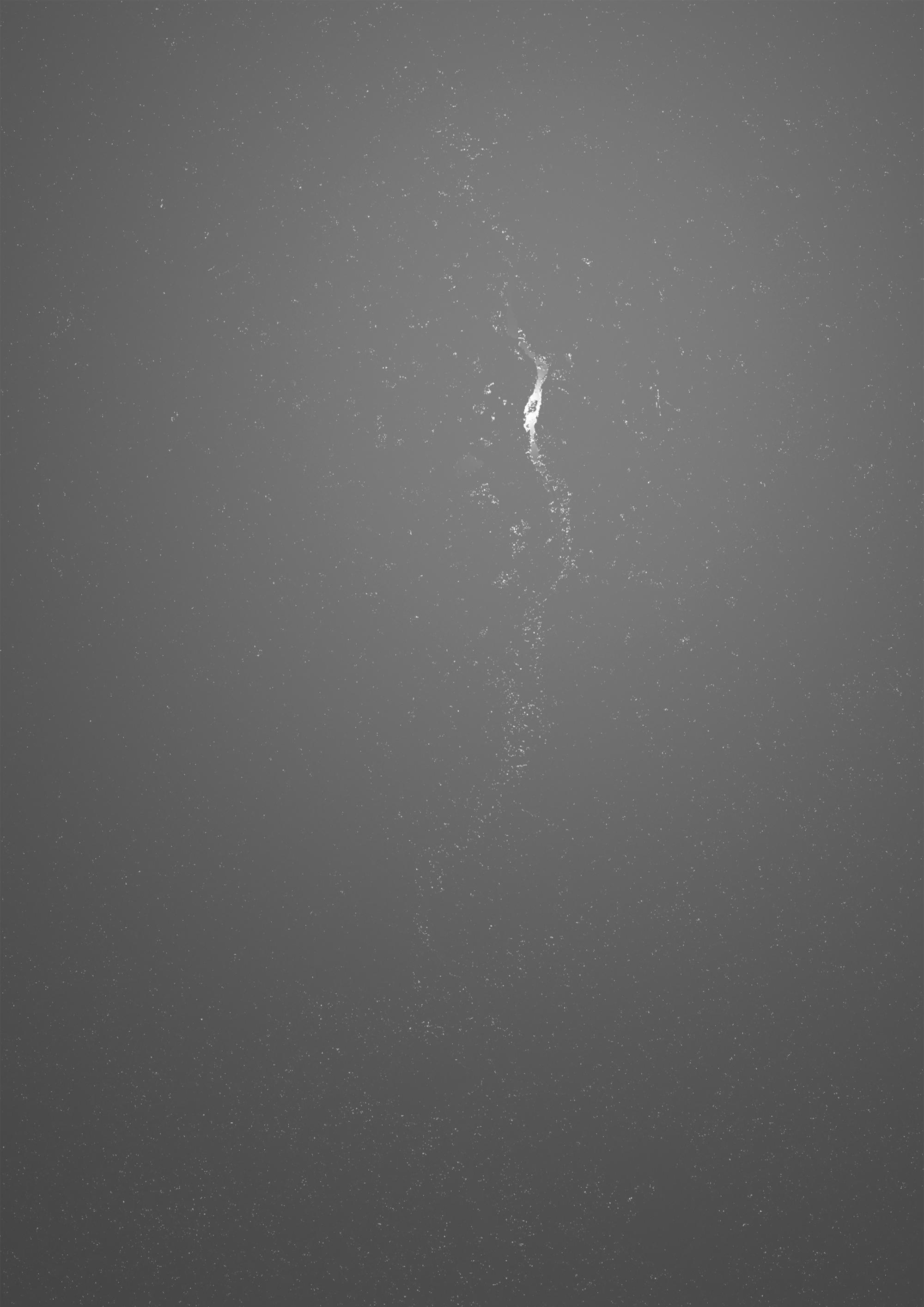
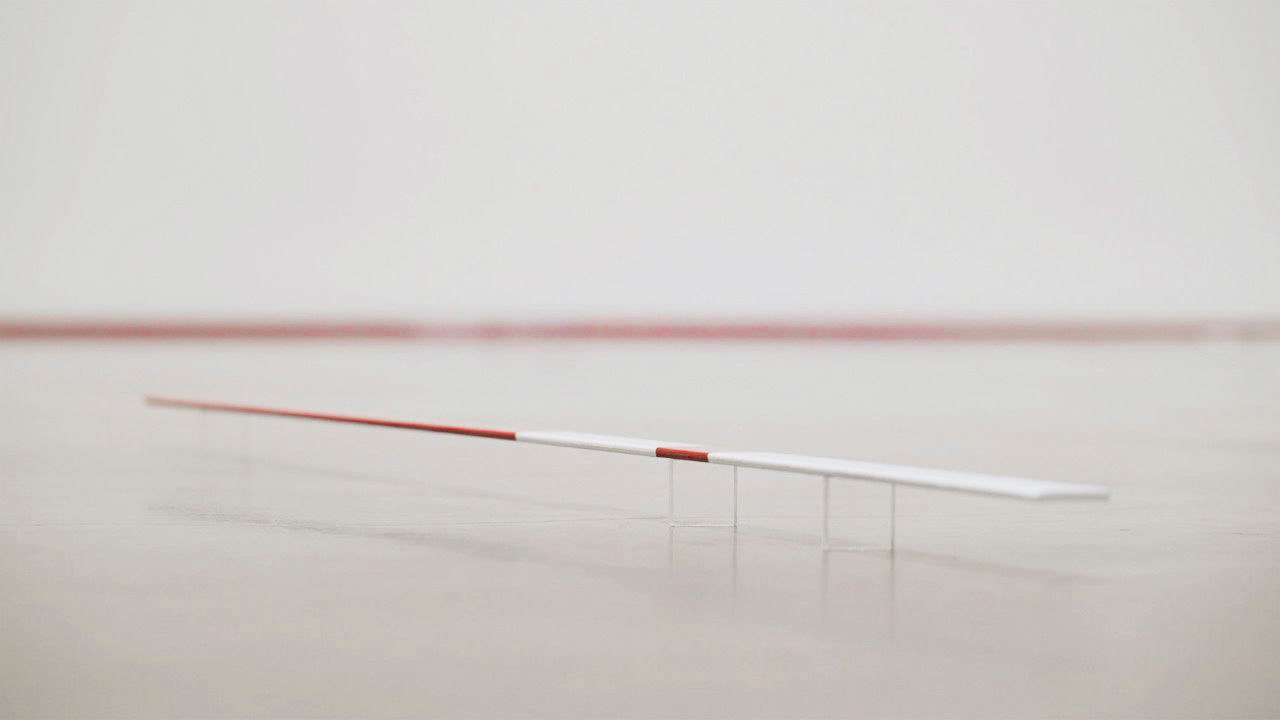
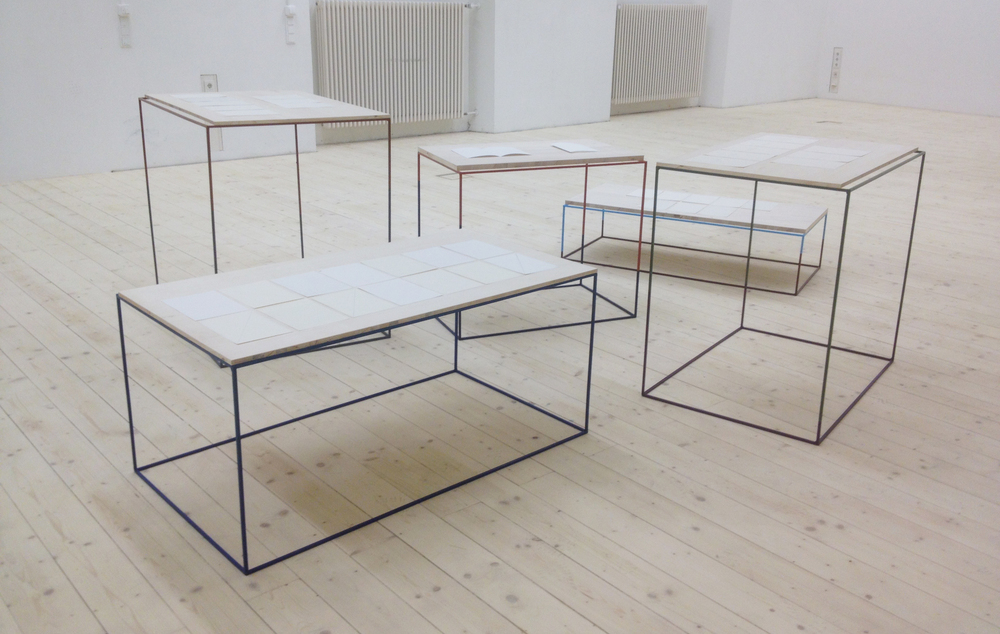
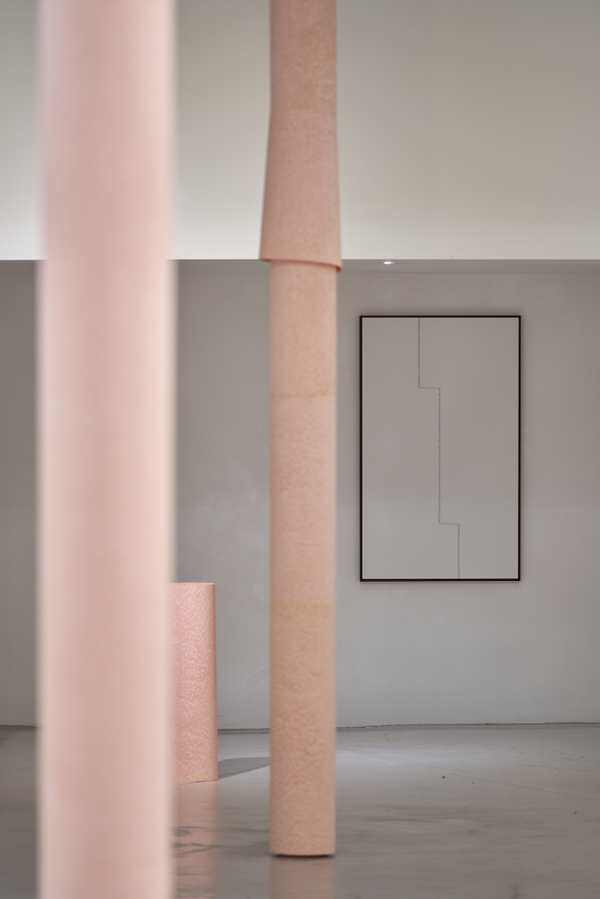
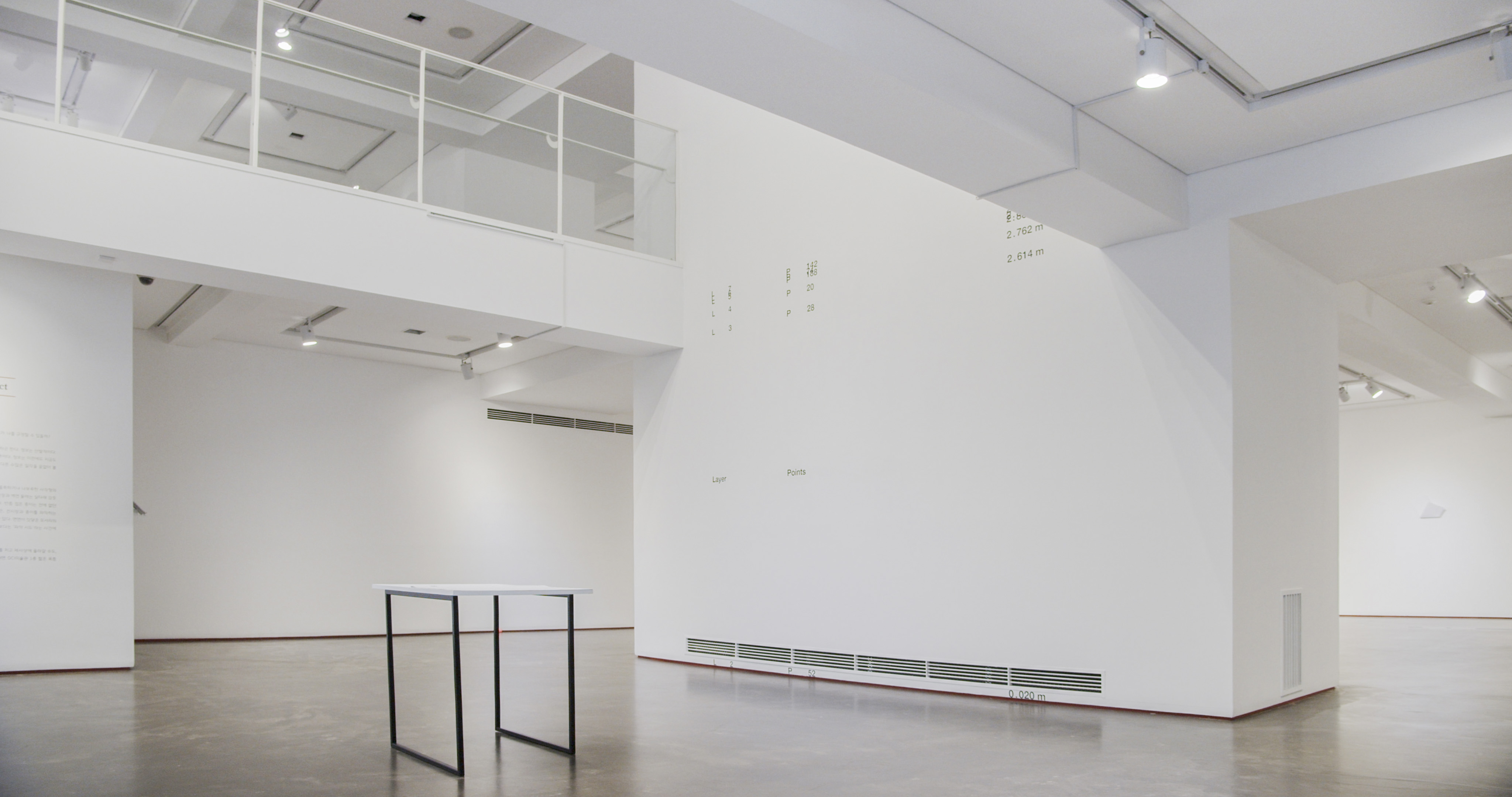
slicing with grid(2022) separates the grid formed by tiles and cement into layers of vertical and horizontal lines, while slicing horizontally(2022) translates the horizontal edges that form the wall into paper drawings. slicing vertically(2022) digitally peels away a layer of the exhibition floor through 3D rendering and transfers it onto the wall, showing how space is translated into a plane and sensed again.
 
In her recent work, Kim explores the relationship between digital materiality and the materiality of nature. 《Configuration-Event》(Hall1, Seoul, 2024) brings together mutable digital structures and wood veneer, a natural material, focusing on how the organic information accumulated through the growth of a tree appears as patterns on a surface. In works such as Fragmented moments(2024), pattern is not merely decoration, but a field of information where traces of time, movement, and environment are condensed.

In 《i.i.il.lʌ.ʌŋ》(Seetang Raum, Jeju, 2026), she connects the surface of Jeju basalt with digital micropatterns, reading latent tremors and instantaneity within the solid materiality of nature. Through this trajectory, the artist expands the digital beyond images inside the screen, approaching it as a sensory structure that can also be found on the surfaces of nature and matter.

Style & Contents

Kim’s forms emerge through the process of measuring, decomposing, and rearranging space. She treats conditions such as the floor, walls, corners, ceiling, shelves, and light of an exhibition space not as external surroundings, but as information that constitutes the work.

In 《Upsidesidedown》, folded aluminum boards and jangji encounter the grid of the floor, becoming both drawing and sculpture, while opening up different dimensions of space depending on the viewer’s position. At this point, the work is closer to a scene that occurs where the structure of space and the viewer’s gaze meet than to an independent object.
 
In 《Not Just Tiny But Abstract》, invisible information such as numerical values, coordinates, angles, and lengths is transformed into stainless steel lines, thread, artist’s books, and color values. The artist measures information as precisely as possible, yet she makes central to the work the fact that these results can never fully define the entire space.

The way viewers turn and crease the pages of a large artist’s book and experience information through sight, touch, and sound shows that information does not remain abstract data, but can be embodied as physical experience. For Kim, form is not a matter of making something resemble an object, but a way of transferring information into another form and revealing the differences that arise in that process of transformation.
 
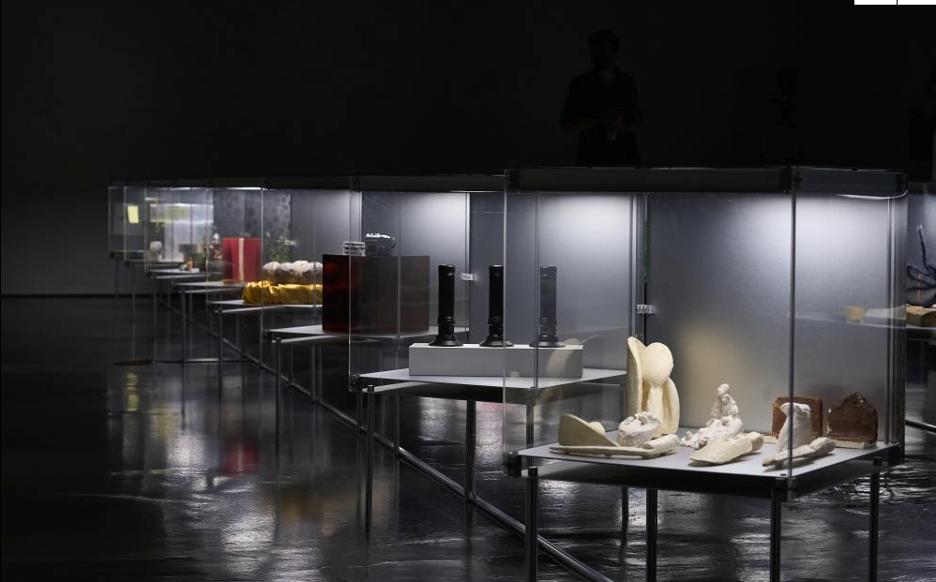
Since the 2020s, digital modeling and rendering, screen-like planarity, and digital material have appeared as key formal elements in her work. 《Romantic Storage》(SeMA Storage, Seoul, 2022) interprets a former reagent warehouse as a temporary storage site for fragmented information, installing information translated into binary code as structures that move the viewer’s gaze.

The 3D-rendered works in 《Slicing Space》 detach physical space into digital planes and bring them back into the exhibition space, showing the relationship between space and image, surface and layer. In this process, the artist does not display the digital as a technological effect, but treats it as another material condition through which space can be sensed and understood.
 
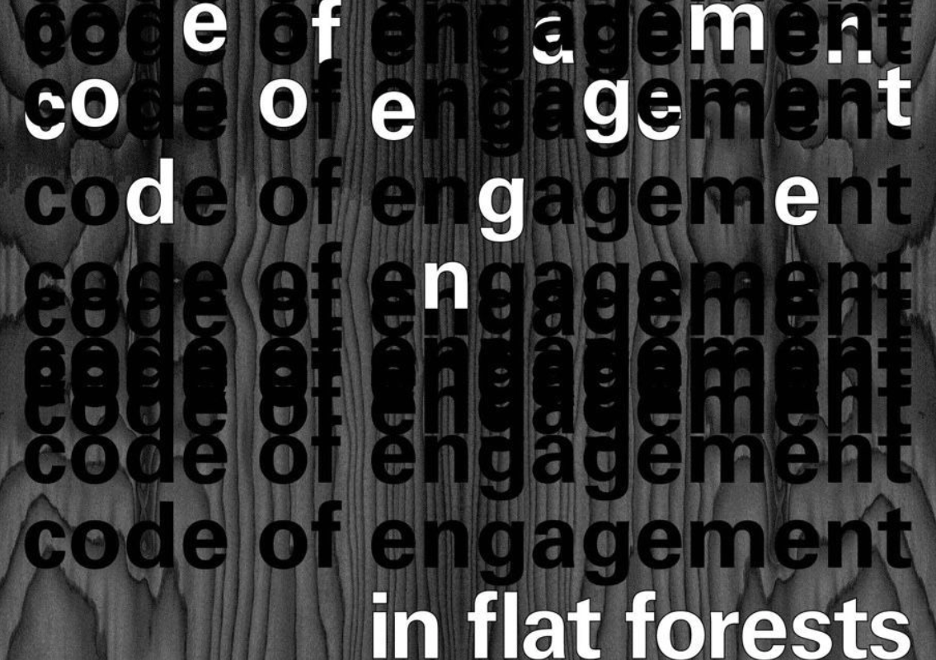
《Configuration-Event》 and 《code of engagrment in flat forest》(Hošek Contemporary, Berlin, 2025) clearly show Kim’s recent direction of connecting digital structures with natural patterns. In 《Configuration-Event》, wood veneer functions as the surface of biological and environmental information accumulated by the tree, while digital structure operates as a layer of information that lacks tactility but clearly reveals the meaning and structure of the image.

In 《code of engagrment in flat forest》, Kim combines the complexity of natural forests with the organic patterns of digital space through # FlatForest, creating a field where physical space and digital sensation meet through sound, movement, and structures of elastic lines. In this way, her work continues to expand as drawing, installation, digital images, natural materials, and the viewer’s movement enter into relationships and generate new forms.

Topography & Continuity

Kim understands information, form, and space as interconnected concepts. She measures and quantifies space, but rather than presenting those numerical values as objective truths, she shows formally how information is always selected, translated, and read differently according to the viewer’s position and sensation.

For this reason, form in her work is not a completed result, but a state that appears when space and information, body and gaze momentarily intersect. Her movement between sculpture and drawing, installation and digital rendering is closely connected to this way of thinking.
 
Looking at the trajectory of her practice, Kim initially addressed gaps in spatial perception through questions of line and plane, grid and dimension, and later moved toward measuring and formalizing the information held by concrete sites such as museums and exhibition spaces.

In 《Slicing Space》 and 《Romantic Storage》, she explored how the post-pandemic senses of screen and data, storage and transmission change spatial experience. Since 《Configuration-Event》, she has traced points where nature and the digital begin to resemble each other—through digital material, wood veneer, basalt, and patterns of the forest—expanding the questions of “plane” and “materiality” into a broader sensory dimension.
 
Compared with artists who similarly work with space, data, and digital images, Kim’s practice is distinctive in that it focuses not on technology or data itself, but on how these are perceived as form within sensation and space. She does not attempt to deliver information clearly like data visualization; rather, she reveals the process through which information is incompletely selected, transferred into other materials, and turned into new sensations.

She also does not confine digital images to the screen, but connects them to tactile and site-specific materials such as wood veneer, basalt, walls, floors, thread, and metal lines. As a result, her work transforms the cold, abstract world of information into spatial events that viewers can sense by walking, looking, and changing direction.

Through various exhibitions and residencies in Korea and abroad, Kim has steadily deepened her inquiry into space and information, plane and materiality. Her practice is likely to continue expanding by treating space not as a fixed background, but as a field where information and sensation, matter and immateriality continually change their relations.

Works of Art

Form as a Variable and Emergent Phenomenological Experience

Articles

Exhibitions

Activities