Tracer III - K-ARTIST

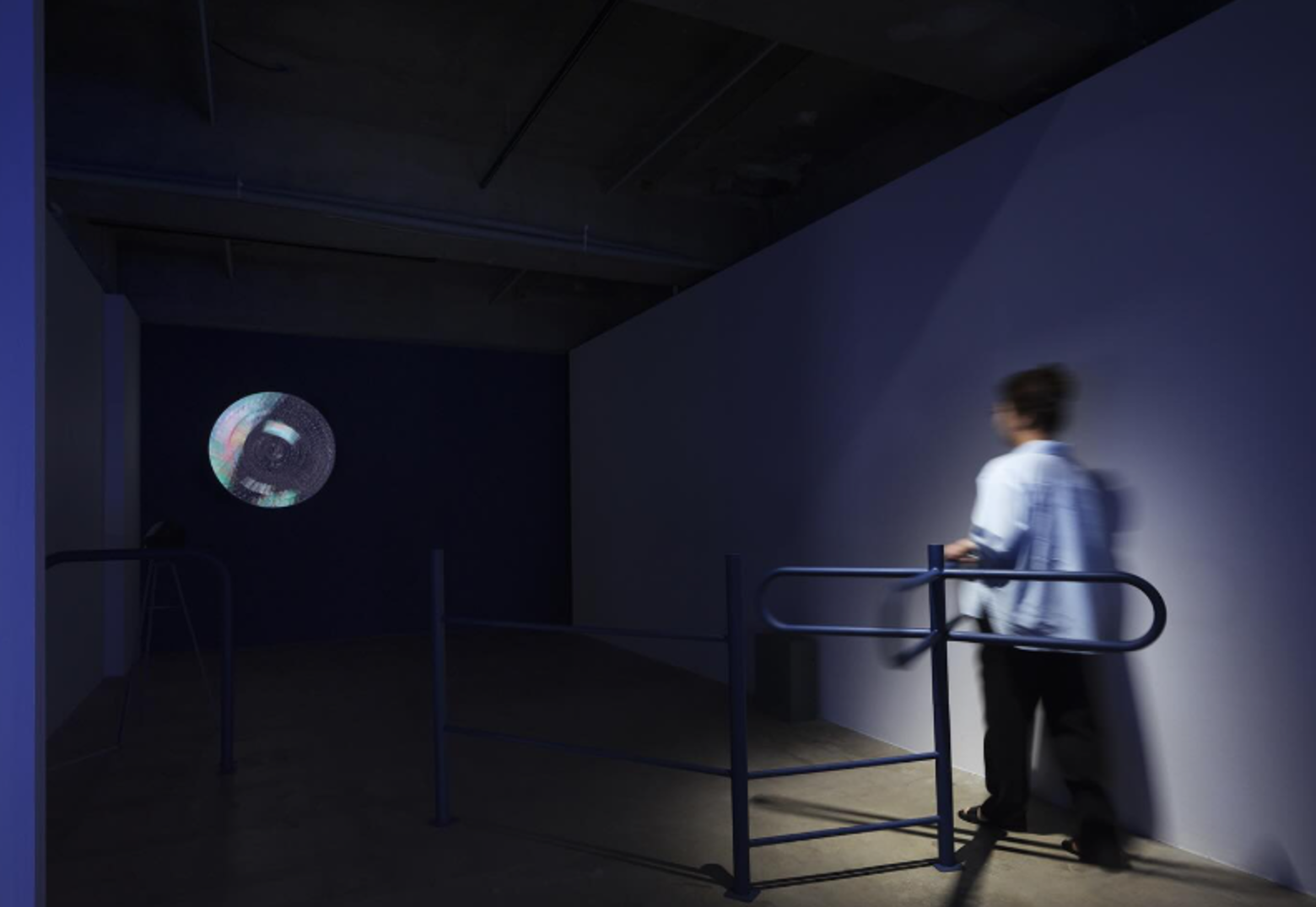
Tracer III

2025
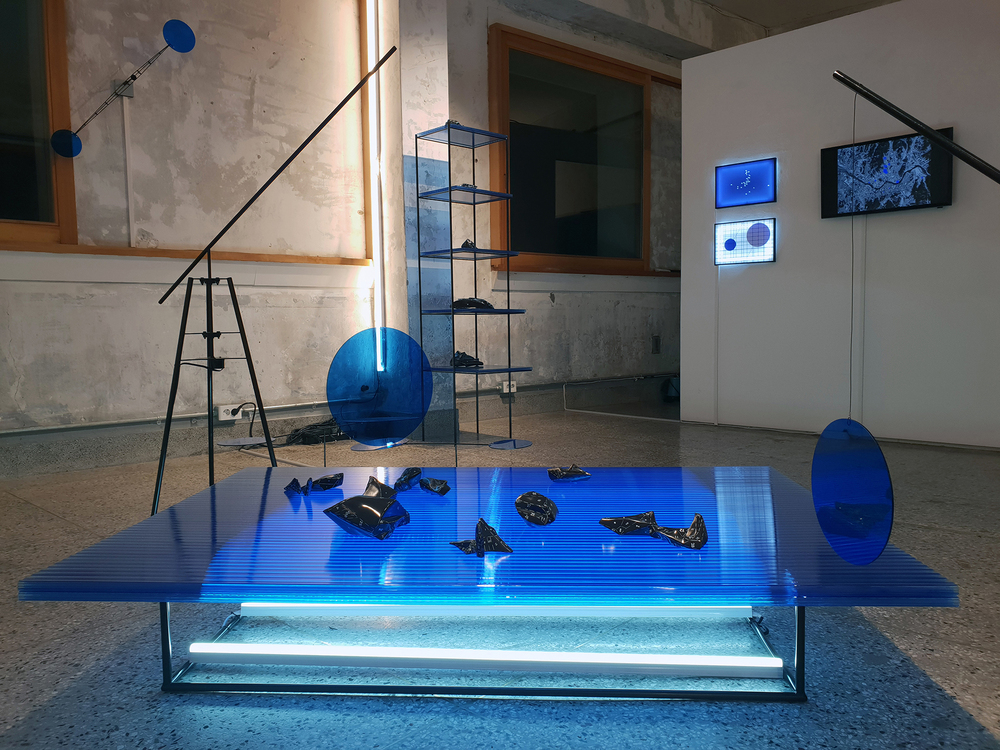
Steel, LED flashlight, motor
115 x 115 x 165 cm
About The Work

Kim Jung Eun has focused on the hybridity and fluidity of cities and the spaces within them, recording and visualizing traces of vanished times and places through movement and mapping.

For the artist, ‘mapping movement’ is a process of translating the sensations and memories captured through walking through and physically experiencing the city into spatial forms, and transforming them into objects with physical volumes that can themselves be moved. Through this process, she makes visible in new ways bodily experiences and residual elements of the city that are difficult to reduce to numbers or coordinates.

Conventional maps eliminate unnecessary elements in order to systematically organize space and present efficient routes for movement. Kim, by contrast, focuses on purposeless movements, detours, repetitions, and non-formalized sensations left outside the map.

She takes these elements as the legend of a new kind of map, reconstructing urban experiences and memories that are difficult to capture through existing mapping systems as sensory maps.

In this process, she moves between the past and present, and between physical and virtual realities, formally revealing how time and place become entangled and layered within urban space through movement and events.

Kim’s ‘mapping’ thus reorganizes boundaries and topographies that have been erased or overlooked within the urban environment, along with sensations that are difficult to trace, inviting us to view the spatiotemporal conditions in which we live not as fixed coordinates but as a constantly changing field of relationships.

Solo Exhibitions (Brief)

Kim Jung Eun has held solo exhibitions including 《Spin-Spot》 (CR Collective, Seoul, 2025), 《prototype overlay mapping》 (Keep in Touch, Seoul, 2024), 《Dorr dorrrr》 (Incheon Art Platform, Incheon, 2022), and 《Intersection Map Project: Walk On The Water_01》 (Instant Roof, Seoul, 2020).

Group Exhibitions (Brief)

Kim has also participated in numerous group exhibitions, including 《The Summer We Call Ours》 (Gyeonggi Museum of Modern Art, Ansan, 2026), 《Fluid City, Layered Forms》 (Wooson Gallery, Daegu, 2025), 《Public Art New Hero》 (K&L Museum, Gwacheon, 2024), Changwon Sculpture Biennale 《Channel: When Particles Become a Wave (Seongsan Art Hall, Changwon, 2021), and 《In Every Language We Know》 (Kumho Museum of Art, Seoul, 2017).

Residencies (Selected)

Kim has participated in artist residencies at institutions including Incheon Art Platform (2026, 2022), Seoul Art Space Geumcheon (2025), OCI Museum of Art Residency (2020), and the SeMA Nanji Residency (2019).

Collections (Selected)

Kim’s works are held in the collections of the Incheon Cultural Foundation, OCI Museum of Art, and Kolon, among others.

Works of Art

Mapping Bodily Experiences and Traces Left by Memory

Originality & Identity

Kim Jung Eun views the city not as a fixed geographical space, but as a fluid place in which bodily movement, memory, and changes in time continuously overlap. Since 2014, she has habitually recorded her own routes of movement and developed “mapping” as a central method in her practice.

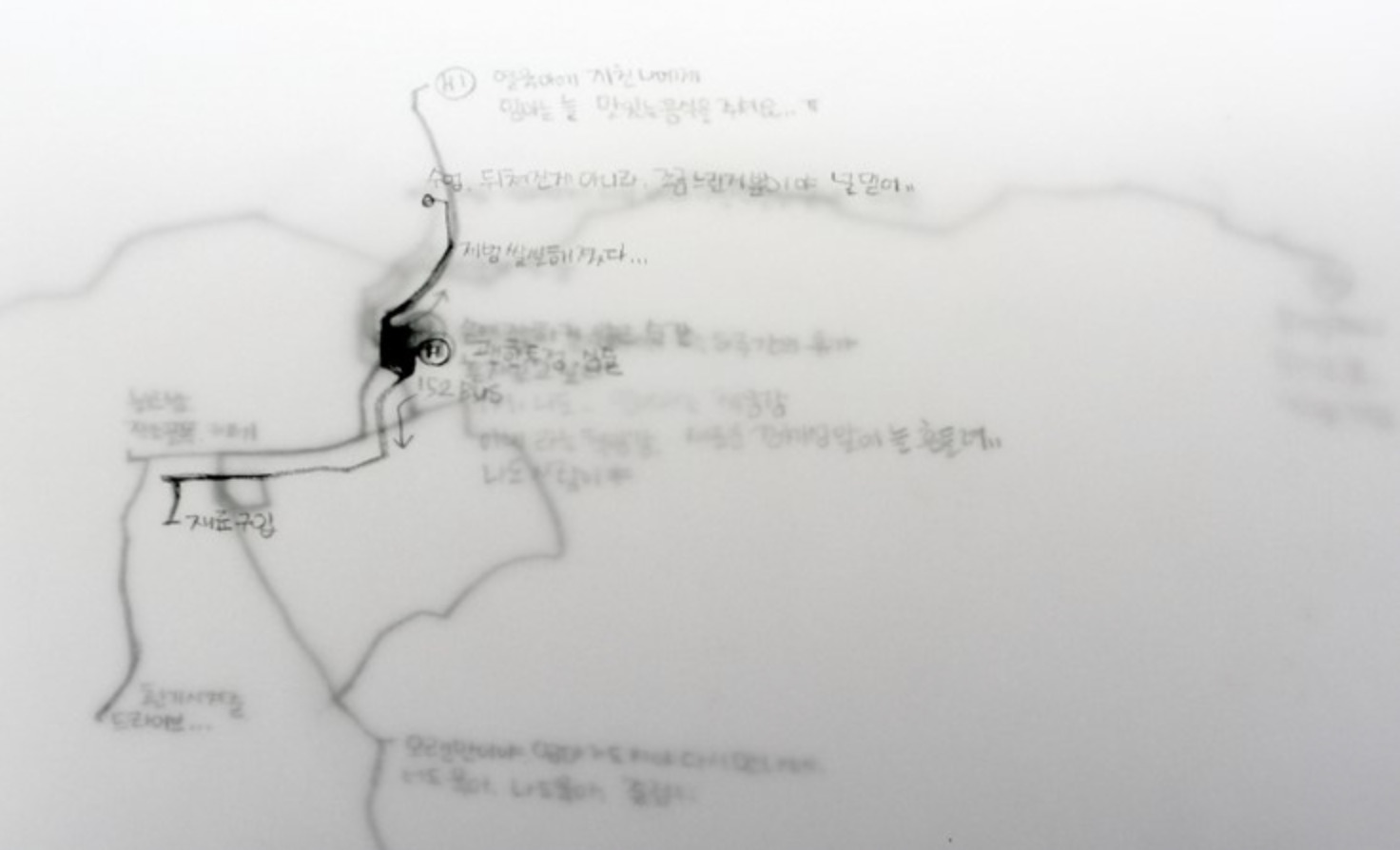
In her early solo exhibition 《Self;mapping》(OCI Museum of Art, 2015), she began with actual maps and coordinates while layering onto them her own stride, routes, and the emotions and memories associated with specific places, revealing the gap between objective cartography and subjective experience.

Self Mapping 141003-150405
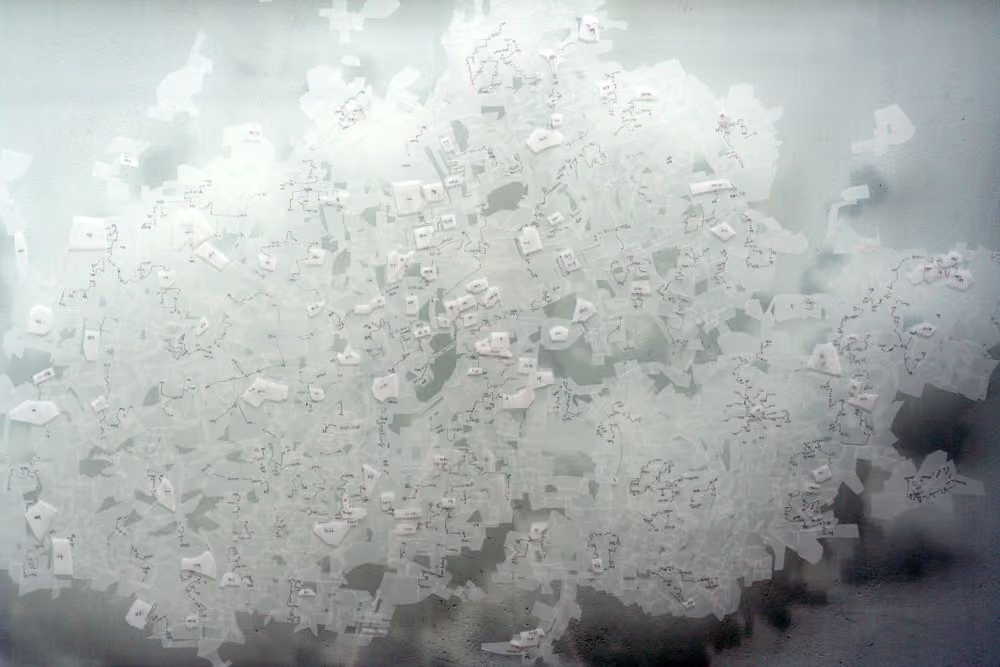
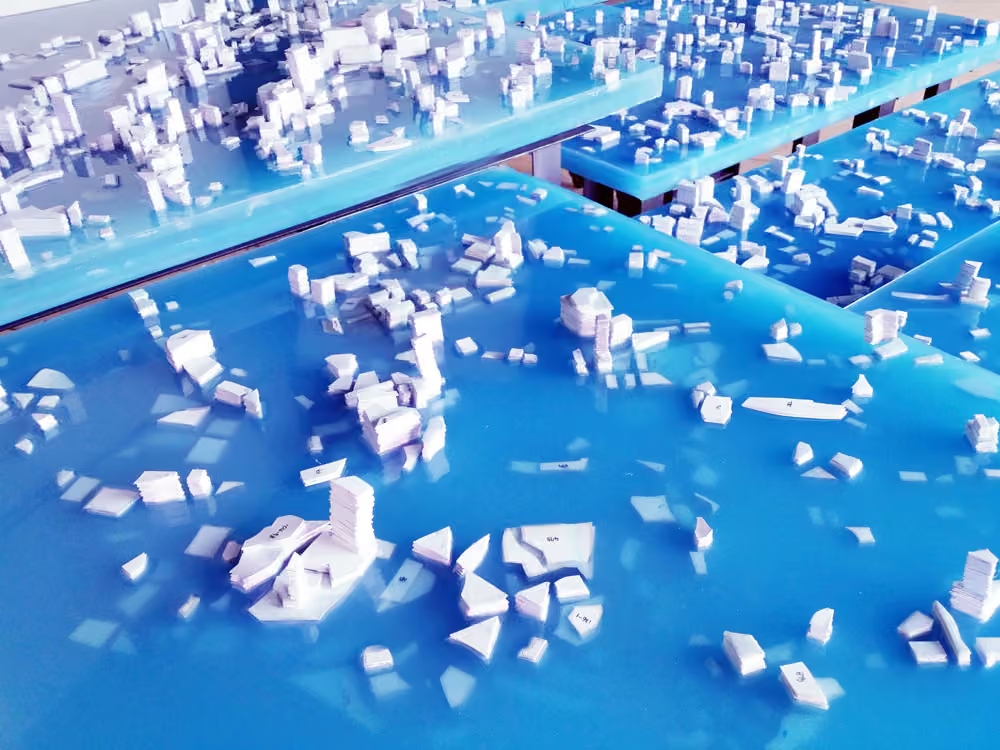
(2015) accumulates the paths she walked in everyday life and the small events she experienced along them across multiple sheets of tracing paper, while Floating Place_coordinate uneasy(2015) rearranges urban blocks extracted from actual maps to create a new topography that does not exist in reality.

For Kim, a map is less a tool for accurately describing an existing space than a device for reconstructing the time and sensations experienced by a person moving through the world.
 
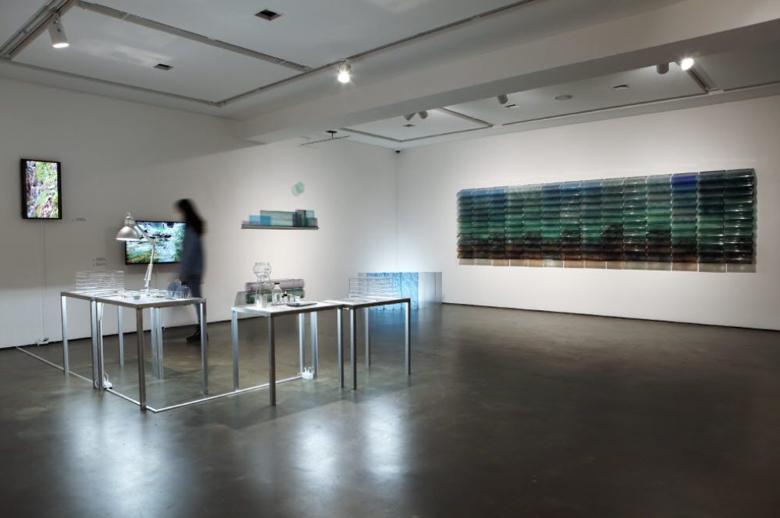
The artist later expanded her records of personal movement toward the temporal layers and histories embedded within the city. In the ‘Intersection Map Project’(2020), she researched streams and roads in Seoul that had disappeared and physically walked along present-day roads that had once been waterways, tracing the remnants of time embedded in urban space.

By superimposing past topographies onto the act of walking through the present city, she revealed how a single place can contain memories and events from multiple periods at once.

Through this process, her mapping expanded from a way of recording her own memories into a method for rereading memories that the city has erased or covered over. What is absent from maps, what has already disappeared, and the histories concealed beneath present-day landscapes increasingly became important subjects in her work.
 
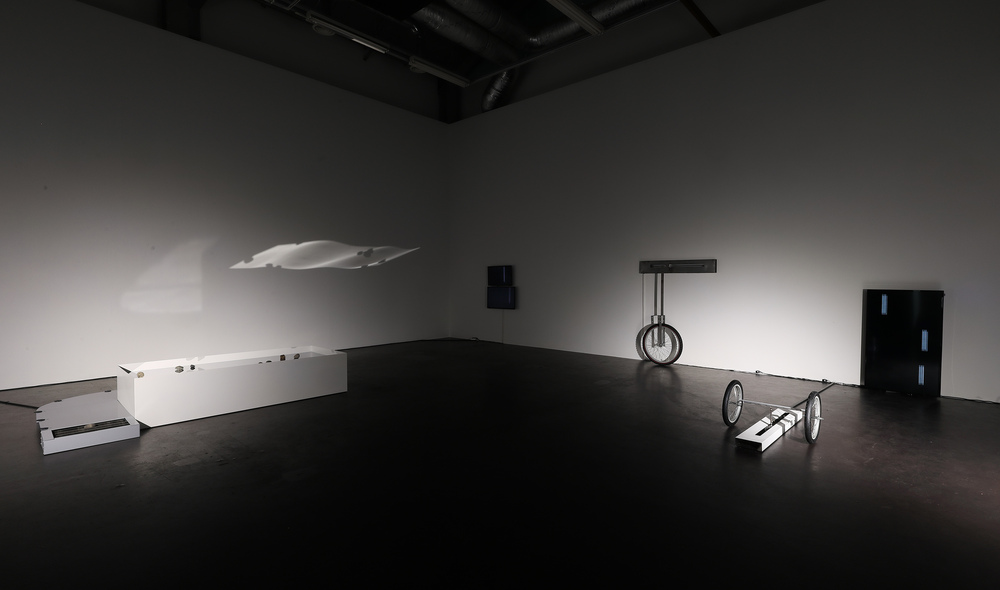
《Dorr dorrrr》(Incheon Art Platform, 2022) marks a point at which her interest in movement intersected with the social conditions of the pandemic. As the range of physical movement narrowed, Kim turned her attention away from distant travel and toward objects and sounds encountered by chance along everyday routes, including stones, plants growing between paving blocks, flowerpots, and wheels.

By rolling stones collected from different locations along rails to generate friction sounds and bringing into the exhibition space sounds recorded from the environments in which those objects had been found, movement was no longer limited to a route connecting a point of departure and a destination. The process through which the body encounters an object, accidental contact generates motion, and unrelated places become linked into a network of relations itself becomes a new form of mapping.
 
In her recent solo exhibition 《Spin-Spot》(CR Collective, 2025), these concerns further expand into the urban environment in which surveillance, control, data, and vision operate. Drift Circuit PM 110-2(2025) borrows a CCTV blob-tracking algorithm, yet instead of precisely identifying human movement, blue dots tremble indistinctly, appearing and disappearing across the screen.

Spinning Around(2025) overlays information and temporalities moving at different speeds and in different directions on a single screen, revealing asynchronous experience. While her early work layered personal movement and memory onto maps, her more recent practice asks how the city detects, divides, and datafies human movement.

In this process, Kim’s map has shifted from an image that explains space into a structure for reading relationships that are continually produced and misaligned among body, city, technology, and memory.

Style & Contents

Trained in sculpture, Kim Jung Eun has never treated the map solely as a flat image, but has continuously expanded it into questions of materiality and space. In her early works, she used atlases, graph paper, tracing paper, pencil drawing, epoxy, and light boxes, cutting, layering, and stacking them while retaining the numerical values and forms of existing maps.

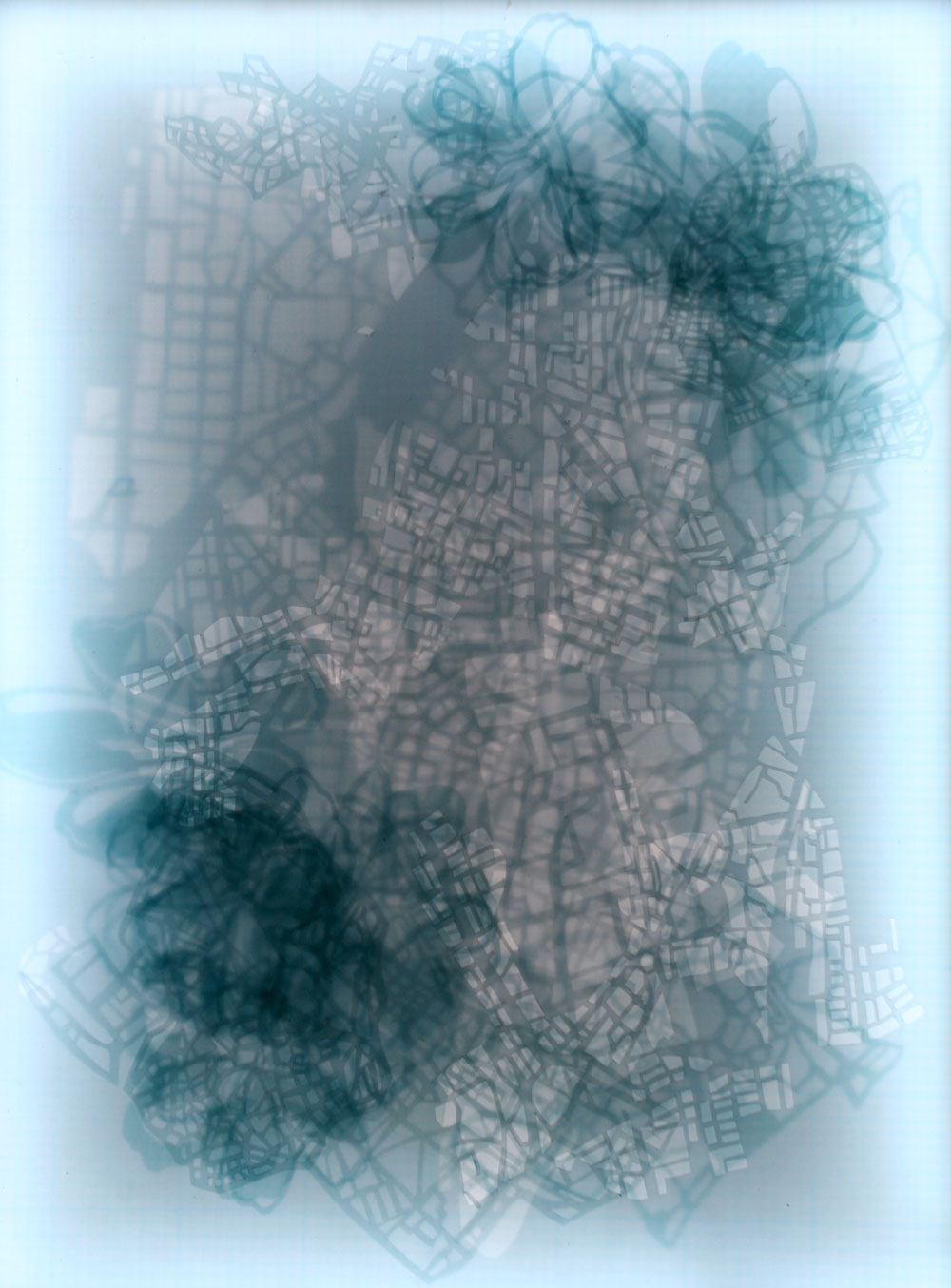
In Floating Place; mapping(2015) and Flowers Map 1(2015), multiple layers of translucent tracing paper visualize how memories associated with a particular place overlap, blur, and are reconstructed from the perspective of the present. One of the key formal characteristics of this early period is the way she introduces personal sensation while preserving the exact proportions and coordinates of the map itself, refusing to privilege either objectivity or subjectivity.
 
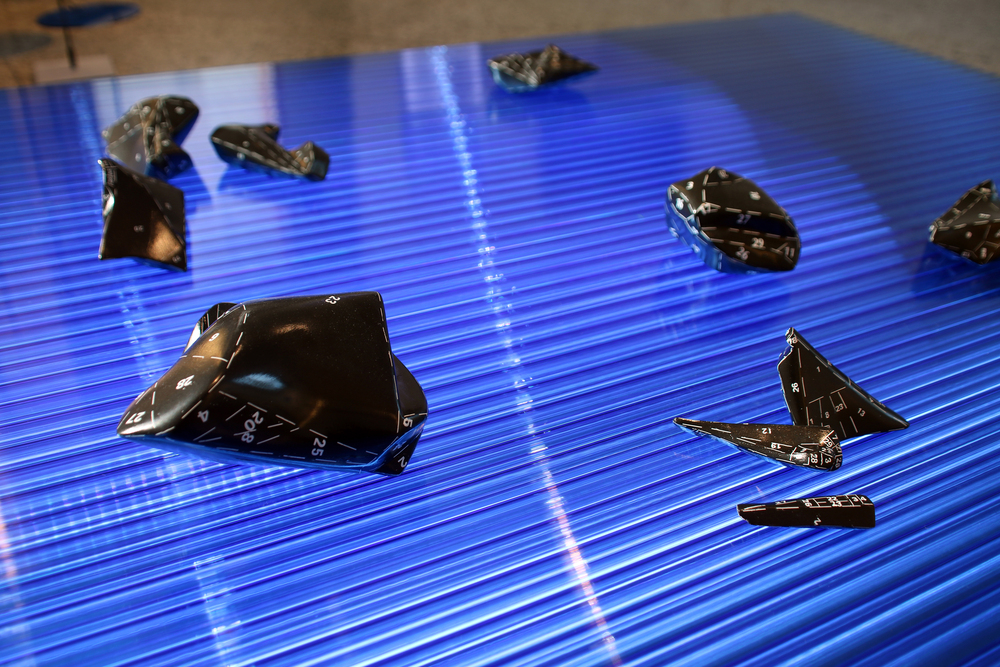
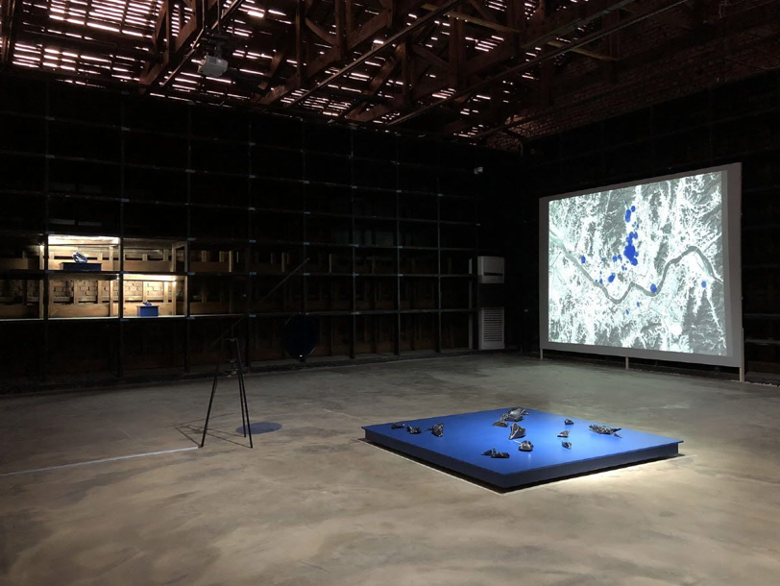
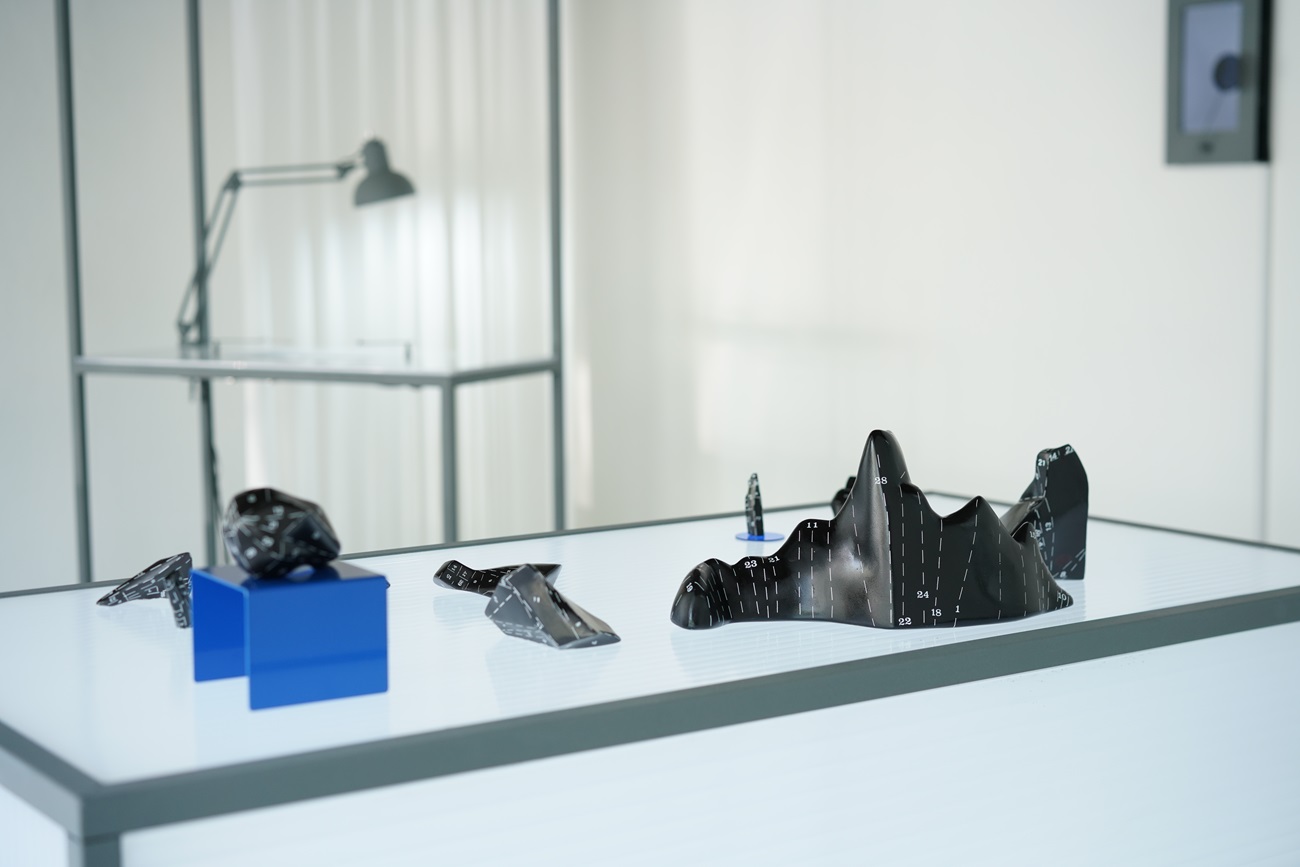
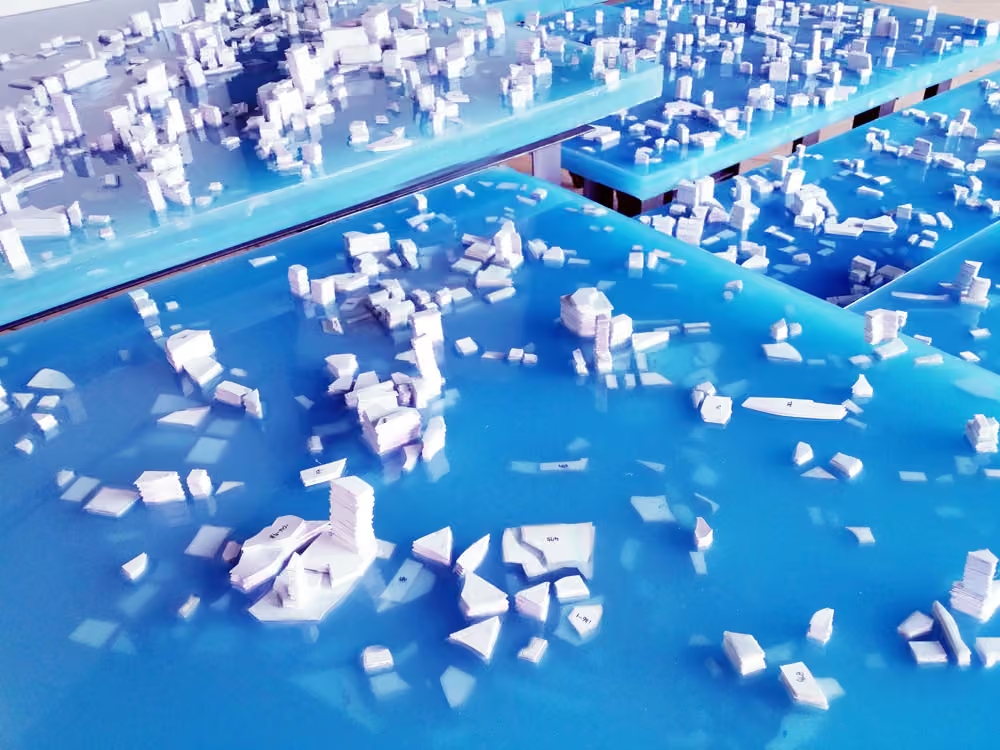
In the ‘BLUE DOT’ series, records of movement are transformed into more abstract sculptures and kinetic installations. In 《BLUE DOT :37’35’02.8”N 127”01’21.6”E》(SeMA Storage, 2018), approximately three years of movement records are converted into one three-dimensional form for each month, while movement data collected through satellite tracking appears as blue circles of varying size and intensity.

In 《BLUE DOT 36”》(onground2, 2018), video, sound, and moving structures are integrated throughout the space, making the temporality of recorded movement more explicit. Here, the map is no longer flat information to be read visually, but becomes a spatial device that moves, rotates, produces sound, and alters the viewer’s circulation. Information about the city is translated into sculptural structures after passing through the artist’s body and memory.
 
From 2020 onward, objects and sounds encountered in the actual city increasingly entered the work as primary materials. In the ‘Intersection Map Project’, Kim walked along vanished waterways and collected natural and artificial objects, accumulating layers of time within a single installation. In 《Dorr dorrrr》, stones, rails, movement, and friction sounds are brought together.

Her observation that a motionless object can briefly acquire movement at the moment it comes into contact with her reveals how she understands “movement.” Movement is no longer simply the passage of the human body through space, but expands into a relational event in which objects, environments, and forces affect one another. From this period onward, sound and motion become additional cartographic languages for recording the traces of the city.
 
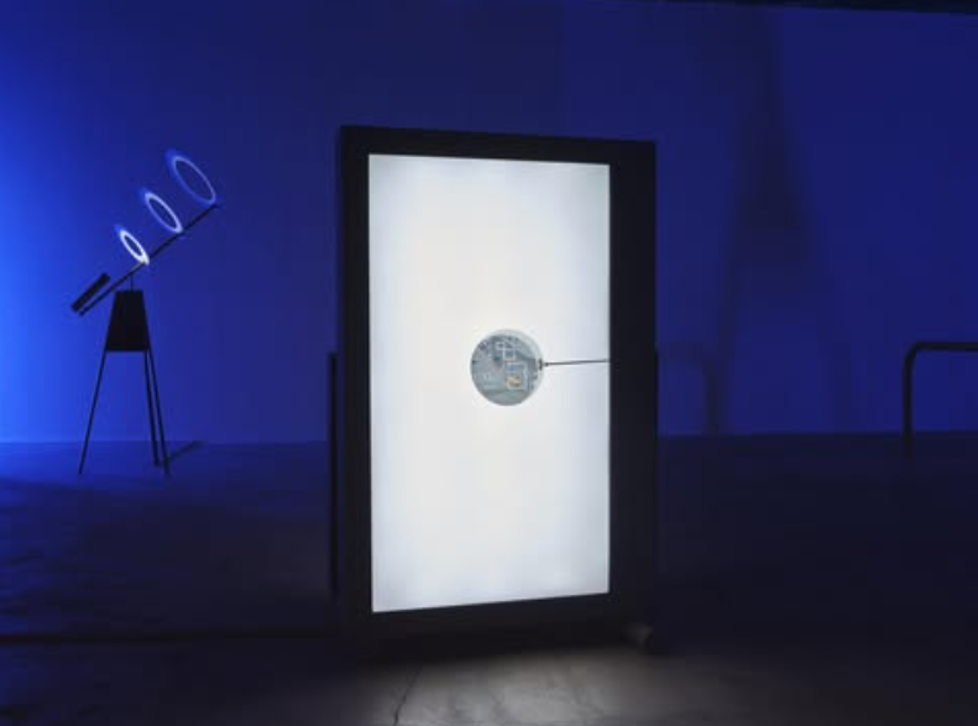
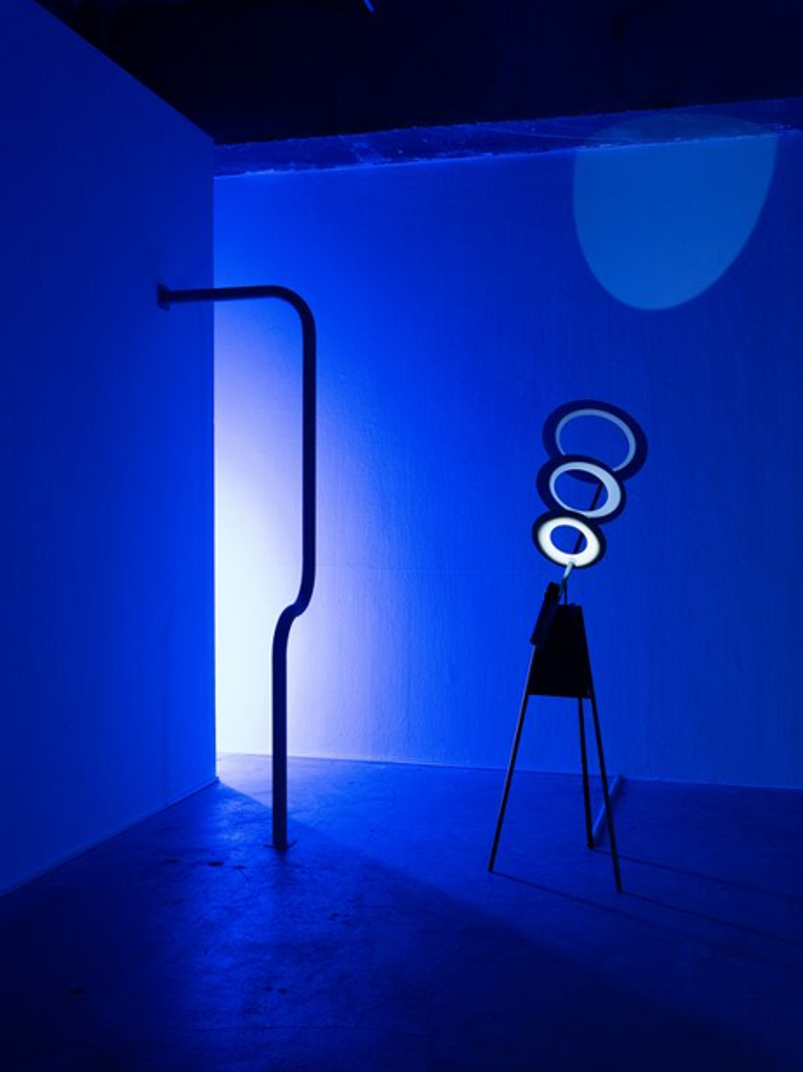
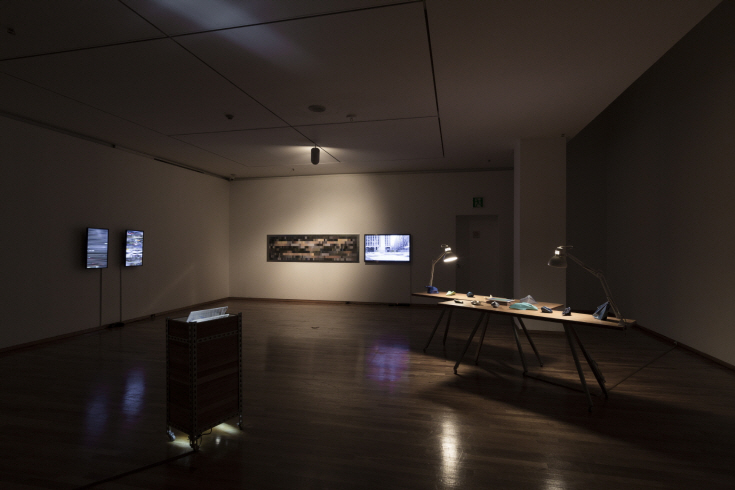
More recently, technological media such as kinetic sculpture, video, motors, LED lights, polarizing film, and CCTV algorithms have become increasingly prominent. Tracer III(2025) combines a steel structure, LED flashlight, and motor to create movements of vision and light within space, while Drift Circuit adopts the external form of surveillance technology while causing its function of accurate tracking to fail.

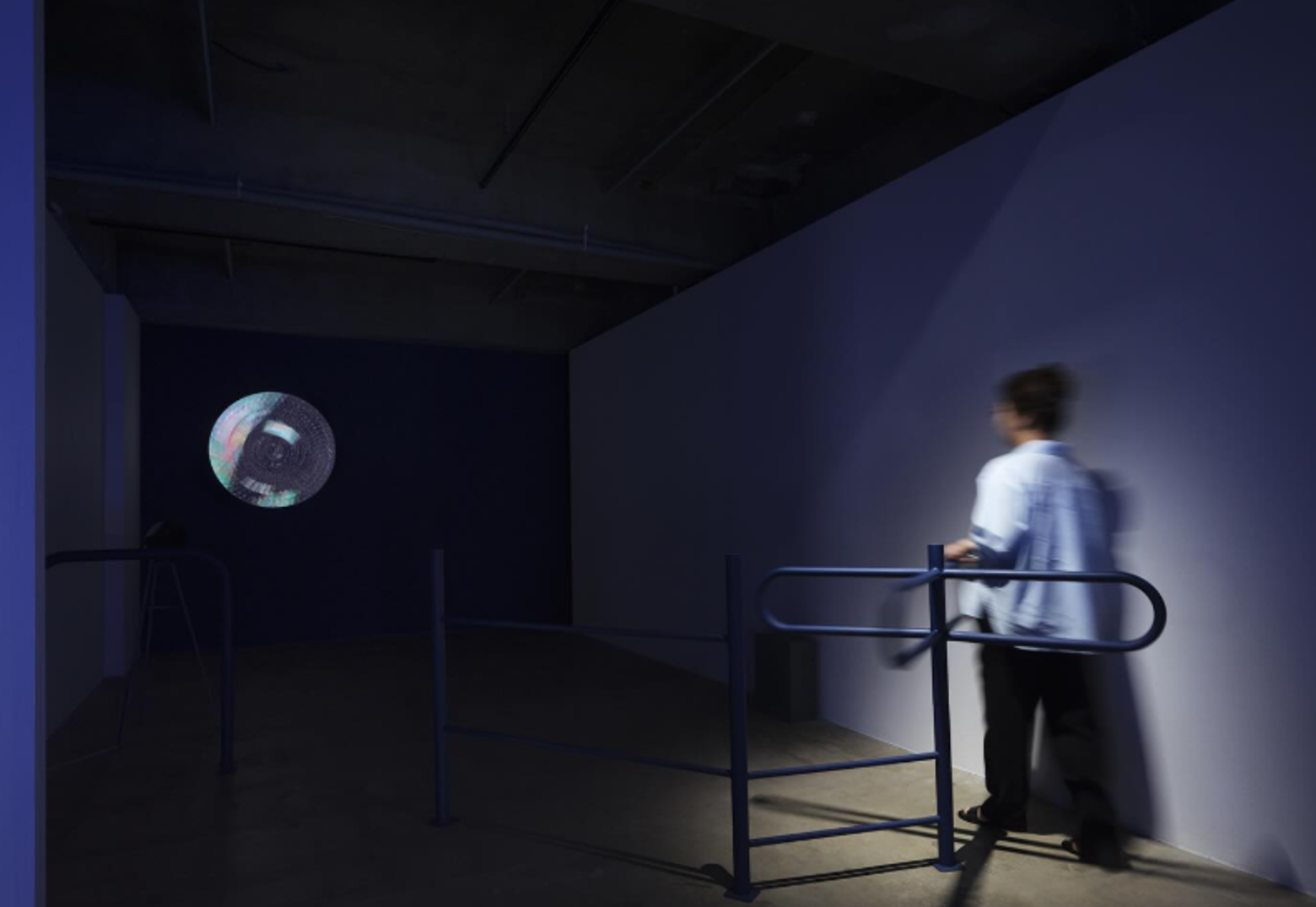
The overlap of moving sculpture and map imagery that appeared in 《prototype overlay mapping》(Keep in Touch, 2024) develops in 《Spin-Spot》 into an environment connecting the circulation of the exhibition space with wind, light, and rotating screens. As the viewer’s actions of following, leaving, or returning to a prescribed route also become part of the work, Kim’s mapping expands from drawing lines on maps toward designing movement within actual space.

Topography & Continuity

Kim Jung Eun respects the numerical values, proportions, and coordinates recorded on actual maps while adding her own footsteps, memories, pauses, detours, and repetitions. As a result, objective data and personal discrepancy coexist within her maps. Whereas conventional cartography removes unnecessary information in the interest of efficient movement, Kim instead brings back detours, delays, tremors, and residual elements pushed outside the map.

Works such as Self Mapping_Memory of Space, Fragments of Time (2015.09-2018.08_3year)(2019), which organize long-term accumulations of movement into a single structure, clearly demonstrate this approach. In her mapping practice, discrepancy is not an error to be corrected, but a concrete trace left by a body that has actually experienced a place.
 
This feature becomes even clearer in comparison with other practices dealing with cities and data. While works based on urban data or cartography often focus on statistical visualization or the analysis of social structures, Kim does not separate data and coordinates from bodily experience. Walking, stopping, turning back, discovering objects, and remembering colors and sounds carry as much weight as the map itself.

As presented in 《Fluid City, Layered Forms》(Wooson Gallery, 2025), her installations may begin with the history and names of specific places, but ultimately transform them into abstract structures in which stride and sensation establish a new order. The process through which information becomes sensation, coordinates become movement, and urban landscapes become bodily experience is one of the defining characteristics of Kim’s practice.
 
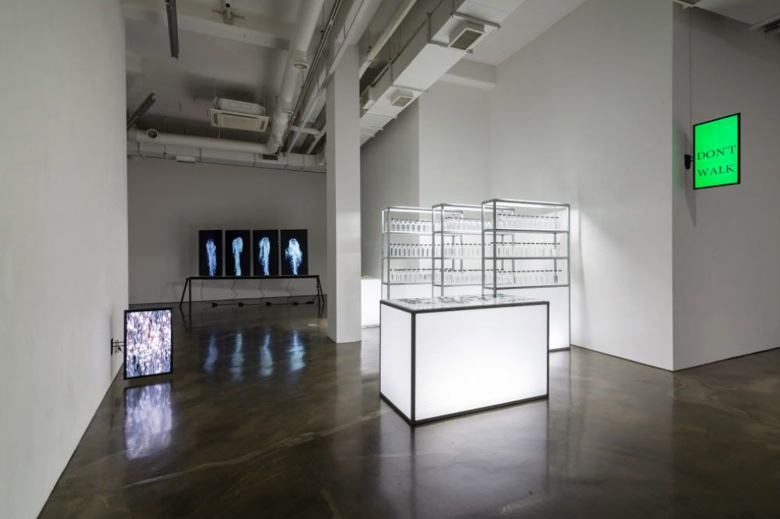
More recently, systems of urban control and collective movement have begun to overlap with these maps of personal mobility. In 《Spin-Spot》, urban devices such as lane markings, fences, CCTV cameras, and revolving doors function as structures that guide or restrict movement, yet the artist does not reproduce them as they are. Instead, she transforms them into devices in which rotation, vibration, delay, and omission occur.

In 《Gear: Reconfiguration Agent》(Juseokmoeumjip, 2026), an atlas left by her father, who worked in road construction, is combined with urban lines of connection and the footsteps of anonymous people, once again becoming three-dimensional layers.

What began as “my movement” has gradually expanded into “the movement of a vanished city,” “restricted movement,” “tracked movement,” and “the intersecting movement of multiple people,” allowing mapping to move beyond personal documentation and become a way of observing the forces and relationships through which the city operates.
 
The progression from paper maps and bodily stride to kinetic sculpture, sound, algorithms, and surveillance devices is less a simple expansion of media than a continuous renewal of the question: “How do we move through space, and what records that movement?”

Rather than remaining bound to the form of the map itself, Kim Jung Eun’s practice continues to build new sensory terrains at the intersections of movement and time, technology and the body.

Works of Art

Mapping Bodily Experiences and Traces Left by Memory

Articles

Exhibitions

Activities