GuNa
studied sculpture at university and later earned a master’s degree in painting,
and this background informs her tendency to treat painting and sculpture not as
separate genres but as media that actively interfere with one another. In her
earlier practice, melancholic objects discovered in photographs or memories
were transferred onto canvas, while objects and remnants on the verge of
disappearing were held in place through installation.
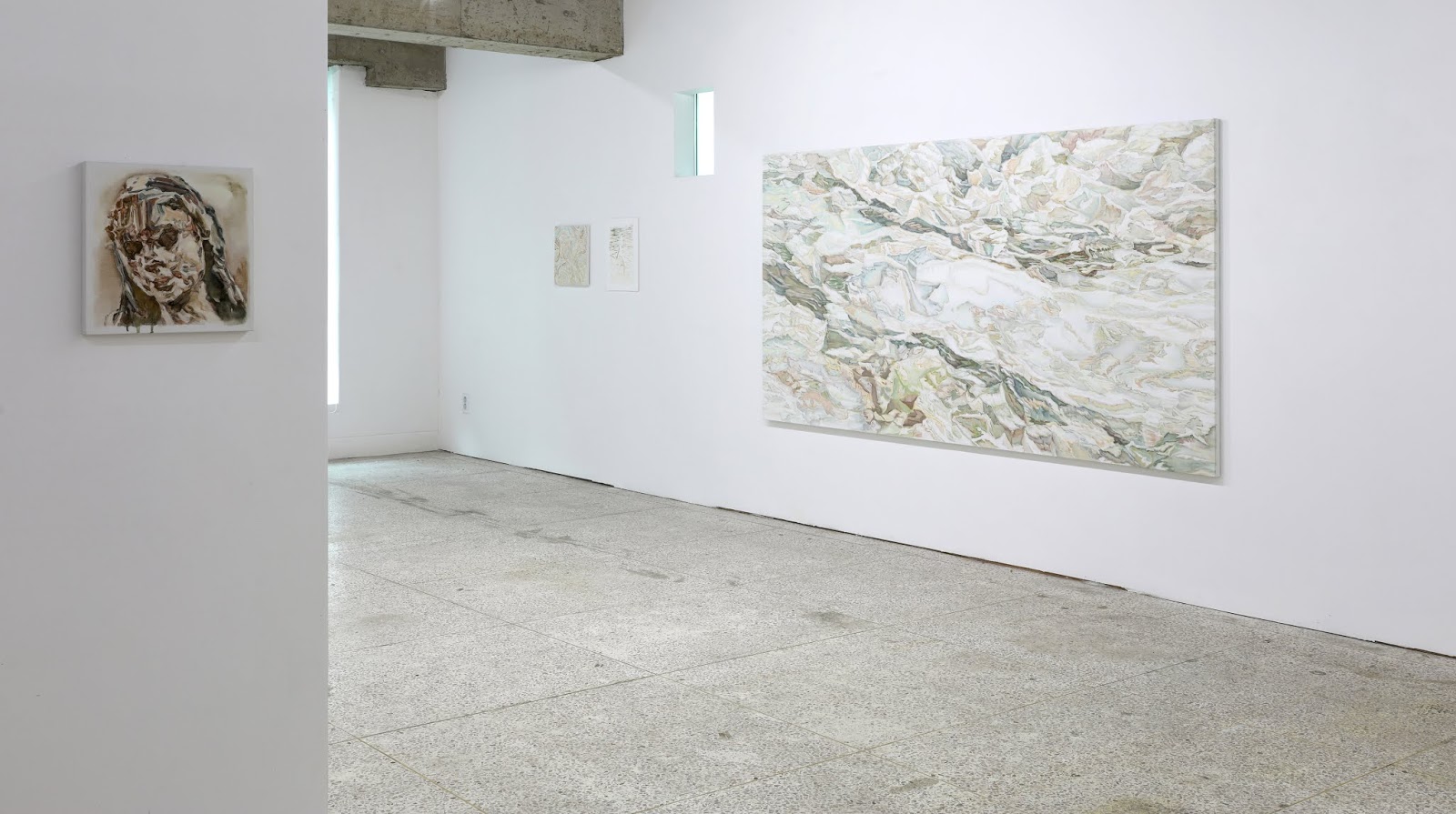
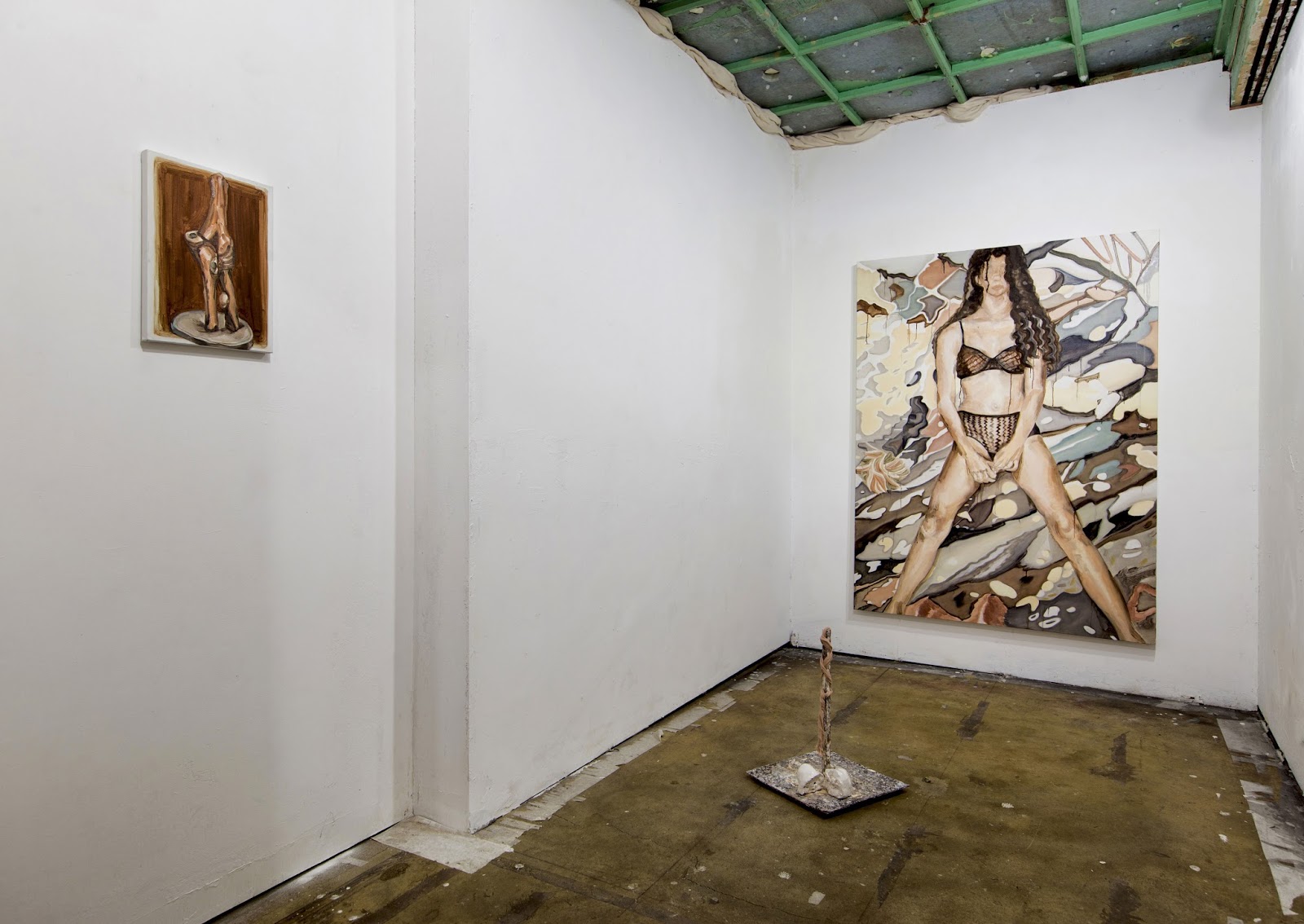
This approach, already
visible in 《askew bone and stuttering》, appears in painting through faint images and incomplete contours,
and in sculpture through tilted and fractured forms. What matters is not
creating a likeness, but materializing the discrepancy that arises in the
process of looking at, remembering, and sensing a subject.
From 2019
onward, sculptural structures that function like bodies without directly
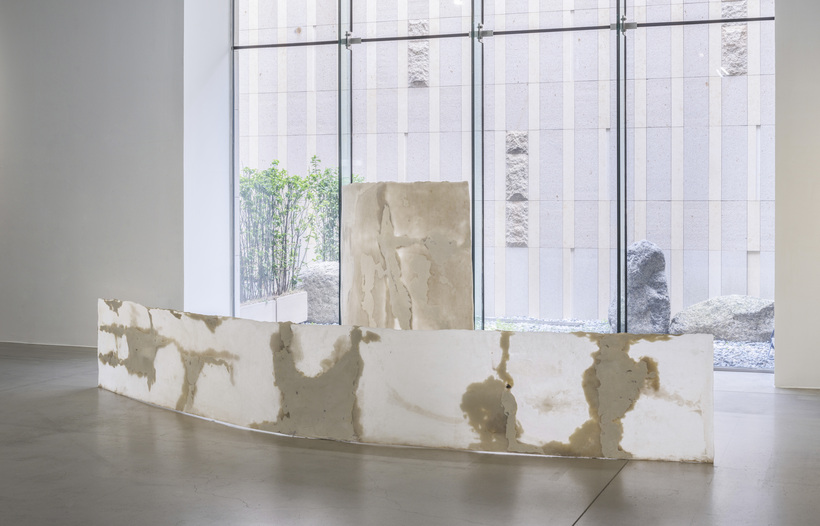
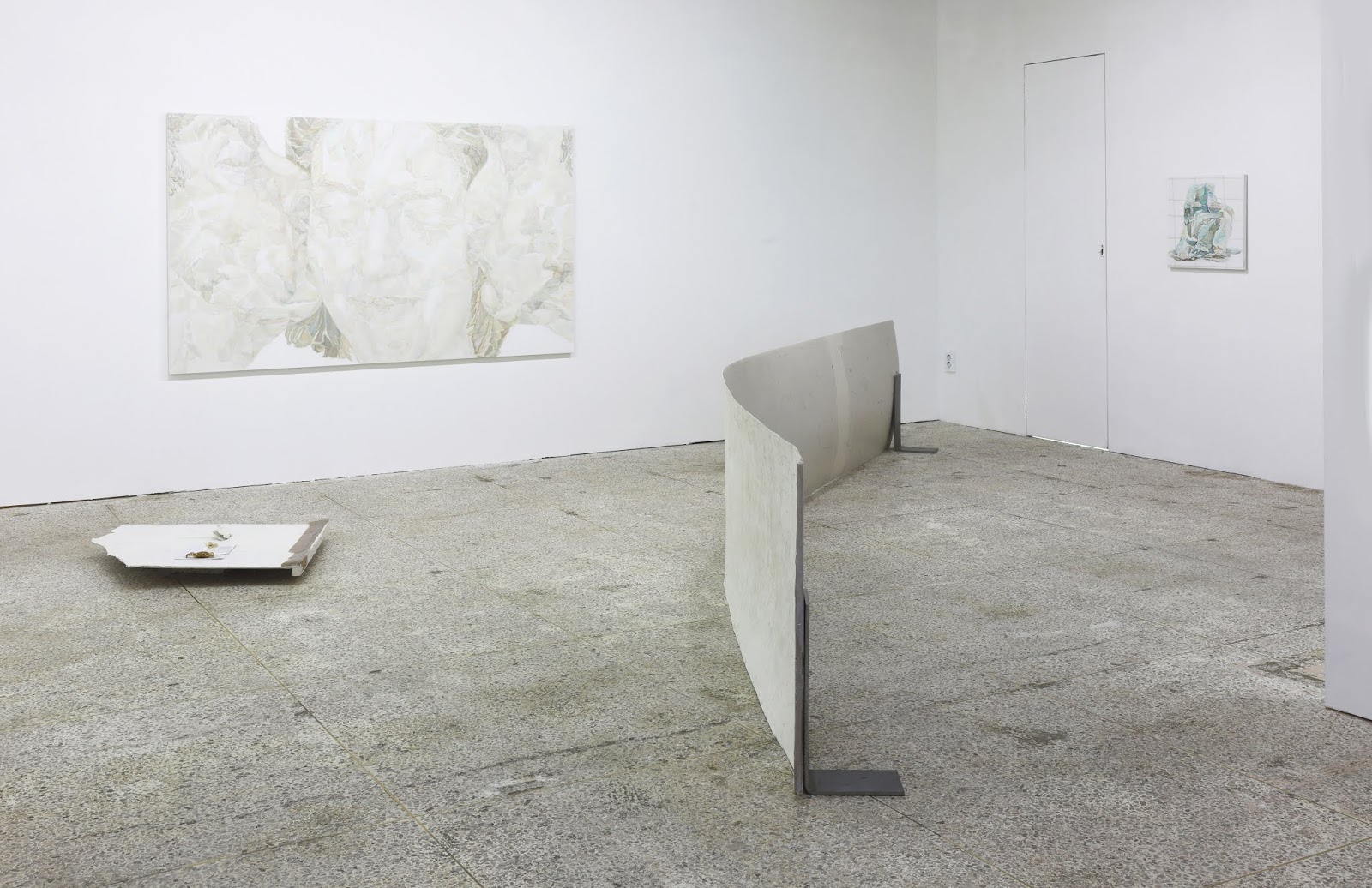
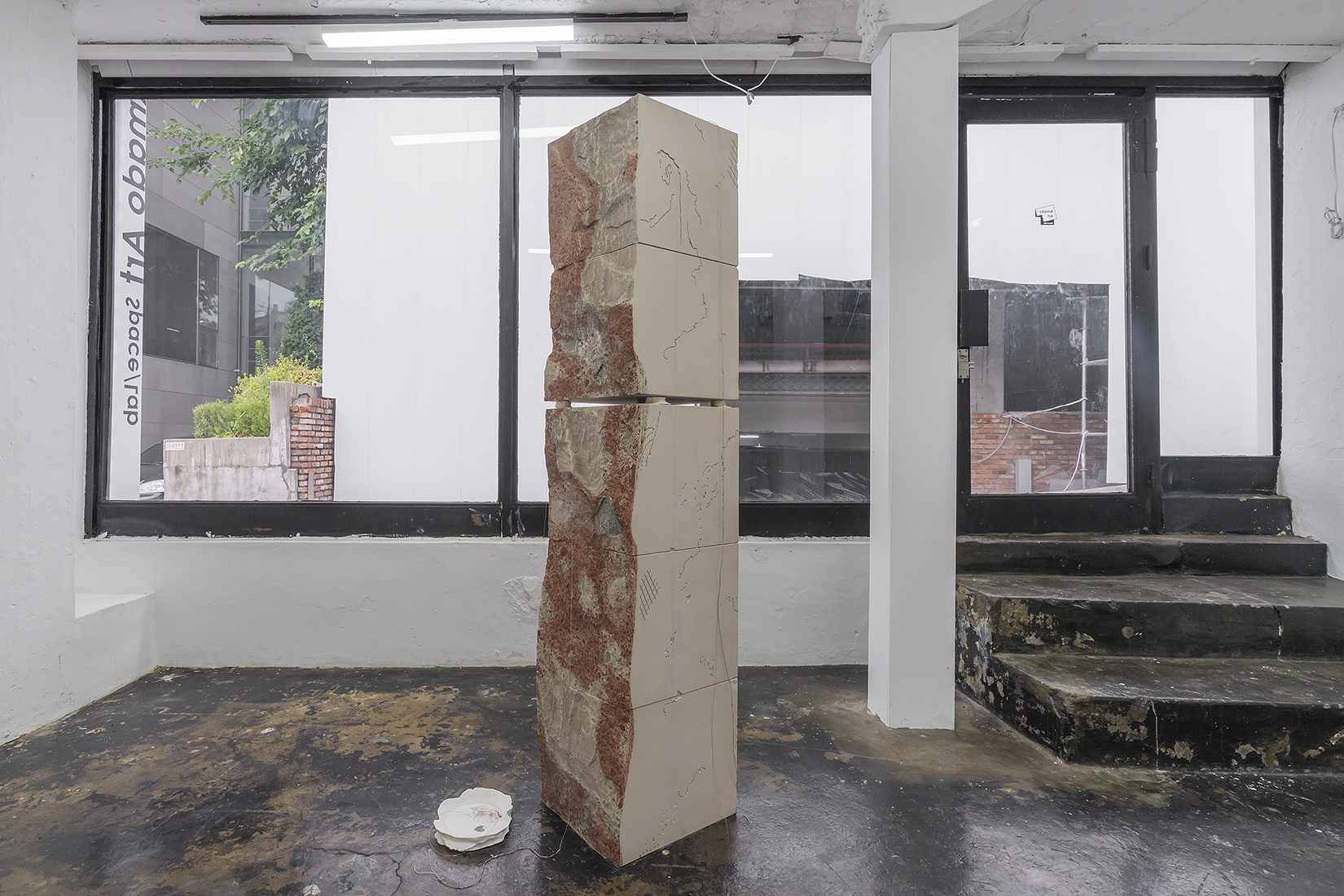
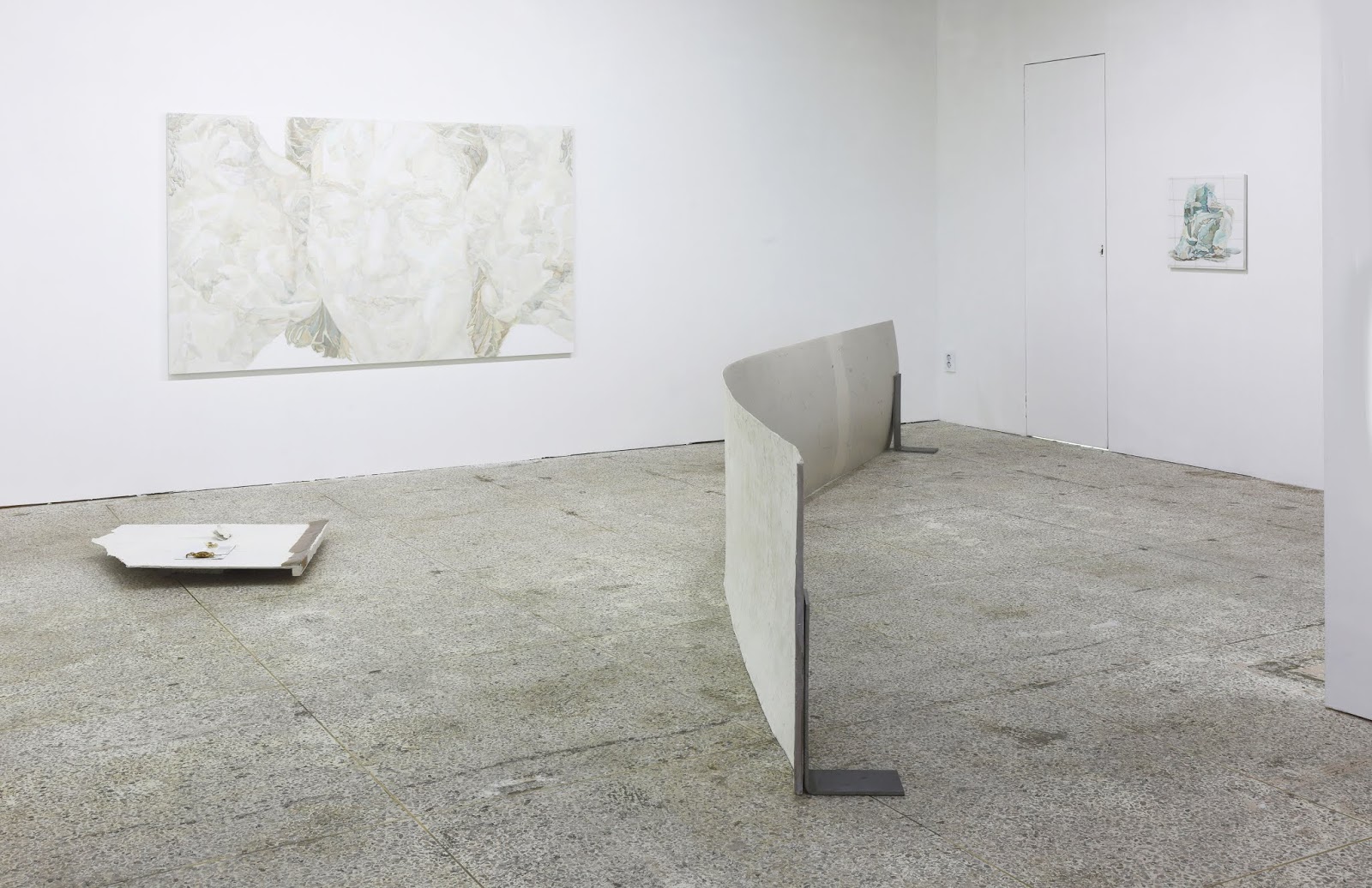
depicting the human figure become increasingly prominent. White
bone takes the form of something standing on its edge while seeming
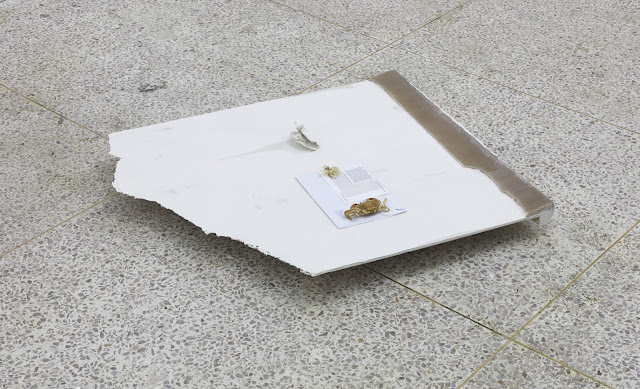
to lie sideways, and My Face Slipped Deep into Your Back
brings together three thin FRP panels that lean against and penetrate one
another to form an unstable body.
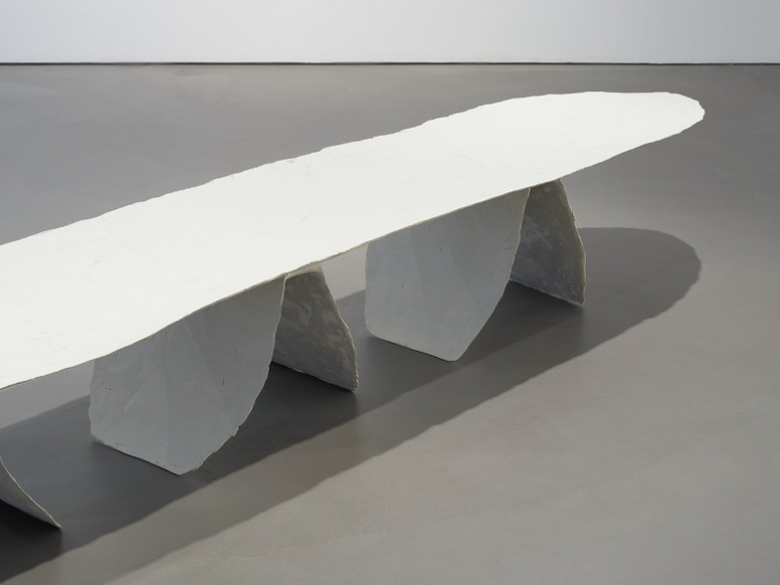
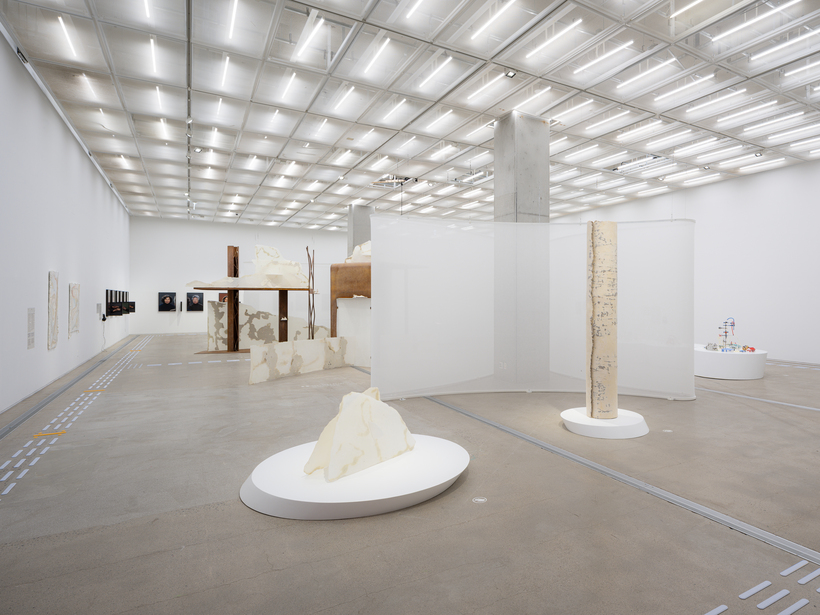
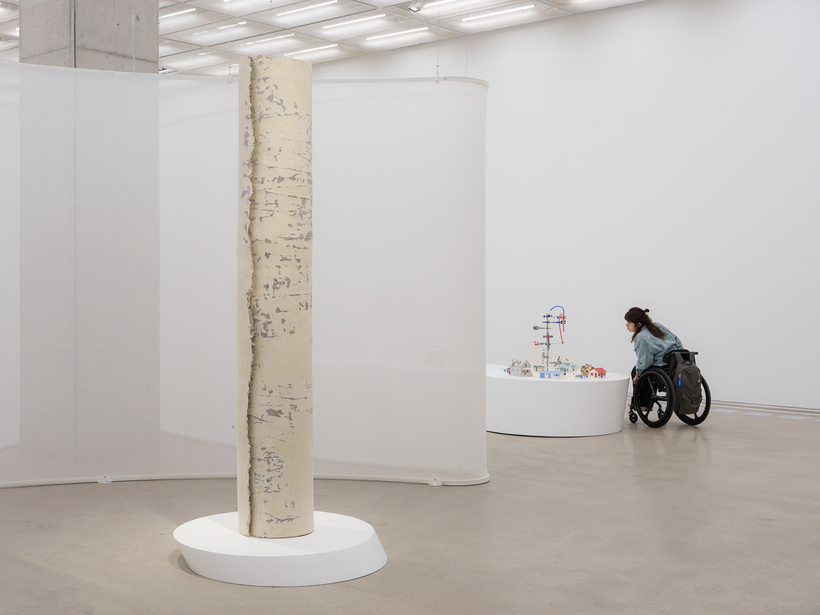
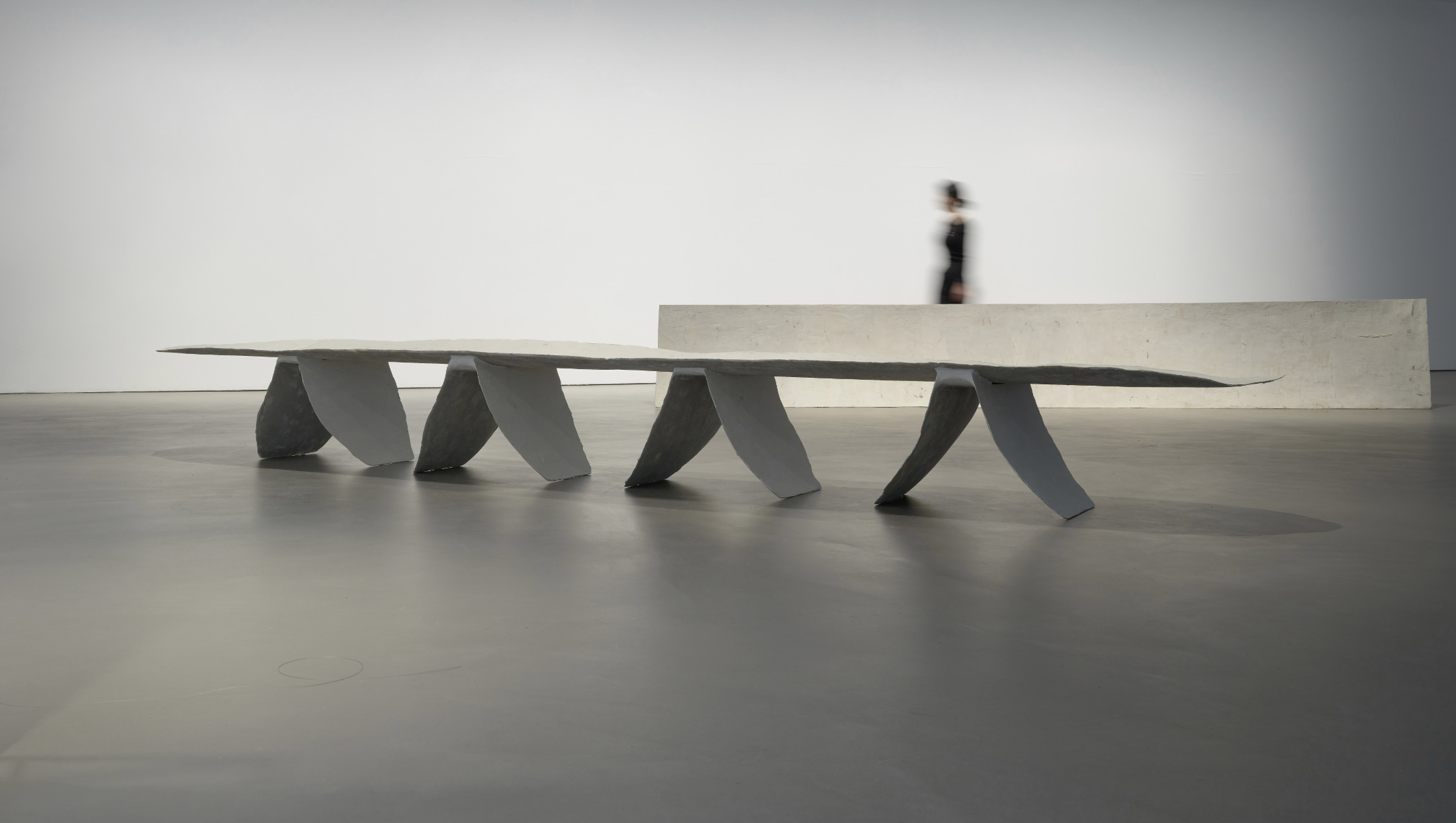
SkinSkinSkinColumnBody In
Dream(2021) and RidgeWaves Over IvoryHills also
contain parts that may evoke the spine, skin, or legs, yet they do not
represent any specific human body. In this way, GuNa understands the body less
through the outward appearance of the face or limbs than through acts of
supporting, leaning, bending, and reclining. Bodily conditions are translated
into structure and posture.
The same
attitude continues in her use of materials. GuNa combines industrial materials
such as FRP, steel, wire, stone clay, wood, resin, and cement with organic
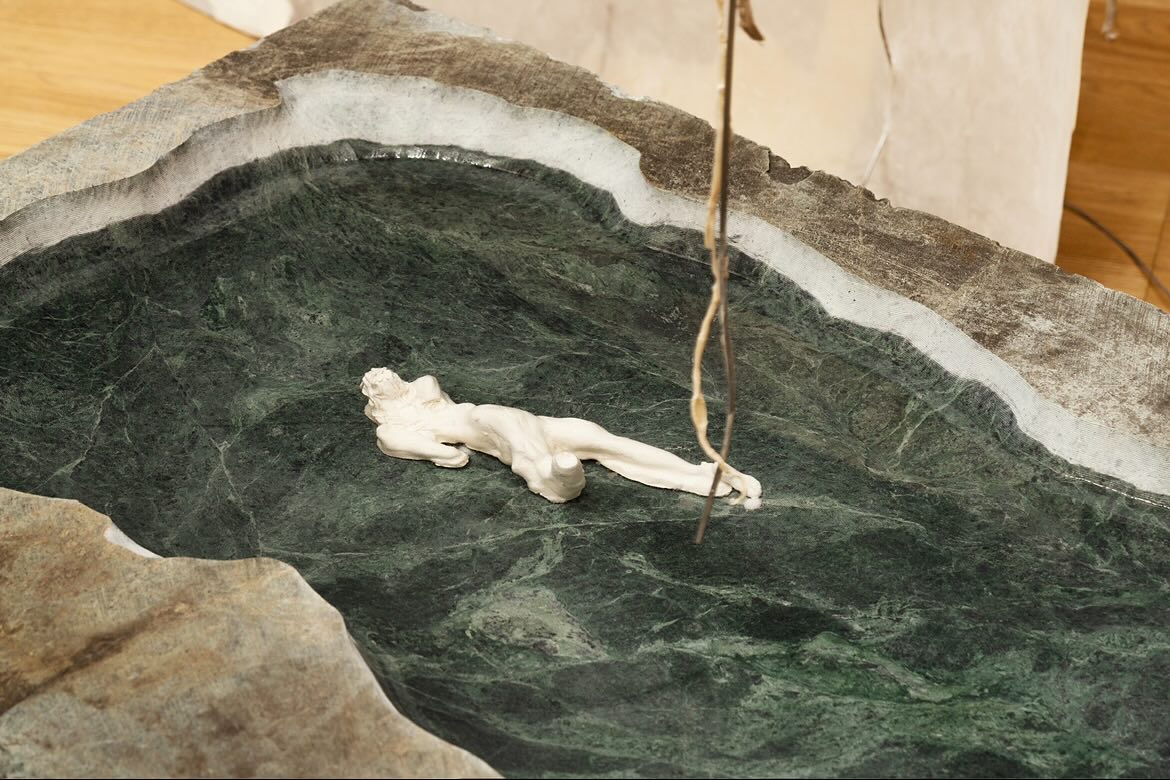
matter including water, quince, beehives, and dried leaves. In
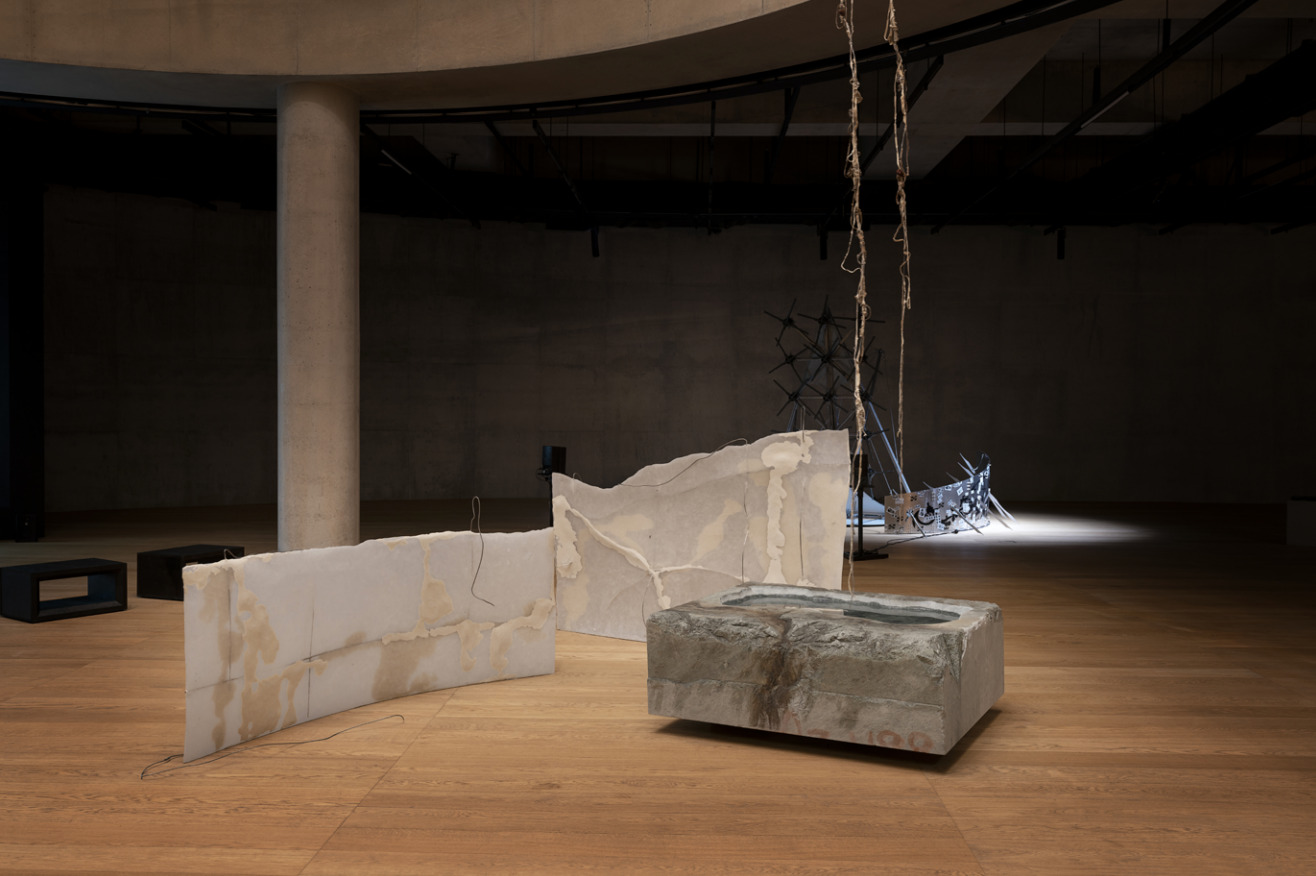
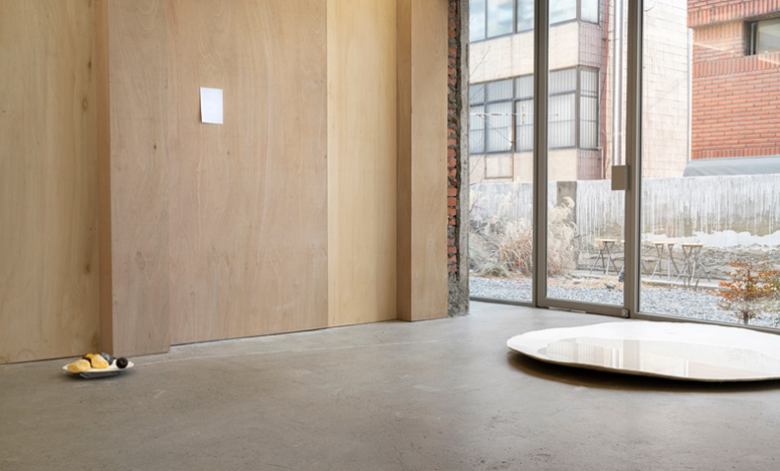
MyBlackBrown’sFeverAndThermalWater(2024), a drying quince
changes color alongside an oxidizing steel plate and pooled water, each
transforming at a different pace.
In
QuinceBowlBelowBeigeIvoryMountainchain(2024), wood, putty,
quince, and an empty beehive endure time differently within a single structure.
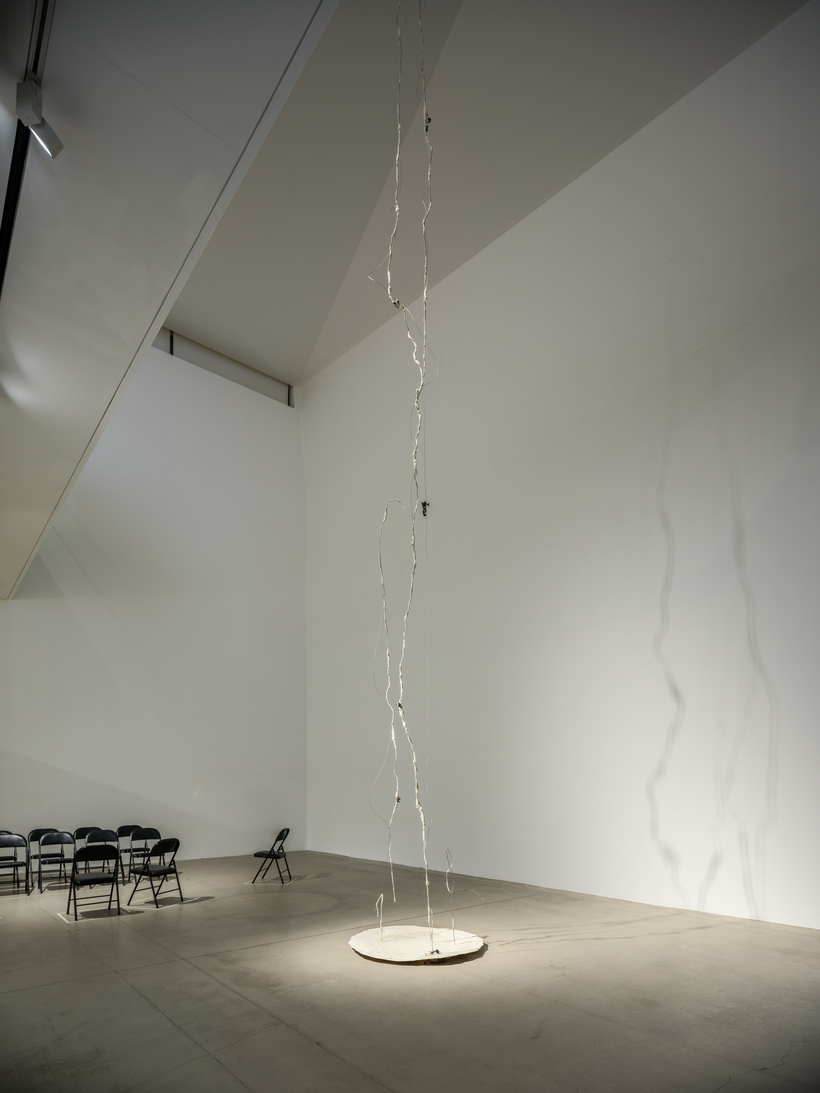
GuardianAndCheckerwoman(2024) and Woven Water(2024)
likewise bring together materials with distinct properties, including water,
stone, thread, and wire. Here, discoloration, drying, corrosion, and
evaporation are not signs of damage, but evidence that time continues to
operate within the work.
This
approach has recently expanded painting into a more sculptural form.
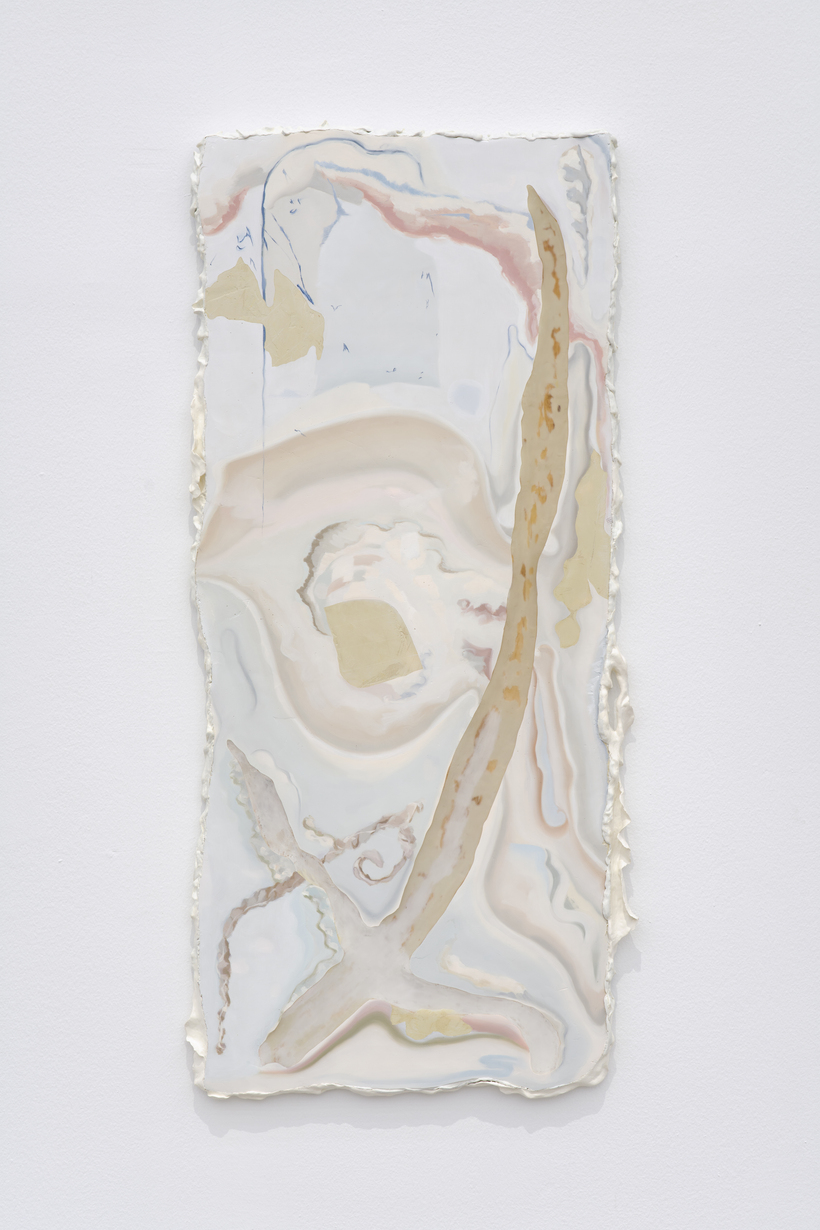
BluesInternalOrganDance In IvoryWagon(2025) is made by
carving into a wooden panel, filling the cavities with another material, and
then smoothing the surface again, creating an internal structure that resembles
an actual “bone” within the painting.
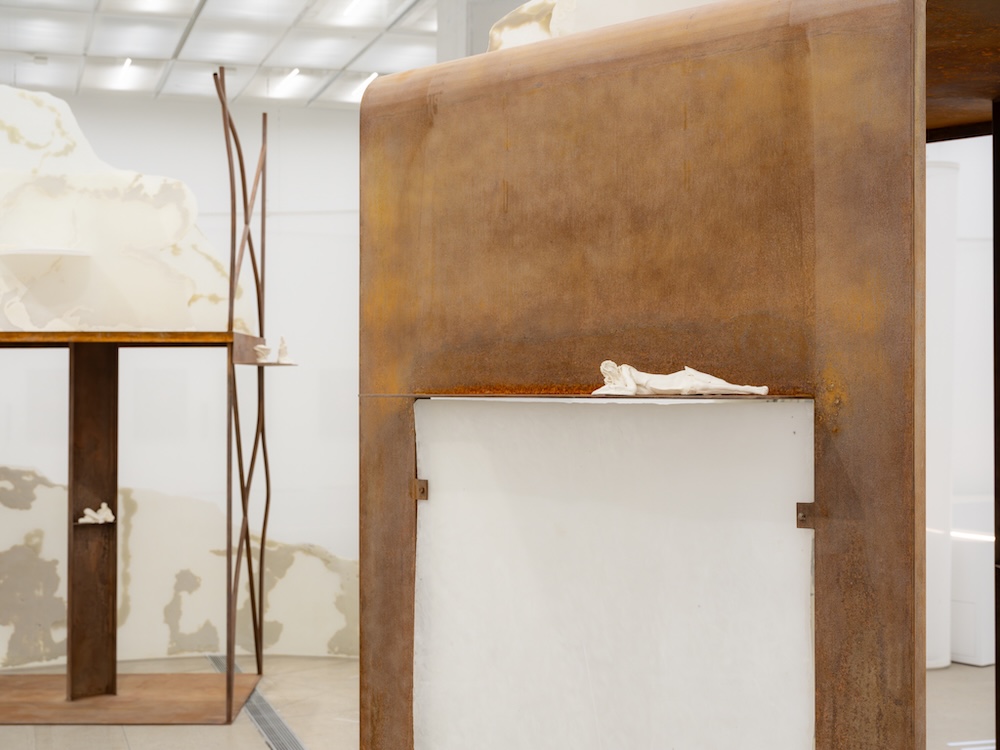
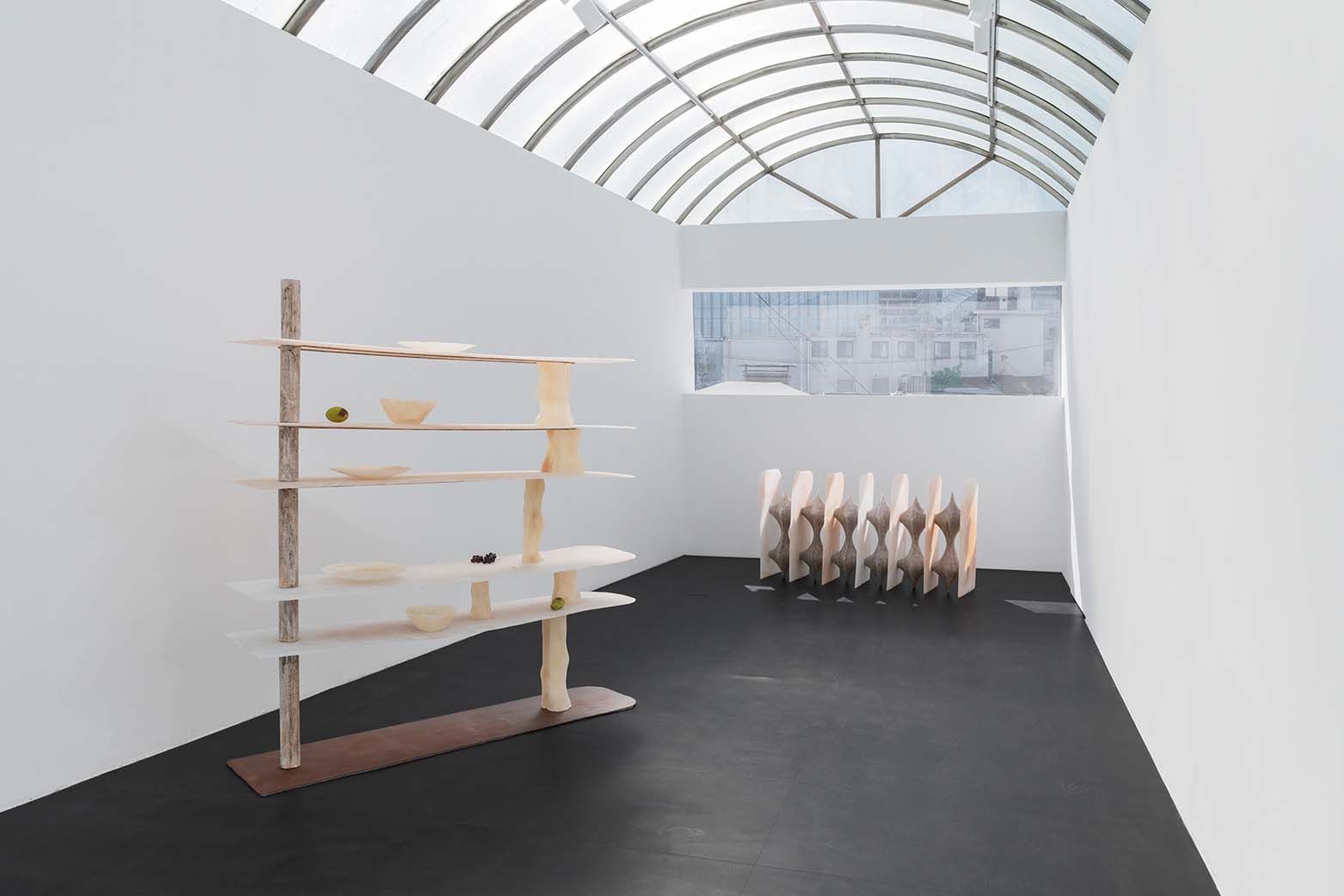
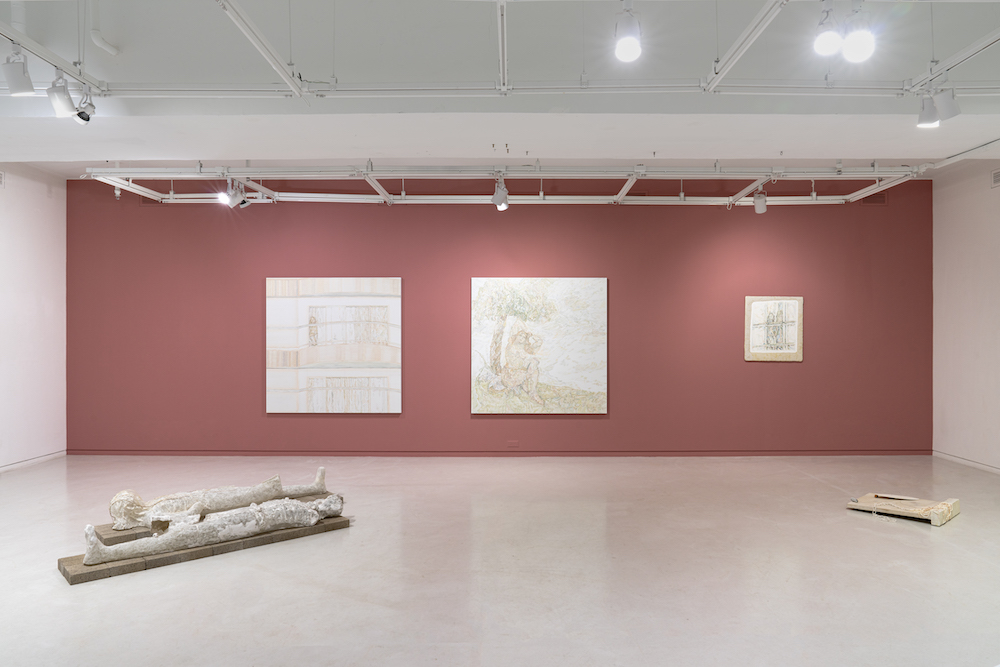
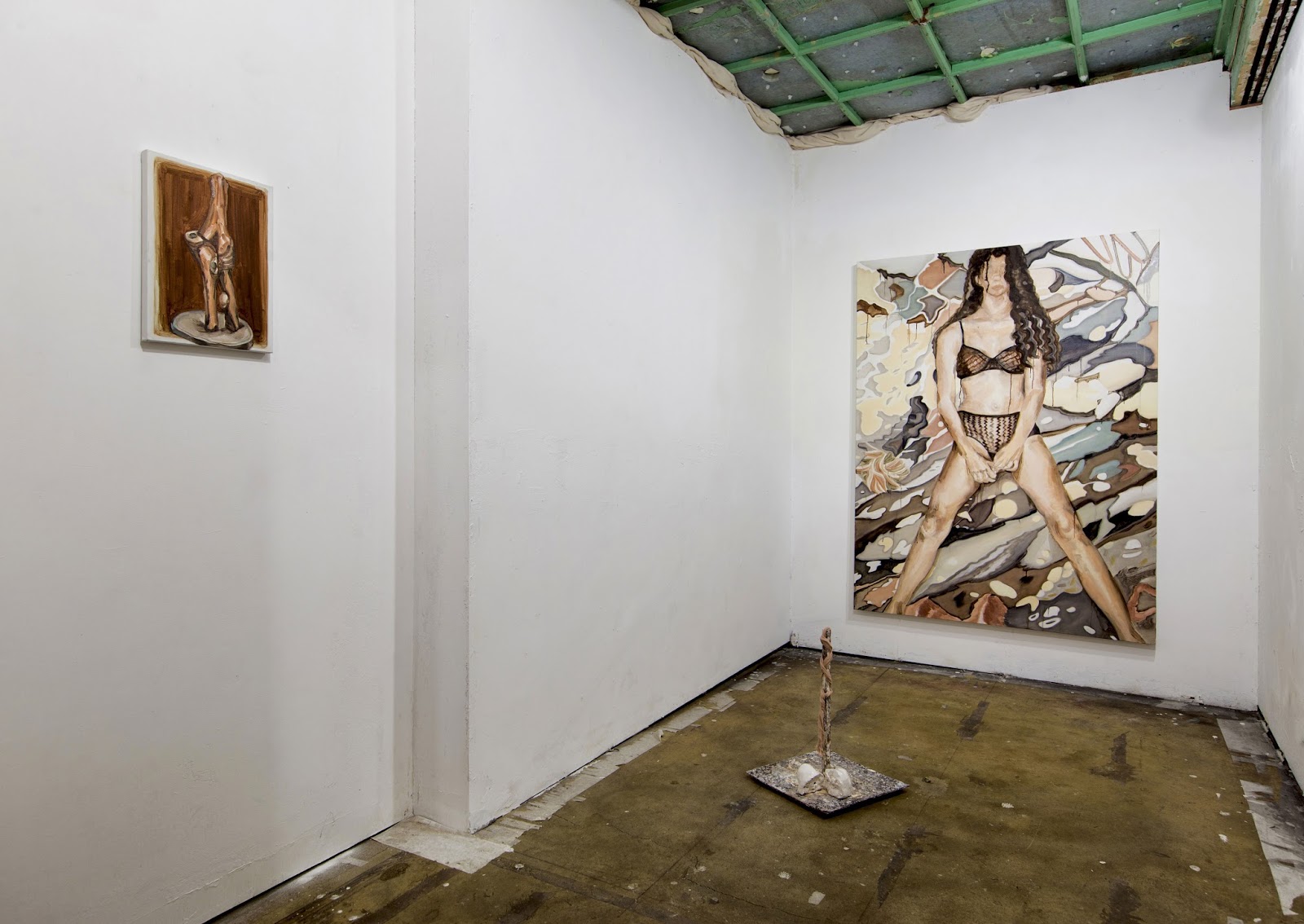
IvoryBoneColdSkinGesture In RedBrownCabinet(2025)
and IvoryBoneColdSkinGesture On RedBrownShelf(2025) arrange
multiple fragments by leaning and layering them inside cabinets and on shelves,
allowing them to appear simultaneously as bodies and landscapes. Structures
such as the “wagon,” “cabinet,” and “shelf,” which recur in her recent solo and
group exhibitions, can also be understood as devices that protect the body’s
interior or carry and transport something.
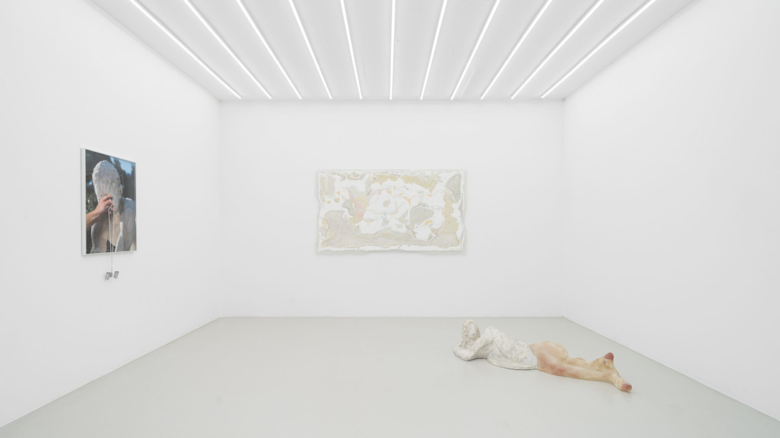
As a result, painting no longer
remains confined to surface but becomes an object with bones and skin, while
sculpture moves away from the isolated object toward a scene in which multiple
beings coexist.



.jpg)